AI agents represent one of the most transformative trends in artificial intelligence, potentially surpassing the impact of next-generation foundation models. As Andrew Ng highlighted:
“AI agent workflows will drive massive progress this year—perhaps even more than new foundation models. This is a critical trend for anyone in AI to watch.”
What Are AI Agents?
AI agents are autonomous entities powered by large language models (LLMs) that can:
- Plan and reason to achieve goals
- Take actions using tools (APIs, databases, web searches)
- Learn from interactions and improve over time
They represent a shift from passive AI (providing information) to active AI (executing tasks). For example:
- Past: “I can tell you how to plan a trip.”
- Present: “I can book your flights, hotel, and update your calendar.”
- Future: “I’ll anticipate your needs and act without prompting.”
Why AI Agents Matter
- Automate complex workflows (business processes, research, customer service)
- Boost productivity by handling multi-step tasks autonomously
- Enable multi-agent collaboration (specialized agents working together)
Key Components of an AI Agent
- LLM Core – The “brain” for reasoning and decision-making.
- Planning – Breaks objectives into actionable steps.
- Action – Uses tools (APIs, code execution, searches).
- Profile – Defines behavior, role, and constraints.
- Memory – Retains context across interactions.
Building a Multi-Agent System
Multi-agent architectures outperform single-agent approaches by distributing tasks. Example workflow:
- Researcher Agent – Gathers data (e.g., GDP trends).
- Chart Generator Agent – Creates visualizations.
- Tool Agent – Executes code or APIs.
Performance Boost:
- GPT-4’s accuracy on coding benchmarks jumps from 67% (zero-shot) to 97% with agentic workflows.
- No model upgrades needed—just smarter orchestration.
Challenges & Future Directions
- Scalability – Managing token usage and latency in complex systems.
- Integration – Seamless API and tool connectivity.
- Determinism – Balancing predictability with flexibility.
- Security & Ethics – Preventing misuse and ensuring transparency.
Conclusion
AI agents are redefining automation, offering unprecedented efficiency and problem-solving capabilities. While challenges remain, their potential to revolutionize industries—from finance to healthcare—is undeniable.
Ready to explore AI agents? Start building today.


Who is Salesforce? Here is their story in their own words. From our inception, we've proudly embraced the identity of Read more

Salesforce has unveiled a comprehensive analytics solution tailored for wealth managers, home office professionals, and retail bankers, merging its Financial Read more
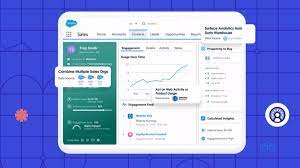
AI plays a crucial role in propensity score estimation as it can discern underlying patterns between treatments and confounding variables Read more

Salesforce Technology Services Integrator - Tectonic has successfully delivered Salesforce in a variety of industries including Public Sector, Hospitality, Manufacturing, Read more