
Zero-copy Archives - gettectonic.com - Page 3

Salesforce Data Cloud Explained

Salesforce Data Cloud: The Essential Guide Unlocking the Power of Unified Customer Data Salesforce Data Cloud revolutionizes how businesses connect and activate customer data by unifying information from multiple sources—including demographic, behavioral, and transactional data (e.g., mobile app engagement, eCommerce purchases, and support cases). But before diving in, it’s crucial to understand what Data Cloud is (and isn’t) to maximize its potential. Here are 10 key facts to guide your implementation. 1. Data Cloud (Free) vs. Paid Editions 💡 Key Insight: Start with the free tier to explore, then upgrade as needs grow. 2. Availability & Regional Restrictions 3. Unified Profiles: The “Golden Record” A unified profile is not a merged record—it’s a dynamic, real-time view combining: Unlike Salesforce duplicate rules, source records remain intact—Data Cloud simply creates a single customer view. ⚠️ Note: Unified profiles consume credits based on processing complexity. 4. Data Cloud ≠ A Data Lake 5. Key Data Modeling Concepts Before ingesting data, understand: 📌 Pro Tip: If you’ve used Marketing Cloud Data Extensions, you already know this! 6. No Activations in Free Tier Activations (sending segments to external platforms) require paid editions: Without activations, your segments remain stuck in Data Cloud. 7. Activations vs. Data Actions Feature Use Case Targets Activations Send segments to external platforms Marketing Cloud, Ads, Salesforce Apps Data Actions Trigger real-time insights Platform Events, Webhooks, MC 8. Have Clear Use Cases Before enabling Data Cloud, define what problem you’re solving:✅ Personalized Marketing (e.g., dynamic ad audiences)✅ AI-Driven Sales Insights (e.g., lead scoring)✅ Unified Service History (e.g., 360° customer view) 🚀 Example: A retailer uses Data Cloud to track online + in-store purchases, enabling hyper-targeted email campaigns. 9. The Learning Curve is Worth It 10. Start Small, Scale Smart Final Thoughts Salesforce Data Cloud is a game-changer for businesses drowning in siloed data. By unifying customer insights and enabling real-time activation, it powers smarter marketing, sales, and service—but only if implemented strategically. Ready to begin?✔ Leverage the free tier for testing.✔ Plan use cases before scaling.✔ Invest in training to maximize value. The future of CRM is connected data—will your business be ready? Content updated March 2025. Like Related Posts Who is Salesforce? Who is Salesforce? Here is their story in their own words. From our inception, we’ve proudly embraced the identity of Read more Salesforce Marketing Cloud Transactional Emails Salesforce Marketing Cloud Transactional Emails are immediate, automated, non-promotional messages crucial to business operations and customer satisfaction, such as order Read more Salesforce Unites Einstein Analytics with Financial CRM Salesforce has unveiled a comprehensive analytics solution tailored for wealth managers, home office professionals, and retail bankers, merging its Financial Read more AI-Driven Propensity Scores AI plays a crucial role in propensity score estimation as it can discern underlying patterns between treatments and confounding variables Read more

Read More
Scale Data and Analytics in the Cloud

Scale Data and Analytics in the Cloud

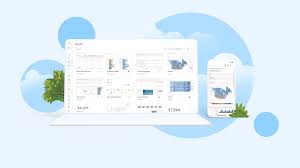
Winning in the Data Economy In the rapidly growing data economy, enterprises are eager to gain a competitive edge. This data economy, which revolves around the global supply and demand for data and data-driven applications, continues to expand as more organizations seek critical insights to drive their success. Scale Data and Analytics in the Cloud. The value of data isn’t a new concept. Companies acquired other companies for the sole purpose of obtaining their data – customers, prospects, etc. The value of actionable data is a bit newer. Whereas we once marketed to prospects based primarily on historical data, data-driven applications let us market at the right time on the right channel with the right message. To understand what it takes to excel in the new data economy, Tableau partner Snowflake surveyed business and technology leaders. Their research highlighted the characteristics of the leaders and laggards, emphasizing the importance of a strong data strategy for achieving successful outcomes. Industries like financial services, health and life sciences, and retail are still struggling to fully benefit from the data economy, often finding it challenging to unlock the full value of their data. Here are four key actions that can help organizations win in today’s data economy and achieve tangible results: 1. Create a Strong Data Culture A robust data culture is foundational for realizing the value of data. Organizations that prioritize becoming data-driven see significant benefits: Jennifer Belissent, Principal Data Strategist at Snowflake, emphasizes how a cloud-enabled data culture accelerates time-to-value by breaking down organizational silos. Tableau offers a playbook to help organizations build, expand, and mature their data capabilities. 2. Adopt an AI-Driven, Enterprise-Ready Analytics Platform Data leaders utilize AI-driven enterprise analytics platforms like Tableau, which provide trusted predictions and insights to scale decision-making. Traditional solutions often fall short in delivering speed to insight and self-service capabilities. Tableau, particularly with Tableau Cloud, offers an easy-to-scale solution that manages and analyzes data across various sources, supporting meaningful impact and agility. Tableau Cloud’s Advanced Management capabilities enhance security, usability, and scalability. Additionally, Tableau Accelerators—over 100 ready-to-use, in-product dashboard starters—support various industries, enabling comprehensive analysis and problem-solving. 3. Migrate to the Cloud Cloud adoption is accelerating as organizations pursue data-driven digital transformations. The cloud offers flexibility, agility, scalability, reduced IT overhead, and increased resilience and performance. Key considerations for cloud migration include: Whether opting for on-premise, hybrid, or full cloud migration, Tableau connects to data wherever it resides, fueling insights across the business. Tableau’s own journey to the cloud involved evaluating criteria, enhancing collaboration, and applying new data management processes, resulting in a unified source of truth. 4. Choose the Right Partners to Scale Cloud-Native Analytics Selecting partners that facilitate cloud-native analytics is crucial. Ideal partners should offer: Snowflake and Tableau exemplify these qualities, addressing data and organizational demands. Snowflake provides extensive data storage and processing, while Tableau offers intuitive, self-service analytics. This partnership has helped enterprises like Cart.com achieve significant revenue growth by embedding Tableau analytics in Snowflake’s platform. Embrace the Data Economy with Cloud-Native Analytics Regardless of where your organization stands in the data economy, taking steps to leverage cloud-native analytics can unlock numerous opportunities. Tableau continues to invest in its platform to help organizations thrive with data in the cloud, offering expert advice, solutions, and valuable partnerships. By adopting these strategies, your organization can become a leader in the data economy and achieve remarkable results. Like Related Posts Who is Salesforce? Who is Salesforce? Here is their story in their own words. From our inception, we’ve proudly embraced the identity of Read more Salesforce Marketing Cloud Transactional Emails Salesforce Marketing Cloud Transactional Emails are immediate, automated, non-promotional messages crucial to business operations and customer satisfaction, such as order Read more Salesforce Unites Einstein Analytics with Financial CRM Salesforce has unveiled a comprehensive analytics solution tailored for wealth managers, home office professionals, and retail bankers, merging its Financial Read more AI-Driven Propensity Scores AI plays a crucial role in propensity score estimation as it can discern underlying patterns between treatments and confounding variables Read more
Read More
Salesforce Data Cloud Explained

Salesforce Data Cloud Explained

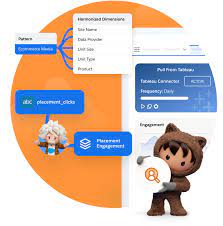
Salesforce Data Cloud, previously recognized as Salesforce CDP/Genie, made its debut at Dreamforce 2022, hailed by Salesforce as one of the most significant innovations in the company’s history. A hyperscale data platform built into Salesforce. Activate all your customer data across Salesforce applications with Data Cloud. Data Cloud facilitates the intake and storage of real-time data streams on a massive scale, empowering automated tasks that result in highly personalized experiences. Data can be sourced from diverse Salesforce data outlets, including Mulesoft, Marketing Cloud, and others, along with customers’ proprietary applications and data sources. Subsequently, it can dynamically respond to this real-time data by automating actions across Salesforce CRM, Marketing Cloud, Commerce, and more, inclusive of automating actions through Salesforce Flow. What is the Salesforce data cloud? Data Cloud is the fastest growing organically built product in Salesforce’s history (i.e. Salesforce built it themselves, not via acquisitions). Data Cloud could be described as the ‘Holy Grail of CRM’, meaning that the data problem that’s existed since the infancy of CRM is now finally solvable. Data Cloud is the foundation that speeds up the connectivity between different ‘clouds’ across the platform. However, Data Cloud is also a product that can be purchased. While not all Salesforce customers have licensed Data Cloud, being at the foundation means they are still taking advantage of Data Cloud to a degree – but this all becomes even stronger with Data Cloud as a personalization and data unification platform. What is the history of Data Cloud? Salesforce has gone through several iterations with naming its CDP product: Customer 360 Audiences → Salesforce CDP → Marketing Cloud Customer Data Platform → Salesforce Genie → Salesforce Data Cloud. In some instances, changes were made because the name just didn’t stick – but what’s more important to note, is that some of the name changes were to indicate the significant developments that happened to the product. Salesforce Data Cloud Differentiators Data Cloud, in itself, is impressive. While many organizations would consider it expensive, if you were to flip the argument on its head, by buying your own data warehouse, building the star schema, and paying for ongoing compute storage, you’d be looking to spend 5 to 10 times more than what Salesforce is charging for Data Cloud. Plus, data harmonization works best when your CRM data is front and center. There are other key differentiators that helps Data Cloud to stand out from the crowd: Is data cloud a data lakehouse? That means that Data Cloud is now not just a really good CDP, it’s now a data lake which will be used in sales and service use cases. But it also means that we can start to fundamentally move some of our higher-scale consumer products like Marketing and Commerce onto the platform. Is Snowflake a data Lakehouse? Snowflake offers customers the ability to ingest data to a managed repository, in what’s commonly referred to as a data warehouse architecture, but also gives customers the ability to read and write data in cloud object storage, functioning as a data lake query engine. What is the benefit of Salesforce data cloud? Data Cloud empowers Salesforce Sales Cloud with AI capabilities and automation that quickly closes deals and boosts productivity across every channel. It drives customer data from all the touchpoints and unifies it separately in individual customer profiles. Salesforce Data Cloud is a powerful data warehouse solution that allows companies to effectively manage and analyze their data. What is the difference between Salesforce CDP and data lake? Talking abut Salesforce CDP is a little bit like a history lesson. While a CDP provides a unified, structured view of customer data, a data lake, on the other hand, is more of a raw, unstructured storage repository that holds a vast amount of data (more than just customer data) in its native format until it’s needed. Like1 Related Posts Who is Salesforce? Who is Salesforce? Here is their story in their own words. From our inception, we’ve proudly embraced the identity of Read more Salesforce Marketing Cloud Transactional Emails Salesforce Marketing Cloud Transactional Emails are immediate, automated, non-promotional messages crucial to business operations and customer satisfaction, such as order Read more Salesforce Unites Einstein Analytics with Financial CRM Salesforce has unveiled a comprehensive analytics solution tailored for wealth managers, home office professionals, and retail bankers, merging its Financial Read more AI-Driven Propensity Scores AI plays a crucial role in propensity score estimation as it can discern underlying patterns between treatments and confounding variables Read more

Read More
Marketing Cloud Intelligence For Data Integration

Marketing Cloud Intelligence For Data Integration

What exactly is Salesforce Datorama, now referred to as Marketing Cloud Intelligence? It is a versatile, cloud-based marketing data platform offering a suite of solutions aimed at enhancing data integration, reporting, analysis, and optimization. Marketing Cloud Intelligence For Data Integration. However, the question arises: Does Marketing Cloud Intelligence truly deliver the cloud-based Marketing Intelligence as Salesforce touts? Let’s dive into what this platform offers and dissect its capabilities without the fluff. Understanding the Platform: Salesforce’s Marketing Cloud Intelligence, formerly known as Datorama, serves as an analytics tool meticulously designed to integrate and visualize various forms of marketing performance data. It strikes a balance, catering to both analytically inclined marketers and seasoned analysts seeking to bridge data with conventional BI tools like Tableau. Flexible SaaS with Tailored Customization: Despite its Software-as-a-Service (SaaS) nature, Datorama surprises with its flexibility. It can function autonomously, handling data storage, modeling, ETL, and visualization, or seamlessly integrate with other platforms like Azure Databricks or Looker. While it accommodates numerous data use cases, its primary focus remains on Performance Marketing. Marketing Cloud Intelligence often gets misclassified as a traditional Business Intelligence or Analytics platform, but it truly excels in data management. For those contemplating its adoption, familiarity with its functionalities through resources like “Getting to Know Marketing Cloud Intelligence” or video walkthroughs is encouraged. Transition to Marketing Cloud Intelligence: The rebranding from Datorama to Marketing Cloud Intelligence was proposed in early 2022, gaining momentum recently. Despite the name change, the platform’s features and capabilities remain intact. Origins and Evolution: Originating from an Israeli-based technology firm in 2012, Datorama swiftly gained traction under the stewardship of its founders Ran Sarig, Efi Cohen, and Katrin Ribant. In 2018, Salesforce acquired Datorama, integrating it into the Marketing Cloud suite alongside Account, Engagement, Personalization, and Data Cloud platforms. However, as of February 2, 2023, the original founders and core engineering teams have moved on, possibly signaling a shift in the platform’s trajectory. Functionalities and Capabilities: Marketing Cloud Intelligence boasts robust data onboarding and connectivity features, with a rich assortment of connectors and retrieval mechanisms supporting popular data management platforms like SAP Hana, AWS, Oracle, Vertica, and SQL Server. It excels in ingesting and managing aggregated marketing performance data, with the capacity to handle event-level data as well. Pricing and Competitors: While its pricing model revolves around data row consumption and user seats, the platform may become cost-prohibitive at higher volumes. However, recent enhancements like Data Lake offer expanded row count flexibility without escalating costs. Its primary competitors include Domo, Adverity, NinjaCat, Improvado, Looker, PowerBI, and Google Data Studio. Use Cases and Industries: Marketing Cloud Intelligence serves marketers and advertisers across various industries, including communications, media, technology, healthcare, finance, manufacturing, automotive, retail, and publishing. Its versatility lies in supporting six specific marketing data use cases, ranging from building a single source of data to producing informative dashboards. Continuous Evolution: With frequent product releases, Marketing Cloud Intelligence remains dynamic, adapting to evolving market needs and technological advancements. Its commitment to enhancing analytics, visualization, connectivity, and marketplace apps ensures its relevance in the ever-changing landscape of marketing data management. Future Outlook: As Salesforce navigates the competitive analytics space, the future of Marketing Cloud Intelligence remains intriguing. While challenges like pricing pressures persist, the platform’s integration within the Marketing Cloud ecosystem and ongoing enhancements hint at a promising trajectory. Whether it evolves into a fully integrated analytics solution or retains its standalone utility, only time will tell. But one thing is certain: Salesforce’s promotion of Marketing Cloud Intelligence will continue to shape its evolution and market positioning moving forward. Like1 Related Posts Who is Salesforce? Who is Salesforce? Here is their story in their own words. From our inception, we’ve proudly embraced the identity of Read more Salesforce Marketing Cloud Transactional Emails Salesforce Marketing Cloud Transactional Emails are immediate, automated, non-promotional messages crucial to business operations and customer satisfaction, such as order Read more Salesforce Unites Einstein Analytics with Financial CRM Salesforce has unveiled a comprehensive analytics solution tailored for wealth managers, home office professionals, and retail bankers, merging its Financial Read more AI-Driven Propensity Scores AI plays a crucial role in propensity score estimation as it can discern underlying patterns between treatments and confounding variables Read more

Read More
gettectonic.com