- gettectonic.com - Page 5
New ChatGPT-4o

New ChatGPT-4o

OpenAI’s ChatGPT Upgraded with GPT-4o: Here’s What’s New OpenAI has just launched a significant upgrade to ChatGPT with the new ChatGPT-4o model, also known as Omni. This true multimodal AI effortlessly understands text, images, video, and audio, offering faster responses and eventually the ability to engage in spoken conversations. If before you read about the New ChatGPT-4o and inadvertently used it, ChatGPT may have surprised you with its responses. I’ve been told to “enjoy my coffee”, “sit back and relax” and more! Key Benefits of GPT-4o The main advantage of GPT-4o is its enhanced reasoning, processing, and natural language capabilities, now available to free ChatGPT users for the first time. In their Spring Update announcement, OpenAI emphasized their goal of making top-tier AI accessible to a broader audience. Gradual Rollout The rollout of GPT-4o is happening in phases. Features are being released in batches, so users should check which features are currently available and which are coming soon. Accessing GPT-4o is straightforward once it’s been activated for your account. Notably, the address for ChatGPT has changed to chatgpt.com, indicating OpenAI’s commitment to AI as a fully-fledged product. Availability Across Platforms If you have access to GPT-4o, it will be available through the mobile app and online. A Mac app is also rolling out to some users, but be cautious of fraudulent links aiming to spread malware. It’s best to wait for an official email or notification from OpenAI before downloading the app. Even with a valid app link, access won’t be granted until it’s enabled on your OpenAI account. Current Features of GPT-4o Currently, users can access the chat version of GPT-4o, with advanced voice and video functionality being rolled out gradually, starting with Plus and Team accounts. Free account users will notice significant improvements as GPT-4o surpasses both the previous 3.5 model and GPT-4. Users can now run code snippets, analyze images and text files, and use custom GPT chatbots. On mobile, you still have access to ChatGPT Voice, but it’s the older version that transcribes conversations into text. The new model understands speech, emotion, and interaction natively without needing this step. How to Use GPT-4o Emotional and Conversational Upgrades OpenAI has demonstrated that the upgraded ChatGPT can now handle more natural and emotionally aware conversations. The new model, available to both free and paid users, responds more quickly to voice, image, and video inputs. It can detect and express emotions, making interactions feel more human-like. During a recent demo, ChatGPT engaged in lively, expressive conversations, picking up on emotional cues and responding with simulated emotional reactions. This new interface aims to enhance user engagement and provide a more personalized experience. And it does. But it can be deceptively human-like. Ethical Considerations Despite the engaging new features, the lifelike interactions of advanced chatbots raise ethical concerns. Researchers warn that highly persuasive and emotionally responsive AI could have unintended consequences, such as fostering addictive behaviors or influencing user actions negatively. Future Developments OpenAI promises further advancements and additional announcements soon. The competition in the AI field remains intense, with companies like Google expected to unveil new technologies at their upcoming I/O developer conference. OpenAI’s latest update signifies a major leap in AI capabilities, aiming to blend advanced technology with everyday usability while navigating the complex ethical landscape of human-AI interactions. Like Related Posts AI-Driven Propensity Scores AI plays a crucial role in propensity score estimation as it can discern underlying patterns between treatments and confounding variables Read more Tectonic’s Successful Salesforce Track Record Salesforce Technology Services Integrator – Tectonic has successfully delivered Salesforce in a variety of industries including Public Sector, Hospitality, Manufacturing, Read more The Evolution of Industrial Revolutions History of First Four Industrial Revolutions Throughout history, humanity has always relied on technology. Although the technology of each era Read more Step By Step Guide to a Salesforce Quickstart Salesforce Implementation with a Tectonic Quickstart: Step-by-Step Salesforce Quickstart Guide. Step 1: Define Your Business Requirements Identify specific business processes Read more

Read More
Google Search Goes AI

Google Search Goes AI

For the past 25 years, Google Search has evolved through numerous technological advancements. They’ve refined their core information quality systems to help you find the best content on the web, building a knowledge base of billions of facts about people, places, and things. This ensures you receive reliable information instantly. And now, Google Search Goes AI. If you experienced it before reading this insight, it might have taken you a bit by surprise. Generative AI enhances Search beyond what you ever imagined. Whether you’re researching, planning, or brainstorming, Google takes care of the heavy lifting. This innovation is driven by Google’s new custom Gemini model, which combines multi-step reasoning, planning, and multimodality with Google premier Search systems. Quick Answers with AI Overviews For those times when you need quick information without piecing everything together, AI Overviews can help. Users have already utilized AI Overviews billions of times through Google’s Search Labs experiment. They appreciate the concise topic overviews and links for further learning. Google has observed that AI Overviews increase Search usage and satisfaction. Starting today, AI Overviews are rolling out to all U.S. users, with plans to reach over a billion people worldwide by the end of the year. AI Overviews lead users to a broader range of websites for complex questions. The links within these overviews receive more clicks than traditional web listings. As we expand this feature, we’ll focus on driving valuable traffic to publishers and creators. Ads will remain clearly labeled and distinct from organic results. One can only imagine how this might change the world of SEO. Customizable AI Overviews Soon, you can customize AI Overviews to simplify the language or provide more detail. This is particularly useful for newcomers to a topic or for simplifying explanations for children. This feature will be available in Search Labs for English queries in the U.S. soon. Tackling Complex Questions With the Gemini model’s multi-step reasoning, AI Overviews can handle complex questions in a single search. For example, if you’re looking for a yoga or Pilates studio that’s popular with locals, convenient for your commute, and offers new member discounts, you’ll soon be able to ask, “Find the best yoga or Pilates studios in Boston and show me details on their intro offers and walking time from Beacon Hill.” These capabilities are coming soon to AI Overviews in Search Labs for English queries in the U.S. Planning Ahead Beyond answering questions, Search can help with planning. Search’s planning capabilities assist in creating plans for meals and vacations. For instance, search “create a 3-day meal plan for a group that’s easy to prepare,” and you’ll receive a variety of recipes. You can customize your plan, such as swapping a meal for a vegetarian option, and export it to Docs or Gmail. Meal and trip planning features are currently available in Search Labs in English in the U.S., with more customization options and categories coming later this year. Exploring AI-Organized Results When seeking inspiration, it can be challenging to sift through numerous options. Soon, Search will use generative AI to brainstorm with you, organizing results under unique AI-generated headlines, showcasing diverse perspectives and content types. This AI-organized results page will be available soon for English searches in the U.S., starting with dining and recipes, followed by movies, music, books, hotels, shopping, and more. Video Search Assistance Search is not just limited to text. Often, your questions involve visual elements. Advancements in video understanding allow you to search using videos. For instance, if you bought a record player at a thrift shop and it’s malfunctioning, searching with a video can save you the effort of describing the issue in words. You’ll receive an AI Overview with troubleshooting steps. Video search capabilities will be available soon for Search Labs users in English in the U.S., with plans to expand to more regions over time. This is a glimpse of how Google is reimagining Google Search, blending today’s best features with the advanced capabilities of the Gemini model. Soon, Google will handle the searching, simplifying, researching, planning, brainstorming, and more. Sign up for Search Labs to be among the first to try out these features and more. Like Related Posts AI-Driven Propensity Scores AI plays a crucial role in propensity score estimation as it can discern underlying patterns between treatments and confounding variables Read more Salesforce Quickstarts Explained What is a Salesforce Quickstart? Salesforce Quickstarts are great for individual departments or small sales & customer service teams who Read more Einstein Relationship Insights ERI, serves as an AI-powered research assistant, enhancing sales processes. ERI operates as a desktop plugin with a browser extension, Read more Joined Datasets in B2B Marketing Analytics B2BMA empowers users to generate additional datasets using the data manager. This process involves creating datasets in various ways, such Read more

Read More
Employ ChatGPT

50 Ways to Employ ChatGPT

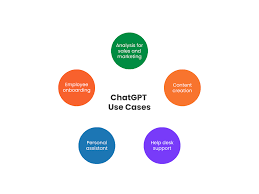
You’ve likely heard of ChatGPT by now—a remarkably intelligent AI capable of understanding and communicating like a human. You can Employ ChatGPT. But did you realize just how adaptable this language model is? With the appropriate prompts, ChatGPT can swiftly assist you with a myriad of tasks. To my mind, ChatGPT is fully helpful right until you employ it to write about itself and it begins to brag. The anticipation is over, and this marks the beginning of the multitasking journey with ChatGPT. This AI can effortlessly handle these tasks in mere seconds with relatively straightforward prompts. We’re talking about a wide range of activities, from writing and editing to coding and marketing. The key lies in providing ChatGPT with clear, concise instructions upfront. Generative AI prompts are the most important factor to getting good results. Once you unlock that capability, a plethora of possibilities emerges for expediting your workflow. I’ve compiled 50 examples of tasks that ChatGPT can accomplish in seconds with the right prompts. Prepare to be amazed by the efficiency of this AI assistant! So, grab a cup of coffee and settle in as we hop into how this exceptional AI simplifies complex tasks effortlessly. The future is now, and it goes by the name of ChatGPT! 50 Tasks that ChatGPT Can Complete in Seconds with Simple Prompts: While ChatGPT cannot fully replicate human intelligence, it impresses with its conversational abilities, data analysis, content generation, and predictive capabilities. Just envision the evolution of this AI prodigy as researchers continue to enhance its skills! Examples of clear ChatGPT prompts. Writing/Editing Prompts: Research/Analysis Prompts: Creative Writing Prompts: Coding Prompts: Business/Marketing: There you have it — 50 ways ChatGPT can significantly simplify your life with just a few well-crafted prompts. The potential is virtually limitless when you can effectively communicate your needs to this highly capable AI. The things you can do with generative AI are mainly limited by the data your AI tool has access to. Remember with ChatGPT when it last had update to the world wide web. It cannot help you right about today’s events, but can assist with building historical context, for example. Whether it’s creative writing endeavors, coding challenges, marketing endeavors, or research tasks, ChatGPT is there to assist you, provided you know how to prompt it effectively. The key lies in delivering clear, straightforward, and precise instructions. You can employ ChatGPT to assist with many tasks. The key word is assist. You cannot employ ChatGPT to completely do your job for you. Experiment with prompts tailored to your specific requirements. Once you discover the right approach, you’ll be amazed by ChatGPT’s ability to accomplish tasks in a matter of seconds. One thing is certain—with ChatGPT handling the heavy lifting, humans are liberated to be more creative and concentrate on meaningful work. Like Related Posts Salesforce Marketing Cloud Transactional Emails Salesforce Marketing Cloud Transactional Emails are immediate, automated, non-promotional messages crucial to business operations and customer satisfaction, such as order Read more Salesforce Unites Einstein Analytics with Financial CRM Salesforce has unveiled a comprehensive analytics solution tailored for wealth managers, home office professionals, and retail bankers, merging its Financial Read more AI-Driven Propensity Scores AI plays a crucial role in propensity score estimation as it can discern underlying patterns between treatments and confounding variables Read more Tectonic’s Successful Salesforce Track Record Salesforce Technology Services Integrator – Tectonic has successfully delivered Salesforce in a variety of industries including Public Sector, Hospitality, Manufacturing, Read more

Read More
Generative AI for Channel Sales Teams

Generative AI for Channel Sales Teams

Salesforce unveiled new AI, CRM, and Slack sales enhancements tailored for its Partner Relationship Management (PRM) solution. Generative AI for Channel Sales Teams. The latest generative and predictive AI is now accessible to channel managers, third-party resellers, brokers, and various indirect sellers. Generative AI introduces advanced capabilities to streamline channel management and expedite partner sales. Moreover, the AI seamlessly integrated into the CRM aids channel managers and partners in maintaining focus and alignment on top-priority opportunities. This announcement expands Einstein for Sales directly into the workflows of channel managers and their partners. Einstein Copilot streamlines operations and enables channel managers to focus on scalability by automating administrative tasks and sharing proactive insights on promising leads and opportunities. Furthermore, the integration of Slack AI and PRM for Slack facilitates swift collaboration and data sharing among internal and external partners. Why it’s significant: What’s new: Salesforce perspective: “New generative AI, data, and automation capabilities in a Slack-first PRM will offer channel sales teams practical tools to enhance partner and internal processes. This will help Salesforce partners and sellers increase collaboration, improve seller productivity on both sides, deepen relationships, and enable growth.” – Ryan Nunez, VP, Industry Solutions Customer perspective: “Thanks to Partner Relationship Management, our team can help our partners get up and running faster, and they can automate a lot of what they used to do previously. We’re also excited to see how the AI insights – such as lead scoring – will give our partners clear guidance on what to focus on much faster.” – Hooman Shahidi, Chief Executive Officer and Co-Founder, EVPassport Availability: Disclaimer: Any unreleased services or features referenced here are not currently available and may not be delivered on time or at all. Customers should make their purchase decisions based upon features that are currently available. Like Related Posts Who is Salesforce? Who is Salesforce? Here is their story in their own words. From our inception, we’ve proudly embraced the identity of Read more Salesforce Marketing Cloud Transactional Emails Salesforce Marketing Cloud Transactional Emails are immediate, automated, non-promotional messages crucial to business operations and customer satisfaction, such as order Read more Salesforce Unites Einstein Analytics with Financial CRM Salesforce has unveiled a comprehensive analytics solution tailored for wealth managers, home office professionals, and retail bankers, merging its Financial Read more AI-Driven Propensity Scores AI plays a crucial role in propensity score estimation as it can discern underlying patterns between treatments and confounding variables Read more

Read More
mulesoft and healthcare

MuleSoft and Healthcare

Driving Innovation in Healthcare Through Data Interoperability Healthcare organizations are navigating an unprecedented surge in patient data, which is critical for communication, research, and management. This data plays a pivotal role in modernizing healthcare and improving outcomes, particularly with the shift toward a Value-Based Care Model. However, 81% of IT leaders report that much of this data remains trapped in silos, hindering innovation and negatively impacting patient satisfaction. The Importance of Interoperability in Healthcare Improving Patient Outcomes and Managing RiskLeading healthcare organizations understand that achieving interoperability—seamless data exchange across clinical and non-clinical systems—is vital. Beyond supporting Value-Based Care, interoperability drives patient satisfaction, loyalty, and cost-efficiency. By enabling accurate data sharing, healthcare providers can: Interoperability also supports proactive preventative care, reducing long-term healthcare costs and boosting life expectancy. Regulatory Mandates: The Interoperability and Patient Access Final RuleSince May 1, 2020, the Centers for Medicare & Medicaid Services (CMS) have mandated interoperability through the Interoperability and Patient Access Final Rule. This legislation holds U.S. healthcare providers accountable for: Non-compliance can result in significant fines and public reporting of violations, further emphasizing the criticality of achieving interoperability. The Challenge of ImplementationDespite its clear benefits—improved patient outcomes, compliance, and cost savings—achieving interoperability poses challenges. Technological complexities and siloed data structures hinder seamless integration. This is where MuleSoft, a Salesforce company, provides a powerful solution. How MuleSoft Enables Interoperability in Healthcare Breaking Down Silos with API-Led IntegrationMuleSoft is a trusted partner for leading healthcare organizations, offering secure, scalable solutions to eliminate data silos. Recognized as a Leader in Gartner’s Magic Quadrant for iPaaS, MuleSoft empowers providers with its HIPAA-compliant Anypoint Platform, facilitating interoperability through API-led integration. Key Features and Benefits Transforming Healthcare with MuleSoft The digital transformation of healthcare is accelerating, driven by evolving regulations, patient expectations, and a dynamic global environment. MuleSoft stands at the forefront of this shift, empowering healthcare organizations to: By partnering with MuleSoft, healthcare organizations can embrace innovation and build healthier connections—one integration at a time. Contact Tectonic today to get started. Like Related Posts Who is Salesforce? Who is Salesforce? Here is their story in their own words. From our inception, we’ve proudly embraced the identity of Read more Salesforce Marketing Cloud Transactional Emails Salesforce Marketing Cloud Transactional Emails are immediate, automated, non-promotional messages crucial to business operations and customer satisfaction, such as order Read more Salesforce Unites Einstein Analytics with Financial CRM Salesforce has unveiled a comprehensive analytics solution tailored for wealth managers, home office professionals, and retail bankers, merging its Financial Read more AI-Driven Propensity Scores AI plays a crucial role in propensity score estimation as it can discern underlying patterns between treatments and confounding variables Read more

Read More
Education Cloud AI Innovations

Education Cloud AI Innovations

Salesforce AI Innovations: Empowering Student Success and Faculty Efficiency Salesforce is introducing new Education Cloud AI Innovations, AI-powered tools designed to streamline the educational journey, enabling students to chart clear paths to graduation, translate their coursework into resume-ready skills, and connect with mentors who can guide them toward their career goals. Enhancing Faculty and Staff Efficiency with AI New generative AI capabilities are set to automate time-consuming tasks for faculty and staff, allowing them to focus on what matters most—driving student success. Personalizing Student Experiences with AI Institutions like the University of Nevada Las Vegas and Texas Tech are leveraging Salesforce for Education to create personalized student experiences and improve staff efficiency through AI-driven solutions. Salesforce Introduces AI-Powered Student Success Tools for Education Cloud Today, Salesforce unveiled cutting-edge AI tools for Education Cloud, including Intelligent Degree Planning and Skills Generator. These innovations are designed to help institutions craft personalized graduation pathways, translate coursework into tangible skills, and facilitate impactful mentorship programs. Additionally, Salesforce introduced Data Cloud for Education and Einstein Copilot Recruitment & Admissions Actions. These tools will enable institutions to automate routine tasks, enhance recruitment and enrollment processes, and bolster student support. Why It Matters Education professionals face the highest burnout rates across industries, and students are feeling the impact—only 11% of college students believe they are workforce-ready. As the education sector approaches an enrollment cliff, confidence in the value of a college degree is declining, and educators are leaving the profession in significant numbers. Schools must find ways to reduce staff workload while improving student experiences and outcomes. Explore Education Cloud Elevate the educational experience with the #1 AI CRM for learner and institution success. DIVE IN AI Innovation for Lifelong Student Success The new AI capabilities for Education Cloud, built on Salesforce’s Einstein 1 Platform, will help higher education and K-12 institutions unlock the power of their data to deliver trusted AI solutions. These innovations are designed to improve staff efficiency while enhancing student experiences and learning outcomes. Key features include: AI in Action for Faculty and Staff Salesforce is delivering new AI and data tools to automate tasks related to recruitment, enrollment, and student experience management. New features include: With these industry-specific AI and data tools, Education Cloud is poised to help K-12 and higher education institutions offer more individualized support to every student while increasing operational efficiency and reducing staff burnout. The Salesforce Perspective “Every institution wants to provide the best possible experiences for their students and staff. With industry-specific AI and data tools, Education Cloud will help K-12 and higher ed institutions offer more personalized support to every student while increasing efficiency and helping to reduce staff burnout. This will free educators and staff to focus on improving student outcomes, such as career readiness, well-being, and graduation rates.”— Bala Subramanian, VP & GM of Education Like Related Posts Who is Salesforce? Who is Salesforce? Here is their story in their own words. From our inception, we’ve proudly embraced the identity of Read more Salesforce Marketing Cloud Transactional Emails Salesforce Marketing Cloud Transactional Emails are immediate, automated, non-promotional messages crucial to business operations and customer satisfaction, such as order Read more Salesforce Unites Einstein Analytics with Financial CRM Salesforce has unveiled a comprehensive analytics solution tailored for wealth managers, home office professionals, and retail bankers, merging its Financial Read more AI-Driven Propensity Scores AI plays a crucial role in propensity score estimation as it can discern underlying patterns between treatments and confounding variables Read more

Read More
Salesforce CMS Summer 24 Release Notes

Summer 24 Salesforce Release is Coming

The Summer 24 Salesforce release is coming, so here’s some information to help you get ready. Important Information for Summer ’24 Release The 5-minute release window applies only to major release upgrades to non-hyperforce orgs. System maintenance windows haven’t changed. ResourcesFor easy reference to this information, bookmark status.salesforce.com. To learn more about our new Summer ’24 features, see Summer ’24 Preview Release Notes and Release Notes Changelog. Tectonic Summer 24 Release is Coming Resources See how the Summer ’24 release helps teams work smarter with new product innovations built on CRM + AI + Data + Trust. Like Related Posts Who is Salesforce? Who is Salesforce? Here is their story in their own words. From our inception, we’ve proudly embraced the identity of Read more Salesforce Marketing Cloud Transactional Emails Salesforce Marketing Cloud Transactional Emails are immediate, automated, non-promotional messages crucial to business operations and customer satisfaction, such as order Read more Salesforce Unites Einstein Analytics with Financial CRM Salesforce has unveiled a comprehensive analytics solution tailored for wealth managers, home office professionals, and retail bankers, merging its Financial Read more AI-Driven Propensity Scores AI plays a crucial role in propensity score estimation as it can discern underlying patterns between treatments and confounding variables Read more

Read More
Public Sector Approval Process Queue

Public Sector Approval Process Queue

Share the workload effectively by establishing queues in Public Sector Solutions to enable reviewers to access ready-to-process applications. This involves creating queues with assigned members based on user roles, such as a queue for application reviewers managing initial approval steps. Multiple queues, like those for compliance officers handling onsite inspections, can be created. During the approval process, the queue takes ownership of the application record, allowing any member to advance the approval steps. In Salesforce, a public sector approval process queue allows multiple approvers to manage a backlog of applications. The queue owns the application record during the approval process, and any member of the queue can take action to complete a step. Here’s a step-by-step guide to creating a queue: To enhance communication, create an email template and enable email approval responses in Setup’s Process Automation Settings. Now, your reps can efficiently manage activities through the Cadences tab, where details and targets for each cadence are visible. Cadences in Salesforce guide reps through prospecting steps, streamlining outreach and ensuring timely logging of activities. To create a branched cadence for varied outreach based on call or email outcomes, utilize the Cadence Builder. This tool enables the addition of email, call, wait periods, or custom steps. Branching is achieved through call or listener branch steps, ensuring tailored outreach steps based on outcomes. Finally, Salesforce users can activate cadences after creation, and both reps and managers can add prospects directly from lead, contact, or person account detail pages. The Sales Engagements component on these pages enhances visibility, allowing reps to act on the next sales step conveniently. In summary, Salesforce’s Cadence Builder Classic streamlines prospecting and opportunity nurturing, while queues optimize workload distribution in Public Sector Solutions. Effective use of cadences and queues contributes to a well-organized and responsive sales process. Like Related Posts Who is Salesforce? Who is Salesforce? Here is their story in their own words. From our inception, we’ve proudly embraced the identity of Read more Salesforce Marketing Cloud Transactional Emails Salesforce Marketing Cloud Transactional Emails are immediate, automated, non-promotional messages crucial to business operations and customer satisfaction, such as order Read more Salesforce Unites Einstein Analytics with Financial CRM Salesforce has unveiled a comprehensive analytics solution tailored for wealth managers, home office professionals, and retail bankers, merging its Financial Read more AI-Driven Propensity Scores AI plays a crucial role in propensity score estimation as it can discern underlying patterns between treatments and confounding variables Read more

Read More
App Engagement With Human-Centered Design

App Engagement With Human-Centered Design

In 2022, when Fordham University revamped its student advising app, appointment bookings doubled, thanks to a human-centered design approach. Anand Padmanabhan, Fordham University VP and CIO, emphasized the shift towards involving users in the design process, which led to enhanced app adoption and shared trust among stakeholders. App Engagement With Human-Centered Design was achieved by putting students first. The Fordham Student Success Hub app underwent significant changes to replace inefficient processes like long email chains for scheduling appointments. The new app facilitated over 15,000 appointment bookings, demonstrating its effectiveness. App Engagement With Human-Centered Design prioritizes identifying user needs and crafting solutions that address those needs directly. For Fordham University’s project, the team engaged with a diverse user group, including over 2,000 freshmen, 400 advisors, and support staff. This approach led to clear objectives: students wanted easy appointment booking, while advisors sought tools to identify at-risk students based on specific criteria. Katherine Gomez, Fordham’s assistant director of core applications, applied the Jobs to Be Done framework to understand user goals. Leveraging the Student Success App in Education Cloud and partnering with Attain Partners, enhancements were made to advisor assignment, alert management, and success analytics. Integration of Service Cloud, Experience Cloud, and Marketing Cloud streamlined app efficiency. Business rules were established to ensure an intuitive user experience with minimal custom coding. Visual design was driven by common use cases, ensuring critical features were accessible on the first page. Sara Sapienza, Fordham University Digital Campus Experience Manager, utilized Salesforce Lightning Design System Figma library to design the user interface and iteratively refined the design based on user feedback. The app was tailored to address specific user needs: Continuous user feedback guided UX optimizations, including language clarity, button formatting, and personalized greetings upon login. Emojis were incorporated into notifications to engage Gen Z users effectively. The success of the app extended beyond appointments, attracting interest from other academic departments like Prestigious Awards and Campus Ministry. In summary, Fordham University’s success story underscores the importance of human-centered design in creating user-friendly apps that meet diverse user needs and foster broader engagement across academic services. The journey continues with plans to expand app access to all undergraduates and graduate students, driving student success and organizational efficiency. Like Related Posts Who is Salesforce? Who is Salesforce? Here is their story in their own words. From our inception, we’ve proudly embraced the identity of Read more Salesforce Marketing Cloud Transactional Emails Salesforce Marketing Cloud Transactional Emails are immediate, automated, non-promotional messages crucial to business operations and customer satisfaction, such as order Read more Salesforce Unites Einstein Analytics with Financial CRM Salesforce has unveiled a comprehensive analytics solution tailored for wealth managers, home office professionals, and retail bankers, merging its Financial Read more AI-Driven Propensity Scores AI plays a crucial role in propensity score estimation as it can discern underlying patterns between treatments and confounding variables Read more

Read More
Why Education Cloud

Why Education Cloud

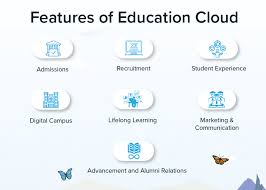
Salesforce Education Cloud is a comprehensive solution designed for higher education institutions, offering powerful tools to manage every aspect of the student lifecycle—from recruitment and admissions to student success and alumni engagement. However, to fully maximize the benefits of Salesforce Education Cloud, institutions need a partner that understands the unique challenges and needs of higher education. Our team specializes in implementing Salesforce Education Cloud, ensuring that your institution has the right tools to drive success at every stage of the student journey. Student 360 Customization We can help tailor Salesforce’s Student 360 to fit your institution’s specific needs, providing a unified, comprehensive view of each student. By integrating all your data sources seamlessly, we empower your staff with actionable insights that enhance student success and support. Customized Solutions for Your Institution Our Tectonic team focuses on delivering custom configurations aligned with your institution’s unique processes and goals. This tailored approach ensures you have the precise tools needed to support and optimize every stage of the student lifecycle. Continuous Optimization As your institution evolves, so should your Salesforce Education Cloud solution. We’re committed to helping your system grow with you, optimizing it to meet changing demands and driving ongoing success and improvement. AI and Automation to Streamline Processes From automating admissions workflows to using predictive analytics for student retention, Salesforce’s AI and automation features keep your institution ahead of the curve. We collaborate closely with your team to streamline repetitive tasks, set up AI-driven insights, and ensure your staff can leverage these tools to improve efficiency and make data-informed decisions. Alumni Engagement and Fundraising Salesforce Education Cloud offers advanced tools to foster alumni relationships and manage donor relations. We help you customize these tools to segment alumni databases, execute targeted outreach campaigns, and strengthen fundraising efforts, ensuring lasting engagement with graduates. By partnering with Tectonic, your institution will harness the full potential of Salesforce Education Cloud, driving student success and strengthening alumni connections for the long term. Content updated August 2024. Like Related Posts Who is Salesforce? Who is Salesforce? Here is their story in their own words. From our inception, we’ve proudly embraced the identity of Read more Salesforce Marketing Cloud Transactional Emails Salesforce Marketing Cloud Transactional Emails are immediate, automated, non-promotional messages crucial to business operations and customer satisfaction, such as order Read more Salesforce Unites Einstein Analytics with Financial CRM Salesforce has unveiled a comprehensive analytics solution tailored for wealth managers, home office professionals, and retail bankers, merging its Financial Read more AI-Driven Propensity Scores AI plays a crucial role in propensity score estimation as it can discern underlying patterns between treatments and confounding variables Read more

Read More
Generative AI for Insurance and Financial Services

Generative AI for Insurance and Financial Services

According to CBInsights, based upon research conducted by analyzing earnings calls, business relationships, and investment activities to assess the AI initiatives of some of the world’s largest companies across various sectors. Generative AI for Insurance and Financial Services is growing rapidly. The latest research report from the CBInsights team highlights the undeniable significance of AI for many of these global giants. Salesforce CEO Marc Benioff, for instance, referred to AI as “the single most important moment in the history of the technology industry” during the company’s recent earnings call. JPMorgan CEO Jamie Dimon echoed this sentiment in his April 2024 letter, expressing strong conviction about the extraordinary consequences of AI. Several companies are strategically focusing on AI to drive efficiencies and innovation. For instance, major pharmaceutical firms are collaborating on AI-powered drug discovery projects to expedite drug development timelines, while payments giants are deploying AI to combat fraud effectively. Despite the hype surrounding recent advancements, the translation of AI innovations into revenue has been limited so far. However, companies remain optimistic about future opportunities, recognizing the imperative of taking proactive steps to reshape industries. Generative AI for Insurance and Financial Services CBInsights’ comprehensive report digs into the AI strategies of various companies across sectors such as financial services, insurance, enterprise tech, pharmaceuticals, and industrials. By leveraging the CB Insights technology intelligence platform, they have analyzed signals like investment, partnerships, executive discussions in earnings transcripts, and patents to gain insights into these efforts. AI and machine learning algorithms are increasingly being utilized to enhance digital identity and regulatory technology (Regtech) services, as well as to improve customer experience through AI chatbots. In the financial services sector, advancements in AI technology are making services more accessible and frictionless, empowering investment platforms to automate tasks and focus on critical product development endeavors. While AI is still evolving, it is expected to play a pivotal role in driving the digital economy forward in the near future. Like Related Posts Who is Salesforce? Who is Salesforce? Here is their story in their own words. From our inception, we’ve proudly embraced the identity of Read more Salesforce Marketing Cloud Transactional Emails Salesforce Marketing Cloud Transactional Emails are immediate, automated, non-promotional messages crucial to business operations and customer satisfaction, such as order Read more Salesforce Unites Einstein Analytics with Financial CRM Salesforce has unveiled a comprehensive analytics solution tailored for wealth managers, home office professionals, and retail bankers, merging its Financial Read more AI-Driven Propensity Scores AI plays a crucial role in propensity score estimation as it can discern underlying patterns between treatments and confounding variables Read more

Read More
Gen AI Role in Healthcare

Gen AI Role in Healthcare

Generative AI’s Growing Role in Healthcare: Potential and Challenges The rapid advancements in large language models (LLMs) have introduced generative AI tools into nearly every business sector, including healthcare. As defined by the Government Accountability Office, generative AI is “a technology that can create content, including text, images, audio, or video, when prompted by a user.” These systems learn patterns and relationships from vast datasets, enabling them to generate new content that resembles but is not identical to the original training data. This capability is powered by machine learning algorithms and statistical models. In healthcare, generative AI is being utilized for various applications, including clinical documentation, patient communication, and clinical text summarization. Streamlining Clinical Documentation Excessive documentation is a leading cause of clinician burnout, as highlighted by a 2022 athenahealth survey conducted by the Harris Poll. Generative AI shows promise in easing these documentation burdens, potentially improving clinician satisfaction and reducing burnout. A 2024 study published in NEJM Catalyst explored the use of ambient AI scribes within The Permanente Medical Group (TPMG). This technology employs smartphone microphones and generative AI to transcribe patient encounters in real-time, providing clinicians with draft documentation for review. In October 2023, TPMG deployed this ambient AI technology across various settings, benefiting 10,000 physicians and staff. Physicians who used the ambient AI scribe reported positive outcomes, including more personal and meaningful patient interactions and reduced after-hours electronic health record (EHR) documentation. Early patient feedback was also favorable, with improved provider interactions noted. Additionally, ambient AI produced high-quality clinical documentation for clinician review. However, a 2023 study in the Journal of the American Medical Informatics Association (JAMIA) cautioned that ambient AI might struggle with non-lexical conversational sounds (NLCSes), such as “mm-hm” or “uh-uh,” which can convey clinically relevant information. The study found that while the ambient AI tools had a word error rate of about 12% for all words, the error rate for NLCSes was significantly higher, reaching up to 98.7% for those conveying critical information. Misinterpretation of these sounds could lead to inaccuracies in clinical documentation and potential patient safety issues. Enhancing Patient Communication With the digital transformation in healthcare, patient portal messages have surged. A 2021 study in JAMIA reported a 157% increase in patient portal inbox messages since 2020. In response, some healthcare organizations are exploring the use of generative AI to draft replies to these messages. A 2024 study published in JAMA Network Open evaluated the adoption of AI-generated draft replies to patient messages at an academic medical center. After five weeks, clinicians used the AI-generated drafts 20% of the time, a notable rate considering the LLMs were not fine-tuned for patient communication. Clinicians reported reduced task load and emotional exhaustion, suggesting that AI-generated replies could help alleviate burnout. However, the study found no significant changes in reply time, read time, or write time between the pre-pilot and pilot periods. Despite this, clinicians expressed optimism about time savings, indicating that the cognitive ease of editing drafts rather than writing from scratch might not be fully captured by time metrics. Summarizing Clinical Data Summarizing information within patient records is a time-consuming task for clinicians, and errors in this process can negatively impact clinical decision support. Generative AI has shown potential in this area, with a 2023 study finding that LLM-generated summaries could outperform human expert summaries in terms of conciseness, completeness, and correctness. However, using generative AI for clinical data summarization presents risks. A viewpoint in JAMA argued that LLMs performing summarization tasks might not fall under FDA medical device oversight, as they provide language-based outputs rather than disease predictions or numerical estimates. Without statutory changes, the FDA’s authority to regulate these LLMs remains unclear. The authors also noted that differences in summary length, organization, and tone could influence clinician interpretations and subsequent decision-making. Furthermore, LLMs might exhibit biases, such as sycophancy, where responses are tailored to user expectations. To address these concerns, the authors called for comprehensive standards for LLM-generated summaries, including testing for biases and errors, as well as clinical trials to quantify potential harms and benefits. The Path Forward Generative AI holds significant promise for transforming healthcare and reducing clinician burnout, but realizing this potential requires comprehensive standards and regulatory clarity. A 2024 study published in npj Digital Medicine emphasized the need for defined leadership, adoption incentives, and ongoing regulation to deliver on the promise of generative AI in healthcare. Leadership should focus on establishing guidelines for LLM performance and identifying optimal clinical settings for AI tool trials. The study suggested that a subcommittee within the FDA, comprising physicians, healthcare administrators, developers, and investors, could effectively lead this effort. Additionally, widespread deployment of generative AI will likely require payer incentives, as most providers view these tools as capital expenses. With the right leadership, incentives, and regulatory framework, generative AI can be effectively implemented across the healthcare continuum to streamline clinical workflows and improve patient care. Like Related Posts Who is Salesforce? Who is Salesforce? Here is their story in their own words. From our inception, we’ve proudly embraced the identity of Read more Salesforce Unites Einstein Analytics with Financial CRM Salesforce has unveiled a comprehensive analytics solution tailored for wealth managers, home office professionals, and retail bankers, merging its Financial Read more AI-Driven Propensity Scores AI plays a crucial role in propensity score estimation as it can discern underlying patterns between treatments and confounding variables Read more Tectonic’s Successful Salesforce Track Record Salesforce Technology Services Integrator – Tectonic has successfully delivered Salesforce in a variety of industries including Public Sector, Hospitality, Manufacturing, Read more

Read More
Advances in AI Models

Advances in AI Models

Advances in AI Models Let’s take a moment to appreciate the transformative impact large language models (LLMs) have had on the world. Before the rise of LLMs, researchers spent years training AI to generate images, but these models had significant limitations. Advances in AI Models. One promising neural network architecture was the generative adversarial network (GAN). In a GAN, two networks play a cat-and-mouse game: one tries to create realistic images while the other tries to distinguish between generated and real images. Over time, the image-creating network improves at tricking the other. While GANs can generate convincing images, they typically excel at creating images of a single subject type. For example, a GAN that creates excellent images of cats might struggle with images of mice. GANs can also experience “mode collapse,” where the network generates the same image repeatedly because it always tricks the discriminator. An AI that produces only one image repeatedly isn’t very useful. What’s truly useful is an AI model capable of generating diverse images, whether it’s a cat, a mouse, or a cat in a mouse costume. Such models exist and are known as diffusion models, named for the underlying math that resembles diffusion processes like a drop of dye spreading in water. These models are trained to connect images and text, leveraging vast amounts of captioned images on the internet. With enough samples, a model can extract the essence of “cat,” “mouse,” and “costume,” embedding these elements into generated images using diffusion principles. The results are often stunning. Some of the most well-known diffusion models include DALL-E, Imagen, Stable Diffusion, and Midjourney. Each model differs in training data, embedding language details, and user interaction, leading to varied results. As research and development progress, these tools continue to evolve rapidly. Uses of Generative AI for Imagery Generative AI can do far more than create cute cat cartoons. By fine-tuning generative AI models and combining them with other algorithms, artists and innovators can create, manipulate, and animate imagery in various ways. Here are some examples: Text-to-Image Generative AI allows for incredible artistic variety using text-to-image techniques. For instance, you can generate a hand-drawn cat or opt for a hyperrealistic or mosaic style. If you can imagine it, diffusion models can interpret your intention successfully. Text-to-3D Model Creating 3D models traditionally requires technical skill, but generative AI tools like DreamFusion can generate 3D models along with detailed descriptions of coloring, lighting, and material properties, meeting the growing demand in commerce, manufacturing, and entertainment. Image-to-Image Images can be powerful prompts for generative AI models. Here are some use cases: Animation Creating a series of consistent images for animation is challenging due to inherent randomness in generated images. However, researchers have developed methods to reduce variations, enabling smoother animations. All the use cases for still images can be adapted for animation. For example, style transfer can turn a video of a skateboarder into an anime-style animation. AI models trained on speech patterns can animate the lips of a generated 3D character. Embracing Generative AI Generative AI offers enormous possibilities for creating stunning imagery. As you explore these capabilities, it’s essential to use them responsibly. In the next unit, you’ll learn how to leverage generative AI’s potential in an ethical and effective manner. Like Related Posts Who is Salesforce? Who is Salesforce? Here is their story in their own words. From our inception, we’ve proudly embraced the identity of Read more Salesforce Unites Einstein Analytics with Financial CRM Salesforce has unveiled a comprehensive analytics solution tailored for wealth managers, home office professionals, and retail bankers, merging its Financial Read more AI-Driven Propensity Scores AI plays a crucial role in propensity score estimation as it can discern underlying patterns between treatments and confounding variables Read more Tectonic’s Successful Salesforce Track Record Salesforce Technology Services Integrator – Tectonic has successfully delivered Salesforce in a variety of industries including Public Sector, Hospitality, Manufacturing, Read more

Read More
UX Principles for AI in Healthcare

Agentic Era of UX

The Agentic Era of UX The future of digital experience has arrived, but it’s fragmenting into countless micro-applications. The missing piece in AI user experience? The experience itself. It’s been almost a year and a half since generative AI burst onto the scene, heralded as transformative. But what have we actually seen in terms of user experience? Many companies released AI-powered summaries or search features, claimed them as revolutionary, and received applause—until the applause faded. The so-called “next era” of tech hasn’t yet delivered on its promise. We were given “the most profound technology since fire,” yet many implementations feel like candles that barely flicker. Many UX designers continue advocating for AI to solve genuine user needs. Technology must serve users, not just exist for its own sake. The core issue now is broader: AI has often been treated as a quick fix rather than a true UX transformation. Where user experience traditionally supports the entire journey, AI is being wedged into small, isolated tasks, losing the holistic perspective. For most companies, AI feels like a string of individual “use cases” rather than a full, cohesive UX meal. Many consulting firms push companies to prioritize use cases in terms of complexity and value, often resulting in chatbots that address a handful of user needs. There are notable exceptions, though. For example, Loom went beyond simple AI features to enhance the user’s entire workflow, supporting end-to-end functionality for video recording, transcription, editing, and even task management. Welcome to the Agentic Era of AI We’re now on the verge of the “agentic” era of AI. Industry leaders are abuzz with the potential of AI agents. OpenAI’s Sam Altman calls agents AI’s “killer function,” while other leaders predict this future is within reach, possibly within 3–18 months. The agentic promise is profound: AI agents, or “agentic workflows,” break down complex tasks into manageable steps, helping users complete intricate projects with autonomy. As Ezra Klein describes, imagine telling an AI to plan your child’s dragon-themed birthday party in Brooklyn, and the agent handles everything from booking to ordering the cake—transforming a casual AI prompt into tangible results. Today’s general-purpose models can’t handle this level of complexity independently. But agentic workflows make this possible by chaining AI actions, allowing systems to execute tasks step-by-step. A Vision for Agentic UX Design’s role in this era is to bring a vision of agentic UX to life. In traditional digital experiences, we build systems that assist users along their journey, but we still expect users to navigate the journey themselves. With an agentic UX, an AI partner supports the user at every step. This vision means UX will be defined by three pillars: Early examples are emerging, like Adobe’s Gen Studio, Intercom’s Copilot, and Dovetail’s Magic Experience, each taking steps toward a future where AI provides ongoing, meaningful support to users. An agentic UX doesn’t necessarily need to label itself “agent-powered.” Dovetail, for instance, offers a suite of “Magic” features where the AI partner plays a supporting role, from summarizing transcripts to highlighting key points. Over time, as AI evolves, these agents will assume greater responsibility in user journeys, shifting from supportive to proactive. Strategically Reinvent for the Agentic Era Adapting to the agentic era presents an opportunity—and a risk for those who ignore it. Currently, organizations are focused on laying the infrastructure for “AI readiness.” While that’s essential, it can obscure the longer-term vision of what’s possible. Until business leaders fully grasp the agentic UX’s potential, it’s up to design to step into a strategic role and make this vision vivid, relatable, and exciting. This requires more than launching a quick proof of concept; it demands a reimagining of digital experience. Here’s a recommended approach: It’s been a challenging year for design, with layoffs and value debates. But with the agentic era approaching, the strategic potential for UX is immense. Now is the time to rally, to guide organizations into a new era of digital experience where users are truly supported every step of the way. 4ox Like Related Posts Who is Salesforce? Who is Salesforce? Here is their story in their own words. From our inception, we’ve proudly embraced the identity of Read more Salesforce Unites Einstein Analytics with Financial CRM Salesforce has unveiled a comprehensive analytics solution tailored for wealth managers, home office professionals, and retail bankers, merging its Financial Read more AI-Driven Propensity Scores AI plays a crucial role in propensity score estimation as it can discern underlying patterns between treatments and confounding variables Read more Tectonic’s Successful Salesforce Track Record Salesforce Technology Services Integrator – Tectonic has successfully delivered Salesforce in a variety of industries including Public Sector, Hospitality, Manufacturing, Read more

Read More
gettectonic.com