
- gettectonic.com - Page 9
Salesforce Solutions for Defense

Salesforce Solutions for Defense

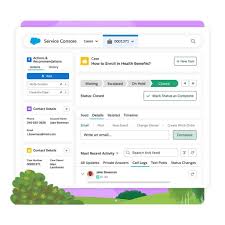
Defence Technology Solutions from Salesforce: Enabling Secure, Mission-Critical Operations Salesforce provides defense organizations with powerful technology solutions to deliver on their missions quickly and securely. By increasing IT flexibility, enhancing productivity, and safeguarding sensitive data in a secure, compliant cloud environment, Salesforce empowers defence organizations to achieve mission success with confidence. Salesforce Solutions for Defense. Modernizing Personnel Operations Salesforce streamlines workforce management and accelerates employee operations, providing a unified view of personnel and fast, digital workflows. Public sector organizations can transform hiring, recruiting, HR actions, IT requests, and employee services within a trusted operational hub. How It Works: Salesforce enhances productivity and digitizes government employee tasks throughout their lifecycle, from hire to retirement. Maximizing IT Agility Salesforce enables defence organizations to unlock data from legacy systems, cloud applications, and third-party platforms with an API-led approach, securely bridging on-premises and cloud environments. Rapid application development, consolidation, and system access become seamless with Salesforce’s low-code/no-code tools. How It Works: Salesforce compresses development cycles and increases flexibility, enabling defense organizations to deliver on mission objectives faster. Salesforce Solutions for Defense Delivering Successful Case Outcomes Salesforce supports the full case management lifecycle by integrating critical data points from multiple systems into a single, unified view. Defense organizations can empower caseworkers with purpose-built tools, ensuring successful case outcomes while reducing information silos and providing clients with the necessary support. How It Works: Salesforce creates a single source of truth for case management, enabling defense organizations to streamline workflows and improve service outcomes. By leveraging Salesforce’s defense technology solutions, organizations can modernize operations, maximize agility, and ensure successful case management outcomes, all while maintaining the highest levels of security and compliance. Salesforce Solutions for Defense from Tectonic. Like Related Posts Who is Salesforce? Who is Salesforce? Here is their story in their own words. From our inception, we’ve proudly embraced the identity of Read more Salesforce Marketing Cloud Transactional Emails Salesforce Marketing Cloud Transactional Emails are immediate, automated, non-promotional messages crucial to business operations and customer satisfaction, such as order Read more Salesforce Unites Einstein Analytics with Financial CRM Salesforce has unveiled a comprehensive analytics solution tailored for wealth managers, home office professionals, and retail bankers, merging its Financial Read more AI-Driven Propensity Scores AI plays a crucial role in propensity score estimation as it can discern underlying patterns between treatments and confounding variables Read more

Read More
RAG Chunking Method

RAG Chunking Method

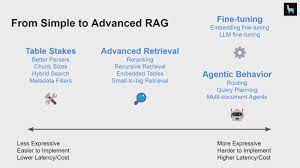
Enhancing Retrieval-Augmented Generation (RAG) Systems with Topic-Based Document Segmentation Dividing large documents into smaller, meaningful parts is crucial for the performance of Retrieval-Augmented Generation (RAG) systems. RAG Chunking Method. These systems benefit from frameworks that offer multiple document-splitting options. This Tectonic insight introduces an innovative approach that identifies topic changes using sentence embeddings, improving the subdivision process to create coherent topic-based sections. RAG Systems: An Overview A Retrieval-Augmented Generation (RAG) system combines retrieval-based and generation-based models to enhance output quality and relevance. It first retrieves relevant information from a large dataset based on an input query, then uses a transformer-based language model to generate a coherent and contextually appropriate response. This hybrid approach is particularly effective in complex or knowledge-intensive tasks. Standard Document Splitting Options Before diving into the new approach, let’s explore some standard document splitting methods using the LangChain framework, known for its robust support of various natural language processing (NLP) tasks. LangChain Framework: LangChain assists developers in applying large language models across NLP tasks, including document splitting. Here are key splitting methods available: Introducing a New Approach: Topic-Based Segmentation Segmenting large-scale documents into coherent topic-based sections poses significant challenges. Traditional methods often fail to detect subtle topic shifts accurately. This innovative approach, presented at the International Conference on Artificial Intelligence, Computer, Data Sciences, and Applications (ACDSA 2024), addresses this issue using sentence embeddings. The Core Challenge Large documents often contain multiple topics. Conventional segmentation techniques struggle to identify precise topic transitions, leading to fragmented or overlapping sections. This method leverages Sentence-BERT (SBERT) to generate embeddings for individual sentences, which reflect changes in the vector space as topics shift. Approach Breakdown 1. Using Sentence Embeddings: 2. Calculating Gap Scores: 3. Smoothing: 4. Boundary Detection: 5. Clustering Segments: Algorithm Pseudocode Gap Score Calculation: pythonCopy code# Example pseudocode for gap score calculation def calculate_gap_scores(sentences, n): embeddings = [sbert.encode(sentence) for sentence in sentences] gap_scores = [] for i in range(len(sentences) – n): before = embeddings[i:i+n] after = embeddings[i+n:i+2*n] score = cosine_similarity(before, after) gap_scores.append(score) return gap_scores Gap Score Smoothing: pythonCopy code# Example pseudocode for smoothing gap scores def smooth_gap_scores(gap_scores, k): smoothed_scores = [] for i in range(len(gap_scores)): start = max(0, i – k) end = min(len(gap_scores), i + k + 1) smoothed_score = sum(gap_scores[start:end]) / (end – start) smoothed_scores.append(smoothed_score) return smoothed_scores Boundary Detection: pythonCopy code# Example pseudocode for boundary detection def detect_boundaries(smoothed_scores, c): boundaries = [] mean_score = sum(smoothed_scores) / len(smoothed_scores) std_dev = (sum((x – mean_score) ** 2 for x in smoothed_scores) / len(smoothed_scores)) ** 0.5 for i, score in enumerate(smoothed_scores): if score < mean_score – c * std_dev: boundaries.append(i) return boundaries Future Directions Potential areas for further research include: Conclusion This method combines traditional principles with advanced sentence embeddings, leveraging SBERT and sophisticated smoothing and clustering techniques. This approach offers a robust and efficient solution for accurate topic modeling in large documents, enhancing the performance of RAG systems by providing coherent and contextually relevant text sections. Like Related Posts Who is Salesforce? Who is Salesforce? Here is their story in their own words. From our inception, we’ve proudly embraced the identity of Read more Salesforce Unites Einstein Analytics with Financial CRM Salesforce has unveiled a comprehensive analytics solution tailored for wealth managers, home office professionals, and retail bankers, merging its Financial Read more AI-Driven Propensity Scores AI plays a crucial role in propensity score estimation as it can discern underlying patterns between treatments and confounding variables Read more Tectonic’s Successful Salesforce Track Record Salesforce Technology Services Integrator – Tectonic has successfully delivered Salesforce in a variety of industries including Public Sector, Hospitality, Manufacturing, Read more

Read More
Salesforce Data Cloud Hits $900M in Revenue

Salesforce Data Cloud CDP

Salesforce Data Cloud: The Ultimate Customer Data Platform (CDP) Guide Transform Customer Data into Actionable Insights Salesforce Data Cloud (formerly Salesforce CDP) revolutionizes how businesses unify and activate customer data across every touchpoint. By consolidating information from websites, mobile apps, CRM systems, and more, it creates 360° customer profiles that power personalized marketing, sales, and service experiences. What is Salesforce Data Cloud? Salesforce Data Cloud is an AI-powered Customer Data Platform (CDP) that: 💡 Key Benefit: Break down data silos to deliver hyper-personalized customer journeys. Data Cloud vs. Traditional CRM: Key Differences Feature Salesforce CRM Salesforce Data Cloud Data Scope Sales/Service records only All customer interactions (web, email, ads, IoT) Real-Time Updates Manual/periodic syncs Instant profile enrichment AI Capabilities Basic analytics Predictive insights + GenAI recommendations Use Cases Pipeline management Omnichannel personalization Core Capabilities 1. Unified Customer Profiles 2. AI-Powered Segmentation 3. Activation Across Channels 4. Privacy & Compliance How Businesses Use Data Cloud 🚀 Boost E-Commerce Sales 📈 Optimize Ad Spend 🤖 Enhance Customer Service Technical Deep Dive Data Integration Options Key Concepts Getting Started 1. Choose Your Edition 2. Implement in 4 Steps 3. Train Your Team The Future of Data Cloud Final Verdict Salesforce Data Cloud is not just a CDP—it’s the central nervous system for customer-centric businesses. By unifying data + AI, it turns insights into personalized experiences at scale. Ready to explore? Contact Tectonic today. 🔥 Pro Tip: Pair with Einstein AI for predictive analytics and Genie for real-time streaming data. Content updated July 2025. Like Related Posts Who is Salesforce? Who is Salesforce? Here is their story in their own words. From our inception, we’ve proudly embraced the identity of Read more Salesforce Marketing Cloud Transactional Emails Salesforce Marketing Cloud Transactional Emails are immediate, automated, non-promotional messages crucial to business operations and customer satisfaction, such as order Read more Salesforce Unites Einstein Analytics with Financial CRM Salesforce has unveiled a comprehensive analytics solution tailored for wealth managers, home office professionals, and retail bankers, merging its Financial Read more AI-Driven Propensity Scores AI plays a crucial role in propensity score estimation as it can discern underlying patterns between treatments and confounding variables Read more

Read More
gettectonic.com