- gettectonic.com - Page 7
AI for Marketing and Retail

AI for Marketing and Retail

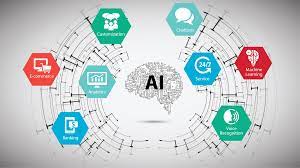
Salesforce Expands AI Capabilities for Marketing and Retail with Einstein Copilot Salesforce is making waves in the marketing and retail sectors by enhancing its Einstein Copilot feature, bringing advanced AI tools even closer to its users. AI for Marketing and Retail. For those unfamiliar with Salesforce, it offers Einstein 1, a comprehensive platform integrating AI and machine learning across its various applications. Einstein Copilot, a part of this platform, functions as an AI-powered assistant designed to provide real-time assistance, automate tasks, and deliver contextual insights to boost productivity. New Additions: Einstein Copilot for Marketers and Merchants Salesforce has recently announced two exciting additions: Einstein Copilot for Marketers and Einstein Copilot for Merchants. Einstein Copilot for Marketers: Einstein Copilot for Merchants: Availability Einstein Copilot for Marketers is set to be generally available this summer, while Einstein Copilot for Merchants will enter the beta stage in the autumn. Leadership Insight “With the Einstein 1 Platform, we’re giving organizations the power to unify all of their data on one trusted platform,” said Ariel Kelman, President and CMO of Salesforce. “This is the key to getting results from generative AI that are actually useful in driving your business forward.” About Salesforce Founded in 1999, Salesforce is a cloud-based software company renowned as one of the best CRM software providers. With over 72,000 employees globally and an annual revenue of .49 billion, Salesforce continues to lead in innovation and customer satisfaction. Like Related Posts Who is Salesforce? Who is Salesforce? Here is their story in their own words. From our inception, we’ve proudly embraced the identity of Read more Salesforce Marketing Cloud Transactional Emails Salesforce Marketing Cloud Transactional Emails are immediate, automated, non-promotional messages crucial to business operations and customer satisfaction, such as order Read more Salesforce Unites Einstein Analytics with Financial CRM Salesforce has unveiled a comprehensive analytics solution tailored for wealth managers, home office professionals, and retail bankers, merging its Financial Read more AI-Driven Propensity Scores AI plays a crucial role in propensity score estimation as it can discern underlying patterns between treatments and confounding variables Read more

Read More
Improve Patient Care and Trust

Improve Patient Care and Trust

A recent survey conducted by Kyruus Health and shared with HealthPayerIntelligence reveals that consumers are demanding more accurate online provider data from payers to enhance access to care. Healthcare solutions from Tectonic and Salesforce improve patient care and trust by improving data accuracy. The survey, fielded by Wakefield Research in April 2024, involved 1,000 healthcare consumers. Nearly three-quarters of respondents (72%) had private health insurance, with Medicare being the second most common form of coverage (18%). The participants represented an even distribution across U.S. regions and age groups, with 57% identifying as women. Payers have historically struggled to maintain up-to-date provider directories, and this survey highlights the significant impact of these challenges. About 30% of consumers reported skipping care due to inaccurate provider information, with 70% of them seeking this data online. Consumers primarily rely on health plan websites or apps for provider information, with 32% naming these platforms as their first resource. Medicaid enrollees were particularly dependent on their plan’s digital resources, with 64% turning to these tools first. Besides health plan websites and apps, consumers also used general internet searches, provider or clinic websites, and healthcare information sites like WebMD. Social media platforms were also popular for care searches, with 77% of users turning to Facebook and 61% to YouTube. The survey also revealed that payers often fail to provide accurate cost predictions. Only 32% of respondents said their health plans offered accurate cost information. Price transparency tools are particularly important to younger generations, with 76% of Millennials and 80% of Gen Z respondents using these tools. However, 40% of Baby Boomers were unsure if their plans even offered such tools. Among those who did use them, 34% found that the tools presented incorrect provider data, with 45% of Gen Z reporting this issue. Inaccurate provider information can lead to significant negative consequences for consumers, including delays in accessing care, difficulties contacting preferred providers, and higher costs. Some consumers even reported accidentally receiving out-of-network care or forgoing care altogether due to these inaccuracies. These experiences not only hinder access to care but also damage consumer trust in their healthcare providers and payers. Overall, 80% of respondents said that inaccurate provider data affected their trust, with 27% losing trust in their health plans and 22% losing trust in their providers. The survey results underscore a clear call to action. Over 60% of consumers, and nearly 75% of Gen Z specifically, want their health plans to provide more accurate data. Tectonic has decades of experience applying Salesforce solutions to health care providers and payers. To address these concerns, the report recommends that health plans take three key steps: First, engage with members through appropriate channels, including social media. Second, unify and validate their provider data to ensure accuracy. Third, introduce self-service capabilities within their digital platforms to empower consumers. Reach out to Tectonic today if your organization needs help applying these three steps. Like Related Posts Who is Salesforce? Who is Salesforce? Here is their story in their own words. From our inception, we’ve proudly embraced the identity of Read more Salesforce Marketing Cloud Transactional Emails Salesforce Marketing Cloud Transactional Emails are immediate, automated, non-promotional messages crucial to business operations and customer satisfaction, such as order Read more Salesforce Unites Einstein Analytics with Financial CRM Salesforce has unveiled a comprehensive analytics solution tailored for wealth managers, home office professionals, and retail bankers, merging its Financial Read more AI-Driven Propensity Scores AI plays a crucial role in propensity score estimation as it can discern underlying patterns between treatments and confounding variables Read more

Read More
Gen AI Unleased With Vector Database

Gen AI Unleased With Vector Database

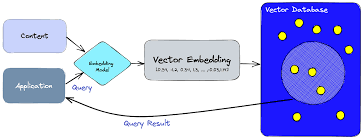
Salesforce Unveils Data Cloud Vector Database with GenAI Integration Salesforce has officially launched its Data Cloud Vector Database, leveraging GenAI to rapidly process a company’s vast collection of PDFs, emails, transcripts, online reviews, and other unstructured data. Gen AI Unleased With Vector Database. Rahul Auradkar, Executive Vice President and General Manager of Salesforce Unified Data Services and Einstein Units, highlighted the efficiency gains in a one-on-one briefing with InformationWeek. Auradkar demonstrated the new capabilities through a live demo, showcasing the potential of the Data Cloud Vector Database. Enhanced Efficiency and Data Utilization The new Data Cloud integrates with the Einstein 1 platform, combining unstructured and structured data for rapid analysis by sales, marketing, and customer service teams. This integration significantly enhances the accuracy of Einstein Copilot, Salesforce’s enterprise conversational AI assistant. Gen AI Unleased With Vector Database Auradkar demonstrated how a customer service query could retrieve multiple relevant results within seconds. This process, which typically takes hours of manual effort, now leverages unstructured data, which makes up 90% of customer data, to deliver swift and accurate results. “This advancement allows our customers to harness the full potential of 90% of their enterprise data—unstructured data that has been underutilized or siloed—to drive use cases, AI, automation, and analytics experiences across both structured and unstructured data,” Auradkar explained. Comprehensive Data Management Using Salesforce’s Einstein 1 platform, Data Cloud enables users to ingest, store, unify, index, and perform semantic queries on unstructured data across all applications. This data encompasses diverse unstructured content from websites, social media platforms, and other sources, resulting in more accurate outcomes and insights. Auradkar emphasized, “This represents an order of magnitude improvement in productivity and customer satisfaction. For instance, a large shipping company with thousands of customer cases can now categorize and access necessary information far more efficiently.” Additional Announcements Salesforce also introduced several new AI and Data Cloud features: Auradkar noted that these innovations enhance Salesforce’s competitive edge by prioritizing flexibility and enabling customers to take control of their data. “We’ll continue on this journey,” Auradkar said. “Our future investments will focus on how this product evolves and scales. We’re building significant flexibility for our customers to use any model they choose, including any large language model.” For more insights and updates, visit Salesforce’s official announcements and stay tuned for further developments. Like1 Related Posts Who is Salesforce? Who is Salesforce? Here is their story in their own words. From our inception, we’ve proudly embraced the identity of Read more Salesforce Marketing Cloud Transactional Emails Salesforce Marketing Cloud Transactional Emails are immediate, automated, non-promotional messages crucial to business operations and customer satisfaction, such as order Read more Salesforce Unites Einstein Analytics with Financial CRM Salesforce has unveiled a comprehensive analytics solution tailored for wealth managers, home office professionals, and retail bankers, merging its Financial Read more AI-Driven Propensity Scores AI plays a crucial role in propensity score estimation as it can discern underlying patterns between treatments and confounding variables Read more
Read More
Dynamic Content Powered Email

Dynamic Content Powered Email

Elevating Email Marketing with Dynamic Content Customers don’t want to feel like just another number to your brand. Relying on a generic “batch and blast” email marketing strategy is likely to land you in the customer’s spam filters—or worse, prompt them to unsubscribe. However, with Dynamic Content Powered Email, you can create a relevant and timely experience they’ll remember for all the right reasons. The Power of Personalization In an era where privacy and security dominate the headlines, it’s surprising that 83% of consumers are willing to share personal data for more personalized experiences. This isn’t just an interesting tidbit—it’s proof that people expect and value personalized experiences from brands. This tradeoff—data for personalization—presents a significant opportunity for marketers who can uphold their end of the bargain. Nowhere is this more evident than in the inbox. Dynamic email content allows for the creation of personalized messages that update when the email is opened, meeting readers’ expectations for tailored communication. The Importance of Dynamic Email Content Modern email marketing must prioritize engaging and relevant content to avoid poor performance and potential relegation to spam folders. Recent developments, such as the loss of third-party cookies, make it increasingly challenging to acquire the right data for personalization. Let’s explore some tactics and resources to achieve quick email marketing wins without the heavy lifting, by automating impactful experiences in the inbox. Understanding Dynamic Email Content Dynamic email content, often called live email content, refers to messages that change based on the subscriber’s personal preferences or history with your website. Unlike static ads, dynamic content offers a tailored shopping experience, increasing engagement and fostering brand loyalty. For example, using dynamic elements such as live polls or customized product recommendations can make subscribers feel valued and understood. Interactive emails enhance the overall experience and encourage deeper engagement. Case Studies in Dynamic Email Success Dynamic content engages audiences and prompts action, crucial for both business success and email program health. Email engagement metrics influence whether your emails are delivered to the inbox or spam folder, making engaging content essential for ISP trust. Not just customer trust. Leveraging First- and Zero-Party Data First-party data is now more important than ever. Email provides a direct line to subscribers, enabling the collection of valuable insights into their preferences and behaviors. This data can fuel further personalization efforts. For example, UK hospitality brand icelolly.com used dynamic email content to display searched and abandoned deals, resulting in a 35% higher open rate, a 201% increase in click-through rate, and a 45% increase in conversion rate. Popular Types of Dynamic Email Content Implementing Dynamic Email Content Simply Personalization with dynamic email content doesn’t have to be resource-intensive. No-code solutions or templates can streamline the process, allowing ongoing implementation with minimal effort. For instance, PrettyLittleThing used automation in birthday emails to show the correct star sign content based on the opening date, driving a 38% increase in click-through rates. Dynamic Content Powered Email has emerged as a powerful tool for marketers aiming to meet and exceed consumer expectations. By incorporating dynamic elements—such as live polls, countdown timers, and personalized images—marketers can create engaging, memorable experiences that build stronger customer relationships and drive brand loyalty. Like Related Posts Who is Salesforce? Who is Salesforce? Here is their story in their own words. From our inception, we’ve proudly embraced the identity of Read more Salesforce Marketing Cloud Transactional Emails Salesforce Marketing Cloud Transactional Emails are immediate, automated, non-promotional messages crucial to business operations and customer satisfaction, such as order Read more Salesforce Unites Einstein Analytics with Financial CRM Salesforce has unveiled a comprehensive analytics solution tailored for wealth managers, home office professionals, and retail bankers, merging its Financial Read more AI-Driven Propensity Scores AI plays a crucial role in propensity score estimation as it can discern underlying patterns between treatments and confounding variables Read more

Read More
Machine-Augmented World

How Can AI Help Sales Enablement

Artificial intelligence (AI) plays a crucial role in enhancing sales enablement across various dimensions: Content Management: AI-powered sales enablement tools integrate seamlessly with CRM systems and marketing platforms, providing sales reps with instant access to relevant content. AI can assist in creating sales scripts, emails, and summaries, while also enabling efficient content search and retrieval. Coaching and Skill Development: AI analyzes sales activities to pinpoint areas where reps need coaching, offering real-time feedback after sales calls. It enables reps to record practice sessions for AI-driven assessment and scoring, fostering continuous improvement in sales techniques. Impact Analysis of Sales Content: AI evaluates the effectiveness of sales content, assessing its impact on advancing deals. This insight helps sales teams refine their content strategies to better align with customer needs and preferences. Performance Tracking: AI-driven platforms track key performance metrics such as conversion rates, win rates, and sales cycle duration. This data-driven approach enables sales leaders to evaluate the effectiveness of sales strategies and make informed decisions. Enhanced Customer Interactions: AI analyzes customer data to provide predictive insights, optimize lead scoring, and enhance engagement strategies. By identifying high-conversion leads and personalizing interactions, AI empowers sales teams to tailor their approach and improve sales outcomes. Automation of Tasks: Generative AI automates repetitive tasks like lead generation, content creation, and sales forecasting. This automation not only enhances efficiency but also allows sales reps to focus more on strategic initiatives and customer relationship building. While AI significantly enhances sales enablement by automating routine tasks and providing valuable insights, it complements rather than replaces human intuition and expertise in customer interactions and strategic decision-making. Sales organizations leveraging AI are poised to achieve greater efficiency, effectiveness, and profitability in the dynamic business landscape. As AI continues to evolve, its integration into sales processes is expected to grow, driving substantial economic benefits and transforming the way sales teams operate globally. Like Related Posts Who is Salesforce? Who is Salesforce? Here is their story in their own words. From our inception, we’ve proudly embraced the identity of Read more Salesforce Marketing Cloud Transactional Emails Salesforce Marketing Cloud Transactional Emails are immediate, automated, non-promotional messages crucial to business operations and customer satisfaction, such as order Read more Salesforce Unites Einstein Analytics with Financial CRM Salesforce has unveiled a comprehensive analytics solution tailored for wealth managers, home office professionals, and retail bankers, merging its Financial Read more AI-Driven Propensity Scores AI plays a crucial role in propensity score estimation as it can discern underlying patterns between treatments and confounding variables Read more

Read More
Data Cloud Vector Database and Hyperforce

Data Cloud Vector Database and Hyperforce

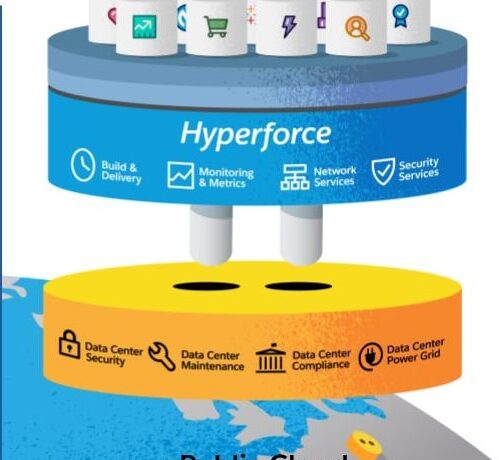
Salesforce World Tour Highlights: Data Cloud Vector Database and Hyperforce At the Salesforce World Tour on June 6, 2024, at the Excel Centre in east London, the focus was on advancements in the Data Cloud and Slack platforms. The event, sponsored by AWS, Cognizant, Deloitte, and PWC, showcased significant innovations, particularly for GenAI enthusiasts. Data Cloud Vector Database and Hyperforce. Vector Database in Data Cloud A key highlight was the announcement of the general availability of a Vector Database capability within the Data Cloud, integrated into the Einstein 1 Platform. This capability enhances Salesforce’s CRM platform, Customer 360, by combining structured and unstructured data about end-users. The Vector Database collects, ingests, and unifies data, allowing enterprises to deploy GenAI across all applications without needing to fine-tune an off-the-shelf large language model (LLM). Addressing Data Fragmentation Salesforce reports that approximately 80% of customer data is dispersed across various corporate departments in an unstructured format, trapped in PDFs, emails, chat conversations, and transcripts. The Vector Database unifies this fragmented data, creating a comprehensive profile of the customer journey. This unified approach not only improves customer engagement but also enhances organizational agility. By consolidating data from all corporate silos, companies can quickly and efficiently address issues such as product recalls and returns. Hyperforce: Enhancing Data Residency and Compliance During the keynote, Salesforce emphasized the importance of personalization in customer engagement and the benefits of deploying GenAI in customer-facing sectors. The event highlighted the need to overcome the fear and mistrust of GenAI and showcased how enterprises can enhance employee productivity through upskilling in GenAI technologies. One notable announcement was the general availability of Hyperforce, a solution designed to address data residency issues by integrating all Salesforce applications under the same compliance, security, privacy, and scalability standards. Built for the public cloud and composed of code rather than hardware, Hyperforce ensures safe delivery of applications worldwide, offering a common layer for deploying all application stacks and handling data compliance in a fragmented technology landscape. Salesforce AI Center The Salesforce AI Center was also introduced at the event. The first of its kind, located in the Blue Fin Building near Blackfriars, London, this center will support AI experts, Salesforce partners, and customers, facilitating training and upskilling programs. Set to open on June 18, 2024, the center aims to upskill 100,000 developers worldwide and is part of Salesforce’s $4 billion investment in the UK and Ireland. Industry Reactions and Future Prospects GlobalData senior analyst Beatriz Valle commented on Salesforce’s continued integration of GenAI across its portfolio, including platforms like Tableau, Einstein for analytics, and Slack for collaboration. According to Salesforce, the Data Cloud tool leverages all metadata in the Einstein 1 Platform, connecting unstructured and structured data, reducing the need for fine-tuning LLMs, and enhancing the accuracy of results delivered by Einstein Copilot, Salesforce’s conversational AI assistant. Vector databases, while not new, have gained prominence due to the GenAI revolution. They power the retrieval-augmented generation (RAG) technique, linking proprietary data with large language models like OpenAI’s GPT-4, enabling enterprises to generate more accurate results. Competitors such as Oracle, Amazon, Microsoft, and Google also offer vector databases, but Salesforce’s early investments in GenAI are proving fruitful with the launch of the Data Cloud Vector Database. Data Cloud Vector Database and Hyperforce Salesforce’s AI-powered integration solutions, highlighted during the World Tour, underscore the company’s commitment to advancing digital transformation. By leveraging GenAI and innovative tools like the Vector Database and Hyperforce, Salesforce is enabling enterprises to overcome the challenges of data fragmentation and compliance, paving the way for a more agile and competitive digital future. Like Related Posts Who is Salesforce? Who is Salesforce? Here is their story in their own words. From our inception, we’ve proudly embraced the identity of Read more Salesforce Marketing Cloud Transactional Emails Salesforce Marketing Cloud Transactional Emails are immediate, automated, non-promotional messages crucial to business operations and customer satisfaction, such as order Read more Salesforce Unites Einstein Analytics with Financial CRM Salesforce has unveiled a comprehensive analytics solution tailored for wealth managers, home office professionals, and retail bankers, merging its Financial Read more AI-Driven Propensity Scores AI plays a crucial role in propensity score estimation as it can discern underlying patterns between treatments and confounding variables Read more
Read More
Salesforce Legacy Chat Service Retirement

Salesforce Summer 24 Customization Release

Customization Salesforce Summer 24 Customization Release Manage users more easily with the user access, public group, permission set, and permission set group summaries. Give record page users more of what they need where and when they need it with Lightning record page enhancements such as blank space support and visibility rules on individual tabs. Salesforce Summer 24 Customization Release Like Related Posts Who is Salesforce? Who is Salesforce? Here is their story in their own words. From our inception, we’ve proudly embraced the identity of Read more Salesforce Marketing Cloud Transactional Emails Salesforce Marketing Cloud Transactional Emails are immediate, automated, non-promotional messages crucial to business operations and customer satisfaction, such as order Read more Salesforce Unites Einstein Analytics with Financial CRM Salesforce has unveiled a comprehensive analytics solution tailored for wealth managers, home office professionals, and retail bankers, merging its Financial Read more AI-Driven Propensity Scores AI plays a crucial role in propensity score estimation as it can discern underlying patterns between treatments and confounding variables Read more

Read More
Consumer Chatbot Technology

Consumer Chatbot Technology

The Reality Behind AI Chatbots and the Path to Autonomous AI In the rush to adopt the latest Consumer Chatbot Technology, it’s easy to overlook a fundamental reality: consumer chatbot technology isn’t ready for enterprise use—and it likely never will be. The reason is simple: AI assistants are only as effective as the data that powers them. Most large language models (LLMs) are trained on data from public websites, which lack the specific business and customer data that enterprises need. This means consumer bots can’t adequately assist employees in selling products, marketing merchandise, or improving productivity, as they lack the necessary personalization and business context. To achieve the vision of AI that goes beyond simple chatbots performing basic tasks—like drafting emails, essays, blogs, or graphics—to a more advanced role where AI acts autonomously and addresses business-critical needs, a different approach is needed. This vision involves AI taking action with minimal human intervention, using digital agents to identify and respond to these needs. At Salesforce, we are pursuing a clear path to AI that not only takes action but also automates routine tasks, all while adhering to established business rules, permissions, and context. Instead of relying solely on LLMs, which primarily focus on generating human-like text, future AI assistants will depend on large action models (LAMs) that integrate decision-making and action-taking capabilities. The Journey Toward AI Autonomy Our journey towards this vision began with the Salesforce Data Cloud, a robust data engine built on the Einstein 1 Platform. This platform integrates data from across the enterprise and third-party repositories, enabling companies to activate their data, automate workflows, personalize customer interactions, and develop smarter AI solutions. Recognizing the shift from generative AI to autonomous AI, Salesforce introduced Einstein Copilot, the industry’s first conversational, enterprise-class AI assistant. Integrated across the Salesforce ecosystem, Einstein Copilot utilizes an organization’s data, whether it’s behind a firewall or in an external data lake, to act as a reasoning engine. It interprets user intents, interacts with the most suitable AI model, solves problems, generates relevant content, and provides decision-making support. Expanding the Role of AI in Business Since its launch in February 2024, Salesforce has been expanding Einstein Copilot’s library of actions to meet specific business needs in sales, service, marketing, data analysis, and industries like ecommerce, financial services, healthcare, and education. These “actions” are akin to LEGO blocks—discrete tasks that can be assembled to achieve desired project outcomes. For example, a sales representative might use Einstein Copilot to generate a personalized close plan, gain insights into why a deal may not close, or review whether pricing was discussed in a recent call. Einstein Copilot then orchestrates these tasks, provides recommendations, and compiles everything into a detailed report. The ultimate goal is for AI not only to gather and organize information but also to take proactive action. Imagine a sales representative instructing their digital agent to set up meetings with top prospects in a specific territory. The AI could not only identify suitable contacts but also suggest meeting times, plan travel schedules, draft emails, and even create talking points—all of which it could execute autonomously with the representative’s approval. Tectonic dreams of the day AI is smart enough to interpret our search engine typos and produce the results for what we were actually looking for! The Future of AI Autonomy The possibilities for semi-autonomous or fully autonomous AI are vast. As we continue to develop and refine these technologies, the potential for AI to transform business processes and decision-making becomes increasingly tangible. At Salesforce, they are committed to leading this charge, ensuring that our AI solutions not only meet but exceed the expectations of enterprises worldwide. Salesforce is in a strong position to deliver on all of them because of the volume and breadth of data housed in Data Cloud, the heavy workflow traffic in our Customer 360 CRM, and the fact we’ve delivered an enterprise-class copilot that is rapidly expanding its library of actions. It will not happen overnight. The technology needs to advance, organizations and people have to be able to trust AI and be trained to use it in the right ways, and more work will need to be done to ensure the right balance between human involvement and AI autonomy. But with our continued investment in CRM, data, and trusted AI, we will achieve that vision before too long. Salesforce is in a strong position to deliver on all of them because of the volume and breadth of data housed in Data Cloud, the heavy workflow traffic in our Customer 360 CRM, and the fact we’ve delivered an enterprise-class copilot that is rapidly expanding its library of actions. Jayesh Govindarajan, Senior Vice President, Salesforce AI Like Related Posts Who is Salesforce? Who is Salesforce? Here is their story in their own words. From our inception, we’ve proudly embraced the identity of Read more Salesforce Marketing Cloud Transactional Emails Salesforce Marketing Cloud Transactional Emails are immediate, automated, non-promotional messages crucial to business operations and customer satisfaction, such as order Read more Salesforce Unites Einstein Analytics with Financial CRM Salesforce has unveiled a comprehensive analytics solution tailored for wealth managers, home office professionals, and retail bankers, merging its Financial Read more AI-Driven Propensity Scores AI plays a crucial role in propensity score estimation as it can discern underlying patterns between treatments and confounding variables Read more

Read More
Field Types to Custom Report Type

Field Types to Custom Report Type

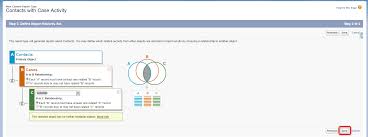
How to Add Fields to a Custom Report Type If a report based on a Custom Report Type is missing some fields, you’ll need to edit the layout of the report type to make those fields available. For example, if an ‘Activities with Accounts and Contacts’ report type lacks certain fields in the ‘Select Columns’ step of the Report Builder, follow the steps below to resolve this. Steps to Add Missing Fields to Your Custom Report: Note: When previewing the layout, you’ll see all fields and objects, even those you don’t have permission to access. You can only access data stored in fields or objects that you have the appropriate permissions for. Once you’ve completed these steps, the missing fields will be available in the report. Additional Resources For more tips, visit the Salesforce Help page: Design the Field Layout for Reports Created From Your Custom Report. You may also want to explore more about creating a Custom Report Type and Standard Report Types for further customization. Like Related Posts Who is Salesforce? Who is Salesforce? Here is their story in their own words. From our inception, we’ve proudly embraced the identity of Read more Salesforce Marketing Cloud Transactional Emails Salesforce Marketing Cloud Transactional Emails are immediate, automated, non-promotional messages crucial to business operations and customer satisfaction, such as order Read more Salesforce Unites Einstein Analytics with Financial CRM Salesforce has unveiled a comprehensive analytics solution tailored for wealth managers, home office professionals, and retail bankers, merging its Financial Read more AI-Driven Propensity Scores AI plays a crucial role in propensity score estimation as it can discern underlying patterns between treatments and confounding variables Read more
Read More
AI Tools for Automation

AI Tools for Automation

Revolutionizing QA Testing: Top 10 AI Tools for Automation Artificial intelligence (AI) is transforming many aspects of our daily lives and professional environments, and its impact on Quality Assurance (QA) testing is particularly groundbreaking. While AI applications in areas like photo-to-anime converters gain attention, its role in automating QA testing processes is truly revolutionary. In this article, we’ll explore the top 10 AI tools that are changing the game in QA automation. AI Tools for Automation. Why Use AI in QA Testing? AI is a game-changer in QA testing, streamlining processes that were once manual and time-consuming. It enhances efficiency by optimizing test scenarios, predicting defects, and automating test creation and execution. Although manual testing remains important, AI tools are becoming crucial for achieving more accurate and efficient QA processes. Top 10 AI Testing Tools Here’s a curated list of the top 10 AI tools for test automation. Choosing the Right AI Tool To select the best AI testing tool for your needs, follow these steps: Conclusion AI is transforming QA testing by reducing preparation time, improving accuracy, and enhancing software quality. By leveraging the AI tools outlined above, you can optimize your testing processes and achieve superior results. For expert QA assistance and a detailed product testing estimate, contact our professional team. Like Related Posts Who is Salesforce? Who is Salesforce? Here is their story in their own words. From our inception, we’ve proudly embraced the identity of Read more Salesforce Marketing Cloud Transactional Emails Salesforce Marketing Cloud Transactional Emails are immediate, automated, non-promotional messages crucial to business operations and customer satisfaction, such as order Read more Salesforce Unites Einstein Analytics with Financial CRM Salesforce has unveiled a comprehensive analytics solution tailored for wealth managers, home office professionals, and retail bankers, merging its Financial Read more AI-Driven Propensity Scores AI plays a crucial role in propensity score estimation as it can discern underlying patterns between treatments and confounding variables Read more

Read More
ChatGPT 5.0 is Coming

ChatGPT 5.0 is Coming

Sam Altman Teases ChatGPT-5: Here’s What We Know GPT-5: A Major Leap in AI Following the release of GPT-4, anticipation for its successor, GPT-5, has been growing. According to reports from Business Insider, GPT-5 is expected to debut in mid-2024, potentially marking a significant advancement in AI capabilities. Insiders describe GPT-5 as “materially better,” with enhancements that could transform AI-driven communication and composition. ChatGPT 5.0 is Coming. The Journey to GPT-5 After GPT-4’s launch, speculation about GPT-5’s arrival intensified. OpenAI CEO Sam Altman has hinted at the upcoming release, assuring groundbreaking advancements. However, concrete details were scarce until recent reports provided a clearer timeline for GPT-5’s debut. What to Expect from GPT-5 Early demonstrations of GPT-5 have impressed insiders, with one CEO describing it as “really good.” The model promises significant improvements, showcasing its versatility in real-world applications. From unique use cases for individual enterprises to autonomous AI agents, GPT-5 is poised to expand the boundaries of AI capabilities. Evolution of Language Models Understanding GPT-5’s significance involves tracing the evolution of OpenAI’s language models. From the groundbreaking GPT-3 in 2020 to the iterative improvements leading to GPT-4 Turbo, each iteration has advanced the sophistication of AI-driven communication tools. ChatGPT 5.0 is Coming: A Multimodal Approach Building on its predecessors, GPT-5 is expected to offer a multimodal experience, integrating text and encoded visual input. This capability opens up numerous applications, from content generation to image captioning, further embedding AI in various domains. Next-Token Prediction and Conversational AI At its core, GPT-5 remains a next-token prediction model, generating contextually relevant responses based on input prompts. This functionality underpins conversational AI applications like ChatGPT, enabling seamless user-AI interactions. Challenges and Opportunities Ahead As OpenAI prepares for GPT-5’s launch, the focus shifts to the challenges and opportunities it presents. Addressing concerns about model performance and reliability, and exploring novel use cases, the journey towards realizing the full potential of AI-driven language models is filled with possibilities. Ensuring Safety and Reliability Ensuring the success of GPT-5 involves rigorous testing and validation to guarantee its safety and reliability. As AI continues to advance, maintaining transparency and accountability in its development is crucial. Unlocking New Frontiers Beyond immediate applications, GPT-5 represents a significant step towards unlocking new frontiers in AI innovation. From enhancing natural language understanding to facilitating human-machine collaboration, the implications of GPT-5 extend far beyond its initial release. Like1 Related Posts Who is Salesforce? Who is Salesforce? Here is their story in their own words. From our inception, we’ve proudly embraced the identity of Read more AI-Driven Propensity Scores AI plays a crucial role in propensity score estimation as it can discern underlying patterns between treatments and confounding variables Read more Asset Management Salesforce Can Salesforce do asset management? You can manage assets in Consumer Goods (desktop) and in the Consumer Goods offline mobile Read more Lookup Relationship in Salesforce What is Lookup relationship in Salesforce? Salesforce’s lookup relationships is a significant capability that allows users to connect two objects Read more
Read More
Salesforce Announces Slack Lists for Project Management

Salesforce Announces Slack Lists for Project Management

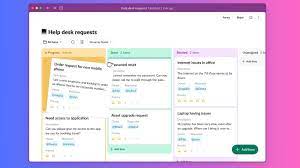
Salesforce Transforms Slack into Project Management Platform with New Slack Lists Feature Salesforce Inc. has introduced Slack Lists, a new feature designed to transform Slack from a simple collaboration tool into a comprehensive project management platform. Initially rolling out in select regions, Slack Lists will soon be available to all paid Slack users, integrating project and task management directly into the Slack interface. Salesforce Announces Slack Lists for Project Management. And this answers the age old question, can Salesforce be used as a project management tool? Key Benefits and Features Collaborative Tools Slack Lists excels in fostering collaboration by allowing team members to bring relevant coworkers into conversations and create message threads for specific list items. These threads consolidate discussions about particular items, requests, or issues into single, organized conversations. This ensures tasks are not forgotten and keeps all team members informed about project progress. Executive Insights Denise Dresser, CEO of Slack, stated that Slack Lists transforms conversations into actionable tasks that drive work forward. “Now those loose steps shared in a project channel can be tracked across teams,” she explained. “With project management in Slack, teams across organizations will have everything they need to complete projects faster and increase productivity.” Practical Applications Salesforce emphasized that Slack Lists can benefit any organization within an enterprise. For example: Holger Mueller of Constellation Research Inc. noted that Salesforce has long aimed to extend Slack’s capabilities beyond core messaging and collaboration. “Salesforce has opted to go generic with Slack Lists, allowing users to create list entries for projects, service requests, and more,” he said. “This ideally makes collaboration on those projects easier, making Slack more goal-oriented and changing the future of work.” Early Adoption Marriott International Inc. participated in the pilot phase of Slack Lists before its general release. Lori Drake, Director of System Strategy at Marriott Digital Services, expressed enthusiasm about the feature, saying, “We’re excited to use lists to manage projects and track requests, and think it can unlock significant time savings for our teams.” Availability Like1 Related Posts Who is Salesforce? Who is Salesforce? Here is their story in their own words. From our inception, we’ve proudly embraced the identity of Read more Salesforce Marketing Cloud Transactional Emails Salesforce Marketing Cloud Transactional Emails are immediate, automated, non-promotional messages crucial to business operations and customer satisfaction, such as order Read more Salesforce Unites Einstein Analytics with Financial CRM Salesforce has unveiled a comprehensive analytics solution tailored for wealth managers, home office professionals, and retail bankers, merging its Financial Read more AI-Driven Propensity Scores AI plays a crucial role in propensity score estimation as it can discern underlying patterns between treatments and confounding variables Read more
Read More
GPT-4o GPT4 and Gemini 1.5

GPT-4o GPT4 and Gemini 1.5

An Independent Analysis of GPT-4o’s Classification Abilities Article by Lars Wilk OpenAI’s recent unveiling of GPT-4o marks a significant advancement in AI language models, transforming how we interact with them. The most impressive feature is the live interaction capability with ChatGPT, allowing for seamless conversational interruptions. GPT-4o GPT4 and Gemini 1.5 Despite a few hiccups during the live demo, the achievements of the OpenAI team are undeniably impressive. Best of all, immediately after the demo, OpenAI granted access to the GPT-4o API. In this article, I will present my independent analysis, comparing the classification abilities of GPT-4o with GPT-4, Google’s Gemini, and Unicorn models using an English dataset I created. Which of these models is the strongest in understanding English? What’s New with GPT-4o? GPT-4o introduces the concept of an Omni model, designed to seamlessly process text, audio, and video. OpenAI aims to democratize GPT-4 level intelligence, making it accessible even to free users. Enhanced quality and speed across more than 50 languages, combined with a lower price point, promise a more inclusive and globally accessible AI experience. Additionally, paid subscribers will benefit from five times the capacity compared to non-paid users. OpenAI also announced a desktop version of ChatGPT to facilitate real-time reasoning across audio, vision, and text interfaces. How to Use the GPT-4o API The new GPT-4o model follows the existing chat-completion API, ensuring backward compatibility and ease of use: pythonCopy codefrom openai import AsyncOpenAI OPENAI_API_KEY = “<your-api-key>” def openai_chat_resolve(response: dict, strip_tokens=None) -> str: if strip_tokens is None: strip_tokens = [] if response and response.choices and len(response.choices) > 0: content = response.choices[0].message.content.strip() if content: for token in strip_tokens: content = content.replace(token, ”) return content raise Exception(f’Cannot resolve response: {response}’) async def openai_chat_request(prompt: str, model_name: str, temperature=0.0): message = {‘role’: ‘user’, ‘content’: prompt} client = AsyncOpenAI(api_key=OPENAI_API_KEY) return await client.chat.completions.create( model=model_name, messages=[message], temperature=temperature, ) openai_chat_request(prompt=”Hello!”, model_name=”gpt-4o-2024-05-13″) GPT-4o is also accessible via the ChatGPT interface. Official Evaluation GPT-4o GPT4 and Gemini 1.5 OpenAI’s blog post includes evaluation scores on known datasets such as MMLU and HumanEval, showcasing GPT-4o’s state-of-the-art performance. However, many models claim superior performance on open datasets, often due to overfitting. Independent analyses using lesser-known datasets are crucial for a realistic assessment. My Evaluation Dataset I created a dataset of 200 sentences categorized under 50 topics, designed to challenge classification tasks. The dataset is manually labeled in English. For this evaluation, I used only the English version to avoid potential biases from using the same language model for dataset creation and topic prediction. You can check out the dataset here. Performance Results I evaluated the following models: The task was to match each sentence with the correct topic, calculating an accuracy score and error rate for each model. A lower error rate indicates better performance. Conclusion This analysis using a uniquely crafted English dataset reveals insights into the state-of-the-art capabilities of these advanced language models. GPT-4o stands out with the lowest error rate, affirming OpenAI’s performance claims. Independent evaluations with diverse datasets are essential for a clearer picture of a model’s practical effectiveness beyond standardized benchmarks. Note that the dataset is fairly small, and results may vary with different datasets. This evaluation was conducted using the English dataset only; a multilingual comparison will be conducted at a later time. Like1 Related Posts Who is Salesforce? Who is Salesforce? Here is their story in their own words. From our inception, we’ve proudly embraced the identity of Read more Salesforce Unites Einstein Analytics with Financial CRM Salesforce has unveiled a comprehensive analytics solution tailored for wealth managers, home office professionals, and retail bankers, merging its Financial Read more AI-Driven Propensity Scores AI plays a crucial role in propensity score estimation as it can discern underlying patterns between treatments and confounding variables Read more Tectonic’s Successful Salesforce Track Record Salesforce Technology Services Integrator – Tectonic has successfully delivered Salesforce in a variety of industries including Public Sector, Hospitality, Manufacturing, Read more

Read More
Five9 Salesforce AI Integration

Five9 Salesforce AI Integration

Five9 and Salesforce Enhance AI-Powered Solutions for Superior Customer Experiences Five9 (NASDAQ: FIVN), a provider of the Intelligent CX Platform, today announced the next step in its collaboration with Salesforce. Five9 Salesforce AI Integration. This partnership aims to deliver AI-powered solutions to enhance customer experiences (CX) in contact centers. The latest release, Five9 for Service Cloud Voice with Partner Telephony, integrates Salesforce Einstein with Five9’s suite of AI solutions. This empowers agents to better service customer requests, improves management’s understanding of contact center operations, and delivers customer resolutions that exceed expectations. Using Five9’s open APIs and Five9 TranscriptStream, the Einstein AI engine identifies opportunities to provide real-time solutions for agents, prompting ‘Next Best Action’ guidance. The solution also offers real-time transcription of customer conversations, ensures call recordings’ accuracy and relevance, and integrates with Salesforce Einstein Conversation Insights to enhance conversation intelligence. “Five9 understands the power of elevating the customer experience through innovative technology and seamless integrations,” said Dan Burkland, President of Five9. “Our collaboration with Salesforce pushes the boundaries of what is possible. Infusing Einstein’s AI insights into the contact center and CRM eliminates repetitive tasks while guiding agents with the next best actions to help them be more effective.” A Long-Standing Partnership The Salesforce-Five9 collaboration, now over 15 years strong, recently introduced Five9 call dispositions for agents within the Salesforce Omni-Channel widget or Voice Call page. This allows organizations to automatically update call dispositions in the Five9 call database, ensuring accurate reporting across the integration. Both companies are meeting the growing demand for AI solutions to enhance customer engagement throughout the customer journey. “Five9’s deeper integration with Salesforce Einstein offers a new level of choice for customers seeking AI capabilities that best match their contact center needs and existing technology investments,” said Sheila McGee-Smith, President & Principal Analyst at McGee-Smith Analytics. “Coupled with features like Five9 TranscriptStream, organizations can significantly reduce an agent’s workload while enhancing the customer’s overall experience. This next step in the Salesforce-Five9 relationship demonstrates each company’s commitment to their joint customer base, enabling them to leverage the latest AI innovations easily.” “Service Cloud Voice with Five9 uses AI to deliver a better customer experience,” said Ryan Nichols, Chief Product Officer of Service Cloud, Salesforce. “Our collaboration focuses on more than just a ‘single pane of glass’– we’re bringing together customer data, knowledge, and real-time conversation transcripts to help make agents more productive and delight customers.” Availability and Further Information These new enhancements to Five9 for Service Cloud Voice with Partner Telephony will be available starting June 30. For a deeper look into the Five9 integration with Service Cloud Voice and to explore common use cases, register for the webinar “Unlock Efficiency with the Power of AI: Five9 and Salesforce Service Cloud Voice” on Tuesday, July 23. An on-demand playback of the December 2023 Five9 and Salesforce joint webinar is also available, covering topics such as using data for personalization, best practices for leveraging engagement data to improve experiences, and how companies can become more customer-centric. Salesforce, Einstein, and other related marks are trademarks of Salesforce, Inc. Like Related Posts Who is Salesforce? Who is Salesforce? Here is their story in their own words. From our inception, we’ve proudly embraced the identity of Read more Salesforce Marketing Cloud Transactional Emails Salesforce Marketing Cloud Transactional Emails are immediate, automated, non-promotional messages crucial to business operations and customer satisfaction, such as order Read more Salesforce Unites Einstein Analytics with Financial CRM Salesforce has unveiled a comprehensive analytics solution tailored for wealth managers, home office professionals, and retail bankers, merging its Financial Read more AI-Driven Propensity Scores AI plays a crucial role in propensity score estimation as it can discern underlying patterns between treatments and confounding variables Read more

Read More
gettectonic.com