- gettectonic.com - Page 11
EU AI Act

EU AI Act

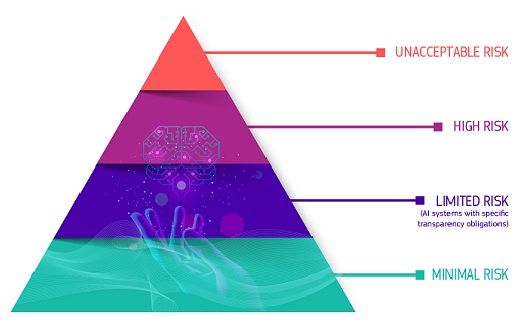
The EU AI Act is a complex piece of legislation, packed with various sections, definitions, and guidelines, making it challenging for organizations to navigate. However, understanding the EU AI Act is crucial for companies aiming to innovate with AI while staying compliant with both legal and ethical standards. Arnoud Engelfriet, chief knowledge officer at ICTRecht, an Amsterdam-based legal services firm, specializes in IT, privacy, security, and data law. As the head of ICTRecht Academy, he is responsible for educating others on AI legislation, including the AI Act. In his book AI and Algorithms: Mastering Legal and Ethical Compliance, published by Technics, Engelfriet explores the intersection of AI legislation and ethical AI development, using the AI Act as a key example. He emphasizes that while new AI guidelines can raise concerns about creativity and compliance, it’s quite necessary for organizations to grasp the current and future legal landscape to build trustworthy AI systems. Balancing Compliance and Innovation As of August 2024, the much-anticipated AI Act is in effect, with implementation timelines extending from six months to over a year. Many businesses worry that the regulations might slow down AI innovation, especially given the rapid pace of technological advancements. Engelfriet acknowledges this tension, noting that “compliance and innovation have always been somewhat at odds.” However, he believes the act’s flexible, tiered approach offers space for businesses to adapt. For instance, the inclusion of regulatory sandboxes allows companies to test AI systems safely, without releasing them into the market. Engelfriet suggests that while innovation might slow down, the safety and trustworthiness of AI systems will improve. Ensuring Trustworthy AI The AI Act aims to promote “trustworthy AI,” a term that became central to discussions after its inclusion in the first draft of the act in 2019. Although the concept remains somewhat undefined, the act outlines three key characteristics of trustworthy AI: legality, technical robustness, and ethical soundness. Engelfriet underscores that trust in AI systems is ultimately about trusting the humans behind them. “You cannot really trust a machine,” he explained, “but you can trust its designers and operators.” The AI Act requires transparency around how AI systems function, ensuring they reliably perform their intended tasks, such as making automated decisions or serving as chatbots. Ethics has gained even more prominence with the rise of generative AI. Engelfriet highlights the fragmented nature of AI ethics guidelines, which address everything from data protection to bias prevention. The EU’s Assessment List for Trustworthy AI provides a framework to guide organizations in applying ethical standards, though Engelfriet notes that it may need to be tailored to specific industry needs. The Role of AI Compliance Officers Given the complexity of AI regulations, organizations may find it overwhelming to manage compliance efforts. To meet this growing need, Engelfriet recommends appointing AI compliance officers to help companies integrate AI responsibly into their operations. ICTRecht has also developed a course, based on AI and Algorithms, to teach employees how to navigate AI compliance. Participants from various roles—particularly those in data, privacy, and risk functions—attend the course to expand their knowledge in this increasingly important area. Salesforce is developing Trailblazer content to address these challenges as well. As with GDPR, Engelfriet believes the AI Act will set the tone for future AI regulations. He advises businesses to proactively engage with the AI Act to ensure they are prepared for the evolving regulatory landscape. To get assistance exploring your EU risks, contact Tectonic today. Like Related Posts Who is Salesforce? Who is Salesforce? Here is their story in their own words. From our inception, we’ve proudly embraced the identity of Read more Salesforce Unites Einstein Analytics with Financial CRM Salesforce has unveiled a comprehensive analytics solution tailored for wealth managers, home office professionals, and retail bankers, merging its Financial Read more AI-Driven Propensity Scores AI plays a crucial role in propensity score estimation as it can discern underlying patterns between treatments and confounding variables Read more Tectonic’s Successful Salesforce Track Record Salesforce Technology Services Integrator – Tectonic has successfully delivered Salesforce in a variety of industries including Public Sector, Hospitality, Manufacturing, Read more

Read More
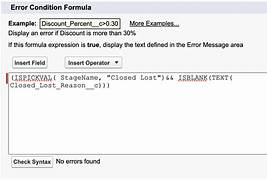
Salesforce Validation Rules

Salesforce Validation Rules Explained

When to Use (and Avoid) Salesforce Validation Rules Ensuring quality data in Salesforce is crucial, but finding the right balance between enforcing data integrity and maintaining a smooth user experience can be challenging. Both Flows and validation rules play important roles in this process. The Role of Validation Rules and Flows in Data Management Salesforce administrators must carefully consider the impact of data validation methods. Some approaches prevent records from being saved if certain conditions aren’t met, while others allow the process to continue and address issues later. Sales teams, in particular, may find it frustrating to be slowed down by data entry requirements, but there are situations where enforcing specific data formats or ranges is essential. This is where Salesforce validation rules come into play. For more complex processes, especially those managed by automation, Flows offer a solution that allows records to be corrected without interrupting the workflow. The Purpose of Validation Rules Validation rules in Salesforce are used to enforce specific data requirements by preventing the record from being saved if certain conditions are not met. For instance, a simple validation rule might require a field value to be between 10 and 100: scssCopy codeOR( Your_Field__c < 10, Your_Field__c > 100 ) Validation rules are typically applied to a single field or a combination of fields, and they are especially useful when a user must enter specific information, such as a description for a unique discount type. How Flows Offer Flexibility Salesforce Flows have evolved into a robust alternative to validation rules, providing more flexibility in how data is managed. Flows can be configured to check conditions before or after a record is saved, allowing for automatic corrections without blocking the save. For example, a Flow could assign a default value if the user fails to enter one or perform a lookup to populate a field. Flows also allow records to be saved even if they would otherwise trigger a validation rule. This capability is particularly valuable for automated processes, as it prevents errors from halting updates made by tools like Fivetran, Hightouch, or Zapier. Balancing User Experience with Data Validation Validation rules are designed with the user in mind, serving as reminders to ensure that necessary information is entered. However, if these rules are too restrictive or unclear, they can hinder productivity. One common challenge arises when trying to enforce constraints on date fields, such as ensuring a follow-up task is scheduled within a certain time frame. While a validation rule can prevent a date field from being left blank, Salesforce does not allow a rule to simultaneously enforce non-blankness and a specific date calculation. To address this, a combination of validation rules and Flows can be used: Key Takeaway Balancing the use of validation rules and Flows is essential for effective data management in Salesforce. Validation rules are useful for enforcing critical data entry requirements, while Flows offer the flexibility to correct issues automatically. By focusing on the user experience, administrators can determine the optimal combination of these features to maintain data integrity without disrupting workflow. Like Related Posts Who is Salesforce? Who is Salesforce? Here is their story in their own words. From our inception, we’ve proudly embraced the identity of Read more Salesforce Marketing Cloud Transactional Emails Salesforce Marketing Cloud Transactional Emails are immediate, automated, non-promotional messages crucial to business operations and customer satisfaction, such as order Read more Salesforce Unites Einstein Analytics with Financial CRM Salesforce has unveiled a comprehensive analytics solution tailored for wealth managers, home office professionals, and retail bankers, merging its Financial Read more AI-Driven Propensity Scores AI plays a crucial role in propensity score estimation as it can discern underlying patterns between treatments and confounding variables Read more

Read More
Iran-based cyber threat actors have been targeting U.S

Iran-based cyber threat actors have been targeting U.S

Iran-based cyber threat actors have been targeting U.S. and international organizations across various sectors, including healthcare, according to a joint cybersecurity advisory from the Cybersecurity and Infrastructure Security Agency (CISA), the FBI, and the Department of Defense Cyber Crime Center. The advisory highlights known threat groups such as Pioneer Kitten, UNC757, Parisite, Rubidium, and Lemon Sandstorm. These actors have been observed targeting a range of sectors including education, healthcare, defense, finance, and local government, as well as organizations in countries like Azerbaijan, the United Arab Emirates, and Israel. A significant portion of these actors’ operations against U.S. organizations involves gaining network access and subsequently collaborating with ransomware affiliates to deploy ransomware. The advisory notes that these actors offer full domain control and admin credentials to networks globally. Recently, they have been working directly with ransomware groups to facilitate encryption and share a percentage of ransom payments. The FBI has identified collaborations between these threat actors and ransomware affiliates such as NoEscape, Ransomhouse, and ALPHV. Despite their association with the Iranian government, these groups typically obscure their Iranian origins and provide vague details about their nationality when working with ransomware affiliates. Tracking of these Iranian cyber threat actors dates back to 2017, with recent activities documented up to August 2024. The advisory draws parallels with a September 2020 alert about Iran-backed hackers exploiting VPN vulnerabilities, based on previous FBI investigations. The advisory provides technical insights into the threat actors’ methods, including their use of public-facing network devices like Citrix Netscaler for initial access. To mitigate risks, the FBI and CISA recommend that organizations prioritize patching vulnerabilities associated with CVE-2024-3400, CVE-2022-1388, CVE-2019-19781, and CVE-2023-3519. Organizations are also advised to review security controls, examine logs, and search for unique identifiers and indicators of compromise. If organizations suspect they have been targeted by these Iranian cyber threat actors, they should contact their local FBI field office for assistance. Like Related Posts Who is Salesforce? Who is Salesforce? Here is their story in their own words. From our inception, we’ve proudly embraced the identity of Read more Salesforce Marketing Cloud Transactional Emails Salesforce Marketing Cloud Transactional Emails are immediate, automated, non-promotional messages crucial to business operations and customer satisfaction, such as order Read more Salesforce Unites Einstein Analytics with Financial CRM Salesforce has unveiled a comprehensive analytics solution tailored for wealth managers, home office professionals, and retail bankers, merging its Financial Read more AI-Driven Propensity Scores AI plays a crucial role in propensity score estimation as it can discern underlying patterns between treatments and confounding variables Read more

Read More
Salesforce and Ortoo Integration

Salesforce and Ortoo Integration

Ortoo Launches Smart Actions: A Revolutionary Salesforce-Native App for AI Automation Ortoo, a leading provider of Salesforce productivity solutions, has unveiled its latest innovation, Smart Actions, now available on the Salesforce AppExchange. This groundbreaking Salesforce-native app allows businesses to seamlessly integrate AI automation into their Salesforce workflows, dramatically boosting efficiency and simplifying complex processes with a single click. Salesforce and Ortoo integration for Smart Actions. How do I sync Ortto activities to Salesforce? In your Ortto account, navigate to Data sources > Salesforce > Sync Ortto activities to Salesforce. Choose up to 5 activities. At Sync settings, select whether you wish to sync these Ortto activities as activities and/or as tasks. If you are syncing the Salesforce Task object to Ortto (selected at Salesforce fields): Smart Actions empowers companies to deploy AI and GPT-powered automations across sales, service, and support functions within Salesforce, eliminating the traditionally high costs associated with advanced AI tools. By integrating smoothly into the Salesforce ecosystem, Smart Actions enables businesses to automate manual tasks, personalize communications, and optimize workflows with unparalleled ease. Track and manage email conversations within Salesforce. AI-powered actions to streamline sales workflows. SEAMLESS SALESFORCE INTEGRATION “With Smart Actions, we’re making AI automation accessible to businesses of all sizes,” said Amy Grenham, Head of Marketing at Ortoo. “If you’ve ever built a custom GPT using OpenAI, creating a Smart Action will feel very familiar. Ortoo’s prompt builder allows you to set the context, specify the Salesforce fields to analyze, and determine where the output should go. This simplicity makes it incredibly easy to deploy AI-driven processes and transform operations within Salesforce.” Key Features and Practical Applications Real-World Applications of Smart Actions Get Started with Smart Actions Today Smart Actions is now available on the Salesforce AppExchange. Businesses can start using the app for free, with additional features available through a premium version. SmartActions is a 5 star product on the Salesforce AppExchange. Like Related Posts Who is Salesforce? Who is Salesforce? Here is their story in their own words. From our inception, we’ve proudly embraced the identity of Read more Salesforce Marketing Cloud Transactional Emails Salesforce Marketing Cloud Transactional Emails are immediate, automated, non-promotional messages crucial to business operations and customer satisfaction, such as order Read more Salesforce Unites Einstein Analytics with Financial CRM Salesforce has unveiled a comprehensive analytics solution tailored for wealth managers, home office professionals, and retail bankers, merging its Financial Read more AI-Driven Propensity Scores AI plays a crucial role in propensity score estimation as it can discern underlying patterns between treatments and confounding variables Read more

Read More
Citizen Development

Citizen Development

As we progress through the era of digital transformation, citizen development has emerged as a key trend in the business landscape. This approach empowers end-users to create their applications, streamlining workflows and reshaping corporate operations. However, like any innovation, citizen development presents both advantages and challenges. In this article, we will explore the benefits, pros and cons of citizen development, and strategies to effectively leverage it within your organization. 1. The Rise of Citizen Development The popularity of citizen development is on the rise, as reflected by Statista, which reports a remarkable 24.6% growth in this sector since 2020. The increasing demand for software solutions in the corporate environment has made the traditional model of IT departments solely managing application development unsustainable. By enabling non-technical personnel to develop their applications, businesses can relieve pressure on IT teams, speed up solution delivery, and cultivate a more agile business model. Furthermore, investing in citizen development platforms fosters an inclusive and innovative workplace, allowing diverse perspectives to generate unique applications that meet specific workflow needs. 2. Benefits of Citizen Development for Companies 2.1 Accelerated Pace and Flexibility Citizen development tools facilitate rapid prototyping and quicker application rollouts. Non-technical personnel can design, modify, and launch applications according to immediate needs, enhancing agility and responsiveness. 2.2 Boosted Creativity Empowering your staff to create applications unlocks a wealth of untapped potential. Citizen development nurtures a culture of innovation, leading to tailored solutions that address specific business challenges. 2.3 Tailored App Design Citizen developers, as end-users, possess an in-depth understanding of their workflow requirements. This perspective enables them to develop applications that align closely with user needs, improving adoption and utility. 2.4 Heightened Productivity By reducing the back-and-forth between IT departments and end-users, citizen development streamlines operations, leading to enhanced efficiency. 2.5 Cost-Effectiveness Citizen development significantly cuts costs associated with traditional application development, such as hiring professional developers or outsourcing tasks. Rapid application rollouts also help seize business opportunities quickly, optimizing ROI. 2.6 Reduced Workload for IT Staff Enabling non-technical personnel to handle minor application development tasks lightens the load on IT teams, allowing them to focus on high-priority projects. 2.7 Enhanced Visibility and Accountability Many citizen development platforms include built-in analytics and reporting features, offering insights into application usage and performance. This transparency helps businesses track initiatives, make data-driven decisions, and continuously improve processes. 3. Implementing Citizen Development with Salesforce Solutions Given its extensive benefits, citizen development is a strategy many businesses are eager to adopt. Salesforce provides a powerful platform to effectively harness citizen development. Salesforce’s platform caters to both professional and citizen developers, offering a comprehensive suite of user-friendly tools for building applications and managing workflows. With built-in safeguards for data security and regulatory compliance, Salesforce for Public Sector and Tribal Governments ensures a smooth and secure citizen development process. Their clear deployment roadmap and thorough training programs equip businesses for success in their citizen development journey. 4. Partnering with Tectonic for Public Sector and Tribal Government Solutions Consider Tectonic as your trusted partner for PSS solutions. Tectonic is a distinguished provider of technology solutions with extensive expertise in Salesforce and process management. With a proven track record of successful projects, Tectonic has earned the trust of clients globally. Tectonic maintains a close partnership with Salesforce, ensuring a deep understanding of its advanced features, including process automation. As a Salesforce partner, Tectonic keeps clients updated on the latest advancements, delivering cutting-edge solutions tailored to their specific needs. By selecting Tectonic as your implementation partner for public sector Salesforce, you benefit from their vast experience and specialized knowledge. Tectonic provides a dedicated public sector team that excels in implementing secure and efficient solutions, working closely with our clients to address their unique challenges. Tectonic offers a comprehensive range of services, from initial implementation to ongoing support and maintenance. Their offerings include process modeling, application design, automation implementation, and roles management. With Tectonic’s expertise, you can ensure seamless integration of automation into your pss projects. To learn more about Tectonic’s public sector services, visit our services page, where you can explore their offerings, including Salesforce Managed Services. Tectonic’s Managed Services provide full support to ensure your public sector environment runs smoothly, covering automation management, data governance, and performance optimization. 5. Final Thoughts While citizen development presents both advantages and challenges, the benefits largely outweigh the potential drawbacks. Although there are concerns about data security and the need for proper governance, the positive impact of citizen development makes it a vital component of the digital transformation narrative. Successful implementation hinges on selecting the right platform and tools that align with your business model and workflow needs. Salesforce Public Sector Solution excels in this regard, offering a user-friendly suite of tools with a clear roadmap for deployment and top-notch support. Brining your public sector tech into the 21st century is an imperative. To fully realize the benefits of citizen development, businesses must strike a balance between empowerment and control. Establishing an environment that fosters innovation and efficiency, while also implementing a governance structure to mitigate risks, is essential. With careful planning, the right tools, and a culture of collaboration, the rewards of citizen development can be substantial. Whether you’re looking to enhance speed and agility, optimize costs, or cultivate a culture of innovation, citizen development offers a promising pathway forward. Embrace citizen development in Salesforce PSS, and set your business on the road to success. If you have any questions about implementing Salesforce Public Sector Solutions and its benefits, feel free to contact us to discuss your project. Like Related Posts Who is Salesforce? Who is Salesforce? Here is their story in their own words. From our inception, we’ve proudly embraced the identity of Read more Salesforce Unites Einstein Analytics with Financial CRM Salesforce has unveiled a comprehensive analytics solution tailored for wealth managers, home office professionals, and retail bankers, merging its Financial Read more AI-Driven Propensity Scores AI plays a crucial role in propensity score estimation as it can discern underlying patterns between treatments and confounding

Read More
Strong AI Scalability

Strong AI Scalability

The rapid pace of digital transformation has made scalability essential for any business looking to remain competitive. The stakes are high—without the ability to scale, businesses risk falling behind as customer demands and market conditions shift. So, what does it take to build a scalable business that can grow without compromising performance or customer satisfaction? In this Tectonic insight, we’ll cover key steps to future-proof your operations, avoid common pitfalls, and ensure your business doesn’t just keep pace with the market, but leads it. Master Scalability with Scale Center Scalability doesn’t have to be overwhelming. Salesforce’s Scale Center, available on Trailhead, provides a comprehensive learning path to help you optimize your scalability strategy. Why Scalability Is a Must-Have Scalability is critical to long-term success. As your business grows, so will the demands on your applications, infrastructure, and resources. If your systems aren’t prepared, you risk performance issues, outages, lost revenue, and dissatisfied customers. Unexpected spikes in demand—from increased customer activity or internal changes like onboarding large numbers of employees—can push systems to their limits, leading to overloads or downtime. A strong scalability plan helps prevent these issues. Here are three best practices to help scale your operations smoothly and sustainably. 1. Prioritize Proactive Scale Testing Scale testing should be a key part of your application lifecycle. Many businesses wait until performance issues arise before addressing them, which can result in maintenance headaches, poor user experiences, and challenges in supporting growth. Proactive steps to take: 2. Use the Right Tools for Seamless Scalability Choosing the right technology is crucial when scaling your business. Equip your team with tools that support growth management, and follow these tips for success: By integrating the right tools and technologies, you’ll not only stay ahead of the curve but also build a culture ready to scale. 3. Focus on Sustainable Growth Strategies Scaling requires a long-term approach. From development to deployment, a strategy that emphasizes scalability from the outset can help you avoid costly fixes down the road. Key practices include: DevOps Done Right Building secure, scalable AI applications and agents requires bridging the gap between tools and skills. Focus on crafting a thoughtful DevOps strategy that supports scalability. Scalability: A Marathon, Not a Sprint Scaling effectively is an ongoing process. Customer needs and market conditions will continue to change, so your strategies should evolve as well. Scalability is about more than just handling increased demand—it’s about ensuring stability and performance across the board. Consider these steps to enhance your approach: Committing to Scalability Scalability isn’t a one-time achievement—it’s a continuous commitment to growing smarter and stronger across all areas of your business. By embedding best practices into your day-to-day operations, you’ll ensure that your systems meet demand and prepare your business for future breakthroughs. As you develop your scalability strategy, remember that customer experience and trust should always guide your decisions. Tackling scalability proactively ensures your business can thrive no matter how market conditions change. It’s more than just a bonus feature—it’s a critical element of a smoother user experience, reduced costs, and the flexibility to pivot when necessary. By embracing these strategies, you’ll not only avoid potential challenges but also build lasting trust with your customers. In a world where loyalty is earned through exceptional experiences, a strong scalability plan is your key to long-term success. Like Related Posts Who is Salesforce? Who is Salesforce? Here is their story in their own words. From our inception, we’ve proudly embraced the identity of Read more Salesforce Marketing Cloud Transactional Emails Salesforce Marketing Cloud Transactional Emails are immediate, automated, non-promotional messages crucial to business operations and customer satisfaction, such as order Read more Salesforce Unites Einstein Analytics with Financial CRM Salesforce has unveiled a comprehensive analytics solution tailored for wealth managers, home office professionals, and retail bankers, merging its Financial Read more AI-Driven Propensity Scores AI plays a crucial role in propensity score estimation as it can discern underlying patterns between treatments and confounding variables Read more

Read More
Salesforce to Acquire Own

Salesforce to Acquire Own

Salesforce is set to acquire data protection and management vendor Own Co. for approximately $1.9 billion in cash. This move aligns with Salesforce’s ongoing investment in artificial intelligence (AI) and its efforts to bolster cybersecurity amidst rising data security concerns.  The San Francisco-based CRM giant expects to finalize the acquisition of Own by the fourth quarter of its fiscal year 2025, according to a company statement. Own, formerly known as OwnBackup, touts itself as the leading cloud data protection platform for Salesforce, serving around 7,000 customers with services such as data archiving, security, and analytics. He highlighted that Own’s expertise would enhance Salesforce’s data protection and management capabilities, reinforcing the company’s commitment to secure, end-to-end solutions. Sam Gutmann, CEO of Own, echoed the sentiment, stating that the acquisition would allow Own and Salesforce to drive innovation and secure data, particularly in highly regulated industries. Gutmann, who previously founded Intronis, has led Own’s growth since its establishment in 2015, with backing from investors like BlackRock and Salesforce Ventures. The acquisition is expected to strengthen Salesforce’s existing offerings, such as Backup, Shield, and Data Mask. Own, known for its data resilience platform, has raised over 0 million in funding and partnered with major tech players like ServiceNow and Microsoft Dynamics 365. The deal comes shortly after Salesforce announced plans to acquire Tenyx, an AI-powered voice agent startup, as part of its broader AI-driven strategy. Salesforce has shifted focus from larger acquisitions in recent years, prioritizing shareholder returns. However, this purchase reflects the company’s strategic shift towards enhancing its AI and data security solutions to maintain growth momentum. Salesforce anticipates that the Own deal will be accretive to free cash flow starting in the second year after the transaction closes, without affecting its current capital return program. This acquisition underscores Salesforce’s evolving focus on data protection, especially as AI adoption grows and data security becomes increasingly important. Like Related Posts Who is Salesforce? Who is Salesforce? Here is their story in their own words. From our inception, we’ve proudly embraced the identity of Read more Salesforce Marketing Cloud Transactional Emails Salesforce Marketing Cloud Transactional Emails are immediate, automated, non-promotional messages crucial to business operations and customer satisfaction, such as order Read more Salesforce Unites Einstein Analytics with Financial CRM Salesforce has unveiled a comprehensive analytics solution tailored for wealth managers, home office professionals, and retail bankers, merging its Financial Read more AI-Driven Propensity Scores AI plays a crucial role in propensity score estimation as it can discern underlying patterns between treatments and confounding variables Read more

Read More
AI Senate Bill 1047

AI Senate Bill 1047

California’s new AI bill has sparked intense debate, with proponents viewing it as necessary regulation and critics warning it could stifle innovation, particularly for small businesses. Senate Bill 1047, known as the Safe and Secure Innovation for Frontier Artificial Intelligence Models Act, mandates that developers of advanced AI systems costing at least $100 million to train must test their models for potential harm and put safeguards in place. It also offers whistleblower protections for employees at large AI firms and establishes CalCompute, a public cloud computing resource aimed at startups and researchers. The bill is awaiting Governor Gavin Newsom’s signature by Sept. 30 to become law. Prominent AI experts, including Geoffrey Hinton and Yoshua Bengio, support the bill. However, it has met resistance from various quarters, including Rep. Nancy Pelosi and OpenAI, who argue it could hinder innovation and the startup ecosystem. Pelosi and others have expressed concerns that the bill’s requirements might burden smaller businesses and harm California’s leadership in tech innovation. Gartner analyst Avivah Litan acknowledged the dilemma, stating that while regulation is critical for AI, the bill’s requirements might negatively impact small businesses. “Some regulation is better than none,” she said, but added that thresholds could be challenging for smaller firms. Steve Carlin, CEO of AiFi, criticized the bill for its vague language and complex demands on AI developers, including unclear guidance on enforcing the rules. He suggested that instead of focusing on AI models, legislation should address the risks and applications of AI, as seen with the EU AI Act. Despite concerns, some experts like Forrester Research’s Alla Valente support the bill’s safety testing and whistleblower protections. Valente argued that safeguarding AI models is essential across industries, though she acknowledged that the costs of compliance could be higher for small businesses. Still, she emphasized that the long-term costs of not implementing safeguards could be greater, with risks including customer lawsuits and regulatory penalties. California’s approach to AI regulation adds to the growing patchwork of state-level AI laws in the U.S. Colorado and Connecticut have also introduced AI legislation, and cities like New York have tackled issues like algorithmic bias. Carlin warned that a fragmented state-by-state regulatory framework could create a costly and complex environment for developers, calling for a unified federal standard instead. While federal legislation has been proposed, none has passed, and Valente pointed out that relying on Congress for action is a slow process. In the meantime, states like California are pushing ahead with their own AI regulations, creating both opportunities and challenges for the AI industry. Like Related Posts Who is Salesforce? Who is Salesforce? Here is their story in their own words. From our inception, we’ve proudly embraced the identity of Read more Salesforce Marketing Cloud Transactional Emails Salesforce Marketing Cloud Transactional Emails are immediate, automated, non-promotional messages crucial to business operations and customer satisfaction, such as order Read more Salesforce Unites Einstein Analytics with Financial CRM Salesforce has unveiled a comprehensive analytics solution tailored for wealth managers, home office professionals, and retail bankers, merging its Financial Read more AI-Driven Propensity Scores AI plays a crucial role in propensity score estimation as it can discern underlying patterns between treatments and confounding variables Read more

Read More
Data Quality Critical

Data Quality Critical

Data quality has never been more critical, and it’s only set to grow in importance with each passing year. The reason? The rise of AI—particularly generative AI. Generative AI offers transformative benefits, from vastly improved efficiency to the broader application of data in decision-making. But these advllucantages hinge on the quality of data feeding the AI. For enterprises to fully capitalize on generative AI, the data driving models and applications must be accurate. If the data is flawed, so are the AI’s outputs. Generative AI models require vast amounts of data to produce accurate responses. Their outputs aren’t based on isolated data points but on aggregated data. Even if the data is high-quality, an insufficient volume could result in an incorrect output, known as an AI hallucination. With so much data needed, automating data pipelines is essential. However, with automation comes the challenge: humans can’t monitor every data point along the pipeline. That makes it imperative to ensure data quality from the outset and to implement output checks along the way, as noted by David Menninger, an analyst at ISG’s Ventana Research. Ignoring data quality when deploying generative AI can lead to not just inaccuracies but biased or even offensive outcomes. “As we’re deploying more and more generative AI, if you’re not paying attention to data quality, you run the risks of toxicity, of bias,” Menninger warns. “You’ve got to curate your data before training the models and do some post-processing to ensure the quality of the results.” Enterprises are increasingly recognizing this, with leaders like Saurabh Abhyankar, chief product officer at MicroStrategy, and Madhukar Kumar, chief marketing officer at SingleStore, noting the heightened emphasis on data quality, not just in terms of accuracy but also security and transparency. The rise of generative AI is driving this urgency. Generative AI’s potential to lower barriers to analytics and broaden access to data has made it a game-changer. Traditional analytics tools have been difficult to master, often requiring coding skills and data literacy training. Despite efforts to simplify these tools, widespread adoption has been limited. Generative AI, however, changes the game by enabling natural language interactions, making it easier for employees to engage with data and derive insights. With AI-powered tools, the efficiency gains are undeniable. Generative AI can take on repetitive tasks, generate code, create data pipelines, and even document processes, allowing human workers to focus on higher-level tasks. Abhyankar notes that this could be as transformational for knowledge workers as the industrial revolution was for manual labor. However, this potential is only achievable with high-quality data. Without it, AI-driven decision-making at scale could lead to ethical issues, misinformed actions, and significant consequences, especially when it comes to individual-level decisions like credit approvals or healthcare outcomes. Ensuring data quality is challenging, but necessary. Organizations can use AI-powered tools to monitor data quality, detect irregularities, and alert users to potential issues. However, as advanced as AI becomes, human oversight remains critical. A hybrid approach, where technology augments human expertise, is essential for ensuring that AI models and applications deliver reliable outputs. As Kumar of SingleStore emphasizes, “Hybrid means human plus AI. There are things AI is really good at, like repetition and automation, but when it comes to quality, humans are still better because they have more context.” Ultimately, while AI offers unprecedented opportunities, it’s clear that data quality is the foundation. Without it, the risks are too great, and the potential benefits could turn into unintended consequences. Like Related Posts Who is Salesforce? Who is Salesforce? Here is their story in their own words. From our inception, we’ve proudly embraced the identity of Read more Salesforce Marketing Cloud Transactional Emails Salesforce Marketing Cloud Transactional Emails are immediate, automated, non-promotional messages crucial to business operations and customer satisfaction, such as order Read more Salesforce Unites Einstein Analytics with Financial CRM Salesforce has unveiled a comprehensive analytics solution tailored for wealth managers, home office professionals, and retail bankers, merging its Financial Read more AI-Driven Propensity Scores AI plays a crucial role in propensity score estimation as it can discern underlying patterns between treatments and confounding variables Read more

Read More
Exploring Large Action Models

Exploring Large Action Models

Exploring Large Action Models (LAMs) for Automated Workflow Processes While large language models (LLMs) are effective in generating text and media, Large Action Models (LAMs) push beyond simple generation—they perform complex tasks autonomously. Imagine an AI that not only generates content but also takes direct actions in workflows, such as managing customer relationship management (CRM) tasks, sending emails, or making real-time decisions. LAMs are engineered to execute tasks across various environments by seamlessly integrating with tools, data, and systems. They adapt to user commands, making them ideal for applications in industries like marketing, customer service, and beyond. Key Capabilities of LAMs A standout feature of LAMs is their ability to perform function-calling tasks, such as selecting the appropriate APIs to meet user requirements. Salesforce’s xLAM models are designed to optimize these tasks, achieving high performance with lower resource demands—ideal for both mobile applications and high-performance environments. The fc series models are specifically tuned for function-calling, enabling fast, precise, and structured responses by selecting the best APIs based on input queries. Practical Examples Using Salesforce LAMs In this article, we’ll explore: Implementation: Setting Up the Model and API Start by installing the necessary libraries: pythonCopy code! pip install transformers==4.41.0 datasets==2.19.1 tokenizers==0.19.1 flask==2.2.5 Next, load the xLAM model and tokenizer: pythonCopy codeimport json import torch from transformers import AutoModelForCausalLM, AutoTokenizer model_name = “Salesforce/xLAM-7b-fc-r” model = AutoModelForCausalLM.from_pretrained(model_name, device_map=”auto”, torch_dtype=”auto”, trust_remote_code=True) tokenizer = AutoTokenizer.from_pretrained(model_name) Now, define instructions and available functions. Task Instructions: The model will use function calls where applicable, based on user questions and available tools. Format Example: jsonCopy code{ “tool_calls”: [ {“name”: “func_name1”, “arguments”: {“argument1”: “value1”, “argument2”: “value2”}} ] } Define available APIs: pythonCopy codeget_weather_api = { “name”: “get_weather”, “description”: “Retrieve weather details”, “parameters”: {“location”: “string”, “unit”: “string”} } search_api = { “name”: “search”, “description”: “Search for online information”, “parameters”: {“query”: “string”} } Creating Flask APIs for Business Logic We can use Flask to create APIs to replicate business processes. pythonCopy codefrom flask import Flask, request, jsonify app = Flask(__name__) @app.route(“/customer”, methods=[‘GET’]) def get_customer(): customer_id = request.args.get(‘customer_id’) # Return dummy customer data return jsonify({“customer_id”: customer_id, “status”: “active”}) @app.route(“/send_email”, methods=[‘GET’]) def send_email(): email = request.args.get(’email’) # Return dummy response for email send status return jsonify({“status”: “sent”}) Testing the LAM Model and Flask APIs Define queries to test LAM’s function-calling capabilities: pythonCopy codequery = “What’s the weather like in New York in fahrenheit?” print(custom_func_def(query)) # Expected: {“tool_calls”: [{“name”: “get_weather”, “arguments”: {“location”: “New York”, “unit”: “fahrenheit”}}]} Function-Calling Models in Action Using base_call_api, LAMs can determine the correct API to call and manage workflow processes autonomously. pythonCopy codedef base_call_api(query): “””Calls APIs based on LAM recommendations.””” base_url = “http://localhost:5000/” json_response = json.loads(custom_func_def(query)) api_url = json_response[“tool_calls”][0][“name”] params = json_response[“tool_calls”][0][“arguments”] response = requests.get(base_url + api_url, params=params) return response.json() With LAMs, businesses can automate and streamline tasks in complex workflows, maximizing efficiency and empowering teams to focus on strategic initiatives. Like Related Posts Who is Salesforce? Who is Salesforce? Here is their story in their own words. From our inception, we’ve proudly embraced the identity of Read more Salesforce Marketing Cloud Transactional Emails Salesforce Marketing Cloud Transactional Emails are immediate, automated, non-promotional messages crucial to business operations and customer satisfaction, such as order Read more Salesforce Unites Einstein Analytics with Financial CRM Salesforce has unveiled a comprehensive analytics solution tailored for wealth managers, home office professionals, and retail bankers, merging its Financial Read more AI-Driven Propensity Scores AI plays a crucial role in propensity score estimation as it can discern underlying patterns between treatments and confounding variables Read more

Read More
Machine Learning on Kubernetes

Machine Learning on Kubernetes

How and Why to Run Machine Learning Workloads on Kubernetes Running machine learning (ML) model development and deployment on Kubernetes has become essential for optimizing resources and managing costs. As AI and ML tools gain mainstream acceptance, business and IT professionals are increasingly familiar with these technologies. With the growing buzz around AI, engineering needs in ML and AI have expanded, particularly in managing the complexities and costs associated with these workloads. The Need for Kubernetes in ML As ML use cases become more complex, training models has become increasingly resource-intensive and costly. This has driven up demand and costs for GPUs, a key resource for ML tasks. Containerizing ML workloads offers a solution to these challenges by improving scalability, automation, and infrastructure efficiency. Kubernetes, a leading tool for container orchestration, is particularly effective for managing ML processes. By decoupling workloads into manageable containers, Kubernetes helps streamline ML operations and reduce costs. Understanding Kubernetes The evolution of engineering priorities has consistently focused on minimizing application footprints. From mainframes to modern servers and virtualization, the trend has been towards reducing operational overhead. Containers emerged as a solution to this trend, offering a way to isolate application stacks while maintaining performance. Initially, containers used Linux cgroups and namespaces, but their popularity surged with Docker. However, Docker containers had limitations in scaling and automatic recovery. Kubernetes was developed to address these issues. As an open-source orchestration platform, Kubernetes manages containerized workloads by ensuring containers are always running and properly scaled. Containers run inside resources called pods, which include everything needed to run the application. Kubernetes has also expanded its capabilities to orchestrate other resources like virtual machines. Running ML Workloads on Kubernetes ML systems demand significant computing power, including CPU, memory, and GPU resources. Traditionally, this required multiple servers, which was inefficient and costly. Kubernetes addresses this challenge by orchestrating containers and decoupling workloads, allowing multiple pods to run models simultaneously and share resources like CPU, memory, and GPU power. Using Kubernetes for ML can enhance practices such as: Challenges of ML on Kubernetes Despite its advantages, running ML workloads on Kubernetes comes with challenges: Key Tools for ML on Kubernetes Kubernetes requires specific tools to manage ML workloads effectively. These tools integrate with Kubernetes to address the unique needs of ML tasks: TensorFlow is another option, but it lacks the dedicated integration and optimization of Kubernetes-specific tools like Kubeflow. For those new to running ML workloads on Kubernetes, Kubeflow is often the best starting point. It is the most advanced and mature tool in terms of capabilities, ease of use, community support, and functionality. Like Related Posts Who is Salesforce? Who is Salesforce? Here is their story in their own words. From our inception, we’ve proudly embraced the identity of Read more Salesforce Marketing Cloud Transactional Emails Salesforce Marketing Cloud Transactional Emails are immediate, automated, non-promotional messages crucial to business operations and customer satisfaction, such as order Read more Salesforce Unites Einstein Analytics with Financial CRM Salesforce has unveiled a comprehensive analytics solution tailored for wealth managers, home office professionals, and retail bankers, merging its Financial Read more AI-Driven Propensity Scores AI plays a crucial role in propensity score estimation as it can discern underlying patterns between treatments and confounding variables Read more

Read More
Change The Flow

Change The Flow

Salesforce has long been a leader in providing tools to automate business processes, with Workflow Rules and Process Builder as the go-to solutions for many organizations. However, as business demands grow more complex, Salesforce has introduced Flow—a more powerful and flexible automation tool that’s quickly becoming the standard. This insight will explore the key differences between Salesforce Flow, Process Builder, and Workflow Rules, and why Flow is considered the future of Salesforce automation. Workflow Rules: The Foundation of Salesforce Automation For years, Workflow Rules served as a reliable tool for automating basic tasks in Salesforce. Based on simple “if/then” logic, Workflow Rules automate actions such as sending email alerts, updating fields, and creating tasks. While effective for straightforward needs, Workflow Rules have significant limitations. They can’t create or update related records, and each rule can only trigger a single action—constraints that hinder more complex business processes. Process Builder: A Step Up in Complexity and Functionality Process Builder was introduced as a more advanced alternative to Workflow Rules, offering a visual interface that simplifies building automations. It allows for multiple actions to be triggered by a single event and supports more complex logic, including branching criteria. Process Builder also introduces a broader set of actions, such as creating records, posting to Chatter, and invoking Apex code. However, as businesses pushed Process Builder’s capabilities, its limitations in terms of performance and scalability became clear. Salesforce Flow: The Future of Automation Salesforce Flow combines the capabilities of both Workflow Rules and Process Builder while introducing powerful new features. Flows can automate nearly any process within Salesforce, from simple tasks like updating records to intricate workflows involving multiple objects and even external systems. Flow can be triggered by a variety of events, including record changes, scheduled times, and platform events, providing far more flexibility than its predecessors. One of Flow’s key strengths is its versatility. It can include screen elements for user interaction or run entirely in the background, making it suitable for a wide range of use cases. Whether automating internal processes or creating customer-facing applications, Flow’s adaptability shines. Salesforce continues to enhance Flow, closing the feature gaps that once existed between Flow and the older automation tools. This, coupled with a clear migration path, makes Flow the logical choice for the future. Why Salesforce Flow is the Way Forward Salesforce has already announced plans to retire Workflow Rules and Process Builder in favor of Flow, signaling a shift toward a more unified and scalable automation platform. Businesses still relying on the older tools should transition to Flow sooner rather than later. Not only will this ensure continued support and access to new features, but it will also allow organizations to leverage Salesforce’s most advanced automation tool. When comparing Salesforce Flow vs. Process Builder and Workflow Rules, it’s evident that Flow offers the most robust, flexible, and future-proof solution. Its ability to handle complex processes and its continuous enhancements make it the ideal choice for modern businesses. As Salesforce phases out Workflow Rules and Process Builder, migrating to Flow will equip your organization with the latest in automation capabilities. Ready to Make the Switch? Start exploring Salesforce Flow today and discover how it can transform your business processes for the better. Contact Tectonic for assistance. Like Related Posts Who is Salesforce? Who is Salesforce? Here is their story in their own words. From our inception, we’ve proudly embraced the identity of Read more Salesforce Marketing Cloud Transactional Emails Salesforce Marketing Cloud Transactional Emails are immediate, automated, non-promotional messages crucial to business operations and customer satisfaction, such as order Read more Salesforce Unites Einstein Analytics with Financial CRM Salesforce has unveiled a comprehensive analytics solution tailored for wealth managers, home office professionals, and retail bankers, merging its Financial Read more AI-Driven Propensity Scores AI plays a crucial role in propensity score estimation as it can discern underlying patterns between treatments and confounding variables Read more

Read More
Co-opetition

Co-opetition

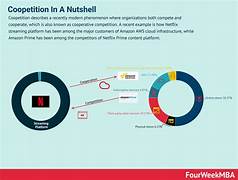
Tech companies frequently partner for mutual benefit-Co-opetition, but in the customer service and contact center sector, the competition is heating up. Established players like Genesys, Five9, and Nice are now facing significant competition from tech giants such as AWS, Microsoft, and Google. To strengthen their positions, longtime partners Genesys and Salesforce introduced a joint platform called CX Cloud earlier this year. This platform combines Salesforce’s advanced Service Cloud and CRM with Genesys’ leading contact center as a service (CCaaS) solution- the very epitome of Co-opetition. It integrates telephony, journey management, and employee-focused workforce engagement management tools to optimize contact center operations and track agent satisfaction. While both companies compete in areas like AI, digital engagement, and generative AI, the CX Cloud partnership exemplifies their “coopetition” strategy. Salesforce runs the desktop interface, while Genesys excels in workforce management. By integrating their technologies, the two companies offer customers a flexible solution, enabling them to use the tools that best suit their needs—whether it’s managing digital channels through Salesforce or Genesys. This collaboration eliminates competition in key areas, with both Salesforce and Genesys sales teams working closely together. The partnership between the two companies is not new; their integration dates back to 2015. However, the recent deeper integration, which now covers not just voice but also digital channels, offers customers a unified view of their data. This allows users to harness customer conversation data across both platforms more effectively, giving them the flexibility to use tools from either Genesys or Salesforce. In addition to competition from one another, both Genesys and Salesforce face challenges from cloud hyperscalers like AWS, Microsoft, and Google, which also offer contact center tools. Despite this, Genesys’ and Salesforce’s CX Cloud collaboration stands out by offering a unified framework that benefits customers through combined capabilities. As an example of this complex tech landscape, AWS is both a competitor and a top partner for reselling Genesys Cloud. Both companies agree that the real focus isn’t on competing with each other, but on helping customers solve challenges around customer engagement in an efficient and cost-effective way. The joint platform also integrates with other technologies, such as Google’s Contact Center AI and AWS tools like Lambda and Polly, making it adaptable to diverse enterprise needs. Both Genesys and Salesforce emphasize the importance of an open platform with pre-built integrations, allowing customers to get more value from both platforms faster than before. CX Cloud has seen adoption across various industries and company sizes, from large enterprises to smaller, faster-moving companies. Smaller businesses, in particular, have been quick to adopt this innovation, as it allows them to access enterprise-level integrations without needing to build custom solutions. Larger enterprises, such as ADP, have also benefitted from CX Cloud by using it to deliver proactive customer experiences, addressing potential issues before they arise. Overall, the partnership between Genesys and Salesforce exemplifies Co-opetition-a collaborative approach in a highly competitive market, enabling customers to leverage the strengths of both platforms for enhanced contact center operations. Like Related Posts Who is Salesforce? Who is Salesforce? Here is their story in their own words. From our inception, we’ve proudly embraced the identity of Read more Salesforce Marketing Cloud Transactional Emails Salesforce Marketing Cloud Transactional Emails are immediate, automated, non-promotional messages crucial to business operations and customer satisfaction, such as order Read more Salesforce Unites Einstein Analytics with Financial CRM Salesforce has unveiled a comprehensive analytics solution tailored for wealth managers, home office professionals, and retail bankers, merging its Financial Read more AI-Driven Propensity Scores AI plays a crucial role in propensity score estimation as it can discern underlying patterns between treatments and confounding variables Read more

Read More
Salesforce Data Quality Challenges and AI Integration

Salesforce Data Quality Challenges and AI Integration

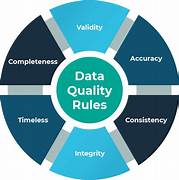
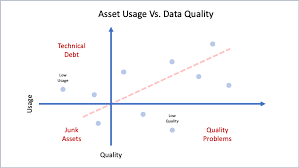
Salesforce Data Quality Challenges and AI Integration Salesforce is an incredibly powerful CRM tool, but like any system, it’s vulnerable to data quality issues if not properly managed. As organizations race to unlock the power of AI to improve sales and service experiences, they are finding that great AI requires great data. Let’s explore some of the most common Salesforce data quality challenges and how resolving them is key to succeeding in the AI era. 1. Duplicate Records Duplicate data can clutter your Salesforce system, leading to reporting inaccuracies and confusing AI-driven insights. Use Salesforce’s built-in deduplication tools or third-party apps that specialize in identifying and merging duplicate records. Implement validation rules to prevent duplicates from entering the system in the first place, ensuring cleaner data that supports accurate AI outputs. 2. Incomplete Data Incomplete data often results in missed opportunities and poor customer insights. This becomes especially problematic in AI applications, where missing data could skew results or lead to incomplete recommendations. Use Salesforce validation rules to make certain fields mandatory, ensuring critical information is captured during data entry. Regularly audit your system to identify missing data and assign tasks to fill in gaps. This ensures that both structured and unstructured data can be effectively leveraged by AI models. 3. Outdated Information Over time, data in Salesforce can become outdated, particularly customer contact details or preferences. Regularly cleanse and update your data using enrichment services that automatically refresh records with current information. For AI to deliver relevant, real-time insights, your data needs to be fresh and up to date. This is especially important when AI systems analyze both structured data (e.g., CRM entries) and unstructured data (e.g., emails or transcripts). 4. Inconsistent Data Formatting Inconsistent data formatting complicates analysis and weakens AI performance. Standardize data entry using picklists, drop-down menus, and validation rules to enforce proper formatting across all fields. A clean, consistent data set helps AI models more effectively interpret and integrate structured and unstructured data, delivering more relevant insights to both customers and employees. 5. Lack of Data Governance Without clear guidelines, it’s easy for Salesforce data quality to degrade, especially when unstructured data is added to the mix. Establish a data governance framework that includes policies for data entry, updates, and regular cleansing. Good data governance ensures that both structured and unstructured data are properly managed, making them usable by AI technologies like Large Language Models (LLMs) and Retrieval Augmented Generation (RAG). The Role of AI in Enhancing Data Management This year, every organization is racing to understand and unlock the power of AI, especially to improve sales and service experiences. However, great AI requires great data. While traditional CRM systems deal primarily with structured data like rows and columns, every business also holds a treasure trove of unstructured data in documents, emails, transcripts, and other formats. Unstructured data offers invaluable AI-driven insights, leading to more comprehensive, customer-specific interactions. For example, when a customer contacts support, AI-powered chatbots can deliver better service by pulling data from both structured (purchase history) and unstructured sources (warranty contracts or past chats). To ensure AI-generated responses are accurate and contextual, companies must integrate both structured and unstructured data into a unified 360-degree customer view. AI Frameworks for Better Data Utilization An effective way to ensure accuracy in AI is with frameworks like Retrieval Augmented Generation (RAG). RAG enhances AI by augmenting Large Language Models with proprietary, real-time data from both structured and unstructured sources. This method allows companies to deliver contextual, trusted, and relevant AI-driven interactions with customers, boosting overall satisfaction and operational efficiency. Tectonic’s Role in Optimizing Salesforce Data for AI To truly unlock the power of AI, companies must ensure that their data is of high quality and accessible to AI systems. Experts like Tectonic provide tailored Salesforce consulting services to help businesses manage and optimize their data. By ensuring data accuracy, completeness, and governance, Tectonic can support companies in preparing their structured and unstructured data for the AI era. Conclusion: The Intersection of Data Quality and AI In the modern era, data quality isn’t just about ensuring clean CRM records; it’s also about preparing your data for advanced AI applications. Whether it’s eliminating duplicates, filling in missing information, or governing data across touchpoints, maintaining high data quality is essential for leveraging AI effectively. For organizations ready to embrace AI, the first step is understanding where all their data resides and ensuring it’s suitable for their generative AI models. With the right data strategy, businesses can unlock the full potential of AI, transforming sales, service, and customer experiences across the board. Like Related Posts Who is Salesforce? Who is Salesforce? Here is their story in their own words. From our inception, we’ve proudly embraced the identity of Read more Salesforce Marketing Cloud Transactional Emails Salesforce Marketing Cloud Transactional Emails are immediate, automated, non-promotional messages crucial to business operations and customer satisfaction, such as order Read more Salesforce Unites Einstein Analytics with Financial CRM Salesforce has unveiled a comprehensive analytics solution tailored for wealth managers, home office professionals, and retail bankers, merging its Financial Read more AI-Driven Propensity Scores AI plays a crucial role in propensity score estimation as it can discern underlying patterns between treatments and confounding variables Read more

Read More
gettectonic.com