- gettectonic.com - Page 9
Outlook Offline Access

Outlook Offline Access

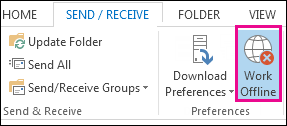
The upcoming Outlook app update will introduce offline access, allowing users to open the app without needing an internet connection, a feature previously unavailable. Offline access was limited to instances where the app was already running and lost its connection. Additionally, starting this December, the app will automatically synchronize calendars when transitioning between the classic and new versions of Outlook. Outlook Offline Access. Teams is also receiving several enhancements. In November, Android and iOS users will benefit from a new video feature called Cloud IntelliFrame. This technology improves the visibility of participants during video meetings by optimizing video framing, and will be available for mobile users joining meetings with Teams Rooms on Windows. For Teams users on laptops, Microsoft is introducing a feature that simplifies the use of shared meeting room devices. When a user connects their laptop to a Teams meeting room via USB, the tool will automatically detect the room’s audio settings. A pre-join screen will then prompt the user to connect, enhancing the BYOD (Bring Your Own Device) experience. This functionality supports various meeting room devices, such as screens and audio equipment, provided they are on a Microsoft-supported list. Mac users will also see improvements in Teams next month with Microsoft Edge. If Edge is set as the default browser and the feature is activated, web links from the Teams app will automatically open in the same profile used to log into Teams. This streamlines the process by eliminating the need for additional logins, making it quicker to access links from chats, channels, and other areas. Administrators can control this functionality through the “Choose Which Browser Opens Web Links” policy in Microsoft 365. Additionally, several new features for Microsoft 365, including updates to Microsoft Viva and SharePoint, will be rolling out soon. Like Related Posts Who is Salesforce? Who is Salesforce? Here is their story in their own words. From our inception, we’ve proudly embraced the identity of Read more Salesforce Marketing Cloud Transactional Emails Salesforce Marketing Cloud Transactional Emails are immediate, automated, non-promotional messages crucial to business operations and customer satisfaction, such as order Read more Salesforce Unites Einstein Analytics with Financial CRM Salesforce has unveiled a comprehensive analytics solution tailored for wealth managers, home office professionals, and retail bankers, merging its Financial Read more AI-Driven Propensity Scores AI plays a crucial role in propensity score estimation as it can discern underlying patterns between treatments and confounding variables Read more

Read More
Challenges for Rural Healthcare Providers

Challenges for Rural Healthcare Providers

Rural healthcare providers have long grappled with challenges due to their geographic isolation and limited financial resources. The advent of digital health transformation, however, has introduced a new set of IT-related obstacles for these providers. EHR Adoption and New IT Challenges While federal legislation has successfully promoted Electronic Health Record (EHR) adoption across both rural and urban healthcare organizations, implementing an EHR system is only one component of a comprehensive health IT strategy. Rural healthcare facilities encounter numerous IT barriers, including inadequate infrastructure, interoperability issues, constrained resources, workforce shortages, and data security concerns. Limited Broadband Access Broadband connectivity is essential for leveraging health IT effectively. However, there is a significant disparity in broadband access between rural and urban areas. According to a Federal Communications Commission (FCC) report, approximately 96% of the U.S. population had access to broadband at the FCC’s minimum speed benchmark in 2019, compared to just 73.6% of rural Americans. The lack of broadband infrastructure hampers rural organizations’ ability to utilize IT features that enhance care delivery, such as electronic health information exchange (HIE) and virtual care. Rural facilities, in particular, rely heavily on HIE and telehealth to bridge gaps in their services. For instance, HIE facilitates data sharing between smaller ambulatory centers and larger academic medical centers, while telehealth allows rural clinicians to consult with specialists in urban centers. Additionally, telehealth can help patients in rural areas avoid long travel distances for care. However, without adequate broadband access, these services remain impractical. Despite persistent disparities, the rural-urban broadband gap has narrowed in recent years. Data from the FCC indicates that since 2016, the number of people in rural areas without access to 25/3 Mbps service has decreased by more than 46%. Various programs, including the FCC’s Rural Health Care Program and USDA funding initiatives, aim to expand broadband access in rural regions. Interoperability Challenges While HIE adoption is rising nationally, rural healthcare organizations lag behind their urban counterparts in terms of interoperability capabilities, as noted in a 2023 GAO report. Data from a 2021 American Hospital Association survey revealed that rural hospitals are less likely to engage in national or regional HIE networks compared to medium and large hospitals. Rural providers often lack the economic and technological resources to participate in electronic HIE networks, leading them to rely on manual data exchange methods such as fax or mail. Additionally, rural providers are less likely to join EHR vendor networks for data exchange, partly due to the fact that they often use different systems from those in other local settings, complicating health data exchange. Federal initiatives like TEFCA aim to improve interoperability through a network of networks approach, allowing organizations to connect to multiple HIEs through a single connection. However, TEFCA’s voluntary participation model and persistent barriers such as IT staffing shortages and broadband gaps still pose challenges for rural providers. Financial Constraints Rural hospitals often operate with slim profit margins due to lower patient volumes and higher rates of uninsured or underinsured patients. The financial strain is exacerbated by declining Medicare and Medicaid reimbursements. According to KFF, the median operating margin for rural hospitals was 1.5% in 2019, compared to 5.2% for other hospitals. With limited budgets, rural healthcare organizations struggle to invest in advanced health IT systems and the necessary training and maintenance. Many small rural hospitals are turning to cloud-based EHR platforms as a cost-effective solution. Cloud-based EHRs reduce the need for substantial upfront hardware investments and offer monthly subscription fees, some as low as $100 per month. Workforce Challenges The healthcare sector is facing widespread staff shortages, including a lack of skilled health IT professionals. Rural areas are disproportionately affected by these shortages. An insufficient number of IT specialists can impede the adoption and effective use of health IT in these regions. To address workforce gaps, the ONC suggests strategies such as cross-training multiple staff members in health IT functions and offering additional training opportunities. Some networks, like OCHIN, have secured grants to develop workforce programs, but limited broadband access can hinder participation in virtual training programs, highlighting the need for expanded broadband infrastructure. Data Security Concerns Healthcare data breaches have surged, with a 256% increase in large breaches reported to the Office for Civil Rights (OCR) over the past five years. Rural healthcare organizations, often operating with constrained budgets, may lack the resources and staff to implement robust data security measures, leaving them vulnerable to cyber threats. A cyberattack on a rural healthcare organization can disrupt patient care, as patients may need to travel significant distances to reach alternative facilities. To address cybersecurity challenges, recent legislative efforts like the Rural Hospital Cybersecurity Enhancement Act aim to develop comprehensive strategies for rural hospital cybersecurity and provide educational resources for staff training. In the interim, rural healthcare organizations can use free resources such as the Health Industry Cybersecurity Practices (HICP) publication to guide their cybersecurity strategies, including recommendations for managing vulnerabilities and protecting email systems. Does your practice need help meeting these challenges? Contact Tectonic today. Like Related Posts Who is Salesforce? Who is Salesforce? Here is their story in their own words. From our inception, we’ve proudly embraced the identity of Read more Salesforce Unites Einstein Analytics with Financial CRM Salesforce has unveiled a comprehensive analytics solution tailored for wealth managers, home office professionals, and retail bankers, merging its Financial Read more AI-Driven Propensity Scores AI plays a crucial role in propensity score estimation as it can discern underlying patterns between treatments and confounding variables Read more Tectonic’s Successful Salesforce Track Record Salesforce Technology Services Integrator – Tectonic has successfully delivered Salesforce in a variety of industries including Public Sector, Hospitality, Manufacturing, Read more

Read More
Introhive Relationship Intelligence Platform

Introhive Relationship Intelligence Platform

FREDERICTON, New Brunswick, September 12, 2024 – Introhive, the leading Relationship Intelligence platform, today announced that it is enabling its market leading, AI-Powered Relationship Intelligence for Salesforce Data Cloud empowering clients to understand in real-time the Relationship Intelligence associated with sales Opportunities Bringing Salesforce Data Cloud and AI together for enhanced insights Introhive’s integration brings the Customer 360 vision to life by providing a unified and enriched view of contact and relationship data, enabling organizations to derive advanced insights by overlaying their existing sales opportunities. As a leader in relationship intelligence and CRM data automation, Introhive provides unmatched data accuracy, ensuring reliable insights and actions from Data Cloud applications and AI tools like Salesforce Einstein Copilot. By transforming relationship data into actionable insights, organizations are empowered to make critical business decisions with confidence and turn connections into tangible business value. Enhanced decision-making with Salesforce Data Cloud “Our Relationship Intelligence capability for Salesforce Data Cloud enhances the solution we offer our clients and elevates Introhive’s role as a top-tier Data Ecosystem Partner on the Salesforce platform,” said Lee Blakemore, CEO of Introhive. “Clients will now enjoy all the benefits of Introhive’s Data Share, enhanced by Salesforce’s powerful platform, ensuring real-time access to trusted relationship data. This combination empowers firms to make critical business decisions with confidence and precision.” Lightning Web Components boost Salesforce Data Cloud integration To further strengthen its Salesforce offering, Introhive announced the launch of Lightning Web Components that seamlessly integrate powerful relationship intelligence in users flow of work. This strategic addition elevates relationship intelligence in Salesforce by making insights more contextual, accessible, and actionable. The components dynamically surface relevant relationship data, top contacts, and interaction history directly within Salesforce pages. This allows users to take proactive steps in managing their relationships, resulting in improved productivity, enhanced client retention, and accelerated revenue growth – all without disrupting existing workflows. Addressing data challenges with Salesforce Data Cloud integration In today’s data-driven business environment, organizations rely heavily on analytics for decision-making, recognizing that the quality and timeliness of information are crucial for effective data-driven strategies. Yet, siloed data, information overload, and constant context switching often lead to missed critical relationship insights, impeding businesses from fully leveraging their relationship capital to drive growth, retention, and informed business decisions. Unlocking the full potential of relationship data with Salesforce Data Cloud The addition of Introhive’s lightning web components and Data Cloud integration address these challenges by transforming how businesses manage and activate their relationship data to fuel business insights and inform decision making. This includes identifying open opportunities based on relationship strength and leveraging the best connected individuals to target accounts for strategic decision making and warm introductions. “With our integration with Salesforce Data Cloud, we’re tackling a major challenge businesses face: fully unlocking the value of their relationship data,” said Leyla Samiee, Chief Product Officer at Introhive. “Our goal is to eliminate data silos that hinder organizations from obtaining crucial relationship insights. By consistently delivering clean, reliable data, we’ve been leading this charge. This new partnership takes our efforts further by enabling smooth integration of data and interactions across various systems that impact our clients’ goals. Our Lightning Web Components, now enhanced with machine intelligence, provide real-time, actionable insights more efficiently. Through our collaboration with Salesforce Data Cloud, these services are integrated with Salesforce’s interactive platforms, offering improved visibility into relationship strength and key connections. This empowers organizations to strategically engage with their most valuable accounts, fostering growth and maximizing their relationship capital.” Salesforce Data Cloud empowers growth across industries As Salesforce maintains its position as the global CRM leader, Introhive’s enhanced offering strategically empowers organizations across industries such as accounting, consulting, legal and commercial real estate, to fully capitalize on their collective relationship network to drive their business forward. For more information about Introhive’s Data Cloud integration and Lightning Web Components, visit our website. About Introhive Introhive is the leading Relationship Intelligence Platform that empowers professional services firms to dismantle silos, fuel their CRM, and activate relationship data to foster collaboration and increase revenue. Trusted by world-renowned brands, Introhive supports over 750,000 users in 90+ countries. With offices in the US, Canada, and the UK, we’re committed to helping businesses optimize their revenue opportunities. Learn more at www.introhive.com. Like Related Posts Who is Salesforce? Who is Salesforce? Here is their story in their own words. From our inception, we’ve proudly embraced the identity of Read more Salesforce Marketing Cloud Transactional Emails Salesforce Marketing Cloud Transactional Emails are immediate, automated, non-promotional messages crucial to business operations and customer satisfaction, such as order Read more Salesforce Unites Einstein Analytics with Financial CRM Salesforce has unveiled a comprehensive analytics solution tailored for wealth managers, home office professionals, and retail bankers, merging its Financial Read more AI-Driven Propensity Scores AI plays a crucial role in propensity score estimation as it can discern underlying patterns between treatments and confounding variables Read more

Read More
Agentforce to the Team

Agentforce to the Team

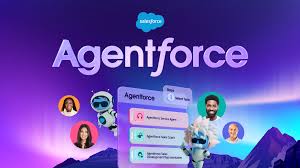
Salesforce has introduced the Agentforce Atlas Reasoning Engine, a platform designed to perform tasks autonomously with minimal human intervention. Agentforce to the Team changes everything about AI. Businesses can feed the engine data, assign tasks, and step away, as the system is capable of completing work independently. This launch closely follows OpenAI’s recent advancements in artificial intelligence, highlighting the ongoing collaboration between Salesforce and Sam Altman’s firm. Agentforce to the Team-makes me hear “Honey, I’m home”, coming from the front door. The Agentforce Atlas Reasoning Engine is designed to analyze data, make decisions, and execute tasks with high reliability and accuracy, echoing the features of OpenAI’s latest AI model. Salesforce positions this as part of the “Third Wave of AI,” where intelligent agents go beyond assisting humans to actively driving business outcomes without frequent oversight. According to Salesforce CEO Marc Benioff, these agents are deeply integrated into customer workflows, anticipating needs and improving growth by taking proactive action at every touchpoint. Benioff emphasized the revolutionary nature of Agentforce, which he claims will surpass existing AI platforms by offering highly accurate, low-hallucination results. It integrates seamlessly across Salesforce’s ecosystem, benefiting users from industries such as financial services, healthcare, and government. Early adopters, such as Wiley, report a 40% increase in case resolution, with Agentforce handling routine customer service tasks more efficiently than previous chatbots. Disney also saw improved results, noting that Atlas delivered twice the accuracy of other AI tools they had benchmarked. However, the autonomous nature of these agents raises concerns about job displacement, particularly for workers involved in repetitive, low-impact tasks. While Salesforce advocates for reskilling workers to transition into higher-value roles, many organizations struggle to effectively implement such initiatives. The time required to upskill workers may not align with the rapid adoption of AI technologies like Agentforce. Agentforce aims to address common enterprise challenges by offering out-of-the-box solutions for sales, marketing, and customer service roles. The low-code platform allows businesses to customize their AI agents without extensive technical expertise, ensuring that they can scale capacity and improve efficiency. Salesforce plans to showcase Agentforce at its upcoming Dreamforce conference, aiming to onboard 1,000 customers to the platform. The launch signifies Salesforce’s strategic push to dominate the enterprise AI landscape, leveraging its vast data and platform to deliver more value to its customers. Despite its potential, Agentforce introduces new risks, especially in areas like data privacy and ethical AI deployment. Salesforce emphasizes its commitment to addressing these issues by incorporating ethical guardrails, such as toxicity filters. Industry analysts remain cautiously optimistic, noting that while the technology holds promise, the real test will come as more organizations adopt it and integrate it into their workflows. In summary, Salesforce’s Agentforce Atlas Reasoning Engine represents a significant leap in enterprise AI, moving beyond basic AI copilots to fully autonomous agents. While it offers substantial benefits in productivity and efficiency, its impact on the workforce and the challenges of widespread AI adoption will require ongoing attention. By Tectonic’s Shannan Hearne, Solutions Architect Like Related Posts Who is Salesforce? Who is Salesforce? Here is their story in their own words. From our inception, we’ve proudly embraced the identity of Read more Salesforce Marketing Cloud Transactional Emails Salesforce Marketing Cloud Transactional Emails are immediate, automated, non-promotional messages crucial to business operations and customer satisfaction, such as order Read more Salesforce Unites Einstein Analytics with Financial CRM Salesforce has unveiled a comprehensive analytics solution tailored for wealth managers, home office professionals, and retail bankers, merging its Financial Read more AI-Driven Propensity Scores AI plays a crucial role in propensity score estimation as it can discern underlying patterns between treatments and confounding variables Read more
Read More
Salesforce and Monte Carlo

Salesforce and Monte Carlo

Salesforce recently announced a strategic partnership with Monte Carlo, a leading fashion brand, to revolutionize the company’s consumer engagement across multiple channels. This collaboration will help Monte Carlo evolve from a winter-wear icon into a year-round favorite in India’s competitive fashion industry, appealing to customers of all ages while maintaining its legacy in winter apparel. In a statement, Monte Carlo shared, “Our decision to adopt Salesforce CRM aligns with our vision of becoming a digital-first, data-driven organization that leverages cutting-edge technology to enhance customer experiences. With Salesforce, we aim to transform the customer journey by gaining a unified, 360-degree view of customers across online and offline channels.” Monte Carlo has embraced Salesforce Data Cloud to create a holistic view of each customer, enabling streamlined communication across all channels to ensure more seamless and efficient engagements. Additionally, Monte Carlo is committed to delivering exceptional customer experiences at every stage—before, during, and after a purchase. The brand is using Salesforce Service Cloud to implement a personalized loyalty solution that goes beyond traditional point-based rewards, offering customers a unique and memorable experience. Like Related Posts Who is Salesforce? Who is Salesforce? Here is their story in their own words. From our inception, we’ve proudly embraced the identity of Read more Salesforce Marketing Cloud Transactional Emails Salesforce Marketing Cloud Transactional Emails are immediate, automated, non-promotional messages crucial to business operations and customer satisfaction, such as order Read more Salesforce Unites Einstein Analytics with Financial CRM Salesforce has unveiled a comprehensive analytics solution tailored for wealth managers, home office professionals, and retail bankers, merging its Financial Read more AI-Driven Propensity Scores AI plays a crucial role in propensity score estimation as it can discern underlying patterns between treatments and confounding variables Read more

Read More
Generative AI is Not AI

Generative AI is Not AI

Generative AI (GenAI) has become a powerhouse in today’s technology landscape. From boardrooms to startups, everyone is eager to label their products and services as “Powered by AI.” But the real question is: how much value is it truly adding? A common misconception is that GenAI equates to AI as a whole. In reality, AI is a vast field, encompassing numerous approaches suited to different challenges. GenAI is just one piece of that puzzle—powerful, yet not always the ideal tool for every task. Gartner’s article, When Not to Use Generative AI, illustrates this perfectly. GenAI shines in generating content and driving conversations. It also performs well in tasks like classification and recommendation systems. However, when it comes to decision-making or predictions, GenAI’s capabilities are less robust. So why all the hype around GenAI? Its appeal lies in its ability to produce high-quality, distinctive results effortlessly. With APIs from companies like OpenAI, integrating these models into existing systems has become straightforward. Tools like Semantic Kernel and LangChain make it possible to add AI to software with just a few lines of code. But while integrating GenAI is easy, using it effectively is a different challenge. Mastering prompt engineering, managing token usage, and potentially incorporating Retrieval-Augmented Generation (RAG) are essential skills. Fine-tuning the model is another option, but it comes with risks. In some cases, fine-tuning can cause the model to “forget” its base learning, leading to incorrect results. Cost is another significant concern—not just in financial terms, but also latency and environmental impact, which is often overlooked. Even if everything goes smoothly, there’s no guarantee that GenAI will be flawless. One major drawback is its tendency to hallucinate, a problem that persists despite improvements in newer models. It can be frustrating when GenAI is misused for deterministic tasks. Simple if-else statements are often replaced with GenAI-driven decision-making, which can lead to over-engineering. Adding GenAI just to claim the use of AI isn’t a practical solution. According to another Gartner report, 30% of Generative AI Projects Will Be Abandoned After Proof of Concept by the End of 2025, a significant portion of GenAI projects are expected to fail. This outcome isn’t surprising, as many organizations rush to incorporate GenAI without fully understanding its value. While there’s no shortage of articles praising GenAI, it’s important to recognize the limitations. AI critic Gary Marcus highlights these challenges in his article, Why the Collapse of the Generative AI Bubble is Inevitable. That said, there’s no denying the transformative power of GenAI. Many projects have seen tremendous success with its implementation. For instance, GitHub Copilot has been a game-changer for productivity in coding environments. However, it’s essential not to become overly reliant on any single AI technique. AI methods can complement each other. Combining GenAI with other machine learning models can improve accuracy, transparency, and performance, while reducing costs and data requirements. For instance, pairing GenAI with non-generative machine learning models can enhance segmentation and classification tasks, and integrating it with optimization techniques can improve enterprise search. The potential for these combinations is vast, offering innovative solutions across sectors, including healthcare. By leveraging multiple AI approaches, businesses can overcome the limitations of any one technique. Ongoing research is continually improving GenAI, and the future holds exciting prospects. However, it’s crucial for businesses to carefully evaluate their needs before selecting any AI technology and assess the actual value it adds. In some cases, GenAI is a game-changer; in others, it falls short. The key is to weigh the pros and cons for each specific scenario and avoid being swept up in market trends. No single technology is a universal solution to every problem. Like Related Posts Who is Salesforce? Who is Salesforce? Here is their story in their own words. From our inception, we’ve proudly embraced the identity of Read more Salesforce Marketing Cloud Transactional Emails Salesforce Marketing Cloud Transactional Emails are immediate, automated, non-promotional messages crucial to business operations and customer satisfaction, such as order Read more Salesforce Unites Einstein Analytics with Financial CRM Salesforce has unveiled a comprehensive analytics solution tailored for wealth managers, home office professionals, and retail bankers, merging its Financial Read more AI-Driven Propensity Scores AI plays a crucial role in propensity score estimation as it can discern underlying patterns between treatments and confounding variables Read more

Read More
AI-Driven Chatbots in Education

AI-Driven Chatbots in Education

As AI-driven chatbots enter college courses, the potential to offer students 24/7 support is game-changing. However, there’s a critical caveat: when we customize chatbots by uploading documents, we don’t just add knowledge — we introduce biases. The documents we choose influence chatbot responses, subtly shaping how students interact with course material and, ultimately, how they think. So, how can we ensure that AI chatbots promote critical thinking rather than merely serving to reinforce our own viewpoints? How Course Chatbots Differ from Administrative Chatbots Chatbot teaching assistants have been around for some time in education, but low-cost access to large language models (LLMs) and accessible tools now make it easy for instructors to create customized course chatbots. Unlike chatbots used in administrative settings that rely on a defined “ground truth” (e.g., policy), educational chatbots often cover nuanced and debated topics. While instructors typically bring specific theories or perspectives to the table, a chatbot trained with tailored content can either reinforce a single view or introduce a range of academic perspectives. With tools like ChatGPT, Claude, Gemini, or Copilot, instructors can upload specific documents to fine-tune chatbot responses. This customization allows a chatbot to provide nuanced responses, often aligned with course-specific materials. But, unlike administrative chatbots that reference well-defined facts, course chatbots require ethical responsibility due to the subjective nature of academic content. Curating Content for Classroom Chatbots Having a 24/7 teaching assistant can be a powerful resource, and today’s tools make it easy to upload course documents and adapt LLMs to specific curricula. Options like OpenAI’s GPT Assistant, IBL’s AI Mentor, and Druid’s Conversational AI allow instructors to shape the knowledge base of course-specific chatbots. However, curating documents goes beyond technical ease — the content chosen affects not only what students learn but also how they think. The documents you select will significantly shape, though not dictate, chatbot responses. Combined with the LLM’s base model, chatbot instructions, and the conversation context, the curated content influences chatbot output — for better or worse — depending on your instructional goals. Curating for Critical Thinking vs. Reinforcing Bias A key educational principle is teaching students “how to think, not what to think.” However, some educators may, even inadvertently, lean toward dictating specific viewpoints when curating content. It’s critical to recognize the potential for biases that could influence students’ engagement with the material. Here are some common biases to be mindful of when curating chatbot content: While this list isn’t exhaustive, it highlights the complexities of curating content for educational chatbots. It’s important to recognize that adding data shifts — not erases — inherent biases in the LLM’s responses. Few academic disciplines offer a single, undisputed “truth.” AI-Driven Chatbots in Education. Tips for Ethical and Thoughtful Chatbot Curation Here are some practical tips to help you create an ethically balanced course chatbot: This approach helps prevent a chatbot from merely reflecting a single perspective, instead guiding students toward a broader understanding of the material. Ethical Obligations As educators, our ethical obligations extend to ensuring transparency about curated materials and explaining our selection choices. If some documents represent what you consider “ground truth” (e.g., on climate change), it’s still crucial to include alternative views and equip students to evaluate the chatbot’s outputs critically. Equity Customizing chatbots for educational use is powerful but requires deliberate consideration of potential biases. By curating diverse perspectives, being transparent in choices, and refining chatbot content, instructors can foster critical thinking and more meaningful student engagement. AI-Driven Chatbots in Education AI-powered chatbots are interactive tools that can help educational institutions streamline communication and improve the learning experience. They can be used for a variety of purposes, including: Some examples of AI chatbots in education include: While AI chatbots can be a strategic move for educational institutions, it’s important to balance innovation with the privacy and security of student data.  Like Related Posts Who is Salesforce? Who is Salesforce? Here is their story in their own words. From our inception, we’ve proudly embraced the identity of Read more Salesforce Unites Einstein Analytics with Financial CRM Salesforce has unveiled a comprehensive analytics solution tailored for wealth managers, home office professionals, and retail bankers, merging its Financial Read more AI-Driven Propensity Scores AI plays a crucial role in propensity score estimation as it can discern underlying patterns between treatments and confounding variables Read more Tectonic’s Successful Salesforce Track Record Salesforce Technology Services Integrator – Tectonic has successfully delivered Salesforce in a variety of industries including Public Sector, Hospitality, Manufacturing, Read more
Read More
Salesforce Healthcare and AI

Salesforce Healthcare and AI

The Healthcare Industry’s Digital Transformation: An Opportunity Unveiled – Salesforce Healthcare and AI Historically, the healthcare sector has lagged behind in technology adoption, particularly software. It consistently invests less in IT and software compared to other industries, relying heavily on manual processes and outdated tools like faxes and phone calls. Unlike other sectors where platforms like Salesforce, Slack, JIRA, and Notion dominate, healthcare has yet to see similar technological integration. Salesforce Healthcare and AI Future While this low adoption of software has previously been seen as a drawback, it now presents a significant opportunity. Unlike industries burdened by extensive investments in legacy systems, healthcare is not encumbered by sunk costs. This freedom allows it to embrace cutting-edge AI innovations without the hesitation of overhauling existing, expensive software infrastructures. Addressing the Staffing Crisis The healthcare industry is grappling with a severe staffing crisis, with a shortfall of over 100,000 doctors and nurses projected over the next five years. The increasing complexity of medical care, driven by advancements in diagnostics, continuous monitoring, and new treatments, contributes to an overwhelming amount of information for clinicians. To manage this, healthcare requires new tools capable of processing complex data in real-time to support critical decisions for an aging population with more complex health needs. The most valuable asset in healthcare is clinical judgment, which is currently exclusive to human practitioners. A major challenge is to extend this clinical judgment beyond the existing workforce and physical locations, making it accessible to all who need it. Additionally, ensuring that every clinician performs at the highest level is crucial. The Role of Administrative and Clinical AI Administrative AI is essential for reducing the overhead of healthcare delivery, allowing for better resource management and efficiency. Clinical AI products, though challenging to develop due to their high-stakes nature, are uniquely positioned to address these needs. They must integrate seamlessly into existing environments, adding a layer of sophistication to healthcare processes. Regulatory Advantages for Clinical AI One of healthcare’s advantages in adopting AI is its well-established regulatory framework. The FDA has approved numerous clinical AI products and is developing processes to keep pace with advancements in machine learning and generative AI. This rigorous approval process ensures that only the most reliable and clinically sound products make it to market, creating a higher barrier to entry but also a stronger competitive advantage for those that succeed. The Scale of Opportunity The healthcare industry is a massive $4 trillion+ market, predominantly driven by human labor rather than technology. Historically, enterprise software companies have struggled to penetrate this sector, as IT budgets represent just 3.5% of revenue—less than half of that in financial services. However, with AI tools advancing rapidly, they are increasingly seen as “AI staff” rather than mere software. This shift opens up opportunities not just in software but in transforming service delivery, potentially disrupting a market valued in trillions rather than billions. The scale of this opportunity far exceeds past software ventures, as reflected in the significant capital and valuations flowing into AI-driven healthcare companies. Whether you’re launching a new clinic, developing infrastructure for the healthcare system, or creating innovative payment or insurance models, now is an unprecedented time to enter the healthcare space. The transformative power of AI is poised to redefine how healthcare companies are built, scaled, and brought to market. Like Related Posts Who is Salesforce? Who is Salesforce? Here is their story in their own words. From our inception, we’ve proudly embraced the identity of Read more Salesforce Marketing Cloud Transactional Emails Salesforce Marketing Cloud Transactional Emails are immediate, automated, non-promotional messages crucial to business operations and customer satisfaction, such as order Read more Salesforce Unites Einstein Analytics with Financial CRM Salesforce has unveiled a comprehensive analytics solution tailored for wealth managers, home office professionals, and retail bankers, merging its Financial Read more AI-Driven Propensity Scores AI plays a crucial role in propensity score estimation as it can discern underlying patterns between treatments and confounding variables Read more

Read More
Oracle Fusion Cloud

Oracle Fusion Cloud

Oracle has unveiled over 50 role-based AI agents in the Oracle Fusion Cloud Applications Suite as of Wednesday. This suite offers a range of applications designed to help enterprises manage various functions. The newly introduced AI agents aim to assist employees and managers by automating business processes. According to Oracle executives at the CloudWorld 2024 conference in Las Vegas, these agents are tailored to improve efficiency across different functions. In Oracle Fusion Cloud Human Capital Management, the AI agents support shift scheduling, assist with hiring, manage requests to fill or create new positions, and help employees understand their benefits. In Oracle Fusion Cloud Supply Chain, Manufacturing AI Agents provide contextual insights and recommendations for handling order requests and suggest maintenance and repair actions for various assets. The AI agents within Oracle Fusion Cloud Customer Experience assist with planning and research tasks, automate contract workflow and approval processes, and facilitate communication with sales representatives. Oracle has yet to announce the release date for these AI agents. The Next Stage of GenAIThe introduction of AI agents represents an evolution of generative AI, moving beyond chatbots to technology that performs tasks autonomously. “These AI agents are engineered to automate routine tasks and offer personalized insights and recommendations,” noted Sid Nag, Gartner Research analyst. This development underscores a shift in the generative AI market from ideation to practical implementation. “These are very pragmatic and practical ideas,” said Mark Beccue, an analyst at TechTarget’s Enterprise Strategy Group. “It’s a use case we’ve been anticipating, where AI helps complete tasks effectively.” Oracle’s AI Agents for its Fusion Cloud Applications Suite align with the vision for enterprise software vendors, Beccue added. ServiceNow AI AgentsOracle is not alone in embedding AI agents into business applications. On September 10, ServiceNow announced plans to integrate agentic workflows into its platform. The initial AI Agent applications from ServiceNow will focus on Customer Service Management and IT Service Management. These agents are designed to identify and resolve issues independently while still being overseen by human operators. ServiceNow’s AI Agents are expected to launch in November 2024 as part of a limited release. The company also introduced the Now Assist Skill Kit, enabling enterprises to develop custom generative AI skills tailored to specific business needs. Single Task vs. Multitask AgentsA key consideration with AI agents is whether they can handle single tasks or multitask across multiple applications. Mark Beccue suggests that the ability to perform tasks across various applications could lead to a new user interface where AI agents manage tasks seamlessly across different systems. “It’s a vision for the future of AI agents,” Beccue remarked. It remains to be seen how these AI agents will address industry-specific regulations and compliance requirements, particularly in highly regulated sectors such as finance. Additional AI FeaturesOracle has also introduced new AI capabilities in other applications. Oracle Cloud ERP now includes predictive cash forecasting, narrative reporting, and automated transaction records within Oracle Fusion Cloud Sustainability. In Oracle Cloud CX, new features include assisted authoring to help sales teams engage buyers with AI-generated content and advanced AI capabilities in Oracle CX Unity for detecting signals based on role, title, and topic engagement. Like Related Posts Who is Salesforce? Who is Salesforce? Here is their story in their own words. From our inception, we’ve proudly embraced the identity of Read more Salesforce Unites Einstein Analytics with Financial CRM Salesforce has unveiled a comprehensive analytics solution tailored for wealth managers, home office professionals, and retail bankers, merging its Financial Read more AI-Driven Propensity Scores AI plays a crucial role in propensity score estimation as it can discern underlying patterns between treatments and confounding variables Read more Tectonic’s Successful Salesforce Track Record Salesforce Technology Services Integrator – Tectonic has successfully delivered Salesforce in a variety of industries including Public Sector, Hospitality, Manufacturing, Read more

Read More
Salesforce Org Merge Risks

Salesforce Org Merge Risks

Managing Multiple Salesforce Instances: Challenges and Solutions For growing enterprises, managing multiple Salesforce instances can be a significant challenge. Each instance may house critical business data and processes, which often need to be consolidated, particularly during mergers, acquisitions, or different stages of Salesforce adoption. This consolidation is essential to reduce operating costs and enhance efficiency. Salesforce Org Merge Risks. Salesforce Org Merge Risks Overview Salesforce consolidation involves merging several instances into a single Salesforce organization. This process aims to improve operational efficiency, data visibility, and process standardization while minimizing the total cost of ownership. It may require setting up a new Salesforce organization to facilitate the merger. Typical Salesforce Consolidation Plan A comprehensive consolidation plan typically includes the following steps: Complexity and Benefits of Salesforce Consolidation While Salesforce consolidation offers significant benefits, such as improved efficiency and reduced costs, it is a complex process requiring careful planning and execution. Many companies partner with Salesforce experts, like Tectonic, to navigate the intricacies of consolidation successfully. Salesforce Org Merge Risks Risk 1: Under-Scoping Data Mapping, Migration, and Merging Risk 2: Overlooking Metrics, Measurements, and Reports Risk 3: Limiting Stakeholder Engagement and Change Management Conclusion While meticulous planning cannot guarantee a flawless Salesforce migration, it fosters communication among Salesforce, data, and business leaders, making challenges more manageable. Although managing and consolidating systems might seem straightforward, guiding people, processes, and data through the consolidation process is inherently complex and demanding. Like Related Posts Who is Salesforce? Who is Salesforce? Here is their story in their own words. From our inception, we’ve proudly embraced the identity of Read more Salesforce Marketing Cloud Transactional Emails Salesforce Marketing Cloud Transactional Emails are immediate, automated, non-promotional messages crucial to business operations and customer satisfaction, such as order Read more Salesforce Unites Einstein Analytics with Financial CRM Salesforce has unveiled a comprehensive analytics solution tailored for wealth managers, home office professionals, and retail bankers, merging its Financial Read more AI-Driven Propensity Scores AI plays a crucial role in propensity score estimation as it can discern underlying patterns between treatments and confounding variables Read more
Read More
Ambient AI and Doctors

Ambient AI and Doctors

A study published in JAMA Network Open found that nearly half of clinicians using an ambient AI clinical documentation tool reported positive outcomes. The tool, Dragon Ambient eXperience (DAX) Copilot from health IT vendor Nuance, leverages automatic speech recognition and natural language processing to draft electronic health record (EHR) documentation based on patient-provider conversations. The nonrandomized clinical trial included family medicine, internal medicine, and general pediatrics clinicians from outpatient clinics in North Carolina and Georgia within Atrium Health. Those who participated received an hour of training on the AI tool. Researchers compared the intervention group with a control group, which included clinicians encouraged to participate as controls by service line leaders and those who initially expressed interest in the AI tool but chose not to proceed after informational sessions. A seven-question survey was sent to 230 participants before and five weeks after implementing the AI tool to evaluate its impact on their EHR experience. The study showed that 47.1% of clinicians using the AI tool reported spending less time on EHR documentation at home, compared to 14.5% in the control group. Additionally, 43.5% of the AI tool users spent less time on clinical documentation post-visit, compared to 18.2% of the control group. Moreover, 44.7% of the intervention group reported reduced frustration with the EHR, compared to 14.5% of controls. However, around 44.7% of the intervention group and 68.7% of the control group indicated their EHR experiences remained similar before and after the AI tool implementation. The researchers acknowledged potential selection and recall biases as study limitations and called for further research to identify areas for improvement and explore the impact across different clinician groups and health systems. Like Related Posts Who is Salesforce? Who is Salesforce? Here is their story in their own words. From our inception, we’ve proudly embraced the identity of Read more AI-Driven Propensity Scores AI plays a crucial role in propensity score estimation as it can discern underlying patterns between treatments and confounding variables Read more Tectonic’s Successful Salesforce Track Record Salesforce Technology Services Integrator – Tectonic has successfully delivered Salesforce in a variety of industries including Public Sector, Hospitality, Manufacturing, Read more Lookup Relationship in Salesforce What is Lookup relationship in Salesforce? Salesforce’s lookup relationships is a significant capability that allows users to connect two objects Read more

Read More
Einstein Features Cheat Sheet

Einstein Features Cheat Sheet

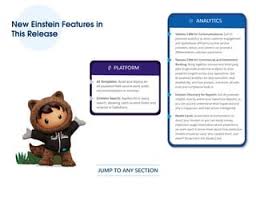
Salesforce has published a great resource for Einstein users. The Einstein Cheat Sheet puts all the Einstein features and resources at your fingertips. Download here. Einstein Discover the power of the #1 AI for CRM with Einstein. Built into the Salesforce Platform, Einstein uses powerful machine learning and large language models to personalize customer interactions and make employees more productive. With Einstein powering the Customer 360, teams can accelerate time to value, predict outcomes, and automatically generate contentwithin the flow of work. Einstein is for everyone, empowering business users, Salesforce Admins and Developers to embed AI into every experience with low code. Like Related Posts Who is Salesforce? Who is Salesforce? Here is their story in their own words. From our inception, we’ve proudly embraced the identity of Read more Salesforce Marketing Cloud Transactional Emails Salesforce Marketing Cloud Transactional Emails are immediate, automated, non-promotional messages crucial to business operations and customer satisfaction, such as order Read more Salesforce Unites Einstein Analytics with Financial CRM Salesforce has unveiled a comprehensive analytics solution tailored for wealth managers, home office professionals, and retail bankers, merging its Financial Read more AI-Driven Propensity Scores AI plays a crucial role in propensity score estimation as it can discern underlying patterns between treatments and confounding variables Read more

Read More
gettectonic.com