- gettectonic.com - Page 8
Healthcare Cloud Computing

Healthcare Cloud Computing

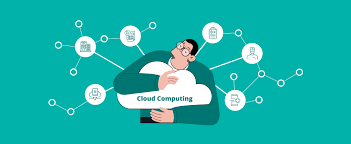
Cloud Computing in Healthcare: Ensuring HIPAA Compliance Amid Growing Adoption As healthcare organizations increasingly turn to cloud computing for scalable and accessible IT services, ensuring HIPAA compliance remains a top priority. The global healthcare cloud computing market is projected to grow from $53.8 billion in 2024 to $120.6 billion by 2029, according to a MarketsandMarkets report. A 2023 Forrester report also highlighted that healthcare organizations are spending an average of .5 million annually on cloud services, with public cloud adoption on the rise. While cloud computing offers benefits like enhanced data mobility and cost efficiency, maintaining a HIPAA-compliant relationship with cloud service providers (CSPs) requires careful attention to regulations, establishing business associate agreements (BAAs), and proactively addressing cloud security risks. Understanding HIPAA’s Role in Cloud Computing The National Institute of Standards and Technology (NIST) defines cloud computing as a model that provides on-demand access to shared computing resources. Based on this framework, the U.S. Department of Health and Human Services (HHS) Office for Civil Rights (OCR) has issued guidance on how HIPAA’s Security, Privacy, and Breach Notification Rules apply to cloud computing. Under the HIPAA Security Rule, CSPs classified as business associates must adhere to specific standards for safeguarding protected health information (PHI). This includes mitigating the risks of unauthorized access to administrative tools and implementing internal controls to restrict access to critical operations like storage and memory. HIPAA’s Privacy Rule further restricts the use or disclosure of PHI by CSPs, even in cases where they offer “no-view services.” CSPs cannot block a covered entity’s access to PHI, even in the event of a payment dispute. Additionally, the Breach Notification Rule requires business associates, including CSPs, to promptly report any breach of unsecured PHI. Healthcare organizations engaging with CSPs should consult legal counsel and follow standard procedures for establishing HIPAA-compliant vendor relationships. The Importance of Business Associate Agreements (BAAs) A BAA is essential for ensuring that a CSP is contractually bound to comply with HIPAA. OCR emphasizes that when a covered entity engages a CSP to create, receive, or transmit electronic PHI (ePHI), the CSP becomes a business associate under HIPAA. Even if the CSP cannot access encrypted PHI, it is still classified as a business associate due to its involvement in storing and processing PHI. In 2016, the absence of a BAA led to a .7 million settlement between Oregon Health & Science University and OCR after the university stored the PHI of over 3,000 individuals on a cloud server without the required agreement. BAAs play a crucial role in defining the permitted uses of PHI and ensure that both the healthcare organization and CSP understand their responsibilities under HIPAA. They also outline protocols for breach notifications and security measures, ensuring both parties are aligned on handling potential security incidents. Key Cloud Security Considerations Despite the protections of a BAA, there are inherent risks in partnering with any new vendor. Staying informed on cloud security threats is vital for mitigating potential risks proactively. In a 2024 report, the Cloud Security Alliance (CSA) identified misconfiguration, inadequate change control, and identity management as the top threats to cloud computing. The report also pointed to the rising sophistication of cyberattacks, supply chain risks, and the proliferation of ransomware-as-a-service as growing concerns. By understanding these risks and establishing clear security policies with CSPs, healthcare organizations can better safeguard their data. Prioritizing security, establishing robust BAAs, and ensuring HIPAA compliance will allow healthcare organizations to fully leverage the advantages of cloud computing while maintaining the privacy and security of patient information. Like Related Posts Who is Salesforce? Who is Salesforce? Here is their story in their own words. From our inception, we’ve proudly embraced the identity of Read more Salesforce Marketing Cloud Transactional Emails Salesforce Marketing Cloud Transactional Emails are immediate, automated, non-promotional messages crucial to business operations and customer satisfaction, such as order Read more Salesforce Unites Einstein Analytics with Financial CRM Salesforce has unveiled a comprehensive analytics solution tailored for wealth managers, home office professionals, and retail bankers, merging its Financial Read more AI-Driven Propensity Scores AI plays a crucial role in propensity score estimation as it can discern underlying patterns between treatments and confounding variables Read more


Read More
Acceptable AI Use Policies

Acceptable AI Use Policies

With great power comes—when it comes to generative AI—significant security and compliance risks. Discover how AI acceptable use policies can safeguard your organization while leveraging this transformative technology. AI has become integral across various industries, driving digital operations and organizational infrastructure. However, its widespread adoption brings substantial risks, particularly concerning cybersecurity. A crucial aspect of managing these risks and ensuring the security of sensitive data is implementing an AI acceptable use policy. This policy defines how an organization handles AI risks and sets guidelines for AI system usage. Why an AI Acceptable Use Policy Matters Generative AI systems and large language models are potent tools capable of processing and analyzing data at unprecedented speeds. Yet, this power comes with risks. The same features that enhance AI efficiency can be misused for malicious purposes, such as generating phishing content, creating malware, producing deepfakes, or automating cyberattacks. An AI acceptable use policy is essential for several reasons: Crafting an Effective AI Acceptable Use Policy An AI acceptable use policy should be tailored to your organization’s needs and context. Here’s a general guide for creating one: Essential Elements of an AI Acceptable Use Policy A robust AI acceptable use policy should include: An AI acceptable use policy is not just a document but a dynamic framework guiding safe and responsible AI use within an organization. By developing and enforcing this policy, organizations can harness AI’s power while mitigating its risks to cybersecurity and data integrity, balancing innovation with risk management as AI continues to evolve and integrate into our digital landscapes. Like Related Posts Who is Salesforce? Who is Salesforce? Here is their story in their own words. From our inception, we’ve proudly embraced the identity of Read more Salesforce Unites Einstein Analytics with Financial CRM Salesforce has unveiled a comprehensive analytics solution tailored for wealth managers, home office professionals, and retail bankers, merging its Financial Read more AI-Driven Propensity Scores AI plays a crucial role in propensity score estimation as it can discern underlying patterns between treatments and confounding variables Read more Tectonic’s Successful Salesforce Track Record Salesforce Technology Services Integrator – Tectonic has successfully delivered Salesforce in a variety of industries including Public Sector, Hospitality, Manufacturing, Read more

Read More
Liberty Bank and Salesforce

Liberty Bank and Salesforce

Liberty Bank, based in Middletown, Connecticut, announced on September 5th an expanded partnership with Salesforce, the world’s leading AI-powered CRM platform, to enhance its customer engagement efforts. Liberty Bank and Salesforce. By integrating Salesforce’s Financial Services Cloud, Marketing Cloud, MuleSoft, and Salesforce Shield, Liberty Bank aims to deliver more personalized, efficient, and enriched services. This strategic investment will further position Liberty Bank as a leader in customer satisfaction and loyalty within the community banking sector. “We set out to find a strategic partner that truly understands the unique nature of banking and puts the customer first,” said David W. Glidden, Liberty Bank President and CEO. “As we continue our mission to ‘Build the Community Bank of the Future,’ having the best partners is crucial to elevating our customer experience. With Salesforce’s innovative CRM solutions, we’re investing in the future to meet the evolving needs of our customers, team members, and communities, and to exceed their expectations.” Salesforce’s platform will enable Liberty Bank to streamline operations and gain deeper insights into customers’ financial journeys, ensuring a seamless and personalized banking experience. The Financial Services Cloud offers tools specifically tailored to the banking industry, allowing for faster time-to-value. Set to roll out next year, this transformation will allow Liberty Bank to prioritize customer financial goals while maintaining a high level of service and support. “Banks of all sizes are under pressure to innovate and deliver more personalized experiences. By leveraging CRM, data, and AI, Liberty Bank will gain a comprehensive view of its customers, enabling its teams to build stronger relationships and improve overall productivity.”Greg Jacobi, VP & GM of Banking and Lending at Salesforce. About Liberty Bank Founded in 1825, Liberty Bank is the nation’s oldest and largest independent mutual bank. With nearly $8 billion in assets, Liberty operates 56 branches across Connecticut and two in Massachusetts. It provides a full range of services, including consumer and commercial banking, cash management, home mortgages, business loans, insurance, and investment services. The bank has been named a ‘Top Workplace’ by the Hartford Courant every year since 2012 and recognized as a Best-In-State Bank in Connecticut by Forbes in 2021, 2022, and 2023. For more information, visit www.liberty-bank.com. Liberty Bank and Salesforce. Interested in discussing Salesforce for your financial institution? Contact Tectonic today. Like Related Posts Who is Salesforce? Who is Salesforce? Here is their story in their own words. From our inception, we’ve proudly embraced the identity of Read more Salesforce Marketing Cloud Transactional Emails Salesforce Marketing Cloud Transactional Emails are immediate, automated, non-promotional messages crucial to business operations and customer satisfaction, such as order Read more Salesforce Unites Einstein Analytics with Financial CRM Salesforce has unveiled a comprehensive analytics solution tailored for wealth managers, home office professionals, and retail bankers, merging its Financial Read more AI-Driven Propensity Scores AI plays a crucial role in propensity score estimation as it can discern underlying patterns between treatments and confounding variables Read more

Read More
Access Salesforce With Email Address

Salesforce Inspection Features

Salesforce Inspections: Two Powerful Tools for Sales & Compliance Salesforce offers two distinct “Inspections” solutions, each tailored to different business needs: Let’s explore how each works and their unique benefits. 1. Salesforce Pipeline Inspection: Smarter Sales Forecasting Purpose Helps sales managers and reps track deals, identify risks, and improve forecast accuracy with AI-driven insights. Key Features ✅ Interactive Pipeline Visualization – See all opportunities in one consolidated view.✅ AI-Powered Predictions – Get close date forecasts and risk alerts.✅ Week-over-Week Tracking – Monitor changes in deal size, stage, and probability.✅ Smart Filters & Sorting – Focus on high-priority deals or specific criteria.✅ Trend Analysis – Spot pipeline health trends with graphical progress tracking. Benefits ✔ More accurate revenue forecasting✔ Better focus on high-value opportunities✔ Faster identification of stalled deals Best for: Sales ops, revenue teams, and managers who need real-time pipeline intelligence. 2. Public Sector Inspections: Streamlined Compliance Checks Purpose Enables government agencies, inspectors, and compliance teams to conduct structured evaluations (safety, regulatory, permits, etc.). Key Features ✅ Custom Checklists & Forms – Standardize inspections with dynamic assessments.✅ Mobile-Friendly – Inspectors can record findings, attach photos, and submit reports on-site.✅ Violation Tracking – Log infractions and enforcement actions.✅ Automated Workflows – Route findings for approvals or follow-ups.✅ Real-Time Data Sync – Updates sync across departments instantly. Benefits ✔ Faster, more consistent inspections✔ Reduced paperwork & manual errors✔ Better audit trails for compliance Best for: Which Inspection Tool Do You Need? Feature Pipeline Inspection Public Sector Inspections Primary Use Case Sales forecasting Regulatory compliance Key Users Sales teams Inspectors, government staff AI & Automation Yes (forecasting) Yes (workflows) Mobile Support Limited (Salesforce App) Full offline mobile capability Integration CRM & Opportunity data Permits, violations databases Final Verdict Both tools eliminate manual work—just in very different ways. Need help choosing?➡ Revenue teams should explore Pipeline Inspection.➡ Government/regulated industries should evaluate Public Sector Solutions. Salesforce continues to expand its industry-specific inspection capabilities, so stay tuned for updates! Like Related Posts Who is Salesforce? Who is Salesforce? Here is their story in their own words. From our inception, we’ve proudly embraced the identity of Read more Salesforce Marketing Cloud Transactional Emails Salesforce Marketing Cloud Transactional Emails are immediate, automated, non-promotional messages crucial to business operations and customer satisfaction, such as order Read more Salesforce Unites Einstein Analytics with Financial CRM Salesforce has unveiled a comprehensive analytics solution tailored for wealth managers, home office professionals, and retail bankers, merging its Financial Read more AI-Driven Propensity Scores AI plays a crucial role in propensity score estimation as it can discern underlying patterns between treatments and confounding variables Read more

Read More
IntraEdge Higher Education

IntraEdge Higher Education

PHOENIX–(BUSINESS WIRE)–IntraEdge, Inc., a leading global technology products and services provider, recently announced its expanded investment in itsHigher Education division with the addition of new leadership to bolster their Salesforce service offerings. The new leaders each possess over 20 years of higher education experience and have a proven track record of building innovative and high performing consulting practices. “Our team has a proven track record of success in helping higher education institutions achieve their goals. We look forward to partnering with colleges and universities to leverage the power of Salesforce to improve student outcomes and operational efficiency.” The Higher Education division leadership team consists of Vince Salvato, Todd Edge, and Ryan Clemens. Salvato, who will be leading the division, is a recognized pioneer in Salesforce implementations for higher education. He brings a wealth of experience from his years working with higher education leaders, Salesforce, and ISV Partners. Edge and Clemens have a long history implementing Salesforce and other technologies for higher education leveraging global capabilities to assemble well balanced implementation teams. Together, this team boasts a proven track record of serving over 150 higher education institutions. Their collective history of successful Salesforce and technology implementations within higher education, coupled with IntraEdge’s 3,000+ global resources and complimentary product and service offerings, positions IntraEdge to deliver exceptional solutions. “We are thrilled to welcome Vince, Ryan, and Todd to the IntraEdge team,” said Kal Somani, CEO of IntraEdge. “Their combined experience and knowledge of the higher education landscape make them invaluable assets as we expand our footprint in this industry. By leveraging Salesforce’s powerful platform with IntraEdge’s full breadth of technology capabilities, we are confident in our ability to deliver exceptional solutions that address the unique challenges and opportunities facing higher education institutions.” IntraEdge redefines the typical implementation approach by delivering accelerated, cost-effective, and highly successful implementations. The company’s proven methodology and global delivery capabilities, combined with a team of seasoned higher education experts, will enable institutions to maximize the value of Salesforce while minimizing disruption to campus operations. IntraEdge’s Higher Education division offers a comprehensive suite of Salesforce-based solutions tailored to the specific needs of colleges and universities. With implementation, consulting, and value-add products and services, institutions can maximize the value of their Salesforce investment, including but not limited to Data Integration and Visualization, Digital Experience Strategy, Digital Content Strategy and Development, Managed and Capacity Services, AI Governance and Compliance Software. “We are excited to join IntraEdge and be a part of a world-class higher education practice,” said Salvato, Senior Vice President of Higher Education at IntraEdge. “Our team has a proven track record of success in helping higher education institutions achieve their goals. We look forward to partnering with colleges and universities to leverage the power of Salesforce to improve student outcomes and operational efficiency.” IntraEdge is proud to be a trusted partner to higher education institutions across North America. Our company is committed to delivering exceptional results and exceeding client expectations. Like Related Posts Who is Salesforce? Who is Salesforce? Here is their story in their own words. From our inception, we’ve proudly embraced the identity of Read more Salesforce Marketing Cloud Transactional Emails Salesforce Marketing Cloud Transactional Emails are immediate, automated, non-promotional messages crucial to business operations and customer satisfaction, such as order Read more Salesforce Unites Einstein Analytics with Financial CRM Salesforce has unveiled a comprehensive analytics solution tailored for wealth managers, home office professionals, and retail bankers, merging its Financial Read more AI-Driven Propensity Scores AI plays a crucial role in propensity score estimation as it can discern underlying patterns between treatments and confounding variables Read more

Read More
Large and Small Language Models

Large and Small Language Models

Understanding Language Models in AI Language models are sophisticated AI systems designed to generate natural human language, a task that is far from simple. These models operate as probabilistic machine learning systems, predicting the likelihood of word sequences to emulate human-like intelligence. In the scientific realm, the focus of language models has been twofold: While today’s cutting-edge AI models in Natural Language Processing (NLP) are impressive, they have not yet fully passed the Turing Test—a benchmark where a machine’s communication is indistinguishable from that of a human. The Emergence of Language Models We are approaching this milestone with advancements in Large Language Models (LLMs) and the promising but less discussed Small Language Models (SLMs). Large Language Models compared to Small Language Models LLMs like ChatGPT have garnered significant attention due to their ability to handle complex interactions and provide insightful responses. These models distill vast amounts of internet data into concise and relevant information, offering an alternative to traditional search methods. Conversely, SLMs, such as Mistral 7B, while less flashy, are valuable for specific applications. They typically contain fewer parameters and focus on specialized domains, providing targeted expertise without the broad capabilities of LLMs. How LLMs Work Comparing LLMs and SLMs Choosing the Right Language Model The decision between LLMs and SLMs depends on your specific needs and available resources. LLMs are well-suited for broad applications like chatbots and customer support. In contrast, SLMs are ideal for specialized tasks in fields such as medicine, law, and finance, where domain-specific knowledge is crucial. Large and Small Language Models’ Roles Language models are powerful tools that, depending on their size and focus, can either provide broad capabilities or specialized expertise. Understanding their strengths and limitations helps in selecting the right model for your use case. Like Related Posts Who is Salesforce? Who is Salesforce? Here is their story in their own words. From our inception, we’ve proudly embraced the identity of Read more Salesforce Marketing Cloud Transactional Emails Salesforce Marketing Cloud Transactional Emails are immediate, automated, non-promotional messages crucial to business operations and customer satisfaction, such as order Read more Salesforce Unites Einstein Analytics with Financial CRM Salesforce has unveiled a comprehensive analytics solution tailored for wealth managers, home office professionals, and retail bankers, merging its Financial Read more AI-Driven Propensity Scores AI plays a crucial role in propensity score estimation as it can discern underlying patterns between treatments and confounding variables Read more

Read More
Create Delightful Experiences

Create Delightful Experiences

Ever had one of those unexpected moments when you reach out to customer service to resolve an issue, and by the end of the conversation, you’ve ended up purchasing something new—and actually feel good about it? Salesforce can help you Create Delightful Experiences. It’s those delightful experiences—when a company truly understands you—that make all the difference. Yet, far too often, these moments are the exception rather than the rule. Why is that? Despite having access to mountains of data from every click, call, and transaction, many companies still fail to create the seamless, personalized experiences that customers expect. In fact, 80% of customers believe their experiences should be better, given the wealth of data available. However, many organizations remain trapped in silos, with marketing, sales, and service teams working in isolation. The data exists, but it’s not being utilized effectively. Siloed data, un-unified data, and restricted access data make your agents seem less emphathetic. Customers expect them to know everything about them there is to know. For CMOs, this presents both a challenge and an opportunity. Positioned at the intersection of every customer touchpoint, many find themselves navigating disjointed strategies from different departments. But what if we could turn the tide? What if every interaction across any channel—whether in marketing, sales, or service—felt like one continuous conversation? From Silos to Synergy: Maximizing Every Customer Interaction The reality is that customers don’t recognize the internal barriers we’ve erected. They don’t care about the silos of marketing, sales, and service; to them, it’s one relationship. What matters most to them is being understood and treated consistently, regardless of whom they are engaging with. Create Delightful Experiences This is where a more unified approach comes into play. It’s not about collecting more data—we already have plenty of that. Instead, it’s about piecing together a puzzle where each interaction reveals a bigger picture. By doing so, we can anticipate customer needs and respond in ways that feel personal and relevant. Consider Fisher & Paykel. By integrating data from their online stores and marketing efforts, they gain a clearer understanding of their customers’ buying habits. Whether someone is a one-time buyer or a frequent shopper, they can tailor the experience accordingly. For instance, if a customer purchases a new fridge, rather than suggesting another fridge during their next visit—as if they were unaware of the previous purchase—the system might recommend relevant accessories like water filters. Plus, with connected device data, they can send timely reminders when it’s time for a replacement part. Now, picture a customer calling in with a service issue. Instead of merely resolving the problem, the representative is empowered by AI to suggest the next best action—perhaps offering a discount on a recently viewed product or an option for self-service. By leveraging AI insights from browsing behavior and purchase history, service teams can present timely offers that build trust and drive future purchases. This transformation turns service interactions into opportunities for building loyalty and generating revenue while ensuring customers feel valued and understood. With customer acquisition costs rising by 60% over the last five years, strategies like upselling, cross-selling, and referral marketing can yield new revenue at a fraction of the cost of traditional channels. The Technology That Ties It All Together None of this is feasible without the right technology. To craft these interconnected experiences, we need systems that consolidate data from every corner of the business. Salesforce’s Data Cloud accomplishes this by centralizing customer data and layering Einstein AI on top to generate meaningful, actionable insights. If your marketing chops are your muscles, your Salesforce org is your tool box. Gone are the days of guessing what customers need—you’ll know exactly when and how to engage them, transforming transactional interactions into those delightful moments that keep customers coming back. Take Air India as an example. Faced with managing over 550,000 monthly service cases within a decentralized system, they utilized Salesforce’s Data Cloud to unify customer data from various sources, providing service teams with a 360-degree view of every passenger. With AI-driven recommendations from Einstein AI, Air India’s teams can offer personalized services, such as seat upgrades during delays or tailored travel deals based on past trips. This approach not only enhances customer satisfaction but also streamlines operations and fosters business growth. The Strategic Imperative for CMOs So, what’s the key takeaway for marketers? We must think beyond our traditional roles and collaborate across the entire customer journey. It’s crucial to advocate for breaking down silos, aligning teams, and integrating data throughout our organizations. However, let’s be realistic: this is easier said than done. Internal politics can complicate efforts to unify departments, with leaders often fixated on their own priorities. The key lies in fostering a spirit of collaboration, not competition—demonstrating to other leaders how a unified approach benefits everyone. By working closely with other departments, marketing can evolve from merely a function into a pivotal part of the broader business strategy, helping to drive consistent customer experiences, increased revenue, and long-term loyalty. The future of marketing isn’t about doing more; it’s about being smarter. It’s about crafting personalized, meaningful experiences that reach the right customers at precisely the right moment, transforming every touchpoint into an opportunity to build lasting relationships. Unified data is the cornerstone of achieving this goal. Ultimately, the companies that understand their customers best will thrive—and that journey begins with us. Create Delightful Experiences with technology and AI for your customers. Like1 Related Posts Who is Salesforce? Who is Salesforce? Here is their story in their own words. From our inception, we’ve proudly embraced the identity of Read more Salesforce Marketing Cloud Transactional Emails Salesforce Marketing Cloud Transactional Emails are immediate, automated, non-promotional messages crucial to business operations and customer satisfaction, such as order Read more Salesforce Unites Einstein Analytics with Financial CRM Salesforce has unveiled a comprehensive analytics solution tailored for wealth managers, home office professionals, and retail bankers, merging its Financial Read more AI-Driven Propensity Scores AI plays a crucial role in propensity score

Read More
E-Commerce Platform Improvement

E-Commerce Platform Improvement

Section I: Problem Statement CVS Health is continuously exploring ways to improve its e-commerce platform, cvs.com. One potential enhancement is the implementation of a complementary product bundle recommendation feature on its product description pages (PDPs). For instance, when a customer browses for a toothbrush, they could also see recommendations for related products like toothpaste, dental floss, mouthwash, or teeth whitening kits. A basic version of this is already available on the site through the “Frequently Bought Together” (FBT) section. Traditionally, techniques such as association rule mining or market basket analysis have been used to identify frequently purchased products. While effective, CVS aims to go further by leveraging advanced recommendation system techniques, including Graph Neural Networks (GNN) and generative AI, to create more meaningful and synergistic product bundles. This exploration focuses on expanding the existing FBT feature into FBT Bundles. Unlike the regular FBT, FBT Bundles would offer smaller, highly complementary recommendations (a bundle includes the source product plus two other items). This system would algorithmically create high-quality bundles, such as: This strategy has the potential to enhance both sales and customer satisfaction, fostering greater loyalty. While CVS does not yet have the FBT Bundles feature in production, it is developing a Minimum Viable Product (MVP) to explore this concept. Section II: High-Level Approach The core of this solution is a Graph Neural Network (GNN) architecture. Based on the work of Yan et al. (2022), CVS adapted this GNN framework to its specific needs, incorporating several modifications. The implementation consists of three main components: Section III: In-Depth Methodology Part 1: Product Embeddings Module A: Discovering Product Segment Complementarity Relations Using GPT-4 Embedding plays a critical role in this approach, converting text (like product names) into numerical vectors to help machine learning models understand relationships. CVS uses a GNN to generate embeddings for each product, ensuring that relevant and complementary products are grouped closely in the embedding space. To train this GNN, a product-relation graph is needed. While some methods rely on user interaction data, CVS found that transaction data alone was not sufficient, as customers often purchase unrelated products in the same session. For example: Instead, CVS utilized GPT-4 to identify complementary products at a higher level in the product hierarchy, specifically at the segment level. With approximately 600 distinct product segments, GPT-4 was used to identify the top 10 most complementary segments, streamlining the process. Module B: Evaluating GPT-4 Output To ensure accuracy, CVS implemented a rigorous evaluation process: These results confirmed strong performance in identifying complementary relationships. Module C: Learning Product Embeddings With complementary relationships identified at the segment level, a product-relation graph was built at the SKU level. The GNN was trained to prioritize pairs of products with high co-purchase counts, sales volume, and low price, producing an embedding space where relevant products are closer together. This allowed for initial, non-personalized product recommendations. Part 2: User Embeddings To personalize recommendations, CVS developed user embeddings. The process involves: This framework is currently based on recent purchases, but future enhancements will include demographic and other factors. Part 3: Re-Ranking Scheme To personalize recommendations, CVS introduced a re-ranking step: Section IV: Evaluation of Recommender Output Given that CVS trained the model using unlabeled data, traditional metrics like accuracy were not feasible. Instead, GPT-4 was used to evaluate recommendation bundles, scoring them on: The results showed that the model effectively generated high-quality, complementary product bundles. Section V: Use Cases Section VI: Future Work Future plans include: Like Related Posts Who is Salesforce? Who is Salesforce? Here is their story in their own words. From our inception, we’ve proudly embraced the identity of Read more Salesforce Marketing Cloud Transactional Emails Salesforce Marketing Cloud Transactional Emails are immediate, automated, non-promotional messages crucial to business operations and customer satisfaction, such as order Read more Salesforce Unites Einstein Analytics with Financial CRM Salesforce has unveiled a comprehensive analytics solution tailored for wealth managers, home office professionals, and retail bankers, merging its Financial Read more AI-Driven Propensity Scores AI plays a crucial role in propensity score estimation as it can discern underlying patterns between treatments and confounding variables Read more

Read More
Winter 25 Release Announcements

Winter 25 Release Announcements

Important Information for Winter 25 Release The 5-minute release window applies only to major release upgrades to non-hyperforce orgs. System maintenance windows haven’t changed. ResourcesFor easy reference to this information, bookmark status.salesforce.com. To learn more about our new Winter ’25 features, see Winter ’25 Preview Release Notes and Release Notes Changelog. Like Related Posts Who is Salesforce? Who is Salesforce? Here is their story in their own words. From our inception, we’ve proudly embraced the identity of Read more Salesforce Marketing Cloud Transactional Emails Salesforce Marketing Cloud Transactional Emails are immediate, automated, non-promotional messages crucial to business operations and customer satisfaction, such as order Read more Salesforce Unites Einstein Analytics with Financial CRM Salesforce has unveiled a comprehensive analytics solution tailored for wealth managers, home office professionals, and retail bankers, merging its Financial Read more AI-Driven Propensity Scores AI plays a crucial role in propensity score estimation as it can discern underlying patterns between treatments and confounding variables Read more
Read More
ChatGPT Memory Announced

ChatGPT Memory Announced

We’re testing memory with ChatGPT to make your experience more seamless by saving important details across chats, so you won’t have to repeat yourself. This feature helps make future conversations more helpful. You’re fully in control of ChatGPT’s memory. You can ask it to remember something, view what it recalls, and even delete specific memories either conversationally or through settings. Memory can also be turned off completely. This week, we’re rolling out memory to a small group of free and Plus users to gather feedback. Broader rollout plans will be shared soon. How Memory Works As you interact with ChatGPT, it can remember key details from your conversations, improving the quality of future responses. For instance: You’re In Control You can turn memory off at any time (Settings > Personalization > Memory). With memory off, ChatGPT won’t store or use any memories. To delete specific memories, simply ask ChatGPT to forget or manage them in settings. Memory works across interactions, meaning deleting a chat doesn’t erase its associated memory—you’ll need to delete the memory itself. ChatGPT may use the content you provide, including memories, to improve its models for everyone, unless you opt out through Data Controls. Note that content from Team and Enterprise accounts won’t be used to train models. Temporary Chat for No Memory If you’d prefer a conversation without memory, use temporary chat. These conversations won’t appear in history, won’t store memories, and won’t contribute to model training. Custom Instructions and Memory Custom Instructions let you guide ChatGPT on how to respond, while memory captures information shared in conversations. This combination allows ChatGPT to become more personalized and responsive over time. Privacy and Safety Standards We’re evolving our privacy and safety protocols to address memory’s impact. ChatGPT is designed to avoid remembering sensitive information, like health data, unless explicitly requested. Memory for Team and Enterprise Users For Team and Enterprise users, memory helps increase efficiency by learning individual preferences and reducing the need for repetitive instructions. For example, ChatGPT can remember your preferred tone and structure for content or your preferred coding languages for programming tasks. Memory in Team and Enterprise accounts remains secure and excluded from model training, with full control over how and when memories are used. Account owners can disable memory for the organization at any time. Memory for GPTs GPTs, too, will have distinct memories. Builders can choose to enable memory, and each GPT will store its own memories. For example, a book recommendation GPT can remember your favorite genres for tailored suggestions. To interact with memory-enabled GPTs, you’ll need memory on. Each GPT will have its own separate memory, so details shared with ChatGPT won’t carry over unless re-entered. Memory is now available to ChatGPT Free, Plus, Team, and Enterprise users. Based on user feedback, ChatGPT will notify you when a memory is updated, and you can easily review or delete those updates by accessing the “Manage memories” option in settings. Like Related Posts Who is Salesforce? Who is Salesforce? Here is their story in their own words. From our inception, we’ve proudly embraced the identity of Read more Salesforce Marketing Cloud Transactional Emails Salesforce Marketing Cloud Transactional Emails are immediate, automated, non-promotional messages crucial to business operations and customer satisfaction, such as order Read more Salesforce Unites Einstein Analytics with Financial CRM Salesforce has unveiled a comprehensive analytics solution tailored for wealth managers, home office professionals, and retail bankers, merging its Financial Read more AI-Driven Propensity Scores AI plays a crucial role in propensity score estimation as it can discern underlying patterns between treatments and confounding variables Read more

Read More
on Nonprofit Cloud

Mark Becker on Nonprofit Cloud

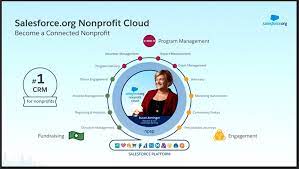
In May 2023, Salesforce released a new CRM offering called the Nonprofit Cloud. Since then, Salesforce has continued to roll out new products and functionality within Nonprofit Cloud. This article originally appeared in Nonprofit Pro. If your nonprofit uses the Salesforce Nonprofit Success Pack (NPSP) or is considering a move to the Nonprofit Cloud, you might be interested in learning more about it and how it’s being adopted in the sector. Let’s take a look at some key points about Salesforce Nonprofit Cloud. A Brief History of Salesforce NPSP and Nonprofit Cloud Salesforce has provided technology for nonprofits for the past 20 years. During this time, there have been multiple solutions for organizations developed for or by Salesforce. Related story: What to Know About Constituent Relationship Management System for Nonprofits For the past 15 years or so, Salesforce’s prominent solution for nonprofits has been NPSP, originally called Nonprofit Starter Pack. Today, tens of thousands of nonprofits use NPSP for their CRM system and fundraising needs. Some Differences Between Salesforce NPSP and Nonprofit Cloud Without getting too techy about the differences between Salesforce NPSP and Nonprofit Cloud, here’s a simple overview. NPSP is what many call a “managed” package. It’s built on top of the Salesforce platform as a sort of product that is installed in a nonprofit’s Salesforce environment. It’s primarily used by nonprofits for fundraising and CRM. Nonprofits using NPSP have often added other managed packages, such as Volunteers for Salesforce and the Program Management Module, to address other needs while staying within the Salesforce environment. The Nonprofit Cloud, on the other hand, is built into the Salesforce platform. It’s not a managed product, which means it’s not a “product” installed in the Salesforce environment. Instead, it’s part of the platform itself. This approach provides nonprofit-specific features without the need to go through an installation process. But it’s important to note that Nonprofit Cloud still must be customized for each organization’s needs, which may include setup, data migration, testing, and training. Another difference between NPSP and Nonprofit Cloud is Salesforce’s investment. While Salesforce continues to sell and support NPSP, most of the new features and functionality they’re rolling out are within Nonprofit Cloud. Adoption of the Salesforce Nonprofit Cloud in the Sector It’s not clear exactly how many nonprofits have moved or are moving to Nonprofit Cloud. But a recent study about Salesforce Nonprofit Cloud implementations from Watt Hamlett Consulting sheds some light on the adoption of the Salesforce offering. A few key highlights from the study of Salesforce consultants include: The report estimates that there are likely a few hundred Nonprofit Cloud projects in progress or completed, and 75 or more firms with some experience with it. So, it seems fair to say that while it’s still early days with Nonprofit Cloud, there are nonprofits becoming early adopters of the offering, there are Salesforce consultants that are gaining experience with Nonprofit Cloud implementations and many consultants consider themselves willing and ready to take on Nonprofit Cloud projects. Tips for Moving Forward With Salesforce Offerings for Nonprofits If your organization uses Salesforce NPSP or is considering moving to Salesforce, there’s not a one-size-fits-all answer to whether you should adopt the Nonprofit Cloud at this time. In some cases, it might make sense to stay on NPSP. In others, it might make sense to move to or start out with some elements of Nonprofit Cloud. However, here are some tips to help you take the next steps as you consider using Salesforce solutions for your nonprofit. Stay Informed Salesforce continues to roll out new products, features, and functionality within Nonprofit Cloud. To stay current, it’s worthwhile to watch for announcements and product roadmaps from Salesforce. Think Ahead It’s important to think about your long-term technology plan when deciding whether to adopt the Nonprofit Cloud or choose/stay with NPSP. Consider your organization’s current technology systems and organizational goals for the next three to five years as you weigh your decision. Consider the Pros and Cons Staying on or starting out with NPSP might seem like a safe choice. Thousands of nonprofits are still using the solution, and Salesforce is continuing to support it. However, the focus for Salesforce appears to be around Nonprofit Cloud, so NPSP might not receive much innovation in the future. Plus, if you are already using NPSP and the apps you use with NPSP don’t work within Nonprofit Cloud, then you might want to stay on NPSP until you have a more comprehensive plan for moving to the Nonprofit Cloud. On the flip side, if you were to move to the new Nonprofit Cloud, you would gain the benefits of an ongoing stream of new features and functionality from Salesforce. But you would be an early adopter, which can come with its own challenges, including a low number of customer references and Salesforce consultants with minimal experience working with the solution. And until Salesforce consultants have more experience, the complexity and cost of Nonprofit Cloud implementations could be higher than NPSP. Get Expert Help There are a lot of considerations when it comes to understanding the pros and cons of adopting new technology. It can be extremely helpful to work with a technology consulting firm to assess your organization’s needs and find the right solution for your nonprofit. Mark BeckerAuthor’s page Mark founded Cathexis Partners in 2008 to help nonprofit organizations get the most from their existing technology tools, implement new technology to address gaps and find the best overall approach to using technology to support their missions. He previously served as director of IT consulting at a fundraising event production company focused on nonprofits. Mark also serves on the editorial advisory board for NonProfit PRO, where he contributes monthly to his blog, “Nonprofit Tech Matters.” Like Related Posts Who is Salesforce? Who is Salesforce? Here is their story in their own words. From our inception, we’ve proudly embraced the identity of Read more Salesforce Marketing Cloud Transactional Emails Salesforce Marketing Cloud Transactional Emails are immediate, automated,

Read More
Alation Strengthens Data Cloud

Alation Strengthens Data Cloud

REDWOOD CITY, Calif., Sept. 10, 2024 (GLOBE NEWSWIRE) — Alation Inc., the data intelligence company, today announced a partnership with Salesforce (NYSE: CRM) to deliver trusted, governed data across the enterprise. Alation provides a bidirectional integration that seamlessly delivers data governance and end-to-end lineage within Salesforce Data Cloud, enabling organizations to harness the power of metadata for faster, more confident decision-making while maximizing the impact of their AI initiatives. Salesforce Data Cloud powers real-time insights and decision-making, driving new customer experiences and growth. Quality results depend on trusted data; poor data governance can surface untrustworthy or outdated data, providing an incomplete picture and weakening the insights derived by AI models. According to Salesforce, nearly 60% of AI users struggle to achieve desired outcomes, with over half distrusting the data used in AI systems. Accurate, compliant, and easily discoverable data is critical for building trust in data and AI initiatives. The partnership allows organizations to extend their Alation investment across the Salesforce ecosystem, ensuring data integrity and reliability. Essential metadata—such as tags, governance policies, and data quality indicators—from 100+ data sources can be directly viewed in Data Cloud, providing a unified 360-degree view of data governance, usage, and compliance. For example, organizations can now automatically apply data quality indicators and governance policies to customer and sales data, ensuring AI segmentation models are accurate and compliant, reducing errors, and improving targeting. “Businesses are eager to adopt AI initiatives, but doing so securely and at scale requires robust governance frameworks,” said Gabrielle Tao, SVP of Product Management at Salesforce. “The seamless integration between Alation’s enterprise-class data governance capabilities and lineage insights, and Salesforce Data Cloud’s granular C360 security and trusted AI-based multi-modal data processing behind assisted and autonomous Agentforce, offers our joint customers a bi-directional metadata exchange, enabling users to leverage the unique strengths of each platform. Together, we empower customers to govern their data at high scale, with greater precision and automation, enabling them to confidently drive AI-powered innovations while ensuring data security, compliance, and consistency across their operations.” “Organizations today are drowning in data and pouring significant resources into AI initiatives, yet they struggle to deliver business value quickly due to the sheer complexity and volume of data from countless sources,” said Satyen Sangani, CEO and co-founder at Alation “Our partnership with Salesforce positions Alation as the go-to platform to baseline trust in Data Cloud. We’re cutting through the noise, empowering organizations to deliver reliable and high-value AI agents, drive product innovation, and optimize business operations.” Together, Alation and Salesforce empower organizations to transform their data into a competitive advantage, driving improved outcomes with trusted, actionable insights through: Join Jonathan Bruce, VP of Strategic Customer Advocacy at Alation, and Upwan Chachra, Senior Director of Product Management at Salesforce, at Dreamforce 2024 for the session, “Integrate Data Cloud into Your Data Governance Strategy,” on Wednesday, September 18, 2024, from 11:30 AM to 11:50 AM PDT at the Moscone West, L2, Data Cloud Theater. Discover how data governance powers data and AI strategies by enabling business users to find key datasets and ensuring IT compliance. To learn more, read the blog “Alation Launches Salesforce Connector to Enhance Data Trust.” About AlationAlation is the data intelligence company. Nearly 600 global enterprises — including 40% of the Fortune 100 — rely on Alation to realize value from their data and AI initiatives. Customers such as Cisco, DocuSign, Nasdaq, Pfizer, and Samsung trust Alation’s platform for self-service analytics, cloud transformation, data governance, and AI-ready data, fostering data-driven innovation at scale. Headquartered in Redwood City, California, Alation has been recognized five times by Inc. Magazine as one of the Best Workplaces. To learn more, visit www.alation.com.  Alation Strengthens Data Cloud Like Related Posts Capture Initial Traffic Source With Google Analytics To ensure the proper sequencing of Tags, modify the Tag sequencing in the Google Analytics preview Tag settings. The custom Read more Snowflake and Salesforce with Embed Snowflake has deepened its partnership with investor Salesforce by introducing two tools that seamlessly connect their cloud-native systems. Snowflake and Read more Salesforce CDP Explained What is a Customer Data Platform (CDP)? A Customer Data Platform (CDP) is one of the most transformative tools in Read more What is BI in Salesforce? Salesforce BI helps to create fast, digestible reports to help you make informed decisions at the right time. Salesforce Einstein Read more

Read More
Boostr and Salesforce

Boostr and Salesforce

Boostr’s Automated OMS and Salesforce Media Cloud Aim to Deliver an AI-Powered Full-Service Advertising Management Solution NEW YORK, Sept. 12, 2024 /PRNewswire-PRWeb/ — Boostr, a leading advertising management platform for media companies, today announced that it’s teaming up with Salesforce, the #1 AI CRM, on a new integration that aims to transform the way media and entertainment companies manage their customer data and streamlines advertising sales operations. By integrating Boostr’s Order Management System (OMS) directly with Salesforce’s Media Cloud, together, the companies will provide mutual customers with faster time to value, better ROI, and more efficient ad campaign execution. Boostr’s OMS is reshaping media operations from proposal generation through planning, buying, reconciliation, and billing. By providing AI-powered proposal recommendations with Proposal-IQ, real-time inventory visibility, and more than 50 out-of-the-box workflow automations, Boostr’s OMS streamlines media operations for Ad Sales and Ad Ops teams. The goal of the collaboration is to provide mutual customers with a comprehensive end-to-end advertising sales solution for media companies of all sizes, including broadcasters selling across linear TV, digital, and streaming inventory, as well as retail media networks and digital publishers managing multiple sales channels. It will eliminate dual data entry by automating the opportunity-to-order process, providing delivery data back to Media Cloud and keep all master data in sync automatically across both platforms. “We’re excited to collaborate with Boostr to offer media & entertainment companies a comprehensive platform to help their teams simplify and automate converged advertising operations.” – Christopher Dean, SVP and GM for Communications, Media & Entertainment at Salesforce.Post this “We are thrilled to integrate with Salesforce’s Media Cloud on behalf of our mutual customers,” said Patrick O’Leary, CEO of Boostr. “This integration is a significant upgrade as Media Cloud and Boostr’s data model are highly aligned resulting in a more turnkey, faster time to value solution.” “In today’s increasingly fragmented advertising ecosystem, media and entertainment companies are looking to automate advertising sales and campaign management processes to enhance operational efficiency across their monetization streams,” said Christopher Dean, SVP and GM for Communications, Media & Entertainment at Salesforce. “We’re excited to collaborate with Boostr to offer media & entertainment companies a comprehensive platform to help their teams simplify and automate converged advertising operations.” For more information, please visit: http://www.boostr.com. Salesforce, Media Cloud, and others are trademarks of Salesforce, inc. *Disclaimer: Any unreleased services or features referenced here aren’t currently available and may not be delivered on time or at all. Customers should make their purchase decisions based upon features that are currently available. About Boostr:Boostr is the leading provider of advertising management platforms for publishers and media companies. Boostr’s unified platform streamlines sales, finance, ad ops, and RevOps workflows, enabling businesses to close deals faster, automate tasks, and gain real-time financial transparency. For more information about Boostr, go to http://www.boostr.com. Like Related Posts Who is Salesforce? Who is Salesforce? Here is their story in their own words. From our inception, we’ve proudly embraced the identity of Read more Salesforce Marketing Cloud Transactional Emails Salesforce Marketing Cloud Transactional Emails are immediate, automated, non-promotional messages crucial to business operations and customer satisfaction, such as order Read more Salesforce Unites Einstein Analytics with Financial CRM Salesforce has unveiled a comprehensive analytics solution tailored for wealth managers, home office professionals, and retail bankers, merging its Financial Read more AI-Driven Propensity Scores AI plays a crucial role in propensity score estimation as it can discern underlying patterns between treatments and confounding variables Read more
Read More
gettectonic.com