- gettectonic.com - Page 5
Salesforce Agentforce Details

Deploy Autonomous AI Agents

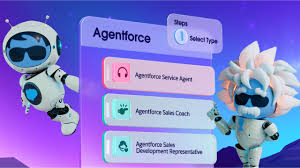
Agentforce: Deploy Autonomous AI Agents on the Salesforce Platform Agentforce empowers businesses to deploy autonomous AI agents that enhance productivity, customer experience, and operational efficiency. These AI agents act as an intelligent layer on the Salesforce Platform, working 24/7 to analyze data, make decisions, converse naturally, and execute multi-step workflows—all while aligning with your business needs. With Agentforce, you get:✔ AI Agent Builder – Customizable tools to design and deploy agents✔ Prebuilt Use Cases – Ready-to-deploy solutions for sales, service, marketing, and more✔ Scalable Autonomy – Agents that learn, adapt, and operate independently within defined guardrails Planning Your AI Agent: Key Considerations Before deploying an AI agent, carefully evaluate: 1. Use Case Definition & Scope 2. Business Value & Impact 3. Decision-Making & Autonomy 4. Risk & Guardrails 5. Data Readiness What Makes a Strong AI Use Case? Criteria Key Questions Value Will the AI agent improve efficiency, accuracy, or experience? Work Definition Can the task be clearly defined with structured steps? Decision-Making Can the AI operate autonomously within set rules? Risk Management Does the use case comply with security and regulatory needs? Data Quality Is the necessary data available and reliable? Next Steps: Deploying AI Agents Successfully Ready to Get Started? Agentforce lets you build an AI agent in days—but thoughtful planning ensures long-term success. Begin with a focused use case, validate quickly, and scale intelligently. Like Related Posts Who is Salesforce? Who is Salesforce? Here is their story in their own words. From our inception, we’ve proudly embraced the identity of Read more Salesforce Marketing Cloud Transactional Emails Salesforce Marketing Cloud Transactional Emails are immediate, automated, non-promotional messages crucial to business operations and customer satisfaction, such as order Read more Salesforce Unites Einstein Analytics with Financial CRM Salesforce has unveiled a comprehensive analytics solution tailored for wealth managers, home office professionals, and retail bankers, merging its Financial Read more AI-Driven Propensity Scores AI plays a crucial role in propensity score estimation as it can discern underlying patterns between treatments and confounding variables Read more

Read More
Salesforce Data Cloud

Maximizing Salesforce Data Cloud

Maximizing Salesforce Data Cloud: Post-Implementation Strategies for Long-Term Success The Fastest-Growing Salesforce Product Salesforce Data Cloud is seeing explosive growth, with a 130% year-over-year increase in paid customers. In just one quarter, it processed an astonishing 2.3 quadrillion records—a 147% jump from the previous year. Businesses leveraging Data Cloud have seen a 165% boost in web engagement, with major brands like The Adecco Group, Aston Martin, and FedEx using it to strengthen customer relationships and drive growth. The Power of Data Cloud: Turning Information into Action What makes Salesforce Data Cloud so impactful is its ability to unify vast amounts of data, creating 360-degree customer profiles and transforming insights into action. But unlocking its full potential doesn’t stop at implementation—it requires ongoing optimization to keep your data clean, your systems efficient, and your AI models accurate. Post-Implementation Best Practices for Salesforce Data Cloud Once your Salesforce Data Cloud is up and running, the next step is ensuring long-term performance and business value. Here’s how to optimize and sustain your Data Cloud investment: 1. Maintain Data Integrity with Ongoing Quality Management 2. Optimize System Performance for Speed and Efficiency 3. Drive User Adoption with Tailored Training 4. Strengthen Data Governance and Compliance 5. Proactively Manage and Optimize Integrations 6. Refine Customer Segmentation for More Personalization 7. Keep AI and Predictive Models Up to Date 8. Measure ROI and Optimize for Business Impact 9. Foster a Data-Driven Culture Through Clear Communication 10. Stay Agile with Continuous Innovation and Community Engagement Conclusion: The Real Value of Data Cloud Begins After Implementation Salesforce Data Cloud is at the heart of next-gen customer engagement, but its true impact lies in how well you maintain and optimize it. Success depends on:✅ Involving key stakeholders in ongoing improvements✅ Enforcing strong data governance for security and accuracy✅ Continuously refining processes to adapt to changing business needs By committing to post-implementation optimization, your organization can stay agile, data-driven, and ahead of the competition—ensuring that Salesforce Data Cloud delivers maximum value now and in the future. Like1 Related Posts Who is Salesforce? Who is Salesforce? Here is their story in their own words. From our inception, we’ve proudly embraced the identity of Read more Salesforce Marketing Cloud Transactional Emails Salesforce Marketing Cloud Transactional Emails are immediate, automated, non-promotional messages crucial to business operations and customer satisfaction, such as order Read more Salesforce Unites Einstein Analytics with Financial CRM Salesforce has unveiled a comprehensive analytics solution tailored for wealth managers, home office professionals, and retail bankers, merging its Financial Read more AI-Driven Propensity Scores AI plays a crucial role in propensity score estimation as it can discern underlying patterns between treatments and confounding variables Read more

Read More
Rise of Agentic Commerce

Rise of Agentic Commerce

The Rise of Agentic Commerce: How AI Agents Are Reshaping Ecommerce As online retailers experiment with agentic AI to enhance ecommerce, shoppers are already engaging with AI-driven experiences through subscriptions. Meanwhile, businesses are deploying AI agents behind the scenes to streamline their digital storefronts. In 2025, ecommerce platforms aren’t just pitching AI-powered recommendation engines—they’re embracing full-fledged agentic AI solutions. These intelligent agents are changing the way both retailers and consumers interact with digital shopping environments. Tech Giants and Startups Lead the Charge Agentic AI is becoming a key component in the ecommerce tech stack, joining machine learning, AI-powered search, and generative AI. Major players like Google and Meta have already integrated these capabilities, while Amazon and OpenAI are leveraging subscription models to attract users. Startups, as well as integrations for platforms like Shopify and Adobe’s Magento, are also fueling this AI-driven shift. Salesforce made a significant push for agentic AI at its 2024 Dreamforce event, showcasing its Agentforce capabilities. Luxury retailer Saks was an early adopter, using Agentforce to enhance personalization. Just months later, OpenAI introduced its Operator agent, with eBay, Etsy, and Instacart among its first users. But what exactly is agentic commerce, and how does it reshape online shopping? What Is Agentic Commerce? Agentic commerce refers to the use of AI agents in ecommerce. These agents, built on large language models (LLMs), go beyond chatbot-style interactions. They make decisions and execute actions autonomously, transforming how both consumers and merchants engage with online retail. For shoppers, this means AI-powered assistance throughout the learning, discovery, and purchasing journey. For retailers, agentic AI helps automate backend operations, streamlining tasks that previously required manual intervention. Consumers have already embraced AI chatbots in shopping experiences. Salesforce reported that AI-driven interactions boosted retail revenue during the 2024 holiday season. Adobe Analytics echoed this trend in a March 2025 survey, revealing that AI-assisted shopping led to higher engagement. “Online shoppers are seeing the benefits of AI-powered chat interfaces, which reduce the time needed to receive personalized information,” said Vivek Pandya, lead analyst at Adobe Digital Insights. “In Adobe’s survey, 92% of shoppers who used AI said it enhanced their experience, and 87% were more likely to use AI for larger or complex purchases.” Retailers are taking note. A February 2025 survey by Digital Commerce 360 found that AI investment is a top priority, with only 11.11% of ecommerce businesses planning to forgo AI implementation this year. AI-Powered Agents in Action Tech companies are responding to this growing demand. Adobe recently introduced its Experience Platform Agent Orchestrator, designed to manage AI agents across Adobe’s ecosystem and third-party platforms. Adobe’s research underscores the increasing role of AI in shaping customer engagement strategies. “This shift is redefining how businesses approach customer interactions,” Pandya noted. “AI agents are taking on more complex tasks and delivering highly personalized recommendations.” Retailers are already putting agentic commerce to the test. OpenAI’s Operator agent, for example, can autonomously navigate a web browser—searching, typing, and clicking to complete purchases. Users can ask Operator to order groceries, select gifts, or book tickets, streamlining transactions through AI-driven automation. Currently, Operator is available only to OpenAI’s ChatGPT Pro subscribers at $200 per month. However, OpenAI plans to expand access as it refines the technology. “We have a lot of work ahead, but we’re eager to put these tools into people’s hands,” said OpenAI CEO Sam Altman during an Operator demo. “More AI agents will be rolling out in the coming weeks and months.” The Subscription Model for AI-Powered Shopping Amazon is also bringing agentic AI to ecommerce with Alexa+. Priced at $19.99 per month—or free for Amazon Prime members—Alexa+ allows users to make purchases through Amazon.com, Whole Foods, Ticketmaster, and other retailers via voice commands. As these AI-powered tools gain traction, the pressure is on developers to deliver value that justifies their price tags. Whether through subscriptions or seamless integrations, the future of ecommerce is rapidly shifting toward intelligent, automated experiences. Like1 Related Posts Who is Salesforce? Who is Salesforce? Here is their story in their own words. From our inception, we’ve proudly embraced the identity of Read more Salesforce Marketing Cloud Transactional Emails Salesforce Marketing Cloud Transactional Emails are immediate, automated, non-promotional messages crucial to business operations and customer satisfaction, such as order Read more Salesforce Unites Einstein Analytics with Financial CRM Salesforce has unveiled a comprehensive analytics solution tailored for wealth managers, home office professionals, and retail bankers, merging its Financial Read more AI-Driven Propensity Scores AI plays a crucial role in propensity score estimation as it can discern underlying patterns between treatments and confounding variables Read more

Read More

Why Its Good to be Data-Driven

The Power of Data-Driven Decision Making Success in business hinges on the ability to make informed decisions. Every operational aspect, from minor choices like office furniture selection to critical investments such as multi-million-dollar marketing campaigns, is shaped by a series of interrelated decisions. While instinct and intuition may play a role, most business choices rely on relevant data—covering aspects such as objectives, pricing, technology, and potential risks. However, excess irrelevant data can be just as detrimental as insufficient accurate data. Why Its Good to be Data-Driven organization… The Evolution of Data-Driven Decision Making Organizations that prioritize data-driven strategies rely on accurate, relevant, complete, and timely data. Simply amassing large volumes of information does not equate to better decision-making; companies must democratize data access, ensuring it is available to all employees rather than limited to data analysts. The practice of using data to inform business decisions gained traction in the mid-20th century when researchers identified decision-making as dynamic, complex, and often ambiguous. Early techniques like decision trees and prospect theory emerged in the 1970s alongside computer-aided decision-making models. The 1980s saw the rise of commercial decision support systems, and by the early 21st century, data warehousing and data mining revolutionized analytics. However, without clear governance and organizational policies, these vast data stores often fell short of their potential. Today, the goal of data-driven decision-making is to combine automated decision models with human expertise, creativity, and critical thinking. This approach requires integrating data science with business operations, equipping managers and employees with powerful decision-support tools. Characteristics of a Data-Driven Organization A truly data-driven organization understands the value of its data and maximizes its potential through structured alignment with business objectives. To safeguard and leverage data assets effectively, businesses must implement governance frameworks ensuring compliance with privacy, security, and integrity standards. Key challenges in establishing a data-driven infrastructure include: The Benefits of a Data-Driven Approach Businesses recognize that becoming data-driven requires more than just investing in technology; success depends on strategy and execution. According to KPMG, four critical factors contribute to the success of data-driven initiatives: A data-driven corporate culture accelerates decision-making, enhances employee engagement, and increases overall business value. Integrating ethical considerations into data usage is crucial for mitigating biases and maintaining data integrity. Transitioning to a Data-Driven Business With the rapid advancement of generative AI, data-driven organizations are poised to unlock trillions of dollars in economic value. McKinsey estimates that AI-driven decision-making could add between .6 trillion and .4 trillion annually across key sectors, including customer operations, marketing, software engineering, and R&D. To successfully transition into a data-driven organization, companies must: By embracing a data-driven model, organizations enhance their ability to make automated yet strategically sound decisions. With seamless data integration across CRM, ERP, and business applications, companies empower human decision-makers to apply their expertise to high-quality, actionable insights—driving innovation and competitive advantage in a rapidly evolving marketplace. Like Related Posts Who is Salesforce? Who is Salesforce? Here is their story in their own words. From our inception, we’ve proudly embraced the identity of Read more Salesforce Marketing Cloud Transactional Emails Salesforce Marketing Cloud Transactional Emails are immediate, automated, non-promotional messages crucial to business operations and customer satisfaction, such as order Read more Salesforce Unites Einstein Analytics with Financial CRM Salesforce has unveiled a comprehensive analytics solution tailored for wealth managers, home office professionals, and retail bankers, merging its Financial Read more AI-Driven Propensity Scores AI plays a crucial role in propensity score estimation as it can discern underlying patterns between treatments and confounding variables Read more

Read More
Third Wave of AI at Salesforce

Third Wave of AI is Agents

The “third wave” of AI is often referred to as the era of “agentic AI” or “AI agents,” characterized by systems that can autonomously perform tasks and make decisions with minimal human intervention, interacting with data and tools to achieve goals.  Details: Like Related Posts Who is Salesforce? Who is Salesforce? Here is their story in their own words. From our inception, we’ve proudly embraced the identity of Read more Salesforce Marketing Cloud Transactional Emails Salesforce Marketing Cloud Transactional Emails are immediate, automated, non-promotional messages crucial to business operations and customer satisfaction, such as order Read more Salesforce Unites Einstein Analytics with Financial CRM Salesforce has unveiled a comprehensive analytics solution tailored for wealth managers, home office professionals, and retail bankers, merging its Financial Read more AI-Driven Propensity Scores AI plays a crucial role in propensity score estimation as it can discern underlying patterns between treatments and confounding variables Read more
Read More

Secure Your Data

Secure Your Data: Strengthen Protection with Smart Hygiene Practices Security threats are the biggest barrier to effective data management, according to our State of Data and Analytics report. The good news? Human error accounts for 80% of cybersecurity incidents, meaning basic security hygiene can prevent most breaches. 🔹 Global IT and security leaders agree: The most effective defenses against cyberattacks include multi-factor authentication (MFA), identity and access management (IAM), and data encryption (2023 Global Data Security Trends Report). Six Security Best Practices to Protect Your Data 1. Encrypt Data to Keep It Private Encryption converts sensitive information into ciphertext that can only be unlocked with a decryption key. Whether data is in transit or at rest, encryption prevents unauthorized access. Look for solutions that offer end-to-end encryption to safeguard financial transactions, private messages, and customer records. 2. Control Access with Identity & Access Management (IAM) Only grant employees the minimum access they need to do their jobs (least privilege access). 66% of security leaders trust IAM to restrict who can view, edit, and manage sensitive data—reducing the risk of unauthorized access. 3. Require Multi-Factor Authentication (MFA) MFA strengthens security by requiring two or more credentials to verify user identity. 80% of IT leaders report that MFA is a core part of their security strategy because it significantly reduces unauthorized logins. 4. Invest in Backup & Recovery Solutions Data loss isn’t just an inconvenience—it can be catastrophic. Yet, only 39% of IT leaders consider backup and recovery a security priority. Ensure all business-critical data—from CRM to cloud storage—is backed up and recoverable to minimize risks. 5. Train Employees on Security Awareness Your team is your first line of defense. Cyberattacks often exploit human mistakes, making ongoing security training essential. Nearly two-thirds of IT leaders say they are increasing employee security training to boost awareness and adoption of best practices. 6. Strengthen Password Security Weak passwords remain a leading cause of breaches. Use a secure password manager and enforce these best practices: ✅ Create 16+ character passwords with a mix of letters, numbers, and symbols✅ Use passphrases with special characters for added complexity✅ Require multi-factor authentication (MFA) to access password managers How Humana Strengthened Security & Cut Costs 💡 million saved in security costs💡 Enhanced patient data protection “Our ultimate goal is that members see us as a trusted partner who can provide the services they need in a very timely manner.”— Brian Cahill, Vice President, Pharmacy Segment CIO, Humana Security Hygiene Checklist ✅ Automate software and security updates to protect against vulnerabilities✅ Encrypt data during transmission and storage to prevent unauthorized access✅ Use a secure file-sharing platform with end-to-end encryption✅ Implement least privilege access to ensure employees only access what they need✅ Regularly review employee permissions to maintain role-based security 🔒 Proactive security measures don’t just protect data—they build trust and resilience in your organization. Like Related Posts Who is Salesforce? Who is Salesforce? Here is their story in their own words. From our inception, we’ve proudly embraced the identity of Read more Salesforce Unites Einstein Analytics with Financial CRM Salesforce has unveiled a comprehensive analytics solution tailored for wealth managers, home office professionals, and retail bankers, merging its Financial Read more AI-Driven Propensity Scores AI plays a crucial role in propensity score estimation as it can discern underlying patterns between treatments and confounding variables Read more Tectonic’s Successful Salesforce Track Record Salesforce Technology Services Integrator – Tectonic has successfully delivered Salesforce in a variety of industries including Public Sector, Hospitality, Manufacturing, Read more

Read More
Salesforce Introduces Agentblazer Status

Salesforce Introduces Agentblazer Status

Salesforce Introduces Agentblazer Status: Your AI Learning Roadmap on Trailhead Trailblazers have always been at the forefront of innovation, using Salesforce to empower businesses and communities. Now, as AI transforms the way we work and solve problems, the need for a deeper understanding of this technology has never been greater. Technology is evolving—becoming smarter, more powerful, and more creative. To thrive in the era of agentic AI, we must evolve too. That means staying curious, embracing change, and continuously building new skills. At Salesforce, we’ve seen our community embody this mindset, always ready to learn and explore new possibilities. Today, we’re making that journey even easier with a structured path to mastering AI and Agentforce. Introducing Agentblazer Status Meet Agentblazers—Trailblazers who leverage Salesforce’s digital labor platform to build Agentforce-powered companies. Whether you’re just starting with AI or already developing advanced autonomous agents, Agentblazer Status provides a clear, structured learning path tailored to your expertise level. Your Agentblazer journey includes three levels: Each level is tied to dedicated Trails, including interactive modules and hands-on challenges that build your expertise. As you progress, you’ll earn badges and points that showcase your Agentblazer Status on your Trailblazer Profile. Building the Skills for the Future The skills that got you here today won’t be enough to take you where you need to go next. AI isn’t just a tool—it’s a collaborator. The future of work isn’t about whether you’ll work with AI but how you’ll integrate, manage, and optimize autonomous agents to elevate customer experiences and business operations. That’s why developing Agentforce literacy is essential for every professional. The Agentblazer program provides a structured roadmap to help you move from AI fundamentals to real-world implementation, ensuring you stay ahead in an AI-driven workplace. Join the Agentblazer Community We’re committed to supporting your AI learning journey. That’s why Salesforce is offering the first attempt at the Agentforce Specialist Certification exam free of charge through 2025. Get started today: The AI revolution is here—are you ready to lead it? Let Tectonic guide you! Like Related Posts Who is Salesforce? Who is Salesforce? Here is their story in their own words. From our inception, we’ve proudly embraced the identity of Read more Salesforce Marketing Cloud Transactional Emails Salesforce Marketing Cloud Transactional Emails are immediate, automated, non-promotional messages crucial to business operations and customer satisfaction, such as order Read more Salesforce Unites Einstein Analytics with Financial CRM Salesforce has unveiled a comprehensive analytics solution tailored for wealth managers, home office professionals, and retail bankers, merging its Financial Read more AI-Driven Propensity Scores AI plays a crucial role in propensity score estimation as it can discern underlying patterns between treatments and confounding variables Read more

Read More
Google Expands AI Search Capabilities with Gemini 2.0

Google Expands AI Search Capabilities with Gemini 2.0

Google is taking a significant leap forward in AI-powered search with the introduction of Gemini 2.0, expanding its experimental AI features to enhance complex search queries. This update broadens AI accessibility and introduces new capabilities for handling intricate searches. Enhanced AI Overviews Rolling Out in the U.S. The first phase of this expansion is launching in the United States, with AI Overviews gaining improved functionality. This enhancement enables Google Search to tackle more complex queries, including coding and advanced math problems. While there’s no confirmed timeline for its availability in other regions, such features typically expand to Europe and beyond over time. The Impact of Gemini 2.0 Gemini 2.0 brings faster, higher-quality AI responses, making AI-driven search more effective in handling nuanced and sophisticated questions. The deeper integration of AI into search marks a substantial step toward a more intuitive and powerful search experience. AI-Only Search: A Possible Future? Google is also experimenting with an AI-first search model, which could shift the traditional search experience away from classic blue links and toward AI-generated summaries. This would fundamentally change the way users interact with search engines. However, given how ingrained traditional search behavior is, the shift to an AI-dominated search model remains uncertain. AI Mode in Search Labs Further advancing its AI search capabilities, Google is introducing AI Mode within Search Labs. Designed for complex, multi-part queries, AI Mode leverages advanced reasoning to consolidate what would have previously required multiple searches into a single, AI-generated response. Initially, AI Mode will be available exclusively to Google One AI Premium subscribers through the Labs program. This phased rollout allows Google to gather feedback and refine the feature before making it widely available. As AI continues to reshape search, Google’s latest innovations signal a shift toward a more intelligent, context-aware search experience—one that may redefine how we find information online. Like Related Posts Who is Salesforce? Who is Salesforce? Here is their story in their own words. From our inception, we’ve proudly embraced the identity of Read more Salesforce Unites Einstein Analytics with Financial CRM Salesforce has unveiled a comprehensive analytics solution tailored for wealth managers, home office professionals, and retail bankers, merging its Financial Read more AI-Driven Propensity Scores AI plays a crucial role in propensity score estimation as it can discern underlying patterns between treatments and confounding variables Read more Tectonic’s Successful Salesforce Track Record Salesforce Technology Services Integrator – Tectonic has successfully delivered Salesforce in a variety of industries including Public Sector, Hospitality, Manufacturing, Read more

Read More
Prioritize Data Quality

Prioritize Data Quality

Prioritize Data Quality: Strengthening Governance for AI and Business Success 86% of analytics and IT leaders agree: AI’s effectiveness depends on the quality of its data inputs. High data quality brings organizations closer to data maturity and AI success—and it all starts with strong data governance. 🔹 92% of analytics and IT leaders say there’s never been a greater need for trustworthy data.📊 The State of Data and Analytics Report, 2023 Building a Strong Data Governance Strategy Data governance is more than compliance—it’s a structured approach to managing data quality, security, and usability. With the right governance in place, teams gain confidence in their data, leading to smarter decision-making and a culture of trust. Follow these six steps to lay the foundation for a successful governance strategy: 1. Align Governance Policies with Business Needs Meet with stakeholders to understand how data is used across teams. Ensure governance policies cover every critical workflow and use case, helping teams get the data they need—accurately and securely. 2. Define What ‘Data Quality’ Means for Your Organization Create a clear framework using these key data quality dimensions: ✅ Completeness: Are all necessary data fields populated?✅ Timeliness: Is data up to date and aligned with business goals?✅ Validity: Does data comply with governance rules and constraints?✅ Usage: How frequently is the data used for reporting and decision-making?✅ Accuracy: Does the data reflect reality, and is it sourced from trusted origins?✅ Consistency: Are data formatting and structure standardized across sources?✅ Reliability: Has data maintained quality and consistency over time? 3. Implement a Robust Quality Control Process Standardized processes—data entry validation, deduplication, cleansing, and archiving—are essential for governance. Leverage AI-powered tools like Tableau CRM Analytics to automate these tasks with built-in data profiling and enrichment features. 4. Schedule Regular Governance Reviews Your business evolves—your governance strategy should too. Establish a review cadence to assess policies, update processes, and address new data challenges. 5. Train Teams on Data Security and Compliance Education is key. Assign role-based security permissions, ensure regulatory compliance, and provide a clear process for reporting data issues (e.g., a dedicated Slack channel or help desk). 6. Define Success with Data Governance KPIs Tracking governance effectiveness is essential. Use these key metrics to measure impact: Metric Example of Smart KPI How to Track Data Quality Improve overall data quality by 4% per quarter. Assign values to frequency, error rates, and data usage. Data Usage Increase customer data-driven decision-making by 30% in 12 months. Measure employee logins, reports accessed, and data utilization. Time-to-Insight Reduce time from customer action → dashboard update to 10 minutes by next quarter. Track time-to-insight vs. benchmarks. Moving Up the Data Maturity Curve A well-governed data strategy leads to: 📈 Higher efficiency in decision-making🚀 More successful AI and analytics initiatives🏆 Competitive advantage through trustworthy data 🔍 “Ascending the data maturity curve unlocks new efficiencies and a competitive edge.”— Funke Bishi, Associate Director, Data and Business Analysis, RBC Capital Markets Take Action: Strengthen Your Data Governance ✅ Define what ‘quality data’ means for your business.✅ Align governance policies with team needs.✅ Use AI-powered tools like Tableau Data Prep for automated cleansing.✅ Train leaders on data best practices and compliance. Like Related Posts Who is Salesforce? Who is Salesforce? Here is their story in their own words. From our inception, we’ve proudly embraced the identity of Read more Salesforce Marketing Cloud Transactional Emails Salesforce Marketing Cloud Transactional Emails are immediate, automated, non-promotional messages crucial to business operations and customer satisfaction, such as order Read more Salesforce Unites Einstein Analytics with Financial CRM Salesforce has unveiled a comprehensive analytics solution tailored for wealth managers, home office professionals, and retail bankers, merging its Financial Read more AI-Driven Propensity Scores AI plays a crucial role in propensity score estimation as it can discern underlying patterns between treatments and confounding variables Read more

Read More
agents and copilots

When to Use AI Agents and Copilots

Do Organizations Need AI Agents or Copilots for These Use Cases? Organizations often explore AI solutions for specific operational needs. Three primary AI use cases include: The question arises: Which AI tools best suit these needs? Should an organization invest in a high-end AI subscription, such as ChatGPT Pro with the Operator agent ($200/month), or opt for ChatGPT Plus with the o3-mini reasoning model and copilot features, such as memory and custom GPTs? AI Tool Selection Criteria When evaluating AI agents versus AI copilots, key considerations include: A. The time and effort required to articulate the problem for the AI. B. The level of control preferred in the problem-solving process. C. The importance of achieving the most optimal outcome. Use Case 1: Shopping AI Agents Many existing AI shopping solutions are labeled as agents, but they do not exhibit true autonomy. Instead, they serve as assistants with limited capabilities. For instance, Perplexity’s “Shop Like a Pro” assists with selecting products but depends on vendor integration for completing purchases, rather than executing transactions autonomously. Despite current limitations, some users create their own AI shopping agents by integrating browser-based AI tools with no-code automation platforms like n8n, Zapier, or Make.com. These custom-built agents offer greater autonomy and versatility than off-the-shelf solutions. However, the need for AI agents in shopping remains debatable. The act of shopping often provides a sense of anticipation and engagement, which a fully autonomous AI agent could eliminate. In contrast, AI copilots can enhance the experience by reducing time investment while preserving user involvement. The same applies to vacation planning—while an AI agent could book optimal flights and accommodations, many users prefer a guided approach to maintain a sense of anticipation and control. Moreover, financial transactions should not be fully entrusted to AI agents due to potential risks. AI-powered form-filling can be beneficial, but human oversight remains essential. The decision to use an AI agent for shopping depends on how much involvement users wish to retain in the process. Use Case 2: Executive AI Assistant Many professionals seek AI-driven solutions to handle routine tasks such as scheduling, reminders, and email management. However, current AI assistants lack full autonomy in managing these activities comprehensively. For instance, Google’s Gemini Advanced provides AI-powered features in Google Calendar and Gmail, but its integration remains limited—requiring manual activation and lacking full interconnectivity between tasks. Similarly, Apple Intelligence offers fragmented AI functionalities rather than a seamless assistant experience. Some technically inclined users have developed custom executive assistants using automation tools. However, for the broader market, fully functional, user-friendly AI executive assistants are still in development by major tech companies. When evaluating the necessity of AI agents in routine tasks, the key factors include: Use Case 3: AI Research Deep research AI agents have significantly outperformed traditional search methods in both speed and accuracy, provided sufficient relevant data is available. Advanced AI-driven research tools, such as Perplexity Deep Research and Grok 3 DeepSearch, have demonstrated superior efficiency compared to manual search. Despite their capabilities, these agents often require refinement in their responses. AI-generated reports may focus on irrelevant details without proper guidance. However, many researchers find that leveraging AI significantly enhances the efficiency and breadth of their work. For organizations, the decision to utilize AI agents for research depends on their need for: While AI agents remain imperfect, they are rapidly evolving, particularly in deep research applications. As technology advances, their ability to support decision-making processes will likely continue to expand. Like Related Posts Who is Salesforce? Who is Salesforce? Here is their story in their own words. From our inception, we’ve proudly embraced the identity of Read more Salesforce Unites Einstein Analytics with Financial CRM Salesforce has unveiled a comprehensive analytics solution tailored for wealth managers, home office professionals, and retail bankers, merging its Financial Read more AI-Driven Propensity Scores AI plays a crucial role in propensity score estimation as it can discern underlying patterns between treatments and confounding variables Read more Tectonic’s Successful Salesforce Track Record Salesforce Technology Services Integrator – Tectonic has successfully delivered Salesforce in a variety of industries including Public Sector, Hospitality, Manufacturing, Read more

Read More
Close Date Predictions

Einstein Close Date Predictions Retirement

Important Update: Einstein Close Date Predictions Retirement (Spring ’25) Salesforce will retire Close Date Predictions (part of Einstein Deal Insights in Pipeline Inspection) in Spring ’25. To maintain powerful AI-driven sales forecasting, enable Einstein Opportunity Scoring, which provides:✅ Probability-to-close predictions✅ Key factors influencing each opportunity✅ Seamless integration with Pipeline Inspection What’s Changing? Recommended Action: Switch to Einstein Opportunity Scoring Most Sales Cloud users already have access—simply: 📌 Need help? See Einstein Deal Insights in Salesforce Help. What If I Do Nothing? After Spring ’25, Close Date Predictions will disappear. To avoid disruption:🔹 Adopt Einstein Opportunity Scoring for continuous AI-driven pipeline insights.🔹 Train teams on interpreting opportunity scores and actioning the AI’s recommendations. Questions? Contact Tectonic. Why This Matters:Einstein Opportunity Scoring offers deeper, explainable predictions to help reps prioritize deals and improve win rates. Upgrade now to keep your pipeline sharp!  Like Related Posts Who is Salesforce? Who is Salesforce? Here is their story in their own words. From our inception, we’ve proudly embraced the identity of Read more Salesforce Marketing Cloud Transactional Emails Salesforce Marketing Cloud Transactional Emails are immediate, automated, non-promotional messages crucial to business operations and customer satisfaction, such as order Read more Salesforce Unites Einstein Analytics with Financial CRM Salesforce has unveiled a comprehensive analytics solution tailored for wealth managers, home office professionals, and retail bankers, merging its Financial Read more AI-Driven Propensity Scores AI plays a crucial role in propensity score estimation as it can discern underlying patterns between treatments and confounding variables Read more

Read More
gettectonic.com