

- gettectonic.com - Page 2
Slack Operating System

Agentforce in Slack

Agentforce in Slack: Elevating Engineering Productivity at Salesforce At Salesforce, we’ve proven that engineers do scale—when you remove the bottlenecks. The real challenge isn’t engineering talent; it’s the endless hunt for context. As teams expand, so does the time wasted searching for knowledge, switching between tools, and answering repetitive questions. Enter the Engineering Agent—a game-changing digital teammate built on Agentforce and deployed directly in Slack, where our engineers already collaborate. Integrated with Data Cloud, MuleSoft, and Heroku, this AI-powered assistant delivers instant, reliable support—whether answering technical questions, automating tests, or streamlining onboarding. The result? Engineers spend less time chasing information and more time building what matters. The Impact: Support Where Engineers Need It Most Senior engineers once spent 10+ minutes per support request—time better spent on high-value work. Now, the Engineering Agent in Slack serves as the first point of contact, providing instant answers in channels or DMs, 24/7. But it doesn’t stop there. Our agent acts as an “agent of agents”—intelligently routing questions to specialized sub-agents for precise, domain-specific responses. Each answer includes cited sources and relevant links, making knowledge access seamless without disrupting teammates. To ensure accuracy, the Engineering Agent continuously ingests structured and unstructured data from Slack, Confluence, GitHub, Google Docs, and more, with daily refreshes keeping responses up to date. Beyond Answers: Automating Workflows The Engineering Agent doesn’t just talk—it takes action. By orchestrating tasks via MuleSoft, it automates processes like: This reduces friction, accelerates workflows, and keeps engineers focused. The Future: Scaling Impact Today, the Engineering Agent supports 3,500+ users across 700+ Slack channels. As we expand from 18 to 30–40 specialized agents, we project: For Salesforce, Agentforce isn’t just a tool—it’s an always-on teammate. By embedding AI directly in Slack, we’ve transformed support, optimized workflows, and unlocked engineering potential. The Takeaway:For enterprises looking to boost productivity, modernize support, and empower engineers, deploying AI agents in Slack isn’t just smart—it’s essential. Like Related Posts Who is Salesforce? Who is Salesforce? Here is their story in their own words. From our inception, we’ve proudly embraced the identity of Read more Salesforce Marketing Cloud Transactional Emails Salesforce Marketing Cloud Transactional Emails are immediate, automated, non-promotional messages crucial to business operations and customer satisfaction, such as order Read more Salesforce Unites Einstein Analytics with Financial CRM Salesforce has unveiled a comprehensive analytics solution tailored for wealth managers, home office professionals, and retail bankers, merging its Financial Read more AI-Driven Propensity Scores AI plays a crucial role in propensity score estimation as it can discern underlying patterns between treatments and confounding variables Read more

Read More
CA Innovation Day 2025

Tectonic Sponsors CA Innovation Day

We are incredibly proud and excited to be a sponsor of the California Innovation Day on May 7th! It’s an honor to support a day filled with the latest industry insights on the role of AI in the future of government, citizen engagement, and operational efficiencies. Please keep an eye out for us—we’d be glad to connect with you there. Brian McAllister and Tom Groom will be on site to network and enthusiastically look forward to meeting Salesforce customers and partners alike. Grab a cup of coffee and learn about Tectonic and how we can assist you with your Salesforce needs. Reach out to Brian McAllister on our Public Sector team by email Brian.McAllister@gettectonic.com to grab some time on our calendar.. Register now and join Tectonic at CA Innovation Day! Mark your calendars for Wednesday, May 7, 2025 in Sacramento for California Innovation Day back at the Kimpton Sawyer Hotel! Join us for a seismic day filled with the latest industry insights on the role of Artificial Intelligence in the future of government, engagement, and efficiencies. Be sure to come early for the AI-Powered Agent development hands-on workshop from 9-11 AM. Tectonic is thrilled to be a sponsor for this Salesforce event and share our insights into AI, Agentforce, and Government Modernization projects. We look forward to seeing you there. Register now. Like1 Related Posts Who is Salesforce? Who is Salesforce? Here is their story in their own words. From our inception, we’ve proudly embraced the identity of Read more Salesforce Marketing Cloud Transactional Emails Salesforce Marketing Cloud Transactional Emails are immediate, automated, non-promotional messages crucial to business operations and customer satisfaction, such as order Read more Salesforce Unites Einstein Analytics with Financial CRM Salesforce has unveiled a comprehensive analytics solution tailored for wealth managers, home office professionals, and retail bankers, merging its Financial Read more AI-Driven Propensity Scores AI plays a crucial role in propensity score estimation as it can discern underlying patterns between treatments and confounding variables Read more

Read More
Salesforce has launched Agentforce for Consumer Goods

Salesforce has launched Agentforce for Consumer Goods

Salesforce has launched Agentforce for Consumer Goods, a new library of pre-built agent skills and actions, to streamline operations and improve customer service for companies in the consumer goods industry. This launch aims to equip customer service, sales, and field teams with digital labor, allowing them to automate tasks like generating account summaries and scheduling store visits. The Agentforce for Consumer Goods also includes pre-built agents to assist live reps with access to customer account information.  Key features and benefits: Like Related Posts Who is Salesforce? Who is Salesforce? Here is their story in their own words. From our inception, we’ve proudly embraced the identity of Read more Salesforce Marketing Cloud Transactional Emails Salesforce Marketing Cloud Transactional Emails are immediate, automated, non-promotional messages crucial to business operations and customer satisfaction, such as order Read more Salesforce Unites Einstein Analytics with Financial CRM Salesforce has unveiled a comprehensive analytics solution tailored for wealth managers, home office professionals, and retail bankers, merging its Financial Read more AI-Driven Propensity Scores AI plays a crucial role in propensity score estimation as it can discern underlying patterns between treatments and confounding variables Read more

Read More
Salesforce Instance Refresh Maintenance

Why Salesforce is the Key to Cloud Transformation

Cloud transformation is essential for businesses aiming to scale, boost efficiency, and enhance customer experiences. As a leading cloud platform, Salesforce plays a pivotal role in this transition—connecting cloud ecosystems, optimizing operations, and ensuring seamless customer interactions. But to unlock its full potential, organizations need the right Salesforce experts to drive the transformation successfully. The Role of Salesforce in Cloud Transformation As a cloud-native platform, Salesforce provides automation, AI-driven insights, and deep integration across business functions. It acts as the central hub, linking sales, marketing, customer service, and back-end operations. During cloud migration, Salesforce ensures:✅ Customer data remains accessible and secure✅ Workflows stay optimized for efficiency✅ AI-powered insights drive smarter decision-making Without experienced Salesforce professionals, businesses risk data silos, inefficient processes, and failed integrations—leading to costly delays and operational setbacks. Challenges in Hiring Salesforce Experts 1. Talent Shortages & High Demand The growing reliance on Salesforce has created a ultra-competitive hiring landscape. Roles like Salesforce Developers, Architects, and Administrators are in high demand, making it challenging for companies to attract and retain top talent. 2. The Need for More Than Just Technical Skills Many organizations focus solely on coding expertise, but cloud transformation demands professionals who understand business processes, data architecture, and integration strategies. A developer who codes without considering business goals may create solutions that don’t align with the organization’s needs. 3. Integration Complexities Salesforce rarely operates in isolation—it must integrate with ERP systems, marketing automation tools, and other cloud platforms. Poorly planned integrations can lead to inefficiencies and disrupt transformation efforts, underscoring the need for specialists who can manage system connectivity effectively. Strategies for Hiring the Right Salesforce Experts 1. Clearly Define Roles & Responsibilities Before hiring, identify the specific expertise required. For example: 2. Prioritize Certifications & Hands-On Experience Look for candidates with certifications like: Additionally, hands-on experience with cloud integrations, API development, and data migration is crucial for success. 3. Assess Problem-Solving Abilities Cloud transformation is complex, often presenting unexpected challenges. A structured hiring process should include scenario-based questions and technical assessments to evaluate candidates’ ability to handle real-world Salesforce challenges. 4. Explore Contract & Full-Time Hiring Models Given the talent shortage, companies may need a mix of contract and full-time hires: 5. Align Hiring with Cloud Strategy Salesforce experts must collaborate with cloud engineers and IT teams to ensure seamless integration. When hiring, prioritize candidates who understand system architecture and can align Salesforce capabilities with long-term business goals. Building a Strong Salesforce Team for Cloud Transformation Hiring the right Salesforce experts is critical for a smooth and effective cloud transformation. By defining roles, prioritizing experience, and assessing real-world skills, businesses can build teams that drive long-term success. Salesforce managed services is an alternative to the talent shortage. If your organization is looking to strengthen its Salesforce talent strategy, partnering with experts like Tectonic can bridge hiring gaps. Tectonic delivers top-tier Salesforce talent to power your digital transformation. With a vast network of vetted professionals and data-driven recruitment strategies, we help companies secure skilled experts—fast without increasing headcount. Let’s build your Salesforce dream team. Like Related Posts Who is Salesforce? Who is Salesforce? Here is their story in their own words. From our inception, we’ve proudly embraced the identity of Read more Salesforce Marketing Cloud Transactional Emails Salesforce Marketing Cloud Transactional Emails are immediate, automated, non-promotional messages crucial to business operations and customer satisfaction, such as order Read more Salesforce Unites Einstein Analytics with Financial CRM Salesforce has unveiled a comprehensive analytics solution tailored for wealth managers, home office professionals, and retail bankers, merging its Financial Read more AI-Driven Propensity Scores AI plays a crucial role in propensity score estimation as it can discern underlying patterns between treatments and confounding variables Read more

Read More
agents and copilots

Copilots and Agents

Which Agentic AI Features Truly Matter? Modern large language models (LLMs) are often evaluated based on their ability to support agentic AI capabilities. However, the effectiveness of these features depends on the specific problems AI agents are designed to solve. The term “AI agent” is frequently applied to any AI application that performs intelligent tasks on behalf of a user. However, true AI agents—of which there are still relatively few—differ significantly from conventional AI assistants. This discussion focuses specifically on personal AI applications rather than AI solutions for teams and organizations. In this domain, AI agents are more comparable to “copilots” than traditional AI assistants. What Sets AI Agents Apart from Other AI Tools? Clarifying the distinctions between AI agents, copilots, and assistants helps define their unique capabilities: AI Copilots AI copilots represent an advanced subset of AI assistants. Unlike traditional assistants, copilots leverage broader context awareness and long-term memory to provide intelligent suggestions. While ChatGPT already functions as a form of AI copilot, its ability to determine what to remember remains an area for improvement. A defining characteristic of AI copilots—one absent in ChatGPT—is proactive behavior. For example, an AI copilot can generate intelligent suggestions in response to common user requests by recognizing patterns observed across multiple interactions. This learning often occurs through in-context learning, while fine-tuning remains optional. Additionally, copilots can retain sequences of past user requests and analyze both memory and current context to anticipate user needs and offer relevant suggestions at the appropriate time. Although AI copilots may appear proactive, their operational environment is typically confined to a specific application. Unlike AI agents, which take real actions within broader environments, copilots are generally limited to triggering user-facing messages. However, the integration of background LLM calls introduces a level of automation beyond traditional AI assistants, whose outputs are always explicitly requested. AI Agents and Reasoning In personal applications, an AI agent functions similarly to an AI copilot but incorporates at least one of three additional capabilities: Reasoning and self-monitoring are critical LLM capabilities that support goal-oriented behavior. Major LLM providers continue to enhance these features, with recent advancements including: As of March 2025, Grok 3 and Gemini 2.0 Flash Thinking rank highest on the LMArena leaderboard, which evaluates AI performance based on user assessments. This competitive landscape highlights the rapid evolution of reasoning-focused LLMs, a critical factor for the advancement of AI agents. Defining AI Agents While reasoning is often cited as a defining feature of AI agents, it is fundamentally an LLM capability rather than a distinction between agents and copilots. Both require reasoning—agents for decision-making and copilots for generating intelligent suggestions. Similarly, an agent’s ability to take action in an external environment is not exclusive to AI agents. Many AI copilots perform actions within a confined system. For example, an AI copilot assisting with document editing in a web-based CMS can both provide feedback and make direct modifications within the system. The same applies to sensor capabilities. AI copilots not only observe user actions but also monitor entire systems, detecting external changes to documents, applications, or web pages. Key Distinctions: Autonomy and Versatility The fundamental differences between AI copilots and AI agents lie in autonomy and versatility: If an AI system is labeled as a domain-specific agent or an industry-specific vertical agent, it may essentially function as an AI copilot. The distinction between copilots and agents is becoming increasingly nuanced. Therefore, the term AI agent should be reserved for highly versatile, multi-purpose AI systems capable of operating across diverse domains. Notable examples include OpenAI’s Operator and Deep Research. Like1 Related Posts Who is Salesforce? Who is Salesforce? Here is their story in their own words. From our inception, we’ve proudly embraced the identity of Read more Salesforce Marketing Cloud Transactional Emails Salesforce Marketing Cloud Transactional Emails are immediate, automated, non-promotional messages crucial to business operations and customer satisfaction, such as order Read more Salesforce Unites Einstein Analytics with Financial CRM Salesforce has unveiled a comprehensive analytics solution tailored for wealth managers, home office professionals, and retail bankers, merging its Financial Read more AI-Driven Propensity Scores AI plays a crucial role in propensity score estimation as it can discern underlying patterns between treatments and confounding variables Read more

Read More
Large and Small Language Models

Architecture for Enterprise-Grade Agentic AI Systems

LangGraph: The Architecture for Enterprise-Grade Agentic AI Systems Modern enterprises need AI that doesn’t just answer questions—but thinks, plans, and acts autonomously. LangGraph provides the framework to build these next-generation agentic systems capable of: ✅ Multi-step reasoning across complex workflows✅ Dynamic decision-making with real-time tool selection✅ Stateful execution that maintains context across operations✅ Seamless integration with enterprise knowledge bases and APIs 1. LangGraph’s Graph-Based Architecture At its core, LangGraph models AI workflows as Directed Acyclic Graphs (DAGs): This structure enables:✔ Conditional branching (different paths based on data)✔ Parallel processing where possible✔ Guaranteed completion (no infinite loops) Example Use Case:A customer service agent that: 2. Multi-Hop Knowledge Retrieval Enterprise queries often require connecting information across multiple sources. LangGraph treats this as a graph traversal problem: python Copy # Neo4j integration for structured knowledge from langchain.graphs import Neo4jGraph graph = Neo4jGraph(url=”bolt://localhost:7687″, username=”neo4j”, password=”password”) query = “”” MATCH (doc:Document)-[:REFERENCES]->(policy:Policy) WHERE policy.name = ‘GDPR’ RETURN doc.title, doc.url “”” results = graph.query(query) # → Feeds into LangGraph nodes Hybrid Approach: 3. Building Autonomous Agents LangGraph + LangChain agents create systems that: python Copy from langchain.agents import initialize_agent, Tool from langchain.chat_models import ChatOpenAI # Define tools search_tool = Tool( name=”ProductSearch”, func=search_product_db, description=”Searches internal product catalog” ) # Initialize agent agent = initialize_agent( tools=[search_tool], llm=ChatOpenAI(model=”gpt-4″), agent=AgentType.ZERO_SHOT_REACT_DESCRIPTION ) # Execute response = agent.run(“Find compatible accessories for Model X-42”) 4. Full Implementation Example Enterprise Document Processing System: python Copy from langgraph.graph import StateGraph from langchain.embeddings import OpenAIEmbeddings from langchain.vectorstores import Pinecone # 1. Define shared state class DocProcessingState(BaseModel): query: str retrieved_docs: list = [] analysis: str = “” actions: list = [] # 2. Create nodes def retrieve(state): vectorstore = Pinecone.from_existing_index(“docs”, OpenAIEmbeddings()) state.retrieved_docs = vectorstore.similarity_search(state.query) return state def analyze(state): # LLM analysis of documents state.analysis = llm(f”Summarize key points from: {state.retrieved_docs}”) return state # 3. Build workflow workflow = StateGraph(DocProcessingState) workflow.add_node(“retrieve”, retrieve) workflow.add_node(“analyze”, analyze) workflow.add_edge(“retrieve”, “analyze”) workflow.add_edge(“analyze”, END) # 4. Execute agent = workflow.compile() result = agent.invoke({“query”: “2025 compliance changes”}) Why This Matters for Enterprises The Future:LangGraph enables AI systems that don’t just assist workers—but autonomously execute complete business processes while adhering to organizational rules and structures. “This isn’t chatbot AI—it’s digital workforce AI.” Next Steps: Like Related Posts Who is Salesforce? Who is Salesforce? Here is their story in their own words. From our inception, we’ve proudly embraced the identity of Read more Salesforce Unites Einstein Analytics with Financial CRM Salesforce has unveiled a comprehensive analytics solution tailored for wealth managers, home office professionals, and retail bankers, merging its Financial Read more AI-Driven Propensity Scores AI plays a crucial role in propensity score estimation as it can discern underlying patterns between treatments and confounding variables Read more Tectonic’s Successful Salesforce Track Record Salesforce Technology Services Integrator – Tectonic has successfully delivered Salesforce in a variety of industries including Public Sector, Hospitality, Manufacturing, Read more

Read More
Salesforce’s AI Evolution

Salesforce’s AI Evolution:

Salesforce’s AI Evolution: Efficiency, Expansion, and What Comes Next Salesforce isn’t just a CRM giant anymore—it’s becoming a central hub for AI-driven enterprise automation. Its Agentforce platform, already in use by over 3,000 customers, is proving its worth, both for clients and internally. The company has automated 380,000 support requests with an 84% resolution rate without human intervention, while sales productivity has jumped 7% thanks to AI-generated leads. But the bigger story might be how Salesforce is changing the way businesses pay for AI. Moving toward consumption-based pricing—charging based on how much companies use AI agents and data—means revenue might fluctuate, but it also aligns with how modern tech scales. And with $37.9 billion in FY25 revenue (up 9% YoY) and net income surging 50%, Salesforce has the financial muscle to experiment. What’s Driving the AI Growth? The Risks: Unpredictability in the Shift The move to usage-based pricing means revenue could swing with customer adoption rates. If businesses are slow to ramp up AI usage, growth could stall. But if adoption accelerates—as it has internally, where AI has boosted engineering productivity by 30%—this model could pay off big. The Bottom Line Salesforce is betting that AI will make it indispensable to enterprises. With strong financials, a growing AI customer base, and smart partnerships, it’s well-positioned—but the real test will be whether businesses fully embrace AI agents at scale. If they do, Salesforce could become far more than a CRM. (Originally published on wdstock, April 2025) Like Related Posts Who is Salesforce? Who is Salesforce? Here is their story in their own words. From our inception, we’ve proudly embraced the identity of Read more Salesforce Marketing Cloud Transactional Emails Salesforce Marketing Cloud Transactional Emails are immediate, automated, non-promotional messages crucial to business operations and customer satisfaction, such as order Read more Salesforce Unites Einstein Analytics with Financial CRM Salesforce has unveiled a comprehensive analytics solution tailored for wealth managers, home office professionals, and retail bankers, merging its Financial Read more AI-Driven Propensity Scores AI plays a crucial role in propensity score estimation as it can discern underlying patterns between treatments and confounding variables Read more

Read More
Google and Salesforce Expand Partnership

Google Unveils Agent2Agent (A2A)

Google Unveils Agent2Agent (A2A): An Open Protocol for AI Agents to Collaborate Directly Google has introduced the Agent2Agent Protocol (A2A), a new open standard that enables AI agents to communicate and collaborate seamlessly—regardless of their underlying framework, developer, or deployment environment. If the Model Context Protocol (MCP) gave agents a structured way to interact with tools, A2A takes it a step further by allowing them to work together as a team. This marks a significant step toward standardizing how autonomous AI systems operate in real-world scenarios. Key Highlights: How A2A Works Think of A2A as a universal language for AI agents—it defines how they: Crucially, A2A is designed for enterprise use from the ground up, with built-in support for:✔ Authentication & security✔ Push notifications & streaming updates✔ Human-in-the-loop workflows Why This Matters A2A could do for AI agents what HTTP did for the web—eliminating vendor lock-in and enabling businesses to mix-and-match agents across HR, CRM, and supply chain systems without custom integrations. Google likens the relationship between A2A and MCP to mechanics working on a car: Designed for Enterprise Security & Flexibility A2A supports opaque agents (those that don’t expose internal logic), making it ideal for secure, modular enterprise deployments. Instead of syncing internal states, agents share context via structured “Tasks”, which include: Communication happens via standard formats like HTTP, JSON-RPC, and SSE for real-time streaming. Available Now—With More to Come The initial open-source spec is live on GitHub, with SDKs, sample agents, and integrations for frameworks like: Google is inviting community contributions ahead of a production-ready 1.0 release later this year. The Bigger Picture If A2A gains widespread adoption—as its strong early backing suggests—it could accelerate the AI agent ecosystem much like Kubernetes did for cloud apps or OAuth for secure access. By solving interoperability at the protocol level, A2A paves the way for businesses to deploy a cohesive digital workforce composed of diverse, specialized agents. For enterprises future-proofing their AI strategy, A2A is a development worth watching closely. Like Related Posts Who is Salesforce? Who is Salesforce? Here is their story in their own words. From our inception, we’ve proudly embraced the identity of Read more Salesforce Marketing Cloud Transactional Emails Salesforce Marketing Cloud Transactional Emails are immediate, automated, non-promotional messages crucial to business operations and customer satisfaction, such as order Read more Salesforce Unites Einstein Analytics with Financial CRM Salesforce has unveiled a comprehensive analytics solution tailored for wealth managers, home office professionals, and retail bankers, merging its Financial Read more AI-Driven Propensity Scores AI plays a crucial role in propensity score estimation as it can discern underlying patterns between treatments and confounding variables Read more

Read More
What is Einstein Used for in Salesforce?

Unlocking the Full Potential of Salesforce Einstein

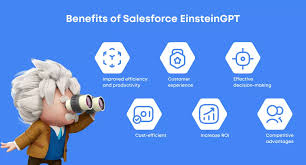
Unlocking the Full Potential of Salesforce Einstein: A Strategic Guide Moving Beyond Basic AI Features While standard Einstein features provide value, the true competitive advantage comes from custom AI solutions tailored to your unique business processes. Here’s how leading organizations are pushing Einstein’s capabilities further: Custom AI Model Development Real-World Custom Implementations: Cross-Functional AI Strategy Department-Specific AI Roadmaps Team Key Use Cases Success Metrics Sales Deal stagnation alertsOptimal contact timing 20% reduction in stalled deals Service Case severity predictionAuto-routing 15% faster resolution Marketing Content engagement scoringChurn risk segmentation 30% higher campaign ROI Operations Inventory demand forecastingResource allocation 25% waste reduction Implementation Tip: Start with one high-impact department before enterprise rollout. Technical Implementation Framework Data Preparation Checklist Model Selection Guide Pro Tip: Use Einstein’s AutoML to test multiple approaches before custom development. Overcoming Adoption Challenges Trust-Building Playbook Skills Development Plan Advanced Integration Patterns Combine Einstein With: Example Architecture: Measuring AI Success Key Performance Indicators: Continuous Improvement Cycle: Getting Started with Advanced Einstein *”Companies that customize AI solutions see 3-5x greater ROI than those using only out-of-the-box features.”* – Forrester Research Transform your Einstein implementation from basic scoring to strategic advantage with tailored AI solutions. Like Related Posts Who is Salesforce? Who is Salesforce? Here is their story in their own words. From our inception, we’ve proudly embraced the identity of Read more Salesforce Marketing Cloud Transactional Emails Salesforce Marketing Cloud Transactional Emails are immediate, automated, non-promotional messages crucial to business operations and customer satisfaction, such as order Read more Salesforce Unites Einstein Analytics with Financial CRM Salesforce has unveiled a comprehensive analytics solution tailored for wealth managers, home office professionals, and retail bankers, merging its Financial Read more AI-Driven Propensity Scores AI plays a crucial role in propensity score estimation as it can discern underlying patterns between treatments and confounding variables Read more
Read More
enterprise ai rag

Enterprise AI RAG

Retrieval-Augmented Generation (RAG): Enhancing AI with External Knowledge Large language models (LLMs) can answer nearly any question—but their responses aren’t always based on verified or up-to-date information. Retrieval-augmented generation (RAG) bridges this gap by enabling AI applications to access external knowledge sources, making it invaluable for enterprises leveraging proprietary data. By integrating RAG into their AI strategy, organizations can deliver accurate, secure, and compliant AI-powered solutions grounded in real-time, internal knowledge. To get started, explore RAG’s architecture, benefits, and challenges, then follow a six-step best practices checklist for enterprise adoption. How RAG Works In a standard LLM, responses are generated solely from pre-trained data, limiting accuracy to the model’s training cutoff date and excluding proprietary business knowledge. RAG enhances this process in three stages: Why Enterprises Need RAG RAG overcomes three key LLM limitations: Challenges to Address: 6 Best Practices for Implementing RAG Integrating RAG into Your AI Roadmap Start with high-impact use cases like customer support, internal knowledge bases, or compliance documentation. Take a phased approach, building expertise in data preparation, embeddings, and prompt engineering. Complement RAG with fine-tuning and supervised learning for a robust, enterprise-ready AI solution. Like Related Posts Who is Salesforce? Who is Salesforce? Here is their story in their own words. From our inception, we’ve proudly embraced the identity of Read more Salesforce Unites Einstein Analytics with Financial CRM Salesforce has unveiled a comprehensive analytics solution tailored for wealth managers, home office professionals, and retail bankers, merging its Financial Read more AI-Driven Propensity Scores AI plays a crucial role in propensity score estimation as it can discern underlying patterns between treatments and confounding variables Read more Tectonic’s Successful Salesforce Track Record Salesforce Technology Services Integrator – Tectonic has successfully delivered Salesforce in a variety of industries including Public Sector, Hospitality, Manufacturing, Read more

Read More

How AI Can Help Canadian Manufacturers Stay Competitive in a Changing Economy

Canada’s manufacturing sector faces mounting pressures—from a weak Canadian dollar to persistent supply chain disruptions. According to Salesforce’s Trends in Manufacturing Report, 63% of Canadian manufacturers say supply chain issues that began years ago still linger today, while unexpected equipment downtime costs large producers 8% of annual revenue. To navigate these challenges and future-proof operations, Canadian manufacturers must embrace AI-driven modernization—leveraging data intelligence, predictive analytics, and autonomous AI agents to boost efficiency, cut costs, and unlock new revenue streams. The Data Accessibility Challenge While 84% of Canadian manufacturers recognize the need to modernize, many struggle to extract real value from their digital investments. Key findings reveal: The problem? Siloed data prevents manufacturers from delivering real-time insights to frontline workers and AI tools—hindering predictive maintenance, inventory optimization, and customer service improvements. How AI Agents Drive Manufacturing Efficiency To maximize AI’s impact, manufacturers need a unified data platform (like Salesforce’s Manufacturing Data Cloud) that integrates: Autonomous AI agents (powered by natural language processing) can then automate decision-making, such as:✅ Detecting sales contract deviations and auto-correcting pricing or fulfillment issues.✅ Predicting equipment failures and scheduling proactive maintenance.✅ Optimizing stock levels by auto-reordering when inventory dips. 3 Key Areas Where AI Delivers Immediate ROI The Path Forward: Building an AI-Ready Foundation With economic uncertainty looming, Canadian manufacturers must act now to:🔹 Break down data silos (integrate IoT, ERP, and CRM systems).🔹 Deploy AI agents for autonomous decision-making in sales, maintenance, and logistics.🔹 Train teams to work alongside AI—not against it. The bottom line? AI isn’t just a competitive advantage—it’s becoming a necessity for survival in modern manufacturing. By harnessing connected data and intelligent automation, Canadian manufacturers can cut costs, boost productivity, and secure their future in an unpredictable global market. Ready to modernize? Start by auditing your data infrastructure—because AI is only as powerful as the insights it can access. Tectonic can help. Like Related Posts Who is Salesforce? Who is Salesforce? Here is their story in their own words. From our inception, we’ve proudly embraced the identity of Read more Salesforce Marketing Cloud Transactional Emails Salesforce Marketing Cloud Transactional Emails are immediate, automated, non-promotional messages crucial to business operations and customer satisfaction, such as order Read more Salesforce Unites Einstein Analytics with Financial CRM Salesforce has unveiled a comprehensive analytics solution tailored for wealth managers, home office professionals, and retail bankers, merging its Financial Read more AI-Driven Propensity Scores AI plays a crucial role in propensity score estimation as it can discern underlying patterns between treatments and confounding variables Read more
Read More
Salesforce Platform

How Agentic Automation Builds Lasting Customer Relationships

Why Agentic Automation?Customers now engage with brands across 8+ channels, demanding consistency and personalization at every touchpoint. Yet: 73% of customers expect better personalization as tech evolves (Salesforce “State of the AI Connected Customer”) 1 .Only 31% of marketers feel confident unifying customer data (Salesforce “State of Marketing”) 43% still use fragmented personalization, mixing mass messaging with targeted efforts Traditional automation falls short—but AI-powered agents bridge the gap, acting as intelligent assistants that autonomously execute tasks, personalize interactions, and optimize campaigns in real time. What is Agentic Automation?Agents are AI systems that understand, decide, and act—handling everything from customer service queries to full campaign orchestration. Unlike rule-based automation, they:✅ Learn & adapt based on real-time data✅ Multitask (e.g., draft emails, adjust ad spend, qualify leads simultaneously)✅ Work across silos, unifying data for seamless customer journeys The 5 Key Attributes of an AgentRole – What it’s designed to do (e.g., optimize social campaigns, nurture leads) Trusted Data – Access to CRM, engagement history, brand guidelines 2 .Actions – Skills like content generation, A/B testing, performance tracking Channels – Where it operates (email, social, chat, ads) Guardrails – Ethical limits, compliance rules, brand voice guidelines Example: A social media agent can: Analyze past performance & trends Generate post ideas aligned with brand voice Schedule content & adjust targeting in real time Escalate sensitive issues to humans How Agents Transform the Customer Lifecycle1. Awareness: Smarter Campaign CreationAutonomously generates audience segments, ad copy, and campaign briefs Optimizes spend by pausing low-performing ads & reallocating budgets Personalizes content based on real-time engagement data 2. Conversion: Automated Lead NurturingEngages website visitors with dynamic recommendations Scores & routes leads to sales teams based on intent signals Orchestrates follow-ups via email, SMS, or chat 3. Engagement: Hyper-Personalized ExperiencesRecommends products/content based on browsing history A/B tests messaging across channels Adjusts journeys in real time (e.g., swaps promo offers if a customer hesitates) 4. Retention & Loyalty: Proactive Relationship-BuildingIdentifies at-risk customers & triggers re-engagement offers Handles service inquiries (returns, tech support) via chat/SMS Escalates complex issues to human agents seamlessly The Marketer’s Advantage: From Tactical to StrategicAgents don’t replace marketers—they amplify their impact:🔹 Eliminate grunt work (e.g., manual reporting, repetitive follow-ups)🔹 Break down data silos, unifying CRM, ads, and service history🔹 Make real-time decisions (e.g., pausing ads, adjusting discounts)🔹 Scale 1:1 personalization without added headcount Example: An agent can: Draft a win-back email for a lapsing customer Sync it with their past purchases & service tickets Send it via their preferred channel (email/SMS) Track opens/clicks & trigger a follow-up if ignored Getting Started: Building Your Agent FoundationUnify Your Data – Integrate CRM, marketing tools, and service platforms. Define Key Roles – Start with one high-impact use case (e.g., lead nurturing). Set Guardrails – Ensure brand compliance, privacy, and ethical AI use. Test & Refine – Use feedback loops to improve accuracy and relevance. “Agents are like a tireless, data-driven marketing assistant—freeing you to focus on strategy while they handle execution.” The Future: AI + Human CollaborationThe next era of marketing isn’t about choosing between automation and human touch—it’s about combining them. Agents will: Handle routine interactions, letting teams focus on high-value creativity Predict customer needs before they arise Drive unprecedented efficiency (e.g., 275K+ hours saved annually at Salesforce) Ready to transform your marketing? Start small, scale fast, and let agents turn data into lasting relationships. Key Takeaway: Agentic automation isn’t just efficiency—it’s smarter, faster, and more personal customer engagement at scale. Like Related Posts Who is Salesforce? Who is Salesforce? Here is their story in their own words. From our inception, we’ve proudly embraced the identity of Read more Salesforce Marketing Cloud Transactional Emails Salesforce Marketing Cloud Transactional Emails are immediate, automated, non-promotional messages crucial to business operations and customer satisfaction, such as order Read more Salesforce Unites Einstein Analytics with Financial CRM Salesforce has unveiled a comprehensive analytics solution tailored for wealth managers, home office professionals, and retail bankers, merging its Financial Read more AI-Driven Propensity Scores AI plays a crucial role in propensity score estimation as it can discern underlying patterns between treatments and confounding variables Read more

Read More
gettectonic.com