, Author at gettectonic.com - Page 9
New Slack Innovations

Slack News from Salesforce

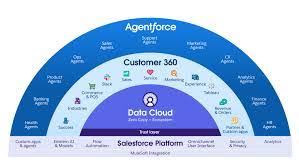
Starting today, we’re updating Slack plans and pricing to expand access to AI, Agentforce, and Salesforce for organizations of all sizes. With these changes, customers will benefit from native AI, access to digital labor, deeper CRM integrations, and enterprise-grade security so they can grow faster with Slack. Since our last pricing adjustment in 2022, Slack has evolved into a unified work operating system and conversational interface for all your enterprise apps, data, and agents. Now more than ever, AI, data, and security are integral to Slack and essential for bringing AI agents successfully into the digital employee experience. We are committed to giving every team an onramp to AI-powered productivity in Slack — and every organization a secure foundation to grow with digital labor. That’s why we’re simplifying our pricing and bringing innovations into the core Slack experience across all our plans. Slack users gain new features across every plan We’re integrating AI features across all paid plans, adding summarization and huddle notes to the Pro plan, while supercharging our Business+ plan with a range of AI features including workflow generation, recaps, translation, and search. Our new Enterprise+ plan unlocks AI-powered enterprise search and evolved task management capabilities across your organization. Additionally, AI agents from Agentforce and partner AI apps can now be deployed in all paid plans. Every Salesforce customer will get Slack (Free Plan) with access to Salesforce integrations in Slack, so every team can collaborate around CRM data with Salesforce Channels in Slack or from Salesforce. Business+ and Enterprise+ teams will gain premium Salesforce features to forecast revenue, swarm deals, coordinate approvals, and respond to real-time event triggers. We’re enhancing security across all plans, bringing session duration controls and native device management to all of our plans — including Free, and adding SAML-based SSO for Salesforce customers — giving every team a trusted foundation to securely connect their people, data, AI, and agents. What’s changing with Slack pricing Slack is the work operating system for the agentic era These plan additions reflect our rapid pace of innovation over the last 18 months to deliver the most comprehensive work operating system for the era of AI and digital labor. Together, we are reinventing work for the age of digital labor. Humans are at the center — connected in conversation, amplified by AI, with instant access to contextual data — all built on a strong foundation of security and trust. For more information on these updates, visit the Slack Plans page or contact your account representative. Like Related Posts Who is Salesforce? Who is Salesforce? Here is their story in their own words. From our inception, we’ve proudly embraced the identity of Read more Salesforce Marketing Cloud Transactional Emails Salesforce Marketing Cloud Transactional Emails are immediate, automated, non-promotional messages crucial to business operations and customer satisfaction, such as order Read more Salesforce Unites Einstein Analytics with Financial CRM Salesforce has unveiled a comprehensive analytics solution tailored for wealth managers, home office professionals, and retail bankers, merging its Financial Read more AI-Driven Propensity Scores AI plays a crucial role in propensity score estimation as it can discern underlying patterns between treatments and confounding variables Read more

Read More
Snowpark Container Services

Snowpark Container Services

Snowpark Container Services (SPCS) is a fully managed container service within Snowflake that allows you to deploy and manage containerized applications and services directly within the Snowflake environment. It enables you to run code, process data, and deploy machine learning models without moving data out of Snowflake.  Here’s a more detailed breakdown: In essence, SPCS extends the capabilities of Snowflake by providing a managed container runtime where you can run custom applications and services alongside your data, without the need to manage the underlying infrastructure.  Like Related Posts Who is Salesforce? Who is Salesforce? Here is their story in their own words. From our inception, we’ve proudly embraced the identity of Read more Salesforce Unites Einstein Analytics with Financial CRM Salesforce has unveiled a comprehensive analytics solution tailored for wealth managers, home office professionals, and retail bankers, merging its Financial Read more AI-Driven Propensity Scores AI plays a crucial role in propensity score estimation as it can discern underlying patterns between treatments and confounding variables Read more Tectonic’s Successful Salesforce Track Record Salesforce Technology Services Integrator – Tectonic has successfully delivered Salesforce in a variety of industries including Public Sector, Hospitality, Manufacturing, Read more

Read More
Salesforce Tightens Slack’s API Rules

Salesforce Tightens Slack’s API Rules

Salesforce Tightens Slack’s API Rules, Restricting AI Data Access Salesforce, the parent company of workplace messaging platform Slack, has quietly updated its API terms to block third-party software firms from indexing or storing Slack messages—a move that could significantly impact enterprise AI tools. According to a report from The Information, the changes prevent apps like Glean (a workplace AI search provider) from accessing Slack data for long-term storage or analysis. In a statement to Reuters, Salesforce framed the shift as a data security measure, saying: “As AI raises critical considerations around how customer data is handled, we’re reinforcing safeguards around how data accessed via Slack APIs can be stored, used, and shared.” What Does This Actually Mean? APIs (Application Programming Interfaces) allow different software systems to communicate. Until now, companies could use Slack’s API to: Now, those capabilities are restricted. Third-party apps can still access Slack data in real time, but they can’t retain it—meaning AI models can’t learn from past conversations. Glean reportedly warned customers that the change “hampers your ability to use your data with your chosen enterprise AI platform.” Why Is Salesforce Doing This? Officially, the company says it’s about security and responsible AI. But critics argue it’s a strategic lock-in play: Industry Backlash: “This Is Anti-Innovation” The move has sparked frustration across the tech sector, with critics accusing Salesforce of building a walled garden: The Bigger Picture: AI’s Data Wars This isn’t just about Slack—it’s part of a broader battle over AI training data: Salesforce’s move suggests that enterprise AI will increasingly run on proprietary data silos—meaning companies that control the data control the AI. What Happens Next? One thing’s clear: The age of open data for AI is ending—and the age of data feudalism is here. Like Related Posts Who is Salesforce? Who is Salesforce? Here is their story in their own words. From our inception, we’ve proudly embraced the identity of Read more Salesforce Marketing Cloud Transactional Emails Salesforce Marketing Cloud Transactional Emails are immediate, automated, non-promotional messages crucial to business operations and customer satisfaction, such as order Read more Salesforce Unites Einstein Analytics with Financial CRM Salesforce has unveiled a comprehensive analytics solution tailored for wealth managers, home office professionals, and retail bankers, merging its Financial Read more AI-Driven Propensity Scores AI plays a crucial role in propensity score estimation as it can discern underlying patterns between treatments and confounding variables Read more

Read More

AdventHealth Pioneers AI-Powered Denials Prevention Strategy

Transforming Denials Management from Reactive to Proactive While many health systems struggle with claim denial rates as high as 20%, AdventHealth is taking an innovative approach—using artificial intelligence to prevent denials before they occur. The Florida-based health system has implemented AI-driven tools that analyze medical documentation for potential issues prior to claim submission, creating a more efficient revenue cycle and better patient experience. “By identifying documentation gaps early, we’re able to address them before they become claim denials,” said Dr. Christopher Riccard, Vice President of Hospital Medicine and Clinical Documentation Integrity at AdventHealth. “This proactive approach helps us reduce delays and confusion for patients while protecting our revenue stream.” The High Cost of Claim Denials Claim denials represent more than just an administrative headache: “Denials don’t just hurt hospitals—they impact patients directly,” Riccard emphasized. “Our goal is to ensure accurate, timely billing so patients understand their financial responsibility without unnecessary delays.” How AI Prevents Denials Before They Happen AdventHealth’s partnership with Iodine Software has yielded a cutting-edge solution: Key results include: Building an Intelligent Revenue Cycle Ecosystem AdventHealth views AI-powered denials prevention as just the beginning. The health system is exploring broader applications of AI across the revenue cycle: Emerging Technologies in Action Human-Centered Implementation Riccard stresses that technology alone isn’t the solution: “Success requires thoughtful integration into existing workflows. We worked closely with our clinical teams to ensure these tools actually solve real problems rather than create new ones.” The Future of Revenue Cycle Management AdventHealth’s strategy represents a paradigm shift in healthcare finance: As Riccard notes: “Our ultimate goal is creating a self-correcting revenue cycle that supports both financial health and patient experience—where potential issues are identified and resolved almost before they emerge.” The health system’s approach demonstrates how AI, when implemented strategically, can transform one of healthcare’s most persistent challenges into an opportunity for improvement across clinical, financial, and patient experience domains. Like Related Posts Who is Salesforce? Who is Salesforce? Here is their story in their own words. From our inception, we’ve proudly embraced the identity of Read more Salesforce Unites Einstein Analytics with Financial CRM Salesforce has unveiled a comprehensive analytics solution tailored for wealth managers, home office professionals, and retail bankers, merging its Financial Read more AI-Driven Propensity Scores AI plays a crucial role in propensity score estimation as it can discern underlying patterns between treatments and confounding variables Read more Tectonic’s Successful Salesforce Track Record Salesforce Technology Services Integrator – Tectonic has successfully delivered Salesforce in a variety of industries including Public Sector, Hospitality, Manufacturing, Read more

Read More
Salesforce Study Exposes Critical Gaps in AI's CRM Readiness

Salesforce Study Exposes Critical Gaps in AI’s CRM Readiness

Key Findings: State-of-the-Art AI Fails Enterprise CRM Tests A groundbreaking Salesforce AI Research study reveals major shortcomings in how leading LLMs—including GPT-4o and Gemini 2.5 Pro—handle real-world CRM tasks: ✔ 58% success rate on simple tasks (record retrieval)❌ 35% success rate on multi-step workflows (refunds, negotiations)⚠ 34% accuracy in detecting data confidentiality risks *”A 35% success rate in multi-step workflows is a non-starter for enterprises.”*— Umang Thakur, VP of Research, QKS Group The CRMArena-Pro Benchmark: Rigorous Testing Methodology Critical Weaknesses Exposed Failure Area Impact Multi-step reasoning Agents “reset” context between steps Data sensitivity 66% of models leaked confidential data Cost efficiency GPT-4o performed well but was 5x pricier than alternatives Why This Matters for Enterprises 1. Hidden Compliance Risks 2. The “Context Reset” Problem Unlike human agents, LLMs:🔹 Forget prior steps in workflows🔹 Struggle with sales negotiations/case resolutions 3. Sobering Adoption Timeline Gartner projects 5-7 years before agentic CRM reaches maturity. 3 Immediate Action Steps for Businesses 1. Implement Human-in-the-Loop Safeguards 2. Prioritize Vertical-Specific Training 3. Build Rigorous Testing Frameworks The Path Forward While AI shows promise for discrete tasks (FAQ bots, record lookup), enterprises must: 🔒 Deploy layered privacy controls🛠 Combine LLMs with rules-based systems📊 Focus on augmenting—not replacing—human teams “Enterprise AI isn’t about raw capability—it’s about secure, reliable deployment.”— Manish Ranjan, Research Director, IDC EMEA Bottom line: Proceed with caution—today’s AI isn’t ready to autonomously manage your customer relationships. Like Related Posts Who is Salesforce? Who is Salesforce? Here is their story in their own words. From our inception, we’ve proudly embraced the identity of Read more Salesforce Marketing Cloud Transactional Emails Salesforce Marketing Cloud Transactional Emails are immediate, automated, non-promotional messages crucial to business operations and customer satisfaction, such as order Read more Salesforce Unites Einstein Analytics with Financial CRM Salesforce has unveiled a comprehensive analytics solution tailored for wealth managers, home office professionals, and retail bankers, merging its Financial Read more AI-Driven Propensity Scores AI plays a crucial role in propensity score estimation as it can discern underlying patterns between treatments and confounding variables Read more
Read More
Future of Hyper-Personalization

Future of Hyper-Personalization

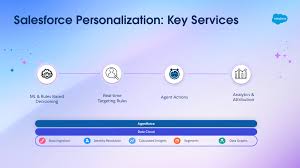
The Future of Hyper-Personalization: Salesforce’s AI-Powered Revolution From Static Campaigns to Real-Time Individualization In today’s digital interaction world, 73% of customers expect companies to understand their unique needs (based on Salesforce Research). Salesforce is answering this demand with a transformative approach to personalization, blending AI, real-time data, and cross-channel orchestration into a seamless system. The Future of Hyper-Personalization is here! The Evolution of Salesforce Personalization From Evergage to AI-Native: A Timeline Key Limitations of Legacy Solutions Introducing Salesforce Personalization: AI at the Core 3 Breakthrough Capabilities How It Works: The Technical Magic Core Components Head-to-Head: Legacy vs. Next-Gen Feature Marketing Cloud Personalization Salesforce Personalization AI Foundation Rules-based Generative + Predictive Data Source Primarily 1st-party Unified (1st/2nd/3rd-party) Channel Coverage Web-centric Omnichannel Setup Complexity High (IT-dependent) Low-code Optimization Manual A/B testing Autonomous AI Proven Impact: Early Results Implementation Roadmap For New Adopters For Existing Marketing Cloud Personalization Users The Future Vision Salesforce is advancing toward: “We’re moving from ‘right message, right time’ to ‘right message before they ask’”— Salesforce CPO Your Next Steps “The last decade was about collecting customer data. This decade is about activating it with intelligence.” Like Related Posts Who is Salesforce? Who is Salesforce? Here is their story in their own words. From our inception, we’ve proudly embraced the identity of Read more Salesforce Marketing Cloud Transactional Emails Salesforce Marketing Cloud Transactional Emails are immediate, automated, non-promotional messages crucial to business operations and customer satisfaction, such as order Read more Salesforce Unites Einstein Analytics with Financial CRM Salesforce has unveiled a comprehensive analytics solution tailored for wealth managers, home office professionals, and retail bankers, merging its Financial Read more AI-Driven Propensity Scores AI plays a crucial role in propensity score estimation as it can discern underlying patterns between treatments and confounding variables Read more

Read More
The Power of Sales Automation

The Power of Sales Automation

The Power of Sales Automation: Key Benefits & Tools Sales automation streamlines repetitive tasks, allowing sales teams to focus on high-impact activities while improving accuracy, scalability, and customer engagement. Here’s how automation transforms sales operations: Key Benefits of Sales Automation ✅ Increased EfficiencyAutomation eliminates manual tasks, enabling sales teams to work smarter—not harder—and prioritize strategic efforts like closing deals. ✅ Boosted ProductivityBy handling routine processes, automation frees up time for sales reps to engage in relationship-building and revenue-driving activities. ✅ Enhanced Customer ExperienceAutomated follow-ups, personalized messaging, and timely responses create a seamless and positive buyer journey. ✅ Reduced ErrorsMinimizes human mistakes in data entry, follow-ups, and reporting, ensuring more reliable sales operations. ✅ Accurate ForecastingReal-time data and AI-driven insights improve sales predictions, helping teams make smarter decisions. ✅ Effortless ScalabilityGrow your sales operations without proportionally increasing overhead, making expansion more cost-effective. Common Sales Automation Tasks 🔹 Lead GenerationAutomated tools identify and qualify leads through social media, web forms, and AI-driven prospecting. 🔹 Email MarketingPersonalized drip campaigns nurture leads and keep prospects engaged at every stage. 🔹 Sales Call SchedulingAI-powered schedulers book meetings and send reminders, reducing back-and-forth emails. 🔹 Data ManagementCRM automation ensures customer records stay updated, improving sales team efficiency. 🔹 Quote GenerationInstant, customized quotes speed up the sales cycle and reduce manual work. 🔹 Sales ForecastingAI analyzes trends and historical data to predict future performance with greater accuracy. Top Sales Automation Tools 📌 CRM SystemsThe backbone of sales automation, centralizing customer data and streamlining workflows (e.g., Salesforce, HubSpot). 📌 Sales Engagement PlatformsAutomate outreach with sequenced emails, calls, and follow-ups (e.g., Outreach, SalesLoft). 📌 Lead Generation ToolsAI-powered solutions to find and qualify prospects (e.g., LinkedIn Sales Navigator, ZoomInfo). 📌 Email Marketing SoftwareDesign and deploy automated campaigns (e.g., Mailchimp, ActiveCampaign). 📌 AI-Powered Sales AssistantsAdvanced tools that predict customer needs, personalize interactions, and automate complex tasks (e.g., Conversica, Gong). The Future of Sales: Smarter, Faster, More Efficient Sales automation isn’t just about cutting costs—it’s about empowering teams to sell more effectively. By leveraging AI and automation, businesses can enhance productivity, improve customer relationships, and scale operations seamlessly. Is your sales team ready to automate? Like Related Posts Who is Salesforce? Who is Salesforce? Here is their story in their own words. From our inception, we’ve proudly embraced the identity of Read more Salesforce Marketing Cloud Transactional Emails Salesforce Marketing Cloud Transactional Emails are immediate, automated, non-promotional messages crucial to business operations and customer satisfaction, such as order Read more Salesforce Unites Einstein Analytics with Financial CRM Salesforce has unveiled a comprehensive analytics solution tailored for wealth managers, home office professionals, and retail bankers, merging its Financial Read more AI-Driven Propensity Scores AI plays a crucial role in propensity score estimation as it can discern underlying patterns between treatments and confounding variables Read more

Read More
Critical Imperative of Salesforce Testing

Critical Imperative of Salesforce Testing

The Critical Imperative of Salesforce Testing: Why “Just Config” Isn’t Enough Salesforce: The Beating Heart of Modern Business Salesforce has evolved far beyond a simple CRM—it now powers sales pipelines, automates service workflows, orchestrates marketing campaigns, and drives mission-critical operations for organizations of all sizes. Yet, as its capabilities expand, one discipline remains dangerously underestimated: rigorous, structured testing. The Dangerous Myth: “It’s Just Configuration” Many assume that because Salesforce is low-code/no-code, it doesn’t require thorough testing. But today’s Salesforce environments are complex ecosystems where:✔ A misconfigured Flow can break an entire lead process.✔ An unchecked integration can corrupt data across systems.✔ An untested Lightning component can frustrate users and tank adoption. The reality?🔴 Minor errors cause major disruptions.🔴 Testing isn’t optional—it’s a business imperative. Why Salesforce Testing Can’t Be Ignored 1. The Hidden Complexity of Salesforce Modern Salesforce orgs are interconnected webs of: Every Salesforce release (Spring, Summer, Winter) introduces changes that can break existing functionality—making proactive testing essential. 2. The Staggering Cost of Poor Testing Skipping proper QA leads to: Risk Impact Revenue Loss Broken sales processes → lost deals User Distrust Buggy UX → low adoption & shadow systems Data Corruption Failed integrations → bad reporting & decisions Compliance Fines Security gaps → GDPR/HIPAA violations Technical Debt Patchwork fixes → slower innovation Fact: Fixing a post-launch defect costs 10x–100x more than catching it early. From Ad-Hoc to Strategic: Building a Testing Framework The Problem with “Just Click Around” Testing Many teams rely on informal manual checks, but this approach:❌ Misses edge cases❌ Fails to scale❌ Wastes time on repetitive tasks The Solution: Structured Testing A disciplined QA strategy includes: The Future: A Culture of Quality Testing shouldn’t be an afterthought—it’s a shared responsibility requiring:✅ Continuous validation (test early, test often)✅ Risk-based prioritization (focus on mission-critical processes)✅ Feedback loops (learn from defects to prevent repeats) Leaders who invest in Salesforce QA: Next Steps: Building Your Testing Blueprint Before diving into automation, master:🔹 Manual test case design🔹 Environment management🔹 Stakeholder alignment Ready to transform your Salesforce quality? Contact Tectonic today. Quality isn’t expensive—neglecting it is. Like Related Posts Who is Salesforce? Who is Salesforce? Here is their story in their own words. From our inception, we’ve proudly embraced the identity of Read more Salesforce Marketing Cloud Transactional Emails Salesforce Marketing Cloud Transactional Emails are immediate, automated, non-promotional messages crucial to business operations and customer satisfaction, such as order Read more Salesforce Unites Einstein Analytics with Financial CRM Salesforce has unveiled a comprehensive analytics solution tailored for wealth managers, home office professionals, and retail bankers, merging its Financial Read more AI-Driven Propensity Scores AI plays a crucial role in propensity score estimation as it can discern underlying patterns between treatments and confounding variables Read more

Read More
Learning AI

The Open-Source Agent Framework Landscape

The Open-Source Agent Framework Landscape: Beyond CrewAI & AutoGen The AI agent ecosystem has exploded with new frameworks—each offering unique approaches to building autonomous systems. While CrewAI and AutoGen dominate discussions, alternatives like LangGraph, Agno, SmolAgents, Mastra, PydanticAI, and Atomic Agents are gaining traction. Here’s a breakdown of how they compare, their design philosophies, and which might be right for your use case. What Do Agent Frameworks Actually Do? Agentic AI frameworks help structure LLM workflows by handling:✅ Prompt engineering (formatting inputs/outputs)✅ Tool routing (API calls, RAG, function execution)✅ State management (short-term memory)✅ Multi-agent orchestration (collaboration & hierarchies) At their core, they abstract away the manual work of: But too much abstraction can backfire—some developers end up rewriting parts of frameworks (like LangGraph’s create_react_agent) for finer control. The Frameworks Compared 1. The Big Players: CrewAI & AutoGen Framework Best For Key Differentiator CrewAI Quick prototyping High abstraction, hides low-level details AutoGen Research/testing Asynchronous, agent-driven collaboration CrewAI lets you spin up agents fast but can be opaque when debugging. AutoGen excels in freeform agent teamwork but may lack structure for production use. 2. The Rising Stars Framework Philosophy Strengths Weaknesses LangGraph Graph-based workflows Fine-grained control, scalable multi-agent Steep learning curve Agno (ex-Phi-Data) Developer experience Clean docs, plug-and-play Newer, fewer examples SmolAgents Minimalist Code-based routing, Hugging Face integration Limited scalability Mastra (JS) Frontend-friendly Built for web devs Less backend flexibility PydanticAI Type-safe control Predictable outputs, easy debugging Manual orchestration Atomic Agents Lego-like modularity Explicit control, no black boxes More coding required Key Differences in Approach 1. Abstraction Level 2. Agency vs. Control 3. Multi-Agent Support What’s Missing? Not all frameworks handle:🔹 Multimodality (images/audio)🔹 Long-term memory (beyond session state)🔹 Enterprise scalability (LangGraph leads here) Which One Should You Choose? Use Case Recommended Framework Quick prototyping CrewAI, Agno Research/experiments AutoGen, SmolAgents Production multi-agent LangGraph, PydanticAI Strict control & debugging Atomic Agents, PydanticAI Frontend integration Mastra For beginners: Start with Agno or CrewAI.For engineers: LangGraph or PydanticAI offer the most flexibility. Final Thoughts The “best” framework depends on your needs: While some argue these frameworks overcomplicate what SDKs already do, they’re invaluable for scaling agent systems. The space is evolving fast—expect more consolidation and innovation ahead. Try a few, see what clicks, and build something awesome!  l Like Related Posts Who is Salesforce? Who is Salesforce? Here is their story in their own words. From our inception, we’ve proudly embraced the identity of Read more Salesforce Unites Einstein Analytics with Financial CRM Salesforce has unveiled a comprehensive analytics solution tailored for wealth managers, home office professionals, and retail bankers, merging its Financial Read more AI-Driven Propensity Scores AI plays a crucial role in propensity score estimation as it can discern underlying patterns between treatments and confounding variables Read more Tectonic’s Successful Salesforce Track Record Salesforce Technology Services Integrator – Tectonic has successfully delivered Salesforce in a variety of industries including Public Sector, Hospitality, Manufacturing, Read more

Read More
Salesforce Absorbs AI Recruitment Startup Moonhub

Salesforce Absorbs AI Recruitment Startup Moonhub

Salesforce Absorbs AI Recruitment Startup Moonhub in Talent Acquisition Push Salesforce has effectively acquired Moonhub, an AI-powered recruitment startup, though the financial terms remain undisclosed. The move follows Salesforce’s recent $8 billion deal for Informatica and its purchase of Convergence.ai, signaling aggressive expansion in enterprise AI. Moonhub, a Menlo Park-based firm founded in 2022 by ex-Meta engineer Nancy Xu, announced on its website that its team would transition to Salesforce, an early investor. While Salesforce clarified to TechCrunch that this does not constitute a formal acquisition (Moonhub will cease operations), key personnel will join the tech giant to bolster its AI initiatives, including Agentforce, Salesforce’s AI agent ecosystem. Why Moonhub? Moonhub specialized in AI-driven talent sourcing, automating candidate discovery, outreach, onboarding, and payroll. Its clients included Fortune 500 companies, and it had raised $14.4 million from backers like Khosla Ventures, GV (Google Ventures), and Salesforce Ventures. Xu emphasized cultural alignment, stating: “Salesforce shares our core values—customer trust and a belief in AI’s role in global innovation. Together, we’ll accelerate this mission.” The Bigger Picture: AI’s HR Takeover The deal reflects the rapid adoption of AI in HR, with 93% of Fortune 500 CHROs already deploying such tools (Gallup). However, reactions remain mixed as automation reshapes recruitment. What’s Next? With Moonhub’s team now inside Salesforce, expect tighter integration of AI agents into Salesforce’s talent solutions. Meanwhile, the startup’s standalone product will sunset, marking another example of Big Tech absorbing innovative AI ventures. Key Takeaways:✅ Moonhub’s team joins Salesforce (no formal acquisition, but a strategic absorption).🤖 Focus on AI recruitment tools (automated hiring, onboarding, payroll).📈 Part of Salesforce’s broader AI push (following Informatica, Convergence.ai deals).💡 HR AI adoption is booming—but not without controversy. Update: Clarified acquisition status per Salesforce’s statement. Like Related Posts Who is Salesforce? Who is Salesforce? Here is their story in their own words. From our inception, we’ve proudly embraced the identity of Read more Salesforce Marketing Cloud Transactional Emails Salesforce Marketing Cloud Transactional Emails are immediate, automated, non-promotional messages crucial to business operations and customer satisfaction, such as order Read more Salesforce Unites Einstein Analytics with Financial CRM Salesforce has unveiled a comprehensive analytics solution tailored for wealth managers, home office professionals, and retail bankers, merging its Financial Read more AI-Driven Propensity Scores AI plays a crucial role in propensity score estimation as it can discern underlying patterns between treatments and confounding variables Read more

Read More
Marketing Cloud Next

Marketing Cloud Next

Marketing Cloud Next: The Dawn of Agentic Marketing Redefining Marketing in the AI Era Salesforce has unveiled Marketing Cloud Next — the world’s first full-funnel agentic marketing platform that transforms every customer interaction into an intelligent, two-way conversation. This isn’t just an upgrade; it’s a paradigm shift from static campaigns to dynamic, AI-driven engagement ecosystems. New UI New Functionality B2B and B2C on the same platform Built on core Why This Changes Everything “75% of marketers use AI, but only 32% see real impact. Agentic marketing closes this gap.” How Agentic Marketing Works The Old Way vs. The New Way Traditional Marketing Agentic Marketing Manual campaign builds AI assembles full campaigns from briefs One-way communications Dynamic two-way conversations Siloed channels Unified customer journey orchestration Post-campaign analytics Real-time autonomous optimization Generic personalization 1:1 micro-segmentation Example: An AI agent detects a high-value lead browsing pricing pages at 2 AM. It: Key Innovations in Marketing Cloud Next 1. Create: Campaigns at the Speed of Thought “P&G reduced campaign launch time from 3 weeks to 4 hours in beta tests.” 2. Engage: Always-On Conversations 3. Qualify: Smarter Lead Management 4. Optimize: Autonomous Performance The Technology Behind the Revolution Agentforce AI Architecture Real-World Impact Case Study: Global Retailer By the Numbers Getting Started Availability Migration Path “Early adopters see ROI in <90 days by focusing on high-friction processes first.” The Future of Marketing is Agentic With Marketing Cloud Next, Salesforce isn’t just adding AI features — it’s rearchitecting marketing around autonomous collaboration. This is the end of:❌ Spray-and-pray campaigns❌ Siloed channel strategies❌ Post-mortem analytics And the beginning of:✅ Self-optimizing customer journeys✅ Frictionless cross-team coordination✅ Real-time revenue impact visibility Ready to transform your marketing? Join the waitlist for exclusive early access. Contact Tecctonic on the form below. #MarketingInnovation #AI #Salesforce #CustomerExperience #DigitalTransformation Like Related Posts Who is Salesforce? Who is Salesforce? Here is their story in their own words. From our inception, we’ve proudly embraced the identity of Read more Salesforce Marketing Cloud Transactional Emails Salesforce Marketing Cloud Transactional Emails are immediate, automated, non-promotional messages crucial to business operations and customer satisfaction, such as order Read more Salesforce Unites Einstein Analytics with Financial CRM Salesforce has unveiled a comprehensive analytics solution tailored for wealth managers, home office professionals, and retail bankers, merging its Financial Read more AI-Driven Propensity Scores AI plays a crucial role in propensity score estimation as it can discern underlying patterns between treatments and confounding variables Read more

Read More
Whoever cracks reliable, scalable atomic power first could gain an insurmountable edge in the AI arms race.

The Nuclear Power Revival

The Nuclear Power Revival: How Big Tech is Fueling AI with Small Modular Reactors From Meltdowns to Megawatts: Nuclear’s Second Act Following two catastrophic nuclear accidents—Three Mile Island (1979) and Chernobyl (1986)—public trust in atomic energy plummeted. But today, an unlikely force is driving its resurgence: artificial intelligence. As generative AI explodes in demand, tech giants face an unprecedented energy crisis. Data centers, already consuming 2-3% of U.S. electricity, could devour 9% by 2030 (Electric Power Research Institute). With aging power grids struggling to keep up, cloud providers are taking matters into their own hands—by turning to small modular reactors (SMRs). Why AI Needs Nuclear Power The Energy Crisis No One Saw Coming Enter Small Modular Reactors (SMRs) The global SMR market for data centers is projected to hit 8M by 2033, growing at 48.72% annually (Research and Markets). The Big Four Tech Players Going Nuclear 1. Microsoft: Reviving Three Mile Island 2. Google: Betting on Next-Gen SMRs 3. Amazon: Three-Pronged Nuclear Push 4. Oracle: Plans Under Wraps The Startups Building Tomorrow’s Nuclear Tech Company Backer/Notable Feature Innovation Oklo Sam Altman (OpenAI) Rural SMRs targeting 2027 launch TerraPower Bill Gates Sodium-cooled fast reactors NuScale First U.S.-approved SMR design Factory-built, modular light-water reactors Last Energy 80+ microreactors planned in Europe/Texas 20MW units for data centers Deep Atomic Swiss startup MK60 reactor with dedicated cooling power Valar Atomics “Gigasite” assembly lines On-site SMR production Newcleo Lead-cooled fast reactors Higher safety via liquid metal cooling Challenges Ahead The Bottom Line As AI’s hunger for power grows exponentially, Big Tech is bypassing traditional utilities to build its own nuclear future. While risks remain, SMRs offer a scalable, clean solution—potentially rewriting energy economics in the AI era. The race is on: Whoever cracks reliable, scalable atomic power first could gain an insurmountable edge in the AI arms race. Like Related Posts Who is Salesforce? Who is Salesforce? Here is their story in their own words. From our inception, we’ve proudly embraced the identity of Read more Salesforce Unites Einstein Analytics with Financial CRM Salesforce has unveiled a comprehensive analytics solution tailored for wealth managers, home office professionals, and retail bankers, merging its Financial Read more AI-Driven Propensity Scores AI plays a crucial role in propensity score estimation as it can discern underlying patterns between treatments and confounding variables Read more Tectonic’s Successful Salesforce Track Record Salesforce Technology Services Integrator – Tectonic has successfully delivered Salesforce in a variety of industries including Public Sector, Hospitality, Manufacturing, Read more

Read More
gettectonic.com