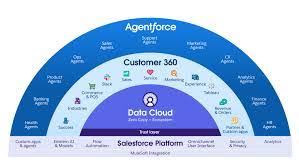
A sandbox is a safe, isolated copy of your Salesforce org for development, testing, and training—ensuring your production data and applications remain secure. Data Cloud supports all sandbox types: Developer, Developer Pro, Partial Copy, and Full Copy.
Key Notes:
- Data Cloud sandboxes contain only metadata—no data is replicated, even in Partial or Full Copy sandboxes.
- Use sandboxes to:
- Test changes against copies of production data and users.
- Train teams in a risk-free environment.
- Validate AppExchange packages or integrations.
- Develop and customize without affecting production until deployment.
Supported Features in Data Cloud Sandboxes
Not all Data Cloud features are replicated from production, but most can be recreated in the sandbox. Some features are functional in sandboxes but cannot be deployed back to production.
| Data Cloud Feature | Functional in Sandbox? | Replicated in Sandbox? | Deployable to Production? |
|---|---|---|---|
| Activations & Connectors | |||
| Amazon S3, SFTP, Azure, GCS | ✅ | ✅ | ✅ |
| Marketing Cloud | ✅ | ✅ | ✅ |
| Native (Data Cloud, Commerce Cloud, Loyalty) | ✅ | ✅ | ❌ |
| External Ecosystem (LiveRamp, Criteo, etc.) | ✅ | ✅ | ❌ |
| Strategic Partners (Google Ads, Meta, etc.) | ✅ | ✅ | ❌ |
| BYOL (Bring Your Own Lake) | |||
| Databricks, BigQuery, Redshift, Snowflake | ✅ | ✅ | ✅ |
| Data Processing & Insights | |||
| Calculated Insights (Builder, SQL) | ✅ | ✅ | ✅ |
| Streaming Insights | ✅ | ✅ | ❌ |
| Data Model Objects (DMOs) | ✅ | ✅ | ✅ |
| Data Lake Objects (DLOs) | ✅ | ✅ | ✅ |
| Salesforce Platform Integrations | |||
| CRM, Apex, Flow, LWC | ✅ | ✅ | ✅ |
| Data Clean Room | ✅ | ✅ | ❌ |
| Segments & Identity Resolution | |||
| Standard & Real-Time Segments | ✅ | ✅ | ✅ |
| Identity Resolution | ✅ | ✅ | ✅ |
ℹ️ Note: For platform-specific sandbox behavior, see Sandboxes: Staging Environments for Customizing and Testing at Salesforce help.
Key Considerations for Data Cloud Sandboxes
Billing Impact
- Starting June 17, 2025, Data Cloud sandbox usage consumes production credits.
- Some features begin credit consumption immediately upon activation.
Deployment Limitations
- Some features (e.g., Native Activations, External Ecosystem targets, Data Clean Room) cannot be deployed back to production.
- Use DevOps data kits and change sets to migrate eligible configurations.
How to Get Started
1. Create a Data Cloud Sandbox
- Available for all sandbox types (Developer, Partial Copy, Full Copy).
- Only metadata is copied—no data replication occurs.
2. Deploy Changes from Sandbox
- Use change sets or a DevOps data kit to move configurations to production.
- Verify feature deployability before migration.
Who is Salesforce? Here is their story in their own words. From our inception, we've proudly embraced the identity of Read more
Salesforce Marketing Cloud Transactional Emails are immediate, automated, non-promotional messages crucial to business operations and customer satisfaction, such as order Read more

Salesforce has unveiled a comprehensive analytics solution tailored for wealth managers, home office professionals, and retail bankers, merging its Financial Read more
AI plays a crucial role in propensity score estimation as it can discern underlying patterns between treatments and confounding variables Read more