

Generative AI Archives - gettectonic.com - Page 17
Tableau Einstein Alliance to Help Partners Drive Success in the Agent Era

Tableau Einstein Alliance to Help Partners Drive Success in the Agent Era

Salesforce Unveils Tableau Einstein Alliance to Empower Partners in the AI-Driven Agent Era Salesforce today announced the launch of the Tableau Einstein Alliance, a new partner community designed to create and deliver AI-driven solutions and analytical agents for Tableau Einstein. Built on the Salesforce platform and integrated with Agentforce, this initiative aims to help partners accelerate success in the emerging AI landscape. Tableau Einstein Alliance to Help Partners Drive Success in the Agent Era The Tableau Einstein Alliance offers partners a range of exclusive benefits, including early access to Salesforce’s product roadmaps, in-house AI experts, marketing support, and co-selling opportunities. Through the Alliance, partners will be able to develop agents, apps, and AI-driven solutions, enabling customers to navigate the autonomous AI revolution and rapidly extract value from their data and AI investments. The Alliance is set to launch in February 2025 with 25 founding members, including Tectonic, Capgemini, Deloitte, IBM, and Slalom. Solutions developed within the Alliance will be available on both the Salesforce AppExchange and the forthcoming Tableau Marketplace, offering developers a platform to create, share, and monetize analytical assets. Why It Matters:Partner ecosystems have been crucial in advancing major technological innovations, from cloud computing to software-as-a-service. With the rise of Agentforce, building a dynamic partner community is more critical than ever to drive the next wave of AI and analytics adoption. Salesforce’s Perspective: “Tableau’s success is deeply rooted in our partners’ commitment to our customers. Now, we’re investing in the Tableau Einstein Alliance to cultivate an ecosystem of visionary and innovative partners who will integrate Agentforce into every facet of analytics. The future of data and analytics is here, and our partners are essential to this journey.”— Ryan Aytay, CEO, Tableau Industry Perspectives: “Atrium has championed the vision of unified analytics since Tableau joined the Salesforce ecosystem. We’ve seen the incredible potential of Data Cloud and Tableau Cloud together, and we’re thrilled to help bring Tableau Einstein to market. Its integrated features will offer customers unprecedented productivity.”— Chris Heineken, CEO, Atrium “Tectonic’s “Insight to Action” methodology (i2a) is directly improved by the launch of the Tableau Einstein Alliance. By utilizing automated AI-solutions to power data-driven insights, we are able to deliver additional value to our customers.”— Dan Grossnickle, Tectonic “Tableau Einstein represents the next step in Salesforce’s data platforms and generative AI products. The value for clients from these data-driven insights is immense. We’re excited to help lead the way through the Tableau Einstein Alliance.”— Jean-Marc Gaultier, Head of Group Strategic Initiatives and Partnerships, Capgemini “Deloitte has long benefited from Tableau’s capabilities, and we’re excited to see how this next iteration will further empower our teams with data to drive growth. Integrating key features into tools like Salesforce and Slack will unlock even greater potential for us.”— Moritz Schieder, Tableau Alliance Leader and Director, Deloitte Germany “IBM is eager to leverage Tableau Einstein to deliver more value to our customers, regardless of where they work. As a strategic Agentforce partner and Salesforce customer, we are excited to be part of the next generation of analytics alongside Salesforce.”— Mary Rowe, Global Head of IBM Consulting Salesforce Practice Tableau Einstein Alliance to Help Partners Drive Success in the Agent Era and Tectonic, an insights 2 actions company, is excited to be a part of the innovation. Like Related Posts Who is Salesforce? Who is Salesforce? Here is their story in their own words. From our inception, we’ve proudly embraced the identity of Read more Salesforce Marketing Cloud Transactional Emails Salesforce Marketing Cloud Transactional Emails are immediate, automated, non-promotional messages crucial to business operations and customer satisfaction, such as order Read more Salesforce Unites Einstein Analytics with Financial CRM Salesforce has unveiled a comprehensive analytics solution tailored for wealth managers, home office professionals, and retail bankers, merging its Financial Read more AI-Driven Propensity Scores AI plays a crucial role in propensity score estimation as it can discern underlying patterns between treatments and confounding variables Read more


Read More
Scale and AI Influence Shape Partner Ecosystems

Scale and AI Influence Shape Partner Ecosystems

Hyperscalers’ Scale and AI Influence Shape Partner Ecosystems Despite their seemingly saturated networks, the largest cloud vendors continue to dominate as top ecosystems for service providers, according to a recent survey. Hyperscalers are playing a critical role in partner alliances, a trend that has only intensified in recent years. A study released by Tercera, an investment firm specializing in IT services, highlights the dominance of cloud giants AWS, Google Cloud, and Microsoft Azure in the partner ecosystem landscape. More than 50% of the 250 technology service providers surveyed by Tercera identified one of these three vendors as their primary partner. This data comes from Tercera’s third annual report on the Top 30 Partner Ecosystems. The report emphasizes the “gravitational pull” of these hyperscalers, attracting partners despite their already vast networks. Each of the major cloud vendors maintains relationships with thousands of software and services partners. “The hyperscalers continue to defy the law of large numbers when you look at how many partners are in their ecosystems,” said Michelle Swan, CMO at Tercera. The Shift in Channel Alliances The emergence of cloud vendors as top partners for service providers has been evident since at least 2021. That year, a survey by Accenture of 1,150 channel companies found that AWS, Google, and Microsoft accounted for the majority of revenue for these partners. This represents a significant shift in channel economics, where traditionally large hardware companies occupied the top spots in partner alliances. AI’s Role in Partner Ecosystem Growth The rise of generative AI (GenAI) is reshaping alliance strategies, as service providers increasingly align themselves with hyperscalers and their AI technology partners. For instance, AWS channel partners interested in GenAI are likely to work with Anthropic, following Amazon’s $4 billion investment in the AI company. Meanwhile, Microsoft partners tend to collaborate with OpenAI, as Microsoft has committed up to $13 billion in investments to expand their partnership. “They have their own solar systems,” Swan remarked, referencing AWS, Google, Microsoft, and the AI startups within their ecosystems. Tiers of Partner Ecosystems Tercera categorizes its top 30 ecosystems into three tiers. The first tier, known as “market anchors,” includes AWS, Google, Microsoft, and large independent software vendors (ISVs) such as Salesforce and ServiceNow. The second tier, “market movers,” features publicly traded vendors with evolving partner ecosystems. The third tier, “market challengers,” is made up of privately held vendors with a partner-centric focus, such as Anthropic and OpenAI. Generative AI Ecosystem Survey A 2024 generative AI survey conducted by TechTarget and its Enterprise Strategy Group supports the idea that the leading cloud vendors play a central role in AI ecosystems. In a poll of 610 GenAI decision-makers and users, Microsoft topped the list of ecosystems supporting GenAI initiatives, with 54% of respondents citing it as the best ecosystem. Microsoft’s partner, OpenAI, followed with 35%. Google and AWS ranked third and fourth, with 30% and 24% of the responses, respectively. The survey covered a wide range of industries, including business services and IT, further reinforcing the dominant role hyperscalers play in shaping AI and partner ecosystems. Like Related Posts Who is Salesforce? Who is Salesforce? Here is their story in their own words. From our inception, we’ve proudly embraced the identity of Read more Salesforce Marketing Cloud Transactional Emails Salesforce Marketing Cloud Transactional Emails are immediate, automated, non-promotional messages crucial to business operations and customer satisfaction, such as order Read more Salesforce Unites Einstein Analytics with Financial CRM Salesforce has unveiled a comprehensive analytics solution tailored for wealth managers, home office professionals, and retail bankers, merging its Financial Read more AI-Driven Propensity Scores AI plays a crucial role in propensity score estimation as it can discern underlying patterns between treatments and confounding variables Read more

Read More
AI evolves with tools like Agentforce and Atlas

AI Evolves With Agentforce and Atlas

Not long ago, financial services companies were still struggling with the challenge of customer data trapped in silos. Though it feels like a distant issue, this problem remains for many large organizations unable to integrate different divisions that deal separately with the same customers. Salesforce AI evolves with tools like Agentforce and Atlas. The solution is a concept known as a “single source of truth.” This theme took center stage at Dreamforce 2024 in San Francisco, hosted by Salesforce (NYSE). The event showcased Salesforce’s latest AI innovations, including Agentforce, which is set to revolutionize customer engagement through its advanced AI capabilities. Agentforce, which becomes generally available on October 25, enables businesses to deploy autonomous AI agents to manage a wide variety of tasks. These agents differ from earlier Salesforce-based AI tools by leveraging Atlas, a cutting-edge reasoning engine that allows the bots to think like human beings. Unlike generative AI models, which might write an email based on prompts, Agentforce’s AI agents can answer complex, high-order questions such as, “What should I do with all my customers?” The agents break down these queries into actionable steps—whether that’s sending emails, making phone calls, or texting customers—thanks to the deep capabilities of Atlas. Atlas is at the heart of what makes these AI agents so powerful. It combines multiple large language models (LLMs), large action models (LAMs), and retrieval-augmented generation (RAG) modules, along with REST APIs and connectors to various datasets. This robust system processes user queries through multiple layers, checking for validity and then expanding the query into manageable chunks for processing. Once a query passes through the chit-chat detector—which filters out non-relevant inputs—it enters the evaluation phase, where the AI determines if it has enough data to provide a meaningful answer. If not, the system loops back to the user for more information in a process Salesforce calls the agentic loop. The fewer loops required, the more efficient the AI becomes, making the experience seamless for users. Phil Mui, Senior Vice President of Salesforce AI Research, explained that the AI agents created via Agentforce are powered by the Atlas reasoning engine, which makes use of several key tools like a re-ranker, a refiner, and a response synthesizer. These tools ensure that the AI retrieves, ranks, and synthesizes relevant information to generate high-quality, natural language responses for the user. But Salesforce’s AI agents don’t stop at automation—they also emphasize trust. Before responses reach users, they go through additional checks for toxicity detection, bias prevention, and personally identifiable information (PII) masking. This ensures that the output is both accurate and safe. The potential of Agentforce is massive. According to Wedbush, Salesforce’s AI strategy could generate over $4 billion annually by 2025. Wedbush analysts recently increased their price target for Salesforce stock to $325, reflecting the strong customer reception of Agentforce’s AI ecosystem. While some analysts, such as Yiannis Zourmpanos from Seeking Alpha, have expressed caution due to Salesforce’s high valuation and slower revenue growth, the company’s continued focus on AI and multi-cloud solutions places it in a strong position for the future. Robin Fisher, Salesforce’s head of growth markets for Europe, the Middle East, and Africa, highlighted two major takeaways from Dreamforce for African businesses: the Data Cloud and AI. Data Cloud provides a 360-degree view of the customer, consolidating data into a single source of truth without requiring full data migration. Meanwhile, Agentforce’s autonomous AI agents will drive operational efficiency across industries, especially in markets like Africa. Zuko Mdwaba, Salesforce’s managing director for South Africa, added that the company’s decade-long AI journey is culminating in its most advanced AI offerings yet. This new wave of AI, he said, is transforming not just customer engagement but also internal operations, empowering employees to focus on more strategic tasks while AI handles repetitive ones. The future is clear: as AI evolves with tools like Agentforce and Atlas, businesses across sectors, from banking to retail, are poised to harness the transformative power of autonomous technology and data-driven insights, finally breaking free from the silos of the past. Like1 Related Posts Who is Salesforce? Who is Salesforce? Here is their story in their own words. From our inception, we’ve proudly embraced the identity of Read more Salesforce Marketing Cloud Transactional Emails Salesforce Marketing Cloud Transactional Emails are immediate, automated, non-promotional messages crucial to business operations and customer satisfaction, such as order Read more Salesforce Unites Einstein Analytics with Financial CRM Salesforce has unveiled a comprehensive analytics solution tailored for wealth managers, home office professionals, and retail bankers, merging its Financial Read more AI-Driven Propensity Scores AI plays a crucial role in propensity score estimation as it can discern underlying patterns between treatments and confounding variables Read more

Read More
Marketing Cloud and Generative AI

Marketing Cloud and Generative AI

Generative AI and Salesforce: Revolutionizing Digital Marketing with Einstein AI Generative AI is a form of Artificial Intelligence that learns from existing content to generate new, creative outputs. Salesforce has long been at the forefront of AI innovation, primarily through its Einstein assistant, which has evolved to offer increasingly sophisticated solutions over time. Artificial Intelligence: Key Concepts Before diving into Salesforce’s AI capabilities, let’s clarify some foundational concepts. Artificial Intelligence (AI) refers to the creation of intelligent systems that can learn and reason autonomously. Within AI, Machine Learning (ML) plays a crucial role by enabling computers to learn from data and improve over time without explicit programming. ML models fall into two broad categories: Deep Learning and Neural Networks A more advanced subset of ML is Deep Learning, which uses neural networks to process large amounts of data and make autonomous decisions. Deep Learning powers technologies like voice assistants (e.g., Alexa or Siri), which can recognize speech and execute tasks. A specific application within Deep Learning is Generative AI, capable of autonomously creating new content based on learned patterns from vast datasets. Another critical AI system is the Foundational Model, which is trained on enormous amounts of unstructured data from across the web, including text, images, and videos. These models offer a wide range of capabilities, such as generating text, answering questions, creating designs, or solving complex problems. Salesforce Marketing Cloud and AI Salesforce has utilizeded AI through its Einstein platform, which has evolved over time to offer a variety of data-driven tools. For example, Sent Time Optimization uses customer data to determine the best time to send emails to maximize engagement. AI Tools in Salesforce Marketing Cloud Salesforce offers several AI-powered tools for Marketing Cloud to help businesses leverage data for personalization and efficiency: The Einstein Trust Layer: AI in Salesforce CRM Einstein is the first generative AI model integrated into a CRM, and Salesforce refers to its AI process as the Einstein Trust Layer. Here’s how it works: Marketing Applications of Salesforce AI Tools Salesforce’s AI tools can be applied across omnichannel marketing campaigns to hyper-personalize communication, increasing conversion rates and customer engagement. Predictive analytics also allow businesses to optimize cross-selling and upselling, offering tailored product recommendations based on customer behavior. Chatbots powered by AI further enhance productivity by interacting in natural language, collecting leads, suggesting products, and resolving customer inquiries. Salesforce’s Commitment to AI in Digital Marketing Salesforce has been a pioneer in AI, continually expanding its capabilities through Einstein. With the latest AI tools for Marketing Cloud, businesses can now interact with customers more precisely, boost engagement, and optimize purchase predictions—paving the way for a new era in digital marketing. Like Related Posts Who is Salesforce? Who is Salesforce? Here is their story in their own words. From our inception, we’ve proudly embraced the identity of Read more Salesforce Marketing Cloud Transactional Emails Salesforce Marketing Cloud Transactional Emails are immediate, automated, non-promotional messages crucial to business operations and customer satisfaction, such as order Read more Salesforce Unites Einstein Analytics with Financial CRM Salesforce has unveiled a comprehensive analytics solution tailored for wealth managers, home office professionals, and retail bankers, merging its Financial Read more AI-Driven Propensity Scores AI plays a crucial role in propensity score estimation as it can discern underlying patterns between treatments and confounding variables Read more

Read More
Spotlight on Agentforce

Spotlight on Agentforce

Agentforce stole the spotlight at Dreamforce, but it’s not just about replacing human workers. Equally significant for Service Cloud was the focus on how AI can be leveraged to make agents, dispatchers, and field service technicians more productive and proactive. During the Dreamforce Service Cloud keynote, GM Kishan Chetan emphasized the dramatic shift over the past year, with AI moving from theoretical to practical applications. He challenged customer service leaders to embrace AI agents, highlighting that AI-driven solutions can transform customer service from delivering “good” benefits to achieving exponential growth. He noted that AI agents are capable of handling common customer requests like tech support, scheduling, and general inquiries, as well as more complex tasks such as de-escalation, billing inquiries, and even cross-selling and upselling. In practice, research by Valoir shows that most Service Cloud customers are still in the early stages of AI adoption, particularly with generative AI. While progress has accelerated recently, most companies are only seeing incremental gains in individual productivity rather than the exponential improvements highlighted at Dreamforce. To achieve those higher-level returns, customers must move beyond simple automation and summarization to AI-driven transformation, powered by Agentforce. Chetan and his team outlined four key steps to make this transition. Deploy AI agents across channelsAgentforce Service Agent is more than a chatbot—it’s an autonomous AI agent capable of handling both simple and complex requests, understanding text, video, and audio. Customers were invited to build their own Service Agents during Dreamforce, and many took up the challenge. Service-related agents are a natural fit, as research shows Service Cloud customers are generally more prepared for AI adoption due to the volume and quality of customer data available in their CRM systems. Turn insights into actionLaunching in October 2024, Customer Experience Intelligence provides an omnichannel supervisor Wall Board that allows supervisors to monitor conversations in real time, complete with sentiment scores and organized metrics by topics and regions. Supervisors can then instruct Service Agent to dive into root causes, suggest proactive messaging, or even offer discounts. This development represents the next stage of Service Intelligence, combining Data Cloud, Tableau, and Einstein Conversation Mining to give supervisors real-time insights. It mirrors capabilities offered by traditional contact center vendors like Verint, which also blend interaction, sentiment, and other data in real time—highlighting the convergence of contact centers and Service Cloud service operations. Empower teams to become trusted advisorsSalesforce continues to navigate the delicate balance between digital and human agents, especially within Service Cloud. The key lies in the intelligent handoff of customer data when escalating from a digital agent to a human agent. Service Planner guides agents step-by-step through issue resolution, powered by Unified Knowledge. The demo also showcased how Service Agent can merge Commerce and Service by suggesting agents offer complimentary items from a customer’s shopping cart. Enable field teams to be proactiveSalesforce also announced improvements in field service, designed to help dispatchers and field service agents operate more proactively and efficiently. Agentforce for Dispatchers enhances the ability to address urgent appointments quickly. Asset Service Prediction leverages AI to forecast asset failures and upcoming service needs, while AI-generated prework briefs provide field techs with asset health scores and critical information before they arrive on site. Setting a clear roadmap for adopting Agentforce across these four areas is an essential step toward helping customers realize more than just incremental gains in their service operations. Equally important will be helping customers develop a data strategy that harnesses the power of Data Cloud and Salesforce’s partner ecosystem, enabling a truly data-driven service experience. Investments in capabilities like My Service Journeys will also be critical in guiding customers through the process of identifying which AI features will deliver the greatest returns for their specific needs. Like Related Posts Who is Salesforce? Who is Salesforce? Here is their story in their own words. From our inception, we’ve proudly embraced the identity of Read more Salesforce Marketing Cloud Transactional Emails Salesforce Marketing Cloud Transactional Emails are immediate, automated, non-promotional messages crucial to business operations and customer satisfaction, such as order Read more Salesforce Unites Einstein Analytics with Financial CRM Salesforce has unveiled a comprehensive analytics solution tailored for wealth managers, home office professionals, and retail bankers, merging its Financial Read more AI-Driven Propensity Scores AI plays a crucial role in propensity score estimation as it can discern underlying patterns between treatments and confounding variables Read more
Read More
Marketing Cloud Enhancements 2024

Marketing Cloud Enhancements 2024

Salesforce has introduced several important feature enhancements over the past year, enhancing the capabilities of Marketing Cloud and other tools. Marketing Cloud Enhancements 2024. Here’s an overview of the most impactful updates: Generative AI for Marketing Cloud Generative AI can now be integrated into Marketing Cloud to create brand-specific content that resonates with your audience. This technology allows businesses to project their unique voice and style while reducing the time spent on content creation. Using Einstein generative AI, you can craft subject lines and body copy directly within Einstein Copy Insights and Content Builder. In Copy Insights, you can test, copy, and download AI-generated content, while Content Builder enables seamless content creation for marketing messages. You can also leverage the Typeface integration to generate on-brand images alongside the text, further enhancing your content strategy. Salesforce’s Einstein Trust Layer ensures data privacy and security, preventing potential data breaches while using generative AI features, providing a safer alternative to external AI platforms. Enabling Einstein Generative AI To get started with Einstein generative AI, enable both Einstein Copy Insights and the generative AI features in Marketing Cloud Setup. You can customize content based on your organization’s brand identity by using Brand Center to define personalities like “Professional” or “Casual” or create up to 10 custom personalities. This allows you to ensure all AI-generated content aligns with your brand’s voice. Crafting Subject Lines and Body Copy With Einstein generative AI, you can quickly generate and test up to five subject line or body copy options for a given message. The system allows you to test, copy, and download selected options while ensuring content is protected from bias and privacy risks via the Einstein Trust Layer. Additionally, the AI-generated content is never stored, safeguarding sensitive data. Typeface Content Block for Image Creation Create visually engaging and on-brand content using the Typeface Content Block in Content Builder. The AI-powered image editor allows for quick adjustments, like adding text or swapping backgrounds, without the need for advanced design tools. You can generate creative variations for targeted campaigns and optimize performance through multivariate testing. Error Messaging for CloudPages Custom Domains Marketers can now customize error messages for CloudPages custom domains. These friendly error messages can guide customers when they encounter issues such as wrong URLs or unpublished pages. Content Recovery in Content Builder Content management is now more efficient, with the ability to restore deleted items from the Recycle Bin in Content Builder. This feature, accessible to users with delete permissions, ensures smoother content recovery processes without needing support intervention. Journey Builder Performance Optimization The new System Optimization Dashboard helps you monitor journey performance and identify inefficiencies. With real-time data, you can pinpoint issues that affect processing speed and implement recommendations for optimizing journeys. Recent Journey Builder Enhancements Several updates in Journey Builder boost productivity: Data Management Updates in Contact Builder Improvements in Contact Builder include the ability to restore deleted data extensions within 30 days and two new dashboard columns for better data retention insights. The row limit for data retention has also been increased to 500 million, offering greater scalability. Accurate Distinct Contact Counts Salesforce has improved the accuracy of Total Distinct Contact counts in Marketing Cloud. This update ensures duplicate contact records across different data sources are automatically deduplicated, providing a more accurate count of unique contacts. Marketing Cloud Enhancements 2024 These feature enhancements are designed to help businesses work more efficiently while delivering more personalized and secure customer experiences. Like Related Posts Who is Salesforce? Who is Salesforce? Here is their story in their own words. From our inception, we’ve proudly embraced the identity of Read more Salesforce Marketing Cloud Transactional Emails Salesforce Marketing Cloud Transactional Emails are immediate, automated, non-promotional messages crucial to business operations and customer satisfaction, such as order Read more Salesforce Unites Einstein Analytics with Financial CRM Salesforce has unveiled a comprehensive analytics solution tailored for wealth managers, home office professionals, and retail bankers, merging its Financial Read more AI-Driven Propensity Scores AI plays a crucial role in propensity score estimation as it can discern underlying patterns between treatments and confounding variables Read more

Read More
Benefits of AI in Banking

Benefits of AI in Banking

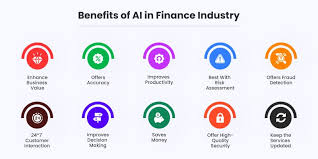
Artificial intelligence (AI) is rapidly gaining traction in the banking and finance sector, with generative AI (GenAI) emerging as a transformative force. Financial institutions are increasingly adopting AI technologies to automate processes, cut operational costs, and boost overall productivity, according to Sameer Gupta, North America Financial Services Organization Advanced Analytics Leader at EY. While traditional machine learning (ML) techniques are commonly used for fraud detection, loan approvals, and personalized marketing, banks are now advancing to incorporate more sophisticated technologies, including ML, natural language processing (NLP), and GenAI. Gupta notes that EY is observing a growing trend of banks using ML to enhance credit approvals, improve fraud detection, and refine marketing strategies, leading to greater efficiency and better decision-making. A recent survey by Gartner’s Jasleen Kaur Sindhu reveals that 58% of banking CIOs have either deployed or plan to deploy AI initiatives in 2024, with this number expected to rise to 77% by 2025. “This indicates not only the growing importance of AI but also its fundamental role in shaping how banks operate and deliver value to their customers,” Sindhu said. “AI is becoming essential to the success of banking institutions.” Here are five key benefits of AI applications in banking: Despite the benefits, concerns about AI in banking persist, particularly regarding data privacy, bias, and ethics. AI can inadvertently extract personal information and raise privacy issues. Regulatory challenges and the potential for AI systems to perpetuate biases are also major concerns. As AI technology evolves, banks are investing in robust governance frameworks, continuous monitoring, and adherence to ethical standards to address these risks. Looking ahead, AI is expected to revolutionize banking by delivering personalized services, enhancing customer interactions, and driving productivity. Deloitte forecasts that GenAI could boost productivity by up to 35% in the top 14 global investment banks, generating significant additional revenue per employee by 2026. Like Related Posts Who is Salesforce? Who is Salesforce? Here is their story in their own words. From our inception, we’ve proudly embraced the identity of Read more Salesforce Marketing Cloud Transactional Emails Salesforce Marketing Cloud Transactional Emails are immediate, automated, non-promotional messages crucial to business operations and customer satisfaction, such as order Read more Salesforce Unites Einstein Analytics with Financial CRM Salesforce has unveiled a comprehensive analytics solution tailored for wealth managers, home office professionals, and retail bankers, merging its Financial Read more AI-Driven Propensity Scores AI plays a crucial role in propensity score estimation as it can discern underlying patterns between treatments and confounding variables Read more

Read More
Data Governance for the AI Enterprise

Data Governance for the AI Enterprise

Salesforce Introduces Data Governance for the AI Enterprise Salesforce this month unveiled Data Governance for the AI Enterprise, a comprehensive suite of tools designed to help IT teams navigate the growing regulatory landscape surrounding generative AI. Why it matters: As governments worldwide work to implement stricter rules governing the use of AI, like the EU’s AI Act, data governance has become a top priority for businesses. According to Salesforce research, ensuring robust data security and governance is now the leading concern for Chief Data Officers. Cloud Data Security & Privacy SolutionsExplore the new suite: How Salesforce’s Data Governance for the AI Enterprise Can Help: Salesforce’s latest solution is designed to help companies proactively address both current and future regulations. Built on the Salesforce platform and integrated with Data Cloud, the suite offers advanced data management, enhanced security, and privacy features: Salesforce’s perspective:“Data governance is a top priority for every organization deploying AI, especially given the complexity of the regulatory landscape,” said Alice Steinglass, EVP and GM for Salesforce Platform. “Our Data Governance for the AI Enterprise suite equips businesses to tackle these challenges.” Customer success story:“Data encryption is essential to our data governance strategy,” said James Ferguson, Principal Security Architect at AWS. “With Salesforce’s flexible encryption solutions, we can maintain top-tier security while delivering innovative customer experiences.” Availability: For Data Cloud users: Like Related Posts Who is Salesforce? Who is Salesforce? Here is their story in their own words. From our inception, we’ve proudly embraced the identity of Read more Salesforce Marketing Cloud Transactional Emails Salesforce Marketing Cloud Transactional Emails are immediate, automated, non-promotional messages crucial to business operations and customer satisfaction, such as order Read more Salesforce Unites Einstein Analytics with Financial CRM Salesforce has unveiled a comprehensive analytics solution tailored for wealth managers, home office professionals, and retail bankers, merging its Financial Read more AI-Driven Propensity Scores AI plays a crucial role in propensity score estimation as it can discern underlying patterns between treatments and confounding variables Read more

Read More
New Technology Risks

New Technology Risks

Organizations have always needed to manage the risks that come with adopting new technologies, and implementing artificial intelligence (AI) is no different. Many of the risks associated with AI are similar to those encountered with any new technology: poor alignment with business goals, insufficient skills to support the initiatives, and a lack of organizational buy-in. To address these challenges, executives should rely on best practices that have guided the successful adoption of other technologies, according to management consultants and AI experts. When it comes to AI, this includes: However, AI presents unique risks that executives must recognize and address proactively. Below are 15 areas of risk that organizations may encounter as they implement and use AI technologies: Managing AI Risks While the risks associated with AI cannot be entirely eliminated, they can be managed. Organizations must first recognize and understand these risks and then implement policies to mitigate them. This includes ensuring high-quality data for AI training, testing for biases, and continuous monitoring of AI systems to catch unintended consequences. Ethical frameworks are also crucial to ensure AI systems produce fair, transparent, and unbiased results. Involving the board and C-suite in AI governance is essential, as managing AI risk is not just an IT issue but a broader organizational challenge. Like Related Posts Who is Salesforce? Who is Salesforce? Here is their story in their own words. From our inception, we’ve proudly embraced the identity of Read more Salesforce Marketing Cloud Transactional Emails Salesforce Marketing Cloud Transactional Emails are immediate, automated, non-promotional messages crucial to business operations and customer satisfaction, such as order Read more Salesforce Unites Einstein Analytics with Financial CRM Salesforce has unveiled a comprehensive analytics solution tailored for wealth managers, home office professionals, and retail bankers, merging its Financial Read more AI-Driven Propensity Scores AI plays a crucial role in propensity score estimation as it can discern underlying patterns between treatments and confounding variables Read more

Read More
Future of Customer Service

Future of Customer Service

The Future of Customer Service Is Here—And It’s Smarter Than Ever Salesforce, the global leader in CRM, has just supercharged its Service Cloud with groundbreaking AI-powered updates. These aren’t just minor tweaks—they’re game-changing innovations designed to transform how businesses understand, engage with, and delight their customers. With new features like Einstein Conversation Mining, Generative AI Survey Summarization, and Knowledge-Powered AI, Salesforce is empowering companies to: ✔ Boost customer satisfaction with hyper-personalized interactions✔ Increase agent productivity through AI-driven insights✔ Drive revenue growth by resolving issues faster and smarter Curious how? Let’s dive into Salesforce’s cutting-edge conversational AI and explore how these tools revolutionize customer service. Salesforce Service Cloud: The Ultimate Customer Service Hub Service Cloud is a cloud-based customer service platform that helps businesses streamline support, strengthen relationships, and deliver exceptional experiences. Key features include: 🔹 Centralized Case Management – Track and resolve all customer queries in one place.🔹 Omnichannel Support – Engage seamlessly across email, phone, chat, and social media.🔹 Self-Service Portal – Empower customers with FAQs, guides, and troubleshooting resources.🔹 Agent Productivity Tools – Automate workflows, generate quick responses, and flag critical issues.🔹 Advanced Analytics – Monitor performance, track resolutions, and measure customer satisfaction in real time. Now, with AI-powered conversational intelligence, Service Cloud is taking customer support to the next level. Meet Salesforce’s AI Dream Team Salesforce’s latest AI innovations unlock deeper customer insights and smarter service solutions. Here’s how each feature works: 1. Einstein Conversation Mining – Listen, Learn, Act This AI acts like a supercharged listening tool, analyzing thousands of customer interactions (calls, emails, chats) to uncover hidden trends. It helps businesses: ✅ Spot frustrations early – Proactively address issues before they escalate.✅ Personalize experiences – Tailor responses based on individual customer needs. 2. Generative AI Survey Summarization – Turn Feedback into Action No more sifting through endless survey responses. This feature instantly summarizes open-ended feedback, delivering key insights like: ✅ Emerging customer sentiment trends – Know what’s working (and what’s not).✅ Hyper-targeted marketing – Refine campaigns using real customer feedback. 3. Knowledge-Powered AI – Smarter Support, Faster Resolutions Imagine an AI assistant whispering real-time solutions to your agents. This tool: ✅ Recommends relevant knowledge articles during live chats to speed up resolutions.✅ Auto-generates new knowledge base content from customer conversations. How AI Supercharges Your Support Team Salesforce’s conversational intelligence doesn’t just help customers—it empowers agents to work smarter and faster. Here’s how: 🔸 360° Customer Insights – Agents get full context from past interactions (emails, calls, chats) for personalized service.🔸 Instant Knowledge Access – AI surfaces relevant guides and solutions mid-conversation, cutting resolution time.🔸 Automated Issue Detection – AI identifies common problems and suggests fixes, freeing agents for complex cases.🔸 Data-Driven Coaching – Analyzes agent performance to highlight strengths and areas for improvement.🔸 Proactive Support – Detects trends and predicts issues before customers even complain. The Bottom Line: Smarter Service = Happier Customers + Faster Growth With Salesforce’s AI-powered Service Cloud, businesses can: 🚀 Resolve issues faster with AI-guided insights.💡 Personalize every interaction for deeper customer connections.📈 Boost efficiency and revenue by empowering agents with real-time intelligence. The future of customer service isn’t just automated—it’s intelligent, proactive, and customer-obsessed. Ready to Transform Your Customer Support? Let’s Talk! Like Related Posts Who is Salesforce? Who is Salesforce? Here is their story in their own words. From our inception, we’ve proudly embraced the identity of Read more Salesforce Marketing Cloud Transactional Emails Salesforce Marketing Cloud Transactional Emails are immediate, automated, non-promotional messages crucial to business operations and customer satisfaction, such as order Read more Salesforce Unites Einstein Analytics with Financial CRM Salesforce has unveiled a comprehensive analytics solution tailored for wealth managers, home office professionals, and retail bankers, merging its Financial Read more AI-Driven Propensity Scores AI plays a crucial role in propensity score estimation as it can discern underlying patterns between treatments and confounding variables Read more

Read More
Exploring Emerging LLM

Exploring Emerging LLM

Exploring Emerging LLM Agent Types and Architectures The Evolution Beyond ReAct AgentsThe shortcomings of first-generation ReAct agents have paved the way for a new era of LLM agents, bringing innovative architectures and possibilities. In 2024, agents have taken center stage in the AI landscape. Companies globally are developing chatbot agents, tools like MultiOn are bridging agents to external websites, and frameworks like LangGraph and LlamaIndex Workflows are helping developers build more structured, capable agents. However, despite their rising popularity within the AI community, agents are yet to see widespread adoption among consumers or enterprises. This leaves businesses wondering: How do we navigate these emerging frameworks and architectures? Which tools should we leverage for our next application? Having recently developed a sophisticated agent as a product copilot, we share key insights to guide you through the evolving agent ecosystem. What Are LLM-Based Agents? At their core, LLM-based agents are software systems designed to execute complex tasks by chaining together multiple processing steps, including LLM calls. These agents: The Rise and Fall of ReAct Agents ReAct (reason, act) agents marked the first wave of LLM-powered tools. Promising broad functionality through abstraction, they fell short due to their limited utility and overgeneralized design. These challenges spurred the emergence of second-generation agents, emphasizing structure and specificity. The Second Generation: Structured, Scalable Agents Modern agents are defined by smaller solution spaces, offering narrower but more reliable capabilities. Instead of open-ended design, these agents map out defined paths for actions, improving precision and performance. Key characteristics of second-gen agents include: Common Agent Architectures Agent Development Frameworks Several frameworks are now available to simplify and streamline agent development: While frameworks can impose best practices and tooling, they may introduce limitations for highly complex applications. Many developers still prefer code-driven solutions for greater control. Should You Build an Agent? Before investing in agent development, consider these criteria: If you answered “yes,” an agent may be a suitable choice. Challenges and Solutions in Agent Development Common Issues: Strategies to Address Challenges: Conclusion The generative AI landscape is brimming with new frameworks and fervent innovation. Before diving into development, evaluate your application needs and consider whether agent frameworks align with your objectives. By thoughtfully assessing the tools and architectures available, you can create agents that deliver measurable value while avoiding unnecessary complexity. Like Related Posts Who is Salesforce? Who is Salesforce? Here is their story in their own words. From our inception, we’ve proudly embraced the identity of Read more Salesforce Unites Einstein Analytics with Financial CRM Salesforce has unveiled a comprehensive analytics solution tailored for wealth managers, home office professionals, and retail bankers, merging its Financial Read more AI-Driven Propensity Scores AI plays a crucial role in propensity score estimation as it can discern underlying patterns between treatments and confounding variables Read more Tectonic’s Successful Salesforce Track Record Salesforce Technology Services Integrator – Tectonic has successfully delivered Salesforce in a variety of industries including Public Sector, Hospitality, Manufacturing, Read more

Read More
Generative ai energy consumption

Growing Energy Consumption in Generative AI

Growing Energy Consumption in Generative AI, but ROI Impact Remains Unclear The rising energy costs associated with generative AI aren’t always central in enterprise financial considerations, yet experts suggest IT leaders should take note. Building a business case for generative AI involves both obvious and hidden expenses. Licensing fees for large language models (LLMs) and SaaS subscriptions are visible expenses, but less apparent costs include data preparation, cloud infrastructure upgrades, and managing organizational change. Growing Energy Consumption in Generative AI. One under-the-radar cost is the energy required by generative AI. Training LLMs demands vast computing power, and even routine AI tasks like answering user queries or generating images consume energy. These intensive processes require robust cooling systems in data centers, adding to energy use. While energy costs haven’t been a focus for GenAI adopters, growing awareness has prompted the International Energy Agency (IEA) to predict a doubling of data center electricity consumption by 2026, attributing much of the increase to AI. Goldman Sachs echoed these concerns, projecting data center power consumption to more than double by 2030. For now, generative AI’s anticipated benefits outweigh energy cost concerns for most enterprises, with hyperscalers like Google bearing the brunt of these costs. Google recently reported a 13% increase in greenhouse gas emissions, citing AI as a major contributor and suggesting that reducing emissions might become more challenging with AI’s continued growth. Growing Energy Consumption in Generative AI While not a barrier to adoption, energy costs play into generative AI’s long-term viability, noted Scott Likens, global AI engineering leader at PwC, emphasizing that “there’s energy being used — you don’t take it for granted.” Energy Costs and Enterprise Adoption Generative AI users might not see a line item for energy costs, yet these are embedded in fees. Ryan Gross of Caylent points out that the costs are mainly tied to model training and inferencing, with each model query, though individually minor, adding up over time. These expenses are often spread across the customer base, as companies pay for generative AI access through a licensing model. A PwC sustainability study showed that GenAI power costs, particularly from model training, are distributed among licensees. Token-based pricing for LLM usage also reflects inferencing costs, though these charges have decreased. Likens noted that the largest expenses still come from infrastructure and data management rather than energy. Potential Efficiency Gains Though energy isn’t a primary consideration, enterprises could reduce consumption indirectly through technological advancements. Newer, more cost-efficient models like OpenAI’s GPT-4o mini are 60% less expensive per token than prior versions, enabling organizations to deploy GenAI on a larger scale while keeping costs lower. Small, fine-tuned models can be used to address latency and lower energy consumption, part of a “multimodel” approach that can provide different accuracy and latency levels with varying energy demands. Agentic AI also offers opportunities for cost and energy savings. By breaking down tasks and routing them through specialized models, companies can minimize latency and reduce power usage. According to Likens, using agentic architecture could cut costs and consumption, particularly when tasks are routed to more efficient models. Rising Data Center Energy Needs While enterprises may feel shielded from direct energy costs, data centers bear the growing power demand. Cooling solutions are evolving, with liquid cooling systems becoming more prevalent for AI workloads. As data centers face the “AI growth cycle,” the demand for energy-efficient cooling solutions has fueled a resurgence in thermal management investment. Liquid cooling, being more efficient than air cooling, is gaining traction due to the power demands of AI and high-performance computing. IDTechEx projects that data center liquid cooling revenue could exceed $50 billion by 2035. Meanwhile, data centers are exploring nuclear power, with AWS, Google, and Microsoft among those considering nuclear energy as a sustainable solution to meet AI’s power demands. Future ROI Considerations While enterprises remain shielded from the full energy costs of generative AI, careful model selection and architectural choices could help curb consumption. PwC, for instance, factors in the “carbon impact” as part of its GenAI deployment strategy, recognizing that energy considerations are now a part of the generative AI value proposition. As organizations increasingly factor sustainability into their tech decisions, energy efficiency might soon play a larger role in generative AI ROI calculations. Like Related Posts Who is Salesforce? Who is Salesforce? Here is their story in their own words. From our inception, we’ve proudly embraced the identity of Read more Salesforce Unites Einstein Analytics with Financial CRM Salesforce has unveiled a comprehensive analytics solution tailored for wealth managers, home office professionals, and retail bankers, merging its Financial Read more AI-Driven Propensity Scores AI plays a crucial role in propensity score estimation as it can discern underlying patterns between treatments and confounding variables Read more Tectonic’s Successful Salesforce Track Record Salesforce Technology Services Integrator – Tectonic has successfully delivered Salesforce in a variety of industries including Public Sector, Hospitality, Manufacturing, Read more

Read More
Salesforce AI Evolves with the Generative AI Landscape

Salesforce AI Evolves with the Generative AI Landscape

Salesforce AI: Powering Customer Relationship Management Salesforce is a leading CRM solution that has long delivered cutting-edge cloud technologies to manage customer relationships effectively. In recent months, the platform has further advanced with the integration of generative AI and AI-powered features, primarily through its AI engine, Einstein. Salesforce AI Evolves with the Generative AI Landscape. To explore how AI operates within the Salesforce ecosystem and how various business teams can leverage these innovations, this guide delves into Salesforce’s AI capabilities, products, and features. Salesforce AI: Transforming CRM Capabilities Salesforce remains a top choice in the CRM software market, offering one of the most comprehensive solutions for managing relationships across departments, industries, and initiatives. Through dedicated cloud platforms, Salesforce enables teams to oversee marketing, sales, customer service, e-commerce, and more, with tools focused on delivering enhanced customer experiences supported by powerful data analytics. With the introduction of generative AI, Salesforce has significantly elevated its native automation, workflow management, data analytics, and assistive capabilities for customer lifecycle management. Einstein Copilot exemplifies this innovation, aiding internal users with tasks such as outreach, analysis, and improving external user experiences. What is Salesforce Einstein? Salesforce Einstein is an AI-driven suite of tools integrated natively into various Salesforce Cloud applications, including Sales Cloud, Marketing Cloud, Service Cloud, and Commerce Cloud. It also operates through assistive technologies like Einstein Copilot. Einstein is built on a multitenant platform and incorporates numerous automated machine learning features to unify organizational data with CRM capabilities. Designed to make intelligent, data-driven decisions, Einstein requires no additional installation, offering a seamless user experience when paired with a compatible subscription plan. 7 Key Features of Salesforce Einstein 7 Applications of Salesforce Einstein Future Trends in Salesforce AI Bottom Line: Salesforce AI Evolves with the Generative AI Landscape Salesforce continues to enhance its AI-powered features, keeping pace with advancements in generative and predictive AI. Whether new to the platform or a seasoned user, Salesforce offers innovative, AI-centric solutions to streamline customer relationship management and business operations. Like1 Related Posts Who is Salesforce? Who is Salesforce? Here is their story in their own words. From our inception, we’ve proudly embraced the identity of Read more Salesforce Marketing Cloud Transactional Emails Salesforce Marketing Cloud Transactional Emails are immediate, automated, non-promotional messages crucial to business operations and customer satisfaction, such as order Read more Salesforce Unites Einstein Analytics with Financial CRM Salesforce has unveiled a comprehensive analytics solution tailored for wealth managers, home office professionals, and retail bankers, merging its Financial Read more AI-Driven Propensity Scores AI plays a crucial role in propensity score estimation as it can discern underlying patterns between treatments and confounding variables Read more
Read More
A Company in Transition

A Company in Transition

OpenAI Restructures: Increased Flexibility, But Raises Concerns OpenAI’s decision to restructure into a for-profit entity offers more freedom for the company and its investors but raises questions about its commitment to ethical AI development. Founded in 2015 as a nonprofit, OpenAI transitioned to a hybrid model in 2019 with the creation of a for-profit subsidiary. Now, its restructuring, widely reported this week, signals a shift where the nonprofit arm will no longer influence the day-to-day operations of the for-profit side. CEO Sam Altman is set to receive equity in the newly restructured company, which will operate as a benefit corporation (B Corp), similar to competitors like Anthropic and Sama. A Company in Transition This move comes on the heels of a turbulent year. OpenAI’s board initially voted to remove Altman over concerns about transparency, but later rehired him after significant backlash and the resignation of several board members. The company has seen a number of high-profile departures since, including co-founder Ilya Sutskever, who left in May to start Safe Superintelligence (SSI), an AI safety-focused venture that recently secured $1 billion in funding. This week, CTO Mira Murati, along with key research leaders Bob McGrew and Barret Zoph, also announced their departures. OpenAI’s restructuring also coincides with an anticipated multi-billion-dollar investment round involving major players such as Nvidia, Apple, and Microsoft, potentially pushing the company’s valuation to as high as $150 billion. Complex But Expected Move According to Michael Bennett, AI policy advisor at Northeastern University, the restructuring isn’t surprising given OpenAI’s rapid growth and increasingly complex structure. “Considering OpenAI’s valuation, it’s understandable that the company would simplify its governance to better align with investor priorities,” said Bennett. The transition to a benefit corporation signals a shift towards prioritizing shareholder interests, but it also raises concerns about whether OpenAI will maintain its ethical obligations. “By moving away from its nonprofit roots, OpenAI may scale back its commitment to ethical AI,” Bennett noted. Ethical and Safety Concerns OpenAI has faced scrutiny over its rapid deployment of generative AI models, including its release of ChatGPT in November 2022. Critics, including Elon Musk, have accused the company of failing to be transparent about the data and methods it uses to train its models. Musk, a co-founder of OpenAI, even filed a lawsuit alleging breach of contract. Concerns persist that the restructuring could lead to less ethical oversight, particularly in preventing issues like biased outputs, hallucinations, and broader societal harm from AI. Despite the potential risks, Bennett acknowledged that the company would have greater operational freedom. “They will likely move faster and with greater focus on what benefits their shareholders,” he said. This could come at the expense of the ethical commitments OpenAI previously emphasized when it was a nonprofit. Governance and Regulation Some industry voices, however, argue that OpenAI’s structure shouldn’t dictate its commitment to ethical AI. Veera Siivonen, co-founder and chief commercial officer of AI governance vendor Saidot, emphasized the role of regulation in ensuring responsible AI development. “Major players like Anthropic, Cohere, and tech giants such as Google and Meta are all for-profit entities,” Siivonen said. “It’s unfair to expect OpenAI to operate under a nonprofit model when others in the industry aren’t bound by the same restrictions.” Siivonen also pointed to OpenAI’s participation in global AI governance initiatives. The company recently signed the European Union AI Pact, a voluntary agreement to adhere to the principles of the EU’s AI Act, signaling its commitment to safety and ethics. Challenges for Enterprises The restructuring raises potential concerns for enterprises relying on OpenAI’s technology, said Dion Hinchcliffe, an analyst with Futurum Group. OpenAI may be able to innovate faster under its new structure, but the reduced influence of nonprofit oversight could make some companies question the vendor’s long-term commitment to safety. Hinchcliffe noted that the departure of key staff could signal a shift away from prioritizing AI safety, potentially prompting enterprises to reconsider their trust in OpenAI. New Developments Amid Restructuring Despite the ongoing changes, OpenAI continues to roll out new technologies. The company recently introduced a new moderation model, “omni-moderation-latest,” built on GPT-4o. This model, available through the Moderation API, enables developers to flag harmful content in both text and image outputs. A Company in Transition As OpenAI navigates its restructuring, balancing rapid innovation with maintaining ethical standards will be crucial to sustaining enterprise trust and market leadership. Like Related Posts Who is Salesforce? Who is Salesforce? Here is their story in their own words. From our inception, we’ve proudly embraced the identity of Read more Salesforce Unites Einstein Analytics with Financial CRM Salesforce has unveiled a comprehensive analytics solution tailored for wealth managers, home office professionals, and retail bankers, merging its Financial Read more AI-Driven Propensity Scores AI plays a crucial role in propensity score estimation as it can discern underlying patterns between treatments and confounding variables Read more Tectonic’s Successful Salesforce Track Record Salesforce Technology Services Integrator – Tectonic has successfully delivered Salesforce in a variety of industries including Public Sector, Hospitality, Manufacturing, Read more

Read More
AI Agents Connect Tool Calling and Reasoning

AI Agents Connect Tool Calling and Reasoning

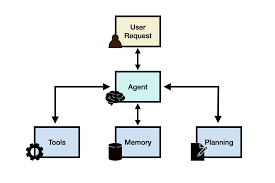
AI Agents: Bridging Tool Calling and Reasoning in Generative AI Exploring Problem Solving and Tool-Driven Decision Making in AI Introduction: The Emergence of Agentic AI Recent advancements in libraries and low-code platforms have simplified the creation of AI agents, often referred to as digital workers. Tool calling stands out as a key capability that enhances the “agentic” nature of Generative AI models, enabling them to move beyond mere conversational tasks. By executing tools (functions), these agents can act on your behalf and tackle intricate, multi-step problems requiring sound decision-making and interaction with diverse external data sources. This insight explores the role of reasoning in tool calling, examines the challenges associated with tool usage, discusses common evaluation methods for tool-calling proficiency, and provides examples of how various models and agents engage with tools. Reasoning as a Means of Problem-Solving Successful agents rely on two fundamental expressions of reasoning: reasoning through evaluation and planning, and reasoning through tool use. While both reasoning expressions are vital, they don’t always need to be combined to yield powerful solutions. For instance, OpenAI’s new o1 model excels in reasoning through evaluation and planning, having been trained to utilize chain of thought effectively. This has notably enhanced its ability to address complex challenges, achieving human PhD-level accuracy on benchmarks like GPQA across physics, biology, and chemistry, and ranking in the 86th-93rd percentile on Codeforces contests. However, the o1 model currently lacks explicit tool calling capabilities. Conversely, many models are specifically fine-tuned for reasoning through tool use, allowing them to generate function calls and interact with APIs effectively. These models focus on executing the right tool at the right moment but may not evaluate their results as thoroughly as the o1 model. The Berkeley Function Calling Leaderboard (BFCL) serves as an excellent resource for comparing the performance of various models on tool-calling tasks and provides an evaluation suite for assessing fine-tuned models against challenging scenarios. The recently released BFCL v3 now includes multi-step, multi-turn function calling, raising the standards for tool-based reasoning tasks. Both reasoning types are powerful in their own right, and their combination holds the potential to develop agents that can effectively deconstruct complex tasks and autonomously interact with their environments. For more insights into AI agent architectures for reasoning, planning, and tool calling, check out my team’s survey paper on ArXiv. Challenges in Tool Calling: Navigating Complex Agent Behaviors Creating robust and reliable agents necessitates overcoming various challenges. In tackling complex problems, an agent often must juggle multiple tasks simultaneously, including planning, timely tool interactions, accurate formatting of tool calls, retaining outputs from prior steps, avoiding repetitive loops, and adhering to guidelines to safeguard the system against jailbreaks and prompt injections. Such demands can easily overwhelm a single agent, leading to a trend where what appears to an end user as a single agent is actually a coordinated effort of multiple agents and prompts working in unison to divide and conquer the task. This division enables tasks to be segmented and addressed concurrently by distinct models and agents, each tailored to tackle specific components of the problem. This is where models with exceptional tool-calling capabilities come into play. While tool calling is a potent method for empowering productive agents, it introduces its own set of challenges. Agents must grasp the available tools, choose the appropriate one from a potentially similar set, accurately format the inputs, execute calls in the correct sequence, and potentially integrate feedback or instructions from other agents or humans. Many models are fine-tuned specifically for tool calling, allowing them to specialize in selecting functions accurately at the right time. Key considerations when fine-tuning a model for tool calling include: Common Benchmarks for Evaluating Tool Calling As tool usage in language models becomes increasingly significant, numerous datasets have emerged to facilitate the evaluation and enhancement of model tool-calling capabilities. Two prominent benchmarks include the Berkeley Function Calling Leaderboard and the Nexus Function Calling Benchmark, both utilized by Meta to assess the performance of their Llama 3.1 model series. The recent ToolACE paper illustrates how agents can generate a diverse dataset for fine-tuning and evaluating model tool use. Here’s a closer look at each benchmark: Each of these benchmarks enhances our ability to evaluate model reasoning through tool calling. They reflect a growing trend toward developing specialized models for specific tasks and extending the capabilities of LLMs to interact with the real world. Practical Applications of Tool Calling If you’re interested in observing tool calling in action, here are some examples to consider, categorized by ease of use, from simple built-in tools to utilizing fine-tuned models and agents with tool-calling capabilities. While the built-in web search feature is convenient, most applications require defining custom tools that can be integrated into your model workflows. This leads us to the next complexity level. To observe how models articulate tool calls, you can use the Databricks Playground. For example, select the Llama 3.1 405B model and grant access to sample tools like get_distance_between_locations and get_current_weather. When prompted with, “I am going on a trip from LA to New York. How far are these two cities? And what’s the weather like in New York? I want to be prepared for when I get there,” the model will decide which tools to call and what parameters to provide for an effective response. In this scenario, the model suggests two tool calls. Since the model cannot execute the tools, the user must input a sample result to simulate. Suppose you employ a model fine-tuned on the Berkeley Function Calling Leaderboard dataset. When prompted, “How many times has the word ‘freedom’ appeared in the entire works of Shakespeare?” the model will successfully retrieve and return the answer, executing the required tool calls without the user needing to define any input or manage the output format. Such models handle multi-turn interactions adeptly, processing past user messages, managing context, and generating coherent, task-specific outputs. As AI agents evolve to encompass advanced reasoning and problem-solving capabilities, they will become increasingly adept at managing

Read More
gettectonic.com