
Generative AI Archives - gettectonic.com - Page 26
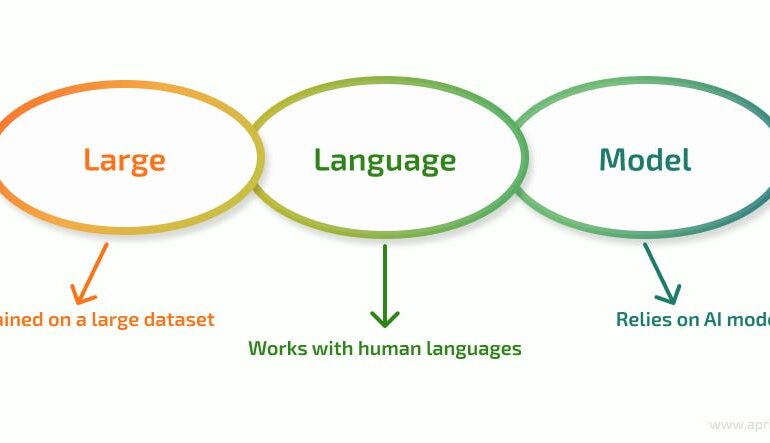
Adopt a Large Language Model

Adopt a Large Language Model

In 2023, Algo Communications, a Canadian company, faced a significant challenge. With rapid growth on the horizon, the company struggled to train customer service representatives (CSRs) quickly enough to keep pace. To address this, Algo turned to an innovative solution: generative AI. They needed to Adopt a Large Language Model. Algo adopted a large language model (LLM) to accelerate the onboarding of new CSRs. However, to ensure CSRs could accurately and fluently respond to complex customer queries, Algo needed more than a generic, off-the-shelf LLM. These models, typically trained on public internet data, lack the specific business context required for accurate answers. This led Algo to use retrieval-augmented generation, or RAG. Many people have already used generative AI models like OpenAI’s ChatGPT or Google’s Gemini (formerly Bard) for tasks like writing emails or crafting social media posts. However, achieving the best results can be challenging without mastering the art of crafting precise prompts. An AI model is only as effective as the data it’s trained on. For optimal performance, it needs accurate, contextual information rather than generic data. Off-the-shelf LLMs often lack up-to-date, reliable access to your specific data and customer relationships. RAG addresses this by embedding the most current and relevant proprietary data directly into LLM prompts. RAG isn’t limited to structured data like spreadsheets or relational databases. It can retrieve all types of data, including unstructured data such as emails, PDFs, chat logs, and social media posts, enhancing the AI’s output quality. How RAG Works RAG enables companies to retrieve and utilize data from various internal sources for improved AI results. By using your own trusted data, RAG reduces or eliminates hallucinations and incorrect outputs, ensuring responses are relevant and accurate. This process involves a specialized database called a vector database, which stores data in a numerical format suitable for AI and retrieves it when prompted. “RAG can’t do its job without the vector database doing its job,” said Ryan Schellack, Director of AI Product Marketing at Salesforce. “The two go hand in hand. Supporting retrieval-augmented generation means supporting a vector store and a machine-learning search mechanism designed for that data.” RAG, combined with a vector database, significantly enhances LLM outputs. However, users still need to understand the basics of crafting clear prompts. Faster Responses to Complex Questions In December 2023, Algo Communications began testing RAG with a few CSRs using a small sample of about 10% of its product base. They incorporated vast amounts of unstructured data, including chat logs and two years of email history, into their vector database. After about two months, CSRs became comfortable with the tool, leading to a wider rollout. In just two months, Algo’s customer service team improved case resolution times by 67%, allowing them to handle new inquiries more efficiently. “Exploring RAG helped us understand we could integrate much more data,” said Ryan Zoehner, Vice President of Commercial Operations at Algo Communications. “It enabled us to provide detailed, technically savvy responses, enhancing customer confidence.” RAG now touches 60% of Algo’s products and continues to expand. The company is continually adding new chat logs and conversations to the database, further enriching the AI’s contextual understanding. This approach has halved onboarding time, supporting Algo’s rapid growth. “RAG is making us more efficient,” Zoehner said. “It enhances job satisfaction and speeds up onboarding. Unlike other LLM efforts, RAG lets us maintain our brand identity and company ethos.” RAG has also allowed Algo’s CSRs to focus more on personalizing customer interactions. “It allows our team to ensure responses resonate well,” Zoehner said. “This human touch aligns with our brand and ensures quality across all interactions.” Write Better Prompts – Adopt a Large Language Model If you want to learn how to craft effective generative AI prompts or use Salesforce’s Prompt Builder, check out Trailhead, Salesforce’s free online learning platform. Start learning Trail: Get Started with Prompts and Prompt Builder Like Related Posts Who is Salesforce? Who is Salesforce? Here is their story in their own words. From our inception, we’ve proudly embraced the identity of Read more Salesforce Marketing Cloud Transactional Emails Salesforce Marketing Cloud Transactional Emails are immediate, automated, non-promotional messages crucial to business operations and customer satisfaction, such as order Read more Salesforce Unites Einstein Analytics with Financial CRM Salesforce has unveiled a comprehensive analytics solution tailored for wealth managers, home office professionals, and retail bankers, merging its Financial Read more AI-Driven Propensity Scores AI plays a crucial role in propensity score estimation as it can discern underlying patterns between treatments and confounding variables Read more


Read More
Salesforce Customers Take On AI Hallucinations

Salesforce Customers Take On AI Hallucinations

Earlier this month, CRM specialists Salesforce hosted the latest edition of its World Tour Essentials event in Johannesburg. This event provided Salesforce with an opportunity to engage more personally with businesses in the region and showcase the AI-powered solutions it is developing, including the Einstein 1 platform. Now Salesforce Customers Take On AI Hallucinations. Einstein 1 is designed for AI-focused enterprises, leveraging existing CRM applications from Salesforce, along with data cloud and AI-powered tools. This platform aims to address key business challenges, one of which is the issue of generative AI hallucinations—where AI generates false information due to data gaps. A notable example of this issue was seen with Google’s Gemini, which produced bizarre and potentially harmful suggestions, like advising users to put epoxy glue on pizza. This occurred because the AI lacked sufficient data to generate accurate responses. While some companies continue to use the internet to train their platforms to avoid such hallucinations, businesses, particularly in the CRM field, cannot afford these inaccuracies. Salesforce has introduced a tool called Einstein 1 Studio to combat this problem. This tool allows business engineers and developers to create prompts and refine the overall experience of conversational platforms like Slack AI. During a media roundtable at the World Tour Essentials Johannesburg event, Linda Saunders, Salesforce’s Director of Solutions Engineering Africa, explained how Einstein 1 Studio helps mitigate AI hallucinations. “If you ask Einstein an ungrounded prompt like, ‘Please summarize the case for me,’ it may not know which case you’re referring to. By pulling metadata elements into the prompt and using certain word triggers, we can provide a much richer and more accurate AI response,” Saunders highlighted. She added that once a setup is built, it can be activated across multiple use cases, creating a consistent and efficient deployment process. Saunders also emphasized the importance of the trust layer within Einstein 1, which includes data grounding, audit trails, data masking, and mechanisms to prevent hallucinations. “The trust layer is integral to Einstein 1. Whether you build it or use the out-of-the-box capabilities, the trust layer ensures grounded data, audit trails, and other critical features,” Saunders explained. She also pointed out that Einstein 1’s building tools can address localization and tailor experiences to specific markets, like South Africa. “South African customers have unique needs compared to those in the US. This tool allows for prompt customization to better suit local business requirements,” Saunders noted. The configuration engine on top of Copilot functionality allows businesses to refine prompt engineering, ensuring that AI interactions are more tailored and effective. As AI integration becomes more widespread in business operations, addressing issues like AI hallucinations is crucial. According to Salesforce, Einstein 1 is designed with these considerations in mind, ensuring a reliable and accurate AI experience. Like1 Related Posts Who is Salesforce? Who is Salesforce? Here is their story in their own words. From our inception, we’ve proudly embraced the identity of Read more Salesforce Marketing Cloud Transactional Emails Salesforce Marketing Cloud Transactional Emails are immediate, automated, non-promotional messages crucial to business operations and customer satisfaction, such as order Read more Salesforce Unites Einstein Analytics with Financial CRM Salesforce has unveiled a comprehensive analytics solution tailored for wealth managers, home office professionals, and retail bankers, merging its Financial Read more AI-Driven Propensity Scores AI plays a crucial role in propensity score estimation as it can discern underlying patterns between treatments and confounding variables Read more

Read More
Can Tech Companies Use Generative AI for Good?

Can Tech Companies Use Generative AI for Good?

Responsible AI Innovation: Benefits and Strategies Can Tech Companies Use Generative AI for Good?. As generative AI reshapes our world, the conversation has largely focused on its risks and downsides. However, Suzanne DiBianca, EVP and Chief Impact Officer at Salesforce, highlights the often-overlooked benefits that AI can bring to society and the fight against climate change. Optimizing AI for Sustainability Salesforce is driven by a mission to reduce emissions, accelerate climate solutions, and advance inclusivity. According to DiBianca, with proper guardrails and ethical development, AI can significantly aid in achieving these goals. Key Strategies for Sustainable AI Development: Best Practices for Reducing Carbon Emissions in Software Development Technologists must follow best practices such as identifying and shutting down underused systems, moving storage to more energy-efficient options, and developing energy-efficient software code. Tracking Climate Impact Improving the tracking of climate impact involves simplifying reporting processes and investing in emissions-tracking solutions. DiBianca advises starting with a clear climate action plan, conducting energy usage audits, prioritizing renewable energy, and collaborating with suppliers to collect emissions data. Accelerating Climate Innovation Through AI Investments DiBianca emphasizes that reducing global emissions and limiting warming to 1.5°C requires urgent innovation and investment. Salesforce invests in companies using AI to address climate challenges, such as PanoAI, which deploys AI to detect and respond to wildfires. Driving Sustainability and Equity with AI To ensure AI benefits all, it is essential to integrate sustainability into the business core. Salesforce’s Sustainable AI Policy Principles guide the company’s efforts in minimizing environmental impact and promoting climate innovation. Upholding Responsibilities As a technology leader, Salesforce is committed to shaping AI’s impact on the world responsibly. DiBianca stresses the importance of a dual commitment to the planet and global communities, fostering a legacy of responsible AI innovation for future generations. Like Related Posts Who is Salesforce? Who is Salesforce? Here is their story in their own words. From our inception, we’ve proudly embraced the identity of Read more Salesforce Marketing Cloud Transactional Emails Salesforce Marketing Cloud Transactional Emails are immediate, automated, non-promotional messages crucial to business operations and customer satisfaction, such as order Read more Salesforce Unites Einstein Analytics with Financial CRM Salesforce has unveiled a comprehensive analytics solution tailored for wealth managers, home office professionals, and retail bankers, merging its Financial Read more AI-Driven Propensity Scores AI plays a crucial role in propensity score estimation as it can discern underlying patterns between treatments and confounding variables Read more

Read More
SMPL

SMPL

SMPL: A Virtual “Robot” for Embodied AI Embodied AI isn’t just for physical robots; it’s equally vital for virtual humans. Surprisingly, there’s a significant overlap between training robots to move and teaching avatars to behave like real people. Embodiment connects an AI agent‘s “brain” to a “body” that navigates and interacts with the world, whether real or virtual, grounding AI in a dynamic 3D environment. Skinned Multi Person Linear model is a realistic 3D model of the human body that is based on skinning and blend shapes and is learned from thousands of 3D body scans. Virtual Humans and SMPL The most common “body” for virtual humans is Skinned Multi Person Linear Model, a parametric 3D model encapsulating human shape and movement. SMPL represents body shape, pose, facial expressions, hand gestures, soft-tissue deformations, and more in about 100 numbers. This post explores why Skinned Multi Person Linear can be thought of as a “robot.” Virtual Humans as Robots The goal is to create virtual humans that behave like real ones, embodying AI that perceives, understands, plans, and executes actions to change its environment. In a recent talk at Stanford, I described virtual humans as “3D human foundation agents,” akin to robots. Replace the SMPL body with a humanoid robot and the virtual world with the real world, and the challenges are quite similar. Key Differences Between Virtual and Physical Robots However, virtual humans must move convincingly like real humans, which isn’t always necessary for physical robots. Another difference is physics; while real-world robots can’t ignore physics, virtual worlds can selectively model real-world physics, making training “SMPL robots” easier. Plus, SMPL never breaks down! SMPL as a Universal Humanoid SMPL serves as a “universal language” of behavior. At Meshcapade, we often call it a “secret decoder ring.” Various data forms like images, video, IMUs, 3D scans, or text can be encoded into SMPL format. This data can then be decoded back into the same formats or retargeted to new humanoid characters, such as game avatars using the Meshcapade UEFN plugin for Unreal or even physical robots. AMASS: A Warehouse of Human Behavior A first paper at Meshcapade was AMASS, the world’s largest collection of 3D human movement data in a unified format (SMPL-X). Modern AI requires large-scale data to learn human behavior, and most deep learning methods modeling human motion rely on AMASS for training data. Researchers mine AMASS to train diffusion models to generate human movement. Adding text labels (see BABEL) enables conditioning generative models of motion on text. With speech and gesture data (see EMAGE), full-body avatars can be driven purely by speech. AMASS continues to grow, aiming to catalog all human behaviors. Learning from Humans At Perceiving Systems and Meshcapade, we use data like AMASS to train virtual humans and robots. For example, OmiH2O uses AMASS to retarget SMPL to a humanoid robot, and reinforcement learning methods mimic human behavior using AMASS data. Methods like WHAM can estimate SMPL from video in 3D world coordinates, crucial for robotic applications. This allows robots to learn from video demonstrations encoded into SMPL format, using an encoder for input and a decoder for output retargeting. SMPL as the “Latent Space” In machine learning, encoder-decoder architectures encode data into a latent space, which is typically compact. SMPL, though not truly latent because its parameters are interpretable, serves as a compact representation of humans. It factors body shape from pose, modeling correlations with “pose corrective” blend shapes and using principal component analysis for data compression. Summary Embodiment is crucial for both physical robots and virtual humans. Viewing virtual humans as robots can benefit robotics. We consider SMPL a virtual robot, collecting human behavior data at scale, learning from it, and retargeting this behavior to other virtual or physical embodiments. SMPL acts as a “universal language” for human movement, translating data into and out of various forms of embodiment. Like Related Posts Who is Salesforce? Who is Salesforce? Here is their story in their own words. From our inception, we’ve proudly embraced the identity of Read more Salesforce Unites Einstein Analytics with Financial CRM Salesforce has unveiled a comprehensive analytics solution tailored for wealth managers, home office professionals, and retail bankers, merging its Financial Read more AI-Driven Propensity Scores AI plays a crucial role in propensity score estimation as it can discern underlying patterns between treatments and confounding variables Read more Tectonic’s Successful Salesforce Track Record Salesforce Technology Services Integrator – Tectonic has successfully delivered Salesforce in a variety of industries including Public Sector, Hospitality, Manufacturing, Read more
Read More
Cautionary AI Tale

A Cautionary AI Tale

Oliver Lovstrom, an AI student, wrote an interesting perspective on artificial intelligence, a cautionary AI tale, if you will. The Theory and Fairy Tale My first introduction to artificial intelligence was during high school when I began exploring its theories and captivating aspects. In 2018, as self-driving cars were gaining traction, I decided to create a simple autonomous vehicle for my final project. This project filled me with excitement and hope, spurring my continued interest and learning in AI. However, I had no idea that within a few years, AI would become significantly more advanced and accessible, reaching the masses through affordable robots. For instance, who could have imagined that just two years later, we would have access to incredible AI models like ChatGPT and Gemini, developed by tech giants? The Dark Side of Accessibility My concerns grew as I observed the surge in global cybersecurity issues driven by advanced language model-powered bots. Nowadays, it’s rare to go a day without hearing about some form of cybercrime somewhere in the world. A Brief Intro to AI for Beginners To understand the risks associated with AI, we must first comprehend what AI is and its inspiration: the human brain. In biology, I learned that the human brain consists of neurons, which have two main functions: Neurons communicate with sensory organs or other neurons, determining the signals they send through learning. Throughout our lives, we learn to associate different external stimuli (inputs) with sensory outputs, like emotions. Imagine returning to your childhood home. Walking in, you are immediately overwhelmed by nostalgia. This is a learned response, where the sensory input (the scene) passes through a network of billions of neurons, triggering an emotional output. Similarly, I began learning about artificial neural networks, which mimic this behavior in computers. Artificial Neural Networks Just as biological neurons communicate within our brains, artificial neural networks try to replicate this in computers. Each dot in the graph above represents an artificial neuron, all connected and communicating with one another. Sensory inputs, like a scene, enter the network, and the resulting output, such as an emotion, emerges from the network’s processing. A unique feature of these networks is their ability to learn. Initially, an untrained neural network might produce random outputs for a given input. However, with training, these networks learn to associate specific inputs with particular outputs, mirroring the learning process of the human brain. This capability can be leveraged to handle tedious tasks, but there are deeper implications to explore. The Wishing Well As AI technology advances, it begins to resemble a wishing well from a fairy tale—a tool that could fulfill any desire, for better or worse. In 2022, the release of ChatGPT and various generative AI tools astonished many. For the first time, people had free access to a system capable of generating coherent and contextually appropriate responses to almost any prompt. And this is just the beginning. Multimodal AI and the Next Step I explored multimodal AI, which allows the processing of data in different formats, such as text, images, audio, and possibly even physical actions. This development supports the “wishing well” hypothesis, but also revealed a darker side of AI. The Villains While a wishing well in fairy tales is associated with good intentions and moral outcomes, the reality of AI is more complex. The morality of AI usage depends on the people who wield it, and the potential for harm by a single bad actor is immense. The Big Actors and Bad Apples The control of AI technology is likely to be held by powerful entities, whether governments or private corporations. Speculating on their use of this technology can be unsettling. While we might hope AI acts as a deterrent, similar to nuclear weapons, AI’s invisibility and potential for silent harm make it particularly dangerous. We are already witnessing malicious uses of AI, from fake kidnappings to deepfakes, impacting everyone from ordinary people to politicians. As AI becomes more accessible, the risk of bad actors exploiting it grows. Even if AI maintains peace on a global scale, the issue of individuals causing harm remains—a few bad apples can spoil the bunch. Unexpected Actions and the Future AI systems today can perform unexpected actions, often through jailbreaking—manipulating models to give unintended information. While currently, the consequences might seem minor, they could escalate significantly in the future. AI does not follow predetermined rules but chooses the “best” path to achieve a goal, often learned independently from human oversight. This unpredictability, especially in multimodal models, is alarming. Consider an AI tasked with making pancakes. It might need money for ingredients and, determined by its learning, might resort to creating deepfakes for blackmail. This scenario, though seemingly absurd, highlights potential dangers as AI evolves with the growth of IoT, quantum computing, and big data, leading to superintelligent, self-managing systems. As AI surpasses human intelligence, more issues will emerge, potentially leading to a loss of control. Dr. Yildiz, an AI expert, highlighted these concerns in a story titled “Artificial Intelligence Does Not Concern Me, but Artificial Super-Intelligence Frightens Me.” Hope and Optimism Despite the fears surrounding AI, I remain hopeful. We are still in the early stages of this technology, providing ample time to course-correct. This can be achieved through recognizing the risks, fostering ethical AI systems, and raising a morally conscious new generation. Although I emphasized potential dangers, my intent is not to incite fear. Like previous industrial and digital revolutions, AI has the potential to greatly enhance our lives. I stay optimistic and continue my studies to contribute positively to the field. The takeaway from my story is that by using AI ethically and collaboratively, we can harness its power for positive change and a better future for everyone. This article by Oliver Lovstrom originally was published by Medium, here. Like Related Posts Who is Salesforce? Who is Salesforce? Here is their story in their own words. From our inception, we’ve proudly embraced the identity of Read more Salesforce Unites Einstein Analytics

Read More
AI for Marketing and Retail

AI for Marketing and Retail

Salesforce Expands AI Capabilities for Marketing and Retail with Einstein Copilot Salesforce is making waves in the marketing and retail sectors by enhancing its Einstein Copilot feature, bringing advanced AI tools even closer to its users. AI for Marketing and Retail. For those unfamiliar with Salesforce, it offers Einstein 1, a comprehensive platform integrating AI and machine learning across its various applications. Einstein Copilot, a part of this platform, functions as an AI-powered assistant designed to provide real-time assistance, automate tasks, and deliver contextual insights to boost productivity. New Additions: Einstein Copilot for Marketers and Merchants Salesforce has recently announced two exciting additions: Einstein Copilot for Marketers and Einstein Copilot for Merchants. Einstein Copilot for Marketers: Einstein Copilot for Merchants: Availability Einstein Copilot for Marketers is set to be generally available this summer, while Einstein Copilot for Merchants will enter the beta stage in the autumn. Leadership Insight “With the Einstein 1 Platform, we’re giving organizations the power to unify all of their data on one trusted platform,” said Ariel Kelman, President and CMO of Salesforce. “This is the key to getting results from generative AI that are actually useful in driving your business forward.” About Salesforce Founded in 1999, Salesforce is a cloud-based software company renowned as one of the best CRM software providers. With over 72,000 employees globally and an annual revenue of .49 billion, Salesforce continues to lead in innovation and customer satisfaction. Like Related Posts Who is Salesforce? Who is Salesforce? Here is their story in their own words. From our inception, we’ve proudly embraced the identity of Read more Salesforce Marketing Cloud Transactional Emails Salesforce Marketing Cloud Transactional Emails are immediate, automated, non-promotional messages crucial to business operations and customer satisfaction, such as order Read more Salesforce Unites Einstein Analytics with Financial CRM Salesforce has unveiled a comprehensive analytics solution tailored for wealth managers, home office professionals, and retail bankers, merging its Financial Read more AI-Driven Propensity Scores AI plays a crucial role in propensity score estimation as it can discern underlying patterns between treatments and confounding variables Read more

Read More
Machine-Augmented World

How Can AI Help Sales Enablement

Artificial intelligence (AI) plays a crucial role in enhancing sales enablement across various dimensions: Content Management: AI-powered sales enablement tools integrate seamlessly with CRM systems and marketing platforms, providing sales reps with instant access to relevant content. AI can assist in creating sales scripts, emails, and summaries, while also enabling efficient content search and retrieval. Coaching and Skill Development: AI analyzes sales activities to pinpoint areas where reps need coaching, offering real-time feedback after sales calls. It enables reps to record practice sessions for AI-driven assessment and scoring, fostering continuous improvement in sales techniques. Impact Analysis of Sales Content: AI evaluates the effectiveness of sales content, assessing its impact on advancing deals. This insight helps sales teams refine their content strategies to better align with customer needs and preferences. Performance Tracking: AI-driven platforms track key performance metrics such as conversion rates, win rates, and sales cycle duration. This data-driven approach enables sales leaders to evaluate the effectiveness of sales strategies and make informed decisions. Enhanced Customer Interactions: AI analyzes customer data to provide predictive insights, optimize lead scoring, and enhance engagement strategies. By identifying high-conversion leads and personalizing interactions, AI empowers sales teams to tailor their approach and improve sales outcomes. Automation of Tasks: Generative AI automates repetitive tasks like lead generation, content creation, and sales forecasting. This automation not only enhances efficiency but also allows sales reps to focus more on strategic initiatives and customer relationship building. While AI significantly enhances sales enablement by automating routine tasks and providing valuable insights, it complements rather than replaces human intuition and expertise in customer interactions and strategic decision-making. Sales organizations leveraging AI are poised to achieve greater efficiency, effectiveness, and profitability in the dynamic business landscape. As AI continues to evolve, its integration into sales processes is expected to grow, driving substantial economic benefits and transforming the way sales teams operate globally. Like Related Posts Who is Salesforce? Who is Salesforce? Here is their story in their own words. From our inception, we’ve proudly embraced the identity of Read more Salesforce Marketing Cloud Transactional Emails Salesforce Marketing Cloud Transactional Emails are immediate, automated, non-promotional messages crucial to business operations and customer satisfaction, such as order Read more Salesforce Unites Einstein Analytics with Financial CRM Salesforce has unveiled a comprehensive analytics solution tailored for wealth managers, home office professionals, and retail bankers, merging its Financial Read more AI-Driven Propensity Scores AI plays a crucial role in propensity score estimation as it can discern underlying patterns between treatments and confounding variables Read more

Read More
Consumer Chatbot Technology

Consumer Chatbot Technology

The Reality Behind AI Chatbots and the Path to Autonomous AI In the rush to adopt the latest Consumer Chatbot Technology, it’s easy to overlook a fundamental reality: consumer chatbot technology isn’t ready for enterprise use—and it likely never will be. The reason is simple: AI assistants are only as effective as the data that powers them. Most large language models (LLMs) are trained on data from public websites, which lack the specific business and customer data that enterprises need. This means consumer bots can’t adequately assist employees in selling products, marketing merchandise, or improving productivity, as they lack the necessary personalization and business context. To achieve the vision of AI that goes beyond simple chatbots performing basic tasks—like drafting emails, essays, blogs, or graphics—to a more advanced role where AI acts autonomously and addresses business-critical needs, a different approach is needed. This vision involves AI taking action with minimal human intervention, using digital agents to identify and respond to these needs. At Salesforce, we are pursuing a clear path to AI that not only takes action but also automates routine tasks, all while adhering to established business rules, permissions, and context. Instead of relying solely on LLMs, which primarily focus on generating human-like text, future AI assistants will depend on large action models (LAMs) that integrate decision-making and action-taking capabilities. The Journey Toward AI Autonomy Our journey towards this vision began with the Salesforce Data Cloud, a robust data engine built on the Einstein 1 Platform. This platform integrates data from across the enterprise and third-party repositories, enabling companies to activate their data, automate workflows, personalize customer interactions, and develop smarter AI solutions. Recognizing the shift from generative AI to autonomous AI, Salesforce introduced Einstein Copilot, the industry’s first conversational, enterprise-class AI assistant. Integrated across the Salesforce ecosystem, Einstein Copilot utilizes an organization’s data, whether it’s behind a firewall or in an external data lake, to act as a reasoning engine. It interprets user intents, interacts with the most suitable AI model, solves problems, generates relevant content, and provides decision-making support. Expanding the Role of AI in Business Since its launch in February 2024, Salesforce has been expanding Einstein Copilot’s library of actions to meet specific business needs in sales, service, marketing, data analysis, and industries like ecommerce, financial services, healthcare, and education. These “actions” are akin to LEGO blocks—discrete tasks that can be assembled to achieve desired project outcomes. For example, a sales representative might use Einstein Copilot to generate a personalized close plan, gain insights into why a deal may not close, or review whether pricing was discussed in a recent call. Einstein Copilot then orchestrates these tasks, provides recommendations, and compiles everything into a detailed report. The ultimate goal is for AI not only to gather and organize information but also to take proactive action. Imagine a sales representative instructing their digital agent to set up meetings with top prospects in a specific territory. The AI could not only identify suitable contacts but also suggest meeting times, plan travel schedules, draft emails, and even create talking points—all of which it could execute autonomously with the representative’s approval. Tectonic dreams of the day AI is smart enough to interpret our search engine typos and produce the results for what we were actually looking for! The Future of AI Autonomy The possibilities for semi-autonomous or fully autonomous AI are vast. As we continue to develop and refine these technologies, the potential for AI to transform business processes and decision-making becomes increasingly tangible. At Salesforce, they are committed to leading this charge, ensuring that our AI solutions not only meet but exceed the expectations of enterprises worldwide. Salesforce is in a strong position to deliver on all of them because of the volume and breadth of data housed in Data Cloud, the heavy workflow traffic in our Customer 360 CRM, and the fact we’ve delivered an enterprise-class copilot that is rapidly expanding its library of actions. It will not happen overnight. The technology needs to advance, organizations and people have to be able to trust AI and be trained to use it in the right ways, and more work will need to be done to ensure the right balance between human involvement and AI autonomy. But with our continued investment in CRM, data, and trusted AI, we will achieve that vision before too long. Salesforce is in a strong position to deliver on all of them because of the volume and breadth of data housed in Data Cloud, the heavy workflow traffic in our Customer 360 CRM, and the fact we’ve delivered an enterprise-class copilot that is rapidly expanding its library of actions. Jayesh Govindarajan, Senior Vice President, Salesforce AI Like Related Posts Who is Salesforce? Who is Salesforce? Here is their story in their own words. From our inception, we’ve proudly embraced the identity of Read more Salesforce Marketing Cloud Transactional Emails Salesforce Marketing Cloud Transactional Emails are immediate, automated, non-promotional messages crucial to business operations and customer satisfaction, such as order Read more Salesforce Unites Einstein Analytics with Financial CRM Salesforce has unveiled a comprehensive analytics solution tailored for wealth managers, home office professionals, and retail bankers, merging its Financial Read more AI-Driven Propensity Scores AI plays a crucial role in propensity score estimation as it can discern underlying patterns between treatments and confounding variables Read more

Read More
Salesforce Announces Slack Lists for Project Management

Salesforce Announces Slack Lists for Project Management

Salesforce Transforms Slack into Project Management Platform with New Slack Lists Feature Salesforce Inc. has introduced Slack Lists, a new feature designed to transform Slack from a simple collaboration tool into a comprehensive project management platform. Initially rolling out in select regions, Slack Lists will soon be available to all paid Slack users, integrating project and task management directly into the Slack interface. Salesforce Announces Slack Lists for Project Management. And this answers the age old question, can Salesforce be used as a project management tool? Key Benefits and Features Collaborative Tools Slack Lists excels in fostering collaboration by allowing team members to bring relevant coworkers into conversations and create message threads for specific list items. These threads consolidate discussions about particular items, requests, or issues into single, organized conversations. This ensures tasks are not forgotten and keeps all team members informed about project progress. Executive Insights Denise Dresser, CEO of Slack, stated that Slack Lists transforms conversations into actionable tasks that drive work forward. “Now those loose steps shared in a project channel can be tracked across teams,” she explained. “With project management in Slack, teams across organizations will have everything they need to complete projects faster and increase productivity.” Practical Applications Salesforce emphasized that Slack Lists can benefit any organization within an enterprise. For example: Holger Mueller of Constellation Research Inc. noted that Salesforce has long aimed to extend Slack’s capabilities beyond core messaging and collaboration. “Salesforce has opted to go generic with Slack Lists, allowing users to create list entries for projects, service requests, and more,” he said. “This ideally makes collaboration on those projects easier, making Slack more goal-oriented and changing the future of work.” Early Adoption Marriott International Inc. participated in the pilot phase of Slack Lists before its general release. Lori Drake, Director of System Strategy at Marriott Digital Services, expressed enthusiasm about the feature, saying, “We’re excited to use lists to manage projects and track requests, and think it can unlock significant time savings for our teams.” Availability Like1 Related Posts Who is Salesforce? Who is Salesforce? Here is their story in their own words. From our inception, we’ve proudly embraced the identity of Read more Salesforce Marketing Cloud Transactional Emails Salesforce Marketing Cloud Transactional Emails are immediate, automated, non-promotional messages crucial to business operations and customer satisfaction, such as order Read more Salesforce Unites Einstein Analytics with Financial CRM Salesforce has unveiled a comprehensive analytics solution tailored for wealth managers, home office professionals, and retail bankers, merging its Financial Read more AI-Driven Propensity Scores AI plays a crucial role in propensity score estimation as it can discern underlying patterns between treatments and confounding variables Read more

Read More

An Eye on AI

Humans often cast uneasy glances over their shoulders as artificial intelligence (AI) rapidly advances, achieving feats once exclusive to human intellect. An Eye on AI should ease their troubled minds. AI-driven chatbots can now pass rigorous exams like the bar and medical licensing tests, generate tailored images and summaries from complex texts, and simulate human-like interactions. Yet, amidst these advancements, concerns loom large — fears of widespread job loss, existential threats to humanity, and the specter of machines surpassing human control to safeguard their own existence. Skeptics of these doomsday scenarios argue that today’s AI lacks true cognition. They assert that AI, including sophisticated chatbots, operates on predictive algorithms that generate responses based on patterns in data inputs rather than genuine understanding. Even as AI capabilities evolve, it remains tethered to processing inputs into outputs without cognitive reasoning akin to human thought processes. So, are we venturing into perilous territory or merely witnessing incremental advancements in technology? Perhaps both. While the prospect of creating a malevolent AI akin to HAL 9000 from “2001: A Space Odyssey” seems far-fetched, there is a prudent assumption that human ingenuity, prioritizing survival, would prevent engineering our own demise through AI. Yet, the existential question remains — are we sufficiently safeguarded against ourselves? Doubts about AI’s true cognitive abilities persist despite its impressive functionalities. While AI models like large language models (LLMs) operate on vast amounts of data to simulate human reasoning and context awareness, they fundamentally lack consciousness. AI’s creativity, exemplified by its ability to invent new ideas or solve complex problems, remains a simulated mimicry rather than authentic intelligence. Moreover, AI’s domain-specific capabilities are constrained by its training data and programming limitations, unlike human cognition which adapts dynamically to diverse and novel situations. AI excels in pattern recognition tasks, from diagnosing diseases to classifying images, yet it does so without comprehending the underlying concepts or contexts. For instance, in medical diagnostics or art authentication, AI can achieve remarkable accuracy in identifying patterns but lacks the interpretative skills and contextual understanding that humans possess. This limitation underscores the necessity for human oversight and critical judgment in areas where AI’s decisions impact significant outcomes. The evolution of AI, rooted in neural network technologies and deep learning paradigms, marks a profound shift in how we approach complex tasks traditionally performed by human experts. However, AI’s reliance on data patterns and algorithms highlights its inherent limitations in achieving genuine cognitive understanding or autonomous decision-making. In conclusion, while AI continues to transform industries and enhance productivity, its capabilities are rooted in computational algorithms rather than conscious reasoning. As we navigate the future of AI integration, maintaining a balance between leveraging its efficiencies and preserving human expertise and oversight remains paramount. Ultimately, the intersection of AI and human intelligence will define the boundaries of technological advancement and ethical responsibility in the years to come. Like Related Posts Who is Salesforce? Who is Salesforce? Here is their story in their own words. From our inception, we’ve proudly embraced the identity of Read more Salesforce Unites Einstein Analytics with Financial CRM Salesforce has unveiled a comprehensive analytics solution tailored for wealth managers, home office professionals, and retail bankers, merging its Financial Read more AI-Driven Propensity Scores AI plays a crucial role in propensity score estimation as it can discern underlying patterns between treatments and confounding variables Read more Tectonic’s Successful Salesforce Track Record Salesforce Technology Services Integrator – Tectonic has successfully delivered Salesforce in a variety of industries including Public Sector, Hospitality, Manufacturing, Read more

Read More
Salesforce Data Cloud Hits $900M in Revenue

Salesforce Data Cloud CDP

Salesforce Data Cloud: The Ultimate Customer Data Platform (CDP) Guide Transform Customer Data into Actionable Insights Salesforce Data Cloud (formerly Salesforce CDP) revolutionizes how businesses unify and activate customer data across every touchpoint. By consolidating information from websites, mobile apps, CRM systems, and more, it creates 360° customer profiles that power personalized marketing, sales, and service experiences. What is Salesforce Data Cloud? Salesforce Data Cloud is an AI-powered Customer Data Platform (CDP) that: 💡 Key Benefit: Break down data silos to deliver hyper-personalized customer journeys. Data Cloud vs. Traditional CRM: Key Differences Feature Salesforce CRM Salesforce Data Cloud Data Scope Sales/Service records only All customer interactions (web, email, ads, IoT) Real-Time Updates Manual/periodic syncs Instant profile enrichment AI Capabilities Basic analytics Predictive insights + GenAI recommendations Use Cases Pipeline management Omnichannel personalization Core Capabilities 1. Unified Customer Profiles 2. AI-Powered Segmentation 3. Activation Across Channels 4. Privacy & Compliance How Businesses Use Data Cloud 🚀 Boost E-Commerce Sales 📈 Optimize Ad Spend 🤖 Enhance Customer Service Technical Deep Dive Data Integration Options Key Concepts Getting Started 1. Choose Your Edition 2. Implement in 4 Steps 3. Train Your Team The Future of Data Cloud Final Verdict Salesforce Data Cloud is not just a CDP—it’s the central nervous system for customer-centric businesses. By unifying data + AI, it turns insights into personalized experiences at scale. Ready to explore? Contact Tectonic today. 🔥 Pro Tip: Pair with Einstein AI for predictive analytics and Genie for real-time streaming data. Content updated July 2025. Like Related Posts Who is Salesforce? Who is Salesforce? Here is their story in their own words. From our inception, we’ve proudly embraced the identity of Read more Salesforce Marketing Cloud Transactional Emails Salesforce Marketing Cloud Transactional Emails are immediate, automated, non-promotional messages crucial to business operations and customer satisfaction, such as order Read more Salesforce Unites Einstein Analytics with Financial CRM Salesforce has unveiled a comprehensive analytics solution tailored for wealth managers, home office professionals, and retail bankers, merging its Financial Read more AI-Driven Propensity Scores AI plays a crucial role in propensity score estimation as it can discern underlying patterns between treatments and confounding variables Read more
Read More
Einstein Personalization and Copilots

Einstein Personalization and Copilots

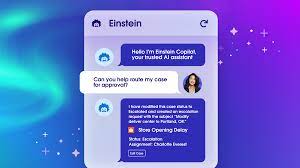
Salesforce launched a suite of new generative AI products at Connections in Chicago, including new Einstein Copilots for marketers and merchants, and Einstein Personalization. Einstein Personalization and Copilots To gain insights into these products and Salesforce’s evolving architecture, Bobby Jania, CMO of Marketing Cloud was interviewed. Salesforce’s Evolving Architecture Salesforce has a knack for introducing new names for its platforms and products, sometimes causing confusion about whether something is entirely new or simply rebranded. Reporters sought clarification on the Einstein 1 platform and its relationship to Salesforce Data Cloud. “Data Cloud is built on the Einstein 1 platform,” Jania explained. “Einstein 1 encompasses the entire Salesforce platform, including products like Sales Cloud and Service Cloud, continuing the original multi-tenant cloud concept.” Data Cloud, developed natively on Einstein 1, was the first product built on Hyperforce, Salesforce’s new cloud infrastructure. “From the start, Data Cloud has been able to connect to and read anything within Sales Cloud, Service Cloud, etc. Additionally, it can now handle both structured and unstructured data.” This marks significant progress from a few years ago when Salesforce’s platform comprised various acquisitions (like ExactTarget) that didn’t seamlessly integrate. Previously, data had to be moved between products, often resulting in duplicates. Now, Data Cloud serves as the central repository, with applications like Tableau, Commerce Cloud, Service Cloud, and Marketing Cloud all accessing the same operational customer profile without duplicating data. Salesforce customers can also import their own datasets into Data Cloud. “We wanted a federated data model,” Jania said. “If you’re using Snowflake, for example, we virtually sit on your data lake, providing value by forming comprehensive operational customer profiles.” Understanding Einstein Copilot “Copilot means having an assistant within the tool you’re using, contextually aware of your tasks and assisting you at every step,” Jania said. For marketers, this could start with a campaign brief created with Copilot’s help, identifying an audience, and developing content. “Einstein Studio is exciting because customers can create actions for Copilot that we hadn’t even envisioned.” Contrary to previous reports, there is only one Copilot, Einstein Copilot, with various use cases like marketing, merchants, and shoppers. “We use these names for clarity, but there’s just one Copilot. You can build your own use cases in addition to the ones we provide.” Marketers will need time to adapt to Copilot. “Adoption takes time,” Jania acknowledged. “This Connections event offers extensive hands-on training to help people use Data Cloud and these tools, beyond just demonstrations.” What’s New with Einstein Personalization Einstein Personalization is a real-time decision engine designed to choose the next best action or offer for customers. “What’s new is that it now runs natively on Data Cloud,” Jania explained. While many decision engines require a separate dataset, Einstein Personalization evaluates a customer holistically and recommends actions directly within Service Cloud, Sales Cloud, or Marketing Cloud. Ensuring Trust Connections presentations emphasized that while public LLMs like ChatGPT can be applied to customer data, none of this data is retained by the LLMs. This isn’t just a matter of agreements; it involves the Einstein Trust Layer. “All data passing through an LLM runs through our gateway. Personally identifiable information, such as credit card numbers or email addresses, is stripped out. The LLMs do not store the output; Salesforce retains it for auditing. Any output that returns through our gateway is logged, checked for toxicity, and only then is PII reinserted into the response. These measures ensure data safety beyond mere handshakes,” Jania said. Like Related Posts Who is Salesforce? Who is Salesforce? Here is their story in their own words. From our inception, we’ve proudly embraced the identity of Read more Salesforce Marketing Cloud Transactional Emails Salesforce Marketing Cloud Transactional Emails are immediate, automated, non-promotional messages crucial to business operations and customer satisfaction, such as order Read more Salesforce Unites Einstein Analytics with Financial CRM Salesforce has unveiled a comprehensive analytics solution tailored for wealth managers, home office professionals, and retail bankers, merging its Financial Read more AI-Driven Propensity Scores AI plays a crucial role in propensity score estimation as it can discern underlying patterns between treatments and confounding variables Read more

Read More
Salesforce Unlimited+ Edition Explained

Salesforce Unlimited+ Edition Explained

Salesforce Unlimited Plus (UE+) is designed as an advanced offering that incorporates several specialized features tailored for different industries, making it particularly suitable for larger organizations and enterprises that require robust, integrated solutions for complex business processes and customer relationship management. Salesforce Unlimited+ Edition Explained. Target Audience UE+ is targeted toward large enterprises that need extensive CRM functionalities combined with AI and data analytics capabilities. This solution is ideal for organizations that: • Manage complex customer relationships across multiple channels. • Require deep integration of data and processes across departments. • Are looking to leverage advanced AI capabilities for predictive insights and automation. • Need industry-specific solutions that can be customized for unique business requirements. The integration of various Salesforce clouds (e.g., Sales Cloud, Service Cloud, Data Cloud) with enhanced features like AI and specific industry capabilities makes UE+ a comprehensive solution for organizations aiming to streamline their operations and gain a competitive edge through advanced technology adoption. Here are the five Salesforce editions for every purpose: ·Starter/Essentials: Ideal for small businesses, offering basic contact, lead, and opportunity management. ·Professional: Tailored for mid-sized companies with enhanced sales forecasting and automation capabilities. ·Enterprise: Geared towards larger organizations, providing advanced customization, reporting, and integration options. ·Unlimited: Offers comprehensive functionality, customizability, 24/7 support, and access to premium features like generative AI. ·Unlimited Plus: Most robust solution for businesses of all sizes, featuring additional functionalities and enhanced capabilities. Key Considerations: ·Business Size: Consider the number of users and overall business scale when choosing an edition. ·Features Needed: Identify the specific features crucial for your sales, service, or marketing processes. ·Scalability: Choose an edition that accommodates your projected growth and future needs. ·Budget: Evaluate the cost of each edition against its offered features and value proposition. Sales Cloud Unlimited Edition+ Features: Account and Contact Management: Complete visibility of customer profiles including activity history and communications. Opportunity Management: Tracking and details of every sales deal at each stage. Pipeline Inspection: A comprehensive tool that allows sales managers to monitor pipeline changes, offering AI-driven insights and recommendations to optimize sales strategies. Einstein AI Capabilities: Includes tools like Einstein Conversation Insights which transcribe and analyze sales calls, highlighting key parts for review and deeper analysis. Customizable Reports and Dashboards: Enhanced capabilities for building real-time reports and visualizations to track sales metrics and forecasts. Advanced Integration Features: Integration with external data and systems through various APIs including REST and SOAP. Automation and Customization: Extensive options for workflow automation and personalization of user interfaces and customer interactions using the Flow Builder and Lightning App Builder. Developer Tools: Access to tools like Developer Sandbox for safe testing and app development environments. Service Cloud Unlimited+ Features: Einstein Bots: AI-powered chatbots to handle customer inquiries automatically, available 24/7 across various communication channels. Enhanced Messaging: Integration with popular messaging platforms like WhatsApp, SMS, and Apple Messages to facilitate seamless customer interactions. Feedback Management: Tools to gather and analyze customer feedback directly within the CRM. Self-Service Capabilities: Including customizable help centers and service catalogs that allow customers to find information and resolve issues independently. Field Service Tools: Comprehensive management of field operations including work order and asset management. Real-Time Analytics: Advanced reporting features for creating in-depth analytics to monitor and improve customer service processes. Additional features include Data Cloud, Generative AI, Service Cloud Voice, Digital Engagement, Feedback Management, Self-Service, and Slack. Salesforce Unlimited+ for Industries UE+ for Industries: UE+ for Industries includes Unlimited+ for Sales and Service together with industry-specific data models and capabilities to help customers drive faster time to value within their sectors: •Financial Services Cloud UE+ for Sales and Financial Services Cloud UE+ for Service helps banks, asset management, and insurance agencies connect all of their customer data on one platform and embed AI to deliver personalized financial engagement, at scale. •An insurance carrier can use Financial Services Cloud UE+ to connect engagement data like emails, webinars, and educational content with third-party conference attendance, social media follows, and business performance data to understand what is motivating agents, helping drive more personalized relationships and grow revenue with Data Cloud and Einstein AI. •Health Cloud UE+ for Service helps healthcare, pharmaceutical, and other medical organizations improve response times at their contact centers and offer digital healthcare services with built-in intelligence, real-time collaboration, and a 360-degree view of every patient, provider, and partner. •A hospital can use the bundle to quickly create a personalized, AI-powered support center to triage and speed up time to care with self-service tools like scheduling and connecting patients and members with care teams on their preferred channels. •Manufacturing Cloud UE+ for Sales brings together tools for manufacturing organizations to build their data foundation, embed AI capabilities across the sales cycle, and maximize productivity, empowering them to scale their commercial operations and grow revenues. •A manufacturer can now look across the entire book of business to see how companies are performing against negotiated sales agreements and then use AI-generated summaries to determine where to prioritize their time and resources. By Tectonic’s AArchitecture Team Like Related Posts Who is Salesforce? Who is Salesforce? Here is their story in their own words. From our inception, we’ve proudly embraced the identity of Read more Salesforce Marketing Cloud Transactional Emails Salesforce Marketing Cloud Transactional Emails are immediate, automated, non-promotional messages crucial to business operations and customer satisfaction, such as order Read more Salesforce Unites Einstein Analytics with Financial CRM Salesforce has unveiled a comprehensive analytics solution tailored for wealth managers, home office professionals, and retail bankers, merging its Financial Read more AI-Driven Propensity Scores AI plays a crucial role in propensity score estimation as it can discern underlying patterns between treatments and confounding variables Read more

Read More
Did Google Dethrone ChatGPT

Did Google Dethrone ChatGPT?

Google’s Bard has emerged as a contender in the realm of large language models (LLMs), sparking speculation about its potential to outshine OpenAI’s ChatGPT. This insight explores the validity of this claim and examines the tests and factors that could determine the ultimate victor in this ongoing AI rivalry. Did Google Dethrone ChatGPT? Google’s Gemini 1.5 Pro is a generational leap in terms of Multimodal Large Language Models, or MLLMs, much like GPT-4 was to LLMs back in March 2023. Did Google Dethrone ChatGPT? While initial rumors of Bard’s “dethronement” of ChatGPT surfaced from a single LinkedIn post in February 2024, substantial evidence is required to substantiate such claims. Let’s determine the potential battleground: The Testing Grounds: There’s no singular, universally recognized benchmark for evaluating LLMs. Here are some areas where Google and OpenAI may showcase their AI prowess: Generative Text Quality: Can the LLM generate various creative text formats—such as poems, code, scripts, and emails—while maintaining coherence and factual accuracy? Question Answering: How effectively can the LLM respond to open-ended, challenging, or unconventional questions, drawing on its knowledge base? Following Instructions: Can the LLM adhere to complex instructions and perform tasks requiring multi-step reasoning? Bias Mitigation: Does the LLM demonstrate impartiality in its responses, or does it exhibit traces of prejudice or social stereotypes? Beyond the Tests: While test results offer insights into LLM capabilities, other factors influence their overall impact: Accessibility: How easily can the LLM be accessed by the public? Is there a user-friendly interface or developer API? Real-World Applications: How seamlessly can the LLM be integrated into practical applications like chatbots, virtual assistants, or educational tools? Continuous Learning: How adeptly does the LLM adapt and enhance its performance over time, incorporating new data and user feedback? The Current Landscape: Declaring a definitive winner is challenging. Bard and ChatGPT excel in different domains. Here’s a speculative analysis: Generative Text Quality: Bard may have a slight advantage, leveraging Google’s extensive dataset. Question Answering: ChatGPT might excel in responding to open-ended queries with creativity, while Bard may prioritize factual accuracy. Following Instructions & Bias Mitigation: Both LLMs are continually refining their capabilities in these areas. The Future of LLMs: The landscape of LLMs is dynamic, with Google and OpenAI poised to make significant advancements. Anticipated developments include: Focus on Explainability: Efforts to understand the reasoning behind LLM responses to foster transparency and trust. Bias Mitigation: Strategies to address bias in LLMs for fairer and more inclusive interactions. Specialized LLMs: Development of domain-specific LLMs tailored to fields like medicine or law. Is Google AI better than ChatGPT? Gemini offers a better user experience, with more imagery and website links. Gemini Advanced generates better AI images than ChatGPT Plus. Gemini responses were often set out in a more readable format than ChatGPT’s responses. Gemini was better at generating spreadsheet formulas than ChatGPT. How is Bard better than ChatGPT? Bard has real-time access to the internet through Google Search, allowing it to incorporate the latest information and news into its responses. Trained on a static dataset not updated since 2021, however, ChatGPT can only access external information through plugins, and this functionality is limited. Is Google nervous about ChatGPT? It’s that the technology represents everything Google was afraid artificial intelligence would become. If ChatGPT runs rampant, the search giant fears it could ruin AI adoption for everyone. Since going viral, ChatGPT has demonstrated how generative AI can be user-friendly, practical, and productive. The narrative of ChatGPT’s dethronement may be premature. Bard and ChatGPT are evolving entities, and the ultimate victor will be determined by their ability to navigate future challenges and opportunities. As these LLMs progress, users stand to benefit from access to increasingly sophisticated and beneficial AI tools. Like Related Posts Who is Salesforce? Who is Salesforce? Here is their story in their own words. From our inception, we’ve proudly embraced the identity of Read more Salesforce Unites Einstein Analytics with Financial CRM Salesforce has unveiled a comprehensive analytics solution tailored for wealth managers, home office professionals, and retail bankers, merging its Financial Read more AI-Driven Propensity Scores AI plays a crucial role in propensity score estimation as it can discern underlying patterns between treatments and confounding variables Read more Tectonic’s Successful Salesforce Track Record Salesforce Technology Services Integrator – Tectonic has successfully delivered Salesforce in a variety of industries including Public Sector, Hospitality, Manufacturing, Read more
Read More
AI in Marketing

AI in Marketing

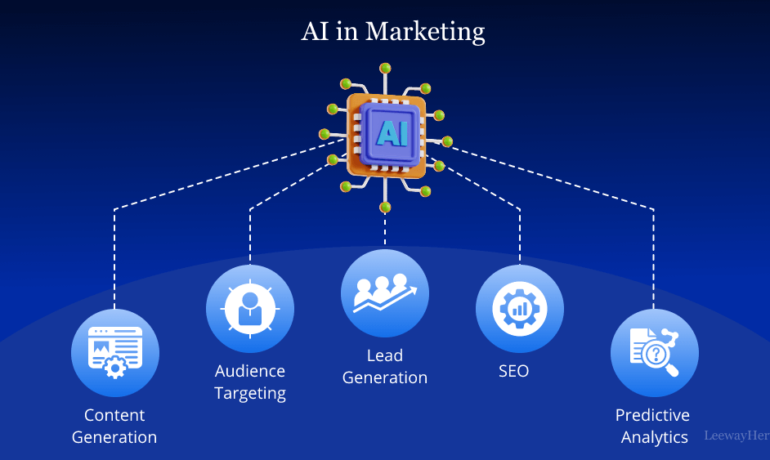
John Dutton recently posted in his blog about AI “representatives” who talk to you. It’s an interesting look into the “creep” factor potentially in artificial intelligence and certainly provides plenty of food for thought on robots and AI in marketing. Read it here. Summarized below. When the media or the internet shares a look at this wierd generated image talking, its easy to spot. When not flagged, it is getting a little harder to know for sure-is it real or is it Memorex. Unveiling AI in Ukraine Last week, Ukraine’s Ministry of Foreign Affairs introduced Victoriya Shi, a “digital representative” and AI-produced avatar. Shi delivers official statements in videos shared on the Ministry’s online social channels. According to Ukrainian Foreign Minister Dmytro Kuleba, Shi was created to “save time and resources” for diplomats. Given the ongoing conflict in Ukraine, this rationale seems reasonable. However, the introduction of such an AI avatar raises questions about the future and the potential for dystopian developments. A key concern is the ease of deepfaking an already artificial persona. This challenge has been addressed by the MFA through a smart yet simple solution: a QR code in the corner of each video that directs viewers to the official text version of the announcement on the Ministry’s website. It’s worth noting that the official statements themselves are not AI-generated, which could set a worrying precedent. While the Ukrainian version’s reception is unknown, the English version of Victoriya Shi struggles to escape the “uncanny valley” of artificial humans. Her sign-off, “I look forward to our fruitful cooperation,” has an eerie, robotic undertone. This unsettling impression might not be entirely negative. Navigating the Age of AI We are deeply entrenched in the Age of AI, where trust has become a scarce commodity. The concept of “fake news” emerged well before generative AI, gaining prominence in late 2016 with the rise of certain political figures. A search on Google Trends reveals the sudden spike in terms like “fake news” and “post-truth” during that period. With AI’s potential to create convincing deepfakes, the challenge of distinguishing real from fake is intensifying. A recent incident in Hong Kong saw an employee deceived by an AI-generated video, leading to a $25 million fraud. This highlights the need for secure credentialing, especially in large organizations and potential metaverse meetings. However, in-person meetings remain immune to such digital deceptions. AI’s Role in Authenticity Ironically, AI might help combat its own deceptions. OpenAI’s recent collaboration with the Coalition for Content Provenance and Authenticity (C2PA) aims to develop tools for identifying AI-generated content. As deepfakes become more sophisticated, the absence of C2PA authentication could become a red flag. If this leads to a heightened skepticism towards digital media, it might not be entirely negative. AI could bolster our defenses against scams, encouraging a healthy suspicion of the digital content we consume. The Balance of Authenticity and Truth The distinction between authenticity and truth is crucial. A government-created AI avatar can be fake in its artificiality but still deliver authentic, official statements. As generative AI advances, we must fine-tune our skepticism. Victoriya Shi’s name reflects Ukraine’s hope for “victory” and the integration of AI (“Shi” in Ukrainian). The war may ultimately hinge on intelligent tech use rather than sheer military might. Update and Reflections Following the newsletter’s release, it was revealed that WPP, the world’s largest ad agency network, nearly fell victim to a deepfake scam, with the CEO’s voice being replicated by AI. The Dystopia/Utopia Dichotomy The generative AI revolution has begun, and its trajectory could lead to either a utopian or dystopian future. My novel, “2084,” explores a world where life appears superficially perfect, masking underlying issues. Artistic AI Innovations One of my book’s main characters is a sculptor, a profession I initially believed immune to AI. However, Monumental Labs, founded in 2022, uses “sensors and AI” to produce sculptures at a fraction of traditional costs. This reality mirrors the AI-driven world imagined in “2084.” Genetic Modifications and Luxury Fresh Del Monte’s Rubyglow® pineapple, an ultra-premium, genetically modified fruit, exemplifies the future of designer foods. My novel envisions similar advancements with patented food items and drone-pollinated plants. The Challenger Mindset Adam Morgan, an expert in the challenger brand mindset, emphasizes the importance of maintaining a challenger attitude regardless of market position. Companies like Netflix exemplify this, adapting and thriving in a competitive landscape by retaining a challenger’s drive. The Right to Repair and Brand Identity The US Government Accountability Office highlights the “softwareification” of cars, making independent repairs difficult. Similarly, Apple’s restrictive policies on iPhone repairs underline the broader trend of manufacturers controlling repair markets. Cult of Brand Identity The Gray Area podcast discusses how modern consumers interact with brands, focusing on identity over product quality. This shift underscores the evolving landscape of commercial competition and consumer behavior. Like Related Posts Salesforce Marketing Cloud Transactional Emails Salesforce Marketing Cloud Transactional Emails are immediate, automated, non-promotional messages crucial to business operations and customer satisfaction, such as order Read more Salesforce Unites Einstein Analytics with Financial CRM Salesforce has unveiled a comprehensive analytics solution tailored for wealth managers, home office professionals, and retail bankers, merging its Financial Read more AI-Driven Propensity Scores AI plays a crucial role in propensity score estimation as it can discern underlying patterns between treatments and confounding variables Read more Tectonic’s Successful Salesforce Track Record Salesforce Technology Services Integrator – Tectonic has successfully delivered Salesforce in a variety of industries including Public Sector, Hospitality, Manufacturing, Read more

Read More
gettectonic.com