Generative AI Archives - gettectonic.com - Page 24
AI Increases Customer Service Efficiency

AI Increases Customer Service Efficiency

Salesforce: Enhancing Customer Service Efficiency with AI Salesforce, the global leader in AI-driven CRM solutions, has released its latest State of Service report, highlighting the benefits of artificial intelligence (AI) and data in boosting customer revenue, efficiency, and satisfaction. The comprehensive study surveyed over 5,500 service professionals across 30 countries, including Indonesia, revealing a significant reliance on AI to enhance work efficiency in the service sector. AI Increases Customer Service Efficiency. Key Findings from the State of Service Report Salesforce’s report indicates that 86% of professional services organizations in Indonesia have either implemented AI or are evaluating its benefits. Furthermore, 80% of professionals in the region plan to increase their AI investments this year. Gavin Barfield, Chief Technology Officer & Vice President of Solutions at Salesforce ASEAN, remarked on the transformative potential of AI: “Generative AI will enable agents to deliver a smoother and more personalized customer service experience, allowing them more time to focus on building relationships.” Gavin Barfield Primary Functions of AI in Indonesian Services Professionals in Indonesia identified three primary functions of AI in their service operations: The report highlights that 96% of AI-using professional services in Indonesia find AI instrumental in saving time. AI Increases Customer Service Efficiency Barfield emphasized the efficiency gains: “AI helps customer service agents become more efficient by reducing administrative tasks, thus saving time for them to focus on providing personalized and revenue-generating customer experiences. This will fundamentally shift the role of service teams in Indonesia from being cost centers to profit centers.” Conclusion Salesforce’s State of Service report underscores the critical role AI plays in transforming customer service operations. By automating routine tasks and enhancing service quality, AI empowers agents to focus on more strategic, relationship-building activities, ultimately driving greater efficiency and profitability in the service sector. Like Related Posts Who is Salesforce? Who is Salesforce? Here is their story in their own words. From our inception, we’ve proudly embraced the identity of Read more Salesforce Marketing Cloud Transactional Emails Salesforce Marketing Cloud Transactional Emails are immediate, automated, non-promotional messages crucial to business operations and customer satisfaction, such as order Read more Salesforce Unites Einstein Analytics with Financial CRM Salesforce has unveiled a comprehensive analytics solution tailored for wealth managers, home office professionals, and retail bankers, merging its Financial Read more AI-Driven Propensity Scores AI plays a crucial role in propensity score estimation as it can discern underlying patterns between treatments and confounding variables Read more

Read More
Where Will the Data Scientists Go

Where Will the Data Scientists Go

What Is to Become of the Data Scientist Role? This question frequently arises among executives, particularly as they navigate the changing roles of data teams, such as those at DataRobot. Where Will the Data Scientists Go may not be as relevant as what new places can they go with AI? The short answer? While tools may evolve, the core of data science remains steadfast. As the field of data science continues to expand, the role of the data scientist becomes increasingly vital. The need will grow, even as the role changes. Trust in AI is dependant upon human oversight. Beyond the Hype of Consumer AI The surge in consumer AI products has raised concerns among data scientists about the implications for their careers. However, these technologies are built on data and generate vast amounts of new data, presenting numerous opportunities. The real transformative potential lies in enterprise-scale automation. Enterprise-Scale Automation: The Data Scientist’s Domain Enterprise-scale automation involves creating large-scale, reliable systems. Data scientists are crucial in this effort, as they bring expertise in data exploration and systematic inference. They are uniquely positioned to identify automation opportunities, design testing and monitoring strategies, and collaborate with cross-functional teams to bring AI solutions from concept to implementation. As automation grows, the role of the data scientist is essential in ensuring these systems function effectively and safely, particularly in environments without human oversight. New Skills for Data Scientists: The Guardians of AI Applications Data scientists will need to acquire new skills to manage automation at scale, including securing the systems they build. Generative AI introduces new risks, such as potential vulnerabilities to prompt injections or other security threats. Governance and ensuring positive business impacts will become increasingly important, requiring a data science mindset. Building Great Data Teams in the Age of AI The future of data science will not be about automation replacing data scientists but about the evolution of roles and skills. Data scientists need to focus on the core foundations of their discipline rather than the specific tools they use, as tools will continue to evolve. Teams must be built intentionally, encompassing a range of skills and personalities necessary for successful enterprise automation. Business Leaders: Navigating the AI Landscape Business leaders will need to excel in decision-making, understanding the problems they aim to solve, and selecting the appropriate tools and teams. They will also need to manage evolving regulations, particularly those related to the design and deployment of AI systems. Data Scientists: Precision Thinkers at the Forefront Contrary to the belief that AI could replace coding skills, the essence of data science lies in precise thinking and clear communication. Data scientists excel in translating business needs into data-driven decisions and AI applications, ensuring that solutions are not only technically sound but also aligned with business objectives. This skill set will be crucial in the era of AI, as data scientists will play a key role in optimizing workflows, designing AI safety nets, and protecting their organization’s brand and reputation. The Evolving Role of Data Science The demand for precise, data-literate thinkers will only grow with the rise of enterprise AI systems. Whether they are called data scientists or another name, professionals who delve deeply into data and provide critical insights will remain essential in navigating the complexities of modern technology and business landscapes. Like Related Posts Who is Salesforce? Who is Salesforce? Here is their story in their own words. From our inception, we’ve proudly embraced the identity of Read more Salesforce Marketing Cloud Transactional Emails Salesforce Marketing Cloud Transactional Emails are immediate, automated, non-promotional messages crucial to business operations and customer satisfaction, such as order Read more Salesforce Unites Einstein Analytics with Financial CRM Salesforce has unveiled a comprehensive analytics solution tailored for wealth managers, home office professionals, and retail bankers, merging its Financial Read more AI-Driven Propensity Scores AI plays a crucial role in propensity score estimation as it can discern underlying patterns between treatments and confounding variables Read more

Read More
Generative AI for Tableau

Generative AI for Tableau

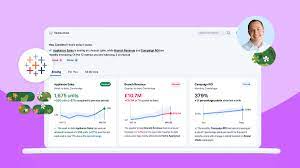
Tableau’s first generative AI assistant is now generally available. Generative AI for Tableau brings data prep to the masses. Earlier this month, Tableau launched its second platform update of 2024, announcing that its first two GenAI assistants would be available by the end of July, with a third set for release in August. The first of these, Einstein Copilot for Tableau Prep, became generally available on July 10. Tableau initially unveiled its plans to develop generative AI capabilities in May 2023 with the introduction of Tableau Pulse and Tableau GPT. Pulse, an insight generator that monitors data for metric changes and uses natural language to alert users, became generally available in February. Tableau GPT, now renamed Einstein Copilot for Tableau, moved into beta testing in April. Following Einstein Copilot for Tableau Prep, Einstein Copilot for Tableau Catalog is expected to be generally available before the end of July. Einstein Copilot for Tableau Web Authoring is set to follow by the end of August. With these launches, Tableau joins other data management and analytics vendors like AWS, Domo, Microsoft, and MicroStrategy, which have already made generative AI assistants generally available. Other companies, such as Qlik, DBT Labs, and Alteryx, have announced similar plans but have not yet moved their products out of preview. Tableau’s generative AI capabilities are comparable to those of its competitors, according to Doug Henschen, an analyst at Constellation Research. In some areas, such as data cataloging, Tableau’s offerings are even more advanced. “Tableau is going GA later than some of its competitors. But capabilities are pretty much in line with or more extensive than what you’re seeing from others,” Henschen said. In addition to the generative AI assistants, Tableau 2024.2 includes features such as embedding Pulse in applications. Based in Seattle and a subsidiary of Salesforce, Tableau has long been a prominent analytics vendor. Its first 2024 platform update highlighted the launch of Pulse, while the final 2023 update introduced new embedded analytics capabilities. Generative AI assistants are proliferating due to their potential to enable non-technical workers to work with data and increase efficiency for data experts. Historically, the complexity of analytics platforms, requiring coding and data literacy, has limited their widespread adoption. Studies indicate that only about one-quarter of employees regularly work with data. Vendors have attempted to overcome this barrier by introducing natural language processing (NLP) and low-code/no-code features. However, NLP features have been limited by small vocabularies requiring specific business phrasing, while low-code/no-code features only support basic tasks. Generative AI has the potential to change this dynamic. Large language models like ChatGPT and Google Gemini offer extensive vocabularies and can interpret user intent, enabling true natural language interactions. This makes data exploration and analysis accessible to non-technical users and reduces coding requirements for data experts. In response to advancements in generative AI, many data management and analytics vendors, including Tableau, have made it a focal point of their product development. Tech giants like AWS, Google, and Microsoft, as well as specialized vendors, have heavily invested in generative AI. Einstein Copilot for Tableau Prep, now generally available, allows users to describe calculations in natural language, which the tool interprets to create formulas for calculated fields in Tableau Prep. Previously, this required expertise in objects, fields, functions, and limitations. Einstein Copilot for Tableau Catalog, set for release later this month, will enable users to add descriptions for data sources, workbooks, and tables with one click. In August, Einstein Copilot for Tableau Web Authoring will allow users to explore data in natural language directly from Tableau Cloud Web Authoring, producing visualizations, formulating calculations, and suggesting follow-up questions. Tableau’s generative AI assistants are designed to enhance efficiency and productivity for both experts and generalists. The assistants streamline complex data modeling and predictive analysis, automate routine data prep tasks, and provide user-friendly interfaces for data visualization and analysis. “Whether for an expert or someone just getting started, the goal of Einstein Copilot is to boost efficiency and productivity,” said Mike Leone, an analyst at TechTarget’s Enterprise Strategy Group. The planned generative AI assistants for different parts of Tableau’s platform offer unique value in various stages of the data and AI lifecycle, according to Leone. Doug Henschen noted that the generative AI assistants for Tableau Web Authoring and Tableau Prep are similar to those being introduced by other vendors. However, the addition of a generative AI assistant for data cataloging represents a unique differentiation for Tableau. “Einstein Copilot for Tableau Catalog is unique to Tableau among analytics and BI vendors,” Henschen said. “But it’s similar to GenAI implementations being done by a few data catalog vendors.” Beyond the generative AI assistants, Tableau’s latest update includes: Among these non-Copilot capabilities, making Pulse embeddable is particularly significant. Extending generative AI capabilities to work applications will make them more effective. “Embedding Pulse insights within day-to-day applications promises to open up new possibilities for making insights actionable for business users,” Henschen said. Multi-fact relationships are also noteworthy, enabling users to relate datasets with shared dimensions and informing applications that require large amounts of high-quality data. “Multi-fact relationships are a fascinating area where Tableau is really just getting started,” Leone said. “Providing ways to improve accuracy, insights, and context goes a long way in building trust in GenAI and reducing hallucinations.” While Tableau has launched its first generative AI assistant and will soon release more, the vendor has not yet disclosed pricing for the Copilots and related features. The generative AI assistants are available through a bundle named Tableau+, a premium Tableau Cloud offering introduced in June. Beyond the generative AI assistants, Tableau+ includes advanced management capabilities, simplified data governance, data discovery features, and integration with Salesforce Data Cloud. Generative AI is compute-intensive and costly, so it’s not surprising that Tableau customers will have to pay extra for these capabilities. Some vendors are offering generative AI capabilities for free to attract new users, but Henschen believes costs will eventually be incurred. “Customers will want to understand the cost implications of adding these new capabilities,”

Read More
Data Protection Improvements from Next DLP

Data Protection Improvements from Next DLP

Insider risk and data protection company Next DLP has unveiled its new Secure Data Flow technology, designed to enhance data protection for customers. Integrated into the company’s Reveal Platform, Secure Data Flow monitors the origin, movement, and modification of data to provide comprehensive protection. Data Protection Improvements from Next DLP. This technology can secure critical business data flow from any SaaS application, including Salesforce, Workday, SAP, and GitHub, to prevent accidental data loss and malicious theft. “In modern IT environments, intellectual property often resides in SaaS applications and cloud data stores,” said John Stringer, head of product at Next DLP. “The challenge is that identifying high-impact data in these locations based on its content is difficult. Secure Data Flow, through Reveal, ensures that firms can confidently protect their most critical data assets, regardless of their location or application.” Next DLP argues that legacy data protection technologies are inadequate, relying on pattern matching, regular expressions, keywords, user-applied tags, and fingerprinting, which only cover a limited range of text-based data types. The company highlights that recent studies indicate employees download an average of 30 GB of data each month from SaaS applications to their endpoints, such as mobile phones, laptops, and desktops, emphasizing the need for advanced data protection measures. Secure Data Flow tracks data as it moves through both sanctioned and unsanctioned channels within an organization. By complementing traditional content and sensitivity classification-based approaches with origin-based data identification, manipulation detection, and data egress controls, it effectively prevents data theft and misuse. This approach results in an “all-encompassing, 100 percent effective, false-positive-free solution that simplifies the lives of security analysts,” claims Next DLP. “Secure Data Flow represents a novel approach to data protection and insider risk management,” said Ken Buckler, research director at Enterprise Management Associates. “It not only enhances detection and protection capabilities but also streamlines data management processes. This improves the accuracy of data sensitivity recognition and reduces endpoint content inspection costs in today’s diverse technological environments.” Like Related Posts Who is Salesforce? Who is Salesforce? Here is their story in their own words. From our inception, we’ve proudly embraced the identity of Read more Salesforce Marketing Cloud Transactional Emails Salesforce Marketing Cloud Transactional Emails are immediate, automated, non-promotional messages crucial to business operations and customer satisfaction, such as order Read more Salesforce Unites Einstein Analytics with Financial CRM Salesforce has unveiled a comprehensive analytics solution tailored for wealth managers, home office professionals, and retail bankers, merging its Financial Read more AI-Driven Propensity Scores AI plays a crucial role in propensity score estimation as it can discern underlying patterns between treatments and confounding variables Read more

Read More
Autodesk Enhancements with Einstein 1

Autodesk Enhancements with Einstein 1

Autodesk Enhances Customer Service and Agent Productivity with Salesforce AI Integration Autodesk, a leader in 3D design, engineering, and entertainment software, has strengthened its partnership with Salesforce by incorporating Salesforce AI technology into its service agent workflow. This integration aims to boost agent productivity and enhance customer satisfaction. Autodesk Enhancements with Einstein 1. Impact of Salesforce Integration By leveraging Salesforce’s CRM, trusted AI, and data solutions, Autodesk has unified data access and developed an AI-powered self-service application. This initiative aims to foster deeper customer relationships and enhance employee productivity. The integration with Salesforce is transforming Autodesk’s customer engagement and agent workflow efficiency. Key Benefits for Autodesk Accelerating Self-Service: Autodesk uses the Einstein 1 Platform, which employs AI to create actionable data and streamline processes. This has enabled the development of a comprehensive, intuitive service cloud application for Autodesk’s team. At the conclusion of customer-agent interactions, Einstein for Service generates AI-powered case summaries, reducing the time agents spend summarizing chats by 63%. Creating Frictionless Experiences: MuleSoft has been pivotal in advancing Autodesk’s automation strategy by providing integrated and unified data access across cloud solutions. This has allowed Autodesk to modernize, simplify, and connect existing SaaS applications, resulting in smoother operations. Minimizing Disruption: Salesforce Professional Services provides real-time, 24/7 monitoring, equipping Autodesk with tools to identify and resolve potential performance issues before they affect customers. Salesforce also enhances data access monitoring, leading to a 30% reduction in ongoing maintenance. Customer Perspective Prakash Kota, SVP and CIO of Autodesk, expressed enthusiasm for the partnership: “We are thrilled to partner with Salesforce as Autodesk continues to innovate, grow, and scale with the customer at the center of our business. Our teams are excited to put generative AI to work across the enterprise, enhancing the productivity of our service agents. Saving time on tasks enables our employees to focus on higher-value work.” This partnership underscores Autodesk’s commitment to customer-centric innovation and operational efficiency, leveraging Salesforce’s advanced technologies to drive continued growth and customer satisfaction. Like Related Posts Who is Salesforce? Who is Salesforce? Here is their story in their own words. From our inception, we’ve proudly embraced the identity of Read more Salesforce Marketing Cloud Transactional Emails Salesforce Marketing Cloud Transactional Emails are immediate, automated, non-promotional messages crucial to business operations and customer satisfaction, such as order Read more Salesforce Unites Einstein Analytics with Financial CRM Salesforce has unveiled a comprehensive analytics solution tailored for wealth managers, home office professionals, and retail bankers, merging its Financial Read more AI-Driven Propensity Scores AI plays a crucial role in propensity score estimation as it can discern underlying patterns between treatments and confounding variables Read more

Read More
Salesforce Agentforce Platform

Salesforce Agentforce Platform

Salesforce CEO Marc Benioff has hinted at the upcoming launch of a new AI and automation platform geared towards customer support. Salesforce Agentforce Platform. In anticipation of September’s Dreamforce event, Benioff used X, formerly Twitter, to offer a sneak peek into the platform, specifically highlighting its customer-facing “Einstein Service Agent.” In his post, Benioff underscores the essential features of the virtual agent, emphasizing how it will seamlessly blend digital and human-assisted support to expedite case resolutions. This blended experience appears to build upon the technology integrated into Salesforce following its acquisition of Airkit.ai in 2023. Airkit.ai provides a low- to no-code bot-building platform that empowers businesses to orchestrate AI-driven conversational experiences. Primarily used for service automation, Airkit enables firms to design and automate complex cross-platform workflows, enhancing automated customer interactions across Salesforce applications. The Einstein Service Agent, positioned within Salesforce’s broader Einstein 1 vision, leverages Data Cloud to create a unified, cross-functional data ecosystem. Benioff hints at the agent’s capability to span service, sales, marketing, and commerce functionalities, underscoring its pivotal role within the Salesforce ecosystem. Expanding on Airkit.ai’s foundational capabilities, Salesforce has integrated Mulesoft to enable insights triggering cross-platform automations, alongside real-time data harmonization within Data Cloud. Moreover, the platform now incorporates generative AI (GenAI), enhancing its ability to interpret text, images, and audio/video for diverse customer engagement scenarios. Despite these advancements, Benioff acknowledges that no virtual agent, even with GenAI augmentation, can resolve every customer query alone. Salesforce ensures omnichannel transfers and human handoffs to address more complex issues effectively. In an era where many vendors offer similar conversational AI capabilities, Salesforce distinguishes itself through ecosystem integration and orchestration. Benioff emphasizes the value of low- to no-code workflow orchestration, democratizing AI technology for non-programmers and fostering an inclusive AI revolution. Expect Benioff to elaborate further on these themes and unveil more details about the Agentforce Platform during his keynote at the 2024 Dreamforce event. Like Related Posts Who is Salesforce? Who is Salesforce? Here is their story in their own words. From our inception, we’ve proudly embraced the identity of Read more Salesforce Marketing Cloud Transactional Emails Salesforce Marketing Cloud Transactional Emails are immediate, automated, non-promotional messages crucial to business operations and customer satisfaction, such as order Read more Salesforce Unites Einstein Analytics with Financial CRM Salesforce has unveiled a comprehensive analytics solution tailored for wealth managers, home office professionals, and retail bankers, merging its Financial Read more AI-Driven Propensity Scores AI plays a crucial role in propensity score estimation as it can discern underlying patterns between treatments and confounding variables Read more

Read More
Cool AI Tools for Business

Cool AI Tools for Business

This insight is to share the best AI tools to save you time and money. Instead of listing them with zero explanation, we show you how to use these tools and what we’ve created with them. Cool AI Tools for Business. You can then customize it manually or with AI. Although Decktopus is great, it’s not the only AI presentation tool out there. Just submit a video clip of yourself talking in any language. Read the instructions to ensure the AI can learn effectively. If you don’t want to clone yourself, use HeyGen to create presentations by choosing a voice actor and giving it a script. It supports any language, just like your AI clone. One of the coolest things about this tool is a way to create a really nice professional headshot. 4. Murf AI: Text-to-Speech AIMurf AI turns text into realistic voices for ads, voiceovers, translations, and more. Unlike old text-to-speech synthesizers, Murf uses professional voice actors in multiple languages. As a business person, use Murf for voiceovers, sales pitches, and more. You can create similar clips in different languages and voices. ContentShake’s content editor suggests improvements for your posts. This tool can help draft content and draw inspiration. For example, we asked it to create a blogging site about “How to use Artificial Intelligence in business and sales,” and got results in about a minute. You can customize the site by clicking and dragging elements. It’s great for small businesses without professional web designers. 8. Grammarly: AI ProofreaderGrammarly analyzes your text in every window, spotting and highlighting mistakes. We use it every day at Tectonic. Grammarly makes it easy to fix mistakes with suggested corrections. It’s a Chrome extension, so it works in every tab. However, ChatGPT makes silly assumptions and hallucinations. It predicts words but doesn’t know or experience things. As a content writer, you may struggle as you find it can’t write engaging blog posts that attract visitors. Test these Cool AI Tools for Business, as most are free, saving you time and money so you can focus on your business! Like1 Related Posts Who is Salesforce? Who is Salesforce? Here is their story in their own words. From our inception, we’ve proudly embraced the identity of Read more Salesforce Unites Einstein Analytics with Financial CRM Salesforce has unveiled a comprehensive analytics solution tailored for wealth managers, home office professionals, and retail bankers, merging its Financial Read more AI-Driven Propensity Scores AI plays a crucial role in propensity score estimation as it can discern underlying patterns between treatments and confounding variables Read more Tectonic’s Successful Salesforce Track Record Salesforce Technology Services Integrator – Tectonic has successfully delivered Salesforce in a variety of industries including Public Sector, Hospitality, Manufacturing, Read more

Read More
AI Agents in Line at HR

AI Agents in Line at HR

AI Agents in Line at HR may only be a satirical cartoon for a very short time. Sorry, Farside, but your AI bits may not be able to keep up with AI. July, 2034 — A new software unicorn has just emerged inbehind a bar in a pub in East London. Unicorn, by the way, descibes a startup company valued at over $1 billion, not necessarily with a billion dollar concept. Back to East London behind the soggy bar. Hey, its our fantasy. Besides if Amazon can start in a garage, isn’t anything possible? The CEO logs in as usual and gathers daily updates from the team. The Chief Technology Officer is suggesting a new feature to deploy. The Chief Product Officer wants to redesign the CRM (or whatever CRM has evolved to) integration. The Chief Revenue Officer is showing off the new pipeline, forecast by Accountant in a Box. The Chief Customer Officer is discussing the latest customer levitation tools and product feedback. The Chief Information Security Officer has found a new privacy conflict, which they are addressing with a newly-revised infrastructure set-up. And the Head of HR is fretting about the latest round of IT candidates. This sounds like every software business you’ve ever heard of. But the difference is that the CEO’s teammates are entirely AI, not human: The CTO is Lovable. The CPO is Cogna. The CCO is Gradient Labs. The CRO is 11x. The CISO is Zylon. Back to 2024: The Rise of AI Agents In 2024, the hottest topic in software is AI agents, or Agentic AI. Founders are rapidly standing up agentic applications that can solve specific needs in functions like sales and customer services — without a human required. Software buyers, seeing real opportunities to quickly improve their P&L, are swiftly building or purchasing these agentic products. Investors have poured hundreds of millions of dollars into startups in this space in recent months. Even Salesforce wasn’t launched with a silver AI spoon in its mouth. Salesforce began investing in artificial intelligence (AI) in 2014, when the company started acquiring machine learning startups and announced its Customer Success Platform. In 2016, Salesforce launched Einstein, its AI platform that supports several of its cloud services. Einstein is built into Salesforce products and includes features like natural language processing, machine learning, and predictive analytics. It helps organizations automate processes, make decisions based on insights, and improve the customer experience. YouTube How To Increase Revenue Using AI for CRM: Salesforce … Feb 12, 2024 — What is Salesforce Einstein? Salesforce Einstein is the first trusted artifici… TechForce Services How does Salesforce Use AI for Business Growth? Jan 31, 2024 — Powered by technologies like Machine Learning, Natural Language Processing, im… saasguru · LinkedIn · 7mo History of Salesforce AI From Predictive to Generative – LinkedIn Published Nov 27, 2023. In 2014, Salesforce, under the visionary leadership of… Twistellar AI in Salesforce: History, Present State and Prospects Organizations generate tons of data on marketing and sales, and surely your sales managers… Wikipedia Salesforce – Wikipedia In October 2014, Salesforce announced the development of its Customer Success Platform. Less than ten years ago, folks. Salesforce’s large database of data has helped the company address AI challenges quickly and with quality. The company’s data cloud offering provides AI with the right information at the right time, which can reduce friction and improve the customer experience.  Salesforce’s AI-powered solutions include: To catalyze this evolution, Salesforce strategically acquired RelateIQ in 2014. This move injected machine learning into the Salesforce ecosystem, capturing workplace communications data and providing valuable insights. Europe is home to many of these exciting companies. For example, H, a French AI agent startup, raised a $220 million seed round in May. Beyond RPA: The New Wave of AI Agents AI agents represent a significant step-change from Robotic Process Automation (RPA) bots, which, as explored last year, have several limitations due to their deterministic nature. Next-generation AI agents are non-deterministic, meaning that instead of stopping at a “dead end,” they can learn from mistakes and adjust their series of tasks. Not entirely unlock the mouse running the same maze over and over for the cheese. Eventually Mr. Squeakers learns which paths are dead ends and avoids them by making better choices at intersections. In AI Agents this makes them suited to complex and unstructured tasks and means they can transform the journey from intent to implementation in software development. They can deliver “pure work,” rather than acting only as a helpful co-pilot. The rise of AI agents is not only an opportunity to expand automation beyond what is possible with RPA but also to broadly redefine how knowledge work is performed. And by who. And even how is it defined. Given the right guardrails, next-generation AI agents have the potential to effectively and safely replace knowledge workers in many business scenarios. AI Agents in Action These agents are about to revolutionize the world of work as we know it and are already getting started. For example, Klarna recently revealed that its AI agent system handled two-thirds of customer chats in its first month in operation. While HR may not be swamped with AI CVs yet, it is certainly fathomable. One would suppose those candidates would have to be reviewed and interviewed by IT, not just HR. Here’s another deep thought. The internet of things (IoT) first appeared in a speech by Peter T. Lewis in September 1985. The Internet of Things (IoT) is a network of physical devices that can collect and transmit data over the internet using sensors, software, and other technologies. IoT devices can communicate with each other and with the cloud, and can even perform data analysis and be controlled remotely. The IoT concept was smart homes, health care environments, office spaces, and transportation. Only recently have we begun to think of the IoT as including the actual computers, or AI, in addition to sensored devices. It isn’t exactly a chicken and the egg question, but more of a

Read More
RevOps Sute for Salesforce Data Management

RevOps Suite for Salesforce Data Management

Traction Complete Launches Revolutionary “RevOps Data Management Suite for Salesforce” In an era where artificial intelligence (AI) is revolutionizing business, Traction Complete is proud to announce the launch of “The RevOps Data Management Suite for Salesforce.” This groundbreaking suite is the first data management solution designed specifically for Revenue Operations professionals, empowering users to fully leverage their data by ensuring it is clean, connected, and ready for AI adoption. RevOps Sute for Salesforce Data Management. Importance of Data Integrity “The importance of clean and connected data can’t be stressed enough, especially in the age of AI. Without a solid foundation of reliable data, businesses are navigating in the dark, unable to make strategic decisions.” David Nelson, CEO of Traction Complete RevOps Suite for Salesforce Data Management Stephen Daniels, Vice President of Revenue Operations at Cresta, echoes this sentiment: “There is a cost to bad data. If we didn’t have a solution like Traction Complete in the first place to scale off, we would be building on a bad foundation that would cause hundreds of thousands of dollars of headaches in the future.” The Impact of Poor Data Poor data is more than just a nuisance; it’s a significant barrier to success. And it is expensive. It leads to distrust in CRM systems and lost productivity, ultimately impacting business revenue. Traction Complete’s mission is to tackle these challenges head-on, ensuring that data is accurate and seamlessly integrated across the Salesforce platform. This foundation enables businesses to adopt the latest technology seamlessly. Recent findings from McKinsey highlight the critical role of data quality in AI adoption: “Fifty-six percent of companies say ‘inaccuracy’ is the biggest risk posed by adopting generative AI. Yet only 32% of companies have systems in place for mitigating such inaccuracies.” Expertise and Innovation Traction Complete, born from the recently Salesforce-acquired Traction on Demand, draws on over 1.4 million hours of consulting experience to build trusted data management solutions that improve data quality. “At the pace that AI and machine learning are expanding and changing how we operate, businesses can’t afford to overlook the importance of data quality. Any businesses not setting their data foundation right now will be left behind,” adds Nelson. The Future of Data Management As organizations continue to navigate the complexities of digital transformation, the message is clear: the time to invest in data management is now. With the RevOps Data Management Suite for Salesforce, Traction Complete is leading the way, providing the tools necessary for businesses to thrive in the age of AI and beyond. Like1 Related Posts Who is Salesforce? Who is Salesforce? Here is their story in their own words. From our inception, we’ve proudly embraced the identity of Read more Salesforce Marketing Cloud Transactional Emails Salesforce Marketing Cloud Transactional Emails are immediate, automated, non-promotional messages crucial to business operations and customer satisfaction, such as order Read more Salesforce Unites Einstein Analytics with Financial CRM Salesforce has unveiled a comprehensive analytics solution tailored for wealth managers, home office professionals, and retail bankers, merging its Financial Read more AI-Driven Propensity Scores AI plays a crucial role in propensity score estimation as it can discern underlying patterns between treatments and confounding variables Read more

Read More
DHS AI Hires

DHS AI Hires

DHS Makes First AI Corps Hires to Enhance Federal AI Capabilities The Department of Homeland Security (DHS) has announced its first 10 hires for the newly formed AI Corps, as detailed in a release exclusively shared with Axios. Why It Matters U.S. officials emphasize the need for more expertise to determine the best ways to safely leverage artificial intelligence tools within the federal government. The AI Corps Initiative The new 50-person AI Corps, modeled after the U.S. Digital Service, will explore AI applications across DHS’s portfolio, including: Key Quote “The interest in it has been phenomenal,” Homeland Security Secretary Alejandro Mayorkas told Axios. “We need that expertise to really fuel our interest in leading the federal government in the safe and responsible deployment of AI to advance our mission.” New AI Corps Members According to a press release, the following individuals are joining DHS’s AI Corps: Between the Lines Competition for these roles has been intense. Mayorkas previously mentioned in April that over 3,000 applications were received for the 50 positions. The selected members come from diverse backgrounds, including current government employees, Big Tech, startups, and the research community. Hiring Practices and Future Moves New flexible hiring practices for AI-related jobs have enabled DHS to compete with private sector roles and fast-track AI Corps hires. “Things move more rapidly, and so we’re moving more rapidly, as well, to meet the moment,” Mayorkas added. Like Related Posts Who is Salesforce? Who is Salesforce? Here is their story in their own words. From our inception, we’ve proudly embraced the identity of Read more Salesforce Unites Einstein Analytics with Financial CRM Salesforce has unveiled a comprehensive analytics solution tailored for wealth managers, home office professionals, and retail bankers, merging its Financial Read more AI-Driven Propensity Scores AI plays a crucial role in propensity score estimation as it can discern underlying patterns between treatments and confounding variables Read more Tectonic’s Successful Salesforce Track Record Salesforce Technology Services Integrator – Tectonic has successfully delivered Salesforce in a variety of industries including Public Sector, Hospitality, Manufacturing, Read more

Read More
Breaking Down Data Silos with Zero Copy Data Federation

Breaking Down Data Silos with Zero Copy Data Federation

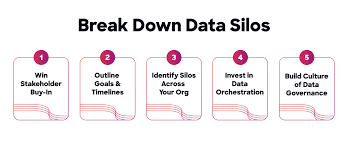
Siloed data slows communication, delays data-driven insights, and creates extra work. Learn ways for Breaking Down Data Silos with Zero Copy Data Federation. Overview In today’s data-driven business world, organizations amass vast amounts of data across various touchpoints, centralizing it in data warehouses or lakes to derive business insights. While this data is primarily used for analytics and machine learning, it remains largely inaccessible to business users in Sales, Service, and Marketing, hindering their ability to make data-driven decisions. To address this challenge, Salesforce and Amazon have collaborated to create Zero Copy Data Federation between Salesforce Data Cloud and Amazon Redshift. This integration empowers businesses by providing seamless access to Redshift data within Salesforce Data Cloud, enhancing data integration, and enabling real-time insights without the need for data replication. Benefits of Zero Copy Data Federation This new solution allows businesses to: Salesforce Data Cloud Salesforce Data Cloud unifies all company data into the Einstein 1 Platform, offering a comprehensive 360-degree view of the customer. It integrates diverse datasets such as telemetry data and web engagement data, creating a holistic customer profile that is easy to access and understand. This unified view enables Sales, Service, and Marketing teams to build personalized customer experiences, drive data-driven actions, and leverage trusted AI across all Salesforce apps. Amazon Redshift Amazon Redshift is a fast, fully managed, petabyte-scale data warehouse service designed for efficient data analysis using existing business intelligence tools. It offers superior price-performance compared to traditional data warehousing solutions and supports datasets ranging from a few hundred gigabytes to petabytes. Redshift’s AI-powered massively parallel processing (MPP) architecture facilitates quick, cost-effective business decision-making. Zero Copy Data Federation Zero Copy Data Federation, a feature of Salesforce Data Cloud, enables secure, real-time access to Redshift data without copying it. This capability maintains data in its original location, eliminating replication overhead and ensuring current information access, thus enhancing data integration while preserving data integrity and efficiency. Data federated from Amazon Redshift is represented as a native data cloud object, powering various Data Cloud features, including marketing segmentation, activations, and process automation. This allows businesses to enrich unified customer profiles in Salesforce Data Cloud with transactional data from Redshift, gaining insights, harnessing predictive and generative AI, and delivering highly personalized experiences. Setting Up Zero Copy Data Federation To configure Zero Copy Data Federation in Salesforce Data Cloud: Use Cases Zero Copy Data Federation enables various use cases: Conclusion Zero Copy Data Federation between Salesforce Data Cloud and Amazon Redshift empowers businesses to dismantle data silos, enhance customer experiences, and drive operational efficiencies. By enabling real-time access to Redshift data within Salesforce Data Cloud, organizations can make informed decisions, personalize customer interactions, and optimize resources across various functions. This integration sets a new benchmark for data-driven business success in the digital age. Check out the Salesforce Zero Copy Data Federation announcement for more details. Like Related Posts Who is Salesforce? Who is Salesforce? Here is their story in their own words. From our inception, we’ve proudly embraced the identity of Read more Salesforce Marketing Cloud Transactional Emails Salesforce Marketing Cloud Transactional Emails are immediate, automated, non-promotional messages crucial to business operations and customer satisfaction, such as order Read more Salesforce Unites Einstein Analytics with Financial CRM Salesforce has unveiled a comprehensive analytics solution tailored for wealth managers, home office professionals, and retail bankers, merging its Financial Read more AI-Driven Propensity Scores AI plays a crucial role in propensity score estimation as it can discern underlying patterns between treatments and confounding variables Read more

Read More
AI Safety and Responsibility

AI Safety and Responsibility

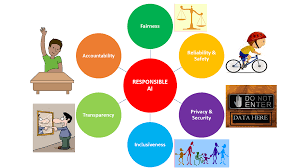
The Future of AI: Balancing Innovation and Trust Authored by Justin Tauber, General Manager, Innovation and AI Culture at Salesforce, ANZ. AI Safety and Responsibility AI holds the promise of transforming business operations and freeing up our most precious resource: time. This is particularly beneficial for small businesses, where customer-facing staff must navigate a complex set of products, policies, and data with limited time and support. AI-assisted customer engagement can lead to more timely, personalized, and intelligent interactions. However, trust is paramount, and businesses must use AI power safely and ethically. The Trust Challenge According to the AI Trust Quotient, 89% of Australian office workers don’t trust AI to operate without human oversight, and 62% fear that humans will lose control of AI. Small businesses must build competence and confidence in using AI responsibly. Companies that successfully combine human and machine intelligence will lead in AI transformation. Building trust and confidence in AI requires focusing on the employee experience of AI. Employees should be integrated early into decision-making, output refinement, and feedback processes. Generative AI outcomes improve when humans are actively involved. Humans need to lead their partnership with AI, ensuring AI works effectively with humans at the helm. Strategies for Building Trust One strategy is to remind employees of AI’s strengths and weaknesses within their workflow. Showing confidence values — how much the model believes its output is correct — helps employees handle AI responses with the appropriate level of care. Lower-scored content can still be valuable, but human reviews provide deeper scrutiny. Prompt templates for staff ensure consistent inputs and predictable outputs. Explainability or citing sources for AI-generated content also addresses trust and accuracy issues. Another strategy focuses on use cases that enhance customer trust. The sweet spot is where productivity and trust-building benefits align. For example, generative AI can reassure customers that a product will arrive on time. AI in fraud detection and prevention is another area where AI can flag suspicious transactions for human review, improving the accuracy and effectiveness of fraud detection systems. Salesforce’s Commitment to Ethical AI Salesforce ensures that its AI solutions keep humans at the helm by respecting ethical guardrails in AI product development. Salesforce goes further by creating capabilities and solutions that lower the cost of responsible AI deployment and use. AI safety products help businesses use AI power without significant risks. Salesforce AI products are built with trust and reliability in mind, embodying Trustworthy AI principles to help customers deploy these products ethically. It’s unrealistic and unfair to expect employees, especially in SMBs, to refine every AI-generated output. Therefore, Salesforce provides businesses with powerful, system-wide controls and intuitive interfaces to make timely and responsible judgments about testing, refining responses, or escalating problems. Salesforce has invested in ethical AI for nearly a decade, focusing on principles, policies, and protections for itself and its customers. New guidelines for responsible generative AI development expand on core Trusted AI principles. Updated Acceptable Use Policy safeguards and the Einstein Trust layer protect customer data from external LLMs. Commitment to a Trusted AI Future While we’re still in the early days of AI, Salesforce is committed to learning and iterating in close collaboration with customers and regulators to make trusted AI a reality for all. Originally published in Smart Company. Like Related Posts Who is Salesforce? Who is Salesforce? Here is their story in their own words. From our inception, we’ve proudly embraced the identity of Read more Salesforce Marketing Cloud Transactional Emails Salesforce Marketing Cloud Transactional Emails are immediate, automated, non-promotional messages crucial to business operations and customer satisfaction, such as order Read more Salesforce Unites Einstein Analytics with Financial CRM Salesforce has unveiled a comprehensive analytics solution tailored for wealth managers, home office professionals, and retail bankers, merging its Financial Read more AI-Driven Propensity Scores AI plays a crucial role in propensity score estimation as it can discern underlying patterns between treatments and confounding variables Read more

Read More
MuleSoft Compostability

MuleSoft Composability

MuleSoft: Enabling AI Integration with Composability Solutions – MuleSoft Composability MuleSoft, a subsidiary of Salesforce, is enhancing its portfolio with new capabilities to help organizations build AI services that serve as the building blocks for more complex applications. The company announced a new AI-powered composability solution designed to assist organizations in constructing discrete AI services to form sophisticated systems and applications. The Power of APIs in AI“We believe the world of AI is really the world of APIs,” said Param Kahlon, Salesforce EVP and GM of Automation and Integration. “Accessing AI in the enterprise fundamentally involves the ability to call a model.” This applies whether the AI model is an internal large language model (LLM) or a foundational model built by a third party. “Using an LLM within the company or federating requests across multiple LLMs through LangChain involves API calls,” Kahlon added. “These API calls need to be managed and governed.” AI Integration with MuleSoftMuleSoft’s goal is to provide a platform that integrates AI, especially generative AI, with business processes. For instance, MuleSoft aims to manage API calls to external LLMs using its API management tools and enable APIs to act as actions for copilot conversational agents in the enterprise. This allows agents to execute backend actions using natural language, such as granting customer credit or escalating orders. The MuleSoft solution enables you to connect data, automate workflows, and build an AI-ready foundation in a single unified platform. The pulse of innovation never stops, and neither does the pressure to cater to employees and customers. In fact, 84% of IT leaders share the need for IT to step up its game and better address shifting customer expectations.  The MuleSoft Composability Solution The MuleSoft composability solution comprises three main pillars: Anypoint Platform: Used to define, design, build, and deploy APIs.API Management: Manages the deployment of APIs throughout their lifecycle, whether built with Anypoint or other technologies.Automation: Includes MuleSoft RPA and MuleSoft Intelligent Document Processing (IDP).While these components are part of MuleSoft’s existing portfolio, the company introduced new features, such as support for AsyncAPI, to facilitate the adoption of event-driven architectures (EDAs). AsyncAPI Support and Real-Time CommunicationCurrently in open beta, AsyncAPI support will be generally available later this year. It will enable systems to add real-time communication for processes with fluctuating data sets, like predictive maintenance, dynamic pricing, or fraud detection. For example, a bank could use AI models for fraud detection by analyzing transactional data and user behavior. This model can be transformed into a service callable by various applications. Enhancing Security and GovernanceSecurity and governance are crucial components of the composability solution. When applications make API calls to LLMs and other external models, it’s vital to ensure that valuable data is encrypted and/or masked. MuleSoft’s API gateways, Anypoint Flex Gateway, and Mule Gateway can act as LLM gateways with custom policies to secure and manage APIs. For example, a financial institution could use an API gateway to implement a custom policy checking for sensitive customer information before sharing data with a third-party LLM. To increase internal collaboration and efficiency, IT leaders are leaning into automation and AI – but these initiatives are not here to replace the human touch, rather to liberate human potential. These technologies free up IT experts to dive into the more “human” aspects of their roles, think innovation, communication, and collaboration. Picture it as IT superheroes, if you will, donning capes of automation. MuleSoft is at the forefront of enabling AI integration and innovation in enterprise environments. By breaking down data silos and fostering interoperability, MuleSoft’s composability solution enhances the efficiency and effectiveness of AI applications, ensuring secure and seamless integration across business processes. MuleSoft has a goal to empower everyone with AI. Salesforce announced AI-powered enhancements to its MuleSoft automation, integration, and API management solutions that help business users and developers improve productivity, simplify workflows, and accelerate time to value.  MuleSoft’s Intelligent Document Processing (IDP) helps teams quickly extract and organize data from diverse document formats including PDFs and images. Unlike other automation solutions, MuleSoft’s IDP is natively integrated into Salesforce Flow, which provides customers with an end-to-end automation experience. Additionally, to speed up project delivery, MuleSoft has embedded Einstein, Salesforce’s predictive and generative AI assistant, in its pro-code and low-code tools. This empowers users to build integrations and automations using natural language prompts directly in IDP, Flow Builder, and Anypoint Code Builder.  Like Related Posts Who is Salesforce? Who is Salesforce? Here is their story in their own words. From our inception, we’ve proudly embraced the identity of Read more Salesforce Marketing Cloud Transactional Emails Salesforce Marketing Cloud Transactional Emails are immediate, automated, non-promotional messages crucial to business operations and customer satisfaction, such as order Read more Salesforce Unites Einstein Analytics with Financial CRM Salesforce has unveiled a comprehensive analytics solution tailored for wealth managers, home office professionals, and retail bankers, merging its Financial Read more AI-Driven Propensity Scores AI plays a crucial role in propensity score estimation as it can discern underlying patterns between treatments and confounding variables Read more

Read More
Gemma 2 Available

Gemma 2 is now available to researchers and developers

News from Google – Gemma 2 is now available! Introducing Gemma 2: Advanced AI for Everyone Expanding Access to AI AI has the potential to solve some of humanity’s most pressing issues, but this can only happen if everyone has the tools to build with it. Earlier this year, Google introduced Gemma, a family of lightweight, state-of-the-art open models based on the same research and technology used to create the Gemini models. They’ve since expanded the Gemma family with CodeGemma, RecurrentGemma, and PaliGemma, each offering unique capabilities for various AI tasks. These models are easily accessible through integrations with partners like Hugging Face, NVIDIA, and Ollama. Launching Gemma 2 Google is now officially releasing Gemma 2 to researchers and developers worldwide. Available in both 9 billion (9B) and 27 billion (27B) parameter sizes, Gemma 2 offers higher performance and greater efficiency than its predecessor, along with significant safety enhancements. The 27B model provides competitive alternatives to models more than twice its size, achieving performance levels that were only possible with proprietary models as recently as last December. This performance is now achievable on a single NVIDIA H100 Tensor Core GPU or TPU host, significantly reducing deployment costs. Setting a New Standard for Efficiency and Performance Gemma 2 is built on a redesigned architecture, engineered for exceptional performance and inference efficiency. Here’s what sets it apart: Designed for Developers and Researchers Gemma 2 is not only more powerful but also easier to integrate into your workflows: Supporting Responsible AI Development Google is committed to providing resources for responsible AI development, including their Responsible Generative AI Toolkit. The recently open-sourced LLM Comparator helps with in-depth evaluation of language models. You can now use its companion Python library to run comparative evaluations and visualize the results. Additionally, we are working on open-sourcing our text watermarking technology, SynthID, for Gemma models. When training Gemma 2, Google followed rigorous safety processes, filtering pre-training data and performing extensive testing and evaluation to identify and mitigate potential biases and risks. They publish their results on public benchmarks related to safety and representational harms. Projects Built with Gemma The first Gemma launch led to over 10 million downloads and numerous inspiring projects. For instance, Navarasa used Gemma to create a model rooted in India’s linguistic diversity. Looking Ahead Gemma 2 will enable even more ambitious projects, unlocking new levels of performance and potential in AI creations. We will continue to explore new architectures and develop specialized Gemma variants for a broader range of AI tasks and challenges, including an upcoming 2.6B parameter model designed to bridge the gap between lightweight accessibility and powerful performance. Getting Started Gemma 2 is now available in Google AI Studio, allowing you to test its full performance capabilities at 27B without hardware requirements. You can also download Gemma 2’s model weights from Kaggle and Hugging Face Models, with Vertex AI Model Garden coming soon. To support research and development, Gemma 2 is acessable free of charge through Kaggle or a free tier for Colab notebooks. First-time Google Cloud customers may be eligible for $300 in credits. Academic researchers can apply for the Gemma 2 Academic Research Program to receive Google Cloud credits to accelerate their research with Gemma 2. Applications are open now through August 9. Like Related Posts Who is Salesforce? Who is Salesforce? Here is their story in their own words. From our inception, we’ve proudly embraced the identity of Read more Salesforce Unites Einstein Analytics with Financial CRM Salesforce has unveiled a comprehensive analytics solution tailored for wealth managers, home office professionals, and retail bankers, merging its Financial Read more AI-Driven Propensity Scores AI plays a crucial role in propensity score estimation as it can discern underlying patterns between treatments and confounding variables Read more Tectonic’s Successful Salesforce Track Record Salesforce Technology Services Integrator – Tectonic has successfully delivered Salesforce in a variety of industries including Public Sector, Hospitality, Manufacturing, Read more

Read More
gettectonic.com