Marketing Automation Archives - gettectonic.com - Page 3
Salesforce and Stripe Integration

Salesforce and Stripe Integration

Processing weekly payments can often become time-consuming, with organizations spending significant time just tracking payments post-invoice. Timely updates on payment processing have been a longstanding priority, particularly for companies needing flexible payment options to meet beneficiary needs. The integration of Stripe with Salesforce addresses these challenges, offering a streamlined, efficient solution. Salesforce and Stripe Integration. With a focus on faster processing, this integration enhances payment management, invoicing, and financial oversight. Here’s an overview of the benefits that Stripe and Salesforce integration brings to businesses. Key Benefits of Integrating Stripe with Salesforce Modern businesses demand efficient, seamless transactions. Here are some of the major advantages of combining Stripe and Salesforce: Why Businesses Should Consider Salesforce and Stripe Integration Having implemented this integration for various clients, we have seen how it supports efficient operations. Here are a few reasons why businesses should consider this approach: Simplify Payments with Salesforce and Stripe Integration The Stripe and Salesforce integration represents a transformative opportunity for businesses to improve operational efficiency and customer experience. Beyond a simple tool pairing, this integration paves the way for scalable, complex business operations. Successful integration, however, requires knowledgeable professionals who understand the nuances of customization to fit each organization’s unique needs. Reach out to experienced experts to optimize your integration and harness its full potential. Like Related Posts Who is Salesforce? Who is Salesforce? Here is their story in their own words. From our inception, we’ve proudly embraced the identity of Read more Salesforce Marketing Cloud Transactional Emails Salesforce Marketing Cloud Transactional Emails are immediate, automated, non-promotional messages crucial to business operations and customer satisfaction, such as order Read more Salesforce Unites Einstein Analytics with Financial CRM Salesforce has unveiled a comprehensive analytics solution tailored for wealth managers, home office professionals, and retail bankers, merging its Financial Read more AI-Driven Propensity Scores AI plays a crucial role in propensity score estimation as it can discern underlying patterns between treatments and confounding variables Read more

Read More
Third Wave of AI at Salesforce

Third Wave of AI at Salesforce

The Third Wave of AI at Salesforce: How Agentforce is Transforming the Landscape At Dreamforce 2024, Salesforce unveiled several exciting innovations, with Agentforce taking center stage. This insight explores the key changes and enhancements designed to improve efficiency and elevate customer interactions. Introducing Agentforce Agentforce is a customizable AI agent builder that empowers organizations to create and manage autonomous agents for various business tasks. But what exactly is an agent? An agent is akin to a chatbot but goes beyond traditional capabilities. While typical chatbots are restricted to scripted responses and predefined questions, Agentforce agents leverage large language models (LLMs) and generative AI to comprehend customer inquiries contextually. This enables them to make independent decisions, whether processing requests or resolving issues using real-time data from your company’s customer relationship management (CRM) system. The Role of Atlas At the heart of Agentforce’s functionality lies the Atlas reasoning engine, which acts as the operational brain. Unlike standard assistive tools, Atlas is an agentic system with the autonomy to act on behalf of the user. Atlas formulates a plan based on necessary actions and can adjust that plan based on evaluations or new information. When it’s time to engage, Atlas knows which business processes to activate and connects with customers or employees via their preferred channels. This sophisticated approach allows Agentforce to significantly enhance operational efficiency. By automating routine inquiries, it frees up your team to focus on more complex tasks, delivering a smoother experience for both staff and customers. Speed to Value One of Agentforce’s standout features is its emphasis on rapid implementation. Many AI projects can be resource-intensive and take months or even years to launch. However, Agentforce enables quick deployment by leveraging existing Salesforce infrastructure, allowing organizations to implement solutions rapidly and with greater control. Salesforce also offers pre-built Agentforce agents tailored to specific business needs—such as Service Agent, Sales Development Representative Agent, Sales Coach, Personal Shopper Agent, and Campaign Agent—all customizable with the Agent Builder. Agentforce for Service and Sales will be generally available starting October 25, 2024, with certain elements of the Atlas Reasoning Engine rolling out in February 2025. Pricing begins at $2 per conversation, with volume discounts available. Transforming Customer Insights with Data Cloud and Marketing Cloud Dreamforce also highlighted enhancements to Data Cloud, Salesforce’s backbone for all cloud products. The platform now supports processing unstructured data, which constitutes up to 90% of company data often overlooked by traditional reporting systems. With new capabilities for analyzing various unstructured formats—like video, audio, sales demos, customer service calls, and voicemails—businesses can derive valuable insights and make informed decisions across Customer 360. Furthermore, Data Cloud One enables organizations to connect siloed Salesforce instances effortlessly, promoting seamless data sharing through a no-code, point-and-click setup. The newly announced Marketing Cloud Advanced edition serves as the “big sister” to Marketing Cloud Growth, equipping larger marketing teams with enhanced features like Path Experiment, which tests different content strategies across channels, and Einstein Engagement Scoring for deeper insights into customer behavior. Together, these enhancements empower companies to engage customers more meaningfully and measurably across all touchpoints. Empowering the Workforce Through Education Salesforce is committed to making AI accessible for all. They recently announced free instructor-led courses and AI certifications available through 2025, aimed at equipping the Salesforce community with essential AI and data management skills. To support this initiative, Salesforce is establishing AI centers in major cities, starting with London, to provide hands-on training and resources, fostering AI expertise. They also launched a global Agentforce World Tour to promote understanding and adoption of the new capabilities introduced at Dreamforce, featuring repackaged sessions from the conference and opportunities for specialists to answer questions. The Bottom Line What does this mean for businesses? With the rollout of Agentforce, along with enhancements to Data Cloud and Marketing Cloud, organizations can operate more efficiently and connect with customers in more meaningful ways. Coupled with a focus on education through free courses and global outreach, getting on board has never been easier. If you’d like to discuss how we can help your business maximize its potential with Salesforce through data and AI, connect with us and schedule a meeting with our team. Legacy systems can create significant gaps between operations and employee needs, slowing lead processes and resulting in siloed, out-of-sync data that hampers business efficiency. Responding to inquiries within five minutes offers a 75% chance of converting leads into customers, emphasizing the need for rapid, effective marketing responses. Salesforce aims to help customers strengthen relationships, enhance productivity, and boost margins through its premier AI CRM for sales, service, marketing, and commerce, while also achieving these goals internally. Recognizing the complexity of its decade-old processes, including lead assignment across three systems and 2 million lines of custom code, Salesforce took on the role of “customer zero,” leveraging Data Cloud to create a unified view of customers known as the “Customer 360 Truth Profile.” This consolidation of disparate data laid the groundwork for enterprise-wide AI and automation, improving marketing automation and reducing lead time by 98%. As Michael Andrew, SVP of Marketing Decision Science at Salesforce, noted, this initiative enabled the company to provide high-quality leads to its sales team with enriched data and AI scoring while accelerating time to market and enhancing data quality. Embracing Customer Zero “Almost exactly a year ago, we set out with a beginner’s mind to transform our lead automation process with a solution that would send the best leads to the right sales teams within minutes of capturing their data and support us for the next decade,” said Andrew. The initial success metric was “speed to lead,” aiming to reduce the handoff time from 20 minutes to less than one minute. The focus was also on integrating customer and lead data to develop a more comprehensive 360-degree profile for each prospect, enhancing lead assignment and sales rep productivity. Another objective was to boost business agility by cutting the average time to implement assignment changes from four weeks to mere days. Accelerating Success with

Read More
Salesforce and SnapLogic Integration

Salesforce and SnapLogic Integration

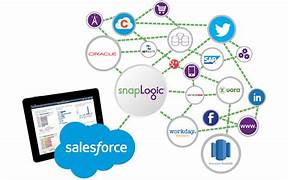
Salesforce and SnapLogic integrations couldn’t be easier with the Tray platform’s robust Salesforce and SnapLogic connectors, which can connect to any service without the need for separate integration tools. Salesforce provides customer relationship management service software, and has a complementary suite of enterprise applications as well. These are focused on customer service, marketing automation, analytics, and application development. It is the market leader in CRM solutions. The latest Salesforce connector v8.7 exposes the v46.0 of Salesforce’s REST API. More information can be found on their primary API documentation (v1) site. Encountering issues while authenticating with Salesforce, especially during the integration of a third-party app like Tray, may result from Salesforce blocking the application. Salesforce’s default settings or specific organizational security policies can automatically block third-party apps that administrators have not pre-authorized. This is a standard precaution to prevent unauthorized access. Steps to Unblock an App in Salesforce: Use cases In each of these examples, Lead Scoring and Prioritization Objective: Automatically score and prioritize leads based on their attributes and activities. Steps: This example leverages AI for lead classification while combining it with traditional data processing for a comprehensive lead scoring system. Like Related Posts Who is Salesforce? Who is Salesforce? Here is their story in their own words. From our inception, we’ve proudly embraced the identity of Read more Salesforce Marketing Cloud Transactional Emails Salesforce Marketing Cloud Transactional Emails are immediate, automated, non-promotional messages crucial to business operations and customer satisfaction, such as order Read more Salesforce Unites Einstein Analytics with Financial CRM Salesforce has unveiled a comprehensive analytics solution tailored for wealth managers, home office professionals, and retail bankers, merging its Financial Read more AI-Driven Propensity Scores AI plays a crucial role in propensity score estimation as it can discern underlying patterns between treatments and confounding variables Read more
Read More
Agentforce - AI's New Role in Sales and Service

Agentforce – AI’s New Role in Sales and Service

From Science Fiction to Reality: AI’s Game-Changing Role in Service and Sales AI for service and sales has reached a critical tipping point, driving rapid innovation. At Dreamforce in San Francisco, hosted by Salesforce we explored how Salesforce clients are leveraging CRM, Data Cloud, and AI to extract real business value from their Salesforce investments. In previous years, AI features branded under “Einstein” had been met with skepticism. These features, such as lead scoring, next-best-action suggestions for service agents, and cross-sell/upsell recommendations, often required substantial quality data in the CRM and knowledge base to be effective. However, customer data was frequently unreliable, with duplicate records and missing information, and the Salesforce knowledge base was underused. Building self-service capabilities with chatbots was also challenging, requiring accurate predictions of customer queries and well-structured decision trees. This year’s Dreamforce revealed a transformative shift. The advancements in AI, especially for customer service and sales, have become exceptionally powerful. Companies now need to take notice of Salesforce’s capabilities, which have expanded significantly. Agentforce – AI’s New Role in Sales and Service Some standout Salesforce features include: At Dreamforce, we participated in a workshop where they built an AI agent capable of responding to customer cases using product sheets and company knowledge within 90 minutes. This experience demonstrated how accessible AI solutions have become, no longer requiring developers or LLM experts to set up. The key challenge lies in mapping external data sources to a unified data model in Data Cloud, but once achieved, the potential for customer service and sales is immense. How AI and Data Integrate to Transform Service and Sales Businesses can harness the following integrated components to build a comprehensive solution: Real-World Success and AI Implementation OpenTable shared a successful example of building an AI agent for its app in just two months, using a small team of four. This was a marked improvement from the company’s previous chatbot projects, highlighting the efficiency of the latest AI tools. Most CEOs of large enterprises are exploring AI strategies, whether by developing their own LLMs or using pre-existing models. However, many of these efforts are siloed, and engineering costs are high, leading to clunky transitions between AI and human agents. Tectonic is well-positioned to help our clients quickly deploy AI-powered solutions that integrate seamlessly with their existing CRM and ERP systems. By leveraging AI agents to streamline customer interactions, enhance sales opportunities, and provide smooth handoffs to human agents, businesses can significantly improve customer experiences and drive growth. Tectonic is ready to help businesses achieve similar success with AI-driven innovation. Like Related Posts Who is Salesforce? Who is Salesforce? Here is their story in their own words. From our inception, we’ve proudly embraced the identity of Read more Salesforce Marketing Cloud Transactional Emails Salesforce Marketing Cloud Transactional Emails are immediate, automated, non-promotional messages crucial to business operations and customer satisfaction, such as order Read more Salesforce Unites Einstein Analytics with Financial CRM Salesforce has unveiled a comprehensive analytics solution tailored for wealth managers, home office professionals, and retail bankers, merging its Financial Read more AI-Driven Propensity Scores AI plays a crucial role in propensity score estimation as it can discern underlying patterns between treatments and confounding variables Read more
Read More
Salesforce Holiday Forecast

Salesforce Holiday Forecast

Value-conscious consumers are increasingly opting for lower-cost options, waiting strategically for discounts, and turning to budget-friendly Chinese shopping apps, leading to a projected 2% year-over-year (YoY) growth in holiday sales both in the U.S. and globally, according to the Salesforce Shopping Index. This index analyzes data from over 1.5 billion global consumers on retail sites. The Salesforce Holiday Forecast isn’t necessarily bleak, but it will leave some merchants feeling glum. In 2023, holiday sales grew by 3% YoY, reaching .17 trillion. However, Salesforce forecasts that global sales for November through December 2024 will only reach .19 trillion, with the U.S. contributing $277 billion. This modest projection aligns with Salesforce consumer surveys, which indicate that while 47% of shoppers plan to spend the same amount as in 2023, 40% intend to spend less this year. “The global economy remains fraught with risks, despite inflation stabilizing,” said Rob Garf, VP and General Manager of Consumer Goods at Salesforce, during a recent briefing. “Interest rates are still high, global conflicts are disrupting supply chains, and we see consumers transferring inflationary costs to debt.” Indeed, a Salesforce survey conducted earlier this month revealed that 37% of consumers are using credit cards more frequently than last year, 32% are turning to buy now, pay later (BNPL) services, and 43% are carrying more monthly debt. Rising Popularity of Chinese Shopping Apps Consumers seeking value are gravitating towards deep-discount Chinese shopping apps like Temu, Shein, and increasingly, TikTok. According to Salesforce’s August 2024 survey, 63% of consumers have made a purchase through these apps in the past six months, and 50% plan to use them during the holiday season. These figures are even higher among Gen Z and millennial consumers, with 80% having purchased from these apps in the past six months and nearly 70% planning to do so during the holidays. Overall, Salesforce predicts that Chinese shopping apps will account for just over 21% of holiday purchases! “Temu and Shein lead the pack, but TikTok is gaining traction, up 24% since April, making it the third most popular app,” said Caila Schwartz, Director of Consumer Insights and Strategy at Salesforce. Consumers cite value as the primary reason for using these apps (58%), far ahead of fast shipping (28%). Consumers Plan to Wait for Cyber Week Deals Many shoppers intend to stretch their budgets by holding off on purchases until Cyber Week, the period around Thanksgiving that includes Black Friday and Cyber Monday. “In 2023, price-conscious consumers waited for Cyber Week to make purchases, and we expect this trend to be even stronger this year,” Schwartz noted. Salesforce data shows that 67% of shoppers are delaying “splurge” purchases until Cyber Week. Salesforce forecasts that global discount rates will briefly rise in October, likely coinciding with the fall edition of Amazon Prime Day, when many retailers run promotions to capture the holiday season’s momentum. Discount rates are expected to peak at an average of 28% globally during Cyber Week, with U.S. discounts forecasted to reach 30%. Shorter Season Highlights BOPIS Importance With only 27 days between Thanksgiving (Nov. 28) and Christmas this year, retailers with strong buy online, pick up in-store (BOPIS) offerings will have a significant advantage. Salesforce predicts that BOPIS will account for one-third (33%) of global online orders during the week before Christmas and Boxing Week. The compressed season will increase the pressure on retailers to execute BOPIS effectively, as failing to meet customer expectations could have serious reputational costs. “Retailers can extend the digital shopping season with BOPIS, but the real winners will be those who can deliver on it,” Garf emphasized. “Store associates are already feeling the strain, especially during the holidays, and some retailers have scaled back their BOPIS offerings, citing increased anxiety among both staff and customers.” Holiday Strategy: Prioritize Customer Acquisition To capture a share of what may be a smaller holiday “pie,” retailers should focus on customer acquisition—and the sooner, the better. With the 2024 elections in the U.S. and many other countries, advertising costs and space availability will be at a premium, making it harder for brands to reach consumers. “Online traffic is cheaper now than it will be in a few months, when political ad spending ramps up,” said David Oksman, VP of Marketing and DTC at Samsonite, who joined Garf and Schwartz at the briefing. “Acquisition costs will rise even more than we’ve seen before.” One additional challenge of holiday sales in an election year. Oksman recommends tried-and-true tactics for driving acquisition and gathering customer data: “Fall is a great time for sweepstakes and giveaways. The old playbooks still work, and customer acquisition is gold.” A sweepstakes prize like a shopping spree or offering exclusive early access to products or deals can incentivize consumers to share their email addresses with a brand. “Loyalty programs are another strong value proposition in the consumer’s mind,” Schwartz added. “Even if you’re not offering points, benefits like free returns or shipping can encourage shoppers to sign up.” Right now is the best time to engage in reactivation campaigns to old customers and prospects. Like Related Posts Who is Salesforce? Who is Salesforce? Here is their story in their own words. From our inception, we’ve proudly embraced the identity of Read more Salesforce Marketing Cloud Transactional Emails Salesforce Marketing Cloud Transactional Emails are immediate, automated, non-promotional messages crucial to business operations and customer satisfaction, such as order Read more Salesforce Unites Einstein Analytics with Financial CRM Salesforce has unveiled a comprehensive analytics solution tailored for wealth managers, home office professionals, and retail bankers, merging its Financial Read more AI-Driven Propensity Scores AI plays a crucial role in propensity score estimation as it can discern underlying patterns between treatments and confounding variables Read more
Read More
Qwary Salesforce Integration

Qwary Salesforce Integration

Qwary Enhances Customer Insights with New Salesforce Integration HERNDON, Va., Aug. 13, 2024 /PRNewswire/ — While surveys have long been a staple for gathering customer feedback, data entry often poses a challenge in obtaining comprehensive insights. Qwary’s new Salesforce integration aims to resolve this issue by enabling seamless data transfer and synchronization between the two platforms. This integration allows teams to consolidate customer information into a single hub, providing real-time visibility and enhancing strategic planning and collaboration. Key features include creating email campaigns, importing contacts, mapping survey results, and automating event-based workflows. What Is Qwary’s Salesforce Integration? Qwary’s Salesforce integration is designed to streamline the analysis of Salesforce survey data, offering a more efficient way to understand customer interactions with your brand. By integrating survey feedback with CRM data, this tool helps you quickly adapt your products and services to meet evolving customer needs. It tracks customer journeys, collects feedback, and reveals pain points, enabling you to deliver tailored solutions. Benefits of Using Qwary’s Salesforce Integration Qwary’s integration offers several notable benefits: Automate Feedback Collection The integration automates the feedback collection process by triggering surveys at strategic points in the customer lifecycle. This allows your team to act swiftly to foster engagement and generate leads. Gain Actionable Insights Seamlessly integrating with Salesforce CRM, Qwary scores, analyzes, and enriches customer data, helping your team identify emerging trends and seize opportunities for personalization and customer development. Synchronize Data Automatically With Qwary’s integration, your contact data is consolidated into a single, reliable source of truth. Whether you’re using Salesforce or Qwary, automated data synchronization ensures consistency and provides real-time updates. Collaborate Effectively The integration promotes effective teamwork by sharing data between Salesforce and Qwary, enabling your team to solve problems collaboratively and refine strategies to boost customer retention. Key Capabilities Qwary’s Salesforce integration excels in managing customer feedback, automating workflows, and consolidating contact data: Salesforce Workflow Automation The integration simplifies scheduling and automating survey triggers, eliminating manual processes. Surveys can be initiated via email or following significant events, with responses seamlessly mapped into Salesforce. This creates a comprehensive view of customer behavior, helping your team act on insights, strengthen connections, and enhance satisfaction. Contact Data Importation Qwary facilitates quick access to Salesforce contacts, providing a holistic view of your customer base. The integration streamlines contact data importation and updates, eliminating manual data entry and speeding up data management. Potential Business Impacts By combining automation, synchronization, and data consolidation with a user-friendly interface, Qwary’s Salesforce integration enhances your sales team’s ability to collect and leverage customer feedback. Immediate access to comprehensive consumer insights allows your business to respond promptly to customer needs, improving satisfaction and loyalty. Real-time data aggregation helps your company adapt quickly and refine offerings to exceed customer expectations. Stay Ahead with Qwary’s Salesforce Integration Qwary continuously updates its solutions to meet the evolving needs of businesses focused on customer engagement. Leveraging automation, synchronization, and advanced analytics through an accessible platform, Qwary’s Salesforce integration empowers your team to enhance offerings and connect with customers efficiently. By optimizing the use of survey data and Salesforce feedback, Qwary keeps your business at the forefront of market trends, enabling you to consistently delight your customers. Like Related Posts Who is Salesforce? Who is Salesforce? Here is their story in their own words. From our inception, we’ve proudly embraced the identity of Read more Salesforce Marketing Cloud Transactional Emails Salesforce Marketing Cloud Transactional Emails are immediate, automated, non-promotional messages crucial to business operations and customer satisfaction, such as order Read more Salesforce Unites Einstein Analytics with Financial CRM Salesforce has unveiled a comprehensive analytics solution tailored for wealth managers, home office professionals, and retail bankers, merging its Financial Read more AI-Driven Propensity Scores AI plays a crucial role in propensity score estimation as it can discern underlying patterns between treatments and confounding variables Read more

Read More
Salesforce Campaign Flows

Salesforce Campaign Flows: A New Era of Automation

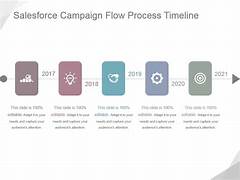
Salesforce’s Flow has long been a powerful automation tool, democratizing access to sophisticated automation for non-coders. It also drives the automation behind Marketing Cloud Growth Edition, including email dispatch. Salesforce Campaign Flows mark a significant step toward making automation more accessible for marketers. For the first time, Salesforce introduces what are termed “non-admin flows,” which offer a streamlined interface for managing Flow automation without dealing with complex nodes and elements. This marks a significant development, as no other Salesforce products currently feature this simplified approach. Marketers now have direct access to Flow’s capabilities. Introduction to Salesforce Campaign Flows Campaign Flows in Salesforce provide a user-friendly interface for setting up email content, applying actions to records triggered by events, and more. This functionality closely parallels tools like Engagement Studio in Account Engagement and Journey Builder in Marketing Cloud. However, the timeline for incorporating features such as Journey Builder’s goals and exit criteria into Campaign Flows remains undisclosed. Flow now supports shorter wait periods, a sought-after feature for orchestrating marketing journeys more effectively. Branching logic with Decision elements allows users to create “yes/no” paths based on lead or contact criteria, adding flexibility to the marketing automation process. Types of Campaign Flows Currently, there are two types of Campaign Flows: Segment-triggered Flows and Form-triggered Flows. The key differences between these Campaign Flows and traditional Salesforce Flows include: Available Elements Campaign Flows are a simplified version of Salesforce Flows, with some elements unavailable in this reduced interface. Key elements such as Wait and Decision elements are included, which are essential for marketing use cases. The following table compares available elements: Element Name Salesforce Flow Segment-triggered Flows Form-triggered Flows Action ✅ ❌ ❌ Add Prompt Instructions ✅ ❌ ❌ Apex Action ✅ ❌ ❌ Assignment ✅ ✅ ✅ Collection Filter ✅ ✅ ✅ Collection Sort ✅ ✅ ✅ Create Records ✅ ✅ ✅ Custom Error ✅ ❌ ❌ Decision ✅ ✅ ✅ Delete Records ✅ ✅ ✅ Email Alert ✅ ❌ ❌ Get Records ✅ ✅ ✅ Loop ✅ ✅ ✅ Recommendation Assignment ✅ ❌ ❌ Screen ✅ ❌ ❌ Send Email Message * ✅ ❌ Send SMS Message * ✅ ❌ Start ✅ ✅ ✅ Subflow ✅ ❌ ❌ Transform ✅ ❌ ❌ Update Records ✅ ✅ ❌ Wait ✅ ✅ ✅ Wait Until Event * ✅ ✅ *Only with Marketing Cloud Growth Wait vs. Wait Until Event Elements The “Wait” element allows for fixed pauses, such as waiting for three days. The “Wait Until Event” element, available in Marketing Cloud Growth, holds Leads/Contacts until a specified event makes them eligible to proceed. This mirrors functionality found in Engagement Studio. User Access and Capabilities In Marketing Cloud Growth, Campaign Flow sharing is set to private by default, with visibility influenced by associated records, sharing rules, and manual sharing settings. This means Campaign Flows are generally private unless additional sharing rules are established. Creating and Editing Campaign Flows Campaign Flows in Marketing Cloud Growth have a simplified user interface compared to Salesforce’s traditional flows. Summary The introduction of non-admin flows in Salesforce marks a significant step toward making automation more accessible for marketers. These simplified interfaces enable the creation of effective marketing campaigns while maintaining the option to integrate with more complex flows in Marketing Cloud Growth Edition. Future developments will likely expand the use cases and capabilities of these streamlined flows. Like Related Posts Who is Salesforce? Who is Salesforce? Here is their story in their own words. From our inception, we’ve proudly embraced the identity of Read more Salesforce Marketing Cloud Transactional Emails Salesforce Marketing Cloud Transactional Emails are immediate, automated, non-promotional messages crucial to business operations and customer satisfaction, such as order Read more Salesforce Unites Einstein Analytics with Financial CRM Salesforce has unveiled a comprehensive analytics solution tailored for wealth managers, home office professionals, and retail bankers, merging its Financial Read more AI-Driven Propensity Scores AI plays a crucial role in propensity score estimation as it can discern underlying patterns between treatments and confounding variables Read more
Read More
Lead Generation 101

Lead Generation 101

Lead Generation 101 In today’s world, where people are bombarded with countless messages and offers daily, marketers need to find effective ways to capture attention and generate genuine interest in their products and services. According to the State of the Connected Customer report, customer preferences and expectations are the top influences on digital strategy for Chief Marketing Officers (CMOs). The ultimate goal of lead generation is to build interest over time that leads to successful sales. Here’s a comprehensive guide to understanding lead generation, the role of artificial intelligence (AI), and the steps you need to take to effectively find and nurture leads. What is Lead Generation? Lead generation is the process of creating interest in a product or service and converting that interest into a sale. By focusing on the most promising prospects, lead generation enhances the efficiency of the sales cycle, leading to better customer acquisition and higher conversion rates. Leads are typically categorized into three types: The lead generation process starts with creating awareness and interest. This can be achieved by publishing educational blog posts, engaging users on social media, and capturing leads through sign-ups for email newsletters or “gated” content such as webinars, virtual events, live chats, whitepapers, or ebooks. Once you have leads, you can use their contact information to engage them with personalized communication and targeted promotions. Effective Lead Generation Strategies To successfully move prospects from interest to buyers, focus on the following strategies: How Lead Qualification and Nurturing Work To effectively evaluate and nurture leads, consider the following: Methods for Nurturing Leads Once you’ve established your lead scoring and grading, consider these nurturing methods: Current Trends in Lead Generation AI is increasingly influencing lead generation by offering advanced tools and strategies: Measuring Success in Lead Generation To evaluate the effectiveness of your lead generation efforts, track the following key metrics: Best Practices for Lead Generation To optimize lead generation efforts and build strong customer relationships, follow these best practices: Effective lead generation is essential for building trust and fostering meaningful customer relationships. By implementing these strategies and best practices, you can enhance your lead generation efforts and drive better business results. Like Related Posts Who is Salesforce? Who is Salesforce? Here is their story in their own words. From our inception, we’ve proudly embraced the identity of Read more Salesforce Marketing Cloud Transactional Emails Salesforce Marketing Cloud Transactional Emails are immediate, automated, non-promotional messages crucial to business operations and customer satisfaction, such as order Read more Salesforce Unites Einstein Analytics with Financial CRM Salesforce has unveiled a comprehensive analytics solution tailored for wealth managers, home office professionals, and retail bankers, merging its Financial Read more AI-Driven Propensity Scores AI plays a crucial role in propensity score estimation as it can discern underlying patterns between treatments and confounding variables Read more
Read More
gettectonic.com