

Salesforce Service Cloud Archives - gettectonic.com - Page 3
AI-Powered Contact Center Landscape

AI-Powered Contact Center Landscape

Navigating the AI-Powered Contact Center Landscape: A Roadmap for Success With thousands of solutions in the contact center ecosystem, each claiming to offer “AI-powered, next-generation technology,” it’s easy to feel overwhelmed. Many of these claims are valid, as AI and machine learning are transforming contact centers and improving customer experiences. But with so many options and combinations of AI-powered solutions, how can you be sure you’re making the right decision? The answer is that it’s almost impossible without help. Trying to research and evaluate every solution on your own could take months or even years—by which time, the technology will have evolved. Plus, if you rely solely on information from manufacturers or software providers, you may only get a one-sided perspective that leads to “CCaaS FOMO” (Fear of Missing Out). A More Objective Approach to the Contact Center Journey While we can’t claim to be 100% unbiased, we take a unique approach. We start with your business, understanding your specific needs, culture, and processes before introducing solutions that fit. Not every top-rated solution is right for your business, and the roadmap below outlines how we help you navigate this complex landscape. 1. Involving Key Stakeholders The first step is ensuring you have the right people involved—those with a vested interest in the contact center‘s success. It’s helpful to break these roles into three categories: Having clear roles and expectations helps streamline the process and ensures everyone is on the same page. 2. Conducting a Contact Center Assessment This discovery phase is crucial for identifying the key drivers behind your business needs. Each contact center is different, even within the same industry. That’s why a one-size-fits-all scorecard won’t work. It’s beneficial to bring in a third-party consultant with broad industry knowledge to conduct an assessment, offering valuable insights that help create a clear vision. 3. Creating a Unique Scorecard Once you’ve completed your assessment, stakeholders can work together to establish a customized scorecard that reflects your business objectives. Whether customer service is your primary focus or you’re more telemarketing-heavy, this scorecard ensures that your solution is tailored to your specific needs. It’s also important to involve contributors and advocates in the process to gain widespread buy-in. 4. Scheduling Solution Demonstrations With a solid scorecard in hand, it’s time to identify and evaluate vendors. A contact center consultant can help streamline this process. Scoring each solution based on how well it aligns with your goals keeps the focus on substance over flash, ensuring the right solution for your business. 5. Analyzing Scorecard Data When reviewing the scorecard data, stakeholders should ask key questions: This analysis ensures that decisions are data-driven and aligned with business goals. 6. Finalizing Vendor Selection-AI-Powered Contact Center Landscape Once the data is compiled and a consensus is reached, it’s time to move forward with a contract proposal. Beyond the solution itself, discuss critical details like implementation timelines, ongoing support, and maintenance to set clear expectations and ensure accountability. Financial Modeling: Justifying the Investment Looking at your goals through a financial lens helps quantify the benefits of your contact center investment. For example, reducing average handling time by just 12 seconds across the company might result in cost-neutral savings. Similarly, reducing call abandonment by even half a percentage point can have a significant impact. These financial considerations help justify ROI and set expectations. Partnering with Tectonic: Expertise You Can Trust At Tectonic, we live and breathe contact centers. Our team of experts comes directly from this world, so we understand the challenges and opportunities. We’re here to help you navigate the complexities of the contact center ecosystem and bring clarity to your CCaaS journey. Contact us today to get started! For more resources, visit our blog or explore our AI solutions to elevate your customer experience. Like Related Posts Who is Salesforce? Who is Salesforce? Here is their story in their own words. From our inception, we’ve proudly embraced the identity of Read more Salesforce Marketing Cloud Transactional Emails Salesforce Marketing Cloud Transactional Emails are immediate, automated, non-promotional messages crucial to business operations and customer satisfaction, such as order Read more Salesforce Unites Einstein Analytics with Financial CRM Salesforce has unveiled a comprehensive analytics solution tailored for wealth managers, home office professionals, and retail bankers, merging its Financial Read more AI-Driven Propensity Scores AI plays a crucial role in propensity score estimation as it can discern underlying patterns between treatments and confounding variables Read more


Read More
Critical Field Service Challenges with Connected Data and AI

Critical Field Service Challenges with Connected Data and AI

Set Up for Success: Tackling Critical Field Service Challenges with Connected Data and AI Today’s customers demand faster, more personalized service, and field service is no exception. Research shows that 74% of mobile workers report that customer expectations have risen, with 73% noting an increased demand for a personal touch. This is shaping key trends in the field service industry. Trend #1: Rising Customer Expectations Amid a Shrinking Workforce Field service teams are grappling with rising customer expectations while dealing with a declining mobile workforce. In fact, 74% of mobile workers report increasing workloads. Given that mobile workers are often the only in-person company representatives, they face intense pressure to deliver exceptional service. At the same time, fewer young people are entering skilled trades, with applications dropping nearly 50% from 2020 to 2022, while seasoned technicians are retiring. This has led to high burnout rates, with 57% of mobile workers experiencing job-related fatigue. Trend #2: Connected Data Empowers Mobile Workers Mobile workers thrive when equipped with connected data. Yet, they spend only 32% of their time interacting with customers, as much of their time is consumed by manual tasks and disjointed systems. With the right technology, mobile workers can access up-to-date customer information through a CRM mobile app, streamlining processes and enabling more personalized service. Connected data also improves sustainability, with features like route optimization and drones reducing time on the road and minimizing worker stress. Trend #3: AI is Revolutionizing Field Service AI is rapidly transforming field service operations. Today, 79% of service organizations are investing in AI, and 83% of decision-makers plan to increase their AI investments next year. AI helps mobile teams save time and cut costs by analyzing customer data to generate personalized responses and streamline processes. By automating workflows with AI, mobile workers can deliver faster, more efficient service. AI-generated summaries of asset history and service interactions help prepare workers before they arrive at a job site, enabling better service and potential upsell opportunities. What’s Next in Field Service? Technologies like generative AI, augmented reality, and mobile solutions are shaping the future of field service. Companies that embrace these innovations now will gain a competitive edge. Like Related Posts Who is Salesforce? Who is Salesforce? Here is their story in their own words. From our inception, we’ve proudly embraced the identity of Read more Salesforce Unites Einstein Analytics with Financial CRM Salesforce has unveiled a comprehensive analytics solution tailored for wealth managers, home office professionals, and retail bankers, merging its Financial Read more AI-Driven Propensity Scores AI plays a crucial role in propensity score estimation as it can discern underlying patterns between treatments and confounding variables Read more Tectonic’s Successful Salesforce Track Record Salesforce Technology Services Integrator – Tectonic has successfully delivered Salesforce in a variety of industries including Public Sector, Hospitality, Manufacturing, Read more
Read More
Vonage Premier for Salesforce Service Cloud Voice

Vonage Premier for Salesforce Service Cloud Voice

HOLMDEL, N.J., Sept. 18, 2024 /PRNewswire/ — Vonage, a global leader in cloud communications helping businesses accelerate their digital transformation and a part of Ericsson (NASDAQ: ERIC), is one of the first contact center providers to join Salesforce’s Bring Your Own Channel for Contact Center as a Service (BYOC for CCaaS) pilot program. With BYOC for CCaaS, Vonage Premier for Salesforce Service Cloud Voice customers will have the ability to integrate Vonage omnichannel and AI-powered capabilities into their existing contact center solutions, including voice, SMS, chat, social messaging apps like WhatsApp, and more – delivering faster resolution times and creating a more native, personalized and meaningful experience for customers by connecting with them on their channel of choice. “We are very excited to have Vonage, a leading Salesforce Service Cloud Voice partner, take this very important step to expand its deep Salesforce integration through BYOC for CCaaS, delivering the omnichannel capabilities – and the APIs to enable them – that create the kind of customer experiences that drive meaningful engagement,” said Tony Flores, Senior Director of Product Management for Salesforce. With BYOC for CCaaS, Vonage Premier for Service Cloud Voice customers will now be able to connect with customers across various communications channels, as well as access data insights and AI-based agent productivity tools, to create a better overall customer journey and a more productive and efficient agent experience. The solution’s single routing and agent capacity model also increases contact center capacity, leading to more customer interactions being resolved better and faster. Workforce Engagement Management (WEM) is also provided through Vonage’s seamless integrations with leading WEM solutions Verint, Calabrio Teleopti, Playvox and injixo, ensuring optimum planning, scheduling, tracking, and management of the contact center workforce. “Today’s contact center agents play a vital role in support of the businesses they represent and in meeting the increasing demands of tech-savvy customers who want to connect from anywhere, on their preferred communications channels,” said Reggie Scales, Acting Head of Applications for Vonage. “These agents are also frequently working from anywhere and need the tools to access critical information to troubleshoot common customer issues and provide real-time customer support. Having all of these capabilities in a single user interface – omnichannel modes of communication coupled with a 360 view of customer information and key knowledge bases – this is the contact center of the future.” A key differentiator for Vonage as a pilot partner in this program is its ability to source a single AI-based Virtual Agent solution for self-service automations across voice and digital channels using Vonage AI studio – while also leveraging Salesforce for all Live Agent Assist and Analytics needs. Vonage can also integrate its own Vonage Communications APIs to power pre-built programmable capabilities for voice, SMS, social and chat, directly into the contact center – all on one combined Salesforce and Vonage platform. This singular view also enhances efficiency by keeping agents and supervisors in a single Salesforce desktop to eliminate application switching and the need to toggle between screens. “Modern contact centers are experiencing increasing pressure and demand to deliver better, more personalized, omnichannel interactions, as well as quicker and more accurate responses to customer issues,” said Jim Lundy, CEO, Founder & Lead Analyst, Aragon Research. “With BYOC for CCaaS, Vonage aims to address the increasing demand for a unified and customizable customer experience across all communication channels, leveraging existing Salesforce platforms and AI-powered insights and automation.” Vonage Premier for Service Cloud Voice is currently available on the Salesforce AppExchange with Salesforce BYOC for CCaaS integrated capabilities now available for customers to pilot. To find out more about Vonage Premier for Service Cloud Voice, visit www.vonage.com. Salesforce, AppExchange, Service Cloud Voice, Einstein and others are among the trademarks of Salesforce, inc. About Vonage Vonage, a global cloud communications leader, helps businesses accelerate their digital transformation. Vonage’s Communications Platform is fully programmable and allows for the integration of Video, Voice, Chat, Messaging, AI and Verification into existing products, workflows and systems. The Vonage conversational commerce application enables businesses to create AI-powered omnichannel experiences that boost sales and increase customer satisfaction. Vonage’s fully programmable unified communications, contact center and conversational commerce applications are built from the Vonage platform and enable companies to transform how they communicate and operate from the office or remotely – providing the flexibility required to create meaningful engagements. Vonage is headquartered in New Jersey, with offices throughout the United States, Europe, Israel and Asia and is a wholly-owned subsidiary of Ericsson (NASDAQ: ERIC), and a business area within the Ericsson Group called Business Area Global Communications Platform. To follow Vonage on X (formerly known as Twitter), please visit twitter.com/vonage. To follow on LinkedIn, visit linkedin.com/company/Vonage/. To become a fan on Facebook, go to facebook.com/vonage. To subscribe on YouTube, visit youtube.com/vonage. SOURCE Vonage Like Related Posts Who is Salesforce? Who is Salesforce? Here is their story in their own words. From our inception, we’ve proudly embraced the identity of Read more Salesforce Marketing Cloud Transactional Emails Salesforce Marketing Cloud Transactional Emails are immediate, automated, non-promotional messages crucial to business operations and customer satisfaction, such as order Read more Salesforce Unites Einstein Analytics with Financial CRM Salesforce has unveiled a comprehensive analytics solution tailored for wealth managers, home office professionals, and retail bankers, merging its Financial Read more AI-Driven Propensity Scores AI plays a crucial role in propensity score estimation as it can discern underlying patterns between treatments and confounding variables Read more
Read More
Enhancing Customer Experiences with Social Insights

Enhancing Customer Experiences with Social Insights

Sprout Social Announces Integration with Salesforce Agentforce for Service Cloud Sprout Social (SPT) has unveiled a new integration with Salesforce’s (CRM) Agentforce assistant for Service Cloud. This partnership enables joint customers of Salesforce Service Cloud and Sprout Social to gather customer insights from social media and take proactive action to enhance customer experiences. These updates will be highlighted at Dreamforce 2024, where Sprout Social will showcase how AI, social data, and Salesforce can drive revenue, foster customer loyalty, and strengthen brand equity. As a leading provider of cloud-based social media management software, Sprout Social’s integration with Salesforce’s Agentforce assistant empowers businesses to capture social media insights and accelerate decision-making in customer service. These advancements will be a focal point at Dreamforce 2024, where Sprout Social will present on utilizing AI and social data to enhance customer care, build brand loyalty, and grow revenue. Enhancing Customer Experiences with Social Insights Delivering exceptional customer care requires meeting customers where they are—often on social media. This new integration equips businesses with a full view of their customers by combining social data with Agentforce’s AI-powered assistance. By leveraging this combined solution, companies can resolve cases more efficiently and anticipate customer needs, shifting from reactive to proactive customer service strategies. “This extension demonstrates our commitment to AI-driven innovation and our strong partnership with Salesforce,” said Scott Morris, Chief Marketing Officer of Sprout Social. “In today’s landscape, where customer care defines brand success, integrating social insights is crucial for supporting holistic, long-term care strategies and empowering brands to deliver personalized interactions at scale.” The integration expands Agentforce’s capabilities to include social data from major networks and review sites, alongside traditional communication channels like phone and email. This comprehensive view enables service teams to provide a seamless and personalized customer experience. A New Era of AI-Driven Customer Service “Social customer care has become integral to providing quality, end-to-end customer experiences,” said Ryan Nichols, Chief Customer Officer at Salesforce Service Cloud. “Collaborating with Sprout to integrate their platform with Agentforce assistant is a key step in enabling service teams to gain comprehensive customer insights and leverage conversational AI to elevate customer care.” At Dreamforce 2024, Sprout Social will present key sessions, including: The integration, currently in invite-only beta, enhances Agentforce with social data-driven insights, making customer service faster and more proactive. To learn more, contact your Sprout Social representative or visit Sprout Social’s Service Cloud page. Key Features of the Integration: Sprout Social will highlight these features at Dreamforce 2024, with insights on leveraging AI, social data, and Salesforce for enhanced customer care and brand growth. Like Related Posts Who is Salesforce? Who is Salesforce? Here is their story in their own words. From our inception, we’ve proudly embraced the identity of Read more Salesforce Marketing Cloud Transactional Emails Salesforce Marketing Cloud Transactional Emails are immediate, automated, non-promotional messages crucial to business operations and customer satisfaction, such as order Read more Salesforce Unites Einstein Analytics with Financial CRM Salesforce has unveiled a comprehensive analytics solution tailored for wealth managers, home office professionals, and retail bankers, merging its Financial Read more AI-Driven Propensity Scores AI plays a crucial role in propensity score estimation as it can discern underlying patterns between treatments and confounding variables Read more

Read More
Salesforce and Monte Carlo

Salesforce and Monte Carlo

Salesforce recently announced a strategic partnership with Monte Carlo, a leading fashion brand, to revolutionize the company’s consumer engagement across multiple channels. This collaboration will help Monte Carlo evolve from a winter-wear icon into a year-round favorite in India’s competitive fashion industry, appealing to customers of all ages while maintaining its legacy in winter apparel. In a statement, Monte Carlo shared, “Our decision to adopt Salesforce CRM aligns with our vision of becoming a digital-first, data-driven organization that leverages cutting-edge technology to enhance customer experiences. With Salesforce, we aim to transform the customer journey by gaining a unified, 360-degree view of customers across online and offline channels.” Monte Carlo has embraced Salesforce Data Cloud to create a holistic view of each customer, enabling streamlined communication across all channels to ensure more seamless and efficient engagements. Additionally, Monte Carlo is committed to delivering exceptional customer experiences at every stage—before, during, and after a purchase. The brand is using Salesforce Service Cloud to implement a personalized loyalty solution that goes beyond traditional point-based rewards, offering customers a unique and memorable experience. Like Related Posts Who is Salesforce? Who is Salesforce? Here is their story in their own words. From our inception, we’ve proudly embraced the identity of Read more Salesforce Marketing Cloud Transactional Emails Salesforce Marketing Cloud Transactional Emails are immediate, automated, non-promotional messages crucial to business operations and customer satisfaction, such as order Read more Salesforce Unites Einstein Analytics with Financial CRM Salesforce has unveiled a comprehensive analytics solution tailored for wealth managers, home office professionals, and retail bankers, merging its Financial Read more AI-Driven Propensity Scores AI plays a crucial role in propensity score estimation as it can discern underlying patterns between treatments and confounding variables Read more

Read More
Salesforce Org Merge Risks

Salesforce Org Merge Risks

Managing Multiple Salesforce Instances: Challenges and Solutions For growing enterprises, managing multiple Salesforce instances can be a significant challenge. Each instance may house critical business data and processes, which often need to be consolidated, particularly during mergers, acquisitions, or different stages of Salesforce adoption. This consolidation is essential to reduce operating costs and enhance efficiency. Salesforce Org Merge Risks. Salesforce Org Merge Risks Overview Salesforce consolidation involves merging several instances into a single Salesforce organization. This process aims to improve operational efficiency, data visibility, and process standardization while minimizing the total cost of ownership. It may require setting up a new Salesforce organization to facilitate the merger. Typical Salesforce Consolidation Plan A comprehensive consolidation plan typically includes the following steps: Complexity and Benefits of Salesforce Consolidation While Salesforce consolidation offers significant benefits, such as improved efficiency and reduced costs, it is a complex process requiring careful planning and execution. Many companies partner with Salesforce experts, like Tectonic, to navigate the intricacies of consolidation successfully. Salesforce Org Merge Risks Risk 1: Under-Scoping Data Mapping, Migration, and Merging Risk 2: Overlooking Metrics, Measurements, and Reports Risk 3: Limiting Stakeholder Engagement and Change Management Conclusion While meticulous planning cannot guarantee a flawless Salesforce migration, it fosters communication among Salesforce, data, and business leaders, making challenges more manageable. Although managing and consolidating systems might seem straightforward, guiding people, processes, and data through the consolidation process is inherently complex and demanding. Like Related Posts Who is Salesforce? Who is Salesforce? Here is their story in their own words. From our inception, we’ve proudly embraced the identity of Read more Salesforce Marketing Cloud Transactional Emails Salesforce Marketing Cloud Transactional Emails are immediate, automated, non-promotional messages crucial to business operations and customer satisfaction, such as order Read more Salesforce Unites Einstein Analytics with Financial CRM Salesforce has unveiled a comprehensive analytics solution tailored for wealth managers, home office professionals, and retail bankers, merging its Financial Read more AI-Driven Propensity Scores AI plays a crucial role in propensity score estimation as it can discern underlying patterns between treatments and confounding variables Read more

Read More
AI-Powered Field Service

AI-Powered Field Service

Salesforce has introduced new AI-powered field service capabilities designed to streamline operations for dispatchers, technicians, and field service leaders. Leveraging the Salesforce platform and Data Cloud, these innovations aim to expedite time-consuming processes and enhance customer satisfaction by making field service operations more proactive and efficient. Why it matters: Field service teams currently spend only 32% of their time interacting with customers, with the remaining 68% consumed by administrative tasks like manually entering case notes. With 78% of field service workers in AI-enabled organizations reporting that AI helps save time, Salesforce’s new tools address these inefficiencies head-on. Key AI-driven innovations for Field Service: Availability: Paul Whitelam, GM & SVP of Salesforce Field Service, notes, “The future of field service lies in the seamless integration of AI, data, and human expertise. Our new capabilities set new standards for efficiency and service delivery.” Rudi Khoury, Chief Digital Officer at Fisher & Paykel, adds, “With Salesforce Field Service, we’re not just embracing AI and data-driven insights — we’re advancing into the future of field service, achieving unprecedented efficiency and exceptional service.” Like Related Posts Who is Salesforce? Who is Salesforce? Here is their story in their own words. From our inception, we’ve proudly embraced the identity of Read more Salesforce Marketing Cloud Transactional Emails Salesforce Marketing Cloud Transactional Emails are immediate, automated, non-promotional messages crucial to business operations and customer satisfaction, such as order Read more Salesforce Unites Einstein Analytics with Financial CRM Salesforce has unveiled a comprehensive analytics solution tailored for wealth managers, home office professionals, and retail bankers, merging its Financial Read more AI-Driven Propensity Scores AI plays a crucial role in propensity score estimation as it can discern underlying patterns between treatments and confounding variables Read more
Read More
When The Customers Prefer Self-Service

When The Customers Prefer Self-Service

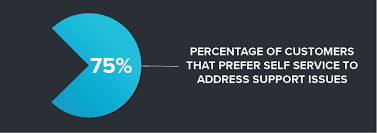
Assistance is crucial for complex issues, but for simpler problems, customers typically prefer the convenience of self-service tools like account portals, FAQs, and chatbots. This preference is especially strong among digital natives, such as millennials and Gen Z. However, deploying self-service tools requires careful planning. For instance, over two-thirds of customers abandon a company’s chatbot after a single negative experience, underscoring the importance of a positive initial interaction. Statistics show that 72% of customers use self-service portals, and 55% engage with self-service chatbots. The willingness of nearly half of all customers, including 60% of millennials, to pay more for superior customer service highlights the importance of customer experience in an era of price sensitivity. Customers expect instant responses, creating a scalability challenge for service teams but also an opportunity to offer premium service. Instant responses can set a company apart, as even well-regarded brands often struggle to maintain quick and seamless connections between customers and agents. Self-service platforms must be easily adjustable, not only to address areas needing improvement but also to adapt to changing market demands. Customers now expect proactive service rather than the traditional reactive approach. Despite this, customer service is often perceived as reactive. The time and effort customers spend resolving service issues are significant, especially when service teams are inconsistently trained and equipped, leading to a perception that quality service is a matter of luck. Consistency across channels, devices, and departments is highly valued but often lacking. Many customers find themselves repeating information to different representatives, indicating a fragmented information environment. Poorly integrated technology and processes leave 55% of customers feeling as if they interact with separate departments rather than a unified company. Disconnected experiences are a major source of frustration. Prompt resolution of issues is a top priority for customers, and many find it quicker to search for answers themselves than to contact the company. Self-service not only facilitates quick problem-solving but also empowers customers to address issues at their own pace and learn as much or as little as they wish. In terms of preferences, over 67% of customers prefer some form of self-service over speaking with a representative. Additionally, 73% prefer using the company’s website for support rather than relying on social media, SMS, or live chat apps. Don’t always assume the “latest and greatest” solutions available are the best solutions for your customers. A self-service strategy involves providing customers with tools to resolve their needs independently, reducing the need for representative assistance. Reduce staffing needs and increase speed to answers for customers. Its a win win. However, implementing self-service can face challenges, such as confusing navigation, lack of ongoing attention, inflexibility, failure to incorporate feedback, constraints on users, extra work, lack of human interaction, difficulty in personalization, and the need for continuous analysis and monitoring. Successful self-service integration requires addressing these factors to meet customer expectations. Contact Tectonic for assistance bringing your self-service solutions to your customers. Like1 Related Posts Who is Salesforce? Who is Salesforce? Here is their story in their own words. From our inception, we’ve proudly embraced the identity of Read more Salesforce Unites Einstein Analytics with Financial CRM Salesforce has unveiled a comprehensive analytics solution tailored for wealth managers, home office professionals, and retail bankers, merging its Financial Read more AI-Driven Propensity Scores AI plays a crucial role in propensity score estimation as it can discern underlying patterns between treatments and confounding variables Read more Tectonic’s Successful Salesforce Track Record Salesforce Technology Services Integrator – Tectonic has successfully delivered Salesforce in a variety of industries including Public Sector, Hospitality, Manufacturing, Read more

Read More
New Service Cloud Tools

New Service Cloud Tools

Salesforce has unveiled new out-of-the-box service components, an automation tool, and a new app for Service Cloud customers, designed to help agents resolve customer cases faster and enable companies to scale their support operations efficiently. New Service Cloud Tools are here. Why It Matters: With 69% of agents reporting that balancing speed and quality is a challenge, and as the volume and complexity of cases increase, there is a growing need for tools that enhance efficiency without compromising service quality. Salesforce Service Cloud: Deliver Value Across Every Customer Touchpoint with Service Cloud Built on the Einstein 1 Platform. New Tools and Features: Service Cloud customers now have access to a suite of efficiency tools aimed at automating processes and identifying the best product capabilities to enhance service delivery. These new features allow customers to maximize their Service Cloud investment and improve their return on investment. Salesforce Perspective: Kishan Chetan, EVP & GM of Service Cloud, emphasized that the new efficiency tools help companies of all sizes increase service team productivity and better serve their customers. Industry Reaction: Rebecca Wettemann, CEO & Principal Analyst at Valoir, noted that these innovations offer service teams quick wins, enhancing operational efficiency and maximizing technology investments. Fast Facts: Like Related Posts Who is Salesforce? Who is Salesforce? Here is their story in their own words. From our inception, we’ve proudly embraced the identity of Read more Salesforce Marketing Cloud Transactional Emails Salesforce Marketing Cloud Transactional Emails are immediate, automated, non-promotional messages crucial to business operations and customer satisfaction, such as order Read more Salesforce Unites Einstein Analytics with Financial CRM Salesforce has unveiled a comprehensive analytics solution tailored for wealth managers, home office professionals, and retail bankers, merging its Financial Read more AI-Driven Propensity Scores AI plays a crucial role in propensity score estimation as it can discern underlying patterns between treatments and confounding variables Read more

Read More
Salesforce Automated Case Routing

Understand Salesforce Automated Case Routing

Simplified Case Management with Automation Customer service becomes easier, faster, and more effective with automation tools. A well-organized case management system ensures that customer inquiries are routed to the right person, get the correct answers, and are resolved promptly. Delays or errors in responses can lead to customer dissatisfaction, making efficient case routing critical. Salesforce Service Cloud offers robust automation tools to simplify case management and ensure the right service agents handle cases efficiently, minimizing errors and maximizing customer satisfaction. Efficient Handling of Multi-Channel Case Creation With cases being generated from multiple service channels like web, email, phone, and chat, managing them efficiently can be challenging. Service agents often spend significant time prioritizing, sorting, and assigning cases manually, which can reduce productivity. Moreover, identifying agents with specialized skills and assigning appropriate cases to them can be time-consuming. Automating this process ensures optimal resource utilization, faster resolutions, and higher customer satisfaction. Salesforce provides several tools for routing cases to the right agents: Additionally, advanced automation tools enhance case-routing efficiency: Omni-Channel Routing: Revolutionizing Case Management Omni-Channel Routing is a powerful feature that transforms inefficient systems into streamlined workflows. Without it, agents often rely on manual processes, such as selecting cases from lists, which can result in: Omni-Channel automatically assigns cases to qualified and available agents in real-time, ensuring balanced workloads and prioritizing urgent cases. It seamlessly integrates with both Salesforce Classic and Lightning Experience, saving time and enabling agents to focus on resolving cases quickly. Routing Techniques: Case Assignment Rules: Simplifying Small Business Needs Case Assignment Rules automate case ownership by assigning cases to specific users or queues based on predefined criteria. These rules apply to all cases, regardless of origin, including web-to-case, email-to-case, and more. Key Features: Escalation Rules: Prioritizing Unresolved Cases Escalation Rules help identify and resolve cases that remain unresolved within a specific timeframe. They reassign cases to specific users or teams and send notifications, ensuring: Rules are configured with business hours and time-based criteria to determine when cases should be escalated. Einstein Case Classification & Routing: AI-Powered Efficiency Salesforce Einstein uses machine learning to predict and populate case record fields automatically, reducing agent effort and improving accuracy. How It Works: Einstein Case Routing combines AI predictions with assignment or skill-based routing rules to assign cases to the most suitable agents, improving resolution speed and customer satisfaction. Conclusion Automated case routing transforms customer service by improving productivity, efficiency, and resolution speed. While Omni-Channel Routing is the most comprehensive tool for case management, Escalation and Assignment Rules also play vital roles for smaller business needs. Together, these tools enable businesses to deliver exceptional customer experiences. Like1 Related Posts Who is Salesforce? Who is Salesforce? Here is their story in their own words. From our inception, we’ve proudly embraced the identity of Read more Salesforce Marketing Cloud Transactional Emails Salesforce Marketing Cloud Transactional Emails are immediate, automated, non-promotional messages crucial to business operations and customer satisfaction, such as order Read more Salesforce Unites Einstein Analytics with Financial CRM Salesforce has unveiled a comprehensive analytics solution tailored for wealth managers, home office professionals, and retail bankers, merging its Financial Read more AI-Driven Propensity Scores AI plays a crucial role in propensity score estimation as it can discern underlying patterns between treatments and confounding variables Read more

Read More
My Service Journey is Here

My Service Journey is Here

Salesforce Launches My Service Journey: A New Product Discovery Tool for Customer Service Salesforce has introduced My Service Journey, its inaugural product discovery solution tailored for customer service. Currently in open beta, this tool assists users in exploring the features available in Service Cloud, ensuring that contact centers fully understand the resources at their disposal. This launch is noteworthy because discovering product capabilities within comprehensive platforms like Service Cloud can often be fragmented and challenging. While webinars, support documents, release notes, communities, and social media offer valuable insights, navigating 15 years’ worth of content to grasp the full extent of Service Cloud’s capabilities can be overwhelming. My Service Journey aims to streamline and personalize this discovery process, making it easier for users to find and utilize the features that matter most to them. Key Features of My Service Journey The Benefits and Future Plans for My Service Journey My Service Journey is designed to foster continuous innovation in contact centers, which is crucial as service leaders often struggle to advance transformation projects due to daily operational challenges. This tool provides a solid foundation for advancing transformation efforts, particularly for organizations using a comprehensive platform like Service Cloud. Currently, My Service Journey is available only in English and remains in beta, but Salesforce has ambitious plans for its future. According to Matt Kravitz, VP of Product Management at Salesforce: “We’re considering literal roadmaps based on specific business outcomes, with plans for a 20-step roadmap to guide users through different stages of adoption.” Salesforce also plans to introduce a generative conversational experience based on the solution’s one-pagers, allowing users to interactively query the tool for more information. Additional Service Cloud Innovations Alongside My Service Journey, Salesforce has launched two other noteworthy solutions for Service Cloud: Both the Service Innovations suite and the Business Rules Engine are available with a permissions set license for Salesforce Service Cloud. Like Related Posts Who is Salesforce? Who is Salesforce? Here is their story in their own words. From our inception, we’ve proudly embraced the identity of Read more Salesforce Marketing Cloud Transactional Emails Salesforce Marketing Cloud Transactional Emails are immediate, automated, non-promotional messages crucial to business operations and customer satisfaction, such as order Read more Salesforce Unites Einstein Analytics with Financial CRM Salesforce has unveiled a comprehensive analytics solution tailored for wealth managers, home office professionals, and retail bankers, merging its Financial Read more AI-Driven Propensity Scores AI plays a crucial role in propensity score estimation as it can discern underlying patterns between treatments and confounding variables Read more
Read More
Residential License and Permit Management

Residential License and Permit Management

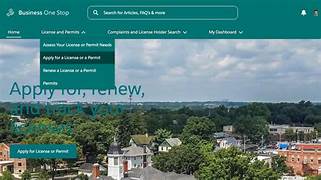
Apply for Licenses and Permits Online from Any Device As governments increasingly digitize and streamline residential services, Salesforce’s Public Sector Solutions for Residential License and Permit Management offers residents a seamless, one-stop experience to apply for licenses and permits in a branded, user-friendly environment. Starting from the home page, residents can access FAQs, Knowledge articles, search capabilities, and informational banners. They can then navigate to the License and Permits tab to apply directly online by filling out a form, with an integrated map to help determine the location. Effortlessly Collect the Right Information Many current license and permit application websites require residents to sift through numerous PDF forms to find the right application. Salesforce Public Sector Solutions simplifies this process with smart, automated applications. When applying for a building permit, for example, relevant information like construction cost and type of work is collected. Simple calculations can process and display applicable fees, ensuring transparency for the resident. Information buttons guide residents through the data collection process, helping to ensure data accuracy. The process dynamically adjusts to display relevant inputs based on the license or permit type as the applicant progresses through the application. Upload Files Easily from Any Device Licenses and permits often require attachments such as architectural diagrams and photos. While many government agencies currently rely on paper forms, residents expect to complete transactions on their phones or from the comfort of their homes. The Salesforce platform enables residents to easily upload attachments online from their mobile phones, desktops, or other devices. Electronic Signatures Digitize the Process Collecting a signature often requires printing a paper form and then mailing or physically returning it. Once collected, government agencies must manually manage, scan, and store these forms. Salesforce Public Sector Solutions allow residents, contractors, and government employees to capture electronic signatures directly from a device, greatly speeding up the process and providing a simple way to track documents. Automated Confirmation Number With a manual, paper-based application process, applicants often don’t know if they have submitted enough information to complete the application successfully. Salesforce’s data validations ensure that residents know they’ve successfully completed their submission as soon as they’ve applied. Additionally, the “Save for Later” feature allows residents to save their application progress, making it easier for them to gather necessary documents before completing the remaining steps. Track Permit Status Online Many government agencies report that 75-80% of their call volumes are from residents simply checking the status of their applications. With Salesforce, residents can enjoy self-service by checking their application status anytime, on any device, reducing call volumes and providing better transparency. 360-Degree Application View for Easy Tracking and Faster Approvals Government employees have easy access to all the information about the applicant and the application. Tools like the guided path at the top of the application help save time and ensure a consistent process by providing step-by-step guidance. The path can be customized to fit the specific number of steps and instructions required for your process. Automate License Creation Once each step in the path is completed and approvals are met, the license is automatically created with no extra clicks or steps, and email notifications are sent automatically. Automating license creation speeds up the permit process, allowing residents to start their projects faster and enabling the government to better serve the community and efficiently collect revenue from permits and licenses. Access Issued Licenses Online After a license is approved, applicants can go online to view the status and the license itself. Real-time updates allow residents to move forward with their projects even faster. Licenses and permits requiring renewal can also be managed, launching a renewal process from an existing license or permit based on business rules. Like Related Posts Who is Salesforce? Who is Salesforce? Here is their story in their own words. From our inception, we’ve proudly embraced the identity of Read more Salesforce Marketing Cloud Transactional Emails Salesforce Marketing Cloud Transactional Emails are immediate, automated, non-promotional messages crucial to business operations and customer satisfaction, such as order Read more Salesforce Unites Einstein Analytics with Financial CRM Salesforce has unveiled a comprehensive analytics solution tailored for wealth managers, home office professionals, and retail bankers, merging its Financial Read more AI-Driven Propensity Scores AI plays a crucial role in propensity score estimation as it can discern underlying patterns between treatments and confounding variables Read more

Read More
Einstein Service Agent is Coming

Einstein Service Agent is Coming

Salesforce is entering the AI agent arena with a new service built on its Einstein AI platform. Introducing the Einstein Service Agent, a generative AI-powered self-service tool designed for end customers. This agent provides a conversational AI interface to answer questions and resolve various issues. Similar to the employee-facing Einstein Copilot used internally within organizations, the Einstein Service Agent can take action on behalf of users, such as processing product returns or issuing refunds. It can handle both simple and complex multi-step interactions, leveraging approved company workflows already established in Salesforce. Initially, Einstein Service Agent will be deployed for customer service scenarios, with plans to expand to other Salesforce clouds in the future. What sets Einstein Service Agents apart from other AI-driven workflows is their seamless integration with Salesforce’s existing customer data and workflows. “Einstein Service Agent is a generative AI-powered, self-service conversational experience built on our Einstein trust layer and platform,” Clara Shih, CEO of Salesforce AI, told VentureBeat. “Everything is grounded in our trust layer, as well as all the customer data and official business workflows that companies have been adding into Salesforce for the last 25 years.” Distinguishing AI Agent from AI Copilot Over the past year, Salesforce has detailed various aspects of its generative AI efforts, including the development of the Einstein Copilot, which became generally available at the end of April. The Einstein Copilot enables a wide range of conversational AI experiences for Salesforce users, focusing on direct users of the Salesforce platform. “Einstein Copilot is employee-facing, for salespeople, customer service reps, marketers, and knowledge workers,” Shih explained. “Einstein Service Agent is for our customers’ customers, for their self-service.” The concept of a conversational AI bot answering basic customer questions isn’t new, but Shih emphasized that Einstein Service Agent is different. It benefits from all the data and generative AI work Salesforce has done in recent years. This agent approach is not just about answering simple questions but also about delivering knowledge-based responses and taking action. With a copilot, multiple AI engines and responses can be chained together. The AI agent approach also chains AI models together. For Shih, the difference is a matter of semantics. “It’s a spectrum toward more and more autonomy,” Shih said. Driving AI Agent Approach with Customer Workflows As an example, Shih mentioned that Salesforce is working with a major apparel company as a pilot customer for Einstein Service Agent. If a customer places an online order and receives the wrong item, they could call the retailer during business hours for assistance from a human agent, who might be using the Einstein Copilot. If the customer reaches out when human agents aren’t available or chooses a self-service route, Einstein Service Agent can step in. The customer will be able to ask about the issue and, if enabled in the workflow, get a resolution. The workflow that understands who the customer is and how to handle the issue is already part of the Salesforce Service Cloud. Shih explained that Einstein Studio is where all administrative and configuration work for Einstein AI, including Service Agents, takes place, utilizing existing Salesforce data. The Einstein Service Agent provides a new layer for customers to interact with existing logic to solve issues. “Everything seemingly that the company has invested in over the last 25 years has come to light in the last 18 months, allowing customers to securely take advantage of generative AI in a trusted way,” Shih said. Like Related Posts Who is Salesforce? Who is Salesforce? Here is their story in their own words. From our inception, we’ve proudly embraced the identity of Read more Salesforce Marketing Cloud Transactional Emails Salesforce Marketing Cloud Transactional Emails are immediate, automated, non-promotional messages crucial to business operations and customer satisfaction, such as order Read more Salesforce Unites Einstein Analytics with Financial CRM Salesforce has unveiled a comprehensive analytics solution tailored for wealth managers, home office professionals, and retail bankers, merging its Financial Read more AI-Driven Propensity Scores AI plays a crucial role in propensity score estimation as it can discern underlying patterns between treatments and confounding variables Read more
Read More
Summer 24 Salesforce Maps Release

Summer 24 Salesforce Maps Release

Announcing the Salesforce Maps Summer ’24 Release! We are thrilled to announce the availability of the Salesforce Summer ’24 Maps release, designed to significantly enhance your experience and bring valuable benefits to your business. Key Features and Enhancements Summer 24 Salesforce Maps Release: For a comprehensive overview, please refer to the Maps Summer ‘24 Release Notes. We encourage you to enable this new experience and provide your valuable feedback to ensure it meets your needs and expectations. Note that the new experience will be auto-enabled in the Winter ’25 Release (October). Instructions on activating the new experience can be found here. Like Related Posts Who is Salesforce? Who is Salesforce? Here is their story in their own words. From our inception, we’ve proudly embraced the identity of Read more Salesforce Marketing Cloud Transactional Emails Salesforce Marketing Cloud Transactional Emails are immediate, automated, non-promotional messages crucial to business operations and customer satisfaction, such as order Read more Salesforce Unites Einstein Analytics with Financial CRM Salesforce has unveiled a comprehensive analytics solution tailored for wealth managers, home office professionals, and retail bankers, merging its Financial Read more AI-Driven Propensity Scores AI plays a crucial role in propensity score estimation as it can discern underlying patterns between treatments and confounding variables Read more

Read More
gettectonic.com