

Artificial Intelligence Archives - gettectonic.com - Page 9
AI Causes Job Flux

AI Causes Job Flux

AI Barometer Signals Job Disruption Amid Global Productivity Gains A recent PwC report highlights significant productivity improvements worldwide, but also points to potential job disruption due to artificial intelligence (AI). Described as the “Industrial Revolution of knowledge work,” AI is transforming how workers utilize information, generate content, and deliver results at unprecedented speed and scale. The 2024 AI Jobs Barometer, released by PwC, aims to provide empirical data on the impact of AI on global employment. AI Causes Job Flux but not necessarly job loss. AI Causes Job Flux The analysis involved examining over half a billion job ads across 15 advanced economies, including the U.S., Canada, Singapore, Australia, New Zealand, and several European nations. PwC sought to uncover the effects of AI on jobs, skills, wages, and productivity by monitoring the rise of positions requiring specialist AI skills across various industries and regions. The findings show that AI adoption is accelerating, with workers proficient in AI commanding substantial wage premiums. Broader Workforce Impact Interestingly, the impact of AI extends beyond workers with specialized AI skills. According to PwC, the majority of workers leveraging AI tools do not require such expertise. In many cases, a small number of AI specialists design tools that are then used by thousands of customer service agents, analysts, or legal professionals—none of whom possess advanced AI knowledge. This trend is driven largely by generative AI applications, which can typically be operated using simple, everyday language without technical skills. AI’s Economic Promise AI is leading a productivity revolution. Labor productivity growth has stagnated in many OECD countries over the past two decades, but AI may offer a solution. To better understand its effect on productivity, PwC analyzed jobs based on their “AI exposure,” indicating the extent to which AI can assist with tasks within specific roles. The report found that industries with higher AI exposure are experiencing much greater labor productivity growth. Knowledge-based jobs, in particular, show the highest AI exposure and the greatest demand for workers with advanced AI skills. Sectors such as financial services, professional services, and information and communications are leading the way, with AI-related job shares 2.8x, 3x, and 5x higher, respectively, than other industries. Overall, these sectors are witnessing nearly fivefold productivity growth due to AI integration. AI is also playing a role in alleviating labor shortages. Jobs in customer service, administration, and IT, among others, are still growing but at a slower rate. AI-driven productivity may help fill gaps caused by shrinking working-age populations in advanced economies. Wage Premiums for AI Skills Workers in AI-specialist roles are seeing significant wage premiums—up to 25% on average. Since 2016, demand for these roles has outpaced the growth of the overall job market. The highest wage premiums are found in the U.S. (25%) and the U.K. (14%), with data specialists commanding premiums of over 50% in both countries. Financial analysts, lawyers, and marketing managers also enjoy substantial wage boosts. The Disruption of Job Markets The skills required for AI-exposed jobs are evolving rapidly. PwC’s report reveals that new skills are emerging 25% faster in AI-exposed occupations compared to those less affected by AI. Jobs requiring AI proficiency have grown 3.5 times faster than other roles since 2016, and this trend predates the rise of popular tools like ChatGPT. However, while AI is driving demand for new skills, it is also reducing the need for certain old ones. Jobs in fields like IT, design, sales, and data analysis are seeing slower growth, as tasks in these areas are increasingly automated by AI technologies. The Future of Work The PwC report stresses that AI will not necessarily result in fewer jobs overall, but will change the nature of work. Instead of asking whether AI can replicate existing tasks, the focus should be on how AI enables new opportunities and industries. Tectonic recommends you work on this trail of thought by implementing AI Acceptable Use Policies in your company. Encourage your teams to explore AI tools that increase productivity but clearly outline what is and is not acceptable AI usage. PwC outlines several steps for policymakers, business leaders, and workers to take to ensure a positive transition into the AI era. Policymakers are encouraged to promote AI adoption through supportive policies, digital infrastructure, and workforce development. Business leaders should embrace AI as a complement to human workers, focusing on generating new ways to create value. Meanwhile, workers must build AI-complementary skills and experiment with AI tools to remain competitive in the evolving job market. Ultimately, while AI is disrupting the job landscape, it also presents vast opportunities for those who are willing to adapt. Like past technological revolutions, those who embrace change stand to benefit the most from AI’s transformative power. Like Related Posts Who is Salesforce? Who is Salesforce? Here is their story in their own words. From our inception, we’ve proudly embraced the identity of Read more Salesforce Marketing Cloud Transactional Emails Salesforce Marketing Cloud Transactional Emails are immediate, automated, non-promotional messages crucial to business operations and customer satisfaction, such as order Read more Salesforce Unites Einstein Analytics with Financial CRM Salesforce has unveiled a comprehensive analytics solution tailored for wealth managers, home office professionals, and retail bankers, merging its Financial Read more AI-Driven Propensity Scores AI plays a crucial role in propensity score estimation as it can discern underlying patterns between treatments and confounding variables Read more

Read More

Where Does AI Fit in Healthcare?

AI in Healthcare: Weighing the Promise Against the Pitfalls The rise of artificial intelligence in healthcare has been meteoric—sparking both enthusiasm and apprehension. From diagnosing diseases faster than human clinicians to parsing mountains of unstructured EHR data, AI’s potential seems limitless. But as adoption accelerates, so do concerns about privacy, ethics, and the risk of over-reliance on machines. Here’s a balanced look at the key benefits and challenges shaping AI’s role in modern medicine. The Case for AI: Efficiency, Insight, and Support 1. Reducing Clinician Burnout 2. Enhancing Diagnostics and Population Health 3. Restoring the Human Touch The Risks: Job Disruption, Bias, and Privacy Threats 1. Workforce Anxiety 2. Data Privacy and Security 3. Ethical Quagmires Navigating the Future: Collaboration Over Conflict The path forward demands guardrails, not gridlock: As National Academy of Medicine warns: “Unanswered questions aren’t a reason to stall—they’re a call to innovate responsibly.” The Bottom Line AI won’t replace doctors, but it will redefine their workflows. The stakes? Better care versus broken trust. Success hinges on balancing three imperatives: “The best healthcare AI doesn’t act alone—it empowers the people who heal.” Key Stats to Watch: Where do you stand? Is AI healthcare’s savior—or its next crisis? Content updated March 2025. Like Related Posts Who is Salesforce? Who is Salesforce? Here is their story in their own words. From our inception, we’ve proudly embraced the identity of Read more Salesforce Unites Einstein Analytics with Financial CRM Salesforce has unveiled a comprehensive analytics solution tailored for wealth managers, home office professionals, and retail bankers, merging its Financial Read more AI-Driven Propensity Scores AI plays a crucial role in propensity score estimation as it can discern underlying patterns between treatments and confounding variables Read more Tectonic’s Successful Salesforce Track Record Salesforce Technology Services Integrator – Tectonic has successfully delivered Salesforce in a variety of industries including Public Sector, Hospitality, Manufacturing, Read more

Read More

Enterprise AI

Enterprise AI: Revolutionizing Business Operations for a Competitive Edge Enterprise AI refers to the suite of advanced artificial intelligence technologies—such as machine learning, natural language processing (NLP), robotics, and computer vision—that organizations use to transform operations, enhance efficiency, and gain a competitive advantage. These technologies demand high-quality data, skilled expertise, and adaptability to rapid advancements. Businesses increasingly adopt enterprise AI because of its ability to automate critical processes, reduce costs, optimize operations, and enable data-driven decision-making. According to McKinsey’s 2024 report, 72% of organizations now integrate AI into their operations, a significant increase from 50% just six years ago. However, implementing AI presents challenges, such as employee mistrust, data biases, lack of explainability, and managing AI’s fast evolution. Successful adoption requires aligning AI initiatives with organizational goals, fostering data trust, and building internal expertise. This guide provides a strategic roadmap for embracing enterprise AI, covering foundational concepts, advanced use cases, and ways to navigate common pitfalls. Why AI Matters in the Enterprise Enterprise AI is a transformative force, similar to how the internet revolutionized global businesses. By integrating AI into their operations, organizations can achieve: AI-driven applications are reshaping industries by enabling hyper-personalized customer experiences, optimizing supply chains, and automating repetitive tasks to free employees for higher-value contributions. The rapid pace of AI innovation requires leaders to consistently re-evaluate its alignment with their strategies while maintaining effective data management and staying informed on evolving tools and regulations. AI’s Transformational Impact on Business AI’s potential is as groundbreaking as electrification in the 20th century. Its immediate influence lies in automating tasks and augmenting human workflows. For example: Generative AI tools like ChatGPT and Copilot further accelerate adoption by automating creative and intellectual tasks. Key Benefits of Enterprise AI Challenges of Enterprise AI Despite its benefits, AI adoption comes with hurdles: Ethical concerns, such as workforce displacement and societal impacts, also demand proactive strategies. AI and Big Data: A Symbiotic Relationship AI thrives on large, high-quality datasets, while big data analytics leverage AI to extract deeper insights. The rise of cloud computing amplifies this synergy, enabling scalable, cost-effective AI deployments. Evolving AI Use Cases AI continues to redefine industries, turning complex tasks into routine operations: Future AI Trends to Watch Building the Future with Responsible AI As AI advances, organizations must prioritize responsible AI practices, balancing innovation with ethical considerations. Developing robust frameworks for transparency and governance is essential to maintaining trust and fostering sustainable growth. AI’s future offers vast opportunities for businesses willing to adapt and innovate. By aligning AI initiatives with strategic goals and investing in robust ecosystems, enterprises can unlock new efficiencies, drive innovation, and lead in their industries. Like Related Posts Who is Salesforce? Who is Salesforce? Here is their story in their own words. From our inception, we’ve proudly embraced the identity of Read more Salesforce Marketing Cloud Transactional Emails Salesforce Marketing Cloud Transactional Emails are immediate, automated, non-promotional messages crucial to business operations and customer satisfaction, such as order Read more Salesforce Unites Einstein Analytics with Financial CRM Salesforce has unveiled a comprehensive analytics solution tailored for wealth managers, home office professionals, and retail bankers, merging its Financial Read more AI-Driven Propensity Scores AI plays a crucial role in propensity score estimation as it can discern underlying patterns between treatments and confounding variables Read more

Read More
Natural Language Processing Explained

Natural Language Processing Explained

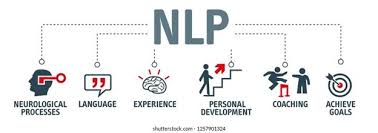
What is Natural Language Processing (NLP)? Natural Language Processing (NLP) is a branch of artificial intelligence (AI) that enables computers to interpret, analyze, and generate human language. By leveraging machine learning, computational linguistics, and deep learning, NLP helps machines understand written and spoken words, making communication between humans and computers more seamless. I apologize folks. I am feeling like the unicorn who missed the Ark. Tectonic has been providing you with tons of great material on artificial intelligence, but we left out a basic building block. Without further ado, Natural Language Processing Explained. Like a lot of components of AI, we often are using it without knowing we are using it. NLP is widely used in everyday applications such as: How Does NLP Work? Natural Language Processing combines several techniques, including computational linguistics, machine learning, and deep learning. It works by breaking down language into smaller components, analyzing these components, and then drawing conclusions based on patterns. If you have ever read a first grader’s reading primer it is the same thing. Learn a little three letter word. Recognize the meaning of the word. Understand it in the greater context of the sentence. Key NLP preprocessing steps include: Why Is NLP Important? NLP plays a vital role in automating and improving human-computer interactions by enabling systems to interpret, process, and respond to vast amounts of textual and spoken data. By automating tasks like sentiment analysis, content classification, and question answering, NLP boosts efficiency and accuracy across industries. For example: Key Use Cases of NLP in Business NLP Tasks NLP enables machines to handle various language tasks, including: Approaches to NLP Future of NLP NLP is becoming more integral in daily life as technology improves. From customer service chatbots to medical record summarization, NLP continues to evolve, but challenges remain, including improving coherence and reducing biases in machine-generated text. Essentially, NLP transforms the way machines and humans interact, making technology more intuitive and accessible across a range of industries. By Tectonic Solutions Architect – Shannan Hearne Like1 Related Posts Who is Salesforce? Who is Salesforce? Here is their story in their own words. From our inception, we’ve proudly embraced the identity of Read more Salesforce Unites Einstein Analytics with Financial CRM Salesforce has unveiled a comprehensive analytics solution tailored for wealth managers, home office professionals, and retail bankers, merging its Financial Read more AI-Driven Propensity Scores AI plays a crucial role in propensity score estimation as it can discern underlying patterns between treatments and confounding variables Read more Tectonic’s Successful Salesforce Track Record Salesforce Technology Services Integrator – Tectonic has successfully delivered Salesforce in a variety of industries including Public Sector, Hospitality, Manufacturing, Read more

Read More
Ethical AI Implementation

Ethical AI Implementation

AI technologies are rapidly evolving, becoming a practical solution to support essential business operations. However, creating true business value from AI requires a well-balanced approach that considers people, processes, and technology. Ethical AI Implementation. AI encompasses various forms, including machine learning, deep learning, predictive analytics, natural language processing, computer vision, and automation. To leverage AI’s competitive advantages, companies need a strong foundation and a realistic strategy aligned with their business goals. “Artificial intelligence is multifaceted,” said John Carey, managing director at AArete, a business management consultancy. “There’s often hype and, at times, exaggeration about how ‘intelligent’ AI truly is.” Business Advantages of AI Adoption Recent advancements in generative AI, such as ChatGPT and Dall-E, have showcased AI’s significant impact on businesses. According to a McKinsey Global Survey, global AI adoption surged from around 50% over the past six years to 72% in 2024. Some key benefits of adopting AI include: Prerequisites for AI Implementation Successfully implementing AI can be complex. A detailed understanding of the following prerequisites is crucial for achieving positive results: 13 Steps for Successful AI Implementation Common AI Implementation Mistakes Organizations often stumble by: Key Challenges in Ethical AI Implementation Human-related challenges often present the biggest hurdles. To overcome them, organizations must foster data literacy and build trust among stakeholders. Additionally, challenges around data management, model governance, system integration, and intellectual property need to be addressed. Ensuring Ethical AI Implementation To ensure responsible AI use, companies should: Ethical AI implementation requires a continuous commitment to transparency, fairness, and inclusivity across all levels of the organization. Like Related Posts Who is Salesforce? Who is Salesforce? Here is their story in their own words. From our inception, we’ve proudly embraced the identity of Read more Salesforce Marketing Cloud Transactional Emails Salesforce Marketing Cloud Transactional Emails are immediate, automated, non-promotional messages crucial to business operations and customer satisfaction, such as order Read more Salesforce Unites Einstein Analytics with Financial CRM Salesforce has unveiled a comprehensive analytics solution tailored for wealth managers, home office professionals, and retail bankers, merging its Financial Read more AI-Driven Propensity Scores AI plays a crucial role in propensity score estimation as it can discern underlying patterns between treatments and confounding variables Read more

Read More
Generative AI for Match Commentary

Generative AI for Match Commentary

SAN FRANCISCO (KGO) — Companies are exploring the use of artificial intelligence for sports commentary, showcasing one of the many innovative applications of this technology in the sports arena. ABC7 reporter J.R. Stone recently got a firsthand look at IBM’s integration of Generative AI to analyze and enhance playing abilities during a demonstration at Dreamforce 2024 in San Francisco. This same technology has also been implemented at prestigious events like Wimbledon and the US Open. “This year marks the introduction of Generative AI for match commentary, which utilizes data collected during the games to create real-time analysis and match summaries,” explained Nick Otto from IBM. In a related segment, Salesforce CEO Marc Benioff revealed a new AI system called “Agent Force,” while Senator Scott Wiener introduced a bill focused on AI safety. The AI tracks various metrics, including average ball and swing speeds, as well as performance on forehand and backhand shots. To put the technology to the test, Stone faced off against Otto in a ping-pong match, where Otto emerged victorious with a score of 11-7. After the match, the AI generated an entertaining summary: “Nick’s arm must have felt like a whirlwind, spinning the ball at an average speed of 8.45 mph. J.R. tried to keep up, but his 30 forehand shots and 5.56 mph swing speed were no match.” While the advancements in AI are exciting, UCLA Professor Ramesh Srinivasan emphasizes the need for caution. “This technology is both incredible and concerning because it raises questions about the future of human journalists and commentators,” he noted. Like Related Posts Who is Salesforce? Who is Salesforce? Here is their story in their own words. From our inception, we’ve proudly embraced the identity of Read more Salesforce Marketing Cloud Transactional Emails Salesforce Marketing Cloud Transactional Emails are immediate, automated, non-promotional messages crucial to business operations and customer satisfaction, such as order Read more Salesforce Unites Einstein Analytics with Financial CRM Salesforce has unveiled a comprehensive analytics solution tailored for wealth managers, home office professionals, and retail bankers, merging its Financial Read more AI-Driven Propensity Scores AI plays a crucial role in propensity score estimation as it can discern underlying patterns between treatments and confounding variables Read more
Read More
AI-Ready Text Data

AI-Ready Text Data

Large language models (LLMs) are powerful tools for processing text data from various sources. Common tasks include editing, summarizing, translating, and extracting text. However, one of the key challenges in utilizing LLMs effectively is ensuring that your data is AI-ready. This insight will explain what it means to have AI-Ready Text Data and present a few no-code solutions to help you achieve this. What Does AI-Ready Mean? We are surrounded by vast amounts of unstructured text data—web pages, PDFs, emails, organizational documents, and more. These unstructured documents hold valuable information, but they can be difficult to process using LLMs without proper preparation. Many users simply copy and paste text into a prompt, but this method is not always effective. Consider the following challenges: To be AI-ready, your data should be formatted in a way that LLMs can easily interpret, such as plain text or Markdown. This ensures efficient and accurate text processing. Plain Text vs. Markdown Plain text (.txt) is the most basic file type, containing only raw characters without any stylization. Markdown files (.md) are a type of plain text but include special characters to format the text, such as using asterisks for italics or bolding. LLMs are adept at processing Markdown because it provides both content and structure, enhancing the model’s ability to understand and organize information. Markdown’s simple syntax for headers, lists, and links allows LLMs to extract additional meaning from the document’s structure, leading to more accurate interpretations. Markdown is widely supported across various platforms (e.g., Slack, Discord, GitHub, Google Docs), making it a versatile option for preparing AI-ready text. Tools for AI-Ready Data Here are some essential tools to help you manage Markdown and integrate it into your LLM workflows: Recommended Tools for Managing AI-Ready Data Obsidian: Save and Store Plain Text Obsidian is a great tool for saving and organizing Markdown files. It’s a free text editor that supports plain-text workflows, making it an excellent choice for storing content extracted from PDFs or web pages. Jina AI Reader: Convert Web Pages to Markdown Jina AI Reader is an easy-to-use tool for converting web pages into Markdown. Simply add https://r.jina.ai/ before a webpage URL, and it will return the content in Markdown format. This method streamlines the process of extracting relevant text without the clutter of formatting. LlamaParse: Extract Plain Text from Documents Highly formatted documents like PDFs can present unique challenges when working with LLMs. LlamaParse, part of LlamaIndex’s suite, helps strip away formatting to focus on the content. By using LlamaParse, you can extract plain text or Markdown from documents and ensure only the relevant sections are processed. Our Thoughts Preparing text data for AI involves strategies to convert, store, and process content efficiently. While this may seem daunting at first, using the right tools will streamline your workflow and allow you to maximize the power of LLMs for your specific tasks. Tectonic is ready to assist. Contact us today. Like Related Posts Who is Salesforce? Who is Salesforce? Here is their story in their own words. From our inception, we’ve proudly embraced the identity of Read more Salesforce Unites Einstein Analytics with Financial CRM Salesforce has unveiled a comprehensive analytics solution tailored for wealth managers, home office professionals, and retail bankers, merging its Financial Read more AI-Driven Propensity Scores AI plays a crucial role in propensity score estimation as it can discern underlying patterns between treatments and confounding variables Read more Tectonic’s Successful Salesforce Track Record Salesforce Technology Services Integrator – Tectonic has successfully delivered Salesforce in a variety of industries including Public Sector, Hospitality, Manufacturing, Read more

Read More
Marketing Cloud and Generative AI

Marketing Cloud and Generative AI

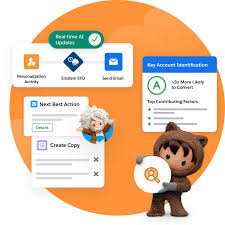
Generative AI and Salesforce: Revolutionizing Digital Marketing with Einstein AI Generative AI is a form of Artificial Intelligence that learns from existing content to generate new, creative outputs. Salesforce has long been at the forefront of AI innovation, primarily through its Einstein assistant, which has evolved to offer increasingly sophisticated solutions over time. Artificial Intelligence: Key Concepts Before diving into Salesforce’s AI capabilities, let’s clarify some foundational concepts. Artificial Intelligence (AI) refers to the creation of intelligent systems that can learn and reason autonomously. Within AI, Machine Learning (ML) plays a crucial role by enabling computers to learn from data and improve over time without explicit programming. ML models fall into two broad categories: Deep Learning and Neural Networks A more advanced subset of ML is Deep Learning, which uses neural networks to process large amounts of data and make autonomous decisions. Deep Learning powers technologies like voice assistants (e.g., Alexa or Siri), which can recognize speech and execute tasks. A specific application within Deep Learning is Generative AI, capable of autonomously creating new content based on learned patterns from vast datasets. Another critical AI system is the Foundational Model, which is trained on enormous amounts of unstructured data from across the web, including text, images, and videos. These models offer a wide range of capabilities, such as generating text, answering questions, creating designs, or solving complex problems. Salesforce Marketing Cloud and AI Salesforce has utilizeded AI through its Einstein platform, which has evolved over time to offer a variety of data-driven tools. For example, Sent Time Optimization uses customer data to determine the best time to send emails to maximize engagement. AI Tools in Salesforce Marketing Cloud Salesforce offers several AI-powered tools for Marketing Cloud to help businesses leverage data for personalization and efficiency: The Einstein Trust Layer: AI in Salesforce CRM Einstein is the first generative AI model integrated into a CRM, and Salesforce refers to its AI process as the Einstein Trust Layer. Here’s how it works: Marketing Applications of Salesforce AI Tools Salesforce’s AI tools can be applied across omnichannel marketing campaigns to hyper-personalize communication, increasing conversion rates and customer engagement. Predictive analytics also allow businesses to optimize cross-selling and upselling, offering tailored product recommendations based on customer behavior. Chatbots powered by AI further enhance productivity by interacting in natural language, collecting leads, suggesting products, and resolving customer inquiries. Salesforce’s Commitment to AI in Digital Marketing Salesforce has been a pioneer in AI, continually expanding its capabilities through Einstein. With the latest AI tools for Marketing Cloud, businesses can now interact with customers more precisely, boost engagement, and optimize purchase predictions—paving the way for a new era in digital marketing. Like Related Posts Who is Salesforce? Who is Salesforce? Here is their story in their own words. From our inception, we’ve proudly embraced the identity of Read more Salesforce Marketing Cloud Transactional Emails Salesforce Marketing Cloud Transactional Emails are immediate, automated, non-promotional messages crucial to business operations and customer satisfaction, such as order Read more Salesforce Unites Einstein Analytics with Financial CRM Salesforce has unveiled a comprehensive analytics solution tailored for wealth managers, home office professionals, and retail bankers, merging its Financial Read more AI-Driven Propensity Scores AI plays a crucial role in propensity score estimation as it can discern underlying patterns between treatments and confounding variables Read more
Read More
Dreamforce 2024 Recap

Dreamforce 2024 Recap

Dreamforce 2024: How John Mulaney, Robot Dogs, and Relevant Programming Took Center StageWhile comedian John Mulaney made headlines at Dreamforce 2024 for playfully roasting Salesforce’s “Trailblazers,” the event was packed with moments that event organizers could learn from. Mulaney’s quips about the “imminently replaceable” workforce in “fleece vests” and his jab that the crowd seemed like “a group that looked at CVS self-checkout and thought, ‘This is the future,’” went viral, but the three-day conference was full of more than just comic relief. Key Takeaways for Event OrganizersDreamforce 2024 delivered a wealth of insights and strategies for anyone in event planning. Here are three lessons that stood out: 1. Stay Relevant with Programming and Attendee Preferences Dreamforce 2024 attracted 45,000 in-person attendees, filling San Francisco’s Moscone Center, thanks in large part to programming that resonated with business leaders’ current priorities—artificial intelligence. Salesforce packed the agenda with AI-focused content, featuring industry experts like Kevin Roose from The New York Times and Casey Newton from The Verge. A standout was the Agentforce Launch Zone, showcasing Salesforce’s new autonomous customer and employee support system. Instead of traditional demos, attendees were invited to create their own AI-powered robots, with 10,000 unique prototypes built on-site—each tailored to the specific needs of participants’ businesses. According to Salesforce, the process took only minutes, showcasing how AI can be embedded deeply into the customer journey. Personalization also took center stage this year, with Personalized Trail Maps allowing attendees to craft their own agendas based on their roles and interests. Dreamforce even introduced reserved seating for “deep learning sessions” and offered first-come, first-served options for larger sessions, like one featuring Matthew McConaughey and Jane Goodall discussing leadership and legacy. 2. Measure Economic Impact Dreamforce is not just a tech conference—it’s a major economic engine for San Francisco. Some key figures from this year’s event include: Tracking these numbers showcases the broader impact of Dreamforce, providing both an economic boost and environmental stewardship. 3. Simplify Where It Matters Even though Dreamforce is a massive event, organizers focused on making it feel approachable. Salesforce maintained its inclusive messaging, emphasizing that everyone—from new users to seasoned pros—was welcome. The “campground” theme for the trade show floor reinforced this, creating a casual, community-oriented environment. Aspirational elements, like a performance from Elton John and AI-driven robot dogs roaming the event, added a futuristic edge. These robot dogs, capable of search-and-rescue missions using infrared sensors, demonstrated the practical applications of AI in real-world scenarios. Yet, despite the high-tech flourishes, simple touchpoints like the Idea Wall—a physical bulletin board where attendees could post handwritten notes—showed that even large-scale events can include low-tech, engaging ways to foster conversation and creativity. Dreamforce also made sure the event reached a global audience through Salesforce+, its streaming platform Over 400 episodes are available online. While this year’s viewership numbers are still pending, millions of virtual attendees tuned in to previous Dreamforce events, and this year likely continued that trend, making the conference accessible to a global audience. For event planners, Dreamforce 2024 proved that staying relevant, tracking impact, and balancing high-tech with human touchpoints are the keys to creating a memorable and effective event. Like Related Posts Who is Salesforce? Who is Salesforce? Here is their story in their own words. From our inception, we’ve proudly embraced the identity of Read more Salesforce Marketing Cloud Transactional Emails Salesforce Marketing Cloud Transactional Emails are immediate, automated, non-promotional messages crucial to business operations and customer satisfaction, such as order Read more Salesforce Unites Einstein Analytics with Financial CRM Salesforce has unveiled a comprehensive analytics solution tailored for wealth managers, home office professionals, and retail bankers, merging its Financial Read more AI-Driven Propensity Scores AI plays a crucial role in propensity score estimation as it can discern underlying patterns between treatments and confounding variables Read more

Read More
Salesforce and the AI Revolution

Salesforce and the AI Revolution

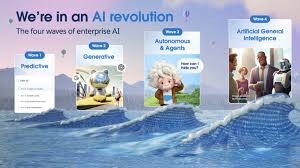
In the early 2000s, Salesforce made waves in the tech world with its bold “No Software” marketing campaign, symbolized by the iconic image of the word “software” crossed out in a red circle. While it was a bit misleading—Salesforce still delivered software, just in the cloud—the campaign invited people to rethink software delivery. This marked the dawn of the cloud era, and businesses were ready for a change. Then, enter Salesforce and the AI Revolution. Today, we’re witnessing a similar shift with AI. The word “SaaS” is the latest to be crossed out in red, as AI-native applications, where AI is the core rather than an add-on, promise to disrupt service delivery at an unprecedented speed—far faster than cloud displaced on-premise software. Even Bessemer Venture Partners (BVP), a leader in identifying emerging AI trends, admits to being caught off guard by the rapid rise of AI. In its State of the Cloud 2024 report, which aptly declares “The Legacy Cloud is dead—long live AI Cloud!”, BVP highlights how even the most optimistic predictions couldn’t fully capture the pace and scale of AI’s impact. The AI Revolution: Opportunities and Disruption The AI market is evolving at breakneck speed, and entrepreneurs are scrambling to stake their claim in this quickly shifting landscape. In the early cloud era, companies like Box, Docusign, HubSpot, and Shopify found success by targeting specific business use cases with subscription-based, cloud-powered solutions. Similarly, today’s AI opportunity lies in industries where manual, repetitive tasks are still prevalent. Major AI players like OpenAI, Anthropic, and Mistral are investing billions in building large-scale language models (LLMs), but there’s a gap in the market for entrepreneurs to focus on verticals where human labor is still largely manual—such as legal, accounting, and outsourcing services. Traditionally, investors have shied away from these industries due to their reliance on manual labor, high costs, and low profit margins. But AI changes the game. Tasks once done manually can now be automated, transforming labor-intensive processes into scalable, high-margin operations. Services businesses that were once unattractive to investors will now attract attention as AI boosts profitability and efficiency. The Shift to AI-Native Applications The impact of AI-native applications will go beyond improving revenue models; they will fundamentally change how we interact with software. In the current SaaS model, users spend hours in applications, manually entering data and querying systems for answers. In contrast, AI-native B2B applications will solve problems end-to-end without requiring human input for every step. Software will work for users in the background, allowing them to focus on building relationships and making strategic decisions. However, humans won’t be removed from the equation. AI trained on real human intelligence in specific verticals will perform better than purely machine-based intelligence. The combination of human expertise and AI-native applications will drive significant, tangible business results. Avoid the “X of AI” Hype With excitement around AI reaching fever pitch, many startups are branding themselves as the “X of AI”—for instance, the “Salesforce of AI.” These claims are often surface-level, wrapping an AI solution around an existing LLM without delivering true innovation. To identify genuine AI-native solutions, look for these key characteristics: Spotting the Next AI Success Stories The AI space is noisy and crowded, and as more AI-native startups emerge, it will become even harder to separate the winners from the hype. The true innovators will be those who bring untapped data into the digital fold and streamline workflows that have historically been manual. To succeed, founders need deep knowledge of their vertical and a clear understanding of how to implement AI for real-world results. Above all, they must have the vision and drive to realize the full potential of AI-native applications, transforming industries and redefining service delivery. Like Related Posts Who is Salesforce? Who is Salesforce? Here is their story in their own words. From our inception, we’ve proudly embraced the identity of Read more Salesforce Marketing Cloud Transactional Emails Salesforce Marketing Cloud Transactional Emails are immediate, automated, non-promotional messages crucial to business operations and customer satisfaction, such as order Read more Salesforce Unites Einstein Analytics with Financial CRM Salesforce has unveiled a comprehensive analytics solution tailored for wealth managers, home office professionals, and retail bankers, merging its Financial Read more AI-Driven Propensity Scores AI plays a crucial role in propensity score estimation as it can discern underlying patterns between treatments and confounding variables Read more
Read More
Salesforce and Microsoft

Salesforce and Microsoft

Or is it Salesforce versus Microsoft? The Salesforce and Microsoft relationship is evolving. Or is it devolving? Earlier this year, Salesforce rebranded its Einstein Copilot to Agentforce. Following this change, co-founder and CEO Marc Benioff criticized Microsoft Copilot, comparing it to the outdated rules-based assistant “Clippy” from Microsoft Office in the 1990s and 2000s. Benioff’s critiques began on August 28 during the company’s latest quarterly earnings call, where he asserted that Microsoft customers have not seen value from their Copilot investments, referring to it as a “science project.” He reiterated his stance in his Dreamforce keynote, stating that Microsoft Copilot suffers from “a lack of context, skills, and adaptability.” This raises questions about Salesforce’s relationship with Microsoft. When directly asked, Benioff’s response was tinged with sarcasm: “Very good. I love them. They’re great. An impressive company.” He then recounted several of Microsoft’s historical competitive missteps, even referencing the U.S. government’s antitrust case against the company stemming from its battle with Netscape. Microsoft chose not to comment on this story. However, in response to Benioff’s criticisms following the late-August earnings call, Jared Spataro, Microsoft’s corporate vice president for artificial intelligence at work, highlighted that both internal and third-party metrics show a doubling of Copilot daily users in the previous quarter, along with a 60% increase in sales, indicating that Copilot adds value in the workplace. Salesforce reportedly serves about 150,000 customers, while Microsoft boasts an approximately 85% market penetration for productivity applications. This theoretically means that around 127,500 customers could integrate Microsoft 365 with Salesforce for email, calendar, tasks, and contact management. Salesforce claimed more than 25 million end users in 2022, suggesting that approximately 21.5 million users depend on collaboration between Salesforce and Microsoft for their systems to function effectively. “There’s always noise in the system,” said Ian Kahn, a principal at PwC and leader of the firm’s Salesforce practice. “Frankly speaking, I don’t think our clients care about it. You tune out the noise.” Rebecca Wettemann, founder of the research and advisory firm Valoir, noted that while she agrees with some of Benioff’s points—such as the underperformance of Copilots and limited customer deployment—many Salesforce customers are hosted on Microsoft’s Azure cloud. “You’ve got to play both sides,” Wettemann remarked. “You have to be on Azure because it’s one of the biggest public clouds, and people want to be there. But you also have to take potshots at Microsoft. That’s just how it works.” Salesforce’s AI tools are designed specifically for sales, service, marketing, and e-commerce, integrated within the company’s applications. Users can create agents in Slack, and there are many industry-specific tools tailored for different sectors. In contrast, Microsoft’s Copilots are more generalized and are embedded in various applications, featuring a no-code “wizard” interface to pull in data from multiple sources, including Salesforce. Microsoft recently added Copilot agents, AI assistants that automate and execute business processes. While there are similarities between Salesforce’s Agentforce and Microsoft’s Copilot, Benioff’s comparisons may not be entirely fair. Salesforce’s AI is more focused on service, sales, and marketing, whereas Microsoft targets productivity for office workers. That said, this kind of competitive banter is par for the course in the tech industry. As Wettemann pointed out, “If they didn’t make aggressive marketing claims, it wouldn’t be Dreamforce.” Like Related Posts Who is Salesforce? Who is Salesforce? Here is their story in their own words. From our inception, we’ve proudly embraced the identity of Read more Salesforce Marketing Cloud Transactional Emails Salesforce Marketing Cloud Transactional Emails are immediate, automated, non-promotional messages crucial to business operations and customer satisfaction, such as order Read more Salesforce Unites Einstein Analytics with Financial CRM Salesforce has unveiled a comprehensive analytics solution tailored for wealth managers, home office professionals, and retail bankers, merging its Financial Read more AI-Driven Propensity Scores AI plays a crucial role in propensity score estimation as it can discern underlying patterns between treatments and confounding variables Read more

Read More
Benefits of AI in Banking

Benefits of AI in Banking

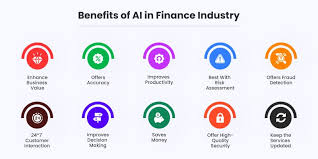
Artificial intelligence (AI) is rapidly gaining traction in the banking and finance sector, with generative AI (GenAI) emerging as a transformative force. Financial institutions are increasingly adopting AI technologies to automate processes, cut operational costs, and boost overall productivity, according to Sameer Gupta, North America Financial Services Organization Advanced Analytics Leader at EY. While traditional machine learning (ML) techniques are commonly used for fraud detection, loan approvals, and personalized marketing, banks are now advancing to incorporate more sophisticated technologies, including ML, natural language processing (NLP), and GenAI. Gupta notes that EY is observing a growing trend of banks using ML to enhance credit approvals, improve fraud detection, and refine marketing strategies, leading to greater efficiency and better decision-making. A recent survey by Gartner’s Jasleen Kaur Sindhu reveals that 58% of banking CIOs have either deployed or plan to deploy AI initiatives in 2024, with this number expected to rise to 77% by 2025. “This indicates not only the growing importance of AI but also its fundamental role in shaping how banks operate and deliver value to their customers,” Sindhu said. “AI is becoming essential to the success of banking institutions.” Here are five key benefits of AI applications in banking: Despite the benefits, concerns about AI in banking persist, particularly regarding data privacy, bias, and ethics. AI can inadvertently extract personal information and raise privacy issues. Regulatory challenges and the potential for AI systems to perpetuate biases are also major concerns. As AI technology evolves, banks are investing in robust governance frameworks, continuous monitoring, and adherence to ethical standards to address these risks. Looking ahead, AI is expected to revolutionize banking by delivering personalized services, enhancing customer interactions, and driving productivity. Deloitte forecasts that GenAI could boost productivity by up to 35% in the top 14 global investment banks, generating significant additional revenue per employee by 2026. Like Related Posts Who is Salesforce? Who is Salesforce? Here is their story in their own words. From our inception, we’ve proudly embraced the identity of Read more Salesforce Marketing Cloud Transactional Emails Salesforce Marketing Cloud Transactional Emails are immediate, automated, non-promotional messages crucial to business operations and customer satisfaction, such as order Read more Salesforce Unites Einstein Analytics with Financial CRM Salesforce has unveiled a comprehensive analytics solution tailored for wealth managers, home office professionals, and retail bankers, merging its Financial Read more AI-Driven Propensity Scores AI plays a crucial role in propensity score estimation as it can discern underlying patterns between treatments and confounding variables Read more

Read More
New Technology Risks

New Technology Risks

Organizations have always needed to manage the risks that come with adopting new technologies, and implementing artificial intelligence (AI) is no different. Many of the risks associated with AI are similar to those encountered with any new technology: poor alignment with business goals, insufficient skills to support the initiatives, and a lack of organizational buy-in. To address these challenges, executives should rely on best practices that have guided the successful adoption of other technologies, according to management consultants and AI experts. When it comes to AI, this includes: However, AI presents unique risks that executives must recognize and address proactively. Below are 15 areas of risk that organizations may encounter as they implement and use AI technologies: Managing AI Risks While the risks associated with AI cannot be entirely eliminated, they can be managed. Organizations must first recognize and understand these risks and then implement policies to mitigate them. This includes ensuring high-quality data for AI training, testing for biases, and continuous monitoring of AI systems to catch unintended consequences. Ethical frameworks are also crucial to ensure AI systems produce fair, transparent, and unbiased results. Involving the board and C-suite in AI governance is essential, as managing AI risk is not just an IT issue but a broader organizational challenge. Like Related Posts Who is Salesforce? Who is Salesforce? Here is their story in their own words. From our inception, we’ve proudly embraced the identity of Read more Salesforce Marketing Cloud Transactional Emails Salesforce Marketing Cloud Transactional Emails are immediate, automated, non-promotional messages crucial to business operations and customer satisfaction, such as order Read more Salesforce Unites Einstein Analytics with Financial CRM Salesforce has unveiled a comprehensive analytics solution tailored for wealth managers, home office professionals, and retail bankers, merging its Financial Read more AI-Driven Propensity Scores AI plays a crucial role in propensity score estimation as it can discern underlying patterns between treatments and confounding variables Read more

Read More
gettectonic.com