

Artificial Intelligence Archives - gettectonic.com - Page 10
Agentic AI is Here

AI Agent Myths

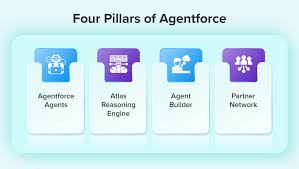
Myths About AI Agents Agents will transform how we work, but separating fact from fiction is essential. AI agents are revolutionizing business operations, yet misconceptions persist about their capabilities and value. Understanding these myths—and the truth behind them—can help your organization unlock their potential. Myth #1: AI Agents Are Just Glorified Chatbots While chatbots and AI agents both use artificial intelligence, their functionality and complexity differ significantly. For instance, a chatbot might provide an overview of your sales metrics, but an AI agent can analyze those metrics, forecast demand, adjust inventory levels, update marketing strategies, and even notify suppliers—all proactively and autonomously. This leap in capability allows agents to optimize workflows, make strategic recommendations, and dynamically respond to changing conditions. They’re not just answering questions—they’re driving outcomes. Myth #2: They’re unpredictable and uncontrollablePopular culture often paints AI as rogue systems—think 2001: A Space Odyssey or The Terminator—but in reality, modern AI agents are designed with safety, trust, and precision at their core. The most effective agents today use advanced techniques to prevent errors and ensure their actions stay within strict boundaries. At the heart of this is a reasoning engine. This engine doesn’t just execute tasks—it creates action plans based on the user’s goals, evaluates those plans, and refines them by pulling data from customer relationship management (CRM) systems and other platforms. It then determines the correct processes to execute and iterates until the task is completed successfully, improving with each interaction. When tasks fall outside an organization’s predefined guardrails—like user permissions or compliance rules—the reasoning engine automatically flags the task and escalates it for human oversight. “Helping an agent perform accurately while understanding what it is not allowed to do is a complex task,” says Krishna Gandikota, Manager of Solution Engineering at Salesforce. “The reasoning engine plans and evaluates the AI’s approach before it takes any action. It also assesses whether it has the necessary skills and information to proceed.” This process is further enhanced by continuous learning, enabling agents to refine their decision-making and actions over time. Grounded in DataThe best agents are contextually aware, leveraging relevant, up-to-date information to perform tasks accurately. Techniques like retrieval-augmented generation (RAG) help by sourcing the most relevant data, while semantic search ensures that agents retrieve the latest and most accurate information. Salesforce’s Agentforce employs these methods using Data Cloud, which enables agents to access real-time data without physically copying or modifying it—thanks to zero-copy architecture. This ensures speed, accuracy, and compliance across all agent-driven actions. Myth #3: They’re complicated, time-consuming, and expensive to set upIt’s easy to assume that deploying AI agents would require months of integration work and millions of dollars, but that’s no longer the case. Advances in generative AI and large language models (LLMs) have drastically simplified the process. Agents can now be deployed in minutes with prebuilt topics—specific areas of focus—and actions for common tasks in customer service, sales, and commerce. For more tailored needs, low-code tools make it easy to create custom agents. Using natural language processing (NLP), you simply describe what the agent needs to do, and the system builds it for you. For instance, Agent Builder automatically suggests guardrails and resources based on the task description. By scanning an app’s metadata, it identifies semantically similar processes, creating a smarter, context-aware agent that aligns with your business operations. “All the sophistication is already built into the platform,” Gandikota explains. “The Einstein Trust Layer, reasoning engine, and vector database for RAG and semantic search work seamlessly. With this foundation, you can build a team of agents quickly and confidently.” Myth #4: They’re always fully autonomousAI agents don’t need to operate completely autonomously to deliver value. Their autonomy depends on the complexity of their tasks and the industry they serve. “Agents don’t always need to take actions autonomously,” Gandikota explains. “They’re designed to understand requests, assess whether they can proceed independently, and involve humans when necessary.” Myth #5: They won’t deliver real business valueSome businesses using generic AI tools haven’t seen the ROI they expected. That’s because generic AI isn’t tailored to specific business needs. AI agents, on the other hand, are purpose-built to perform specialized tasks with precision. Whether it’s nurturing sales leads, brainstorming marketing campaigns, or resolving service tickets, targeted AI agents excel at solving specific problems. Unlike generic AI, they don’t just provide insights—they take action, driving measurable outcomes. For example, educational publisher Wiley improved support case resolution by over 40% after adopting AI agents. By handling routine tasks, the agents freed up Wiley’s service teams to focus on more complex cases. Similarly, early adopters like OpenTable and ADP have reported significant improvements in customer satisfaction and efficiency. According to MarketsandMarkets, AI agents are driving demand for automation by enhancing decision-making, scalability, and efficiency. The global market for AI agents is expected to grow from .1 billion in 2024 to billion by 2030. The Bottom LineUnderstanding the myths—and realities—of AI agents is critical for business leaders. Misconceptions can lead to missed opportunities, while clarity around their capabilities can help organizations work smarter, faster, and more efficiently. With trusted, adaptable, and purpose-built agents, the future of business automation is already here. Like Related Posts Who is Salesforce? Who is Salesforce? Here is their story in their own words. From our inception, we’ve proudly embraced the identity of Read more Salesforce Marketing Cloud Transactional Emails Salesforce Marketing Cloud Transactional Emails are immediate, automated, non-promotional messages crucial to business operations and customer satisfaction, such as order Read more Salesforce Unites Einstein Analytics with Financial CRM Salesforce has unveiled a comprehensive analytics solution tailored for wealth managers, home office professionals, and retail bankers, merging its Financial Read more AI-Driven Propensity Scores AI plays a crucial role in propensity score estimation as it can discern underlying patterns between treatments and confounding variables Read more

Read More
AI Leader Salesforce

AI Leader Salesforce

Salesforce Is a Wild Mustang in the AI Race In the bustling world of artificial intelligence, Salesforce Inc. has emerged as an unsurpassed and true leader. “Salesforce?” one might wonder. The company known for its customer relationship management software? How can it be an AI leader if it is only focused on each department or division (or horse) is only focused on its own survival? AI Leader Salesforce. Herds of horses have structure, unique and important roles they each play. While they survival depends greatly on each members’ independece they must remain steadfast in the roles and responsibilities they carry to the entire herd. The lead stallion must be the protector. The lead mare must organize all the mothers and foals into obedient members of the herd. But they must all collaborate. AI Leader Salesforce To stay strong and competetive Salesforce is making bold strides in AI as well. Recently, the company became the first major tech firm to introduce a new class of generative AI tools known as “agents,” which have long been discussed by others but never fully realized. Unlike its competitors, Salesforce is upfront about how these innovative tools might impact employment. This audacious approach could be the key to propelling the company ahead in the AI race, particularly as newer players like OpenAI and Anthropic make their moves. Marc Benioff, Salesforce’s dynamic CEO, is driving this change. Known for his unconventional strategies that helped propel Salesforce to the forefront of the software-as-a-service (SaaS) revolution, Benioff has secured a client base that includes 90% of Fortune 500 companies, such as Walt Disney Co. and Ford Motor Co. Salesforce profits from subscriptions to applications like Sales Cloud and Service Cloud, which help businesses manage their sales and customer service processes. At the recent Dreamforce conference, Salesforce unveiled Agentforce, a new service that enables customers to deploy autonomous AI-powered agents. If Benioff himself is the alpha herd leader, Agentforce may well be the lead mare. Salesforce distinguishes itself by replacing traditional chatbots with these new agents. While chatbots, powered by technologies from companies like OpenAI, Google, and Anthropic, typically handle customer inquiries, agents can perform actions such as filing complaints, booking appointments, or updating shipping addresses. The notion of AI “taking action” might seem risky, given that generative models can sometimes produce erroneous results. Imagine an AI mishandling a booking. However, Salesforce is confident that this won’t be an issue. “Hallucinations go down to zero because [Agentforce] is only allowed to generate content from the sources you’ve trained it on,” says Bill Patterson, corporate strategy director at Salesforce. This approach is touted as more reliable than models that scrape the broader internet, which can include inaccurate information. Salesforce’s willingness to confront a typically sensitive issue — the potential job displacement caused by AI — is also noteworthy. Unlike other AI companies that avoid discussing the impact of cost-cutting on employment, Salesforce openly addresses it. For instance, education publisher John Wiley & Sons Inc. reported that using Agentforce reduced the time spent answering customer inquiries by nearly 50% over three months. This efficiency meant Wiley did not need to hire additional staff for the back-to-school season. In the herd, the leader must acknowledge some of his own offspring will have to join other herds, there is a genetic survival of the fittest factor. I would suspect Benioff will re-train and re-purpose as many of the Salesforce family as he can, rather than seeing them leave the herd. Benioff highlighted this in his keynote, asking, “What if you could surge your service organization and your sales organization without hiring more people?” That’s the promise of Agentforce. And what if? Imagine the herd leader having to be always the alpha, always on guard, always in protective mode. When does he slngeep, eat, rest, and recuperate? Definitely not by bringing in another herd leader. The two inevitably come to arms each excerting their dominance until one is run off by the other, to survive on his own. The herd leader needs to clone himself, create additional herd, or corporate, assets to help him do his job better. Enter the power behind Salesforce’s long history with Artificial Intelligence. The effectiveness of Salesforce’s tools in delivering a return on investment remains to be seen, especially as many businesses struggle to evaluate the success of generative AI. Nonetheless, Salesforce poses a significant challenge to newer firms like OpenAI and Anthropic, which have privately acknowledged their use of Salesforce’s CRM software. For many chief innovation officers, it’s easier to continue leveraging Salesforce’s existing platform rather than adopt new technologies. Like the healthiest of the band of Mustangs, the most skilled and aggressive will thrive and survive. Salesforce’s established presence and broad distribution put it in a strong position at a time when large companies are often hesitant to embrace new tech. Its fearless approach to job displacement suggests the company is poised to profit significantly from its AI venture. As a result, Salesforce may well become a formidable competitor in the AI world. Furthermore taking its own investment in AI education to new heights, one can believe that Salesforce has an eye on people and not just profits. Much like the lead stallion in a wild herd, Salesforce is protecting itself and its biggest asset, its people! By Tectonic’s Salesforce Solutions Architect, Shannan Hearne Like Related Posts Who is Salesforce? Who is Salesforce? Here is their story in their own words. From our inception, we’ve proudly embraced the identity of Read more Salesforce Marketing Cloud Transactional Emails Salesforce Marketing Cloud Transactional Emails are immediate, automated, non-promotional messages crucial to business operations and customer satisfaction, such as order Read more Salesforce Unites Einstein Analytics with Financial CRM Salesforce has unveiled a comprehensive analytics solution tailored for wealth managers, home office professionals, and retail bankers, merging its Financial Read more AI-Driven Propensity Scores AI plays a crucial role in propensity score estimation as it can discern underlying patterns between treatments and confounding variables Read more
Read More
Is Agentforce Different?

Is Agentforce Different?

The Salesforce hype machine is in full swing, with product announcements like Chatter, Einstein GPT, and Data Cloud, all positioned as revolutionary tools that promise to transform how we work. Is Agentforce Different? However, it’s often difficult to separate fact from fiction in the world of Salesforce. The cloud giant thrives on staying ahead of technological advancements, which means reinventing itself every year with new releases and updates. You could even say three times per year with the major releases. Why Enterprises Need Multiple Salesforce Orgs Over the past decade, Salesforce product launches have been hit or miss—primarily miss. Offerings like IoT Cloud, Work.com, and NFT Cloud have faded into obscurity. This contrasts sharply with Salesforce’s earlier successes, such as Service Cloud, the AppExchange, Force.com, Salesforce Lightning, and Chatter, which defined its first decade in business. One notable exception is Data Cloud. This product has seen significant success and now serves as the cornerstone of Salesforce’s future AI and data strategy. With Salesforce’s growth slowing quarter over quarter, the company must find new avenues to generate substantial revenue. Artificial Intelligence seems to be their best shot at reclaiming a leadership position in the next technological wave. Is Agentforce Different? While Salesforce has been an AI leader for over a decade, the hype surrounding last year’s Dreamforce announcements didn’t deliver the growth the company was hoping for. The Einstein Copilot Studio—comprising Copilot, Prompt Builder, and Model Builder—hasn’t fully lived up to expectations. This can be attributed to a lack of AI readiness among enterprises, the relatively basic capabilities of large language models (LLMs), and the absence of fully developed use cases. In Salesforce’s keynote, it was revealed that over 82 billion flows are launched weekly, compared to just 122,000 prompts executed. While Flow has been around for years, this stat highlights that the use of AI-powered prompts is still far from mainstream—less than one prompt per Salesforce customer per week, on average. When ChatGPT launched at the end of 2022, many predicted the dawn of a new AI era, expecting a swift and dramatic transformation of the workplace. Two years later, it’s clear that AI’s impact has yet to fully materialize, especially when it comes to influencing global productivity and GDP. However, Salesforce’s latest release feels different. While AI Agents may seem new to many, this concept has been discussed in AI circles for decades. Marc Benioff’s recent statements during Dreamforce reflect a shift in strategy, including a direct critique of Microsoft’s Copilot product, signaling the intensifying AI competition. This year’s marketing strategy around Agentforce feels like it could be the transformative shift we’ve been waiting for. While tools like Salesforce Copilot will continue to evolve, agents capable of handling service cases, answering customer questions, and booking sales meetings instantly promise immediate ROI for organizations. Is the Future of Salesforce in the Hands of Agents? Despite the excitement, many questions remain. Are Salesforce customers ready for agents? Can organizations implement this technology effectively? Is Agentforce a real breakthrough or just another overhyped concept? Agentforce may not be vaporware. Reports suggest that its development was influenced by Salesforce’s acquisition of Airkit.AI, a platform that claims to resolve 90% of customer queries. Salesforce has even set up dedicated launchpads at Dreamforce to help customers start building their own agents. Yet concerns remain, especially regarding Salesforce’s complexity, technical debt, and platform sprawl. These issues, highlighted in this year’s Salesforce developer report, cannot be overlooked. Still, it’s hard to ignore Salesforce’s strategic genius. The platform has matured to the point where it offers nearly every functionality an organization could need, though at times the components feel a bit disconnected. For instance: Salesforce is even hinting at usage-based pricing, with a potential $2 charge per conversation—an innovation that could reshape their pricing model. Will Agents Be Salesforce’s Key to Future Growth? With so many unknowns, only time will tell if agents will be the breakthrough Salesforce needs to regain the momentum of its first two decades. Regardless, agents appear to be central to the future of AI. Leading organizations like Copado are also launching their own agents, signaling that this trend will define the next phase of AI innovation. In today’s macroeconomic environment, where companies are overstretched and workforce demands are high, AI’s ability to streamline operations and improve customer service has never been more critical. Whoever cracks customer service AI first could lead the charge in the inevitable AI spending boom. We’re all waiting to see if Salesforce has truly cracked the AI code. But one thing is certain: the race to dominate AI in customer service has begun. And Salsesforce may be at the forefront. Like Related Posts Who is Salesforce? Who is Salesforce? Here is their story in their own words. From our inception, we’ve proudly embraced the identity of Read more Salesforce Marketing Cloud Transactional Emails Salesforce Marketing Cloud Transactional Emails are immediate, automated, non-promotional messages crucial to business operations and customer satisfaction, such as order Read more Salesforce Unites Einstein Analytics with Financial CRM Salesforce has unveiled a comprehensive analytics solution tailored for wealth managers, home office professionals, and retail bankers, merging its Financial Read more AI-Driven Propensity Scores AI plays a crucial role in propensity score estimation as it can discern underlying patterns between treatments and confounding variables Read more

Read More
Salesforce Certified AI Associate

Salesforce Certified AI Associate

The Salesforce Certified AI Associate certification is a professional credential that demonstrates your knowledge of artificial intelligence (AI) and its application within Salesforce platforms. This certification is perfect for individuals aiming to enhance their ability to use AI to drive business outcomes. Key topics covered in the certification include: Trailblazer Trailhead for Salesforce Certified AI Associate Like Related Posts Who is Salesforce? Who is Salesforce? Here is their story in their own words. From our inception, we’ve proudly embraced the identity of Read more Salesforce Marketing Cloud Transactional Emails Salesforce Marketing Cloud Transactional Emails are immediate, automated, non-promotional messages crucial to business operations and customer satisfaction, such as order Read more Salesforce Unites Einstein Analytics with Financial CRM Salesforce has unveiled a comprehensive analytics solution tailored for wealth managers, home office professionals, and retail bankers, merging its Financial Read more AI-Driven Propensity Scores AI plays a crucial role in propensity score estimation as it can discern underlying patterns between treatments and confounding variables Read more

Read More
Training and Testing Data

Training and Testing Data

Data plays a pivotal role in machine learning (ML) and artificial intelligence (AI). Tasks such as recognition, decision-making, and prediction rely on knowledge acquired through training. Much like a parent teaches their child to distinguish between a cat and a bird, or an executive learns to identify business risks hidden within detailed quarterly reports, ML models require structured training using high-quality, relevant data. As AI continues to reshape the modern business landscape, the significance of training data becomes increasingly crucial. What is Training Data? The two primary strengths of ML and AI lie in their ability to identify patterns in data and make informed decisions based on that data. To execute these tasks effectively, models need a reference framework. Training data provides this framework by establishing a baseline against which models can assess new data. For instance, consider the example of image recognition for distinguishing cats from birds. ML models cannot inherently differentiate between objects; they must be taught to do so. In this scenario, training data would consist of thousands of labeled images of cats and birds, highlighting relevant features—such as a cat’s fur, pointed ears, and four legs versus a bird’s feathers, absence of ears, and two feet. Training data is generally extensive and diverse. For the image recognition case, the dataset might include numerous examples of various cats and birds in different poses, lighting conditions, and settings. The data must be consistent enough to capture common traits while being varied enough to represent natural differences, such as cats of different fur colors in various postures like crouching, sitting, standing, and jumping. In business analytics, an ML model first needs to learn the operational patterns of a business by analyzing historical financial and operational data before it can identify problems or recognize opportunities. Once trained, the model can detect unusual patterns, like abnormally low sales for a specific item, or suggest new opportunities, such as a more cost-effective shipping option. After ML models are trained, tested, and validated, they can be applied to real-world data. For the cat versus bird example, a trained model could be integrated into an AI platform that uses real-time camera feeds to identify animals as they appear. How is Training Data Selected? The adage “garbage in, garbage out” resonates particularly well in the context of ML training data; the performance of ML models is directly tied to the quality of their training data. This underscores the importance of data sources, relevance, diversity, and quality for ML and AI developers. Data SourcesTraining data is seldom available off-the-shelf, although this is evolving. Sourcing raw data can be a complex task—imagine locating and obtaining thousands of images of cats and birds for the relatively straightforward model described earlier. Moreover, raw data alone is insufficient for supervised learning; it must be meticulously labeled to emphasize key features that the ML model should focus on. Proper labeling is crucial, as messy or inaccurately labeled data can provide little to no training value. In-house teams can collect and annotate data, but this process can be costly and time-consuming. Alternatively, businesses might acquire data from government databases, open datasets, or crowdsourced efforts, though these sources also necessitate careful attention to data quality criteria. In essence, training data must deliver a complete, diverse, and accurate representation for the intended use case. Data RelevanceTraining data should be timely, meaningful, and pertinent to the subject at hand. For example, a dataset containing thousands of animal images without any cat pictures would be useless for training an ML model to recognize cats. Furthermore, training data must relate directly to the model‘s intended application. For instance, business financial and operational data might be historically accurate and complete, but if it reflects outdated workflows and policies, any ML decisions based on it today would be irrelevant. Data Diversity and BiasA sufficiently diverse training dataset is essential for constructing an effective ML model. If a model’s goal is to identify cats in various poses, its training data should encompass images of cats in multiple positions. Conversely, if the dataset solely contains images of black cats, the model’s ability to identify white, calico, or gray cats may be severely limited. This issue, known as bias, can lead to incomplete or inaccurate predictions and diminish model performance. Data QualityTraining data must be of high quality. Problems such as inaccuracies, missing data, or poor resolution can significantly undermine a model’s effectiveness. For instance, a business’s training data may contain customer names, addresses, and other information. However, if any of these details are incorrect or missing, the ML model is unlikely to produce the expected results. Similarly, low-quality images of cats and birds that are distant, blurry, or poorly lit detract from their usefulness as training data. How is Training Data Utilized in AI and Machine Learning? Training data is input into an ML model, where algorithms analyze it to detect patterns. This process enables the ML model to make more accurate predictions or classifications on future, similar data. There are three primary training techniques: Where Does Reinforcement Learning Fit In? Unlike supervised and unsupervised learning, which rely on predefined training datasets, reinforcement learning adopts a trial-and-error approach, where an agent interacts with its environment. Feedback in the form of rewards or penalties guides the agent’s strategy improvement over time. Whereas supervised learning depends on labeled data and unsupervised learning identifies patterns in raw data, reinforcement learning emphasizes dynamic decision-making, prioritizing ongoing experience over static training data. This approach is particularly effective in fields like robotics, gaming, and other real-time applications. The Role of Humans in Supervised Training The supervised training process typically begins with raw data since comprehensive and appropriately pre-labeled datasets are rare. This data can be sourced from various locations or even generated in-house. Training Data vs. Testing Data Post-training, ML models undergo validation through testing, akin to how teachers assess students after lessons. Test data ensures that the model has been adequately trained and can deliver results within acceptable accuracy and performance ranges. In supervised learning,

Read More
Chatbot-less AI-ifying

Chatbot-less AI-ifying

AI-ify Your Product Without Adding a Chatbot: Inspiration from Top AI Use Cases Artificial intelligence doesn’t always need to look like a chatbot. Some of the most innovative implementations of AI have created intuitive user experiences (UX) without relying on traditional conversational interfaces. Here are seven standout patterns from leading companies and startups that demonstrate how AI can elevate your product in ways that feel natural and empowering for users. These are just a preview of the 24 trending AI-UX patterns featured in the “Trending AI-UX Patterns” ebook by AIverse—perfect for borrowing (or expensing to your company). Pattern 1: Linear Back-and-Forth (Classic Chat) While chat interfaces revolutionized access to AI, this pattern is just the beginning. Think of ChatGPT—its conversational simplicity opened the door to powerful LLMs for non-tech audiences. But beyond basic chat, consider integrating generative UI commands or API-based functionality into your product to transform linear data access into something seamless and engaging. Pattern 2: Non-Linear Conversations Inspired by Subform, this pattern mirrors how humans think—connecting ideas in a web, not a straight line. Non-linear exploration allows users to navigate through information like dots on a map, offering a flexible, intuitive flow. For example, imagine an AI that surfaces related ideas or actions based on user input—ideal for creative tools or brainstorming apps. Pattern 3: Context Bundling Why stop at simple text input when you can bundle context visually? Figma’s dual-tone matrix simplifies tone adjustments for text by letting users drag across a 2D grid. It eliminates the need for complex prompts while maintaining control over customization. Think of ways to integrate pre-bundled prompts directly into your UI to create an intuitive, visually driven experience. Pattern 4: Living Documents Tools like Elicit bring AI into familiar interfaces like spreadsheets by enhancing workflows without disrupting them. Elicit’s bulk data extraction uses subtle animations and transparency—highlighting “low confidence” answers for clarity. This hybrid approach integrates AI in a way that feels natural and predictable, making it a great choice for data-heavy tools or reporting systems. Pattern 5: Work With Me One of the most human-centered AI patterns comes from Granola, which uses meeting summaries based on your rough notes. Instead of overwhelming users with full transcriptions, it creates concise, actionable insights, perfectly blending human oversight with AI-powered efficiency. This pattern exemplifies the “human-in-the-loop” trend, ensuring collaboration between the user and AI. Pattern 6: Highlight and Curate Take inspiration from Lex’s “@lex” comment feature, which allows users to highlight and comment directly in the flow of their work—no app switching or disruption required. By building on familiar text-interaction patterns, this approach integrates AI subtly, offering suggestions or enhancements without breaking the user’s autonomy. Pattern 7: Invisible AI (Agentive UX) AI can work quietly in the background until needed, as demonstrated by Ford’s lane assist. This feature seamlessly takes control during critical moments (e.g., steering) and hands it back to the user effortlessly. Visual, auditory, and haptic feedback make the transition intuitive and reassuring. This “agentive” pattern is perfect for products where AI acts as a silent partner, ready to assist only when necessary. Tectonic Conclusions These patterns prove that AI can elevate your product without resorting to a chatbot. Whether through non-linear exploration, visual bundling, or seamless agentive experiences, the key is to integrate AI in a way that feels intuitive, empowering, and aligned with user needs. Like Related Posts Who is Salesforce? Who is Salesforce? Here is their story in their own words. From our inception, we’ve proudly embraced the identity of Read more Salesforce Unites Einstein Analytics with Financial CRM Salesforce has unveiled a comprehensive analytics solution tailored for wealth managers, home office professionals, and retail bankers, merging its Financial Read more AI-Driven Propensity Scores AI plays a crucial role in propensity score estimation as it can discern underlying patterns between treatments and confounding variables Read more Tectonic’s Successful Salesforce Track Record Salesforce Technology Services Integrator – Tectonic has successfully delivered Salesforce in a variety of industries including Public Sector, Hospitality, Manufacturing, Read more

Read More
AI-Driven Chatbots in Education

AI-Driven Chatbots in Education

As AI-driven chatbots enter college courses, the potential to offer students 24/7 support is game-changing. However, there’s a critical caveat: when we customize chatbots by uploading documents, we don’t just add knowledge — we introduce biases. The documents we choose influence chatbot responses, subtly shaping how students interact with course material and, ultimately, how they think. So, how can we ensure that AI chatbots promote critical thinking rather than merely serving to reinforce our own viewpoints? How Course Chatbots Differ from Administrative Chatbots Chatbot teaching assistants have been around for some time in education, but low-cost access to large language models (LLMs) and accessible tools now make it easy for instructors to create customized course chatbots. Unlike chatbots used in administrative settings that rely on a defined “ground truth” (e.g., policy), educational chatbots often cover nuanced and debated topics. While instructors typically bring specific theories or perspectives to the table, a chatbot trained with tailored content can either reinforce a single view or introduce a range of academic perspectives. With tools like ChatGPT, Claude, Gemini, or Copilot, instructors can upload specific documents to fine-tune chatbot responses. This customization allows a chatbot to provide nuanced responses, often aligned with course-specific materials. But, unlike administrative chatbots that reference well-defined facts, course chatbots require ethical responsibility due to the subjective nature of academic content. Curating Content for Classroom Chatbots Having a 24/7 teaching assistant can be a powerful resource, and today’s tools make it easy to upload course documents and adapt LLMs to specific curricula. Options like OpenAI’s GPT Assistant, IBL’s AI Mentor, and Druid’s Conversational AI allow instructors to shape the knowledge base of course-specific chatbots. However, curating documents goes beyond technical ease — the content chosen affects not only what students learn but also how they think. The documents you select will significantly shape, though not dictate, chatbot responses. Combined with the LLM’s base model, chatbot instructions, and the conversation context, the curated content influences chatbot output — for better or worse — depending on your instructional goals. Curating for Critical Thinking vs. Reinforcing Bias A key educational principle is teaching students “how to think, not what to think.” However, some educators may, even inadvertently, lean toward dictating specific viewpoints when curating content. It’s critical to recognize the potential for biases that could influence students’ engagement with the material. Here are some common biases to be mindful of when curating chatbot content: While this list isn’t exhaustive, it highlights the complexities of curating content for educational chatbots. It’s important to recognize that adding data shifts — not erases — inherent biases in the LLM’s responses. Few academic disciplines offer a single, undisputed “truth.” AI-Driven Chatbots in Education. Tips for Ethical and Thoughtful Chatbot Curation Here are some practical tips to help you create an ethically balanced course chatbot: This approach helps prevent a chatbot from merely reflecting a single perspective, instead guiding students toward a broader understanding of the material. Ethical Obligations As educators, our ethical obligations extend to ensuring transparency about curated materials and explaining our selection choices. If some documents represent what you consider “ground truth” (e.g., on climate change), it’s still crucial to include alternative views and equip students to evaluate the chatbot’s outputs critically. Equity Customizing chatbots for educational use is powerful but requires deliberate consideration of potential biases. By curating diverse perspectives, being transparent in choices, and refining chatbot content, instructors can foster critical thinking and more meaningful student engagement. AI-Driven Chatbots in Education AI-powered chatbots are interactive tools that can help educational institutions streamline communication and improve the learning experience. They can be used for a variety of purposes, including: Some examples of AI chatbots in education include: While AI chatbots can be a strategic move for educational institutions, it’s important to balance innovation with the privacy and security of student data.  Like Related Posts Who is Salesforce? Who is Salesforce? Here is their story in their own words. From our inception, we’ve proudly embraced the identity of Read more Salesforce Unites Einstein Analytics with Financial CRM Salesforce has unveiled a comprehensive analytics solution tailored for wealth managers, home office professionals, and retail bankers, merging its Financial Read more AI-Driven Propensity Scores AI plays a crucial role in propensity score estimation as it can discern underlying patterns between treatments and confounding variables Read more Tectonic’s Successful Salesforce Track Record Salesforce Technology Services Integrator – Tectonic has successfully delivered Salesforce in a variety of industries including Public Sector, Hospitality, Manufacturing, Read more

Read More

Linus Torvalds Insights

Linus Torvalds Shares Insights on the Future of Programming with AI Linus Torvalds, the mastermind behind Linux and Git—two cornerstones of modern software development—recently shared his perspective on how artificial intelligence (AI) is reshaping the world of programming. His candid insights offer a balanced view of AI’s capabilities and limitations, coming from one of the industry’s most influential voices. If you prefer a quick breakdown over watching a full interview, here are the key takeaways from Torvalds’ conversation. AI in Programming: Evolution, Not Revolution Torvalds describes AI, particularly large language models (LLMs), as “autocorrect on steroids.” These tools excel at predicting the next word or line of code based on established patterns but aren’t “intelligent” in the human sense. Rather than a seismic shift, AI represents the next step in a long history of automation in coding. From the days of machine language to today’s high-level languages like Python and Rust, tools have continuously evolved to make developers’ lives easier. AI is just another link in this chain—helping write, refine, and debug code while boosting productivity. AI as a Developer’s Supercharged Assistant Far from being a replacement for human programmers, Torvalds sees AI as a powerful assistant. Tools like GitHub Copilot are already enhancing the coding process by suggesting fixes, spotting bugs, and speeding up routine tasks. The vision? A future where programmers can abstract tasks even further, possibly instructing AI in plain English. Imagine simply saying, “Build me a tool to manage my expenses,” and watching it happen. However, for now, AI is an incremental improvement, not a groundbreaking leap. The Shift Toward AI-Generated Code One of Torvalds’ more intriguing predictions is that AI may eventually write code in ways incomprehensible to human programmers. Since AI doesn’t require human-readable syntax, it could optimize code in ways that only it understands. In this scenario, developers might transition from writing code to managing AI systems that generate and refine it—shifting from hands-on creators to overseers of automated processes. AI in Code Review: Smarter Intern or Future Partner? When it comes to code review, AI’s potential is clear. Torvalds notes that AI could efficiently catch simple errors—like typos or syntax mistakes—freeing up human reviewers to focus on more complex logic and functionality. While AI might streamline tedious tasks, it’s far from perfect. Issues like “hallucinations,” where AI confidently produces incorrect results, highlight the need for human oversight. AI can assist, but it still requires developers to verify its output. A Balanced Take on AI and Jobs Torvalds dismisses fears of AI taking over programming jobs, pointing out that technological advancements historically create new opportunities rather than eliminate roles. AI, in his view, is less about replacing humans and more about augmenting their abilities. It’s a tool to make developers more efficient—not a harbinger of obsolescence. Final Thoughts: Embrace AI, But Stay Grounded Linus Torvalds envisions AI as a valuable, evolving tool for programmers, not a threat to their livelihood. While it’s set to change how we code, the shift will be gradual rather than revolutionary. Whether you’re a seasoned developer or a newcomer, now is the time to explore AI-powered tools, embrace their potential, and adapt to this new era of programming. Instead of fearing change, we can use AI to push the boundaries of what’s possible. Like Related Posts Who is Salesforce? Who is Salesforce? Here is their story in their own words. From our inception, we’ve proudly embraced the identity of Read more Salesforce Unites Einstein Analytics with Financial CRM Salesforce has unveiled a comprehensive analytics solution tailored for wealth managers, home office professionals, and retail bankers, merging its Financial Read more AI-Driven Propensity Scores AI plays a crucial role in propensity score estimation as it can discern underlying patterns between treatments and confounding variables Read more Tectonic’s Successful Salesforce Track Record Salesforce Technology Services Integrator – Tectonic has successfully delivered Salesforce in a variety of industries including Public Sector, Hospitality, Manufacturing, Read more
Read More
ai analytics

AI Analytics Explained

While both AI analytics and predictive AI leverage data analysis, AI analytics is a broader field encompassing various AI techniques for data processing and analysis, while predictive AI specifically focuses on forecasting future outcomes based on historical data patterns. Here’s a more detailed breakdown: AI Analytics (Broad) Predictive AI (Specific) What is AI Analytics? AI analytics leverages machine learning (ML) and artificial intelligence (AI) to automate the analysis of vast amounts of data, uncovering insights faster and more accurately than traditional methods. By continuously monitoring data streams, AI analytics identifies patterns, anomalies, and trends—tasks that would typically require extensive manual effort from data analysts. Business Analytics in the AI Era AI is transforming industries, and business analytics is no exception. While traditional analytics relies on statistical models developed over centuries, AI-powered analytics introduces unprecedented speed, scalability, and precision, enabling businesses to make real-time, data-driven decisions. This article explores: What is Analytics? Analytics is the process of extracting meaningful insights from raw data to answer business questions, predict trends, and guide decision-making. It involves various techniques, including: The Four Stages of Analytics (Gartner’s Analytic Ascendancy Model) AI, Machine Learning, and AI Analytics Artificial Intelligence (AI) AI refers to machines performing tasks that typically require human intelligence, such as: Machine Learning (ML) A subset of AI, ML uses algorithms trained on data to make predictions without explicit programming. Key approaches include: AI Analytics AI analytics automates data analysis by: Unlike traditional analytics, which relies on manual hypothesis testing, AI analytics continuously scans data, delivering faster, more objective insights. AI Analytics vs. Traditional Analytics Feature Traditional Analytics AI Analytics Speed Slow (weeks to months) Real-time processing Scale Limited by human capacity Handles billions of data points Granularity Broad trends Micro-level insights (e.g., per-user) Bias Human assumptions influence results Data-driven, unbiased analysis Automation Manual hypothesis testing Self-learning algorithms Advantages of AI Analytics ✅ Faster detection – Identifies issues in hours, not weeks.✅ Higher accuracy – Reduces errors by 30-50% (McKinsey).✅ Unbiased insights – Tests millions of hypotheses objectively. Real-World Applications of AI Analytics 1. Demand Forecasting (Predictive Analytics) 2. Predictive Maintenance 3. Business Monitoring (Diagnostic Analytics) 4. Cloud Cost Optimization Conclusion: AI Analytics is the Future AI analytics supercharges business intelligence by:🚀 Automating tedious analysis – Freeing analysts for strategic work.🔍 Uncovering hidden insights – Detecting patterns humans miss.⏱ Delivering real-time decisions – Keeping businesses agile. As AI continues to evolve, companies that adopt AI-powered analytics will gain a competitive edge—transforming raw data into actionable intelligence at unprecedented speed. Ready to integrate AI analytics into your business? Explore how AI can revolutionize your data strategy today. Contact Tectonic. Like Related Posts Who is Salesforce? Who is Salesforce? Here is their story in their own words. From our inception, we’ve proudly embraced the identity of Read more Salesforce Marketing Cloud Transactional Emails Salesforce Marketing Cloud Transactional Emails are immediate, automated, non-promotional messages crucial to business operations and customer satisfaction, such as order Read more Salesforce Unites Einstein Analytics with Financial CRM Salesforce has unveiled a comprehensive analytics solution tailored for wealth managers, home office professionals, and retail bankers, merging its Financial Read more AI-Driven Propensity Scores AI plays a crucial role in propensity score estimation as it can discern underlying patterns between treatments and confounding variables Read more

Read More
Generative AI Overview

Generative AI Overview

Editor’s Note: AI Cloud, Einstein GPT, and other cloud GPT products are now Einstein. For the latest on Salesforce Einstein The Rise of Generative AI: What It Means for Business and CRM Generative artificial intelligence (AI) made headlines in late 2022, sparking widespread curiosity and questions about its potential impact on various industries. What is Generative AI? Generative AI is a technology that creates new content—such as poetry, emails, images, or music—based on a set of input data. Unlike traditional AI, which focuses on classifying or predicting, generative AI can produce novel content with a human-like understanding of language, as noted by Salesforce Chief Scientist Silvio Savarese. However, successful generative AI depends on the quality of the input data. “AI is only as good as the data you give it, and you must ensure that datasets are representative,” emphasizes Paula Goldman, Salesforce’s Chief Ethical and Humane Use Officer. How Does Generative AI Work? Generative AI can be developed using several deep learning approaches, including: Other methods include Variational Autoencoders (VAEs) and Neural Radiance Fields (NeRFs), which generate new data or create 2D and 3D images based on sample data. Generative AI and Business Generative AI has captured the attention of global business leaders. A recent Salesforce survey found that 67% of IT leaders are focusing on generative AI in the next 18 months, with 33% considering it a top priority. Salesforce has long been exploring generative AI applications. For instance, CodeGen helps transform simple English prompts into executable code, and LAVIS makes language-vision AI accessible to researchers. More recently, Salesforce’s ProGen project demonstrated the creation of novel proteins using AI, potentially advancing medicine and treatment development. Ketan Karkhanis, Salesforce’s Executive VP and GM of Sales Cloud, highlights that generative AI benefits not just large enterprises but also small and medium-sized businesses (SMBs) by automating proposals, customer communications, and predictive sales modeling. Challenges and Ethical Considerations Despite its potential, generative AI poses risks, as noted by Paula Goldman and Kathy Baxter of Salesforce’s Ethical AI practice. They stress the importance of responsible innovation to ensure that generative AI is used safely and ethically. Accuracy in AI recommendations is crucial, and the authoritative tone of models like ChatGPT can sometimes lead to misleading results. Salesforce is committed to building trusted AI with embedded guardrails to prevent misuse. As generative AI evolves, it’s vital to balance its capabilities with ethical considerations, including its environmental impact. Generative AI can increase IT energy use, which 71% of IT leaders acknowledge. Generative AI at Salesforce Salesforce has integrated AI into its platform for years, with Einstein AI providing billions of daily predictions to enhance sales, service, and customer understanding. The recent launch of Einstein GPT, the world’s first generative AI for CRM, aims to transform how businesses interact with customers by automating content creation across various functions. Salesforce Ventures is also expanding its Generative AI Fund to $500 million, supporting AI startups and fostering responsible AI development. This expansion includes investments in companies like Anthropic and Cohere. As Salesforce continues to lead in AI innovation, the focus remains on creating technology that is inclusive, responsible, and sustainable, paving the way for the future of CRM and business. The Future of Business: AI-Powered Leadership and Decision-Making Tomorrow’s business landscape will be transformed by specialized, autonomous AI agents that will significantly change how companies are run. Future leaders will depend on these AI agents to support and enhance their teams, with AI chiefs of staff overseeing these agents and harnessing their capabilities. New AI-powered tools will bring businesses closer to their customers and enable faster, more informed decision-making. This shift is not just a trend—it’s backed by significant evidence. The Slack Workforce Index reveals a sevenfold increase in leaders seeking to integrate AI tools since September 2023. Additionally, Salesforce research shows that nearly 80% of global workers are open to an AI-driven future. While the pace of these changes may vary, it is clear that the future of work will look vastly different from today. According to the Slack Workforce Index, the number of leaders looking to integrate AI tools into their business has skyrocketed 7x since September 2023. Mick Costigan, VP, Salesforce Futures In the [still] early phases of a major technology shift, we tend to over-focus on the application of technology innovations to existing workflows. Such advances are important, but closing the imagination gap about the possible new shapes of work requires us to consider more than just technology. It requires us to think about people, both as the customers who react to new offerings and as the employees who are responsible for delivering them. Some will eagerly adopt new technology. Others will resist and drag their feet. Like1 Related Posts Who is Salesforce? Who is Salesforce? Here is their story in their own words. From our inception, we’ve proudly embraced the identity of Read more Salesforce Marketing Cloud Transactional Emails Salesforce Marketing Cloud Transactional Emails are immediate, automated, non-promotional messages crucial to business operations and customer satisfaction, such as order Read more Salesforce Unites Einstein Analytics with Financial CRM Salesforce has unveiled a comprehensive analytics solution tailored for wealth managers, home office professionals, and retail bankers, merging its Financial Read more AI-Driven Propensity Scores AI plays a crucial role in propensity score estimation as it can discern underlying patterns between treatments and confounding variables Read more
Read More
AI Strategy and Tectonic

AI Strategy and Tectonic

AI Strategy and Tectonic Recent advancements in artificial intelligence (AI) have showcased the immense potential of this technology to transform both business and society. However, as organizations scale AI systems, they must ensure these systems are structured and governed responsibly to prevent bias and errors. The widespread use of AI can have significant implications, and without proper safeguards, businesses risk costly outcomes. As your organization leverages diverse datasets to apply machine learning and automate workflows, it’s critical to implement strong guardrails to maintain data quality, ensure compliance, and promote transparency within AI systems. Tectonic is here to help you implement AI responsibly, focusing on areas where it can quickly and ethically deliver real business benefits. Our comprehensive portfolio of enterprise-grade AI products and analytics solutions is designed to minimize the challenges of AI adoption, establish a solid data foundation, and optimize for positive outcomes while ensuring responsible AI use. Global enterprises turn to Tectonic as a trusted partner in their AI transformation journeys. As a leading AI consulting firm, we enhance the value of AI and cloud technologies in driving business transformation. By working with our own advanced AI technologies and an open ecosystem of partners, we deliver AI models on any cloud, all guided by the principles of ethics and trust. Like Related Posts Who is Salesforce? Who is Salesforce? Here is their story in their own words. From our inception, we’ve proudly embraced the identity of Read more Salesforce Unites Einstein Analytics with Financial CRM Salesforce has unveiled a comprehensive analytics solution tailored for wealth managers, home office professionals, and retail bankers, merging its Financial Read more AI-Driven Propensity Scores AI plays a crucial role in propensity score estimation as it can discern underlying patterns between treatments and confounding variables Read more Tectonic’s Successful Salesforce Track Record Salesforce Technology Services Integrator – Tectonic has successfully delivered Salesforce in a variety of industries including Public Sector, Hospitality, Manufacturing, Read more

Read More
Understanding AI Agents

Understanding AI Agents

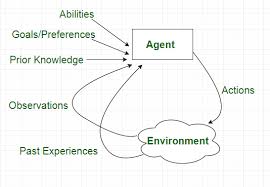
Understanding AI Agents: A Comprehensive Guide Artificial Intelligence (AI) has come a long way, offering systems that automate tasks and provide intelligent, responsive solutions. One key concept within AI is the AI agent—an autonomous system capable of perceiving its environment and taking actions to achieve specific goals. This guide explores AI agents, their types, working mechanisms, and how to build them using platforms like Microsoft Autogen and Google Vertex AI Agent Builder. It also highlights how companies like LeewayHertz and Markovate can assist in the development of AI agents. What is an AI Agent? AI agents are systems designed to interact with their environment autonomously. They process inputs, make decisions, and execute actions based on predefined rules or learned experiences. These agents range from simple rule-based systems to complex machine learning models that adapt over time. Types of AI Agents AI agents can be classified based on complexity and functionality: How AI Agents Work The working mechanism of an AI agent involves four key components: Architectural Blocks of an Autonomous AI Agent An autonomous AI agent typically includes: Building an AI Agent: The Basics Building an AI agent involves several essential steps: Microsoft Autogen: A Platform Overview Microsoft Autogen is a powerful tool for building AI agents, offering a range of features that simplify the development, training, and deployment process. Its user-friendly interface allows developers to create custom agents quickly. Key Steps to Building AI Agents with Autogen: Benefits of Autogen: Vertex AI Agent Builder: Enabling No-Code AI Development Google’s Vertex AI Agent Builder simplifies AI agent development through a no-code platform, making it accessible to users without extensive programming experience. Its drag-and-drop functionality allows for quick and efficient AI agent creation. Key Features of Vertex AI Agent Builder: Conclusion AI agents play a critical role in automating decision-making and performing tasks independently. Platforms like Microsoft Autogen and Google Vertex AI Agent Builder make the development of these agents more accessible, providing powerful tools for both novice and experienced developers. By leveraging these technologies and partnering with companies like LeewayHertz and Markovate, businesses can build custom AI agents that enhance automation, decision-making, and operational efficiency. Whether you’re starting from scratch or looking to integrate AI capabilities into your existing systems, the right tools can make the process seamless and effective. How do you think these tools stack up next to Salesforce AI Agents? Comment below. Content updated October 2024. Like Related Posts Who is Salesforce? Who is Salesforce? Here is their story in their own words. From our inception, we’ve proudly embraced the identity of Read more Salesforce Unites Einstein Analytics with Financial CRM Salesforce has unveiled a comprehensive analytics solution tailored for wealth managers, home office professionals, and retail bankers, merging its Financial Read more AI-Driven Propensity Scores AI plays a crucial role in propensity score estimation as it can discern underlying patterns between treatments and confounding variables Read more Tectonic’s Successful Salesforce Track Record Salesforce Technology Services Integrator – Tectonic has successfully delivered Salesforce in a variety of industries including Public Sector, Hospitality, Manufacturing, Read more

Read More
Building Trust in AI-Powered CRM

Embracing AI in 2024

Embracing AI in 2024: A Strategic Approach to Building AI Software Artificial Intelligence (AI) has become the cornerstone of innovation in the IT industry, captivating big tech, corporations, and investors alike. Participation in AI isn’t just beneficial—it’s imperative. While the specter of an ‘AI Bubble’ looms in public discourse, with fears of job displacement, the reality is more nuanced. AI-driven tools are indeed transforming industries, yet they also present opportunities for innovation and efficiency. Key Considerations for Harnessing AI Power Integration into Digital Services The future of AI lies in embedding it seamlessly within digital services rather than creating standalone products. This approach leverages AI’s capabilities effectively, particularly in generative AI applications. Positioning AI: Core Product vs. Business Solution When incorporating AI into your business strategy, clarity is crucial. Determine whether AI serves as the core product, enhances existing features, or solves specific business challenges. Avoid falling into commodity categories or gimmicky features that lack substantial user value. Assessing Feasibility and Readiness Evaluate your team’s AI competencies, familiarity with tools, budget constraints, and current revenue streams. Understanding these factors helps gauge the feasibility of AI development and integration within your organization. Leveraging Existing Solutions Explore AI solutions offered by major cloud providers and companies. Opt for tools that offer higher abstraction levels, simplifying integration and maintenance. Practical Steps to AI Software Development Navigating AI Use Cases Identify unique use cases where AI can solve real business problems effectively. Avoid pursuing solutions solely for novelty or investor appeal. Building Capability Assess your capability to develop AI systems. Whether you have in-house expertise or need to recruit talent, align your team with the skills required for successful implementation. Data: The Foundation of AI Success Establish robust data acquisition, processing, and storage capabilities. High-quality data is fundamental for AI performance and reliability. Designing Scalable Architecture Develop a scalable AI system architecture that supports seamless data flow, model training, deployment, and user interaction. Keep simplicity and functionality at the forefront. Continuous Improvement Monitor and refine your AI system continuously based on user feedback and industry advancements. Embrace a culture of ongoing learning and adaptation to stay ahead. Conclusion: Navigating the AI Landscape In 2024, building AI software demands a blend of innovation and pragmatism. Clear use cases, robust data management, and practical implementation are key to success. Whether adopting existing AI tools or developing proprietary solutions, prioritize delivering tangible value to users. Stay agile, continuously refine your approach, and embrace the transformative potential of AI in driving business growth and innovation. Like Related Posts Who is Salesforce? Who is Salesforce? Here is their story in their own words. From our inception, we’ve proudly embraced the identity of Read more Salesforce Unites Einstein Analytics with Financial CRM Salesforce has unveiled a comprehensive analytics solution tailored for wealth managers, home office professionals, and retail bankers, merging its Financial Read more AI-Driven Propensity Scores AI plays a crucial role in propensity score estimation as it can discern underlying patterns between treatments and confounding variables Read more Tectonic’s Successful Salesforce Track Record Salesforce Technology Services Integrator – Tectonic has successfully delivered Salesforce in a variety of industries including Public Sector, Hospitality, Manufacturing, Read more

Read More
More Cool AI Tools

Demystifying AI: Separating Fact from Fiction

1. The Consciousness Conundrum Myth: AI possesses human-like intelligence and consciousnessReality: Today’s AI, including advanced generative models, operates through pattern recognition—not genuine understanding. These systems process language statistically, without consciousness or emotional experience. Key Insight: AI can write poetry but doesn’t feel inspiration; it analyzes medical images without comprehending suffering. 2. The Future of Work Myth: AI will make human workers obsoleteReality: While AI automates 40-50% of repetitive tasks (McKinsey), it’s creating more jobs than it eliminates. The World Economic Forum predicts AI will generate 97 million new roles by 2025 focused on AI management, training, and ethical oversight. 3. The Bias Blind Spot Myth: AI delivers perfectly objective decisionsReality: A 2023 Stanford study found commercial AI systems exhibit demographic biases at alarming rates. For example: Solution: Regular bias audits and diverse training datasets are essential. 4. Emotional Intelligence Limits Myth: AI experiences human emotionsReality: While sentiment analysis achieves 85-90% accuracy in detecting emotions from text (MIT Tech Review), these systems simulate empathy without experiencing it—like a sophisticated mood ring. 5. The AGI Mirage Myth: Superintelligent AI is imminentReality: Current narrow AI excels at specific tasks but lacks the generalized reasoning of a five-year-old. OpenAI’s GPT-4 scores ~158 on IQ tests (human average: 100), yet fails at basic physical reasoning that toddlers master. 6. Transparency Spectrum Myth: All AI decisions are unexplainableReality: Tools like LIME and SHAP now visualize how models weigh factors in: Emerging Standard: The EU AI Act mandates explainability for high-risk applications. 7. Cost Realities Myth: AI implementation requires massive investmentReality: Cloud-based AI services now offer: 8. The Creativity Gap Myth: AI can replace human ingenuityReality: While AI generates plausible ideas, humans dominate in: 9. The Human-AI Partnership Myth: AI systems are autonomousReality: Every successful AI implementation requires: 10. ROI Realities Myth: AI guarantees business successReality: A 2024 Gartner survey found only 53% of AI projects move past pilot stage. Success factors include: Moving Forward Wisely Understanding these realities helps organizations: “The greatest danger of artificial intelligence isn’t that it will rebel against us, but that we’ll attribute superhuman capabilities to what is ultimately sophisticated pattern matching.”—Adapted from Pedro Domingos, “The Master Algorithm” Like Related Posts Who is Salesforce? Who is Salesforce? Here is their story in their own words. From our inception, we’ve proudly embraced the identity of Read more Salesforce Unites Einstein Analytics with Financial CRM Salesforce has unveiled a comprehensive analytics solution tailored for wealth managers, home office professionals, and retail bankers, merging its Financial Read more AI-Driven Propensity Scores AI plays a crucial role in propensity score estimation as it can discern underlying patterns between treatments and confounding variables Read more Tectonic’s Successful Salesforce Track Record Salesforce Technology Services Integrator – Tectonic has successfully delivered Salesforce in a variety of industries including Public Sector, Hospitality, Manufacturing, Read more

Read More
gettectonic.com