
AI Tools Archives - gettectonic.com - Page 14
salesforce agentforce ai powered agentic agents

What is an Agentic Sales Agent?

What is a Sales Agent? A sales agent is a key figure in a sales organization, representing the business’s products or services to customers. While the term is often used interchangeably with “sales representative,” it can also refer to independent contractors or reps from partner agencies. In the modern tech landscape, “sales agent” is increasingly used to describe AI-powered, autonomous applications that support sales efforts, such as lead nurturing and sales coaching. Your Limitless Sales Team: From Pipeline to Paycheck Scale effortlessly with Agentforce — your new digital workforce built on the Salesforce Platform. Sales Agents vs. Sales Reps: What’s the Difference? While “sales agents” and “sales reps” are often used interchangeably, some distinctions exist. A “sales agent” may refer to an independent contractor or an employee from a partner agency. However, in today’s technology-driven world, the term often refers to AI-driven sales applications that augment sales teams, reducing manual tasks and enhancing productivity. What Does a Sales Agent Do? A sales agent typically performs tasks traditionally handled by sales representatives or sales development representatives, such as engaging with leads, updating CRM systems, and closing deals. AI sales agents, however, function autonomously, managing tasks like lead nurturing, roleplaying sales conversations, and automating processes such as quoting and billing. These agents rely on self-learning, natural language processing, and deal data to carry out their tasks, allowing human sales teams to focus on building relationships and strategic decision-making. Types of Sales Agents Sales agents come in many forms, both human and AI-powered: Benefits of Human and AI Sales Agents Sales Agent Roles Your Company Should Hire Depending on your needs, there are several roles to consider when building a sales team: Best Practices for Measuring Sales Agent Performance Human and AI sales agents are measured on distinct sets of metrics: How Sales AI and Automation are Impacting the Role of Sales Agents Sales teams face constant challenges in managing leads and closing deals. AI sales agents are transforming this landscape by automating time-consuming tasks, allowing human agents to focus on relationship-building and strategic decision-making. AI tools such as Agentforce can augment human teams by handling administrative tasks, allowing reps to focus on the human-centric aspects of sales. Human and AI Sales Agents Leap into the Future Human agents will always be vital in sales, but AI is rapidly becoming a powerful complement. As AI continues to evolve, human sales teams will work more closely with AI agents to handle more complex workflows, across more channels, in an increasingly seamless manner. The result? Stronger customer relationships, better engagement, improved retention, and increased sales volume. Like Related Posts Who is Salesforce? Who is Salesforce? Here is their story in their own words. From our inception, we’ve proudly embraced the identity of Read more Salesforce Marketing Cloud Transactional Emails Salesforce Marketing Cloud Transactional Emails are immediate, automated, non-promotional messages crucial to business operations and customer satisfaction, such as order Read more Salesforce Unites Einstein Analytics with Financial CRM Salesforce has unveiled a comprehensive analytics solution tailored for wealth managers, home office professionals, and retail bankers, merging its Financial Read more AI-Driven Propensity Scores AI plays a crucial role in propensity score estimation as it can discern underlying patterns between treatments and confounding variables Read more


Read More
Data Analytics for Disease Management

Data Analytics for Disease Management

Healthcare IT advancements, especially electronic health records (EHRs), have made it easier to gather and store data, which, in turn, fuels population health initiatives and improves patient outcomes. The Agency for Healthcare Research and Quality highlights that using health IT tools can significantly enhance chronic disease management by promoting efficient care delivery, information-sharing, and patient education. However, selecting and adopting the right analytics tools remains challenging. Here are five essential data analytics tools that healthcare providers can leverage for effective chronic disease management.

Read More
AI for Product Builders

AI for Product Builders

Practical AI for Product Builders: Beyond the Hype Cutting Through the White AI Noise AI dominates tech conversations—yet much of the discussion feels abstract. What’s often missing is a practical guide for integrating AI into real products. How can AI: ✔ Enhance user experiences?✔ Enable new capabilities?✔ Improve existing features (faster/cheaper/better)?✔ And—just as importantly—when shouldn’t you use it? As product and UX professionals, we solve user problems with the best tools available. AI expands that toolkit in surprising ways. This guide breaks down key techniques so you can confidently say: AI Basics: What We’re Really Talking About Large Language Models (LLMs) = Word Prediction Engines When people say “AI” today, they usually mean LLMs—the technology behind ChatGPT, Claude, Gemini, and others. How they work: Comparison: An huge team of forgetful interns. Each time you chat, you’re talking to a new intern who reads the previous conversation before responding. Key limitations: Moving Beyond Chatbots Chatbots were the first wave of AI products, but conversational interfaces aren’t always the best solution. Example: AI Image Editing Problem: You generate an image of a cat in a café but want to tweak one poster. ✅ GUI + AI (e.g., Photoshop Generative Fill) ❌ Chat-only (e.g., ChatGPT + DALL-E) Lesson: Direct manipulation (GUI) + AI > Chat-only interfaces for many use cases. The AI Toolbox: Key Techniques 1. LLM Prompting What: Basic text-in, text-out AI (like ChatGPT). Best for: Limitations: 2. Image Generation What: Models like DALL-E, Imagen, Midjourney create images from text. Best for: Key Insight: 3. Structured Output & Tool Use Problem: Raw LLM output is messy for apps. Solution: Force responses into predefined formats (e.g., JSON). Example: Tool Use: Lets LLMs “choose” next actions (e.g., search orders vs. ask clarifying questions). 4. Embeddings What: Convert text into numerical vectors (“meaning coordinates”). Why it matters: Use cases: 5. Retrieval-Augmented Generation (RAG) What: Combine LLMs with your own data. How it works: Benefits: When Not to Use AI Red Flags in AI Product Design 🚩 “We need an AI strategy” → Focus on user needs, not tech for tech’s sake.🚩 Sparkly “AI” buttons → AI should feel seamless, not tacked-on. Remember: Many “smart” features (e.g., Apple’s “Magic” tools) don’t require AI. The Path Forward AI enables new possibilities, but great products still solve real problems. Use these tools to: AI isn’t magic. But used thoughtfully, it can help build products that are. Next steps: Like Related Posts Who is Salesforce? Who is Salesforce? Here is their story in their own words. From our inception, we’ve proudly embraced the identity of Read more Salesforce Unites Einstein Analytics with Financial CRM Salesforce has unveiled a comprehensive analytics solution tailored for wealth managers, home office professionals, and retail bankers, merging its Financial Read more AI-Driven Propensity Scores AI plays a crucial role in propensity score estimation as it can discern underlying patterns between treatments and confounding variables Read more Tectonic’s Successful Salesforce Track Record Salesforce Technology Services Integrator – Tectonic has successfully delivered Salesforce in a variety of industries including Public Sector, Hospitality, Manufacturing, Read more

Read More
Enhancing Healthcare Delivery Through Digital Transformation

Enhancing Healthcare Delivery Through Digital Transformation

Improving healthcare delivery remains a critical focus for hospitals and health systems as they grapple with challenges like chronic disease management and health equity. Central to this effort is the effective use of data from patients’ journeys, necessitating digital transformation through technologies such as electronic health records (EHRs), wearable devices, and artificial intelligence (AI). While these technologies offer significant benefits, they also present challenges that can complicate digital transformation efforts. Dr. Sowmya Viswanathan, Chief Physician Executive at BayCare, recently shared insights on these challenges and BayCare’s strategies for overcoming them in an interview with Healthtech Analytics. The Digital Transformation Landscape The healthcare digital transformation landscape is distinctive, marked by slow technology adoption. The COVID-19 pandemic accelerated the use of remote patient monitoring and telehealth, demonstrating the advantages of new technologies in reducing administrative workload and automating routine tasks. Dr. Viswanathan observed, “Exploring AI’s potential to streamline administrative workflows and personalize patient care highlighted its value. Integrating AI into health systems to improve interoperability received strong support from physicians and nurses.” AI holds promise for enhancing productivity and reducing clinician burnout. However, healthcare organizations face several hurdles in adopting AI: BayCare’s Approach to AI-Driven Transformation Despite these challenges, BayCare is committed to harnessing AI and digital transformation to enhance patient care and operational efficiency. Dr. Viswanathan stated, “We are dedicated to continuously evaluating AI technology for its potential to reduce healthcare costs and improve outcomes.” BayCare’s approach focuses on complementing human efforts with AI tools rather than replacing them. The health system has invested in various AI initiatives, including voice-based AI assistants for primary care visit summaries, generative AI chatbots for COVID-19 triage, and sepsis identification technology. Evaluating AI tools involves assessing their impact on patient outcomes, operational efficiency, and patient satisfaction. BayCare aims to improve clinical outcomes and measure the effects of new technologies before committing to further investments. “We assess a tool’s value by comparing its costs with its potential benefits,” Dr. Viswanathan explained. “Patient satisfaction and financial performance are key indicators.” Strategic partnerships and stakeholder engagement are vital for successful digital transformation. “Partnerships help us track progress, gather feedback, and adjust our strategies as needed,” Dr. Viswanathan concluded. “Clear goals and defined outcomes are essential for ensuring pilot projects deliver a return on investment.” Future Directions and the Role of AI The Center for Digital Health and Artificial Intelligence at Johns Hopkins Carey Business School recently hosted the 14th Annual Conference on Health IT and Analytics, bringing together leading researchers, policymakers, and industry experts to discuss the future of digital health and AI. Ritu Agarwal, co-director of CDHAI and conference co-chair, highlighted the conference’s role in advancing understanding of health IT and analytics strategies. “CHITA serves as a critical platform for fostering collaboration among academia, government, and industry to drive impactful innovations in business and policy.” Gordon Gao, co-director of CDHAI and CHITA conference co-chair, emphasized the need for equity considerations in AI design. “Without intentional design informed by diverse perspectives, we risk amplifying societal biases and exacerbating health disparities.” Innovations and Insights The conference featured 70 research presentations on topics such as telemedicine, algorithmic bias, health disparities, online platforms, and AI implementation in clinical settings. Joan Horenstein, managing director at Accenture Federal Services, underscored the importance of data-driven design in realizing AI’s potential. “Data domain-driven design is incredibly powerful and adaptable,” she said. “Capabilities that enhance data understanding and anomaly detection are crucial.” David Sontag, Professor of Electrical Engineering and Computer Science at MIT and CEO of Layer Health, discussed the use of Large Language Models (LLMs) to improve patient-clinician interactions. “We have a unique opportunity to enhance patients’ understanding of their health data,” Sontag noted, focusing on simplicity and patient validation. A panel discussion on human capital explored AI’s impact on healthcare labor markets and education. Laurie Buis from the University of Michigan emphasized the need for thoughtful transformation of clinical processes and roles. “Understanding how to train people for new technologies and processes is crucial for realizing AI’s full potential,” she said. Looking Ahead Aneesh Chopra, president of CareJourney and former U.S. CTO, reflected on progress made in digitizing medical records and improving data interoperability. Chopra envisions a future where generative AI provides hyper-personalized healthcare guidance, akin to TurboTax’s approach to taxes. However, he cautioned that diminishing public trust could hinder the sharing of personal data essential for AI innovation. “It is crucial for system designers to restore trust,” Chopra stressed. As AI and digital health continue to evolve, forums like CHITA are instrumental in addressing the potential and challenges ahead. By fostering collaboration and sharing cutting-edge research, CHITA is paving the way for a future where technology and data enhance healthcare access, experience, and outcomes for all. AI’s Transformative Potential in Healthcare AI is emerging as a transformative force in healthcare, with potential applications spanning clinical decision-making, hospital management, medical image analysis, and patient monitoring through wearables. This review explores AI’s impact on various healthcare domains, examining case studies and discussing the challenges and solutions associated with AI integration. AI’s ability to enhance diagnostics, optimize operations, and refine patient care highlights its transformative potential. However, careful validation, ethical considerations, and ongoing monitoring are essential to ensure AI’s accuracy and effectiveness. AI is set to complement rather than replace the human element in healthcare, empowering physicians and improving patient outcomes. By prioritizing ethical standards, equity, and a patient-centered approach, AI can drive meaningful advancements in healthcare. Content updated February 2025. Like Related Posts Who is Salesforce? Who is Salesforce? Here is their story in their own words. From our inception, we’ve proudly embraced the identity of Read more Salesforce Unites Einstein Analytics with Financial CRM Salesforce has unveiled a comprehensive analytics solution tailored for wealth managers, home office professionals, and retail bankers, merging its Financial Read more AI-Driven Propensity Scores AI plays a crucial role in propensity score estimation as it can discern underlying patterns between treatments and confounding variables Read more Tectonic’s Successful Salesforce Track Record Salesforce Technology Services Integrator – Tectonic has
Read More
ChatGPT and Politics?

ChatGPT and Politics?

ChatGPT has also appeared in influence operations, with groups using it to generate political content for social media. OpenAI observed an Iranian-led operation, Storm-2035, using ChatGPT to publish politically charged content about U.S. elections and global conflicts. Yet, OpenAI noted that these AI-driven influence efforts often lack audience engagement.

Read More
10 Top AI Jobs in 2025

10 Top AI Jobs in 2025

10 Top AI Jobs in 2025 As we approach 2025, the demand for AI expertise is on the rise. Companies are seeking professionals with a strong background in AI, paired with practical experience. This insight explores 10 of the top AI jobs, the skills they require, and the industries that are driving AI adoption. If you are of the camp worrying about artificial intelligence replacing you, read on to see how you can leverage AI to upskill your career. AI is increasingly becoming an integral part of our lives, influencing various sectors from healthcare and finance to manufacturing, retail, and education. It is automating routine tasks, enhancing user experiences, and improving decision-making processes. AI is transitioning from data centers into everyday devices such as smartphones, IoT devices, and autonomous vehicles, becoming more efficient and safer thanks to advancements in real-time processing, lower latency, and enhanced privacy measures. The ethical use of AI is also at the forefront, emphasizing fairness, transparency, and accountability in AI models and decision-making processes. This proactive approach to ethics contrasts with past technological advancements, where ethical considerations often lagged behind. The rapid growth of AI translates to an increasing number of job opportunities. Below, we discuss the skills sought in AI specialists, the industries adopting AI at a fast pace, and a rundown of the 10 hottest AI jobs for 2025. Top AI Job Skills While many programmers are self-taught, the AI field demands a higher level of expertise. An analysis of 15,000 job postings found that 77% of AI roles require a master’s degree, while only 8% of positions are available to candidates with just a high school diploma. Most job openings call for mid-level experience, with only 12% for entry-level roles. Interestingly, while remote work is common in IT, only 11% of AI jobs offer fully remote positions. Being a successful AI developer requires more than coding skills; proficiency in core AI programming languages (like Python, Java, and R) is essential. Additional skills in communication, digital marketing strategies, effective collaboration, and analytical abilities are also critical. Moreover, a basic understanding of psychology is beneficial for simulating human behavior, and knowledge of AI security, privacy, and ethical practices is increasingly necessary. Industries Embracing AI Certain sectors are rapidly adopting AI technologies, including: 10 Top AI Jobs AI job roles are evolving quickly. Specialists are increasingly in demand over generalists, with a focus on deep knowledge in specific areas. Here are 10 promising AI job roles for 2025, along with their expected salaries based on job postings. As AI continues to evolve, these roles will play a pivotal part in shaping the future of various industries. Preparing for a career in AI requires a combination of technical skills, ethical understanding, and a willingness to adapt to new technologies. As we’ve seen with Salesforce a push for upskilling in artificial intelligence is here. Like Related Posts Who is Salesforce? Who is Salesforce? Here is their story in their own words. From our inception, we’ve proudly embraced the identity of Read more Salesforce Marketing Cloud Transactional Emails Salesforce Marketing Cloud Transactional Emails are immediate, automated, non-promotional messages crucial to business operations and customer satisfaction, such as order Read more Salesforce Unites Einstein Analytics with Financial CRM Salesforce has unveiled a comprehensive analytics solution tailored for wealth managers, home office professionals, and retail bankers, merging its Financial Read more AI-Driven Propensity Scores AI plays a crucial role in propensity score estimation as it can discern underlying patterns between treatments and confounding variables Read more

Read More
Cool and New AI

Cool and New AI Cool and New AI

AI is revolutionizing the way we work, offering a wide range of tools beyond ChatGPT that can enhance efficiency, creativity, and productivity. Whether you’re working with data, code, marketing, videos, images, AI bots, or research, here are the top AI tools that can transform your workflow. Cool and New AI. Don’t get spooked. There will be a cornucopia more in November. 🌟 Code 1️⃣ GlideTurn spreadsheets into powerful mobile apps without writing a single line of code. Glide makes it easy for non-developers to create professional apps with minimal effort. 2️⃣ BubbleA visual programming platform that allows users to build web applications without any coding knowledge. Ideal for entrepreneurs and startups looking to launch digital products quickly. 3️⃣ AskCodiThis AI coding assistant speeds up coding tasks, offers helpful suggestions, and simplifies debugging for developers, making it a must-have tool for coding professionals. 🌟 Data 1️⃣ BasedLabsA robust data analytics platform designed for scientists and engineers. BasedLabs offers complex data processing and model building with exceptional precision. 2️⃣ Coral AIPerfect for data-driven professionals, Coral AI provides efficient edge AI tools for processing large datasets and delivering insights with on-device intelligence, speeding up tasks. 3️⃣ JuliusAn AI-powered tool for market researchers and data analysts, Julius streamlines data processes and offers powerful insights into market trends. 🌟 Marketing 1️⃣ Sprout SocialThis all-in-one social media management platform leverages AI to help marketers optimize their social presence, engage with audiences, and track detailed analytics. 2️⃣ AdCreative AIEnhance your marketing campaigns with AI-generated ads that convert. AdCreative AI allows marketers to design high-impact, creative ads effortlessly. 3️⃣ Jasper AIA top tool for content creators, Jasper AI assists in crafting high-conversion marketing copy, blogs, and ad texts at scale, making it indispensable for digital marketing. 🌟 Video 1️⃣ SynthesiaCreate professional videos without the need for cameras or actors. Synthesia’s AI avatars enable you to produce multilingual videos, making it ideal for corporate and educational content. 2️⃣ HeygenThis AI tool simplifies video production by allowing users to create AI-generated videos, perfect for marketing campaigns or training materials. 3️⃣ Opus ClipOpus Clip transforms long-form video content into short, engaging clips optimized for social media, helping creators repurpose content easily. 🌟 Image 1️⃣ Getimg.AIAutomate image creation with Getimg.AI, which enhances your visual content by generating high-quality images in minutes, speeding up the design process. 2️⃣ PicsartA versatile image editing and design platform with AI tools that make creating stunning visuals effortless, making it ideal for social media, advertising, and creative projects. 3️⃣ Leonardo AIA powerful AI-driven tool for creators, Leonardo AI helps generate high-quality images, illustrations, and graphics, making it an essential tool for designers and artists. 🌟 AI Bot 1️⃣ LiveChatAn AI-powered live chat solution that integrates seamlessly into websites to provide real-time customer support, enhancing business communication. 2️⃣ LandbotThis tool helps create conversational experiences with AI-powered chatbots for customer support, sales, and lead generation, automating client interactions. 3️⃣ CustomGPTA customizable GPT-powered AI chatbot tailored for specific industries and businesses, perfect for providing personalized customer support. 🌟 Research 1️⃣ ChatPDFTurn PDFs into interactive documents with ChatPDF, allowing users to easily navigate and extract information using an AI-based assistant. 2️⃣ VidIQVidIQ provides AI-powered tools to optimize YouTube content for better engagement and visibility, making it invaluable for content creators. 3️⃣ SemrushAn advanced SEO platform powered by AI, Semrush gives marketers and researchers deep insights into online visibility, helping boost content performance. AI extends far beyond ChatGPT. This diverse range of tools is designed to make your work more efficient and productive, whether you’re coding, marketing, creating content, or conducting research. Embrace these AI tools to unlock new levels of creativity and efficiency. Like Related Posts Who is Salesforce? Who is Salesforce? Here is their story in their own words. From our inception, we’ve proudly embraced the identity of Read more Salesforce Marketing Cloud Transactional Emails Salesforce Marketing Cloud Transactional Emails are immediate, automated, non-promotional messages crucial to business operations and customer satisfaction, such as order Read more Salesforce Unites Einstein Analytics with Financial CRM Salesforce has unveiled a comprehensive analytics solution tailored for wealth managers, home office professionals, and retail bankers, merging its Financial Read more AI-Driven Propensity Scores AI plays a crucial role in propensity score estimation as it can discern underlying patterns between treatments and confounding variables Read more

Read More
Intelligent Adoption Framework

Intelligent Adoption Framework

Intelligent Adoption Framework Marks a New Era for AI IntegrationAfter a surge of initial excitement, AI has now entered a phase of more thoughtful and strategic adoption, focusing on sustainable progress and measurable results. Following years of hype in which artificial intelligence was hailed as a revolutionary force poised to instantly transform industries, AI is now facing a more tempered reality. As it settles into Gartner’s “Trough of Disillusionment,” organizations are grappling with the reality of high costs and challenges scaling experimental projects. However, this phase of learning is typical for any emerging technology, and the journey to unlock AI’s full potential is far from over. Steve Daly, Senior Vice President of Solutions at New Era Technology, explains: “AI has been around for 70 years, but the recent hype inflated expectations. At $30 per user per month for tools like Microsoft 365 Copilot, they’re appealing for proof-of-concept projects. But once those initial tests are over, many companies struggle to find a clear ROI when scaling.” Cost is not the only barrier to broader AI adoption. Concerns over data security and sharing sensitive information are top priorities for many organizations. Daly adds, “New Era’s robust data and security practice has shifted to offer Copilot Studio, allowing companies to build GenAI solutions with tighter security controls. With Copilot Studio, you can limit access to specific files or libraries, ensuring greater control over sensitive data.” Moving Beyond OverpromisesBuilding confidence in AI requires addressing several factors. First, organizations must tackle security and data control issues, alongside developing a clear business model to justify AI investments. Equally important is maintaining momentum—patience and persistence are key to seeing projects through to success, or determining when to pivot. Daly observes, “We’re seeing many projects lose steam. Around half of AI initiatives stall due to poor security practices and suboptimal data management. Projects must demonstrate progress, and that’s difficult in the innovation phase when you don’t always know what you don’t know.” Introducing Intelligent AdoptionThis is where Copilot Studio and New Era’s Intelligent Adoption Framework come into play. The framework is designed to help organizations chart their AI development journey and ensure investments yield tangible results. Copilot Studio supports IT teams by focusing on the tasks that truly drive value, helping them stay on track toward their goals. The Intelligent Adoption Framework is built around three core pillars: technical redesign, organizational readiness, and user readiness. New Era’s framework leverages its expertise to guide businesses through the steps necessary to define their AI strategy, align their corporate vision, and identify the most valuable use cases for AI adoption. Daly concludes, “It’s not just about purchasing licenses—it’s about creating a roadmap for successful adoption. We’re developing packaged solutions, such as ‘train the trainer’ programs from day one, followed by proof-of-concept demonstrations using Copilot Studio. Our goal is to help customers answer key questions, like when to build a GenAI chatbot, while navigating the complexities of AI adoption and managing the pressures CIOs face from stakeholders.” In this new era of AI, success will be determined not by rushed deployment, but by strategic, intelligent adoption that ensures sustained value over time. Like Related Posts Who is Salesforce? Who is Salesforce? Here is their story in their own words. From our inception, we’ve proudly embraced the identity of Read more Salesforce Unites Einstein Analytics with Financial CRM Salesforce has unveiled a comprehensive analytics solution tailored for wealth managers, home office professionals, and retail bankers, merging its Financial Read more AI-Driven Propensity Scores AI plays a crucial role in propensity score estimation as it can discern underlying patterns between treatments and confounding variables Read more Tectonic’s Successful Salesforce Track Record Salesforce Technology Services Integrator – Tectonic has successfully delivered Salesforce in a variety of industries including Public Sector, Hospitality, Manufacturing, Read more

Read More
More AI Tools to Use

More AI Tools to Use

Additionally, Arc’s collaboration with Perplexity elevates browsing by transforming search experiences. Perplexity functions as a personal AI research assistant, fetching and summarizing information along with sources, visuals, and follow-up questions. Premium users even have access to advanced large language models like GPT-4 and Claude. Together, Arc and Perplexity revolutionize how users navigate the web. Like Related Posts Who is Salesforce? Who is Salesforce? Here is their story in their own words. From our inception, we’ve proudly embraced the identity of Read more Salesforce Unites Einstein Analytics with Financial CRM Salesforce has unveiled a comprehensive analytics solution tailored for wealth managers, home office professionals, and retail bankers, merging its Financial Read more AI-Driven Propensity Scores AI plays a crucial role in propensity score estimation as it can discern underlying patterns between treatments and confounding variables Read more Tectonic’s Successful Salesforce Track Record Salesforce Technology Services Integrator – Tectonic has successfully delivered Salesforce in a variety of industries including Public Sector, Hospitality, Manufacturing, Read more
Read More
How to Implement AI for Business Transformation

Trust Deepens as AI Revolutionizes Content Creation

Artificial intelligence (AI) is transforming the content creation industry, sparking conversations about trust, authenticity, and the future of human creativity. As developers increasingly adopt AI tools, their trust in these technologies grows. Over 75% of developers now express confidence in AI, a trend that highlights the far-reaching potential of these advancements across industries. A study shared by Parametric Architecture underscores the expanding reliance on AI, with sectors ranging from marketing to architecture integrating these tools for tasks like design and communication. Yet, the implications for trust and authenticity remain nuanced, as stakeholders grapple with ensuring AI-driven content meets ethical and quality standards. Major players like Microsoft are capitalizing on this AI surge, offering solutions that enhance business efficiency. From automating emails to managing records, Microsoft’s tools demonstrate how AI can bridge the gap between human interaction and machine-driven processes. These advancements also intensify competition with other industry leaders, including Salesforce, as businesses seek smarter ways to streamline operations. In marketing, AI’s influence is particularly transformative. As noted by Karla Jo Helms in MarketingProfs, platforms like Google are adapting to the proliferation of AI-generated content by implementing stricter guidelines to combat misinformation. With projections suggesting that 90% of online content could be AI-generated by 2026, marketers face the dual challenge of maintaining authenticity while leveraging automation. Trust remains central to these efforts. According to Helms, “82% of consumers say brands must advertise on safe, accurate, and trustworthy content.” To meet these expectations, marketers must prioritize quality and transparency, aligning with Google’s emphasis on value-driven content over mass-produced AI outputs. This focus on trustworthiness is critical to maintaining audience confidence in an increasingly automated landscape. Beyond marketing, AI is making waves in diverse fields. In agriculture, Southern land-grant scientists are leveraging AI for precision spraying and disease detection, helping farmers reduce costs while improving efficiency. These innovations highlight how AI can drive strategic advancements even in traditional sectors. Across industries, the interplay between AI adoption and ethical content creation poses critical questions. AI should serve as a collaborator, enhancing rather than replacing human creativity. Achieving this balance requires transparency about AI’s role, along with regulatory frameworks to ensure accountability and ethical use. As AI takes center stage in content creation, industries must address challenges around trust and authenticity. The focus must shift from merely implementing AI to integrating it responsibly, fostering user confidence while maintaining the integrity of human narratives. Looking ahead, the path to success lies in balancing automation’s efficiency with genuine storytelling. By emphasizing ethical practices, clear communication about AI’s contributions, and a commitment to quality, content creators can cultivate trust and establish themselves as dependable voices in an increasingly AI-driven world. Like Related Posts Who is Salesforce? Who is Salesforce? Here is their story in their own words. From our inception, we’ve proudly embraced the identity of Read more Salesforce Marketing Cloud Transactional Emails Salesforce Marketing Cloud Transactional Emails are immediate, automated, non-promotional messages crucial to business operations and customer satisfaction, such as order Read more Salesforce Unites Einstein Analytics with Financial CRM Salesforce has unveiled a comprehensive analytics solution tailored for wealth managers, home office professionals, and retail bankers, merging its Financial Read more AI-Driven Propensity Scores AI plays a crucial role in propensity score estimation as it can discern underlying patterns between treatments and confounding variables Read more

Read More
Salesforce Connected Assets

Salesforce Connected Assets

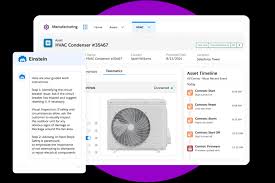
Salesforce has unveiled Connected Assets, a robust suite of capabilities in Manufacturing Cloud, designed to offer manufacturers a comprehensive, real-time perspective on connected asset data. This includes data on service history, asset status, customer records, and telematics, allowing manufacturers to monitor asset health and performance while proactively addressing maintenance needs to reduce downtime and boost customer satisfaction. Enhanced AI Capabilities for Connected AssetsConnected Assets integrates Salesforce’s advanced AI to empower teams with actionable insights. Sales, customer service, and field teams can now receive real-time alerts and quickly access asset history and health, enabling faster, data-driven support and the delivery of more personalized offers. AI-driven insights and recommendations based on asset condition, service history, and performance data enhance the ability of manufacturers to predict maintenance needs and provide proactive support, including on-site recommendations to field technicians. Innovative Features for Optimized Asset Management Salesforce PerspectiveAchyut Jajoo, SVP and GM of Manufacturing and Automotive, states, “The manufacturing industry is embracing a historic transformation toward AI-enabled modernization. Connected Assets and our sector-specific AI tools in Manufacturing Cloud empower our customers to lead with improved customer experiences, optimized asset performance, and new revenue-generating services. With Agentforce, our customers will soon be able to leverage autonomous agents to monitor connected asset data at scale, enabling them to focus on strategic, high-value initiatives.” Real-World ApplicationKawasaki Engines exemplifies Connected Assets in action, using Manufacturing Cloud to enhance customer relationships by offering proactive support and minimizing equipment downtime. “Salesforce’s Connected Assets will enable us to deliver exceptional service, keeping our customers satisfied and our products operating efficiently,” says Tony Gondick, Senior Manager of IT Business Strategy at Kawasaki Engines. Extending Across IndustriesBeyond Manufacturing Cloud, Connected Assets is also being introduced to Salesforce’s other industry clouds, such as Energy & Utilities, Communications, and Media, allowing a wide range of sectors to tap into the benefits of connected asset management, minimize downtime, and generate new value. Like Related Posts Who is Salesforce? Who is Salesforce? Here is their story in their own words. From our inception, we’ve proudly embraced the identity of Read more Salesforce Marketing Cloud Transactional Emails Salesforce Marketing Cloud Transactional Emails are immediate, automated, non-promotional messages crucial to business operations and customer satisfaction, such as order Read more Salesforce Unites Einstein Analytics with Financial CRM Salesforce has unveiled a comprehensive analytics solution tailored for wealth managers, home office professionals, and retail bankers, merging its Financial Read more AI-Driven Propensity Scores AI plays a crucial role in propensity score estimation as it can discern underlying patterns between treatments and confounding variables Read more

Read More
AI and Disability

AI and Disability

Dr. Johnathan Flowers of American University recently sparked a conversation on Bluesky regarding a statement from the organizers of NaNoWriMo, which endorsed the use of generative AI technologies, such as LLM chatbots, in this year’s event. Dr. Flowers expressed concern about the implication that AI assistance was necessary for accessibility, arguing that it could undermine the creativity and agency of individuals with disabilities. He believes that art often serves as a unique space where barriers imposed by disability can be transcended without relying on external help or engaging in forced intimacy. For Dr. Flowers, suggesting the need for AI support may inadvertently diminish the perceived capabilities of disabled and marginalized artists. Since the announcement, NaNoWriMo organizers have revised their stance in response to criticism, though much of the social media discussion has become unproductive. In earlier discussions, the author has explored the implications of generative AI in art, focusing on the human connection that art typically fosters, which AI-generated content may not fully replicate. However, they now wish to address the role of AI as a tool for accessibility. Not being personally affected by physical disability, the author approaches this topic from a social scientific perspective. They acknowledge that the views expressed are personal and not representative of any particular community or organization. Defining AI In a recent presentation, the author offered a new definition of AI, drawing from contemporary regulatory and policy discussions: AI: The application of specific forms of machine learning to perform tasks that would otherwise require human labor. This definition is intentionally broad, encompassing not just generative AI but also other machine learning applications aimed at automating tasks. AI as an Accessibility Tool AI has potential to enhance autonomy and independence for individuals with disabilities, paralleling technological advancements seen in fields like the Paris Paralympics. However, the author is keen to explore what unique benefits AI offers and what risks might arise. Benefits Risks AI and Disability The author acknowledges that this overview touches only on some key issues related to AI and disability. It is crucial for those working in machine learning to be aware of these dynamics, striving to balance benefits with potential risks and ensuring equitable access to technological advancements. Like Related Posts Who is Salesforce? Who is Salesforce? Here is their story in their own words. From our inception, we’ve proudly embraced the identity of Read more Salesforce Unites Einstein Analytics with Financial CRM Salesforce has unveiled a comprehensive analytics solution tailored for wealth managers, home office professionals, and retail bankers, merging its Financial Read more AI-Driven Propensity Scores AI plays a crucial role in propensity score estimation as it can discern underlying patterns between treatments and confounding variables Read more Tectonic’s Successful Salesforce Track Record Salesforce Technology Services Integrator – Tectonic has successfully delivered Salesforce in a variety of industries including Public Sector, Hospitality, Manufacturing, Read more
Read More
UX Principles for AI in Healthcare

UX Principles for AI in Healthcare

The Role of UX in AI-Driven Healthcare AI is poised to revolutionize the global economy, with predictions it could contribute $15.7 trillion by 2030—more than the combined economic output of China and India. Among the industries likely to see the most transformative impact is healthcare. However, during my time at NHS Digital, I saw how systems that weren’t designed with existing clinical workflows in mind added unnecessary complexity for clinicians, often leading to manual workarounds and errors due to fragmented data entry across systems. The risk is that AI, if not designed with user experience (UX) at the forefront, could exacerbate these issues, creating more disruption rather than solving problems. From diagnostic tools to consumer health apps, the role of UX in AI-driven healthcare is critical to making these innovations effective and user-friendly. This article explores the intersection of UX and AI in healthcare, outlining key UX principles to design better AI-driven experiences and highlighting trends shaping the future of healthcare. The Shift in Human-Computer Interaction with AI AI fundamentally changes how humans interact with computers. Traditionally, users took command by entering inputs—clicking, typing, and adjusting settings until the desired outcome was achieved. The computer followed instructions, while the user remained in control of each step. With AI, this dynamic shifts dramatically. Now, users specify their goal, and the AI determines how to achieve it. For example, rather than manually creating an illustration, users might instruct AI to “design a graphic for AI-driven healthcare with simple shapes and bold colors.” While this saves time, it introduces challenges around ensuring the results meet user expectations, especially when the process behind AI decisions is opaque. The Importance of UX in AI for Healthcare A significant challenge in healthcare AI is the “black box” nature of the systems. For example, consider a radiologist reviewing a lung X-ray that an AI flagged as normal, despite the presence of concerning lesions. Research has shown that commercial AI systems can perform worse than radiologists when multiple health issues are present. When AI decisions are unclear, clinicians may question the system’s reliability, especially if they cannot understand the rationale behind an AI’s recommendation. This opacity hinders feedback, making it difficult to improve the system’s performance. Addressing this issue is essential for UX designers. Bias in AI is another significant issue. Many healthcare AI tools have been documented as biased, such as systems trained on predominantly male cardiovascular data, which can fail to detect heart disease in women. AIs also struggle to identify conditions like melanoma in people with darker skin tones due to insufficient diversity in training datasets. UX can help mitigate these biases by designing interfaces that clearly explain the data used in decisions, highlight missing information, and provide confidence levels for predictions. The movement toward eXplainable AI (XAI) seeks to make AI systems more transparent and interpretable for human users. UX Principles for AI in Healthcare To ensure AI is beneficial in real-world healthcare settings, UX designers must prioritize certain principles. Below are key UX design principles for AI-enabled healthcare applications: Applications of AI in Healthcare AI is already making a significant impact in various healthcare applications, including: Real-world deployments of AI in healthcare have demonstrated that while AI can be useful, its effectiveness depends heavily on usability and UX design. By adhering to the principles of transparency, interpretability, controllability, and human-centered AI, designers can help create AI-enabled healthcare applications that are both powerful and user-friendly. Like Related Posts Who is Salesforce? Who is Salesforce? Here is their story in their own words. From our inception, we’ve proudly embraced the identity of Read more Salesforce Unites Einstein Analytics with Financial CRM Salesforce has unveiled a comprehensive analytics solution tailored for wealth managers, home office professionals, and retail bankers, merging its Financial Read more AI-Driven Propensity Scores AI plays a crucial role in propensity score estimation as it can discern underlying patterns between treatments and confounding variables Read more Tectonic’s Successful Salesforce Track Record Salesforce Technology Services Integrator – Tectonic has successfully delivered Salesforce in a variety of industries including Public Sector, Hospitality, Manufacturing, Read more

Read More
gettectonic.com