Agile Archives - gettectonic.com - Page 3
Employees Have Different Motivations

Employees Have Different Motivations

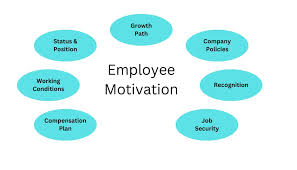
The workforce has undergone significant changes over the last two years. Today’s employees have different motivations, seeking more flexibility and purpose, while also expecting more from corporate leaders. Employees Have Different Motivations. Similarly, customers now demand high levels of personalization and exceptional experiences. How can C-suite executives keep up with these evolving expectations? Our research highlights emerging priorities for corporate leaders in these challenging times. In a recent webinar, we asked two Inc. 5000 CEOs about shifting priorities and the critical role of enhancing employee experiences to meet rising customer demands. The message was clear: efficient growth starts with your employees. Focusing on employee satisfaction, providing clear paths for growth, establishing strong values, and investing in the right tools are key drivers of success. However, for some leaders, old habits hinder progress. Today’s executives must not only be digitally proficient but also agile, with strong emotional intelligence to manage change and new relationships effectively. A prime example of this disconnect is seen in employee engagement. Salesforce’s recent report, The Experience Advantage, found that while 71% of C-suite executives believe their employees are engaged, only 51% of employees agree. Similarly, 70% of executives think their employees are happy, but only 44% of employees share that sentiment. How can companies enable their leaders to succeed in this era of heightened expectations? Let’s explore the top priorities for CEOs today. Top Priorities for Corporate Leaders In a world where CEOs are accountable to more stakeholders than ever, they must navigate an increasingly complex landscape. They’re expected to speak on social issues, advocate for sustainability, and ensure stability in times of rapid change. Adaptability is crucial for success. Here are some current top priorities for corporate leaders: At Salesforce, they’ve found success by operating with startup-style values—centering consumer trust, fostering constant innovation, and setting clear, simple goals. Marc Benioff’s V2MOM framework exemplifies this alignment in action. The New Skills Leaders Need After reviewing research and interviewing business leaders, several trends have emerged. The most successful executives today share the following traits: A 2021 IBM Institute for Business Value survey of 3,000 global CEOs revealed similar trends, highlighting purposeful agility and making technology a priority. The study found that 56% of CEOs emphasized the need for operational flexibility, and 61% were focused on empowering remote work. Key technologies driving results over the next few years include the Internet of Things (79%), cloud computing (74%), and AI (52%). A major shift on leader agendas is the growing focus on employee experience. As Salesforce’s chief growth evangelist, Tiffani Bova, noted, “Employees are now the most important stakeholder to long-term success.” Providing seamless, consumer-like experiences for employees is now essential for business growth. Our research also uncovered a key gap: 73% of C-suite executives don’t know how to use employee data to drive change. This disconnect between leadership perception and actual employee experience is undermining growth. Emotional Intelligence (EQ) Matters To close this gap, sharpening leaders’ emotional intelligence is essential. Last year, we conducted interviews with 10 CEOs across various sectors. Many revealed plans to replace C-suite team members with more digitally savvy and emotionally intelligent leaders better equipped to manage the modern workforce. Summit Leadership Partners’ 2020 research found that 80-90% of top-performing executives excelled because of their high EQ. In fact, EQ is twice as predictive of performance as technical skills or IQ. The Changing Role of Key Executives Who do CEOs rely on most? A decade ago, IBM’s Institute for Business Value found that 47% of CEOs considered the chief innovation officer critical. Today, only 4% of CEOs agree. The chief marketing officer and chief strategy officer roles have also seen significant declines in perceived importance. The positions that have gained prominence include the chief technology officer (CTO) and chief information officer (CIO), now ranked third in importance after the chief financial officer (CFO) and chief operating officer (COO). As Jeff McElfresh, COO of AT&T, observed, “Not all leaders are comfortable managing in a distributed model. We’ve got work to do to unlock the potential.” The rise in job titles related to the future of work—up 60% since the pandemic—reflects this shift, with hybrid work models becoming more common. Diversity Drives Innovation and Profitability Diversity in leadership has become essential for driving revenue and innovation. McKinsey’s 2020 report Diversity Wins found that companies with more gender-diverse executive teams were 25% more likely to achieve above-average profitability. Similarly, those with greater ethnic diversity outperformed their peers by 36%. Diverse management teams also deliver 19% higher revenues from innovation compared to less-diverse teams, according to research from BCG. As diversity becomes increasingly tied to executive compensation, companies must support a diverse leadership pipeline by developing inclusive talent strategies. Moving Forward To thrive in today’s business world, corporate leaders must plan for change, ensure all executives have both digital literacy and emotional intelligence, and redistribute power to drive success. The healthiest C-suites will include diverse leaders in key positions like COO, CFO, and CIO/CTO. Aligning the business around common goals—like those in Salesforce’s V2MOM framework—and eliminating barriers for employees are key to staying ahead. Innovation must remain a top priority. By investing in the right tools and connected platforms, companies can reduce costs and drive sustainable growth. Reach out to Tectonic for assistance in making the innovations that recognizes Employees Have Different Motivations. Like Related Posts Who is Salesforce? Who is Salesforce? Here is their story in their own words. From our inception, we’ve proudly embraced the identity of Read more Salesforce Marketing Cloud Transactional Emails Salesforce Marketing Cloud Transactional Emails are immediate, automated, non-promotional messages crucial to business operations and customer satisfaction, such as order Read more Salesforce Unites Einstein Analytics with Financial CRM Salesforce has unveiled a comprehensive analytics solution tailored for wealth managers, home office professionals, and retail bankers, merging its Financial Read more AI-Driven Propensity Scores AI plays a crucial role in propensity score estimation as it can discern underlying patterns between treatments and confounding variables Read more

Read More
Tableau Einstein is Here

Tableau Einstein is Here

Tableau Einstein marks a new chapter for Tableau, transforming the analytics experience by moving beyond traditional reports and dashboards to deliver insights directly within the flow of a user’s work. This new AI-powered analytics platform blends existing Tableau and Salesforce capabilities with innovative features designed to revolutionize how users engage with data. The platform is built around four key areas: autonomous insight delivery through AI, AI-assisted development of a semantic layer, real-time data access, and a marketplace for data and AI products, allowing customers to personalize their Tableau experience. Some features, like Tableau Pulse and Tableau Agent, which provide autonomous insights, are already available. Additional tools, such as Tableau Semantics and a marketplace for AI products, are expected to launch in 2025. Access to Tableau Einstein is provided through a Tableau+ subscription, though pricing details remain private. Since being acquired by Salesforce in 2019, Tableau has shifted its focus toward AI, following the trend of many analytics vendors. In February, Tableau introduced Tableau Pulse, a generative AI-powered tool that delivers insights in natural language. In July, it also rolled out Tableau Agent, an AI assistant to help users prepare and analyze data. With AI at its core, Tableau Einstein reflects deeper integration between Tableau and Salesforce. David Menninger, an analyst at Ventana Research, commented that these new capabilities represent a meaningful step toward true integration between the two platforms. Donald Farmer, founder of TreeHive Strategy, agrees, highlighting that while the robustness of Tableau Einstein’s AI capabilities compared to its competitors remains to be seen, the platform offers more than just incremental add-ons. “It’s an impressive release,” he remarked. A Paradigm Shift in Analytics A significant aspect of Tableau Einstein is its agentic nature, where AI-powered agents deliver insights autonomously, without user prompts. Traditionally, users queried data and analyzed reports to derive insights. Tableau Einstein changes this model by proactively providing insights within the workflow, eliminating the need for users to formulate specific queries. The concept of autonomous insights, represented by tools like Tableau Pulse and Agentforce for Tableau, allows businesses to build autonomous agents that deliver actionable data. This aligns with the broader trend in analytics, where the market is shifting toward agentic AI and away from dashboard reliance. Menninger noted, “The market is moving toward agentic AI and analytics, where agents, not dashboards, drive decisions. Agents can act on data rather than waiting for users to interpret it.” Farmer echoed this sentiment, stating that the integration of AI within Tableau is intuitive and seamless, offering a significantly improved analytics experience. He specifically pointed out Tableau Pulse’s elegant design and the integration of Agentforce AI, which feels deeply integrated rather than a superficial add-on. Core Features and Capabilities One of the most anticipated features of Tableau Einstein is Tableau Semantics, a semantic layer designed to enhance AI models by enabling organizations to define and structure their data consistently. Expected to be generally available by February 2025, Tableau Semantics will allow enterprises to manage metrics, data dimensions, and relationships across datasets with the help of AI. Pre-built metrics for Salesforce data will also be available, along with AI-driven tools to simplify semantic layer management. Tableau is not the first to offer a semantic layer—vendors like MicroStrategy and Looker have similar features—but the infusion of AI sets Tableau’s approach apart. According to Tableau’s chief product officer, Southard Jones, AI makes Tableau’s semantic layer more agile and user-friendly compared to older, labor-intensive systems. Real-time data integration is another key component of Tableau Einstein, made possible through Salesforce’s Data Cloud. This integration enables Tableau users to securely access and combine structured and unstructured data from hundreds of sources without manual intervention. Unstructured data, such as text and images, is critical for comprehensive AI training, and Data Cloud allows enterprises to use it alongside structured data efficiently. Additionally, Tableau Einstein will feature a marketplace launching in mid-2025, which will allow users to build a composable infrastructure. Through APIs, users will be able to personalize their Tableau environment, share AI assets, and collaborate across departments more effectively. Looking Forward As Tableau continues to build on its AI-driven platform, Menninger and Farmer agree that the vendor’s move toward agentic AI is a smart evolution. While Tableau’s current capabilities are competitive, Menninger noted that the platform doesn’t necessarily set Tableau apart from competitors like Qlik, MicroStrategy, or Microsoft Fabric. However, the tight integration with Salesforce and the focus on agentic AI may provide Tableau with a short-term advantage in the fast-changing analytics landscape. Farmer added that Tableau Einstein’s autonomous insight generation feels like a significant leap forward for the platform. “Tableau has done great work in creating an agentic experience that feels, for the first time, like the real deal,” he said. Looking ahead, Tableau’s roadmap includes a continued focus on agentic AI, with the goal of providing each user with their own personal analyst. “It’s not just about productivity,” said Jones. “It’s about changing the value of what can be delivered.” Menninger concluded that Tableau’s shift away from dashboards is a reflection of where business intelligence is headed. “Dashboards, like data warehouses, don’t solve problems on their own. What matters is what you do with the information,” he said. “Tableau’s push toward agentic analytics and collaborative decision-making is the right move for its users and the market as a whole.” Like1 Related Posts Who is Salesforce? Who is Salesforce? Here is their story in their own words. From our inception, we’ve proudly embraced the identity of Read more Salesforce Marketing Cloud Transactional Emails Salesforce Marketing Cloud Transactional Emails are immediate, automated, non-promotional messages crucial to business operations and customer satisfaction, such as order Read more Salesforce Unites Einstein Analytics with Financial CRM Salesforce has unveiled a comprehensive analytics solution tailored for wealth managers, home office professionals, and retail bankers, merging its Financial Read more AI-Driven Propensity Scores AI plays a crucial role in propensity score estimation as it can discern underlying patterns between treatments and confounding variables Read more

Read More
Predictive Analytics

Predictive Analytics

Industry forecasts predict an annual growth rate of 6% to 7%, fueled by innovations in cloud computing, artificial intelligence (AI), and data engineering. In 2023, the global data analytics market was valued at approximately $41 billion and is expected to surge to $118.5 billion by 2029, with a compound annual growth rate (CAGR) of 27.1%. This significant expansion reflects the growing demand for advanced analytics tools that provide actionable insights. AI has notably enhanced the accuracy of predictive models, enabling marketers to anticipate customer behaviors and preferences with impressive precision. “We’re on the verge of a new era in predictive analytics, with tools like Salesforce Einstein Data Analytics revolutionizing how we harness data-driven insights to transform marketing strategies,” says Koushik Kumar Ganeeb, a Principal Member of Technical Staff at Salesforce Data Cloud and a distinguished Data and AI Architect. Ganeeb’s leadership spans initiatives like AI-powered Salesforce Einstein Data Analytics, Marketing Cloud Connector for Data Cloud, and Intelligence Reporting (Datorama). His expertise includes architecting vast data extraction pipelines that process trillions of transactions daily. These pipelines play a crucial role in the growth strategies of Fortune 500 companies, helping them scale their data operations efficiently by leveraging AI. Ganeeb’s visionary work has propelled Salesforce Einstein Data Analytics into the forefront of business intelligence. Under his guidance, the platform’s advanced capabilities—such as predictive modeling, real-time data analysis, and natural language processing—are now pivotal in transforming how businesses forecast trends, personalize marketing efforts, and make data-driven decisions with unprecedented precision. AI and Machine Learning: The Next Frontier Beginning in 2018, Salesforce Marketing Cloud, a leading engagement platform used by top enterprises, faced challenges in extracting actionable insights and enhancing AI capabilities from rapidly growing data across diverse systems. Ganeeb was tasked with overcoming these hurdles, leading to the development of the Salesforce Einstein Provisioning Process. This process involved the creation of extensive data import jobs and the establishment of standardized patterns based on consumer adoption learning. These automated jobs handle trillions of transactions daily, delivering critical engagement and profile data in real-time to meet the scalability needs of large enterprises. The data flows seamlessly into AI models that generate predictions on a massive scale, such as Engagement Scores and insights into messaging and language usage across the platform. “Integrating AI and machine learning into data analytics through Salesforce Einstein is not just a technological enhancement—it’s a revolutionary shift in how we approach data,” explains Ganeeb. “With our advanced predictive models and real-time data processing, we can analyze vast amounts of data instantly, delivering insights that were previously unimaginable.” This innovative approach empowers organizations to make more informed decisions, driving unprecedented growth and operational efficiency. Real-World Success Stories Under Ganeeb’s technical leadership, Salesforce Einstein Data Analytics has delivered remarkable results across industries by leveraging AI and machine learning to provide actionable insights and enhance business performance. In the past year, leading companies like T-Mobile, Fitbit, and Dell Technologies have reported significant improvements after integrating Einstein. Ganeeb’s proficiency in designing and scaling data engineering solutions has been critical in helping these enterprises optimize performance. “Scalability with Salesforce Einstein Data Analytics goes beyond managing data volumes—it ensures that every data point is converted into actionable insights,” says Ganeeb. His work processing petabytes of data daily underscores his commitment to precision and efficiency in data engineering. Navigating Data Ethics and Quality Despite the rapid growth of predictive analytics, Ganeeb emphasizes the importance of data ethics and quality. “The accuracy of predictive models depends on the integrity of the data,” he notes. Salesforce Einstein Data Analytics addresses this by curating datasets to ensure they are representative and free from bias, maintaining trust while delivering reliable insights. By implementing rigorous data quality checks and ethical considerations, Ganeeb ensures that Einstein Analytics not only delivers actionable insights but also fosters transparency and trust. This balanced approach is key to the responsible use of predictive analytics across various industries. Future Trends in Predictive Analytics The future of predictive analytics looks bright, with AI and machine learning poised to further refine the accuracy and utility of predictive models. “Success lies in embracing technological advancements while maintaining a human touch,” Ganeeb notes. “By combining AI-driven insights with human intuition, businesses can navigate market complexities and uncover new opportunities.” Ganeeb’s contributions to Salesforce Einstein Data Analytics exemplify this balanced approach, integrating cutting-edge technology with human insight to empower businesses to make strategic decisions. His work positions organizations to thrive in a data-driven world, helping them stay agile and competitive in an evolving market. Balancing Benefits and Challenges – Predictive Analytics While predictive analytics offers vast potential, Ganeeb recognizes the challenges. Ensuring data quality, addressing ethical concerns, and maintaining transparency are crucial for its responsible use. “Although challenges remain, the future of AI-based predictive analytics is promising,” Ganeeb asserts. His work with Salesforce Einstein Data Analytics continues to push the boundaries of marketing analytics, enabling businesses to harness the power of AI for transformative growth. Like1 Related Posts Who is Salesforce? Who is Salesforce? Here is their story in their own words. From our inception, we’ve proudly embraced the identity of Read more Salesforce Marketing Cloud Transactional Emails Salesforce Marketing Cloud Transactional Emails are immediate, automated, non-promotional messages crucial to business operations and customer satisfaction, such as order Read more Salesforce Unites Einstein Analytics with Financial CRM Salesforce has unveiled a comprehensive analytics solution tailored for wealth managers, home office professionals, and retail bankers, merging its Financial Read more AI-Driven Propensity Scores AI plays a crucial role in propensity score estimation as it can discern underlying patterns between treatments and confounding variables Read more
Read More
Citizen Development

Citizen Development

As we progress through the era of digital transformation, citizen development has emerged as a key trend in the business landscape. This approach empowers end-users to create their applications, streamlining workflows and reshaping corporate operations. However, like any innovation, citizen development presents both advantages and challenges. In this article, we will explore the benefits, pros and cons of citizen development, and strategies to effectively leverage it within your organization. 1. The Rise of Citizen Development The popularity of citizen development is on the rise, as reflected by Statista, which reports a remarkable 24.6% growth in this sector since 2020. The increasing demand for software solutions in the corporate environment has made the traditional model of IT departments solely managing application development unsustainable. By enabling non-technical personnel to develop their applications, businesses can relieve pressure on IT teams, speed up solution delivery, and cultivate a more agile business model. Furthermore, investing in citizen development platforms fosters an inclusive and innovative workplace, allowing diverse perspectives to generate unique applications that meet specific workflow needs. 2. Benefits of Citizen Development for Companies 2.1 Accelerated Pace and Flexibility Citizen development tools facilitate rapid prototyping and quicker application rollouts. Non-technical personnel can design, modify, and launch applications according to immediate needs, enhancing agility and responsiveness. 2.2 Boosted Creativity Empowering your staff to create applications unlocks a wealth of untapped potential. Citizen development nurtures a culture of innovation, leading to tailored solutions that address specific business challenges. 2.3 Tailored App Design Citizen developers, as end-users, possess an in-depth understanding of their workflow requirements. This perspective enables them to develop applications that align closely with user needs, improving adoption and utility. 2.4 Heightened Productivity By reducing the back-and-forth between IT departments and end-users, citizen development streamlines operations, leading to enhanced efficiency. 2.5 Cost-Effectiveness Citizen development significantly cuts costs associated with traditional application development, such as hiring professional developers or outsourcing tasks. Rapid application rollouts also help seize business opportunities quickly, optimizing ROI. 2.6 Reduced Workload for IT Staff Enabling non-technical personnel to handle minor application development tasks lightens the load on IT teams, allowing them to focus on high-priority projects. 2.7 Enhanced Visibility and Accountability Many citizen development platforms include built-in analytics and reporting features, offering insights into application usage and performance. This transparency helps businesses track initiatives, make data-driven decisions, and continuously improve processes. 3. Implementing Citizen Development with Salesforce Solutions Given its extensive benefits, citizen development is a strategy many businesses are eager to adopt. Salesforce provides a powerful platform to effectively harness citizen development. Salesforce’s platform caters to both professional and citizen developers, offering a comprehensive suite of user-friendly tools for building applications and managing workflows. With built-in safeguards for data security and regulatory compliance, Salesforce for Public Sector and Tribal Governments ensures a smooth and secure citizen development process. Their clear deployment roadmap and thorough training programs equip businesses for success in their citizen development journey. 4. Partnering with Tectonic for Public Sector and Tribal Government Solutions Consider Tectonic as your trusted partner for PSS solutions. Tectonic is a distinguished provider of technology solutions with extensive expertise in Salesforce and process management. With a proven track record of successful projects, Tectonic has earned the trust of clients globally. Tectonic maintains a close partnership with Salesforce, ensuring a deep understanding of its advanced features, including process automation. As a Salesforce partner, Tectonic keeps clients updated on the latest advancements, delivering cutting-edge solutions tailored to their specific needs. By selecting Tectonic as your implementation partner for public sector Salesforce, you benefit from their vast experience and specialized knowledge. Tectonic provides a dedicated public sector team that excels in implementing secure and efficient solutions, working closely with our clients to address their unique challenges. Tectonic offers a comprehensive range of services, from initial implementation to ongoing support and maintenance. Their offerings include process modeling, application design, automation implementation, and roles management. With Tectonic’s expertise, you can ensure seamless integration of automation into your pss projects. To learn more about Tectonic’s public sector services, visit our services page, where you can explore their offerings, including Salesforce Managed Services. Tectonic’s Managed Services provide full support to ensure your public sector environment runs smoothly, covering automation management, data governance, and performance optimization. 5. Final Thoughts While citizen development presents both advantages and challenges, the benefits largely outweigh the potential drawbacks. Although there are concerns about data security and the need for proper governance, the positive impact of citizen development makes it a vital component of the digital transformation narrative. Successful implementation hinges on selecting the right platform and tools that align with your business model and workflow needs. Salesforce Public Sector Solution excels in this regard, offering a user-friendly suite of tools with a clear roadmap for deployment and top-notch support. Brining your public sector tech into the 21st century is an imperative. To fully realize the benefits of citizen development, businesses must strike a balance between empowerment and control. Establishing an environment that fosters innovation and efficiency, while also implementing a governance structure to mitigate risks, is essential. With careful planning, the right tools, and a culture of collaboration, the rewards of citizen development can be substantial. Whether you’re looking to enhance speed and agility, optimize costs, or cultivate a culture of innovation, citizen development offers a promising pathway forward. Embrace citizen development in Salesforce PSS, and set your business on the road to success. If you have any questions about implementing Salesforce Public Sector Solutions and its benefits, feel free to contact us to discuss your project. Like Related Posts Who is Salesforce? Who is Salesforce? Here is their story in their own words. From our inception, we’ve proudly embraced the identity of Read more Salesforce Unites Einstein Analytics with Financial CRM Salesforce has unveiled a comprehensive analytics solution tailored for wealth managers, home office professionals, and retail bankers, merging its Financial Read more AI-Driven Propensity Scores AI plays a crucial role in propensity score estimation as it can discern underlying patterns between treatments and confounding

Read More
Data Integration with AWS Glue

Data Integration with AWS Glue

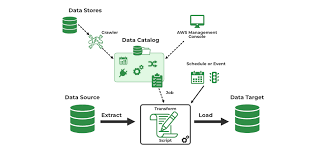
The rapid rise of Software as a Service (SaaS) solutions has led to data silos across different platforms, making it challenging to consolidate insights. Effective data analytics depends on the ability to seamlessly integrate data from various systems by identifying, gathering, cleansing, and combining it into a unified format. AWS Glue, a serverless data integration service, simplifies this process with scalable, efficient, and cost-effective solutions for unifying data from multiple sources. By using AWS Glue, organizations can streamline data integration, minimize silos, and enhance agility in managing data pipelines, unlocking the full potential of their data for analytics, decision-making, and innovation. This insight explores the new Salesforce connector for AWS Glue and demonstrates how to build a modern Extract, Transform, and Load (ETL) pipeline using AWS Glue ETL scripts. Introducing the Salesforce Connector for AWS Glue To meet diverse data integration needs, AWS Glue now supports SaaS connectivity for Salesforce. This enables users to quickly preview, transfer, and query customer relationship management (CRM) data, while dynamically fetching the schema. With the Salesforce connector, users can ingest and transform CRM data and load it into any AWS Glue-supported destination, such as Amazon S3, in preferred formats like Apache Iceberg, Apache Hudi, and Delta Lake. It also supports reverse ETL use cases, enabling data to be written back to Salesforce. Key Benefits: Solution Overview For this use case, we retrieve the full load of a Salesforce account object into a data lake on Amazon S3 and capture incremental changes. The solution also enables updates to certain fields in the data lake and synchronizes them back to Salesforce. The process involves creating two ETL jobs using AWS Glue with the Salesforce connector. The first job ingests the Salesforce account object into an Apache Iceberg-format data lake on Amazon S3. The second job captures updates and pushes them back to Salesforce. Prerequisites: Creating the ETL Pipeline Step 1: Ingest Salesforce Account Object Using the AWS Glue console, create a new job to transfer the Salesforce account object into an Apache Iceberg-format transactional data lake in Amazon S3. The script checks if the account table exists, performs an upsert if it does, or creates a new table if not. Step 2: Push Changes Back to Salesforce Create a second ETL job to update Salesforce with changes made in the data lake. This job writes the updated account records from Amazon S3 back to Salesforce. Example Query sqlCopy codeSELECT id, name, type, active__c, upsellopportunity__c, lastmodifieddate FROM “glue_etl_salesforce_db”.”account”; Additional Considerations You can schedule the ETL jobs using AWS Glue job triggers or integrate them with other AWS services like AWS Lambda and Amazon EventBridge for advanced workflows. Additionally, AWS Glue supports importing deleted Salesforce records by configuring the IMPORT_DELETED_RECORDS option. Clean Up After completing the process, clean up the resources used in AWS Glue, including jobs, connections, Secrets Manager secrets, IAM roles, and the S3 bucket to avoid incurring unnecessary charges. Conclusion The AWS Glue connector for Salesforce simplifies the analytics pipeline, accelerates insights, and supports data-driven decision-making. Its serverless architecture eliminates the need for infrastructure management, offering a cost-effective and agile approach to data integration, empowering organizations to efficiently meet their analytics needs. Like Related Posts Who is Salesforce? Who is Salesforce? Here is their story in their own words. From our inception, we’ve proudly embraced the identity of Read more Salesforce Marketing Cloud Transactional Emails Salesforce Marketing Cloud Transactional Emails are immediate, automated, non-promotional messages crucial to business operations and customer satisfaction, such as order Read more Salesforce Unites Einstein Analytics with Financial CRM Salesforce has unveiled a comprehensive analytics solution tailored for wealth managers, home office professionals, and retail bankers, merging its Financial Read more AI-Driven Propensity Scores AI plays a crucial role in propensity score estimation as it can discern underlying patterns between treatments and confounding variables Read more

Read More
Mission Control Salesforce

Mission Control Salesforce

Like Related Posts Who is Salesforce? Who is Salesforce? Here is their story in their own words. From our inception, we’ve proudly embraced the identity of Read more Salesforce Marketing Cloud Transactional Emails Salesforce Marketing Cloud Transactional Emails are immediate, automated, non-promotional messages crucial to business operations and customer satisfaction, such as order Read more Salesforce Unites Einstein Analytics with Financial CRM Salesforce has unveiled a comprehensive analytics solution tailored for wealth managers, home office professionals, and retail bankers, merging its Financial Read more AI-Driven Propensity Scores AI plays a crucial role in propensity score estimation as it can discern underlying patterns between treatments and confounding variables Read more

Read More
Key Insights on Navigating AI Compliance

Key Insights on Navigating AI Compliance

Grammarly’s AI Regulatory Master Class: Key Insights on Navigating AI Compliance On August 27, 2024, Grammarly hosted an AI Regulatory Master Class webinar, featuring Scout Moran, Senior Product Counsel, and Alan Luk, Head of Governance, Risk, and Compliance (GRC). The event provided a comprehensive overview of the current and upcoming AI regulations affecting organizations’ AI strategies, along with guidance on evaluating AI solution providers, including those offering generative AI. While the webinar avoided deep legal analysis and did not serve as legal advice, Moran and Luk spotlighted key regulations emerging from both the U.S. and European Union (EU), highlighting the rapid response of regulatory bodies to AI’s growth. Overview of AI Regulations The AI regulatory landscape is changing quickly. A May 2024 report from law firm Davis & Gilbert noted that nearly 200 AI-related laws have been proposed across various U.S. states. Grammarly’s presentation emphasized the need for organizations to stay updated, as both U.S. and EU regulations are shaping the future of AI governance. The EU AI Act: A New Regulatory Framework The EU AI Act, which took effect on August 2, 2024, applies to AI system providers, importers, distributors, and others connected to the EU market, regardless of where they are based. As Moran pointed out, the Act is designed to ensure AI systems are deployed safely. Unsafe systems may be removed from the market, establishing a regulatory baseline that individual EU countries can strengthen with more stringent measures. However, the Act does not fully define “safety.” Legal experts Hadrien Pouget and Ranj Zuhdi noted that while safety requirements are crucial to the Act, they are currently broad, allowing room for further development of standards. The Act prohibits certain AI practices, such as manipulative systems, those exploiting personal vulnerabilities, and AI used to assess or predict criminal risk. AI systems are categorized into four risk levels: unacceptable, high-risk, limited risk, and minimal risk. High-risk systems—such as those in critical infrastructure or public services—face stricter regulation, while minimal-risk systems like spam filters have fewer requirements. Full enforcement of the Act will begin in 2025. U.S. AI Regulations Unlike the EU, the U.S. focuses more on national security than consumer safety in its AI regulation. The U.S. Executive Order on Safe, Secure, and Trustworthy AI addresses these concerns. At the state level, Moran highlighted trends such as requiring clear disclosure when interacting with AI and giving individuals the right to opt out of having their data used for AI model training. States like California and Utah are leading the way with specific laws (SB-1047 and SB-149, respectively) addressing accountability and disclosure in AI use. Key Considerations When Selecting AI Vendors Moran stressed the importance of thoroughly vetting AI vendors. Organizations should ensure vendors meet cybersecurity standards, such as SOC 2, and clearly define how their data will be used, particularly in training large language models (LLMs). “Eyes off” agreements, which prevent vendor employees from accessing customer data, should also be considered. Martha Buyer, a frequent contributor to No Jitter, emphasized verifying the originality of AI-generated content from providers like Grammarly or Microsoft Copilot. She urged caution in ensuring the ownership and authenticity of AI-assisted outputs. The Importance of Strong Third-Party Agreements Luk highlighted Grammarly’s commitment to data privacy, noting that the company neither sells customer data nor uses it to train models. Additionally, Grammarly enforces agreements preventing its third-party LLM providers from doing so. These contractual protections are crucial for safeguarding customer data. Organizations should also ensure third-party vendors adhere to strict guidelines, including securing customer data, encrypting it, and preventing unauthorized access. Vendors should maintain updated security certifications and manage risks like bias, which, while not entirely avoidable, must be actively addressed. Staying Ahead in a Changing Regulatory Environment Both Moran and Luk stressed the importance of ongoing monitoring. Organizations need to regularly reassess whether their vendors comply with their data-sharing policies and meet evolving regulatory standards. As AI technology and regulations continue to evolve, staying informed and agile will be critical for compliance and risk mitigation. In conclusion, organizations adopting AI-powered solutions must navigate a dynamic regulatory environment. As AI advances and regulations become more comprehensive, remaining vigilant and asking the right questions will be key to ensuring compliance and reducing risks. Like Related Posts Who is Salesforce? Who is Salesforce? Here is their story in their own words. From our inception, we’ve proudly embraced the identity of Read more Salesforce Unites Einstein Analytics with Financial CRM Salesforce has unveiled a comprehensive analytics solution tailored for wealth managers, home office professionals, and retail bankers, merging its Financial Read more AI-Driven Propensity Scores AI plays a crucial role in propensity score estimation as it can discern underlying patterns between treatments and confounding variables Read more Tectonic’s Successful Salesforce Track Record Salesforce Technology Services Integrator – Tectonic has successfully delivered Salesforce in a variety of industries including Public Sector, Hospitality, Manufacturing, Read more

Read More
ai analytics

AI Analytics Explained

While both AI analytics and predictive AI leverage data analysis, AI analytics is a broader field encompassing various AI techniques for data processing and analysis, while predictive AI specifically focuses on forecasting future outcomes based on historical data patterns. Here’s a more detailed breakdown: AI Analytics (Broad) Predictive AI (Specific) What is AI Analytics? AI analytics leverages machine learning (ML) and artificial intelligence (AI) to automate the analysis of vast amounts of data, uncovering insights faster and more accurately than traditional methods. By continuously monitoring data streams, AI analytics identifies patterns, anomalies, and trends—tasks that would typically require extensive manual effort from data analysts. Business Analytics in the AI Era AI is transforming industries, and business analytics is no exception. While traditional analytics relies on statistical models developed over centuries, AI-powered analytics introduces unprecedented speed, scalability, and precision, enabling businesses to make real-time, data-driven decisions. This article explores: What is Analytics? Analytics is the process of extracting meaningful insights from raw data to answer business questions, predict trends, and guide decision-making. It involves various techniques, including: The Four Stages of Analytics (Gartner’s Analytic Ascendancy Model) AI, Machine Learning, and AI Analytics Artificial Intelligence (AI) AI refers to machines performing tasks that typically require human intelligence, such as: Machine Learning (ML) A subset of AI, ML uses algorithms trained on data to make predictions without explicit programming. Key approaches include: AI Analytics AI analytics automates data analysis by: Unlike traditional analytics, which relies on manual hypothesis testing, AI analytics continuously scans data, delivering faster, more objective insights. AI Analytics vs. Traditional Analytics Feature Traditional Analytics AI Analytics Speed Slow (weeks to months) Real-time processing Scale Limited by human capacity Handles billions of data points Granularity Broad trends Micro-level insights (e.g., per-user) Bias Human assumptions influence results Data-driven, unbiased analysis Automation Manual hypothesis testing Self-learning algorithms Advantages of AI Analytics ✅ Faster detection – Identifies issues in hours, not weeks.✅ Higher accuracy – Reduces errors by 30-50% (McKinsey).✅ Unbiased insights – Tests millions of hypotheses objectively. Real-World Applications of AI Analytics 1. Demand Forecasting (Predictive Analytics) 2. Predictive Maintenance 3. Business Monitoring (Diagnostic Analytics) 4. Cloud Cost Optimization Conclusion: AI Analytics is the Future AI analytics supercharges business intelligence by:🚀 Automating tedious analysis – Freeing analysts for strategic work.🔍 Uncovering hidden insights – Detecting patterns humans miss.⏱ Delivering real-time decisions – Keeping businesses agile. As AI continues to evolve, companies that adopt AI-powered analytics will gain a competitive edge—transforming raw data into actionable intelligence at unprecedented speed. Ready to integrate AI analytics into your business? Explore how AI can revolutionize your data strategy today. Contact Tectonic. Like Related Posts Who is Salesforce? Who is Salesforce? Here is their story in their own words. From our inception, we’ve proudly embraced the identity of Read more Salesforce Marketing Cloud Transactional Emails Salesforce Marketing Cloud Transactional Emails are immediate, automated, non-promotional messages crucial to business operations and customer satisfaction, such as order Read more Salesforce Unites Einstein Analytics with Financial CRM Salesforce has unveiled a comprehensive analytics solution tailored for wealth managers, home office professionals, and retail bankers, merging its Financial Read more AI-Driven Propensity Scores AI plays a crucial role in propensity score estimation as it can discern underlying patterns between treatments and confounding variables Read more

Read More
Building Trust in AI-Powered CRM

Embracing AI in 2024

Embracing AI in 2024: A Strategic Approach to Building AI Software Artificial Intelligence (AI) has become the cornerstone of innovation in the IT industry, captivating big tech, corporations, and investors alike. Participation in AI isn’t just beneficial—it’s imperative. While the specter of an ‘AI Bubble’ looms in public discourse, with fears of job displacement, the reality is more nuanced. AI-driven tools are indeed transforming industries, yet they also present opportunities for innovation and efficiency. Key Considerations for Harnessing AI Power Integration into Digital Services The future of AI lies in embedding it seamlessly within digital services rather than creating standalone products. This approach leverages AI’s capabilities effectively, particularly in generative AI applications. Positioning AI: Core Product vs. Business Solution When incorporating AI into your business strategy, clarity is crucial. Determine whether AI serves as the core product, enhances existing features, or solves specific business challenges. Avoid falling into commodity categories or gimmicky features that lack substantial user value. Assessing Feasibility and Readiness Evaluate your team’s AI competencies, familiarity with tools, budget constraints, and current revenue streams. Understanding these factors helps gauge the feasibility of AI development and integration within your organization. Leveraging Existing Solutions Explore AI solutions offered by major cloud providers and companies. Opt for tools that offer higher abstraction levels, simplifying integration and maintenance. Practical Steps to AI Software Development Navigating AI Use Cases Identify unique use cases where AI can solve real business problems effectively. Avoid pursuing solutions solely for novelty or investor appeal. Building Capability Assess your capability to develop AI systems. Whether you have in-house expertise or need to recruit talent, align your team with the skills required for successful implementation. Data: The Foundation of AI Success Establish robust data acquisition, processing, and storage capabilities. High-quality data is fundamental for AI performance and reliability. Designing Scalable Architecture Develop a scalable AI system architecture that supports seamless data flow, model training, deployment, and user interaction. Keep simplicity and functionality at the forefront. Continuous Improvement Monitor and refine your AI system continuously based on user feedback and industry advancements. Embrace a culture of ongoing learning and adaptation to stay ahead. Conclusion: Navigating the AI Landscape In 2024, building AI software demands a blend of innovation and pragmatism. Clear use cases, robust data management, and practical implementation are key to success. Whether adopting existing AI tools or developing proprietary solutions, prioritize delivering tangible value to users. Stay agile, continuously refine your approach, and embrace the transformative potential of AI in driving business growth and innovation. Like Related Posts Who is Salesforce? Who is Salesforce? Here is their story in their own words. From our inception, we’ve proudly embraced the identity of Read more Salesforce Unites Einstein Analytics with Financial CRM Salesforce has unveiled a comprehensive analytics solution tailored for wealth managers, home office professionals, and retail bankers, merging its Financial Read more AI-Driven Propensity Scores AI plays a crucial role in propensity score estimation as it can discern underlying patterns between treatments and confounding variables Read more Tectonic’s Successful Salesforce Track Record Salesforce Technology Services Integrator – Tectonic has successfully delivered Salesforce in a variety of industries including Public Sector, Hospitality, Manufacturing, Read more

Read More
New Service Cloud Tools

New Service Cloud Tools

Salesforce has unveiled new out-of-the-box service components, an automation tool, and a new app for Service Cloud customers, designed to help agents resolve customer cases faster and enable companies to scale their support operations efficiently. New Service Cloud Tools are here. Why It Matters: With 69% of agents reporting that balancing speed and quality is a challenge, and as the volume and complexity of cases increase, there is a growing need for tools that enhance efficiency without compromising service quality. Salesforce Service Cloud: Deliver Value Across Every Customer Touchpoint with Service Cloud Built on the Einstein 1 Platform. New Tools and Features: Service Cloud customers now have access to a suite of efficiency tools aimed at automating processes and identifying the best product capabilities to enhance service delivery. These new features allow customers to maximize their Service Cloud investment and improve their return on investment. Salesforce Perspective: Kishan Chetan, EVP & GM of Service Cloud, emphasized that the new efficiency tools help companies of all sizes increase service team productivity and better serve their customers. Industry Reaction: Rebecca Wettemann, CEO & Principal Analyst at Valoir, noted that these innovations offer service teams quick wins, enhancing operational efficiency and maximizing technology investments. Fast Facts: Like Related Posts Who is Salesforce? Who is Salesforce? Here is their story in their own words. From our inception, we’ve proudly embraced the identity of Read more Salesforce Marketing Cloud Transactional Emails Salesforce Marketing Cloud Transactional Emails are immediate, automated, non-promotional messages crucial to business operations and customer satisfaction, such as order Read more Salesforce Unites Einstein Analytics with Financial CRM Salesforce has unveiled a comprehensive analytics solution tailored for wealth managers, home office professionals, and retail bankers, merging its Financial Read more AI-Driven Propensity Scores AI plays a crucial role in propensity score estimation as it can discern underlying patterns between treatments and confounding variables Read more

Read More
Lakeflow for Data Engineering

Lakeflow for Data Engineering

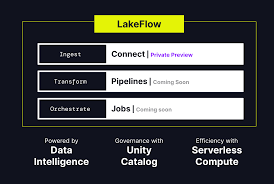
Databricks unveiled Databricks LakeFlow last week, a new tool designed to unify all aspects of data engineering, from data ingestion and transformation to orchestration. What is Databricks LakeFlow? According to Databricks, LakeFlow simplifies the creation and operation of production-grade data pipelines, making it easier for data teams to handle complex data engineering tasks. This solution aims to meet the growing demands for reliable data and AI by providing an efficient and streamlined approach. The Current State of Data Engineering Data engineering is crucial for democratizing data and AI within businesses, yet it remains a challenging field. Data teams must often deal with: How LakeFlow Addresses These Challenges LakeFlow offers a unified experience for all aspects of data engineering, simplifying the entire process: Key Features of LakeFlow LakeFlow comprises three main components: LakeFlow Connect, LakeFlow Pipelines, and LakeFlow Jobs. Availability LakeFlow is entering preview soon, starting with LakeFlow Connect. Customers can register to join the waitlist today. Like1 Related Posts Who is Salesforce? Who is Salesforce? Here is their story in their own words. From our inception, we’ve proudly embraced the identity of Read more Salesforce Marketing Cloud Transactional Emails Salesforce Marketing Cloud Transactional Emails are immediate, automated, non-promotional messages crucial to business operations and customer satisfaction, such as order Read more Salesforce Unites Einstein Analytics with Financial CRM Salesforce has unveiled a comprehensive analytics solution tailored for wealth managers, home office professionals, and retail bankers, merging its Financial Read more AI-Driven Propensity Scores AI plays a crucial role in propensity score estimation as it can discern underlying patterns between treatments and confounding variables Read more
Read More
Requirements Engineering

Requirements Engineering

Every project needs clear requirements. No exceptions. Without them, a project turns into a group of people standing around, unsure of what to do, essentially making things up as they go. This scenario may sound familiar to anyone who has been involved in disorganized projects. What are requirements? According to the Association for Project Management (APM), “Requirements are the wants and needs of stakeholders clearly defined with acceptance criteria.” Requirements engineering is the process for managing the entire lifecycle of these needs and involves five key stages: Let’s dive deeper into these stages: 1. Requirements Elicitation Sometimes, the term “requirements capture” is used, as if stakeholders’ needs are floating around, waiting to be caught. However, requirements are not passively waiting; they must be actively elicited. Elicitation Methods: Eliciting requirements involves interpreting genuine needs, not just compiling a wish list of requested features. 2. Requirements Analysis Once you’ve gathered a set of requirements, it’s time for analysis to ensure they are comprehensive, feasible, and aligned with the project’s objectives. This phase is crucial because 80% of project errors occur during the requirements phase, yet it often receives less than 20% of a project’s time. Key steps include: 3. Requirements Documentation After analyzing requirements, document them clearly to communicate with stakeholders and developers. A good requirements document typically includes: One popular method for documenting requirements is through user stories, which frame requirements from the user’s perspective: User stories focus on meeting user needs rather than prescribing technical specifications. 4. Requirements Validation The next step is validating your documented requirements. This ensures they accurately represent what users and stakeholders need. Validation methods include: Validation is essential to ensure requirements are complete, realistic, and verifiable. 5. Requirements Management The final phase involves tracking and managing changes to requirements throughout the project. Key Concepts: Agile frameworks often rely on iterative approaches, where product owners manage changes during sprint reviews and retrospectives. Summary Requirements engineering consists of five interdependent stages: elicitation, analysis, documentation, validation, and management. While these concepts may seem detailed, they offer a structured framework that’s essential for delivering high-quality solutions. By following this approach, even smaller, lower-risk digital projects can benefit from clear and actionable requirements. Like Related Posts Who is Salesforce? Who is Salesforce? Here is their story in their own words. From our inception, we’ve proudly embraced the identity of Read more Salesforce Marketing Cloud Transactional Emails Salesforce Marketing Cloud Transactional Emails are immediate, automated, non-promotional messages crucial to business operations and customer satisfaction, such as order Read more Salesforce Unites Einstein Analytics with Financial CRM Salesforce has unveiled a comprehensive analytics solution tailored for wealth managers, home office professionals, and retail bankers, merging its Financial Read more AI-Driven Propensity Scores AI plays a crucial role in propensity score estimation as it can discern underlying patterns between treatments and confounding variables Read more
Read More
Zero ETL

Zero ETL

What is Zero-ETL? Zero-ETL represents a transformative approach to data integration and analytics by bypassing the traditional ETL (Extract, Transform, Load) pipeline. Unlike conventional ETL processes, which involve extracting data from various sources, transforming it to fit specific formats, and then loading it into a data repository, Zero-ETL eliminates these steps. Instead, it enables direct querying and analysis of data from its original source, facilitating real-time insights without the need for intermediate data storage or extensive preprocessing. This innovative method simplifies data management, reducing latency and operational costs while enhancing the efficiency of data pipelines. As the demand for real-time analytics and the volume of data continue to grow, ZETL offers a more agile and effective solution for modern data needs. Challenges Addressed by Zero-ETL Benefits of ZETL Use Cases for ZETL In Summary ZETL transforms data management by directly querying and leveraging data in its original format, addressing many limitations of traditional ETL processes. It enhances data quality, streamlines analytics, and boosts productivity, making it a compelling choice for modern organizations facing increasing data complexity and volume. Embracing Zero-ETL can lead to more efficient data processes and faster, more actionable insights, positioning businesses for success in a data-driven world. Components of Zero-ETL ZETL involves various components and services tailored to specific analytics needs and resources: Advantages and Disadvantages of ZETL Comparison: Z-ETL vs. Traditional ETL Feature Zero-ETL Traditional ETL Data Virtualization Seamless data duplication through virtualization May face challenges with data virtualization due to discrete stages Data Quality Monitoring Automated approach may lead to quality issues Better monitoring due to discrete ETL stages Data Type Diversity Supports diverse data types with cloud-based data lakes Requires additional engineering for diverse data types Real-Time Deployment Near real-time analysis with minimal latency Batch processing limits real-time capabilities Cost and Maintenance More cost-effective with fewer components More expensive due to higher computational and engineering needs Scale Scales faster and more economically Scaling can be slow and costly Data Movement Minimal or no data movement required Requires data movement to the loading stage Comparison: Zero-ETL vs. Other Data Integration Techniques Top Zero-ETL Tools Conclusion Transitioning to Zero-ETL represents a significant advancement in data engineering. While it offers increased speed, enhanced security, and scalability, it also introduces new challenges, such as the need for updated skills and cloud dependency. Zero-ETL addresses the limitations of traditional ETL and provides a more agile, cost-effective, and efficient solution for modern data needs, reshaping the landscape of data management and analytics. Like Related Posts Who is Salesforce? Who is Salesforce? Here is their story in their own words. From our inception, we’ve proudly embraced the identity of Read more Salesforce Unites Einstein Analytics with Financial CRM Salesforce has unveiled a comprehensive analytics solution tailored for wealth managers, home office professionals, and retail bankers, merging its Financial Read more AI-Driven Propensity Scores AI plays a crucial role in propensity score estimation as it can discern underlying patterns between treatments and confounding variables Read more Tectonic’s Successful Salesforce Track Record Salesforce Technology Services Integrator – Tectonic has successfully delivered Salesforce in a variety of industries including Public Sector, Hospitality, Manufacturing, Read more

Read More
gettectonic.com