

BERT Archives - gettectonic.com - Page 2
Dreamforce 24 Insights

Dreamforce 24 Insights

Three Key Insights You Might Have Missed from Dreamforce ’24 In today’s digital-driven world, interconnected systems are commonplace and essential, making platform integration and unified operations critical. As AI becomes more central, technologies like Salesforce Agentforce AI are drawing increased attention. At Dreamforce ’24, automation and AI were the event’s stars, particularly Salesforce’s plans for Agentforce AI. Dreamforce 24 Insights. Here are three key insights from Dreamforce ’24 that you might have missed: 1. Salesforce’s Automation Plans Could Reshape Its Future Salesforce has a solid reputation for business automation, but now, with agentic systems entering the picture, the company is looking at a transformative opportunity. John Furrier of theCUBE noted during Dreamforce, “Salesforce is positioned to use generative AI to simplify complexity and reduce the steps required to get things done.” As Salesforce integrates generative AI, the emphasis on securing and utilizing data becomes paramount. Christophe Bertrand of theCUBE pointed out that many organizations are not fully utilizing their data. The introduction of Agentforce AI, which aims to leverage this untapped potential, could bring automation to new heights and fundamentally transform how businesses operate. 2. Salesforce Agentforce AI Aims to Integrate Seamlessly Into Business Workflows A major focus of Dreamforce was Salesforce’s new AI offering—Agentforce. According to Muralidhar Krishnaprasad, Salesforce’s CTO, this represents the next stage of AI for the company. While earlier efforts focused on predictive AI (Einstein) and generative AI copilots, Agentforce moves toward more autonomous AI agents. “Our platform will be one of the most comprehensive for agent development,” Krishnaprasad explained. He highlighted that Agentforce will allow businesses to deploy AI agents across various functions—advertising, sales, service, and analytics—creating a seamless AI-driven ecosystem within the Salesforce platform. David Schmaier, president and CPO of Salesforce, added that Agentforce will transform customer interactions by integrating AI agents with Salesforce Data Cloud to deliver more personalized and efficient experiences. 3. Strategic Partnerships Are Streamlining Business and Enhancing Customer Solutions At Dreamforce, partnerships played a key role in Salesforce’s strategy for the future. A collaboration between Salesforce and AWS is streamlining procurement for joint customers through AWS Marketplace. This partnership allows companies to optimize their spend management and simplify the purchasing process for Salesforce products. IBM is also leveraging Agentforce to drive new outcomes through watsonx Orchestrate, as Nick Otto, IBM’s head of global strategic partnerships, explained. Automation and orchestration have been focal points for both IBM and Salesforce. Another partnership with Canva showcased AI-driven data autofill capabilities that integrate with Salesforce CRM. This allows sales teams to create personalized presentations at scale, automating workflows and increasing efficiency, as noted by Canva’s Chief Customer Officer, Rob Giglio. These insights from Dreamforce ’24 highlight the growing importance of AI, automation, and strategic partnerships in shaping the future of business operations with Salesforce at the forefront. Like Related Posts Who is Salesforce? Who is Salesforce? Here is their story in their own words. From our inception, we’ve proudly embraced the identity of Read more Salesforce Marketing Cloud Transactional Emails Salesforce Marketing Cloud Transactional Emails are immediate, automated, non-promotional messages crucial to business operations and customer satisfaction, such as order Read more Salesforce Unites Einstein Analytics with Financial CRM Salesforce has unveiled a comprehensive analytics solution tailored for wealth managers, home office professionals, and retail bankers, merging its Financial Read more AI-Driven Propensity Scores AI plays a crucial role in propensity score estimation as it can discern underlying patterns between treatments and confounding variables Read more


Read More
Liberty Bank and Salesforce

Liberty Bank and Salesforce

Liberty Bank, based in Middletown, Connecticut, announced on September 5th an expanded partnership with Salesforce, the world’s leading AI-powered CRM platform, to enhance its customer engagement efforts. Liberty Bank and Salesforce. By integrating Salesforce’s Financial Services Cloud, Marketing Cloud, MuleSoft, and Salesforce Shield, Liberty Bank aims to deliver more personalized, efficient, and enriched services. This strategic investment will further position Liberty Bank as a leader in customer satisfaction and loyalty within the community banking sector. “We set out to find a strategic partner that truly understands the unique nature of banking and puts the customer first,” said David W. Glidden, Liberty Bank President and CEO. “As we continue our mission to ‘Build the Community Bank of the Future,’ having the best partners is crucial to elevating our customer experience. With Salesforce’s innovative CRM solutions, we’re investing in the future to meet the evolving needs of our customers, team members, and communities, and to exceed their expectations.” Salesforce’s platform will enable Liberty Bank to streamline operations and gain deeper insights into customers’ financial journeys, ensuring a seamless and personalized banking experience. The Financial Services Cloud offers tools specifically tailored to the banking industry, allowing for faster time-to-value. Set to roll out next year, this transformation will allow Liberty Bank to prioritize customer financial goals while maintaining a high level of service and support. “Banks of all sizes are under pressure to innovate and deliver more personalized experiences. By leveraging CRM, data, and AI, Liberty Bank will gain a comprehensive view of its customers, enabling its teams to build stronger relationships and improve overall productivity.”Greg Jacobi, VP & GM of Banking and Lending at Salesforce. About Liberty Bank Founded in 1825, Liberty Bank is the nation’s oldest and largest independent mutual bank. With nearly $8 billion in assets, Liberty operates 56 branches across Connecticut and two in Massachusetts. It provides a full range of services, including consumer and commercial banking, cash management, home mortgages, business loans, insurance, and investment services. The bank has been named a ‘Top Workplace’ by the Hartford Courant every year since 2012 and recognized as a Best-In-State Bank in Connecticut by Forbes in 2021, 2022, and 2023. For more information, visit www.liberty-bank.com. Liberty Bank and Salesforce. Interested in discussing Salesforce for your financial institution? Contact Tectonic today. Like Related Posts Who is Salesforce? Who is Salesforce? Here is their story in their own words. From our inception, we’ve proudly embraced the identity of Read more Salesforce Marketing Cloud Transactional Emails Salesforce Marketing Cloud Transactional Emails are immediate, automated, non-promotional messages crucial to business operations and customer satisfaction, such as order Read more Salesforce Unites Einstein Analytics with Financial CRM Salesforce has unveiled a comprehensive analytics solution tailored for wealth managers, home office professionals, and retail bankers, merging its Financial Read more AI-Driven Propensity Scores AI plays a crucial role in propensity score estimation as it can discern underlying patterns between treatments and confounding variables Read more

Read More
Large and Small Language Models

Large and Small Language Models

Understanding Language Models in AI Language models are sophisticated AI systems designed to generate natural human language, a task that is far from simple. These models operate as probabilistic machine learning systems, predicting the likelihood of word sequences to emulate human-like intelligence. In the scientific realm, the focus of language models has been twofold: While today’s cutting-edge AI models in Natural Language Processing (NLP) are impressive, they have not yet fully passed the Turing Test—a benchmark where a machine’s communication is indistinguishable from that of a human. The Emergence of Language Models We are approaching this milestone with advancements in Large Language Models (LLMs) and the promising but less discussed Small Language Models (SLMs). Large Language Models compared to Small Language Models LLMs like ChatGPT have garnered significant attention due to their ability to handle complex interactions and provide insightful responses. These models distill vast amounts of internet data into concise and relevant information, offering an alternative to traditional search methods. Conversely, SLMs, such as Mistral 7B, while less flashy, are valuable for specific applications. They typically contain fewer parameters and focus on specialized domains, providing targeted expertise without the broad capabilities of LLMs. How LLMs Work Comparing LLMs and SLMs Choosing the Right Language Model The decision between LLMs and SLMs depends on your specific needs and available resources. LLMs are well-suited for broad applications like chatbots and customer support. In contrast, SLMs are ideal for specialized tasks in fields such as medicine, law, and finance, where domain-specific knowledge is crucial. Large and Small Language Models’ Roles Language models are powerful tools that, depending on their size and focus, can either provide broad capabilities or specialized expertise. Understanding their strengths and limitations helps in selecting the right model for your use case. Like Related Posts Who is Salesforce? Who is Salesforce? Here is their story in their own words. From our inception, we’ve proudly embraced the identity of Read more Salesforce Marketing Cloud Transactional Emails Salesforce Marketing Cloud Transactional Emails are immediate, automated, non-promotional messages crucial to business operations and customer satisfaction, such as order Read more Salesforce Unites Einstein Analytics with Financial CRM Salesforce has unveiled a comprehensive analytics solution tailored for wealth managers, home office professionals, and retail bankers, merging its Financial Read more AI-Driven Propensity Scores AI plays a crucial role in propensity score estimation as it can discern underlying patterns between treatments and confounding variables Read more

Read More
Key Insights on Navigating AI Compliance

Key Insights on Navigating AI Compliance

Grammarly’s AI Regulatory Master Class: Key Insights on Navigating AI Compliance On August 27, 2024, Grammarly hosted an AI Regulatory Master Class webinar, featuring Scout Moran, Senior Product Counsel, and Alan Luk, Head of Governance, Risk, and Compliance (GRC). The event provided a comprehensive overview of the current and upcoming AI regulations affecting organizations’ AI strategies, along with guidance on evaluating AI solution providers, including those offering generative AI. While the webinar avoided deep legal analysis and did not serve as legal advice, Moran and Luk spotlighted key regulations emerging from both the U.S. and European Union (EU), highlighting the rapid response of regulatory bodies to AI’s growth. Overview of AI Regulations The AI regulatory landscape is changing quickly. A May 2024 report from law firm Davis & Gilbert noted that nearly 200 AI-related laws have been proposed across various U.S. states. Grammarly’s presentation emphasized the need for organizations to stay updated, as both U.S. and EU regulations are shaping the future of AI governance. The EU AI Act: A New Regulatory Framework The EU AI Act, which took effect on August 2, 2024, applies to AI system providers, importers, distributors, and others connected to the EU market, regardless of where they are based. As Moran pointed out, the Act is designed to ensure AI systems are deployed safely. Unsafe systems may be removed from the market, establishing a regulatory baseline that individual EU countries can strengthen with more stringent measures. However, the Act does not fully define “safety.” Legal experts Hadrien Pouget and Ranj Zuhdi noted that while safety requirements are crucial to the Act, they are currently broad, allowing room for further development of standards. The Act prohibits certain AI practices, such as manipulative systems, those exploiting personal vulnerabilities, and AI used to assess or predict criminal risk. AI systems are categorized into four risk levels: unacceptable, high-risk, limited risk, and minimal risk. High-risk systems—such as those in critical infrastructure or public services—face stricter regulation, while minimal-risk systems like spam filters have fewer requirements. Full enforcement of the Act will begin in 2025. U.S. AI Regulations Unlike the EU, the U.S. focuses more on national security than consumer safety in its AI regulation. The U.S. Executive Order on Safe, Secure, and Trustworthy AI addresses these concerns. At the state level, Moran highlighted trends such as requiring clear disclosure when interacting with AI and giving individuals the right to opt out of having their data used for AI model training. States like California and Utah are leading the way with specific laws (SB-1047 and SB-149, respectively) addressing accountability and disclosure in AI use. Key Considerations When Selecting AI Vendors Moran stressed the importance of thoroughly vetting AI vendors. Organizations should ensure vendors meet cybersecurity standards, such as SOC 2, and clearly define how their data will be used, particularly in training large language models (LLMs). “Eyes off” agreements, which prevent vendor employees from accessing customer data, should also be considered. Martha Buyer, a frequent contributor to No Jitter, emphasized verifying the originality of AI-generated content from providers like Grammarly or Microsoft Copilot. She urged caution in ensuring the ownership and authenticity of AI-assisted outputs. The Importance of Strong Third-Party Agreements Luk highlighted Grammarly’s commitment to data privacy, noting that the company neither sells customer data nor uses it to train models. Additionally, Grammarly enforces agreements preventing its third-party LLM providers from doing so. These contractual protections are crucial for safeguarding customer data. Organizations should also ensure third-party vendors adhere to strict guidelines, including securing customer data, encrypting it, and preventing unauthorized access. Vendors should maintain updated security certifications and manage risks like bias, which, while not entirely avoidable, must be actively addressed. Staying Ahead in a Changing Regulatory Environment Both Moran and Luk stressed the importance of ongoing monitoring. Organizations need to regularly reassess whether their vendors comply with their data-sharing policies and meet evolving regulatory standards. As AI technology and regulations continue to evolve, staying informed and agile will be critical for compliance and risk mitigation. In conclusion, organizations adopting AI-powered solutions must navigate a dynamic regulatory environment. As AI advances and regulations become more comprehensive, remaining vigilant and asking the right questions will be key to ensuring compliance and reducing risks. Like Related Posts Who is Salesforce? Who is Salesforce? Here is their story in their own words. From our inception, we’ve proudly embraced the identity of Read more Salesforce Unites Einstein Analytics with Financial CRM Salesforce has unveiled a comprehensive analytics solution tailored for wealth managers, home office professionals, and retail bankers, merging its Financial Read more AI-Driven Propensity Scores AI plays a crucial role in propensity score estimation as it can discern underlying patterns between treatments and confounding variables Read more Tectonic’s Successful Salesforce Track Record Salesforce Technology Services Integrator – Tectonic has successfully delivered Salesforce in a variety of industries including Public Sector, Hospitality, Manufacturing, Read more
Read More
AI Data Cloud and Integration

AI Data Cloud and Integration

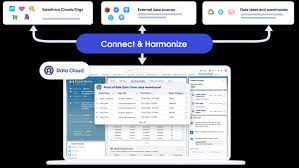
The enterprise has transitioned from merely speculating about artificial intelligence to actively implementing it. In doing so, companies must determine the optimal combination of ancillary technologies that, when strategically paired with AI, can drive relevant use cases and business outcomes. With AI Data Cloud and Integration, your data-driven decisions happen in real-time. Salesforce Inc. is leveraging a powerful trio — its Data Cloud, automation, and AI — to deliver what it considers transformative outcomes for organizations. “AI has such wonderful capability today from predictive to generative, [but] it’s not new to Salesforce,” said Param Kahlon, executive vice president and general manager at Salesforce. “Salesforce has been doing predictive AI for almost 10 years now. But what is great is that generative AI now gives the ability to process these large language models on large amounts of unstructured, semi-structured content to generate great content that can be used by salespeople to send relevant emails and marketing people to create personalized landing pages.” Kahlon spoke with theCUBE Research Senior Analyst George Gilbert during a recent “The Road to Intelligent Data Apps” podcast series. They discussed how Salesforce is revolutionizing business operations in the digital age by harnessing AI-driven insights, contextualizing data with the company’s Data Cloud, and enabling real-time actions. Gen AI and Data Cloud for Contextualization In today’s business environment, intelligence is the cornerstone of success. Salesforce’s AI platform empowers companies with predictive and generative AI capabilities, enabling them to make insightful decisions and craft personalized experiences for their customers. Businesses can now process vast amounts of unstructured data and generate compelling content. “For this AI to be meaningful and for companies to harness the full value of AI, you want to make sure that you’re grounding the data that’s being used to generate those predictions with some things that are relevant to the current business process, to the current transaction, to the current context of interaction you’re happening with the customer,” Kahlon said. Salesforce’s Data Cloud acts as the AI foundation, enriching existing data models with relevant contextual data tailored to the specific needs of each business and their interactions with customers. “When we talk to our large Salesforce customers, they all tell us that AI is really important for them,” Kahlon said. “That is something that they want to drive, but they’re also saying that the data for them is spread out across the enterprise. Some of them tell us that they have more than 900 different business systems in which data is stored, and they want the ability to bring that data together in a seamless way so it can be processed by AI through Data Cloud.” Automation and Integration for Real-Time Action The combination of AI and Data Cloud generates actionable insights, but these insights alone aren’t enough. Businesses need to act swiftly on these predictions, driving real-time actions to capitalize on opportunities. This is where integration and automation come into play, according to Kahlon. “[Customers are] essentially telling us that data is spread across the enterprise and they want the data in real time to be available to customers,” he said. “With MuleSoft and Salesforce integration capabilities, we’ve focused on the real-time nature of making sure that you can take real-time business transactions in the context of the process that is happening, and that’s what’s differentiated in our approach to making sure that we can collect the data in real time and make actions happen in real time.” Integration is the glue that brings together data from various sources, allowing AI to derive meaningful insights. Salesforce’s integration capabilities, powered by MuleSoft, focus on real-time data processing, ensuring that businesses can act on insights as they occur. This low-latency approach enables not only Salesforce applications but also other third-party applications to contribute to the data ecosystem, Kahlon explained. “We’ve got a very large North American airline that has built their entire customer experience, from booking an airline ticket to checking into your flight and ordering special meals for your flight, all of that on an API-based platform — and we’re able to process that scale of transactions,” he said. “As you get into AI, all of that becomes extremely relevant to drive that real-time throughput, and that’s where our customers are finding value in our technology.” When the customer experience is the driver, the experience is always stellar. Like Related Posts Who is Salesforce? Who is Salesforce? Here is their story in their own words. From our inception, we’ve proudly embraced the identity of Read more Salesforce Marketing Cloud Transactional Emails Salesforce Marketing Cloud Transactional Emails are immediate, automated, non-promotional messages crucial to business operations and customer satisfaction, such as order Read more Salesforce Unites Einstein Analytics with Financial CRM Salesforce has unveiled a comprehensive analytics solution tailored for wealth managers, home office professionals, and retail bankers, merging its Financial Read more AI-Driven Propensity Scores AI plays a crucial role in propensity score estimation as it can discern underlying patterns between treatments and confounding variables Read more
Read More
Salesforce Data Cloud Pioneer

Salesforce Data Cloud Pioneer

While many organizations are still building their data platforms, Salesforce Data Cloud Pioneer has made a significant leap forward. By seamlessly incorporating metadata integration, Salesforce has transformed the modern data stack into a comprehensive application platform known as the Einstein 1 Platform. Led by Muralidhar Krishnaprasad, executive vice president of engineering at Salesforce, the Einstein 1 Platform is built on the company’s metadata framework. This platform harmonizes metadata and integrates it with AI and automation, marking a new era of data utilization. The Einstein 1 Platform: Innovations and Capabilities Salesforce’s goal with the Einstein 1 Platform is to empower all business users—salespeople, service engineers, marketers, and analysts—to access, use, and act on all their data, regardless of its location, according to Krishnaprasad. The open, extensible platform not only unlocks trapped data but also equips organizations with generative AI functionality, enabling personalized experiences for employees and customers. “Analytics is very important to know how your business is doing, but you also want to make sure all that data and insights are actionable,” Krishnaprasad said. “Our goal is to blend AI, automation, and analytics together, with the metadata layer being the secret sauce.” Salesforce Data Cloud Pioneer In a conversation with George Gilbert, senior analyst at theCUBE Research, Krishnaprasad discussed the platform’s metadata integration, open-API technology, and key features. They explored how its extensibility and interoperability enhance usability across various data formats and sources. Metadata Integration: Accommodating Any IT Environment The Einstein 1 Platform is built on Trino, the federated open-source query engine, and Spark for data processing. It offers a rich set of connectors and an open, extensible environment, enabling organizations to share data between warehouses, lake houses, and other systems. “We use a hyper-engine for sub-second response times in Tableau and other data explorations,” Krishnaprasad explained. “This in-memory overlap engine ensures efficient data processing.” The platform supports various machine learning options and allows users to integrate their own large language models. Whether using Salesforce Einstein, Databricks, Vertex, SageMaker, or other solutions, users can operate without copying data. The platform includes three levels of extensibility, enabling organizations to standardize and extend their customer journey models. Users can start with basic reference models, customize them, and then generate insights, including AI-driven insights. Finally, they can introduce their own functions or triggers to act on these insights. The platform continuously performs unification, allowing users to create different unified graphs based on their needs. “We’re a multimodal system, considering your entire customer journey,” Krishnaprasad said. “We provide flexibility at all levels of the stack to create the right experience for your business.” The Triad of AI, Automation, and Analytics The platform’s foundation ingests, harmonizes, and unifies data, resulting in a standardized metadata model that offers a 360-degree view of customer interactions. This approach unlocks siloed data, much of which is in unstructured forms like conversations, documents, emails, audio, and video. “What we’ve done with this customer 360-degree model is to use unified data to generate insights and make these accessible across application surfaces, enabling reactions to these insights,” Krishnaprasad said. “This unlocks a comprehensive customer journey.” For instance, when a customer views an ad and visits the website, salespeople know what they’re interested in, service personnel understand their concerns, and analysts have the information needed for business insights. These capabilities enhance customer engagement. “Couple this with generative AI, and we enable a lot of self-service,” Krishnaprasad added. “We aim to provide accurate answers, elevating data to create a unified model and powering a unified experience across the entire customer journey.” Like Related Posts Who is Salesforce? Who is Salesforce? Here is their story in their own words. From our inception, we’ve proudly embraced the identity of Read more Salesforce Marketing Cloud Transactional Emails Salesforce Marketing Cloud Transactional Emails are immediate, automated, non-promotional messages crucial to business operations and customer satisfaction, such as order Read more Salesforce Unites Einstein Analytics with Financial CRM Salesforce has unveiled a comprehensive analytics solution tailored for wealth managers, home office professionals, and retail bankers, merging its Financial Read more AI-Driven Propensity Scores AI plays a crucial role in propensity score estimation as it can discern underlying patterns between treatments and confounding variables Read more
Read More
Einstein Code Generation and Amazon SageMaker

Einstein Code Generation and Amazon SageMaker

Salesforce and the Evolution of AI-Driven CRM Solutions Salesforce, Inc., headquartered in San Francisco, California, is a leading American cloud-based software company specializing in customer relationship management (CRM) software and applications. Their offerings include sales, customer service, marketing automation, e-commerce, analytics, and application development. Salesforce is at the forefront of integrating artificial general intelligence (AGI) into its services, enhancing its flagship SaaS CRM platform with predictive and generative AI capabilities and advanced automation features. Einstein Code Generation and Amazon SageMaker. Salesforce Einstein: Pioneering AI in Business Applications Salesforce Einstein represents a suite of AI technologies embedded within Salesforce’s Customer Success Platform, designed to enhance productivity and client engagement. With over 60 features available across different pricing tiers, Einstein’s capabilities are categorized into machine learning (ML), natural language processing (NLP), computer vision, and automatic speech recognition. These tools empower businesses to deliver personalized and predictive customer experiences across various functions, such as sales and customer service. Key components include out-of-the-box AI features like sales email generation in Sales Cloud and service replies in Service Cloud, along with tools like Copilot, Prompt, and Model Builder within Einstein 1 Studio for custom AI development. The Salesforce Einstein AI Platform Team: Enhancing AI Capabilities The Salesforce Einstein AI Platform team is responsible for the ongoing development and enhancement of Einstein’s AI applications. They focus on advancing large language models (LLMs) to support a wide range of business applications, aiming to provide cutting-edge NLP capabilities. By partnering with leading technology providers and leveraging open-source communities and cloud services like AWS, the team ensures Salesforce customers have access to the latest AI technologies. Optimizing LLM Performance with Amazon SageMaker In early 2023, the Einstein team sought a solution to host CodeGen, Salesforce’s in-house open-source LLM for code understanding and generation. CodeGen enables translation from natural language to programming languages like Python and is particularly tuned for the Apex programming language, integral to Salesforce’s CRM functionality. The team required a hosting solution that could handle a high volume of inference requests and multiple concurrent sessions while meeting strict throughput and latency requirements for their EinsteinGPT for Developers tool, which aids in code generation and review. After evaluating various hosting solutions, the team selected Amazon SageMaker for its robust GPU access, scalability, flexibility, and performance optimization features. SageMaker’s specialized deep learning containers (DLCs), including the Large Model Inference (LMI) containers, provided a comprehensive solution for efficient LLM hosting and deployment. Key features included advanced batching strategies, efficient request routing, and access to high-end GPUs, which significantly enhanced the model’s performance. Key Achievements and Learnings Einstein Code Generation and Amazon SageMaker The integration of SageMaker resulted in a dramatic improvement in the performance of the CodeGen model, boosting throughput by over 6,500% and reducing latency significantly. The use of SageMaker’s tools and resources enabled the team to optimize their models, streamline deployment, and effectively manage resource use, setting a benchmark for future projects. Conclusion and Future Directions Salesforce’s experience with SageMaker highlights the critical importance of leveraging advanced tools and strategies in AI model optimization. The successful collaboration underscores the need for continuous innovation and adaptation in AI technologies, ensuring that Salesforce remains at the cutting edge of CRM solutions. For those interested in deploying their LLMs on SageMaker, Salesforce’s experience serves as a valuable case study, demonstrating the platform’s capabilities in enhancing AI performance and scalability. To begin hosting your own LLMs on SageMaker, consider exploring their detailed guides and resources. Like Related Posts Who is Salesforce? Who is Salesforce? Here is their story in their own words. From our inception, we’ve proudly embraced the identity of Read more Salesforce Marketing Cloud Transactional Emails Salesforce Marketing Cloud Transactional Emails are immediate, automated, non-promotional messages crucial to business operations and customer satisfaction, such as order Read more Salesforce Unites Einstein Analytics with Financial CRM Salesforce has unveiled a comprehensive analytics solution tailored for wealth managers, home office professionals, and retail bankers, merging its Financial Read more AI-Driven Propensity Scores AI plays a crucial role in propensity score estimation as it can discern underlying patterns between treatments and confounding variables Read more

Read More
BERT and GPT

BERT and GPT

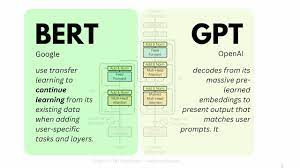
Breakthroughs in Language Models: From Word2Vec to Transformers Language models have rapidly evolved since 2018, driven by advancements in neural network architectures for text representation. This journey began with Word2Vec and N-Grams in 2013, followed by the emergence of Recurrent Neural Networks (RNNs) and Long Short-Term Memory (LSTM) networks in 2014. The pivotal moment came with the introduction of the Attention Mechanism, which paved the way for large pre-trained models and transformers. BERT and GPT. From Word Embedding to Transformers The story of language models begins with word embedding. What is Word Embedding? Word embedding is a technique in natural language processing (NLP) where words are represented as vectors in a continuous vector space. These vectors capture semantic meanings, allowing words with similar meanings to have similar representations. For instance, in a word embedding model, “king” and “queen” would have vectors close to each other, reflecting their related meanings. Similarly, “car” and “truck” would be near each other, as would “cat” and “dog.” However, “car” and “dog” would not have close vectors due to their different meanings. A notable example of word embedding is Word2Vec. Word2Vec: Neural Network Model Using N-Grams Introduced by Mahajan, Patil, and Sankar in 2013, Word2Vec is a neural network model that uses n-grams by training on context windows of words. It has two main approaches: Both methods help capture semantic relationships, providing meaningful word embeddings that facilitate various NLP tasks like sentiment analysis and machine translation. Recurrent Neural Networks (RNNs) RNNs are designed for sequential data, processing inputs sequentially and maintaining a hidden state that captures information about previous inputs. This makes them suitable for tasks like time series prediction and natural language processing. The concept of RNNs can be traced back to 1925 with the Ising model, used to simulate magnetic interactions analogous to RNNs’ state transitions for sequence learning. Long Short-Term Memory (LSTM) Networks LSTMs, introduced by Hochreiter and Schmidhuber in 1997, are a specialized type of RNN designed to overcome the limitations of standard RNNs, particularly the vanishing gradient problem. They use gates (input, output, and forget gates) to regulate information flow, enabling them to maintain long-term dependencies and remember important information over long sequences. Comparing Word2Vec, RNNs, and LSTMs The Attention Mechanism and Its Impact The attention mechanism, introduced in the paper “Attention Is All You Need” by Vaswani et al., is a key component in transformers and large pre-trained language models. It allows models to focus on specific parts of the input sequence when generating output, assigning different weights to different words or tokens, and enabling the model to prioritize important information and handle long-range dependencies effectively. Transformers: Revolutionizing Language Models Transformers use self-attention mechanisms to process input sequences in parallel, capturing contextual relationships between all tokens in a sequence simultaneously. This improves handling of long-term dependencies and reduces training time. The self-attention mechanism identifies the relevance of each token to every other token within the input sequence, enhancing the model’s ability to understand context. Large Pre-Trained Language Models: BERT and GPT Both BERT (Bidirectional Encoder Representations from Transformers) and GPT (Generative Pre-trained Transformer) are based on the transformer architecture. BERT Introduced by Google in 2018, BERT pre-trains deep bidirectional representations from unlabeled text by jointly conditioning on both left and right context in all layers. This enables BERT to create state-of-the-art models for tasks like question answering and language inference without substantial task-specific architecture modifications. GPT Developed by OpenAI, GPT models are known for generating human-like text. They are pre-trained on large corpora of text and fine-tuned for specific tasks. GPT is majorly generative and unidirectional, focusing on creating new text content like poems, code, scripts, and more. Major Differences Between BERT and GPT In conclusion, while both BERT and GPT are based on the transformer architecture and are pre-trained on large corpora of text, they serve different purposes and excel in different tasks. The advancements from Word2Vec to transformers highlight the rapid evolution of language models, enabling increasingly sophisticated NLP applications. Like Related Posts Who is Salesforce? Who is Salesforce? Here is their story in their own words. From our inception, we’ve proudly embraced the identity of Read more Salesforce Unites Einstein Analytics with Financial CRM Salesforce has unveiled a comprehensive analytics solution tailored for wealth managers, home office professionals, and retail bankers, merging its Financial Read more AI-Driven Propensity Scores AI plays a crucial role in propensity score estimation as it can discern underlying patterns between treatments and confounding variables Read more Tectonic’s Successful Salesforce Track Record Salesforce Technology Services Integrator – Tectonic has successfully delivered Salesforce in a variety of industries including Public Sector, Hospitality, Manufacturing, Read more
Read More
The Growing Role of AI in Cloud Management

The Growing Role of AI in Cloud Management

AI technologies are redefining cloud management by automating IT systems, improving security, optimizing cloud costs, enhancing data management, and streamlining the provisioning of AI services across complex cloud ecosystems. With the surging demand for AI, its ability to address technological complexities makes a unified cloud management strategy indispensable for IT teams. Cloud and security platforms have steadily integrated AI and machine learning to support increasingly autonomous IT operations. The rapid rise of generative AI (GenAI) has further spotlighted these AI capabilities, prompting vendors to prioritize their development and implementation. Adnan Masood, Chief AI Architect at UST, highlights the transformative potential of AI-driven cloud management, emphasizing its ability to oversee vast data centers hosting millions of applications and services with minimal human input. “AI automates tasks such as provisioning, scaling, cost management, monitoring, and data migration,” Masood explains, showcasing its wide-ranging impact. From Reactive to Proactive Cloud Management Traditionally, CloudOps relied heavily on manual intervention and expertise. AI has shifted this paradigm, introducing automation, predictive analytics, and intelligent decision-making. This evolution enables enterprises to transition from reactive, manual management to proactive, self-optimizing cloud environments. Masood underscores that this shift allows cloud systems to self-manage and optimize with minimal human oversight. However, organizations must navigate challenges, including complex data integration, real-time processing limitations, and model accuracy concerns. Business hurdles like implementation costs, uncertain ROI, and maintaining the right balance between AI automation and human oversight also require careful evaluation. AI’s Transformation of Cloud Computing AI has reshaped cloud management into a more proactive and efficient process. Key applications include: “AI enhances efficiency, scalability, and flexibility for IT teams,” says Agustín Huerta, SVP of Digital Innovation at Globant. He views AI as a pivotal enabler of automation and optimization, helping businesses adapt to rapidly changing environments. AI also automates repetitive tasks such as provisioning, performance monitoring, and cost management. More importantly, it strengthens security across cloud infrastructure by detecting misconfigurations, vulnerabilities, and malicious activities. Nick Kramer of SSA & Company highlights how AI-powered natural language interfaces simplify cloud management, transforming it from a technical challenge to a logical one. With conversational AI, business users can manage cloud operations more efficiently, accelerating problem resolution. AI-Enabled Cloud Management Tools Ryan Mallory, COO at Flexential, categorizes AI-powered cloud tools into: The Rise of Self-Healing Cloud Systems AI enables cloud systems to detect, resolve, and optimize issues with minimal human intervention. For instance, AI can identify system failures and trigger automatic remediation, such as restarting services or reallocating resources. Over time, machine learning enhances these systems’ accuracy and reliability. Key Applications of AI in Cloud Management AI’s widespread applications in cloud computing include: Benefits of AI in Cloud Management AI transforms cloud management by enabling autonomous systems capable of 24/7 monitoring, self-healing, and optimization. This boosts system reliability, reduces downtime, and provides businesses with deeper analytical insights. Chris Vogel from S-RM emphasizes that AI’s analytical capabilities go beyond automation, driving strategic business decisions and delivering measurable value. Challenges of AI in Cloud Management Despite its advantages, AI adoption in cloud management presents challenges, including: AI’s Impact on IT Departments AI’s growing influence on cloud management introduces new responsibilities for IT teams, including managing unauthorized AI systems, ensuring data security, and maintaining high-quality data for AI applications. IT departments must provide enterprise-grade AI solutions that are private, governed, and efficient while balancing the costs and benefits of AI integration. Future Trends in AI-Driven Cloud Management Experts anticipate that AI will revolutionize cloud management, much like cloud computing reshaped IT a decade ago. Prasad Sankaran from Cognizant predicts that organizations investing in AI for cloud management will unlock opportunities for faster innovation, streamlined operations, and reduced technical debt. As AI continues to evolve, cloud environments will become increasingly autonomous, driving efficiency, scalability, and innovation across industries. Businesses embracing AI-driven cloud management will be well-positioned to adapt to the complexities of tomorrow’s IT landscape. Like Related Posts Who is Salesforce? Who is Salesforce? Here is their story in their own words. From our inception, we’ve proudly embraced the identity of Read more Salesforce Unites Einstein Analytics with Financial CRM Salesforce has unveiled a comprehensive analytics solution tailored for wealth managers, home office professionals, and retail bankers, merging its Financial Read more AI-Driven Propensity Scores AI plays a crucial role in propensity score estimation as it can discern underlying patterns between treatments and confounding variables Read more Tectonic’s Successful Salesforce Track Record Salesforce Technology Services Integrator – Tectonic has successfully delivered Salesforce in a variety of industries including Public Sector, Hospitality, Manufacturing, Read more

Read More
Ready for GPT5

Ready for GPT5

Anticipating GPT-5: OpenAI’s Next Leap in Language Modeling Ready for GPT5-OpenAI’s recent advancements have sparked widespread speculation about the potential launch of GPT-5, the next iteration of their groundbreaking language model. This insight aims to explore the available information, analyze tweets from OpenAI officials, discuss potential features of GPT-5, and predict its release timeline. Additionally, it explores advancements in reasoning abilities, hardware considerations, and the evolving landscape of language models. Clues from OpenAI Officials Speculation around GPT-5 gained momentum with tweets from OpenAI’s President and Co-founder, Greg Brockman, and top researcher Jason Way. Brockman hinted at a full-scale training run, emphasizing the utilization of computing resources to maximize the model’s capabilities. Way’s tweet about the adrenaline rush of launching massive GPU training further fueled anticipation. Training Process and Red Teaming OpenAI typically follows a process of training smaller models before a full training run to gather insights. The red teaming network, responsible for safety testing, indicates that OpenAI is progressing towards evaluating GPT-5’s capabilities. The possibility of releasing checkpoints before the full model adds an interesting layer to the anticipation. Enhancements in Reasoning Abilities – Ready for GPT5 A key focus for GPT-5 is the incorporation of advanced reasoning capabilities. OpenAI aims to enable the model to lay out reasoning steps before solving a challenge, with internal or external checks on each step’s accuracy. This represents a significant shift towards enhancing the model’s reliability and reasoning prowess. Multimodal Capabilities GPT-5 is expected to further expand its multimodal capabilities, integrating text, images, audio, and potentially video. The goal is to create an operating system-like experience, where users interact with computers through a chat-based interface. OpenAI’s emphasis on gathering diverse data sources and reasoning data signifies their commitment to a holistic approach. Predictions on Model Size and Release Timeline Hardware CEO Gavin Uberti suggests that GPT-5 could have around 10 times the parameter count of GPT-4. Considering leaks indicating GPT-4’s parameter count of 1.5 to 1.8 trillion, GPT-5’s size is expected to be monumental. The article speculates on a potential release date, factoring in training time, safety testing, and potential checkpoints. Language Capabilities and Multilingual Data – Ready for GPT5 GPT-4’s surprising ability to understand unnatural scrambled text hints at the model’s language flexibility. The article discusses the likelihood of GPT-5 having improved multilingual capabilities, considering OpenAI’s data partnerships and emphasis on language diversity. Closing Thoughts Predictions about GPT-5’s exact capabilities remain speculative until the model is trained and unveiled. OpenAI’s commitment to pushing the boundaries of AI, surprises in AI development, and potential industry-defining products contribute to the excitement surrounding GPT-5. Like Related Posts Who is Salesforce? Who is Salesforce? Here is their story in their own words. From our inception, we’ve proudly embraced the identity of Read more Salesforce Unites Einstein Analytics with Financial CRM Salesforce has unveiled a comprehensive analytics solution tailored for wealth managers, home office professionals, and retail bankers, merging its Financial Read more AI-Driven Propensity Scores AI plays a crucial role in propensity score estimation as it can discern underlying patterns between treatments and confounding variables Read more Tectonic’s Successful Salesforce Track Record Salesforce Technology Services Integrator – Tectonic has successfully delivered Salesforce in a variety of industries including Public Sector, Hospitality, Manufacturing, Read more

Read More
Roles in AI

12 Roles in AI You Didn’t Know You Needed To Know

Exploring new roles in generative AI – 12 new roles to dive into For those intrigued by the possibilities of AI, here are twelve emerging roles to keep an eye on—some already in existence (albeit in early stages), and others envisioned by experts like Berthy for the near future. Could one of these roles be in your career trajectory? Like1 Related Posts Who is Salesforce? Who is Salesforce? Here is their story in their own words. From our inception, we’ve proudly embraced the identity of Read more Salesforce Marketing Cloud Transactional Emails Salesforce Marketing Cloud Transactional Emails are immediate, automated, non-promotional messages crucial to business operations and customer satisfaction, such as order Read more Salesforce Unites Einstein Analytics with Financial CRM Salesforce has unveiled a comprehensive analytics solution tailored for wealth managers, home office professionals, and retail bankers, merging its Financial Read more AI-Driven Propensity Scores AI plays a crucial role in propensity score estimation as it can discern underlying patterns between treatments and confounding variables Read more

Read More

Layers of the AI Stack

The AI stack refers to the layered architecture of technologies and components that work together to build, deploy, and manage artificial intelligence (AI) systems. Each layer of the stack plays a critical role in enabling AI capabilities, from data collection to model deployment and beyond. Here’s a breakdown of the key layers of the AI stack: 1. Data Layer The foundation of any AI system is data. This layer involves collecting, storing, and managing the data required to train and operate AI models. Key Components: 2. Infrastructure Layer This layer provides the computational power and hardware needed to process data and run AI models. Key Components: 3. Framework and Tools Layer This layer includes the software frameworks and tools used to build, train, and optimize AI models. Key Components: 4. Model Layer This is the core layer where AI models are developed, trained, and fine-tuned. Key Components: 5. Application Layer This layer focuses on deploying AI models into real-world applications and integrating them with existing systems. Key Components: 6. Orchestration and Management Layer This layer ensures that AI systems are scalable, reliable, and efficient in production environments. Key Components: 7. Business Layer This layer focuses on the business value of AI, including use cases, ROI, and ethical considerations. Key Components: 8. Ecosystem Layer This layer includes the external tools, services, and communities that support AI development and deployment. Key Components: How the Layers Work Together Why the AI Stack Matters The AI stack provides a structured approach to building and deploying AI systems. By understanding and optimizing each layer, organizations can: Conclusion The AI stack is a comprehensive framework that enables organizations to harness the power of AI effectively. By mastering each layer—from data collection to business value—you can build robust, scalable, and impactful AI solutions. Whether you’re a startup or an enterprise, understanding the AI stack is key to staying competitive in the age of artificial intelligence. Content updated March 2025. Like Related Posts Who is Salesforce? Who is Salesforce? Here is their story in their own words. From our inception, we’ve proudly embraced the identity of Read more Salesforce Marketing Cloud Transactional Emails Salesforce Marketing Cloud Transactional Emails are immediate, automated, non-promotional messages crucial to business operations and customer satisfaction, such as order Read more Salesforce Unites Einstein Analytics with Financial CRM Salesforce has unveiled a comprehensive analytics solution tailored for wealth managers, home office professionals, and retail bankers, merging its Financial Read more AI-Driven Propensity Scores AI plays a crucial role in propensity score estimation as it can discern underlying patterns between treatments and confounding variables Read more

Read More
tectonic logo

AI Large Language Models

What Exactly Constitutes a Large Language Model? Picture having an exceptionally intelligent digital assistant that extensively combs through text, encompassing books, articles, websites, and various written content up to the year 2021. Yet, unlike a library that houses entire books, this digital assistant processes patterns from the textual data it undergoes. This digital assistant, akin to a large language model (LLM), represents an advanced computer model tailored to comprehend and generate text with humanlike qualities. Its training involves exposure to vast amounts of text data, allowing it to discern patterns, language structures, and relationships between words and sentences. How Do These Large Language Models Operate? Fundamentally, large language models, exemplified by GPT-3, undertake predictions on a token-by-token basis, sequentially building a coherent sequence. Given a request, they strive to predict the subsequent token, utilizing their acquired knowledge of patterns during training. These models showcase remarkable pattern recognition, generating contextually relevant content across diverse topics. The “large” aspect of these models refers to their extensive size and complexity, necessitating substantial computational resources like powerful servers equipped with multiple processors and ample memory. This capability enables the model to manage and process vast datasets, enhancing its proficiency in comprehending and generating high-quality text. While the sizes of LLMs may vary, they typically house billions of parameters—variables learned during the training process, embodying the knowledge extracted from the data. The greater the number of parameters, the more adept the model becomes at capturing intricate patterns. For instance, GPT-3 boasts around 175 billion parameters, marking a significant advancement in language processing capabilities, while GPT-4 is purported to exceed 1 trillion parameters. While these numerical feats are impressive, the challenges associated with these mammoth models include resource-intensive training, environmental implications, potential biases, and more. Large language models serve as virtual assistants with profound knowledge, aiding in a spectrum of language-related tasks. They contribute to writing, offer information, provide creative suggestions, and engage in conversations, aiming to make human-technology interactions more natural. However, users should be cognizant of their limitations and regard them as tools rather than infallible sources of truth. What Constitutes the Training of Large Language Models? Training a large language model is analogous to instructing a robot in comprehending and utilizing human language. The process involves: Fine-Tuning: A Closer Look Fine-tuning involves further training a pre-trained model on a more specific and compact dataset than the original. It is akin to training a robot proficient in various cuisines to specialize in Italian dishes using a dedicated cookbook. The significance of fine-tuning lies in: Versioning and Progression Large language models evolve through versions, with changes in size, training data, or parameters. Each iteration aims to address weaknesses, handle a broader task spectrum, or minimize biases and errors. The progression is simplified as follows: In essence, large language model versions emulate successive editions of a book series, each release striving for refinement, expansiveness, and captivating capabilities. Like1 Related Posts Who is Salesforce? Who is Salesforce? Here is their story in their own words. From our inception, we’ve proudly embraced the identity of Read more Salesforce Marketing Cloud Transactional Emails Salesforce Marketing Cloud Transactional Emails are immediate, automated, non-promotional messages crucial to business operations and customer satisfaction, such as order Read more Salesforce Unites Einstein Analytics with Financial CRM Salesforce has unveiled a comprehensive analytics solution tailored for wealth managers, home office professionals, and retail bankers, merging its Financial Read more AI-Driven Propensity Scores AI plays a crucial role in propensity score estimation as it can discern underlying patterns between treatments and confounding variables Read more

Read More
gettectonic.com