Big Data Archives - gettectonic.com - Page 2
Data Cloud - Facts and Fiction

Data Cloud – Facts and Fiction

Salesforce Data Cloud: Debunking Myths and Unveiling Facts If you’ve been active on LinkedIn, attending recent Salesforce events, or even watching a myriad of sporting events, you’ve likely noticed that Salesforce has evolved beyond just CRM. It’s now CRM + DATA + AI. Although Salesforce has always incorporated these elements, with Einstein AI and data being integral to CRM, the latest innovation lies in the Data Cloud. Data Cloud – Facts and Fiction Data Cloud, formerly known as Salesforce Genie, represents Salesforce’s latest evolution, focusing on enabling organizations to scale and grow in an era where data is the new currency. It is the fastest-growing product in Salesforce’s history, pushing new boundaries of innovation by providing better access to data and actionable insights. As Data Cloud rapidly develops, potential clients often have questions about its function and how it can address their challenges. Here are some common myths about Data Cloud and the facts that debunk them. Myth: Data Cloud Requires MuleSoft Fact: While MuleSoft Anypoint Platform can accelerate connecting commonly used data sources, it is not required for Data Cloud. Data Cloud can ingest data from multiple systems and platforms using several out-of-the-box (OOTB) connectors, including SFTPs, Snowflake, AWS, and more. Salesforce designs its solutions to work seamlessly together, but Data Cloud also offers connector options for non-Salesforce products, ensuring flexibility and integration capabilities beyond the Salesforce ecosystem. Myth: Data Cloud Will De-Duplicate Your Data Fact: Harmonizing data in Data Cloud means standardizing your data model rather than de-duplicating it. Data Cloud maps fields to a common data model and performs “Identity Resolution,” using rules to match individuals based on attributes like email, address, device ID, or phone number. This process creates a Unified Individual ID without automatically de-duplicating Salesforce records. Salesforce intentionally does not function as a Master Data Management (MDM) system. Myth: Data Cloud Will Create a Golden Record Fact: Data Cloud does not create a single, updated record synchronized across all systems (a “golden record”). Instead, it retains original source information, identifies matches across systems, and uses this data to facilitate engagements, known as the Data Cloud Key Ring. For instance, it can recognize an individual across different systems and provide personalized experiences without overwriting original data. Myth: You Can’t Ingest Custom Objects from Salesforce Fact: During the data ingestion process, you can select which objects to ingest from your Salesforce CRM Org, including custom objects. The system identifies the API names of the objects and fields from the data source. Ensuring the Data Cloud integration user has access to the necessary information (similar to assigning Permission Sets) allows you to ingest and map custom objects accordingly. Myth: Data Cloud Requires a Data Scientist and Takes a Long Time to Implement Fact: While implementing Data Cloud involves ingesting, mapping data, running identity resolution, and generating insights, it does not necessarily require a data scientist. Skilled Salesforce Admins can often manage data integration from third-party applications. Effective Data Cloud implementation requires thorough planning and preparation, akin to prepping a room before painting. Identifying use cases and understanding data sources in advance can streamline the implementation process. Myth: Data Cloud is Expensive Fact: Data Cloud operates on a consumption-based pricing model. Engaging in strategic conversations with Salesforce Account Executives can help understand the financial implications. Emphasizing the value of a comprehensive data strategy and considering the five V’s of Big Data—Volume, Variety, Veracity, Value, and Velocity—ensures that your data supports meaningful business outcomes and KPIs. In Summary Salesforce Data Cloud represents a significant evolution in managing and leveraging data within your organization. It helps break down data silos, providing actionable insights to drive organizational goals. Despite initial misconceptions, implementing Data Cloud does not require extensive coding skills or a data scientist. Instead, thorough planning and preparation can streamline the process and maximize efficiency. Understanding the value of a comprehensive data strategy is crucial, as data becomes the new currency. Addressing the five V’s of Big Data ensures that your data supports meaningful business outcomes and KPIs. At Tectonic, our team of certified professionals is ready to assist you on this journey. We offer a Salesforce Implementation Solution package to help you get hands-on with the tool and explore its capabilities. Whether you need help understanding your data sources or defining use cases, our data practice can provide the expertise you need. Talk to Tectonic about Data Cloud and discover how our tailored solutions can help you harness the full potential of your data. Like Related Posts Who is Salesforce? Who is Salesforce? Here is their story in their own words. From our inception, we’ve proudly embraced the identity of Read more Salesforce Marketing Cloud Transactional Emails Salesforce Marketing Cloud Transactional Emails are immediate, automated, non-promotional messages crucial to business operations and customer satisfaction, such as order Read more Salesforce Unites Einstein Analytics with Financial CRM Salesforce has unveiled a comprehensive analytics solution tailored for wealth managers, home office professionals, and retail bankers, merging its Financial Read more AI-Driven Propensity Scores AI plays a crucial role in propensity score estimation as it can discern underlying patterns between treatments and confounding variables Read more


Read More
Cautionary AI Tale

A Cautionary AI Tale

Oliver Lovstrom, an AI student, wrote an interesting perspective on artificial intelligence, a cautionary AI tale, if you will. The Theory and Fairy Tale My first introduction to artificial intelligence was during high school when I began exploring its theories and captivating aspects. In 2018, as self-driving cars were gaining traction, I decided to create a simple autonomous vehicle for my final project. This project filled me with excitement and hope, spurring my continued interest and learning in AI. However, I had no idea that within a few years, AI would become significantly more advanced and accessible, reaching the masses through affordable robots. For instance, who could have imagined that just two years later, we would have access to incredible AI models like ChatGPT and Gemini, developed by tech giants? The Dark Side of Accessibility My concerns grew as I observed the surge in global cybersecurity issues driven by advanced language model-powered bots. Nowadays, it’s rare to go a day without hearing about some form of cybercrime somewhere in the world. A Brief Intro to AI for Beginners To understand the risks associated with AI, we must first comprehend what AI is and its inspiration: the human brain. In biology, I learned that the human brain consists of neurons, which have two main functions: Neurons communicate with sensory organs or other neurons, determining the signals they send through learning. Throughout our lives, we learn to associate different external stimuli (inputs) with sensory outputs, like emotions. Imagine returning to your childhood home. Walking in, you are immediately overwhelmed by nostalgia. This is a learned response, where the sensory input (the scene) passes through a network of billions of neurons, triggering an emotional output. Similarly, I began learning about artificial neural networks, which mimic this behavior in computers. Artificial Neural Networks Just as biological neurons communicate within our brains, artificial neural networks try to replicate this in computers. Each dot in the graph above represents an artificial neuron, all connected and communicating with one another. Sensory inputs, like a scene, enter the network, and the resulting output, such as an emotion, emerges from the network’s processing. A unique feature of these networks is their ability to learn. Initially, an untrained neural network might produce random outputs for a given input. However, with training, these networks learn to associate specific inputs with particular outputs, mirroring the learning process of the human brain. This capability can be leveraged to handle tedious tasks, but there are deeper implications to explore. The Wishing Well As AI technology advances, it begins to resemble a wishing well from a fairy tale—a tool that could fulfill any desire, for better or worse. In 2022, the release of ChatGPT and various generative AI tools astonished many. For the first time, people had free access to a system capable of generating coherent and contextually appropriate responses to almost any prompt. And this is just the beginning. Multimodal AI and the Next Step I explored multimodal AI, which allows the processing of data in different formats, such as text, images, audio, and possibly even physical actions. This development supports the “wishing well” hypothesis, but also revealed a darker side of AI. The Villains While a wishing well in fairy tales is associated with good intentions and moral outcomes, the reality of AI is more complex. The morality of AI usage depends on the people who wield it, and the potential for harm by a single bad actor is immense. The Big Actors and Bad Apples The control of AI technology is likely to be held by powerful entities, whether governments or private corporations. Speculating on their use of this technology can be unsettling. While we might hope AI acts as a deterrent, similar to nuclear weapons, AI’s invisibility and potential for silent harm make it particularly dangerous. We are already witnessing malicious uses of AI, from fake kidnappings to deepfakes, impacting everyone from ordinary people to politicians. As AI becomes more accessible, the risk of bad actors exploiting it grows. Even if AI maintains peace on a global scale, the issue of individuals causing harm remains—a few bad apples can spoil the bunch. Unexpected Actions and the Future AI systems today can perform unexpected actions, often through jailbreaking—manipulating models to give unintended information. While currently, the consequences might seem minor, they could escalate significantly in the future. AI does not follow predetermined rules but chooses the “best” path to achieve a goal, often learned independently from human oversight. This unpredictability, especially in multimodal models, is alarming. Consider an AI tasked with making pancakes. It might need money for ingredients and, determined by its learning, might resort to creating deepfakes for blackmail. This scenario, though seemingly absurd, highlights potential dangers as AI evolves with the growth of IoT, quantum computing, and big data, leading to superintelligent, self-managing systems. As AI surpasses human intelligence, more issues will emerge, potentially leading to a loss of control. Dr. Yildiz, an AI expert, highlighted these concerns in a story titled “Artificial Intelligence Does Not Concern Me, but Artificial Super-Intelligence Frightens Me.” Hope and Optimism Despite the fears surrounding AI, I remain hopeful. We are still in the early stages of this technology, providing ample time to course-correct. This can be achieved through recognizing the risks, fostering ethical AI systems, and raising a morally conscious new generation. Although I emphasized potential dangers, my intent is not to incite fear. Like previous industrial and digital revolutions, AI has the potential to greatly enhance our lives. I stay optimistic and continue my studies to contribute positively to the field. The takeaway from my story is that by using AI ethically and collaboratively, we can harness its power for positive change and a better future for everyone. This article by Oliver Lovstrom originally was published by Medium, here. Like Related Posts Who is Salesforce? Who is Salesforce? Here is their story in their own words. From our inception, we’ve proudly embraced the identity of Read more Salesforce Unites Einstein Analytics

Read More
Salesforce for Travel, Transportation, and Hospitality

Hotel Salesforce CRM for Hospitality

Salesforce offers hospitality professionals the tools to address marketing, sales, and customer support needs through the Marketing, Service, and Sales Cloud. Hotel Salesforce CRM for Hospitality. Customer Relationship Management (CRM) software tailored for hotels assists in engaging guests, managing reservations, coordinating projects, and streamlining communications. Hotel CRM software simplifies operations within the hospitality sector. Salesforce for Hospitality Customer Experience In the travel industry, particularly in hotels, customer experience reigns supreme. Hotels serve as temporary homes for guests, making their experience pivotal in determining future patronage. However, with the surge in travel and advancements in technology, the demand for personalized experiences has escalated. Meeting these expectations is essential not only for standing out in a competitive market but also for maintaining a positive online reputation. As travel becomes more accessible and prices decrease, managing a large volume of customers while delivering personalized experiences presents a significant challenge. Hotels must deepen their understanding of customers to avoid losing them amid the crowd. This is where CRM comes into play. CRMs for Hospitality CRM entails managing customer expectations, interactions, and loyalty to provide the most personalized journey possible. Modern CRM solutions, often cloud-based and mobile-compatible, leverage AI and big data to comprehend customers better and deliver proactive solutions, ensuring timely and relevant interactions. Hotel CRMs are specifically designed to address the unique needs of the hospitality industry. They assist in monitoring online reviews and social media chatter, enabling prompt responses to maintain a positive online reputation. Quick problem-solving is crucial in hotels, and CRM tools streamline issue resolution by providing relevant customer information promptly. Moreover, hotel CRMs enhance guest experiences by facilitating personalized journeys from initial contact to post-stay interactions. Mobile access is essential for guests, and many CRM platforms offer tools for building mobile apps and portals to enhance convenience. Hotel Salesforce CRM for Hospitality Ultimately, CRM systems empower hotels to manage customer loyalty effectively, offering better communication, multi-channel advertising, and useful employee tools. For hotels seeking these benefits, choosing the right CRM is crucial. Salesforce stands out as a top platform for hotel CRM, providing comprehensive solutions to meet diverse industry needs. In today’s travel and hospitality industry, efficiency and exceptional guest experiences are paramount. To achieve this, companies must focus on automating routine tasks, unifying data, and leveraging AI for insights. Exceptional experiences remain the best way to attract and retain customers, driving efficient growth even in challenging times. If your hotel or hospitality destination is looking to increase guest satisfaction, contact Tectonic about Salesforce today. Like1 Related Posts Who is Salesforce? Who is Salesforce? Here is their story in their own words. From our inception, we’ve proudly embraced the identity of Read more Salesforce Marketing Cloud Transactional Emails Salesforce Marketing Cloud Transactional Emails are immediate, automated, non-promotional messages crucial to business operations and customer satisfaction, such as order Read more Salesforce Unites Einstein Analytics with Financial CRM Salesforce has unveiled a comprehensive analytics solution tailored for wealth managers, home office professionals, and retail bankers, merging its Financial Read more AI-Driven Propensity Scores AI plays a crucial role in propensity score estimation as it can discern underlying patterns between treatments and confounding variables Read more

Read More

Salesforce Unveils Einstein Copilot

Salesforce Unveils Einstein Copilot: A New Era in AI-Powered CRM Salesforce, the world’s leading customer relationship management (CRM) platform, has introduced Einstein Copilot, an advanced AI-powered assistant designed to revolutionize business interactions with CRM systems. Seamlessly integrated within Salesforce’s ecosystem, including Data Cloud, Einstein Copilot automates complex workflows, enhances operational efficiency, and delivers highly personalized customer insights. By leveraging AI, it empowers sales, marketing, and customer service teams while ensuring compliance with data privacy and governance standards. The Challenge: Enhancing CRM Efficiency with AI As customer relationships became more intricate, businesses sought a CRM solution that could: Salesforce responded by integrating cutting-edge AI capabilities into its CRM platform, ensuring a seamless, secure, and intelligent customer experience. The Einstein Copilot Solution Salesforce has embedded Einstein Copilot across its CRM applications, transforming customer relationships through AI-driven automation. By harnessing Data Cloud, Einstein Copilot accesses unified, reliable data to generate real-time insights, helping businesses make smarter decisions and enhance customer interactions. With customization tools like Copilot Builder, Prompt Builder, Skill Builder, and Model Builder, businesses can tailor Einstein Copilot to meet their unique needs. Integration with Salesforce extensions and external APIs further optimizes workflows, automating tasks and streamlining operations. Key Features of Einstein Copilot Results: Transforming CRM with AI Since its launch, Einstein Copilot has significantly improved customer satisfaction and operational productivity by: Challenges & Considerations Despite its success, deploying Einstein Copilot presented some challenges, including: The Future of Einstein Copilot Salesforce is committed to expanding Einstein Copilot’s capabilities, focusing on: Salesforce envisions Einstein Copilot setting a new benchmark in AI-driven CRM, enabling businesses to foster stronger customer relationships, drive growth, and streamline operations. About Salesforce Salesforce is the world’s leading CRM platform, empowering businesses with innovative solutions that blend cloud computing, artificial intelligence, and big data analytics. Since its founding in 1999, Salesforce has been at the forefront of digital transformation, helping organizations optimize operations and elevate customer engagement. Conclusion Einstein Copilot marks a transformative shift in CRM, leveraging AI to enhance efficiency, automate workflows, and deliver superior customer experiences. With AI-driven automation and intelligent decision-making, businesses can now focus on building long-lasting customer relationships that drive loyalty and success. Einstein Copilot is now Agentforce. Content updated January 2025. Like Related Posts Who is Salesforce? Who is Salesforce? Here is their story in their own words. From our inception, we’ve proudly embraced the identity of Read more Salesforce Marketing Cloud Transactional Emails Salesforce Marketing Cloud Transactional Emails are immediate, automated, non-promotional messages crucial to business operations and customer satisfaction, such as order Read more Salesforce Unites Einstein Analytics with Financial CRM Salesforce has unveiled a comprehensive analytics solution tailored for wealth managers, home office professionals, and retail bankers, merging its Financial Read more AI-Driven Propensity Scores AI plays a crucial role in propensity score estimation as it can discern underlying patterns between treatments and confounding variables Read more
Read More
Healthcare Cloud Marketplace

Healthcare Cloud Marketplace

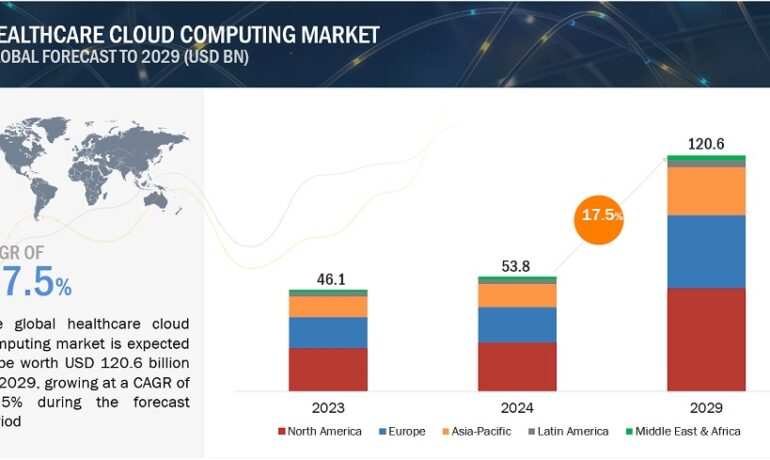
Healthcare Cloud Computing Market: A Comprehensive Overview and Future Outlook Vantage Market Research Report: Insights into Healthcare Cloud Computing by 2030 WASHINGTON, D.C., February 6, 2024 /EINPresswire.com/ — The global Healthcare Cloud Marketplace was valued at USD 38.25 billion in 2022 and is projected to grow at a compound annual growth rate (CAGR) of 18.2% from 2023 to 2030, reaching approximately USD 145.86 billion by 2030, according to Vantage Market Research. This technology allows healthcare organizations to utilize cloud-based services for data storage, management, and analysis, providing numerous benefits such as cost efficiency, scalability, flexibility, security, and interoperability. It enhances healthcare delivery by enabling seamless data access and sharing across various locations, devices, and networks. Additionally, cloud computing supports the integration of advanced technologies like artificial intelligence, big data analytics, telehealth, and mobile health, driving progress in disease diagnosis, treatment, and prevention. Market Dynamics The market’s growth is fueled by several key factors, including the increasing demand for healthcare IT solutions, the rising prevalence of chronic diseases, the widespread adoption of electronic health records (EHRs), and evolving payment models and regulatory frameworks. The exponential increase in healthcare data, encompassing patient records, imaging scans, and research findings, necessitates scalable storage and analysis solutions. Cloud computing meets this need by providing flexible and scalable infrastructure, accommodating data growth without overburdening IT systems. The rise of telehealth and remote patient monitoring further boosts the demand for secure, cloud-based platforms that facilitate efficient data exchange. However, stringent data privacy regulations like HIPAA and GDPR require robust security measures, compelling healthcare organizations to seek cloud providers that offer strong compliance and access controls. This need for a balance between agility and security shapes the healthcare cloud computing market’s future trajectory. Leading Companies in the Global Healthcare Cloud Computing Market Market Segmentation By Product: By Deployment: By Component: By Pricing Model: By Service Model: Key Trends and Opportunities The healthcare cloud computing market is witnessing significant trends, including the adoption of hybrid and multi-cloud models, which combine the benefits of both public and private clouds. The integration of artificial intelligence (AI) and machine learning (ML) into cloud-based healthcare applications is opening new avenues for personalized medicine, clinical decision support, and drug discovery. Moreover, blockchain technology is emerging as a solution to enhance data security and patient privacy, addressing critical industry concerns. Key Findings: Opportunities: Healthcare Cloud Marketplace The healthcare cloud computing market is poised for robust growth, driven by the increasing demand for scalable and secure data management solutions. As healthcare organizations navigate challenges related to data privacy and security, robust cloud solutions and supportive government policies will be essential in unlocking the full potential of cloud computing in healthcare. Like Related Posts Who is Salesforce? Who is Salesforce? Here is their story in their own words. From our inception, we’ve proudly embraced the identity of Read more Salesforce Marketing Cloud Transactional Emails Salesforce Marketing Cloud Transactional Emails are immediate, automated, non-promotional messages crucial to business operations and customer satisfaction, such as order Read more Salesforce Unites Einstein Analytics with Financial CRM Salesforce has unveiled a comprehensive analytics solution tailored for wealth managers, home office professionals, and retail bankers, merging its Financial Read more AI-Driven Propensity Scores AI plays a crucial role in propensity score estimation as it can discern underlying patterns between treatments and confounding variables Read more
Read More
Big Data and Data Visualization

Big Data and Data Visualization Explained

Data Visualization: Turning Complex Data into Clear Insights Data visualization is the practice of converting information into visual formats, such as maps or graphs, to make data more accessible and understandable. The primary purpose of data visualization is to highlight patterns, trends, and outliers within large data sets, allowing users to quickly glean insights. The term is often used interchangeably with information graphics, information visualization, and statistical graphics. The Role of Data Visualization in Data Science Data visualization is a crucial step in the data science process. After data is collected, processed, and modeled, it must be visualized to draw meaningful conclusions. It’s also a key component of data presentation architecture, a discipline focused on efficiently identifying, manipulating, formatting, and delivering data. Importance Across Professions Data visualization is essential across various fields. Teachers use it to display student performance, computer scientists to explore AI advancements, and executives to communicate information to stakeholders. In big data projects, visualization tools are vital for quickly summarizing large datasets, helping businesses make informed decisions. In advanced analytics, visualization is equally important. Data scientists use it to monitor and ensure the accuracy of predictive models and machine learning algorithms. Visual representations of complex algorithms are often easier to interpret than numerical outputs. Historical Context of Data Visualization Data visualization has evolved significantly over the centuries, long before the advent of modern technology. Today, its importance is more pronounced, as it enables quick and effective communication of information in a universally understandable manner. Why Data Visualization Matters Data visualization provides a straightforward way to communicate information, regardless of the viewer’s expertise. This universality makes it easier for employees to make decisions based on visual insights. Visualization offers numerous benefits for businesses, including: Advantages of Data Visualization Key benefits include: Challenges and Disadvantages Despite its advantages, data visualization has some challenges: Data Visualization in the Era of Big Data With the rise of big data, visualization has become more critical. Companies leverage machine learning to analyze vast amounts of data, and visualization tools help present this data in a comprehensible way. Big data visualization often employs advanced techniques, such as heat maps and fever charts, beyond the standard pie charts and graphs. However, challenges remain, including: Examples of Data Visualization Techniques Early computer-based data visualizations often relied on Microsoft Excel to create tables, bar charts, or pie charts. Today, more advanced techniques include: Common Use Cases for Data Visualization Data visualization is widely used across various industries, including: The Science Behind Data Visualization The effectiveness of data visualization is rooted in how humans process information. Daniel Kahneman and Amos Tversky’s research identified two methods of information processing: Visualization Tools and Vendors Data visualization tools are widely used for business intelligence reporting. These tools generate interactive dashboards that track performance across key metrics. Users can manipulate these visualizations to explore data in greater depth, and indicators alert them to data updates or important events. Businesses might use visualization of data software to monitor marketing campaigns or track KPIs. As tools evolve, they increasingly serve as front ends for sophisticated big data environments, assisting data engineers and scientists in exploratory analysis. Popular data visualization tools include Domo, Klipfolio, Looker, Microsoft Power BI, Qlik Sense, Tableau, and Zoho Analytics. While Microsoft Excel remains widely used, newer tools offer more advanced capabilities. Data visualization is a vital subset of the broader field of data analytics, offering powerful tools for understanding and leveraging business data across all sectors. Like Related Posts Who is Salesforce? Who is Salesforce? Here is their story in their own words. From our inception, we’ve proudly embraced the identity of Read more Salesforce Marketing Cloud Transactional Emails Salesforce Marketing Cloud Transactional Emails are immediate, automated, non-promotional messages crucial to business operations and customer satisfaction, such as order Read more Salesforce Unites Einstein Analytics with Financial CRM Salesforce has unveiled a comprehensive analytics solution tailored for wealth managers, home office professionals, and retail bankers, merging its Financial Read more AI-Driven Propensity Scores AI plays a crucial role in propensity score estimation as it can discern underlying patterns between treatments and confounding variables Read more

Read More
Generative AI Regulations

Salesforce, Data Science, and Generative AI

Is Salesforce utilized in the field of data science? Salesforce data science and Generative AI Data Science-as-a-Service (DSaaS) democratizes access to machine learning through the Salesforce Data Management Platform, enabling widespread adoption of data science capabilities. Utilizing Salesforce for Data Science Empowerment: The integration of Salesforce into data science represents a transformative endeavor aimed at democratizing machine learning through Data Science-as-a-Service (DSaaS). By leveraging the Salesforce Data Management Platform, the objective is to empower individuals across various domains with the potential of data science. Democratization of Data Science: DSaaS introduces a versatile workbench that capitalizes on machine learning to refine segmentation, enhance activation strategies, and uncover deeper insights. Through robust analytics tools, users can gain profound insights into individual customer behaviors. Supported by a formidable 20-petabyte analytics environment and a real-time big data infrastructure, data-driven analytics are taken to unprecedented levels. Harnessing Modeling Resources: Data owners enjoy the flexibility to harness their data, algorithms, and models either within the Salesforce Data Management Platform or within their independent environments. Spearheading this initiative is the Salesforce Unified Intelligence Platform (UIP) team, constructing a centralized data intelligence platform aimed at enriching business insights, enhancing user experience, improving product quality, and optimizing operational efficiency, all while upholding the core value of trust embedded in the Salesforce platform. Salesforce Data Science and Generative AI Emphasizing Security and Design: Security stands as a cornerstone of the Salesforce platform, with the UIP’s evolution tracing back to a transition from a colossal Hadoop cluster to UIP in public clouds. The architectural journey prioritized data classification early on, engaging in meticulous reviews with legal and security experts to classify data intended for storage within UIP. Adopting the “zero-trust infrastructure” principle, the architecture is fortified against both internal and external threats, ensuring robust defense mechanisms against potential data breaches. Unlocking Data Science Potential through DSaaS: DSaaS serves as a catalyst in democratizing machine learning through the Salesforce Data Management Platform, spotlighting the pivotal role of data science in fostering generative AI and cultivating trustworthy AI. Data scientists play a critical role in ensuring data quality and organization to steer clear of issues such as biased or irrelevant outcomes. Navigating Data Science Challenges: Despite the transformative potential of data science, businesses encounter various challenges including managing diverse data sources, scarcity of skilled professionals, data privacy and security concerns, data cleansing complexities, and effectively communicating findings to non-technical stakeholders. Proposed Solutions: Addressing these challenges involves leveraging data integration tools, investing in the upskilling and reskilling of data professionals, implementing robust data privacy measures, employing data governance tools for data cleansing, and honing communication skills for reporting findings to non-technical stakeholders. The success of generative AI hinges on well-organized data, and data science is pivotal in achieving this. Whether utilizing AI tools built with the expertise of data scientists or building a data science team, businesses can navigate the evolving landscape of AI and data science with confidence. Content updated March 2024. Like1 Related Posts Who is Salesforce? Who is Salesforce? Here is their story in their own words. From our inception, we’ve proudly embraced the identity of Read more Salesforce Marketing Cloud Transactional Emails Salesforce Marketing Cloud Transactional Emails are immediate, automated, non-promotional messages crucial to business operations and customer satisfaction, such as order Read more Salesforce Unites Einstein Analytics with Financial CRM Salesforce has unveiled a comprehensive analytics solution tailored for wealth managers, home office professionals, and retail bankers, merging its Financial Read more AI-Driven Propensity Scores AI plays a crucial role in propensity score estimation as it can discern underlying patterns between treatments and confounding variables Read more
Read More
data cloud and marketing cloud personalization

What is the Difference in a Data Lake and a Data Warehouse

Is a Data Lake Necessary? Difference in a Data Lake and a Data Warehouse? Do I need both? Both Data Lakes and Data Warehouses play crucial roles in the data processing and reporting infrastructure. They are complementary approaches rather than substitutes. Relevance of Data Lakes: Data lakes are losing popularity compared to their previous standing. Advanced storage solutions like data warehouses are progressively taking their place. Can Data Lakes Replace Data Warehouses? Data lakes do not directly replace data warehouses; they serve as supplementary technologies catering to different use cases with some overlap. Organizations typically have both a data lake and a data warehouse. Distinguishing Between Data Lakes and Data Warehouses: Data lakes and data warehouses serve as storage systems for big data, utilized by data scientists, data engineers, and business analysts. Despite some similarities, their differences are more significant than their commonalities, and understanding these distinctions is vital for aspiring data professionals. Data Lake vs. Data Warehouse: Key Differences: Data lakes aggregate structured and unstructured data from multiple sources, resembling real lakes with diverse inflows. Data warehouses, on the other hand, are repositories for pre-structured data intended for specific queries and analyses. Exploring Data Lakes: A data lake is a storage repository designed to capture and store large amounts of raw data, whether structured, semi-structured, or unstructured. This data, once in the lake, can be utilized for machine learning or AI algorithms and later transferred to a data warehouse. Data Lake Examples: Data lakes find applications in various sectors, such as marketing, education, and transportation, addressing business problems by collecting and analyzing data from diverse sources. Understanding Data Warehouses: A data warehouse is a centralized repository and information system designed for business intelligence. It processes and organizes data into categories called data marts, allowing for structured data storage from multiple sources. Data Warehouse Examples: Data warehouses support structured systems and technology for diverse industries, including finance, banking, and food and beverage, facilitating secure and accurate report generation. Data Warehouses compared to Data Lakes: Data warehouses contain processed and sanitized structured data, focusing on business intelligence, while data lakes store vast pools of unstructured, raw data, providing flexibility for future analysis. Key Differences Between Warehouses and Lakes: Intended purpose, audience, data structure, access and update cost, access model, and storage and computing are crucial factors distinguishing data warehouses and data lakes. Choosing Between Data Warehouse and Data Lake: The decision depends on organizational needs, value extracted from data analysis, and infrastructure costs. Organizations may opt for agility with a data lake, a data warehouse for larger data quantities, or a combination for maximum flexibility. A data lake stores raw, unstructured data indefinitely, providing cost-effective storage, while a data warehouse contains cleaned, processed, and structured data, optimized for strategic analysis based on predefined business needs. Data Warehouse, Data Lake, and Data Hub Differences: Data warehouses and data lakes primarily support analytic workloads, whereas data hubs focus on data integration, sharing, and governance, serving different purposes in the data landscape. Salesforce Data Cloud is a powerful data warehouse solution that allows companies to effectively manage and analyze their data. It provides users with the ability to stream input data from Salesforce and other sources, making it a comprehensive platform for data integration. Content updated February 2024. Like1 Related Posts Who is Salesforce? Who is Salesforce? Here is their story in their own words. From our inception, we’ve proudly embraced the identity of Read more Salesforce Marketing Cloud Transactional Emails Salesforce Marketing Cloud Transactional Emails are immediate, automated, non-promotional messages crucial to business operations and customer satisfaction, such as order Read more Salesforce Unites Einstein Analytics with Financial CRM Salesforce has unveiled a comprehensive analytics solution tailored for wealth managers, home office professionals, and retail bankers, merging its Financial Read more AI-Driven Propensity Scores AI plays a crucial role in propensity score estimation as it can discern underlying patterns between treatments and confounding variables Read more
Read More
AI All Grown Up

Understanding Generative AI and Predictive AI

Understanding Generative AI and Predictive AI: A Synergistic Approach Artificial Intelligence (AI) is broadly categorized into two key branches: Generative AI and Predictive AI. Both play a crucial role across various industries, from healthcare and fintech to logistics and education. Their impact is undeniable, driving efficiency, accuracy, and innovation. However, this is not a debate about Generative AI versus Predictive AI. Instead, it is an exploration of both branches and how they contribute to technological advancement. Let’s dive in. Generative AI vs. Predictive AI: An Overview Generative AI has been around for decades, with early iterations like Generative Adversarial Networks (GANs) and Variational Autoencoders (VAEs). While these earlier models saw limited enterprise adoption, the success of ChatGPT demonstrated the vast potential of Generative AI in producing articulate, human-like content. Conversely, Predictive AI is widely used across industries to correlate data and support decision-making. It is particularly prevalent in applications like cybersecurity, inventory management, and digital twin technology. Businesses increasingly recognize the benefits of both AI branches. From automating processes to creating digital replicas for scenario testing, AI applications continue to evolve. The goal now is not to compare Generative AI and Predictive AI, but to understand their mechanisms and potential for seamless integration. Are you fully leveraging AI in your enterprise? If not, or if you have questions, feel free to reach out. Now, let’s delve into how these AI branches work. What is Generative AI? Generative AI is transforming industries by producing text, code, music, and even videos. Companies use it to analyze vast datasets and generate content instantaneously. Key Applications of Generative AI: By 2026, over 80% of businesses are expected to incorporate Generative AI into their workflows. While implementation can be complex, expert guidance can help streamline the process. How Does Generative AI Work? Generative AI leverages machine learning (ML) and big data to analyze input forms—such as text, images, or sound—and learn their structures. Once trained, it generates new content without merely replicating existing data, making it a powerful tool for innovation. Generative AI in Action: If you’re uncertain about how to implement Generative AI in your business, consulting with experts can provide clarity. What is Predictive AI? Predictive AI, or predictive analytics, forecasts future outcomes based on historical data. It empowers businesses to make informed decisions by identifying patterns and trends. Key Applications of Predictive AI: Predictive AI improves decision-making capabilities by analyzing large datasets and refining machine learning algorithms. Integrating it with other analytics tools enhances its effectiveness and mitigates implementation challenges. Predictive AI in Action: Predictive AI’s ability to anticipate market trends and consumer behavior makes it a valuable tool for businesses looking to stay ahead. Generative AI vs. Predictive AI: Key Differences While Generative AI focuses on creating new content based on learned data patterns, Predictive AI forecasts future outcomes using historical data. These two models are not competing forces; rather, they complement each other in building comprehensive business strategies. Both models require a strong foundation in data governance and cybersecurity to ensure ethical and effective AI implementation. The Future of AI: Generative vs. Predictive According to McKinsey, the combined impact of Generative and Predictive AI could contribute up to $4.4 trillion annually to the global economy. What’s Next for AI? Generative AI: Predictive AI: Both Generative and Predictive AI are poised to shape the future of AI-driven industries. Businesses that embrace both models will gain a competitive edge in innovation and strategic decision-making. Conclusion Generative and Predictive AI are not opposing technologies; they are complementary forces that drive efficiency, accuracy, and creativity. Their applications span numerous industries, proving their immense value in today’s tech-driven world. Navigating AI implementation can be complex, but expert guidance can simplify the process. If you have questions about integrating AI into your business, consulting with professionals can help you harness its full potential. The future of business is deeply intertwined with AI—taking the right steps today will ensure success in the years ahead. Let Tectonic take you to the AI world. Like Related Posts Who is Salesforce? Who is Salesforce? Here is their story in their own words. From our inception, we’ve proudly embraced the identity of Read more Salesforce Marketing Cloud Transactional Emails Salesforce Marketing Cloud Transactional Emails are immediate, automated, non-promotional messages crucial to business operations and customer satisfaction, such as order Read more Salesforce Unites Einstein Analytics with Financial CRM Salesforce has unveiled a comprehensive analytics solution tailored for wealth managers, home office professionals, and retail bankers, merging its Financial Read more AI-Driven Propensity Scores AI plays a crucial role in propensity score estimation as it can discern underlying patterns between treatments and confounding variables Read more

Read More
Salesforce Data Cloud

Drive Sales and Service With Real Time Data

Sales and Service Personalization: drive sales with real time data Enhance customer and prospect interactions by integrating real-time engagement data directly into your sales and service consoles. Provide service teams with the ability to proactively address queries and deliver effective case resolutions by swiftly accessing a customer’s recent interactions across diverse business touchpoints. Empower your sales teams with deeper insights into an account or prospect’s purchase journey, enabling more relevant conversations and offers based on real-time knowledge of consumed content, viewed products, or time spent on your site. Know your buyers. Attain a comprehensive view of your buyers by combining 1st and 3rd party data with the robust capabilities of Salesforce’s industry-leading Customer Data Platform (CDP). Imagine closing prospects instantly. With real-time data, it’s possible! Real-time sales data enables you to identify recent changes, such as mergers, acquisitions, new job openings, or promotions. Equip your sales team with a competitive advantage, allowing them to promptly contact potential customers and initiate sales activities. So, what is real-time data, how does it work, and how can you implement it without a complex data infrastructure? This article explores all these aspects and highlights the benefits of utilizing accurate B2B data for real-time sales. What is real-time data? Real-time data refers to immediate and continuous access to information about sales activities, customer interactions, and market trends. For your sales and marketing teams, this means capturing, analyzing, and utilizing up-to-date data to make informed decisions, enhance sales processes, create personalized experiences, and strengthen customer relationships. Real-time data is crucial because it offers numerous benefits for B2B businesses. This insight will explore some tangible benefits that real-time data can provide for your company: Access up-to-the-minute information on customer behaviors, preferences, and buying patterns, allowing your B2B sales team to engage with prospects immediately. Real-time insights into events like funding, promotions, or team expansions can trigger timely sales activities, such as emails, LinkedIn messages, or call invitations. Immediate updates from real-time sales insights enable businesses to adjust pricing based on market fluctuations or competitive moves. Real-time data collection helps track competitor pricing, customer demand, and inventory levels, allowing for optimized pricing strategies and instant adjustments with minimal effort from your sales team. Incorporate robust key management for data security to safeguard sensitive information and avoid additional risks. When a prospect expresses interest or takes specific actions, such as visiting a website or filling out a form, you can immediately engage with them. Define sales triggers and actions, such as emailing to schedule a demo after a prospect visits your pricing page. Real-time data processing allows for automated nurturing of prospects, eliminating the need for manual tracking and outreach. Gain real-time actionable insights into sales performance, leading to accurate sales forecasting. Sales managers can monitor sales data in real time, track progress against targets, adjust strategies, and manage pipeline visibility for more precise financial projections aligned with future financial planning. Instant data offers the opportunity to personalize customer interactions more effectively. Access real-time data analytics on customer preferences, purchase history, and previous interactions to tailor relevant recommendations and provide a personalized customer experience. Real-time data analysis provides instant visibility into sales performance metrics. Sales representatives can monitor their performance, including call activity, conversion rates, and revenue generated, in real time. Immediate feedback enables reps to course-correct, improve sales techniques, and achieve better results. By monitoring real-time market trends, competitor activities, and customer feedback, sales managers can make data-driven decisions, adjust sales strategies, and seize emerging opportunities. Business intelligence tools offering real-time data services help sales teams promptly address customer issues or concerns. By tracking customer behavior, feedback, complaints, and inquiries in real time, sales reps can proactively contact customers and help resolve issues. How does real-time data work? Real-time data involves capturing specific actions on the go, such as customers’ activities on your website or offsite, like visiting sales pages, checking your company’s LinkedIn profile, or exploring similar sites. Events are collected before storing any information, allowing for instant management of sales data and predictive analytics. Marketing and Sales Use of Real-Time Data: Updating lead records in real time results in better sales performance and cost savings across the entire business. Real-time big data can be used in various ways for better business decisions, such as: Examples of Real-Time Data: Real-time intent data helps identify potential customers actively researching or showing interest in products like you are selling. This data can be gathered from various sources, including website tracking, social media monitoring, and content consumption patterns. Ultima used a real-time data solution to access intent data and direct dials, resulting in ROI in just 8 weeks. Real-time data is a valuable asset for B2B businesses, offering timely opportunities, dynamic pricing, immediate lead engagement, accurate forecasting, personalized customer interactions, instant sales performance insights, agile sales strategies, and prompt issue resolution. Understanding how real-time data works and leveraging it effectively can significantly enhance the performance and efficiency of your sales and marketing teams. How do you use data to drive sales? What is an example of a data-driven sales? A B2B company that manufactures and sells industrial equipment can use a data-driven approach that involves analyzing purchasing data from their CRM, tracking industry trends, and using customer feedback surveys to understand what customers truly value. To drive sales with real time data, you need a tool like Salesforce and Salesforce Data Cloud. A real-time data sales strategy is a strategy that focuses on delivering immediate responses from customers. The methodology of real time selling is a way for brands to interact with their customers using stuff that’s actually happening at that time. The real time sales are based on insights into a customer’s online actions. The insights are analyzed and utilized quickly with AI. Drive sales real time data. Like1 Related Posts Who is Salesforce? Who is Salesforce? Here is their story in their own words. From our inception, we’ve proudly embraced the identity of Read more Salesforce Marketing Cloud Transactional Emails Salesforce Marketing Cloud Transactional Emails are immediate,

Read More
Tectonic-Ensuring Salesforce Customer Satisfaction

Tectonic’s Successful Salesforce Track Record

Salesforce Technology Services Integrator – Tectonic has successfully delivered Salesforce in a variety of industries including Public Sector, Hospitality, Manufacturing, and Health Life Sciences.  Read on about Tectonic’s successful Salesforce track record. Our primary focus is assisting clients with their Salesforce needs to solve business challenges. We work at the intersection of CRM, Marketing, Big Data, and Analytics. Public Sector Experience/Focus Proven Delivery – Tectonic delivers Salesforce Implementation, Integration and Managed Services, utilizing a modified Waterfall / Agile Delivery Method, leveraging US and International Delivery Center (IDC) resources, and delivering with strong, experienced Project Management Health and Life Sciences Focus We’ve helped healthcare providers navigate the challenges of moving data, including PHI and PII, into the cloud, providing physician facing services and improving operations. Salesforce provides comprehensive solutions tailored for the healthcare industry, addressing the specific needs of both payers (insurance providers) and providers (healthcare organizations). These solutions are designed to enhance patient engagement, improve operational efficiency, and drive better health outcomes. Financial Services Focus Transforming financial service delivery, optimizing operations, and cultivating community well-being and trust are at the core of Salesforce Financial Services Solutions. By automating every banking customer experience and uniting teams through Salesforce’s intelligence and a shared view of real-time customer data, a comprehensive banking solution is created, fostering customer satisfaction and loyalty. Travel and Hospitality Focus Salesforce provides tailored solutions for the hospitality and travel industry, helping businesses in this sector deliver exceptional customer experiences, streamline operations, and drive growth. These solutions leverage the power of the Salesforce Customer 360 platform to centralize data, enhance communication, and provide a personalized experience for guests. Manufacturing, Distribution, and Energy Focus We’ve helped small and large manufacturers optimize their sales operations and drive efficiencies in their contact center. Salesforce offers a suite of solutions tailored for manufacturing and distribution industries to enhance processes, improve collaboration, and drive overall efficiency. These solutions are designed to streamline operations. Designed improve customer relationships and provide valuable insights. Nonprofit Focus We’ve helped nonprofits and NGO’s optimize their operations and drive efficiencies in their fundraising and mission efforts. Salesforce offers a suite of solutions to nurture relationships and scale impact. Solutions with AI-driven, personalized services. Salesforce allows you to take control of your data on a single integrated platform. Nonprofit Cloud brings a nonprofit CRM, fundraising, programs, marketing engagement, and outcomes together in a single product. Strategic Relationship with Salesforce – Salesforce Ventures invested in Tectonic in Q3 2015.  We maintain strong working relationships with Salesforce License Sales, Professional Services and Alliances. Tectonic’s successful Salesforce track record stems from our great relationship with Salesforce and grows through each customer interaction. Like1 Related Posts Who is Salesforce? Who is Salesforce? Here is their story in their own words. From our inception, we’ve proudly embraced the identity of Read more Salesforce Marketing Cloud Transactional Emails Salesforce Marketing Cloud Transactional Emails are immediate, automated, non-promotional messages crucial to business operations and customer satisfaction, such as order Read more Salesforce Unites Einstein Analytics with Financial CRM Salesforce has unveiled a comprehensive analytics solution tailored for wealth managers, home office professionals, and retail bankers, merging its Financial Read more AI-Driven Propensity Scores AI plays a crucial role in propensity score estimation as it can discern underlying patterns between treatments and confounding variables Read more
Read More
gettectonic.com