Branch Archives - gettectonic.com
AI Interface Paradox

AI Interface Paradox

The AI Interface Paradox: Why the Search Box is Failing Generative AI The Google Legacy: How Search Conditioned Our Digital Behavior Google’s revolutionary insight wasn’t algorithmic—it was psychological. By stripping away all complexity from search interfaces (remember AltaVista’s cluttered filters?), they created what became the most ingrained digital behavior pattern of the internet age: This elegant simplicity made Google the gateway to the internet. But it also created an unshakable mental model that now hampers AI adoption. The Cognitive Dissonance of AI Interfaces Today’s AI tools present users with a cruel irony: The exact same empty text box that promised effortless answers now demands programming-like precision. The Fundamental Mismatch Google Search Generative AI Works with fragments (“weather paris”) Requires structured prompts (“Act as a meteorologist…”) Delivers finished results Needs iterative refinement Single interaction Requires multi-turn conversations Predictable outcomes Wildly variable quality This explains why: Why the Search Metaphor Fails AI 1. The Blank Canvas Problem The same empty box is asked to handle: Without interface cues, users experience choice paralysis—like being handed a single blank sheet of paper when you need both a spreadsheet and a paintbrush. 2. The Conversation Illusion Elizabeth Laraki’s Madrid itinerary struggle reveals the flaw: human collaboration isn’t linear. We: Current chat UIs force all interaction through a sequential text tunnel, losing the richness of real collaboration. 3. The Hidden Grammar Requirement Effective prompting requires skills most users lack: This creates a participation gap where only power users benefit. Blueprint for the Post-Search Interface Emerging solutions point to five key principles for next-gen AI interfaces: 1. Context-Aware Launchpads Instead of blank slates, interfaces should offer: Example: Notion AI’s “/” command menu that suggests context-appropriate actions. 2. Adaptive Input Modalities Task Type Optimal Input Visual design Image upload + text Data analysis File import + natural language Creative writing Voice dictation Programming Code snippet + comments 3. Collaborative Workspaces Moving beyond chat streams to: Example: Vercel’s v0 design mode that blends generation with direct manipulation. 4. Guided Co-Creation Instead of silent processing, interfaces should: 5. Specialized Agents Ecosystem A shift from monolithic AI to: The Coming Interface Revolution The companies that crack this will do for AI what Google did for search—not by improving what exists, but by reimagining interaction from first principles. Early signs suggest: As NN/g’s research confirms, the future belongs to outcome-oriented interfaces that adapt to goals rather than forcing users through static workflows. What This Means for Adoption Until interfaces evolve, we’ll remain in the “early adopter phase” where: The breakthrough will come when AI interfaces stop pretending to be search boxes and start embracing their true nature—dynamic collaboration spaces. When that happens, we’ll see the real AI revolution begin. Like Related Posts Who is Salesforce? Who is Salesforce? Here is their story in their own words. From our inception, we’ve proudly embraced the identity of Read more Salesforce Unites Einstein Analytics with Financial CRM Salesforce has unveiled a comprehensive analytics solution tailored for wealth managers, home office professionals, and retail bankers, merging its Financial Read more AI-Driven Propensity Scores AI plays a crucial role in propensity score estimation as it can discern underlying patterns between treatments and confounding variables Read more Tectonic’s Successful Salesforce Track Record Salesforce Technology Services Integrator – Tectonic has successfully delivered Salesforce in a variety of industries including Public Sector, Hospitality, Manufacturing, Read more

Read More
AI Project Planning by Workflows

Salesforce Flow Explained

Salesforce Flow: The No-Code Automation Powerhouse Salesforce Flow revolutionizes business process automation by enabling visual, click-based workflow design—eliminating the need for complex coding. From simple task automation to intricate multi-system integrations, Flow empowers admins and business users to streamline operations, enhance accuracy, and boost productivity—all within the Salesforce ecosystem. Why Salesforce Flow? Key Benefits ✅ No-Code Simplicity – Build complex automations with drag-and-drop ease, reducing reliance on developers.✅ End-to-End Automation – Handle data updates, approvals, user guidance, and external integrations seamlessly.✅ Error Reduction – Minimize manual entry mistakes with automated, logic-driven workflows.✅ Flexible Triggers – Run flows on demand, on schedule, or in response to real-time record changes.✅ Enhanced User Experience – Guide employees through processes with intuitive, step-by-step screens. Types of Salesforce Flows & When to Use Them Flow Type Best For Screen Flows Interactive user interfaces (e.g., onboarding wizards, guided data entry). Record-Triggered Flows Auto-updating records on creation/modification (e.g., lead scoring, SLA tracking). Schedule-Triggered Flows Recurring tasks (e.g., nightly data syncs, batch record updates). Auto-Launched Flows API-triggered automations or sub-processes within larger workflows. Platform Event Flows Real-time integrations with external systems (e.g., ERP, payment gateways). Top Use Cases for Salesforce Flow 1. Automated Data Management 2. Smarter Approval Workflows 3. Guided User Journeys 4. Seamless Integrations 5. Advanced Business Logic Flow vs. Process Builder vs. Apex: Which to Use? Tool Complexity Best For Limitations Flow Low to High End-to-end automation, UI-guided processes. Not for ultra-high-volume transactions. Process Builder Low Simple record-triggered actions. Limited logic capabilities. Apex (Code) High Custom logic, heavy computations. Requires developer expertise. Pro Tip: Salesforce recommends migrating from Process Builder to Flow, as it offers greater flexibility and future-proofing. Getting Started with Salesforce Flow The Future of Automation Is Clicks, Not Code Salesforce Flow puts enterprise-grade automation in the hands of non-developers, accelerating digital transformation. By reducing manual work, cutting errors, and ensuring process consistency, it’s a game-changer for CRM efficiency. Ready to automate? Start with a simple Record-Triggered Flow today and scale up as your needs grow! Key Takeaways:✔ No-code automation for admins & business users.✔ Five flow types cover everything from UI guides to backend integrations.✔ Replaces Process Builder as Salesforce’s recommended automation tool.✔ Critical for CRM efficiency—saves time, reduces errors, and enforces best practices. Like Related Posts Who is Salesforce? Who is Salesforce? Here is their story in their own words. From our inception, we’ve proudly embraced the identity of Read more Salesforce Marketing Cloud Transactional Emails Salesforce Marketing Cloud Transactional Emails are immediate, automated, non-promotional messages crucial to business operations and customer satisfaction, such as order Read more Salesforce Unites Einstein Analytics with Financial CRM Salesforce has unveiled a comprehensive analytics solution tailored for wealth managers, home office professionals, and retail bankers, merging its Financial Read more AI-Driven Propensity Scores AI plays a crucial role in propensity score estimation as it can discern underlying patterns between treatments and confounding variables Read more

Read More
Large and Small Language Models

Architecture for Enterprise-Grade Agentic AI Systems

LangGraph: The Architecture for Enterprise-Grade Agentic AI Systems Modern enterprises need AI that doesn’t just answer questions—but thinks, plans, and acts autonomously. LangGraph provides the framework to build these next-generation agentic systems capable of: ✅ Multi-step reasoning across complex workflows✅ Dynamic decision-making with real-time tool selection✅ Stateful execution that maintains context across operations✅ Seamless integration with enterprise knowledge bases and APIs 1. LangGraph’s Graph-Based Architecture At its core, LangGraph models AI workflows as Directed Acyclic Graphs (DAGs): This structure enables:✔ Conditional branching (different paths based on data)✔ Parallel processing where possible✔ Guaranteed completion (no infinite loops) Example Use Case:A customer service agent that: 2. Multi-Hop Knowledge Retrieval Enterprise queries often require connecting information across multiple sources. LangGraph treats this as a graph traversal problem: python Copy # Neo4j integration for structured knowledge from langchain.graphs import Neo4jGraph graph = Neo4jGraph(url=”bolt://localhost:7687″, username=”neo4j”, password=”password”) query = “”” MATCH (doc:Document)-[:REFERENCES]->(policy:Policy) WHERE policy.name = ‘GDPR’ RETURN doc.title, doc.url “”” results = graph.query(query) # → Feeds into LangGraph nodes Hybrid Approach: 3. Building Autonomous Agents LangGraph + LangChain agents create systems that: python Copy from langchain.agents import initialize_agent, Tool from langchain.chat_models import ChatOpenAI # Define tools search_tool = Tool( name=”ProductSearch”, func=search_product_db, description=”Searches internal product catalog” ) # Initialize agent agent = initialize_agent( tools=[search_tool], llm=ChatOpenAI(model=”gpt-4″), agent=AgentType.ZERO_SHOT_REACT_DESCRIPTION ) # Execute response = agent.run(“Find compatible accessories for Model X-42”) 4. Full Implementation Example Enterprise Document Processing System: python Copy from langgraph.graph import StateGraph from langchain.embeddings import OpenAIEmbeddings from langchain.vectorstores import Pinecone # 1. Define shared state class DocProcessingState(BaseModel): query: str retrieved_docs: list = [] analysis: str = “” actions: list = [] # 2. Create nodes def retrieve(state): vectorstore = Pinecone.from_existing_index(“docs”, OpenAIEmbeddings()) state.retrieved_docs = vectorstore.similarity_search(state.query) return state def analyze(state): # LLM analysis of documents state.analysis = llm(f”Summarize key points from: {state.retrieved_docs}”) return state # 3. Build workflow workflow = StateGraph(DocProcessingState) workflow.add_node(“retrieve”, retrieve) workflow.add_node(“analyze”, analyze) workflow.add_edge(“retrieve”, “analyze”) workflow.add_edge(“analyze”, END) # 4. Execute agent = workflow.compile() result = agent.invoke({“query”: “2025 compliance changes”}) Why This Matters for Enterprises The Future:LangGraph enables AI systems that don’t just assist workers—but autonomously execute complete business processes while adhering to organizational rules and structures. “This isn’t chatbot AI—it’s digital workforce AI.” Next Steps: Like Related Posts Who is Salesforce? Who is Salesforce? Here is their story in their own words. From our inception, we’ve proudly embraced the identity of Read more Salesforce Unites Einstein Analytics with Financial CRM Salesforce has unveiled a comprehensive analytics solution tailored for wealth managers, home office professionals, and retail bankers, merging its Financial Read more AI-Driven Propensity Scores AI plays a crucial role in propensity score estimation as it can discern underlying patterns between treatments and confounding variables Read more Tectonic’s Successful Salesforce Track Record Salesforce Technology Services Integrator – Tectonic has successfully delivered Salesforce in a variety of industries including Public Sector, Hospitality, Manufacturing, Read more

Read More
CaixaBank and Salesforce Partner to Revolutionize Banking with AI-Powered Personalization

CaixaBank and Salesforce Partner to Revolutionize Banking with AI-Powered Personalization

Barcelona – CaixaBank, Spain’s leading digital bank, has deepened its collaboration with Salesforce to redefine customer experience through AI-driven personalization and data intelligence. The partnership will integrate Salesforce’s Agentforce AI assistants and Data Cloud solutions into CaixaBank’s operations, enhancing efficiency, decision-making, and customer engagement. Transforming Banking with AI Assistants and Real-Time Data Under the agreement, CaixaBank will deploy Salesforce’s Agentforce—a suite of AI-powered virtual assistants designed to: Additionally, Salesforce Data Cloud will enable real-time data unification, ensuring secure, instant access to customer insights for hyper-personalized interactions. Use Case: AI-Powered Remote Contracting Assistant A flagship implementation is CaixaBank’s Remote Contracting Support Assistant, which leverages generative AI to: The assistant will soon evolve into an Agentforce AI agent, autonomously suggesting products, scheduling follow-ups, and promoting tailored offers. Why This Matters CaixaBank’s AI Leadership With 100+ dedicated AI specialists, CaixaBank is a pioneer in generative AI for finance, already deploying cognitive assistants and now scaling transformative use cases. Looking Ahead: The partnership will expand Salesforce’s role as CaixaBank’s centralized platform for sales and service, with further AI integrations underway. Key Takeaways:🔹 Agentforce AI automates service and empowers advisors.🔹 Data Cloud unlocks real-time, secure customer insights.🔹 Remote Contracting Assistant cuts wait times to <2 minutes.🔹 CaixaBank cements its status as Spain’s top digital bank. Like Related Posts Who is Salesforce? Who is Salesforce? Here is their story in their own words. From our inception, we’ve proudly embraced the identity of Read more Salesforce Marketing Cloud Transactional Emails Salesforce Marketing Cloud Transactional Emails are immediate, automated, non-promotional messages crucial to business operations and customer satisfaction, such as order Read more Salesforce Unites Einstein Analytics with Financial CRM Salesforce has unveiled a comprehensive analytics solution tailored for wealth managers, home office professionals, and retail bankers, merging its Financial Read more AI-Driven Propensity Scores AI plays a crucial role in propensity score estimation as it can discern underlying patterns between treatments and confounding variables Read more

Read More
Salesforce Field Service

Field Service Mobile Data Capture

Field Service Mobile Data Capture Using Discovery Framework Offline-Capable Dynamic Forms for Field Teams Transform field service operations with intelligent, structured data collection powered by Salesforce’s Discovery Framework. This solution enables: ✔ Offline functionality – Capture data without internet connectivity✔ Dynamic forms – Build responsive question flows in Flow Builder✔ Centralized question bank – Reuse and version assessment questions✔ Full audit trail – Track all form submissions and revisions Solution Capabilities Key Features Implementation Guide Prerequisites Setup Process Technical Considerations Supported Data Types Discovery Framework Type Flow Component Use Case Example Single-Select Picklist Radio Buttons Equipment Condition Multi-Select Picklist Checkbox Group Required Repairs Number Input Field Measurement Reading Date Date Picker Service Completion Text Text Area Customer Feedback Error Handling Mobile User Experience Field technicians can: Best Practices “Since implementing Discovery Framework forms, our first-time fix rate improved by 28% because technicians now capture complete information upfront,” reports Jessica Tan, Field Ops Director at Contoso Industrial. Like Related Posts Who is Salesforce? Who is Salesforce? Here is their story in their own words. From our inception, we’ve proudly embraced the identity of Read more Salesforce Marketing Cloud Transactional Emails Salesforce Marketing Cloud Transactional Emails are immediate, automated, non-promotional messages crucial to business operations and customer satisfaction, such as order Read more Salesforce Unites Einstein Analytics with Financial CRM Salesforce has unveiled a comprehensive analytics solution tailored for wealth managers, home office professionals, and retail bankers, merging its Financial Read more AI-Driven Propensity Scores AI plays a crucial role in propensity score estimation as it can discern underlying patterns between treatments and confounding variables Read more

Read More
Financial Services Sector

Future of Financial Services

The Future of Financial Services: AI Agents, Consumer Trust, and Digital Transformation Fewer than half of consumers are fully satisfied with the service they receive from banks, insurance providers, and wealth management advisors. This underscores the urgent need for financial service institutions (FSIs) to prioritize standout customer experiences—both human and digital—leveraging AI agents to enhance personalization, efficiency, and responsiveness. Why Customer Experience is Key Consumer loyalty has long been driven by competitive pricing, fees, and interest rates. However, with declining rates making promotional incentives less feasible, FSIs are refocusing on customer service as a key differentiator. AI-powered digital experiences provide an opportunity to exceed customer expectations, offering speed, convenience, and hyper-personalization at scale. A significant portion of consumers are willing to stay with an institution that offers an exceptional experience, even if it raises its rates or fees. For instance, 46% of consumers—and 55% of high earners in the U.S. (households making over $100,000 per year)—value experience over pricing alone. Digital self-service is a primary component of this enhanced experience, with many consumers preferring to complete tasks online rather than through traditional phone or in-branch interactions. Institutions like Credit Unions are already meeting this demand by deploying self-service tools that provide instant resolutions, 24/7. AI Agents: Transforming the FSI Landscape AI agents represent a major leap forward in customer service, automating interactions and resolving issues without human intervention. However, trust in these AI-driven systems remains a work in progress. Only 41% of wealth management clients report being fully satisfied with their institution’s speed and effectiveness, and satisfaction levels are even lower among banking and insurance customers. Despite some skepticism, AI adoption is accelerating. Half of consumers expect AI to significantly impact their financial relationships, a belief even more pronounced among Millennials and Gen Z. The percentage of customers anticipating AI-driven transaction speed improvements has risen from 46% in 2023 to 65% today. Yet, consumer education on AI’s capabilities remains a challenge. AI agents have the potential to act as financial advisors, enhancing financial literacy, optimizing savings, and even increasing earnings. Salesforce’s Agentforce aims to bridge this gap, offering digital financial assistants that can answer questions like, “Am I saving enough for retirement?” or “Can I afford this vacation?”—delivering expert insights instantly and at scale. Building Trust in AI-Powered Finance Despite AI’s promise, trust issues persist. While 54% of consumers express confidence in AI agents, only 10% fully trust them. This skepticism is fueled by concerns over data privacy, security, and transparency. Many consumers are wary of how FSIs handle their personal information and are seeking greater clarity on AI’s role in financial decision-making. A Salesforce study revealed that 73% of consumers want to know when they’re interacting with AI, highlighting the importance of transparency in AI implementation. “For AI to succeed in financial services, trust and compliance must be built into the foundation,” said Eran Agrios, SVP & GM of Financial Services at Salesforce. “FSIs need to ensure their AI strategies are not only effective but also worthy of customer confidence.” AI in Action: Case Studies in Financial Services Financial institutions leveraging Agentforce are already seeing tangible benefits: Integrating Agentforce with ERP for Maximum Impact To maximize the potential of AI agents, FSIs must integrate them seamlessly into their broader enterprise ecosystems. Best practices for integration include: The Next Two Years: Defining the Future of AI in Finance As AI continues to disrupt the financial sector, FSIs that embrace AI-first strategies will outperform competitors in efficiency, security, and customer experience. Here’s what the future holds: The Takeaway Financial institutions that invest in AI-driven experiences today will define the future of finance. By adopting transparent, compliant, and consumer-centric AI strategies, FSIs can build trust, drive efficiency, and deliver exceptional customer experiences that set them apart in an increasingly AI-powered world. Like1 Related Posts Who is Salesforce? Who is Salesforce? Here is their story in their own words. From our inception, we’ve proudly embraced the identity of Read more Salesforce Marketing Cloud Transactional Emails Salesforce Marketing Cloud Transactional Emails are immediate, automated, non-promotional messages crucial to business operations and customer satisfaction, such as order Read more Salesforce Unites Einstein Analytics with Financial CRM Salesforce has unveiled a comprehensive analytics solution tailored for wealth managers, home office professionals, and retail bankers, merging its Financial Read more AI-Driven Propensity Scores AI plays a crucial role in propensity score estimation as it can discern underlying patterns between treatments and confounding variables Read more

Read More
Python-Based Reasoning

Building Intelligent Order Management Workflows

Mastering LangGraph: Building Intelligent Order Management Workflows Introduction In this comprehensive guide, we will explore LangGraph—a robust library designed for orchestrating complex, multi-step workflows with Large Language Models (LLMs). We will apply it to a practical e-commerce use case: determining whether to place or cancel an order based on a user’s query. By the end of this tutorial, you will understand how to: We will walk through each step in detail, making it accessible to beginners and useful for those seeking to develop dynamic, intelligent workflows using LLMs. A dataset link is also provided for hands-on experimentation. Table of Contents 1. What Is LangGraph? LangGraph is a library that brings a graph-based approach to LangChain workflows. Traditional pipelines follow a linear progression, but real-world tasks often involve branching logic, loops (e.g., retrying failed steps), or human intervention. Key Features: 2. The Problem Statement: Order Management The workflow needs to handle two types of user queries: Since these operations require decision-making, we will use LangGraph to implement a structured, conditional workflow: 3. Environment Setup and Imports Explanation of Key Imports: 4. Data Loading and State Definition Load Inventory and Customer Data Define the Workflow State 5. Creating Tools and Integrating LLMs Define the Order Cancellation Tool Initialize LLM and Bind Tools 6. Defining Workflow Nodes Query Categorization Check Inventory Compute Shipping Costs Process Payment 7. Constructing the Workflow Graph 8. Visualizing and Testing the Workflow Like Related Posts Who is Salesforce? Who is Salesforce? Here is their story in their own words. From our inception, we’ve proudly embraced the identity of Read more Salesforce Marketing Cloud Transactional Emails Salesforce Marketing Cloud Transactional Emails are immediate, automated, non-promotional messages crucial to business operations and customer satisfaction, such as order Read more Salesforce Unites Einstein Analytics with Financial CRM Salesforce has unveiled a comprehensive analytics solution tailored for wealth managers, home office professionals, and retail bankers, merging its Financial Read more AI-Driven Propensity Scores AI plays a crucial role in propensity score estimation as it can discern underlying patterns between treatments and confounding variables Read more

Read More
The Event-Driven Paradigm for Next-Generation AI Agents

The Event-Driven Paradigm for Next-Generation AI Agents

The Infrastructure Imperative for AI Evolution The enterprise landscape stands at an inflection point where AI agents promise autonomous decision-making and adaptive workflows at scale. However, the critical barrier to realizing this potential isn’t model sophistication—it’s architectural. True agentic systems require: These requirements fundamentally represent an infrastructure challenge that demands event-driven architecture (EDA) as the foundational framework for agent deployment and scaling. The Three Waves of AI Evolution First Wave: Predictive Models Characterized by: These deterministic systems excelled at specialized tasks but proved rigid and unscalable across business functions. Second Wave: Generative Models Marked by breakthroughs in: However, these models remained constrained by: Third Wave: Agentic Systems Emerging capabilities include: This evolution shifts focus from model architecture to system architecture, where EDA becomes the critical enabler. The Compound AI Advantage Modern agent systems combine multiple architectural components: This compound approach overcomes the limitations of standalone models through: Event-Driven Architecture: The Nervous System for Agents Core EDA Principles for AI Systems Implementation Benefits Architectural Patterns for Agentic Systems 1. Reflective Processing <img src=”reflection-pattern.png” width=”400″ alt=”Reflection design pattern diagram”> Agents employ meta-cognition to: 2. Dynamic Tool Orchestration <img src=”tool-use-pattern.png” width=”400″ alt=”Tool use design pattern diagram”> Capabilities include: 3. Hierarchical Planning <img src=”planning-pattern.png” width=”400″ alt=”Planning design pattern diagram”> Features: 4. Collaborative Multi-Agent Systems <img src=”multi-agent-pattern.png” width=”400″ alt=”Multi-agent collaboration diagram”> Enables: The Enterprise Integration Challenge Critical Success Factors Implementation Roadmap Phase 1: Foundation Phase 2: Capability Expansion Phase 3: Optimization The Competitive Imperative Enterprise readiness data reveals: Early adopters of event-driven agent architectures gain: The transition to agentic operations represents not just technological evolution but fundamental business transformation. Organizations that implement EDA foundations today will dominate the AI-powered enterprise landscape of tomorrow. Those failing to adapt risk joining the legacy systems they currently maintain—as historical footnotes in the annals of digital transformation. Like Related Posts Who is Salesforce? Who is Salesforce? Here is their story in their own words. From our inception, we’ve proudly embraced the identity of Read more Salesforce Unites Einstein Analytics with Financial CRM Salesforce has unveiled a comprehensive analytics solution tailored for wealth managers, home office professionals, and retail bankers, merging its Financial Read more AI-Driven Propensity Scores AI plays a crucial role in propensity score estimation as it can discern underlying patterns between treatments and confounding variables Read more Tectonic’s Successful Salesforce Track Record Salesforce Technology Services Integrator – Tectonic has successfully delivered Salesforce in a variety of industries including Public Sector, Hospitality, Manufacturing, Read more

Read More
No-Code Generative AI

Generative-Driven Development

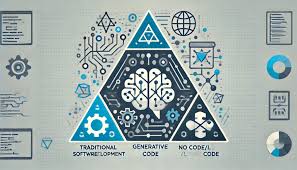
Nowhere has the rise of generative AI tools been more transformative than in software development. It began with GitHub Copilot’s enhanced autocomplete, which then evolved into interactive, real-time coding assistants like Aider and Cursor that allow engineers to dictate changes and see them applied live in their editor. Today, platforms like Devin.ai aim even higher, aspiring to create autonomous software systems capable of interpreting feature requests or bug reports and delivering ready-to-review code. At its core, the ambition of these AI tools mirrors the essence of software itself: to automate human work. Whether you were writing a script to automate CSV parsing in 2005 or leveraging AI today, the goal remains the same—offloading repetitive tasks to machines. What makes generative AI tools distinct, however, is their focus on automating the work of automation itself. Framing this as a guiding principle enables us to consider the broader challenges and opportunities generative AI brings to software development. Automate the Process of Automation The Doctor-Patient Strategy Most contemporary generative AI tools operate under what can be called the Doctor-Patient strategy. In this model, the GenAI tool acts on a codebase as a distinct, external entity—much like a doctor treats a patient. The relationship is one-directional: the tool modifies the codebase based on given instructions but remains isolated from the architecture and decision-making processes within it. Why This Strategy Dominates: However, the limitations of this strategy are becoming increasingly apparent. Over time, the unidirectional relationship leads to bot rot—the gradual degradation of code quality due to poorly contextualized, repetitive, or inconsistent changes made by generative AI. Understanding Bot Rot Bot rot occurs when AI tools repeatedly make changes without accounting for the macro-level architecture of a codebase. These tools rely on localized context, often drawing from semantically similar code snippets, but lack the insight needed to preserve or enhance the overarching structure. Symptoms of Bot Rot: Example:Consider a Python application that parses TPS report IDs. Without architectural insight, a code bot may generate redundant parsing methods across multiple modules rather than abstracting the logic into a centralized model. Over time, this duplication compounds, creating a chaotic and inefficient codebase. A New Approach: Generative-Driven Development (GDD) To address the flaws of the Doctor-Patient strategy, we propose Generative-Driven Development (GDD), a paradigm where the codebase itself is designed to enable generative AI to enhance automation iteratively and sustainably. Pillars of GDD: How GDD Improves the Development Lifecycle Under GDD, the traditional Test-Driven Development (TDD) cycle (red, green, refactor) evolves to integrate AI processes: This complete cycle eliminates the gaps present in current generative workflows, reducing bot rot and enabling sustainable automation. Over time, GDD-based codebases become easier to maintain and automate, reducing error rates and cycle times. A Day in the Life of a GDD Engineer Imagine a GDD-enabled workflow for a developer tasked with updating TPS report parsing: By embedding AI into the development process, GDD empowers engineers to focus on high-level decision-making while ensuring the automation process remains sustainable and aligned with architectural goals. Conclusion Generative-Driven Development represents a significant shift in how we approach software development. By prioritizing architecture, embedding automation into the software itself, and writing GenAI-optimized code, GDD offers a sustainable path to achieving the ultimate goal: automating the process of automation. As AI continues to reshape the industry, adopting GDD will be critical to harnessing its full potential while avoiding the pitfalls of bot rot. Like Related Posts Who is Salesforce? Who is Salesforce? Here is their story in their own words. From our inception, we’ve proudly embraced the identity of Read more Salesforce Unites Einstein Analytics with Financial CRM Salesforce has unveiled a comprehensive analytics solution tailored for wealth managers, home office professionals, and retail bankers, merging its Financial Read more AI-Driven Propensity Scores AI plays a crucial role in propensity score estimation as it can discern underlying patterns between treatments and confounding variables Read more Tectonic’s Successful Salesforce Track Record Salesforce Technology Services Integrator – Tectonic has successfully delivered Salesforce in a variety of industries including Public Sector, Hospitality, Manufacturing, Read more

Read More
Tectonic Salesforce Integrations

Guide to Reinventing Your Business for the Digital Age

Digital Transformation: The Complete Guide to Reinventing Your Business for the Digital Age What Is Digital Transformation? Digital transformation is the strategic adoption of digital technologies to fundamentally reshape business processes, culture, and customer experiences. It’s not just about upgrading IT systems—it’s a holistic reinvention of how a company operates, competes, and delivers value in an increasingly digital world. “Every digital transformation begins and ends with the customer.”— Marc Benioff, Chairman & Co-CEO, Salesforce Digitization vs. Digitalization vs. Digital Transformation Concept Definition Example Digitization Converting analog data to digital Scanning paper invoices into PDFs Digitalization Using digital tools to improve existing processes CRM systems replacing Rolodexes Digital Transformation Reimagining business models with digital-first strategies Netflix shifting from DVDs to streaming Why Digital Transformation Matters 1. Customer Expectations Are Evolving 2. Employees Demand Modern Tools 3. Industry Disruption Is Accelerating Key Drivers of Digital Transformation Real-World Examples of Digital Transformation 1. Banking: From Branches to Apps 2. Retail: Personalization at Scale 3. Insurance: Proactive Risk Management How to Start Your Digital Transformation Step 1: Assess Your Current State Step 2: Build a Cross-Functional Strategy Step 3: Choose the Right Technology Step 4: Foster a Digital-First Culture Avoiding Common Pitfalls 🚫 Mistake: Buying disconnected point solutions✅ Fix: Invest in an integrated platform 🚫 Mistake: Treating it as an “IT project”✅ Fix: Make it a company-wide initiative 🚫 Mistake: Ignoring change management✅ Fix: Get employee buy-in early The Future of Digital Transformation Ready to Transform? Start small, think big, and put your customers at the center. The businesses that thrive in the next decade will be those that embrace continuous digital evolution. Need help? Contact us. Like Related Posts Who is Salesforce? Who is Salesforce? Here is their story in their own words. From our inception, we’ve proudly embraced the identity of Read more Salesforce Marketing Cloud Transactional Emails Salesforce Marketing Cloud Transactional Emails are immediate, automated, non-promotional messages crucial to business operations and customer satisfaction, such as order Read more Salesforce Unites Einstein Analytics with Financial CRM Salesforce has unveiled a comprehensive analytics solution tailored for wealth managers, home office professionals, and retail bankers, merging its Financial Read more AI-Driven Propensity Scores AI plays a crucial role in propensity score estimation as it can discern underlying patterns between treatments and confounding variables Read more

Read More
What is Heroku

What is Heroku

What is Heroku? Heroku is a modern, container-based Platform as a Service (PaaS) that enables developers to deploy, manage, and scale applications with ease. Designed for simplicity, flexibility, and elegance, it provides the fastest path for developers to take their apps to market. Key Features of Heroku: The Evolution of Heroku Heroku has recently undergone a transformation, becoming fully cloud-native with advanced integrations like Kubernetes, OpenTelemetry, and Agentforce, an AI-powered enhancement to its platform. These upgrades retain the platform’s hallmark simplicity while delivering more performance and tools, such as Graviton processors, EKS, ECR, and AWS Global Accelerator. AI-Powered Innovation: Agentforce Agentforce, Heroku’s latest feature, brings AI-powered automation to app development. It empowers both technical and non-technical users by offering natural language workflows for building applications, making it accessible to a wider range of business users. According to Betty Junod, Heroku’s Chief Marketing Officer at Salesforce, the platform now seamlessly combines user-friendly experiences with cutting-edge AI capabilities: “We’ve replatformed while keeping the experience as simple as ever, but now with added horsepower, Graviton performance, and managed AI tools like Bedrock.” Agentforce is particularly impactful for non-developers, guiding them through building apps and automating processes with no-code or low-code tools. This innovation aligns with Heroku’s mission to make app creation easier and more interactive: “It’s not just apps serving information anymore; users are engaging with them in entirely new ways.” Deliver Apps, Your Way Heroku is designed to serve a variety of needs, from quick prototypes to mission-critical enterprise applications. Its fully managed ecosystem allows you to build and scale apps efficiently, leveraging the tools and languages you already know and love. Like Related Posts Who is Salesforce? Who is Salesforce? Here is their story in their own words. From our inception, we’ve proudly embraced the identity of Read more Salesforce Marketing Cloud Transactional Emails Salesforce Marketing Cloud Transactional Emails are immediate, automated, non-promotional messages crucial to business operations and customer satisfaction, such as order Read more Salesforce Unites Einstein Analytics with Financial CRM Salesforce has unveiled a comprehensive analytics solution tailored for wealth managers, home office professionals, and retail bankers, merging its Financial Read more AI-Driven Propensity Scores AI plays a crucial role in propensity score estimation as it can discern underlying patterns between treatments and confounding variables Read more

Read More
AI Agent Workflows

AI Agent Workflows

AI Agent Workflows: The Ultimate Guide to Choosing Between LangChain and LangGraph Explore two transformative libraries—LangChain and LangGraph—both created by the same developer, designed to build Agentic AI applications. This guide dives into their foundational components, differences in handling functionality, and how to choose the right tool for your use case. Language Models as the Bridge Modern language models have unlocked revolutionary ways to connect users with AI systems and enable AI-to-AI communication via natural language. Enterprises aiming to harness Agentic AI capabilities often face the pivotal question: “Which tools should we use?” For those eager to begin, this question can become a roadblock. Why LangChain and LangGraph? LangChain and LangGraph are among the leading frameworks for crafting Agentic AI applications. By understanding their core building blocks and approaches to functionality, you’ll gain clarity on how each aligns with your needs. Keep in mind that the rapid evolution of generative AI tools means today’s truths might shift tomorrow. Note: Initially, this guide intended to compare AutoGen, LangChain, and LangGraph. However, AutoGen’s upcoming 0.4 release introduces a foundational redesign. Stay tuned for insights post-launch! Understanding the Basics LangChain LangChain offers two primary methods: Key components include: LangGraph LangGraph is tailored for graph-based workflows, enabling flexibility in non-linear, conditional, or feedback-loop processes. It’s ideal for cases where LangChain’s predefined structure might not suffice. Key components include: Comparing Functionality Tool Calling Conversation History and Memory Retrieval-Augmented Generation (RAG) Parallelism and Error Handling When to Choose LangChain, LangGraph, or Both LangChain Only LangGraph Only Using LangChain + LangGraph Together Final Thoughts Whether you choose LangChain, LangGraph, or a combination, the decision depends on your project’s complexity and specific needs. By understanding their unique capabilities, you can confidently design robust Agentic AI workflows. Like Related Posts Who is Salesforce? Who is Salesforce? Here is their story in their own words. From our inception, we’ve proudly embraced the identity of Read more Salesforce Marketing Cloud Transactional Emails Salesforce Marketing Cloud Transactional Emails are immediate, automated, non-promotional messages crucial to business operations and customer satisfaction, such as order Read more Salesforce Unites Einstein Analytics with Financial CRM Salesforce has unveiled a comprehensive analytics solution tailored for wealth managers, home office professionals, and retail bankers, merging its Financial Read more AI-Driven Propensity Scores AI plays a crucial role in propensity score estimation as it can discern underlying patterns between treatments and confounding variables Read more

Read More
Natural Language Processing Explained

Natural Language Processing Explained

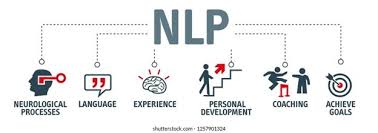
What is Natural Language Processing (NLP)? Natural Language Processing (NLP) is a branch of artificial intelligence (AI) that enables computers to interpret, analyze, and generate human language. By leveraging machine learning, computational linguistics, and deep learning, NLP helps machines understand written and spoken words, making communication between humans and computers more seamless. I apologize folks. I am feeling like the unicorn who missed the Ark. Tectonic has been providing you with tons of great material on artificial intelligence, but we left out a basic building block. Without further ado, Natural Language Processing Explained. Like a lot of components of AI, we often are using it without knowing we are using it. NLP is widely used in everyday applications such as: How Does NLP Work? Natural Language Processing combines several techniques, including computational linguistics, machine learning, and deep learning. It works by breaking down language into smaller components, analyzing these components, and then drawing conclusions based on patterns. If you have ever read a first grader’s reading primer it is the same thing. Learn a little three letter word. Recognize the meaning of the word. Understand it in the greater context of the sentence. Key NLP preprocessing steps include: Why Is NLP Important? NLP plays a vital role in automating and improving human-computer interactions by enabling systems to interpret, process, and respond to vast amounts of textual and spoken data. By automating tasks like sentiment analysis, content classification, and question answering, NLP boosts efficiency and accuracy across industries. For example: Key Use Cases of NLP in Business NLP Tasks NLP enables machines to handle various language tasks, including: Approaches to NLP Future of NLP NLP is becoming more integral in daily life as technology improves. From customer service chatbots to medical record summarization, NLP continues to evolve, but challenges remain, including improving coherence and reducing biases in machine-generated text. Essentially, NLP transforms the way machines and humans interact, making technology more intuitive and accessible across a range of industries. By Tectonic Solutions Architect – Shannan Hearne Like1 Related Posts Who is Salesforce? Who is Salesforce? Here is their story in their own words. From our inception, we’ve proudly embraced the identity of Read more Salesforce Unites Einstein Analytics with Financial CRM Salesforce has unveiled a comprehensive analytics solution tailored for wealth managers, home office professionals, and retail bankers, merging its Financial Read more AI-Driven Propensity Scores AI plays a crucial role in propensity score estimation as it can discern underlying patterns between treatments and confounding variables Read more Tectonic’s Successful Salesforce Track Record Salesforce Technology Services Integrator – Tectonic has successfully delivered Salesforce in a variety of industries including Public Sector, Hospitality, Manufacturing, Read more

Read More
Integrate Digital Delivery and Human Connection

Integrate Digital Delivery and Human Connection

Salesforce’s latest data reveals a complex challenge for banks: while digital excellence is now essential for customer satisfaction, a fully digital experience risks alienating customers who value human connections at critical moments. Banks often feel torn between scaling digital capabilities and preserving the personal touch that fosters customer loyalty. How can they strike the right balance?

Read More
gettectonic.com