cdp Archives - gettectonic.com - Page 2

Data Cloud Permissions

Data Cloud Standard Permission Sets Permission sets determine the level of access and visibility Salesforce users have to Data Cloud features and data. Salesforce provides six standard permission sets for Data Cloud, which administrators assign to users. While it is possible to create custom permission sets, it is generally recommended to use the standard ones, as they are updated automatically with each release. However, these can be combined with other Salesforce permission sets to expand user access as needed. Identifying Your Data Cloud License To check your org’s Data Cloud license: Important: For details on the transition from legacy standard permission sets to enhanced standard permission sets, see Data Cloud Permission Set Naming Changes During the Enhanced Security Migration Period. System Administrator Access System Administrators can manage and assign users within Setup and access Data Cloud Setup. They must have either the System Administrator user profile or permissions that grant access to Salesforce Setup. Note: A Data Cloud standard permission set is not required to access Data Cloud Setup. Data Cloud Standard Permission Sets General Data Cloud Permission Sets These permission sets can be assigned to users and combined with other Salesforce permission sets: Marketing-Specific Permission Sets Organizations with the Segmentation and Activation Add-On License, commonly used with Marketing Cloud Engagement and third-party applications, have additional marketing-specific permission sets: For details on the Segmentation and Activation Add-On License, contact your account executive. Feature Access by Permission Set The following table outlines the access levels for each permission set: | Feature | System Admin | Data Cloud Admin | Data Cloud User | Data Cloud Marketing Admin | Data Cloud Data Aware Specialist | Data Cloud Marketing Manager | Data Cloud Marketing Specialist | |—|—|—|—|—|—|—|| Data Cloud Setup | Full Access | | | | | || Data Space Management | Full Access | | | | | || Data Additions to a Data Space | | Full Access | | Full Access | Full Access | || Data Streams | | Full Access | View Only | Full Access | Full Access | View Only | View Only || Data Shares | | Full Access | View Only | View Only | Full Access | View Only | View Only || Data Lake Objects | | Full Access | View Only | Full Access | Full Access | View Only | View Only || Data Transforms | | Full Access | View Only | Full Access | Full Access | View Only | View Only || Data Model | | Full Access | View Only | Full Access | Full Access | View Only | View Only || Identity Resolution | | Full Access | View Only | Full Access | Full Access | View Only | View Only || Calculated Insights | | Full Access | View Only | Full Access | Full Access | View Only | View Only || Segments | | | Full Access | View Only | Full Access | Full Access | || Activation & Targets | | | Full Access | View Only | Full Access | View Only | || Communication Capping Setup | Full Access | | | | | || Search Index Configurations | | Full Access | View Only | Full Access | Full Access | View Only | View Only | Best Practice: Use Standard Permission Sets It is strongly recommended to assign standard permission sets rather than creating custom ones. Standard permission sets are automatically updated with each release, ensuring users have access to the latest features. Custom permission sets may not include new functionality, potentially limiting access to new capabilities. Customer Data Platform Standard Permission Sets Salesforce provides four standard permission sets for Customer Data Platform (CDP) licensed orgs. These define access to Data Cloud features under the CDP contract. For details, refer to Customer Data Platform Standard Permission Sets in Data Cloud documentation. Data Cloud Permission Set Changes During the Enhanced Security Migration Starting November 2023, Salesforce introduced enhanced security measures, renaming existing Data Cloud standard permission sets and creating new permission sets with similar names in all Data Cloud orgs. Refer to the Data Cloud Permission Set Naming Changes documentation for details. Creating Custom Permission Sets in Data Cloud If a custom permission set is required, it is best to clone an existing standard permission set rather than creating one from scratch. Some Data Cloud features may not be accessible if a permission set is built manually. Like Related Posts Who is Salesforce? Who is Salesforce? Here is their story in their own words. From our inception, we’ve proudly embraced the identity of Read more Salesforce Marketing Cloud Transactional Emails Salesforce Marketing Cloud Transactional Emails are immediate, automated, non-promotional messages crucial to business operations and customer satisfaction, such as order Read more Salesforce Unites Einstein Analytics with Financial CRM Salesforce has unveiled a comprehensive analytics solution tailored for wealth managers, home office professionals, and retail bankers, merging its Financial Read more AI-Driven Propensity Scores AI plays a crucial role in propensity score estimation as it can discern underlying patterns between treatments and confounding variables Read more

Read More
Martech Modernization

Martech Modernization

Martech Modernization: The Trends, Challenges, and Opportunities A Snapshot of Martech Strategies and CDP Adoption According to research by Acxiom, 65% of companies with a defined martech strategy utilize a Customer Data Platform (CDP), compared to just 43% without one. This significant gap underscores the strategic role of CDPs in martech adoption. Additionally, nearly all businesses surveyed plan to revise their martech stack within the next 12 months, with 29% adding new tools and 15% consolidating existing ones. The Transformative Marketing Landscape Rapid technological advancements, changing customer expectations, and evolving identity ecosystems are fundamentally reshaping how brands engage their audiences. In this environment, modernizing martech has become essential for delivering the personalized experiences customers demand. However, modernization presents challenges such as siloed data, fragmented technologies, and gaps in expertise, complicating efforts to adapt. To gain insights into these dynamics, Acxiom surveyed 200 martech decision-makers from the US and UK about their modernization plans, motivations, and obstacles. The findings reveal a widespread push for martech updates, with brands seeking support to navigate this complex journey. SECTION ONE: A Martech Reset is Underway Martech Strategy Rises to the Top When asked to prioritize their marketing objectives, 34% of respondents listed developing a martech strategy among their top three goals. This places it alongside traditional objectives like increasing brand awareness and customer acquisition, reflecting its growing importance in achieving broader marketing goals. Even considering that survey respondents may prioritize martech more than the average business leader, the results highlight the industry’s dynamism and the pressing need for a martech reset. Widespread Stack Adjustments Nearly all surveyed businesses (99%) plan to adjust their martech stack in the next year. Key trends include: This widespread activity emphasizes the high priority placed on martech optimization. Streamlining and Experimentation Some organizations focus on refining their existing stacks, while others are piloting new platforms: C-Suite Engagement Martech modernization has also captured the attention of executive leadership. 60% of respondents noted that martech has become a higher priority for their C-suite in recent years, particularly in smaller companies leveraging technology to maximize resources and compete with larger rivals. Budget Increases Despite Economic Pressures In a challenging economic climate, 65% of respondents expect their martech budgets to grow over the next year, while only 10% foresee cuts. This trend reflects the recognition of martech as a strategic investment critical for maintaining competitiveness. SECTION TWO: Drivers of Martech Modernization Why Modernize? Modernization efforts are driven by a mix of goal-oriented and technical motivations. Key drivers include: Secondary motivations include streamlining integration, ensuring regulatory compliance, and reducing operational complexity. Key Takeaways As martech modernization accelerates, businesses must balance innovation with strategic planning to navigate this transformative era successfully. Like Related Posts Who is Salesforce? Who is Salesforce? Here is their story in their own words. From our inception, we’ve proudly embraced the identity of Read more Salesforce Marketing Cloud Transactional Emails Salesforce Marketing Cloud Transactional Emails are immediate, automated, non-promotional messages crucial to business operations and customer satisfaction, such as order Read more Salesforce Unites Einstein Analytics with Financial CRM Salesforce has unveiled a comprehensive analytics solution tailored for wealth managers, home office professionals, and retail bankers, merging its Financial Read more AI-Driven Propensity Scores AI plays a crucial role in propensity score estimation as it can discern underlying patterns between treatments and confounding variables Read more

Read More
Transform Customer Experience

Transform Customer Experience

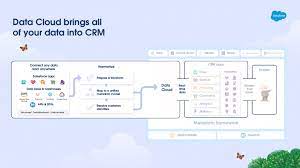
In today’s AI-driven business environment, customer experience (CX) has evolved from being a buzzword to a critical factor in determining success. It’s no longer enough for businesses to offer high-quality products or excellent service alone—today’s customers are always online, engaged, and seeking the most convenient, relevant, and enjoyable experiences. This is where Salesforce Data Cloud becomes a game-changer, providing the tools needed to meet modern customer expectations. Transforming Customer Experience with Salesforce Data Cloud Salesforce enables businesses to collect, integrate, and leverage critical customer information within its ecosystem, offering an all-encompassing view of each customer. This unified customer data allows organizations to forecast visitor trends, assess marketing impact, and predict customer behavior. As data-driven decision-making becomes increasingly central to business strategy, Salesforce Data Cloud and its Customer Data Platform (CDP) features provide a significant competitive edge—whether in e-commerce, fintech, or B2B industries. Data Cloud is more than just your traditional CDP. It’s the only data platform native to the world‘s #1 AI CRM. This means that marketers can quickly access and easily action on unified data – from across the entire business – to drive growth and increase customer lifetime value. Data Cloud’s Role in Enhancing CX By unifying data in one place, Salesforce Data Cloud enables organizations to access real-time customer insights. This empowers them to track customer activity across channels like email, social media, and online sales, facilitating targeted marketing strategies. Businesses can analyze customer behavior and deliver personalized messaging, aligning marketing, sales, and customer service efforts to ensure consistency. With these capabilities, Salesforce customers can elevate the CX by delivering the right content, at the right time, to the right audience, ultimately driving customer satisfaction and growth. New Features of Salesforce Data Cloud Salesforce continues to evolve, introducing cutting-edge features that reshape customer interaction: To fully maximize these features, partnering with a Salesforce Data Cloud consultant can help businesses unlock the platform’s full potential and refine their customer engagement strategies. Agentic AI Set to Supercharge Business Processes Salesforce’s vision extends beyond customer relationship management with the integration of Agentic AI through its Customer 360 platform. According to theCUBE Research analysts, this signals a shift toward using AI agents to automate complex business processes. These AI agents, built on Salesforce’s vast data resources, promise to revolutionize how companies operate, offering customized, AI-driven business tools. “If they can pull this off, where it becomes a more dynamic app platform, more personalized, really focused on those processes all the way back to the data, it’s going to be a clear win for them,” said Strechay. “They’re sitting on cloud; they’re sitting on IaaS. That’s a huge win from that perspective.” AI agents create a network of microservices that think and act independently, involving human intervention only when necessary. This division of labor allows businesses to capture expertise in routine tasks while freeing human workers to focus on more complex decision-making. However, the success of these AI agents depends on access to accurate and reliable data. As Gilbert explained, “Agents can call on other agents, and when they’re not confident of a step in a process or an outcome, they can then bounce up to an inbox for a human to supervise.” The goal isn’t to eliminate humans but to capture their expertise for simpler processes. Empowering Developers and Citizen Creators At the core of this AI-driven transformation is Salesforce’s focus on developers. The platform’s low-code tools allow businesses to easily customize AI agents and automate business processes, empowering both experienced developers and citizen creators. With simple language commands or goal-setting, companies can build and train these AI agents, streamlining operations. “It’s always going to be about good data—that’s the constant,” Bertrand said. “The second challenge is how to train agents and humans to work together effectively. While some entry-level jobs may be replaced, AI will continue to evolve, creating new opportunities in the future.” Is Salesforce Data Cloud the Right Fit for Your Business? Salesforce Data Cloud offers comprehensive capabilities for businesses of all sizes, but it’s essential to assess whether it aligns with your specific needs. The platform is particularly valuable for: For businesses that fit these scenarios, working with Salesforce’s partner ecosystem or a Data Cloud consultant can help ensure successful integration and optimization. What’s New in Salesforce’s Latest Release? The latest Salesforce Spring Release introduced several exciting features, further enhancing Salesforce Data Cloud: These updates reflect Salesforce’s commitment to providing innovative, data-driven solutions that enhance customer experiences and drive business success. Like Related Posts Who is Salesforce? Who is Salesforce? Here is their story in their own words. From our inception, we’ve proudly embraced the identity of Read more Salesforce Marketing Cloud Transactional Emails Salesforce Marketing Cloud Transactional Emails are immediate, automated, non-promotional messages crucial to business operations and customer satisfaction, such as order Read more Salesforce Unites Einstein Analytics with Financial CRM Salesforce has unveiled a comprehensive analytics solution tailored for wealth managers, home office professionals, and retail bankers, merging its Financial Read more AI-Driven Propensity Scores AI plays a crucial role in propensity score estimation as it can discern underlying patterns between treatments and confounding variables Read more

Read More
Oracle Advertising Sundown

Oracle Advertising Sundown

Oracle Shifts Focus to B2B CX, Introduces New Fusion Cloud Features Despite winding down its online advertising products, Oracle is doubling down on its investment in customer experience (CX) technology, particularly in enabling B2B buying and supporting subscription and consumption models. During the Oracle CloudWorld conference on Wednesday, the company unveiled new capabilities for its Fusion Cloud Customer Experience and Unity Customer Data Platform. These enhancements empower Oracle CX users to analyze customer profiles to assemble B2B buying teams, leverage generative AI tools like native analytics, and utilize industry-specific accelerators to speed up the adoption of customer data tools. Key features include the ability to create self-service sites for individual accounts, enabling customers to review and summarize contracts using generative AI, receive quotes, and renew subscriptions. Other features enhance “assisted buying experiences,” blending self-service and human interaction, while tools like account onboarding and AI-powered email drafting simplify full-service sales processes. Subscription models, though still in their early stages for B2B, offer a streamlined alternative to traditional procurement processes. As Liz Miller, an analyst at Constellation Research, noted, subscription-based buying is easier and quicker, avoiding the lengthy procurement cycles many B2B buyers are familiar with. “The pain of traditional B2B buying is still fresh in everyone’s mind,” she said. Oracle Advertising Shuts Down Oracle’s advertising product support will end on September 30, as confirmed by CEO Safra Catz during the company’s June earnings call. The Oracle Advertising Data Management Platform (DMP), built from its BlueKai acquisition, is being retired, following in the footsteps of Salesforce, which discontinued its Audience Studio in 2021. Despite Oracle winding down its ad platform, this move shouldn’t be seen as a shift away from customer experience. Oracle founder Larry Ellison remains deeply involved in shaping the company’s CX strategy, with a focus on marketing tools and Apex low-code platforms, said Rob Pinkerton, Oracle’s senior vice president. Oracle’s modernized CX suite, built on the Fusion Cloud platform, has evolved significantly in recent years, though questions remain about whether it’s too late to regain market share. “Oracle as a CX platform has fallen off the radar for many buyers,” said Miller, adding that customers are no longer debating between Oracle, Microsoft, and Salesforce in the CX space. New Industry-Specific Tools for CX Oracle has also expanded its CX platform with industry-specific tools designed to accelerate the adoption of its customer data platform (CDP) across sectors such as high tech, manufacturing, professional services, telecommunications, utilities, financial services, travel, and retail. According to Rebecca Wettemann, CEO of research firm Valoir, Oracle’s Fusion platform has matured significantly and now supports the complexity of modern customer needs. Wettemann highlighted how common components like customer interaction summaries can be adapted for multiple industries, delivering faster results than traditional applications. Oracle’s Clinical Digital Assistant is one such example of this approach, illustrating the platform’s versatility and AI-driven enhancements. With these developments, Oracle continues to refine its CX offerings to better meet the unique demands of B2B customers, providing tools that streamline operations and enhance customer experiences across various industries. Like Related Posts Who is Salesforce? Who is Salesforce? Here is their story in their own words. From our inception, we’ve proudly embraced the identity of Read more Salesforce Marketing Cloud Transactional Emails Salesforce Marketing Cloud Transactional Emails are immediate, automated, non-promotional messages crucial to business operations and customer satisfaction, such as order Read more Salesforce Unites Einstein Analytics with Financial CRM Salesforce has unveiled a comprehensive analytics solution tailored for wealth managers, home office professionals, and retail bankers, merging its Financial Read more AI-Driven Propensity Scores AI plays a crucial role in propensity score estimation as it can discern underlying patterns between treatments and confounding variables Read more
Read More
SaaS Data Protection from Own

SaaS Data Protection from Own

ENGLEWOOD CLIFFS, N.J.–(BUSINESS WIRE)–Own, the industry leader for SaaS data protection and activation, today announced the release of Continuous Data Protection for Salesforce customers, further strengthening its product offering to include unprecedented recovery and analysis capabilities. In an industry-first approach, Own Continuous Data Protection provides a turn-key solution that delivers significant value to customers that have mission-critical, frequently changing, or highly valuable data within Salesforce. Own is the only SaaS data protection platform that proactively detects and stores data changes in Salesforce by leveraging platform events to prevent data loss. “This innovative approach to Continuous Data Protection will provide our Salesforce customers with an unparalleled advantage for capturing every change to their data ” said Adrian Kunzle, Chief Technology Officer at Own. “From the company’s inception almost 10 years ago, it has been our goal to ensure that no company operating in the cloud loses their data. At Own, we are the first to reimagine Continuous Data Protection for greater data resilience and scalability, and to ensure business continuity. This new solution offers true continuous data protection, and equips our customers with the most complete dataset to enable greater data fidelity to power AI models.” Own’s release of Continuous Data Protection (CDP) is a groundbreaking development in data protection and activation. Traditionally, backup and recovery solutions that specialize in protecting SaaS application data leverage a high-frequency model that provides multiple snapshots per week or day. Continuous Data Protection from Own pushes data changes to a backup as they happen, allowing businesses to capture changes in their data in near real-time. In addition to creating a more resilient and scalable approach, the higher-fidelity datasets this offering creates will enable organizations to unlock new ways of leveraging analytics and AI models across their vital information. “This innovative approach to Continuous Data Protection will provide our Salesforce customers with an unparalleled advantage for capturing every change to their data,” said Adrian Kunzle, Chief Technology Officer at Own. “From the company’s inception almost 10 years ago, it has been our goal to ensure that no company operating in the cloud loses their data. At Own, we are the first to reimagine Continuous Data Protection for greater data resilience and scalability, and to ensure business continuity. This new solution offers true continuous data protection, and equips our customers with the most complete dataset to enable greater data fidelity to power AI models.” Continuous Data Protection is a step forward in the world of SaaS data protection, enabling Own Recover for Salesforce customers to recover rapidly changing, mission-critical data faster, enhancing data resiliency and scalability. Continuous Data Protection provides the ability to: The Continuous Data Protection offering will be generally available on August 19, 2024. About Own Own is the industry leader in SaaS data protection and activation, trusted by thousands of organizations to ensure the availability, security, and compliance of mission-critical data, while unlocking new ways to gain deeper insights faster. Own ensures data resiliency and empowers organizations to bring historical context to life for predictive insights and inspiration. By partnering with some of the world’s largest SaaS ecosystems such as Salesforce, ServiceNow and Microsoft Dynamics 365, Own enables customers around the world to truly own their data and transform their business. It’s their platform. It’s your data. Own it. Like Related Posts Who is Salesforce? Who is Salesforce? Here is their story in their own words. From our inception, we’ve proudly embraced the identity of Read more Salesforce Marketing Cloud Transactional Emails Salesforce Marketing Cloud Transactional Emails are immediate, automated, non-promotional messages crucial to business operations and customer satisfaction, such as order Read more Salesforce Unites Einstein Analytics with Financial CRM Salesforce has unveiled a comprehensive analytics solution tailored for wealth managers, home office professionals, and retail bankers, merging its Financial Read more AI-Driven Propensity Scores AI plays a crucial role in propensity score estimation as it can discern underlying patterns between treatments and confounding variables Read more
Read More
Data Cloud Features and Connectors

Data Cloud Features and Connectors

Leveraging New Features and Connectors in Salesforce’s Data Cloud Salesforce’s Data Cloud is rapidly evolving with continuous updates and new functionalities, including AI advancements. Keeping pace with these changes can be challenging. This insight explores the latest features and how to effectively utilize them to enhance your Salesforce environment. Data Cloud Features and Connectors. Are CDP and data Cloud the same? Data Cloud is more than just your traditional CDP. It’s the only data platform native to the world’s #1 AI CRM. This means that marketers can quickly access and easily action on unified data – from across the entire business – to drive growth and increase customer lifetime value. Introducing the Feature Manager The Winter ‘24 update introduced the Feature Manager, a powerful tool that simplifies managing Data Cloud’s features. It allows you to easily enable, disable, and monitor AI and beta features within the platform. Where to Find It You can find the Feature Manager in the navigation pane under the Features section, providing a centralized and intuitive way to manage your Data Cloud capabilities. Enable Data Cloud Features Using the Feature Manager, you can enable Data Cloud features. This screen is visible only when there are one or more features to enable or disable. Advantages of Enabling Beta Features One standout capability of the Feature Manager is its support for enabling beta versions of connectors and AI features. Here’s why you should consider using beta features: Early Access to Innovations Beta features give you early access to the latest tools, allowing you to experiment with new functionalities before their official release. This can provide a competitive edge and enhance your Salesforce environment. Feedback and Influence Using beta features allows you to provide valuable feedback to Salesforce, helping shape the final versions of these tools. This feedback loop ensures that the features are refined to meet user needs. How to Enable Beta Features Enable and Disable Data Cloud AI and Beta Features with Feature Manager Easily enable, disable, and monitor Data Cloud AI and beta features using the new Feature Manager, found in the navigation pane under Features. Where: This change applies to Data Cloud in Developer, Enterprise, Performance, and Unlimited editions. Steps to Enable Beta Features: Real-World Example: Adobe Marketo Connector A prime example of a beta feature available in the Winter ’24 release is the Adobe Marketo connector. This connector is currently in beta, allowing users to enable and test it through the Feature Manager. Steps to Enable the Adobe Marketo Connector By enabling and testing this connector, you can explore its functionalities and see how it integrates with your existing Salesforce setup. Staying Updated with Salesforce Data Cloud Keeping up with the latest features in Salesforce Data Cloud doesn’t have to be overwhelming. With tools like the Feature Manager, you can easily manage, enable, and experiment with new features and connectors, including those currently in beta. This not only keeps you at the forefront of innovation but also allows you to directly influence the development of these tools. Dive in, utilize the new capabilities, and make the most of what Salesforce Data Cloud has to offer. Like Related Posts Who is Salesforce? Who is Salesforce? Here is their story in their own words. From our inception, we’ve proudly embraced the identity of Read more Salesforce Marketing Cloud Transactional Emails Salesforce Marketing Cloud Transactional Emails are immediate, automated, non-promotional messages crucial to business operations and customer satisfaction, such as order Read more Salesforce Unites Einstein Analytics with Financial CRM Salesforce has unveiled a comprehensive analytics solution tailored for wealth managers, home office professionals, and retail bankers, merging its Financial Read more AI-Driven Propensity Scores AI plays a crucial role in propensity score estimation as it can discern underlying patterns between treatments and confounding variables Read more

Read More
Salesforce CDP Explained

Salesforce CDP Implementation Services

Salesforce CDP is a robust platform that transforms your customer data into actionable insights. It enables you to seamlessly track customer interactions across multiple channels, segment your audience effectively, and deliver personalized experiences through targeted messaging and offers. What is Salesforce CDP? Salesforce CDP is a cutting-edge platform designed to collect, unify, and integrate data from various sources. By centralizing your customer data, it empowers you to track customer journeys, segment audiences, and personalize interactions. Additionally, it automates processes such as sending targeted messages and tailored offers, ensuring a seamless customer experience. Key Benefits of Salesforce CDP Implementing a Salesforce CDP offers a wide range of advantages, including: How to Use Salesforce CDP for Customer Journeys Harness the power of Salesforce CDP to enhance your customer journeys with data-driven insights. Set up automated workflows to segment customers and deliver targeted offers or messages based on their preferences. Measure engagement across multiple channels to optimize communication strategies. Leverage AI and machine learning to uncover patterns in customer data, providing deep insights into individual behaviors. Automating and Personalizing Retention Strategies with Salesforce CDP Boost customer retention by automating and personalizing your strategies with Salesforce CDP. Identify behavioral patterns and set up automated triggers for timely communication. Deliver personalized messages tailored to each customer segment, ensuring relevance and engagement. Monitor engagement metrics over time to identify at-risk customers and take proactive steps to retain them. Best Practices for Leveraging Salesforce CDP To maximize the value of your data with Salesforce CDP, follow these best practices: Ready to Maximize Your CRM Potential? Are you searching for a trusted Salesforce service provider to help you implement and optimize Salesforce CDP? Partner with Tectonic to unlock the full potential of the #1 CRM platform. Schedule a call today to explore the best solutions tailored to your business needs! Like Related Posts Who is Salesforce? Who is Salesforce? Here is their story in their own words. From our inception, we’ve proudly embraced the identity of Read more Salesforce Marketing Cloud Transactional Emails Salesforce Marketing Cloud Transactional Emails are immediate, automated, non-promotional messages crucial to business operations and customer satisfaction, such as order Read more Salesforce Unites Einstein Analytics with Financial CRM Salesforce has unveiled a comprehensive analytics solution tailored for wealth managers, home office professionals, and retail bankers, merging its Financial Read more AI-Driven Propensity Scores AI plays a crucial role in propensity score estimation as it can discern underlying patterns between treatments and confounding variables Read more
Read More
Salesforce Data Cloud Hits $900M in Revenue

Salesforce Data Cloud CDP

Salesforce Data Cloud: The Ultimate Customer Data Platform (CDP) Guide Transform Customer Data into Actionable Insights Salesforce Data Cloud (formerly Salesforce CDP) revolutionizes how businesses unify and activate customer data across every touchpoint. By consolidating information from websites, mobile apps, CRM systems, and more, it creates 360° customer profiles that power personalized marketing, sales, and service experiences. What is Salesforce Data Cloud? Salesforce Data Cloud is an AI-powered Customer Data Platform (CDP) that: 💡 Key Benefit: Break down data silos to deliver hyper-personalized customer journeys. Data Cloud vs. Traditional CRM: Key Differences Feature Salesforce CRM Salesforce Data Cloud Data Scope Sales/Service records only All customer interactions (web, email, ads, IoT) Real-Time Updates Manual/periodic syncs Instant profile enrichment AI Capabilities Basic analytics Predictive insights + GenAI recommendations Use Cases Pipeline management Omnichannel personalization Core Capabilities 1. Unified Customer Profiles 2. AI-Powered Segmentation 3. Activation Across Channels 4. Privacy & Compliance How Businesses Use Data Cloud 🚀 Boost E-Commerce Sales 📈 Optimize Ad Spend 🤖 Enhance Customer Service Technical Deep Dive Data Integration Options Key Concepts Getting Started 1. Choose Your Edition 2. Implement in 4 Steps 3. Train Your Team The Future of Data Cloud Final Verdict Salesforce Data Cloud is not just a CDP—it’s the central nervous system for customer-centric businesses. By unifying data + AI, it turns insights into personalized experiences at scale. Ready to explore? Contact Tectonic today. 🔥 Pro Tip: Pair with Einstein AI for predictive analytics and Genie for real-time streaming data. Content updated July 2025. Like Related Posts Who is Salesforce? Who is Salesforce? Here is their story in their own words. From our inception, we’ve proudly embraced the identity of Read more Salesforce Marketing Cloud Transactional Emails Salesforce Marketing Cloud Transactional Emails are immediate, automated, non-promotional messages crucial to business operations and customer satisfaction, such as order Read more Salesforce Unites Einstein Analytics with Financial CRM Salesforce has unveiled a comprehensive analytics solution tailored for wealth managers, home office professionals, and retail bankers, merging its Financial Read more AI-Driven Propensity Scores AI plays a crucial role in propensity score estimation as it can discern underlying patterns between treatments and confounding variables Read more

Read More
Marketing Cloud Engagement

Personalization vs Privacy in Marketing

The marketing landscape is evolving rapidly, with brands increasingly relying on data to drive customer engagement. Personalization vs Privacy in Marketing. While organizations anticipate a surge in data sources, achieving a comprehensive view of customers remains a challenge for many. Privacy regulations like GDPR and changes in tech policies, such as Apple’s, have significantly impacted how marketers utilize data. Despite efforts to transition away from third-party data, many still partially depend on it, necessitating a shift towards zero- and first-party data. Marketers are exploring various strategies to adapt, including incentivizing customers to share information and investing in AI technologies to enhance customer experiences and operational efficiency. However, there’s a concerning decline in the proportion of marketers going beyond regulatory requirements to safeguard customer privacy. As customer preferences continue to evolve, bridging online and offline experiences remains a priority, with AI playing a pivotal role in integrating these channels seamlessly. This Tectonic insight highlights several key trends and challenges in the realm of marketing and customer engagement, particularly focusing on data utilization, privacy regulations, AI adoption, and the integration of online and offline channels. Here’s a breakdown of the main points: Overall, this insight highlights the complex landscape of modern marketing, where data, privacy regulations, AI, and omnichannel integration play crucial roles in shaping customer engagement strategies. Marketers must navigate these challenges while prioritizing customer privacy and delivering personalized experiences across various touchpoints. Like1 Related Posts Who is Salesforce? Who is Salesforce? Here is their story in their own words. From our inception, we’ve proudly embraced the identity of Read more Salesforce Marketing Cloud Transactional Emails Salesforce Marketing Cloud Transactional Emails are immediate, automated, non-promotional messages crucial to business operations and customer satisfaction, such as order Read more Salesforce Unites Einstein Analytics with Financial CRM Salesforce has unveiled a comprehensive analytics solution tailored for wealth managers, home office professionals, and retail bankers, merging its Financial Read more AI-Driven Propensity Scores AI plays a crucial role in propensity score estimation as it can discern underlying patterns between treatments and confounding variables Read more

Read More
Salesforce Data Cloud

Salesforce Data Cloud vs Snowflake

A Comprehensive Comparison In the today’s data-driven world, businesses increasingly turn to cloud-based data platforms for managing, analyzing, and deriving insights from their customer data. Among the prominent options available, Salesforce Data Cloud and Snowflake stand out from the crowd. While both platforms offer robust capabilities, they exhibit distinct strengths and weaknesses. This insight looks into the comparison of Salesforce Data Cloud vs Snowflake. Salesforce Data Cloud: Salesforce Data Cloud is a hyperscale customer data platform (CDP) designed to help businesses consolidate all their customer data, including engagement data sourced externally. It establishes a unified view of the customer, empowering businesses to personalize experiences, enhance decision-making, and foster growth. Snowflake: Snowflake is a cloud-based data warehousing platform that facilitates the storage, analysis, and sharing of data for businesses. It encompasses a wide array of features, including an awesome SQL engine, elastic scalability, and compatibility with various data sources. Salesforce Data Cloud vs Snowflake Feature Salesforce Data Cloud Snowflake Focus Customer data General data Strengths Data enrichment, personalization, real-time updates Scalability, analytics, SQL support Weaknesses Less flexible than Snowflake, limited analytics capabilities Not as user-friendly as Salesforce Data Cloud Pricing Based on data volume Based on usage The ideal platform for you will be contingent on your specific needs and requirements. If your primary focus is on managing customer data and enhancing customer engagement, Salesforce Data Cloud proves to be a suitable option. On the other hand, if you require a more versatile data platform capable of handling a broad range of data types and workloads, Snowflake emerges as a better choice. Additional considerations include: Ultimately, the most effective way to determine the right platform for you is to experiment with both and assess which one aligns better with your preferences. Contact Tectonic today to explore Data Cloud and Snowflake for your data needs. Like2 Related Posts Lookup Relationship in Salesforce What is Lookup relationship in Salesforce? Salesforce’s lookup relationships is a significant capability that allows users to connect two objects Read more Lightning Dialer Salesforce What is Lightning Dialer Salesforce? Lightning Dialer Salesforce offers an outbound calling product with the option to add inbound calling Read more Capture Initial Traffic Source With Google Analytics To ensure the proper sequencing of Tags, modify the Tag sequencing in the Google Analytics preview Tag settings. The custom Read more Summary Formulas and Row Level Formulas Salesforce report formulas serve various purposes, from grouping records to performing calculations and comparing data. In the Salesforce Report Builder, Read more

Read More
Salesforce Logo

Spring ’24 Enhancements to Salesforce Analytics, Data Cloud, Einstein, and Net Zero Cloud

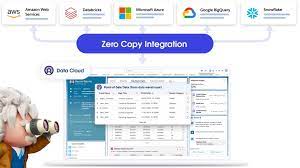
Discover the Spring ’24 Enhancements to Analytics Data Cloud Einstein and Net Zero Cloud Enhancements to Salesforce Analytics, Data Cloud, Einstein, and Net Zero Cloud in Spring’24. Reports and Dashboards for Data Cloud Enhancements Analytics Create custom report types, more core semantics, calculated insights, and date and time formulas. Analytics Collection Components Analytics Curate related analytics assets for better organization and easier consumption. Embed a specific collection directly into Lightning pages to easily access the insights you need right in your workflow. Enhanced Dashboard Customization Analytics Easily create and remember custom colors for widgets. Save hours in development time by applying layouts and colors to all widgets in a dashboard with just a few clicks. Revenue Intelligence Enhancements Analytics A new streamlined setup helps you get started even faster, and a library of KPI components lets you further customize Forecast Insights. To better understand conversation rates, use the new Win Rate Funnel view. Data Graphs Data Cloud Combine multiple data model objects and calculated insights into a unified view. New Profile API improves query performance to power near real-time use cases across Customer 360. Bring Your Own Lake with Snowflake Data Cloud Share data between Data Cloud and Snowflake with zero-ETL. With Data Federation, you can now share your data bidirectionally and access Snowflake datasets in Salesforce to enrich your unified customer profiles and unlock new insights. Bring Your Own Lake with Google BigQuery Data Cloud Share data between Data Cloud and Google BigQuery with zero-ETL. With seamless data access, you can enrich your unified customer profiles with BigQuery datasets, helping you unlock new insights and better power your Google Analytics and AI models. Streaming Data Ingest for Salesforce CRM Connector Data Cloud Ingest changes to Salesforce standard and custom objects in near real-time with streaming data ingest for the Salesforce CRM Connector. Now, existing batch ingestion checks for more frequent updates to your Salesforce objects. Einstein Copilot Einstein Embed Einstein Copilot—a conversational AI assistant—across all Salesforce applications to help teams be more productive. Automate steps or tasks with out-of-the-box actions, or create custom actions that call flows, Apex, or MuleSoft APIs. Prompt Builder Einstein Create, test, and refine prompt templates easily without code. Ground prompts with dynamic CRM data, including merge fields and flows. Invoke prompted workflows across the Einstein 1 Platform through Flow, Lightning Web Components, and Apex. ESG (Environmental, Social, and Governance) Disclosure Authoring with Generative AI Net Zero Cloud Use Einstein to generate more efficient Corporate Sustainability Reporting Directive (CSRD), Global Reporting Initiative (GRI), and Carbon Disclosure Project (CDP) reports. Einstein can access and use the internal information you’ve uploaded to Net Zero Cloud to write and answer specific questions required for these reporting standards. Disclosure and Compliance Hub Plugin for Microsoft Word Net Zero Cloud Net Zero Cloud now provides sustainability managers more flexibility to support multiple authoring formats using Microsoft Word Office 365. Multiuser collaboration, easy navigation, and rich text support create a cleaner and easier experience. Marginal Abatement Cost Visualizations Net Zero Cloud With marginal abatement cost visualizations, customers can gain insights into required investments for various programs and forecast future emissions based on the cost to offset carbon. Sustainability Program Visualizations Net Zero Cloud Visualize the combined effects of multiple environmental, social, and corporate governance (ESG) initiatives and gain a deeper understanding into different ESG projects and specific metrics within these projects. Improved Emissions Factors Management Net Zero Cloud Automatically integrate emissions factors from Net Zero Marketplace into Net Zero Cloud to easily manage and apply the data, for improved transparency and visibility in one location. Stay tuned to Tectonic’s Insights for more details and news from Salesforce. Enhancements to Salesforce Analytics, Data Cloud, Einstein, and Net Zero Cloud. Like1 Related Posts Who is Salesforce? Who is Salesforce? Here is their story in their own words. From our inception, we’ve proudly embraced the identity of Read more Salesforce Marketing Cloud Transactional Emails Salesforce Marketing Cloud Transactional Emails are immediate, automated, non-promotional messages crucial to business operations and customer satisfaction, such as order Read more Salesforce Unites Einstein Analytics with Financial CRM Salesforce has unveiled a comprehensive analytics solution tailored for wealth managers, home office professionals, and retail bankers, merging its Financial Read more AI-Driven Propensity Scores AI plays a crucial role in propensity score estimation as it can discern underlying patterns between treatments and confounding variables Read more

Read More
Einstein 1 Unveiled

Salesforce Einstein 1 Platform

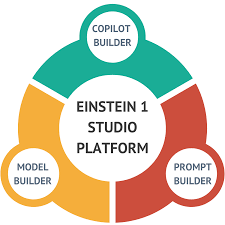
Welcome to the dawn of a bold new era in enterprise Artificial Intelligence, where the world demands a platform unlike any other. Enter Salesforce Einstein 1, the pinnacle of innovation, designed to navigate terabytes of disparate data seamlessly, offer freedom in AI model selection, and integrate directly into your workflow—all while upholding customer trust. Einstein 1 Platform serves as the nexus of your data, AI, CRM, development, and security needs, consolidating them into a singular, robust framework. This empowers IT, administrators, and developers alike with an adaptable AI platform, facilitating rapid development of transformative applications and automation. Within Einstein 1 lies an array of artificial intelligence tools, reflecting the modular architecture of the core Salesforce platform. From standardized to custom solutions, Einstein 1 caters to diverse needs. Examples include out-of-the-box AI features like sales email generation in Sales Cloud and service replies in Service Cloud. Since its unveiling as Genie, now Data Cloud, at Dreamforce ‘22, Salesforce has propelled this product to the forefront of its mission. The conversation has shifted from Customer 360 to encompass AI + CRM + Data—a strategic pivot poised for success in 2024 and beyond. But what does this transformation entail? Data Cloud has been a focal point of Salesforce’s narrative, hailed as a groundbreaking CDP innovation. The recent Q4 earnings call unveiled remarkable achievements: Gartner’s endorsement further solidifies Salesforce’s position, elevating it as a leader in the Magic Quadrant, surpassing rivals like Twilio and Adobe. This achievement is remarkable given Salesforce’s relatively recent CDP certification from the CDP Institute. However, understanding the significance of Data Cloud amidst a sea of CRM solutions may elude many. Yet, the resurgence of data underscores its importance. CRMs, while pivotal for sales, support, and marketing functions, fall short in managing the breadth of modern data collection, storage, and dissemination. Enter the CDP—a dedicated platform for aggregating customer data across every touchpoint throughout the customer lifecycle. Unlike CRMs, which traditionally served as the single source of truth, CDPs offer a comprehensive view, ingesting data from myriad sources. Two key attributes distinguish CDPs and Data Cloud: Yet, amidst this data revolution, the role of artificial intelligence cannot be understated. Einstein 1, formerly known as Salesforce Customer 360, epitomizes this synergy between AI, CRM, and Data. Einstein 1 boasts a diverse array of AI tools, from pre-built features to customizable solutions housed within the Einstein 1 Studio. This enables users to craft tailored AI functionality, seamlessly integrated with Salesforce’s ecosystem. Moreover, Salesforce’s agnostic approach to LLMs empowers users to harness the full potential of AI. Whether leveraging Salesforce’s proprietary LLM or integrating third-party or proprietary models, Einstein 1 ensures flexibility and innovation. As AI continues to permeate every facet of business and personal life, Salesforce’s strategic focus on Data Cloud and Einstein could propel the company to unprecedented growth. In the ever-evolving landscape of enterprise AI, Salesforce remains at the forefront, poised to redefine the future of customer engagement and business intelligence. Like Related Posts Who is Salesforce? Who is Salesforce? Here is their story in their own words. From our inception, we’ve proudly embraced the identity of Read more Salesforce Marketing Cloud Transactional Emails Salesforce Marketing Cloud Transactional Emails are immediate, automated, non-promotional messages crucial to business operations and customer satisfaction, such as order Read more Salesforce Unites Einstein Analytics with Financial CRM Salesforce has unveiled a comprehensive analytics solution tailored for wealth managers, home office professionals, and retail bankers, merging its Financial Read more AI-Driven Propensity Scores AI plays a crucial role in propensity score estimation as it can discern underlying patterns between treatments and confounding variables Read more
Read More
gettectonic.com