Commerce Archives - gettectonic.com - Page 5
Gen AI Unleased With Vector Database

Knowledge Graphs and Vector Databases

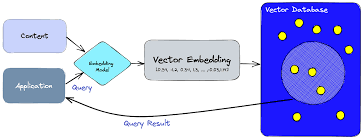
The Role of Knowledge Graphs and Vector Databases in Retrieval-Augmented Generation (RAG) In the dynamic AI landscape, Retrieval-Augmented Generation (RAG) systems are revolutionizing data retrieval by combining artificial intelligence with external data sources to deliver contextual, relevant outputs. Two core technologies driving this innovation are Knowledge Graphs and Vector Databases. While fundamentally different in their design and functionality, these tools complement one another, unlocking new potential for solving complex data problems across industries. Understanding Knowledge Graphs: Connecting the Dots Knowledge Graphs organize data into a network of relationships, creating a structured representation of entities and how they interact. These graphs emphasize understanding and reasoning through data, offering explainable and highly contextual results. How They Work Strengths Limitations Applications Vector Databases: The Power of Similarity In contrast, Vector Databases thrive in handling unstructured data such as text, images, and audio. By representing data as high-dimensional vectors, they excel at identifying similarities, enabling semantic understanding. How They Work Strengths Limitations Applications Combining Knowledge Graphs and Vector Databases: A Hybrid Approach While both technologies excel independently, their combination can amplify RAG systems. Knowledge Graphs bring reasoning and structure, while Vector Databases offer rapid, similarity-based retrieval, creating hybrid systems that are more intelligent and versatile. Example Use Cases Knowledge Graphs vs. Vector Databases: Key Differences Feature Knowledge Graphs Vector Databases Data Type Structured Unstructured Core Strength Relational reasoning Similarity-based retrieval Explainability High Low Scalability Limited for large datasets Efficient for massive datasets Flexibility Schema-dependent Schema-free Challenges in Implementation Future Trends: The Path to Convergence As AI evolves, the distinction between Knowledge Graphs and Vector Databases is beginning to blur. Emerging trends include: This convergence is paving the way for smarter, more adaptive systems that can handle both structured and unstructured data seamlessly. Conclusion Knowledge Graphs and Vector Databases represent two foundational technologies in the realm of Retrieval-Augmented Generation. Knowledge Graphs excel at reasoning through structured relationships, while Vector Databases shine in unstructured data retrieval. By combining their strengths, organizations can create hybrid systems that offer unparalleled insights, efficiency, and scalability. In a world where data continues to grow in complexity, leveraging these complementary tools is essential. Whether building intelligent healthcare systems, enhancing recommendation engines, or powering semantic search, the synergy between Knowledge Graphs and Vector Databases is unlocking the next frontier of AI innovation, transforming how industries harness the power of their data. Like Related Posts Who is Salesforce? Who is Salesforce? Here is their story in their own words. From our inception, we’ve proudly embraced the identity of Read more Salesforce Unites Einstein Analytics with Financial CRM Salesforce has unveiled a comprehensive analytics solution tailored for wealth managers, home office professionals, and retail bankers, merging its Financial Read more AI-Driven Propensity Scores AI plays a crucial role in propensity score estimation as it can discern underlying patterns between treatments and confounding variables Read more Tectonic’s Successful Salesforce Track Record Salesforce Technology Services Integrator – Tectonic has successfully delivered Salesforce in a variety of industries including Public Sector, Hospitality, Manufacturing, Read more

Read More
salesforce government digital transformation

Salesforce Drives Digital Transformation in Governmental Agencies

How Salesforce Drives Digital Transformation in Governmental Agencies in 2025 In the evolving digital age, government agencies face an increasing demand to modernize their services, improve citizen engagement, and deliver seamless digital experiences. These organizations require transformational technologies that not only streamline internal operations but also adopt a citizen-first approach. Salesforce emerges as a key enabler of this transformation, empowering government agencies with tools to build unified, transparent platforms while fostering efficiency and enhancing citizen interaction. Leveraging Salesforce Commerce Cloud and Salesforce CRM, agencies can overcome common challenges and embrace a more digitally enabled public sector. Let’s explore the pressing challenges government agencies face and how Salesforce provides practical, scalable solutions to address them. 1. Citizen Engagement and Accessibility: Bridging the Digital Divide Challenge: Citizens now expect government services to be as user-friendly and accessible as private-sector experiences. Lengthy response times, disconnected platforms, and inconsistent experiences across digital and physical touchpoints erode trust and hinder accessibility. Solution: 2. Data Security and Compliance: Safeguarding Citizen Trust Challenge: Handling sensitive citizen data requires robust security and strict compliance with regulations like GDPR, CCPA, and other local data privacy laws. Solution: 3. Legacy Systems and Integration: Modernizing Infrastructure Challenge: Legacy systems often limit agility, making it difficult to integrate new technologies and slowing the pace of digital transformation. Solution: 4. Budget Constraints: Implementing Cost-Effective Solutions Challenge: Budget limitations often hinder the adoption of new technologies, especially those requiring significant upfront investment. Solution: 5. Efficient Service Delivery: Streamlining Workflows Challenge: Paper-heavy, bureaucratic processes delay service delivery and frustrate both staff and citizens. Solution: 6. Data-Driven Decision-Making: Analytics for Informed Policies Challenge: Generating actionable insights from vast amounts of data is challenging, affecting policymaking and government efficiency. Solution: 7. Enhancing Collaboration: A Unified Workforce Challenge: Siloed departments hinder collaboration and reduce overall productivity, making it difficult to provide cohesive citizen services. Solution: 8. Real-Time Responsiveness: Meeting Citizen Expectations Challenge: Citizens expect real-time support and proactive communication from government agencies. Delays lead to frustration and diminished trust. Solution: Transforming Government Services with Salesforce Salesforce Commerce Cloud and Salesforce CRM are tailored to address public sector challenges in 2025. By leveraging these tools, government agencies can: Salesforce offers a clear path to a digitally empowered future, enabling government agencies to meet today’s demands while laying the foundation for innovation. Ready to Transform?If your agency is ready to embrace digital transformation, streamline operations, and enhance citizen services, Salesforce can help you get there. Let’s discuss how Salesforce solutions, supported by expert implementation, can drive meaningful change for your organization and your citizens. Like1 Related Posts Who is Salesforce? Who is Salesforce? Here is their story in their own words. From our inception, we’ve proudly embraced the identity of Read more Salesforce Marketing Cloud Transactional Emails Salesforce Marketing Cloud Transactional Emails are immediate, automated, non-promotional messages crucial to business operations and customer satisfaction, such as order Read more Salesforce Unites Einstein Analytics with Financial CRM Salesforce has unveiled a comprehensive analytics solution tailored for wealth managers, home office professionals, and retail bankers, merging its Financial Read more AI-Driven Propensity Scores AI plays a crucial role in propensity score estimation as it can discern underlying patterns between treatments and confounding variables Read more

Read More
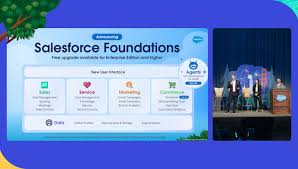
Salesforce Foundations

How Salesforce Foundations Helps Nonprofits Achieve More with Less

The Nonprofit Resource Challenge Nonprofits constantly walk a tightrope – balancing ambitious missions with constrained resources. Staff shortages, tight budgets, and growing community needs create an ongoing struggle to maintain impact. How technology can help organizations break this cycle. Introducing Salesforce Foundations: Enterprise-Grade Tools at No Cost Salesforce Foundations is a zero-cost enhancement for qualifying Salesforce CRM users (Enterprise Edition and above) that brings powerful capabilities to resource-strapped organizations. At its core is Data Cloud, serving as the intelligent foundation that: While the suite includes Sales, Service, Commerce, and Data tools, we’ll focus on two game-changers: Agentforce AI assistants and Marketing Cloud Growth Edition. Agentforce: Your Always-On Digital Workforce Agentforce introduces AI-powered digital employees that work alongside your team to: Flexible, Risk-Free Adoption Marketing Cloud Growth: Professional Outreach Made Simple For nonprofits using patchwork solutions or manual processes, Marketing Cloud Growth provides: Real-World Transformations How Foundations creates tangible impact: Getting Started with Foundations Eligibility: Available to Power of Us participants and paid contract holdersSetup: Requires admin access via salesforce.com/crm/foundationsImplementation Tip: Consider working with a Salesforce partner for Data Cloud configuration The Bottom Line Salesforce Foundations represents a paradigm shift for nonprofits – offering enterprise-level technology at no cost to help organizations: ✓ Work smarter with AI augmentation✓ Engage supporters more effectively✓ Make data-driven decisions✓ Focus resources on mission delivery By embracing these tools, nonprofits can finally turn the “do more with less” challenge into an achievable reality. Like Related Posts Who is Salesforce? Who is Salesforce? Here is their story in their own words. From our inception, we’ve proudly embraced the identity of Read more Salesforce Marketing Cloud Transactional Emails Salesforce Marketing Cloud Transactional Emails are immediate, automated, non-promotional messages crucial to business operations and customer satisfaction, such as order Read more Salesforce Unites Einstein Analytics with Financial CRM Salesforce has unveiled a comprehensive analytics solution tailored for wealth managers, home office professionals, and retail bankers, merging its Financial Read more AI-Driven Propensity Scores AI plays a crucial role in propensity score estimation as it can discern underlying patterns between treatments and confounding variables Read more

Read More
agentforce digital workforce

Agentforce – The Digital Labor Market

Salesforce’s latest financial results delivered strong numbers, but the real story of the moment is Agentforce—a revolutionary step into the emerging Digital Labor market. CEO Marc Benioff has made it clear that this platform will be the centerpiece of Salesforce’s strategy moving into 2025. Financial Performance In Q3, Salesforce posted an impressive $9.44 billion in revenue, an 8% year-over-year increase, with net income rising 25% to $1.5 billion. Here’s the breakdown of revenue by cloud segment: The company also raised its revenue guidance for the fiscal year, now projecting .8– billion, up 8%–9% year-over-year. Following the announcement, Salesforce shares jumped 10%. Enter Agentforce: The Future of Work The post-earnings call focused heavily on Agentforce, which Benioff describes as more transformative than the data management market itself. Launched in late October, Agentforce has already secured 200 deals and boasts a significant pipeline of potential transactions. According to Benioff: “Agentforce is the next evolution of Salesforce—a platform where AI agents work alongside humans in a digital workforce, amplifying and augmenting human capabilities while delivering unparalleled speed.” Benioff envisions a world where these AI agents not only assist humans but also transform entire industries. He stated: “Agentforce will drive a new era of economic growth by unlocking a scalable digital workforce, providing businesses the ability to achieve both scale and efficiency simultaneously.” Early Adoption and Use Cases Agentforce’s potential is already being realized by customers across industries, including FedEx, Adecco, Accenture, ACE Hardware, IBM, and RBC Wealth Management. For instance: Internally, Salesforce has integrated Agentforce into its operations, using it to handle over 60 million help portal sessions and 2 million support cases annually. This internal transformation hints at broader industry impacts as businesses adopt Agentforce to automate and optimize workflows. Implications for the Workforce Benioff addressed how Agentforce will reshape traditional workforces, emphasizing that this shift doesn’t necessarily mean job losses. Instead, companies will need to rebalance their headcounts, focusing on areas critical for growth while automating routine tasks. Salesforce itself is hiring 1,400 sales account executives globally to capitalize on Agentforce’s growing demand. Benioff argued: “History has shown us that disruption brings new opportunities. Entire industries will emerge, fueled by creativity and innovation, as Agentforce enables organizations to solve challenges and reach new heights.” Competitive Landscape Salesforce faces competition in the AI agent space, particularly from Microsoft’s Copilot. However, Benioff was quick to point out that Salesforce’s AI solutions are deeply integrated with its platform and customer data, offering a unique advantage: “While others tout AI, Salesforce operates its company on its platform with low hallucination rates, thanks to training on 300 petabytes of real company data.” Looking Ahead As Salesforce heads into 2025, Agentforce is set to dominate its strategy. This shift mirrors past pivotal moments in tech, such as Microsoft’s 1995 pivot to the internet. Salesforce executives, led by Benioff, are laser-focused on driving Agentforce adoption, positioning it as the linchpin of the company’s growth and innovation. Chief Operating Officer Brian Millham reinforced this vision, highlighting the potential for Agentforce across all Salesforce clouds—from Service Cloud to Marketing Cloud and Data Cloud: “The initial 200 deals are just the tip of the iceberg. The opportunity ahead for Agentforce is massive.” Conclusion Salesforce’s Q3 results showcased strong financial performance, but the real excitement lies in Agentforce. By spearheading the Digital Labor revolution, Salesforce is not only reshaping its own operations but also helping businesses worldwide unlock new levels of productivity, innovation, and economic growth. As 2025 unfolds, all eyes will be on Salesforce to see how it delivers on this bold vision. Like Related Posts Who is Salesforce? Who is Salesforce? Here is their story in their own words. From our inception, we’ve proudly embraced the identity of Read more Salesforce Marketing Cloud Transactional Emails Salesforce Marketing Cloud Transactional Emails are immediate, automated, non-promotional messages crucial to business operations and customer satisfaction, such as order Read more Salesforce Unites Einstein Analytics with Financial CRM Salesforce has unveiled a comprehensive analytics solution tailored for wealth managers, home office professionals, and retail bankers, merging its Financial Read more AI-Driven Propensity Scores AI plays a crucial role in propensity score estimation as it can discern underlying patterns between treatments and confounding variables Read more

Read More
AI is Revolutionizing Salesforce

AI is Revolutionizing Salesforce

AI is Revolutionizing Salesforce: Transforming Sales Teams in the Era of AI Artificial Intelligence (AI) is reshaping the sales landscape, disrupting traditional processes, and redefining how businesses interact with customers. The rapid adoption of AI-native systems is altering how data is captured, how sales teams engage, and how the entire sales cycle is structured. The shift toward AI-driven solutions is fueling unprecedented opportunities for sales organizations to achieve more by doing less manual work. Success in this transformation will favor those who use AI to make smarter, data-driven decisions, shifting the focus from activities to meaningful achievements. From Rolodex to Real-Time Insights: The Evolution of Sales The history of sales is one of continual evolution. From the bartering days of ancient commerce to the introduction of Rolodexes in the mid-20th century, and later to early CRM tools like Act! and Siebel Systems, the industry has always innovated to meet changing customer needs. Salesforce’s arrival in 1999 brought CRM to the cloud, empowering sales teams with unparalleled accessibility. Yet, all these systems had one thing in common—they relied on human input. Logging calls, updating lead statuses, and noting feedback all depended on sales reps’ diligence. That dependency is now being disrupted by AI, which captures and processes data autonomously. AI-Native Systems: Capturing Context Without Human Input AI-native systems represent a seismic shift. Unlike traditional CRMs, these systems capture data in real-time without relying on human intervention. From emails and Slack messages to Zoom calls and social media interactions, AI aggregates unstructured data into actionable insights. This creates a rich, context-driven record of customer behavior, reducing reliance on manual entry and unlocking deeper understanding. Automating the Mundane: Eliminating Data Entry AI is erasing the inefficiencies of manual processes. Sales development representatives (SDRs) once spent countless hours cold-calling, sending follow-ups, and updating records—a monotonous grind that yielded limited value. Today, AI automates these tasks, enabling SDRs to focus on high-impact activities like relationship-building and deal-closing. This automation, often referred to as intelligent pipeline management, identifies prospects, crafts personalized outreach, and schedules meetings—effortlessly managing the early stages of the sales funnel. AI as a Partner: Voice Agents and Real-Time Coaching AI is not just automating tasks; it’s enhancing human performance. AI-powered voice agents can now assist sales reps during live calls by offering real-time coaching. When a prospect raises an objection, the AI provides instant suggestions based on historical data, empowering salespeople to respond more effectively. This real-time guidance helps sales teams navigate complex conversations with confidence, boosting close rates and accelerating results. Personalization at Scale: Tailored Engagement Across Pipelines Personalization has long been a cornerstone of effective sales, but AI has made it scalable. AI tools analyze customer behaviors and preferences, allowing sales teams to tailor messages, proposals, and outreach at an individual level—even for thousands of prospects. From detecting website visits to auto-generating customized content, AI enables hyper-relevant interactions that build stronger connections with leads and customers. Breaking Down Silos: Unifying Sales, Marketing, and Customer Success AI is bridging organizational divides. Historically, sales, marketing, and customer success operated in silos, each pursuing independent goals. AI aligns these functions around a shared understanding of the customer, fostering collaboration and a unified go-to-market strategy. By consolidating data from every customer touchpoint into a single system of record, AI empowers teams to work together seamlessly, ensuring a consistent and coordinated customer experience. Systems of Record for the AI Age: The Importance of Context Unlike traditional CRMs that rely on structured fields, AI-powered systems excel at capturing unstructured data—conversations, social media mentions, and survey responses. These systems provide the context sales teams need to make better decisions. This rich contextual data benefits not just sales but also product development, marketing, and customer success teams, enabling them to refine strategies and create more responsive organizations. Redefining Metrics: From Activities to Achievements Traditional sales metrics often emphasized activity—calls made, emails sent, meetings booked. AI is shifting the focus to outcomes. By tracking the quality and impact of interactions, rather than the volume, sales leaders can better understand what drives success and optimize their strategies accordingly. The Future of Sales: Empowered by AI AI is not replacing salespeople; it’s empowering them. By automating repetitive tasks and delivering actionable insights, AI frees up teams to focus on building relationships, solving problems, and closing deals. To thrive in this new era, organizations must embrace AI as a core part of their strategy. The question for sales leaders is no longer whether to adopt AI but how quickly they can leverage it to gain a competitive edge. Embrace the future of sales—where intelligent systems drive outcomes, and human ingenuity takes center stage. AI is revolutionizing Salesforce by helping businesses improve customer relationships, streamline operations, and make better decisions: Like Related Posts Who is Salesforce? Who is Salesforce? Here is their story in their own words. From our inception, we’ve proudly embraced the identity of Read more Salesforce Marketing Cloud Transactional Emails Salesforce Marketing Cloud Transactional Emails are immediate, automated, non-promotional messages crucial to business operations and customer satisfaction, such as order Read more Salesforce Unites Einstein Analytics with Financial CRM Salesforce has unveiled a comprehensive analytics solution tailored for wealth managers, home office professionals, and retail bankers, merging its Financial Read more AI-Driven Propensity Scores AI plays a crucial role in propensity score estimation as it can discern underlying patterns between treatments and confounding variables Read more

Read More

What Are Sales Channels?

Sales channels are the platforms or methods through which a business sells its products or services to customers. These channels can be direct (e.g., e-commerce sites and retail stores) or indirect (e.g., resellers and marketplaces). Some businesses rely on a single channel, while others use a mix of several.

Read More
gen z and retail travel

Gen Z and Retail Travel Insights

Is Travel Retail Ready for Gen Z? New Research Highlights Gaps in Alignment The latest research from Swiss-based travel retail agency m1nd-set sheds light on the shopping and travel behaviors of Gen Z—a group poised to become the largest segment of traveling shoppers within the next few years. The findings reveal a pressing need for the travel retail industry to better align its offerings with the unique expectations and values of this influential generation. Gen Z: A Generation with Distinct Values and Habits Peter Mohn, CEO and Owner of m1nd-set, emphasized the importance of prioritizing Gen Z consumers, noting their markedly different behaviors compared to other generations. “Like the focus placed on Millennials and Chinese consumers in recent years, it’s critical to give equal or greater attention to Gen Z. This generation exhibits distinct traits, particularly in their consumer habits, lifestyle preferences, and media consumption,” Mohn said. Key insights from m1nd-set’s research include: How Gen Z is Reshaping Travel and Retail The research highlights how Gen Z is redefining the travel industry by prioritizing experiences that are authentic, eco-conscious, and culturally meaningful over traditional luxury goods and activities. “Gen Zs are reshaping tourism,” Mohn explained, “by focusing on flexible, short-haul travel and unique experiences. They spend a significant portion of their budgets on international travel, favoring local and sustainable options over dining or shopping at home. Cultural experiences resonate far more than nightlife or traditional tourism.” Key data points from m1nd-set’s study include: Challenges in Engaging Gen Z in Travel Retail Despite their growing presence, the research highlights key challenges in converting Gen Z travelers into loyal shoppers in duty-free and travel retail spaces: Opportunities for Travel Retail: Winning Over Gen Z Mohn emphasized the vital role of shop floor sales staff in boosting Gen Z conversion rates, noting that interactions with staff positively influence purchase decisions for over 70% of Gen Z shoppers who engage with them. To capture the attention of this discerning generation, m1nd-set recommends that travel retail businesses: A Generation of Growing Influence By 2030, Gen Z and their successors, Gen Alpha, are expected to spend three times as much as all other generations combined. Currently, Gen Z already wields a staggering $200 billion in spending power, solidifying their position as a key demographic for travel retail. However, to fully tap into this potential, the industry must evolve quickly to meet the demands of this purpose-driven, tech-savvy, and sustainability-focused generation. As Mohn concluded, “Travel retail must become more than just a place to shop—it should be an engaging, socially conscious destination that resonates deeply with Gen Z values.” Like Related Posts Who is Salesforce? Who is Salesforce? Here is their story in their own words. From our inception, we’ve proudly embraced the identity of Read more Salesforce Marketing Cloud Transactional Emails Salesforce Marketing Cloud Transactional Emails are immediate, automated, non-promotional messages crucial to business operations and customer satisfaction, such as order Read more Salesforce Unites Einstein Analytics with Financial CRM Salesforce has unveiled a comprehensive analytics solution tailored for wealth managers, home office professionals, and retail bankers, merging its Financial Read more AI-Driven Propensity Scores AI plays a crucial role in propensity score estimation as it can discern underlying patterns between treatments and confounding variables Read more

Read More
AI Inference vs. Training

AI Inference vs. Training

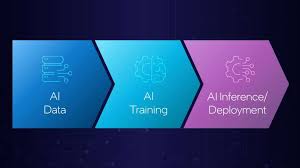
AI Inference vs. Training: Key Differences and Tradeoffs AI training and inference are the foundational phases of machine learning, each with distinct objectives and resource demands. Optimizing the balance between the two is crucial for managing costs, scaling models, and ensuring peak performance. Here’s a closer look at their roles, differences, and the tradeoffs involved. Understanding Training and Inference Key Differences Between Training and Inference 1. Compute Costs 2. Resource and Latency Considerations Strategic Tradeoffs Between Training and Inference Key Considerations for Balancing Training and Inference As AI technology evolves, hardware advancements may narrow the gap in resource requirements between training and inference. Nonetheless, the key to effective machine learning systems lies in strategically balancing the demands of both processes to meet specific goals and constraints. Like1 Related Posts Who is Salesforce? Who is Salesforce? Here is their story in their own words. From our inception, we’ve proudly embraced the identity of Read more Salesforce Unites Einstein Analytics with Financial CRM Salesforce has unveiled a comprehensive analytics solution tailored for wealth managers, home office professionals, and retail bankers, merging its Financial Read more AI-Driven Propensity Scores AI plays a crucial role in propensity score estimation as it can discern underlying patterns between treatments and confounding variables Read more Tectonic’s Successful Salesforce Track Record Salesforce Technology Services Integrator – Tectonic has successfully delivered Salesforce in a variety of industries including Public Sector, Hospitality, Manufacturing, Read more
Read More
Ready or Not Here AI Agents Come

Ready or Not Here AI Agents Come

As organizations embrace the growing presence of AI agents, leaders must address concerns about allowing autonomous systems to operate in sensitive environments. AI agents, often viewed as the future of how enterprises deploy large language models, raise important questions around security and identity management. The rise of agentic AI has been notable in 2024, with Google launching its Vertex AI Agents, Salesforce introducing Agentforce, and AWS rolling out the re Agent for Amazon Bedrock. These agents promise to deliver significant value by executing tasks using natural language commands, reasoning through the best solutions, and taking action without human intervention. However, as Katie Norton, research manager for DevSecOps & Software Supply Chain Security at IDC, highlighted at Venafi’s Machine Identity Conference, AI agents present unique security challenges. Unlike robotic process automation (RPA), AI agents act autonomously, creating a need for secure machine identities, especially as they access sensitive data across multiple systems. Matt McLarty, CTO at Boomi, added that the complexity of managing agentic AI revolves around ensuring proper authentication and authorization. He pointed out scenarios where agents dynamically interact with systems, such as opening support tickets, which require secure verification of agent access rights. While these agents offer significant potential, businesses are not yet prepared to issue credentials for autonomous agents, according to McLarty. The current reliance on existing authentication and authorization systems needs to evolve to support these new AI capabilities. He also emphasized the importance of pairing agents with human oversight, ensuring that access and actions are traceable. As AI advances into its third wave, characterized by autonomous agents capable of reasoning and action, companies need to rethink their approaches to workforce collaboration. These agents will handle low-value, time-consuming tasks, while human workers focus on strategic initiatives. In sales, for example, AI agents will manage customer interactions, schedule meetings, and resolve basic issues, allowing salespeople to build deeper relationships. At Dreamforce 2024, Salesforce unveiled Agentforce, a platform that empowers organizations to build and deploy customized AI agents across service, sales, marketing, and commerce. This suite aims to increase efficiency, productivity, and customer satisfaction. However, for AI agents to succeed, they must complement human skills and operate within established guardrails. Organizations need to implement audit trails to ensure accountability and develop training programs for employees to effectively collaborate with AI. Ultimately, the future of work will feature a hybrid workforce where humans and AI agents work together to drive innovation and success. As companies move forward, they must ensure AI agents understand their limits and recognize when human intervention is necessary. This balance between AI-driven efficiency and human oversight will enable businesses to thrive in an ever-evolving landscape. Like Related Posts Who is Salesforce? Who is Salesforce? Here is their story in their own words. From our inception, we’ve proudly embraced the identity of Read more Salesforce Marketing Cloud Transactional Emails Salesforce Marketing Cloud Transactional Emails are immediate, automated, non-promotional messages crucial to business operations and customer satisfaction, such as order Read more Salesforce Unites Einstein Analytics with Financial CRM Salesforce has unveiled a comprehensive analytics solution tailored for wealth managers, home office professionals, and retail bankers, merging its Financial Read more AI-Driven Propensity Scores AI plays a crucial role in propensity score estimation as it can discern underlying patterns between treatments and confounding variables Read more

Read More
gettectonic.com