Cost Efficiency Archives - gettectonic.com - Page 2
Generative AI Energy Consumption Rises

Generative AI Energy Consumption Rises

Generative AI Energy Consumption Rises, but Impact on ROI Unclear The energy costs associated with generative AI (GenAI) are often overlooked in enterprise financial planning. However, industry experts suggest that IT leaders should account for the power consumption that comes with adopting this technology. When building a business case for generative AI, some costs are evident, like large language model (LLM) fees and SaaS subscriptions. Other costs, such as preparing data, upgrading cloud infrastructure, and managing organizational changes, are less visible but significant. Generative AI Energy Consumption Rises One often overlooked cost is the energy consumption of generative AI. Training LLMs and responding to user requests—whether answering questions or generating images—demands considerable computing power. These tasks generate heat and necessitate sophisticated cooling systems in data centers, which, in turn, consume additional energy. Despite this, most enterprises have not focused on the energy requirements of GenAI. However, the issue is gaining more attention at a broader level. The International Energy Agency (IEA), for instance, has forecasted that electricity consumption from data centers, AI, and cryptocurrency could double by 2026. By that time, data centers’ electricity use could exceed 1,000 terawatt-hours, equivalent to Japan’s total electricity consumption. Goldman Sachs also flagged the growing energy demand, attributing it partly to AI. The firm projects that global data center electricity use could more than double by 2030, fueled by AI and other factors. ROI Implications of Energy Costs The extent to which rising energy consumption will affect GenAI’s return on investment (ROI) remains unclear. For now, the perceived benefits of GenAI seem to outweigh concerns about energy costs. Most businesses have not been directly impacted, as these costs tend to affect hyperscalers more. For instance, Google reported a 13% increase in greenhouse gas emissions in 2023, largely due to AI-related energy demands in its data centers. Scott Likens, PwC’s global chief AI engineering officer, noted that while energy consumption isn’t a barrier to adoption, it should still be factored into long-term strategies. “You don’t take it for granted. There’s a cost somewhere for the enterprise,” he said. Energy Costs: Hidden but Present Although energy expenses may not appear on an enterprise’s invoice, they are still present. Generative AI’s energy consumption is tied to both model training and inference—each time a user makes a query, the system expends energy to generate a response. While the energy used for individual queries is minor, the cumulative effect across millions of users can add up. How these costs are passed to customers is somewhat opaque. Licensing fees for enterprise versions of GenAI products likely include energy costs, spread across the user base. According to PwC’s Likens, the costs associated with training models are shared among many users, reducing the burden on individual enterprises. On the inference side, GenAI vendors charge for tokens, which correspond to computational power. Although increased token usage signals higher energy consumption, the financial impact on enterprises has so far been minimal, especially as token costs have decreased. This may be similar to buying an EV to save on gas but spending hundreds and losing hours at charging stations. Energy as an Indirect Concern While energy costs haven’t been top-of-mind for GenAI adopters, they could indirectly address the issue by focusing on other deployment challenges, such as reducing latency and improving cost efficiency. Newer models, such as OpenAI’s GPT-4o mini, are more economical and have helped organizations scale GenAI without prohibitive costs. Organizations may also use smaller, fine-tuned models to decrease latency and energy consumption. By adopting multimodel approaches, enterprises can choose models based on the complexity of a task, optimizing for both speed and energy efficiency. The Data Center Dilemma As enterprises consider GenAI’s energy demands, data centers face the challenge head-on, investing in more sophisticated cooling systems to handle the heat generated by AI workloads. According to the Dell’Oro Group, the data center physical infrastructure market grew in the second quarter of 2024, signaling the start of the “AI growth cycle” for infrastructure sales, particularly thermal management systems. Liquid cooling, more efficient than air cooling, is gaining traction as a way to manage the heat from high-performance computing. This method is expected to see rapid growth in the coming years as demand for AI workloads continues to increase. Nuclear Power and AI Energy Demands To meet AI’s growing energy demands, some hyperscalers are exploring nuclear energy for their data centers. AWS, Google, and Microsoft are among the companies exploring this option, with AWS acquiring a nuclear-powered data center campus earlier this year. Nuclear power could help these tech giants keep pace with AI’s energy requirements while also meeting sustainability goals. I don’t know. It seems like if you akin AI accessibility to more nuclear power plants you would lose a lot of fans. As GenAI continues to evolve, both energy costs and efficiency are likely to play a greater role in decision-making. PwC has already begun including carbon impact as part of its GenAI value framework, which assesses the full scope of generative AI deployments. “The cost of carbon is in there, so we shouldn’t ignore it,” Likens said. Generative AI Energy Consumption Rises Like Related Posts Who is Salesforce? Who is Salesforce? Here is their story in their own words. From our inception, we’ve proudly embraced the identity of Read more Salesforce Unites Einstein Analytics with Financial CRM Salesforce has unveiled a comprehensive analytics solution tailored for wealth managers, home office professionals, and retail bankers, merging its Financial Read more AI-Driven Propensity Scores AI plays a crucial role in propensity score estimation as it can discern underlying patterns between treatments and confounding variables Read more Tectonic’s Successful Salesforce Track Record Salesforce Technology Services Integrator – Tectonic has successfully delivered Salesforce in a variety of industries including Public Sector, Hospitality, Manufacturing, Read more


Read More
GPUs and AI Development

GPUs and AI Development

Graphics processing units (GPUs) have become widely recognized due to their growing role in AI development. However, a lesser-known but critical technology is also gaining attention: high-bandwidth memory (HBM). HBM is a high-density memory designed to overcome bottlenecks and maximize data transfer speeds between storage and processors. AI chipmakers like Nvidia rely on HBM for its superior bandwidth and energy efficiency. Its placement next to the GPU’s processor chip gives it a performance edge over traditional server RAM, which resides between storage and the processing unit. HBM’s ability to consume less power makes it ideal for AI model training, which demands significant energy resources. However, as the AI landscape transitions from model training to AI inferencing, HBM’s widespread adoption may slow. According to Gartner’s 2023 forecast, the use of accelerator chips incorporating HBM for AI model training is expected to decline from 65% in 2022 to 30% by 2027, as inferencing becomes more cost-effective with traditional technologies. How HBM Differs from Other Memory HBM shares similarities with other memory technologies, such as graphics double data rate (GDDR), in delivering high bandwidth for graphics-intensive tasks. But HBM stands out due to its unique positioning. Unlike GDDR, which sits on the printed circuit board of the GPU, HBM is placed directly beside the processor, enhancing speed by reducing signal delays caused by longer interconnections. This proximity, combined with its stacked DRAM architecture, boosts performance compared to GDDR’s side-by-side chip design. However, this stacked approach adds complexity. HBM relies on through-silicon via (TSV), a process that connects DRAM chips using electrical wires drilled through them, requiring larger die sizes and increasing production costs. According to analysts, this makes HBM more expensive and less efficient to manufacture than server DRAM, leading to higher yield losses during production. AI’s Demand for HBM Despite its manufacturing challenges, demand for HBM is surging due to its importance in AI model training. Major suppliers like SK Hynix, Samsung, and Micron have expanded production to meet this demand, with Micron reporting that its HBM is sold out through 2025. In fact, TrendForce predicts that HBM will contribute to record revenues for the memory industry in 2025. The high demand for GPUs, especially from Nvidia, drives the need for HBM as AI companies focus on accelerating model training. Hyperscalers, looking to monetize AI, are investing heavily in HBM to speed up the process. HBM’s Future in AI While HBM has proven essential for AI training, its future may be uncertain as the focus shifts to AI inferencing, which requires less intensive memory resources. As inferencing becomes more prevalent, companies may opt for more affordable and widely available memory solutions. Experts also see HBM following the same trajectory as other memory technologies, with continuous efforts to increase bandwidth and density. The next generation, HBM3E, is already in production, with HBM4 planned for release in 2026, promising even higher speeds. Ultimately, the adoption of HBM will depend on market demand, especially from hyperscalers. If AI continues to push the limits of GPU performance, HBM could remain a critical component. However, if businesses prioritize cost efficiency over peak performance, HBM’s growth may level off. Like Related Posts Who is Salesforce? Who is Salesforce? Here is their story in their own words. From our inception, we’ve proudly embraced the identity of Read more Salesforce Unites Einstein Analytics with Financial CRM Salesforce has unveiled a comprehensive analytics solution tailored for wealth managers, home office professionals, and retail bankers, merging its Financial Read more AI-Driven Propensity Scores AI plays a crucial role in propensity score estimation as it can discern underlying patterns between treatments and confounding variables Read more Tectonic’s Successful Salesforce Track Record Salesforce Technology Services Integrator – Tectonic has successfully delivered Salesforce in a variety of industries including Public Sector, Hospitality, Manufacturing, Read more

Read More
AI Agents

Gen AI and Software Development

The Future of Software Development with Generative AI Imagine developing software products at unprecedented speed and cost efficiency, allowing your company to test more ideas with real—and even virtual—customers. This capability could accelerate the time to market for targeted products while minimizing risk and resource waste. Generative AI (GenAI) is making this vision a reality. But how exactly will AI-powered product development work? We propose a four-stage framework that leverages GenAI to streamline today’s labor-intensive processes. The Challenge with Traditional Software Development As Marty Cagan of Silicon Valley Product Group has pointed out, most companies still rely on a lengthy, complex software development cycle. Typically, it follows this pattern: This approach is expensive and fraught with risk. Predicting a product’s ROI before release is notoriously inaccurate. Additionally, testing product designs with real users is both time-consuming and costly. If a final product fails to attract customers, the company loses valuable time, money, and human effort—something we’ve seen in cases like Quibi and Clubhouse. To mitigate these risks, some firms have embraced iterative development, involving end users early in the process and continuously refining their solutions. While this method improves outcomes, GenAI offers the potential to revolutionize the entire approach. How GenAI Transforms Software Development GenAI moves beyond traditional A/B testing and incremental improvements. Consider the perspective of Nikita Bier, Product Growth Partner at Lightspeed Venture Partners, who recently stated: “No, I just ship the app—and if it’s not ranked in the Apple Store, I change it until it is.” This mindset—enabled by GenAI—suggests a more agile, data-driven approach to product development, where software is rapidly iterated based on real-world feedback. We propose a simplified four-step framework that highlights GenAI’s role in transforming each stage: 1. User Research Today: Companies analyze user problems, market needs, and contextual factors to determine why a product should be built. With GenAI: AI can simulate realistic consumer behavior, reducing the need for expensive user research. For example, a recent study used OpenAI’s GPT-3.5 to predict laptop purchasing decisions based on simulated income levels. The AI accurately adjusted its price sensitivity based on whether it “earned” $50,000 or $120,000 annually—mimicking real consumer behavior. 2. Design Today: Product teams develop solutions, mapping interactions between users and the product. With GenAI: AI can translate ideas into designs for different types of creators. Visual thinkers can sketch concepts, which AI converts into formal design assets. Those who work better with words can use AI tools like Galileo and Genius to generate wireframes from natural language descriptions—seamlessly integrating with design platforms like Figma. 3. Build Today: Developers determine how the product’s components fit together, writing code to bring it to life. With GenAI: AI can generate functional software code with minimal human input. For instance, aerospace engineer Brandon Starr used a single sentence—“Create a bunny-themed Flappy Bird as an iOS app”—to instruct Replit Agent, which then built the app autonomously. 4. Learn Today: Companies analyze product performance and user feedback to refine future iterations. With GenAI: AI will integrate with top-tier product analytics tools, synthesizing data to automate improvements, rebuilds, and relaunches. As Wharton professor Ethan Mollick has demonstrated, GPT’s advanced data analysis capabilities can already perform this type of iterative optimization. The Future of AI-Powered Development What about traditional product development steps like market research, segmentation, and feature prioritization? Some will be absorbed into these four stages, while others—like extensive market analysis—will become less critical as development accelerates. An even more transformative shift is on the horizon: natural language interfaces that guide product developers through the entire process. Imagine describing a vague product idea, and AI not only builds it but also evaluates its business viability. This shift could redefine how companies structure development teams—or even empower individuals to create software on demand, much like smartphones democratized video production. As GenAI pioneers the next frontier, software development is poised to become one of its most revolutionary applications. Like Related Posts Who is Salesforce? Who is Salesforce? Here is their story in their own words. From our inception, we’ve proudly embraced the identity of Read more Salesforce Unites Einstein Analytics with Financial CRM Salesforce has unveiled a comprehensive analytics solution tailored for wealth managers, home office professionals, and retail bankers, merging its Financial Read more AI-Driven Propensity Scores AI plays a crucial role in propensity score estimation as it can discern underlying patterns between treatments and confounding variables Read more Tectonic’s Successful Salesforce Track Record Salesforce Technology Services Integrator – Tectonic has successfully delivered Salesforce in a variety of industries including Public Sector, Hospitality, Manufacturing, Read more

Read More
Healthcare Cloud Computing

Healthcare Cloud Computing

Cloud Computing in Healthcare: Ensuring HIPAA Compliance Amid Growing Adoption As healthcare organizations increasingly turn to cloud computing for scalable and accessible IT services, ensuring HIPAA compliance remains a top priority. The global healthcare cloud computing market is projected to grow from $53.8 billion in 2024 to $120.6 billion by 2029, according to a MarketsandMarkets report. A 2023 Forrester report also highlighted that healthcare organizations are spending an average of .5 million annually on cloud services, with public cloud adoption on the rise. While cloud computing offers benefits like enhanced data mobility and cost efficiency, maintaining a HIPAA-compliant relationship with cloud service providers (CSPs) requires careful attention to regulations, establishing business associate agreements (BAAs), and proactively addressing cloud security risks. Understanding HIPAA’s Role in Cloud Computing The National Institute of Standards and Technology (NIST) defines cloud computing as a model that provides on-demand access to shared computing resources. Based on this framework, the U.S. Department of Health and Human Services (HHS) Office for Civil Rights (OCR) has issued guidance on how HIPAA’s Security, Privacy, and Breach Notification Rules apply to cloud computing. Under the HIPAA Security Rule, CSPs classified as business associates must adhere to specific standards for safeguarding protected health information (PHI). This includes mitigating the risks of unauthorized access to administrative tools and implementing internal controls to restrict access to critical operations like storage and memory. HIPAA’s Privacy Rule further restricts the use or disclosure of PHI by CSPs, even in cases where they offer “no-view services.” CSPs cannot block a covered entity’s access to PHI, even in the event of a payment dispute. Additionally, the Breach Notification Rule requires business associates, including CSPs, to promptly report any breach of unsecured PHI. Healthcare organizations engaging with CSPs should consult legal counsel and follow standard procedures for establishing HIPAA-compliant vendor relationships. The Importance of Business Associate Agreements (BAAs) A BAA is essential for ensuring that a CSP is contractually bound to comply with HIPAA. OCR emphasizes that when a covered entity engages a CSP to create, receive, or transmit electronic PHI (ePHI), the CSP becomes a business associate under HIPAA. Even if the CSP cannot access encrypted PHI, it is still classified as a business associate due to its involvement in storing and processing PHI. In 2016, the absence of a BAA led to a .7 million settlement between Oregon Health & Science University and OCR after the university stored the PHI of over 3,000 individuals on a cloud server without the required agreement. BAAs play a crucial role in defining the permitted uses of PHI and ensure that both the healthcare organization and CSP understand their responsibilities under HIPAA. They also outline protocols for breach notifications and security measures, ensuring both parties are aligned on handling potential security incidents. Key Cloud Security Considerations Despite the protections of a BAA, there are inherent risks in partnering with any new vendor. Staying informed on cloud security threats is vital for mitigating potential risks proactively. In a 2024 report, the Cloud Security Alliance (CSA) identified misconfiguration, inadequate change control, and identity management as the top threats to cloud computing. The report also pointed to the rising sophistication of cyberattacks, supply chain risks, and the proliferation of ransomware-as-a-service as growing concerns. By understanding these risks and establishing clear security policies with CSPs, healthcare organizations can better safeguard their data. Prioritizing security, establishing robust BAAs, and ensuring HIPAA compliance will allow healthcare organizations to fully leverage the advantages of cloud computing while maintaining the privacy and security of patient information. Like Related Posts Who is Salesforce? Who is Salesforce? Here is their story in their own words. From our inception, we’ve proudly embraced the identity of Read more Salesforce Marketing Cloud Transactional Emails Salesforce Marketing Cloud Transactional Emails are immediate, automated, non-promotional messages crucial to business operations and customer satisfaction, such as order Read more Salesforce Unites Einstein Analytics with Financial CRM Salesforce has unveiled a comprehensive analytics solution tailored for wealth managers, home office professionals, and retail bankers, merging its Financial Read more AI-Driven Propensity Scores AI plays a crucial role in propensity score estimation as it can discern underlying patterns between treatments and confounding variables Read more

Read More
Conversational Commerce Explained

Conversational Commerce Explained

Conversational Commerce is a modern approach to customer engagement and sales that leverages chat-based interfaces (like messaging apps, chatbots, and voice assistants) to facilitate seamless, personalized, and real-time interactions between businesses and customers. It combines the power of conversational AI with e-commerce to create a more natural and interactive shopping experience. 1. What is Conversational Commerce? Conversational commerce allows customers to interact with brands through text or voice conversations instead of traditional methods like browsing websites or using apps. It enables businesses to engage with customers in a more personalized, immediate, and convenient way, often using tools like: 2. How Does Conversational Commerce Work? Conversational commerce uses Artificial Intelligence (AI), Natural Language Processing (NLP), and machine learning to understand and respond to customer queries. Here’s how it typically works: 3. Key Features of Conversational Commerce a) Personalization b) Real-Time Interaction c) Omnichannel Support d) Automation e) Seamless Transactions 4. Benefits of Conversational Commerce a) Improved Customer Experience b) Higher Engagement c) Increased Sales d) Cost Efficiency e) 24/7 Availability 5. Examples of Conversational Commerce a) Chatbots b) Voice Assistants c) Social Media Messaging d) In-App Messaging 6. Technologies Powering Conversational Commerce a) Artificial Intelligence (AI) b) Natural Language Processing (NLP) c) Machine Learning d) APIs and Integrations 7. The Future of Conversational Commerce 8. Challenges of Conversational Commerce In summary, conversational commerce is transforming the way businesses interact with customers by making shopping more conversational, personalized, and convenient. It’s a key trend in the future of e-commerce and customer engagement! Content updated February 2025. Like Related Posts Who is Salesforce? Who is Salesforce? Here is their story in their own words. From our inception, we’ve proudly embraced the identity of Read more Salesforce Marketing Cloud Transactional Emails Salesforce Marketing Cloud Transactional Emails are immediate, automated, non-promotional messages crucial to business operations and customer satisfaction, such as order Read more Salesforce Unites Einstein Analytics with Financial CRM Salesforce has unveiled a comprehensive analytics solution tailored for wealth managers, home office professionals, and retail bankers, merging its Financial Read more AI-Driven Propensity Scores AI plays a crucial role in propensity score estimation as it can discern underlying patterns between treatments and confounding variables Read more

Read More
Zero ETL

Zero ETL

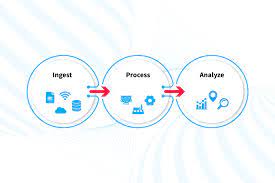
What is Zero-ETL? Zero-ETL represents a transformative approach to data integration and analytics by bypassing the traditional ETL (Extract, Transform, Load) pipeline. Unlike conventional ETL processes, which involve extracting data from various sources, transforming it to fit specific formats, and then loading it into a data repository, Zero-ETL eliminates these steps. Instead, it enables direct querying and analysis of data from its original source, facilitating real-time insights without the need for intermediate data storage or extensive preprocessing. This innovative method simplifies data management, reducing latency and operational costs while enhancing the efficiency of data pipelines. As the demand for real-time analytics and the volume of data continue to grow, ZETL offers a more agile and effective solution for modern data needs. Challenges Addressed by Zero-ETL Benefits of ZETL Use Cases for ZETL In Summary ZETL transforms data management by directly querying and leveraging data in its original format, addressing many limitations of traditional ETL processes. It enhances data quality, streamlines analytics, and boosts productivity, making it a compelling choice for modern organizations facing increasing data complexity and volume. Embracing Zero-ETL can lead to more efficient data processes and faster, more actionable insights, positioning businesses for success in a data-driven world. Components of Zero-ETL ZETL involves various components and services tailored to specific analytics needs and resources: Advantages and Disadvantages of ZETL Comparison: Z-ETL vs. Traditional ETL Feature Zero-ETL Traditional ETL Data Virtualization Seamless data duplication through virtualization May face challenges with data virtualization due to discrete stages Data Quality Monitoring Automated approach may lead to quality issues Better monitoring due to discrete ETL stages Data Type Diversity Supports diverse data types with cloud-based data lakes Requires additional engineering for diverse data types Real-Time Deployment Near real-time analysis with minimal latency Batch processing limits real-time capabilities Cost and Maintenance More cost-effective with fewer components More expensive due to higher computational and engineering needs Scale Scales faster and more economically Scaling can be slow and costly Data Movement Minimal or no data movement required Requires data movement to the loading stage Comparison: Zero-ETL vs. Other Data Integration Techniques Top Zero-ETL Tools Conclusion Transitioning to Zero-ETL represents a significant advancement in data engineering. While it offers increased speed, enhanced security, and scalability, it also introduces new challenges, such as the need for updated skills and cloud dependency. Zero-ETL addresses the limitations of traditional ETL and provides a more agile, cost-effective, and efficient solution for modern data needs, reshaping the landscape of data management and analytics. Like Related Posts Who is Salesforce? Who is Salesforce? Here is their story in their own words. From our inception, we’ve proudly embraced the identity of Read more Salesforce Unites Einstein Analytics with Financial CRM Salesforce has unveiled a comprehensive analytics solution tailored for wealth managers, home office professionals, and retail bankers, merging its Financial Read more AI-Driven Propensity Scores AI plays a crucial role in propensity score estimation as it can discern underlying patterns between treatments and confounding variables Read more Tectonic’s Successful Salesforce Track Record Salesforce Technology Services Integrator – Tectonic has successfully delivered Salesforce in a variety of industries including Public Sector, Hospitality, Manufacturing, Read more

Read More
Healthcare Cloud Marketplace

Healthcare Cloud Marketplace

Healthcare Cloud Computing Market: A Comprehensive Overview and Future Outlook Vantage Market Research Report: Insights into Healthcare Cloud Computing by 2030 WASHINGTON, D.C., February 6, 2024 /EINPresswire.com/ — The global Healthcare Cloud Marketplace was valued at USD 38.25 billion in 2022 and is projected to grow at a compound annual growth rate (CAGR) of 18.2% from 2023 to 2030, reaching approximately USD 145.86 billion by 2030, according to Vantage Market Research. This technology allows healthcare organizations to utilize cloud-based services for data storage, management, and analysis, providing numerous benefits such as cost efficiency, scalability, flexibility, security, and interoperability. It enhances healthcare delivery by enabling seamless data access and sharing across various locations, devices, and networks. Additionally, cloud computing supports the integration of advanced technologies like artificial intelligence, big data analytics, telehealth, and mobile health, driving progress in disease diagnosis, treatment, and prevention. Market Dynamics The market’s growth is fueled by several key factors, including the increasing demand for healthcare IT solutions, the rising prevalence of chronic diseases, the widespread adoption of electronic health records (EHRs), and evolving payment models and regulatory frameworks. The exponential increase in healthcare data, encompassing patient records, imaging scans, and research findings, necessitates scalable storage and analysis solutions. Cloud computing meets this need by providing flexible and scalable infrastructure, accommodating data growth without overburdening IT systems. The rise of telehealth and remote patient monitoring further boosts the demand for secure, cloud-based platforms that facilitate efficient data exchange. However, stringent data privacy regulations like HIPAA and GDPR require robust security measures, compelling healthcare organizations to seek cloud providers that offer strong compliance and access controls. This need for a balance between agility and security shapes the healthcare cloud computing market’s future trajectory. Leading Companies in the Global Healthcare Cloud Computing Market Market Segmentation By Product: By Deployment: By Component: By Pricing Model: By Service Model: Key Trends and Opportunities The healthcare cloud computing market is witnessing significant trends, including the adoption of hybrid and multi-cloud models, which combine the benefits of both public and private clouds. The integration of artificial intelligence (AI) and machine learning (ML) into cloud-based healthcare applications is opening new avenues for personalized medicine, clinical decision support, and drug discovery. Moreover, blockchain technology is emerging as a solution to enhance data security and patient privacy, addressing critical industry concerns. Key Findings: Opportunities: Healthcare Cloud Marketplace The healthcare cloud computing market is poised for robust growth, driven by the increasing demand for scalable and secure data management solutions. As healthcare organizations navigate challenges related to data privacy and security, robust cloud solutions and supportive government policies will be essential in unlocking the full potential of cloud computing in healthcare. Like Related Posts Who is Salesforce? Who is Salesforce? Here is their story in their own words. From our inception, we’ve proudly embraced the identity of Read more Salesforce Marketing Cloud Transactional Emails Salesforce Marketing Cloud Transactional Emails are immediate, automated, non-promotional messages crucial to business operations and customer satisfaction, such as order Read more Salesforce Unites Einstein Analytics with Financial CRM Salesforce has unveiled a comprehensive analytics solution tailored for wealth managers, home office professionals, and retail bankers, merging its Financial Read more AI-Driven Propensity Scores AI plays a crucial role in propensity score estimation as it can discern underlying patterns between treatments and confounding variables Read more

Read More
Data Cloud Credits

Data Cloud Credits

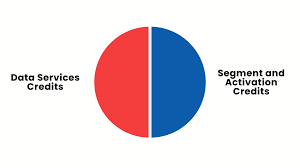
Credits are the currency of usage in Salesforce Data Cloud, where every action performed consumes credits. The consumption rate varies based on the complexity and compute cost of the action, reflecting different platform features. Data Cloud Pricing Model The pricing model for Data Cloud consists of three primary components: Data Service Credits Each platform action incurs a specific compute cost. For instance, processes like connecting, ingesting, transforming, and harmonizing data all consume ‘data service credits’. These credits are further divided into categories such as connect, harmonize, and activate, each encompassing multiple services with differing consumption rates. Segment and Activation Credits Apart from data service credits, ‘segment and activation credits’ are consumed based on the number of rows processed when publishing and activating segments. Monitoring Consumption Currently, Data Cloud users must request a consumption report from their Salesforce Account Executive to review credit and storage usage. However, the new Digital Wallet feature in the Summer ’24 Release will provide users with real-time monitoring capabilities. This includes tracking credit and storage consumption trends by usage type directly within the platform. Considerations and Best Practices To optimize credit consumption and ensure efficient use of resources, consider the following best practices: Final Thoughts Credits are integral to Data Cloud’s pricing structure, reflecting usage across various platform activities. Proactive monitoring through the Digital Wallet feature enables users to manage credits effectively, ensuring optimal resource allocation and cost efficiency. Content updated June 2024. Like Related Posts Who is Salesforce? Who is Salesforce? Here is their story in their own words. From our inception, we’ve proudly embraced the identity of Read more Salesforce Marketing Cloud Transactional Emails Salesforce Marketing Cloud Transactional Emails are immediate, automated, non-promotional messages crucial to business operations and customer satisfaction, such as order Read more Salesforce Unites Einstein Analytics with Financial CRM Salesforce has unveiled a comprehensive analytics solution tailored for wealth managers, home office professionals, and retail bankers, merging its Financial Read more AI-Driven Propensity Scores AI plays a crucial role in propensity score estimation as it can discern underlying patterns between treatments and confounding variables Read more

Read More
AI-Powered Data Management

AI-Powered Data Management

AI-Powered Data Management: Transforming Data into Strategic Assets What is AI Data Management? AI data management integrates artificial intelligence (AI) and machine learning (ML) to optimize data processes—automating workflows, improving accuracy, and unlocking deeper insights. By leveraging AI, organizations can enhance data quality, security, compliance, and analytics, making data more actionable for AI-driven applications. Key Capabilities of AI in Data Management 1. Intelligent Automation 2. Enhanced Data Quality 3. Advanced Security & Compliance 4. Smart Data Discovery & Classification 5. Predictive & Prescriptive Analytics Real-World Applications ✅ Automated Data Cleansing – AI validates and corrects data in real time, ensuring accuracy.✅ Intelligent Data Cataloging – AI scans and classifies data for easy retrieval and governance.✅ Predictive Modeling – Analyzes historical data to forecast trends (e.g., customer behavior, operational risks).✅ AI-Driven Cybersecurity – Monitors network activity to detect and block threats before they escalate. Business Benefits of AI Data Management 🔹 Higher Data Accuracy – Fewer errors, more reliable insights.🔹 Faster Decision-Making – AI extracts insights in seconds, not weeks.🔹 Cost Efficiency – Reduces manual labor and storage waste.🔹 Regulatory Readiness – Automates compliance reporting.🔹 Competitive Edge – Turns data into a strategic differentiator. The Future of AI in Data Management As AI evolves, expect: Conclusion AI-powered data management isn’t just an upgrade—it’s a paradigm shift. By integrating AI, organizations can automate workflows, enhance security, and extract unprecedented value from their data, positioning themselves ahead in the data-driven economy. Is your business ready to harness AI for smarter data management? Like Related Posts Who is Salesforce? Who is Salesforce? Here is their story in their own words. From our inception, we’ve proudly embraced the identity of Read more Salesforce Unites Einstein Analytics with Financial CRM Salesforce has unveiled a comprehensive analytics solution tailored for wealth managers, home office professionals, and retail bankers, merging its Financial Read more AI-Driven Propensity Scores AI plays a crucial role in propensity score estimation as it can discern underlying patterns between treatments and confounding variables Read more Tectonic’s Successful Salesforce Track Record Salesforce Technology Services Integrator – Tectonic has successfully delivered Salesforce in a variety of industries including Public Sector, Hospitality, Manufacturing, Read more

Read More
Why Do We Use OmniStudio in Salesforce

Why Do We Use OmniStudio in Salesforce?

OmniStudio in Salesforce offers significant advantages over traditional custom code and Lightning Web Components (LWC), providing a low-code development platform that accelerates application development, simplifies maintenance, and reduces costs. Why Do We Use OmniStudio in Salesforce? OmniStudio enables Salesforce organizations to achieve the following: Moreover, OmniStudio facilitates integration with enterprise data and external applications, simplifying the incorporation of diverse data sources into Salesforce environments. OmniStudio Action in Salesforce refers to its capability to rapidly develop and deploy digital-first experiences tailored to specific industries and channels. It enhances Salesforce’s ecosystem by extending functionality through its suite of tools. Differences Between OmniStudio and Vlocity: OmniStudio is developed by Salesforce and serves as an integrated low-code development environment within Salesforce’s platform. In contrast, Vlocity was a separate company offering industry-specific cloud and mobile software solutions built on the Salesforce platform before its acquisition by Salesforce. Vlocity solutions were deeply integrated but maintained a distinct focus on specific industry needs. Differences Between LWC and OmniStudio: While LWC involves traditional coding for building applications, providing flexibility and control over customization, OmniStudio operates within a visual development environment that emphasizes rapid application development without extensive coding. OmniStudio thus prioritizes speed and ease of use over the granular control offered by LWC. Disadvantages of OmniStudio: While OmniStudio simplifies development and maintenance, organizations must carefully manage project architecture and component naming conventions to avoid complexity and ensure project clarity. Additionally, older component versions may become obsolete if not managed properly within Salesforce’s development lifecycle tools. In summary, OmniStudio in Salesforce represents a robust toolset for organizations seeking agile application development and enhanced digital experiences without the overhead of extensive custom coding. Like Related Posts Who is Salesforce? Who is Salesforce? Here is their story in their own words. From our inception, we’ve proudly embraced the identity of Read more Salesforce Marketing Cloud Transactional Emails Salesforce Marketing Cloud Transactional Emails are immediate, automated, non-promotional messages crucial to business operations and customer satisfaction, such as order Read more Salesforce Unites Einstein Analytics with Financial CRM Salesforce has unveiled a comprehensive analytics solution tailored for wealth managers, home office professionals, and retail bankers, merging its Financial Read more AI-Driven Propensity Scores AI plays a crucial role in propensity score estimation as it can discern underlying patterns between treatments and confounding variables Read more

Read More
Cloud Analytics

Cloud Analytics Explained

Understanding Cloud Analytics Cloud analytics refers to leveraging cloud computing resources to conduct data analysis more efficiently. It involves using advanced analytical tools to extract insights from vast datasets, presenting information in a user-friendly format accessible via web browsers. Core Concepts of Cloud Analytics Explained Cloud analytics shifts traditional data analytics operations, such as processing and storage, to public or private cloud environments. Similar to on-premises analytics, cloud solutions facilitate pattern identification, predictive modeling, and business intelligence (BI) insights. They leverage cloud technologies and algorithms, notably artificial intelligence (AI), including machine learning (ML) and deep learning (DL). Operational Framework of Cloud-Based Analytics Cloud analytics platforms offer capabilities to build, deploy, scale, and manage data analytics solutions in a cloud-based infrastructure. Examples include cloud enterprise data warehouses, data lakes, and on-demand BI and marketing analytics. Users can subscribe to services under flexible pricing models, alleviating concerns about scalability, performance, and maintenance. Types of Cloud Analytics Cloud-based analytics solutions vary by deployment model: Key Features and Benefits Cloud analytics offers several advantages: Applications and Use Cases Cloud analytics supports diverse applications, including: Comparing Cloud Analytics with Traditional Data Analytics Cloud analytics leverages cloud infrastructure for scalable and flexible data processing, contrasting with traditional analytics tools deployed on-premises. This shift enhances agility and accessibility while reducing operational complexities and costs. Why Cloud Analytics Matters Cloud analytics empowers organizations to harness actionable insights efficiently, driving informed decision-making and competitive advantage. It streamlines operations, fosters collaboration, and enhances data reliability and strategic planning capabilities. Adopting cloud-based analytics enables businesses to transform data into valuable intelligence, fueling innovation and growth. By leveraging cloud-based resources, organizations can achieve operational excellence, secure data-driven insights, and maintain a competitive edge in today’s dynamic business landscape. Like Related Posts Who is Salesforce? Who is Salesforce? Here is their story in their own words. From our inception, we’ve proudly embraced the identity of Read more Salesforce Marketing Cloud Transactional Emails Salesforce Marketing Cloud Transactional Emails are immediate, automated, non-promotional messages crucial to business operations and customer satisfaction, such as order Read more Salesforce Unites Einstein Analytics with Financial CRM Salesforce has unveiled a comprehensive analytics solution tailored for wealth managers, home office professionals, and retail bankers, merging its Financial Read more AI-Driven Propensity Scores AI plays a crucial role in propensity score estimation as it can discern underlying patterns between treatments and confounding variables Read more

Read More
Revolutionizing Public Sector Efficiency

Revolutionizing Public Sector Efficiency

Salesforce: Transforming and Revolutionizing Public Sector Efficiency Salesforce, known worldwide as the premier CRM solution, continues to innovate with its adaptable features tailored to diverse audiences. It excels in delivering cutting-edge solutions, addressing unique needs across various industries and sectors. Particularly, the public sector stands to gain substantial benefits from Salesforce’s capabilities, offering a suite of solutions poised to optimize operations within any public office setting. Understanding the Role of Salesforce in the Public Sector The public sector encompasses the administrative segment responsible for managing essential citizen concerns at state, local, federal, and governmental agency levels. While carrying out critical tasks, these entities can significantly enhance efficiency with the right tools. Salesforce is dedicated to optimizing and streamlining processes within the public sector, recognizing its vital importance. Government offices face similar expectations to private enterprises, with citizens anticipating service quality on par with commercial experiences. Therefore, public entities must deliver efficiency, agility, and direct engagement to demonstrate proximity to the populace. In response to these expectations, Salesforce has developed a range of solutions tailored to the specific demands of the public sector. Revolutionizing Public Sector Efficiency Salesforce’s offerings for the public sector include meticulously crafted applications designed to meet its unique requirements. These flexible and secure e-government tools aim to revolutionize the sector’s experience, providing a comprehensive view of citizens and enhancing the efficacy of public employees. By simplifying processes and fostering innovation, these solutions drive efficiency at both organizational and individual levels, facilitating smoother operations. Integrated into Public Sector Solutions, these offerings leverage Salesforce’s standard functionalities and Service Cloud capabilities. Additionally, they enable the creation of an Experience Cloud site, allowing citizens seamless access to government services. Known as a Citizen Portal. Some of the available solutions cater to general tasks managed by public sector agencies, including: Thanks to these solutions, citizens can effortlessly navigate various processes, such as applying for licenses or permits. Through an online portal accessible at all times, individuals can interact seamlessly with public service agencies. Intelligent forms dynamically adjust based on user input, simplifying the submission process. From an employee standpoint, work processes are streamlined, with all citizen requests conveniently consolidated in one location. The system offers recommendations to guide employees, simplifies task delegation, and ensures seamless collaboration across departments. Key Advantages of Salesforce Solutions for the Public Sector Salesforce solutions offer numerous advantages to the public sector, aligning with citizens’ and employees’ current demands. These include: Salesforce emerges as an invaluable ally in the public sector’s modernization journey, transforming processes to be more agile and efficient. For organizations seeking to implement Salesforce solutions tailored for the public sector, the Tectonic team stands ready to assist. In the ever-evolving landscape of public administration and government services, the need for advanced, secure, and user-friendly technology solutions has never been more crucial. Enter Salesforce Public Sector Cloud—a dynamic platform designed to transform how government agencies engage with citizens, deliver services, and drive efficiency in their operations. Overview of Salesforce Public Sector Cloud: Salesforce Public Sector Cloud is a specialized offering tailored to meet the unique needs of government entities at all levels. Whether it’s federal, state, or local government agencies, the platform is engineered to enhance collaboration, streamline processes, and ultimately improve the delivery of public services. Key Features and Capabilities: Real-World Impact: Several government agencies have already embraced Salesforce Public Sector Cloud, realizing tangible benefits in their day-to-day operations. From improved citizen satisfaction to streamlined internal processes, the impact of this cloud solution is evident across various use cases. Challenges and Considerations: While Salesforce Public Sector Cloud offers numerous advantages, it’s essential to consider potential challenges. These may include customization complexities, data migration issues, and the need for comprehensive training for government personnel. A thoughtful and well-executed implementation strategy is crucial to overcoming these challenges. Salesforce Introduces Public Sector Einstein 1 for Service: Salesforce today announced Public Sector Einstein 1 for Service, including CRM, trusted AI, and data capabilities. What’s new in compliance: Salesforce also now offers several Federal Risk and Authorization Management Program (FedRAMP) compliant tools to help government agencies drive efficiency and productivity while meeting regulatory requirements. These tools include:  Content updated April 2024. Like Related Posts Who is Salesforce? Who is Salesforce? Here is their story in their own words. From our inception, we’ve proudly embraced the identity of Read more Salesforce Marketing Cloud Transactional Emails Salesforce Marketing Cloud Transactional Emails are immediate, automated, non-promotional messages crucial to business operations and customer satisfaction, such as order Read more Salesforce Unites Einstein Analytics with Financial CRM Salesforce has unveiled a comprehensive analytics solution tailored for wealth managers, home office professionals, and retail bankers, merging its Financial Read more AI-Driven Propensity Scores AI plays a crucial role in propensity score estimation as it can discern underlying patterns between treatments and confounding variables Read more

Read More

Maximizing Business Efficiency with Salesforce Managed Services

The Importance of Salesforce Optimization In today’s super fast-paced business world, companies rely on Salesforce to streamline operations and reduce costs. As a leading customer relationship management (CRM) platform, Salesforce enables organizations to enhance workflows, improve efficiency, and drive better results. To maximize the value of your Salesforce platform, optimization is essential. This involves fine tuning the system to ensure ease of use, eliminating inefficiencies, and enhancing overall performance. However, managing Salesforce effectively requires significant time and resources—this is where Salesforce Managed Services come in. This Tectonic insight explores how Managed Services can elevate your Salesforce experience, driving improved business performance and maximizing return on investment. What is Salesforce Optimization? Salesforce optimization focuses on refining the platform to better align with your business needs. It involves continuous improvements in system configuration, workflows, and integrations to ensure peak performance. Given that business requirements evolve over time, optimization is an ongoing process rather than a one-time task. Through Managed Services, businesses can fine-tune settings, enhance workflows, and ensure seamless system integrations, leading to increased productivity and efficiency. How to Optimize Salesforce for Maximum Efficiency Optimizing Salesforce involves refining data management, automation, user experience, and security. Key areas of focus include: 1. Data Model Optimization 2. Indexing and Query Optimization 3. Managing Governor Limits 4. Data Loading and Migration 5. UI and Lightning Experience Optimization 6. Reporting and Dashboard Optimization 7. Security and Access Control 8. Performance Monitoring and Analysis Challenges in Salesforce Optimization Optimizing Salesforce can be complex, and failing to manage it properly can hinder performance. Common challenges include: Why Continuous Salesforce Optimization is Essential Ongoing optimization ensures that businesses maximize their Salesforce investment, enabling: Understanding Salesforce Managed Services Salesforce Managed Services offer a proactive approach to CRM optimization. Instead of managing Salesforce in-house, businesses can outsource expert professionals to ensure seamless operations, enhanced security, and continuous improvement. Key Benefits of Managed Services How Managed Services Improve Salesforce Performance Salesforce Managed Services take a proactive approach to optimization, preventing issues before they arise. Key areas of impact include: 1. Proactive Monitoring & Maintenance 2. Customization & Automation 3. Enhanced Data Integrity & Security 4. Seamless Third-Party Integrations Maximizing ROI with Managed Salesforce Services Optimizing Salesforce through Managed Services yields significant business benefits, including cost savings, operational efficiency, and revenue growth. 1. Cost Efficiency 2. Faster Implementation & Deployment 3. Improved User Adoption & Productivity 4. Measurable Business Growth Conclusion Salesforce optimization is crucial for maintaining an efficient and scalable CRM. By leveraging Managed Services, businesses can enhance system performance, improve data security, and increase operational efficiency in a cost-effective manner. A dedicated Salesforce Managed Service Provider like Tectonic ensures streamlined operations, optimized configurations, and enhanced user adoption, ultimately driving business growth. Elevate Your Salesforce Performance As your business grows, managing and optimizing Salesforce becomes increasingly complex. Our Managed Services provide expert support, ensuring that your CRM remains optimized, secure, and scalable. Looking to enhance your Salesforce strategy? Contact us today to optimize your Salesforce instance and unlock its full potential. Like Related Posts Who is Salesforce? Who is Salesforce? Here is their story in their own words. From our inception, we’ve proudly embraced the identity of Read more Salesforce Marketing Cloud Transactional Emails Salesforce Marketing Cloud Transactional Emails are immediate, automated, non-promotional messages crucial to business operations and customer satisfaction, such as order Read more Salesforce Unites Einstein Analytics with Financial CRM Salesforce has unveiled a comprehensive analytics solution tailored for wealth managers, home office professionals, and retail bankers, merging its Financial Read more AI-Driven Propensity Scores AI plays a crucial role in propensity score estimation as it can discern underlying patterns between treatments and confounding variables Read more

Read More
Zendesk Launches AI Agent Builder

Scaling Your Salesforce Team with Staff Augmentation

As the demand for Salesforce experts continues to grow, businesses face challenges such as long hiring cycles, high recruitment costs, and skill shortages. These make it difficult to build a high-performing Salesforce team. However, there’s a smarter way to access top talent without the complexities of permanent hiring. The Power of Staff Augmentation Rather than relying on traditional Salesforce staffing firms, businesses can leverage staff augmentation to bring in experienced Salesforce professionals for short-term projects or ongoing support. This flexible approach helps organizations scale efficiently, reduce costs, and remain competitive. In this insight, we’ll explore how Salesforce staff augmentation enables businesses to build elite Salesforce teams and best practices for managing an augmented workforce. What Is Salesforce Staff Augmentation? Salesforce staff augmentation is a strategic staffing solution where companies hire external professionals to fill skill gaps temporarily or for specific projects. Instead of enduring lengthy hiring processes, firms can quickly onboard experienced Salesforce experts who match their project needs. Unlike outsourcing, which delegates entire projects to external agencies, staff augmentation keeps you in control—augmented professionals work alongside your internal team, ensuring seamless collaboration. Why Businesses Choose Staff Augmentation for Salesforce Teams Salesforce implementations, migrations, and customizations require specialized expertise. Companies are turning to staff augmentation because it offers a faster, more flexible alternative to traditional staffing agencies. Key Benefits: ✔ Immediate access to experts – No months-long recruitment process.✔ Cost efficiency – Avoid full-time salaries, benefits, and training expenses.✔ Scalability – Expand or reduce your team based on demand.✔ Expertise on demand – Get access to specialized skills without long-term commitments.✔ Seamless integration – Augmented staff work within your team, ensuring continuity. This model is ideal for companies facing fluctuating workloads, large-scale Salesforce projects, or critical skill gaps. Building a High-Performing Salesforce Team with Staff Augmentation Step 1: Identify the Skills You Need Before bringing in Salesforce professionals, define your requirements: By outlining these needs, you can ensure a smooth augmentation process and find professionals who align with your goals. Step 2: Choose the Right Staff Augmentation Partner Selecting a trusted staff augmentation provider is essential. Instead of relying on Salesforce staffing agencies, which often lack flexibility, choose a partner that provides on-demand Salesforce talent for both short-term and long-term projects. When evaluating partners, look for:✔ Salesforce talent expertise✔ Proven track record in placements✔ Flexible engagement models (short-term, long-term, or project-based)✔ Seamless onboarding and integration support By collaborating with a seasoned provider like Tectonic, companies can easily tap into pre-screened Salesforce professionals who match their project needs. Step 3: Ensure a Smooth Onboarding Process Once you’ve hired augmented staff, an effective onboarding process ensures smooth teamwork:✅ Provide access to essential tools and systems.✅ Define roles, responsibilities, and expectations.✅ Foster collaboration between in-house and augmented staff.✅ Assign mentors or key contacts for guidance. Structured onboarding enables augmented professionals to quickly contribute and stay aligned with your business objectives. Step 4: Continuously Evaluate and Optimize To maximize effectiveness, companies should regularly assess augmented professionals’ performance and impact: Optimizing your staff augmentation strategy over time ensures a high-performing Salesforce team that adapts to evolving business needs. Best Practices for Managing an Augmented Salesforce Team Unlike traditional Salesforce staffing firms, staff augmentation integrates professionals into daily operations rather than just placing hires. Encourage Collaboration Between In-House and Augmented Staff To ensure smooth communication and team cohesion:✔ Use collaboration tools like Slack, Microsoft Teams, or Salesforce Chatter.✔ Hold daily or weekly stand-ups to align goals.✔ Foster an inclusive culture where augmented staff feel valued.✔ Maintain clear guidelines for data access and security. Utilize Training and Upskilling Opportunities To maximize value, provide augmented staff with:✔ Salesforce training sessions and learning resources.✔ Opportunities to participate in internal knowledge-sharing.✔ Updates on new Salesforce features and releases. Upskilling both in-house and augmented professionals ensures your team remains highly skilled and adaptable. Overcoming Common Challenges in Staff Augmentation 1. Ensuring Smooth Team Integration 💡 Solution: Encourage open communication and structured onboarding to help new professionals integrate seamlessly. 2. Managing Security and Compliance Risks 💡 Solution: Implement Salesforce security best practices, such as role-based access control and Salesforce Shield to protect sensitive data. 3. Keeping External Talent Engaged and Motivated 💡 Solution: Provide incentives, involvement in key meetings, and professional development opportunities. 4. Addressing Communication Barriers 💡 Solution: Use structured meetings, clear guidelines, and collaboration tools to ensure seamless coordination. By leveraging Salesforce Shield, businesses can enhance security while ensuring compliance for external staff. Final Thoughts: Is Staff Augmentation Right for You? If your business needs immediate access to Salesforce expertise without long-term commitments, Salesforce staff augmentation is the perfect solution. By: …you can build a high-performing Salesforce team that drives your business forward. 💡 Need Salesforce specialists? Tectonic is a trusted Salesforce staff augmentation provider helping businesses scale efficiently and affordably. 📩 Ready to augment your Salesforce team? Contact us today to see how staff augmentation can transform your business! Like Related Posts Who is Salesforce? Who is Salesforce? Here is their story in their own words. From our inception, we’ve proudly embraced the identity of Read more Salesforce Marketing Cloud Transactional Emails Salesforce Marketing Cloud Transactional Emails are immediate, automated, non-promotional messages crucial to business operations and customer satisfaction, such as order Read more Salesforce Unites Einstein Analytics with Financial CRM Salesforce has unveiled a comprehensive analytics solution tailored for wealth managers, home office professionals, and retail bankers, merging its Financial Read more AI-Driven Propensity Scores AI plays a crucial role in propensity score estimation as it can discern underlying patterns between treatments and confounding variables Read more

Read More
gettectonic.com