CX Archives - gettectonic.com - Page 3
Democratize Data with Einstein Copilot for Tableau

What is Einstein in Tableau?

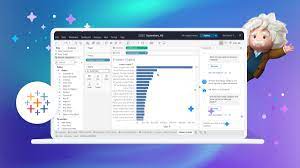
In the context of Tableau, “Einstein” refers to a suite of AI-powered features developed by Salesforce. These features, collectively known as Tableau Einstein, are designed to enhance Tableau’s capabilities by incorporating AI into various aspects of data analysis, from data preparation and visualization to prediction and recommendation.  Here’s a more detailed breakdown: In essence, Einstein in Tableau aims to empower users to make smarter decisions by incorporating AI into their data analysis workflows, providing insights, predictions, and recommendations that would otherwise be difficult or time-consuming to uncover manually. Like Related Posts Who is Salesforce? Who is Salesforce? Here is their story in their own words. From our inception, we’ve proudly embraced the identity of Read more Salesforce Marketing Cloud Transactional Emails Salesforce Marketing Cloud Transactional Emails are immediate, automated, non-promotional messages crucial to business operations and customer satisfaction, such as order Read more Salesforce Unites Einstein Analytics with Financial CRM Salesforce has unveiled a comprehensive analytics solution tailored for wealth managers, home office professionals, and retail bankers, merging its Financial Read more AI-Driven Propensity Scores AI plays a crucial role in propensity score estimation as it can discern underlying patterns between treatments and confounding variables Read more


Read More
Martech Modernization

Martech Modernization

Martech Modernization: The Trends, Challenges, and Opportunities A Snapshot of Martech Strategies and CDP Adoption According to research by Acxiom, 65% of companies with a defined martech strategy utilize a Customer Data Platform (CDP), compared to just 43% without one. This significant gap underscores the strategic role of CDPs in martech adoption. Additionally, nearly all businesses surveyed plan to revise their martech stack within the next 12 months, with 29% adding new tools and 15% consolidating existing ones. The Transformative Marketing Landscape Rapid technological advancements, changing customer expectations, and evolving identity ecosystems are fundamentally reshaping how brands engage their audiences. In this environment, modernizing martech has become essential for delivering the personalized experiences customers demand. However, modernization presents challenges such as siloed data, fragmented technologies, and gaps in expertise, complicating efforts to adapt. To gain insights into these dynamics, Acxiom surveyed 200 martech decision-makers from the US and UK about their modernization plans, motivations, and obstacles. The findings reveal a widespread push for martech updates, with brands seeking support to navigate this complex journey. SECTION ONE: A Martech Reset is Underway Martech Strategy Rises to the Top When asked to prioritize their marketing objectives, 34% of respondents listed developing a martech strategy among their top three goals. This places it alongside traditional objectives like increasing brand awareness and customer acquisition, reflecting its growing importance in achieving broader marketing goals. Even considering that survey respondents may prioritize martech more than the average business leader, the results highlight the industry’s dynamism and the pressing need for a martech reset. Widespread Stack Adjustments Nearly all surveyed businesses (99%) plan to adjust their martech stack in the next year. Key trends include: This widespread activity emphasizes the high priority placed on martech optimization. Streamlining and Experimentation Some organizations focus on refining their existing stacks, while others are piloting new platforms: C-Suite Engagement Martech modernization has also captured the attention of executive leadership. 60% of respondents noted that martech has become a higher priority for their C-suite in recent years, particularly in smaller companies leveraging technology to maximize resources and compete with larger rivals. Budget Increases Despite Economic Pressures In a challenging economic climate, 65% of respondents expect their martech budgets to grow over the next year, while only 10% foresee cuts. This trend reflects the recognition of martech as a strategic investment critical for maintaining competitiveness. SECTION TWO: Drivers of Martech Modernization Why Modernize? Modernization efforts are driven by a mix of goal-oriented and technical motivations. Key drivers include: Secondary motivations include streamlining integration, ensuring regulatory compliance, and reducing operational complexity. Key Takeaways As martech modernization accelerates, businesses must balance innovation with strategic planning to navigate this transformative era successfully. Like Related Posts Who is Salesforce? Who is Salesforce? Here is their story in their own words. From our inception, we’ve proudly embraced the identity of Read more Salesforce Marketing Cloud Transactional Emails Salesforce Marketing Cloud Transactional Emails are immediate, automated, non-promotional messages crucial to business operations and customer satisfaction, such as order Read more Salesforce Unites Einstein Analytics with Financial CRM Salesforce has unveiled a comprehensive analytics solution tailored for wealth managers, home office professionals, and retail bankers, merging its Financial Read more AI-Driven Propensity Scores AI plays a crucial role in propensity score estimation as it can discern underlying patterns between treatments and confounding variables Read more
Read More
Salesforce Maps Winter 25

Salesforce Maps Winter 25

The Salesforce Maps Winter 25 release will be available in production environments between October 29 – 31. Auto-Enablement of the new Maps experience in October To enhance your experience in Salesforce Maps on desktop, the new features currently available in all environments will be auto-enabled in the Winter ’25 release. The Enhanced User Experience setting in the admin configuration settings will remain and can be manually disabled until the Spring ‘25 release. Get Release Ready-Salesforce Maps Winter 25 To ensure a smooth transition, please take the following actions prior to the production release. What This Change Brings See Spring ’25 Updates Like Related Posts Who is Salesforce? Who is Salesforce? Here is their story in their own words. From our inception, we’ve proudly embraced the identity of Read more Salesforce Marketing Cloud Transactional Emails Salesforce Marketing Cloud Transactional Emails are immediate, automated, non-promotional messages crucial to business operations and customer satisfaction, such as order Read more Salesforce Unites Einstein Analytics with Financial CRM Salesforce has unveiled a comprehensive analytics solution tailored for wealth managers, home office professionals, and retail bankers, merging its Financial Read more AI-Driven Propensity Scores AI plays a crucial role in propensity score estimation as it can discern underlying patterns between treatments and confounding variables Read more

Read More
Transform Customer Experience

Transform Customer Experience

In today’s AI-driven business environment, customer experience (CX) has evolved from being a buzzword to a critical factor in determining success. It’s no longer enough for businesses to offer high-quality products or excellent service alone—today’s customers are always online, engaged, and seeking the most convenient, relevant, and enjoyable experiences. This is where Salesforce Data Cloud becomes a game-changer, providing the tools needed to meet modern customer expectations. Transforming Customer Experience with Salesforce Data Cloud Salesforce enables businesses to collect, integrate, and leverage critical customer information within its ecosystem, offering an all-encompassing view of each customer. This unified customer data allows organizations to forecast visitor trends, assess marketing impact, and predict customer behavior. As data-driven decision-making becomes increasingly central to business strategy, Salesforce Data Cloud and its Customer Data Platform (CDP) features provide a significant competitive edge—whether in e-commerce, fintech, or B2B industries. Data Cloud is more than just your traditional CDP. It’s the only data platform native to the world‘s #1 AI CRM. This means that marketers can quickly access and easily action on unified data – from across the entire business – to drive growth and increase customer lifetime value. Data Cloud’s Role in Enhancing CX By unifying data in one place, Salesforce Data Cloud enables organizations to access real-time customer insights. This empowers them to track customer activity across channels like email, social media, and online sales, facilitating targeted marketing strategies. Businesses can analyze customer behavior and deliver personalized messaging, aligning marketing, sales, and customer service efforts to ensure consistency. With these capabilities, Salesforce customers can elevate the CX by delivering the right content, at the right time, to the right audience, ultimately driving customer satisfaction and growth. New Features of Salesforce Data Cloud Salesforce continues to evolve, introducing cutting-edge features that reshape customer interaction: To fully maximize these features, partnering with a Salesforce Data Cloud consultant can help businesses unlock the platform’s full potential and refine their customer engagement strategies. Agentic AI Set to Supercharge Business Processes Salesforce’s vision extends beyond customer relationship management with the integration of Agentic AI through its Customer 360 platform. According to theCUBE Research analysts, this signals a shift toward using AI agents to automate complex business processes. These AI agents, built on Salesforce’s vast data resources, promise to revolutionize how companies operate, offering customized, AI-driven business tools. “If they can pull this off, where it becomes a more dynamic app platform, more personalized, really focused on those processes all the way back to the data, it’s going to be a clear win for them,” said Strechay. “They’re sitting on cloud; they’re sitting on IaaS. That’s a huge win from that perspective.” AI agents create a network of microservices that think and act independently, involving human intervention only when necessary. This division of labor allows businesses to capture expertise in routine tasks while freeing human workers to focus on more complex decision-making. However, the success of these AI agents depends on access to accurate and reliable data. As Gilbert explained, “Agents can call on other agents, and when they’re not confident of a step in a process or an outcome, they can then bounce up to an inbox for a human to supervise.” The goal isn’t to eliminate humans but to capture their expertise for simpler processes. Empowering Developers and Citizen Creators At the core of this AI-driven transformation is Salesforce’s focus on developers. The platform’s low-code tools allow businesses to easily customize AI agents and automate business processes, empowering both experienced developers and citizen creators. With simple language commands or goal-setting, companies can build and train these AI agents, streamlining operations. “It’s always going to be about good data—that’s the constant,” Bertrand said. “The second challenge is how to train agents and humans to work together effectively. While some entry-level jobs may be replaced, AI will continue to evolve, creating new opportunities in the future.” Is Salesforce Data Cloud the Right Fit for Your Business? Salesforce Data Cloud offers comprehensive capabilities for businesses of all sizes, but it’s essential to assess whether it aligns with your specific needs. The platform is particularly valuable for: For businesses that fit these scenarios, working with Salesforce’s partner ecosystem or a Data Cloud consultant can help ensure successful integration and optimization. What’s New in Salesforce’s Latest Release? The latest Salesforce Spring Release introduced several exciting features, further enhancing Salesforce Data Cloud: These updates reflect Salesforce’s commitment to providing innovative, data-driven solutions that enhance customer experiences and drive business success. Like Related Posts Who is Salesforce? Who is Salesforce? Here is their story in their own words. From our inception, we’ve proudly embraced the identity of Read more Salesforce Marketing Cloud Transactional Emails Salesforce Marketing Cloud Transactional Emails are immediate, automated, non-promotional messages crucial to business operations and customer satisfaction, such as order Read more Salesforce Unites Einstein Analytics with Financial CRM Salesforce has unveiled a comprehensive analytics solution tailored for wealth managers, home office professionals, and retail bankers, merging its Financial Read more AI-Driven Propensity Scores AI plays a crucial role in propensity score estimation as it can discern underlying patterns between treatments and confounding variables Read more

Read More
Latest on AI, CRM, and Data Innovations

Latest on AI, CRM, and Data Innovations

What’s Happening at Salesforce? The Latest on AI, CRM, and Data Innovations OneMagnify and CX Today have collaborated to explore the latest advancements in AI, CRM, and data at Salesforce. The Salesforce suite is evolving rapidly, driven by the emergence of generative AI, large language models, and increasingly diverse customer demands. Discover how Salesforce is adapting to this dynamic landscape, what the future holds for the industry giant, and how business leaders can maximize the potential of the Salesforce platform. Adam MacDonald, a Salesforce Solution Engineer at OneMagnify, emphasizes, “Organizations often struggle with Salesforce implementation when they fail to align internally and address data silos as the first step in their digital transformation. Defining the solution with the end goal in mind, while allowing for quick, focused wins, is a solid strategy for securing the long-term organizational buy-in essential for successful implementation.” Like Related Posts Who is Salesforce? Who is Salesforce? Here is their story in their own words. From our inception, we’ve proudly embraced the identity of Read more Salesforce Marketing Cloud Transactional Emails Salesforce Marketing Cloud Transactional Emails are immediate, automated, non-promotional messages crucial to business operations and customer satisfaction, such as order Read more Salesforce Unites Einstein Analytics with Financial CRM Salesforce has unveiled a comprehensive analytics solution tailored for wealth managers, home office professionals, and retail bankers, merging its Financial Read more AI-Driven Propensity Scores AI plays a crucial role in propensity score estimation as it can discern underlying patterns between treatments and confounding variables Read more

Read More
Battle of Copilots

Battle of Copilots

Salesforce is directly challenging Microsoft in the growing battle of AI copilots, which are designed to enhance customer experience (CX) across key business functions like sales and support. In this competitive landscape, Salesforce is taking on not only Microsoft but also major AI rivals such as Google Gemini, OpenAI GPT, and IBM watsonx. At the heart of this strategy is Salesforce Agentforce, a platform that leverages autonomous decision-making to meet enterprise demands for data and AI abstraction. Salesforce Dreamforce Highlights One of the most significant takeaways from last month’s Dreamforce conference in San Francisco was the unveiling of autonomous agents, bringing advanced GenAI capabilities to the app development process. CEO Marc Benioff and other Salesforce executives made it clear that Salesforce is positioning itself to compete with Microsoft’s Copilot, rebranding and advancing its own AI assistant, previously known as Einstein AI. Microsoft’s stronghold, however, lies in Copilot’s seamless integration with widely used products like Teams, Outlook, PowerPoint, and Word. Furthermore, Microsoft has established itself as a developer’s favorite, especially with GitHub Copilot and the Azure portfolio, which are integral to app modernization in many enterprises. “Salesforce faces an uphill battle in capturing market share from these established players,” says Charlotte Dunlap, Research Director at GlobalData. “Salesforce’s best chance lies in highlighting the autonomous capabilities of Agentforce—enabling businesses to automate more processes, moving beyond basic chatbot functions, and delivering a personalized customer experience.” This emphasis on autonomy is vital, given that many enterprises are still grappling with the complexities of emerging GenAI technologies. Dunlap points out that DevOps teams are struggling to find third-party expertise that understands how GenAI fits within existing IT systems, particularly around security and governance concerns. Salesforce’s focus on automation, combined with the integration prowess of MuleSoft, positions it as a key player in making GenAI tools more accessible and intuitive for businesses. Elevating AI Abstraction and Automation Salesforce has increasingly focused on the idea of abstracting data and AI, exemplified by its Data Cloud and low-level UI capabilities. Now, with models like the Atlas Reasoning Engine, Salesforce is looking to push beyond traditional AI assistants. These tools are designed to automate complex, previously human-dependent tasks, spanning functions like sales, service, and marketing. Simplifying the Developer Experience The true measure of Salesforce’s success in its GenAI strategy will emerge in the coming months. The company is well aware that its ability to simplify the developer experience is critical. Enterprises are looking for more than just AI innovation—they want thought leadership that can help secure budget and executive support for AI initiatives. Many companies report ongoing struggles in gaining that internal buy-in, further underscoring the importance of strong, strategic partnerships with technology providers like Salesforce. In its pursuit to rival Microsoft Copilot, Salesforce’s future hinges on how effectively it can build on its track record of simplifying the developer experience while promoting the unique autonomous qualities of Agentforce. Like Related Posts Who is Salesforce? Who is Salesforce? Here is their story in their own words. From our inception, we’ve proudly embraced the identity of Read more Salesforce Marketing Cloud Transactional Emails Salesforce Marketing Cloud Transactional Emails are immediate, automated, non-promotional messages crucial to business operations and customer satisfaction, such as order Read more Salesforce Unites Einstein Analytics with Financial CRM Salesforce has unveiled a comprehensive analytics solution tailored for wealth managers, home office professionals, and retail bankers, merging its Financial Read more AI-Driven Propensity Scores AI plays a crucial role in propensity score estimation as it can discern underlying patterns between treatments and confounding variables Read more

Read More
Salesforce Success Story

Case Study: Children’s Hospital Use Cases

In need of help to implement requisite configuration updates to establish a usable data model for data segmentation that supports best practices utilization of Marketing Cloud features including Contact Builder, Email Studio and Journey Builder.

Read More
Build Launch and Track Campaigns

Build Launch and Track Campaigns

Revolutionizing Campaigns: How Marketing Agents Empower Your Marketing Team Marketing agents are transforming how businesses create, launch, and track campaigns—delivering better results while boosting internal team productivity and cohesion. With the power of AI and data, these agents act as collaborative partners, enhancing marketing efficiency and creativity in unprecedented ways. A Smarter Approach to Campaign Challenges Marketers have long faced the challenge of creating quality content at scale. According to the Content Marketing Institute, 54% of B2B marketers struggle to meet this demand, while B2C marketers often lack the resources to make their efforts scalable and consistent. On top of this, they must ensure campaigns are efficient, customer-centric, and stand out in a competitive landscape. Enter marketing agents—AI-powered tools that help teams manage and optimize campaigns, from strategy to execution. At Dreamforce 2024, Salesforce unveiled Agentforce, a suite of intelligent agents integrated across the Customer 360 platform, including Agentforce Campaigns. With 71% of marketers planning to adopt generative and predictive AI within the next 18 months, as per Salesforce’s State of Marketing report, tools like Agentforce are poised to redefine how campaigns are built and delivered. How Humans and AI Agents Work Together Marketing agents are AI-powered virtual assistants that collaborate with humans to analyze data, generate insights, and execute marketing plans. Unlike traditional tools, they understand the context behind your needs and suggest actionable solutions—whether that’s creating content, optimizing campaigns, or analyzing results. By automating time-consuming tasks, marketing agents free teams to focus on high-value activities like strategy and personalization. But the key to maximizing their potential lies in shifting your mindset: instead of simply seeking efficiency, aim to transform how you deliver exceptional customer experiences. 8 Ways Agentforce Campaigns Elevates Your Marketing 1. Intelligent Recommendations Agentforce Campaigns turns insights into actions. For example, Marketing Cloud’s Einstein not only tracks your goals but also suggests adjustments or new campaigns tailored to your objectives, helping you stay ahead. 2. Instant Campaign Briefs Building a campaign starts with a solid brief. With Agentforce, you can create one in seconds using natural language prompts. The AI-generated brief incorporates your goals and guidelines, making collaboration and approvals seamless. 3. Contextual Content Creation Agentforce generates emails, landing pages, and calls to action directly aligned with your brand’s tone and campaign goals. Marketers can refine outputs with natural language prompts, ensuring a perfect fit for their strategy. 4. Effortless Audience Segmentation No SQL skills? No problem. Describe your ideal audience in natural language, and Agentforce will translate that into actionable segments—helping you target precisely the right customers. 5. Automated Journey Activation Agentforce simplifies multi-channel journey creation by drafting personalized campaign flows. You can refine, approve, and activate these journeys with ease, saving time while enhancing impact. 6. Unlimited Content Variations AI eliminates content constraints, allowing you to generate multiple variations for personalized campaigns. Target high-value customers, newcomers, or loyal fans with tailored messages—all at scale. 7. Explore Nuanced Segments Agentforce enables marketers to create segments without relying on overburdened data science teams. Dive into deeper audience insights, such as churn rates based on location, age, or past behavior, with just a prompt. 8. Embed Continuous Testing Testing is often deprioritized due to time limitations. Agentforce automates testing workflows, making it easier to incorporate A/B testing and iterative learning into every campaign. Getting Started with Agentforce Campaigns Agentforce Campaigns is available in Marketing Cloud Growth and Advanced Editions, designed to empower businesses of all sizes. By integrating AI-driven tools into your workflow, you can elevate your marketing to new heights—enhancing creativity, efficiency, and customer engagement. Ready to revolutionize your campaigns? Explore how Agentforce can help you win customers and foster a more productive, cohesive marketing team. Salesforce Disclaimer: Unreleased features mentioned here are subject to change and may not become available as described. Make purchasing decisions based on currently available features. Like1 Related Posts Who is Salesforce? Who is Salesforce? Here is their story in their own words. From our inception, we’ve proudly embraced the identity of Read more Salesforce Marketing Cloud Transactional Emails Salesforce Marketing Cloud Transactional Emails are immediate, automated, non-promotional messages crucial to business operations and customer satisfaction, such as order Read more Salesforce Unites Einstein Analytics with Financial CRM Salesforce has unveiled a comprehensive analytics solution tailored for wealth managers, home office professionals, and retail bankers, merging its Financial Read more AI-Driven Propensity Scores AI plays a crucial role in propensity score estimation as it can discern underlying patterns between treatments and confounding variables Read more

Read More
New Salesforce Maps Experience Auto-Enabled in Winter ‘25 (October) Release

New Salesforce Maps Experience Auto-Enabled in Winter ‘25 (October) Release

To enhance your experience in Salesforce Maps on desktop, the new features currently available in all environments will be auto-enabled in the Winter ’25 release this October. The production rollout for Salesforce Maps will begin the night of October 8th and will be completed with all organizations updated by October 18th. The Enhanced User Experience setting in the admin configuration settings will remain and can be manually disabled until the Spring ‘25 release. Take Action Now To ensure a smooth transition, please take the following actions prior to the production release.In Production: From Setup, in the Quick Find box, enter Remote Site Settings, and then select Remote Site Settings. Find and activate the following remote sites: https://lookup.search.hereapi.com, https://autosuggest.search.hereapi.com, and https://revgeocode.search.hereapi.comFailure to do so may result in disruptions to the Points of Interest Search and Click2Create featuresPrior to the deployment to production, we encourage you to explore the enhanced experience in your sandbox environments. All sandbox environments have been updated with the enhanced experience enabled by default. What to Expect Experience a drastic improvement in performance and rendering, plotting layers and mapping content up to 6x as fast!View Maps with updated styling and designs across many parts of the application, such as modernized marker pop-ups, updated drawing tools, and new cluster styling. In addition, map content along with base maps are displayed with increased detail and clarity.Combine the power of ESRI Living Atlas with CRM data directly inside Salesforce Maps. ESRI provides an evolving collection of ready-to-use global geographic content, such as imagery, base maps, demographics, landscape, and boundary data. Identify new leads and opportunities, analyze key geographical-based data, and gain valuable industry insight with lightning speed. Instructions on visualizing Living Atlas data in Maps can be found here.View plotted records in our redesigned List View, providing new capabilities and features for your users, such as the ability to dynamically build a sublist of data.For a full breakdown, please refer to the Maps Summer ‘24 Release Notes and Maps Winter ‘25 Release Notes.How can I get more information or help? Contact your account team or open a case with Salesforce Customer Support. Like Related Posts Who is Salesforce? Who is Salesforce? Here is their story in their own words. From our inception, we’ve proudly embraced the identity of Read more Salesforce Marketing Cloud Transactional Emails Salesforce Marketing Cloud Transactional Emails are immediate, automated, non-promotional messages crucial to business operations and customer satisfaction, such as order Read more Salesforce Unites Einstein Analytics with Financial CRM Salesforce has unveiled a comprehensive analytics solution tailored for wealth managers, home office professionals, and retail bankers, merging its Financial Read more AI-Driven Propensity Scores AI plays a crucial role in propensity score estimation as it can discern underlying patterns between treatments and confounding variables Read more

Read More
Oracle Advertising Sundown

Oracle Advertising Sundown

Oracle Shifts Focus to B2B CX, Introduces New Fusion Cloud Features Despite winding down its online advertising products, Oracle is doubling down on its investment in customer experience (CX) technology, particularly in enabling B2B buying and supporting subscription and consumption models. During the Oracle CloudWorld conference on Wednesday, the company unveiled new capabilities for its Fusion Cloud Customer Experience and Unity Customer Data Platform. These enhancements empower Oracle CX users to analyze customer profiles to assemble B2B buying teams, leverage generative AI tools like native analytics, and utilize industry-specific accelerators to speed up the adoption of customer data tools. Key features include the ability to create self-service sites for individual accounts, enabling customers to review and summarize contracts using generative AI, receive quotes, and renew subscriptions. Other features enhance “assisted buying experiences,” blending self-service and human interaction, while tools like account onboarding and AI-powered email drafting simplify full-service sales processes. Subscription models, though still in their early stages for B2B, offer a streamlined alternative to traditional procurement processes. As Liz Miller, an analyst at Constellation Research, noted, subscription-based buying is easier and quicker, avoiding the lengthy procurement cycles many B2B buyers are familiar with. “The pain of traditional B2B buying is still fresh in everyone’s mind,” she said. Oracle Advertising Shuts Down Oracle’s advertising product support will end on September 30, as confirmed by CEO Safra Catz during the company’s June earnings call. The Oracle Advertising Data Management Platform (DMP), built from its BlueKai acquisition, is being retired, following in the footsteps of Salesforce, which discontinued its Audience Studio in 2021. Despite Oracle winding down its ad platform, this move shouldn’t be seen as a shift away from customer experience. Oracle founder Larry Ellison remains deeply involved in shaping the company’s CX strategy, with a focus on marketing tools and Apex low-code platforms, said Rob Pinkerton, Oracle’s senior vice president. Oracle’s modernized CX suite, built on the Fusion Cloud platform, has evolved significantly in recent years, though questions remain about whether it’s too late to regain market share. “Oracle as a CX platform has fallen off the radar for many buyers,” said Miller, adding that customers are no longer debating between Oracle, Microsoft, and Salesforce in the CX space. New Industry-Specific Tools for CX Oracle has also expanded its CX platform with industry-specific tools designed to accelerate the adoption of its customer data platform (CDP) across sectors such as high tech, manufacturing, professional services, telecommunications, utilities, financial services, travel, and retail. According to Rebecca Wettemann, CEO of research firm Valoir, Oracle’s Fusion platform has matured significantly and now supports the complexity of modern customer needs. Wettemann highlighted how common components like customer interaction summaries can be adapted for multiple industries, delivering faster results than traditional applications. Oracle’s Clinical Digital Assistant is one such example of this approach, illustrating the platform’s versatility and AI-driven enhancements. With these developments, Oracle continues to refine its CX offerings to better meet the unique demands of B2B customers, providing tools that streamline operations and enhance customer experiences across various industries. Like Related Posts Who is Salesforce? Who is Salesforce? Here is their story in their own words. From our inception, we’ve proudly embraced the identity of Read more Salesforce Marketing Cloud Transactional Emails Salesforce Marketing Cloud Transactional Emails are immediate, automated, non-promotional messages crucial to business operations and customer satisfaction, such as order Read more Salesforce Unites Einstein Analytics with Financial CRM Salesforce has unveiled a comprehensive analytics solution tailored for wealth managers, home office professionals, and retail bankers, merging its Financial Read more AI-Driven Propensity Scores AI plays a crucial role in propensity score estimation as it can discern underlying patterns between treatments and confounding variables Read more

Read More
CXM

CXM

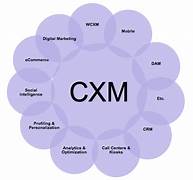
XM Software Providers Set to Replace Point Solutions with Multifunction Suites By 2028, Enterprises Will Transition to Comprehensive CXM Solutions, According to New ISG Research According to new research from Information Services Group (ISG) (Nasdaq: III), companies are expected to shift from various customer experience (CX) point solutions to comprehensive, cross-functional suites by 2028. This transition aims to manage CX at the enterprise level more effectively. Keith Dawson, Director of Customer Experience Research at ISG, explains, “Enterprises recognize the need for platforms that manage the entire customer lifecycle. We are witnessing the rise of tools that integrate communication components with analytic assessments of customer value, loyalty, and intent, marking a significant shift in the marketplace.” The ISG Buyers Guide™ for Customer Experience Management (CXM) defines CXM as a suite of applications on a unified platform that provides a comprehensive view of customer activity and enables management of that activity across departments. The report notes that the mix of applications in a software provider’s suite often reflects their historical expertise and origins. CXM addresses the limitations of traditional Customer Resource Management (CRM) software, which has been more departmental and application-centric. In contrast, CXM focuses on the customer journey and interactions across all channels. The report highlights challenges in comparing similar offerings from different providers due to their varied origins and expertise. The range of functionality across CXM products often reflects their diverse components, users, and use cases. ISG identifies five core areas of platform functionality in CXM software: knowledge management, resource management, automation, analytics, and customer journey management. However, CXM software is still developing, and it is uncommon to find a single solution that excels in all five areas. Many providers start with their core strengths and expand their capabilities over time. The ISG Buyers Guide evaluates CXM software providers based on support for analytics, customer journey management, knowledge management, CRM platform support, operational resource management, and process control and optimization. To be included in the CXM Buyers Guide, products must cover at least three of the four areas: resource management, automation, analytics, and customer journey management. Separate guides on Customer Journey Management (CJM) and Knowledge Management (KM) are available for more specific analysis. For its 2024 Buyers Guides, ISG assessed 19 providers, including Adobe, eGain, Emplifi, Freshworks, Genesys, HubSpot, Microsoft, Nextiva, NICE, Oracle, Qualtrics, Salesforce, SAP, ServiceNow, Sprinklr, SugarCRM, Verint, Zendesk, and Zoho. The top three software providers in each category are: Mark Smith, Partner at ISG Software Research, notes, “Managing customer experience is crucial for every organization, yet many lack the technology to orchestrate the customer journey across channels. The Buyers Guide for CXM offers insights to help businesses understand, optimize, and select software providers that move beyond the limitations of traditional CRM systems.” The ISG Buyers Guides for CXM, CJM, and KM are based on over a year of market research. The research is independent and not influenced by software providers, aiming to help enterprises optimize their software investments. For more details, visit the ISG Buyers Guides to read executive summaries and request full reports. About ISG Software Research ISG Software Research, formerly Ventana Research, delivers expert market research and analysis on business and IT software. The firm provides consulting, advisory, research, and education services for enterprises, software and service providers, and investment firms. For more information and to join the community, visit Ventana Research. About ISG ISG (Information Services Group) (Nasdaq: III) is a global technology research and advisory firm specializing in digital transformation services. With a client base of over 900 organizations, ISG helps clients achieve operational excellence and growth. The firm’s expertise spans AI and automation, cloud and data analytics, sourcing advisory, and more. Founded in 2006 and based in Stamford, Conn., ISG employs 1,600 professionals in over 20 countries. For more information, visit ISG. Like Related Posts Who is Salesforce? Who is Salesforce? Here is their story in their own words. From our inception, we’ve proudly embraced the identity of Read more Salesforce Marketing Cloud Transactional Emails Salesforce Marketing Cloud Transactional Emails are immediate, automated, non-promotional messages crucial to business operations and customer satisfaction, such as order Read more Salesforce Unites Einstein Analytics with Financial CRM Salesforce has unveiled a comprehensive analytics solution tailored for wealth managers, home office professionals, and retail bankers, merging its Financial Read more AI-Driven Propensity Scores AI plays a crucial role in propensity score estimation as it can discern underlying patterns between treatments and confounding variables Read more

Read More
Oracle Fusion Cloud

Oracle Fusion Cloud

Oracle has unveiled over 50 role-based AI agents in the Oracle Fusion Cloud Applications Suite as of Wednesday. This suite offers a range of applications designed to help enterprises manage various functions. The newly introduced AI agents aim to assist employees and managers by automating business processes. According to Oracle executives at the CloudWorld 2024 conference in Las Vegas, these agents are tailored to improve efficiency across different functions. In Oracle Fusion Cloud Human Capital Management, the AI agents support shift scheduling, assist with hiring, manage requests to fill or create new positions, and help employees understand their benefits. In Oracle Fusion Cloud Supply Chain, Manufacturing AI Agents provide contextual insights and recommendations for handling order requests and suggest maintenance and repair actions for various assets. The AI agents within Oracle Fusion Cloud Customer Experience assist with planning and research tasks, automate contract workflow and approval processes, and facilitate communication with sales representatives. Oracle has yet to announce the release date for these AI agents. The Next Stage of GenAIThe introduction of AI agents represents an evolution of generative AI, moving beyond chatbots to technology that performs tasks autonomously. “These AI agents are engineered to automate routine tasks and offer personalized insights and recommendations,” noted Sid Nag, Gartner Research analyst. This development underscores a shift in the generative AI market from ideation to practical implementation. “These are very pragmatic and practical ideas,” said Mark Beccue, an analyst at TechTarget’s Enterprise Strategy Group. “It’s a use case we’ve been anticipating, where AI helps complete tasks effectively.” Oracle’s AI Agents for its Fusion Cloud Applications Suite align with the vision for enterprise software vendors, Beccue added. ServiceNow AI AgentsOracle is not alone in embedding AI agents into business applications. On September 10, ServiceNow announced plans to integrate agentic workflows into its platform. The initial AI Agent applications from ServiceNow will focus on Customer Service Management and IT Service Management. These agents are designed to identify and resolve issues independently while still being overseen by human operators. ServiceNow’s AI Agents are expected to launch in November 2024 as part of a limited release. The company also introduced the Now Assist Skill Kit, enabling enterprises to develop custom generative AI skills tailored to specific business needs. Single Task vs. Multitask AgentsA key consideration with AI agents is whether they can handle single tasks or multitask across multiple applications. Mark Beccue suggests that the ability to perform tasks across various applications could lead to a new user interface where AI agents manage tasks seamlessly across different systems. “It’s a vision for the future of AI agents,” Beccue remarked. It remains to be seen how these AI agents will address industry-specific regulations and compliance requirements, particularly in highly regulated sectors such as finance. Additional AI FeaturesOracle has also introduced new AI capabilities in other applications. Oracle Cloud ERP now includes predictive cash forecasting, narrative reporting, and automated transaction records within Oracle Fusion Cloud Sustainability. In Oracle Cloud CX, new features include assisted authoring to help sales teams engage buyers with AI-generated content and advanced AI capabilities in Oracle CX Unity for detecting signals based on role, title, and topic engagement. Like Related Posts Who is Salesforce? Who is Salesforce? Here is their story in their own words. From our inception, we’ve proudly embraced the identity of Read more Salesforce Unites Einstein Analytics with Financial CRM Salesforce has unveiled a comprehensive analytics solution tailored for wealth managers, home office professionals, and retail bankers, merging its Financial Read more AI-Driven Propensity Scores AI plays a crucial role in propensity score estimation as it can discern underlying patterns between treatments and confounding variables Read more Tectonic’s Successful Salesforce Track Record Salesforce Technology Services Integrator – Tectonic has successfully delivered Salesforce in a variety of industries including Public Sector, Hospitality, Manufacturing, Read more

Read More
Einstein Features Cheat Sheet

Einstein Features Cheat Sheet

Salesforce has published a great resource for Einstein users. The Einstein Cheat Sheet puts all the Einstein features and resources at your fingertips. Download here. Einstein Discover the power of the #1 AI for CRM with Einstein. Built into the Salesforce Platform, Einstein uses powerful machine learning and large language models to personalize customer interactions and make employees more productive. With Einstein powering the Customer 360, teams can accelerate time to value, predict outcomes, and automatically generate contentwithin the flow of work. Einstein is for everyone, empowering business users, Salesforce Admins and Developers to embed AI into every experience with low code. Like Related Posts Who is Salesforce? Who is Salesforce? Here is their story in their own words. From our inception, we’ve proudly embraced the identity of Read more Salesforce Marketing Cloud Transactional Emails Salesforce Marketing Cloud Transactional Emails are immediate, automated, non-promotional messages crucial to business operations and customer satisfaction, such as order Read more Salesforce Unites Einstein Analytics with Financial CRM Salesforce has unveiled a comprehensive analytics solution tailored for wealth managers, home office professionals, and retail bankers, merging its Financial Read more AI-Driven Propensity Scores AI plays a crucial role in propensity score estimation as it can discern underlying patterns between treatments and confounding variables Read more

Read More
gettectonic.com