

Data Science Archives - gettectonic.com - Page 2
Predictive Analytics

Predictive Analytics in Salesforce

Predictive Analytics in Salesforce: Enhancing Decision-Making with AI In an ever-changing business environment, companies seek tools to forecast trends and anticipate challenges, enabling them to remain competitive. Predictive analytics, powered by Salesforce’s AI capabilities, offers a cutting-edge solution for these needs. In this guide, we’ll explore how predictive analytics works and how Salesforce empowers businesses to make smarter, data-driven decisions. What is Predictive Analytics? Predictive analytics uses historical data, statistical modeling, and machine learning to forecast future outcomes. With the vast amount of data organizations generate—ranging from transaction logs to multimedia—unifying this information can be challenging due to data silos. These silos hinder the development of accurate predictive models and limit Salesforce’s ability to deliver actionable insights. The result? Missed opportunities, inefficiencies, and impersonal customer experiences. When organizations implement proper integrations and data management practices, predictive analytics can harness this data to uncover patterns and predict future events. Techniques such as logistic regression, linear regression, neural networks, and decision trees help businesses gain actionable insights that enhance planning and decision-making. Einstein Prediction Builder A key component of the Salesforce Einstein Suite, Einstein Prediction Builder enables users to create custom AI models with minimal coding or data science expertise. Using in-house data, businesses can anticipate trends, forecast customer behavior, and predict outcomes with tailored precision. Key Features of Einstein Prediction Builder Note: Einstein Prediction Builder requires an Enterprise or Unlimited Edition subscription to access. Predictive Model Types in Salesforce Salesforce employs various predictive models tailored to specific needs: Building Custom Predictions Salesforce supports custom predictions tailored to unique business needs, such as forecasting regional sales or calculating appointment attendance rates. Tips for Building Predictions Prescriptive Analytics: Turning Predictions into Actions Predictive insights are only as valuable as the actions they inspire. Einstein Next Best Action bridges this gap by providing context-specific recommendations based on predictions. How Einstein Next Best Action Works Data Quality: The Foundation of Accurate Predictions The effectiveness of predictive analytics depends on the quality of your data. Poor data—whether due to errors, duplicates, or inconsistencies—can skew results and undermine trust. Best Practices for Data Quality Modern tools like DataGroomr can automate data validation and cleaning, ensuring that predictions are based on trustworthy information. Empowering Smarter Decisions with Predictive Analytics Salesforce’s AI-driven predictive analytics transforms decision-making by providing actionable insights from historical data. Businesses can anticipate trends, improve operational efficiency, and deliver personalized customer experiences. As predictive analytics continues to evolve, companies leveraging these tools will gain a competitive edge in an increasingly dynamic marketplace. Embrace the power of predictive analytics in Salesforce to make faster, more strategic decisions and drive sustained success. Like1 Related Posts Who is Salesforce? Who is Salesforce? Here is their story in their own words. From our inception, we’ve proudly embraced the identity of Read more Salesforce Marketing Cloud Transactional Emails Salesforce Marketing Cloud Transactional Emails are immediate, automated, non-promotional messages crucial to business operations and customer satisfaction, such as order Read more Salesforce Unites Einstein Analytics with Financial CRM Salesforce has unveiled a comprehensive analytics solution tailored for wealth managers, home office professionals, and retail bankers, merging its Financial Read more AI-Driven Propensity Scores AI plays a crucial role in propensity score estimation as it can discern underlying patterns between treatments and confounding variables Read more
Read More
How to Achieve AI Democratization

How to Achieve AI Democratization

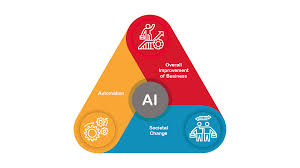
AI democratization empowers non-experts by placing AI tools in the hands of everyday users, enabling them to harness the technology’s potential without requiring specialized technical skills. Today, IT leaders are increasingly focused on expanding AI’s benefits across the enterprise. The growing number of AI-based tools is making this more achievable. In some respects, democratization extends the concept of low- and no-code development—allowing non-developers to create software—into the realm of AI. However, it’s also about ensuring data is accessible and fostering data literacy throughout the organization. This doesn’t mean every employee needs to write machine learning scripts. Instead, it means business professionals should understand AI’s potential, identify relevant use cases, and apply insights to drive business outcomes. Achieving AI democratization is feasible, thanks to decentralized governance models and the emergence of AI-focused services. However, as with any new technology, democratization brings both benefits and challenges. How to Achieve AI Democratization AI is no longer reserved for experts. Tools like Google Colab and Microsoft’s Azure OpenAI Service have simplified AI development, enabling more employees to participate by writing and sharing code for various projects. To maximize the impact, enterprises must train business users on the basics of AI and how it can enhance their daily work. According to Arpit Mehra, Practice Director at Everest Group, decentralized governance models can help organizations build strategies for data and technology learning. Key strategies include: Arun Chandrasekaran, VP and Analyst at Gartner, also advises companies to focus on intelligent applications in areas such as customer engagement and talent acquisition, which can provide specialized training. Benefits and Challenges of AI Democratization AI democratization can significantly expand an organization’s capabilities. By placing AI in the hands of more employees, businesses reduce barriers to adoption, cut costs, and create highly accurate AI models. “Making AI more accessible broadens the scope of what businesses can achieve,” said Michael Shehab, PwC U.S. Technology and Innovation Leader. AI democratization also helps companies address IT talent shortages by upskilling employees and enabling them to integrate AI into their workflows. This approach improves productivity, allowing businesses to more easily spot trends and patterns within large data sets. However, challenges also arise. If AI is implemented without proper oversight, the technology is susceptible to bias. Poor training could lead to decision-making based on inaccurate or skewed data. Business leaders must ensure they understand who is using AI tools and establish standards for responsible use. Without careful testing, AI applications can automate mistakes that go unnoticed but may cause significant issues. Ed Murphy, SVP and Head of Data Science at 1010data, emphasizes the importance of testing to prevent these errors. To mitigate risks, organizations should invest in upskilling and reskilling employees. A well-defined training plan will enable nontechnical teams to participate in AI adoption and deployment effectively. Mehra from Everest Group also suggests exploring MLOps technologies to simplify AI development and streamline processes. Ultimately, AI democratization will benefit businesses that recognize AI’s potential beyond a small group of experts. While the benefits are clear, organizations must remain vigilant about the risks to ensure successful AI integration and reap the rewards of their efforts. Like1 Related Posts Who is Salesforce? Who is Salesforce? Here is their story in their own words. From our inception, we’ve proudly embraced the identity of Read more Salesforce Marketing Cloud Transactional Emails Salesforce Marketing Cloud Transactional Emails are immediate, automated, non-promotional messages crucial to business operations and customer satisfaction, such as order Read more Salesforce Unites Einstein Analytics with Financial CRM Salesforce has unveiled a comprehensive analytics solution tailored for wealth managers, home office professionals, and retail bankers, merging its Financial Read more AI-Driven Propensity Scores AI plays a crucial role in propensity score estimation as it can discern underlying patterns between treatments and confounding variables Read more
Read More
GLYNT.AI Launches Net Zero Hero

GLYNT.AI Launches Net Zero Hero

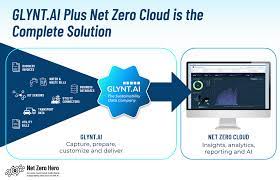
GLYNT.AI Launches Net Zero Hero for Salesforce Net Zero Cloud Net Zero Hero Sustainability Data + Net Zero Cloud GLYNT.AI, a leader in providing investor-grade sustainability data, has announced the launch of Net Zero Hero on the Salesforce AppExchange. This new offering enables sustainability and finance teams to access accurate, automated, and audit-ready data on energy, water, waste, and emissions, seamlessly integrated with Salesforce Net Zero Cloud. The service provides data within a week of implementation, with ongoing updates available daily, weekly, or monthly, all without requiring developer resources. Sustainability and finance teams often struggle with capturing, preparing, harmonizing, and validating key sustainability data. Traditionally, this data is buried in invoices and utility bills, making it difficult to extract and harmonize. Many companies rely on manual processes, such as spreadsheets, which can raise concerns during assurance and audit reviews and increase audit costs. There is also a growing pressure to manage sustainability data cost-effectively without expanding headcount. Net Zero Hero from GLYNT.AI addresses these challenges by providing SOC 1 compliant, audit-ready sustainability data. The service covers a wide range of input data, including landlord invoices, data center invoices, sub-billing, summary bills, renewables, utility site logins, vehicle ledgers, and direct emissions data. This comprehensive solution ensures that Salesforce Net Zero Cloud customers receive sustainability data that meets the rigorous standards of financial data preparation. GLYNT.AI leverages advanced AI technology to automate data preparation, drawing on years of experience in sustainability, finance, and data science. The system can deliver initial data in the first week, quickly scaling up to production-grade data services. This automation and customization result in significant cost savings, often exceeding 80% compared to traditional systems. Jeff Stienke, CEO of Third Eye Consulting, a leading Salesforce Summit Partner, expressed enthusiasm for the partnership, highlighting the benefits of automated systems and streamlined implementation. “Net Zero Hero breaks the data bottleneck, bringing costs down and simplifying the deployment of Net Zero Cloud. Our clients have been looking for the expertise in data, sustainability, and finance that GLYNT.AI provides,” Stienke said. Martha Amram, Ph.D., CEO of GLYNT.AI, emphasized the company’s commitment to supporting Salesforce customers in achieving sustainability goals. “Salesforce has a long-standing commitment to sustainability, and we’re excited to add Net Zero Hero data services to Salesforce AppExchange. GLYNT.AI unlocks the sustainability data stream, so that every Salesforce customer can be a force for good, a Net Zero Hero. And looking ahead, we’ve built in audit-readiness and AI-readiness into the offering, delivering Trusted Data for Trusted AI.” GLYNT.AI offers three bundles for Net Zero Hero on the Salesforce AppExchange: A 30-day trial of Net Zero Hero is available, allowing businesses to see their data in Net Zero Cloud within the first week. For more information about Net Zero Hero and to access the AppExchange listing, visit: Net Zero Hero on Salesforce AppExchange. Like Related Posts Who is Salesforce? Who is Salesforce? Here is their story in their own words. From our inception, we’ve proudly embraced the identity of Read more Salesforce Marketing Cloud Transactional Emails Salesforce Marketing Cloud Transactional Emails are immediate, automated, non-promotional messages crucial to business operations and customer satisfaction, such as order Read more Salesforce Unites Einstein Analytics with Financial CRM Salesforce has unveiled a comprehensive analytics solution tailored for wealth managers, home office professionals, and retail bankers, merging its Financial Read more AI-Driven Propensity Scores AI plays a crucial role in propensity score estimation as it can discern underlying patterns between treatments and confounding variables Read more
Read More
Snowpark Container Services

Snowpark Container Services

Snowflake announced on Thursday the general availability of Snowpark Container Services, enabling customers to securely deploy and manage models and applications, including generative AI, within Snowflake’s environment. Initially launched in preview in June 2023, Snowpark Container Services is now a fully managed service available in all AWS commercial regions and in public preview in all Azure commercial regions. Containers are a software method used to isolate applications for secure deployment. Snowflake’s new feature allows customers to use containers to manage and deploy any type of model, optimally for generative AI applications, by securely integrating large language models (LLMs) and other generative AI tools with their data, explained Jeff Hollan, Snowflake’s head of applications and developer platform. Mike Leone, an analyst at TechTarget’s Enterprise Strategy Group, noted that Snowpark Container Services’ launch builds on Snowflake’s recent efforts to provide customers with an environment for developing generative AI models and applications. Sridhar Ramaswamy became Snowflake’s CEO in February, succeeding Frank Slootman, who led the company through a record-setting IPO. Under Ramaswamy, Snowflake has aggressively added generative AI capabilities, including launching its own LLM, integrating with Mistral AI, and providing tools for creating AI chatbots. “There has definitely been a concerted effort to enhance Snowflake’s capabilities and presence in the AI and GenAI markets,” Leone said. “Offerings like Snowpark help AI stakeholders like data scientists and developers use the languages they prefer.” As a result, Snowpark Container Services is a significant new feature for Snowflake customers. “It’s a big deal for the Snowflake ecosystem,” Leone said. “By enabling easy deployment and management of containers within the Snowflake platform, it helps customers handle complex workloads and maintain consistency across development and production stages.” Despite the secure environment provided by Snowflake Container Services, it was revealed in May that the login credentials of potentially 160 customers had been stolen and used to access their data. However, Snowflake has stated there is no evidence that the breach resulted from a vulnerability or misconfiguration of the Snowflake platform. Prominent customers affected include AT&T and Ticketmaster, and Snowflake’s investigation is ongoing. New Capabilities Generative AI can transform business by enabling employees to easily work with data to inform decisions and making trained experts more efficient. Generative AI, combined with an enterprise’s proprietary data, allows users to interact with data using natural language, reducing the need for coding and data literacy training. Non-technical workers can query and analyze data, freeing data engineers and scientists from routine tasks. Many data management and analytics vendors are focusing on developing generative AI-powered features. Enterprises are building models and applications trained on their proprietary data to inform business decisions. Among data platform vendors, AWS, Databricks, Google, IBM, Microsoft, and Oracle are providing environments for generative AI tool development. Snowflake, under Slootman, was less aggressive in this area but is now committed to generative AI development, though it still has ground to cover compared to its competitors. “Snowflake has gone as far as creating their own LLM,” Leone said. “But they still have a way to go to catch up to some of their top competitors.” Matt Aslett, an analyst at ISG’s Ventana Research, echoed that Snowflake is catching up to its rivals. The vendor initially focused on traditional data warehouse capabilities but made a significant step forward with the late 2023 launch of Cortex, a platform for developing AI models and applications. Cortex includes access to various LLMs and vector search capabilities, marking substantial progress. The general availability of Snowpark Container Services furthers Snowflake’s effort to foster generative AI development. The feature provides users with on-demand GPUs and CPUs to run any code next to their data. This enables the deployment and management of any type of model or application without moving data out of Snowflake’s platform. “It’s optimized for next-generation data and AI applications by pushing that logic to the data,” Hollan said. “This means customers can now easily and securely deploy everything from source code to homegrown models in Snowflake.” Beyond security, Snowpark Container Services simplifies model management and deployment while reducing associated costs. Snowflake provides a fully integrated managed service, eliminating the need for piecing together various services from different vendors. The service includes a budget control feature to reduce operational costs and provide cost certainty. Snowpark Container Services includes diverse storage options, observability tools like Snowflake Trail, and streamlined DevOps capabilities. It supports deploying LLMs with local volumes, memory, Snowflake stages, and configurable block storage. Integrations with observability specialists like Datadog, Grafana, and Monte Carlo are also included. Aslett noted that the 2020 launch of the Snowpark development environment enabled users to use their preferred coding languages with their data. Snowpark Container Services takes this further by allowing the use of third-party software, including generative AI models and data science libraries. “This potentially reduces complexity and infrastructure resource requirements,” Aslett said. Snowflake spent over a year moving Snowpark Container Services from private preview to general availability, focusing on governance, networking, usability, storage, observability, development operations, scalability, and performance. One customer, Landing AI, used Snowpark Container Services during its preview phases to develop LandingLens, an application for training and deploying computer vision models. “[With Snowflake], we are increasing access to AI for more companies and use cases, especially given the rapid growth of unstructured data in our increasingly digital world,” Landing AI COO Dan Maloney said in a statement Thursday. Future Plans With Snowpark Container Services now available on AWS, Snowflake plans to extend the feature to all cloud platforms. The vendor’s roadmap includes further improvements to Snowpark Container Services with more enterprise-grade tools. “Our team is investing in making it easy for companies ranging from startups to enterprises to build, deliver, distribute, and monetize next-generation AI products across their ecosystems,” Hollan said. Aslett said that making Snowpark Container Services available on Azure and Google Cloud is the logical next step. He noted that the managed service’s release is significant but needs broader availability beyond AWS regions. “The next step will be to bring Snowpark Container Services to general

Read More
Where Will the Data Scientists Go

Where Will the Data Scientists Go

What Is to Become of the Data Scientist Role? This question frequently arises among executives, particularly as they navigate the changing roles of data teams, such as those at DataRobot. Where Will the Data Scientists Go may not be as relevant as what new places can they go with AI? The short answer? While tools may evolve, the core of data science remains steadfast. As the field of data science continues to expand, the role of the data scientist becomes increasingly vital. The need will grow, even as the role changes. Trust in AI is dependant upon human oversight. Beyond the Hype of Consumer AI The surge in consumer AI products has raised concerns among data scientists about the implications for their careers. However, these technologies are built on data and generate vast amounts of new data, presenting numerous opportunities. The real transformative potential lies in enterprise-scale automation. Enterprise-Scale Automation: The Data Scientist’s Domain Enterprise-scale automation involves creating large-scale, reliable systems. Data scientists are crucial in this effort, as they bring expertise in data exploration and systematic inference. They are uniquely positioned to identify automation opportunities, design testing and monitoring strategies, and collaborate with cross-functional teams to bring AI solutions from concept to implementation. As automation grows, the role of the data scientist is essential in ensuring these systems function effectively and safely, particularly in environments without human oversight. New Skills for Data Scientists: The Guardians of AI Applications Data scientists will need to acquire new skills to manage automation at scale, including securing the systems they build. Generative AI introduces new risks, such as potential vulnerabilities to prompt injections or other security threats. Governance and ensuring positive business impacts will become increasingly important, requiring a data science mindset. Building Great Data Teams in the Age of AI The future of data science will not be about automation replacing data scientists but about the evolution of roles and skills. Data scientists need to focus on the core foundations of their discipline rather than the specific tools they use, as tools will continue to evolve. Teams must be built intentionally, encompassing a range of skills and personalities necessary for successful enterprise automation. Business Leaders: Navigating the AI Landscape Business leaders will need to excel in decision-making, understanding the problems they aim to solve, and selecting the appropriate tools and teams. They will also need to manage evolving regulations, particularly those related to the design and deployment of AI systems. Data Scientists: Precision Thinkers at the Forefront Contrary to the belief that AI could replace coding skills, the essence of data science lies in precise thinking and clear communication. Data scientists excel in translating business needs into data-driven decisions and AI applications, ensuring that solutions are not only technically sound but also aligned with business objectives. This skill set will be crucial in the era of AI, as data scientists will play a key role in optimizing workflows, designing AI safety nets, and protecting their organization’s brand and reputation. The Evolving Role of Data Science The demand for precise, data-literate thinkers will only grow with the rise of enterprise AI systems. Whether they are called data scientists or another name, professionals who delve deeply into data and provide critical insights will remain essential in navigating the complexities of modern technology and business landscapes. Like Related Posts Who is Salesforce? Who is Salesforce? Here is their story in their own words. From our inception, we’ve proudly embraced the identity of Read more Salesforce Marketing Cloud Transactional Emails Salesforce Marketing Cloud Transactional Emails are immediate, automated, non-promotional messages crucial to business operations and customer satisfaction, such as order Read more Salesforce Unites Einstein Analytics with Financial CRM Salesforce has unveiled a comprehensive analytics solution tailored for wealth managers, home office professionals, and retail bankers, merging its Financial Read more AI-Driven Propensity Scores AI plays a crucial role in propensity score estimation as it can discern underlying patterns between treatments and confounding variables Read more
Read More
Ten Years of Data Lessons

Ten Years of Data Lessons

Lessons Learned from a Decade in Data Science Over the past ten years, working in analytical roles at various companies—from a small fintech startup in Europe to high-growth pre-IPO scale-ups like Rippling and big tech firms such as Uber and Meta—has provided a wealth of insights. Each company had a unique data culture and view on data, and each role presented its own challenges and hard-learned lessons. Here are ten key ideas from this decade of experience, applicable to any company regardless of stage, product, or business model. Final Thoughts Some of these points may initially seem challenging, such as pushing back against cherry-picked narratives or adopting a more pragmatic approach over perfection. However, embracing these practices will ultimately help establish oneself as a true thought partner and a valuable asset to any organization. Like Related Posts Who is Salesforce? Who is Salesforce? Here is their story in their own words. From our inception, we’ve proudly embraced the identity of Read more AI-Driven Propensity Scores AI plays a crucial role in propensity score estimation as it can discern underlying patterns between treatments and confounding variables Read more Tectonic’s Successful Salesforce Track Record Salesforce Technology Services Integrator – Tectonic has successfully delivered Salesforce in a variety of industries including Public Sector, Hospitality, Manufacturing, Read more Asset Management Salesforce Can Salesforce do asset management? You can manage assets in Consumer Goods (desktop) and in the Consumer Goods offline mobile Read more
Read More
RAG Chunking Method

RAG Chunking Method

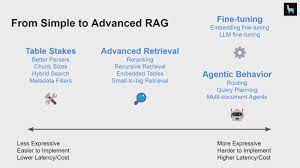
Enhancing Retrieval-Augmented Generation (RAG) Systems with Topic-Based Document Segmentation Dividing large documents into smaller, meaningful parts is crucial for the performance of Retrieval-Augmented Generation (RAG) systems. RAG Chunking Method. These systems benefit from frameworks that offer multiple document-splitting options. This Tectonic insight introduces an innovative approach that identifies topic changes using sentence embeddings, improving the subdivision process to create coherent topic-based sections. RAG Systems: An Overview A Retrieval-Augmented Generation (RAG) system combines retrieval-based and generation-based models to enhance output quality and relevance. It first retrieves relevant information from a large dataset based on an input query, then uses a transformer-based language model to generate a coherent and contextually appropriate response. This hybrid approach is particularly effective in complex or knowledge-intensive tasks. Standard Document Splitting Options Before diving into the new approach, let’s explore some standard document splitting methods using the LangChain framework, known for its robust support of various natural language processing (NLP) tasks. LangChain Framework: LangChain assists developers in applying large language models across NLP tasks, including document splitting. Here are key splitting methods available: Introducing a New Approach: Topic-Based Segmentation Segmenting large-scale documents into coherent topic-based sections poses significant challenges. Traditional methods often fail to detect subtle topic shifts accurately. This innovative approach, presented at the International Conference on Artificial Intelligence, Computer, Data Sciences, and Applications (ACDSA 2024), addresses this issue using sentence embeddings. The Core Challenge Large documents often contain multiple topics. Conventional segmentation techniques struggle to identify precise topic transitions, leading to fragmented or overlapping sections. This method leverages Sentence-BERT (SBERT) to generate embeddings for individual sentences, which reflect changes in the vector space as topics shift. Approach Breakdown 1. Using Sentence Embeddings: 2. Calculating Gap Scores: 3. Smoothing: 4. Boundary Detection: 5. Clustering Segments: Algorithm Pseudocode Gap Score Calculation: pythonCopy code# Example pseudocode for gap score calculation def calculate_gap_scores(sentences, n): embeddings = [sbert.encode(sentence) for sentence in sentences] gap_scores = [] for i in range(len(sentences) – n): before = embeddings[i:i+n] after = embeddings[i+n:i+2*n] score = cosine_similarity(before, after) gap_scores.append(score) return gap_scores Gap Score Smoothing: pythonCopy code# Example pseudocode for smoothing gap scores def smooth_gap_scores(gap_scores, k): smoothed_scores = [] for i in range(len(gap_scores)): start = max(0, i – k) end = min(len(gap_scores), i + k + 1) smoothed_score = sum(gap_scores[start:end]) / (end – start) smoothed_scores.append(smoothed_score) return smoothed_scores Boundary Detection: pythonCopy code# Example pseudocode for boundary detection def detect_boundaries(smoothed_scores, c): boundaries = [] mean_score = sum(smoothed_scores) / len(smoothed_scores) std_dev = (sum((x – mean_score) ** 2 for x in smoothed_scores) / len(smoothed_scores)) ** 0.5 for i, score in enumerate(smoothed_scores): if score < mean_score – c * std_dev: boundaries.append(i) return boundaries Future Directions Potential areas for further research include: Conclusion This method combines traditional principles with advanced sentence embeddings, leveraging SBERT and sophisticated smoothing and clustering techniques. This approach offers a robust and efficient solution for accurate topic modeling in large documents, enhancing the performance of RAG systems by providing coherent and contextually relevant text sections. Like Related Posts Who is Salesforce? Who is Salesforce? Here is their story in their own words. From our inception, we’ve proudly embraced the identity of Read more Salesforce Unites Einstein Analytics with Financial CRM Salesforce has unveiled a comprehensive analytics solution tailored for wealth managers, home office professionals, and retail bankers, merging its Financial Read more AI-Driven Propensity Scores AI plays a crucial role in propensity score estimation as it can discern underlying patterns between treatments and confounding variables Read more Tectonic’s Successful Salesforce Track Record Salesforce Technology Services Integrator – Tectonic has successfully delivered Salesforce in a variety of industries including Public Sector, Hospitality, Manufacturing, Read more

Read More
Who Calls AI Ethical

Who Calls AI Ethical

Background – Who Calls AI Ethical On March 13, 2024, the European Union (EU) enacted the EU AI Act, a move that some argue has hindered its position in the global AI race. This legislation aims to ‘unify’ the development and implementation of AI within the EU, but it is seen as more restrictive than progressive. Rather than fostering innovation, the act focuses on governance, which may not be sufficient for maintaining a competitive edge. The EU AI Act embodies the EU’s stance on Ethical AI, a concept that has been met with skepticism. Critics argue that Ethical AI is often misinterpreted and, at worst, a monetizable construct. In contrast, Responsible AI, which emphasizes ensuring products perform as intended without causing harm, is seen as a more practical approach. This involves methodologies such as red-teaming and penetration testing to stress-test products. This critique of Ethical AI forms the basis of this insight,and Eric Sandosham article here. The EU AI Act To understand the implications of the EU AI Act, it is essential to summarize its key components and address the broader issues with the concept of Ethical AI. The EU defines AI as “a machine-based system designed to operate with varying levels of autonomy and that may exhibit adaptiveness after deployment. It infers from the input it receives to generate outputs such as predictions, content, recommendations, or decisions that can influence physical or virtual environments.” Based on this definition, the EU AI Act can be summarized into several key points: Fear of AI The EU AI Act appears to be driven by concerns about AI being weaponized or becoming uncontrollable. Questions arise about whether the act aims to prevent job disruptions or protect against potential risks. However, AI is essentially automating and enhancing tasks that humans already perform, such as social scoring, predictive policing, and background checks. AI’s implementation is more consistent, reliable, and faster than human efforts. Existing regulations already cover vehicular safety, healthcare safety, and infrastructure safety, raising the question of why AI-specific regulations are necessary. AI solutions automate decision-making, but the parameters and outcomes are still human-designed. The fear of AI becoming uncontrollable lacks evidence, and the path to artificial general intelligence (AGI) remains distant. Ethical AI as a Red Herring In AI research and development, the terms Ethical AI and Responsible AI are often used interchangeably, but they are distinct. Ethics involve systematized rules of right and wrong, often with legal implications. Morality is informed by cultural and religious beliefs, while responsibility is about accountability and obligation. These constructs are continuously evolving, and so must the ethics and rights related to technology and AI. Promoting AI development and broad adoption can naturally improve governance through market forces, transparency, and competition. Profit-driven organizations are incentivized to enhance AI’s positive utility. The focus should be on defining responsible use of AI, especially for non-profit and government agencies. Towards Responsible AI Responsible AI emphasizes accountability and obligation. It involves defining safeguards against misuse rather than prohibiting use cases out of fear. This aligns with responsible product development, where existing legal frameworks ensure products work as intended and minimize misuse risks. AI can improve processes such as recruitment by reducing errors compared to human solutions. AI’s role is to make distinctions based on data attributes, striving for accuracy. The concern is erroneous discrimination, which can be mitigated through rigorous testing for bias as part of product quality assurance. Conclusion The EU AI Act is unlikely to become a global standard. It may slow AI research, development, and implementation within the EU, hindering AI adoption in the region and causing long-term harm. Humanity has an obligation to push the boundaries of AI innovation. As a species facing eventual extinction from various potential threats, AI could represent a means of survival and advancement beyond our biological limitations. Like Related Posts Who is Salesforce? Who is Salesforce? Here is their story in their own words. From our inception, we’ve proudly embraced the identity of Read more Salesforce Marketing Cloud Transactional Emails Salesforce Marketing Cloud Transactional Emails are immediate, automated, non-promotional messages crucial to business operations and customer satisfaction, such as order Read more Salesforce Unites Einstein Analytics with Financial CRM Salesforce has unveiled a comprehensive analytics solution tailored for wealth managers, home office professionals, and retail bankers, merging its Financial Read more AI-Driven Propensity Scores AI plays a crucial role in propensity score estimation as it can discern underlying patterns between treatments and confounding variables Read more

Read More
Government CRM System

Government CRM System

Explore How Governments Can Modernize Services for Citizens with Government CRM System What is CRM in Government? CRM (Customer Relationship Management) systems in government streamline administrative tasks, allowing public servants to concentrate on enhancing citizens’ daily lives. Does the US Government Use Salesforce? Salesforce is valuable to the US federal government due to its highly customizable nature, catering to diverse agency needs and projects. Understanding AI in Government: Reshaping Public Sector Services Enhancing Workforce Skills for Better Constituent Experiences and Efficient Agency Operations The AI revolution presents opportunities for governments to enhance efficiency and service delivery. AI technologies can significantly improve data processing, cybersecurity, public planning, and other critical areas. Government agencies must raise awareness about the benefits of AI and upskill employees to bridge the AI skills gap. This transformation enables workers to better serve the public and foster trust between sectors. However, the rapid adoption of AI also raises concerns about a potential skills crisis, as highlighted by a survey revealing insufficient high-quality AI and machine learning resources. While AI promises to create new jobs, it may also displace certain roles. Organizations must prepare employees for this shift, ensuring they transition to higher-value work and acquire the necessary AI skills. Data Modernization: Paving the Way for an AI-Optimized Future Modernizing data infrastructure is essential for leveraging AI effectively. Employees can upskill in data science and AI, facilitating this transition from traditional workflows to AI-driven processes. Applications of AI in Government AI offers transformative potential across various government functions, such as traffic management, healthcare delivery, and administrative tasks like paperwork processing. Government agencies can enhance operations through AI-driven insights, improving efficiency, and service delivery for citizens. Challenges and Opportunities in AI Adoption Despite the promise of AI, many public agencies lack sufficient AI and data management capabilities among their workforce. Effective Education and Training for AI Implementation Organizations must prioritize AI education and responsible usage to better serve the public while upholding stringent security standards. Understanding Government Cloud Salesforce Salesforce Government Cloud and Government Cloud Plus provide dedicated instances of Salesforce’s Customer 360 suite, tailored to meet government requirements. Enhancing Government Efficiency with Modern CRM Solutions Explore How CRM Software Can Revolutionize Citizen Engagement and Government Operations CRM systems empower local governments to establish meaningful connections with citizens, improving service delivery and operational efficiency. Key Features of Local Government CRM Software Discover essential CRM features for local government agencies, including workflow automations, communication tools, data security, citizen contact management, real-time analytics, and business intelligence reporting. Evaluating CRM Data-Quality Solutions Evaluate CRM solutions based on security, flexibility, scalability, interoperability, ease of use, and customization capabilities to enhance government operations effectively. Strategies for Implementing CRM Workflows in Government Implement CRM systems strategically to improve service delivery and constituent engagement, focusing on data integration and minimizing the need for complex coding during deployment. By embracing modern CRM technologies and AI solutions, governments can enhance efficiency, transparency, and citizen satisfaction, ushering in a new era of effective public service delivery. Government CRM System. Like1 Related Posts Who is Salesforce? Who is Salesforce? Here is their story in their own words. From our inception, we’ve proudly embraced the identity of Read more Salesforce Marketing Cloud Transactional Emails Salesforce Marketing Cloud Transactional Emails are immediate, automated, non-promotional messages crucial to business operations and customer satisfaction, such as order Read more Salesforce Unites Einstein Analytics with Financial CRM Salesforce has unveiled a comprehensive analytics solution tailored for wealth managers, home office professionals, and retail bankers, merging its Financial Read more AI-Driven Propensity Scores AI plays a crucial role in propensity score estimation as it can discern underlying patterns between treatments and confounding variables Read more

Read More
Predictive Lead Scoring

Predictive Lead Scoring

Traditional lead scoring relies on predefined criteria and subjective assumptions, whereas predictive lead scoring (PLS) harnesses machine learning algorithms to analyze extensive data and identify key predictors of lead quality. Traditional lead scoring only learns from data if you revise your scoring methodology for it. Predictive lead scoring constantly reworks the machine learning model based on more and newer data. Traditional lead scoring can be impacted by human error and bias. PLS analyzes from historical data eliminating bias and error. PLS employs a machine learning model to assign scores to open leads based on historical data, enabling sales teams to prioritize effectively and improve lead qualification rates while reducing the time spent on lead qualification. Discover how AI can elevate PLS to new heights and transform various organizational functions amidst shrinking budgets and heightened performance expectations across sales and marketing teams. Key Benefits of Predictive Lead Scoring: PLS leverages data science and machine learning to analyze and predict future outcomes based on historical and current data, guiding businesses in identifying high-potential leads and optimizing resource allocation. Implementing Predictive Lead Scoring: AI CRM and PLS: AI-enabled CRM platforms like Salesforce’s Einstein Lead Scoring automate lead scoring processes, leveraging extensive data to predict lead quality and prioritize effectively for sales and marketing teams. Benefits of Predictive Lead Scoring: AI and Machine Learning in Lead Scoring: AI and machine learning enhance lead scoring by analyzing vast data sets, identifying patterns, and predicting behaviors for more accurate lead qualification and prioritization. A data-driven enterprise is a smarter enterprise acting on data and insights. Salesforce’s Intelligent Lead Scoring: Salesforce’s Einstein Lead Scoring automates lead scoring processes within Sales Cloud and Marketing Cloud, providing tailored metrics and insights for informed decision-making. Generative AI and Predictive Lead Scoring: Generative AI streamlines processes like email personalization and content creation, enhancing marketing effectiveness and productivity. Good PLS with AI and machine learning transforms lead management by leveraging data insights for efficient and accurate lead qualification, ultimately driving improved sales and marketing performance. Like Related Posts Who is Salesforce? Who is Salesforce? Here is their story in their own words. From our inception, we’ve proudly embraced the identity of Read more Salesforce Marketing Cloud Transactional Emails Salesforce Marketing Cloud Transactional Emails are immediate, automated, non-promotional messages crucial to business operations and customer satisfaction, such as order Read more Salesforce Unites Einstein Analytics with Financial CRM Salesforce has unveiled a comprehensive analytics solution tailored for wealth managers, home office professionals, and retail bankers, merging its Financial Read more AI-Driven Propensity Scores AI plays a crucial role in propensity score estimation as it can discern underlying patterns between treatments and confounding variables Read more
Read More
what is ai opportunity scoring

What is AI Opportunity Scoring

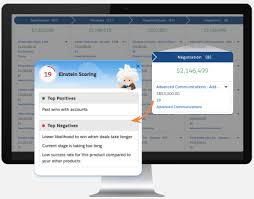
AI opportunity scoring uses artificial intelligence and machine learning to analyze historical data and predict the likelihood of a sales opportunity closing. This score, typically on a scale of 1 to 100 or 1 to 99, helps prioritize opportunities, allocate resources effectively, and improve sales forecasting.  Here’s a more detailed explanation: Einstein Opportunity Scoring uses data science and machine learning to score your opportunities so that you can prioritize them. By using machine learning, Einstein Opportunity Scoring provides a simpler, faster, and more accurate solution than traditional rule-based scoring approaches. Like Related Posts Who is Salesforce? Who is Salesforce? Here is their story in their own words. From our inception, we’ve proudly embraced the identity of Read more Salesforce Unites Einstein Analytics with Financial CRM Salesforce has unveiled a comprehensive analytics solution tailored for wealth managers, home office professionals, and retail bankers, merging its Financial Read more AI-Driven Propensity Scores AI plays a crucial role in propensity score estimation as it can discern underlying patterns between treatments and confounding variables Read more Tectonic’s Successful Salesforce Track Record Salesforce Technology Services Integrator – Tectonic has successfully delivered Salesforce in a variety of industries including Public Sector, Hospitality, Manufacturing, Read more
Read More
Big Data and Data Visualization

Big Data and Data Visualization Explained

Data Visualization: Turning Complex Data into Clear Insights Data visualization is the practice of converting information into visual formats, such as maps or graphs, to make data more accessible and understandable. The primary purpose of data visualization is to highlight patterns, trends, and outliers within large data sets, allowing users to quickly glean insights. The term is often used interchangeably with information graphics, information visualization, and statistical graphics. The Role of Data Visualization in Data Science Data visualization is a crucial step in the data science process. After data is collected, processed, and modeled, it must be visualized to draw meaningful conclusions. It’s also a key component of data presentation architecture, a discipline focused on efficiently identifying, manipulating, formatting, and delivering data. Importance Across Professions Data visualization is essential across various fields. Teachers use it to display student performance, computer scientists to explore AI advancements, and executives to communicate information to stakeholders. In big data projects, visualization tools are vital for quickly summarizing large datasets, helping businesses make informed decisions. In advanced analytics, visualization is equally important. Data scientists use it to monitor and ensure the accuracy of predictive models and machine learning algorithms. Visual representations of complex algorithms are often easier to interpret than numerical outputs. Historical Context of Data Visualization Data visualization has evolved significantly over the centuries, long before the advent of modern technology. Today, its importance is more pronounced, as it enables quick and effective communication of information in a universally understandable manner. Why Data Visualization Matters Data visualization provides a straightforward way to communicate information, regardless of the viewer’s expertise. This universality makes it easier for employees to make decisions based on visual insights. Visualization offers numerous benefits for businesses, including: Advantages of Data Visualization Key benefits include: Challenges and Disadvantages Despite its advantages, data visualization has some challenges: Data Visualization in the Era of Big Data With the rise of big data, visualization has become more critical. Companies leverage machine learning to analyze vast amounts of data, and visualization tools help present this data in a comprehensible way. Big data visualization often employs advanced techniques, such as heat maps and fever charts, beyond the standard pie charts and graphs. However, challenges remain, including: Examples of Data Visualization Techniques Early computer-based data visualizations often relied on Microsoft Excel to create tables, bar charts, or pie charts. Today, more advanced techniques include: Common Use Cases for Data Visualization Data visualization is widely used across various industries, including: The Science Behind Data Visualization The effectiveness of data visualization is rooted in how humans process information. Daniel Kahneman and Amos Tversky’s research identified two methods of information processing: Visualization Tools and Vendors Data visualization tools are widely used for business intelligence reporting. These tools generate interactive dashboards that track performance across key metrics. Users can manipulate these visualizations to explore data in greater depth, and indicators alert them to data updates or important events. Businesses might use visualization of data software to monitor marketing campaigns or track KPIs. As tools evolve, they increasingly serve as front ends for sophisticated big data environments, assisting data engineers and scientists in exploratory analysis. Popular data visualization tools include Domo, Klipfolio, Looker, Microsoft Power BI, Qlik Sense, Tableau, and Zoho Analytics. While Microsoft Excel remains widely used, newer tools offer more advanced capabilities. Data visualization is a vital subset of the broader field of data analytics, offering powerful tools for understanding and leveraging business data across all sectors. Like Related Posts Who is Salesforce? Who is Salesforce? Here is their story in their own words. From our inception, we’ve proudly embraced the identity of Read more Salesforce Marketing Cloud Transactional Emails Salesforce Marketing Cloud Transactional Emails are immediate, automated, non-promotional messages crucial to business operations and customer satisfaction, such as order Read more Salesforce Unites Einstein Analytics with Financial CRM Salesforce has unveiled a comprehensive analytics solution tailored for wealth managers, home office professionals, and retail bankers, merging its Financial Read more AI-Driven Propensity Scores AI plays a crucial role in propensity score estimation as it can discern underlying patterns between treatments and confounding variables Read more

Read More
Generative AI Regulations

Salesforce, Data Science, and Generative AI

Is Salesforce utilized in the field of data science? Salesforce data science and Generative AI Data Science-as-a-Service (DSaaS) democratizes access to machine learning through the Salesforce Data Management Platform, enabling widespread adoption of data science capabilities. Utilizing Salesforce for Data Science Empowerment: The integration of Salesforce into data science represents a transformative endeavor aimed at democratizing machine learning through Data Science-as-a-Service (DSaaS). By leveraging the Salesforce Data Management Platform, the objective is to empower individuals across various domains with the potential of data science. Democratization of Data Science: DSaaS introduces a versatile workbench that capitalizes on machine learning to refine segmentation, enhance activation strategies, and uncover deeper insights. Through robust analytics tools, users can gain profound insights into individual customer behaviors. Supported by a formidable 20-petabyte analytics environment and a real-time big data infrastructure, data-driven analytics are taken to unprecedented levels. Harnessing Modeling Resources: Data owners enjoy the flexibility to harness their data, algorithms, and models either within the Salesforce Data Management Platform or within their independent environments. Spearheading this initiative is the Salesforce Unified Intelligence Platform (UIP) team, constructing a centralized data intelligence platform aimed at enriching business insights, enhancing user experience, improving product quality, and optimizing operational efficiency, all while upholding the core value of trust embedded in the Salesforce platform. Salesforce Data Science and Generative AI Emphasizing Security and Design: Security stands as a cornerstone of the Salesforce platform, with the UIP’s evolution tracing back to a transition from a colossal Hadoop cluster to UIP in public clouds. The architectural journey prioritized data classification early on, engaging in meticulous reviews with legal and security experts to classify data intended for storage within UIP. Adopting the “zero-trust infrastructure” principle, the architecture is fortified against both internal and external threats, ensuring robust defense mechanisms against potential data breaches. Unlocking Data Science Potential through DSaaS: DSaaS serves as a catalyst in democratizing machine learning through the Salesforce Data Management Platform, spotlighting the pivotal role of data science in fostering generative AI and cultivating trustworthy AI. Data scientists play a critical role in ensuring data quality and organization to steer clear of issues such as biased or irrelevant outcomes. Navigating Data Science Challenges: Despite the transformative potential of data science, businesses encounter various challenges including managing diverse data sources, scarcity of skilled professionals, data privacy and security concerns, data cleansing complexities, and effectively communicating findings to non-technical stakeholders. Proposed Solutions: Addressing these challenges involves leveraging data integration tools, investing in the upskilling and reskilling of data professionals, implementing robust data privacy measures, employing data governance tools for data cleansing, and honing communication skills for reporting findings to non-technical stakeholders. The success of generative AI hinges on well-organized data, and data science is pivotal in achieving this. Whether utilizing AI tools built with the expertise of data scientists or building a data science team, businesses can navigate the evolving landscape of AI and data science with confidence. Content updated March 2024. Like1 Related Posts Who is Salesforce? Who is Salesforce? Here is their story in their own words. From our inception, we’ve proudly embraced the identity of Read more Salesforce Marketing Cloud Transactional Emails Salesforce Marketing Cloud Transactional Emails are immediate, automated, non-promotional messages crucial to business operations and customer satisfaction, such as order Read more Salesforce Unites Einstein Analytics with Financial CRM Salesforce has unveiled a comprehensive analytics solution tailored for wealth managers, home office professionals, and retail bankers, merging its Financial Read more AI-Driven Propensity Scores AI plays a crucial role in propensity score estimation as it can discern underlying patterns between treatments and confounding variables Read more

Read More
Digital Transformation for Life Sciences

Digital Transformation for Life Sciences

In hindsight, one remarkable aspect of the COVID crisis was the speed with which vaccines passed through regulatory approval processes to address the pandemic emergency. Approvals that would typically take years were expedited to mere months, a pace not usually seen in the life sciences industry. It was an extraordinary situation, as Paul Shawah, Senior Vice President of Commercial Strategy at Veeva Systems, notes: “There were things that were unnaturally fast during COVID. There was a shifting of priorities, a shifting of focus. In some cases, you had the emergency approvals or the expedited approvals of the vaccines that you saw in the early days, so there was faster growth. Everything was kind of different in the COVID environment.” Today, the industry is not operating at that same rapid pace, but the impact of this acceleration remains significant: “What it did do is it challenged companies to think about why can’t we operate faster at a steady state? There was an old steady state, then there was COVID speed. The industry is trying to get to a new steady state. It won’t be as fast as during COVID because of unique circumstances, but expectations are now much higher. This drives a need to modernize systems, embrace the cloud, become more digital, and improve efficiency.” Companies like Veeva, alongside enterprise giants such as Salesforce, SAP, and Oracle, specialize in this market and play crucial roles in life sciences digitization. According to a McKinsey study, about 45% of tech spending in life sciences goes to three key technologies: applied Artificial Intelligence, industrialized Machine Learning, and Cloud Computing. Over 80% of the top 20 global pharma and medtech companies are operating in the cloud to some extent. However, a study by Accenture found that life sciences firms are among the lowest in achieving benefits from cloud investments, with only 43% satisfied with their results and less than a quarter confident that cloud migration initiatives will deliver the promised value within expected time frames. This presents both a challenge and an opportunity. Frank Defesche, SVP & GM of Life Sciences at Salesforce, sees it as the latter, stating: “The life sciences industry faces increased competition, evolving patient expectations, and ongoing pressure to bring devices and drugs to market faster. With rising drug costs, frustrated doctors, and varying regulatory scrutiny, life sciences organizations must find ways to do more with less.” The industry also contends with an unprecedented influx of data and disparate systems, making it difficult to move quickly. Addressing changes one by one is too slow and costly. Defesche believes that a systemic solution, fueled by connected data and Artificial Intelligence (AI), is key to overcoming these challenges. Paul Shawah of Veeva emphasizes the unique challenges of the life sciences sector: “Life sciences firms primarily do two things: discover and develop medicines, and commercialize them by educating doctors and getting the right drugs to patients. The drug development cycle includes clinical trials, managing everything related to drug safety, the manufacturing process, and ensuring quality. They also manage regulatory registrations. On the commercial side, it’s about reaching out to doctors and healthcare professionals.” Veeva’s Vault platform is designed for life sciences, with customers like Merck, Eli Lilly, and Boehringer Ingelheim. Shawah acknowledges it’s “still relatively early days” for cloud computing adoption but notes successes in areas like CRM, where Veeva achieved over 80% market share by standardizing processes and reducing technical debt. Other areas, like parts of the clinical trials process, remain largely untapped by cloud computing. Shawah sees opportunities to improve patient experiences and make the process more efficient. AI represents a significant area of opportunity. Shawah explains Veeva’s approach: “I’ll break AI into two categories: traditional AI, Machine Learning, and data science, which we’ve been doing for a long time, and generative AI, which is new. We’re focusing on finding use cases that create sustainable, repeatable value. We’re building capabilities into our Vault platform to support AI.” Joe Ferraro, VP of Product, Life Sciences at Salesforce, emphasizes AI’s critical role: “We are born out of the data and AI era, and we’re taking that philosophy into everything we do from a product standpoint. We aim to move from creating a system of record to a system of insight, using data and AI to transform how users interact with software.” Ferraro highlights the need for change: “Organizations told us, ‘Please don’t build the same thing we have now. We are mired in fragmented experiences. Our sales and marketing teams aren’t talking, and our medical and commercial teams don’t understand each other.’ Life Sciences Cloud aims to move the industry from these fragmented experiences to an end-to-end, AI-powered experience engine.” The COVID crisis highlighted the critical role of the life sciences industry. There’s a massive opportunity for digital transformation, whether through specialists like Veeva or enterprise players like Salesforce, Oracle, and SAP. Data must be the foundation of any solution, especially amidst the current AI hype cycle. Ensuring this data is well-managed is a crucial starting point for industry-wide change. Like Related Posts Who is Salesforce? Who is Salesforce? Here is their story in their own words. From our inception, we’ve proudly embraced the identity of Read more Salesforce Marketing Cloud Transactional Emails Salesforce Marketing Cloud Transactional Emails are immediate, automated, non-promotional messages crucial to business operations and customer satisfaction, such as order Read more Salesforce Unites Einstein Analytics with Financial CRM Salesforce has unveiled a comprehensive analytics solution tailored for wealth managers, home office professionals, and retail bankers, merging its Financial Read more AI-Driven Propensity Scores AI plays a crucial role in propensity score estimation as it can discern underlying patterns between treatments and confounding variables Read more
Read More
Salesforce Einstein Next Best Action

What is Salesforce Next Best Action?

Einstein Next Best Action Efficiently present tailored recommendations to the right individuals at the right moment with Einstein Next Best Action. Correspondingly craft and showcase offers and actions personalized to your specific criteria. Formulate a strategy applying your business logic to refine these recommendations. Then distilling them into key suggestions like repairs, discounts, or add-on services. Display the final recommendations seamlessly within your Lightning app or Experience Builder site. Einstein Next Best Action (ENBA) is an innate Salesforce Platform feature empowering users to configure business rules and filters, especially surfacing the optimal course of action for any user. This tool seamlessly offers a range of recommended actions accessible directly within Salesforce. Next Best Action (NBA) is a strategic approach aiding businesses in identifying the most effective marketing actions to guide customers towards desired conversion events lest they veer off the desired path. It optimizes marketing efforts by enhancing the return on investment (ROI) of marketing campaigns. Key Features: FAQs: Like2 Related Posts Who is Salesforce? Who is Salesforce? Here is their story in their own words. From our inception, we’ve proudly embraced the identity of Read more Salesforce Marketing Cloud Transactional Emails Salesforce Marketing Cloud Transactional Emails are immediate, automated, non-promotional messages crucial to business operations and customer satisfaction, such as order Read more Salesforce Unites Einstein Analytics with Financial CRM Salesforce has unveiled a comprehensive analytics solution tailored for wealth managers, home office professionals, and retail bankers, merging its Financial Read more AI-Driven Propensity Scores AI plays a crucial role in propensity score estimation as it can discern underlying patterns between treatments and confounding variables Read more

Read More
gettectonic.com