Google Archives - gettectonic.com - Page 9
Gen AI Unleased With Vector Database

Knowledge Graphs and Vector Databases

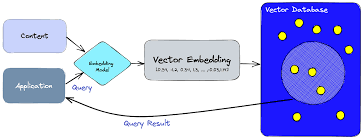
The Role of Knowledge Graphs and Vector Databases in Retrieval-Augmented Generation (RAG) In the dynamic AI landscape, Retrieval-Augmented Generation (RAG) systems are revolutionizing data retrieval by combining artificial intelligence with external data sources to deliver contextual, relevant outputs. Two core technologies driving this innovation are Knowledge Graphs and Vector Databases. While fundamentally different in their design and functionality, these tools complement one another, unlocking new potential for solving complex data problems across industries. Understanding Knowledge Graphs: Connecting the Dots Knowledge Graphs organize data into a network of relationships, creating a structured representation of entities and how they interact. These graphs emphasize understanding and reasoning through data, offering explainable and highly contextual results. How They Work Strengths Limitations Applications Vector Databases: The Power of Similarity In contrast, Vector Databases thrive in handling unstructured data such as text, images, and audio. By representing data as high-dimensional vectors, they excel at identifying similarities, enabling semantic understanding. How They Work Strengths Limitations Applications Combining Knowledge Graphs and Vector Databases: A Hybrid Approach While both technologies excel independently, their combination can amplify RAG systems. Knowledge Graphs bring reasoning and structure, while Vector Databases offer rapid, similarity-based retrieval, creating hybrid systems that are more intelligent and versatile. Example Use Cases Knowledge Graphs vs. Vector Databases: Key Differences Feature Knowledge Graphs Vector Databases Data Type Structured Unstructured Core Strength Relational reasoning Similarity-based retrieval Explainability High Low Scalability Limited for large datasets Efficient for massive datasets Flexibility Schema-dependent Schema-free Challenges in Implementation Future Trends: The Path to Convergence As AI evolves, the distinction between Knowledge Graphs and Vector Databases is beginning to blur. Emerging trends include: This convergence is paving the way for smarter, more adaptive systems that can handle both structured and unstructured data seamlessly. Conclusion Knowledge Graphs and Vector Databases represent two foundational technologies in the realm of Retrieval-Augmented Generation. Knowledge Graphs excel at reasoning through structured relationships, while Vector Databases shine in unstructured data retrieval. By combining their strengths, organizations can create hybrid systems that offer unparalleled insights, efficiency, and scalability. In a world where data continues to grow in complexity, leveraging these complementary tools is essential. Whether building intelligent healthcare systems, enhancing recommendation engines, or powering semantic search, the synergy between Knowledge Graphs and Vector Databases is unlocking the next frontier of AI innovation, transforming how industries harness the power of their data. Like Related Posts Who is Salesforce? Who is Salesforce? Here is their story in their own words. From our inception, we’ve proudly embraced the identity of Read more Salesforce Unites Einstein Analytics with Financial CRM Salesforce has unveiled a comprehensive analytics solution tailored for wealth managers, home office professionals, and retail bankers, merging its Financial Read more AI-Driven Propensity Scores AI plays a crucial role in propensity score estimation as it can discern underlying patterns between treatments and confounding variables Read more Tectonic’s Successful Salesforce Track Record Salesforce Technology Services Integrator – Tectonic has successfully delivered Salesforce in a variety of industries including Public Sector, Hospitality, Manufacturing, Read more

Read More
Google Prepares AI-Powered Jarvis Agent

Google Prepares AI-Powered Jarvis Agent

Google Prepares AI-Powered Jarvis Agent for Automated Browser Tasks in Chrome Google is reportedly gearing up to launch “Project Jarvis,” an AI-powered browser agent designed to automate tasks directly within the Chrome ecosystem. According to The Information, the tool is expected to roll out in December to select users and will leverage Google’s advanced Gemini 2.0 AI model. Jarvis aims to simplify repetitive online tasks, such as organizing information or booking reservations, offering a seamless and efficient digital assistant embedded within Chrome. This initiative reflects Google’s broader vision to enhance user experiences by automating web-based routines, making its browser a central hub for task automation. Anthropic Expands Desktop Automation with Claude 3.5 Sonnet Anthropic, a key player in the AI landscape, has advanced its Claude 3.5 model with a new “Computer Use” feature, enabling direct interaction with a user’s desktop. This update allows Claude to perform tasks such as typing, clicking, and managing multiple applications, making it a powerful tool for automating workflows like data entry, document management, and customer service. Available through APIs and platforms like Amazon Bedrock and Google Cloud’s Vertex AI, Claude’s new capabilities position it as a versatile solution for businesses seeking desktop-level automation, contrasting Google Jarvis’s browser-specific approach. By interpreting screen elements, Claude’s “Computer Use” mode supports broader applications beyond web tasks, offering businesses an edge in efficiency and scalability. How Google Jarvis Stands Out Unlike Anthropic’s desktop-oriented Claude Sonnet, Google Jarvis focuses on automating tasks within Chrome. Jarvis analyzes screenshots of web pages, interprets user commands, and executes actions like clicks or data entry. While still in development, Jarvis’s design suggests a future where mundane web-based tasks are seamlessly handled by AI. Powered by Google’s Gemini 2.0 language model, Jarvis is tailored for users who prioritize web-specific functions, creating a user-friendly assistant that requires no external software. This aligns with Google’s strategy to deepen integration within its ecosystem, making Chrome a more intuitive and productive environment. Microsoft’s Copilot Agents Lead Business Automation Microsoft, meanwhile, continues to enhance its Copilot AI agents, particularly within Dynamics 365. These specialized agents are designed to automate industry-specific workflows, from lead qualification in sales to financial data reconciliation. Unlike Google Jarvis or Anthropic Claude, Microsoft’s Copilot agents target enterprise users, embedding automation within business applications like Teams, Outlook, and SharePoint. With tools like Copilot Studio, organizations can customize workflows to meet specific needs, offering a level of flexibility that resonates with enterprise clients. Early adopters, including Vodafone and Cognizant, have reported significant productivity gains through these integrations. Microsoft’s efforts position Copilot as a robust partner for day-to-day operations, transforming tasks like analysis, project coordination, and document management into automated, efficient processes. Competing Visions for AI Agents As Google, Anthropic, and Microsoft refine their AI strategies, they’re carving out distinct niches in the AI agent landscape: These approaches highlight the diverse applications of AI agents, from enhancing individual user experiences to transforming business operations. Like Related Posts Who is Salesforce? Who is Salesforce? Here is their story in their own words. From our inception, we’ve proudly embraced the identity of Read more Salesforce Marketing Cloud Transactional Emails Salesforce Marketing Cloud Transactional Emails are immediate, automated, non-promotional messages crucial to business operations and customer satisfaction, such as order Read more Salesforce Unites Einstein Analytics with Financial CRM Salesforce has unveiled a comprehensive analytics solution tailored for wealth managers, home office professionals, and retail bankers, merging its Financial Read more AI-Driven Propensity Scores AI plays a crucial role in propensity score estimation as it can discern underlying patterns between treatments and confounding variables Read more

Read More
AI and UX Design

AI and UX Design

This insight comprehensively covers how AI is transforming UX design, presenting both opportunities and challenges while emphasizing the importance of maintaining a human-centric approach. Here’s a polished and slightly condensed version, retaining the core points for better clarity and engagement: AI in UX Design: Transforming Experiences in 2024 and Beyond In 2024, artificial intelligence (AI) is redefining user experience (UX) design and research. From streamlining processes to elevating personalization, UX professionals are integrating AI into their workflows to create experiences that are more intuitive and efficient. This insight explores how AI is reshaping UX and how designers can leverage it while preserving the human touch. How AI is Revolutionizing UX Design 1. Advanced AI Technologies in UXAI technologies like machine learning (ML), natural language processing (NLP), and computer vision are empowering designers with tools to understand user behavior better, build conversational interfaces, and create accessible, adaptable designs. These innovations provide deeper insights into user preferences and help refine interfaces to align with evolving needs. 2. Automating Routine Design TasksAI is taking over repetitive tasks such as rapid prototyping, A/B testing, and user data analysis, allowing designers to focus on creative, strategic challenges. For example: 3. Enhanced PersonalizationAI-driven systems offer dynamic content delivery, adaptive interfaces, and predictive behavior modeling to craft uniquely tailored experiences. These enhancements not only engage users but also foster loyalty by addressing individual preferences in real time. Balancing AI and Human-Centric Design While AI accelerates UX processes, maintaining a human-centered approach is essential. Successful integration requires: Best Practices for AI-Driven UX Design Ethical Considerations in AI-Enhanced UX Ethics remain at the forefront of AI in UX. Key concerns include: Learning from Case Studies These examples highlight how thoughtful AI integration can transform UX into a seamless, user-friendly journey. Preparing for Future Trends Looking ahead to 2025 and beyond, AI will continue to introduce innovations like emotional recognition and generative design, enabling even more intuitive user experiences. However, challenges such as data privacy concerns and high implementation costs will persist. UX professionals must adapt by blending AI-driven insights with human creativity, ensuring that designs remain empathetic and accessible. Conclusion AI is revolutionizing UX design, offering tools to enhance efficiency, personalization, and user engagement. The key to success lies in using AI as a complement to creativity rather than a replacement. By balancing automation with human-centered principles and committing to ethical practices, businesses can harness AI to create transformative, user-focused designs that truly resonate. Like Related Posts Who is Salesforce? Who is Salesforce? Here is their story in their own words. From our inception, we’ve proudly embraced the identity of Read more Salesforce Unites Einstein Analytics with Financial CRM Salesforce has unveiled a comprehensive analytics solution tailored for wealth managers, home office professionals, and retail bankers, merging its Financial Read more AI-Driven Propensity Scores AI plays a crucial role in propensity score estimation as it can discern underlying patterns between treatments and confounding variables Read more Tectonic’s Successful Salesforce Track Record Salesforce Technology Services Integrator – Tectonic has successfully delivered Salesforce in a variety of industries including Public Sector, Hospitality, Manufacturing, Read more

Read More
AI Agents and Consumer Trust

AI Agents Next AI Evolution

AI agents are being hailed as the next big leap in artificial intelligence, but there’s no universally accepted definition of what they are—or what they should do. Even within the tech community, there’s debate about what constitutes an AI agent. At its core, an AI agent can be described as software powered by artificial intelligence that performs tasks once handled by human roles, such as customer service agents, HR representatives, or IT help desk staff. However, their potential spans much further. These agents don’t just answer questions—they take action, often working across multiple systems. For example, Perplexity recently launched an AI agent to assist with holiday shopping, while Google introduced Project Mariner, an agent that helps users book flights, find recipes, and shop for household items. While the idea seems straightforward, it’s muddied by inconsistent definitions. For Google, AI agents are task-based assistants tailored to specific roles, like coding help for developers or troubleshooting issues for IT professionals. In contrast, Asana views agents as digital co-workers that take on assigned tasks, and Sierra—a startup led by former Salesforce co-CEO Bret Taylor—envisions agents as sophisticated customer experience tools that surpass traditional chatbots by tackling complex problems. This lack of consensus adds to the uncertainty around what AI agents can truly achieve. Rudina Seseri, founder and managing partner at Glasswing Ventures, explains this ambiguity stems from the technology’s infancy. She describes AI agents as intelligent systems capable of perceiving their environment, reasoning, making decisions, and taking actions to achieve specific goals autonomously. These agents rely on a mix of AI technologies, including natural language processing, machine learning, and computer vision, to operate in dynamic environments. Optimists, like Box CEO Aaron Levie, believe AI agents will improve rapidly as advancements in GPU performance, model efficiency, and AI frameworks create a self-reinforcing cycle of innovation. However, skeptics like MIT robotics pioneer Rodney Brooks caution against overestimating progress, noting that solving real-world problems—especially those involving legacy systems with limited API access—can be far more challenging than anticipated. David Cushman of HFS Research likens current AI agents to assistants rather than fully autonomous entities, with their capabilities limited to helping users complete specific tasks within pre-defined boundaries. True autonomy, where AI agents handle contingencies and perform at scale without human oversight, remains a distant goal. Jon Turow, a partner at Madrona Ventures, emphasizes the need for dedicated infrastructure to support the development of AI agents. He envisions a tech stack that allows developers to focus on product differentiation while leaving scalability and reliability to the platform. This infrastructure would likely involve multiple specialized models working together under a routing layer, rather than relying on a single large language model (LLM). Fred Havemeyer of Macquarie US Equity Research agrees, noting that the most effective AI agents will combine various models to handle complex tasks. He imagines a future where agents act like autonomous supervisors, delegating tasks and reasoning through multi-step processes to achieve abstract goals. While this vision is compelling, the current state of AI agents suggests we’re still in a transitional phase. The progress so far is promising, but several breakthroughs are needed before agents can operate as envisioned—truly autonomous, multi-functional, and capable of seamless collaboration across diverse systems. This story, originally published on July 13, 2024, has been updated to reflect new developments from Perplexity and Google. Like Related Posts Who is Salesforce? Who is Salesforce? Here is their story in their own words. From our inception, we’ve proudly embraced the identity of Read more Salesforce Marketing Cloud Transactional Emails Salesforce Marketing Cloud Transactional Emails are immediate, automated, non-promotional messages crucial to business operations and customer satisfaction, such as order Read more Salesforce Unites Einstein Analytics with Financial CRM Salesforce has unveiled a comprehensive analytics solution tailored for wealth managers, home office professionals, and retail bankers, merging its Financial Read more AI-Driven Propensity Scores AI plays a crucial role in propensity score estimation as it can discern underlying patterns between treatments and confounding variables Read more

Read More
google agentspace

Google Agentspace

Google Agentspace: Boosting Productivity with AI-Powered Agents Google has unveiled Agentspace, a cutting-edge tool designed to revolutionize workplace productivity by combining the power of AI agents, Google Gemini 2.0, and its advanced search capabilities. This tool aims to streamline workflows, enhance information discovery, and empower enterprises to unlock the full potential of their data. What is Google Agentspace? Google Agentspace is an enterprise-focused productivity platform that simplifies complex tasks involving planning, research, and content generation. By integrating AI-powered tools like NotebookLM Plus, it enables employees to uncover insights, interact with unstructured and structured data, and make informed decisions—all in one centralized platform. Key features include: Core Benefits of Google Agentspace 1. Streamlined Information Discovery Employees often waste hours sifting through fragmented data in emails, documents, and spreadsheets. Agentspace serves as a centralized knowledge hub, offering conversational assistance, proactive suggestions, and actionable insights from both unstructured and structured data sources. With pre-built connectors for tools like Google Drive, Jira, Microsoft SharePoint, and ServiceNow, Agentspace ensures seamless integration with existing systems, providing employees with relevant information faster. 2. Enhanced Multimodal Capabilities Agentspace leverages Google’s search expertise and Gemini 2.0 to provide advanced reasoning capabilities. Employees can query in multiple formats (text, audio, video), translate information into different languages, and generate audio summaries, enhancing productivity and accessibility. 3. Task Automation Across Departments Agentspace empowers teams across various functions to automate repetitive tasks, such as: 4. Scalable AI for Enterprises Agentspace offers a low-code visual tool for creating custom AI agents tailored to specific business needs. These agents can automate multi-step workflows, conduct in-depth research, and assist with data-driven content generation, enabling enterprises to scale AI adoption effortlessly. Security and Responsible AI Google Agentspace is built on Google Cloud’s secure-by-design infrastructure, ensuring that enterprises can deploy AI tools with confidence. Key Security Features Google is also addressing responsible AI concerns with tools for evaluation, content moderation, and bias mitigation, ensuring ethical and explainable AI use in the workplace. Use Cases Google Agentspace provides solutions tailored to various enterprise needs: Challenges and Future Directions Despite its potential, Agentspace faces hurdles such as employee training and adoption. Organizations must ensure that employees understand how to incorporate the tool into their daily workflows effectively. Moreover, Google’s approach to responsible AI will be closely scrutinized. Addressing issues like explainability, bias prevention, and robust data infrastructure will be crucial for building trust and driving adoption. Early Access and the Road Ahead Google is offering early access to Agentspace, allowing enterprises to explore its potential and provide feedback. As AI continues to reshape the workplace, tools like Agentspace position Google as a leader in productivity-enhancing solutions for businesses. For enterprises looking to harness AI to unlock creativity, improve decision-making, and automate workflows, Agentspace is the next step in digital transformation. Sign up for early access today to bring the future of work to your organization. Like Related Posts Who is Salesforce? Who is Salesforce? Here is their story in their own words. From our inception, we’ve proudly embraced the identity of Read more Salesforce Marketing Cloud Transactional Emails Salesforce Marketing Cloud Transactional Emails are immediate, automated, non-promotional messages crucial to business operations and customer satisfaction, such as order Read more Salesforce Unites Einstein Analytics with Financial CRM Salesforce has unveiled a comprehensive analytics solution tailored for wealth managers, home office professionals, and retail bankers, merging its Financial Read more AI-Driven Propensity Scores AI plays a crucial role in propensity score estimation as it can discern underlying patterns between treatments and confounding variables Read more

Read More

Real-World Insights and Applications

Salesforce’s Agentforce empowers businesses to create and deploy custom AI agents tailored to their unique needs. Built on a foundation of flexibility, the platform leverages both Salesforce’s proprietary AI models and third-party models like those from OpenAI, Anthropic, Amazon, and Google. This versatility enables businesses to automate a wide range of tasks, from generating detailed sales reports to summarizing Slack conversations. AI in Action: Real-World Insights and Applications The “CXO AI Playbook” by Business Insider explores how organizations across industries and sizes are adopting AI. Featured companies reveal their challenges, the decision-makers driving AI initiatives, and their strategic goals for the future. Salesforce’s approach with Agentforce aligns with this vision, offering advanced tools to address dynamic business needs and improve operational efficiency. Building on Salesforce’s Legacy of Innovation Salesforce has long been a leader in AI integration. It introduced Einstein in 2016 to handle scripted tasks like predictive analytics. As AI capabilities evolved, Salesforce launched Einstein GPT and later Einstein Copilot, which expanded into decision-making and natural language processing. By early 2024, these advancements culminated in Agentforce—a platform designed to provide customizable, prebuilt AI agents for diverse applications. “We recognized that our customers wanted to extend our AI capabilities or create their own custom agents,” said Tyler Carlson, Salesforce’s VP of Business Development. A Powerful Ecosystem: Agentforce’s Core Features Agentforce is powered by the Atlas Reasoning Engine, Salesforce’s proprietary technology that employs ReAct prompting to enable AI agents to break down problems, refine their responses, and deliver more accurate outcomes. The engine integrates seamlessly with Salesforce’s own large language models (LLMs) and external models, ensuring adaptability and precision. Agentforce also emphasizes strict data privacy and security. For example, data shared with external LLMs is subject to limited retention policies and content filtering to ensure compliance and safety. Key Applications and Use Cases Businesses can leverage tools like Agentbuilder to design and scale AI agents with specific functionalities, such as: Seamless Integration with Slack Currently in beta, Agentforce’s Slack integration brings AI automation directly to the workplace. This allows employee-facing agents to execute tasks and answer queries within the communication tool. “Slack is valuable for employee-facing agents because it makes their capabilities easily accessible,” Carlson explained. Measurable Impact: Driving Success with Agentforce Salesforce measures the success of Agentforce by tracking client outcomes. Early adopters report significant results, such as a 90% resolution rate for customer inquiries managed by AI agents. As adoption grows, Salesforce envisions a robust ecosystem of partners, AI skills, and agent capabilities. “By next year, we foresee thousands of agent skills and topics available to clients, driving broader adoption across our CRM systems and Slack,” Carlson shared. Salesforce’s Agentforce represents the next generation of intelligent business automation, combining advanced AI with seamless integrations to deliver meaningful, measurable outcomes at scale. Like Related Posts Who is Salesforce? Who is Salesforce? Here is their story in their own words. From our inception, we’ve proudly embraced the identity of Read more Salesforce Marketing Cloud Transactional Emails Salesforce Marketing Cloud Transactional Emails are immediate, automated, non-promotional messages crucial to business operations and customer satisfaction, such as order Read more Salesforce Unites Einstein Analytics with Financial CRM Salesforce has unveiled a comprehensive analytics solution tailored for wealth managers, home office professionals, and retail bankers, merging its Financial Read more AI-Driven Propensity Scores AI plays a crucial role in propensity score estimation as it can discern underlying patterns between treatments and confounding variables Read more

Read More
Google’s Gemini 1.5 Flash-8B

Google’s Gemini 1.5 Flash-8B

Google’s Gemini 1.5 Flash-8B: A Game-Changer in Speed and Affordability Google’s latest AI model, Gemini 1.5 Flash-8B, has taken the spotlight as the company’s fastest and most cost-effective offering to date. Building on the foundation of the original Flash model, 8B introduces key upgrades in pricing, speed, and rate limits, signaling Google’s intent to dominate the affordable AI model market. What Sets Gemini 1.5 Flash-8B Apart? Google has implemented several enhancements to this lightweight model, informed by “developer feedback and testing the limits of what’s possible,” as highlighted in their announcement. These updates focus on three major areas: 1. Unprecedented Price Reduction The cost of using Flash-8B has been slashed in half compared to its predecessor, making it the most budget-friendly model in its class. This dramatic price drop solidifies Flash-8B as a leading choice for developers seeking an affordable yet reliable AI solution. 2. Enhanced Speed The Flash-8B model is 40% faster than its closest competitor, GPT-4o, according to data from Artificial Analysis. This improvement underscores Google’s focus on speed as a critical feature for developers. Whether working in AI Studio or using the Gemini API, users will notice shorter response times and smoother interactions. 3. Increased Rate Limits Flash-8B doubles the rate limits of its predecessor, allowing for 4,000 requests per minute. This improvement ensures developers and users can handle higher volumes of smaller, faster tasks without bottlenecks, enhancing efficiency in real-time applications. Accessing Flash-8B You can start using Flash-8B today through Google AI Studio or via the Gemini API. AI Studio provides a free testing environment, making it a great starting point before transitioning to API integration for larger-scale projects. Comparing Flash-8B to Other Gemini Models Flash-8B positions itself as a faster, cheaper alternative to high-performance models like Gemini 1.5 Pro. While it doesn’t outperform the Pro model across all benchmarks, it excels in cost efficiency and speed, making it ideal for tasks requiring rapid processing at scale. In benchmark evaluations, Flash-8B surpasses the base Flash model in four key areas, with only marginal decreases in other metrics. For developers prioritizing speed and affordability, Flash-8B offers a compelling balance between performance and cost. Why Flash-8B Matters Gemini 1.5 Flash-8B highlights Google’s commitment to providing accessible AI solutions for developers without compromising on quality. With its reduced costs, faster response times, and higher request limits, Flash-8B is poised to redefine expectations for lightweight AI models, catering to a broad spectrum of applications while maintaining an edge in affordability. Like Related Posts Who is Salesforce? Who is Salesforce? Here is their story in their own words. From our inception, we’ve proudly embraced the identity of Read more Salesforce Unites Einstein Analytics with Financial CRM Salesforce has unveiled a comprehensive analytics solution tailored for wealth managers, home office professionals, and retail bankers, merging its Financial Read more AI-Driven Propensity Scores AI plays a crucial role in propensity score estimation as it can discern underlying patterns between treatments and confounding variables Read more Tectonic’s Successful Salesforce Track Record Salesforce Technology Services Integrator – Tectonic has successfully delivered Salesforce in a variety of industries including Public Sector, Hospitality, Manufacturing, Read more

Read More
How to Connect Multiple Data Sources in Power BI Desktop

How to Connect Multiple Data Sources in Power BI Desktop

In today’s data-driven world, the ability to analyze diverse data sources can set a business apart. With Power BI Desktop, a Microsoft tool, analysts can seamlessly integrate data from various platforms and transform raw information into actionable insights. For instance, you could combine Excel-based sales figures with financial data from SQL Server and customer information from Salesforce into an interactive report. Mastering these techniques can be easier through structured learning, such as Microsoft Power BI courses, which offer practical insights into leveraging this powerful tool. This guide will help you connect, combine, and visualize multiple data sources in Power BI Desktop to make smarter, data-driven decisions. Why Combine Multiple Data Sources? Organizations often face the challenge of managing data stored across disparate systems. Financial records may reside in SQL Server, sales data in Excel, and customer information in cloud platforms like Salesforce. Insights from these datasets are often hidden unless they are integrated. Using Power BI Desktop, you can load multiple data sources into a unified model, providing a comprehensive view that enables better analysis and decision-making. Getting Started with Power BI Desktop Before integrating datasets, ensure you have Power BI Desktop installed. The tool is available for download from the official Power BI website. Once installed, launch Power BI Desktop to begin connecting your data sources. Step-by-Step Guide 1. Connecting Your First Data Source Follow these steps to connect to your first data source: At this stage, you can use Power Query Editor to clean and transform the data as needed. 2. Adding Additional Data Sources Enhance your report by adding more data sources: For example, you could link an Excel file for sales data, a SQL Server database for product details, and Azure for supplementary information, all within a single report. 3. Combining Data from Multiple Sources To merge data from different sources into a cohesive model: This process creates a unified data model that allows for cross-tabulation and advanced visualizations. 4. Using Power Query Editor for Data Transformation Before combining datasets, you may need to clean and transform the data. Use Power Query Editor to: Access Power Query Editor by selecting Transform Data on the Home tab. 5. Creating Visualizations with Combined Data With your unified data model, you can create compelling visualizations: 6. Refreshing Data Connections Power BI Desktop enables you to refresh data connections effortlessly, ensuring your reports stay updated: Best Practices for Connecting Multiple Data Sources Conclusion Integrating multiple data sources in Power BI Desktop empowers businesses to uncover deep insights and make informed decisions. By following these steps, you can connect, aggregate, and visualize diverse datasets with ease. To further enhance your expertise, explore free resources or consider professional courses to master the versatility of Power BI Desktop—a vital tool for data professionals and business analysts. Like Related Posts Who is Salesforce? Who is Salesforce? Here is their story in their own words. From our inception, we’ve proudly embraced the identity of Read more Salesforce Marketing Cloud Transactional Emails Salesforce Marketing Cloud Transactional Emails are immediate, automated, non-promotional messages crucial to business operations and customer satisfaction, such as order Read more Salesforce Unites Einstein Analytics with Financial CRM Salesforce has unveiled a comprehensive analytics solution tailored for wealth managers, home office professionals, and retail bankers, merging its Financial Read more AI-Driven Propensity Scores AI plays a crucial role in propensity score estimation as it can discern underlying patterns between treatments and confounding variables Read more

Read More
Google Gemini 2.0

Google Gemini 2.0

Google Gemini 2.0 Flash: A First Look Google has unveiled an experimental version of Gemini 2.0 Flash, its next-generation large language model (LLM), now accessible to developers via Google AI Studio and the Gemini API. This model builds on the capabilities of its predecessors with improved multimodal features and enhanced support for agentic workflows, positioning it as a major step forward in AI-driven applications. Key Features of Gemini 2.0 Flash Performance and Efficiency According to Google, Gemini 2.0 Flash is twice as fast as Gemini 1.5 while outperforming it on standard benchmarks for AI accuracy. Its efficiency and size make it particularly appealing for real-world applications, as highlighted by David Strauss, CTO of Pantheon: “The emphasis on their Flash model, which is efficient and fast, stands out. Frontier models are great for testing limits but inefficient to run at scale.” Applications and Use Cases Agentic AI and Competitive Edge Gemini 2.0’s standout feature is its agentic AI capabilities, where multiple AI agents collaborate to execute multi-stage workflows. Unlike simpler solutions that link multiple chatbots, Gemini 2.0’s tool-driven, code-based training sets it apart. Chirag Dekate, an analyst at Gartner, notes: “There is a lot of agent-washing in the industry today. Gemini now raises the bar on frontier models that enable native multimodality, extremely large context, and multistage workflow capabilities.” However, challenges remain. As AI systems grow more complex, concerns about security, accuracy, and trust persist. Developers, like Strauss, emphasize the need for human oversight in professional applications: “I would trust an agentic system that formulates prompts into proposed, structured actions, subject to review and approval.” Next Steps and Roadmap Google has not disclosed pricing for Gemini 2.0 Flash, though its free availability is anticipated if it follows the Gemini 1.5 rollout. Looking ahead, Google plans to incorporate the model into its beta-stage AI agents, such as Project Astra, Mariner, and Jules, by 2025. Conclusion With Gemini 2.0 Flash, Google is pushing the boundaries of multimodal and agentic AI. By introducing native tool usage and support for complex workflows, this LLM offers developers a versatile and efficient platform for innovation. As enterprises explore the model’s capabilities, its potential to reshape AI-driven applications in coding, data science, and interactive interfaces is immense—though trust and security considerations remain critical for broader adoption. Like Related Posts Who is Salesforce? Who is Salesforce? Here is their story in their own words. From our inception, we’ve proudly embraced the identity of Read more Salesforce Unites Einstein Analytics with Financial CRM Salesforce has unveiled a comprehensive analytics solution tailored for wealth managers, home office professionals, and retail bankers, merging its Financial Read more AI-Driven Propensity Scores AI plays a crucial role in propensity score estimation as it can discern underlying patterns between treatments and confounding variables Read more Tectonic’s Successful Salesforce Track Record Salesforce Technology Services Integrator – Tectonic has successfully delivered Salesforce in a variety of industries including Public Sector, Hospitality, Manufacturing, Read more

Read More
Transform Customer Experiences

Transform Customer Experiences

How to Transform Customer Experiences with AI and Sub-Second E2E Real-Time Data Sync Introducing Data Cloud’s Sub-Second E2E Real-Time FeatureDeliver hyper-personalized experiences in real time, no matter how or where customers engage with your brand. Exceptional customer experiences hinge on unifying interactions across every touchpoint. Yet, fragmented data dispersed across systems, channels, and clouds often stands in the way. Salesforce Data Cloud eliminates these silos by delivering a synchronized, real-time customer data ecosystem, enabling brands to create personalized, seamless experiences instantly—regardless of how or where customers connect. We’re excited to announce that the Sub-Second E2E Real-Time feature in Salesforce Data Cloud is now available. This innovation processes and analyzes data as it’s generated, empowering brands to make immediate, data-driven decisions. Combined with Einstein Personalization—which leverages advanced machine learning (ML) and rules-based automation—businesses can deliver individualized experiences across all channels, driving deeper engagement and improved outcomes. What is Sub-Second Real-Time? Sub-second real-time refers to the ability to process and deliver data or responses in less than one second, ensuring ultra-low latency and near-instantaneous results. This capability is critical for applications requiring immediate data updates, such as live analytics, responsive user interfaces, and time-sensitive decision-making. The Sub-Second E2E Real-Time feature empowers industries like fraud detection, predictive maintenance, and real-time marketing with instant insights. By synchronizing data across systems, channels, and clouds, Data Cloud ensures a unified, real-time customer view, giving businesses a competitive edge. Real-World Examples of Sub-Second Real-Time in Action 1. Real-Time Web Personalization Imagine a user browsing a website. As they interact with products, Data Cloud instantly captures this activity and updates their customer profile. Using Einstein Personalization, the system processes this data in milliseconds to tailor their browsing experience. For instance, personalized product recommendations can appear as the user clicks, leveraging insights from their behavior across platforms such as websites, point-of-sale systems, mobile apps, and other data sources. This seamless personalization is made possible by Data Cloud’s integrations, including zero-copy ingestion from major data warehouses like Snowflake, Databricks, and Redshift. The result? A continuously updated, 360-degree customer view that enhances every touchpoint. 2. Real-Time Support with Agentforce Now, consider a customer engaging in a live chat for assistance. As they browse, their actions are captured and updated in real time. When they initiate a chat, whether through Agentforce AI agents or human support, the agent has immediate access to their full activity history, updated within milliseconds. This enables the agent to provide tailored responses and solutions, ensuring a frictionless and engaging customer support experience. Why Sub-Second Real-Time Matters From personalization to support, the Sub-Second E2E Real-Time feature in Data Cloud ensures every customer interaction feels relevant, timely, and connected. By bridging the gap between data silos and intelligent automation, businesses can unlock new opportunities to exceed customer expectations—at scale and in real time. Explore how Salesforce Data Cloud can transform your customer experience today. Like Related Posts Who is Salesforce? Who is Salesforce? Here is their story in their own words. From our inception, we’ve proudly embraced the identity of Read more Salesforce Marketing Cloud Transactional Emails Salesforce Marketing Cloud Transactional Emails are immediate, automated, non-promotional messages crucial to business operations and customer satisfaction, such as order Read more Salesforce Unites Einstein Analytics with Financial CRM Salesforce has unveiled a comprehensive analytics solution tailored for wealth managers, home office professionals, and retail bankers, merging its Financial Read more AI-Driven Propensity Scores AI plays a crucial role in propensity score estimation as it can discern underlying patterns between treatments and confounding variables Read more

Read More
Agentforce Custom AI Agents

Agentforce Custom AI Agents

Salesforce Introduces Agentforce: A New AI Platform to Build Custom Digital Agents Salesforce has unveiled Agentforce, its latest AI platform designed to help companies build and deploy intelligent digital agents to automate a wide range of tasks. Building on Salesforce’s generative AI advancements, Agentforce integrates seamlessly with its existing tools, enabling businesses to enhance efficiency and decision-making through automation. Agentforce Custom AI Agents. With applications like generating reports from sales data, summarizing Slack conversations, and routing emails to the appropriate departments, Agentforce offers businesses unprecedented flexibility in automating routine processes. The Problem Agentforce Solves Salesforce’s journey in AI began in 2016 with the launch of Einstein, a suite of AI tools for its CRM software. While Einstein automated some tasks, its capabilities were largely predefined and lacked the flexibility to handle complex, dynamic scenarios. The rapid evolution of generative AI opened new doors for improving natural language understanding and decision-making. This led to innovations like Einstein GPT and later Einstein Copilot, which laid the foundation for Agentforce. With Agentforce, businesses can now create prebuilt or fully customizable agents that adapt to unique business needs. Agentforce Custom AI Agents “We recognized that our customers want to extend the agents we provide or build their own,” said Tyler Carlson, Salesforce’s Vice President of Business Development. How Agentforce Works At the heart of Agentforce is the Atlas Reasoning Engine, a proprietary technology developed by Salesforce. It leverages advanced techniques like ReAct prompting, which allows AI agents to break down problems into steps, reason through them, and iteratively refine their actions until they meet user expectations. Key Features: Ensuring Security and Compliance Given the potential risks of integrating third-party LLMs, Salesforce has implemented robust safeguards, including: AI in Action: Real-World Applications One notable use case of Agentforce is its collaboration with Workday to develop an AI Employee Service Agent. This agent helps employees find answers to HR-related questions using a company’s internal policies and documents. Another example involves agents autonomously managing general email inboxes by analyzing message intent and forwarding emails to relevant teams. “These agents are not monolithic or tied to a single LLM,” Carlson explained. “Their versatility lies in combining different models and technologies for better outcomes.” Measuring Success Salesforce gauges Agentforce’s success through client outcomes and platform adoption. For example, some users report that Agentforce resolves up to 90% of customer inquiries autonomously. Looking ahead, Salesforce aims to expand the Agentforce ecosystem significantly. “By next year, we want thousands of agent skills and topics available for customers to leverage,” Carlson added. A Platform for the Future of AI Agentforce represents Salesforce’s vision of creating autonomous AI agents that empower businesses to work smarter, faster, and more efficiently. With tools like Agentbuilder and integrations across its ecosystem, Salesforce is positioning Agentforce as a cornerstone of AI-led innovation, helping businesses stay ahead in a rapidly evolving technological landscape. Like1 Related Posts Who is Salesforce? Who is Salesforce? Here is their story in their own words. From our inception, we’ve proudly embraced the identity of Read more Salesforce Marketing Cloud Transactional Emails Salesforce Marketing Cloud Transactional Emails are immediate, automated, non-promotional messages crucial to business operations and customer satisfaction, such as order Read more Salesforce Unites Einstein Analytics with Financial CRM Salesforce has unveiled a comprehensive analytics solution tailored for wealth managers, home office professionals, and retail bankers, merging its Financial Read more AI-Driven Propensity Scores AI plays a crucial role in propensity score estimation as it can discern underlying patterns between treatments and confounding variables Read more

Read More
AI is Revolutionizing Salesforce

AI is Revolutionizing Salesforce

AI is Revolutionizing Salesforce: Transforming Sales Teams in the Era of AI Artificial Intelligence (AI) is reshaping the sales landscape, disrupting traditional processes, and redefining how businesses interact with customers. The rapid adoption of AI-native systems is altering how data is captured, how sales teams engage, and how the entire sales cycle is structured. The shift toward AI-driven solutions is fueling unprecedented opportunities for sales organizations to achieve more by doing less manual work. Success in this transformation will favor those who use AI to make smarter, data-driven decisions, shifting the focus from activities to meaningful achievements. From Rolodex to Real-Time Insights: The Evolution of Sales The history of sales is one of continual evolution. From the bartering days of ancient commerce to the introduction of Rolodexes in the mid-20th century, and later to early CRM tools like Act! and Siebel Systems, the industry has always innovated to meet changing customer needs. Salesforce’s arrival in 1999 brought CRM to the cloud, empowering sales teams with unparalleled accessibility. Yet, all these systems had one thing in common—they relied on human input. Logging calls, updating lead statuses, and noting feedback all depended on sales reps’ diligence. That dependency is now being disrupted by AI, which captures and processes data autonomously. AI-Native Systems: Capturing Context Without Human Input AI-native systems represent a seismic shift. Unlike traditional CRMs, these systems capture data in real-time without relying on human intervention. From emails and Slack messages to Zoom calls and social media interactions, AI aggregates unstructured data into actionable insights. This creates a rich, context-driven record of customer behavior, reducing reliance on manual entry and unlocking deeper understanding. Automating the Mundane: Eliminating Data Entry AI is erasing the inefficiencies of manual processes. Sales development representatives (SDRs) once spent countless hours cold-calling, sending follow-ups, and updating records—a monotonous grind that yielded limited value. Today, AI automates these tasks, enabling SDRs to focus on high-impact activities like relationship-building and deal-closing. This automation, often referred to as intelligent pipeline management, identifies prospects, crafts personalized outreach, and schedules meetings—effortlessly managing the early stages of the sales funnel. AI as a Partner: Voice Agents and Real-Time Coaching AI is not just automating tasks; it’s enhancing human performance. AI-powered voice agents can now assist sales reps during live calls by offering real-time coaching. When a prospect raises an objection, the AI provides instant suggestions based on historical data, empowering salespeople to respond more effectively. This real-time guidance helps sales teams navigate complex conversations with confidence, boosting close rates and accelerating results. Personalization at Scale: Tailored Engagement Across Pipelines Personalization has long been a cornerstone of effective sales, but AI has made it scalable. AI tools analyze customer behaviors and preferences, allowing sales teams to tailor messages, proposals, and outreach at an individual level—even for thousands of prospects. From detecting website visits to auto-generating customized content, AI enables hyper-relevant interactions that build stronger connections with leads and customers. Breaking Down Silos: Unifying Sales, Marketing, and Customer Success AI is bridging organizational divides. Historically, sales, marketing, and customer success operated in silos, each pursuing independent goals. AI aligns these functions around a shared understanding of the customer, fostering collaboration and a unified go-to-market strategy. By consolidating data from every customer touchpoint into a single system of record, AI empowers teams to work together seamlessly, ensuring a consistent and coordinated customer experience. Systems of Record for the AI Age: The Importance of Context Unlike traditional CRMs that rely on structured fields, AI-powered systems excel at capturing unstructured data—conversations, social media mentions, and survey responses. These systems provide the context sales teams need to make better decisions. This rich contextual data benefits not just sales but also product development, marketing, and customer success teams, enabling them to refine strategies and create more responsive organizations. Redefining Metrics: From Activities to Achievements Traditional sales metrics often emphasized activity—calls made, emails sent, meetings booked. AI is shifting the focus to outcomes. By tracking the quality and impact of interactions, rather than the volume, sales leaders can better understand what drives success and optimize their strategies accordingly. The Future of Sales: Empowered by AI AI is not replacing salespeople; it’s empowering them. By automating repetitive tasks and delivering actionable insights, AI frees up teams to focus on building relationships, solving problems, and closing deals. To thrive in this new era, organizations must embrace AI as a core part of their strategy. The question for sales leaders is no longer whether to adopt AI but how quickly they can leverage it to gain a competitive edge. Embrace the future of sales—where intelligent systems drive outcomes, and human ingenuity takes center stage. AI is revolutionizing Salesforce by helping businesses improve customer relationships, streamline operations, and make better decisions: Like Related Posts Who is Salesforce? Who is Salesforce? Here is their story in their own words. From our inception, we’ve proudly embraced the identity of Read more Salesforce Marketing Cloud Transactional Emails Salesforce Marketing Cloud Transactional Emails are immediate, automated, non-promotional messages crucial to business operations and customer satisfaction, such as order Read more Salesforce Unites Einstein Analytics with Financial CRM Salesforce has unveiled a comprehensive analytics solution tailored for wealth managers, home office professionals, and retail bankers, merging its Financial Read more AI-Driven Propensity Scores AI plays a crucial role in propensity score estimation as it can discern underlying patterns between treatments and confounding variables Read more

Read More
Potential of GenAI in Healthcare

Potential of GenAI in Healthcare

Clinicians spend about 28 hours per week on administrative tasks, mainly clinical documentation and communication. Medical and claims staff reported even higher administrative loads, with 34 and 36 hours spent weekly on tasks like documentation, communication, and prior authorization. Many respondents linked these demands directly to burnout, with 77% of claims staff, 81% of medical staff, and 82% of clinicians citing administrative burdens as significant contributors. Additionally, 78% of payer executives and 85% of provider executives noted that administrative work is a key driver of staffing shortages.

Read More
gettectonic.com