
Healthcare Industry Archives - gettectonic.com - Page 2
What is Salesforce Health Cloud

Explore Salesforce Health Cloud

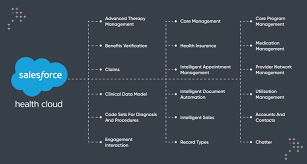
Empower Your Healthcare Team with Salesforce Health Cloud Equip your healthcare team with comprehensive 360-degree views that help connect and engage every patient, member, employee, and partner. Explore Salesforce Health Cloud Explore Health Cloud Understanding the capabilities of this platform is the first step to transforming your organization’s patient management. Let’s explore what Health Cloud offers to various types of healthcare organizations. Introducing Salesforce Health Cloud: A CRM Solution for Patient Management Over 600 companies, including industry leaders like Lilly, Pacific Clinics, United Healthcare, Progyny, Stanley Healthcare, and Humana, trust Salesforce Health Cloud for their patient management needs. As the healthcare industry rapidly evolves, effective patient information management is essential. This insight looks into Salesforce Health Cloud’s capabilities, features, integration options, and benefits, including its security architecture. What is Health Cloud? Salesforce Health Cloud is a cloud-based technology designed specifically for the healthcare industry. It centralizes patient information, giving healthcare professionals a complete view of patient records, enabling more effective treatments and better patient care. Key Capabilities of Salesforce Health Cloud Salesforce Health Cloud is a robust platform offering key capabilities such as: Salesforce in the Healthcare Industry Salesforce is increasingly popular among healthcare organizations for several reasons: Salesforce Health Platform Features Salesforce Health Cloud offers three main sets of features: Salesforce Health Cloud Architecture The architecture of Salesforce Health Cloud includes: Salesforce Health Cloud Security Salesforce Health Cloud is designed to securely manage healthcare data, featuring: Revolutionizing Healthcare Delivery with Salesforce Health Cloud Salesforce Health Cloud is designed for healthcare organizations to automate processes and provide personalized patient care. Since its launch in 2016, Health Cloud has evolved to address the complexities of the healthcare industry, including the introduction of Customer 360 for Health, an AI-driven healthcare solution. Why Choose Salesforce Health Cloud? Salesforce Health Cloud connects healthcare teams to ensure that patients receive the right care, supported by multi-layered security to protect sensitive patient data. It integrates clinical and non-clinical patient data, streamlining workflows and enhancing patient satisfaction. Top Features of Salesforce Health Cloud Key features include Patient 360, Care Plans, Care Coordination, Health Timeline, and Einstein Analytics for Healthcare, among others. Salesforce has also introduced AI-powered innovations under the Patient 360 for Health initiative, enhancing patient care and operational efficiency. Integration with MuleSoft Salesforce Health Cloud’s integration with MuleSoft allows organizations to connect with existing healthcare systems, ensuring accurate and up-to-date patient information, unlocking the full potential of their data, and improving decision-making. Conclusion Salesforce Health Cloud is more than just a platform—it’s a comprehensive solution for managing doctor-patient interactions, recordkeeping, and delivering personalized care. By leveraging Health Cloud, healthcare organizations can transform patient experiences, streamline processes, and ensure data security and compliance, positioning themselves for a brighter future in healthcare. Like Related Posts Who is Salesforce? Who is Salesforce? Here is their story in their own words. From our inception, we’ve proudly embraced the identity of Read more Salesforce Marketing Cloud Transactional Emails Salesforce Marketing Cloud Transactional Emails are immediate, automated, non-promotional messages crucial to business operations and customer satisfaction, such as order Read more Salesforce Unites Einstein Analytics with Financial CRM Salesforce has unveiled a comprehensive analytics solution tailored for wealth managers, home office professionals, and retail bankers, merging its Financial Read more AI-Driven Propensity Scores AI plays a crucial role in propensity score estimation as it can discern underlying patterns between treatments and confounding variables Read more

Read More
Salesforce and Healthcare

Marketing Strategies for Healthcare to Save Lives and Money

Healthcare marketers face the dual challenge of reducing costs and driving revenue, with the added responsibility of dealing with matters of life and death. Balancing these demands while prioritizing the well-being of patients and members requires a core focus on personalization in healthcare marketing strategies. Marketing Strategies for Healthcare can save lives and money. Despite the challenges, new technologies are ushering in stronger communications that benefit both healthcare organizations and those in need of care. Marketing Strategies for Healthcare Here are five ways a personalized healthcare marketing strategy can keep patients and members engaged and informed, spanning from acquisition to coordination: 1. Service Line Optimization: Service line optimization streamlines healthcare providers’ identification of the appropriate department for their patients. Thereby ensuring efficient and tailored care. This approach mirrors traditional multi-channel engagement and journey optimization. Simultaneously reaching patients through personalized messaging across various channels. Real-world Example: Ochsner Health utilized Salesforce Marketing Cloud to unify data sources and implement personalized email campaigns. Amazingly resulting in a 10% year-over-year increase in CRM-driven appointments and a 34% year-over-year increase in CRM-based revenue. Key takeaway: Personalizing healthcare marketing strategies enhances patient care and reduces administrative burdens. 2. Personalized Outreach for Appointment Adherence: Appointment adherence is a significant challenge for healthcare providers, with 18% of patients no-showing for appointments. Painfully costing providers over 0 billion annually. Personalized patient journeys, utilizing Salesforce Marketing Cloud, ensure patients are prepared for procedures through tailored communications, reducing no-shows. And increasing patient satisfaction. Real-world Example: Memorial Hermann replaced a generic 44-page guidebook with personalized checklists and timely reminders, resulting in improved patient preparation and engagement. Key takeaway: Personalized outreach increases appointment adherence and patient preparedness. 3. Complete Customer View for Medicare Providers and Payers: Finding suitable Medicare coverage is a complex task for those approaching retirement. Personalization helps healthcare payers build relationships. By providing plan recommendations based on medical history and sending updated recommendations when members change providers. Key takeaway: Personalized outreach helps retain members by offering tailored recommendations and proactive engagement. 4. Personalization Creates Increased Member Satisfaction and Better Star Ratings: Maintaining high Medicare star ratings requires a year-round effort to drive better member experiences. Personalization, utilizing customer data and AI, prevents message fatigue by delivering relevant content, meeting members’ expectations, and solving their problems. Key takeaway: Personalization contributes to higher member satisfaction and improved star ratings. In the challenging landscape of healthcare marketing, the integration of personalization technologies emerges as a key strategy to enhance patient care, streamline operations, and achieve organizational goals. Like Related Posts Salesforce Marketing Cloud Transactional Emails Salesforce Marketing Cloud Transactional Emails are immediate, automated, non-promotional messages crucial to business operations and customer satisfaction, such as order Read more Salesforce Unites Einstein Analytics with Financial CRM Salesforce has unveiled a comprehensive analytics solution tailored for wealth managers, home office professionals, and retail bankers, merging its Financial Read more AI-Driven Propensity Scores AI plays a crucial role in propensity score estimation as it can discern underlying patterns between treatments and confounding variables Read more Tectonic’s Successful Salesforce Track Record Salesforce Technology Services Integrator – Tectonic has successfully delivered Salesforce in a variety of industries including Public Sector, Hospitality, Manufacturing, Read more

Read More
What is Health Cloud

What is Health Cloud?

Salesforce Health Cloud, a specialized platform designed for healthcare organizations, aims to streamline operations and provide personalized care. By leveraging cloud technology, mobile capabilities, and social integration, Health Care Cloud enhances productivity, reduces costs, and offers a comprehensive view of patient data. Salesforce keeps electronic personal health information (ephi) safe and secure. Since its inception, Salesforce Health Cloud has evolved significantly to meet the unique and challenging needs of the healthcare sector. The introduction of Customer 360 for Health marks a milestone in fostering empathetic care and promoting collaboration among healthcare teams. What is Salesforce Health Cloud? At its core, Health Cloud facilitates seamless collaboration among healthcare teams to ensure optimal patient care. With robust security measures in place, patient data remains secure and accessible only to authorized personnel. Salesforce Health provides care teams with convenient access to both clinical and non-clinical patient information, including health conditions, medications, appointment history, communication preferences, and data from Electronic Health Records (EHRs). Categorized under Salesforce Industry Clouds, Health Cloud combines CRM capabilities with specialized features tailored for healthcare providers, payers, medical device companies, and pharmaceutical manufacturers. Its goal is to deliver personalized, connected care across the entire, sometimes disjointed healthcare ecosystem. Why Use Salesforce Health Cloud? Salesforce Health offers benefits to various stakeholders within the healthcare industry, including providers, payers, manufacturers, and research organizations. In a challenging healthcare landscape, Health Cloud addresses concerns such as managing complex patient data and enhancing patient experiences effectively. Success stories from organizations like New England Biolabs and John Muir Health highlight the impact of Health Salesforce in streamlining operations, improving customer satisfaction, and enhancing care coordination. Despite its transformative potential, widespread adoption and success require rebuilding patient trust, delivering empathetic care, and prioritizing data security. Tools like Health Cloud play a crucial role in achieving these goals. The Health Cloud Data Model Central to Salesforce Health is the flexible Health Cloud Data Model, built atop the Salesforce Platform. This model organizes diverse healthcare data sources, leveraging standard objects like Accounts and Contacts alongside custom objects tailored for healthcare applications. The data model revolves around organizing data around the patient, providing care teams with a holistic view for informed decision-making and personalized care. It supports interoperability and adheres to healthcare data standards like HL7 and FHIR, enabling seamless integration with EHRs and other healthcare applications. Key Features of Salesforce Health Salesforce Health Cloud offers a suite of robust features, including: Patient 360: Provides a unified view of the patient, consolidating demographics, clinical data, and interactions for informed decision-making and personalized care. Care Plans: Enables care teams to create, track, and manage personalized care plans, incorporating goals, tasks, and milestones to monitor patient progress. Care Coordination: Facilitates collaboration among care teams, supporting secure messaging and information sharing across providers. Health Timeline: Offers an interactive visualization of a patient’s medical history, including encounters, lab results, and medications, aiding in understanding and decision-making. Einstein Analytics for Healthcare: Utilizes AI to deliver advanced insights and predictions, empowering organizations to enhance patient outcomes and operational efficiency. Patient 360 for Health In addition to existing features, Salesforce introduces new innovations under Patient 360 for Health, powered by AI. These updates include: Advanced Therapy Management: Streamlines treatment processes for pharmaceutical companies, offering full visibility into patient treatment. Salesforce Genie for Healthcare: Integrates real-time clinical and non-clinical data to create comprehensive patient profiles. AI-Supported Health Timeline: Enhances navigation and accessibility of patient records and journeys through AI. Home Health: Automates intake and scheduling for in-home treatment, optimizing patient preferences. Data Cloud for Healthcare: Connects clinical and non-clinical patient data from multiple sources into a real-time patient profile. MuleSoft Direct for Health Cloud: Provides out-of-the-box connectors to access EHR data, facilitating smoother integration. Tableau Accelerators for Health Cloud: Offers ready-to-use dashboards for various use cases, empowering teams with data-driven insights. Integration With MuleSoft Salesforce Health seamlessly integrates with MuleSoft, enabling organizations to connect with existing EHRs, billing systems, and healthcare applications. MuleSoft’s Anypoint Platform provides pre-built connectors and APIs to simplify integration and unlock the full potential of healthcare data. Salesforce Health Cloud is not only a powerful platform for healthcare organizations but also a catalyst for positive change in patient care and operational efficiency. By leveraging HC’s capabilities, healthcare organizations can deliver exceptional patient experiences, streamline processes, and ensure data security and compliance. With continuous integration and innovation within the Salesforce ecosystem, Health Cloud remains positioned to drive transformative change in the healthcare industry, addressing challenges and paving the way for a brighter future in healthcare. Considering Salesforce Health Cloud for your practice? Contact Tectonic today. Like1 Related Posts Who is Salesforce? Who is Salesforce? Here is their story in their own words. From our inception, we’ve proudly embraced the identity of Read more Salesforce Marketing Cloud Transactional Emails Salesforce Marketing Cloud Transactional Emails are immediate, automated, non-promotional messages crucial to business operations and customer satisfaction, such as order Read more Salesforce Unites Einstein Analytics with Financial CRM Salesforce has unveiled a comprehensive analytics solution tailored for wealth managers, home office professionals, and retail bankers, merging its Financial Read more AI-Driven Propensity Scores AI plays a crucial role in propensity score estimation as it can discern underlying patterns between treatments and confounding variables Read more
Read More
Salesforce and Healthcare

Healthcare CRM to Enable Consumers and Build Trust

To transform the healthcare industry and enhance the experiences of all stakeholders requires the right tools. Making a paramount focus on building trust through personalization is imperative. Patients no longer desire to be perceived merely as a number or a chart. They seek a personalized treatment approach. Using the right healthcare CRM to enable trust with consumers makes good sense. The Goal of a Healthcare CRM This goal can be accomplished by seamlessly integrating electronic health records (EHRs) and claims data, establishing a 360-degree view of each healthcare consumer. A unique view of each consumer. Leveraging the capabilities of application programming interfaces (APIs), organizations can access comprehensive consumer information in real-time. By facilitating effective collaboration, informed care decisions, and the prevention of care gaps. The incorporation of state-of-the-art healthcare customer relationship management (CRM) platforms, equipped with AI and advanced analytics, can yield actionable insights. Insights that enhance interactions with patients and members. For instance, Community Health Choice (CHC) in Texas has embraced Salesforce’s Health Cloud, fully integrating clinical and claims data to create a holistic view of each patient, enabling the delivery of comprehensive care. What is a CRM system in healthcare? A healthcare CRM is a customer relationship management system designed specifically for use in the healthcare industry. Salesforce Health Cloud is a top choice to enable trust. CRM in healthcare not only stores patients’ contact information, it also gives a comprehensive overview of their medical history, appointments, and prescriptions. With a healthcare CRM system, you can customize your patient management plans so that each patient gets precisely the amount of care they need. A Healthcare CRM to Build Trust Connected experiences contribute to strengthening trust, increasing retention, and ultimately fostering improved health outcomes and business results for healthcare organizations. Implementing these strategies allows healthcare organizations to enhance the overall quality of care, providing a more positive experience for patients, providers, and other stakeholders. Salesforce is the right healthcare CRM to enable trust with your patients and community. Like1 Related Posts Who is Salesforce? Who is Salesforce? Here is their story in their own words. From our inception, we’ve proudly embraced the identity of Read more Salesforce Marketing Cloud Transactional Emails Salesforce Marketing Cloud Transactional Emails are immediate, automated, non-promotional messages crucial to business operations and customer satisfaction, such as order Read more Salesforce Unites Einstein Analytics with Financial CRM Salesforce has unveiled a comprehensive analytics solution tailored for wealth managers, home office professionals, and retail bankers, merging its Financial Read more AI-Driven Propensity Scores AI plays a crucial role in propensity score estimation as it can discern underlying patterns between treatments and confounding variables Read more

Read More
Quest to be Data-Driven

Quest to be Data-Driven

“Data-driven” is a business term that refers to the utilization of data to inform or enhance processes, decision making, and even the revenue model. The quest to be data-driven is afoot. In recent years, a data-driven business approach has gained a great deal of traction. It is true that every business deals with data — however, data-driven businesses systematically and methodically use data to power business decisions. Incorporating the notion of being a data-driven enterprise enriches the understanding of how data can profoundly impact business operations. Leveraging data not only offers valuable insights but also enhances adaptability, thereby sharpening the competitive edge of an organization. These insights serve as a foundation for making market predictions and adapting business strategies accordingly, often leading to revenue growth. While data may not provide solutions to all organizational challenges, embracing a data-driven approach lays a solid groundwork for achieving organizational goals. Data-driven contrasts with decision making that may be driven by emotions, external pressure, or instinct. So, what exactly constitutes a data-driven enterprise? It transcends mere number-crunching; it involves creating sustainable value for customers and innovating efficiently in the digital economy. Encouraging a data-driven approach across all facets of the business is paramount to success. Gaining data insights from data is invaluable. It allows organizations to reshape customer interactions, provided the data is accurate, accessible, and integrated into existing processes. However, many struggle to extract value from their data due to the complexity of transforming raw data into actionable insights. Understanding the hierarchy of data, information, and insights is crucial, as actionable insights drive data-driven success. Furthermore, adaptability emerges as a crucial factor in today’s rapidly evolving landscape. The ability to swiftly respond to changes and leverage data for informed decision-making is paramount. Data-driven insights serve as powerful tools for facilitating change and fostering agility, ensuring organizations remain competitive. Moreover, data serves as a catalyst for revenue generation through various business models such as Data as a Service (DaaS), Information as a Service (IaaS), and Answer as a Service (AaaS). By putting customer satisfaction at the forefront and leveraging data-driven insights, organizations can evolve their products proactively and drive growth. Building a data-driven enterprise involves a strategic approach encompassing nine key steps, including defining end goals, setting tangible KPIs, and fostering a data-driven culture across the organization. However, challenges such as deciding what to track, lack of tools or time for data collation, and turning data into meaningful insights may arise. Overcoming these challenges requires a cultural shift towards data-driven decision-making and the adoption of modern data architectures. Walking (or perhaps running) the data-driven journey with Tectonic involves connecting and integrating various data sources to ensure seamless data flow. By embracing a data-driven approach, organizations can unlock the full potential of their data, driving innovation, enhancing customer experiences, and achieving long-term success in today’s dynamic, rapidly evolving business landscape. Expanding upon this foundation, let’s go deeper into the transformative power of data-driven enterprises across various industry sectors. Consider, for instance, the retail industry, where data-driven insights revolutionize customer experiences and optimize operational efficiency. In the retail sector, understanding consumer behavior and preferences iscrucial to daily, quarterly, and annual success. By harnessing data analytics, retailers can analyze purchasing patterns, demographic information, and social media interactions to tailor marketing strategies and product offerings. For example, through personalized recommendations based on past purchases and browsing history, retailers can enhance customer engagement and drive sales. Moreover, data-driven insights enable retailers to optimize inventory management and supply chain operations. By analyzing historical sales data and demand forecasts, retailers can anticipate fluctuations in demand, minimize stockouts, and reduce excess inventory. This not only improves operational efficiency but also enhances customer satisfaction by ensuring products are readily available when needed. Furthermore, in the healthcare industry, data-driven approaches revolutionize patient care and treatment outcomes. Electronic health records (EHRs) and medical imaging technologies generate vast amounts of data, providing healthcare professionals with valuable insights into patient health and treatment efficacy. By leveraging predictive analytics and machine learning algorithms, healthcare providers can identify patients at risk of developing chronic conditions, enabling early intervention and preventive care. Additionally, data-driven approaches facilitate personalized treatment plans tailored to each patient’s unique medical history, genetic makeup, and lifestyle factors, improving treatment outcomes and patient satisfaction. In the manufacturing sector, data-driven strategies optimize production processes, enhance product quality, and reduce operational costs. By implementing Internet of Things (IoT) sensors and connected devices on the factory floor, manufacturers can collect real-time data on equipment performance, energy consumption, and production efficiency. Analyzing this data enables manufacturers to identify inefficiencies, minimize downtime, and proactively schedule maintenance to prevent costly equipment failures. Moreover, data-driven insights inform process improvements and product innovations, enabling manufacturers to stay competitive in an increasingly globalized market. The ultimately transformative impact of data-driven enterprises extends across various industry sectors, revolutionizing business operations, enhancing customer experiences, and driving innovation. By embracing a data-driven approach and leveraging advanced analytics technologies, organizations can unlock new opportunities for growth, efficiency, and competitive advantage in today’s data-loaded digital economy. Becoming data-driven requires harnessing the full potential of your data, transforming it into actionable insights, and iteratively refining your processes. Remember, data itself is not the ultimate goal but rather a powerful tool to drive informed decision-making and organizational growth. To establish a truly data-driven organization, consider the following nine steps: By following these steps, your organization can effectively harness the power of data to drive innovation, improve decision-making, and achieve sustainable growth in today’s data-driven landscape. Tectonic recognizes the challenges in the quest to be data-driven. We’ve launched a Data Cloud Salesforce Implementation Solution to help you. Content updated May 2024. Like Related Posts Who is Salesforce? Who is Salesforce? Here is their story in their own words. From our inception, we’ve proudly embraced the identity of Read more Salesforce Marketing Cloud Transactional Emails Salesforce Marketing Cloud Transactional Emails are immediate, automated, non-promotional messages crucial to business operations and customer satisfaction, such as order Read more Salesforce Unites Einstein Analytics with Financial CRM

Read More
Salesforce Health Cloud

Salesforce Health Cloud Information

Since its inception in 2016, Salesforce Health Cloud has evolved significantly, adapting to the intricacies of the sensitive and dynamic health industry. The latest addition to its offerings, Customer 360 for Health, represents a strategic move towards more empathetic care, bolstering patient trust and fostering team collaboration.

Read More
Tectonic-Ensuring Salesforce Customer Satisfaction

Tectonic’s Successful Salesforce Track Record

Salesforce Technology Services Integrator – Tectonic has successfully delivered Salesforce in a variety of industries including Public Sector, Hospitality, Manufacturing, and Health Life Sciences.  Read on about Tectonic’s successful Salesforce track record. Our primary focus is assisting clients with their Salesforce needs to solve business challenges. We work at the intersection of CRM, Marketing, Big Data, and Analytics. Public Sector Experience/Focus Proven Delivery – Tectonic delivers Salesforce Implementation, Integration and Managed Services, utilizing a modified Waterfall / Agile Delivery Method, leveraging US and International Delivery Center (IDC) resources, and delivering with strong, experienced Project Management Health and Life Sciences Focus We’ve helped healthcare providers navigate the challenges of moving data, including PHI and PII, into the cloud, providing physician facing services and improving operations. Salesforce provides comprehensive solutions tailored for the healthcare industry, addressing the specific needs of both payers (insurance providers) and providers (healthcare organizations). These solutions are designed to enhance patient engagement, improve operational efficiency, and drive better health outcomes. Financial Services Focus Transforming financial service delivery, optimizing operations, and cultivating community well-being and trust are at the core of Salesforce Financial Services Solutions. By automating every banking customer experience and uniting teams through Salesforce’s intelligence and a shared view of real-time customer data, a comprehensive banking solution is created, fostering customer satisfaction and loyalty. Travel and Hospitality Focus Salesforce provides tailored solutions for the hospitality and travel industry, helping businesses in this sector deliver exceptional customer experiences, streamline operations, and drive growth. These solutions leverage the power of the Salesforce Customer 360 platform to centralize data, enhance communication, and provide a personalized experience for guests. Manufacturing, Distribution, and Energy Focus We’ve helped small and large manufacturers optimize their sales operations and drive efficiencies in their contact center. Salesforce offers a suite of solutions tailored for manufacturing and distribution industries to enhance processes, improve collaboration, and drive overall efficiency. These solutions are designed to streamline operations. Designed improve customer relationships and provide valuable insights. Nonprofit Focus We’ve helped nonprofits and NGO’s optimize their operations and drive efficiencies in their fundraising and mission efforts. Salesforce offers a suite of solutions to nurture relationships and scale impact. Solutions with AI-driven, personalized services. Salesforce allows you to take control of your data on a single integrated platform. Nonprofit Cloud brings a nonprofit CRM, fundraising, programs, marketing engagement, and outcomes together in a single product. Strategic Relationship with Salesforce – Salesforce Ventures invested in Tectonic in Q3 2015.  We maintain strong working relationships with Salesforce License Sales, Professional Services and Alliances. Tectonic’s successful Salesforce track record stems from our great relationship with Salesforce and grows through each customer interaction. Like1 Related Posts Who is Salesforce? Who is Salesforce? Here is their story in their own words. From our inception, we’ve proudly embraced the identity of Read more Salesforce Marketing Cloud Transactional Emails Salesforce Marketing Cloud Transactional Emails are immediate, automated, non-promotional messages crucial to business operations and customer satisfaction, such as order Read more Salesforce Unites Einstein Analytics with Financial CRM Salesforce has unveiled a comprehensive analytics solution tailored for wealth managers, home office professionals, and retail bankers, merging its Financial Read more AI-Driven Propensity Scores AI plays a crucial role in propensity score estimation as it can discern underlying patterns between treatments and confounding variables Read more

Read More
gettectonic.com