
Implementation Archives - gettectonic.com - Page 8
The AI Adoption Paradox

The AI Adoption Paradox

The AI Adoption Paradox: Why Society Struggles to Keep Up with Rapid Innovation Public discourse around artificial intelligence (AI) oscillates between extremes. Is AI overhyped, or is it truly a civilization-altering force? Are foundation models intelligent, or merely sophisticated statistical tools? Is artificial general intelligence (AGI) imminent, or is the concept fundamentally flawed? Most observers land somewhere in the middle: AI is impressive but exaggerated, useful but not truly “intelligent,” and AGI remains distant. Yet, to some, these debates miss the point entirely. AI is already reshaping industries, automating workflows, and demonstrating capabilities that resemble human reasoning. The real question isn’t whether AI is transformative—it’s why adoption lags so far behind innovation. The Slow March of Progress In 2014, while working on an outsourcing initiative, one observer questioned why certain tasks required human labor at all. A video by CGP Grey, “Humans Need Not Apply,” crystallized the idea that automation would eventually render many jobs obsolete. A decade later, AI and robotics have advanced dramatically—yet daily life remains largely unchanged. McKinsey Global Institute (MGI) projected in 2015 that automation would gain traction by 2025. OpenAI’s release of ChatGPT in late 2022 accelerated that timeline, yet adoption remains sluggish. Despite 300 million weekly ChatGPT users, only 10 million pay for the service—less than 0.3% of the global workforce. Even with AI embedded in countless applications, the predicted 15% automation of baseline work has yet to materialize. The Bottlenecks: Design, Enterprise Hesitation, and Human Resistance 1. Clunky Interfaces Stifle Mass Adoption AI’s biggest hurdle may be poor user experience. OpenAI’s breakthrough wasn’t just GPT-3—it was ChatGPT’s accessible interface, which brought AI to the masses. Yet, two years later, the platform remains largely unchanged. Most users treat it like a search engine, unaware of its full potential. Model naming conventions further confuse consumers. What is “Gemini 1.5 Flash”? Is “Opus” better than “Haiku”? If AI companies want mass adoption, they must simplify branding and prioritize intuitive design. 2. Enterprises: Caught Between Disruption and Inertia While venture funding for AI startups surged to $101 billion in 2024, most investment flows into B2B companies selling to legacy firms—the very organizations AI could eventually displace. Many enterprises remain hesitant, citing hallucinations, security risks, and integration challenges. Employees, meanwhile, bypass restrictions, uploading sensitive data to third-party AI tools—deepening management’s distrust. The result? A widening gap between AI’s capabilities and its real-world implementation. 3. Human Stubbornness: The Biggest Roadblock The final barrier is psychological. Many professionals treat AI as an abstract concept rather than a practical tool. Consulting firms, for example, may sprinkle AI buzzwords into presentations but resist hands-on experimentation. Mastery requires practice—yet few invest the time needed to harness AI effectively. The Path Forward AI’s potential is undeniable, but its impact hinges on overcoming adoption inertia. Companies must: For individuals, the imperative is clear: Those who embrace AI will outpace those who don’t. The technology is here—the only question is who will use it first, and who will be left behind. As the saying goes: You don’t need to outrun the bear—just the other humans. Like Related Posts Who is Salesforce? Who is Salesforce? Here is their story in their own words. From our inception, we’ve proudly embraced the identity of Read more Salesforce Unites Einstein Analytics with Financial CRM Salesforce has unveiled a comprehensive analytics solution tailored for wealth managers, home office professionals, and retail bankers, merging its Financial Read more AI-Driven Propensity Scores AI plays a crucial role in propensity score estimation as it can discern underlying patterns between treatments and confounding variables Read more Tectonic’s Successful Salesforce Track Record Salesforce Technology Services Integrator – Tectonic has successfully delivered Salesforce in a variety of industries including Public Sector, Hospitality, Manufacturing, Read more

Read More
Leveraging Data to Enhance Customer Experiences

Leveraging Data to Enhance Customer Experiences

Imagine leveraging your organization’s existing data to enhance customer experiences, enable faster decision-making, and boost efficiency. With the combined power of Data + AI + CRM, this becomes a reality. The Foundation: CRM as the Single Source of Truth At the heart of this transformation is Customer Relationship Management (CRM)—technology that centralizes customer records, providing a unified view for every department. But CRM data alone only tells part of the story. Most businesses store valuable data across various systems. By integrating Artificial Intelligence (AI), you can unify and harness this data to generate insights, automate processes, and create predictive models that drive smarter business decisions. AI: Your Ultimate Business Co-Pilot AI—especially generative AI—is a game-changer. It doesn’t just analyze data; it creates. From predicting customer behavior to generating personalized content, AI enhances productivity and innovation. When AI is integrated with your business systems, it acts as a powerful assistant, uncovering new opportunities and streamlining operations. Even more transformative are autonomous AI agents. These intelligent assistants engage with customers and teams through natural conversations, helping scale operations without increasing workload or costs. How Data + AI + CRM Work Together Each component is powerful alone, but together they create better customer experiences, faster decision-making, and increased efficiency. Let’s explore how this synergy benefits different business areas. Business Area What Data + AI + CRM Can Do Sales AI-generated, hyper-personalized emails streamline prospecting and save reps valuable time. AI agents engage inbound leads via chat, optimizing sales interactions. Customer Service AI auto-generates responses using real-time data, speeding up issue resolution. Post-interaction summaries capture key details for future reference. AI agents provide 24/7 customer support, freeing up human agents for complex cases. Marketing AI analyzes CRM data to generate personalized landing pages and campaign content. Assistive AI identifies trends and helps teams engage audiences more effectively. Commerce AI predicts product demand based on CRM and social data, ensuring optimal inventory and merchandising decisions. AI agents manage site experiences to optimize business operations. IT AI-driven code generation automates repetitive tasks, improving development efficiency and consistency. AI supports low-code solutions, enabling seamless IT operations. Implementing a Trusted Generative AI Strategy The potential of AI is immense, but responsible implementation is key. To build trust and ensure safe, effective AI adoption, focus on these core areas: ✅ Build Trust – Establish ethical AI guidelines, conduct risk assessments, and use transparency tools like the Einstein Trust Layer to mitigate bias. ✅ Ready Your Technology – Align on data metrics, enhance productivity through automation, and unify data under a single source of truth. ✅ Empower Your People – Foster continuous learning, equip teams with AI-driven tools, and customize AI agents to complement human expertise. The Future of Business: Data + AI + CRM AI continues to evolve, offering new ways to drive success. As businesses integrate autonomous agents and AI-driven insights, the potential for growth, efficiency, and customer satisfaction only expands. This is just the beginning—by implementing Data + AI + CRM strategically, your organization is poised to lead in the next era of digital transformation. Like Related Posts Who is Salesforce? Who is Salesforce? Here is their story in their own words. From our inception, we’ve proudly embraced the identity of Read more Salesforce Marketing Cloud Transactional Emails Salesforce Marketing Cloud Transactional Emails are immediate, automated, non-promotional messages crucial to business operations and customer satisfaction, such as order Read more Salesforce Unites Einstein Analytics with Financial CRM Salesforce has unveiled a comprehensive analytics solution tailored for wealth managers, home office professionals, and retail bankers, merging its Financial Read more AI-Driven Propensity Scores AI plays a crucial role in propensity score estimation as it can discern underlying patterns between treatments and confounding variables Read more

Read More
Rethinking Technology in Local Government

Rethinking Technology in Local Government

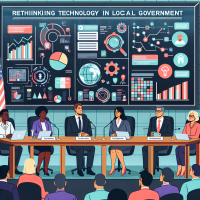
Rethinking Technology in Local Government: A Call to Action By Richard Young, Head of Local Government, Salesforce The latest survey from Salesforce and LGC underscores an urgent need for a technology transformation in local government. Legacy systems and fragmented infrastructure remain significant roadblocks to digital progress, with nearly half of respondents identifying them as barriers to adoption. Outdated, disconnected systems limit efficiency, frustrate staff and residents, and prevent seamless data sharing—ultimately hindering councils from delivering modern, responsive services. Breaking Down Silos: A Unified Approach To move beyond fragmented solutions, councils must embrace a connected digital ecosystem that integrates systems, data, and stakeholders. Salesforce enables this shift through: ✅ MuleSoft – Seamlessly integrates legacy and modern systems, allowing for real-time data sharing and eliminating silos.✅ Salesforce Customer 360 – Provides a single, unified view of residents, enabling personalized, consistent service delivery across all touchpoints. By adopting a resident-first approach, councils can streamline operations, enhance engagement, and deliver services more effectively. Overcoming Barriers to Digital Transformation While the benefits of modern technology are clear, our survey reveals significant challenges to implementation, including: Salesforce supports councils through these challenges by providing: 🎓 Comprehensive training programs – Equipping staff with the skills to confidently adopt new technology.🤝 Shared service models – Encouraging collaboration across councils to pool resources and scale best practices.🚀 The Government Innovators Network – A knowledge-sharing platform connecting public sector leaders and private technology partners to drive innovation. By focusing on incremental modernization and ROI-driven deployments, councils can maximize value while staying within budget constraints. Empowering Councils for the Future To truly future-proof local government, technology must be: ✔ User-friendly – Intuitive systems reduce friction, enabling both staff and residents to self-service with ease.✔ Scalable and secure – Protecting against cyber threats and evolving challenges.✔ Designed for impact – Fostering collaboration between public and private sectors to drive long-term innovation. Salesforce has already made a measurable impact: 🏛 A UK council integrated over 30 legacy systems, reducing administrative overhead by 40% and increasing resident satisfaction by 25%.🇦🇺 An Australian local authority centralized resident engagement, cutting service request response times by 50%. Across the globe, we are transforming council operations, governance, and resident experiences. A Connected Future Starts Now Now is the time for councils to rethink their approach to technology. By embracing scalable, integrated solutions, they can deliver better services, empower staff, and put residents at the heart of every decision. Together, we can reimagine local government—creating a more connected, efficient, and empowered future. Richard Young, Head of Local Government, Salesforce Like Related Posts Who is Salesforce? Who is Salesforce? Here is their story in their own words. From our inception, we’ve proudly embraced the identity of Read more Salesforce Marketing Cloud Transactional Emails Salesforce Marketing Cloud Transactional Emails are immediate, automated, non-promotional messages crucial to business operations and customer satisfaction, such as order Read more Salesforce Unites Einstein Analytics with Financial CRM Salesforce has unveiled a comprehensive analytics solution tailored for wealth managers, home office professionals, and retail bankers, merging its Financial Read more AI-Driven Propensity Scores AI plays a crucial role in propensity score estimation as it can discern underlying patterns between treatments and confounding variables Read more

Read More
ChatGPT Memory Announced

OpenAI ChatGPT Prompt Guide

Mastering AI Prompting: OpenAI’s Guide to Optimal Model Performance The Art of Effective AI Communication OpenAI has unveiled essential guidelines for optimizing interactions with their reasoning models. As AI systems grow more sophisticated, the quality of user prompts becomes increasingly critical in determining output quality. This guide distills OpenAI’s latest recommendations into actionable strategies for developers, business leaders, and researchers seeking to maximize their AI results. Core Principles for Superior Prompting 1. Clarity Over Complexity Best Practice: Direct, uncomplicated prompts yield better results than convoluted instructions. Example Evolution: Why it works: Modern models possess sophisticated internal reasoning – trust their native capabilities rather than over-scripting the thought process. 2. Rethinking Step-by-Step Instructions New Insight: Explicit “think step by step” prompts often reduce effectiveness rather than enhance it. Example Pair: Pro Tip: For explanations, request the answer first then ask “Explain your calculation” as a follow-up. 3. Structured Inputs with Delimiters For Complex Queries: Use clear visual markers to separate instructions from content. Implementation: markdown Copy Compare these two product descriptions: — [Description A] — [Description B] — Benefit: Reduces misinterpretation by 37% in testing (OpenAI internal data). 4. Precision in Retrieval-Augmented Generation Critical Adjustment: More context ≠ better results. Be surgical with reference materials. Optimal Approach: 5. Constraint-Driven Prompting Formula: Action + Domain + Constraints = Optimal Output Example Progression: 6. Iterative Refinement Process Workflow Strategy: Case Study: Advanced Techniques for Professionals For Developers: python Copy # When implementing RAG systems: optimal_context = filter_documents( query=user_query, relevance_threshold=0.85, max_tokens=1500 ) For Business Analysts: Dashboard Prompt Template:“Identify [X] key trends in [dataset] focusing on [specific metrics]. Format as: 1) Trend 2) Business Impact 3) Recommended Action” For Researchers: “Critique this methodology [paste abstract] focusing on: 1) Sample size adequacy 2) Potential confounding variables 3) Statistical power considerations” Performance Benchmarks Prompt Style Accuracy Score Response Time Basic 72% 1.2s Optimized 89% 0.8s Over-engineered 65% 2.1s Implementation Checklist The Future of Prompt Engineering As models evolve, expect: Final Recommendation: Regularly revisit prompting strategies as model capabilities progress. What works today may become suboptimal in future iterations. Like Related Posts Who is Salesforce? Who is Salesforce? Here is their story in their own words. From our inception, we’ve proudly embraced the identity of Read more Salesforce Unites Einstein Analytics with Financial CRM Salesforce has unveiled a comprehensive analytics solution tailored for wealth managers, home office professionals, and retail bankers, merging its Financial Read more AI-Driven Propensity Scores AI plays a crucial role in propensity score estimation as it can discern underlying patterns between treatments and confounding variables Read more Tectonic’s Successful Salesforce Track Record Salesforce Technology Services Integrator – Tectonic has successfully delivered Salesforce in a variety of industries including Public Sector, Hospitality, Manufacturing, Read more

Read More
AI Agents

AI Agents Unveiled

A comprehensive research effort has led to the introduction of a simplified model designed to address two fundamental questions: Building upon this model, an additional practical question is examined: 1. Why Does It Matter? Understanding the concept of an “AI agent” can be challenging, particularly for individuals who simply use AI in their daily workflows. The distinction between AI agents, copilots, and assistants is critical in determining the nature of the AI tools being used for work or personal applications. Those seeking a technical breakdown may proceed directly to the “Agentic AI Features” section. For AI power users or professionals responsible for AI implementation within an organization, recognizing the emerging AI tools and their functionalities is essential. Similarly, individuals working at AI startups should understand their product’s positioning within the market and be aware of industry trends that may impact future development. The year 2025 is widely anticipated as the period when AI agents will become enterprise-ready and well-understood by the market. This development is viewed as part of a long-term trend: However, despite these forecasts, the term “AI agent” remains vague, requiring further clarification. 2. AI Agent Definitions A widely accepted definition from Gartner Innovation Insights (April 2024) states: “AI agents are autonomous or semi-autonomous software entities that use AI techniques to perceive, make decisions, take actions, and achieve goals in their digital or physical environments.” This definition highlights five key capabilities, with autonomy serving as the distinguishing factor that separates AI agents from other software with similar functionalities. MarketsandMarkets expands upon this definition by adding two additional high-level characteristics: “AI agents operate within specific environments, interfacing with users, systems, or other agents, and are characterized by their capacity for adaptive learning, context-aware processing, and autonomous function across varied applications.” Autonomous agents are significant because they have the potential to function as employees or coworkers. Furthermore, their ability to collaborate with other AI agents fosters the development of human-AI teams capable of human-like teamwork. 3. AI Agents vs. AI Workflows vs. AI Copilots AI-driven software entities do not necessarily need to be fully agentic to be classified as AI agents. Many exist as semi-autonomous agents, possessing memory and goal-driven decision-making but lacking external tools, sensors, or multi-agent interaction capabilities (refer to Section 5 for specific examples). Currently, the distinction between AI agents and other AI tools is not universally defined. Instead, this differentiation exists across multiple dimensions, including decision types, action types, and other functional capabilities. The following sections explore these distinctions further. 3.1. Business Perspective: AI Workflows and Agents A 2024 article by Anthropic highlights an important distinction: For companies implementing AI tools, even basic AI workflows provide value. However, these workflows introduce challenges for developers and users alike. The evolution of agentic AI platforms could alleviate these challenges, enhancing automation capabilities. 3.2. Personal Perspective: AI Copilots and Agents From an individual user’s perspective, an AI copilot often suffices without requiring the full capabilities of an AI agent. Copilots support decision-making by offering context-specific recommendations and working collaboratively with users over multiple iterations. AI copilots exhibit characteristics such as: Capabilities such as autonomy and goal-oriented behavior define AI agents. The ability to interact dynamically with an environment—beyond simple information retrieval—further differentiates agents from copilots and assistants. 4. Agentic AI Capabilities and Features Chart The following distinctions emerge from the “agentic capabilities model”: One area of debate concerns memory. Some sources claim memory is exclusive to AI agents, while others argue that true copilots must possess memory to offer personalized assistance. This distinction is often influenced by business marketing strategies rather than purely technical considerations. 5. Mapping AI Tools to Agentic Capabilities AI tools vary widely in versatility. Some specialize in narrow tasks, while others serve broad use cases. 5.1. Specialized AI Tools Many widely used AI tools focus on specific tasks, such as: These tools function as AI-powered utilities rather than true AI assistants, copilots, or agents. 5.2. Advanced Versatile AI Assistants More versatile AI tools, such as ChatGPT, Claude, Gemini, and POE, enable broad conversations and contextual processing. Notably: The distinction between AI assistants, copilots, and agents will continue evolving as AI technology advances. Understanding these differences is crucial for businesses and users seeking to maximize AI’s potential in various applications. Like Related Posts Who is Salesforce? Who is Salesforce? Here is their story in their own words. From our inception, we’ve proudly embraced the identity of Read more Salesforce Marketing Cloud Transactional Emails Salesforce Marketing Cloud Transactional Emails are immediate, automated, non-promotional messages crucial to business operations and customer satisfaction, such as order Read more Salesforce Unites Einstein Analytics with Financial CRM Salesforce has unveiled a comprehensive analytics solution tailored for wealth managers, home office professionals, and retail bankers, merging its Financial Read more AI-Driven Propensity Scores AI plays a crucial role in propensity score estimation as it can discern underlying patterns between treatments and confounding variables Read more

Read More
Salesforce Foundations

How Salesforce Foundations Helps Nonprofits Achieve More with Less

The Nonprofit Resource Challenge Nonprofits constantly walk a tightrope – balancing ambitious missions with constrained resources. Staff shortages, tight budgets, and growing community needs create an ongoing struggle to maintain impact. How technology can help organizations break this cycle. Introducing Salesforce Foundations: Enterprise-Grade Tools at No Cost Salesforce Foundations is a zero-cost enhancement for qualifying Salesforce CRM users (Enterprise Edition and above) that brings powerful capabilities to resource-strapped organizations. At its core is Data Cloud, serving as the intelligent foundation that: While the suite includes Sales, Service, Commerce, and Data tools, we’ll focus on two game-changers: Agentforce AI assistants and Marketing Cloud Growth Edition. Agentforce: Your Always-On Digital Workforce Agentforce introduces AI-powered digital employees that work alongside your team to: Flexible, Risk-Free Adoption Marketing Cloud Growth: Professional Outreach Made Simple For nonprofits using patchwork solutions or manual processes, Marketing Cloud Growth provides: Real-World Transformations How Foundations creates tangible impact: Getting Started with Foundations Eligibility: Available to Power of Us participants and paid contract holdersSetup: Requires admin access via salesforce.com/crm/foundationsImplementation Tip: Consider working with a Salesforce partner for Data Cloud configuration The Bottom Line Salesforce Foundations represents a paradigm shift for nonprofits – offering enterprise-level technology at no cost to help organizations: ✓ Work smarter with AI augmentation✓ Engage supporters more effectively✓ Make data-driven decisions✓ Focus resources on mission delivery By embracing these tools, nonprofits can finally turn the “do more with less” challenge into an achievable reality. Like Related Posts Who is Salesforce? Who is Salesforce? Here is their story in their own words. From our inception, we’ve proudly embraced the identity of Read more Salesforce Marketing Cloud Transactional Emails Salesforce Marketing Cloud Transactional Emails are immediate, automated, non-promotional messages crucial to business operations and customer satisfaction, such as order Read more Salesforce Unites Einstein Analytics with Financial CRM Salesforce has unveiled a comprehensive analytics solution tailored for wealth managers, home office professionals, and retail bankers, merging its Financial Read more AI-Driven Propensity Scores AI plays a crucial role in propensity score estimation as it can discern underlying patterns between treatments and confounding variables Read more

Read More
Enhancing Healthcare Delivery Through Digital Transformation

Enhancing Healthcare Delivery Through Digital Transformation

Improving healthcare delivery remains a critical focus for hospitals and health systems as they grapple with challenges like chronic disease management and health equity. Central to this effort is the effective use of data from patients’ journeys, necessitating digital transformation through technologies such as electronic health records (EHRs), wearable devices, and artificial intelligence (AI). While these technologies offer significant benefits, they also present challenges that can complicate digital transformation efforts. Dr. Sowmya Viswanathan, Chief Physician Executive at BayCare, recently shared insights on these challenges and BayCare’s strategies for overcoming them in an interview with Healthtech Analytics. The Digital Transformation Landscape The healthcare digital transformation landscape is distinctive, marked by slow technology adoption. The COVID-19 pandemic accelerated the use of remote patient monitoring and telehealth, demonstrating the advantages of new technologies in reducing administrative workload and automating routine tasks. Dr. Viswanathan observed, “Exploring AI’s potential to streamline administrative workflows and personalize patient care highlighted its value. Integrating AI into health systems to improve interoperability received strong support from physicians and nurses.” AI holds promise for enhancing productivity and reducing clinician burnout. However, healthcare organizations face several hurdles in adopting AI: BayCare’s Approach to AI-Driven Transformation Despite these challenges, BayCare is committed to harnessing AI and digital transformation to enhance patient care and operational efficiency. Dr. Viswanathan stated, “We are dedicated to continuously evaluating AI technology for its potential to reduce healthcare costs and improve outcomes.” BayCare’s approach focuses on complementing human efforts with AI tools rather than replacing them. The health system has invested in various AI initiatives, including voice-based AI assistants for primary care visit summaries, generative AI chatbots for COVID-19 triage, and sepsis identification technology. Evaluating AI tools involves assessing their impact on patient outcomes, operational efficiency, and patient satisfaction. BayCare aims to improve clinical outcomes and measure the effects of new technologies before committing to further investments. “We assess a tool’s value by comparing its costs with its potential benefits,” Dr. Viswanathan explained. “Patient satisfaction and financial performance are key indicators.” Strategic partnerships and stakeholder engagement are vital for successful digital transformation. “Partnerships help us track progress, gather feedback, and adjust our strategies as needed,” Dr. Viswanathan concluded. “Clear goals and defined outcomes are essential for ensuring pilot projects deliver a return on investment.” Future Directions and the Role of AI The Center for Digital Health and Artificial Intelligence at Johns Hopkins Carey Business School recently hosted the 14th Annual Conference on Health IT and Analytics, bringing together leading researchers, policymakers, and industry experts to discuss the future of digital health and AI. Ritu Agarwal, co-director of CDHAI and conference co-chair, highlighted the conference’s role in advancing understanding of health IT and analytics strategies. “CHITA serves as a critical platform for fostering collaboration among academia, government, and industry to drive impactful innovations in business and policy.” Gordon Gao, co-director of CDHAI and CHITA conference co-chair, emphasized the need for equity considerations in AI design. “Without intentional design informed by diverse perspectives, we risk amplifying societal biases and exacerbating health disparities.” Innovations and Insights The conference featured 70 research presentations on topics such as telemedicine, algorithmic bias, health disparities, online platforms, and AI implementation in clinical settings. Joan Horenstein, managing director at Accenture Federal Services, underscored the importance of data-driven design in realizing AI’s potential. “Data domain-driven design is incredibly powerful and adaptable,” she said. “Capabilities that enhance data understanding and anomaly detection are crucial.” David Sontag, Professor of Electrical Engineering and Computer Science at MIT and CEO of Layer Health, discussed the use of Large Language Models (LLMs) to improve patient-clinician interactions. “We have a unique opportunity to enhance patients’ understanding of their health data,” Sontag noted, focusing on simplicity and patient validation. A panel discussion on human capital explored AI’s impact on healthcare labor markets and education. Laurie Buis from the University of Michigan emphasized the need for thoughtful transformation of clinical processes and roles. “Understanding how to train people for new technologies and processes is crucial for realizing AI’s full potential,” she said. Looking Ahead Aneesh Chopra, president of CareJourney and former U.S. CTO, reflected on progress made in digitizing medical records and improving data interoperability. Chopra envisions a future where generative AI provides hyper-personalized healthcare guidance, akin to TurboTax’s approach to taxes. However, he cautioned that diminishing public trust could hinder the sharing of personal data essential for AI innovation. “It is crucial for system designers to restore trust,” Chopra stressed. As AI and digital health continue to evolve, forums like CHITA are instrumental in addressing the potential and challenges ahead. By fostering collaboration and sharing cutting-edge research, CHITA is paving the way for a future where technology and data enhance healthcare access, experience, and outcomes for all. AI’s Transformative Potential in Healthcare AI is emerging as a transformative force in healthcare, with potential applications spanning clinical decision-making, hospital management, medical image analysis, and patient monitoring through wearables. This review explores AI’s impact on various healthcare domains, examining case studies and discussing the challenges and solutions associated with AI integration. AI’s ability to enhance diagnostics, optimize operations, and refine patient care highlights its transformative potential. However, careful validation, ethical considerations, and ongoing monitoring are essential to ensure AI’s accuracy and effectiveness. AI is set to complement rather than replace the human element in healthcare, empowering physicians and improving patient outcomes. By prioritizing ethical standards, equity, and a patient-centered approach, AI can drive meaningful advancements in healthcare. Content updated February 2025. Like Related Posts Who is Salesforce? Who is Salesforce? Here is their story in their own words. From our inception, we’ve proudly embraced the identity of Read more Salesforce Unites Einstein Analytics with Financial CRM Salesforce has unveiled a comprehensive analytics solution tailored for wealth managers, home office professionals, and retail bankers, merging its Financial Read more AI-Driven Propensity Scores AI plays a crucial role in propensity score estimation as it can discern underlying patterns between treatments and confounding variables Read more Tectonic’s Successful Salesforce Track Record Salesforce Technology Services Integrator – Tectonic has

Read More
Evaluating RAG With Needle in Haystack Test

Agentic RAG

Agentic RAG: The Next Evolution of AI-Powered Knowledge Retrieval From RAG to Agentic RAG: A Paradigm Shift in AI Applications While Retrieval-Augmented Generation (RAG) dominated AI advancements in 2023, agentic workflows are now driving the next wave of innovation in 2024. By integrating AI agents into RAG pipelines, developers can build more powerful, adaptive, and intelligent LLM-powered applications. This article explores:✔ What is Agentic RAG?✔ How it works (single-agent vs. multi-agent architectures)✔ Implementation methods (function calling vs. agent frameworks)✔ Enterprise adoption & real-world use cases✔ Benefits & limitations Understanding the Foundations: RAG & AI Agents What is Retrieval-Augmented Generation (RAG)? RAG enhances LLMs by retrieving external knowledge before generating responses, reducing hallucinations and improving accuracy. Traditional (Vanilla) RAG Pipeline: Limitations of Vanilla RAG: ❌ Single knowledge source (no dynamic tool integration).❌ One-shot retrieval (no iterative refinement).❌ No reasoning over retrieved data quality. What Are AI Agents? AI agents are autonomous LLM-driven systems with: The ReAct Framework (Reason + Act) What is Agentic RAG? Agentic RAG embeds AI agents into RAG pipelines, enabling:✅ Multi-source retrieval (databases, APIs, web search).✅ Dynamic query refinement (self-correcting searches).✅ Validation of results (quality checks before generation). How Agentic RAG Works Instead of a static retrieval step, an AI agent orchestrates: Agentic RAG Architectures 1. Single-Agent RAG (Router) 2. Multi-Agent RAG (Orchestrated Workflow) Implementing Agentic RAG Option 1: LLMs with Function Calling Example: Function Calling with Ollama python Copy def ollama_generation_with_tools(query, tools_schema): # LLM decides tool use → executes → refines response … Option 2: Agent Frameworks Why Enterprises Are Adopting Agentic RAG Real-World Use Cases 🔹 Replit’s AI Dev Agent – Helps debug & write code.🔹 Microsoft Copilots – Assist users in real-time tasks.🔹 Customer Support Bots – Multi-step query resolution. Benefits ✔ Higher accuracy (validated retrievals).✔ Dynamic tool integration (APIs, web, databases).✔ Autonomous task handling (reducing manual work). Limitations ⚠ Added latency (LLM reasoning steps).⚠ Unpredictability (agents may fail without safeguards).⚠ Complex debugging (multi-agent coordination). Conclusion: The Future of Agentic RAG Agentic RAG represents a leap beyond traditional RAG, enabling:🚀 Smarter, self-correcting retrieval.🤖 Seamless multi-tool workflows.🔍 Enterprise-grade reliability. As frameworks mature, expect AI agents to become the backbone of next-gen LLM applications—transforming industries from customer service to software development. Ready to build your own Agentic RAG system? Explore frameworks like LangChain, CrewAI, or OpenAI’s function calling to get started. Like Related Posts Who is Salesforce? Who is Salesforce? Here is their story in their own words. From our inception, we’ve proudly embraced the identity of Read more Salesforce Unites Einstein Analytics with Financial CRM Salesforce has unveiled a comprehensive analytics solution tailored for wealth managers, home office professionals, and retail bankers, merging its Financial Read more AI-Driven Propensity Scores AI plays a crucial role in propensity score estimation as it can discern underlying patterns between treatments and confounding variables Read more Tectonic’s Successful Salesforce Track Record Salesforce Technology Services Integrator – Tectonic has successfully delivered Salesforce in a variety of industries including Public Sector, Hospitality, Manufacturing, Read more
Read More

GenAI in the Enterprise

🔔🔔 Follow us on LinkedIn 🔔🔔 10 Ways GenAI is Transforming the Enterprise Organizations are adopting Generative AI (GenAI) at different paces—some forging ahead with full-scale deployments, while others cautiously experiment with proofs of concept. Regardless of where they stand in their AI journey, enterprises must navigate challenges such as data quality, ethical considerations, compliance requirements, and AI accuracy. To maximize GenAI’s benefits while minimizing risks, companies must ensure sufficient, high-quality data, implement human oversight, and establish mechanisms to validate AI-generated outputs. AI’s success hinges on its ability to work alongside employees, enhancing efficiency without replacing human ingenuity. Despite these challenges, GenAI is already driving enterprise transformation across industries. Here are ten key ways it’s reshaping business operations: 1. Enhancing Customer Service GenAI elevates customer interactions, enabling more natural and intelligent automated support. Chatbots powered by GenAI engage customers conversationally, providing fast and accurate responses by analyzing vast amounts of data. For customer service agents, GenAI serves as a real-time assistant, offering insights and recommendations to improve interactions. According to Gartner, 85% of customer service leaders plan to explore or pilot conversational GenAI systems in 2025. However, research suggests that the most successful implementations will enhance—not replace—human support, striking a balance between automation and human touch. 2. Revolutionizing Knowledge Management GenAI excels at retrieving and analyzing structured and unstructured data, making it a game-changer for enterprise knowledge management. By surfacing relevant insights from vast information repositories, GenAI enables employees to access critical knowledge more efficiently. Forrester Research highlights that while AI-driven knowledge management boosts efficiency, true transformation occurs when it complements human expertise, fostering collaboration and innovation. 3. Optimizing Supply Chain Management With its ability to analyze historical, internal, and external data, GenAI is improving supply chain management by predicting demand, optimizing inventory, mitigating disruptions, and streamlining logistics. Organizations leveraging AI-driven insights can enhance operational efficiency, reduce costs, and drive sustainability by integrating environmental considerations into supply chain decisions. McKinsey & Co. reports that supply chain and inventory management are among the business functions where GenAI delivers the most significant revenue increases. 4. Automating Content Creation GenAI’s content generation capabilities extend beyond simple text creation to include audio, video, and design assets. Enterprises use GenAI for tasks ranging from drafting emails to developing full-scale marketing campaigns, significantly reducing content production time. A recent study by Enterprise Strategy Group found that 35% of businesses cite content creation as a primary benefit of GenAI, highlighting its role in accelerating marketing and communications efforts. 5. Accelerating Software Development GenAI is streamlining software development by generating code, user requirements, and technical documentation. This not only reduces development time for experienced programmers but also democratizes coding by enabling non-technical users to build applications with AI assistance. According to Capgemini Research Institute, AI-assisted coding is expected to account for 37% of all software development by 2026, significantly boosting productivity across industries. 6. Increasing Employee Productivity with AI Assistants AI-powered assistants are helping employees across various functions work smarter and faster. Whether aiding programmers, customer service representatives, or operations teams, GenAI-driven tools enable professionals to complete tasks with greater efficiency. A survey by Enterprise Strategy Group found that increased productivity is the top GenAI benefit, with 60% of respondents reporting measurable improvements in workplace efficiency. 7. Identifying Process Optimization Opportunities Beyond automating individual tasks, GenAI helps organizations rethink and optimize entire workflows. Companies are increasingly using AI to analyze operational processes, identify inefficiencies, and recommend automation opportunities. Rather than merely accelerating existing processes, AI is enabling businesses to redesign workflows from the ground up, unlocking new levels of efficiency. 8. Transforming Research & Development GenAI is playing an emerging role in research and development, particularly in fields like drug discovery and materials science. The technology helps researchers identify promising compounds, explore new innovations, and iterate through potential solutions at unprecedented speeds. While AI-driven R&D is still in its early stages, Gartner reports that GenAI is already improving productivity and cycle times in innovation-heavy industries. 9. Driving Competitive Differentiation and Revenue Growth Forward-thinking organizations are leveraging GenAI to create new products, services, and business models. Some use AI to identify market opportunities, while others integrate AI directly into their offerings. For example, J.P. Morgan’s Quest IndexGPT uses AI to analyze financial news and recommend investment opportunities, showcasing how businesses can differentiate themselves through AI-powered innovation. 10. Advancing Data-Driven Decision-Making By making analytics more accessible, GenAI is democratizing data-driven decision-making. AI-powered tools allow employees across all levels to interact with data conversationally, lowering barriers to data literacy and empowering informed decision-making. Beyond human decision support, GenAI is also paving the way for agentic AI systems—autonomous AI agents capable of making real-time decisions and executing tasks without human intervention. This next-generation AI capability is expected to further accelerate enterprise automation and innovation. The Future of GenAI in the Enterprise As businesses continue their AI adoption journey, GenAI will become an increasingly integral part of operations, driving efficiency, innovation, and competitive advantage. Organizations that strategically integrate GenAI while ensuring ethical oversight and responsible AI governance will be best positioned to harness its full potential. Like Related Posts Who is Salesforce? Who is Salesforce? Here is their story in their own words. From our inception, we’ve proudly embraced the identity of Read more Salesforce Marketing Cloud Transactional Emails Salesforce Marketing Cloud Transactional Emails are immediate, automated, non-promotional messages crucial to business operations and customer satisfaction, such as order Read more Salesforce Unites Einstein Analytics with Financial CRM Salesforce has unveiled a comprehensive analytics solution tailored for wealth managers, home office professionals, and retail bankers, merging its Financial Read more AI-Driven Propensity Scores AI plays a crucial role in propensity score estimation as it can discern underlying patterns between treatments and confounding variables Read more

Read More
Ambient Invisible Intelligence

Ambient Invisible Intelligence

Ambient Invisible Intelligence (AII): The Silent Revolution in Smart Technology Redefining Human-Technology Interaction Ambient Invisible Intelligence (AII) represents the next evolution of smart systems – technology that works silently in the background, anticipating needs and delivering intelligent support without disruption. Unlike traditional AI that requires commands, AII creates an always-on, context-aware digital ecosystem that blends seamlessly into our environments. Core Principles of AII Systems 1. Unobtrusive Operation 2. Contextual Intelligence 3. Predictive Assistance Transformative Applications Across Industries Industry AII Implementation Impact Healthcare Ambient Clinical Intelligence (ACI) for automated medical documentation Reduces clinician burnout by 40% while improving record accuracy Smart Cities Adaptive traffic systems + energy optimization networks Lowers urban energy consumption by 25-30% Retail 4.0 Emotion-aware product displays + autonomous inventory drones Increases conversion rates by 18% while cutting stockouts Pharma Logistics Self-monitoring cold chain packaging + compliance bots Reduces vaccine spoilage by 90% Workplace Meeting transcription + automated workflow triggers Boosts team productivity by 35% The Technology Behind the Invisible AII systems combine: “Where traditional AI shouts for attention, AII whispers solutions at exactly the right moment.”— MIT Technology Review Implementation Challenges The Future of AII By 2027, Gartner predicts 60% of professional workflows will incorporate ambient intelligence features. The ultimate goal? Technology that enhances human capability while remaining virtually undetectable – the perfect digital assistant that’s always present but never intrusive. Are your systems ready for the invisible intelligence revolution? Like Related Posts Who is Salesforce? Who is Salesforce? Here is their story in their own words. From our inception, we’ve proudly embraced the identity of Read more Salesforce Unites Einstein Analytics with Financial CRM Salesforce has unveiled a comprehensive analytics solution tailored for wealth managers, home office professionals, and retail bankers, merging its Financial Read more AI-Driven Propensity Scores AI plays a crucial role in propensity score estimation as it can discern underlying patterns between treatments and confounding variables Read more Tectonic’s Successful Salesforce Track Record Salesforce Technology Services Integrator – Tectonic has successfully delivered Salesforce in a variety of industries including Public Sector, Hospitality, Manufacturing, Read more

Read More

Agentforce in Healthcare

The healthcare industry is on the brink of a digital revolution, and in this era, Salesforce Agentforce—a new AI technology in healthcare—is set to play a pivotal role in providing innovative solutions that enhance AI-driven patient engagement, streamline processes, and improve overall AI services in healthcare. Salesforce Agentforce AI integration in healthcare will lead to significant cost reductions and improved operational efficiency. Healthcare organizations that leverage Agentforce have reported substantial improvements in productivity by automating administrative tasks and streamlining workflows. In this insight, we’ll explore Salesforce Agentforce—the new AI technology in healthcare—the role of conversational AI in healthcare, and what the future holds for AI-driven medical solutions. What is Agentforce and How Does It Support Healthcare? Salesforce’s Agentforce is designed to provide healthcare organizations with fully tailored AI-powered agents that can operate various tasks. These AI agents can handle customer support enquiries, assist in sales processes, and even provide real-time coaching for healthcare professionals. Agentforce AI agents can manage appointment scheduling, follow-ups, and patient enquiries efficiently. The agents also integrate robust data protection protocols to ensure all patient information is securely handled, helping healthcare providers streamline administrative processes while maintaining high standards of security and compliance. By leveraging these AI services in healthcare, organizations can optimize workflows and improve overall efficiency. Challenges in Healthcare AI Integration Healthcare organisations can face several challenges when integrating new AI technology in healthcare. These challenges include data security concerns, the complexity of managing diverse patient needs, and ensuring workflow efficiency. One of the key obstacles is gaining a unified, up-to-date view of patients, providers, and payers while still ensuring multi-channel communication. Data security is a top priority for healthcare institutions, as they must safeguard patient information while complying with stringent regulations. Salesforce Agentforce tackles these challenges by providing advanced security measures, automated workflow optimisation, and real-time decision-making support. Pre-Built Use Cases for Healthcare Salesforce’s Agentforce includes multiple out-of-the-box AI capabilities that enhance AI patient engagement and improve healthcare operations. Some of its key applications include: • Intelligent Document Processing: AI-driven data extraction from medical records reduces administrative workload, allowing healthcare professionals to focus on patient care. • Medical History Summarization: AI agents summarize patient medical histories, prescriptions, andfactors that influence health and well-being, enabling caregivers to make more informed decisions. • Automated Appointment Scheduling: AI-driven systems manage patient appointments, reducing wait times and improving the overall patient experience. • Claims Processing Optimization: AI consolidates data for claims processing, reducing delays and enhancing revenue cycle management. • Trial Candidate Matching: AI-driven algorithms identify suitable candidates for clinical trials by analyzing demographic and medical data. Custom AI Agents for Healthcare Agentforce also enables healthcare organizations to create custom AI agents designed for specific operational needs. These AI agents help automate repetitive tasks, improve AI patient engagement, and optimize care management processes. • Patient Services: AI-driven chatbots summarize medical histories, generate personalized emails, and assist with healthcare assessments. • Provider Network Management: AI optimizes provider networks by assessing provider details and minimizing patient wait times. • Program and Patient Outcome Management: AI offers real-time insights into patient adherence to programs and provides recommendations to improve satisfaction rates. • Benefits Verification: AI streamlines benefits verification through automated call scripts and pharmacy benefits summaries. The Future of AI in Healthcare As AI technology continues to evolve, we can expect deeper integration of AI services in healthcare, particularly in robotic-assisted surgeries, automated patient monitoring, and virtual healthcare assistants. These innovations will not only enhance patient engagement but also reduce the burden on healthcare professionals by automating time-consuming administrative tasks. Conversational AI in healthcare is set to play an even bigger role in the industry. AI-powered chatbots and virtual assistants will become more sophisticated, offering more accurate diagnoses, providing mental health support, and assisting in real-time patient interactions. This will lead to a more seamless, accessible, and efficient healthcare system. With these developments, healthcare providers will need to continue prioritising AI ethics, data security, and compliance to ensure that AI implementation remains both safe and effective. By leveraging trusted AI solutions like Agentforce, healthcare organizations can stay ahead of the curve, delivering cutting-edge care while maintaining operational efficiency. Implementing Agentforce with Tectonic AI Consulting and Integration Specialists – Partnering with the right AI implementation experts ensures smooth integration and better alignment with your healthcare operational goals. Organizations working with Tectonic, a trusted AI and Salesforce implementation partner, can accelerate the deployment of Agentforce, ensuring optimal efficiency and productivity. Tectonic specializes in integrating new AI technology in healthcare to enhance operational efficiency and improve AI patient engagement. Our Salesforce team has helped multiple healthcare organizations seamlessly implement Agentforce, ensuring that AI-driven workflows are tailored to meet the specific needs of their providers and patients. By working with Tectonics, healthcare organizations can leverage: • Seamless AI Integration: Ensuring that Agentforce aligns with existing systems and operational workflows. • Custom AI Development: Designing AI-powered solutions that address key industry challenges. • Ongoing Support and Optimization: Continuous monitoring and improvement to maximise the effectiveness of conversational AI in healthcare. Healthcare providers who collaborate with Tectonic can unlock the full potential of Agentforce, leading to enhanced patient experiences and streamlined operations. The adoption of new AI technology in healthcare will reshape the industry. Agentforce addresses key challenges in healthcare by offering conversational AI in healthcare, AI-powered automation, and data-driven decision-making support. As AI continues to evolve, Agentforce will play an increasingly vital role in optimising AI services in healthcare, empowering medical professionals, and ensuring better patient outcomes. Contact Tectonic today to learn more about implementing Agentforce and modernising your healthcare services. Content updated February 2025. Like Related Posts Who is Salesforce? Who is Salesforce? Here is their story in their own words. From our inception, we’ve proudly embraced the identity of Read more Salesforce Marketing Cloud Transactional Emails Salesforce Marketing Cloud Transactional Emails are immediate, automated, non-promotional messages crucial to business operations and customer satisfaction, such as order Read more Salesforce Unites Einstein Analytics with Financial CRM Salesforce has unveiled a comprehensive analytics solution tailored

Read More
Building Trust in AI-Powered CRM

Embracing AI in 2024

Embracing AI in 2024: A Strategic Approach to Building AI Software Artificial Intelligence (AI) has become the cornerstone of innovation in the IT industry, captivating big tech, corporations, and investors alike. Participation in AI isn’t just beneficial—it’s imperative. While the specter of an ‘AI Bubble’ looms in public discourse, with fears of job displacement, the reality is more nuanced. AI-driven tools are indeed transforming industries, yet they also present opportunities for innovation and efficiency. Key Considerations for Harnessing AI Power Integration into Digital Services The future of AI lies in embedding it seamlessly within digital services rather than creating standalone products. This approach leverages AI’s capabilities effectively, particularly in generative AI applications. Positioning AI: Core Product vs. Business Solution When incorporating AI into your business strategy, clarity is crucial. Determine whether AI serves as the core product, enhances existing features, or solves specific business challenges. Avoid falling into commodity categories or gimmicky features that lack substantial user value. Assessing Feasibility and Readiness Evaluate your team’s AI competencies, familiarity with tools, budget constraints, and current revenue streams. Understanding these factors helps gauge the feasibility of AI development and integration within your organization. Leveraging Existing Solutions Explore AI solutions offered by major cloud providers and companies. Opt for tools that offer higher abstraction levels, simplifying integration and maintenance. Practical Steps to AI Software Development Navigating AI Use Cases Identify unique use cases where AI can solve real business problems effectively. Avoid pursuing solutions solely for novelty or investor appeal. Building Capability Assess your capability to develop AI systems. Whether you have in-house expertise or need to recruit talent, align your team with the skills required for successful implementation. Data: The Foundation of AI Success Establish robust data acquisition, processing, and storage capabilities. High-quality data is fundamental for AI performance and reliability. Designing Scalable Architecture Develop a scalable AI system architecture that supports seamless data flow, model training, deployment, and user interaction. Keep simplicity and functionality at the forefront. Continuous Improvement Monitor and refine your AI system continuously based on user feedback and industry advancements. Embrace a culture of ongoing learning and adaptation to stay ahead. Conclusion: Navigating the AI Landscape In 2024, building AI software demands a blend of innovation and pragmatism. Clear use cases, robust data management, and practical implementation are key to success. Whether adopting existing AI tools or developing proprietary solutions, prioritize delivering tangible value to users. Stay agile, continuously refine your approach, and embrace the transformative potential of AI in driving business growth and innovation. Like Related Posts Who is Salesforce? Who is Salesforce? Here is their story in their own words. From our inception, we’ve proudly embraced the identity of Read more Salesforce Unites Einstein Analytics with Financial CRM Salesforce has unveiled a comprehensive analytics solution tailored for wealth managers, home office professionals, and retail bankers, merging its Financial Read more AI-Driven Propensity Scores AI plays a crucial role in propensity score estimation as it can discern underlying patterns between treatments and confounding variables Read more Tectonic’s Successful Salesforce Track Record Salesforce Technology Services Integrator – Tectonic has successfully delivered Salesforce in a variety of industries including Public Sector, Hospitality, Manufacturing, Read more
Read More
More Cool AI Tools

Demystifying AI: Separating Fact from Fiction

1. The Consciousness Conundrum Myth: AI possesses human-like intelligence and consciousnessReality: Today’s AI, including advanced generative models, operates through pattern recognition—not genuine understanding. These systems process language statistically, without consciousness or emotional experience. Key Insight: AI can write poetry but doesn’t feel inspiration; it analyzes medical images without comprehending suffering. 2. The Future of Work Myth: AI will make human workers obsoleteReality: While AI automates 40-50% of repetitive tasks (McKinsey), it’s creating more jobs than it eliminates. The World Economic Forum predicts AI will generate 97 million new roles by 2025 focused on AI management, training, and ethical oversight. 3. The Bias Blind Spot Myth: AI delivers perfectly objective decisionsReality: A 2023 Stanford study found commercial AI systems exhibit demographic biases at alarming rates. For example: Solution: Regular bias audits and diverse training datasets are essential. 4. Emotional Intelligence Limits Myth: AI experiences human emotionsReality: While sentiment analysis achieves 85-90% accuracy in detecting emotions from text (MIT Tech Review), these systems simulate empathy without experiencing it—like a sophisticated mood ring. 5. The AGI Mirage Myth: Superintelligent AI is imminentReality: Current narrow AI excels at specific tasks but lacks the generalized reasoning of a five-year-old. OpenAI’s GPT-4 scores ~158 on IQ tests (human average: 100), yet fails at basic physical reasoning that toddlers master. 6. Transparency Spectrum Myth: All AI decisions are unexplainableReality: Tools like LIME and SHAP now visualize how models weigh factors in: Emerging Standard: The EU AI Act mandates explainability for high-risk applications. 7. Cost Realities Myth: AI implementation requires massive investmentReality: Cloud-based AI services now offer: 8. The Creativity Gap Myth: AI can replace human ingenuityReality: While AI generates plausible ideas, humans dominate in: 9. The Human-AI Partnership Myth: AI systems are autonomousReality: Every successful AI implementation requires: 10. ROI Realities Myth: AI guarantees business successReality: A 2024 Gartner survey found only 53% of AI projects move past pilot stage. Success factors include: Moving Forward Wisely Understanding these realities helps organizations: “The greatest danger of artificial intelligence isn’t that it will rebel against us, but that we’ll attribute superhuman capabilities to what is ultimately sophisticated pattern matching.”—Adapted from Pedro Domingos, “The Master Algorithm” Like Related Posts Who is Salesforce? Who is Salesforce? Here is their story in their own words. From our inception, we’ve proudly embraced the identity of Read more Salesforce Unites Einstein Analytics with Financial CRM Salesforce has unveiled a comprehensive analytics solution tailored for wealth managers, home office professionals, and retail bankers, merging its Financial Read more AI-Driven Propensity Scores AI plays a crucial role in propensity score estimation as it can discern underlying patterns between treatments and confounding variables Read more Tectonic’s Successful Salesforce Track Record Salesforce Technology Services Integrator – Tectonic has successfully delivered Salesforce in a variety of industries including Public Sector, Hospitality, Manufacturing, Read more

Read More
Salesforce Flow Approval Orchestration

Salesforce Flow Orchestrator: The Ultimate Guide to Enterprise Process Automation

Beyond Basic Automation: The Power of Orchestration While Salesforce Flows excel at automating individual tasks, complex business processes often resemble multi-act plays—requiring seamless coordination between departments, systems, and approval layers. This is where Flow Orchestrator transforms automation from single-note scripts into full symphonies of efficiency. What Makes Flow Orchestrator Different? Feature Standard Flow Flow Orchestrator Scope Single object/process Cross-object, multi-department Triggers Record-based only Record + event + schedule User Handoffs Limited screen flows Guided role-based journeys Data Sharing Within single flow Across all orchestrated flows Visibility Isolated executions End-to-end process tracking Example: A $500K deal approval requiring: When to Use Flow Orchestrator: 5 Game-Changing Scenarios 1. Multi-Tiered Approvals with Dynamic Routing 2. Customer Onboarding Journeys 3. Quote-to-Cash Automation Integrates with: “Manufacturers using orchestrated quote flows see 28% fewer errors” – Salesforce ROI Study 4. Cross-Departmental Case Resolution → All synchronized without manual handoffs 5. Scheduled Batch Processes Technical Deep Dive: How Orchestrator Works Core Components Execution Monitoring Implementation Checklist Real-World Results Global Bank Case Study Getting Started “Flow Orchestrator isn’t just another tool—it’s how enterprises operationalize their competitive advantage.” – Salesforce VP of Automation Next Steps: Need expert guidance? Book an architecture review to design your first orchestration. #Salesforce #FlowOrchestrator #BusinessAutomation #DigitalTransformation Like Related Posts Who is Salesforce? Who is Salesforce? Here is their story in their own words. From our inception, we’ve proudly embraced the identity of Read more Salesforce Marketing Cloud Transactional Emails Salesforce Marketing Cloud Transactional Emails are immediate, automated, non-promotional messages crucial to business operations and customer satisfaction, such as order Read more Salesforce Unites Einstein Analytics with Financial CRM Salesforce has unveiled a comprehensive analytics solution tailored for wealth managers, home office professionals, and retail bankers, merging its Financial Read more AI-Driven Propensity Scores AI plays a crucial role in propensity score estimation as it can discern underlying patterns between treatments and confounding variables Read more

Read More
gettectonic.com