

Implementation Archives - gettectonic.com - Page 5
agents and copilots

Copilots and Agents

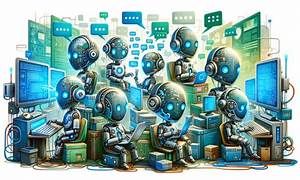
Which Agentic AI Features Truly Matter? Modern large language models (LLMs) are often evaluated based on their ability to support agentic AI capabilities. However, the effectiveness of these features depends on the specific problems AI agents are designed to solve. The term “AI agent” is frequently applied to any AI application that performs intelligent tasks on behalf of a user. However, true AI agents—of which there are still relatively few—differ significantly from conventional AI assistants. This discussion focuses specifically on personal AI applications rather than AI solutions for teams and organizations. In this domain, AI agents are more comparable to “copilots” than traditional AI assistants. What Sets AI Agents Apart from Other AI Tools? Clarifying the distinctions between AI agents, copilots, and assistants helps define their unique capabilities: AI Copilots AI copilots represent an advanced subset of AI assistants. Unlike traditional assistants, copilots leverage broader context awareness and long-term memory to provide intelligent suggestions. While ChatGPT already functions as a form of AI copilot, its ability to determine what to remember remains an area for improvement. A defining characteristic of AI copilots—one absent in ChatGPT—is proactive behavior. For example, an AI copilot can generate intelligent suggestions in response to common user requests by recognizing patterns observed across multiple interactions. This learning often occurs through in-context learning, while fine-tuning remains optional. Additionally, copilots can retain sequences of past user requests and analyze both memory and current context to anticipate user needs and offer relevant suggestions at the appropriate time. Although AI copilots may appear proactive, their operational environment is typically confined to a specific application. Unlike AI agents, which take real actions within broader environments, copilots are generally limited to triggering user-facing messages. However, the integration of background LLM calls introduces a level of automation beyond traditional AI assistants, whose outputs are always explicitly requested. AI Agents and Reasoning In personal applications, an AI agent functions similarly to an AI copilot but incorporates at least one of three additional capabilities: Reasoning and self-monitoring are critical LLM capabilities that support goal-oriented behavior. Major LLM providers continue to enhance these features, with recent advancements including: As of March 2025, Grok 3 and Gemini 2.0 Flash Thinking rank highest on the LMArena leaderboard, which evaluates AI performance based on user assessments. This competitive landscape highlights the rapid evolution of reasoning-focused LLMs, a critical factor for the advancement of AI agents. Defining AI Agents While reasoning is often cited as a defining feature of AI agents, it is fundamentally an LLM capability rather than a distinction between agents and copilots. Both require reasoning—agents for decision-making and copilots for generating intelligent suggestions. Similarly, an agent’s ability to take action in an external environment is not exclusive to AI agents. Many AI copilots perform actions within a confined system. For example, an AI copilot assisting with document editing in a web-based CMS can both provide feedback and make direct modifications within the system. The same applies to sensor capabilities. AI copilots not only observe user actions but also monitor entire systems, detecting external changes to documents, applications, or web pages. Key Distinctions: Autonomy and Versatility The fundamental differences between AI copilots and AI agents lie in autonomy and versatility: If an AI system is labeled as a domain-specific agent or an industry-specific vertical agent, it may essentially function as an AI copilot. The distinction between copilots and agents is becoming increasingly nuanced. Therefore, the term AI agent should be reserved for highly versatile, multi-purpose AI systems capable of operating across diverse domains. Notable examples include OpenAI’s Operator and Deep Research. Like1 Related Posts Who is Salesforce? Who is Salesforce? Here is their story in their own words. From our inception, we’ve proudly embraced the identity of Read more Salesforce Marketing Cloud Transactional Emails Salesforce Marketing Cloud Transactional Emails are immediate, automated, non-promotional messages crucial to business operations and customer satisfaction, such as order Read more Salesforce Unites Einstein Analytics with Financial CRM Salesforce has unveiled a comprehensive analytics solution tailored for wealth managers, home office professionals, and retail bankers, merging its Financial Read more AI-Driven Propensity Scores AI plays a crucial role in propensity score estimation as it can discern underlying patterns between treatments and confounding variables Read more

Read More
Large and Small Language Models

Architecture for Enterprise-Grade Agentic AI Systems

LangGraph: The Architecture for Enterprise-Grade Agentic AI Systems Modern enterprises need AI that doesn’t just answer questions—but thinks, plans, and acts autonomously. LangGraph provides the framework to build these next-generation agentic systems capable of: ✅ Multi-step reasoning across complex workflows✅ Dynamic decision-making with real-time tool selection✅ Stateful execution that maintains context across operations✅ Seamless integration with enterprise knowledge bases and APIs 1. LangGraph’s Graph-Based Architecture At its core, LangGraph models AI workflows as Directed Acyclic Graphs (DAGs): This structure enables:✔ Conditional branching (different paths based on data)✔ Parallel processing where possible✔ Guaranteed completion (no infinite loops) Example Use Case:A customer service agent that: 2. Multi-Hop Knowledge Retrieval Enterprise queries often require connecting information across multiple sources. LangGraph treats this as a graph traversal problem: python Copy # Neo4j integration for structured knowledge from langchain.graphs import Neo4jGraph graph = Neo4jGraph(url=”bolt://localhost:7687″, username=”neo4j”, password=”password”) query = “”” MATCH (doc:Document)-[:REFERENCES]->(policy:Policy) WHERE policy.name = ‘GDPR’ RETURN doc.title, doc.url “”” results = graph.query(query) # → Feeds into LangGraph nodes Hybrid Approach: 3. Building Autonomous Agents LangGraph + LangChain agents create systems that: python Copy from langchain.agents import initialize_agent, Tool from langchain.chat_models import ChatOpenAI # Define tools search_tool = Tool( name=”ProductSearch”, func=search_product_db, description=”Searches internal product catalog” ) # Initialize agent agent = initialize_agent( tools=[search_tool], llm=ChatOpenAI(model=”gpt-4″), agent=AgentType.ZERO_SHOT_REACT_DESCRIPTION ) # Execute response = agent.run(“Find compatible accessories for Model X-42”) 4. Full Implementation Example Enterprise Document Processing System: python Copy from langgraph.graph import StateGraph from langchain.embeddings import OpenAIEmbeddings from langchain.vectorstores import Pinecone # 1. Define shared state class DocProcessingState(BaseModel): query: str retrieved_docs: list = [] analysis: str = “” actions: list = [] # 2. Create nodes def retrieve(state): vectorstore = Pinecone.from_existing_index(“docs”, OpenAIEmbeddings()) state.retrieved_docs = vectorstore.similarity_search(state.query) return state def analyze(state): # LLM analysis of documents state.analysis = llm(f”Summarize key points from: {state.retrieved_docs}”) return state # 3. Build workflow workflow = StateGraph(DocProcessingState) workflow.add_node(“retrieve”, retrieve) workflow.add_node(“analyze”, analyze) workflow.add_edge(“retrieve”, “analyze”) workflow.add_edge(“analyze”, END) # 4. Execute agent = workflow.compile() result = agent.invoke({“query”: “2025 compliance changes”}) Why This Matters for Enterprises The Future:LangGraph enables AI systems that don’t just assist workers—but autonomously execute complete business processes while adhering to organizational rules and structures. “This isn’t chatbot AI—it’s digital workforce AI.” Next Steps: Like Related Posts Who is Salesforce? Who is Salesforce? Here is their story in their own words. From our inception, we’ve proudly embraced the identity of Read more Salesforce Unites Einstein Analytics with Financial CRM Salesforce has unveiled a comprehensive analytics solution tailored for wealth managers, home office professionals, and retail bankers, merging its Financial Read more AI-Driven Propensity Scores AI plays a crucial role in propensity score estimation as it can discern underlying patterns between treatments and confounding variables Read more Tectonic’s Successful Salesforce Track Record Salesforce Technology Services Integrator – Tectonic has successfully delivered Salesforce in a variety of industries including Public Sector, Hospitality, Manufacturing, Read more
Read More
What is Einstein Used for in Salesforce?

Unlocking the Full Potential of Salesforce Einstein

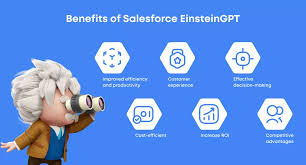
Unlocking the Full Potential of Salesforce Einstein: A Strategic Guide Moving Beyond Basic AI Features While standard Einstein features provide value, the true competitive advantage comes from custom AI solutions tailored to your unique business processes. Here’s how leading organizations are pushing Einstein’s capabilities further: Custom AI Model Development Real-World Custom Implementations: Cross-Functional AI Strategy Department-Specific AI Roadmaps Team Key Use Cases Success Metrics Sales Deal stagnation alertsOptimal contact timing 20% reduction in stalled deals Service Case severity predictionAuto-routing 15% faster resolution Marketing Content engagement scoringChurn risk segmentation 30% higher campaign ROI Operations Inventory demand forecastingResource allocation 25% waste reduction Implementation Tip: Start with one high-impact department before enterprise rollout. Technical Implementation Framework Data Preparation Checklist Model Selection Guide Pro Tip: Use Einstein’s AutoML to test multiple approaches before custom development. Overcoming Adoption Challenges Trust-Building Playbook Skills Development Plan Advanced Integration Patterns Combine Einstein With: Example Architecture: Measuring AI Success Key Performance Indicators: Continuous Improvement Cycle: Getting Started with Advanced Einstein *”Companies that customize AI solutions see 3-5x greater ROI than those using only out-of-the-box features.”* – Forrester Research Transform your Einstein implementation from basic scoring to strategic advantage with tailored AI solutions. Like Related Posts Who is Salesforce? Who is Salesforce? Here is their story in their own words. From our inception, we’ve proudly embraced the identity of Read more Salesforce Marketing Cloud Transactional Emails Salesforce Marketing Cloud Transactional Emails are immediate, automated, non-promotional messages crucial to business operations and customer satisfaction, such as order Read more Salesforce Unites Einstein Analytics with Financial CRM Salesforce has unveiled a comprehensive analytics solution tailored for wealth managers, home office professionals, and retail bankers, merging its Financial Read more AI-Driven Propensity Scores AI plays a crucial role in propensity score estimation as it can discern underlying patterns between treatments and confounding variables Read more

Read More
Salesforce Unveils Agentforce for Consumer Goods

Salesforce Unveils Agentforce for Consumer Goods

Salesforce Unveils Agentforce for Consumer Goods: Accelerating AI Adoption in Retail San Francisco, [April 2025] – Just eight days after launching Agentforce for Field Service, Salesforce has introduced Agentforce for Consumer Goods—a tailored solution designed to help brands quickly deploy AI agents across four key sectors: customer service, key account management, retail sales, and field operations. Unlike previous editions that offered pre-built AI agents for specific roles, this release provides a library of industry-specific skills and actions, empowering consumer goods companies to rapidly customize and deploy their own AI assistants. Why Agentforce for Consumer Goods? While businesses could already build agents on the standard Agentforce platform, this industry-focused edition accelerates deployment with:✔ Pre-configured skills for customer service, sales, and field teams✔ Faster implementation with ready-made automation components✔ Lower-risk experimentation for brands new to agentic AI “Salesforce is curating a smooth onboarding experience for companies entering the agentic AI era,” says Martin Schneider, VP & Principal Analyst at Constellation Research. “This gives quick wins—building confidence before diving into advanced multi-agent workflows.” Key Use Cases for Consumer Goods Brands 🛎️ AI-Powered Customer Service Agents Example: A rep at a home appliance company can ask an AI agent to check a customer’s product health—if maintenance is due, the agent drafts a service quote in seconds. 📈 Smarter Sales Assistants Example: If an account’s order volume drops unexpectedly, an AI agent can recommend new products to pitch, helping sales teams react faster. 🚚 Optimized Field Operations Example: When a customer requests a replacement, an AI agent instantly books delivery, assigns the nearest driver, and updates schedules—no manual input needed. The Bigger Picture: Salesforce’s Agentforce Momentum This launch follows: With 5,000+ customers already on Agentforce, industry-specific editions like this lower the barrier to entry—letting more brands test AI agents in low-stakes scenarios before scaling. What’s Next? Expect more vertical-focused Agentforce releases in 2025, building on earlier launches like Agentforce for Retail. For now, consumer goods brands have a new toolkit to turn repetitive tasks into automated workflows—freeing teams to focus on growth. Ready to explore AI agents for your business? Contact Tectonic today! Like Related Posts Who is Salesforce? Who is Salesforce? Here is their story in their own words. From our inception, we’ve proudly embraced the identity of Read more Salesforce Marketing Cloud Transactional Emails Salesforce Marketing Cloud Transactional Emails are immediate, automated, non-promotional messages crucial to business operations and customer satisfaction, such as order Read more Salesforce Unites Einstein Analytics with Financial CRM Salesforce has unveiled a comprehensive analytics solution tailored for wealth managers, home office professionals, and retail bankers, merging its Financial Read more AI-Driven Propensity Scores AI plays a crucial role in propensity score estimation as it can discern underlying patterns between treatments and confounding variables Read more

Read More

Secure AI Innovation for CIOs

Secure AI Innovation for CIOs: Balancing Speed & Stability CIOs No Longer Choose Between Innovation and Security The role of the CIO has transformed. Once focused on maintaining infrastructure, today’s IT leaders are drivers of innovation—especially with AI reshaping business. But with great opportunity comes great responsibility: ✅ How do we innovate quickly without compromising security?✅ How do we protect customer data in an AI-driven world?✅ How do we optimize operations at scale? Salesforce Platform provides the secure, unified foundation CIOs need to lead AI adoption while maintaining governance. 3 Key Challenges for Modern CIOs 1. Innovate Fast—But With Guardrails AI’s potential is limitless, but implementation must be strategic: Salesforce Solution: 2. Protect Data to Build Trust AI runs on data—but unsecured data is a liability. CIOs must: Salesforce Solution: 3. Optimize Operations at Scale With 900+ SaaS apps per enterprise, visibility is critical. AI can: Salesforce Solution: Announcing: Enhanced Data Protection with Own Salesforce Platform now integrates Own Company—a leader in data management trusted by 7,000+ customers. New capabilities include: Product Key Benefit Backup & Recover Automated, scalable data restoration Salesforce Discover Feed clean data to BI tools—no prep needed Archive Store inactive data without bloating production Data Mask & Seed Anonymize sensitive data for safe testing The CIO’s AI Playbook With Salesforce Platform, you don’t choose between innovation and stability—you get both. Like Related Posts Who is Salesforce? Who is Salesforce? Here is their story in their own words. From our inception, we’ve proudly embraced the identity of Read more Salesforce Marketing Cloud Transactional Emails Salesforce Marketing Cloud Transactional Emails are immediate, automated, non-promotional messages crucial to business operations and customer satisfaction, such as order Read more Salesforce Unites Einstein Analytics with Financial CRM Salesforce has unveiled a comprehensive analytics solution tailored for wealth managers, home office professionals, and retail bankers, merging its Financial Read more AI-Driven Propensity Scores AI plays a crucial role in propensity score estimation as it can discern underlying patterns between treatments and confounding variables Read more

Read More
Can Tech Companies Use Generative AI for Good?

AI and the Future of IT Careers

AI and the Future of IT Careers: Jobs That Remain Secure As AI technology advances, concerns about job security in the IT sector continue to grow. AI excels at handling repetitive, high-speed tasks and has made significant strides in software development and error prediction. However, while AI offers exciting possibilities, the demand for human expertise remains strong—particularly in roles that require interpersonal skills, strategic thinking, and decision-making. So, which IT jobs are most secure from AI displacement? To answer this question, industry experts shared their insights: Their forecasts highlight the IT roles most resistant to AI replacement. In all cases, professionals should enhance their AI knowledge to stay competitive in an evolving landscape. Top AI-Resistant IT Roles 1. Business Analyst Role Overview:Business analysts act as a bridge between IT and business teams, identifying technology opportunities and facilitating collaboration to optimize solutions. Why AI Won’t Replace It:While AI can process vast amounts of data quickly, it lacks emotional intelligence, relationship-building skills, and the ability to interpret nuanced human communication. Business analysts leverage these soft skills to understand software needs and drive successful implementations. How to Stay Competitive:Develop strong data analysis, business intelligence (BI), communication, and presentation skills to enhance your value in this role. 2. Cybersecurity Engineer Role Overview:Cybersecurity engineers protect organizations from evolving security threats, including AI-driven cyberattacks. Why AI Won’t Replace It:As AI tools become more sophisticated, cybercriminals will exploit them to develop advanced attack strategies. Human expertise is essential to adapt defenses, investigate threats, and implement security measures AI alone cannot handle. How to Stay Competitive:Continuously update your cybersecurity knowledge, obtain relevant certifications, and develop a strong understanding of business security needs. 3. End-User Support Professional Role Overview:These professionals assist employees with technical issues and provide hands-on training to ensure smooth software adoption. Why AI Won’t Replace It:Technology adoption is becoming increasingly complex, requiring personalized support that AI cannot yet replicate. Human interaction remains crucial for troubleshooting and user training. How to Stay Competitive:Pursue IT certifications, strengthen customer service skills, and gain experience in enterprise software environments. 4. Data Analyst Role Overview:Data analysts interpret business and product data, generate insights, and predict trends to guide strategic decisions. Why AI Won’t Replace It:AI can analyze data, but human oversight is needed to ensure accuracy, recognize context, and derive meaningful insights. Companies will continue to rely on professionals who can interpret and act on data effectively. How to Stay Competitive:Specialize in leading BI platforms, gain hands-on experience with data visualization tools, and develop strong analytical thinking skills. 5. Data Governance Professional Role Overview:These professionals set policies for data usage, access, and security within an organization. Why AI Won’t Replace It:As AI handles increasing amounts of data, the need for governance professionals grows to ensure ethical and compliant data management. How to Stay Competitive:Obtain a degree in computer science or business administration and seek training in data privacy, security, and governance frameworks. 6. Data Privacy Professional Role Overview:Data privacy professionals ensure compliance with data protection regulations and safeguard personal information. Why AI Won’t Replace It:With AI collecting vast amounts of personal data, organizations require human experts to manage legal compliance and maintain trust. How to Stay Competitive:Develop expertise in privacy laws, cybersecurity, and regulatory compliance through certifications and training programs. 7. IAM Engineer (Identity and Access Management) Role Overview:IAM engineers develop and implement systems that regulate user access to sensitive data. Why AI Won’t Replace It:The growing complexity of digital identities and security protocols requires human oversight to manage, audit, and secure access rights. How to Stay Competitive:Pursue a computer science degree, gain experience in authentication frameworks, and build expertise in programming and operating systems. 8. IT Director Role Overview:IT directors oversee technology strategies, manage teams, and align IT initiatives with business goals. Why AI Won’t Replace It:Leadership, motivation, and strategic decision-making are human-driven capabilities that AI cannot replicate. How to Stay Competitive:Develop strong leadership, business acumen, and team management skills to effectively align IT with organizational success. 9. IT Product Manager Role Overview:Product managers oversee tech adoption, service management, and organizational change strategies. Why AI Won’t Replace It:Effective product management requires a human touch, particularly in change management and stakeholder communication. How to Stay Competitive:Pursue project management training and certifications while gaining experience in software development and enterprise technology. Staying AI-Proof: Learning AI Expert Insights on Future IT Careers Final Thoughts As AI continues to reshape the IT landscape, the key to job security lies in adaptability. Professionals who develop AI-related skills and focus on roles that require human judgment, creativity, and leadership will remain indispensable in the evolving workforce. Like1 Related Posts Who is Salesforce? Who is Salesforce? Here is their story in their own words. From our inception, we’ve proudly embraced the identity of Read more Salesforce Unites Einstein Analytics with Financial CRM Salesforce has unveiled a comprehensive analytics solution tailored for wealth managers, home office professionals, and retail bankers, merging its Financial Read more AI-Driven Propensity Scores AI plays a crucial role in propensity score estimation as it can discern underlying patterns between treatments and confounding variables Read more Tectonic’s Successful Salesforce Track Record Salesforce Technology Services Integrator – Tectonic has successfully delivered Salesforce in a variety of industries including Public Sector, Hospitality, Manufacturing, Read more

Read More
Public Group vs Queue in Salesforce

Transforming Crisis Management with Intelligent Technology

Transforming Crisis Management with Intelligent Technology In high-pressure disaster scenarios where every second counts, AI is emerging as a force multiplier for response teams. From predictive analytics to real-time decision support, artificial intelligence is revolutionizing how organizations prepare for, manage, and recover from catastrophic events. Here are seven pivotal areas where AI delivers measurable impact across the disaster lifecycle. Here is a new Public Sector Solution from AI 1. Predictive Scenario Planning & Stress Testing AI Advantage: Dynamically generates realistic disaster simulations 2. Autonomous Response Systems AI Advantage: Subsecond reaction times with precision execution 3. Intelligent Log Analysis & Threat Detection AI Advantage: Pattern recognition across petabyte-scale telemetry 4. Crisis Communication Orchestration AI Advantage: Multi-channel coordination at scale 5. Real-Time Situational Awareness AI Advantage: Fusion of disparate data streams 6. Resource Optimization Engine AI Advantage: Calculates optimal recovery sequences 7. Continuous Improvement Loop AI Advantage: Institutionalizes lessons learned Implementation Roadmap The Future of AI in Disaster Response Emerging capabilities include: While AI won’t replace human judgment in crises, it’s becoming an indispensable force multiplier. Organizations adopting these tools gain measurable advantages in response speed, resource efficiency, and long-term resilience building. The key lies in strategic implementation – using AI where it excels while maintaining human oversight where nuance matters most. Like Related Posts Who is Salesforce? Who is Salesforce? Here is their story in their own words. From our inception, we’ve proudly embraced the identity of Read more Salesforce Unites Einstein Analytics with Financial CRM Salesforce has unveiled a comprehensive analytics solution tailored for wealth managers, home office professionals, and retail bankers, merging its Financial Read more AI-Driven Propensity Scores AI plays a crucial role in propensity score estimation as it can discern underlying patterns between treatments and confounding variables Read more Tectonic’s Successful Salesforce Track Record Salesforce Technology Services Integrator – Tectonic has successfully delivered Salesforce in a variety of industries including Public Sector, Hospitality, Manufacturing, Read more

Read More
Salesforce Foundations

Salesforce Products

Salesforce Products: A Complete Guide to Powering Your Business Growth Transform Your Business with Salesforce’s Integrated Solutions For companies focused on growth, efficiency, and exceptional customer experiences, Salesforce provides a comprehensive suite of cloud-based tools that adapt to your unique business needs. Whether you’re managing sales pipelines, marketing campaigns, customer service operations, or eCommerce platforms, Salesforce offers specialized solutions that work together seamlessly. Core Salesforce Products for Every Business Function 1. Sales Cloud: The Ultimate Sales Acceleration Platform “Since implementing Sales Cloud, our reps spend 30% more time selling and 40% less time on admin work.” – Enterprise Sales Director 2. Service Cloud: Revolutionizing Customer Support 3. Marketing Cloud: Personalized Engagement at Scale 4. Commerce Cloud: Unified Shopping Experiences Enhancing Your Salesforce Ecosystem Experience Cloud: Build Digital Communities Data & Analytics: Smarter Decision Making Customization & Integration Why Companies Choose Salesforce ✅ Proven Scalability: From startups to Fortune 500 enterprises✅ Continuous Innovation: 3 major releases per year with new features✅ Trusted Security: Enterprise-grade protection for your data✅ Global Ecosystem: 150,000+ certified consultants and developers Getting Started with Salesforce Whether you’re evaluating CRM options or planning a digital transformation, Salesforce offers: Next Steps:Explore Salesforce products in depth or speak with a solutions consultant to identify the right tools for your business needs. Like Related Posts Who is Salesforce? Who is Salesforce? Here is their story in their own words. From our inception, we’ve proudly embraced the identity of Read more Salesforce Marketing Cloud Transactional Emails Salesforce Marketing Cloud Transactional Emails are immediate, automated, non-promotional messages crucial to business operations and customer satisfaction, such as order Read more Salesforce Unites Einstein Analytics with Financial CRM Salesforce has unveiled a comprehensive analytics solution tailored for wealth managers, home office professionals, and retail bankers, merging its Financial Read more AI-Driven Propensity Scores AI plays a crucial role in propensity score estimation as it can discern underlying patterns between treatments and confounding variables Read more

Read More
CaixaBank and Salesforce Partner to Revolutionize Banking with AI-Powered Personalization

CaixaBank and Salesforce Partner to Revolutionize Banking with AI-Powered Personalization

Barcelona – CaixaBank, Spain’s leading digital bank, has deepened its collaboration with Salesforce to redefine customer experience through AI-driven personalization and data intelligence. The partnership will integrate Salesforce’s Agentforce AI assistants and Data Cloud solutions into CaixaBank’s operations, enhancing efficiency, decision-making, and customer engagement. Transforming Banking with AI Assistants and Real-Time Data Under the agreement, CaixaBank will deploy Salesforce’s Agentforce—a suite of AI-powered virtual assistants designed to: Additionally, Salesforce Data Cloud will enable real-time data unification, ensuring secure, instant access to customer insights for hyper-personalized interactions. Use Case: AI-Powered Remote Contracting Assistant A flagship implementation is CaixaBank’s Remote Contracting Support Assistant, which leverages generative AI to: The assistant will soon evolve into an Agentforce AI agent, autonomously suggesting products, scheduling follow-ups, and promoting tailored offers. Why This Matters CaixaBank’s AI Leadership With 100+ dedicated AI specialists, CaixaBank is a pioneer in generative AI for finance, already deploying cognitive assistants and now scaling transformative use cases. Looking Ahead: The partnership will expand Salesforce’s role as CaixaBank’s centralized platform for sales and service, with further AI integrations underway. Key Takeaways:🔹 Agentforce AI automates service and empowers advisors.🔹 Data Cloud unlocks real-time, secure customer insights.🔹 Remote Contracting Assistant cuts wait times to <2 minutes.🔹 CaixaBank cements its status as Spain’s top digital bank. Like Related Posts Who is Salesforce? Who is Salesforce? Here is their story in their own words. From our inception, we’ve proudly embraced the identity of Read more Salesforce Marketing Cloud Transactional Emails Salesforce Marketing Cloud Transactional Emails are immediate, automated, non-promotional messages crucial to business operations and customer satisfaction, such as order Read more Salesforce Unites Einstein Analytics with Financial CRM Salesforce has unveiled a comprehensive analytics solution tailored for wealth managers, home office professionals, and retail bankers, merging its Financial Read more AI-Driven Propensity Scores AI plays a crucial role in propensity score estimation as it can discern underlying patterns between treatments and confounding variables Read more

Read More
Commerce Cloud and Agentic AI

Generative AI in Marketing

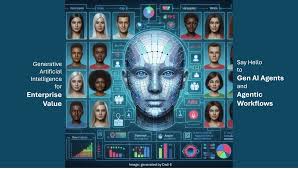
Generative AI in Marketing: Balancing Innovation and Risk Generative AI (gen AI) has become a disruptive force in the marketplace, particularly in marketing, where its ability to create content—from product descriptions to personalized ads—has reshaped strategies. According to Salesforce’s State of Marketing report, which surveyed 5,000 marketers worldwide, implementing AI is now their top priority. Some companies, like Vanguard and Unilever, have already seen measurable benefits, with Vanguard increasing LinkedIn ad conversions by 15% and Unilever cutting customer service response times by 90%. Yet, despite 96% of marketers planning to adopt gen AI within 18 months, only 32% have fully integrated it into their operations. This gap highlights the challenges of implementation—balancing efficiency with risks like inauthenticity or errors. For instance, Coca-Cola’s AI-generated holiday ad initially drew praise but later faced backlash for its perceived lack of emotional depth. The Strategic Dilemma: How, Not If, to Use Gen AI Many Chief Data and Analytics Officers (CDAOs) have yet to formalize gen AI strategies, leading to fragmented experimentation across teams. Based on discussions with over 20 industry leaders, successful adoption hinges on three key decisions: To answer these, companies must assess: Gen AI vs. Analytical AI: Choosing the Right Tool Analytical AI excels at predictions—forecasting customer behavior, pricing sensitivity, or ad performance. For example, Kia once used IBM Watson to identify brand-aligned influencers, a strategy still relevant today. Generative AI, on the other hand, creates new content—ads, product descriptions, or customer service responses. While analytical AI predicts what a customer might buy, gen AI crafts the persuasive message around it. The most effective strategies combine both: using analytical AI to identify the “next best offer” and gen AI to personalize the pitch. Custom vs. General Inputs: Striking the Balance Gen AI models can be trained on: For broad applications like customer service chatbots, general models (e.g., ChatGPT) work well. But for brand-specific needs—like ad copy or legal disclaimers—custom-trained models (e.g., BloombergGPT for finance or Jasper for marketing) reduce errors and intellectual property risks. Human Oversight: How Much Is Enough? The level of human review depends on risk tolerance: Air Canada learned this the hard way when its AI chatbot mistakenly promised a bereavement discount—a pledge a court later enforced. While human review slows output, it mitigates costly errors. A Framework for Implementation To navigate these trade-offs, marketers can use a quadrant-based approach: Input Type No Human Review Human Review Required General Data Fast, low cost, high risk Higher accuracy, slower output (e.g., review summaries) (e.g., social media posts) Custom Data Lower privacy risk, higher cost Highest accuracy, highest cost (e.g., in-store product locator) (e.g., SEC filings) The Path Forward Gen AI is not a one-size-fits-all solution. Marketers must weigh speed, cost, accuracy, and risk for each use case. While technology will evolve, today’s landscape demands careful strategy—blending gen AI’s creativity with analytical AI’s precision and human judgment’s reliability. The question is no longer whether to adopt gen AI, but how to harness its potential without falling prey to its pitfalls. Companies that strike this balance will lead the next wave of marketing innovation. Like1 Related Posts Who is Salesforce? Who is Salesforce? Here is their story in their own words. From our inception, we’ve proudly embraced the identity of Read more Salesforce Marketing Cloud Transactional Emails Salesforce Marketing Cloud Transactional Emails are immediate, automated, non-promotional messages crucial to business operations and customer satisfaction, such as order Read more Salesforce Unites Einstein Analytics with Financial CRM Salesforce has unveiled a comprehensive analytics solution tailored for wealth managers, home office professionals, and retail bankers, merging its Financial Read more AI-Driven Propensity Scores AI plays a crucial role in propensity score estimation as it can discern underlying patterns between treatments and confounding variables Read more
Read More
GoMeddo

Tectonic Announces Partnership with GoMeddo

Revolutionizing Hospitality with Smart Guest Experiences The Future of Hospitality is Here – Powered by Salesforce, GoMeddo, and Tectonic Tectonic is thrilled to announce our partnership with GoMeddo to revolutionize hospitality with smart guest experiences! Today’s guests demand more than just great service—they expect personalized, seamless, and effortless experiences. That’s why Tectonic, a top-tier Salesforce implementation partner, and GoMeddo, the leading scheduling and booking platform, are teaming up to transform hospitality and restaurant operations with cutting-edge technology. There’s no time like the present to create the best possible guest experiences and no one better equipped to get you there than GoMeddo and Tectonic. 🚀 Key Benefits for Your Business:✔ Frictionless Bookings – Let guests reserve tables, rooms, or activities 24/7 from any device.  Regardless the use case (golf, batting cages, party rooms, ski lessons, events, meetings or more) our frictionless booking tool delights your guests.✔ Hyper-Personalized Journeys – Leverage real-time data to anticipate needs and amaze every guest.✔ Smarter Operations – Automate scheduling, optimize staff efficiency, and reduce overhead. This powerful partnership is set to elevate guest satisfaction, boost revenue, and streamline operations—ensuring your business stays ahead in a competitive market. Why Guest Experience is the New Battleground The hospitality industry is evolving fast. Guests no longer just compare you to competitors—they compare you to Amazon, Uber, and Netflix. They want:🔹 Instant, digital-first service (no phone calls or waiting)🔹 Tailored recommendations (like Spotify’s “Made for You” playlists)🔹 Seamless omnichannel interactions (book online, modify via app, check in via kiosk) 80% of guests are more likely to return to brands that offer personalized experiences. Are you meeting these expectations? How GoMeddo + Tectonic Deliver Next-Level Hospitality 1️⃣ For Guests: Effortless, Personalized Experiences 2️⃣ For Staff: Smarter Operations 3️⃣ For Management: Data-Driven Growth Real Results: What This Partnership Unlocks 📈 20-30% higher table turnover with automated reservations💳 15% increase in upsells via personalized promotions⭐ Improved guest reviews from streamlined experiences “Technology should enhance human connection, not replace it. With GoMeddo and Salesforce, we’re giving staff superpowers to focus on what matters—creating unforgettable moments.”– Krystal Hicks, Sales Director at Tectonic The Bottom Line The hospitality brands winning today aren’t just competing on service—they’re competing on convenience, personalization, and tech-powered magic. With GoMeddo’s scheduling expertise and Tectonic’s Salesforce mastery, your business can:✅ Turn first-time guests into loyal regulars✅ Free staff from admin headaches✅ Future-proof your operations Ready to redefine guest experience? [Discover how our solutions work] or [Book a consultation]. #HospitalityInnovation #SmartRestaurants #GuestExperience #Salesforce #GoMeddo #Tectonic #CustomerExperience #CustomerEngagement #SalesforcePartner Like Related Posts Who is Salesforce? Who is Salesforce? Here is their story in their own words. From our inception, we’ve proudly embraced the identity of Read more Salesforce Marketing Cloud Transactional Emails Salesforce Marketing Cloud Transactional Emails are immediate, automated, non-promotional messages crucial to business operations and customer satisfaction, such as order Read more Salesforce Unites Einstein Analytics with Financial CRM Salesforce has unveiled a comprehensive analytics solution tailored for wealth managers, home office professionals, and retail bankers, merging its Financial Read more AI-Driven Propensity Scores AI plays a crucial role in propensity score estimation as it can discern underlying patterns between treatments and confounding variables Read more

Read More

Is AI Replacing Developers

Is AI Replacing Developers? The Truth About AI-Generated Code Anthropic’s CEO predicts AI will write 90% of code within 3 to 6 years. Google already reports 25% of its code is AI-generated. With numbers like these, it’s tempting to wonder: Are developers becoming obsolete? The short answer? No. Here’s why—and what AI-generated code actually means for software development. 1. AI Isn’t Replacing Developer Work—It’s Changing It Just because AI writes code doesn’t mean developers do less. AI doesn’t eliminate developer effort—it shifts it. 2. AI Writes More Code Than Necessary (And That’s a Problem) AI doesn’t know when to stop. More AI-generated code ≠ better software. In fact, poorly managed AI code can make apps harder to maintain. 3. Developers Have Always Relied on External Code Before AI, developers used: AI is just another tool—like a smarter Stack Overflow. The Worst Mistakes Companies Can Make with AI Code ❌ Setting Arbitrary “AI Code %” Targets ❌ Assuming AI Reduces the Need for Developers ❌ Ignoring AI’s Blind Spots The Future: AI as a Developer’s Co-Pilot The bottom line? AI is changing coding—not eliminating it. Developers who embrace AI as a tool will stay ahead. Those who fear it will fall behind. Key Takeaways:✔ AI generates code, but developers still design, debug, and refine it.✔ Blindly trusting AI leads to bloated, buggy software.✔ The best developers use AI to augment—not replace—their skills.✔ Companies should encourage AI adoption—not mandate arbitrary AI code quotas. Like Related Posts Who is Salesforce? Who is Salesforce? Here is their story in their own words. From our inception, we’ve proudly embraced the identity of Read more Salesforce Unites Einstein Analytics with Financial CRM Salesforce has unveiled a comprehensive analytics solution tailored for wealth managers, home office professionals, and retail bankers, merging its Financial Read more AI-Driven Propensity Scores AI plays a crucial role in propensity score estimation as it can discern underlying patterns between treatments and confounding variables Read more Tectonic’s Successful Salesforce Track Record Salesforce Technology Services Integrator – Tectonic has successfully delivered Salesforce in a variety of industries including Public Sector, Hospitality, Manufacturing, Read more

Read More
PandaDoc Unveils CPQ for Salesforce

PandaDoc Unveils CPQ for Salesforce

PandaDoc Unveils CPQ for Salesforce to Streamline Sales and Revenue Operations PandaDoc, a leader in document management solutions, has announced a major expansion of its CPQ (Configure, Price, Quote) suite with the launch of PandaDoc CPQ for Salesforce. Built natively within Salesforce, the world’s most widely used CRM, this solution empowers revenue teams to generate accurate quotes, reduce inefficiencies, and execute contracts—all without leaving Salesforce. Expanding on its embedded CPQ solution for HubSpot, PandaDoc plans to bring CPQ functionality to additional CRMs in 2025. Optimized for Revenue Operations Available as a paid add-on for PandaDoc Enterprise and App Volume customers, PandaDoc CPQ for Salesforce is designed to help revenue operations leaders overcome the common inefficiencies of traditional CPQ systems. Account Executives (AEs), Account Managers (AMs), and Customer Success Managers (CSMs) can now manage the entire deal cycle—from quote generation to contract execution—entirely within Salesforce. This integration accelerates approvals, reduces errors, and increases efficiency, giving sales teams the tools they need to close deals faster. A Game-Changer for Sales Teams “PandaDoc CPQ for Salesforce is a game-changer for revenue organization leaders who want to streamline their quoting process and accelerate deal closures,” said Keith Rabkin, President at PandaDoc. “By keeping sales teams entirely within Salesforce, we simplify workflows with guided selling and dynamic pricing tools, making every stage of the sales cycle faster and more efficient.” Early adopters are already reaping significant benefits: “Upgrading our subscription to take advantage of PandaDoc CPQ has been well worth it. I had tried other CPQ options, and they were all subpar,” said Emerson McCuin, Director of Revenue Operations at HAAS Alert. “I’m super happy with our choice and can’t stress enough how much we needed this solution.” Key Features & Benefits of PandaDoc CPQ for Salesforce ✅ Native Salesforce Integration – Built entirely within Salesforce for a seamless experience and intuitive UI. ✅ Guided Selling – Pre-configured workflows guide reps through quote creation, reducing errors and ensuring compliance. ✅ Flexible Pricing Rules – Support for dynamic pricing, volume discounts, bundled pricing, and complex product catalogs. ✅ Rapid Implementation – No costly third-party consultants required, enabling a quick and easy setup. ✅ Two-Way Data Sync – Real-time synchronization between PandaDoc and Salesforce ensures data accuracy across systems. “These features are a direct response to what we’ve heard from our sales and RevOps customers,” added Rabkin. “They needed a solution that is easy to implement and prevents reps from getting bogged down in complex quoting, so they can focus on selling.” Simplifying Sales & Revenue Growth By combining robust CPQ functionality with deep Salesforce integration, PandaDoc CPQ for Salesforce simplifies the sales process for RevOps and sales teams. Its intuitive design, powerful automation tools, and no-code implementation allow businesses to close deals faster and drive revenue growth—all within the systems they already use. To learn more about PandaDoc CPQ for Salesforce, visit their website or contact one of their authorized partners. About PandaDoc Founded in 2013, PandaDoc is a leading document management platform that enables businesses to simplify and automate the creation, management, and signing of proposals, quotes, contracts, and other critical business documents. By combining intelligent e-signature technology, powerful analytics, and seamless collaboration tools, PandaDoc helps businesses:✅ Increase efficiency✅ Close deals faster✅ Deliver exceptional customer experiences A remote-first company with 650+ employees serving 56,000+ customers worldwide, PandaDoc is backed by OMERS Growth Equity, Microsoft’s M12, HubSpot, and Altos Ventures. With a commitment to bold, transparent, and practical solutions, PandaDoc continues to redefine how businesses operate and win. Like1 Related Posts Who is Salesforce? Who is Salesforce? Here is their story in their own words. From our inception, we’ve proudly embraced the identity of Read more Salesforce Marketing Cloud Transactional Emails Salesforce Marketing Cloud Transactional Emails are immediate, automated, non-promotional messages crucial to business operations and customer satisfaction, such as order Read more Salesforce Unites Einstein Analytics with Financial CRM Salesforce has unveiled a comprehensive analytics solution tailored for wealth managers, home office professionals, and retail bankers, merging its Financial Read more AI-Driven Propensity Scores AI plays a crucial role in propensity score estimation as it can discern underlying patterns between treatments and confounding variables Read more

Read More
gettectonic.com