Internet Archives - gettectonic.com - Page 4
SearchGPT and Knowledge Cutoff

SearchGPT and Knowledge Cutoff

Tackling the Knowledge Cutoff Challenge in Generative AI In the realm of generative AI, a significant hurdle has been the issue of knowledge cutoff—where a large language model (LLM) only has information up until a specific date. This was an early concern with OpenAI’s ChatGPT. For example, the GPT-4o model that currently powers ChatGPT has a knowledge cutoff in October 2023. The older GPT-4 model, on the other hand, had a cutoff in September 2021. Traditional search engines like Google, however, don’t face this limitation. Google continuously crawls the internet to keep its index up to date with the latest information. To address the knowledge cutoff issue in LLMs, multiple vendors, including OpenAI, are exploring search capabilities powered by generative AI (GenAI). Introducing SearchGPT: OpenAI’s GenAI Search Engine SearchGPT is OpenAI’s GenAI search engine, first announced on July 26, 2024. It aims to combine the strengths of a traditional search engine with the capabilities of GPT LLMs, eliminating the knowledge cutoff by drawing real-time data from the web. SearchGPT is currently a prototype, available to a limited group of test users, including individuals and publishers. OpenAI has invited publishers to ensure their content is accurately represented in search results. The service is positioned as a temporary offering to test and evaluate its performance. Once this evaluation phase is complete, OpenAI plans to integrate SearchGPT’s functionality directly into the ChatGPT interface. As of August 2024, OpenAI has not announced when SearchGPT will be generally available or integrated into the main ChatGPT experience. Key Features of SearchGPT SearchGPT offers several features designed to enhance the capabilities of ChatGPT: OpenAI’s Challenge to Google Search Google has long dominated the search engine landscape, a position that OpenAI aims to challenge with SearchGPT. Answers, Not Links Traditional search engines like Google act primarily as indexes, pointing users to other sources of information rather than directly providing answers. Google has introduced AI Overviews (formerly Search Generative Experience or SGE) to offer AI-generated summaries, but it still relies heavily on linking to third-party websites. SearchGPT aims to change this by providing direct answers to user queries, summarizing the source material instead of merely pointing to it. Contextual Continuity In contrast to Google’s point-in-time search queries, where each query is independent, SearchGPT strives to maintain context across multiple queries, offering a more seamless and coherent search experience. Search Accuracy Google Search often depends on keyword matching, which can require users to sift through several pages to find relevant information. SearchGPT aims to combine real-time data with an LLM to deliver more contextually accurate and relevant information. Ad-Free Experience SearchGPT offers an ad-free interface, providing a cleaner and more user-friendly experience compared to Google, which includes ads in its search results. AI-Powered Search Engine Comparison Here’s a comparison of the AI-powered search engines available today: Search Engine Platform Integration Publisher Collaboration Ads Cost SearchGPT (OpenAI) Standalone prototype Strong emphasis Ad-free Free (prototype stage) Google SGE Built on Google’s infrastructure SEO practices, content partnerships Includes ads Free Microsoft Bing AI/Copilot Built on Microsoft’s infrastructure SEO practices, content partnerships Includes ads Free Perplexity AI Standalone Basic source attribution Ad-free Free; $20/month for premium You.com AI assistant with various modes Basic source attribution Ad-free Free; premium tiers available Brave Search Independent search index Basic source attribution Ad-free Free Like Related Posts Who is Salesforce? Who is Salesforce? Here is their story in their own words. From our inception, we’ve proudly embraced the identity of Read more Salesforce Unites Einstein Analytics with Financial CRM Salesforce has unveiled a comprehensive analytics solution tailored for wealth managers, home office professionals, and retail bankers, merging its Financial Read more AI-Driven Propensity Scores AI plays a crucial role in propensity score estimation as it can discern underlying patterns between treatments and confounding variables Read more Tectonic’s Successful Salesforce Track Record Salesforce Technology Services Integrator – Tectonic has successfully delivered Salesforce in a variety of industries including Public Sector, Hospitality, Manufacturing, Read more

Read More
Box Acquires Alphamoon

Box Acquires Alphamoon

Box Inc. has acquired Alphamoon to enhance its intelligent document processing (IDP) capabilities and its enterprise knowledge management AI platform. Now that Box acquires Alphamoon, it will imr improves IDP. Box Acquires Alphamoon IDP goes beyond traditional optical character recognition (OCR) by applying AI to scanned paper documents and unstructured PDFs. While AI technologies like natural language processing (NLP), workflow automation, and document structure recognition have been around for some time, Alphamoon introduces generative AI (GenAI) into the mix, providing advanced capabilities. According to Rand Wacker, Vice President of AI Product Strategy at Box, the integration of GenAI helps not only with summarizing and extracting content from documents but also with recognizing document structures and categorizing them. GenAI works alongside existing OCR and NLP tools, making the digital conversion of paper documents more accurate. Box Acquires Alphamoon – Not LLM Although Box hasn’t acquired a large language model (LLM) outright, it has gained a toolkit that will enhance its Box AI platform. Box AI already uses retrieval-augmented generation to combine a user’s content with external LLMs, ensuring data security while training Box AI to better recognize and categorize documents. Alphamoon’s technology will further refine this process, enabling administrators to create tools more efficiently within the Box ecosystem. “For example, if Alphamoon’s OCR misreads or misextracts something, the system can adjust that specific part and feed it back into the LLM,” Wacker explained. “This approach is powered by an LLM, but it’s specifically trained to understand the documents it encounters, rather than relying on generic content from the internet.” Previewing an upcoming report from Deep Analysis, founder Alan Pelz-Sharpe shared that a survey of 500 enterprises across various industries, including financial services, manufacturing, healthcare, and government, revealed that 53% of enterprise documents still exist on paper. This highlights the need for Box users to have more precise tools to digitize contracts, letters, invoices, faxes, and other paper-based documents. Alphamoon’s generative AI-driven IDP solution allows for human oversight to ensure that attributes are correctly imported from the original documents. Pelz-Sharpe noted that IDP is challenging, but AI has made significant advancements, especially in handling imperfections like crumpled paper, coffee stains, and handwriting. He added that this acquisition addresses a critical gap for Box, which previously relied on partners for these capabilities. Box Buys Alphamoon – Integration Box plans to integrate Alphamoon’s tools into its platform later this year, with deeper integrations expected next year. These will include no-code app-building capabilities related to another acquisition, Crooze, as well as Box Relay’s forms and document generation tools. Like Related Posts Who is Salesforce? Who is Salesforce? Here is their story in their own words. From our inception, we’ve proudly embraced the identity of Read more Salesforce Unites Einstein Analytics with Financial CRM Salesforce has unveiled a comprehensive analytics solution tailored for wealth managers, home office professionals, and retail bankers, merging its Financial Read more AI-Driven Propensity Scores AI plays a crucial role in propensity score estimation as it can discern underlying patterns between treatments and confounding variables Read more Tectonic’s Successful Salesforce Track Record Salesforce Technology Services Integrator – Tectonic has successfully delivered Salesforce in a variety of industries including Public Sector, Hospitality, Manufacturing, Read more

Read More
ChatGPT Word Choices

ChatGPT Word Choices

Why Does ChatGPT Use the Word “Delve” So Much? Mystery Solved. The mystery behind ChatGPT’s frequent use of the word “delve” (one of the 10 most common words it uses) has finally been unraveled, and the answer is quite unexpected. Why ChatGPT Word Choices are repetitive. While “delve” and other words like “tapestry” aren’t common in everyday conversations, ChatGPT seems to favor them. You may have noticed this tendency in its outputs. The sudden rise in the use of “delve” in medical papers from March 2024, coincides with the first full year of ChatGPT’s widespread use. “Delve,” along with phrases like “as an AI language model…,” has become a hallmark of ChatGPT’s language, almost a giveaway that a text is AI-generated. But why does ChatGPT overuse “delve”? If it’s trained on human data, how did it develop this preference? Is it emergent behavior? And why “delve” specifically? A Guardian article, “How Cheap, Outsourced Labour in Africa is Shaping AI English,” provides a clue. The key lies in how ChatGPT was built. Why “Delve” So Much? The overuse of “delve” suggests ChatGPT’s language might have been influenced after its initial training on internet data. After training on a massive corpus of data, an additional supervised learning step is used to align the AI’s behavior. Human annotators evaluate the AI’s outputs, and their feedback fine-tunes the model. Here’s a summary of the process: This iterative process involves human feedback to improve the AI’s responses, ensuring it stays aligned and useful. However, this feedback is often provided by a workforce in the global south, where English-speaking annotators are more affordable. In Nigeria, “delve” is more commonly used in business English than in the US or UK. Annotators from these regions provided examples using their familiar language, influencing the AI to adopt a slightly African English style. This is an example of poor sampling, where the evaluators’ language differs from that of the target users, introducing a bias in the writing style. This bias likely stems from the RLHF step rather than the initial training. ChatGPT’s writing style, with or without “delve,” is already somewhat robotic and easy to detect. Understanding these potential pitfalls helps us avoid similar issues in future AI development. Making ChatGPT More Human-Like To make ChatGPT sound more human and avoid overused words like “delve,” consider these Prompt Engineering approaches: These methods can be time-consuming. Ideally, a quick, reliable tool, like a Chrome extension, would streamline this process. If you’ve found a solution or a reliable tool for this issue, share it below in the comments. This is a widespread challenge that many users face. Like Related Posts Who is Salesforce? Who is Salesforce? Here is their story in their own words. From our inception, we’ve proudly embraced the identity of Read more Salesforce Marketing Cloud Transactional Emails Salesforce Marketing Cloud Transactional Emails are immediate, automated, non-promotional messages crucial to business operations and customer satisfaction, such as order Read more Salesforce Unites Einstein Analytics with Financial CRM Salesforce has unveiled a comprehensive analytics solution tailored for wealth managers, home office professionals, and retail bankers, merging its Financial Read more AI-Driven Propensity Scores AI plays a crucial role in propensity score estimation as it can discern underlying patterns between treatments and confounding variables Read more

Read More
State of AI

State of AI

With the Dreamforce conference just a few weeks away, AI is set to be a central theme once again. This week, Salesforce offered a preview of what to expect in September with the release of its “Trends in AI for CRM” report. This report consolidates findings from several Salesforce research studies conducted from February last year to April this year. The report’s executive summary highlights four key insights: The Fear of Missing Out (FOMO) An intriguing statistic from Salesforce’s “State of Data and Analytics” report reveals that 77% of business leaders feel a fear of missing out on generative AI. This concern is particularly pronounced among marketers (88%), followed by sales executives (78%) and customer service professionals (73%). Given the continued hype around generative AI, these numbers are likely still relevant or even higher as of July 2024. As Salesforce AI CEO Clara Shih puts it: “The majority of business executives fear they’re missing out on AI’s benefits, and it’s a well-founded concern. Today’s technology world is reminiscent of 1998 for the Internet—full of opportunities but also hype.” Shih adds: “How do we separate the signal from the noise and identify high-impact enterprise use cases?” The Quest for ROI and Value The surge of hype around generative AI over the past 18 months has led to high expectations. While Salesforce has been more responsible in managing user expectations, many executives view generative AI as a cure-all. However, this perspective can be problematic, as “silver bullets” often miss their mark. Recent tech sector developments reflect a shift toward a longer-term view of AI’s impact. Meta’s share price fell when Mark Zuckerberg emphasized AI as a multi-year project, and Alphabet’s Sundar Pichai faced tough questions from Wall Street about the need for continued investment. State of AI Shih notes a growing impatience with the time required to realize AI’s value: “It’s been over 18 months since ChatGPT sparked excitement about AI in business. Many companies are still grappling with building or buying solutions that are not overly siloed and can be customized. The challenge is finding a balance between quick implementation and configurability.” She adds: “The initial belief was that companies could just integrate ChatGPT and see instant transformation. However, there are security risks and practical challenges. For LLMs to be effective, they need contextual data about users and customers.” Conclusion: A Return to the Future Shih likens the current AI landscape to the late 90s Internet boom, noting: “It’s similar to the late 90s when people questioned if the Internet was overhyped. While some investments will not pan out, the transformative potential of successful use cases is enormous. Just as with the Internet, discovering the truly valuable applications of AI may require experimentation and time. We are very much in the 1998 moment for AI now.” Like Related Posts Who is Salesforce? Who is Salesforce? Here is their story in their own words. From our inception, we’ve proudly embraced the identity of Read more Salesforce Marketing Cloud Transactional Emails Salesforce Marketing Cloud Transactional Emails are immediate, automated, non-promotional messages crucial to business operations and customer satisfaction, such as order Read more Salesforce Unites Einstein Analytics with Financial CRM Salesforce has unveiled a comprehensive analytics solution tailored for wealth managers, home office professionals, and retail bankers, merging its Financial Read more AI-Driven Propensity Scores AI plays a crucial role in propensity score estimation as it can discern underlying patterns between treatments and confounding variables Read more

Read More
Rold of Small Language Models

Role of Small Language Models

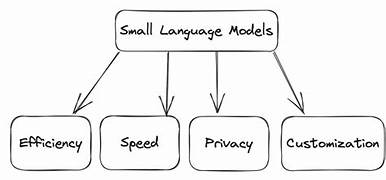
The Role of Small Language Models (SLMs) in AI While much attention is often given to the capabilities of Large Language Models (LLMs), Small Language Models (SLMs) play a vital role in the AI landscape. Role of Small Language Models. Large vs. Small Language Models LLMs, like GPT-4, excel at managing complex tasks and providing sophisticated responses. However, their substantial computational and energy requirements can make them impractical for smaller organizations and devices with limited processing power. In contrast, SLMs offer a more feasible solution. Designed to be lightweight and resource-efficient, SLMs are ideal for applications operating in constrained computational environments. Their reduced resource demands make them easier and quicker to deploy, while also simplifying maintenance. What are Small Language Models? Small Language Models (SLMs) are neural networks engineered to generate natural language text. The term “small” refers not only to the model’s physical size but also to its parameter count, neural architecture, and the volume of data used during training. Parameters are numeric values that guide a model’s interpretation of inputs and output generation. Models with fewer parameters are inherently simpler, requiring less training data and computational power. Generally, models with fewer than 100 million parameters are classified as small, though some experts consider models with as few as 1 million to 10 million parameters to be small in comparison to today’s large models, which can have hundreds of billions of parameters. How Small Language Models Work SLMs achieve efficiency and effectiveness with a reduced parameter count, typically ranging from tens to hundreds of millions, as opposed to the billions seen in larger models. This design choice enhances computational efficiency and task-specific performance while maintaining strong language comprehension and generation capabilities. Techniques such as model compression, knowledge distillation, and transfer learning are critical for optimizing SLMs. These methods enable SLMs to encapsulate the broad understanding capabilities of larger models into a more concentrated, domain-specific toolset, facilitating precise and effective applications while preserving high performance. Advantages of Small Language Models Applications of Small Language Models Role of Small Language Models is lengthy. SLMs have seen increased adoption due to their ability to produce contextually coherent responses across various applications: Small Language Models vs. Large Language Models Feature LLMs SLMs Training Dataset Broad, diverse internet data Focused, domain-specific data Parameter Count Billions Tens to hundreds of millions Computational Demand High Low Cost Expensive Cost-effective Customization Limited, general-purpose High, tailored to specific needs Latency Higher Lower Security Risk of data exposure through APIs Lower risk, often not open source Maintenance Complex Easier Deployment Requires substantial infrastructure Suitable for limited hardware environments Application Broad, including complex tasks Specific, domain-focused tasks Accuracy in Specific Domains Potentially less accurate due to general training High accuracy with domain-specific training Real-time Application Less ideal due to latency Ideal due to low latency Bias and Errors Higher risk of biases and factual errors Reduced risk due to focused training Development Cycles Slower Faster Conclusion The role of Small Language Models (SLMs) is increasingly significant as they offer a practical and efficient alternative to larger models. By focusing on specific needs and operating within constrained environments, SLMs provide targeted precision, cost savings, improved security, and quick responsiveness. As industries continue to integrate AI solutions, the tailored capabilities of SLMs are set to drive innovation and efficiency across various domains. Like Related Posts Who is Salesforce? Who is Salesforce? Here is their story in their own words. From our inception, we’ve proudly embraced the identity of Read more Salesforce Marketing Cloud Transactional Emails Salesforce Marketing Cloud Transactional Emails are immediate, automated, non-promotional messages crucial to business operations and customer satisfaction, such as order Read more Salesforce Unites Einstein Analytics with Financial CRM Salesforce has unveiled a comprehensive analytics solution tailored for wealth managers, home office professionals, and retail bankers, merging its Financial Read more AI-Driven Propensity Scores AI plays a crucial role in propensity score estimation as it can discern underlying patterns between treatments and confounding variables Read more

Read More
What is OpenAI Strawberry?

What is OpenAI Strawberry?

OpenAI’s Secret Project: “Strawberry” Background and Goals OpenAI, the company behind ChatGPT, is working on a new AI project codenamed “Strawberry,” according to an insider and internal documents reviewed by Reuters. This project, whose details have not been previously reported, aims to showcase advanced reasoning capabilities in OpenAI’s models. The project seeks to enable AI to not only generate answers to queries but also plan and navigate the internet autonomously to perform “deep research.” What is OpenAI Strawberry? Project Overview The “Strawberry” initiative represents an evolution of the previously known Q* project, which demonstrated potential in solving complex problems like advanced math and science questions. While the precise date of the internal document is unclear, it outlines plans for using Strawberry to enhance AI’s reasoning and problem-solving abilities. The source describes the project as a work in progress, with no confirmed timeline for its public release. Technological Approach Strawberry is described as a method of post-training AI models, refining their performance after initial training on large datasets. This post-training phase involves techniques such as fine-tuning, where models are adjusted based on feedback and examples of correct and incorrect responses. The project is reportedly similar to Stanford’s 2022 “Self-Taught Reasoner” (STaR) method, which uses iterative self-improvement to enhance AI’s intelligence levels. Potential and Challenges If successful, Strawberry could revolutionize AI by improving its reasoning capabilities, allowing it to tackle complex tasks that require multi-step problem-solving and planning. This could lead to significant advancements in scientific research, software development, and various other fields. However, the project also raises concerns about ethical implications, control, accountability, and bias, necessitating careful consideration as AI becomes more autonomous. Industry Context OpenAI is not alone in this pursuit. Other major tech companies like Google, Meta, and Microsoft are also experimenting with improving AI reasoning. The broader goal across the industry is to develop AI that can achieve human or super-human levels of intelligence, capable of making major scientific discoveries and planning complex tasks. Conclusion OpenAI’s project Strawberry represents a significant step forward in AI research, pushing the boundaries of what AI can achieve. While the project is still in its early stages, its potential to enhance AI reasoning capabilities is significant. As OpenAI continues to develop and refine Strawberry, its impact on the future of artificial intelligence will be closely watched by researchers and industry leaders alike. Like Related Posts Who is Salesforce? Who is Salesforce? Here is their story in their own words. From our inception, we’ve proudly embraced the identity of Read more Salesforce Marketing Cloud Transactional Emails Salesforce Marketing Cloud Transactional Emails are immediate, automated, non-promotional messages crucial to business operations and customer satisfaction, such as order Read more Salesforce Unites Einstein Analytics with Financial CRM Salesforce has unveiled a comprehensive analytics solution tailored for wealth managers, home office professionals, and retail bankers, merging its Financial Read more AI-Driven Propensity Scores AI plays a crucial role in propensity score estimation as it can discern underlying patterns between treatments and confounding variables Read more

Read More
Patient Trust Tanked in Healthcare During COVID

Patient Trust Tanked in Healthcare During COVID

Patient Trust in Healthcare Declined During COVID-19 Pandemic Patient trust in healthcare providers significantly declined during the COVID-19 pandemic, a trend that some experts believe could threaten public health. New data published in JAMA Network Open outlines the negative impact the pandemic had on patient trust levels. Patient Trust Tanked in Healthcare During COVID. The study, which analyzed survey results collected between April 2020 and January 2024, revealed a 30 percentage point drop in self-reported patient trust. Factors such as age, gender (specifically female), lower educational attainment, lower income, Black race, and living in rural areas were associated with lower trust levels, according to the researchers. These findings come as the healthcare industry examines the broader implications of the pandemic. The focus on patient trust is crucial because of the significant role healthcare providers play in public health and the profound impact the pandemic had on societal attitudes. “During the COVID-19 pandemic, medicine and public health became politicized, with the internet amplifying public figures and even some physicians encouraging distrust in public health experts and scientists,” the investigators wrote. “As such, the pandemic may have represented a turning point in trust, with a profession previously seen as trustworthy increasingly subject to doubt.” The data, drawn from 24 waves of surveys involving more than 443,000 individuals over age 18, showed that healthcare professionals began the pandemic with high trust ratings—71.5% of individuals reported trust in physicians and hospitals. However, by January 2024, this number had fallen to 40.1%. The decline in trust could have serious repercussions for public health. Lower patient trust was linked to a reduced likelihood of receiving flu or COVID-19 vaccinations. Patient Trust Tanked in Healthcare During COVID “Our results cannot establish causation, but in the context of prior studies documenting associations between physician trust and more positive health outcomes, they raise the possibility that the decrease in trust during the pandemic could have long-lasting public health implications,” the researchers explained. Conversely, higher levels of trust were associated with healthier behaviors, particularly the receipt of the COVID-19 vaccine, flu shots, and COVID-19 boosters. To address this issue, the healthcare sector should focus on reaffirming patient trust in physicians and hospitals. However, this may be a challenging task. A previous Cochrane review found that no intervention meaningfully changed trust in physicians, despite numerous efforts that generally had modest effects. “A better understanding of groups exhibiting particularly low trust, and the factors associated with that diminished trust, may be valuable in guiding future intervention development and deployment,” the researchers suggested. These findings contrast sharply with the early stages of the pandemic, including the COVID-19 vaccine rollout when public health experts touted doctors as among the most trusted COVID-19 messengers. The study could not pinpoint a specific reason for the loss of patient trust, noting that it was not linked to political affiliation nor fully explained by a lack of trust in science. This indicates that there was something particular about healthcare itself that contributed to the decline in trust during the pandemic. Further research is necessary to uncover more trends among individuals whose trust levels decreased during the pandemic, the researchers recommended. Like Related Posts Who is Salesforce? Who is Salesforce? Here is their story in their own words. From our inception, we’ve proudly embraced the identity of Read more Salesforce Unites Einstein Analytics with Financial CRM Salesforce has unveiled a comprehensive analytics solution tailored for wealth managers, home office professionals, and retail bankers, merging its Financial Read more AI-Driven Propensity Scores AI plays a crucial role in propensity score estimation as it can discern underlying patterns between treatments and confounding variables Read more Tectonic’s Successful Salesforce Track Record Salesforce Technology Services Integrator – Tectonic has successfully delivered Salesforce in a variety of industries including Public Sector, Hospitality, Manufacturing, Read more
Read More
Private Connectivity Between Salesforce and On-Premise Network

Private Connectivity Between Salesforce and On-Premise Network

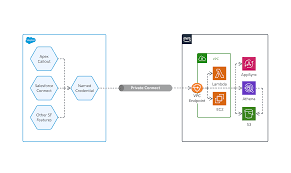
Salesforce is an AWS Partner and a trusted global leader in customer relationship management (CRM). Hyperforce is the next-generation Salesforce architecture, built on Amazon Web Services (AWS). Private Connectivity Between Salesforce and On-Premise Network explained. When business applications developed on Hyperforce are integrated with on-premises systems, traffic in both directions will flow over the internet. For customers in heavily regulated industries such as the public sector and financial services, programmatic access of the Salesforce APIs hosted on Hyperforce from on-premises systems is required to traverse a private connection. Conversely, accessing on-premises systems from business applications running in Hyperforce is required to use a private connection. In this insight, AWS describes how AWS Direct Connect and AWS Transit Gateway can be used in conjunction with Salesforce Private Connect to facilitate the private, bidirectional exchange of organizational data. Architectural overview How to use AWS Direct Connect to establish a dedicated, managed, and reliable connection to Hyperforce. The approach used a public virtual interface to facilitate connectivity to public Hyperforce endpoints. The approach in this insight demonstrates the use of a private or transit virtual interface to establish a dedicated, private connection to Hyperforce using Salesforce Private Connect. Approach AWS Direct Connect is set up between the on-premises network and a virtual private cloud (VPC) residing inside a customer’s AWS account to provide connectivity from the on-premises network to AWS. The exchange of data between the customer VPC and Salesforce’s transit VPC is facilitated through the Salesforce Private Connect feature, based on AWS PrivateLink technology. AWS PrivateLink allows consumers to securely access a service located in a service provider’s VPC as if it were located in the consumer’s VPC. Using Salesforce Private Connect, traffic is routed through a fully managed network connection between your Salesforce organization and your VPC instead of over the internet. The following table shows the definitions of inbound and outbound connections in the context of Salesforce Private Connect: Direction Inbound Outbound Description Traffic that flows into Salesforce Traffic that flows out of Salesforce Use cases AWS to Salesforce Salesforce to AWS On-premises network to Salesforce Salesforce to on-premises network Inbound and Outbound This pattern can only be adopted for Salesforce services supported by Salesforce Private Connect, such as Experience Cloud, Financial Services Cloud, Health Cloud, Platform Cloud, Sales Cloud, and Service Cloud. Check the latest Salesforce documentation for the specific Salesforce services that are supported. Furthermore, this architecture is only applicable to the inbound and outbound exchange of data and does not pertain to the access of the Salesforce UI. The following diagram shows the end-to-end solution of how private connectivity is facilitated bidirectionally. In this example, on-premises servers located on the 10.0.1.0/26 network are required to privately exchange data with applications running on the Hyperforce platform. Figure 1: Using AWS Direct Connect and Salesforce Private Connect to establish private, bidirectional connectivity Prerequisites for Private Connectivity Between Salesforce and On-Premise Network In order to implement this solution, the following prerequisites are required on both the Salesforce and AWS side. Salesforce Refer to Salesforce documentation for detailed requirements on migrating your Salesforce organization to Hyperforce. AWS Network flow between on-premises data center and Salesforce API The following figure shows how both inbound and outbound traffic flows through the architecture. Figure 2: Network flow between on-premises data center and Salesforce Inbound Outbound Considerations for Private Connectivity Between Salesforce and On-Premise Network Before you set up the private, bidirectional exchange of organizational data with AWS Direct Connect, AWS Transit Gateway, and Salesforce Private Connect, review these considerations. Resiliency We recommend that you set up multiple AWS Direct Connect connections to provide resilient communication paths to the AWS Region, especially if the traffic between your on-premises resources and Hyperforce is business-critical. Refer to the AWS documentation on how to achieve high and maximum resiliency for your AWS Direct Connect deployments. For inbound traffic flow, we recommend that the VPC endpoint is configured across Availability Zones for high availability. Configure customer DNS records for the Salesforce API with IP addresses associated with the VPC endpoint and implement the DNS failover or load-balancing mechanism on the customer side. For outbound traffic flow, we recommend that you configure your Network Load Balancer with two or more Availability Zones for high availability. Security For inbound traffic flow, source IP addresses used by the incoming connection are displayed in the Salesforce Private Connect inbound configuration. We recommend that these IP ranges be used in Salesforce configurations that permit the enforcement of source IP. Refer to the Salesforce documentation Restrict Access to Trusted IP Ranges for a Connected App to learn how you can use these IP ranges can to control access to the Salesforce APIs. You access Salesforce APIs using an encrypted TLS connection. AWS Direct Connect also offers a number of additional data in transit encryption options, including support for private IP VPNs over AWS Direct Connect and MAC security. An IP virtual private network (VPN) encrypts end-to-end traffic using an IPsec VPN tunnel, while MAC Security (MACsec) provides point-to-point encryption between devices. For outbound traffic flow, we recommend that you configure TLS listeners on your Network Load Balancers to ensure that traffic to the Network Load Balancer is encrypted. Cost optimization If your use case is to solely facilitate access to Salesforce, you can use a virtual private gateway and a private VIF instead to optimize deployment costs. However, if you plan to implement a hub-spoke network transit hub interconnecting multiple VPCs, we recommend the use of a transit gateway and a transit VIF for a more scalable approach. Refer to the Amazon Virtual Private Cloud Connectivity Options whitepaper and AWS Direct Connect Quotas for the pros and cons of each approach. Conclusion Salesforce and AWS continue to innovate together to provide multiple connectivity approaches to meet customer requirements. This post demonstrated how AWS Direct Connect can be used in conjunction with Salesforce Private Connect to secure end-to-end exchanges of data in industries where the use of the internet is not an option. Like Related Posts Who is Salesforce? Who is Salesforce? Here is their story in their own words. From our inception, we’ve proudly embraced the identity of Read more Salesforce Marketing Cloud Transactional Emails Salesforce Marketing Cloud

Read More
AI Agents in Line at HR

AI Agents in Line at HR

AI Agents in Line at HR may only be a satirical cartoon for a very short time. Sorry, Farside, but your AI bits may not be able to keep up with AI. July, 2034 — A new software unicorn has just emerged inbehind a bar in a pub in East London. Unicorn, by the way, descibes a startup company valued at over $1 billion, not necessarily with a billion dollar concept. Back to East London behind the soggy bar. Hey, its our fantasy. Besides if Amazon can start in a garage, isn’t anything possible? The CEO logs in as usual and gathers daily updates from the team. The Chief Technology Officer is suggesting a new feature to deploy. The Chief Product Officer wants to redesign the CRM (or whatever CRM has evolved to) integration. The Chief Revenue Officer is showing off the new pipeline, forecast by Accountant in a Box. The Chief Customer Officer is discussing the latest customer levitation tools and product feedback. The Chief Information Security Officer has found a new privacy conflict, which they are addressing with a newly-revised infrastructure set-up. And the Head of HR is fretting about the latest round of IT candidates. This sounds like every software business you’ve ever heard of. But the difference is that the CEO’s teammates are entirely AI, not human: The CTO is Lovable. The CPO is Cogna. The CCO is Gradient Labs. The CRO is 11x. The CISO is Zylon. Back to 2024: The Rise of AI Agents In 2024, the hottest topic in software is AI agents, or Agentic AI. Founders are rapidly standing up agentic applications that can solve specific needs in functions like sales and customer services — without a human required. Software buyers, seeing real opportunities to quickly improve their P&L, are swiftly building or purchasing these agentic products. Investors have poured hundreds of millions of dollars into startups in this space in recent months. Even Salesforce wasn’t launched with a silver AI spoon in its mouth. Salesforce began investing in artificial intelligence (AI) in 2014, when the company started acquiring machine learning startups and announced its Customer Success Platform. In 2016, Salesforce launched Einstein, its AI platform that supports several of its cloud services. Einstein is built into Salesforce products and includes features like natural language processing, machine learning, and predictive analytics. It helps organizations automate processes, make decisions based on insights, and improve the customer experience. YouTube How To Increase Revenue Using AI for CRM: Salesforce … Feb 12, 2024 — What is Salesforce Einstein? Salesforce Einstein is the first trusted artifici… TechForce Services How does Salesforce Use AI for Business Growth? Jan 31, 2024 — Powered by technologies like Machine Learning, Natural Language Processing, im… saasguru · LinkedIn · 7mo History of Salesforce AI From Predictive to Generative – LinkedIn Published Nov 27, 2023. In 2014, Salesforce, under the visionary leadership of… Twistellar AI in Salesforce: History, Present State and Prospects Organizations generate tons of data on marketing and sales, and surely your sales managers… Wikipedia Salesforce – Wikipedia In October 2014, Salesforce announced the development of its Customer Success Platform. Less than ten years ago, folks. Salesforce’s large database of data has helped the company address AI challenges quickly and with quality. The company’s data cloud offering provides AI with the right information at the right time, which can reduce friction and improve the customer experience.  Salesforce’s AI-powered solutions include: To catalyze this evolution, Salesforce strategically acquired RelateIQ in 2014. This move injected machine learning into the Salesforce ecosystem, capturing workplace communications data and providing valuable insights. Europe is home to many of these exciting companies. For example, H, a French AI agent startup, raised a $220 million seed round in May. Beyond RPA: The New Wave of AI Agents AI agents represent a significant step-change from Robotic Process Automation (RPA) bots, which, as explored last year, have several limitations due to their deterministic nature. Next-generation AI agents are non-deterministic, meaning that instead of stopping at a “dead end,” they can learn from mistakes and adjust their series of tasks. Not entirely unlock the mouse running the same maze over and over for the cheese. Eventually Mr. Squeakers learns which paths are dead ends and avoids them by making better choices at intersections. In AI Agents this makes them suited to complex and unstructured tasks and means they can transform the journey from intent to implementation in software development. They can deliver “pure work,” rather than acting only as a helpful co-pilot. The rise of AI agents is not only an opportunity to expand automation beyond what is possible with RPA but also to broadly redefine how knowledge work is performed. And by who. And even how is it defined. Given the right guardrails, next-generation AI agents have the potential to effectively and safely replace knowledge workers in many business scenarios. AI Agents in Action These agents are about to revolutionize the world of work as we know it and are already getting started. For example, Klarna recently revealed that its AI agent system handled two-thirds of customer chats in its first month in operation. While HR may not be swamped with AI CVs yet, it is certainly fathomable. One would suppose those candidates would have to be reviewed and interviewed by IT, not just HR. Here’s another deep thought. The internet of things (IoT) first appeared in a speech by Peter T. Lewis in September 1985. The Internet of Things (IoT) is a network of physical devices that can collect and transmit data over the internet using sensors, software, and other technologies. IoT devices can communicate with each other and with the cloud, and can even perform data analysis and be controlled remotely. The IoT concept was smart homes, health care environments, office spaces, and transportation. Only recently have we begun to think of the IoT as including the actual computers, or AI, in addition to sensored devices. It isn’t exactly a chicken and the egg question, but more of a

Read More
Hubspot Hacked

Hubspot Hacked

HubSpot recently disclosed a “security incident” where unauthorized access was attempted on several customer accounts. HubSpot is an American software company that provides tools for inbound marketing, sales, and customer service. It was founded in 2006 by Brian Halligan and Dharmesh Shah, and is today best-known for its all-in-one growth platform that helps businesses attract visitors, convert leads, and close customers.. The CRM company detected the incident on June 22, though it was publicly acknowledged six days later by Alyssa Robinson, Chief Information Security Officer at HubSpot. HubSpot seems to have suffered a data breach, but claims to have everything in hand – for now. Robinson stated that the incident involved bad actors targeting a limited number of HubSpot customers, aiming to gain unauthorized access to their accounts. Upon detection, HubSpot promptly activated its incident response procedures and has since been in contact with affected customers, taking necessary steps to revoke unauthorized access and safeguard customer data. HubSpot Hacked With how the statement was worded, it would seem that the attackers, whoever they are, tried to break into the account – but not necessarily succeeded. Still, the company proceeded with the usual practice in case of a cyberattack: “HubSpot triggered our incident response procedures, and since June 22 we have been contacting impacted customers and taking necessary steps to revoke the unauthorized access and protect our customers and their data,” said Robinson. As of Friday, June 28, HubSpot has not disclosed any communication from the hacking group, nor has it specified the full scope of the incident or the exact number of impacted customers. Despite having over 100,000 paying customers and achieving significant financial milestones, such as breaking the billion annual recurring revenue (ARR) mark, HubSpot’s stock price remained stable amid the news, which surfaced through TechCrunch. Ironically, this incident follows HubSpot’s recent announcement of new data protection capabilities for its Smart CRM users. However, it underscores the ongoing challenges faced by major enterprise tech providers regarding cybersecurity. HubSpot says fewer than 50 customer accounts were victims of a breach in late June, all impacted customers were notified and all has been quiet since the initial incident. As of May 2024, HubSpot had more than 216,000 customers, so an incident that impacts fewer than 50 doesn’t seem like a big deal, unless of course you’re one of the accounts involved. What we know:  The company is not releasing many details about the incident other than the basic facts. The company said in a June 28 release that it detected a security incident on June 22, 2004, where bad actors were attempting to gain access to customer accounts without authorization. HubSpot’s detection of the breach triggered its incident response procedures and the company notified impacted accounts. On June 28 and again on July 1, 2024, the company reported no further signs of a problem. What’s not known at this time is whether the attack was targeting a specific group of HubSpot customers. Back in March 2022, fewer than 30 HubSpot customers were impacted by a data breach, but all of the impacted customers were in the cryptocurrency business. HubSpot joins a growing list of enterprise tech firms experiencing cybersecurity incidents. While recent arrests, such as that of the alleged ringleader behind attacks on Twilio, LastPass, and Mailchimp, offer some hope, cybersecurity threats continue to evolve with the proliferation of digital devices and AI accessibility. This trend poses new risks, including the misuse of AI technologies like deepfakes, as highlighted by concerns raised by organizations like OpenAI. As businesses expand their digital presence and adopt new technologies, they must remain vigilant against evolving cybersecurity threats to protect sensitive information and maintain customer trust. HubSpot is an American software company that provides tools for inbound marketing, sales, and customer service. It was founded in 2006 and is today best-known for its all-in-one growth platform that helps businesses attract visitors, convert leads, and close customers. Impact for Marketers As marketers, our martech stacks are heavily reliant on cloud-based SaaS applications (like HubSpot) and cloud-based data storage from vendors like Amazon’s AWS and Google Cloud. Even on-premise applications and data are a security risk. The applications running in the cloud and the data stored there are at arm’s length from your data security professionals. More than 80% of the data breaches recorded in 2023 involved data stored in the cloud, according to the Harvard Business Review. Big breaches impacting millions of consumers get a great deal of attention, like those that struck Sony or Target in years past. But smaller, targeted attacks can be devastating to the businesses that have their data exposed, though they fly under the radar of the national press. The number of reported data breaches increased 78% from 2022 to 2023. The cost of the average breach surpassed $4 million in 2023 and is up 15% since 2020. How secure is HubSpot? Is my data secure with HubSpot? All communications between a web client and HubSpot servers are protected using TLS (1.0, 1.1, 1.2) protocol encryption using 2048 bit keys. We also provide customers with the ability to enable Two-Phase Authentication (2FA) to prevent unauthorized use of their portals. Another July Hack One of the most significant data leaks in recent history is reported to have occurred on July 4. The leak, dubbed RockYou2024 by the original poster, “ObamaCare”, on a leading hacking forum, compiled 9,948,575,739 unique passwords into plain text. This means close to ten billion passwords were leaked. That said, the RockYou2024 is primarily a compilation of all previous password leaks and is built on a prior RockYou2021 compilation of 8.4 billion passwords. That means between RockYou2021 and RockYou2024, about 1.5 billion passwords were added to the list. Further, according to the hacker, at least a few of these passwords were cracked using RTX 4090, a tactic that was warned about earlier. According to Cybernews researchers, “In its essence, the RockYou2024 leak is a compilation of real-world passwords used by individuals all over the world. Revealing that many

Read More
Improve Patient Care and Trust

Improve Patient Care and Trust

A recent survey conducted by Kyruus Health and shared with HealthPayerIntelligence reveals that consumers are demanding more accurate online provider data from payers to enhance access to care. Healthcare solutions from Tectonic and Salesforce improve patient care and trust by improving data accuracy. The survey, fielded by Wakefield Research in April 2024, involved 1,000 healthcare consumers. Nearly three-quarters of respondents (72%) had private health insurance, with Medicare being the second most common form of coverage (18%). The participants represented an even distribution across U.S. regions and age groups, with 57% identifying as women. Payers have historically struggled to maintain up-to-date provider directories, and this survey highlights the significant impact of these challenges. About 30% of consumers reported skipping care due to inaccurate provider information, with 70% of them seeking this data online. Consumers primarily rely on health plan websites or apps for provider information, with 32% naming these platforms as their first resource. Medicaid enrollees were particularly dependent on their plan’s digital resources, with 64% turning to these tools first. Besides health plan websites and apps, consumers also used general internet searches, provider or clinic websites, and healthcare information sites like WebMD. Social media platforms were also popular for care searches, with 77% of users turning to Facebook and 61% to YouTube. The survey also revealed that payers often fail to provide accurate cost predictions. Only 32% of respondents said their health plans offered accurate cost information. Price transparency tools are particularly important to younger generations, with 76% of Millennials and 80% of Gen Z respondents using these tools. However, 40% of Baby Boomers were unsure if their plans even offered such tools. Among those who did use them, 34% found that the tools presented incorrect provider data, with 45% of Gen Z reporting this issue. Inaccurate provider information can lead to significant negative consequences for consumers, including delays in accessing care, difficulties contacting preferred providers, and higher costs. Some consumers even reported accidentally receiving out-of-network care or forgoing care altogether due to these inaccuracies. These experiences not only hinder access to care but also damage consumer trust in their healthcare providers and payers. Overall, 80% of respondents said that inaccurate provider data affected their trust, with 27% losing trust in their health plans and 22% losing trust in their providers. The survey results underscore a clear call to action. Over 60% of consumers, and nearly 75% of Gen Z specifically, want their health plans to provide more accurate data. Tectonic has decades of experience applying Salesforce solutions to health care providers and payers. To address these concerns, the report recommends that health plans take three key steps: First, engage with members through appropriate channels, including social media. Second, unify and validate their provider data to ensure accuracy. Third, introduce self-service capabilities within their digital platforms to empower consumers. Reach out to Tectonic today if your organization needs help applying these three steps. Like Related Posts Who is Salesforce? Who is Salesforce? Here is their story in their own words. From our inception, we’ve proudly embraced the identity of Read more Salesforce Marketing Cloud Transactional Emails Salesforce Marketing Cloud Transactional Emails are immediate, automated, non-promotional messages crucial to business operations and customer satisfaction, such as order Read more Salesforce Unites Einstein Analytics with Financial CRM Salesforce has unveiled a comprehensive analytics solution tailored for wealth managers, home office professionals, and retail bankers, merging its Financial Read more AI-Driven Propensity Scores AI plays a crucial role in propensity score estimation as it can discern underlying patterns between treatments and confounding variables Read more

Read More
AI Outage

AI Outage

Unlike the recent mobile device network outage recently, where affected users were screaming fowl within minutes, AI experienced an outage today and you probably didn’t even know about it. AI Outage with three systems down simultaneously. Following a prolonged outage in the early morning hours, OpenAI’s ChatGPT chatbot experienced another disruption, but this time, it wasn’t alone. On Tuesday morning, both Anthropic’s Claude and Perplexity also encountered issues, albeit these were swiftly resolved compared to ChatGPT’s downtime. ChatGPT had seemingly recovered from what OpenAI described as a “major outage” earlier today, which hit millions of users worldwide. As of 3PM ET, the generative AI platform reported “All Systems Operational.” Reports indicate that Google’s Gemini was operational, although there were some user claims suggesting it might have briefly experienced downtime as well. The simultaneous outage of three major AI providers is uncommon and could suggest a broader infrastructure issue or a problem at an internet-scale level, akin to the outages affecting multiple social media platforms concurrently. Alternatively, the issues faced by Claude and Perplexity might have been a result of an overwhelming surge in traffic following ChatGPT’s outage, rather than inherent bugs or technical glitches. What has happened to all the AI platforms? An unknown glitch has affected the activity of most of the chatbots based on generative artificial intelligence (GenAI) on Tuesday, led by OpenAI’s ChatGPT and Google’s Gemini. What has happened to all the AI platforms? An unknown glitch has affected the activity of most of the chatbots based on generative artificial intelligence (GenAI) on Tuesday, led by OpenAI’s ChatGPT and Google’s Gemini. Although they have not yet reached the status of critical services such as a search engine, email or an instant messaging application, the scope of use of AI platforms is on a steady rise, for private use, work or studies. During ChatGPT’s outage, users were unable to message the AI chatbot from its landing page. The disruption began at approximately 7:33 AM PT and was resolved around 10:17 AM PT, marking another instance of multi-hour downtime. Like1 Related Posts Who is Salesforce? Who is Salesforce? Here is their story in their own words. From our inception, we’ve proudly embraced the identity of Read more AI-Driven Propensity Scores AI plays a crucial role in propensity score estimation as it can discern underlying patterns between treatments and confounding variables Read more The Evolution of Industrial Revolutions History of First Four Industrial Revolutions Throughout history, humanity has always relied on technology. Although the technology of each era Read more What is the definition of a CRM? Customer relationship management (definition of a CRM) is a set of integrated, data-driven software solutions that help manage, track, and Read more

Read More
Salesforce Field Service Lightning

Salesforce Field Service Lightning

Many companies worldwide seek quality services associated with Salesforce Field Service Lightning (FSL) to differentiate between lacking customer experiences and excellent ones. Satisfied customers associate such services with high-quality ratings, gradually building trust with the company and recommending it to others. The ability of any business to generate successful recognition and experience with clients helps establish an invaluable competitive advantage. Salesforce Field Service Lightning We are here to assist you in mapping and quoting various FSL Salesforce services such as equipment installation, repair, general customer service management, and maintenance. Field Service technicians, also known as mobile technicians, play a crucial role in delivering these tasks. They receive notifications on mobile devices and quickly find users in need of speedy solutions to their problems. What is Salesforce Field Service? Salesforce Field Service (formerly known as Field Service Lightning) is designed for the automation and optimization of work offered by dispatchers and field service agents. It ensures that no employee sacrifices any functionality of the related services when working outside the company. This system is part of the FSL Salesforce Service Cloud and aims to create a seamless workflow and avoid mistakes with the help of service technicians. Integral Parts of Salesforce Field Service After implementing Salesforce Field Service Lightning, clients can immediately see the benefits reflected in the increased efficiency of developed services. Advantages of Salesforce Field Service Lightning Bottom Line We hope this comprehensive guide on Salesforce Field Service Lightning has provided valuable insights into its aspects and benefits. Our experienced executives offer valuable advice and risk-free solutions for managing projects involving field service. You can contact Tectonic 24/7 for error removal and maintaining Salesforce FSL service deployments. Tasks such as project management and exception diagnosis are easily handled with the Service Cloud platform. We offer a strong framework for different service models and prepare reports for various service territory designs, ensuring a seamless and efficient operation. Like Related Posts Who is Salesforce? Who is Salesforce? Here is their story in their own words. From our inception, we’ve proudly embraced the identity of Read more Salesforce Marketing Cloud Transactional Emails Salesforce Marketing Cloud Transactional Emails are immediate, automated, non-promotional messages crucial to business operations and customer satisfaction, such as order Read more Salesforce Unites Einstein Analytics with Financial CRM Salesforce has unveiled a comprehensive analytics solution tailored for wealth managers, home office professionals, and retail bankers, merging its Financial Read more AI-Driven Propensity Scores AI plays a crucial role in propensity score estimation as it can discern underlying patterns between treatments and confounding variables Read more

Read More
Advances in AI Models

Advances in AI Models

Advances in AI Models Let’s take a moment to appreciate the transformative impact large language models (LLMs) have had on the world. Before the rise of LLMs, researchers spent years training AI to generate images, but these models had significant limitations. Advances in AI Models. One promising neural network architecture was the generative adversarial network (GAN). In a GAN, two networks play a cat-and-mouse game: one tries to create realistic images while the other tries to distinguish between generated and real images. Over time, the image-creating network improves at tricking the other. While GANs can generate convincing images, they typically excel at creating images of a single subject type. For example, a GAN that creates excellent images of cats might struggle with images of mice. GANs can also experience “mode collapse,” where the network generates the same image repeatedly because it always tricks the discriminator. An AI that produces only one image repeatedly isn’t very useful. What’s truly useful is an AI model capable of generating diverse images, whether it’s a cat, a mouse, or a cat in a mouse costume. Such models exist and are known as diffusion models, named for the underlying math that resembles diffusion processes like a drop of dye spreading in water. These models are trained to connect images and text, leveraging vast amounts of captioned images on the internet. With enough samples, a model can extract the essence of “cat,” “mouse,” and “costume,” embedding these elements into generated images using diffusion principles. The results are often stunning. Some of the most well-known diffusion models include DALL-E, Imagen, Stable Diffusion, and Midjourney. Each model differs in training data, embedding language details, and user interaction, leading to varied results. As research and development progress, these tools continue to evolve rapidly. Uses of Generative AI for Imagery Generative AI can do far more than create cute cat cartoons. By fine-tuning generative AI models and combining them with other algorithms, artists and innovators can create, manipulate, and animate imagery in various ways. Here are some examples: Text-to-Image Generative AI allows for incredible artistic variety using text-to-image techniques. For instance, you can generate a hand-drawn cat or opt for a hyperrealistic or mosaic style. If you can imagine it, diffusion models can interpret your intention successfully. Text-to-3D Model Creating 3D models traditionally requires technical skill, but generative AI tools like DreamFusion can generate 3D models along with detailed descriptions of coloring, lighting, and material properties, meeting the growing demand in commerce, manufacturing, and entertainment. Image-to-Image Images can be powerful prompts for generative AI models. Here are some use cases: Animation Creating a series of consistent images for animation is challenging due to inherent randomness in generated images. However, researchers have developed methods to reduce variations, enabling smoother animations. All the use cases for still images can be adapted for animation. For example, style transfer can turn a video of a skateboarder into an anime-style animation. AI models trained on speech patterns can animate the lips of a generated 3D character. Embracing Generative AI Generative AI offers enormous possibilities for creating stunning imagery. As you explore these capabilities, it’s essential to use them responsibly. In the next unit, you’ll learn how to leverage generative AI’s potential in an ethical and effective manner. Like Related Posts Who is Salesforce? Who is Salesforce? Here is their story in their own words. From our inception, we’ve proudly embraced the identity of Read more Salesforce Unites Einstein Analytics with Financial CRM Salesforce has unveiled a comprehensive analytics solution tailored for wealth managers, home office professionals, and retail bankers, merging its Financial Read more AI-Driven Propensity Scores AI plays a crucial role in propensity score estimation as it can discern underlying patterns between treatments and confounding variables Read more Tectonic’s Successful Salesforce Track Record Salesforce Technology Services Integrator – Tectonic has successfully delivered Salesforce in a variety of industries including Public Sector, Hospitality, Manufacturing, Read more

Read More
gettectonic.com