Internet Archives - gettectonic.com - Page 5
Train On Your Own Data

Train On Your Own Data

General-purpose large language models (LLMs) offer businesses the convenience of immediate use without requiring any special setup or customization. However, to maximize the potential of LLMs in business environments, organizations can achieve significant benefits by customizing these models through training on their own data. Custom LLMs excel at handling organization-specific tasks that generic LLMs—such as OpenAI’s ChatGPT or Google’s Gemini—may not manage as effectively. By training an LLM on data unique to the enterprise, businesses can fine-tune the model to produce responses that are highly relevant to specific products, workflows, and customer interactions. To determine whether to customize an LLM with organization-specific data, businesses should first explore the various types of LLMs and understand the advantages of fine-tuning a model on custom data sets. Following this, they can proceed with the necessary steps: identifying data sources, cleaning and formatting the data, adjusting model parameters, retraining the model, and testing it in production. Generic vs. Customized LLMs LLMs can be broadly categorized into two types: Training an LLM on custom data doesn’t imply starting from scratch; instead, it often involves fine-tuning a pre-trained generic model with additional training on the organization’s data. This approach allows the model to retain the broad knowledge it acquired during initial training while enhancing its capabilities in areas specific to the business. Benefits of Customizing an LLM The primary reason for retraining or fine-tuning an LLM is to achieve superior performance on business-specific tasks compared to using a generic model. For example, a company that wants to deploy a chatbot for customer support needs an LLM that understands its products in detail. Even if a generic LLM has some familiarity with the product from public data sources, it may lack the depth of knowledge that the company’s internal documentation provides. Without this comprehensive context, a generic LLM might struggle to generate accurate responses when interacting with customers about specific products. Generic models are optimized for broad usability, which means they may not be tailored for the specialized conversations required in business scenarios. Organizations can overcome these limitations by retraining or fine-tuning an LLM with data related to their products and services. During this process, AI teams can also adjust parameters, such as model weights, to influence the type of output the model generates, making it more relevant to the organization’s needs. Steps to Customize an LLM with Organization-Specific Data To customize an LLM with your organization’s data, follow these steps: By following these steps, organizations can transform a generic LLM into a powerful, customized tool tailored to their unique business needs, enhancing efficiency, customer satisfaction, and overall operational effectiveness. Like Related Posts Who is Salesforce? Who is Salesforce? Here is their story in their own words. From our inception, we’ve proudly embraced the identity of Read more Salesforce Marketing Cloud Transactional Emails Salesforce Marketing Cloud Transactional Emails are immediate, automated, non-promotional messages crucial to business operations and customer satisfaction, such as order Read more Salesforce Unites Einstein Analytics with Financial CRM Salesforce has unveiled a comprehensive analytics solution tailored for wealth managers, home office professionals, and retail bankers, merging its Financial Read more AI-Driven Propensity Scores AI plays a crucial role in propensity score estimation as it can discern underlying patterns between treatments and confounding variables Read more


Read More
Salesforce OmniStudio Summer 24 Release Notes

Salesforce OmniStudio Summer 24 Release Notes

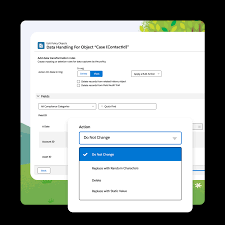
In Summer ’24, OmniStudio (when the Managed Package Runtime setting is disabled) supports features from OmniStudio for Vlocity, including filling address fields in omniscripts with Google Map data, using Salesforce private connect for HTTP actions in integration procedures, and choosing whether to merge entries within a list in an integration procedure list action. Also, DataRaptor is now Omnistudio Data Mapper. For Winter ’25 upgrades, disable New Order Save Behavior. To prepare for future releases, remove organization and profile standard objects from data mappers, remove OmniStudio components with unlocked packages, and check the impact of the date change in the ADDDAY function return. Salesforce OmniStudio Summer 24 Release Notes. Like Related Posts Who is Salesforce? Who is Salesforce? Here is their story in their own words. From our inception, we’ve proudly embraced the identity of Read more Salesforce Marketing Cloud Transactional Emails Salesforce Marketing Cloud Transactional Emails are immediate, automated, non-promotional messages crucial to business operations and customer satisfaction, such as order Read more Salesforce Unites Einstein Analytics with Financial CRM Salesforce has unveiled a comprehensive analytics solution tailored for wealth managers, home office professionals, and retail bankers, merging its Financial Read more AI-Driven Propensity Scores AI plays a crucial role in propensity score estimation as it can discern underlying patterns between treatments and confounding variables Read more
Read More
Paradox of Writing With AI

Paradox of Writing With AI

It seems like some people honestly believe they can spot AI-generated content immediately, but that’s not always the case. Well-written content isn’t inherently AI-generated, and if it is AI-generated, that doesn’t necessarily mean it’s well-written. The quality of writing often depends more on the writer’s skill than the tools they use. Paradox of Writing With AI is that it will make a good writer better. And it will make a bad writer worse. The real difference in human versus AI content lies in the accessibility of writing tools and the lack of proper ethical regulation for their use. This ease of access makes it simple for people to feel entitled to judge written content. True, if you publish your writing – online or elsewhere – you open it up for judgement. But imagine if UX design or data applications were graded as indiscriminately—those discussions would likely be confined to experts rather than becoming public debates on social media condemning all well-written content. Good writing requires creativity, flair, and uniqueness, among other skills, to truly impress readers. Good writing is well-organized and flows well with consistent style or voice from beginning to end. Good writing is also free from mistakes and errors in spelling, punctuation and grammar. But that alone doesn’t make it engaging or meaningful. A good writer will brainstorm for great ideas and follow them up with research. A good writer can think of fresh angles to view a topic. A good writer is sure to re-write and self-edit to make a better draft. AI has been integrated into various tools and applications long before ChatGPT was launched. Search engines use it to provide relevant results; social media algorithms keep your favorite content visible; Siri and Alexa rely on natural language processing and speech recognition; Netflix and Spotify use AI recommendation systems to cater to your tastes, and so on. AI enhances human ideas, not just in writing, but across many fields. Writing With AI is Inevitable For instance, Chinese Nobel laureate Mo Yan surprised everyone at the 65th-anniversary celebration of Shouhuo magazine by revealing he uses ChatGPT. During his speech praising fellow author Yu Hua, he mentioned that he struggled to write a commendation and asked a doctoral student to use ChatGPT for help. This revelation caused quite a stir, as it was unexpected for a Nobel Prize winner to use AI for writing. Why shouldn’t he? If AI makes a good writer better, then most of us should be employing it. Mo Yan isn’t alone. Rie Kudan, the 17th winner of Japan’s Akutagawa Prize, admitted to using ChatGPT for her novel, Tokyo-to Dojo-to. She stated that about 5% of the book consists of AI-generated sentences. Kudan, who is introverted, shared that frequent interactions with the AI tool allowed her to express personal thoughts she couldn’t comfortably discuss with others. ChatGPT’s responses often sparked dialogue in her novel, adding a unique dimension to her writing process. Grammarly, another AI tool, is why some people’s writing doesn’t reflect their irritation when discussing AI-generated content online. Grammarly has been widely used for editing and proofreading, ensuring users’ writing maintains a promotional tone and corrects errors without sounding sarcastic or bored. The Problem with Sounding Alike & The Uniqueness of a Writer’s Voice A significant issue with AI-generated content is that many written works sound similar. Writers need to develop unique voices. While Jane Austen, Mary Shelley, and the Brontë sisters are admirable, emulating their ornate language can interfere with communication’s primary purpose. Excessive fanciness can make speech overly flamboyant, akin to Oscar Wilde’s works. However asking AI to work through your content and put it in the voice of a known writer, add humor, or change the tense is time saving. The problem isn’t that AI enables people to produce well-crafted content. Many individuals have exceptional writing skills and huge vocabularies. The real issue is the uniformity in everyone’s writing, a lack of diversity that AI can perpetuate. Yet, you only have to Google any topic and you will find many blog posts and articles that share the same view, and perhaps the same voice. Some discussions about AI resemble early 2000s conspiracy theories about cell phones. While the context has changed, the tone remains similar. The Importance of Creativity in Writing & Our Language Creativity is essential in writing. Even AI relies on human creativity. Without our input, machines would repeatedly generate the same content. Machine learning in AI is about learning from people. Our role is crucial, demonstrating the value of our unique voices. Developing a unique voice takes time and effort, which is why creatives like Kelly McKernan, Nicki Minaj, Elin Hilderbrand, and Jonathan Franzen are suing AI companies for copyright infringement. These unique voices significantly impact language evolution, and it’s vital for us to continue growing creatively. Writers play a crucial role in language evolution by creating new words or phrases that captivate readers. Over time, these innovations can enrich the language. A writer’s distinctive style can set trends, leading to significant changes in language use. This power must be used wisely. Famous writers’ narrative structures and dialogue usage can inspire others. For example, Dr. Seuss coined “nerd,” J.R.R. Tolkien introduced “tween,” Milton created “pandemonium”, novelist William Gibson first used “cyberspace”, Johnathon Swift gave us “yahoo” in Gulliver’s Travels, and Charles Dickens gave us “boredom.” The core of a good piece of writing is a great idea. With a strong core idea, the writer can easily layer the content around it. Content even can build the framework from which comes a whole new word. Content includes interesting examples to which the reader can relate. That content needs to be well-organized and clear in form so that the reader can easily see the message or find the intended meaning. In addition, the writing should have style and the right voice that matches its topic and theme while also reflecting what the author believes.  Writing Through the Centuries Writing has evolved over centuries, influencing language development. During

Read More
Where Will AI Take Us?

Where Will AI Take Us?

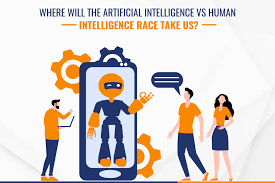
Author Jeremy Wagstaff wrote a very thought provoking article on the future of AI, and how much of it we could predict based on the past. This insight expands on that article. Artificial Intelligence (AI) refers to the simulation of human intelligence in machines that are programmed to think and learn. These machines can perform tasks that typically require human intelligence, such as visual perception, speech recognition, decision-making, and language translation. Many people think of artificial intelligence in the vein of how they personally use it. Some people don’t even realize when they are using it. Artificial intelligence has long been a concept in human mythology and literature. Our imaginations have been grabbed by the thought of sentient machines constructed by humans, from Talos, the enormous bronze automaton (self-operating machine) that safeguarded the island of Crete in Greek mythology, to the spacecraft-controlling HAL in 2001: A Space Odyssey. Artificial Intelligence comes in a variety of flavors, if you will. Artificial intelligence can be categorized in several ways, including by capability and functionality: You likely weren’t even aware of all of the above categorizations of artificial intelligence. Most of us still would sub set into generative ai, a subset of narrow AI, predictive ai, and reactive ai. Reflect on the AI journey through the Three C’s – Computation, Cognition, and Communication – as the guiding pillars for understanding the transformative potential of AI. Gain insights into how these concepts converge to shape the future of technology. Beyond a definition, what really is artificial intelligence, who makes it, who uses it, what does it do and how. Artificial Intelligence Companies – A Sampling AI and Its Challenges Artificial intelligence (AI) presents a novel and significant challenge to the fundamental ideas underpinning the modern state, affecting governance, social and mental health, the balance between capitalism and individual protection, and international cooperation and commerce. Addressing this amorphous technology, which lacks a clear definition yet pervades increasing facets of life, is complex and daunting. It is essential to recognize what should not be done, drawing lessons from past mistakes that may not be reversible this time. In the 1920s, the concept of a street was fluid. People viewed city streets as public spaces open to anyone not endangering or obstructing others. However, conflicts between ‘joy riders’ and ‘jay walkers’ began to emerge, with judges often siding with pedestrians in lawsuits. Motorist associations and the car industry lobbied to prioritize vehicles, leading to the construction of vehicle-only thoroughfares. The dominance of cars prevailed for a century, but recent efforts have sought to reverse this trend with ‘complete streets,’ bicycle and pedestrian infrastructure, and traffic calming measures. Technology, such as electric micro-mobility and improved VR/AR for street design, plays a role in this transformation. The guy digging out a road bed for chariots and Roman armies likely considered none of this. Addressing new technology is not easy to do, and it’s taken changes to our planet’s climate, a pandemic, and the deaths of tens of millions of people in traffic accidents (3.6 million in the U.S. since 1899). If we had better understood the implications of the first automobile technology, perhaps we could have made better decisions. Similarly, society should avoid repeating past mistakes with AI. The market has driven AI’s development, often prioritizing those who stand to profit over consumers. You know, capitalism. The rapid adoption and expansion of AI, driven by commercial and nationalist competition, have created significant distortions. Companies like Nvidia have soared in value due to AI chip sales, and governments are heavily investing in AI technology to gain competitive advantages. Listening to AI experts highlights the enormity of the commitment being made and reveals that these experts, despite their knowledge, may not be the best sources for AI guidance. The size and impact of AI are already redirecting massive resources and creating new challenges. For example, AI’s demand for energy, chips, memory, and talent is immense, and the future of AI-driven applications depends on the availability of computing resources. The rise in demand for AI has already led to significant industry changes. Data centers are transforming into ‘AI data centers,’ and the demand for specialized AI chips and memory is skyrocketing. The U.S. government is investing billions to boost its position in AI, and countries like China are rapidly advancing in AI expertise. China may be behind in physical assets, but it is moving fast on expertise, generating almost half of the world’s top AI researchers (Source: New York Times). The U.S. has just announced it will provide chip maker Intel with $20 billion in grants and loans to boost the country’s position in AI. Nvidia is now the third largest company in the world, entirely because its specialized chips account for more than 70 percent of AI chip sales. Memory-maker Micro has mostly run out of high-bandwidth memory (HBM) stocks because of the chips’ usage in AI—one customer paid $600 million up-front to lock in supply, according to a story by Stack. Back in January, the International Energy Agency forecast that data centers may more than double their electrical consumption by 2026 (Source: Sandra MacGregor, Data Center Knowledge). AI is sucking up all the payroll: Those tech workers who don’t have AI skills are finding fewer roles and lower salaries—or their jobs disappearing entirely to automation and AI (Source: Belle Lin at WSJ). Sam Altman of OpenAI sees a future where demand for AI-driven apps is limited only by the amount of computing available at a price the consumer is willing o pay. “Compute is going to be the currency of the future. I think it will be maybe the most precious commodity in the world, and I think we should be investing heavily to make a lot more compute.” Sam Altman, OpenAI CEO This AI buildup is reminiscent of past technological transformations, where powerful interests shaped outcomes, often at the expense of broader societal considerations. Consider early car manufacturers. They focused on a need for factories, components, and roads.

Read More
Communications Cloud Summer 24

Communications Cloud Summer 24

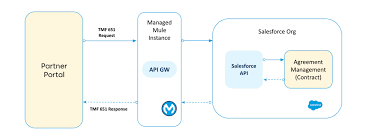
Salesforce Communications Cloud Summer ’24 Release: Elevating Business Performance and Workflow Efficiency With its Summer ’24 release, Salesforce Communications Cloud unveils an array of powerful new capabilities designed to elevate business performance and optimize workflow efficiency. In this blog, we’ll explore some of our favorite new features, including Field Service improvements that provide technicians with better insights and user experiences, new TM Forum API integrations, and Enterprise Sales Management (ESM) enhancements. Field Service Field Service for Industries optimizes field operations by equipping service teams with advanced tools, enabling companies to maximize asset lifetime value and enhance customer satisfaction. This release includes unique capabilities tailored for field technicians to help with work order execution and asset management. TM Forum In the latest Summer ’24 release, Salesforce has delivered two additional TM Forum APIs, enabling seamless integration of Communications Cloud instances with external systems. These include the TMF620 outbound Product Catalog Management and TMF651 inbound Agreement Management APIs. Enterprise Sales Management Conclusion The main features in the Summer ’24 release allow businesses to operate more efficiently, enhance user experience, and create an open and flexible platform with TM Forum APIs. There are also many other exciting enhancements such as CPQ API improvements, built-in diagnostic tools for EPC configuration, and more. Like Related Posts Who is Salesforce? Who is Salesforce? Here is their story in their own words. From our inception, we’ve proudly embraced the identity of Read more Salesforce Marketing Cloud Transactional Emails Salesforce Marketing Cloud Transactional Emails are immediate, automated, non-promotional messages crucial to business operations and customer satisfaction, such as order Read more Salesforce Unites Einstein Analytics with Financial CRM Salesforce has unveiled a comprehensive analytics solution tailored for wealth managers, home office professionals, and retail bankers, merging its Financial Read more AI-Driven Propensity Scores AI plays a crucial role in propensity score estimation as it can discern underlying patterns between treatments and confounding variables Read more
Read More
AI Adoption Not Even Across the Board

AI Adoption Not Even Across the Board

Reflecting on AI’s potential and its challenges, McElheran calls for a balanced approach: “To fully harness AI’s benefits, we need a realistic, evidence-based approach that accounts for both the advantages and the societal costs associated with adoption.”

Read More
Sales Forecast Report in Power BI

Sales Forecast Report in Power BI

To predict future sales, a time series forecasting model was created in Power BI. The model used past sales data to predict sales for the next 15 days. Visuals were included to compare forecasts with actual sales, and the results closely aligned with historical trends.

Read More
Successful Salesforce Implementation

Successful Salesforce Implementation

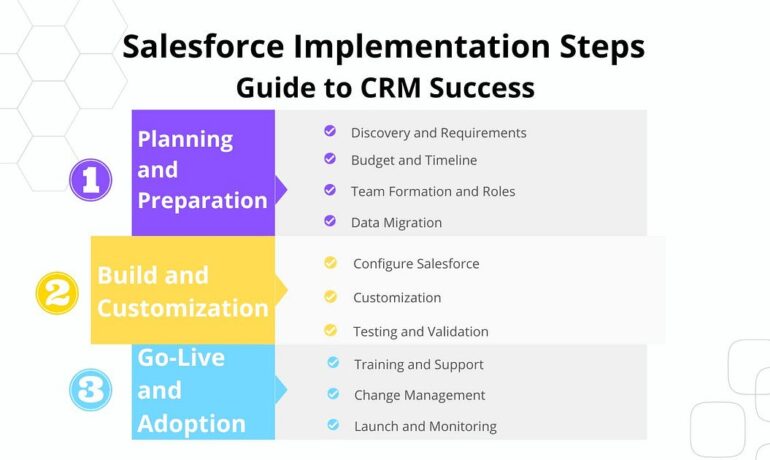
Unlocking the Potential of Salesforce: A Guide to Corporate Success Are you ready to explore the world of Successful Salesforce Implementation? In this Tectonic insight, we’ll explore how to leverage Salesforce to its fullest potential for your corporate success. Whether you’re a small startup or a large corporation, keep reading for practical advice and real-world insights to make Salesforce implementation work for you! What is Salesforce? Salesforce acts as a digital headquarters for organizations, organizing all client information, such as names, purchases, and contact methods. It’s also an Internet application that helps organizations manage customer relationships more effectively by sorting customer details, tracking sales leads, and automating tasks to ease customer interactions. Salesforce is cloudbased, so it is accessible from anywhere. Why Implement Salesforce Now? Implementing Salesforce offers numerous benefits for organizations across various industries: Overall, Salesforce improves how organizations manage customer relationships and utilize data for growth, but effective implementation requires thoughtful planning and customization. Types of Salesforce Implementation Sales Cloud Implementation Sales Cloud is Salesforce’s CRM platform designed to manage sales, leads, and customer interactions. Service Cloud Implementation Service Cloud helps companies provide excellent customer service and support. Marketing Cloud Implementation Marketing Cloud Engagement simplifies marketing efforts, helping businesses connect with customers across various channels. Each type of Salesforce implementation offers unique benefits and challenges, depending on the organization’s needs and goals. CRM Implementation Considerations Implementing a CRM system is a significant move for any business. Here are important things to remember: Step-by-Step Guide to Implement Salesforce Successfully Benefits of a Successful Salesforce Implementation Conclusion Implementing Salesforce is more than adding a powerful CRM system; it’s a journey to greater efficiency, productivity, and customer satisfaction. By thoughtfully planning and customizing Salesforce, organizations can enhance operations, deepen customer relationships, and drive sustainable growth. Embrace the possibilities of Salesforce implementation to chart a course for lasting success and innovation in the modern business landscape. Like Related Posts Who is Salesforce? Who is Salesforce? Here is their story in their own words. From our inception, we’ve proudly embraced the identity of Read more Salesforce Marketing Cloud Transactional Emails Salesforce Marketing Cloud Transactional Emails are immediate, automated, non-promotional messages crucial to business operations and customer satisfaction, such as order Read more Salesforce Unites Einstein Analytics with Financial CRM Salesforce has unveiled a comprehensive analytics solution tailored for wealth managers, home office professionals, and retail bankers, merging its Financial Read more AI-Driven Propensity Scores AI plays a crucial role in propensity score estimation as it can discern underlying patterns between treatments and confounding variables Read more

Read More
Einstein in Salesforce

Einstein in Salesforce

Salesforce AI and CRM Evolution Salesforce has long been a leader in customer relationship management (CRM) by pioneering cloud technologies. Recently, the platform has significantly advanced with the integration of generative artificial intelligence (AI) and AI-powered features, thanks to its Einstein technology. Einstein in Salesforce is like a super smart computer overseeing and analyzing the data in your CRM. This guide explores Salesforce’s AI strategy, exploring its specific products and features to help business teams understand and benefit from this technology. Exploring Salesforce’s Advanced AI Features Einstein, Salesforce’s AI technology, powers various advanced features within the platform. This guide will cover these capabilities, provide real-life adoption examples, and discuss their benefits. Additionally, it offers best practices, solutions, and services to facilitate your Einstein implementation. Salesforce’s Comprehensive CRM Solution Salesforce remains a number one in the CRM software world, offering robust solutions for managing relationships across various departments. Specific clouds within Salesforce enable teams to handle marketing, sales, customer service, e-commerce, and more. The platform focuses on customer experience and provides robust data analytics to support decision-making. Enhancements Through Generative AI Salesforce’s generative AI has rapidly enhanced the platform’s automation, workflow management, data analytics, and assistive capabilities for customer management. A prime example is Salesforce Copilot, which aids internal users with outreach and analysis tasks while improving the external user experience. What is Salesforce Einstein? Salesforce Einstein is the first comprehensive AI for CRM, integrating AI technologies to enhance the Customer Success Platform and bring AI to users everywhere. It is seamlessly integrated into many Salesforce products, offering generative AI built specifically for CRM. Key Features of Salesforce Einstein Comprehensive AI Capabilities of Salesforce Einstein Einstein extends its capabilities across the Salesforce CRM platform under the Customer 360 umbrella, enhancing intelligence and providing personalized customer experiences. Key Benefits of Salesforce Einstein Salesforce Einstein helps close deals faster, personalize customer service, understand customer behaviors, target audience segments better, and create personalized shopping experiences. It ensures data protection and privacy through the Einstein Trust Layer, maintaining strong data governance controls. Responsible AI Principles Salesforce is committed to responsible AI principles, ensuring Einstein is trustworthy and safe for every organization. Organizations can select from various principles to ensure ethical AI use in their operations. Implementation of Salesforce Einstein Salesforce Einstein is a powerful AI solution transforming how businesses interact with customers. By leveraging machine learning and data analysis, it personalizes experiences, predicts customer behavior, and automates tasks, boosting sales, enhancing service, and driving growth. As AI evolves, its impact on CRM will continue to grow, making it an indispensable tool for businesses aiming to stay competitive in today’s data-driven landscape. Top 4 Benefits of Salesforce Einstein in an Organization Einstein Essentials Salesforce Einstein and GPT (Generative Pretrained Transformer) technologies represent significant advancements in AI, particularly in CRM and natural language processing. Here’s a brief overview of their relevance and potential intersection: Data Handling and Ethics in Salesforce Salesforce manages a vast amount of customer data, and the ethical handling of this data is crucial. Key considerations include data privacy, secure storage, access controls, compliance with regulations like GDPR and CCPA, and the ethical use of AI and machine learning. It’s important to maintain transparency, avoid biases, and ensure AI models are making ethical decisions. Newest Einstein Features for 2024 In the rapidly evolving ecosystem of Salesforce, AI offers a suite of tools to spark innovation, streamline operations, and provide richer business insights. Explore these potentials and let Einstein AI reshape your work in 2024. Content updated June 2024. Like1 Related Posts Who is Salesforce? Who is Salesforce? Here is their story in their own words. From our inception, we’ve proudly embraced the identity of Read more Salesforce Marketing Cloud Transactional Emails Salesforce Marketing Cloud Transactional Emails are immediate, automated, non-promotional messages crucial to business operations and customer satisfaction, such as order Read more Salesforce Unites Einstein Analytics with Financial CRM Salesforce has unveiled a comprehensive analytics solution tailored for wealth managers, home office professionals, and retail bankers, merging its Financial Read more AI-Driven Propensity Scores AI plays a crucial role in propensity score estimation as it can discern underlying patterns between treatments and confounding variables Read more

Read More
Google Search Goes AI

Google Search Secrets

Google is a veritable plethora of information. It likely doubles weekly. But getting the best search results occasionally requires knowing some Google search secrets. There are times when a story needs to be prefaced by a story. This is one of those times. I’m old. I’m so old that I remember card catalogs and going to a physical library to do research. I also remember phones hardwired to walls and a quarter being sufficient to call someone who cares. But I digress. I began using the internet as a research tool in 1992. Let me tell you, folks, in 1992 you didn’t “tell” a search engine what you were looking for an it auto-completed your query and found you results. Very often you did your searching using Boolean search. Boolean search is a structured search process that uses words and symbols to limit, broaden, or define search results. These words and symbols are called Boolean operators, and the most common ones are AND, OR, and NOT. Boolean search can be used in search engines and databases to produce more relevant and accurate results. Sounds pretty simple, right? But if I’m looking for resumes of Oracle DBAs who don’t work at Oracle, never worked at IBM, either graduated from Yale or Dartmouth, and are currently in the job market I’m writing one heck of a Boolean search string. I won’t bore you with what that looks like, my point is just that search and search engines have come a long way. Without further ado, here are some of my favorite Google search secrets. You can narrow your search by file type. If you only want to see spreadsheets or pdfs, you can add filetype:excel or filetype:pdf to your query. Then your search results only include the desired file type. What if you only want to cite resources from before a certain date? Use ‘before” to find results before a certain date. You can do this in a year-month-day or year only format. Add before:2024 to your search string. Likewise if you only want to see results after a specific date you can use the same logic with after:2024 in your search string. You might even use both if you were layering your resources by time period such as year or decade. Or you can actually search by date range. Use ‘..’. Oracle DBA 2019..2024. You can ask Google to provide results only from one specific website. If you don’t want to see everything everyone wrote about Salesforce, and only want to see a Tectonic resource add site:gettectonic.com to your search query. More and more Google is using some fuzzy logic. Essentially this means it is infering what it thinks you want to know. Just like the auto-complete feature when you begin typing in a query, that fuzzy logic will question your selection if there is a typing error or misspelling, or even if Google just thinks it is smarter than you. You can create your own variation of fuzzy logic with the OR operator. In the example above of our DBA resume we would type Yale OR Dartmouth. You can also use a wild card in your search. If you aren’t sure about a word that might be in your search phrase, you can replace ith with ‘*’. Maybe I’m looking for who makes 5G phones. I might search for 5G cell phone by *. When you want results meeting an exact search term, add quotation marks. Such as “Tectonic Solution Architects” to only see solution architects at Tectonic. Good old AND from the Boolean days still is around. If you want to see results that combine two search topics use AND in your search. Such as Solution Architect AND Tectonic AND Salesforce. What if after you run your Google search you find a lot of information you weren’t looking for? You can use ‘-‘ to signify a negative word you don’t want to see in the results. Going back to our resume example, you can use the negative operator to deal with not currently working at Oracle and never having worked at IBM. If you’ve ever read or written an IT resume you recognize that Oracle and/or IBM may very well exist other than as employment. What are your favorite Google search secrets? Comment below. Written by Tectonic Salesforce Architect, Shannan Hearne. Like Related Posts Who is Salesforce? Who is Salesforce? Here is their story in their own words. From our inception, we’ve proudly embraced the identity of Read more Salesforce Marketing Cloud Transactional Emails Salesforce Marketing Cloud Transactional Emails are immediate, automated, non-promotional messages crucial to business operations and customer satisfaction, such as order Read more Salesforce Unites Einstein Analytics with Financial CRM Salesforce has unveiled a comprehensive analytics solution tailored for wealth managers, home office professionals, and retail bankers, merging its Financial Read more AI-Driven Propensity Scores AI plays a crucial role in propensity score estimation as it can discern underlying patterns between treatments and confounding variables Read more
Read More
can-spam act

CAN-SPAM Act

Do you use email for your business? The CAN-SPAM Act, a law that regulates commercial email, sets requirements for these messages, grants recipients the right to stop receiving emails, and imposes significant penalties for non-compliance. The FTC enforces the CAN-SPAM Act and the associated CAN-SPAM Rule. Contrary to what its name might suggest, the CAN-SPAM Act isn’t limited to bulk email. It applies to all commercial messages, which are defined as any electronic mail message primarily intended to advertise or promote a commercial product or service, including emails that promote content on commercial websites. The law also applies to business-to-business email, meaning every email, such as one announcing a new product line to former customers, must adhere to CAN-SPAM regulations. Each individual email that violates the CAN-SPAM Act can result in penalties of up to $51,744, making compliance crucial. Fortunately, following the law is straightforward. Here’s an overview of CAN-SPAM’s key requirements: Frequently Asked Questions: Q: How do I know if the CAN-SPAM Act applies to the emails my business sends? A: The law applies based on the “primary purpose” of the message. An email can contain three types of content: If the message’s primary purpose is commercial, it must comply with CAN-SPAM. If it’s transactional or relationship-based, it must still avoid false or misleading routing information but is otherwise exempt from most CAN-SPAM requirements. Q: How can I determine if an email is a transactional or relationship message? A: An email is transactional or relationship-focused if it: These categories are interpreted narrowly, so be careful when assuming that any message sent to subscribers or members is transactional or relationship-based. Consider whether a reasonable recipient would view the email’s primary purpose as fitting into one of these categories. If not, the email must comply with CAN-SPAM. Q: What if an email combines commercial and transactional/relationship content? A: When an email includes both commercial and transactional/relationship content, the primary purpose determines its status. If the subject line leads a recipient to believe the message is primarily commercial or if the transactional/relationship content isn’t prominent at the beginning, the email is considered commercial and must comply with CAN-SPAM. Need More Information? For more detailed guidance on CAN-SPAM compliance, refer to the full CAN-SPAM Act or consult the FTC’s resources. Q: What if a message contains both commercial content and content classified as “other”? A: If a message includes both commercial content and other types of content, the CAN-SPAM Act applies if the primary purpose of the message is commercial. This determination is made if: Factors that influence this interpretation include the placement of the commercial content (e.g., whether it appears at the beginning of the message), the proportion of the message dedicated to commercial content, and how elements like color, graphics, and text style are used to emphasize the commercial aspects. Q: What if an email includes content from more than one company? Who is responsible for CAN-SPAM compliance? A: When an email promotes the products, services, or websites of multiple marketers, the responsible “sender” under the CAN-SPAM Act is typically determined by agreement among the marketers. The designated sender must: If the designated sender fails to meet these obligations, all marketers involved may be held liable as senders. Q: My company sends emails with a “Forward to a Friend” feature. Who is responsible for CAN-SPAM compliance for these forwarded messages? A: Whether a seller or forwarder is considered a “sender” or “initiator” under the CAN-SPAM Act depends on the situation. Typically, the Act applies if the seller offers an incentive for forwarding the message, such as money, discounts, or sweepstakes entries. In such cases, the seller is likely responsible for compliance. If a seller provides any benefit in exchange for forwarding an email or generating traffic, they are likely subject to CAN-SPAM regulations. Q: What are the penalties for violating the CAN-SPAM Act? A: Each email that violates the CAN-SPAM Act can result in penalties of up to $51,744, with the possibility of multiple parties being held responsible. Both the company whose product is promoted and the company that sent the message can be liable. Additionally, emails that contain misleading claims may be subject to other laws, like Section 5 of the FTC Act, which prohibits deceptive advertising. The CAN-SPAM Act also includes aggravated violations that could lead to additional fines and even criminal penalties, including imprisonment, for: Civil penalties may also require restitution to consumers under Section 19 of the FTC Act, covering not just what consumers paid, but also the value of their lost time. Q: Are there specific rules for sexually explicit marketing emails? A: Yes, the FTC has rules under the CAN-SPAM Act for emails with sexually explicit content. These emails must start with “SEXUALLY-EXPLICIT:” in the subject line. The body of the email must initially display only this warning and the standard CAN-SPAM information: the message’s commercial nature, the sender’s physical address, and an opt-out method. No images or graphics are allowed in this part of the message, ensuring that sexually explicit content isn’t viewable without an affirmative action, like scrolling or clicking. This requirement doesn’t apply if the recipient has previously given consent to receive such messages. About the FTC The FTC is dedicated to preventing fraudulent, deceptive, and unfair practices affecting businesses and consumers. You can report scams and unethical business practices at ReportFraud.ftc.gov. For guidance on legal compliance, visit business.ftc.gov. Understanding and fulfilling your compliance obligations is smart business practice, regardless of your organization’s size or industry. For updates on cases and initiatives, subscribe to the FTC’s Business Blog. Your Opportunity to Comment The National Small Business Ombudsman and 10 Regional Fairness Boards collect feedback from small businesses regarding federal compliance and enforcement activities. The Ombudsman evaluates these activities annually and rates each agency’s responsiveness to small businesses. Comments can be submitted without fear of reprisal by calling 1-888-REGFAIR (1-888-734-3247) or visiting www.sba.gov/ombudsman. Content updated January 2024. Like Related Posts Who is Salesforce? Who is Salesforce? Here is their story in their

Read More
Salesforce JSON

Salesforce JSON

Today we are diving into JSON (JavaScript Object Notation) and exploring why it’s a crucial concept for you to understand. JSON is a data representation format widely used across the internet for APIs, configuration files, and various applications JSON Class Contains methods for serializing Apex objects into JSON format and deserializing JSON content that was serialized using the serialize method in this class. Usage Use the methods in the System.JSON class to perform round-trip JSON serialization and deserialization of Apex objects. Roundtrip Serialization and Deserialization Use the JSON class methods to perform roundtrip serialization and deserialization of your JSON content. These methods enable you to serialize objects into JSON-formatted strings and to deserialize JSON strings back into objects. What does JSON serialize do in Salesforce? JSON. serialize() accepts both Apex collections and objects, in any combination that’s convertible to legal JSON. String jsonString = JSON. What is the difference between JSON parse and JSON deserialize? The parser converts the JSON data into a data structure that can be easily processed by the programming language. On the other hand, JSON Deserialization is the process of converting JSON data into an object in a programming language. What is the difference between JSON and XML in Salesforce? JSON supports numbers, objects, strings, and Boolean arrays. XML supports all JSON data types and additional types like Boolean, dates, images, and namespaces. JSON has smaller file sizes and faster data transmission. XML tag structure is more complex to write and read and results in bulky files. Which is more secure XML or JSON? Generally speaking, JSON is more suitable for simple and small data, more readable and maintainable for web developers, faster and more efficient for web applications or APIs, supports native data types but lacks a standard schema language, and is more compatible with web technologies but less secure than XML. What is Salesforce JSON heap size limit? Salesforce enforces an Apex Heap Size Limit of 6MB for synchronous transactions and 12MB for asynchronous transactions. How to store JSON data in Salesforce object? If you need to store the actual JSON payload in Salesforce for audit purposes, Tectonic would recommend just using a Long Text Area field to store JSON content. You wouldn’t have any performance impacts when interacting with records, and if required you could add this to the layout of the child object storing this data. Like Related Posts Who is Salesforce? Who is Salesforce? Here is their story in their own words. From our inception, we’ve proudly embraced the identity of Read more Salesforce Marketing Cloud Transactional Emails Salesforce Marketing Cloud Transactional Emails are immediate, automated, non-promotional messages crucial to business operations and customer satisfaction, such as order Read more Salesforce Unites Einstein Analytics with Financial CRM Salesforce has unveiled a comprehensive analytics solution tailored for wealth managers, home office professionals, and retail bankers, merging its Financial Read more AI-Driven Propensity Scores AI plays a crucial role in propensity score estimation as it can discern underlying patterns between treatments and confounding variables Read more

Read More
Use Salesforce Data Protection Services

Use Salesforce Data Protection Services

Ensuring Data Security in Salesforce: Use Salesforce Data Protection Services How is Data Protected in Salesforce? Salesforce.com employs cutting-edge Internet security technology, including Secure Socket Layer (SSL) with server authentication and data encryption, ensuring the protection of user information during access via supported web browsers. Why Use Salesforce Data Protection Services? Data Security is imperative to meet evolving privacy standards and safeguard sensitive information shared over the internet. Unauthorized access could pose significant risks to the entire organization, making data security a crucial aspect. Salesforce GDPR Certification: Yes, Salesforce is GDPR certified, as confirmed in Section 11 of the Data Processing Addendum, where Salesforce commits to providing reasonable assistance to customers. Salesforce CCPA Compliance with Customer 360: Salesforce 360 facilitates CCPA compliance by seamlessly connecting Marketing Cloud to Sales Cloud, ensuring a cohesive flow of customer data across the organization. Introduction to Salesforce Shield: Salesforce Shield comprises three security tools – Shield Platform Encryption, Event Monitoring, and Field Audit Trail – embedded into critical business applications to enhance trust, compliance, and governance. Data Protection and Privacy Regulations: Salesforce assists companies in complying with various data protection and privacy regulations, including GDPR, CCPA, PIPA, LGPD, PIPEDA, and more, offering guidance on common privacy principles. Guidance for Data Management and Privacy Compliance: Salesforce provides tools for efficient data management and privacy compliance, covering aspects such as data deletion, consent management, restriction of processing, data access and portability, and privacy center functionalities. Encryption of Data at Rest with Salesforce Shield Platform Encryption: Salesforce Shield Platform Encryption encrypts data at rest within servers, databases, search index files, and the file system, preserving functionality and ensuring secure storage. Use Salesforce Data Protection Services: To enable Data Privacy and Protection in Salesforce, users can navigate through Lightning Experience or Salesforce Classic, accessing the setup and entering “Data Protection and Privacy” in the Quick Find box. Various Data Security Settings in Salesforce: Salesforce offers multiple data security settings, including Object-Level Security through profiles, Permission Sets, Permission Set Groups, Ownership-Based Sharing Rules, Criteria-Based Sharing Rules, and Guest User Sharing Rules. Salesforce Data Ownership and Digital Chain of Custody: Salesforce Data Ownership involves maintaining a Digital Chain of Custody, ensuring meticulous tracking of data through each replication process. This guarantees data remains under control and protected at all times. Salesforce and DLP Functionality: Salesforce does not have built-in Data Loss Prevention (DLP) functionality. It relies on third-party apps like Nightfall to provide DLP capabilities, crucial for maintaining compliance with regulations such as HIPAA and PCI. Like Related Posts Who is Salesforce? Who is Salesforce? Here is their story in their own words. From our inception, we’ve proudly embraced the identity of Read more Salesforce Marketing Cloud Transactional Emails Salesforce Marketing Cloud Transactional Emails are immediate, automated, non-promotional messages crucial to business operations and customer satisfaction, such as order Read more Salesforce Unites Einstein Analytics with Financial CRM Salesforce has unveiled a comprehensive analytics solution tailored for wealth managers, home office professionals, and retail bankers, merging its Financial Read more AI-Driven Propensity Scores AI plays a crucial role in propensity score estimation as it can discern underlying patterns between treatments and confounding variables Read more

Read More
Salesforce Telephony Integration

Aircall and Salesforce Integration

Aircall offers inbound screen-pop and automation call logging.  Run outbound list dialer campaigns from any Salesforce list of records or reports. Aircall and Salesforce Integration. Use the Aircall Salesforce integration to place and receive phone calls directly in Sales Cloud or Service Cloud. With the Aircall Salesforce integration all calls are automatically logged directly into Salesforce and each caller’s history is saved. You can now very easily connect Salesforce with Aircall to ramp-up your CRM. Log calls will be created for any type of calls and will be assigned to the person who picks up the call. Does Salesforce have VOIP? Telephony in Salesforce is done through a VOIP (voice over internet protocol) service. Many offerings on the market provide this, including RingCentral, Natterbox, and Salesforce’s own Service Cloud Voice. What makes Aircall different? Aircall uses cloud-based technology so no more physical desk phones. Set up whole teams, in moments, no matter where they’re based. Benefit from performance insights and integrate Aircall with all your existing systems for better productivity. Salesforce CTI, or Computer Telephony Integration, is a feature that allows you to integrate your telephone system with your Salesforce account. This integration enables you to make and receive calls, view call history, and log call information directly from within Salesforce. Like2 Related Posts Who is Salesforce? Who is Salesforce? Here is their story in their own words. From our inception, we’ve proudly embraced the identity of Read more Salesforce Marketing Cloud Transactional Emails Salesforce Marketing Cloud Transactional Emails are immediate, automated, non-promotional messages crucial to business operations and customer satisfaction, such as order Read more Salesforce Unites Einstein Analytics with Financial CRM Salesforce has unveiled a comprehensive analytics solution tailored for wealth managers, home office professionals, and retail bankers, merging its Financial Read more AI-Driven Propensity Scores AI plays a crucial role in propensity score estimation as it can discern underlying patterns between treatments and confounding variables Read more

Read More
Salesforce for Manufacturing, Automotive, and Energy

Improve Manufacturing Sales by Improving Partner Engagement

Did you know that half of all B2B revenue is generated through channel partner sales? A recent 2022 survey revealed that 80% of B2B executives find their partner programs ineffective, potentially slowing or even blocking product sales. The obstacles to improvements with manufacturing partners include siloed systems and data, fragmented processes, inconsistent programs, and outdated communication channels. You can improve manufacturing partner engagement. Learn more. To overcome these challenges and enhance manufacturing partner relationships. For increased sales, consider focusing on three key areas: By prioritizing transparency, investing in technology, and streamlining processes, manufacturers can strengthen partner relationships, leading to increased sales and improved customer satisfaction. Focus on making it easier for partners to do business with you, build trust, and create a unified, shared view of data to achieve mutually beneficial relationships. Is it time to explore how Tectonic and Salesforce can improve your partner engagement? Contact us today. Like1 Related Posts Who is Salesforce? Who is Salesforce? Here is their story in their own words. From our inception, we’ve proudly embraced the identity of Read more Salesforce Marketing Cloud Transactional Emails Salesforce Marketing Cloud Transactional Emails are immediate, automated, non-promotional messages crucial to business operations and customer satisfaction, such as order Read more Salesforce Unites Einstein Analytics with Financial CRM Salesforce has unveiled a comprehensive analytics solution tailored for wealth managers, home office professionals, and retail bankers, merging its Financial Read more AI-Driven Propensity Scores AI plays a crucial role in propensity score estimation as it can discern underlying patterns between treatments and confounding variables Read more

Read More
gettectonic.com