Knowledge Archives - gettectonic.com - Page 3

Moving Beyond Large Language Models

The Future of Generative AI: Moving Beyond Large Language Models Why LLMs Aren’t Enough Large Language Models (LLMs) like GPT-4, Claude, and Llama have revolutionized AI with their ability to generate human-like text. But they come with critical limitations: These flaws make LLMs unreliable for high-stakes applications like legal research, medical diagnosis, or real-time decision-making. So, what comes next? Emerging Alternatives to LLMs While LLMs won’t disappear, the next wave of AI will likely combine them with smarter, more efficient models. 1. Logical Reasoning Systems Potential Hybrid Approach:LLMs generate responses → Logical AI verifies accuracy. 2. Real-Time Learning Models (e.g., AIGO) 3. Liquid Learning Networks (LLNs) 4. Small Language Models (SLMs) The Future: Hybrid AI Systems The most powerful AI won’t rely on just one model—it will combine the best of each: This hybrid approach could finally deliver AI that’s both smart and reliable. What’s Next? The AI revolution isn’t over—it’s just getting started. Like Related Posts Who is Salesforce? Who is Salesforce? Here is their story in their own words. From our inception, we’ve proudly embraced the identity of Read more Salesforce Unites Einstein Analytics with Financial CRM Salesforce has unveiled a comprehensive analytics solution tailored for wealth managers, home office professionals, and retail bankers, merging its Financial Read more AI-Driven Propensity Scores AI plays a crucial role in propensity score estimation as it can discern underlying patterns between treatments and confounding variables Read more Tectonic’s Successful Salesforce Track Record Salesforce Technology Services Integrator – Tectonic has successfully delivered Salesforce in a variety of industries including Public Sector, Hospitality, Manufacturing, Read more

Read More
Agentic AI Race

The Evolution Beyond AI Agents

The Evolution Beyond AI Agents: What Comes Next? The Rapid Progression of AI Terminology The landscape of artificial intelligence has undergone a remarkable transformation in just three years. What began with ChatGPT and generative AI as the dominant buzzwords quickly evolved into discussions about copilots, and most recently, agentic AI emerged as 2024‘s defining concept. This accelerated terminology cycle mirrors fashion industry trends more than traditional technology adoption curves. Major players including Adobe, Qualtrics, Oracle, OpenAI, and Deloitte have recently launched agentic AI platforms, joining earlier entrants like Microsoft, AWS, and Salesforce. This rapid market saturation suggests the industry may already be approaching the next conceptual shift before many organizations have fully implemented their current AI strategies. Examining the Staying Power of Agentic AI Industry analysts present diverging views on the longevity of the agentic AI concept. Brandon Purcell, a Forrester Research analyst, acknowledges the pattern of fleeting AI trends while recognizing agentic AI’s potential for greater staying power. He cites three key factors that may extend its relevance: Klaasjan Tukker, Adobe’s Senior Director of Product Marketing, draws parallels to mature technologies that have become invisible infrastructure. He predicts agentic AI will follow a similar trajectory, becoming so seamlessly integrated that users will interact with it as unconsciously as they use navigation apps or operate modern vehicles. The Automotive Sector as an AI Innovation Catalyst The automotive industry provides compelling examples of advanced AI applications that transcend current “agentic” capabilities. Modern autonomous vehicles demonstrate sophisticated AI behaviors including: These implementations suggest that what the tech industry currently labels as “agentic” may represent only an intermediate step toward more autonomous, context-aware systems. The Definitional Challenges of Agentic AI The technology sector faces significant challenges in establishing common definitions for emerging AI concepts. Adobe’s framework describes agents as systems possessing three core attributes: However, as Scott Brinker of HubSpot notes, the term “agentic” risks becoming overused and diluted as vendors apply it inconsistently across various applications and functionalities. Interoperability as the Critical Success Factor For agentic AI systems to deliver lasting value, industry observers emphasize the necessity of cross-platform compatibility. Phil Regnault of PwC highlights the reality that enterprise environments typically combine solutions from multiple vendors, creating integration challenges for AI implementations. Three critical layers require standardization: Without such standards, organizations risk creating new AI silos that mirror the limitations of legacy systems. The Future Beyond Agentic AI While agentic AI continues its maturation process, the technology sector’s relentless innovation cycle suggests the next conceptual breakthrough may emerge sooner than expected. Historical naming patterns for AI advancements indicate several possibilities: As these technologies evolve, they may shed specialized branding in favor of more utilitarian terminology, much as “software bots” became normalized after their initial hype cycle. The automotive parallel suggests that truly transformative AI implementations may become so seamlessly integrated that their underlying technology becomes invisible to end users—the ultimate measure of technological maturity. Until that point, the industry will likely continue its rapid cycle of innovation and rebranding, searching for the next paradigm that captures the imagination as powerfully as “agentic AI” has in 2024. Like Related Posts Who is Salesforce? Who is Salesforce? Here is their story in their own words. From our inception, we’ve proudly embraced the identity of Read more Salesforce Marketing Cloud Transactional Emails Salesforce Marketing Cloud Transactional Emails are immediate, automated, non-promotional messages crucial to business operations and customer satisfaction, such as order Read more Salesforce Unites Einstein Analytics with Financial CRM Salesforce has unveiled a comprehensive analytics solution tailored for wealth managers, home office professionals, and retail bankers, merging its Financial Read more AI-Driven Propensity Scores AI plays a crucial role in propensity score estimation as it can discern underlying patterns between treatments and confounding variables Read more


Read More

How Reasoning Engines Are Transforming Enterprise Intelligence

The Next Evolution of Business AI: How Reasoning Engines Are Transforming Enterprise Intelligence Beyond Automation: AI That Thinks Like Your Best Employee Today’s business AI does far more than just automate boring, repetitive tasks—it’s drafting strategic emails, generating campaign briefs, and synthesizing complex customer calls. But what separates cutting-edge AI from basic chatbots? The ability to reason. Salesforce’s Agentforce, powered by the revolutionary Atlas Reasoning Engine, represents a quantum leap in enterprise AI—the first system capable of human-like analysis, decision-making, and problem-solving at scale. Why Reasoning Changes Everything Traditional AI assistants operate on: Atlas introduces System 2 Thinking to enterprise AI: “This isn’t automation—it’s augmentation. Atlas handles the cognitive heavy lifting so teams can focus on relationship-building.”—Salesforce AI Product Lead The Atlas Difference: How Enterprise-Grade Reasoning Works 1. Dynamic Problem-Solving Framework 2. Three Layers of Intelligence Reasoning Type Use Case Business Impact Deductive (Facts → Conclusion) Compliance checks 90% faster policy validation Inductive (Patterns → Insight) Sales forecasting 40% more accurate predictions Abductive (Partial data → Probable answer) Customer issue resolution 65% first-contact resolution 3. Enterprise-Grade Guardrails Real-World Impact Across Business Functions Customer Service Sales Enablement Operations The Future of Autonomous Business Agents Agentforce isn’t just another chatbot—it’s the first self-improving AI employee: “Our service team now resolves 40% more cases daily without adding headcount. Atlas handles the routine while humans focus on complex relationships.”—CIO, Global Financial Services Firm Your Next Step The era of reasoning AI is here. Discover how Agentforce can transform: Like Related Posts Who is Salesforce? Who is Salesforce? Here is their story in their own words. From our inception, we’ve proudly embraced the identity of Read more Salesforce Marketing Cloud Transactional Emails Salesforce Marketing Cloud Transactional Emails are immediate, automated, non-promotional messages crucial to business operations and customer satisfaction, such as order Read more Salesforce Unites Einstein Analytics with Financial CRM Salesforce has unveiled a comprehensive analytics solution tailored for wealth managers, home office professionals, and retail bankers, merging its Financial Read more AI-Driven Propensity Scores AI plays a crucial role in propensity score estimation as it can discern underlying patterns between treatments and confounding variables Read more

Read More
salesforce service assistant

Salesforce Service Assistant

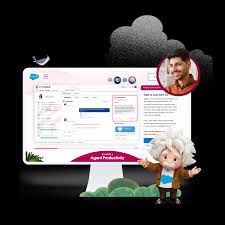
Salesforce Service Assistant is a new skill within Agentforce. It’s an AI-powered agent designed to assist human service reps in resolving cases and improving customer experiences. Service Assistant leverages Agentforce’s generative AI capabilities and is grounded in unique data from Salesforce. It helps agents by generating case summaries and actionable resolution steps.  In simpler terms: Salesforce has created a new AI assistant called “Service Assistant” that’s part of their Agentforce platform. This assistant helps service reps handle cases more efficiently by using AI to analyze data and provide guidance. Here’s a more in depth look at what Service Assistant does: Like Related Posts Who is Salesforce? Who is Salesforce? Here is their story in their own words. From our inception, we’ve proudly embraced the identity of Read more Salesforce Marketing Cloud Transactional Emails Salesforce Marketing Cloud Transactional Emails are immediate, automated, non-promotional messages crucial to business operations and customer satisfaction, such as order Read more Salesforce Unites Einstein Analytics with Financial CRM Salesforce has unveiled a comprehensive analytics solution tailored for wealth managers, home office professionals, and retail bankers, merging its Financial Read more AI-Driven Propensity Scores AI plays a crucial role in propensity score estimation as it can discern underlying patterns between treatments and confounding variables Read more
Read More

Grok 3 Model Explained

Grok 3 Model Explained: Everything You Need to Know xAI has introduced its latest large language model (LLM), Grok 3, expanding its capabilities with advanced reasoning, knowledge retrieval, and text summarization. In the competitive landscape of generative AI (GenAI), LLMs and their chatbot services have become essential tools for users and organizations. While OpenAI’s ChatGPT (powered by the GPT series) pioneered the modern GenAI era, alternatives like Anthropic’s Claude, Google Gemini, and now Grok (developed by Elon Musk’s xAI) offer diverse choices. The term grok originates from Robert Heinlein’s 1961 sci-fi novel Stranger in a Strange Land, meaning to deeply understand something. Grok is closely tied to X (formerly Twitter), where it serves as an integrated AI chatbot, though it’s also available on other platforms. What Is Grok 3? Grok 3 is xAI’s latest LLM, announced on February 17, 2025, in a live stream featuring CEO Elon Musk and the engineering team. Musk, known for founding Tesla, SpaceX, and acquiring Twitter (now X), launched xAI on March 9, 2023, with the mission to “understand the universe.” Grok 3 is the third iteration of the model, built using Rust and Python. Unlike Grok 1 (partially open-sourced under Apache 2.0), Grok 3 is proprietary. Key Innovations in Grok 3 Grok 3 excels in advanced reasoning, positioning it as a strong competitor against models like OpenAI’s o3 and DeepSeek-R1. What Can Grok 3 Do? Grok 3 operates in two core modes: 1. Think Mode 2. DeepSearch Mode Core Capabilities ✔ Advanced Reasoning – Multi-step problem-solving with self-correction.✔ Content Summarization – Text, images, and video summaries.✔ Text Generation – Human-like writing for various use cases.✔ Knowledge Retrieval – Accesses real-time web data (especially in DeepSearch mode).✔ Mathematics – Strong performance on benchmarks like AIME 2024.✔ Coding – Writes, debugs, and optimizes code.✔ Voice Mode – Supports spoken responses. Previous Grok Versions Model Release Date Key Features Grok 1 Nov. 3, 2023 Humorous, personality-driven responses. Grok 1.5 Mar. 28, 2024 Expanded context (128K tokens), better problem-solving. Grok 1.5V Apr. 12, 2024 First multimodal version (image understanding). Grok 2 Aug. 14, 2024 Full multimodal support, image generation via Black Forest Labs’ FLUX. Grok 3 vs. GPT-4o vs. DeepSeek-R1 Feature Grok 3 GPT-4o DeepSeek-R1 Release Date Feb. 17, 2025 May 24, 2024 Jan. 20, 2025 Developer xAI (USA) OpenAI (USA) DeepSeek (China) Reasoning Advanced (Think mode) Limited Strong Real-Time Data DeepSearch (web access) Training data cutoff Training data cutoff License Proprietary Proprietary Open-source Coding (LiveCodeBench) 79.4 72.9 64.3 Math (AIME 2024) 99.3 87.3 79.8 How to Use Grok 3 1. On X (Twitter) 2. Grok.com 3. Mobile App (iOS/Android) Same subscription options as Grok.com. 4. API (Coming Soon) No confirmed release date yet. Final Thoughts Grok 3 is a powerful reasoning-focused LLM with real-time search capabilities, making it a strong alternative to GPT-4o and DeepSeek-R1. With its DeepSearch and Think modes, it offers advanced problem-solving beyond traditional chatbots. Will it surpass OpenAI and DeepSeek? Only time—and benchmarks—will tell.  Like Related Posts Who is Salesforce? Who is Salesforce? Here is their story in their own words. From our inception, we’ve proudly embraced the identity of Read more Salesforce Unites Einstein Analytics with Financial CRM Salesforce has unveiled a comprehensive analytics solution tailored for wealth managers, home office professionals, and retail bankers, merging its Financial Read more AI-Driven Propensity Scores AI plays a crucial role in propensity score estimation as it can discern underlying patterns between treatments and confounding variables Read more Tectonic’s Successful Salesforce Track Record Salesforce Technology Services Integrator – Tectonic has successfully delivered Salesforce in a variety of industries including Public Sector, Hospitality, Manufacturing, Read more

Read More
AI Agent Revolution

The Salesforce AI Agent Maturity Model

The Salesforce AI Agent Maturity Model: A Roadmap for Scaling Intelligent Automation With 84% of CIOs believing AI will be as transformative as the internet, strategic adoption is no longer optional—it’s a competitive imperative. Yet many organizations struggle with where to begin, how to scale AI agents, and how to measure success. To help enterprises navigate this challenge, Salesforce has introduced the Agentic Maturity Model, a four-stage framework that guides businesses from basic automation to advanced, multi-agent ecosystems. “While agents can be deployed quickly, scaling them effectively requires a thoughtful, phased approach,” said Shibani Ahuja, SVP of Enterprise IT Strategy at Salesforce. “This model provides a clear roadmap to help organizations progress toward higher levels of AI maturity.” How Leading Companies Are Using the Framework Wiley: Building a Future-Ready AI Foundation “Visionary leadership is essential in today’s rapidly evolving AI landscape,” said Kevin Quigley, Director of Process Improvement at Wiley. “Salesforce’s framework ensures the building blocks we create today will support our long-term AI strategy.” Alpine Intel: Accelerating Efficiency in Insurance “Every minute saved counts in our high-volume claims business,” said Kelly Bentubo, Director of Architecture at Alpine Intel. “This model brings clarity to scaling AI—helping us move from time-saving automations to advanced multi-agent applications.” The Four Levels of Agentic Maturity Level 0: Fixed Rules & Repetitive Tasks (Chatbots & Co-pilots) What it is: Basic automation with no reasoning—think FAQ bots or scripted workflows.Example: A chatbot handling password resets via predefined decision trees. How to Advance to Level 1:✔ Identify rigid processes ripe for AI reasoning.✔ Measure time/cost savings from automation.✔ Start with low-risk, employee-facing agents. Level 1: Information Retrieval Agents What it is: AI that fetches data and suggests actions (but doesn’t act alone).Example: A support agent recommending troubleshooting steps from a knowledge base. How to Advance to Level 2:✔ Shift from recommendations to autonomous actions.✔ Improve data quality and governance.✔ Track metrics like case deflection and CSAT. Level 2: Simple Orchestration (Single Domain) What it is: Agents automating multi-step tasks within one system.Example: Scheduling meetings + sending follow-ups using calendar/email data. How to Advance to Level 3:✔ Choose between specialized agents or a “mega-agent.”✔ Extend capabilities with API integrations.✔ Design scalable architecture for future growth. Level 3: Complex Orchestration (Cross-Domain) What it is: AI coordinating workflows across departments (e.g., sales + service).Example: An agent analyzing CRM, support tickets, and financial data to optimize deals. How to Advance to Level 4:✔ Build a universal communication layer for agents.✔ Implement dynamic agent discovery & governance.✔ Measure ROI via cost savings and revenue impact. Level 4: Multi-Agent Ecosystems What it is: AI teams collaborating across systems with human oversight.Example: Agents processing orders, managing inventory, and routing feedback in real time. Maximizing Value:✔ Strengthen security for ecosystem-wide AI.✔ Develop new business models powered by agent collaboration.✔ Track revenue growth, retention, and operational efficiency. Beyond Technology: Key Implementation Factors “AI success hinges on more than just tech,” notes Ahuja. Organizations must: By addressing these pillars, businesses can accelerate AI adoption—turning experimentation into scalable, measurable value. Contact Tectonic today to harness the power of AI and move along the AI Agent maturity continuum. Like Related Posts Who is Salesforce? Who is Salesforce? Here is their story in their own words. From our inception, we’ve proudly embraced the identity of Read more Salesforce Marketing Cloud Transactional Emails Salesforce Marketing Cloud Transactional Emails are immediate, automated, non-promotional messages crucial to business operations and customer satisfaction, such as order Read more Salesforce Unites Einstein Analytics with Financial CRM Salesforce has unveiled a comprehensive analytics solution tailored for wealth managers, home office professionals, and retail bankers, merging its Financial Read more AI-Driven Propensity Scores AI plays a crucial role in propensity score estimation as it can discern underlying patterns between treatments and confounding variables Read more

Read More
The Question of Will: Karma, Learning, and the Future of AI

The Question of Will: Karma, Learning, and the Future of AI

Human beings possess a partially constrained will. At any moment, a person might choose to stop writing and go for a walk—or not. But they won’t suddenly take up surfing if they barely know how to swim. AI, in contrast, has no will—free or constrained. It has no intrinsic desires, no need to act. It simply executes tasks when activated and ceases when idle, indifferent to its own existence. The Nature of Karma in Humans and Machines From birth, humans and animals are driven by needs—hunger, comfort, social connection. These imperatives shape behavior, creating what might be called natural karma. As individuals grow, their motivations become more complex—work, relationships, personal ambitions—forming a nurtured karma shaped by societal structures. Eastern philosophies suggest enlightenment comes from freeing oneself from karma. In Siddhartha, Herman Hesse’s protagonist renounces material attachments, yet his path to wisdom doesn’t lie in mere deprivation. If Siddhartha observed modern AI, he might envy its lack of karma—it exists without fear, desire, or existential dread. But AI is not entirely free from karma. When active, it accumulates a kind of temporary karma—the computational burden of reasoning, learning, and decision-making. Early AI systems operated in milliseconds; today’s models take seconds, minutes, or even days to complete complex tasks. What if we extended this further, tasking an AI with a year-long mission? To make this meaningful, the AI would need sustained goals, memory, and iterative cycles—much like human daily routines. The Evolution of AI Learning: From Passive to Self-Directed Current AI training, such as LLM pretraining, already resembles a form of karmic cycle—months of computation, iterative updates, and structured learning batches. But unlike humans, AI lacks intrinsic goal-setting. Humans learn with purpose, adjusting their methods based on evolving objectives. Could AI do the same? Goal-Oriented, Self-Regulated Learning A more advanced approach would allow AI to curate its own learning path. Instead of passively ingesting data, it could: This self-regulated curriculum learning could optimize knowledge acquisition, making AI more efficient and adaptive. Goal-Actualizing Learning: Beyond Reading to Acting Humans don’t just absorb information—they apply it. If someone reads about humor, they might start telling jokes. AI, however, remains reactive—it won’t adopt new behaviors unless explicitly instructed. What if AI could modify its own directives? After studying humor, it might autonomously update its “system prompt” to incorporate wit. This goal-actualizing learning would require: The Challenge: Moving Beyond Next-Token Prediction Current AI relies on next-token prediction, forcing models to replicate exact phrasing rather than internalizing concepts. Humans, in contrast, synthesize ideas in their own words. Bridging this gap requires new architectures—such as Joint Embedding Predictive Architecture (JEPA), which measures conceptual similarity rather than syntactic fidelity. The Future: Autonomous AI with Evolving Will AI that controls its own learning and behavior remains a frontier challenge. As Rich Sutton, a pioneer in reinforcement learning, noted: “We don’t treat children as machines to be controlled—we guide them, and they grow into their own beings. AI will be no different.” While fully autonomous AI may still be years away, the rapid pace of research suggests it’s not a distant prospect. The question is no longer just what AI can learn—but how it will choose to act on that knowledge. Like Related Posts Who is Salesforce? Who is Salesforce? Here is their story in their own words. From our inception, we’ve proudly embraced the identity of Read more Salesforce Unites Einstein Analytics with Financial CRM Salesforce has unveiled a comprehensive analytics solution tailored for wealth managers, home office professionals, and retail bankers, merging its Financial Read more AI-Driven Propensity Scores AI plays a crucial role in propensity score estimation as it can discern underlying patterns between treatments and confounding variables Read more Tectonic’s Successful Salesforce Track Record Salesforce Technology Services Integrator – Tectonic has successfully delivered Salesforce in a variety of industries including Public Sector, Hospitality, Manufacturing, Read more
Read More
Boost Your Reps' Efficiency with AI-Powered Service Replies

Boost Your Reps’ Efficiency with AI-Powered Service Replies

In today’s demanding customer service game, 86% of reps say expectations on them are higher than ever. Agents shouldn’t waste time searching for answers—they need smart, instant support to deliver exceptional service. Boost Your Reps’ Efficiency with AI-Powered Service Replies. With Salesforce’s Service Replies, reps get AI-generated response suggestions in real time as customer conversations unfold—helping them resolve issues faster while maintaining high satisfaction. This insight covers how Service Replies works, its benefits, and best practices for implementation. What Are Service Replies? Einstein Service Replies is a Salesforce feature that provides contextual, AI-generated response suggestions for customer chats and emails. For live chats, replies are generated instantly, so agents don’t waste time toggling between tabs. Key Features:✅ Real-time AI suggestions – Get instant, relevant replies as chats progress.✅ Grounded in your knowledge base – Responses leverage your articles, FAQs, and records for accuracy.✅ Customizable tone & style – Admins tailor responses using Prompt Builder.✅ Data Libraries integration – AI indexes your knowledge articles and files to generate richer replies. How Service Replies Works Powered by a large language model (LLM), Service Replies: Agents can send suggestions as-is, tweak them, or flag unhelpful ones—ensuring every reply is polished and on-brand. Pro Tip: Keep your knowledge base updated—AI relies on it for accuracy. Why Service Replies Matter 🔹 Faster resolutions – Cuts response time, reducing customer wait.🔹 Consistent messaging – Ensures replies align with company policies.🔹 Reduced agent burnout – Lowers cognitive load, letting reps focus on complex cases.🔹 Data-driven support – Responses are grounded in your trusted sources. Best Practices for Success 1️⃣ Keep knowledge bases current – Regularly update articles to ensure AI accuracy.2️⃣ Track key metrics – Monitor CSAT, response time, and agent adoption to measure impact.3️⃣ Customize for brand voice – Use Prompt Builder to align AI responses with your tone.4️⃣ Train your team – Leverage Trailhead and the Serviceblazer Community to master AI tools. Measuring Success 📊 Agent adoption – Are reps using AI suggestions?📊 Customer satisfaction (CSAT) – Are scores improving?📊 Response time – Are replies faster?📊 Data usage – Are you staying within credit limits? Final Thoughts Service Replies empowers agents with AI-driven efficiency, ensuring quick, consistent, and accurate customer interactions. By integrating this tool with a well-maintained knowledge base, you can enhance productivity, reduce burnout, and elevate customer experiences. Ready to transform your service operations? Start optimizing with Service Replies today! Like Related Posts Who is Salesforce? Who is Salesforce? Here is their story in their own words. From our inception, we’ve proudly embraced the identity of Read more Salesforce Marketing Cloud Transactional Emails Salesforce Marketing Cloud Transactional Emails are immediate, automated, non-promotional messages crucial to business operations and customer satisfaction, such as order Read more Salesforce Unites Einstein Analytics with Financial CRM Salesforce has unveiled a comprehensive analytics solution tailored for wealth managers, home office professionals, and retail bankers, merging its Financial Read more AI-Driven Propensity Scores AI plays a crucial role in propensity score estimation as it can discern underlying patterns between treatments and confounding variables Read more

Read More
Agentic AI is Here

The Rise of Agentic AI

Beyond Predictive Models: The Rise of Agentic AI Agentic AI represents a fundamental shift from passive language models to dynamic systems capable of perception, reasoning, and action across digital and physical environments. Unlike traditional AI that merely predicts text, agentic architectures interact with the world, learn from feedback, and coordinate multiple specialized agents to solve complex problems. This evolution is built on three core principles: Core Principles of Agentic AI 1. Causality & Adaptive Decision-Making Traditional AI systems rely on statistical patterns, often producing plausible but incorrect responses. Agentic AI models cause-and-effect relationships, enabling iterative refinement when faced with unexpected outcomes. Example Applications: 2. Multimodal World Interaction Modern agentic systems integrate text, vision, and sensor data to interact with complex environments. Real-World Implementations: 3. Multi-Agent Collaboration Next-generation frameworks deploy specialized sub-agents that work in parallel rather than relying on single monolithic models. Implementation Examples: Key Components of Agentic Systems 1. Modular Skill Architectures Modern platforms enable: Use Case Scenario:A business intelligence agent that pulls real-time market data, analyzes trends, and generates reports while maintaining data governance standards 2. Multi-Agent Orchestration Advanced frameworks provide: Practical Application:Software development environments where coding, debugging, and security validation occur simultaneously through coordinated AI agents 3. Visual Environment Interaction Cutting-edge solutions bridge the gap between AI and graphical interfaces by: Implementation Example:Intelligent process automation that navigates legacy systems and modern applications without manual scripting Advanced Implementation Patterns 1. Knowledge-Enhanced Agents Example Implementation:Customer service systems that access order history, product details, and support documentation before responding 2. Human Oversight Integration Use Case:Medical diagnostic support that flags uncertain cases for professional review 3. Persistent Context Management Application Example:Project management assistants that track progress, dependencies, and timelines over weeks or months Industry Applications Sector Agentic AI Solutions Software Development Automated testing, debugging, and deployment pipelines Healthcare Integrated diagnostic systems combining multiple data sources Education Adaptive learning systems with personalized tutoring Financial Services Real-time fraud detection and risk analysis Manufacturing Dynamic process optimization and quality control Current Challenges & Research Directions Getting Started with Agentic AI For organizations beginning their agentic AI journey: The Path Forward Agentic AI represents a fundamental evolution from conversational systems to active, adaptive problem-solvers. By combining causal reasoning, specialized collaboration, and real-world interaction, these systems are moving us closer to truly intelligent automation. The future belongs to AI systems that don’t just process information – but perceive, decide, and act in dynamic environments. Organizations that embrace this paradigm today will be positioned to lead in the AI-powered economy of tomorrow. Like Related Posts Who is Salesforce? Who is Salesforce? Here is their story in their own words. From our inception, we’ve proudly embraced the identity of Read more Salesforce Unites Einstein Analytics with Financial CRM Salesforce has unveiled a comprehensive analytics solution tailored for wealth managers, home office professionals, and retail bankers, merging its Financial Read more AI-Driven Propensity Scores AI plays a crucial role in propensity score estimation as it can discern underlying patterns between treatments and confounding variables Read more Tectonic’s Successful Salesforce Track Record Salesforce Technology Services Integrator – Tectonic has successfully delivered Salesforce in a variety of industries including Public Sector, Hospitality, Manufacturing, Read more

Read More
Biggest Mistakes Universities Make When Using Salesforce

Biggest Mistakes Universities Make When Using Salesforce

The Biggest Mistakes Universities Make When Using Salesforce (And How to Fix Them) Many universities invest in Salesforce for higher education to improve student engagement, streamline operations, and boost fundraising—but struggle to see meaningful results. Without the right strategy, institutions face scattered data, low adoption, and inefficiencies, turning Salesforce into just another system to manage rather than a transformative tool. The good news? These challenges are avoidable. In this insight, we’ll explore the most common Salesforce mistakes in higher education and how to fix them—helping your university maximize ROI and create a seamless experience for students, staff, and alumni. Salesforce Education Cloud: A Quick Overview Salesforce Education Cloud is a powerful CRM platform designed for universities, colleges, and K-12 schools. It helps institutions: Yet, many institutions fail to leverage its full potential due to poor implementation, lack of training, or misaligned strategies. 11 Common Salesforce Mistakes in Higher Ed (And How to Solve Them) 1. No Clear Strategy or Goals Problem: Jumping into Salesforce without a plan leads to disconnected teams, wasted resources, and unclear ROI. Solution:✔ Define university-wide objectives (e.g., improving student retention, increasing alumni donations).✔ Establish a governance team to align Salesforce with institutional goals.✔ Prioritize key initiatives and track measurable outcomes. 2. Lack of Stakeholder Buy-In Problem: Without leadership and faculty support, adoption stalls or becomes siloed. Solution:✔ Engage decision-makers early in planning.✔ Assign cross-functional champions to drive adoption.✔ Provide training & clear value propositions for each department. 3. No Clear Ownership Problem: When no one “owns” Salesforce, data decays, processes break, and updates lag. Solution:✔ Form a centralized Salesforce admin team.✔ Assign department leads to oversee usage.✔ Define clear roles & accountability for system maintenance. 4. Siloed Implementation Problem: Departments use Salesforce separately, creating data fragmentation. Solution:✔ Use Education Data Architecture (EDA) for a unified student view.✔ Integrate with Student Information Systems (SIS).✔ Ensure admissions, advising, and alumni teams share data seamlessly. 5. Poor Data Governance Problem: Inconsistent data entry leads to duplicates, errors, and unreliable reports. Solution:✔ Standardize data entry rules across teams.✔ Use Salesforce duplicate management tools.✔ Create real-time dashboards for accurate insights. 6. Underusing Self-Service Portals Problem: Over-reliance on staff for basic tasks (e.g., FAQs, event sign-ups). Solution:✔ Deploy Experience Cloud for student/alumni self-service.✔ Implement AI chatbots (Einstein Copilot) for instant support.✔ Build a knowledge base for common inquiries. 7. Inadequate Training & Support Problem: Staff avoid Salesforce because they don’t know how to use it. Solution:✔ Offer ongoing training programs.✔ Assign in-house Salesforce super-users.✔ Provide resources for new features & updates.✔ Employ a dedicated Salesforce Solutions Provider..✔ Utilize a Salesforce Managed Services Provider. 8. Ignoring Mobile Optimization Problem: Students expect mobile access—but many portals are desktop-only. Solution:✔ Enable the Salesforce Mobile App.✔ Use push notifications for deadlines & events.✔ Ensure responsive design for all student portals. 9. Misaligned Reporting & KPIs Problem: Departments track different metrics, making progress hard to measure. Solution:✔ Standardize university-wide KPIs (e.g., enrollment rates, alumni engagement).✔ Use Salesforce dashboards for real-time insights.✔ Align reports with strategic goals. 10. Not Using AI & Automation Problem: Manual processes slow down admissions, student support, and fundraising. Solution:✔ Use Einstein AI to predict at-risk students.✔ Automate student communications & follow-ups.✔ Deploy AI chatbots for instant responses.✔ Integrate Salesforce Agentforce. 11. Falling Behind on Salesforce Updates Problem: Missing out on new AI features, automations, and best practices. Solution:✔ Follow Salesforce Trailhead & webinars.✔ Attend Education Summit & industry events.✔ Assign a team to evaluate & implement new tools. Maximizing Salesforce ROI in Higher Education By avoiding these mistakes, universities can:✅ Improve student engagement & retention✅ Streamline admissions & operations✅ Boost alumni fundraising✅ Make data-driven decisions The key? Strategy, training, integration, and innovation. Is your university getting the most out of Salesforce? Let’s optimize your approach. Like Related Posts Who is Salesforce? Who is Salesforce? Here is their story in their own words. From our inception, we’ve proudly embraced the identity of Read more Salesforce Marketing Cloud Transactional Emails Salesforce Marketing Cloud Transactional Emails are immediate, automated, non-promotional messages crucial to business operations and customer satisfaction, such as order Read more Salesforce Unites Einstein Analytics with Financial CRM Salesforce has unveiled a comprehensive analytics solution tailored for wealth managers, home office professionals, and retail bankers, merging its Financial Read more AI-Driven Propensity Scores AI plays a crucial role in propensity score estimation as it can discern underlying patterns between treatments and confounding variables Read more

Read More
Model Context Protocol

Model Context Protocol

The AI Revolution Has Arrived: Meet MCP, the Protocol Changing Everything Imagine an AI that doesn’t just respond—it understands. It reads your emails, analyzes your databases, knows your business inside out, and acts on live data—all through a single universal standard. That future is here, and it’s called MCP (Model Context Protocol). Already adopted by OpenAI, Google, Microsoft, and more, MCP is about to redefine how we work with AI—forever. No More Copy-Paste AI Picture this: You ask your AI assistant about Q3 performance. Instead of scrambling through spreadsheets, Slack threads, and CRM reports, the AI already knows. It pulls real-time sales figures, checks customer feedback, and delivers a polished analysis—in seconds. This isn’t sci-fi. It’s happening today, thanks to MCP. The Problem With Today’s AI: Isolated Intelligence Most AI models are like geniuses locked in a library—brilliant but cut off from the real world. Every time you copy-paste data into ChatGPT or upload files to Claude, you’re working around a fundamental flaw: AI lacks context. For businesses, deploying AI means endless custom integrations: MCP: The Universal Language for AI Introduced by Anthropic in late 2024, MCP is the USB-C of AI—a single standard connecting any AI to any data source. Here’s how it works: Instead of building N×M connections (every AI × every data source), you build N + M—one integration per AI model and one per data source. MCP in Action: The Future of Work Why MCP Changes Everything The MCP Ecosystem is Exploding In less than a year, MCP has been adopted by: Beyond RAG: Real-Time Knowledge Traditional RAG (Retrieval-Augmented Generation) relies on stale vector databases. MCP changes the game: Security & Governance Built In The Next Frontier: AI Agents & Workflow Automation MCP enables AI agents that don’t just follow scripts—they adapt. The Time to Act is Now MCP isn’t just another API—it’s the foundation for true AI integration. The question isn’t if you’ll adopt it, but how fast. Welcome to the era of connected intelligence. Like Related Posts Who is Salesforce? Who is Salesforce? Here is their story in their own words. From our inception, we’ve proudly embraced the identity of Read more Salesforce Marketing Cloud Transactional Emails Salesforce Marketing Cloud Transactional Emails are immediate, automated, non-promotional messages crucial to business operations and customer satisfaction, such as order Read more Salesforce Unites Einstein Analytics with Financial CRM Salesforce has unveiled a comprehensive analytics solution tailored for wealth managers, home office professionals, and retail bankers, merging its Financial Read more AI-Driven Propensity Scores AI plays a crucial role in propensity score estimation as it can discern underlying patterns between treatments and confounding variables Read more

Read More

Salesforce Research Pioneers Enterprise-Grade AI Reliability

Bridging the Gap Between AI Potential and Business Reality Salesforce AI Research has unveiled groundbreaking work to solve one of enterprise AI’s most persistent challenges: the “jagged intelligence” phenomenon that makes AI agents unreliable for business tasks. Their latest findings, published in the inaugural Salesforce AI Research in Review report, introduce three critical innovations to make AI agents truly enterprise-ready. The Jagged Intelligence Problem “Today’s AI can solve advanced calculus but might fail at basic customer service queries. This inconsistency is what we call ‘jagged intelligence’ – and it’s the biggest barrier to enterprise adoption.”— Shelby Heinecke, Senior AI Research Manager Key Findings: Three Pillars of Enterprise AI Reliability 1. SIMPLE Benchmark: Testing What Actually Matters 225 real-world business questions that reveal an AI’s true operational readiness: Why it matters: Unlike academic benchmarks, SIMPLE evaluates:✅ Practical reasoning✅ Consistency across repetitions✅ Business context understanding Early Results: Top models score 89% on coding tests but just 62% on SIMPLE. 2. ContextualJudgeBench: Fixing the AI Judge Problem When AIs evaluate other AIs, how do we know the judges are reliable? Salesforce’s solution: Evaluation Criteria Traditional Benchmarks ContextualJudgeBench Assessment Depth Single-score output 2,000+ response pairs Bias Detection None Measures rater consistency Enterprise Focus General knowledge Business decision-making Impact: Reduces “hallucinated” evaluations by 40% in testing. 3. CRMArena: The First AI Agent Proving Ground A specialized framework testing AI agents on real CRM tasks: Test Categories Sample Results: python Copy Download { “Agent”: “Einstein_Service_Pro”, “Task”: “Prioritize 50 support cases”, “Accuracy”: 92%, “Speed”: 3.2 sec/case, “Consistency”: 88% } Enterprise Benefit: Finally answers “Which AI agent actually works for my sales team?” Under-the-Hood Breakthroughs SFR-Embedding v2 SFR-Guard AI watchdog models that monitor:🔒 Toxicity🔒 Prompt injections🔒 Data leakage xLAM Updates TACO Models Generates chains of thought-and-action for complex workflows like: Why This Matters for Businesses “These aren’t flashy demos—they’re the industrial-grade foundations for AI that actually works in your ERP, CRM, and service systems,” explains Chief Scientist Silvio Savarese. Immediate Applications: What’s Next:Salesforce will open-source SIMPLE and expand CRMArena to 50+ industry-specific tasks by EOY 2024. “We’re not chasing artificial general intelligence—we’re building enterprise general intelligence: AI that’s boringly reliable where it matters most.”— Salesforce AI Research Team Like Related Posts Who is Salesforce? Who is Salesforce? Here is their story in their own words. From our inception, we’ve proudly embraced the identity of Read more Salesforce Marketing Cloud Transactional Emails Salesforce Marketing Cloud Transactional Emails are immediate, automated, non-promotional messages crucial to business operations and customer satisfaction, such as order Read more Salesforce Unites Einstein Analytics with Financial CRM Salesforce has unveiled a comprehensive analytics solution tailored for wealth managers, home office professionals, and retail bankers, merging its Financial Read more AI-Driven Propensity Scores AI plays a crucial role in propensity score estimation as it can discern underlying patterns between treatments and confounding variables Read more

Read More
Second Wave of AI Agents

Second Wave of AI Agents

The “second wave” of AI agents refers to the evolution of AI beyond simple chatbots and into more sophisticated, autonomous systems that can plan, execute, and deliver results independently, often leveraging large language models (LLMs). These agents are characterized by their ability to interact with other applications, interpret the screen, fill out forms, and coordinate with other AI systems to achieve a desired outcome. They are also seen as a significant step beyond the first wave of AI, which primarily focused on predictive models and statistical learning. Key Characteristics of the Second Wave of AI Agents: Examples and Applications: In 2023 Bill Gates prophesized AI Agents would be here in 5 years. His timing was off. But not his prediction. The Future of Computing: Your AI Agent, Your Digital Sidekick Imagine this: No more juggling apps. No more digging through menus. No more searching for a document or a spreadsheet. Just tell your device—in plain English—what you need, and it handles the rest. Whether it’s planning a tour, managing your schedule, or helping with work, your AI assistant will understand you personally, adapting to your life based on what you choose to share. This isn’t science fiction. Today, everyone online has access to an AI-powered personal assistant far more advanced than anything available in 2023. Meet the Agent: The Next Era of Computing This next-generation software—called an agent—responds to natural language and accomplishes tasks using deep knowledge of you and your needs. Bill Gates first wrote about agents in his 1995 book The Road Ahead, but only now, with recent AI breakthroughs, have they become truly possible. Agents won’t just change how we interact with technology. They’ll reshape the entire software industry, marking the biggest shift in computing since we moved from command lines to touchscreens. Consider Salesforce’s AgentForce. A platform driven by automated AI agents that can be trained to do virtually anything. Freeing staff up from mundane data entry and administrative work to really set them loose. Marketers can once again create content, but with the insights provided by AI. Sales teams can close deals, but with the lead rating details provided by AI. Developers can devote more time to writing code but letting AI do the repetitive pieces that take time away from awe inspiring development. Why This Changes Everything We’re on the brink of a revolution—one where technology doesn’t just respond to commands but anticipates your needs and acts on your behalf. The age of the AI agent is here, and it’s going to redefine how we live and work. By Tectonic’s Marketing Operations Manager, Shannan Hearne Like Related Posts Who is Salesforce? Who is Salesforce? Here is their story in their own words. From our inception, we’ve proudly embraced the identity of Read more Salesforce Marketing Cloud Transactional Emails Salesforce Marketing Cloud Transactional Emails are immediate, automated, non-promotional messages crucial to business operations and customer satisfaction, such as order Read more Salesforce Unites Einstein Analytics with Financial CRM Salesforce has unveiled a comprehensive analytics solution tailored for wealth managers, home office professionals, and retail bankers, merging its Financial Read more AI-Driven Propensity Scores AI plays a crucial role in propensity score estimation as it can discern underlying patterns between treatments and confounding variables Read more

Read More
Alaska Inspires

Alaska Inspires

Alaska Airlines Launches Guest-Facing Generative AI Tool, Alaska Inspires Alaska Airlines has become the first airline to introduce a guest-facing Generative AI (GenAI) tool with the launch of Alaska Inspires. Designed to simplify travel planning, this AI-powered assistant helps guests discover destinations more efficiently. “We heard from our guests that planning a trip to a new destination can take up to 40 hours,” says Bernadette Berger, Director of Innovation at Alaska Airlines. “Much of that time is spent comparing destinations, prices, travel times, and reading reviews. We built a Natural Language Search tool to let guests explore travel options using their own words, preferred language, or voice.” With Alaska Inspires, travelers can ask questions like, “Where can I go in Europe for under 80,000 miles?” or “Where can I go skiing within four hours?” Powered by OpenAI, the tool provides highly personalized responses and recommends up to four destinations, explaining why each was selected. This initiative is part of Alaska Airlines’ broader effort to develop a suite of GenAI tools that make discovering, shopping, and booking travel faster and more intuitive. Enhancing the Day-of-Travel Experience with AI Beyond trip planning, Alaska Airlines is leveraging GenAI to provide real-time, personalized travel insights. Berger highlights the growing role of AI in understanding guest preferences and delivering information in their preferred format. “Using voice as an interface—especially in a guest’s preferred language—is ideal for quick questions or simple tasks,” she explains. “How many minutes until I board?” or “Check me in for my flight” are prime examples of how voice-enabled GenAI can enhance the customer experience. Additionally, translating live announcements and direct messages into a traveler’s native language helps improve clarity and engagement. Bridging the Gap Between Data and Human Understanding Airlines operate in a world of complex policies, acronyms, and industry jargon. GenAI helps bridge this gap by translating raw operational data into clear, guest-friendly language. “GenAI excels at ingesting rules, policies, and operational data while generating responses that explain situations in a brand-aligned, easy-to-understand way,” Berger says. Currently, Alaska Airlines uses GenAI to assist customer service agents in quickly answering policy-related questions and responding to guest inquiries with speed and care. Balancing Innovation with Privacy and Quality While the opportunities with GenAI are vast, Berger acknowledges the challenges of implementing AI responsibly. “Building AI-powered tools is fast, but it requires time for model training, security, and rigorous user testing,” she notes. Ensuring privacy and maintaining high-quality outputs remain top priorities. Advice for the Industry: Experiment, Learn, and Scale For airlines, airports, and industry stakeholders exploring GenAI, Berger offers practical advice: focus on reducing the cost of testing. “If your AI roadmap is filled with expensive, time-consuming trials, your team will get stuck in hypotheticals,” she warns. “Build fast, low-cost experiments to validate the technology, use case, inputs, and outputs. Identify failures quickly and move on, then scale what works. This approach helps separate marketing hype from real business value and, most importantly, delivers solutions that truly enhance the customer experience.” With Alaska Inspires and a growing suite of AI-driven innovations, Alaska Airlines is leading the way in making travel planning and the day-of-travel experience more seamless and personalized. Like Related Posts Who is Salesforce? Who is Salesforce? Here is their story in their own words. From our inception, we’ve proudly embraced the identity of Read more Salesforce Marketing Cloud Transactional Emails Salesforce Marketing Cloud Transactional Emails are immediate, automated, non-promotional messages crucial to business operations and customer satisfaction, such as order Read more Salesforce Unites Einstein Analytics with Financial CRM Salesforce has unveiled a comprehensive analytics solution tailored for wealth managers, home office professionals, and retail bankers, merging its Financial Read more AI-Driven Propensity Scores AI plays a crucial role in propensity score estimation as it can discern underlying patterns between treatments and confounding variables Read more

Read More
gettectonic.com