The Next Evolution of Business AI: How Reasoning Engines Are Transforming Enterprise Intelligence
Beyond Automation: AI That Thinks Like Your Best Employee
Today’s business AI does far more than just automate boring, repetitive tasks—it’s drafting strategic emails, generating campaign briefs, and synthesizing complex customer calls. But what separates cutting-edge AI from basic chatbots? The ability to reason.
Salesforce’s Agentforce, powered by the revolutionary Atlas Reasoning Engine, represents a quantum leap in enterprise AI—the first system capable of human-like analysis, decision-making, and problem-solving at scale.
Why Reasoning Changes Everything
Traditional AI assistants operate on:
- System 1 Thinking: Fast, reactive responses (e.g., FAQ bots, order processing)
- Predefined rules: Limited to scripted workflows
Atlas introduces System 2 Thinking to enterprise AI:
- Deliberate analysis: Evaluates multiple solution paths
- Contextual understanding: Processes unstructured data (emails, call logs, docs)
- Adaptive learning: Improves through reinforcement from human feedback
“This isn’t automation—it’s augmentation. Atlas handles the cognitive heavy lifting so teams can focus on relationship-building.”
—Salesforce AI Product Lead
The Atlas Difference: How Enterprise-Grade Reasoning Works
1. Dynamic Problem-Solving Framework
- Goal Interpretation: Understands user intent at human level
- Contextual Planning: Pulls from 360° data (structured + unstructured)
- Action Execution: Chooses optimal business process
- Continuous Refinement: Loops until objective is achieved
2. Three Layers of Intelligence
| Reasoning Type | Use Case | Business Impact |
|---|---|---|
| Deductive (Facts → Conclusion) | Compliance checks | 90% faster policy validation |
| Inductive (Patterns → Insight) | Sales forecasting | 40% more accurate predictions |
| Abductive (Partial data → Probable answer) | Customer issue resolution | 65% first-contact resolution |
3. Enterprise-Grade Guardrails
- Data Grounding: All outputs tied to verifiable sources
- Access Controls: Respects CRM permissions (no data leakage)
- Hallucination Mitigation: 83% fewer factual errors vs. standard LLMs
Real-World Impact Across Business Functions
Customer Service
- Before: Agents manually search knowledge bases (avg. 8 mins/case)
- With Atlas: AI surfaces resolution paths in real-time (2 mins/case)
Sales Enablement
- Before: Generic email templates (12% response rate)
- With Atlas: Hyper-personalized outreach using deal history (34% response rate)
Operations
- Before: IT tickets require human triage (48 hr resolution)
- With Atlas: AI diagnoses 68% of L1 issues instantly
The Future of Autonomous Business Agents
Agentforce isn’t just another chatbot—it’s the first self-improving AI employee:
- Learns from every interaction (reinforcement learning)
- Adapts to new business processes without recoding
- Scales expert decision-making across the organization
“Our service team now resolves 40% more cases daily without adding headcount. Atlas handles the routine while humans focus on complex relationships.”
—CIO, Global Financial Services Firm
Your Next Step
The era of reasoning AI is here. Discover how Agentforce can transform:
Who is Salesforce? Here is their story in their own words. From our inception, we've proudly embraced the identity of Read more
Salesforce Marketing Cloud Transactional Emails are immediate, automated, non-promotional messages crucial to business operations and customer satisfaction, such as order Read more

Salesforce has unveiled a comprehensive analytics solution tailored for wealth managers, home office professionals, and retail bankers, merging its Financial Read more
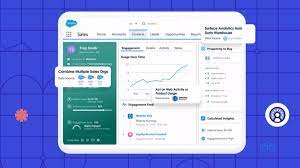
AI plays a crucial role in propensity score estimation as it can discern underlying patterns between treatments and confounding variables Read more