Why AI Won’t Kill SaaS (Yet) – The Missing Link in Enterprise Intelligence
The rise of generative AI has sparked speculation about the demise of SaaS—but the reality is more nuanced. While AI holds transformative potential, today’s enterprise software vendors still play a critical role: providing the structured context that AI lacks.
The AI Accuracy Problem: Plausible vs. Precise
Generative AI excels at producing human-like responses, but its probabilistic nature makes it unreliable for mission-critical enterprise tasks. Whether validating financial transactions, ensuring compliance, or executing safety protocols, businesses need deterministic accuracy—not just statistically likely answers.
- The Data Volume Myth: Some argue that feeding AI more data improves accuracy. But for niche or complex queries—like specialized accounting terms—general-purpose LLMs often fail. This is why companies like Sage have built their own domain-specific models.
- The Cost of Guesswork: Running broad AI queries without data constraints is inefficient. Enterprise applications, by contrast, narrow the search space, delivering precise results without wasted computation.
Why SaaS Isn’t Going Anywhere (For Now)
AI won’t replace SaaS because raw data is meaningless without context. Just as Google’s PageRank used web links to rank authoritative sources, enterprise software provides the structured frameworks that make AI useful in business.
How SaaS Vendors Are Bridging the Gap
Leading enterprise platforms are codifying decades of institutional knowledge into AI-ready systems:
- SAP is building a foundation model with a knowledge graph at its core.
- ServiceNow layers a unified data model over its CMDB.
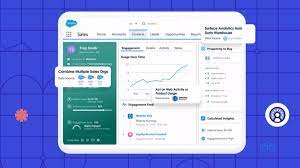
- Salesforce’s Data Cloud harmonizes siloed data with metadata models.
- Atlassian’s “System of Work” leverages a teamwork graph to streamline collaboration.
As Rahul Auradkar (EVP, Salesforce) explains:
“The intelligence of LLMs is just one piece. The real value comes from feeding them the right data, driving automations, and contextualizing insights—something SaaS platforms already do.”
The Future: AI Absorbs SaaS Knowledge (Then Renders It Obsolete?)
Today, AI relies on SaaS for grounding and governance. But what happens when LLMs develop their own “world models” of business?
- Dissolving App Boundaries: Vendors like Workday and ServiceNow are already building AI agents that operate across applications, hinting at a future where workflows are dynamic, not siloed.
- The Rise of Non-Linear Apps: As Brian Sommer predicts, next-gen enterprise software won’t follow rigid steps—it will anticipate needs and act autonomously.
The Bottom Line
AI won’t kill SaaS—it will consume it. Enterprise software’s structured knowledge is the training data for tomorrow’s autonomous agents. Once AI internalizes these systems, the need for traditional SaaS may fade. But for now, SaaS isn’t just surviving—it’s enabling AI’s evolution.
The Takeaway:
- Short-term: AI needs SaaS for accuracy and context.
- Long-term: AI may absorb SaaS logic, making today’s apps obsolete.
- Vendors’ Dilemma: Protect proprietary knowledge while preparing for an agent-driven future.
The real disruption isn’t AI replacing SaaS—it’s AI learning from it until it no longer needs to.
Who is Salesforce? Here is their story in their own words. From our inception, we've proudly embraced the identity of Read more
Salesforce Marketing Cloud Transactional Emails are immediate, automated, non-promotional messages crucial to business operations and customer satisfaction, such as order Read more

Salesforce has unveiled a comprehensive analytics solution tailored for wealth managers, home office professionals, and retail bankers, merging its Financial Read more
AI plays a crucial role in propensity score estimation as it can discern underlying patterns between treatments and confounding variables Read more