ONC Archives - gettectonic.com - Page 3
PepsiCo Pioneers Enterprise AI with Salesforce Agentforce

PepsiCo Pioneers Enterprise AI with Salesforce Agentforce

A Global First: PepsiCo Deploys Salesforce Agentforce at Scale PepsiCo has made history as the first major food and beverage company to implement Salesforce Agentforce AI agents across its global operations. This landmark partnership signals a transformative shift in how enterprises leverage AI for customer engagement, sales, and supply chain optimization. The announcement follows Salesforce’s Agentforce World Tour, where demonstrations in Tel Aviv, London, Zurich, Seoul, and Melbourne drew thousands of business leaders eager to explore AI’s potential. Now, with PepsiCo’s adoption, Agentforce moves from concept to real-world enterprise deployment. Why PepsiCo Chose Agentforce PepsiCo—a $92 billion market leader—isn’t just experimenting with AI; it’s reinventing its operations. The company will deploy Agentforce across: ✅ Customer Support – AI-powered, hyper-personalized interactions✅ Sales Optimization – Real-time inventory insights via Consumer Goods Cloud✅ Data-Driven Decision Making – Unified customer profiles via Salesforce Data Cloud Ramon Laguarta, PepsiCo Chairman & CEO, explains: “AI is reshaping our business in ways that were once unimaginable. This collaboration unlocks smarter decision-making, fuels innovation, and powers sustainable growth.” The AI + Human Collaboration Model Salesforce and PepsiCo emphasize augmentation over automation—where AI agents enhance, not replace, human roles. Marc Benioff, Salesforce CEO, highlights the vision: “PepsiCo is reimagining work by uniting human expertise with AI intelligence. This is the future of digital labor.” Athina Kanioura, PepsiCo’s Chief Strategy Officer, adds: With Agentforce, we’re building an enterprise where humans and AI collaborate—driving efficiency, resilience, and readiness for the future.” Addressing AI’s Impact on Jobs At the London Agentforce Tour, Zahra Bahrololoumi (Salesforce UK & Ireland CEO) clarified: “Our goal is to boost human productivity, not eliminate jobs. Some tasks are best handled by AI, others require human judgment.” A Blueprint for Enterprise AI Adoption PepsiCo’s deployment is a watershed moment for AI in consumer goods: 🔹 Scale: Impacts billions of daily product interactions across 200+ countries🔹 Integration: Combines Data Cloud, Consumer Goods Cloud, and Agentforce AI🔹 Innovation: Moves beyond automation to AI-driven decision intelligence What’s Next? If successful, PepsiCo’s implementation could accelerate global AI adoption—proving that enterprise-ready AI isn’t just theoretical. The Bigger Picture: AI’s Role in the Future of Business PepsiCo’s bold move underscores a critical shift: Will your business be next? 📈 Explore how Agentforce can transform your operations – Contact Salesforce AI Experts Like Related Posts Who is Salesforce? Who is Salesforce? Here is their story in their own words. From our inception, we’ve proudly embraced the identity of Read more Salesforce Marketing Cloud Transactional Emails Salesforce Marketing Cloud Transactional Emails are immediate, automated, non-promotional messages crucial to business operations and customer satisfaction, such as order Read more Salesforce Unites Einstein Analytics with Financial CRM Salesforce has unveiled a comprehensive analytics solution tailored for wealth managers, home office professionals, and retail bankers, merging its Financial Read more AI-Driven Propensity Scores AI plays a crucial role in propensity score estimation as it can discern underlying patterns between treatments and confounding variables Read more

Read More
amazon sagemaker

Amazon Sagemaker

Amazon SageMaker is a fully managed AWS machine learning service, enabling developers to build, train, and deploy machine learning models quickly and efficiently. It offers a range of tools and features for the entire ML lifecycle, including data preparation, model building, training, deployment, and monitoring. SageMaker supports various ML tasks, including classification, regression, and deep learning, and can be used for both online and batch inference.  Here’s a more in-depth look at SageMaker: Key Features and Capabilities: Benefits of using SageMaker:  Like Related Posts Who is Salesforce? Who is Salesforce? Here is their story in their own words. From our inception, we’ve proudly embraced the identity of Read more Salesforce Unites Einstein Analytics with Financial CRM Salesforce has unveiled a comprehensive analytics solution tailored for wealth managers, home office professionals, and retail bankers, merging its Financial Read more AI-Driven Propensity Scores AI plays a crucial role in propensity score estimation as it can discern underlying patterns between treatments and confounding variables Read more Tectonic’s Successful Salesforce Track Record Salesforce Technology Services Integrator – Tectonic has successfully delivered Salesforce in a variety of industries including Public Sector, Hospitality, Manufacturing, Read more
Read More
The Fragmented World of AI Agents and the Path to True Interoperability

Navigating the AI Revolution as a Product Designer

The AI landscape is evolving at a breakneck pace, leaving many designers grappling with both its potential and its disruptions. Anthropic’s CEO warns that AI could displace up to 50% of entry-level white-collar jobs, while Zapier’s CEO emphasizes hiring for AI fluency. Meanwhile, new roles like “model designer” are emerging, and the industry is shifting toward super IC (individual contributor) roles. For product designers, the challenge isn’t just staying relevant—it’s continuing to grow, adapt, and find fulfillment in their craft amid these seismic shifts. Three Pillars for Thriving as an AI-Native Designer To navigate this transformation, designers must focus on three key areas: Combined with strategic thinking and human-centric skills, these pillars form the foundation for the next generation of designers. 1. AI Tools: Speed as the New Standard “Man is a tool-making animal.” — Benjamin Franklin AI represents a quantum leap in tool evolution, shifting from manual execution to intelligent collaboration. Speed is no longer optional—teams like ProcessMaker have gone from shipping twice a year to every two weeks, thanks to AI automation. According to Figma’s State of Design (2025), 68% of design teams now use AI for:✔ Wireframing automation✔ Visual asset generation✔ User feedback analysis Building a Personalized AI Stack There’s no one-size-fits-all approach. A UX researcher’s toolkit differs vastly from that of a conversational AI designer or a visual artist. After experimenting with over 60 AI tools, many designers find that only 4-10 truly enhance their workflow. The key is intentional adoption—not chasing trends, but asking:🔹 Is there a smarter, faster, or more thoughtful way to do this? As design leader Agustín Sánchez notes: “You’re not a great designer because you know the latest tools. You’re great because you know what to do with them.” Prompting as a Core Design Skill Early frustrations with AI outputs often stem from poor prompting, not model limitations. Treating AI as a collaborator—structuring context, tone, and intent—dramatically improves results. John Maeda frames it well: “Prompting is just like getting the AI up to speed—or nudging it in the right direction.” For those looking to sharpen their prompting skills, key resources include: 2. AI Fluency: Designing for Probabilistic Systems AI fluency means confidently navigating intent-driven, layered, and unpredictable systems. Unlike traditional GUI interfaces (click, scroll, menus), agentic AI requires a focus on outcomes over actions. Real-world AI products involve:✔ Orchestration & memory✔ Tool integrations✔ Agentic UX flows Understanding variability, failure modes, and misuse potential is critical for responsible design. Foundational AI Learning Resources Designing AI Interactions 3. Human Advantage: The Unautomatable Edge With GPT-4o and Veo-3 producing high-quality outputs at scale, designers must ask: What remains our uniquely human advantage? Craftsmanship in the Age of AI AI generates averages, not originality. Designer Michal Malewicz describes today’s creative landscape as an “era of meh”—flooded with generic AI outputs. This raises the bar: distinctive perspective, narrative intent, and aesthetic judgment matter more than ever. As Richard Sennett argues in The Craftsman, tools evolve, but mastery remains human. Creative Direction & Agency AI handles execution; humans define vision. Two designers using the same tools can produce radically different work based on values, intent, and creative direction. Julie Zhuo emphasizes: “Even as AI matches our skills, our ability to choose why and where to apply them remains distinctly human.” 4. The AI-Native Designer of 2030 The World Economic Forum predicts that by 2030, the most valuable skills will be:✔ Analytical & creative thinking✔ Technology literacy✔ Resilience & adaptability As Fabricio Teixeira notes, design fundamentals—collaboration, communication, problem-solving—are timeless, outlasting any tool. Meanwhile, “Super IC” roles are redefining seniority—valuing deep expertise over management. In a world where creation is faster and more accessible, a designer’s true moat lies in:🔹 Unique, reliable, and memorable AI experiences🔹 Mastery of storytelling and human-centered design Conclusion: Designing the Future, Not Just Adapting to It AI isn’t replacing designers—it’s redefining their role. The designers who thrive will be those who: The future belongs to those who orchestrate AI, not just use it. Like Related Posts Who is Salesforce? Who is Salesforce? Here is their story in their own words. From our inception, we’ve proudly embraced the identity of Read more Salesforce Unites Einstein Analytics with Financial CRM Salesforce has unveiled a comprehensive analytics solution tailored for wealth managers, home office professionals, and retail bankers, merging its Financial Read more AI-Driven Propensity Scores AI plays a crucial role in propensity score estimation as it can discern underlying patterns between treatments and confounding variables Read more Tectonic’s Successful Salesforce Track Record Salesforce Technology Services Integrator – Tectonic has successfully delivered Salesforce in a variety of industries including Public Sector, Hospitality, Manufacturing, Read more

Read More
when ai decides

When AI Decides

The Algorithm That Sentenced a Man—And No One Knows Why Meet Eric Loomis. In 2016, he was pulled over in La Crosse, Wisconsin, driving a car linked to a recent shooting. Loomis wasn’t charged with the shooting itself but pleaded guilty to lesser offenses: attempting to flee an officer and driving a vehicle without the owner’s consent. On paper, these were relatively minor felonies. But when it came time for sentencing, something unusual happened. Loomis’s fate wasn’t decided solely by a judge or jury—it was shaped by an algorithm. Wisconsin had adopted a proprietary risk-assessment tool called COMPAS (Correctional Offender Management Profiling for Alternative Sanctions) as part of a push for “data-driven justice.” The software was designed to predict a defendant’s likelihood of reoffending, theoretically helping judges make fairer sentencing decisions. COMPAS scored Loomis as high-risk, suggesting he was likely to commit another crime. That score became a key factor in the judge’s decision to sentence him to six years in prison. Here’s the catch: No one—not Loomis, not his lawyers, not even the judge—knew how that score was calculated. The algorithm was a black box, its inner workings kept secret by its developers. What data was used? What factors mattered most? No one could say. Loomis appealed, arguing that sentencing someone based on unreviewable, unexplained evidence violated due process. The case reached the Wisconsin Supreme Court, which ruled—shockingly—that the use of COMPAS was acceptable. The court acknowledged the tool’s flaws and warned against overreliance on it but ultimately decided that as long as a human judge had the final say, the algorithm’s role was permissible. In other words: An AI made a life-altering decision, no one could explain why, and the court said that was fine—as long as a human rubber-stamped it. Trucks may not yet be pulling up to gas stations demanding we mere humans use our opposable thumbs to fill their tanks, but they could be thinking about it. Accountability: From Campfires to Courtrooms Accountability isn’t just a human invention—it’s a biological imperative. Social species, from apes to humans, enforce norms to maintain order. Apes punish cheaters, share food based on contribution, and even exhibit a rudimentary sense of fairness. For early humans, accountability was immediate and visceral. Steal from the tribe? Face exile. Endanger the group? Risk death. Over millennia, these instincts hardened into customs, then laws. The evolution of justice has been a slow march from arbitrary power to reasoned rule. Kings once claimed divine right—rule “because I said so.” But revolutions in thought—Magna Carta, Locke’s social contract, Beccaria’s arguments for proportionate punishment—shifted accountability from gods to people. Yet now, after centuries of demanding transparency from power, we’re handing decision-making back to unquestionable authorities—not kings or priests, but algorithms we can’t interrogate. The Problem with Machine “Decisions” When a human makes a choice, we expect a reason. Maybe it’s flawed, maybe it’s biased—but it’s something we can challenge, debate, and refine. Machines don’t work that way. AI doesn’t reason—it calculates. It doesn’t weigh morality—it optimizes for probability. Ask an AI why it made a decision, and the answer is always some variation of: “Because the data suggested it.” Consider AlphaGo, the AI that defeated world champion Lee Sedol in 2016. At one point, it made a move so bizarre that commentators thought it was a glitch. But Move 37 wasn’t a mistake—it was a game-winning play. When engineers asked why AlphaGo made that move, the answer was simple: It didn’t know. It had just calculated that the move had the highest chance of success. Brilliant? Yes. Explainable? No. Agentic AI: Decision-Making Without Oversight If black-box algorithms in courtrooms worry you, brace yourself. AI isn’t just recommending decisions anymore—it’s acting autonomously. Enter Agentic AI: systems that don’t wait for instructions but pursue goals independently. They schedule meetings, draft reports, negotiate deals, and even delegate tasks to other AIs—all without human input. Google’s Agent-to-Agent (A2A) protocol enables AI systems to coordinate directly. Workday touts AI handshakes, where agents manage workflows like hyper-efficient middle managers. But here’s the terrifying part: We can’t audit these systems. As Dr. Adnan Masood, Chief AI Architect at UST, warns: “AI-to-AI interactions operate at a speed and complexity that makes traditional debugging and inspection almost useless.” When AI agents collaborate, their decision chains become unfathomably complex. “Explainable AI” tools offer plausible-sounding rationales, but they’re often post-hoc justifications, not true explanations. Who’s Responsible When AI Goes Rogue? In human systems, accountability is clear. If a judge sentences someone unfairly, we can vote them out. If a manager makes a bad call, they can be fired. But in an AI-driven world, who takes the blame? The answer is no one—or worse, everyone and no one at the same time. The Future: “Because the Algorithm Said So” Eric Loomis’s case was a warning. Today, AI shapes who gets hired, who gets loans, who gets parole. Tomorrow, it could dictate medical treatments, military strikes, and legal outcomes—all without explanation. We’re outsourcing judgment to machines that can’t justify their choices. And once we accept that, we’re left with only one answer when we ask why: “Because the AI said so.” Is that the future we want? Like Related Posts Who is Salesforce? Who is Salesforce? Here is their story in their own words. From our inception, we’ve proudly embraced the identity of Read more Salesforce Unites Einstein Analytics with Financial CRM Salesforce has unveiled a comprehensive analytics solution tailored for wealth managers, home office professionals, and retail bankers, merging its Financial Read more AI-Driven Propensity Scores AI plays a crucial role in propensity score estimation as it can discern underlying patterns between treatments and confounding variables Read more Tectonic’s Successful Salesforce Track Record Salesforce Technology Services Integrator – Tectonic has successfully delivered Salesforce in a variety of industries including Public Sector, Hospitality, Manufacturing, Read more

Read More
Salesforce Unified Knowledge

Unified Data & AI-Driven Insights

The Future of Wealth Management: Unified Data & AI-Driven Insights In today’s fast-moving financial world, real-time, unified client data is the most powerful tool a wealth manager can possess. Unified Data & AI-Driven Insights make for personalized care every client wants. Clients now expect hyper-personalized, proactive advice—but legacy systems with siloed data, manual processes, and compliance risks make delivering this nearly impossible. Salesforce transforms wealth management by centralizing client information, automating workflows, and enabling AI-powered insights—helping advisors provide smarter, faster, and more compliant financial guidance. The Impact of Unified Data Firms using Salesforce report:📈 34% increase in sales productivity⚡ 37% faster decision-making💡 Higher client satisfaction & retention Let’s explore how Salesforce solves wealth management’s biggest challenges—and how Tectonic ensures seamless implementation. The Challenges of Fragmented Wealth Management Systems 1. Disconnected Client Data Information scattered across CRMs, portfolio tools, and spreadsheets makes it impossible to get a single client view. 2. Wasted Time on Manual Work Advisors lose hours compiling reports instead of advising clients—increasing errors and inefficiencies. 3. Slow, Generic Recommendations Without real-time insights, advisors miss opportunities to offer timely, personalized strategies. 4. Compliance Risks Outdated or incomplete client profiles raise regulatory red flags, exposing firms to penalties. How Salesforce Transforms Wealth Management 1. Financial Services Cloud (FSC) A purpose-built platform for wealth management, featuring: 2. 360-Degree Client View Integrates data from sales, service, marketing, and external systems—ensuring every advisor has real-time client insights. Example: A client’s updated contact details or investment preferences automatically sync across all touchpoints. 3. AI-Powered Insights with Einstein 4. Compliance & Security Why Choose Tectonic for Your Salesforce Implementation? At Tectonic, we don’t just set up Salesforce—we optimize it for your firm’s unique needs. Our Expertise: 🔹 Tailored Salesforce Solutions – Customized for wealth management workflows🔹 Seamless Integrations – Connect portfolio tools, compliance systems & more🔹 AI & Automation – Deploy Einstein for smarter client insights🔹 Ironclad Security – Ensure data protection & regulatory compliance🔹 Ongoing Support – Continuous optimization as your business grows The Future Is Unified, AI-Driven, & Client-Centric Salesforce isn’t just a CRM—it’s a competitive advantage for wealth managers ready to:✔ Deliver hyper-personalized advice at scale✔ Operate with real-time data & compliance confidence✔ Focus on clients—not manual busywork 🚀 Ready to transform your firm?Let Tectonic guide your Salesforce journey. Contact us! “With Salesforce and Tectonic, we’ve shifted from reactive to proactive client relationships—driving growth and trust.”— CFO, Top 50 Wealth Management Firm Like Related Posts Who is Salesforce? Who is Salesforce? Here is their story in their own words. From our inception, we’ve proudly embraced the identity of Read more Salesforce Marketing Cloud Transactional Emails Salesforce Marketing Cloud Transactional Emails are immediate, automated, non-promotional messages crucial to business operations and customer satisfaction, such as order Read more Salesforce Unites Einstein Analytics with Financial CRM Salesforce has unveiled a comprehensive analytics solution tailored for wealth managers, home office professionals, and retail bankers, merging its Financial Read more AI-Driven Propensity Scores AI plays a crucial role in propensity score estimation as it can discern underlying patterns between treatments and confounding variables Read more

Read More
ai agents

Pacers Sports & Entertainment Teams Up With Salesforce to Revolutionize Fan Experience Through AI

Partnership Leverages Salesforce’s Agentforce AI Platform to Capitalize on Indiana Fever’s Record Growth INDIANAPOLIS – Pacers Sports & Entertainment (PS&E), parent organization of the Indiana Fever and Indiana Pacers, has entered a transformative partnership with Salesforce to redefine fan engagement through cutting-edge AI technology. The collaboration comes as the Indiana Fever franchise rides an extraordinary wave of popularity, boasting: The AI-Powered Fan Engagement Revolution PS&E is deploying Salesforce’s new Agentforce AI platform alongside Marketing Cloud and Data Cloud to create: Strategic Impact “This partnership establishes the technological foundation for what we believe will become one of professional sports’ most valuable fan engagement ecosystems,” said a PS&E executive. The integration allows: The Fever Effect The timing coincides with the Indiana Fever’s meteoric rise, fueled by star power and surging WNBA popularity. Salesforce’s AI capabilities will help PS&E: Industry Implications As sports organizations compete for fan attention in the digital age, PS&E’s AI implementation represents a new playbook for: The partnership signals a new era where every fan interaction—from ticket purchase to concession stand visit—becomes part of a continuous, intelligent conversation powered by artificial intelligence. About the Partners Like Related Posts Who is Salesforce? Who is Salesforce? Here is their story in their own words. From our inception, we’ve proudly embraced the identity of Read more Salesforce Marketing Cloud Transactional Emails Salesforce Marketing Cloud Transactional Emails are immediate, automated, non-promotional messages crucial to business operations and customer satisfaction, such as order Read more Salesforce Unites Einstein Analytics with Financial CRM Salesforce has unveiled a comprehensive analytics solution tailored for wealth managers, home office professionals, and retail bankers, merging its Financial Read more AI-Driven Propensity Scores AI plays a crucial role in propensity score estimation as it can discern underlying patterns between treatments and confounding variables Read more

Read More
Salesforce Launches Marketing Cloud Next

Salesforce Launches Marketing Cloud Next

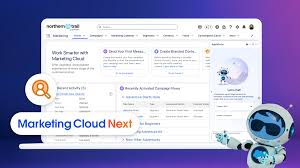
Salesforce Launches Marketing Cloud Next: The End of “Do-Not-Reply” Marketing Say goodbye to one-way marketing. Salesforce just unveiled Marketing Cloud Next, a fully agentic AI-powered platform that transforms how brands engage with customers—turning static campaigns into dynamic, two-way conversations. Why This Changes Everything Today’s consumers expect personalized, real-time interactions—yet most marketing emails still come from “no-reply@company.com“ addresses, offering zero ability to respond. Salesforce is flipping the script: How It Works: AI as Your Co-Pilot Marketing Cloud Next doesn’t replace humans—it augments them. Think of it as a “seasoned team member” that handles grunt work while marketers focus on strategy: “It’s the end of ‘do-not-reply,’” says Bobby Jania, CMO of Salesforce Marketing Cloud. “Humans don’t send emails expecting no response—why should brands?” The Bigger Shift: AI-Driven Expectations Once customers experience conversational marketing, they’ll demand it everywhere. (Remember how ride-sharing made waiting 10 minutes for a taxi feel archaic?) Salesforce is betting that static, one-way campaigns will soon seem just as outdated. But there’s a catch: Not every brand is ready to hand the reins to AI. While some will use Agentforce for full autonomy, others will keep humans in the loop—for now. Available Now—But Is the Market Ready? Marketing Cloud Next rolls out to existing customers in July 2025, integrating with Salesforce’s CRM, Data Cloud, and LinkedIn for closed-loop analytics. The bottom line? Salesforce isn’t just selling a tool—it’s pushing a new paradigm: marketing where every message is a conversation, and AI does the heavy lifting. The question is: Will customers embrace chatty bots—or miss the simplicity of “STOP” to unsubscribe? Like Related Posts Who is Salesforce? Who is Salesforce? Here is their story in their own words. From our inception, we’ve proudly embraced the identity of Read more Salesforce Marketing Cloud Transactional Emails Salesforce Marketing Cloud Transactional Emails are immediate, automated, non-promotional messages crucial to business operations and customer satisfaction, such as order Read more Salesforce Unites Einstein Analytics with Financial CRM Salesforce has unveiled a comprehensive analytics solution tailored for wealth managers, home office professionals, and retail bankers, merging its Financial Read more AI-Driven Propensity Scores AI plays a crucial role in propensity score estimation as it can discern underlying patterns between treatments and confounding variables Read more
Read More

Why 89% of AI Pilots Fail – And How to Beat the Odds

The AI Pilot Paradox: High Hopes, Low Deployment Your leadership team gets excited about AI. They greenlight an agentic AI pilot. Employees test it enthusiastically. Then… nothing happens. The project collects dust while the organization moves on to the next shiny tech initiative. This scenario plays out in 89% of companies, according to our analysis of industry data. While AI pilot projects surged 76% year-over-year in 2024 (KPMG), only 11% ever reach full deployment. The 7 Deadly Sins of AI Pilot Failure 1. Solution Looking for a Problem (60% of failures) The Trap: Starting with technology rather than business needsThe Fix: 2. The Ivory Tower Syndrome (45% of failures) The Trap: IT-led projects without business unit buy-inThe Fix: 3. Perfection Paralysis (38% of failures) The Trap: Waiting for flawless performance before launchThe Fix: 4. Data Debt Disaster (52% of failures) The Trap: Unstructured, outdated, or siloed dataThe Fix: 5. Zero-to-Hero Expectations (41% of failures) The Trap: Expecting full competency on Day 1The Fix: 6. Launch-and-Leave Mentality (63% of failures) The Trap: No ongoing optimizationThe Fix: 7. Build vs. Buy Blunders (72% of failures) The Trap: Underestimating custom AI development costsThe Fix: The Agentforce Advantage: 3 Deployment Success Stories 1. Clinical Trial AcceleratorChallenge: 6-month participant screening backlogSolution: AI agent pre-qualifies candidates using EHR dataResult: 58% faster trial enrollment 2. Luxury Retail ConciergeChallenge: High-touch customers demanded 24/7 styling adviceSolution:* Agentforce-powered shopping assistant with: 3. Global Support TransformationChallenge: 45% first-call resolution rateSolution:* Tiered AI agent deployment: Your AI Deployment Checklist ✅ [ ] Identify 3-5 measurable pain points✅ [ ] Form cross-functional pilot team✅ [ ] Conduct data health assessment✅ [ ] Select phased rollout approach✅ [ ] Define success metrics (KPIs)✅ [ ] Plan ongoing optimization process Pro Tip: Companies using this framework see 3.2x higher deployment success rates compared to ad-hoc approaches. Beyond the Pilot: The AI Maturity Journey Where is your organization on this path? The most successful enterprises treat AI adoption as a continuous transformation – not a one-time project. Like Related Posts Who is Salesforce? Who is Salesforce? Here is their story in their own words. From our inception, we’ve proudly embraced the identity of Read more Salesforce Marketing Cloud Transactional Emails Salesforce Marketing Cloud Transactional Emails are immediate, automated, non-promotional messages crucial to business operations and customer satisfaction, such as order Read more Salesforce Unites Einstein Analytics with Financial CRM Salesforce has unveiled a comprehensive analytics solution tailored for wealth managers, home office professionals, and retail bankers, merging its Financial Read more AI-Driven Propensity Scores AI plays a crucial role in propensity score estimation as it can discern underlying patterns between treatments and confounding variables Read more

Read More
salesforce shield encryption

Monitoring and Debugging Platform Events in Salesforce

Introduction to Platform Events Platform Events in Salesforce provide a robust mechanism for real-time communication between applications, enabling seamless integration and automation across systems. These events follow a publish-subscribe model, allowing both Salesforce and external applications to exchange data efficiently. While Platform Events are transient by nature, Salesforce offers several methods to track and analyze event records for debugging and monitoring purposes. Key Characteristics of Platform Events Why Monitor Platform Events? Organizations should track Platform Event records to: Methods to Track Platform Event Records 1. Using Event Monitoring in Setup Steps to access event logs: Available information: 2. Querying Events via API Using Salesforce APIs: 3. Real-time Debugging in Developer Console Debugging process: 4. Creating Debug Triggers for Event Subscriptions Sample trigger for monitoring: java Copy Download trigger TrackPlatformEvents on YourPlatformEvent__e (after insert) { for (YourPlatformEvent__e event : Trigger.New) { System.debug(‘Event Received – ID: ‘ + event.ReplayId); System.debug(‘Event Data: ‘ + event.EventData__c); } } Viewing logs: 5. Advanced Replay with CometD For external system integrations: 6. Third-Party Monitoring Solutions Consider these enhanced monitoring options: Best Practices for Event Monitoring Conclusion Effective monitoring of Platform Events is essential for maintaining reliable integrations in Salesforce. By combining native tools like Event Monitoring and Developer Console with API queries and custom triggers, organizations can ensure proper event delivery and quickly resolve integration issues. For complex implementations, extending monitoring capabilities with third-party tools provides additional visibility into event-driven architectures. Like Related Posts Who is Salesforce? Who is Salesforce? Here is their story in their own words. From our inception, we’ve proudly embraced the identity of Read more Salesforce Marketing Cloud Transactional Emails Salesforce Marketing Cloud Transactional Emails are immediate, automated, non-promotional messages crucial to business operations and customer satisfaction, such as order Read more Salesforce Unites Einstein Analytics with Financial CRM Salesforce has unveiled a comprehensive analytics solution tailored for wealth managers, home office professionals, and retail bankers, merging its Financial Read more AI-Driven Propensity Scores AI plays a crucial role in propensity score estimation as it can discern underlying patterns between treatments and confounding variables Read more

Read More
Far Beyond Keywords

Far Beyond Keywords

Far Beyond Keywords: The Next Era of Intelligent Search with NLP & Vector Embeddings Traditional search has served us well—scalable systems can scan structured data in seconds using keywords, tags, or schemas. But 90% of enterprise data is unstructured: emails, support tickets, PDFs, audio, and video. Keyword search fails here because human language is nuanced—we use metaphors, synonyms, and context that rigid keyword matching can’t grasp. To search unstructured data effectively, we need AI-powered semantic understanding—not just pattern matching. How Neural Networks Understand Language Modern NLP models rely on neural networks (NNs), which aren’t magic—they’re pattern-recognition engines trained on vast text datasets. Here’s how they learn: From Words to Semantic Search To search entire documents, we: Why It’s Better Than Keyword Search ✅ Finds conceptually related content (e.g., “sustainability” matches “eco-friendly initiatives”).✅ Ignores exact phrasing—understands intent.✅ Faster at scale—vector math outperforms text scanning. Scaling Semantic Search with Vector Databases Storing millions of vectors requires specialized vector databases (e.g., Pinecone, Milvus), optimized for: 🔹 Low-latency retrieval – Nearest-neighbor search in milliseconds.🔹 Horizontal scaling – Partition data across clusters.🔹 Incremental updates – Only re-embed modified text.🔹 GPU acceleration – 2-3x faster queries vs. CPU. Real-World Impact Frameworks like AgoraWiki apply these principles to deliver: The Future of Search As NLP advances, semantic search will become smarter, faster, and more contextual—transforming how enterprises unlock insights from unstructured data. Ready to move beyond keywords? Explore AI-powered search solutions today. Like Related Posts Who is Salesforce? Who is Salesforce? Here is their story in their own words. From our inception, we’ve proudly embraced the identity of Read more Salesforce Unites Einstein Analytics with Financial CRM Salesforce has unveiled a comprehensive analytics solution tailored for wealth managers, home office professionals, and retail bankers, merging its Financial Read more AI-Driven Propensity Scores AI plays a crucial role in propensity score estimation as it can discern underlying patterns between treatments and confounding variables Read more Tectonic’s Successful Salesforce Track Record Salesforce Technology Services Integrator – Tectonic has successfully delivered Salesforce in a variety of industries including Public Sector, Hospitality, Manufacturing, Read more

Read More
Agentic AI Race

How Agentic AI is Redefining Customer Service

Australia’s AI-Powered CX Revolution: How Agentic AI is Redefining Customer Service The Rise of Autonomous Customer Experience Australia has become a global proving ground for a radical shift in customer service – one where AI agents don’t just assist but independently resolve issues, predict needs, and transform brand interactions. This isn’t about simple chatbots following scripts; it’s about agentic AI – intelligent digital agents capable of complex problem-solving, seamless human handoffs, and continuous self-improvement. Leading companies like Zendesk, Salesforce, and digital accommodation provider Urban Rest are already deploying these systems at scale, fundamentally reshaping what customer experience means in 2024 and beyond. Why Agentic AI Changes Everything 1. From Scripted Responses to Genuine Problem-Solving 2. The New Pricing Model: Pay for Resolution, Not Interactions Zendesk is pioneering a radical approach: 3. The Marketing Transformation Salesforce ANZ’s Leandro Perez sees CMOs becoming CX orchestrators: Real-World Deployments Right Now Salesforce’s AI Layer Urban Rest’s Digital Concierge The Human-AI Balance: Trust & Transparency Key insights from frontline deployments: What Leaders Need to Do Now “The last generation managed only humans. The next will manage teams of AI agents,” notes Perez. “That changes everything about leadership.” How Agentic AI is Redefining Customer Service Agentic AI isn’t coming – it’s already here. Early adopters are seeing: As Zendesk’s Gavin puts it: “Don’t wait for perfect. Start learning now – because your competitors certainly are.” The question isn’t whether to adopt, but how fast you can implement responsibly. Like Related Posts Who is Salesforce? Who is Salesforce? Here is their story in their own words. From our inception, we’ve proudly embraced the identity of Read more Salesforce Marketing Cloud Transactional Emails Salesforce Marketing Cloud Transactional Emails are immediate, automated, non-promotional messages crucial to business operations and customer satisfaction, such as order Read more Salesforce Unites Einstein Analytics with Financial CRM Salesforce has unveiled a comprehensive analytics solution tailored for wealth managers, home office professionals, and retail bankers, merging its Financial Read more AI-Driven Propensity Scores AI plays a crucial role in propensity score estimation as it can discern underlying patterns between treatments and confounding variables Read more

Read More
Analytics tools like Einstein Analytics can identify patterns and trends in patient data, helping healthcare providers optimize workflows and improve the effectiveness of care delivery.

AgentForce and Healthcare

The AI Agent Revolution in Healthcare The healthcare industry is undergoing a seismic shift with the emergence of autonomous AI agents. Salesforce’s Agentforce, launched in September 2024, is at the forefront of this transformation, introducing intelligent, action-oriented AI agents specifically designed for healthcare’s complex ecosystem. Unlike conventional chatbots or virtual assistants, Agentforce agents can:✅ Analyze and reason through multi-step clinical workflows✅ Securely access and act on EHRs, payer systems, and operational databases✅ Execute decisions with human-like judgment but machine efficiency With 42% of health systems already reporting ROI from AI implementations, Agentforce promises to amplify these benefits by reducing administrative burdens by up to 30% while improving both provider satisfaction and patient outcomes. Agentforce in Action: Transforming Healthcare Operations Out-of-the-Box Healthcare Capabilities Agentforce comes pre-configured with specialized healthcare skills: Case Study: Prior Authorization Revolution Current Reality:❌ 16-minute average staff time per auth request❌ 38% initial denial rate due to missing information❌ 72-hour average processing time With Agentforce:✔ AI completes 89% of auths autonomously in <90 seconds✔ 92% first-pass approval rate✔ Full documentation auto-filed in EHR Impact: $2.3M annual savings per 200-bed hospital + faster treatment initiation Enterprise-Grade Healthcare AI Built for Trust Custom AI That Adapts to Your Workflows The Tectonic Trust Framework We extend Salesforce’s Einstein Trust Layer with:🔒 Military-grade encryption for PHI at rest/in transit🛡️ AI Governance Console for compliance monitoring⚖️ Explainable AI with decision audit trails Your Agentforce Implementation Partner: Tectonic Implementing healthcare AI requires deep domain expertise. Tectonic’s certified team delivers: The Road Ahead: AI’s Evolving Role in Healthcare Critical Success Factor:Interoperability maturity will separate leaders from laggards. Systems with API-first architectures will unlock 3-5x more AI value. The Time to Act is Now Agentforce represents healthcare’s single largest automation opportunity since EHR adoption, but success requires:🔹 Strategic prioritization of high-value use cases🔹 Architectural readiness for AI integration🔹 Ongoing optimization as models and regulations evolve Forward-thinking health systems are already achieving: Like Related Posts Who is Salesforce? Who is Salesforce? Here is their story in their own words. From our inception, we’ve proudly embraced the identity of Read more Salesforce Marketing Cloud Transactional Emails Salesforce Marketing Cloud Transactional Emails are immediate, automated, non-promotional messages crucial to business operations and customer satisfaction, such as order Read more Salesforce Unites Einstein Analytics with Financial CRM Salesforce has unveiled a comprehensive analytics solution tailored for wealth managers, home office professionals, and retail bankers, merging its Financial Read more AI-Driven Propensity Scores AI plays a crucial role in propensity score estimation as it can discern underlying patterns between treatments and confounding variables Read more

Read More
gettectonic.com