
ONC Archives - gettectonic.com - Page 2
Ensuring Trust in AI Agent Deployment

Ensuring Trust in AI Agent Deployment

Ensuring Trust in AI Agent Deployment: A Secure Approach to Business Transformation The Imperative for Trustworthy AI Agents AI agents powered by platforms like Agentforce represent a significant advancement in business automation, offering capabilities ranging from enhanced customer service to intelligent employee assistance. However, organizations face a critical challenge in adopting this technology: establishing sufficient trust to deploy AI agents with sensitive data and core business operations. Recent industry research highlights prevalent concerns: Salesforce has maintained trust as its foundational value throughout its 25-year history, adapting this principle across technological evolutions from cloud computing to generative AI. The company now applies this same rigorous approach to AI agent deployment through a comprehensive trust framework. The Four Essential Components of Trusted AI Implementation 1. Comprehensive Data Governance Framework The reliability of AI agents depends fundamentally on data quality and security. The Salesforce platform addresses this through: Data Protection Systems Advanced Data Management Industry experts emphasize that robust AI systems require equally robust data foundations. 2. Secure Integration Architecture AI agents require safe interaction channels with other systems: 3. Built-in Development Safeguards The platform incorporates multiple layers of protection throughout the AI lifecycle: 4. Proprietary Trust Layer A specialized security interface between users and large language models offers: Case Study: Healthcare Transformation with Precina Precina’s implementation demonstrates the platform’s capabilities in a regulated environment. By unifying patient records through Agentforce while maintaining HIPAA compliance, the organization achieved: Precina’s CTO noted that Salesforce’s cybersecurity standards enabled trust equivalent to their own care standards when handling patient information. Enterprise AI: Balancing Innovation and Responsibility Salesforce leadership emphasizes that the company’s quarter-century of experience in secure solutions uniquely positions it to guide enterprises through AI adoption. The integration of unified data management, intuitive development tools, and embedded governance enables organizations to deploy AI solutions that are both transformative and responsible. The recommended implementation approach includes: In the evolving landscape of enterprise AI, Salesforce positions trust not just as a corporate value but as a critical competitive differentiator for organizations adopting these technologies. Like Related Posts Who is Salesforce? Who is Salesforce? Here is their story in their own words. From our inception, we’ve proudly embraced the identity of Read more Salesforce Marketing Cloud Transactional Emails Salesforce Marketing Cloud Transactional Emails are immediate, automated, non-promotional messages crucial to business operations and customer satisfaction, such as order Read more Salesforce Unites Einstein Analytics with Financial CRM Salesforce has unveiled a comprehensive analytics solution tailored for wealth managers, home office professionals, and retail bankers, merging its Financial Read more AI-Driven Propensity Scores AI plays a crucial role in propensity score estimation as it can discern underlying patterns between treatments and confounding variables Read more

Read More
Agentforce 3 and AI Agents

Agentforce 3 to Accelerate Agentic AI Adoption

Salesforce Launches Agentforce 3 to Accelerate Agentic AI Adoption A few weeks ago, Salesforce introduced Agentforce 3, designed to deliver rapid time-to-value and address ROI concerns around agentic AI. As the technology rapidly evolves, Salesforce is leading the charge into the agent-first Service era, betting big on Agentforce’s potential to transform customer service by proactively resolving issues and educating users on new features. Salesforce customer 1-800 Accountant is already seeing the benefits, reporting measurable improvements in customer service efficiency. Here’s what both companies had to say. Customer Zero: Salesforce’s Own Agentforce Journey As its own first customer, Salesforce has a vested interest in ensuring Agentforce enhances its customer service operations. Bernard Slowey, SVP of Digital Customer Success, shared insights with analysts, noting that most self-service journeys for Salesforce customers begin on Google before landing on the company’s Help portal, which handles 2 million reactive support cases annually. Slowey posed a key question: “What if your service team had infinite capacity and complete knowledge?” To move toward this vision, Salesforce is deploying AI agents to absorb repetitive tasks, proactively engage customers, and seamlessly hand off complex issues to humans when needed. By July, Agentforce had already facilitated 1 million customer conversations with an 85% resolution rate. Early results show a 2% increase in Help portal traffic alongside a 5% reduction in case volume, signaling strong ROI. Salesforce tracks performance via scorecards comparing AI and human agents, ensuring smooth transitions when escalations are necessary. So far, customers aren’t frustrated when an AI agent can’t resolve an issue—validating the hybrid approach. Andy White, SVP of Business Technology, highlighted lessons from the rollout: Looking ahead, White emphasized Agentforce’s advantage over public LLMs: “We know who the customer is and can engage them proactively—before they even reach the portal.” For businesses starting their agentic AI journey, White advises: “Begin with a small, controlled use case—like a single customer service topic—before scaling.” 1-800 Accountant: Transforming Tax Season with Agentforce Ryan Teeples, CTO of 1-800 Accountant, shared how the firm—the largest U.S. accounting provider for small businesses—deployed Agentforce to handle high-volume, time-sensitive client queries during tax season. With a long-standing focus on automation, 1-800 Accountant saw agentic AI as the next logical step. Teeples explained: “Our accountants often lack time for client nurturing. Agentforce lets us automate communications while freeing them to focus on high-value advisory work.” Key outcomes: Employee reactions were mixed, but leadership emphasized that AI complements accountants by handling soft skills and routine tasks, allowing them to focus on deep expertise. ROI is clear—saved accountant hours translate directly into cost savings. Retention impact will be measured next tax season. Why It Matters:Agentic AI is proving its value in real-world customer service, with Salesforce and 1-800 Accountant demonstrating tangible efficiency gains, cost savings, and improved experiences. The key? Start small, measure rigorously, and keep humans in the loop. Like Related Posts Who is Salesforce? Who is Salesforce? Here is their story in their own words. From our inception, we’ve proudly embraced the identity of Read more Salesforce Marketing Cloud Transactional Emails Salesforce Marketing Cloud Transactional Emails are immediate, automated, non-promotional messages crucial to business operations and customer satisfaction, such as order Read more Salesforce Unites Einstein Analytics with Financial CRM Salesforce has unveiled a comprehensive analytics solution tailored for wealth managers, home office professionals, and retail bankers, merging its Financial Read more AI-Driven Propensity Scores AI plays a crucial role in propensity score estimation as it can discern underlying patterns between treatments and confounding variables Read more

Read More
Role of Trusted Data in AI Success

AI Revolutionizes Telemedicine

AI Revolutionizes Telemedicine: Transforming Virtual Care Delivery The Rapid Adoption of AI in Healthcare The healthcare industry is experiencing an AI transformation, with physician adoption rates skyrocketing from 38% in 2023 to 66% in 2024, according to the American Medical Association. Telemedicine—remote healthcare delivered via telecommunications—has emerged as a prime beneficiary of AI innovation. Market analysts project 26% annual growth in AI telemedicine investments, surpassing $156 billion by 2033. “AI is enabling earlier and more frequent medical interventions, often preventing hospitalizations,” said Dr. Elizabeth Krupinski, Director of the Southwest Telehealth Resource Center and Professor at Emory University. “We’re seeing AI enhance both the quality and accessibility of virtual care.” Key AI Applications Reshaping Telemedicine 1. Virtual Health Assistants & Chatbots 2. Intelligent Triage & Symptom Analysis 3. Medical Imaging & Diagnostics 4. Personalized Treatment Planning 5. Remote Patient Monitoring 6. Mental Health Support Operational & Administrative Benefits Challenges & Considerations While promising, AI adoption presents hurdles: The Future of AI in Telemedicine Industry experts anticipate groundbreaking advancements: “We’re still in the early stages,” notes Krupinski. “The next decade will reveal AI’s full potential to improve outcomes while making healthcare more accessible and efficient.” As adoption grows, maintaining rigorous oversight will be crucial to ensure AI systems remain accurate, equitable, and patient-centered. The transformation of telemedicine through AI represents not just technological progress, but a fundamental shift toward more proactive, personalized, and preventive care. Like Related Posts Who is Salesforce? Who is Salesforce? Here is their story in their own words. From our inception, we’ve proudly embraced the identity of Read more Salesforce Unites Einstein Analytics with Financial CRM Salesforce has unveiled a comprehensive analytics solution tailored for wealth managers, home office professionals, and retail bankers, merging its Financial Read more AI-Driven Propensity Scores AI plays a crucial role in propensity score estimation as it can discern underlying patterns between treatments and confounding variables Read more Tectonic’s Successful Salesforce Track Record Salesforce Technology Services Integrator – Tectonic has successfully delivered Salesforce in a variety of industries including Public Sector, Hospitality, Manufacturing, Read more

Read More

AI Detects Physician Fatigue Through Clinical Notes

AI Detects Physician Fatigue Through Clinical Notes, Revealing Impact on Patient Care A groundbreaking study published in Nature Communications demonstrates that machine learning (ML) can identify signs of physician fatigue in clinical notes—and that these fatigue-related patterns correlate with lower-quality medical decision-making. Key Findings ✔ ML models accurately detected notes written by fatigued physicians—particularly those working overnight shifts or after multiple consecutive workdays.✔ Fatigue-linked notes were associated with a 19% drop in diagnostic accuracy for critical conditions like heart attacks.✔ AI-generated clinical notes (LLM-written) showed 74% higher fatigue signals than human-written notes, raising concerns about unintended biases in medical AI. How the Study Worked Researchers from the University of Chicago and UC Berkeley analyzed 129,228 emergency department (ED) encounters from Mass General Brigham (2010–2012), focusing on 60 physicians across 11,592 shifts. Measuring Fatigue Fatigue’s Impact on Decision-Making To assess clinical judgment, researchers examined testing rates for acute coronary syndrome (ACS)—a key ED quality metric. Surprising Discovery: AI-Written Notes Mimic Fatigue When analyzing LLM-generated clinical notes, researchers found:⚠ 74% higher fatigue signals vs. human-written notes.⚠ Suggests AI may unintentionally replicate stressed or rushed documentation patterns—a potential risk for automated medical note-taking. Why This Matters “Fine-grained fatigue measures could revolutionize how we track and mitigate clinician exhaustion.” — Study authors Source: Nature Communications The Bottom Line: AI isn’t just diagnosing diseases—it’s now diagnosing physician fatigue, offering a data-driven path to smarter scheduling and safer care. But the risks of AI-replicated fatigue underscore the need for rigorous validation of medical LLMs. Like Related Posts Who is Salesforce? Who is Salesforce? Here is their story in their own words. From our inception, we’ve proudly embraced the identity of Read more Salesforce Unites Einstein Analytics with Financial CRM Salesforce has unveiled a comprehensive analytics solution tailored for wealth managers, home office professionals, and retail bankers, merging its Financial Read more AI-Driven Propensity Scores AI plays a crucial role in propensity score estimation as it can discern underlying patterns between treatments and confounding variables Read more Tectonic’s Successful Salesforce Track Record Salesforce Technology Services Integrator – Tectonic has successfully delivered Salesforce in a variety of industries including Public Sector, Hospitality, Manufacturing, Read more

Read More
Why Salesforce Release Management Matters

Salesforce Winter ‘26 Release: Key Dates and Prep Guide Winter ‘26 is coming—and with it, a wave of updates to the Salesforce platform. To ensure a smooth transition, here’s what you need to know: 1. Mark Your Calendar: Key Winter ‘26 Release Dates Salesforce will roll out Winter ‘26 in waves, with major upgrade weekends on: How to Check Your Instance’s Upgrade Date: Don’t know your instance? Go to Setup > Company Information in your Salesforce org. 2. Test Critical Functions Before Upgrade While Salesforce releases are typically stable, proactive testing helps avoid surprises. Before your production upgrade: 3. Sandbox Upgrades: Preview vs. Non-Preview Your sandbox is your testing playground—here’s when to expect updates: Tip: Pre-release orgs (available soon) let you explore new features, but they won’t include your custom configurations. 4. Stay Ahead with Release Notes The Winter ‘26 Release Notes (coming soon) will detail all new features across Salesforce products. Action Plan for Winter ‘26 ✅ Verify your instance’s upgrade date (Salesforce Trust).✅ Test core processes in sandbox/pre-release orgs.✅ Review release notes to prioritize feature adoption. Pro Tip: Schedule internal training sessions to align teams on key updates BEFORE they happen. Final ThoughtSalesforce releases are opportunities—not obstacles. By planning ahead, you’ll leverage Winter ‘26’s enhancements while minimizing disruption. Stay tuned for deeper dives into top features once release notes drop! Need help preparing? Drop us a message—we’re here to ensure your upgrade is seamless. Like Related Posts Who is Salesforce? Who is Salesforce? Here is their story in their own words. From our inception, we’ve proudly embraced the identity of Read more Salesforce Marketing Cloud Transactional Emails Salesforce Marketing Cloud Transactional Emails are immediate, automated, non-promotional messages crucial to business operations and customer satisfaction, such as order Read more Salesforce Unites Einstein Analytics with Financial CRM Salesforce has unveiled a comprehensive analytics solution tailored for wealth managers, home office professionals, and retail bankers, merging its Financial Read more AI-Driven Propensity Scores AI plays a crucial role in propensity score estimation as it can discern underlying patterns between treatments and confounding variables Read more

Read More

Rise and Limits of GPT Models

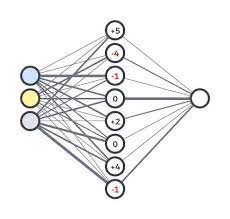
The Rise and Limits of GPT Models: What They Can’t Do (And What Comes Next) GPT Models: The Engines of Modern AI GPT models have revolutionized AI, offering speed, flexibility, and generative power that older architectures like RNNs couldn’t match. Without their development—starting with GPT-1 (2018) and BERT (2018)—today’s AI landscape, especially generative AI, wouldn’t exist. Yet, despite their dominance, GPT models have fundamental flaws—hallucinations, reasoning gaps, and context constraints—that make them unsuitable for some critical tasks. So, what can’t GPT models do well? Which limitations can be fixed, and which are unavoidable? How GPT Models Work (And Why They’re Different) GPT models are transformer-based, meaning they process data in parallel (unlike sequential RNNs). This allows them to:✔ Analyze entire sentences at once✔ Generate coherent, context-aware responses✔ Scale efficiently with more data But this architecture also introduces key weaknesses. The 3 Biggest Limitations of GPT Models 1. Hallucinations: When AI Makes Things Up Why it happens: Can it be fixed? 2. Struggles with Long-Form Data Why it happens: Can it be fixed? 3. They Can’t Really “Reason” Why it happens: Can it be fixed? The Future: Can GPT Models Improve? Option 1: Patch the Transformer But these are band-aids, not true fixes. Option 2: Move Beyond Transformers New architectures are emerging: The Bottom Line ✅ GPT models are here to stay (for now)❌ But they’ll never be perfect at reasoning or long-context tasks🚀 The next AI breakthrough may come from a totally new architecture What’s next? Keep an eye on Mamba, Megalodon, and neurosymbolic AI—they might just dethrone transformers. Like Related Posts Who is Salesforce? Who is Salesforce? Here is their story in their own words. From our inception, we’ve proudly embraced the identity of Read more Salesforce Unites Einstein Analytics with Financial CRM Salesforce has unveiled a comprehensive analytics solution tailored for wealth managers, home office professionals, and retail bankers, merging its Financial Read more AI-Driven Propensity Scores AI plays a crucial role in propensity score estimation as it can discern underlying patterns between treatments and confounding variables Read more Tectonic’s Successful Salesforce Track Record Salesforce Technology Services Integrator – Tectonic has successfully delivered Salesforce in a variety of industries including Public Sector, Hospitality, Manufacturing, Read more
Read More
The Next Frontier in Government Efficiency

The Next Frontier in Government Efficiency

Agentic AI: The Next Frontier in Government Efficiency As federal agencies face mounting pressure to streamline operations and reduce costs, AI-powered automation is emerging as a critical solution—and Salesforce is leading the charge. With its newly secured FedRAMP High authorization for Agentforce, Salesforce now enables civilian agencies handling sensitive data to deploy AI agents that automate complex workflows while maintaining strict compliance. Why This Matters Now The Department of Government Efficiency (DOGE) is aggressively pursuing cost-cutting measures, including workforce reductions—making AI-driven automation a strategic imperative. “Agencies are asking us, ‘Can you build a digital agent to solve this problem?’” says Paul Tatum, head of Salesforce’s Global Public Sector Solutions Engineering. “Their teams are doing incredible work, but they’re stretched thin.” How AI Agents Transform Government Workflows Salesforce’s AI agents specialize in decision-making support, particularly in high-stakes adjudication processes—such as:✔ Benefits approvals✔ Payment processing✔ Service request evaluations “Government policies are dense, complex, and constantly updated,” Tatum explains. “AI agents excel at parsing these rules and providing real-time recommendations—freeing up staff to focus on final decisions.” The Federal AI Copilot Model Rather than replacing humans, these AI agents act as intelligent assistants: Government Readiness for Agentic AI Federal agencies are uniquely positioned for AI adoption because:🔹 Data is well-structured & clean🔹 Use cases are clearly defined🔹 Documentation is thorough “The government is primed for this,” says Tatum. “AI will make agencies faster, more efficient, and more responsive to citizens.” A Competitive AI Landscape Salesforce isn’t alone in this space—Amazon, Google, and ServiceNow have also secured FedRAMP approvals for their AI agents. But with its deep federal footprint and seamless integration into existing Salesforce environments, Agentforce is positioned to be the game-changer. What’s Next? Salesforce is currently running demos and proofs of concept with multiple agencies. As AI adoption accelerates, one thing is clear: The future of government efficiency is automated, intelligent, and powered by AI. Like Related Posts Who is Salesforce? Who is Salesforce? Here is their story in their own words. From our inception, we’ve proudly embraced the identity of Read more Salesforce Marketing Cloud Transactional Emails Salesforce Marketing Cloud Transactional Emails are immediate, automated, non-promotional messages crucial to business operations and customer satisfaction, such as order Read more Salesforce Unites Einstein Analytics with Financial CRM Salesforce has unveiled a comprehensive analytics solution tailored for wealth managers, home office professionals, and retail bankers, merging its Financial Read more AI-Driven Propensity Scores AI plays a crucial role in propensity score estimation as it can discern underlying patterns between treatments and confounding variables Read more

Read More
Intelligent Adoption Framework

Exploring Open-Source Agentic AI Frameworks

Exploring Open-Source Agentic AI Frameworks: A Comparative Overview Most developers have heard of CrewAI and AutoGen, but fewer realize there are dozens of open-source agentic frameworks available—many released just in the past year. To understand how these frameworks work and how easy they are to use, several of the more popular options were briefly tested. This article explores what each one offers, comparing them to the more established CrewAI and AutoGen. The focus is on LangGraph, Agno, SmolAgents, Mastra, PydanticAI, and Atomic Agents, examining their features, design choices, and underlying philosophies. What Agentic AI Entails Agentic AI revolves around building systems that enable large language models (LLMs) to access accurate knowledge, process data, and take action. Essentially, it uses natural language to automate tasks and workflows. While natural language processing (NLP) for automation isn’t new, the key advancement is the level of autonomy now possible. LLMs can handle ambiguity, make dynamic decisions, and adapt to unstructured tasks—capabilities that were previously limited. However, just because LLMs understand language doesn’t mean they inherently grasp user intent or execute tasks reliably. This is where engineering comes into play—ensuring systems function predictably. For those new to the concept, deeper explanations of Agentic AI can be found here and here. The Role of Frameworks At their very core, agentic frameworks assist with prompt engineering and data routing to and from LLMs. They also provide abstractions that simplify development. Without a framework, developers would manually define system prompts, instructing the LLM to return structured responses (e.g., API calls to execute). The framework then parses these responses and routes them to the appropriate tools. Frameworks typically help in two ways: Additionally, they may assist with: However, some argue that full frameworks can be overkill. If an LLM misuses a tool or the system breaks, debugging becomes difficult due to abstraction layers. Switching models can also be problematic if prompts are tailored to a specific one. This is why some developers end up customizing framework components—such as create_react_agent in LangGraph—for finer control. Popular Frameworks The most well-known frameworks are CrewAI and AutoGen: LangGraph, while less mainstream, is a powerful choice for developers. It uses a graph-based approach, where nodes represent agents or workflows connected via edges. Unlike AutoGen, it emphasizes structured control over agent behavior, making it better suited for deterministic workflows. That said, some criticize LangGraph for overly complex abstractions and a steep learning curve. Emerging Frameworks Several newer frameworks are gaining traction: Common Features Most frameworks share core functionalities: Key Differences Frameworks vary in several areas: Abstraction vs. Control Frameworks differ in abstraction levels and developer control: They also vary in agent autonomy: Developer Experience Debugging challenges exist: Final Thoughts The best way to learn is to experiment. While this overview highlights key differences, factors like enterprise scalability and operational robustness require deeper evaluation. Some developers argue that agent frameworks introduce unnecessary complexity compared to raw SDK usage. However, for those building structured AI systems, these tools offer valuable scaffolding—if chosen wisely. Like Related Posts Who is Salesforce? Who is Salesforce? Here is their story in their own words. From our inception, we’ve proudly embraced the identity of Read more Salesforce Unites Einstein Analytics with Financial CRM Salesforce has unveiled a comprehensive analytics solution tailored for wealth managers, home office professionals, and retail bankers, merging its Financial Read more AI-Driven Propensity Scores AI plays a crucial role in propensity score estimation as it can discern underlying patterns between treatments and confounding variables Read more Tectonic’s Successful Salesforce Track Record Salesforce Technology Services Integrator – Tectonic has successfully delivered Salesforce in a variety of industries including Public Sector, Hospitality, Manufacturing, Read more

Read More
ai agent interoperability

Salesforce Unveils Open AI Ecosystem with Agentforce and MCP Integration

Breaking the AI Interoperability Paradox Salesforce is solving the critical challenge facing enterprise AI adoption—how to balance open innovation with enterprise-grade security. With its upcoming Model Context Protocol (MCP) support for Agentforce, Salesforce is creating the first truly open yet governed ecosystem for AI agent collaboration. The $6T Digital Labor Opportunity Current barriers to AI adoption: Salesforce’s solution enables:✔ Native agent interoperability via open standards✔ Enterprise-grade governance baked into every connection✔ 16x faster deployment than DIY approaches AgentExchange: The Trusted Marketplace for AI Agents Key Innovations Partner Ecosystem in Action Partner AI Agent Capabilities Enabled AWS Unstructured data processing across Bedrock, Aurora DBs, and multimedia Box Intelligent contract analysis and automated workflow triggers Google Cloud Location-aware AI combining Maps, generative models, and transactional data PayPal End-to-end agentic commerce from product listing to dispute resolution Stripe Real-time payment operations and subscription management WRITER Compliant content generation within Salesforce workflows The Salesforce Advantage “With MCP, we’re creating a new category of agent-first businesses,” says Brian Landsman, CEO of AppExchange. “Partners build once and connect everywhere—without the security tradeoffs of traditional integrations.” Enterprise Benefits The Future of Digital Labor This announcement marks a pivotal shift in enterprise AI: Available in pilot July 2024, Salesforce’s MCP integration positions Agentforce as the hub for the next generation of enterprise AI—where security and innovation coexist to unlock the full trillion potential of digital labor. Like Related Posts Who is Salesforce? Who is Salesforce? Here is their story in their own words. From our inception, we’ve proudly embraced the identity of Read more Salesforce Marketing Cloud Transactional Emails Salesforce Marketing Cloud Transactional Emails are immediate, automated, non-promotional messages crucial to business operations and customer satisfaction, such as order Read more Salesforce Unites Einstein Analytics with Financial CRM Salesforce has unveiled a comprehensive analytics solution tailored for wealth managers, home office professionals, and retail bankers, merging its Financial Read more AI-Driven Propensity Scores AI plays a crucial role in propensity score estimation as it can discern underlying patterns between treatments and confounding variables Read more

Read More
The AI Adoption Paradox

Dining and Virtual AI

Restaurants are increasingly adopting AI virtual assistants and bots to manage routine tasks like menu inquiries, loyalty program questions, and order tracking, allowing human staff to focus on complex service needs. Platforms like Salesforce Agentforce and Microsoft Copilot are integrated into customer-facing chat systems, apps, and call centers, handling common queries, updating loyalty credits, tracking deliveries, and escalating issues or creating internal tickets without human intervention. Some operators report a 50% reduction in simple inquiries, with guest satisfaction improving due to faster, consistent responses. Salesforce Agentforce, built on Service Cloud and Data Cloud, delivers a conversational concierge experience by analyzing customer history—past orders, loyalty status, and open cases—to provide instant answers or flag issues. For example, ezCater uses Agentforce for natural language order creation, while OpenTable scales global customer support, reducing reliance on human agents for basic tasks. Beyond chatbots, AI-powered operational tools are transforming restaurant efficiency. Computer vision systems, powered by platforms like NVIDIA NIM, Ultralytics, and Viso Suite, monitor dining areas, kitchens, and back-of-house spaces in real time. These systems actively analyze footage, detecting uncleared tables, long lines, or understaffed zones, and alerting staff to act—speeding up table turns and reducing wait times. In fast-casual settings, vision tools manage order queues and crowded pickup areas. In back-of-house, AI vision ensures food safety and equipment compliance, flagging open cooler doors or blocked pathways with automated alerts to managers or centralized teams. These systems reduce reliance on manual checks with real-time anomaly detection, integrating with facility management and workforce platforms for a cohesive response. Future applications could include predictive maintenance, labor forecasting based on traffic patterns, and training gap identification. As edge AI and APIs evolve, smart vision systems are becoming critical restaurant infrastructure. Smartbridge reports a global restaurant group processed over 6 million guest surveys using an Azure-based generative AI tool, automating sentiment analysis, ticket organization, and feedback summaries at scale. This helps chains quickly identify complaints and menu improvement opportunities. Behind the scenes, integrations rely on edge/cloud orchestration and API frameworks. Customer queries route through secure chat interfaces to Agentforce, pulling from CRM or ticket logs, while camera and sensor data feed into AI pipelines on AWS, Azure, or NVIDIA Jetson devices, triggering alerts in Slack, Jira, or ServiceNow. This enables instant responses to issues like spills, tech glitches, or guest requests without human triage. These virtual assistants form an invisible team, handling thousands of queries, freeing staff for hospitality, and moving restaurants toward “agentic AI” that proactively flags issues, prepares for busy periods, and manages inventory shortages. Virtual assistants are no longer just chatbots—they’re essential team members, enhancing operational efficiency, service consistency, and satisfaction for both customers and staff. Like Related Posts Who is Salesforce? Who is Salesforce? Here is their story in their own words. From our inception, we’ve proudly embraced the identity of Read more Salesforce Marketing Cloud Transactional Emails Salesforce Marketing Cloud Transactional Emails are immediate, automated, non-promotional messages crucial to business operations and customer satisfaction, such as order Read more Salesforce Unites Einstein Analytics with Financial CRM Salesforce has unveiled a comprehensive analytics solution tailored for wealth managers, home office professionals, and retail bankers, merging its Financial Read more AI-Driven Propensity Scores AI plays a crucial role in propensity score estimation as it can discern underlying patterns between treatments and confounding variables Read more

Read More
New ChatGPT-4o

Ask ChatGPT in Salesforce

To “ask ChatGPT in Salesforce,” you essentially need to integrate ChatGPT’s capabilities into your Salesforce environment. This can be done through APIs, plugins, or pre-built integration solutions found on the Salesforce AppExchange. You’ll need to configure these integrations to allow ChatGPT to interact with Salesforce data and perform actions based on prompts.  Here’s a breakdown of how to do this: 1. Choose an Integration Approach: 2. Set up your API Credentials and Access: 3. Design and Implement Your Prompting: 4. Test and Iterate: Examples of what you can do with ChatGPT in Salesforce: Like Related Posts Who is Salesforce? Who is Salesforce? Here is their story in their own words. From our inception, we’ve proudly embraced the identity of Read more Salesforce Marketing Cloud Transactional Emails Salesforce Marketing Cloud Transactional Emails are immediate, automated, non-promotional messages crucial to business operations and customer satisfaction, such as order Read more Salesforce Unites Einstein Analytics with Financial CRM Salesforce has unveiled a comprehensive analytics solution tailored for wealth managers, home office professionals, and retail bankers, merging its Financial Read more AI-Driven Propensity Scores AI plays a crucial role in propensity score estimation as it can discern underlying patterns between treatments and confounding variables Read more
Read More
gettectonic.com