ONC Archives - gettectonic.com - Page 7
Agentic AI Race

Salesforce Unveils Blueprint for the Agentic AI Era

A Roadmap for AI Maturity: From Chatbots to Autonomous Agents Salesforce has introduced a new Agentic Maturity Model, providing businesses with a structured framework to evolve from basic AI chatbots to fully autonomous, collaborative AI agents. With 84% of CIOs believing AI will be as transformative as the internet—yet struggling with deployment—this model offers a clear pathway to scale AI effectively. The Four Stages of Agentic AI Maturity Salesforce’s model defines four progressive stages of AI agent sophistication: 1️⃣ Chatbots & Co-Pilots (Stage 0 → 1) 2️⃣ Information Retrieval Agents (Stage 1 → 2) 3️⃣ Simple Orchestration (Single Domain) → Complex Orchestration (Multiple Domains) (Stage 2 → 3) 4️⃣ Multi-Agent Orchestration (Stage 3 → 4) Why This Model Matters Many businesses deploy AI quickly but struggle to scale due to:🔹 Unclear governance🔹 Data silos🔹 Security concerns🔹 Lack of human-AI collaboration strategies Shibani Ahuja, SVP of Enterprise IT Strategy at Salesforce, emphasizes: “Scaling AI effectively requires a phased approach. This framework helps organizations progress toward higher maturity—balancing innovation with security and operational readiness.” Key Recommendations for Advancement ✅ Start with high-impact use cases where chatbots fall short.✅ Build governance early—define testing, security, and accountability.✅ Prepare data ecosystems for AI interoperability.✅ Foster human-AI collaboration—agents should augment, not replace, teams. The Future: AI That Works Like a Well-Oiled Team The ultimate vision? AI agents that: Salesforce’s model provides the playbook to get there—helping businesses move from experimentation to enterprise-wide AI transformation. Next Step: Assess where your organization stands—and start climbing the maturity ladder. Contact Tectonic today. Like Related Posts Who is Salesforce? Who is Salesforce? Here is their story in their own words. From our inception, we’ve proudly embraced the identity of Read more Salesforce Marketing Cloud Transactional Emails Salesforce Marketing Cloud Transactional Emails are immediate, automated, non-promotional messages crucial to business operations and customer satisfaction, such as order Read more Salesforce Unites Einstein Analytics with Financial CRM Salesforce has unveiled a comprehensive analytics solution tailored for wealth managers, home office professionals, and retail bankers, merging its Financial Read more AI-Driven Propensity Scores AI plays a crucial role in propensity score estimation as it can discern underlying patterns between treatments and confounding variables Read more

Read More
AI-Driven Healthcare

AI is Revolutionizing Clinical Trials and Drug Development

Clinical trials are a cornerstone of drug development, yet they are often plagued by inefficiencies, long timelines, high costs, and challenges in patient recruitment and data analysis. Artificial intelligence (AI) is transforming this landscape by streamlining trial design, optimizing patient selection, and accelerating data analysis, ultimately enabling faster and more cost-effective treatment development. Optimizing Clinical Trials A study by the Tufts Center for the Study of Drug Development estimates that bringing a new drug to market costs an average of $2.6 billion, with clinical trials comprising a significant portion of that expense. “The time-consuming process of recruiting the right patients, collecting data, and manually analyzing it are major bottlenecks,” said Mohan Uttawar, co-founder and CEO of OneCell. AI is addressing these challenges by improving site selection, patient recruitment, and data analysis. Leveraging historical data, AI identifies optimal sites and patients with greater efficiency, significantly reducing costs and timelines. “AI offers several key advantages, from site selection to delivering results,” Uttawar explained. “By utilizing past data, AI can pinpoint the best trial sites and patients while eliminating unsuitable candidates, ensuring a more streamlined process.” One compelling example of AI’s impact is Exscientia, which designed a cancer immunotherapy molecule in under 12 months—a process that traditionally takes four to five years. This rapid development highlights AI’s potential to accelerate promising therapies from concept to patient testing. Enhancing Drug Development Beyond clinical trials, AI is revolutionizing the broader drug development process, particularly in refining trial protocols and optimizing site selection. “A major paradigm shift has emerged with AI, as these tools optimize trial design and execution by leveraging vast datasets and streamlining patient recruitment,” Uttawar noted. Machine learning plays a crucial role in biomarker discovery and patient stratification, essential for developing targeted therapies. By analyzing large datasets, AI uncovers patterns and insights that would be nearly impossible to detect manually. “The availability of large datasets through machine learning enables the development of powerful algorithms that provide key insights into patient stratification and targeted therapies,” Uttawar explained. The cost savings of AI-driven drug development are substantial. Traditional computational models can take five to six years to complete. In contrast, AI-powered approaches can shorten this timeline to just five to six months, significantly reducing costs. Regulatory and Ethical Considerations Despite its advantages, AI in clinical trials presents regulatory and ethical challenges. One primary concern is ensuring the robustness and validation of AI-generated data. “The regulatory challenges for AI-driven clinical trials revolve around the robustness of data used for algorithm development and its validation against existing methods,” Uttawar highlighted. To address these concerns, agencies like the FDA are working on frameworks to validate AI-driven insights and algorithms. “In the future, the FDA is likely to create an AI-based validation framework with guidelines for algorithm development and regulatory compliance,” Uttawar suggested. Data privacy and security are also crucial considerations, given the vast datasets needed to train AI models. Compliance with regulations such as HIPAA, ISO 13485, GDPR, and 21CFR Part 820 ensures data protection and security. “Regulatory frameworks are essential in defining security, compliance, and data privacy, making it mandatory for AI models to adhere to established guidelines,” Uttawar noted. AI also has the potential to enhance diversity in clinical trials by reducing biases in patient selection. By objectively analyzing data, AI can efficiently recruit diverse patient populations. “AI facilitates unbiased data analysis, ensuring diverse patient recruitment in a time-sensitive manner,” Uttawar added. “It reviews selection criteria and, based on vast datasets, provides data-driven insights to optimize patient composition.” Trends and Predictions The adoption of AI in clinical trials and drug development is expected to rise dramatically in the coming years. “In the next five years, 80-90% of all clinical trials will likely incorporate AI in trial design, data analysis, and regulatory submissions,” Uttawar predicted. Emerging applications, such as OneCell’s AI-based toolkit for predicting genomic signatures from high-resolution H&E Whole Slide Images, are particularly promising. This technology allows hospitals and research facilities to analyze medical images and identify potential cancer patients for targeted treatments. “This toolkit captures high-resolution images at 40X resolution and analyzes them using AI-driven algorithms to detect morphological changes,” Uttawar explained. “It enables accessible image analysis, helping physicians make more informed treatment decisions.” To fully realize AI’s potential in drug development, stronger collaboration between AI-focused companies and the pharmaceutical industry is essential. Additionally, regulatory frameworks must evolve to support AI validation and standardization. “Greater collaboration between AI startups and pharmaceutical companies is needed,” Uttawar emphasized. “From a regulatory standpoint, the FDA must establish frameworks to validate AI-driven data and algorithms, ensuring consistency with existing standards.” AI is already transforming drug development and clinical trials, enhancing efficiencies in site selection, patient recruitment, and data analysis. By accelerating timelines and cutting costs, AI is not only making drug development more sustainable but also increasing access to life-saving treatments. However, maximizing AI’s impact will require continued collaboration among technology innovators, pharmaceutical firms, and the regulatory bodies. As frameworks evolve to ensure data integrity, security, and compliance, AI-driven advancements will further shape the future of precision medicine—ultimately improving patient outcomes and redefining healthcare. Like Related Posts Who is Salesforce? Who is Salesforce? Here is their story in their own words. From our inception, we’ve proudly embraced the identity of Read more Salesforce Unites Einstein Analytics with Financial CRM Salesforce has unveiled a comprehensive analytics solution tailored for wealth managers, home office professionals, and retail bankers, merging its Financial Read more AI-Driven Propensity Scores AI plays a crucial role in propensity score estimation as it can discern underlying patterns between treatments and confounding variables Read more Tectonic’s Successful Salesforce Track Record Salesforce Technology Services Integrator – Tectonic has successfully delivered Salesforce in a variety of industries including Public Sector, Hospitality, Manufacturing, Read more


Read More
Tableau

Tableau’s New AI Agents

Tax day for some, Tableau Agents for others. The new Tableau AI agents will bridge a data confidence gap. Tableau’s New AI Agents Tackle the Growing Data Confidence Crisis A new Salesforce survey reveals a striking paradox in today’s data-driven business landscape: While 85% of U.S. leaders face mounting pressure to support decisions with data, their trust in that data has plummeted by 27% since 2023. To address this crisis, Salesforce is positioning its newly unveiled Tableau Next—an “agentic analytics” platform—as the solution. Formerly known as Tableau Einstein, the AI-powered system introduces three specialized assistants designed to restore confidence in data analysis: The survey of 500+ leaders highlights the urgency: Over half doubt their ability to analyze data independently, yet 85% require insights within 30 minutes for critical decisions. “The demand for real-time data is part of why confidence is eroding,” said Tableau CPO Southard Jones. Meanwhile, 77% say AI’s rise makes data-driven strategies even more essential. Integrated with Salesforce’s Agentforce AI platform, Tableau Next aims to transform analytics from static reports to AI-driven collaboration. “We’re moving beyond dashboards to AI as a decision-making partner,” said CEO Ryan Aytay. “By merging trusted data with intuitive tools, we’re automating the path from insight to action.” The launch marks Tableau’s latest evolution under Salesforce, which acquired the Seattle firm for $15.7 billion in 2019. Despite slowing growth (3% YoY in Q1 vs. 20% in 2023), the push into AI analytics aligns with Salesforce’s broader 9% annual revenue growth. Like Related Posts Who is Salesforce? Who is Salesforce? Here is their story in their own words. From our inception, we’ve proudly embraced the identity of Read more Salesforce Marketing Cloud Transactional Emails Salesforce Marketing Cloud Transactional Emails are immediate, automated, non-promotional messages crucial to business operations and customer satisfaction, such as order Read more Salesforce Unites Einstein Analytics with Financial CRM Salesforce has unveiled a comprehensive analytics solution tailored for wealth managers, home office professionals, and retail bankers, merging its Financial Read more AI-Driven Propensity Scores AI plays a crucial role in propensity score estimation as it can discern underlying patterns between treatments and confounding variables Read more

Read More
Why Salesforce Release Management Matters

SAQL

Use SAQL (Salesforce Analytics Query Language) to access data in CRM Analytics dataset. CRM Analytics uses SAQL behind the scenes in lenses, dashboards, and explorer to gather data for visualizations. Developers can write SAQL to directly access CRM Analytics data via: Like Related Posts Who is Salesforce? Who is Salesforce? Here is their story in their own words. From our inception, we’ve proudly embraced the identity of Read more Salesforce Marketing Cloud Transactional Emails Salesforce Marketing Cloud Transactional Emails are immediate, automated, non-promotional messages crucial to business operations and customer satisfaction, such as order Read more Salesforce Unites Einstein Analytics with Financial CRM Salesforce has unveiled a comprehensive analytics solution tailored for wealth managers, home office professionals, and retail bankers, merging its Financial Read more AI-Driven Propensity Scores AI plays a crucial role in propensity score estimation as it can discern underlying patterns between treatments and confounding variables Read more

Read More
AI Agents in Business 2025

Digital-First Auto Expectations

Gen Z is Reshaping the Auto Industry with AI and Digital-First Expectations As the first generation of digital natives, Gen Z is entering the car market with a strong preference for personalized, tech-driven experiences—disrupting traditional purchasing and leasing models. According to recent Salesforce research, 74% of Gen Z buyers want AI-powered agents to advise them on the optimal time to buy based on pricing trends, promotions, and incentives. To stay competitive, automotive leaders must adapt their strategies to meet these evolving expectations. Gen Z Embraces AI for Car Research and Financing Compared to older generations, Gen Z is far more likely to rely on AI for car shopping: A Tech-First Approach to Car Buying Gen Z’s reliance on technology stems from challenges in navigating the traditional car-buying process: Greater Trust in AI and Demand for Personalization Gen Z shows significantly higher confidence in AI-driven solutions: Subscription Models and Flexible Ownership Younger buyers favor innovative payment and ownership options: The Future of Automotive Retail With Gen Z leading the shift toward AI-powered car buying, maintenance, and flexible ownership models, automakers and dealers must prioritize digital-first solutions, transparent pricing, and hyper-personalized experiences to capture this influential market. Tectonic is here to help your company deliver on these Gen Z expectations with Salesforce. Contact us today! Like Related Posts Who is Salesforce? Who is Salesforce? Here is their story in their own words. From our inception, we’ve proudly embraced the identity of Read more Salesforce Marketing Cloud Transactional Emails Salesforce Marketing Cloud Transactional Emails are immediate, automated, non-promotional messages crucial to business operations and customer satisfaction, such as order Read more Salesforce Unites Einstein Analytics with Financial CRM Salesforce has unveiled a comprehensive analytics solution tailored for wealth managers, home office professionals, and retail bankers, merging its Financial Read more AI-Driven Propensity Scores AI plays a crucial role in propensity score estimation as it can discern underlying patterns between treatments and confounding variables Read more

Read More
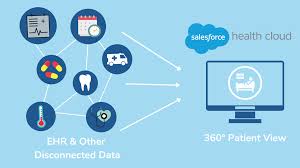
Transforming Healthcare with Salesforce CRM For healthcare providers, adopting a CRM platform like Salesforce Health Cloud is invaluable for managing vast amounts of patient data effectively. Health Cloud empowers healthcare professionals to create personalized, one-to-one patient journeys, enabling a deep understanding of each patient’s needs, medical history, and preferences. This approach not only fosters a patient-friendly experience but also builds a strong rapport, ensuring that patients feel valued and understood. Health Cloud also facilitates seamless collaboration among healthcare providers across different departments. When patients require support from multiple professionals, the platform ensures coordinated, comprehensive care that considers their complete medical history. This collaborative approach strengthens patient trust and streamlines operations, demonstrating a provider’s commitment to patient-centered care. As healthcare organizations strive to meet rising patient expectations, Salesforce is at the forefront of driving transformative changes. Leveraging Salesforce cloud solutions allows providers to manage patient data efficiently, deliver higher-quality care, and turn industry challenges into opportunities for improvement. Salesforce CRM has significantly boosted patient engagement and satisfaction within the healthcare sector. By automating repetitive, manual tasks, Salesforce CRM enables healthcare professionals to devote more time to patient care. Tools like Patient Management Software

Healthcare’s Trust Crisis

Healthcare’s Trust Crisis: How Medical Misinformation Is Winning Over Young Patients New data from Edelman’s 2025 Trust and Health Report reveals a troubling shift: Patients—especially young adults—are increasingly dismissing medical professionals in favor of advice from family, friends, and social media influencers. The result? A growing medical misinformation epidemic that puts patient safety at risk. Young Patients Are Turning Away from Doctors—With Dangerous Consequences Even more alarming? 45% of young patients believe that “someone who’s done their own research can know as much as a doctor.” (Only 22% of adults over 55 agree.) The High Cost of Misinformation While social media and personal networks may feel more relatable, they lack the rigorous training of medical professionals—leading to dangerous misconceptions. Richard Edelman, CEO of Edelman, warns: “Personal experiences on social media now rival the believability of data from doctors and government. We must flood the digital space with fact-based, easy-to-understand health information—before misinformation does more harm.” Who Do Patients Actually Trust? While doctors remain the #1 trusted source (82%), patients also crave human connection: Jennifer Hauser, Edelman’s Global Health Co-Chair, explains: “Patients don’t just want textbook answers—they want to feel seen and understood. Credentials matter, but emotional trust matters just as much.” How Healthcare Can Fight Back To regain trust, medical professionals must:✅ Speak in plain language—not medical jargon.✅ Leverage relatable storytellers (like survivors or patient advocates) to share accurate info.✅ Meet patients where they are—using social media, influencers, and community voices to counter misinformation. The Bottom Line The battle against medical misinformation isn’t just about facts vs. falsehoods—it’s about who communicates them. If healthcare doesn’t adapt, trust will keep eroding, and patient safety will pay the price. The time to act is now. Like Related Posts Who is Salesforce? Who is Salesforce? Here is their story in their own words. From our inception, we’ve proudly embraced the identity of Read more Salesforce Marketing Cloud Transactional Emails Salesforce Marketing Cloud Transactional Emails are immediate, automated, non-promotional messages crucial to business operations and customer satisfaction, such as order Read more Salesforce Unites Einstein Analytics with Financial CRM Salesforce has unveiled a comprehensive analytics solution tailored for wealth managers, home office professionals, and retail bankers, merging its Financial Read more AI-Driven Propensity Scores AI plays a crucial role in propensity score estimation as it can discern underlying patterns between treatments and confounding variables Read more

Read More
Salesforce Nonprofit Cloud

Salesforce Connects Donors and Nonprofits

Your foundation is connecting donors, nonprofits, and local leaders to create meaningful change. But keeping track of those relationships, managing funds, and ensuring every dollar is accounted for can be overwhelming without the right tools. That’s where Salesforce comes in. With Salesforce, your foundation can bring everything together in one place, giving you a clear view of your donors, grants, and community impact—all while making daily operations easier for your team. Get the Full Picture with a 360° View Every interaction with a donor, nonprofit, grant applicant, board member, or volunteer is part of your foundation’s story. Salesforce acts as a central hub, giving you a complete picture of the people and organizations you work with. Imagine this: Imagine you’re preparing for a meeting with a longtime donor. Instead of scrambling through spreadsheets or multiple systems, you pull up Salesforce and see everything in one place: their total giving history, past conversations, and even which nonprofits they’ve supported the most. You also notice they served on a committee and attended an event a few years ago, which gives you a natural way to reconnect. No more hunting for details. Now everything you need is at your fingertips, making every interaction more meaningful. Keep Fundraising and Grant Tracking on the Same Page Fundraising fuels your mission, and keeping up with donors and grant funding requires a system that keeps everyone on the same page. Imagine this: A foundation’s fundraising team is working on a major gift proposal. In Salesforce, they track every interaction, from the first conversation to the moment the gift agreement is signed. Meanwhile, across the office, another team is preparing a grant application. Since Salesforce also keeps track of the foundation’s outgoing grants, they can easily pull reports, track deadlines, and ensure every requirement is met before submission. No loose files. No forgotten follow-ups. Just one system that keeps everything moving forward. Awarding Grants and Supporting Your Community Whether funded by donor-advised contributions or your foundation’s own initiatives, grants make a lasting difference in the communities you serve. Managing these funds should be simple, not stressful. Imagine this: A small nonprofit is looking for funding to expand its after-school program. On the foundation’s website, they find an open grant opportunity and apply directly through the portal. They can see exactly where their application stands—submitted, under review, or approved—without needing to follow up with foundation staff. Once awarded, Salesforce reminds them when reports are due, ensuring compliance is easy and stress-free for both the nonprofit and the foundation. Draft and Share Fund Agreements Without the Hassle Manually digging through old emails, updating Word docs, and waiting on signatures can slow down the handling of fund agreements, donor pledges, and grant documents. Imagine this: A donor is excited to establish a new scholarship fund at your foundation. In the past, your team would draft the agreement in a Word document, email it back and forth for revisions, print it for signatures, and then scan it back into the system—hoping nothing got lost along the way. With Salesforce, that entire process is now streamlined. The agreement is generated directly from the donor’s record, reviewed within the system, and sent electronically via a third-party app for signature. The signed document is automatically saved, ready to access whenever needed. This same process applies to grant agreements. Instead of juggling multiple versions and manually tracking who has signed what, foundation staff can send, e-sign, and store documents without extra steps. No more delays. No more misplaced paperwork. Just a faster, easier way to keep things moving. (Note: eSignature services are available through a third-party app, like DocuSign) Let Salesforce Handle the Follow-Ups Instead of manually tracking deadlines and reminders, let Salesforce do the work for you. Imagine this: Before Salesforce, foundation staff spent hours tracking reporting deadlines, manually sending reminders, and drafting thank-you emails. With automation, those tasks happen behind the scenes. Now, grant recipients receive timely reminders before their reports are due. Small donations automatically trigger thank-you emails, making sure every donor feels appreciated. And when staff enter new information, custom-built screens make it quick and intuitive. What used to take hours now happens in minutes—allowing staff to focus on bigger priorities. Give Donors and Nonprofits Easy Access to Their Information Donors and grantees shouldn’t have to call your team for every update. With Experience Cloud, they can log in and find the information they need on their own. Fund Holders can check their giving history and see how much they have available to grant. Grant Applicants can apply for funding, track their application status, and submit reports—all in one place. This saves time for both your staff and the people who depend on your foundation. Connect Salesforce with the Tools You Already Use Salesforce doesn’t replace your existing systems—it works with them. By integrating Salesforce with tools your foundation already relies on, you can reduce duplicate work and keep your data connected. Email (Outlook & Gmail): Save important conversations directly to donor and grant records. Marketing (Marketing Cloud or Other Platforms): Track who subscribes to your newsletters and see which emails get the most engagement. Accounting Software: Sync financial data so staff can see fund balances, pledges, and spending updates without switching systems. Wealth Screening Tools: Give gift officers a better understanding of donor capacity before making an ask. Electronic Signatures: Integrate Salesforce and DocuSign for automatic routing of signatures and uploading of signed documents. Online Giving Apps: Donations made on your website can be recorded in Salesforce instantly—no manual entry needed! With everything connected, your team can work more efficiently and spend less time on data entry. Salesforce Grows with Your Foundation No two foundations are the same, and that’s the best part—Salesforce can be adapted to fit the way your team works. Whether you need to track event attendees, manage volunteers, or run custom reports, Salesforce can be configured to support your unique needs. We’d love to learn more about how your foundation operates and explore ways to make

Read More
Salesforce Managed Services

Key Signs Your Business Needs a Salesforce Support & Maintenance Partner

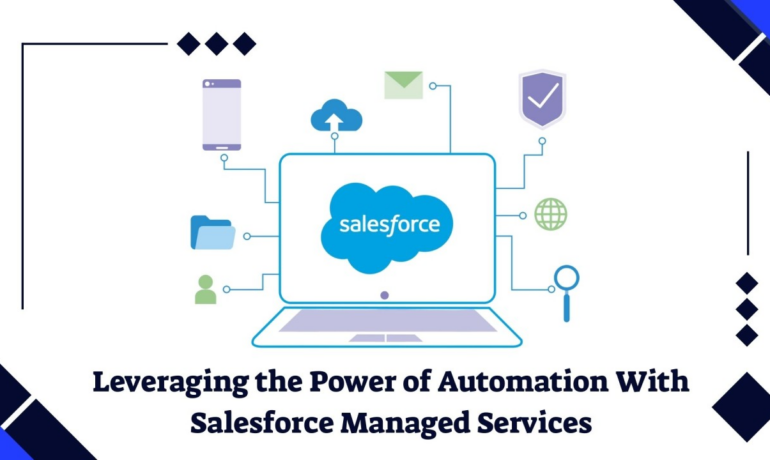
Salesforce is a powerful CRM platform, but simply implementing it doesn’t guarantee success. To maximize ROI, businesses need continuous optimization, expert guidance, and proactive maintenance—something an in-house team may struggle to provide alone. Discover the key signs your business needs a Salesforce support and maintenance partner. Many companies invest in Salesforce expecting high returns but end up facing: These challenges turn Salesforce into a cost center rather than a revenue-driving platform. If you’re noticing these issues, it’s time to consider a Salesforce support and maintenance partner. This insight explores the critical warning signs and how a managed services provider can help. What Is a Salesforce Support & Maintenance Partner? A Salesforce support and maintenance partner is a specialized provider that manages, optimizes, and secures your Salesforce org. They provide you: ✔ Proactive Monitoring – 24/7 performance checks to prevent downtime, security breaches, and data decay.✔ Expert Guidance – Certified professionals resolve feature stagnation (unused automation/AI tools) and boost user adoption.✔ Strategic Roadmaps – Align Salesforce with business goals for long-term success.✔ Elimination of Technical Debt – Reduce technology noise slowing down your org. Why Are They Crucial? ✅ Cost Efficiency – Avoid hiring full-time specialists.✅ Risk Mitigation – Ensure compliance, security, and data integrity.✅ ROI Maximization – Unlock advanced features and improve team efficiency. A trusted partner like Tectonic identifies warning signs early, preventing short- and long-term inefficiencies. 9 Key Signs You Need a Salesforce Support & Maintenance Partner 1. Declining User Adoption The Problem: Employees avoid Salesforce due to poor training, complex workflows, or inefficient processes.Why It Matters: Low adoption wastes your CRM investment. (Only 36% of agents upsell due to lack of training—Salesforce State of Service Report.)The Solution: 2. Security & Compliance Risks The Problem: Unclear GDPR/HIPAA compliance, outdated security settings, or unauthorized access attempts.Why It Matters: Data breaches lead to fines, legal risks, and lost trust. (Non-compliance costs $14.8M on average—Globalscape.)The Solution: 3. Rising Ticket Backlogs The Problem: IT teams are overwhelmed with unresolved requests, slowing operations.Why It Matters: Delays hurt sales cycles, employee morale, and customer satisfaction.The Solution: 4. Underutilized Salesforce Features The Problem: Only basic functions (leads/contacts) are used—AI, automation, and analytics are ignored.Why It Matters: Manual processes slow growth. (Only 49% of service orgs use AI—Salesforce.)The Solution: 5. Poor Data Quality & Duplicates The Problem: Duplicate leads, missing fields, and inaccurate reports lead to bad decisions.Why It Matters: Poor data costs .9M annually (Gartner).The Solution: 6. Increasing Downtime The Problem: Frequent crashes, slow reports, or integration failures.Why It Matters: Downtime = lost sales & productivity. (Meta lost $100M in 2 hours in 2024.)The Solution: 7. Lack of Strategic Roadmap The Problem: No clear upgrade plan, leading to disorganized workflows.Why It Matters: 30-70% of CRM projects fail due to poor planning.The Solution: 8. Unstable Customizations The Problem: Apex triggers, Flows, or Lightning components break after updates.Why It Matters: Patchwork fixes increase technical debt & admin workload.The Solution: 9. Slow Salesforce Performance The Problem: Reports load slowly, or users face “Service Unavailable” errors.Why It Matters: A 100ms delay can hurt conversions by 7% (Akamai).The Solution: Conclusion If you’re experiencing any of these issues, your Salesforce org needs expert care. A managed services partner like Tectonic helps:✔ Reduce downtime✔ Improve performance✔ Boost user adoption✔ Enhance security & compliance With 24/7 proactive support, strategic roadmaps, and advanced feature utilization, Tectonic ensures your Salesforce investment drives revenue—not costs. Need help optimizing Salesforce? Contact Tectonic today for a free assessment. Like1 Related Posts Who is Salesforce? Who is Salesforce? Here is their story in their own words. From our inception, we’ve proudly embraced the identity of Read more Salesforce Marketing Cloud Transactional Emails Salesforce Marketing Cloud Transactional Emails are immediate, automated, non-promotional messages crucial to business operations and customer satisfaction, such as order Read more Salesforce Unites Einstein Analytics with Financial CRM Salesforce has unveiled a comprehensive analytics solution tailored for wealth managers, home office professionals, and retail bankers, merging its Financial Read more AI-Driven Propensity Scores AI plays a crucial role in propensity score estimation as it can discern underlying patterns between treatments and confounding variables Read more

Read More
Salesforce Essentials and Salesforce Professional

Benefits of Salesforce Essentials for Small Businesses

Salesforce Essentials: A Game-Changer for Small Businesses Salesforce is a leading force in the Customer Relationship Management (CRM) industry, offering scalable solutions tailored to businesses of all sizes. While global enterprises like Amazon, Accenture, Adidas, and American Express leverage its capabilities, Salesforce also caters to small businesses with Salesforce Essentials. Launched in 2017, this cloud-based CRM simplifies customer relationship management for small teams without the complexity and cost of enterprise-level solutions. What Is Salesforce Essentials? Salesforce Essentials is a streamlined CRM designed for small businesses with fewer than 10 users. It provides core features such as lead management, sales tracking, customer support, and business analytics. With an intuitive interface and cost-effective pricing, Essentials enables small businesses to leverage Salesforce’s powerful CRM tools without being overwhelmed by extensive configurations. With a cloud-first approach, Salesforce Essentials centralizes customer data on a single platform, enhancing efficiency, boosting productivity, and improving customer interactions. Who Should Use Salesforce Essentials? Salesforce Essentials is ideal for small businesses seeking a straightforward, affordable CRM to manage customer relationships, track sales, and provide support—without the complexities of traditional CRM systems. If your business currently relies on spreadsheets or disparate tools to manage customer data, Essentials offers a more organized and integrated solution. Designed for teams of up to 10 users, it is an excellent starting point for small businesses looking to scale their CRM capabilities as they grow. Key Features of Salesforce Essentials 1. Comprehensive CRM Capabilities Salesforce Essentials consolidates sales tracking, customer inquiries, and support into a single interface. This holistic approach ensures small businesses can manage customer data efficiently as they expand. 2. AI-Driven Automation Essentials includes Einstein Activity Capture, which automatically records emails, meetings, and calendar events. This eliminates manual data entry and allows teams to focus on strategic tasks. AI-driven insights further enhance customer relationship management and sales forecasting. 3. User-Friendly Interface The platform features an intuitive dashboard that provides real-time updates, task lists, and customizable views. The drag-and-drop interface simplifies navigation, reducing the learning curve for small business teams. 4. Personalized Setup Salesforce Essentials offers guided setup tailored to business needs, whether managing contacts, streamlining sales cycles, or improving customer support. 5. Third-Party Integrations While not all Salesforce AppExchange apps are compatible, Essentials supports key third-party integrations, enabling small businesses to sync data across multiple platforms seamlessly. Benefits of Salesforce Essentials for Small Businesses 1. Data Synchronization Salesforce Essentials allows businesses to import and sync data from spreadsheets, emails, and other sources. Einstein Activity Capture automates data collection, ensuring accurate and up-to-date records. 2. Affordability Priced at per user per month, Salesforce Essentials is a cost-effective CRM solution with essential features typically found in more expensive systems. 3. Scalability Though initially designed for small teams, Essentials facilitates a smooth transition to more advanced Salesforce solutions as business needs evolve. 4. Mobile Accessibility With a mobile app, Salesforce Essentials enables small businesses to manage customer relationships anytime, anywhere. 5. Training and Support Salesforce offers extensive learning resources through Trailhead, in-app tutorials, and an installation assistant, helping small businesses maximize their CRM investment. Pricing and Getting Started Salesforce Essentials starts at $25 per user per month, making it an accessible upgrade from spreadsheets or less sophisticated CRM tools. For businesses requiring advanced features, Salesforce provides higher-tier plans such as Sales Professional and Service Professional, both starting at $75 per user per month. To get started, businesses can explore a pre-built demo with dummy data before importing their own customer information. Integration with Google or Outlook ensures seamless email and calendar synchronization. With mobile access and a scalable framework, Salesforce Essentials is a strategic investment for small businesses aiming for growth. Conclusion Salesforce Essentials is a powerful yet affordable CRM tailored for small businesses. It offers an intuitive interface, automation tools, and seamless scalability to support growing teams. By adopting Salesforce Essentials, small businesses can enhance efficiency, strengthen customer relationships, and position themselves for long-term success. Like1 Related Posts Who is Salesforce? Who is Salesforce? Here is their story in their own words. From our inception, we’ve proudly embraced the identity of Read more Salesforce Marketing Cloud Transactional Emails Salesforce Marketing Cloud Transactional Emails are immediate, automated, non-promotional messages crucial to business operations and customer satisfaction, such as order Read more Salesforce Unites Einstein Analytics with Financial CRM Salesforce has unveiled a comprehensive analytics solution tailored for wealth managers, home office professionals, and retail bankers, merging its Financial Read more AI-Driven Propensity Scores AI plays a crucial role in propensity score estimation as it can discern underlying patterns between treatments and confounding variables Read more

Read More

Agentforce Aids Distribution

Good360’s manual processes slowed their ability to distribute essential goods to communities in crisis. Agentforce will speed up distribution and automate donation matching for greater impact. About Good360 Good360 is a nonprofit organization on a mission to close the need gap. They work with corporate donors and nonprofit partners to put essential items like clothing and household items to great use. The Challenge for Good360 Manual processes hinder Good360’s efforts to get product donations to the people who need them. Good360 has been bridging the gap between surplus and demand since 1983, when it was founded to help distribute million worth of donated office equipment to nonprofits. What started as a single act of generosity has grown into a nationwide operation that’s distributed more than $18 billion in essential products, helped more than 100 million people, and kept all those excess goods out of landfills in the process. With millions of people in the U.S. living in poverty and natural disasters increasing in frequency and intensity, demand for their services will only continue to grow. From distributing emergency supplies to communities devastated by Hurricane Helene in Georgia to bringing comfort to NICU families in Florida, Good360’s impact is widely varied and deeply felt. Their challenge isn’t typically a lack of donations, rather, it’s ensuring that donations reach the right people at the right time. When a corporation notifies Good360 that a donation is ready, the matching team must manually search their network of tens of thousands of nonprofit partners to assess which ones have an urgent need for that type of donation. Then, they have to calculate possible shipping distances, contact the nonprofit to check whether the donation is still essential, and verify the shipping destination. Good360’s work plays a significant role in disaster recovery where every second counts. Even though this work is urgent, only two employees are dedicated to coordinating disaster-related donation matching. “The people who join Good360 are motivated to make a difference, they’re laser-focused on furthering our mission” said Stephane Moulec, Good360’s Chief Technology Officer. “Operations are part of what we do, but anything that streamlines admin so our employees can spend more time on building relationships with nonprofit partners and affected communities is a huge win.” With thousands of truckloads of goods coming in every year, this laborious matching process constrained the number of donations they were able to accept and distribute. “Globally, a significant amount of goods that could be matched to disaster survivors end up going to the landfill,” said Moulec. “Good360 is here to change that.” Good360 is determined to maximize every donation while reducing their carbon footprint and keeping operational costs low. They knew that with the right solution, they could increase the number of donations they’re able to accept, streamline distribution, and ensure critical supplies reach people faster. How Salesforce Helps Good360 Agentforce-powered resource matching is expected to triple Good360’s disaster recovery impact. Good360 is taking their mission to the next level with Agentforce — the agentic layer of the Salesforce Platform. To get goods to disaster-affected communities faster, they’re building a resource-matching agent that automates the donation routing process. Agentforce prioritizes communities that could use the donation most while recommending the nearest location, to reduce fuel consumption. Powered by Data Cloud, which harmonizes data from Nonprofit Cloud and third-party systems like NetSuite, Agentforce will instantly analyze donor, partner nonprofit, community, and logistics data to generate a curated list of top matches for each donation. Nonprofit Cloud unifies data for incoming donations, nonprofit profiles, and fundraising, while the prebuilt connection with NetSuite streamlines inventory, procurement, and business transactions — which will give Agentforce access to critical operational and financial data. Plus, Agentforce’s deep integration with Nonprofit Cloud ensures every donation is properly cataloged and placed where it makes the most sense, considering everything from travel distance and storage to cause alignment. “It was so fast and easy to ground our agents in the right data and test as we went,” said Lashowna Dukes, Good360’s Senior Salesforce Administrator. “We were confident in the logic of the outputs.” For example, if a sportswear company donates 15,000 pairs of unworn children’s shoes to a post-hurricane recovery effort, Agentforce will compile a list of nearby nonprofit partners that supply clothing to children. Instead of manually sorting through their network of tens of thousands of partner nonprofits, the matching team can immediately start outreach based on Agentforce’s recommendations. Once a nonprofit is selected, Agentforce will automatically update Nonprofit Cloud records, schedule shipments with third-party transportation vendors, and provide real-time email updates through Nonprofit Cloud to both the donor and recipient nonprofit. Its integration with Salesforce Maps allows Good360 to visualize the locations of donated products and partner nonprofits, making it easier to optimize routes and reduce transportation emissions. “With resource-matching agents, we’ll transform how we allocate and ship donations, reduce waste, cut our carbon footprint, and deliver disaster relief,” said Moulec. “We estimate this will save our employees over 1,000 hours annually, allowing them to focus on critical frontline response.” With Agentforce, Good360 will be able to connect disaster-affected communities with essential supplies up to three times faster with a goal of reducing its carbon footprint by 20%. It was so fast and easy to ground our agents in the right data and test as we went. We knew we could trust the outputs. Lashowna Dukes Senior Salesforce Administrator, Good360 AI agents will give Good360 the power to scale their impact without stretching their staff. Optimized resource matching is just the start. Good360 sees big potential for Agentforce to support fundraising by handling research, data collection, and impact analysis — freeing up staff to focus on building relationships with donors and nonprofit partners. With hundreds of corporate donors and tens of thousands of nonprofit partners, Agentforce can help Good360 tap into their full network more consistently — something that isn’t possible with manual processes. For example, it can turn unstructured inputs like chats and emails with donors and nonprofit partners into insights for better

Read More

AI Agents Explained

AI agents represent a transformative technological advancement that is reshaping business dynamics, going beyond simple automation to address more complex challenges. This insight provides an in-depth exploration of AI agents, covering their functions, operations, and types, such as reflex, goal-based, utility-based, and learning agents. The commercial advantages of AI agents, including cost-effectiveness, scalability, and efficiency, are highlighted, with examples and applications across various industries to demonstrate their impact on business operations and customer experiences. What Are AI Agents? AI agents are sophisticated computer programs designed to autonomously make decisions based on inputs, enabling them to execute tasks independently. These agents are particularly adept at managing operations in uncertain environments, positioning them as critical steps toward artificial general intelligence—where machines can perform any intellectual task comparable to humans. Modern AI agents offer flexible solutions that significantly enhance business efficiency and customer service. How AI Agents Operate AI agents function as more than just tools; they are dynamic participants redefining how organizations interact with both digital and physical environments. Their core functions include learning, reasoning, and planning, which empower them to make informed decisions and take actions in complex scenarios. For companies aiming to fully leverage these capabilities, AI agents are indispensable. Components of AI Agents AI agents consist of several key components that enable them to function effectively in their environments. These components are crucial for developing intelligent agents capable of operating independently across various contexts: Types of AI Agents Understanding the different types of AI agents is crucial for businesses to select the most appropriate agent for their specific needs: Benefits of AI Agents for Businesses Incorporating AI agents into business operations can deliver numerous benefits, significantly impacting the bottom line. AI agents are revolutionizing corporate operations by enhancing customer experiences and operational efficiency, helping businesses thrive and stay competitive in today’s economy. Key benefits include: Applications of AI Agents AI agents are versatile tools with applications across various sectors: Examples of AI Agents AI agents are revolutionizing various industries with specialized applications: Future Trends in AI Agents The evolution of AI agents continues to shape industries, with future trends expected to redefine their capabilities and applications: AI Agents Transforming Customer Experience (CX) AI agents are key drivers in transforming customer experience (CX), offering more personalized, efficient, and seamless interactions. The integration of natural language processing (NLP) in AI agents enhances automation and personalization in customer engagements. Chatbots and voice assistants provide quick, accurate responses, strengthening brand presence and customer loyalty. AI agents also gather and analyze customer data to offer tailored services, predict customer needs, and provide proactive support. Conclusion AI agents are powerful tools for businesses, offering numerous benefits and applications across industries. They enhance customer experiences, streamline operations, and enable intelligent decision-making. Organizations should stay informed about the different types, benefits, applications, and examples of AI agents to fully leverage their potential for growth and innovation. Tectonic, a leading AI development company, provides customized solutions to meet the unique needs of clients across various industries. Their expertise includes integrating AI-powered chatbots, implementing predictive analytics, and exploring generative AI for creative content generation. Businesses can partner with Tectonic to embark on their AI journey and unlock new opportunities for success. Like Related Posts Who is Salesforce? Who is Salesforce? Here is their story in their own words. From our inception, we’ve proudly embraced the identity of Read more Salesforce Unites Einstein Analytics with Financial CRM Salesforce has unveiled a comprehensive analytics solution tailored for wealth managers, home office professionals, and retail bankers, merging its Financial Read more AI-Driven Propensity Scores AI plays a crucial role in propensity score estimation as it can discern underlying patterns between treatments and confounding variables Read more Tectonic’s Successful Salesforce Track Record Salesforce Technology Services Integrator – Tectonic has successfully delivered Salesforce in a variety of industries including Public Sector, Hospitality, Manufacturing, Read more

Read More
Unlocking Efficiency with Salesforce Marketing Cloud Automation

Unlocking Efficiency with Salesforce Marketing Cloud Automation

Revolutionizing Marketing with Automation Salesforce Marketing Cloud automation is like having a personal assistant dedicated to your campaigns. It handles repetitive tasks, freeing you to focus on strategy and big-picture goals. Imagine designing a seamless customer journey without manually sending emails or determining the perfect timing—this is the power of advanced workflows in marketing. These tools streamline processes, enhance efficiency, and improve engagement. The Game-Changing Impact of Automation When I first started using Salesforce Marketing Cloud, it was a revelation. The automation tools allowed me to set up campaigns that practically ran themselves—like having an extra set of hands. For example, I created email sequences that responded to customer actions automatically. This meant engaging with customers at the right moments without lifting a finger. One standout experience was setting up a journey for free trial sign-ups. The system sent a welcome email, followed by usage-based tips. If a customer didn’t engage, an alternative path triggered a different message. This intelligent automation boosted engagement and conversions—marketing at its smartest. Transforming Marketing Operations: Doing More with Less Marketing Operations (Marketing Ops) is about maximizing impact with minimal effort. Advanced workflows reallocate resources effectively, shifting focus from task management to strategic growth. It’s like upgrading from a bicycle to a car—suddenly, you’re covering more ground, faster. Marketing Ops teams juggle campaign tracking, performance analysis, and strategy refinement. Automating these processes with Salesforce Marketing Cloud reduces mundane tasks, fostering innovation and continuous campaign optimization. For more insights on streamlining workflows, explore our guide on optimizing marketing automation. Beyond Emails: Personalization at Scale Automation isn’t just about sending emails—it’s about crafting personalized customer experiences. By intelligently segmenting your audience, you can ensure the right message reaches the right person at the right time, significantly increasing engagement. Of course, automation isn’t foolproof. Data accuracy is crucial. I once encountered a typo in a data field that misspelled a customer’s name—an embarrassing but valuable lesson in the importance of clean data. Always double-check your sources! Real-World Applications of Marketing Cloud Automation Automation enhances marketing efficiency across various scenarios: For more segmentation tips to improve email ROI, explore our in-depth guide. Getting Started: Small Steps, Big Impact If you’re wondering where to begin, the good news is that Salesforce Marketing Cloud scales with your needs. Start with a single campaign and gradually expand. As you become more comfortable, you’ll discover new ways to optimize automation. Leverage online resources—there are countless tutorials and guides available. And don’t hesitate to experiment—some of the best strategies emerge from trial and error. I remember my first attempt at automation. It wasn’t perfect, but the lessons I learned about timing and engagement refined future campaigns. It’s like learning to ride a bike—wobbly at first, but soon you’re cruising. Leveraging Analytics for Smarter Marketing Salesforce Marketing Cloud Engagement provides deep insights into customer engagement. Tracking these metrics enables data-driven decisions, optimizing experiences and increasing conversion rates. This is where the magic happens—understanding your audience to craft campaigns that truly resonate. And here’s a little secret: competition is fierce. Every company is competing for your customer’s attention. By optimizing Marketing Ops and leveraging advanced workflows, you gain a strategic edge. It’s like being the first to know about a secret sale. Conclusion: Embracing the Future of Marketing Automation Salesforce Marketing Cloud automation opens the door to endless possibilities. By implementing these workflows, marketing becomes more efficient, impactful, and personalized. Remember, you’re not just sending messages—you’re crafting experiences. That’s where true marketing magic lies. Ready to elevate your marketing game? Let’s talk. Like1 Related Posts Who is Salesforce? Who is Salesforce? Here is their story in their own words. From our inception, we’ve proudly embraced the identity of Read more Salesforce Marketing Cloud Transactional Emails Salesforce Marketing Cloud Transactional Emails are immediate, automated, non-promotional messages crucial to business operations and customer satisfaction, such as order Read more Salesforce Unites Einstein Analytics with Financial CRM Salesforce has unveiled a comprehensive analytics solution tailored for wealth managers, home office professionals, and retail bankers, merging its Financial Read more AI-Driven Propensity Scores AI plays a crucial role in propensity score estimation as it can discern underlying patterns between treatments and confounding variables Read more

Read More
Commerce Cloud and Agentic AI

Generative AI in Marketing

Generative AI in Marketing: Balancing Innovation and Risk Generative AI (gen AI) has become a disruptive force in the marketplace, particularly in marketing, where its ability to create content—from product descriptions to personalized ads—has reshaped strategies. According to Salesforce’s State of Marketing report, which surveyed 5,000 marketers worldwide, implementing AI is now their top priority. Some companies, like Vanguard and Unilever, have already seen measurable benefits, with Vanguard increasing LinkedIn ad conversions by 15% and Unilever cutting customer service response times by 90%. Yet, despite 96% of marketers planning to adopt gen AI within 18 months, only 32% have fully integrated it into their operations. This gap highlights the challenges of implementation—balancing efficiency with risks like inauthenticity or errors. For instance, Coca-Cola’s AI-generated holiday ad initially drew praise but later faced backlash for its perceived lack of emotional depth. The Strategic Dilemma: How, Not If, to Use Gen AI Many Chief Data and Analytics Officers (CDAOs) have yet to formalize gen AI strategies, leading to fragmented experimentation across teams. Based on discussions with over 20 industry leaders, successful adoption hinges on three key decisions: To answer these, companies must assess: Gen AI vs. Analytical AI: Choosing the Right Tool Analytical AI excels at predictions—forecasting customer behavior, pricing sensitivity, or ad performance. For example, Kia once used IBM Watson to identify brand-aligned influencers, a strategy still relevant today. Generative AI, on the other hand, creates new content—ads, product descriptions, or customer service responses. While analytical AI predicts what a customer might buy, gen AI crafts the persuasive message around it. The most effective strategies combine both: using analytical AI to identify the “next best offer” and gen AI to personalize the pitch. Custom vs. General Inputs: Striking the Balance Gen AI models can be trained on: For broad applications like customer service chatbots, general models (e.g., ChatGPT) work well. But for brand-specific needs—like ad copy or legal disclaimers—custom-trained models (e.g., BloombergGPT for finance or Jasper for marketing) reduce errors and intellectual property risks. Human Oversight: How Much Is Enough? The level of human review depends on risk tolerance: Air Canada learned this the hard way when its AI chatbot mistakenly promised a bereavement discount—a pledge a court later enforced. While human review slows output, it mitigates costly errors. A Framework for Implementation To navigate these trade-offs, marketers can use a quadrant-based approach: Input Type No Human Review Human Review Required General Data Fast, low cost, high risk Higher accuracy, slower output (e.g., review summaries) (e.g., social media posts) Custom Data Lower privacy risk, higher cost Highest accuracy, highest cost (e.g., in-store product locator) (e.g., SEC filings) The Path Forward Gen AI is not a one-size-fits-all solution. Marketers must weigh speed, cost, accuracy, and risk for each use case. While technology will evolve, today’s landscape demands careful strategy—blending gen AI’s creativity with analytical AI’s precision and human judgment’s reliability. The question is no longer whether to adopt gen AI, but how to harness its potential without falling prey to its pitfalls. Companies that strike this balance will lead the next wave of marketing innovation. Like1 Related Posts Who is Salesforce? Who is Salesforce? Here is their story in their own words. From our inception, we’ve proudly embraced the identity of Read more Salesforce Marketing Cloud Transactional Emails Salesforce Marketing Cloud Transactional Emails are immediate, automated, non-promotional messages crucial to business operations and customer satisfaction, such as order Read more Salesforce Unites Einstein Analytics with Financial CRM Salesforce has unveiled a comprehensive analytics solution tailored for wealth managers, home office professionals, and retail bankers, merging its Financial Read more AI-Driven Propensity Scores AI plays a crucial role in propensity score estimation as it can discern underlying patterns between treatments and confounding variables Read more

Read More
user q and a

B2B Company With B2C Users

My company sells to dealers (so our Accounts are our dealers), but the dealers have B2C end consumers that we would also like to sometimes capture as leads to market our product to and to forward on to our dealers as leads. These B2C consumers could be sent as leads to more than one dealer, and/or could buy from more than one dealer. Does anyone have a recommendation on which object to use for the B2C consumers?     I am currently leaning toward using Contacts. I would create one Account called B2C Account and have all the B2C consumers as Contacts under that Account. Then I would create a many-to-many relationship between these B2C Contacts and our regular Accounts using a junction object called something like B2CContacts-Accounts.    Some other options I’ve considered are Person Accounts, regular Accounts/Contacts (with dummy info in the Account fields), and keeping them as Leads. It seems like Person Accounts are more for when your company does mostly B2C?     I would love any advice or to hear from anyone who has handled a similar situation. Thank you!  We would suggest using Person Accounts.  It is a standard object.  You have to enable it and then create a Business Accounts record type for the Accounts object.  Person Accounts was made exactly for this scenario.  The good news is one you enable Person Accounts, you will we walked through the steps required to prepare your Org for it’s use. We would also look into creating a partner portal in conjunction with the person’s accounts and routing leads to the correct partner. I’ve set up Salesforce both ways and say that because Salesforce person accounts have improved, it’s the way to go moving forward, but it will require proper security settings, and report adjustments so your internal users will know how to search leads/accounts with that filter.  Once you get past that, it should be ok.  Like Related Posts Who is Salesforce? Who is Salesforce? Here is their story in their own words. From our inception, we’ve proudly embraced the identity of Read more Salesforce Marketing Cloud Transactional Emails Salesforce Marketing Cloud Transactional Emails are immediate, automated, non-promotional messages crucial to business operations and customer satisfaction, such as order Read more Salesforce Unites Einstein Analytics with Financial CRM Salesforce has unveiled a comprehensive analytics solution tailored for wealth managers, home office professionals, and retail bankers, merging its Financial Read more AI-Driven Propensity Scores AI plays a crucial role in propensity score estimation as it can discern underlying patterns between treatments and confounding variables Read more

Read More
The AI SDR Revolution

The AI SDR Revolution

The AI SDR Revolution: How AI is Transforming Sales Development The Problem: Sales Teams Are Drowning in Leads Your marketing team is crushing it—inbound leads are pouring in. But your Sales Development Representatives (SDRs) are overwhelmed, spending over two-thirds of their time on non-selling tasks like data entry, follow-ups, and lead qualification. The result? Missed opportunities, slower response times, and fewer deals closed. Enter the AI SDR—a game-changing solution that automates top-of-funnel sales tasks, letting human reps focus on what they do best: closing deals. What is an AI SDR? An AI-powered Sales Development Representative (SDR) automates repetitive sales tasks like:✅ Lead qualification (identifying high-intent prospects)✅ Automated outreach (personalized emails, follow-ups)✅ Meeting scheduling (booking demos directly into reps’ calendars)✅ CRM updates (logging interactions automatically) Unlike human SDRs, AI SDRs work 24/7, ensuring no lead slips through the cracks. How AI SDRs Work Human SDRs juggle: AI SDRs handle the same tasks—but autonomously—using:🔹 Machine Learning (ML) to analyze lead intent🔹 Natural Language Processing (NLP) to engage in human-like conversations🔹 Automation to execute tasks end-to-end Example: Agentforce AI SDRs Powered by Salesforce’s Customer 360, Data Cloud, and Einstein AI, these AI agents: AI SDR vs. Human SDR: Who Wins? Capability AI SDR Human SDR Response Time Instant Hours/Days Availability 24/7 Business hours Personalization Data-driven Relationship-driven Scalability Thousands of leads at once Limited by bandwidth Emotional IQ Rule-based High empathy The Best Approach? AI + Human Collaboration Salesforce data shows reps using AI see higher win rates and more closed deals. 5 Key Benefits of AI SDRs AI SDRs in Action: Real-World Results Case Study: VTT Technical Research Centre (Finland) The Future of AI SDRs 🚀 Greater Autonomy – Handling prospecting & research🎯 Hyper-Personalization – Leveraging Data Cloud for tailored messaging📞 Multimodal Engagement – Voice, video, and chat interactions 84% of sales leaders believe AI will dominate lead gen in the next 2 years. How to Implement AI SDRs Successfully Final Verdict: AI SDRs Are a Sales Superpower AI won’t replace SDRs—it will make them unstoppable. By automating grunt work, AI SDRs help teams:✔ Respond faster✔ Qualify smarter✔ Close more deals The question isn’t if you should adopt AI SDRs—it’s how soon can you start? Ready to supercharge your sales team? Explore AI SDR solutions today. Like Related Posts Who is Salesforce? Who is Salesforce? Here is their story in their own words. From our inception, we’ve proudly embraced the identity of Read more Salesforce Marketing Cloud Transactional Emails Salesforce Marketing Cloud Transactional Emails are immediate, automated, non-promotional messages crucial to business operations and customer satisfaction, such as order Read more Salesforce Unites Einstein Analytics with Financial CRM Salesforce has unveiled a comprehensive analytics solution tailored for wealth managers, home office professionals, and retail bankers, merging its Financial Read more AI-Driven Propensity Scores AI plays a crucial role in propensity score estimation as it can discern underlying patterns between treatments and confounding variables Read more

Read More
gettectonic.com