
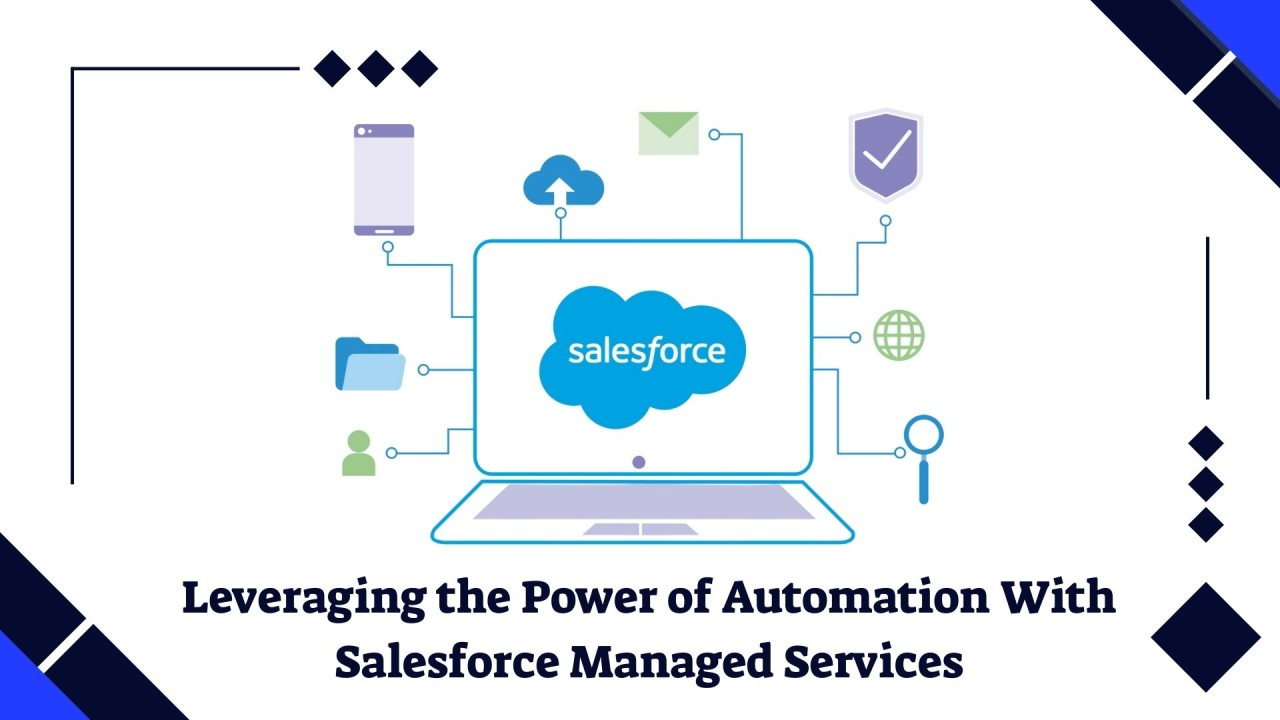
Salesforce is a powerful CRM platform, but simply implementing it doesn’t guarantee success. To maximize ROI, businesses need continuous optimization, expert guidance, and proactive maintenance—something an in-house team may struggle to provide alone. Discover the key signs your business needs a Salesforce support and maintenance partner.
Many companies invest in Salesforce expecting high returns but end up facing:
- Low user adoption
- Security risks
- Underutilized features
- Operational inefficiencies
These challenges turn Salesforce into a cost center rather than a revenue-driving platform.
If you’re noticing these issues, it’s time to consider a Salesforce support and maintenance partner.
This insight explores the critical warning signs and how a managed services provider can help.
What Is a Salesforce Support & Maintenance Partner?
A Salesforce support and maintenance partner is a specialized provider that manages, optimizes, and secures your Salesforce org. They provide you:
✔ Proactive Monitoring – 24/7 performance checks to prevent downtime, security breaches, and data decay.
✔ Expert Guidance – Certified professionals resolve feature stagnation (unused automation/AI tools) and boost user adoption.
✔ Strategic Roadmaps – Align Salesforce with business goals for long-term success.
✔ Elimination of Technical Debt – Reduce technology noise slowing down your org.
Why Are They Crucial?
✅ Cost Efficiency – Avoid hiring full-time specialists.
✅ Risk Mitigation – Ensure compliance, security, and data integrity.
✅ ROI Maximization – Unlock advanced features and improve team efficiency.
A trusted partner like Tectonic identifies warning signs early, preventing short- and long-term inefficiencies.
9 Key Signs You Need a Salesforce Support & Maintenance Partner
1. Declining User Adoption
The Problem: Employees avoid Salesforce due to poor training, complex workflows, or inefficient processes.
Why It Matters: Low adoption wastes your CRM investment. (Only 36% of agents upsell due to lack of training—Salesforce State of Service Report.)
The Solution:
- Role-based training
- UX improvements (simplified dashboards)
- Change management strategies
2. Security & Compliance Risks
The Problem: Unclear GDPR/HIPAA compliance, outdated security settings, or unauthorized access attempts.
Why It Matters: Data breaches lead to fines, legal risks, and lost trust. (Non-compliance costs $14.8M on average—Globalscape.)
The Solution:
- Security audits & encryption
- Real-time threat detection (Salesforce Shield)
- Compliance automation
3. Rising Ticket Backlogs
The Problem: IT teams are overwhelmed with unresolved requests, slowing operations.
Why It Matters: Delays hurt sales cycles, employee morale, and customer satisfaction.
The Solution:
- Dedicated support resources
- SLA-backed response times
- Proactive issue prevention
- Improved user satisfaction
4. Underutilized Salesforce Features
The Problem: Only basic functions (leads/contacts) are used—AI, automation, and analytics are ignored.
Why It Matters: Manual processes slow growth. (Only 49% of service orgs use AI—Salesforce.)
The Solution:
- Einstein AI integration
- Flow Builder automation
- Advanced analytics (Tableau CRM, Marketing Intelligence)
5. Poor Data Quality & Duplicates
The Problem: Duplicate leads, missing fields, and inaccurate reports lead to bad decisions.
Why It Matters: Poor data costs .9M annually (Gartner).
The Solution:
- Data validation rules
- Automated cleansing tools (Data.com)
- Regular health checks
6. Increasing Downtime
The Problem: Frequent crashes, slow reports, or integration failures.
Why It Matters: Downtime = lost sales & productivity. (Meta lost $100M in 2 hours in 2024.)
The Solution:
- 24/7 performance monitoring
- API & middleware optimization
- Disaster recovery plans
7. Lack of Strategic Roadmap
The Problem: No clear upgrade plan, leading to disorganized workflows.
Why It Matters: 30-70% of CRM projects fail due to poor planning.
The Solution:
- Org health assessments (Salesforce Optimizer)
- Release management & sandbox testing
- Data cleanup strategies
8. Unstable Customizations
The Problem: Apex triggers, Flows, or Lightning components break after updates.
Why It Matters: Patchwork fixes increase technical debt & admin workload.
The Solution:
- Pre-release sandbox testing
- Future-proof coding best practices
- Deprecation monitoring
9. Slow Salesforce Performance
The Problem: Reports load slowly, or users face “Service Unavailable” errors.
Why It Matters: A 100ms delay can hurt conversions by 7% (Akamai).
The Solution:
- Query optimization (SOQL tuning)
- Asynchronous processing (Batch Apex)
- Caching strategies
Conclusion
If you’re experiencing any of these issues, your Salesforce org needs expert care. A managed services partner like Tectonic helps:
✔ Reduce downtime
✔ Improve performance
✔ Boost user adoption
✔ Enhance security & compliance
With 24/7 proactive support, strategic roadmaps, and advanced feature utilization, Tectonic ensures your Salesforce investment drives revenue—not costs.
Need help optimizing Salesforce? Contact Tectonic today for a free assessment.
Who is Salesforce? Here is their story in their own words. From our inception, we've proudly embraced the identity of Read more
Salesforce Marketing Cloud Transactional Emails are immediate, automated, non-promotional messages crucial to business operations and customer satisfaction, such as order Read more

Salesforce has unveiled a comprehensive analytics solution tailored for wealth managers, home office professionals, and retail bankers, merging its Financial Read more
AI plays a crucial role in propensity score estimation as it can discern underlying patterns between treatments and confounding variables Read more


