

PHAs Archives - gettectonic.com - Page 2
Government-Citizen Communication

Salesforce’s Vision for Smarter, More Efficient Government Services

Agentic AI: Salesforce’s Vision for Smarter, More Efficient Government Services Transforming Public Sector Service Delivery with AI At the recent Agentforce World Tour in London, Kishan Chetan, Salesforce’s Global Service Cloud Lead, outlined how agentic AI is revolutionizing government operations—streamlining citizen services, reducing bureaucratic friction, and improving efficiency. The Challenge: Meeting Rising Citizen Expectations Citizens today expect fast, seamless, and personalized services—similar to what they experience with private sector giants like Amazon or Uber. Yet many government agencies struggle with:🔹 Complex, manual processes (e.g., DMV queues, permit approvals)🔹 Disjointed data silos (policy docs, case files, eligibility criteria)🔹 Overburdened staff (high administrative workloads leading to burnout) The Solution: Agentic AI + Unified Data Salesforce’s approach combines intelligent automation with harmonized data to: ✔ Automate Routine Tasks – License renewals, appointment scheduling, FAQs✔ Retrieve Policy & Eligibility Info Instantly – No more digging through PDFs✔ Proactively Notify Citizens – Alerts for deadlines, document submissions Real-World Impact: The Data Foundation: Zero-Copy Integration Why Traditional Systems Fail Most agencies store data across:📁 Legacy databases📝 Unstructured documents (PDFs, policies, case notes)🌐 External sources (press releases, regulatory updates) Problem: AI can’t work effectively with fragmented data. Salesforce Data Cloud: The Key to Smarter AI Salesforce’s “zero-copy” integration allows agencies to:🔹 Access data in real time without costly migrations🔹 Unify structured & unstructured sources (e.g., policy docs + CRM records)🔹 Power AI with context-aware insights “Government is knowledge-centric—you need to understand policies, eligibility, and case history. AI can’t do that without clean, connected data.”— Kishan Chetan, Salesforce Agentic AI in Action: Use Cases 1. Social Care Management 2. Grant & Permit Approvals 3. Citizen Self-Service 4. Policy Compliance The Human-AI Partnership Contrary to fears of job displacement, Chetan emphasized that agentic AI augments—not replaces—civil servants:✅ Frees up time for complex decision-making✅ Reduces burnout by automating repetitive tasks✅ Enhances service quality with 24/7 availability Example: Global Alignment with Digital Government Initiatives Salesforce’s strategy aligns with:🇬🇧 UK’s Blueprint for Digital Government – AI as a core enabler🇪🇺 EU’s Digital Decade – 100% online public services by 2030🇺🇸 US AI Executive Order – Modernizing federal workflows The Road Ahead 2025 Priorities for Public Sector AI:🚀 Expanding pre-built solutions (e.g., welfare eligibility engines)🤖 Multi-agent collaboration – AI systems coordinating across departments🔐 Ethical AI governance – Bias detection, transparency tools Bottom Line: Agentic AI is not just a tech upgrade—it’s a public trust accelerator. By delivering faster, fairer, and more transparent services, governments can rebuild citizen confidence in the digital age. 🔗 Explore Salesforce’s Public Sector AI Solutions🔗 Read Forrester’s Take on GovTech Trends “The future of government isn’t just digital—it’s intelligently autonomous.” Like Related Posts Who is Salesforce? Who is Salesforce? Here is their story in their own words. From our inception, we’ve proudly embraced the identity of Read more Salesforce Marketing Cloud Transactional Emails Salesforce Marketing Cloud Transactional Emails are immediate, automated, non-promotional messages crucial to business operations and customer satisfaction, such as order Read more Salesforce Unites Einstein Analytics with Financial CRM Salesforce has unveiled a comprehensive analytics solution tailored for wealth managers, home office professionals, and retail bankers, merging its Financial Read more AI-Driven Propensity Scores AI plays a crucial role in propensity score estimation as it can discern underlying patterns between treatments and confounding variables Read more

Read More

Why 89% of AI Pilots Fail – And How to Beat the Odds

The AI Pilot Paradox: High Hopes, Low Deployment Your leadership team gets excited about AI. They greenlight an agentic AI pilot. Employees test it enthusiastically. Then… nothing happens. The project collects dust while the organization moves on to the next shiny tech initiative. This scenario plays out in 89% of companies, according to our analysis of industry data. While AI pilot projects surged 76% year-over-year in 2024 (KPMG), only 11% ever reach full deployment. The 7 Deadly Sins of AI Pilot Failure 1. Solution Looking for a Problem (60% of failures) The Trap: Starting with technology rather than business needsThe Fix: 2. The Ivory Tower Syndrome (45% of failures) The Trap: IT-led projects without business unit buy-inThe Fix: 3. Perfection Paralysis (38% of failures) The Trap: Waiting for flawless performance before launchThe Fix: 4. Data Debt Disaster (52% of failures) The Trap: Unstructured, outdated, or siloed dataThe Fix: 5. Zero-to-Hero Expectations (41% of failures) The Trap: Expecting full competency on Day 1The Fix: 6. Launch-and-Leave Mentality (63% of failures) The Trap: No ongoing optimizationThe Fix: 7. Build vs. Buy Blunders (72% of failures) The Trap: Underestimating custom AI development costsThe Fix: The Agentforce Advantage: 3 Deployment Success Stories 1. Clinical Trial AcceleratorChallenge: 6-month participant screening backlogSolution: AI agent pre-qualifies candidates using EHR dataResult: 58% faster trial enrollment 2. Luxury Retail ConciergeChallenge: High-touch customers demanded 24/7 styling adviceSolution:* Agentforce-powered shopping assistant with: 3. Global Support TransformationChallenge: 45% first-call resolution rateSolution:* Tiered AI agent deployment: Your AI Deployment Checklist ✅ [ ] Identify 3-5 measurable pain points✅ [ ] Form cross-functional pilot team✅ [ ] Conduct data health assessment✅ [ ] Select phased rollout approach✅ [ ] Define success metrics (KPIs)✅ [ ] Plan ongoing optimization process Pro Tip: Companies using this framework see 3.2x higher deployment success rates compared to ad-hoc approaches. Beyond the Pilot: The AI Maturity Journey Where is your organization on this path? The most successful enterprises treat AI adoption as a continuous transformation – not a one-time project. Like Related Posts Who is Salesforce? Who is Salesforce? Here is their story in their own words. From our inception, we’ve proudly embraced the identity of Read more Salesforce Marketing Cloud Transactional Emails Salesforce Marketing Cloud Transactional Emails are immediate, automated, non-promotional messages crucial to business operations and customer satisfaction, such as order Read more Salesforce Unites Einstein Analytics with Financial CRM Salesforce has unveiled a comprehensive analytics solution tailored for wealth managers, home office professionals, and retail bankers, merging its Financial Read more AI-Driven Propensity Scores AI plays a crucial role in propensity score estimation as it can discern underlying patterns between treatments and confounding variables Read more

Read More
Outcome Management

Outcome Management

Outcome Management: The Future of Impact Measurement A Paradigm Shift in Organizational Performance Tracking Outcome Management represents a fundamental transformation in how organizations define, measure, and achieve their strategic objectives. This revolutionary approach moves beyond traditional output metrics to create a unified system for tracking real-world impact across all programs and initiatives. Why Outcome Management Matters Now Core Capabilities of Outcome Management 1. Strategic Impact Architecture Example Framework: text Copy Download [Impact Strategy] → [Outcome Group] → [Outcome] → [Indicator] → [Result] 2. Holistic Performance Visualization 3. Integrated Measurement System Key Components Element Function Business Value Impact Strategies Group related outcomes Aligns with strategic plans/logic models Outcome Activities Link efforts to outcomes Shows which programs drive impact Indicator Definitions Standardized metrics Enables cross-program comparison Performance Periods Time-bound tracking Measures progress toward goals Implementation Roadmap Proven Impact Organizations using Outcome Management report: Getting Started For Implementation Teams: For Executives: “What gets measured gets managed—but only if measurement connects to real change. Outcome Management finally bridges that gap.”— Harvard Business Review, 2024 Like Related Posts Who is Salesforce? Who is Salesforce? Here is their story in their own words. From our inception, we’ve proudly embraced the identity of Read more Salesforce Marketing Cloud Transactional Emails Salesforce Marketing Cloud Transactional Emails are immediate, automated, non-promotional messages crucial to business operations and customer satisfaction, such as order Read more Salesforce Unites Einstein Analytics with Financial CRM Salesforce has unveiled a comprehensive analytics solution tailored for wealth managers, home office professionals, and retail bankers, merging its Financial Read more AI-Driven Propensity Scores AI plays a crucial role in propensity score estimation as it can discern underlying patterns between treatments and confounding variables Read more

Read More
Salesforce's Enterprise General Intelligence

Salesforce’s Enterprise General Intelligence

Salesforce is carving a distinct path in the AI landscape, diverging from the industry’s pursuit of Artificial General Intelligence (AGI). Instead, the company is tackling a pressing, practical challenge: ensuring AI is reliable for enterprise use. Salesforce’s Enterprise General Intelligence (EGI) framework prioritizes consistency, safety, and trustworthiness over speculative potential, aiming to deliver dependable AI for real-world business applications. The EGI FrameworkLarge language models (LLMs) excel at tasks like drafting emails or analyzing datasets but often exhibit “jagged intelligence”—impressive in some areas yet prone to basic errors or fabrications, known as hallucinations. These inconsistencies pose significant risks in enterprise settings, where errors can lead to compliance issues, financial losses, or eroded customer trust. Salesforce’s EGI framework addresses this by focusing on infrastructure that ensures AI reliability today, rather than chasing futuristic goals. From Inconsistency to DependabilitySalesforce likens LLMs to “an intern who writes flawless code but forgets to save the file.” To address this uneven performance, the company is enhancing its AI agents with layered reinforcement to boost consistency. Central to this effort is Agentforce, Salesforce’s agentic system, supported by the Atlas Reasoning Engine, which integrates internal and external data for more accurate reasoning and retrieval. Together, these form the core of EGI, aiming to make digital labor predictable and trustworthy. Rigorous Testing in Real-World ScenariosRather than relying solely on traditional benchmarks, Salesforce introduced CRMArena, a simulated environment that tests AI agents on practical CRM tasks like service support and analytics. Initial results show success rates below 65%, even with guided prompting, underscoring the challenges. However, this is precisely Salesforce’s point: stress-testing AI in realistic conditions exposes weaknesses before deployment, ensuring reliability in customer-facing roles. A Platform for Enterprise TrustSalesforce emphasizes that enterprises need more than powerful models—they require systems guaranteeing predictability and accountability at scale. EGI is positioned as a practical, present-focused solution, sidestepping AGI hype to deliver AI that businesses can trust today. While its long-term impact remains to be seen, Salesforce’s approach signals a pragmatic step toward reliable, enterprise-ready AI. Like Related Posts Who is Salesforce? Who is Salesforce? Here is their story in their own words. From our inception, we’ve proudly embraced the identity of Read more Salesforce Marketing Cloud Transactional Emails Salesforce Marketing Cloud Transactional Emails are immediate, automated, non-promotional messages crucial to business operations and customer satisfaction, such as order Read more Salesforce Unites Einstein Analytics with Financial CRM Salesforce has unveiled a comprehensive analytics solution tailored for wealth managers, home office professionals, and retail bankers, merging its Financial Read more AI-Driven Propensity Scores AI plays a crucial role in propensity score estimation as it can discern underlying patterns between treatments and confounding variables Read more

Read More
AI Interface Paradox

AI Interface Paradox

The AI Interface Paradox: Why the Search Box is Failing Generative AI The Google Legacy: How Search Conditioned Our Digital Behavior Google’s revolutionary insight wasn’t algorithmic—it was psychological. By stripping away all complexity from search interfaces (remember AltaVista’s cluttered filters?), they created what became the most ingrained digital behavior pattern of the internet age: This elegant simplicity made Google the gateway to the internet. But it also created an unshakable mental model that now hampers AI adoption. The Cognitive Dissonance of AI Interfaces Today’s AI tools present users with a cruel irony: The exact same empty text box that promised effortless answers now demands programming-like precision. The Fundamental Mismatch Google Search Generative AI Works with fragments (“weather paris”) Requires structured prompts (“Act as a meteorologist…”) Delivers finished results Needs iterative refinement Single interaction Requires multi-turn conversations Predictable outcomes Wildly variable quality This explains why: Why the Search Metaphor Fails AI 1. The Blank Canvas Problem The same empty box is asked to handle: Without interface cues, users experience choice paralysis—like being handed a single blank sheet of paper when you need both a spreadsheet and a paintbrush. 2. The Conversation Illusion Elizabeth Laraki’s Madrid itinerary struggle reveals the flaw: human collaboration isn’t linear. We: Current chat UIs force all interaction through a sequential text tunnel, losing the richness of real collaboration. 3. The Hidden Grammar Requirement Effective prompting requires skills most users lack: This creates a participation gap where only power users benefit. Blueprint for the Post-Search Interface Emerging solutions point to five key principles for next-gen AI interfaces: 1. Context-Aware Launchpads Instead of blank slates, interfaces should offer: Example: Notion AI’s “/” command menu that suggests context-appropriate actions. 2. Adaptive Input Modalities Task Type Optimal Input Visual design Image upload + text Data analysis File import + natural language Creative writing Voice dictation Programming Code snippet + comments 3. Collaborative Workspaces Moving beyond chat streams to: Example: Vercel’s v0 design mode that blends generation with direct manipulation. 4. Guided Co-Creation Instead of silent processing, interfaces should: 5. Specialized Agents Ecosystem A shift from monolithic AI to: The Coming Interface Revolution The companies that crack this will do for AI what Google did for search—not by improving what exists, but by reimagining interaction from first principles. Early signs suggest: As NN/g’s research confirms, the future belongs to outcome-oriented interfaces that adapt to goals rather than forcing users through static workflows. What This Means for Adoption Until interfaces evolve, we’ll remain in the “early adopter phase” where: The breakthrough will come when AI interfaces stop pretending to be search boxes and start embracing their true nature—dynamic collaboration spaces. When that happens, we’ll see the real AI revolution begin. Like Related Posts Who is Salesforce? Who is Salesforce? Here is their story in their own words. From our inception, we’ve proudly embraced the identity of Read more Salesforce Unites Einstein Analytics with Financial CRM Salesforce has unveiled a comprehensive analytics solution tailored for wealth managers, home office professionals, and retail bankers, merging its Financial Read more AI-Driven Propensity Scores AI plays a crucial role in propensity score estimation as it can discern underlying patterns between treatments and confounding variables Read more Tectonic’s Successful Salesforce Track Record Salesforce Technology Services Integrator – Tectonic has successfully delivered Salesforce in a variety of industries including Public Sector, Hospitality, Manufacturing, Read more

Read More

AdventHealth Pioneers AI-Powered Denials Prevention Strategy

Transforming Denials Management from Reactive to Proactive While many health systems struggle with claim denial rates as high as 20%, AdventHealth is taking an innovative approach—using artificial intelligence to prevent denials before they occur. The Florida-based health system has implemented AI-driven tools that analyze medical documentation for potential issues prior to claim submission, creating a more efficient revenue cycle and better patient experience. “By identifying documentation gaps early, we’re able to address them before they become claim denials,” said Dr. Christopher Riccard, Vice President of Hospital Medicine and Clinical Documentation Integrity at AdventHealth. “This proactive approach helps us reduce delays and confusion for patients while protecting our revenue stream.” The High Cost of Claim Denials Claim denials represent more than just an administrative headache: “Denials don’t just hurt hospitals—they impact patients directly,” Riccard emphasized. “Our goal is to ensure accurate, timely billing so patients understand their financial responsibility without unnecessary delays.” How AI Prevents Denials Before They Happen AdventHealth’s partnership with Iodine Software has yielded a cutting-edge solution: Key results include: Building an Intelligent Revenue Cycle Ecosystem AdventHealth views AI-powered denials prevention as just the beginning. The health system is exploring broader applications of AI across the revenue cycle: Emerging Technologies in Action Human-Centered Implementation Riccard stresses that technology alone isn’t the solution: “Success requires thoughtful integration into existing workflows. We worked closely with our clinical teams to ensure these tools actually solve real problems rather than create new ones.” The Future of Revenue Cycle Management AdventHealth’s strategy represents a paradigm shift in healthcare finance: As Riccard notes: “Our ultimate goal is creating a self-correcting revenue cycle that supports both financial health and patient experience—where potential issues are identified and resolved almost before they emerge.” The health system’s approach demonstrates how AI, when implemented strategically, can transform one of healthcare’s most persistent challenges into an opportunity for improvement across clinical, financial, and patient experience domains. Like Related Posts Who is Salesforce? Who is Salesforce? Here is their story in their own words. From our inception, we’ve proudly embraced the identity of Read more Salesforce Unites Einstein Analytics with Financial CRM Salesforce has unveiled a comprehensive analytics solution tailored for wealth managers, home office professionals, and retail bankers, merging its Financial Read more AI-Driven Propensity Scores AI plays a crucial role in propensity score estimation as it can discern underlying patterns between treatments and confounding variables Read more Tectonic’s Successful Salesforce Track Record Salesforce Technology Services Integrator – Tectonic has successfully delivered Salesforce in a variety of industries including Public Sector, Hospitality, Manufacturing, Read more

Read More
Salesforce Absorbs AI Recruitment Startup Moonhub

Salesforce Absorbs AI Recruitment Startup Moonhub

Salesforce Absorbs AI Recruitment Startup Moonhub in Talent Acquisition Push Salesforce has effectively acquired Moonhub, an AI-powered recruitment startup, though the financial terms remain undisclosed. The move follows Salesforce’s recent $8 billion deal for Informatica and its purchase of Convergence.ai, signaling aggressive expansion in enterprise AI. Moonhub, a Menlo Park-based firm founded in 2022 by ex-Meta engineer Nancy Xu, announced on its website that its team would transition to Salesforce, an early investor. While Salesforce clarified to TechCrunch that this does not constitute a formal acquisition (Moonhub will cease operations), key personnel will join the tech giant to bolster its AI initiatives, including Agentforce, Salesforce’s AI agent ecosystem. Why Moonhub? Moonhub specialized in AI-driven talent sourcing, automating candidate discovery, outreach, onboarding, and payroll. Its clients included Fortune 500 companies, and it had raised $14.4 million from backers like Khosla Ventures, GV (Google Ventures), and Salesforce Ventures. Xu emphasized cultural alignment, stating: “Salesforce shares our core values—customer trust and a belief in AI’s role in global innovation. Together, we’ll accelerate this mission.” The Bigger Picture: AI’s HR Takeover The deal reflects the rapid adoption of AI in HR, with 93% of Fortune 500 CHROs already deploying such tools (Gallup). However, reactions remain mixed as automation reshapes recruitment. What’s Next? With Moonhub’s team now inside Salesforce, expect tighter integration of AI agents into Salesforce’s talent solutions. Meanwhile, the startup’s standalone product will sunset, marking another example of Big Tech absorbing innovative AI ventures. Key Takeaways:✅ Moonhub’s team joins Salesforce (no formal acquisition, but a strategic absorption).🤖 Focus on AI recruitment tools (automated hiring, onboarding, payroll).📈 Part of Salesforce’s broader AI push (following Informatica, Convergence.ai deals).💡 HR AI adoption is booming—but not without controversy. Update: Clarified acquisition status per Salesforce’s statement. Like Related Posts Who is Salesforce? Who is Salesforce? Here is their story in their own words. From our inception, we’ve proudly embraced the identity of Read more Salesforce Marketing Cloud Transactional Emails Salesforce Marketing Cloud Transactional Emails are immediate, automated, non-promotional messages crucial to business operations and customer satisfaction, such as order Read more Salesforce Unites Einstein Analytics with Financial CRM Salesforce has unveiled a comprehensive analytics solution tailored for wealth managers, home office professionals, and retail bankers, merging its Financial Read more AI-Driven Propensity Scores AI plays a crucial role in propensity score estimation as it can discern underlying patterns between treatments and confounding variables Read more

Read More
Analytics tools like Einstein Analytics can identify patterns and trends in patient data, helping healthcare providers optimize workflows and improve the effectiveness of care delivery.

Zulekha Healthcare Group Accelerates Digital Transformation with Salesforce

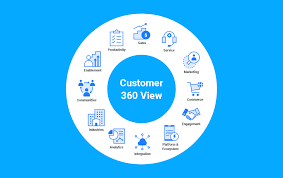
Dubai, UAE – Zulekha Healthcare Group, one of the UAE’s largest private healthcare networks, is taking a major leap in digital innovation by adopting Salesforce Health Cloud and Marketing Cloud to enhance patient care and operational efficiency. A Legacy of Healthcare Excellence Founded in 1964, Zulekha Healthcare Group operates:🏥 Two multidisciplinary hospitals (Dubai & Sharjah)🏨 Two medical centers & five pharmacies⚕️ 285+ beds, 300+ doctors, and 600+ nursing staff🩺 30+ specialized medical disciplines The group also runs a smart medical fitness center, offering visa-related health assessments, vaccinations, and occupational health certifications—serving both residents and visitors in the UAE. Why Salesforce? Driving the Future of Patient-Centric Care With ambitious expansion plans, Zulekha sought a scalable, AI-powered CRM to: ✔ Unify patient data – Consolidating interactions from in-person visits, calls, emails, and messaging into a single 360° patient profile✔ Enhance engagement – Delivering personalized, automated communications via Marketing Cloud✔ Reduce missed appointments – Improving adherence to care plans through smarter scheduling and reminders✔ Boost operational efficiency – Streamlining workflows by integrating with existing ERP & EMR systems Leadership Perspectives: A Digital-First Vision Taher Shams, Managing Director, Zulekha Healthcare Group, emphasized: “Our mission is to make healthcare more accessible through innovation. Salesforce’s AI-driven solutions will help us elevate patient experiences, optimize operations, and reinforce our commitment to the UAE’s healthcare leadership.” Amit Khanna, SVP & GM, Salesforce Health, added: “Personalized care starts with deeper patient insights. We’re proud to partner with Zulekha and explore how AI can further enhance engagement and treatment outcomes.” The Road Ahead: AI, Growth & Seamless Care The integration positions Zulekha to leverage predictive analytics, automation, and AI—paving the way for:🔹 Smarter patient outreach🔹 Data-driven treatment plans🔹 Expansion across the UAE By embracing cloud-based, intelligent healthcare, Zulekha is setting a new standard for patient-first, digitally empowered care in the region. About Zulekha Healthcare GroupA pioneer in UAE healthcare, Zulekha Healthcare Group has served communities for nearly 60 years, offering specialized treatments, cutting-edge technology, and compassionate care across its network. Like Related Posts Who is Salesforce? Who is Salesforce? Here is their story in their own words. From our inception, we’ve proudly embraced the identity of Read more Salesforce Marketing Cloud Transactional Emails Salesforce Marketing Cloud Transactional Emails are immediate, automated, non-promotional messages crucial to business operations and customer satisfaction, such as order Read more Salesforce Unites Einstein Analytics with Financial CRM Salesforce has unveiled a comprehensive analytics solution tailored for wealth managers, home office professionals, and retail bankers, merging its Financial Read more AI-Driven Propensity Scores AI plays a crucial role in propensity score estimation as it can discern underlying patterns between treatments and confounding variables Read more
Read More
Why AI Won't Kill SaaS

CHROs Plan Major Expansion of Digital Labor and AI in the Workforce

CHROs Plan Major Expansion of Digital Labor and AI in the Workforce: Salesforce Report Salesforce’s global survey of 200 HR executives reveals that Chief Human Resources Officers (CHROs) are preparing for a significant shift toward AI-driven digital labor over the next two years, aiming to enhance productivity and reshape workforce dynamics. Key Findings: Human-AI Collaboration by 2030 Reskilling and Evolving Workforce Needs Future Workforce Structure Challenges and Next Steps Salesforce emphasizes a “cognitive upgrade” approach—reskilling employees to work alongside AI rather than merely transferring tasks to automation. As AI reshapes work, CHROs are positioned to lead this transformation, balancing efficiency with human-centric growth. Like Related Posts Who is Salesforce? Who is Salesforce? Here is their story in their own words. From our inception, we’ve proudly embraced the identity of Read more Salesforce Marketing Cloud Transactional Emails Salesforce Marketing Cloud Transactional Emails are immediate, automated, non-promotional messages crucial to business operations and customer satisfaction, such as order Read more Salesforce Unites Einstein Analytics with Financial CRM Salesforce has unveiled a comprehensive analytics solution tailored for wealth managers, home office professionals, and retail bankers, merging its Financial Read more AI-Driven Propensity Scores AI plays a crucial role in propensity score estimation as it can discern underlying patterns between treatments and confounding variables Read more

Read More
Why Salesforce Isn't Alarmist About AI

Why Salesforce Isn’t Alarmist About AI

Salesforce CEO Dismisses AI Job Loss Fears as “Alarmist,” Even as Company Cuts Hiring Due to AI San Francisco, CA — Salesforce isn’t alarmist about AI because they view it as a tool to augment human capabilities and enhance business processes, not as a threat to jobs. They are actively developing and implementing AI solutions like Einstein AI and Agentforce to improve efficiency and customer experience. While Salesforce has reduced some hiring in certain areas due to AI automation, they are also expanding hiring in other areas, according to the Business Journals.  Salesforce CEO Marc Benioff pushed back against warnings of widespread job losses from artificial intelligence during the company’s Wednesday earnings call, calling such predictions “alarmist.” However, his remarks came just as one of his top executives confirmed that AI is already reducing hiring at the tech giant. The debate over AI’s impact on employment—from generative tools like ChatGPT to advanced robotics and hypothetical human-level “digital workers”—has raged in the tech industry for years. But tensions escalated this week when Anthropic CEO Dario Amodei told Axios that businesses and governments are downplaying the risk of AI rapidly automating millions of jobs. “Most of them are unaware that this is about to happen,” Amodei reportedly said. “It sounds crazy, and people just don’t believe it.” Benioff, however, dismissed the notion. When asked about Amodei’s comments, he argued that AI industry leaders are succumbing to groupthink. He emphasized that AI lacks consciousness and cannot independently run factories or build self-replicating machines. “We aren’t exactly even to that point yet where all these white-collar jobs are just suddenly disappearing,” Benioff said. “AI can do some things, and while this is very exciting in the enterprise, we all know it cannot do everything.” He cited AI’s tendency to produce inaccurate “hallucinations” as a key limitation, noting that even if AI drafts a press release, humans would still need to refine it. While expressing respect for Amodei, Benioff maintained that “some of these comments are alarmist and get a little aggressive in the current form of AI today.” Yet, even as Benioff downplayed AI’s threat to jobs, Salesforce COO Robin Washington revealed that the company is already cutting hiring due to AI efficiencies. AI agents now handle vast numbers of customer service inquiries, reducing the need for new hires. About 500 customer support employees are being shifted to “higher-impact, data-plus-AI roles.” Washington also told Bloomberg that Salesforce is hiring fewer engineers, as AI agents act as assistants, boosting productivity without expanding headcount. (One area still growing? Sales teams pitching AI to other companies, according to Chief Revenue Officer Miguel Milano.) Salesforce’s Agentforce landing page highlights its AI-human collaboration model, boasting “Agents + Humans. Driving Customer Success together since October 2024.” A live tracker shows AI handling nearly as many support requests as humans—though human agents still lead by about 12%. The Broader AI Fear Factor Public anxiety around AI centers on: Hollywood dystopias like The Terminator and Maximum Overdrive amplify these fears, but experts argue reality is far less dramatic. Why AI Panic May Be Overblown Dr. Sriraam Natarajan, a computer science professor at UT Dallas and an AI researcher, reassures that AI lacks consciousness and cannot “think” like humans. “AI-driven Armageddon is not happening,” Natarajan said. “‘The Terminator’ is a great movie, but it’s fiction.” Key limitations of current AI: Natarajan acknowledges risks—like bad actors misusing AI—but stresses that safeguards are a major research focus. “I don’t fear AI; I fear people who misuse AI,” he said. Rather than replacing jobs, Natarajan sees AI as a productivity booster, handling repetitive tasks while humans focus on creativity and strategy. He highlights AI’s potential in medicine, climate science, and disaster prediction—but emphasizes responsible deployment. The Bottom Line While Benioff and other tech leaders dismiss doomsday scenarios, AI is already reshaping hiring—even at Salesforce. The real challenge lies in balancing innovation with workforce adaptation, ensuring AI augments rather than replaces human roles. For now, the robots aren’t taking over—but they are changing how companies operate. Like Related Posts Who is Salesforce? Who is Salesforce? Here is their story in their own words. From our inception, we’ve proudly embraced the identity of Read more Salesforce Marketing Cloud Transactional Emails Salesforce Marketing Cloud Transactional Emails are immediate, automated, non-promotional messages crucial to business operations and customer satisfaction, such as order Read more Salesforce Unites Einstein Analytics with Financial CRM Salesforce has unveiled a comprehensive analytics solution tailored for wealth managers, home office professionals, and retail bankers, merging its Financial Read more AI-Driven Propensity Scores AI plays a crucial role in propensity score estimation as it can discern underlying patterns between treatments and confounding variables Read more

Read More
Why Salesforce Release Management Matters

Salesforce Summer ’25 Release

Salesforce Summer ’25 Release: Key Updates & What You Need to Know The Salesforce Summer ’25 Release is here—packed with AI-powered automation, critical deprecations, and game-changing enhancements to Flow, Agentforce, and approvals. Whether you’re an admin, developer, or business leader, these updates will impact how you work on the platform. Let’s break down the biggest changes. 1. The End of Legacy Automation Tools Salesforce is officially sunsetting older automation features, pushing users toward next-gen solutions. Key Deprecations: 2. Flow Gets a Major Upgrade Flow is now faster, more intuitive, and packed with new features—making it the go-to automation tool. New Enhancements: ✔ Redesigned Flow Builder – Faster loading, responsive layouts, and mobile/tablet previews.✔ Rich In-Line Email Editor – No more external templates! Format emails directly in Flow with merge fields, colors, and styling.✔ Debug Fault Paths – Test error-handling logic for more reliable automations.✔ Reusable Flow Templates – Save and reuse common flow patterns across your org. Biggest Game-Changer: Flow-Based Approvals Salesforce is phasing out classic approval processes in favor of Flow-based approvals (though the old tool isn’t retired yet). Why switch? Action Item: Start testing Flow-based approvals in sandbox. 3. Agentforce Gets Smarter & More Versatile Salesforce’s AI-powered Agentforce is expanding beyond customer service into HR, field service, and sales. Key Upgrades: 🔹 Embed LWCs in Chatbots – Users can now interact with buttons, calendars, and custom UIs inside chat.🔹 New HR & Employee Service Templates – Automate onboarding, time-off requests, and internal workflows.🔹 Field Service AI Upgrades – Agents now: Action Item: Explore Agentforce for internal use cases (HR, IT, field service). 4. Admin Productivity Boosters Salesforce is making permissions and user management easier than ever. New Admin Features: 🔸 Bulk Object Permissions in Object Manager – No more jumping between permission sets!🔸 Enhanced Permission Set Summaries – Now includes tab access, public groups, and queues.🔸 Improved User Access Reports – Track permissions during onboarding/offboarding. 5. Release Timeline & Checklist When is Summer ‘25 Rolling Out? Your Summer ‘25 Prep Checklist ✅ Migrate off Workflow Rules & Process Builder → Move to Flow.✅ Audit API integrations → Ensure they use v31+.✅ Test outbound messaging → Confirm it works with 20s timeout.✅ Pilot Flow-based approvals → Start rebuilding in sandbox.✅ Explore Agentforce upgrades → Test chat LWC embeds & Siri voice.✅ Simplify permissions → Use bulk object permissions. Need Help Navigating These Changes? Transitioning to Flow, Agentforce, or new APIs can be complex. Our Salesforce experts can help you: Contact us today to get release-ready! Final Thought Salesforce is doubling down on AI, automation, and modern UX. The message is clear: The future is Flow, Agentforce, and clean data. Start preparing now! Like Related Posts Who is Salesforce? Who is Salesforce? Here is their story in their own words. From our inception, we’ve proudly embraced the identity of Read more Salesforce Marketing Cloud Transactional Emails Salesforce Marketing Cloud Transactional Emails are immediate, automated, non-promotional messages crucial to business operations and customer satisfaction, such as order Read more Salesforce Unites Einstein Analytics with Financial CRM Salesforce has unveiled a comprehensive analytics solution tailored for wealth managers, home office professionals, and retail bankers, merging its Financial Read more AI-Driven Propensity Scores AI plays a crucial role in propensity score estimation as it can discern underlying patterns between treatments and confounding variables Read more

Read More
Potential of GenAI in Healthcare

Generative AI Adoption Accelerates in Healthcare, Survey Reveals

Healthcare leaders are increasingly embracing generative AI to enhance administrative efficiency and clinical productivity, according to a new McKinsey & Company survey. The latest findings, based on Q4 2024 responses from 150 executives across payers, health systems, and healthcare technology firms, highlight rapid adoption and shifting investment priorities. Key Survey Insights Growing Adoption of Gen AI Partnerships Drive Implementation Top Use Cases: Efficiency & Engagement ROI Expectations Are High Strategic Recommendations McKinsey’s report emphasizes that successful gen AI integration requires: “As generative AI gains momentum, healthcare leaders must position their organizations for long-term success by prioritizing high-impact use cases and strategic partnerships,” the authors noted. The findings underscore generative AI’s expanding role in transforming healthcare operations, with early adopters already seeing measurable benefits. Like Related Posts Who is Salesforce? Who is Salesforce? Here is their story in their own words. From our inception, we’ve proudly embraced the identity of Read more Salesforce Unites Einstein Analytics with Financial CRM Salesforce has unveiled a comprehensive analytics solution tailored for wealth managers, home office professionals, and retail bankers, merging its Financial Read more AI-Driven Propensity Scores AI plays a crucial role in propensity score estimation as it can discern underlying patterns between treatments and confounding variables Read more Tectonic’s Successful Salesforce Track Record Salesforce Technology Services Integrator – Tectonic has successfully delivered Salesforce in a variety of industries including Public Sector, Hospitality, Manufacturing, Read more

Read More
Agentic AI Race

The Evolution Beyond AI Agents

The Evolution Beyond AI Agents: What Comes Next? The Rapid Progression of AI Terminology The landscape of artificial intelligence has undergone a remarkable transformation in just three years. What began with ChatGPT and generative AI as the dominant buzzwords quickly evolved into discussions about copilots, and most recently, agentic AI emerged as 2024‘s defining concept. This accelerated terminology cycle mirrors fashion industry trends more than traditional technology adoption curves. Major players including Adobe, Qualtrics, Oracle, OpenAI, and Deloitte have recently launched agentic AI platforms, joining earlier entrants like Microsoft, AWS, and Salesforce. This rapid market saturation suggests the industry may already be approaching the next conceptual shift before many organizations have fully implemented their current AI strategies. Examining the Staying Power of Agentic AI Industry analysts present diverging views on the longevity of the agentic AI concept. Brandon Purcell, a Forrester Research analyst, acknowledges the pattern of fleeting AI trends while recognizing agentic AI’s potential for greater staying power. He cites three key factors that may extend its relevance: Klaasjan Tukker, Adobe’s Senior Director of Product Marketing, draws parallels to mature technologies that have become invisible infrastructure. He predicts agentic AI will follow a similar trajectory, becoming so seamlessly integrated that users will interact with it as unconsciously as they use navigation apps or operate modern vehicles. The Automotive Sector as an AI Innovation Catalyst The automotive industry provides compelling examples of advanced AI applications that transcend current “agentic” capabilities. Modern autonomous vehicles demonstrate sophisticated AI behaviors including: These implementations suggest that what the tech industry currently labels as “agentic” may represent only an intermediate step toward more autonomous, context-aware systems. The Definitional Challenges of Agentic AI The technology sector faces significant challenges in establishing common definitions for emerging AI concepts. Adobe’s framework describes agents as systems possessing three core attributes: However, as Scott Brinker of HubSpot notes, the term “agentic” risks becoming overused and diluted as vendors apply it inconsistently across various applications and functionalities. Interoperability as the Critical Success Factor For agentic AI systems to deliver lasting value, industry observers emphasize the necessity of cross-platform compatibility. Phil Regnault of PwC highlights the reality that enterprise environments typically combine solutions from multiple vendors, creating integration challenges for AI implementations. Three critical layers require standardization: Without such standards, organizations risk creating new AI silos that mirror the limitations of legacy systems. The Future Beyond Agentic AI While agentic AI continues its maturation process, the technology sector’s relentless innovation cycle suggests the next conceptual breakthrough may emerge sooner than expected. Historical naming patterns for AI advancements indicate several possibilities: As these technologies evolve, they may shed specialized branding in favor of more utilitarian terminology, much as “software bots” became normalized after their initial hype cycle. The automotive parallel suggests that truly transformative AI implementations may become so seamlessly integrated that their underlying technology becomes invisible to end users—the ultimate measure of technological maturity. Until that point, the industry will likely continue its rapid cycle of innovation and rebranding, searching for the next paradigm that captures the imagination as powerfully as “agentic AI” has in 2024. Like Related Posts Who is Salesforce? Who is Salesforce? Here is their story in their own words. From our inception, we’ve proudly embraced the identity of Read more Salesforce Marketing Cloud Transactional Emails Salesforce Marketing Cloud Transactional Emails are immediate, automated, non-promotional messages crucial to business operations and customer satisfaction, such as order Read more Salesforce Unites Einstein Analytics with Financial CRM Salesforce has unveiled a comprehensive analytics solution tailored for wealth managers, home office professionals, and retail bankers, merging its Financial Read more AI-Driven Propensity Scores AI plays a crucial role in propensity score estimation as it can discern underlying patterns between treatments and confounding variables Read more
Read More
Financial Services Cloud and Core

AgentForce for Financial Services

Salesforce Revolutionizes Financial Services with AI-Powered Agentforce Platform AI Agents Take on Banking, Insurance, and Advisory Roles Salesforce has launched a suite of prebuilt AI agent templates designed to automate critical functions across financial services—from loan processing to insurance underwriting and wealth management. Embedded within Financial Services Cloud, these AI assistants aim to reduce administrative burdens, enhance customer experiences, and boost operational efficiency for banks, insurers, and investment firms. Key Features of Agentforce for Financial Services ✔ Prebuilt AI agents for loan officers, financial advisors, and insurance agents✔ 24/7 automated customer service (balance inquiries, claims processing, policy quotes)✔ Meeting intelligence (automated note-taking, follow-ups, and data-driven insights)✔ Regulatory compliance baked into every AI action✔ Seamless integration with core banking and CRM systems How AI Agents Transform Financial Workflows 1. Financial Advisors: Smarter, Faster Client Interactions 2. Banking & Insurance: Instant, Accurate Customer Service 3. Digital Loan Officers: Faster Approvals, Fewer Delays Why Financial Firms Need Specialized AI Agents Traditional customer service struggles with:❌ Long hold times❌ Repetitive data entry❌ Inconsistent compliance checks Agentforce AI solves these pain points by:✅ Reducing manual work (80%+ of routine tasks automated)✅ Improving accuracy (data-driven decisions, no human errors)✅ Ensuring compliance (built-in regulatory safeguards) Real-World Impact: “Agentforce has already transformed our service operations. The speed of deployment and immediate productivity gains have us exploring AI for claims and procurement next.”— Matt Brasch, VP of Digital Operations, Cumberland Mutual LLC The Future of AI in Finance Salesforce emphasizes that AI won’t replace human experts—it will empower them. By offloading repetitive tasks, financial professionals can focus on:✔ High-value client relationships✔ Complex decision-making✔ Strategic business growth Coming Next: Final Takeaway Salesforce’s Agentforce for Financial Services marks a major leap in AI-driven banking and insurance automation. Firms adopting this technology can expect:🔹 Faster customer service🔹 Higher advisor productivity🔹 Stronger compliance🔹 Increased revenue per employee Ready to deploy AI agents in your financial workflows? Contact Tectonic. Like Related Posts Who is Salesforce? Who is Salesforce? Here is their story in their own words. From our inception, we’ve proudly embraced the identity of Read more Salesforce Marketing Cloud Transactional Emails Salesforce Marketing Cloud Transactional Emails are immediate, automated, non-promotional messages crucial to business operations and customer satisfaction, such as order Read more Salesforce Unites Einstein Analytics with Financial CRM Salesforce has unveiled a comprehensive analytics solution tailored for wealth managers, home office professionals, and retail bankers, merging its Financial Read more AI-Driven Propensity Scores AI plays a crucial role in propensity score estimation as it can discern underlying patterns between treatments and confounding variables Read more

Read More
gettectonic.com