Privacy Archives - gettectonic.com - Page 5
Generative AI Energy Consumption Rises

Generative AI Tools

Generative AI Tools: A Comprehensive Overview of Emerging Capabilities The widespread adoption of generative AI services like ChatGPT has sparked immense interest in leveraging these tools for practical enterprise applications. Today, nearly every enterprise app integrates generative AI capabilities to enhance functionality and efficiency. A broad range of AI, data science, and machine learning tools now support generative AI use cases. These tools assist in managing the AI lifecycle, governing data, and addressing security and privacy concerns. While such capabilities also aid in traditional AI development, this discussion focuses on tools specifically designed for generative AI. Not all generative AI relies on large language models (LLMs). Emerging techniques generate images, videos, audio, synthetic data, and translations using methods such as generative adversarial networks (GANs), diffusion models, variational autoencoders, and multimodal approaches. Here is an in-depth look at the top categories of generative AI tools, their capabilities, and notable implementations. It’s worth noting that many leading vendors are expanding their offerings to support multiple categories through acquisitions or integrated platforms. Enterprises may want to explore comprehensive platforms when planning their generative AI strategies. 1. Foundation Models and Services Generative AI tools increasingly simplify the development and responsible use of LLMs, initially pioneered through transformer-based approaches by Google researchers in 2017. 2. Cloud Generative AI Platforms Major cloud providers offer generative AI platforms to streamline development and deployment. These include: 3. Use Case Optimization Tools Foundation models often require optimization for specific tasks. Enterprises use tools such as: 4. Quality Assurance and Hallucination Mitigation Hallucination detection tools address the tendency of generative models to produce inaccurate or misleading information. Leading tools include: 5. Prompt Engineering Tools Prompt engineering tools optimize interactions with LLMs and streamline testing for bias, toxicity, and accuracy. Examples include: 6. Data Aggregation Tools Generative AI tools have evolved to handle larger data contexts efficiently: 7. Agentic and Autonomous AI Tools Developers are creating tools to automate interactions across foundation models and services, paving the way for autonomous AI. Notable examples include: 8. Generative AI Cost Optimization Tools These tools aim to balance performance, accuracy, and cost effectively. Martian’s Model Router is an early example, while traditional cloud cost optimization platforms are expected to expand into this area. Generative AI tools are rapidly transforming enterprise applications, with foundational, cloud-based, and domain-specific solutions leading the way. By addressing challenges like accuracy, hallucination, and cost, these tools unlock new potential across industries and use cases, enabling enterprises to stay ahead in the AI-driven landscape. Like Related Posts Who is Salesforce? Who is Salesforce? Here is their story in their own words. From our inception, we’ve proudly embraced the identity of Read more Salesforce Unites Einstein Analytics with Financial CRM Salesforce has unveiled a comprehensive analytics solution tailored for wealth managers, home office professionals, and retail bankers, merging its Financial Read more AI-Driven Propensity Scores AI plays a crucial role in propensity score estimation as it can discern underlying patterns between treatments and confounding variables Read more Tectonic’s Successful Salesforce Track Record Salesforce Technology Services Integrator – Tectonic has successfully delivered Salesforce in a variety of industries including Public Sector, Hospitality, Manufacturing, Read more


Read More
Unlocking the Future of AI with Phidata

Data Masking Explained

What is Data Masking? Data masking is a crucial data security technique that replaces sensitive information with realistic yet fictitious values, ensuring the original data remains protected from unauthorized access. This method secures sensitive data—such as personally identifiable information (PII), financial records, or proprietary business data—while still allowing it to be used for testing, development, or analytics. An effective data masking solution should include these core features: Data masking plays a vital role in data governance, helping organizations control access to sensitive information while balancing security and usability. Why Does Data Masking Matter for AI and Agent Testing? As artificial intelligence continues to drive business transformation, it relies heavily on data to train models, generate insights, and automate workflows. However, using real customer and enterprise data in AI development poses significant privacy risks. Data masking mitigates these risks by enabling AI systems to train on realistic yet anonymized datasets, keeping sensitive production data secure. Protecting Sensitive Data Testing AI-powered Salesforce applications often requires realistic datasets, including PII, financial information, and confidential business records. Using unmasked data in non-production environments increases exposure risks, such as insider threats, misconfigurations, or accidental leaks. By replacing sensitive data with masked equivalents, organizations can maintain privacy while enabling effective development and testing. Ensuring Compliance with Data Protection Regulations Regulatory frameworks like GDPR, CCPA, and HIPAA impose strict requirements for handling sensitive data—even in testing environments. GDPR, for example, mandates pseudonymization or anonymization to protect privacy. Failure to implement proper data masking strategies can result in severe fines and reputational damage. Masking ensures compliance while maintaining a secure foundation for Salesforce testing. Enhancing Test Accuracy AI-driven Salesforce applications require realistic testing scenarios to ensure functionality and accuracy. Masked data preserves the structure and variability of original CRM datasets, allowing developers to simulate real-world interactions without exposing sensitive information. This approach improves test precision and accelerates the deployment of high-quality applications. Reducing Bias and Promoting Fairness Data masking also supports fairness in AI models by removing personally identifiable details that could unintentionally introduce bias. Anonymizing sensitive attributes helps organizations build ethical, unbiased AI systems that support diverse and equitable outcomes. Key Considerations for Implementing Data Masking To effectively implement data masking in Salesforce environments, organizations should consider the following: Define Scope and Objectives Before masking data, determine what needs protection—whether it’s customer records, financial transactions, or proprietary insights. Align masking strategies with business goals, such as development, testing, or compliance, to ensure maximum effectiveness. Select the Right Masking Techniques Different masking methods serve distinct purposes: By integrating data masking into privacy-first strategies, organizations not only ensure compliance but also foster secure innovation and long-term digital trust. A Privacy-First Approach to AI Development As privacy becomes a defining factor in AI and trust-driven application development, data masking is an essential safeguard for security, compliance, and ethical innovation. For organizations leveraging Salesforce AI solutions like Agentforce, masking enables the safe use of realistic but anonymized datasets, ensuring privacy while accelerating AI-driven transformation. Start with Salesforce’s built-in data masking tools to secure sensitive information and empower secure, compliant, and forward-thinking AI development. Like Related Posts Who is Salesforce? Who is Salesforce? Here is their story in their own words. From our inception, we’ve proudly embraced the identity of Read more Salesforce Marketing Cloud Transactional Emails Salesforce Marketing Cloud Transactional Emails are immediate, automated, non-promotional messages crucial to business operations and customer satisfaction, such as order Read more Salesforce Unites Einstein Analytics with Financial CRM Salesforce has unveiled a comprehensive analytics solution tailored for wealth managers, home office professionals, and retail bankers, merging its Financial Read more AI-Driven Propensity Scores AI plays a crucial role in propensity score estimation as it can discern underlying patterns between treatments and confounding variables Read more

Read More
Salesforce Einstein Commerce

Salesforce Commerce Cloud Passkeys

Adding Passkeys to Salesforce Commerce Cloud Ensuring secure, convenient user access is a top priority for Salesforce-based applications. Passkeys, a passwordless authentication solution, streamline user sign-up and login processes while enhancing security. By integrating passkeys into Salesforce Commerce Cloud (SFCC), businesses can protect users from password-related threats like phishing and credential theft, leveraging the security of asymmetric encryption behind passkeys. The seamless login experience offered by passkeys boosts user engagement, reduces drop-off rates, and fosters trust, improving overall user satisfaction. Implementing passkeys not only aligns with current security standards but also prepares businesses for the future of intuitive digital interactions and enhanced privacy. DIY Implementation vs. Dedicated Salesforce Commerce Cloud Passkey Solution When deciding how to integrate passkeys into Salesforce Commerce Cloud applications, businesses must weigh the options between a DIY approach and partnering with a dedicated solution provider like OwnID. Implementing passkeys from scratch can be time-consuming and resource-intensive, requiring significant technical effort to ensure compatibility with Salesforce systems and adherence to security and user experience best practices. By choosing a provider like OwnID, companies can implement passkeys in a matter of days rather than months. OwnID offers a ready-to-use, Salesforce-compatible solution that integrates seamlessly, features cutting-edge security, and provides ongoing support. This approach lifts the burden from internal development teams, speeds up deployment, and ensures a high-quality user experience without the need to manage authentication processes or stay on top of compliance updates. For more information, check out our DIY vs. Elite Passkey Implementation Guide. How to Implement the OwnID Solution in Salesforce Commerce Cloud Integrating OwnID’s passwordless login into Salesforce Commerce Cloud (SFCC) is a straightforward process that enhances both security and the user experience. Here’s an overview of the key steps involved: 1. Set Up an API Client in SFCC Begin by creating a new API Client in your SFCC environment. This client is essential for secure communication between SFCC and OwnID. Log into the Salesforce Commerce Cloud Account Manager, add a new API Client, and configure the appropriate roles and authentication methods (e.g., private_key_jwt). This step ensures secure integration between SFCC and OwnID. 2. Create and Configure an OwnID Application In the OwnID Console, set up an application dedicated to your SFCC integration. This application serves as the bridge between OwnID’s passkey system and your Salesforce Commerce Cloud app. Configure settings like API credentials, site URL, and other parameters specific to OwnID. This step connects OwnID’s authentication service to your Salesforce site seamlessly. 3. Install the OwnID Cartridge in SFCC OwnID provides a cartridge designed for SFCC integration. Installing this cartridge adds all necessary components to your SFCC instance, enabling easy interaction between OwnID and Salesforce. After installation, go to Merchant Tools → Site Preferences in SFCC to customize OwnID settings for your environment. This enables you to display the OwnID widget on login and registration pages, creating a smooth, passwordless experience. 4. Embed the OwnID SDK in Your Templates The final step is to embed the OwnID SDK script in your site’s templates (e.g., htmlHead.isml or a global template file). This SDK enables passkey-based login across all relevant pages. By embedding the script, you ensure users have access to passwordless login, enhancing security and user convenience. With these steps, OwnID will be fully integrated into your Salesforce Commerce Cloud application, offering users secure, password-free access. For more detailed instructions and configuration options, visit the OwnID Salesforce Commerce Cloud Documentation. Get Expert Help with Your Salesforce Commerce Cloud Passkey Integration Ready to implement passwordless authentication in your Salesforce Commerce Cloud application? The Tectonic team is here to guide you through every step of the integration process. From initial setup to ongoing optimization, we ensure a smooth and seamless experience for your users. For personalized support and to learn how OwnID’s passkey solution can elevate your SFCC environment, contact our expert team today. Like Related Posts Who is Salesforce? Who is Salesforce? Here is their story in their own words. From our inception, we’ve proudly embraced the identity of Read more Salesforce Marketing Cloud Transactional Emails Salesforce Marketing Cloud Transactional Emails are immediate, automated, non-promotional messages crucial to business operations and customer satisfaction, such as order Read more Salesforce Unites Einstein Analytics with Financial CRM Salesforce has unveiled a comprehensive analytics solution tailored for wealth managers, home office professionals, and retail bankers, merging its Financial Read more AI-Driven Propensity Scores AI plays a crucial role in propensity score estimation as it can discern underlying patterns between treatments and confounding variables Read more

Read More
Scope of Generative AI

Exploring Generative AI

Like most employees at most companies, I wear a few different hats around Tectonic. Whether I’m building a data model, creating and scheduing an email campaign, standing up a platform generative AI is always at my fingertips. At my very core, I’m a marketer. Have been for so long I do it without eveven thinking. Or at least, everyuthing I do has a hat tip to its future marketing needs. Today I want to share some of the AI content generators I’ve been using, am looking to use, or just heard about. But before we rip into the insight, here’s a primer. Types of AI Content Generators ChatGPT, a powerful AI chatbot, drew significant attention upon its November 2022 release. While the GPT-3 language model behind it had existed for some time, ChatGPT made this technology accessible to nontechnical users, showcasing how AI can generate content. Over two years later, numerous AI content generators have emerged to cater to diverse use cases. This rapid development raises questions about the technology’s impact on work. Schools are grappling with fears of plagiarism, while others are embracing AI. Legal debates about copyright and digital media authenticity continue. President Joe Biden’s October 2023 executive order addressed AI’s risks and opportunities in areas like education, workforce, and consumer privacy, underscoring generative AI’s transformative potential. What is AI-Generated Content? AI-generated content, also known as generative AI, refers to algorithms that automatically create new content across digital media. These algorithms are trained on extensive datasets and require minimal user input to produce novel outputs. For instance, ChatGPT sets a standard for AI-generated content. Based on GPT-4o, it processes text, images, and audio, offering natural language and multimodal capabilities. Many other generative AI tools operate similarly, leveraging large language models (LLMs) and multimodal frameworks to create diverse outputs. What are the Different Types of AI-Generated Content? AI-generated content spans multiple media types: Despite their varied outputs, most generative AI systems are built on advanced LLMs like GPT-4 and Google Gemini. These multimodal models process and generate content across multiple formats, with enhanced capabilities evolving over time. How Generative AI is Used Generative AI applications span industries: These tools often combine outputs from various media for complex, multifaceted projects. AI Content Generators AI content generators exist across various media. Below are good examples organized by gen ai type: Written Content Generators Image Content Generators Music Content Generators Code Content Generators Other AI Content Generators These tools showcase how AI-powered content generation is revolutionizing industries, making content creation faster and more accessible. I do hope you will comment below on your favorites, other AI tools not showcased above, or anything else AI-related that is on your mind. Written by Tectonic’s Marketing Operations Director, Shannan Hearne. Like Related Posts Who is Salesforce? Who is Salesforce? Here is their story in their own words. From our inception, we’ve proudly embraced the identity of Read more Salesforce Marketing Cloud Transactional Emails Salesforce Marketing Cloud Transactional Emails are immediate, automated, non-promotional messages crucial to business operations and customer satisfaction, such as order Read more Salesforce Unites Einstein Analytics with Financial CRM Salesforce has unveiled a comprehensive analytics solution tailored for wealth managers, home office professionals, and retail bankers, merging its Financial Read more AI-Driven Propensity Scores AI plays a crucial role in propensity score estimation as it can discern underlying patterns between treatments and confounding variables Read more

Read More

Digital Marketing for Casinos

Unveiling the Casino Experience: Harnessing the Power of Digital Marketing In the exciting world of casinos—where entertainment meets sophistication—the influence of digital marketing is undeniable. A strategic approach is packed with actionable insights designed to boost online presence, engage audiences, and drive sustained success. Discover how to craft compelling content, wield social media’s dynamic power, utilize a customer relationship platform, and optimize visibility to ensure your casino stands out in an increasingly competitive digital arena. Tectonic has a successful, winning track record in Salesforce implementation for casinos. Whether you’re promoting exclusive guest events, captivating diverse demographics, or showcasing the unique experience of your casino, this insight equips you to master the digital space with Salesforce. With these strategies, casinos can create a ever-growing online presence that not only strengthens bonds with existing patrons but also entices new guests. Generating New and Repeat Guest Traffic with Salesforce Key Takeaways Why Digital Marketing is a Critical Component for Casinos Digital marketing serves as a critical driver of customer engagement, loyalty, and revenue growth in the casino industry. Strategies such as SEO, email marketing, and social media engagement empower casinos to connect with target audiences and continuously refine their efforts to remain competitive. In today’s crowded and competitive gaming world, leveraging data-driven marketing offers the competitive edge needed to captivate and retain customers. Winning Strategies for Casino Marketing 1. Search Engine Optimization (SEO):Ensure your casino is easy to find with these tactics: 2. Pay-Per-Click Advertising (PPC):Drive traffic with targeted PPC campaigns by: 3. Social Media Marketing:Create buzz with engaging social media campaigns: 4. Email Marketing:Maintain direct communication with: 5. Salesforce 360 Degree Guest View:Maintain personalized communication with: Reaching the Right Audience with Precision Audience Segmentation:Segmenting your audience by behavior, demographics, and preferences ensures more effective marketing. Navigating Legal and Ethical Challenges in Casino Marketing Compliance is essential in maintaining trust and navigating complex regulations. Measuring Success: Metrics and Optimization Key Metrics to Monitor: Campaign Optimization: Addressing Industry Challenges with Marketing 1. Rising Competition:Stand out by delivering unmatched gaming experiences and innovative promotions. 2. High Player Churn:Combat churn with data-driven marketing and personalized offerings to boost player lifetime value. 3. ROI Challenges:Optimize your mix of games and services to balance player satisfaction and profitability. The Road Ahead: Commitment to Digital Transformation With the global online gaming market projected to grow at a significant pace, casinos must embrace a future grounded in digital and data-driven marketing. Investments in technology, analytics, and talent will be pivotal in securing long-term profitability and differentiation. In an industry where chance often rules, success lies in a deliberate, strategic approach to digital marketing. This insight equips you with the tools to not only compete but thrive in this dynamic landscape. Contact Tectonic today to explore Salesforce tools to better reach, engage, and serve your guests. Like Related Posts Who is Salesforce? Who is Salesforce? Here is their story in their own words. From our inception, we’ve proudly embraced the identity of Read more Salesforce Marketing Cloud Transactional Emails Salesforce Marketing Cloud Transactional Emails are immediate, automated, non-promotional messages crucial to business operations and customer satisfaction, such as order Read more Salesforce Unites Einstein Analytics with Financial CRM Salesforce has unveiled a comprehensive analytics solution tailored for wealth managers, home office professionals, and retail bankers, merging its Financial Read more AI-Driven Propensity Scores AI plays a crucial role in propensity score estimation as it can discern underlying patterns between treatments and confounding variables Read more

Read More
Speed to Launch of Agentforce

Speed to Launch of Agentforce

Agentforce isn’t just another AI platform that requires months of customization. At most customers, they quickly saw its power, launching transformative generative AI experiences in just days—no AI engineers needed. For companies with larger admin teams, the benefits can be even greater. Unlike other platforms, Agentforce places a strong emphasis on data privacy, building on the trust that Salesforce is known for, making these virtual assistants invaluable. We began with employee-facing use cases, saving our team several hours per week. Now, with Agentforce, we’re seeing even more opportunities to drive efficiencies and better serve our customers. “We’re excited to leverage Agentforce to completely overhaul recruitment and enrollment at Unity Environmental University. Instead of traditional forms or chatbots, our students will soon engage with an autonomous recruitment agent directly on our website, offering personalized support throughout the college application process.”– Dr. Melik Khoury, President & CEO, Unity Environmental University “For first-generation college students, the 1:385 coach-to-student ratio makes personalized guidance challenging. By integrating Agentforce into our platform, we’re deploying cutting-edge solutions to better support students. These agents enable our coaches to focus on high-touch, personalized experiences while handling vital tasks like sharing deadlines and answering common questions—24/7.”– Siva Kumari, CEO, College Possible “Agentforce offers organizations a unique opportunity to move beyond incremental improvements and achieve exponential ROI. By automating customer interactions, improving outcomes, and reducing costs, it integrates data, flows, and user interfaces to mitigate risks and accelerate value creation. This agent-based platform approach allows businesses to harness AI’s full potential, revolutionizing customer engagement and paving the way for exponential growth.”– Rebecca Wettemann, CEO and Principal Analyst, Valoir “Autonomous agents powered by Salesforce’s Agentforce are revolutionizing customer experiences by providing fast, accurate, and personalized support around the clock. With advanced AI making decisions and taking actions autonomously, businesses can resolve customer issues more efficiently, fostering deeper interactions and enhancing satisfaction. This innovation enables companies to reallocate human resources to more complex tasks, boosting individual productivity and scaling business growth. Agentforce is setting new standards for seamless sales, service, marketing, and commerce interactions, reinforcing its leadership in customer experience.”– Michael Fauscette, CEO and Chief Analyst, Arion Research LLC “The best way to predict the future is to invent it.” — Alan Kay, Computer Science Pioneer Technology progresses in what biologists call punctuated equilibrium, with new capabilities slowly emerging from labs and tinkerers until a breakthrough shifts the axis of possibility. These pioneering feats create new paradigms, unleashing waves of innovation—much like the Apple Macintosh, the iPhone, and the Salesforce Platform, which revolutionized the enterprise software-as-a-service (SaaS) model and sparked an entire industry. The Age of Agentforce Begins At Dreamforce 2024, Salesforce Futures reflected on the launch of Agentforce, inspired by visions like the Apple Knowledge Navigator. In 2023, we used this inspiration to craft our Salesforce 2030 film, which showcased the collaboration between humans and autonomous AI agents. Now, with Agentforce, we’re witnessing that vision come to life. Agentforce is a suite of customizable AI agents and tools built on the Salesforce Platform, offering an elegant solution to the complexity of AI deployment. It addresses the challenges of integrating data, models, infrastructure, and applications into a unified system. With powerful tools like Agent Builder and Model Builder, organizations can easily create, customize, and deploy AI agents. Salesforce’s Atlas Reasoning Engine empowers these agents to handle both routine and complex tasks autonomously. A New Era of AI Innovation At Dreamforce 2024, over 10,000 attendees raced to build their own agents using the “Agent Builder” experience, turning verbal instructions into fully functioning agents in under 15 minutes. This wasn’t just another chatbot—it’s a new breed of AI that could transform how businesses operate and deliver superior customer experiences. Companies like Saks, OpenTable, and Wiley have quickly embraced this technology. As Mick Costigan and David Berthy of Salesforce Futures explain, “When we see signals like this, it pushes us toward the future. Soon, we’ll see complex, multi-agent systems solving higher-order challenges, both in the enterprise and in consumer devices.” Shaping the Future Agentforce isn’t just a product—it’s a platform for experimentation. With hundreds of thousands of Salesforce customers soon gaining access, the full potential of these tools will unfold in ways we can’t yet imagine. As with every major technological shift, the real magic will lie in how people use it. Every interaction, every agent deployed, and every problem solved will shape the future in unexpected ways. Platform Evolution Adam Evans, Salesforce SVP of Product, notes that Agentforce builds on the company’s transformation over the past four years, following the pattern of Salesforce’s original disruption of enterprise software. Unlike traditional solutions, Agentforce eliminates the need for customers to build their own AI infrastructure, providing a ready-to-use solution. At the core of Agentforce is the Atlas Reasoning Engine, delivering results that are twice as relevant and 33% more accurate than competing solutions. This engine integrates Salesforce Data Cloud, Flow for automation, and the Einstein Trust Layer for governance. Early Customer Results Early Agentforce deployments highlight how organizations are using autonomous agents to enhance, rather than replace, human workers: George Pokorny, Senior VP of Global Customer Success at OpenTable, shared, “Just saving two minutes on a ten-minute call lets our service reps focus on strengthening customer relationships, thanks to seamless integration with Service Cloud, giving us a unified view of diner preferences and history.” Like Related Posts Who is Salesforce? Who is Salesforce? Here is their story in their own words. From our inception, we’ve proudly embraced the identity of Read more Salesforce Marketing Cloud Transactional Emails Salesforce Marketing Cloud Transactional Emails are immediate, automated, non-promotional messages crucial to business operations and customer satisfaction, such as order Read more Salesforce Unites Einstein Analytics with Financial CRM Salesforce has unveiled a comprehensive analytics solution tailored for wealth managers, home office professionals, and retail bankers, merging its Financial Read more AI-Driven Propensity Scores AI plays a crucial role in propensity score estimation as it can discern underlying patterns between treatments and confounding variables Read more

Read More
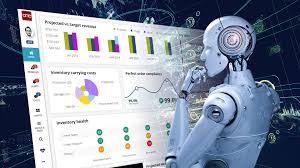
ai in supply chain

AI in Supply Chain

AI has the potential to transform supply chain management by boosting efficiency, enhancing forecasting, and improving customer satisfaction. However, it’s crucial for leaders to weigh the associated costs, technical challenges, and risks to ensure a smooth and strategic implementation. By addressing these disadvantages, companies can fully unlock AI’s benefits while minimizing its drawbacks.

Read More
AI is revolutionizing BI by transforming it from a retrospective tool into a proactive, real-time decision-making engine.

AI in Business Intelligence

AI in Business Intelligence: Applications, Benefits, and Challenges AI is rapidly transforming business intelligence (BI) by enhancing analytics capabilities and streamlining processes. This shift is reshaping how organizations leverage data for decision-making. Here’s an in-depth look at how AI complements BI, its advantages, and the challenges it introduces. The Evolution of Business Intelligence with AI BI has traditionally focused on aggregating historical and current data to provide insights into business operations—a process known as descriptive analytics. However, many decision-makers seek more: insights into future trends (predictive analytics) and actionable recommendations (prescriptive analytics). AI bridges this gap. With advanced tools like natural language processing (NLP) and machine learning (ML), AI enables businesses to move beyond static dashboards to dynamic, real-time insights. It also simplifies complex analytics, making data more accessible to business users and fostering more informed, proactive decision-making. Key Benefits of AI in Business Intelligence AI brings significant benefits to BI, including: Real-World Applications of AI in BI AI’s integration into BI goes beyond internal efficiency, delivering external value by enhancing customer experiences and driving business growth. Notable applications include: Challenges of AI in Business Intelligence Despite its potential, integrating AI into BI comes with challenges: Best Practices for AI-Driven BI To successfully integrate AI with BI, organizations should: Future Trends in AI and BI AI is expected to augment rather than replace BI, enhancing its capabilities while keeping human expertise central. Emerging trends include: Conclusion AI is revolutionizing BI by transforming it from a retrospective tool into a proactive, real-time decision-making engine. While challenges remain, thoughtful implementation and adherence to best practices can help organizations unlock AI’s full potential in BI. By integrating AI into existing BI workflows, businesses can drive innovation, improve decision-making, and create more agile and data-driven operations. Like Related Posts Who is Salesforce? Who is Salesforce? Here is their story in their own words. From our inception, we’ve proudly embraced the identity of Read more Salesforce Unites Einstein Analytics with Financial CRM Salesforce has unveiled a comprehensive analytics solution tailored for wealth managers, home office professionals, and retail bankers, merging its Financial Read more AI-Driven Propensity Scores AI plays a crucial role in propensity score estimation as it can discern underlying patterns between treatments and confounding variables Read more Tectonic’s Successful Salesforce Track Record Salesforce Technology Services Integrator – Tectonic has successfully delivered Salesforce in a variety of industries including Public Sector, Hospitality, Manufacturing, Read more
Read More
AI and UX Design

AI and UX Design

This insight comprehensively covers how AI is transforming UX design, presenting both opportunities and challenges while emphasizing the importance of maintaining a human-centric approach. Here’s a polished and slightly condensed version, retaining the core points for better clarity and engagement: AI in UX Design: Transforming Experiences in 2024 and Beyond In 2024, artificial intelligence (AI) is redefining user experience (UX) design and research. From streamlining processes to elevating personalization, UX professionals are integrating AI into their workflows to create experiences that are more intuitive and efficient. This insight explores how AI is reshaping UX and how designers can leverage it while preserving the human touch. How AI is Revolutionizing UX Design 1. Advanced AI Technologies in UXAI technologies like machine learning (ML), natural language processing (NLP), and computer vision are empowering designers with tools to understand user behavior better, build conversational interfaces, and create accessible, adaptable designs. These innovations provide deeper insights into user preferences and help refine interfaces to align with evolving needs. 2. Automating Routine Design TasksAI is taking over repetitive tasks such as rapid prototyping, A/B testing, and user data analysis, allowing designers to focus on creative, strategic challenges. For example: 3. Enhanced PersonalizationAI-driven systems offer dynamic content delivery, adaptive interfaces, and predictive behavior modeling to craft uniquely tailored experiences. These enhancements not only engage users but also foster loyalty by addressing individual preferences in real time. Balancing AI and Human-Centric Design While AI accelerates UX processes, maintaining a human-centered approach is essential. Successful integration requires: Best Practices for AI-Driven UX Design Ethical Considerations in AI-Enhanced UX Ethics remain at the forefront of AI in UX. Key concerns include: Learning from Case Studies These examples highlight how thoughtful AI integration can transform UX into a seamless, user-friendly journey. Preparing for Future Trends Looking ahead to 2025 and beyond, AI will continue to introduce innovations like emotional recognition and generative design, enabling even more intuitive user experiences. However, challenges such as data privacy concerns and high implementation costs will persist. UX professionals must adapt by blending AI-driven insights with human creativity, ensuring that designs remain empathetic and accessible. Conclusion AI is revolutionizing UX design, offering tools to enhance efficiency, personalization, and user engagement. The key to success lies in using AI as a complement to creativity rather than a replacement. By balancing automation with human-centered principles and committing to ethical practices, businesses can harness AI to create transformative, user-focused designs that truly resonate. Like Related Posts Who is Salesforce? Who is Salesforce? Here is their story in their own words. From our inception, we’ve proudly embraced the identity of Read more Salesforce Unites Einstein Analytics with Financial CRM Salesforce has unveiled a comprehensive analytics solution tailored for wealth managers, home office professionals, and retail bankers, merging its Financial Read more AI-Driven Propensity Scores AI plays a crucial role in propensity score estimation as it can discern underlying patterns between treatments and confounding variables Read more Tectonic’s Successful Salesforce Track Record Salesforce Technology Services Integrator – Tectonic has successfully delivered Salesforce in a variety of industries including Public Sector, Hospitality, Manufacturing, Read more

Read More
Transforming the Role of Data Science Teams

Transforming the Role of Data Science Teams

GenAI: Transforming the Role of Data Science Teams Challenges, Opportunities, and the Evolving Responsibilities of Data Scientists Generative AI (GenAI) is revolutionizing the AI landscape, offering faster development cycles, reduced technical overhead, and enabling groundbreaking use cases that once seemed unattainable. However, it also introduces new challenges, including the risks of hallucinations and reliance on third-party APIs. For Data Scientists and Machine Learning (ML) teams, this shift directly impacts their roles. GenAI-driven projects, often powered by external providers like OpenAI, Anthropic, or Meta, blur traditional lines. AI solutions are increasingly accessible to non-technical teams, but this accessibility raises fundamental questions about the role and responsibilities of data science teams in ensuring effective, ethical, and future-proof AI systems. Let’s explore how this evolution is reshaping the field. Expanding Possibilities Without Losing Focus While GenAI unlocks opportunities to solve a broader range of challenges, not every problem warrants an AI solution. Data Scientists remain vital in assessing when and where AI is appropriate, selecting the right approaches—whether GenAI, traditional ML, or hybrid solutions—and designing reliable systems. Although GenAI broadens the toolkit, two factors shape its application: For example, incorporating features that enable user oversight of AI outputs may prove more strategic than attempting full automation with extensive fine-tuning. Differentiation will not come from simply using LLMs, which are widely accessible, but from the unique value and functionality they enable. Traditional ML Is Far from Dead—It’s Evolving with GenAI While GenAI is transformative, traditional ML continues to play a critical role. Many use cases, especially those unrelated to text or images, are best addressed with ML. GenAI often complements traditional ML, enabling faster prototyping, enhanced experimentation, and hybrid systems that blend the strengths of both approaches. For instance, traditional ML workflows—requiring extensive data preparation, training, and maintenance—contrast with GenAI’s simplified process: prompt engineering, offline evaluation, and API integration. This allows rapid proof of concept for new ideas. Once proven, teams can refine solutions using traditional ML to optimize costs or latency, or transition to Small Language Models (SMLs) for greater control and performance. Hybrid systems are increasingly common. For example, DoorDash combines LLMs with ML models for product classification. LLMs handle cases the ML model cannot classify confidently, retraining the ML system with new insights—a powerful feedback loop. GenAI Solves New Problems—But Still Needs Expertise The AI landscape is shifting from bespoke in-house models to fewer, large multi-task models provided by external vendors. While this simplifies some aspects of AI implementation, it requires teams to remain vigilant about GenAI’s probabilistic nature and inherent risks. Key challenges unique to GenAI include: Data Scientists must ensure robust evaluations, including statistical and model-based metrics, before deployment. Monitoring tools like Datadog now offer LLM-specific observability, enabling teams to track system performance in real-world environments. Teams must also address ethical concerns, applying frameworks like ComplAI to benchmark models and incorporating guardrails to align outputs with organizational and societal values. Building AI Literacy Across Organizations AI literacy is becoming a critical competency for organizations. Beyond technical implementation, competitive advantage now depends on how effectively the entire workforce understands and leverages AI. Data Scientists are uniquely positioned to champion this literacy by leading initiatives such as internal training, workshops, and hackathons. These efforts can: The New Role of Data Scientists: A Strategic Pivot The role of Data Scientists is not diminishing but evolving. Their expertise remains essential to ensure AI solutions are reliable, ethical, and impactful. Key responsibilities now include: By adapting to this new landscape, Data Scientists will continue to play a pivotal role in guiding organizations to harness AI effectively and responsibly. GenAI is not replacing them; it’s expanding their impact. Like Related Posts Who is Salesforce? Who is Salesforce? Here is their story in their own words. From our inception, we’ve proudly embraced the identity of Read more Salesforce Unites Einstein Analytics with Financial CRM Salesforce has unveiled a comprehensive analytics solution tailored for wealth managers, home office professionals, and retail bankers, merging its Financial Read more AI-Driven Propensity Scores AI plays a crucial role in propensity score estimation as it can discern underlying patterns between treatments and confounding variables Read more Tectonic’s Successful Salesforce Track Record Salesforce Technology Services Integrator – Tectonic has successfully delivered Salesforce in a variety of industries including Public Sector, Hospitality, Manufacturing, Read more

Read More
google agentspace

Google Agentspace

Google Agentspace: Boosting Productivity with AI-Powered Agents Google has unveiled Agentspace, a cutting-edge tool designed to revolutionize workplace productivity by combining the power of AI agents, Google Gemini 2.0, and its advanced search capabilities. This tool aims to streamline workflows, enhance information discovery, and empower enterprises to unlock the full potential of their data. What is Google Agentspace? Google Agentspace is an enterprise-focused productivity platform that simplifies complex tasks involving planning, research, and content generation. By integrating AI-powered tools like NotebookLM Plus, it enables employees to uncover insights, interact with unstructured and structured data, and make informed decisions—all in one centralized platform. Key features include: Core Benefits of Google Agentspace 1. Streamlined Information Discovery Employees often waste hours sifting through fragmented data in emails, documents, and spreadsheets. Agentspace serves as a centralized knowledge hub, offering conversational assistance, proactive suggestions, and actionable insights from both unstructured and structured data sources. With pre-built connectors for tools like Google Drive, Jira, Microsoft SharePoint, and ServiceNow, Agentspace ensures seamless integration with existing systems, providing employees with relevant information faster. 2. Enhanced Multimodal Capabilities Agentspace leverages Google’s search expertise and Gemini 2.0 to provide advanced reasoning capabilities. Employees can query in multiple formats (text, audio, video), translate information into different languages, and generate audio summaries, enhancing productivity and accessibility. 3. Task Automation Across Departments Agentspace empowers teams across various functions to automate repetitive tasks, such as: 4. Scalable AI for Enterprises Agentspace offers a low-code visual tool for creating custom AI agents tailored to specific business needs. These agents can automate multi-step workflows, conduct in-depth research, and assist with data-driven content generation, enabling enterprises to scale AI adoption effortlessly. Security and Responsible AI Google Agentspace is built on Google Cloud’s secure-by-design infrastructure, ensuring that enterprises can deploy AI tools with confidence. Key Security Features Google is also addressing responsible AI concerns with tools for evaluation, content moderation, and bias mitigation, ensuring ethical and explainable AI use in the workplace. Use Cases Google Agentspace provides solutions tailored to various enterprise needs: Challenges and Future Directions Despite its potential, Agentspace faces hurdles such as employee training and adoption. Organizations must ensure that employees understand how to incorporate the tool into their daily workflows effectively. Moreover, Google’s approach to responsible AI will be closely scrutinized. Addressing issues like explainability, bias prevention, and robust data infrastructure will be crucial for building trust and driving adoption. Early Access and the Road Ahead Google is offering early access to Agentspace, allowing enterprises to explore its potential and provide feedback. As AI continues to reshape the workplace, tools like Agentspace position Google as a leader in productivity-enhancing solutions for businesses. For enterprises looking to harness AI to unlock creativity, improve decision-making, and automate workflows, Agentspace is the next step in digital transformation. Sign up for early access today to bring the future of work to your organization. Like Related Posts Who is Salesforce? Who is Salesforce? Here is their story in their own words. From our inception, we’ve proudly embraced the identity of Read more Salesforce Marketing Cloud Transactional Emails Salesforce Marketing Cloud Transactional Emails are immediate, automated, non-promotional messages crucial to business operations and customer satisfaction, such as order Read more Salesforce Unites Einstein Analytics with Financial CRM Salesforce has unveiled a comprehensive analytics solution tailored for wealth managers, home office professionals, and retail bankers, merging its Financial Read more AI-Driven Propensity Scores AI plays a crucial role in propensity score estimation as it can discern underlying patterns between treatments and confounding variables Read more

Read More
UK Leading AI’s Third Wave

UK Leading AI’s Third Wave

The UK Leading AI’s Third Wave: Insights from Salesforce’s AI Readiness Index Salesforce’s latest UK AI Readiness Index positions the UK as a frontrunner in the third wave of AI innovation, particularly in agentic AI—autonomous systems capable of decision-making and action. This comes as nations globally compete for leadership in AI development, with significant implications for economic growth, national security, and technological sovereignty. UK’s AI Readiness Exceeds G7 Averages The index reveals that the UK’s overall readiness score is 65.5, outpacing the G7 average of 61.2. Both government and business sectors outperform their peers, reflecting a robust environment for innovation. Zahra Bahrololoumi, CBE, UKI CEO of Salesforce, highlights the transformative potential of this technology, stating: “Agentic AI is revolutionising enterprise software by enabling seamless collaboration between humans and AI agents, driving customer success. The UK AI Readiness Index affirms the UK’s vision and infrastructure to lead globally in this new wave of innovation.” Driving Forces Behind UK’s Leadership The UK’s strength lies in its holistic approach to AI development, integrating: Minister for AI and Digital Government, Feryal Clark, notes: “These findings are proof that the UK is primed to leverage AI’s potential, showcasing our strength in fostering innovation, investment, and collaboration across sectors.” AI in Action: Transforming UK Businesses Salesforce’s Agentforce platform is helping UK organisations capitalise on AI’s potential. Leading companies such as Capita, Heathrow Airport, and Bionic have reported significant productivity gains: The Road Ahead: Maintaining Leadership The report outlines key priorities for sustaining the UK’s position: Salesforce’s commitment to the UK includes a $4 billion investment over five years and the opening of its AI Centre in London, aimed at training developers and administrators in cutting-edge AI technologies. What the Experts Say Antony Walker, Deputy CEO of techUK, remarks: “The Salesforce UK AI Readiness Index highlights the UK’s strong position to lead the next wave of AI innovation. By supporting SMEs, investing in skills, and ensuring flexible regulation, the UK can solidify its global AI leadership.” Paul O’Sullivan, UKI CTO and SVP Solution Engineering at Salesforce, reinforces the urgency: “We are in the third wave of AI—an autonomous age moving at unprecedented speed. The UK has a unique opportunity to lead, but this requires sustained focus on skills, innovation, and collaboration.” Conclusion As the AI revolution accelerates, the UK’s leadership in agentic AI positions it as a global AI powerhouse. By balancing innovation with responsibility and investing in infrastructure and talent, the UK is not just adapting to AI’s future but shaping it. Salesforce’s AI initiatives, including its Agentforce platform and London AI Centre, ensure the UK remains at the forefront of this transformational journey. Like Related Posts Who is Salesforce? Who is Salesforce? Here is their story in their own words. From our inception, we’ve proudly embraced the identity of Read more Salesforce Marketing Cloud Transactional Emails Salesforce Marketing Cloud Transactional Emails are immediate, automated, non-promotional messages crucial to business operations and customer satisfaction, such as order Read more Salesforce Unites Einstein Analytics with Financial CRM Salesforce has unveiled a comprehensive analytics solution tailored for wealth managers, home office professionals, and retail bankers, merging its Financial Read more AI-Driven Propensity Scores AI plays a crucial role in propensity score estimation as it can discern underlying patterns between treatments and confounding variables Read more

Read More
gettectonic.com