Privacy Archives - gettectonic.com - Page 8
Tableau Einstein Alliance

Tableau Einstein Alliance

We’re expanding our commitment to the future of data and analytics with the launch of the Tableau Einstein Alliance, an initiative designed to foster an ecosystem of visionary and innovative partners. These partners will help integrate Agentforce across every facet of analytics, positioning our customers to harness the full potential of AI. The future of data-driven insights is here, and our partners play a vital role in this journey. —Ryan Aytay, CEO, Tableau Salesforce Introduces Tableau Einstein Alliance Salesforce recently unveiled the Tableau Einstein Alliance, a new partner community for its Tableau Einstein users. This initiative aims to empower partners to excel in the “agent era” by offering exclusive benefits to support their development and implementation of AI-driven solutions and analytics agents. Members of the Alliance will gain access to product roadmaps, in-house expertise, and dedicated marketing support, as well as opportunities for co-selling. Moreover, Salesforce is offering these partners the ability to leverage the Alliance for building AI agents, apps, and solutions that maximize their clients’ investments in AI and data. What is Tableau Einstein? Launched in September, Tableau Einstein is an AI-powered visual analytics platform designed to scale and enhance data-driven workflows. It seamlessly integrates with Salesforce tools like Agentforce and its privacy framework, providing data professionals with the ability to create semantic models using real-time customer data. Tableau Einstein also features a marketplace where organizations can share analytical assets, and its APIs facilitate seamless collaboration. Teams can easily work together on data models, visualizations, and dashboards in a unified, drag-and-drop interface. Why Tableau Einstein Matters In discussing the platform, Ryan Aytay highlighted its transformative capabilities: “By leveraging high-performance AI to connect data, actions, and humans, autonomous and assistive agents are redefining business efficiency. They ensure that the data foundation you’re already using will continue to support your needs into the future. You no longer need to sift through data silos or be a specialist to access critical insights—data is now accessible to everyone.” With Tableau Einstein, Salesforce is setting a new standard for how businesses can achieve success with AI-powered, data-driven insights. Like Related Posts Who is Salesforce? Who is Salesforce? Here is their story in their own words. From our inception, we’ve proudly embraced the identity of Read more Salesforce Marketing Cloud Transactional Emails Salesforce Marketing Cloud Transactional Emails are immediate, automated, non-promotional messages crucial to business operations and customer satisfaction, such as order Read more Salesforce Unites Einstein Analytics with Financial CRM Salesforce has unveiled a comprehensive analytics solution tailored for wealth managers, home office professionals, and retail bankers, merging its Financial Read more AI-Driven Propensity Scores AI plays a crucial role in propensity score estimation as it can discern underlying patterns between treatments and confounding variables Read more

Read More
Ethical AI Implementation

Ethical AI Implementation

AI technologies are rapidly evolving, becoming a practical solution to support essential business operations. However, creating true business value from AI requires a well-balanced approach that considers people, processes, and technology. Ethical AI Implementation. AI encompasses various forms, including machine learning, deep learning, predictive analytics, natural language processing, computer vision, and automation. To leverage AI’s competitive advantages, companies need a strong foundation and a realistic strategy aligned with their business goals. “Artificial intelligence is multifaceted,” said John Carey, managing director at AArete, a business management consultancy. “There’s often hype and, at times, exaggeration about how ‘intelligent’ AI truly is.” Business Advantages of AI Adoption Recent advancements in generative AI, such as ChatGPT and Dall-E, have showcased AI’s significant impact on businesses. According to a McKinsey Global Survey, global AI adoption surged from around 50% over the past six years to 72% in 2024. Some key benefits of adopting AI include: Prerequisites for AI Implementation Successfully implementing AI can be complex. A detailed understanding of the following prerequisites is crucial for achieving positive results: 13 Steps for Successful AI Implementation Common AI Implementation Mistakes Organizations often stumble by: Key Challenges in Ethical AI Implementation Human-related challenges often present the biggest hurdles. To overcome them, organizations must foster data literacy and build trust among stakeholders. Additionally, challenges around data management, model governance, system integration, and intellectual property need to be addressed. Ensuring Ethical AI Implementation To ensure responsible AI use, companies should: Ethical AI implementation requires a continuous commitment to transparency, fairness, and inclusivity across all levels of the organization. Like Related Posts Who is Salesforce? Who is Salesforce? Here is their story in their own words. From our inception, we’ve proudly embraced the identity of Read more Salesforce Marketing Cloud Transactional Emails Salesforce Marketing Cloud Transactional Emails are immediate, automated, non-promotional messages crucial to business operations and customer satisfaction, such as order Read more Salesforce Unites Einstein Analytics with Financial CRM Salesforce has unveiled a comprehensive analytics solution tailored for wealth managers, home office professionals, and retail bankers, merging its Financial Read more AI-Driven Propensity Scores AI plays a crucial role in propensity score estimation as it can discern underlying patterns between treatments and confounding variables Read more

Read More
AI Revolution in Government

AI Revolution in Government

The AI Revolution in Government: Unlocking Efficiency and Public Trust As the AI boom accelerates, it’s essential to explore how artificial intelligence can streamline operations for government and public sector organizations. From enhancing data processing to bolstering cybersecurity and improving public planning, AI has the potential to make government services more efficient and effective for both agencies and constituents. AI Revolution in Government. The Role of AI in Public Sector Efficiency AI presents significant opportunities for government agencies to optimize their operations. By integrating AI-driven tools, public agencies can improve service delivery, boost efficiency, and foster greater trust between the public and private sectors. However, with these advancements comes the challenge of bridging the AI skills gap — a pressing concern as organizations ramp up investments in AI without enough trained professionals to support its deployment. According to a survey by SAS, 63% of decision-makers across various sectors, including government, believe they lack the AI and machine learning resources necessary to keep pace with the growing demand. This skills gap, combined with rapid AI adoption, has many workers concerned about the future of their jobs. Predictions from Goldman Sachs suggest that AI could replace 300 million full-time jobs globally, affecting nearly one-fifth of the workforce, particularly in fields traditionally considered automation-proof, such as administrative and legal professions. Despite concerns about job displacement, AI is also expected to create new roles. The World Economic Forum’s Future of Jobs Report estimates that 75% of companies plan to adopt AI, with 50% anticipating job growth. This presents a crucial opportunity for government organizations to upskill their workforce and ensure they are prepared for the changes AI will bring. Preparing for an AI-Driven Future in Government To fully harness the benefits of AI, public sector organizations must first modernize their data infrastructure. Data modernization is a key step in setting up a future-ready organization, allowing AI to operate effectively by leveraging accurate, connected, and real-time data. As AI automates lower-level tasks, government workers need to transition into more strategic roles, making it essential to invest in AI training and upskilling programs. AI Applications in GovernmentAI is already transforming various government functions, improving operations, and meeting the needs of citizens more effectively. The possibilities are vast: While AI holds immense potential, its successful adoption depends on having a digital-ready workforce capable of managing these applications. Yet, many government employees lack the data science and AI expertise needed to manage large citizen data sets and develop AI models that can improve service delivery. Upskilling the Government Workforce for AI Investing in AI education is critical to ensuring that government employees can meet the demands of the future. Countries like Finland and Singapore have already launched national AI training programs to prepare their populations for the AI-driven economy. For example, Finland’s “Elements of AI” program introduced AI basics to the public and has been completed by over a million people worldwide. Similarly, AI Singapore’s “AI for Everyone” initiative equips individuals and organizations with AI skills for social good. In the U.S., legislation is being considered to create an AI training program for federal supervisors and management officials, helping government leaders navigate the risks and benefits of AI in alignment with agency missions. The Importance of Trust and Data Security As public sector organizations embrace AI, trust is a critical factor. AI tools are only as effective as the data they rely on, and ensuring data integrity, security, and ethical use is paramount. The rise of the Chief Data Officer highlights the growing importance of managing and protecting government data. These roles not only oversee data management but also ensure that AI technologies are used responsibly, maintaining public trust and safeguarding privacy. By modernizing data systems and equipping employees with AI skills, government organizations can unlock the full potential of AI and automation. This transformation will help agencies better serve their communities, enhance efficiency, and build lasting trust with the people they serve. The Future of AI in Government The future of AI in government is bright, but organizations must take proactive steps to prepare for it. By unifying and securing their data, investing in AI training, and focusing on ethical AI deployment, public sector agencies can harness AI’s power to drive meaningful change. Ultimately, this is an opportunity for the public sector to improve service delivery, support their workforce, and build stronger connections with citizens. Like Related Posts Who is Salesforce? Who is Salesforce? Here is their story in their own words. From our inception, we’ve proudly embraced the identity of Read more Salesforce Unites Einstein Analytics with Financial CRM Salesforce has unveiled a comprehensive analytics solution tailored for wealth managers, home office professionals, and retail bankers, merging its Financial Read more AI-Driven Propensity Scores AI plays a crucial role in propensity score estimation as it can discern underlying patterns between treatments and confounding variables Read more Tectonic’s Successful Salesforce Track Record Salesforce Technology Services Integrator – Tectonic has successfully delivered Salesforce in a variety of industries including Public Sector, Hospitality, Manufacturing, Read more

Read More
Ambient Invisible Intelligence

Ambient Invisible Intelligence

Ambient Invisible Intelligence (AII): The Silent Revolution in Smart Technology Redefining Human-Technology Interaction Ambient Invisible Intelligence (AII) represents the next evolution of smart systems – technology that works silently in the background, anticipating needs and delivering intelligent support without disruption. Unlike traditional AI that requires commands, AII creates an always-on, context-aware digital ecosystem that blends seamlessly into our environments. Core Principles of AII Systems 1. Unobtrusive Operation 2. Contextual Intelligence 3. Predictive Assistance Transformative Applications Across Industries Industry AII Implementation Impact Healthcare Ambient Clinical Intelligence (ACI) for automated medical documentation Reduces clinician burnout by 40% while improving record accuracy Smart Cities Adaptive traffic systems + energy optimization networks Lowers urban energy consumption by 25-30% Retail 4.0 Emotion-aware product displays + autonomous inventory drones Increases conversion rates by 18% while cutting stockouts Pharma Logistics Self-monitoring cold chain packaging + compliance bots Reduces vaccine spoilage by 90% Workplace Meeting transcription + automated workflow triggers Boosts team productivity by 35% The Technology Behind the Invisible AII systems combine: “Where traditional AI shouts for attention, AII whispers solutions at exactly the right moment.”— MIT Technology Review Implementation Challenges The Future of AII By 2027, Gartner predicts 60% of professional workflows will incorporate ambient intelligence features. The ultimate goal? Technology that enhances human capability while remaining virtually undetectable – the perfect digital assistant that’s always present but never intrusive. Are your systems ready for the invisible intelligence revolution? Like Related Posts Who is Salesforce? Who is Salesforce? Here is their story in their own words. From our inception, we’ve proudly embraced the identity of Read more Salesforce Unites Einstein Analytics with Financial CRM Salesforce has unveiled a comprehensive analytics solution tailored for wealth managers, home office professionals, and retail bankers, merging its Financial Read more AI-Driven Propensity Scores AI plays a crucial role in propensity score estimation as it can discern underlying patterns between treatments and confounding variables Read more Tectonic’s Successful Salesforce Track Record Salesforce Technology Services Integrator – Tectonic has successfully delivered Salesforce in a variety of industries including Public Sector, Hospitality, Manufacturing, Read more

Read More
Anthropic’s New Approach to RAG

Anthropic’s New Approach to RAG

advanced RAG methodology demonstrates how AI can overcome traditional challenges, delivering more precise, context-aware responses while maintaining efficiency and scalability.

Read More
Marketing Cloud Enhancements 2024

Marketing Cloud Enhancements 2024

Salesforce has introduced several important feature enhancements over the past year, enhancing the capabilities of Marketing Cloud and other tools. Marketing Cloud Enhancements 2024. Here’s an overview of the most impactful updates: Generative AI for Marketing Cloud Generative AI can now be integrated into Marketing Cloud to create brand-specific content that resonates with your audience. This technology allows businesses to project their unique voice and style while reducing the time spent on content creation. Using Einstein generative AI, you can craft subject lines and body copy directly within Einstein Copy Insights and Content Builder. In Copy Insights, you can test, copy, and download AI-generated content, while Content Builder enables seamless content creation for marketing messages. You can also leverage the Typeface integration to generate on-brand images alongside the text, further enhancing your content strategy. Salesforce’s Einstein Trust Layer ensures data privacy and security, preventing potential data breaches while using generative AI features, providing a safer alternative to external AI platforms. Enabling Einstein Generative AI To get started with Einstein generative AI, enable both Einstein Copy Insights and the generative AI features in Marketing Cloud Setup. You can customize content based on your organization’s brand identity by using Brand Center to define personalities like “Professional” or “Casual” or create up to 10 custom personalities. This allows you to ensure all AI-generated content aligns with your brand’s voice. Crafting Subject Lines and Body Copy With Einstein generative AI, you can quickly generate and test up to five subject line or body copy options for a given message. The system allows you to test, copy, and download selected options while ensuring content is protected from bias and privacy risks via the Einstein Trust Layer. Additionally, the AI-generated content is never stored, safeguarding sensitive data. Typeface Content Block for Image Creation Create visually engaging and on-brand content using the Typeface Content Block in Content Builder. The AI-powered image editor allows for quick adjustments, like adding text or swapping backgrounds, without the need for advanced design tools. You can generate creative variations for targeted campaigns and optimize performance through multivariate testing. Error Messaging for CloudPages Custom Domains Marketers can now customize error messages for CloudPages custom domains. These friendly error messages can guide customers when they encounter issues such as wrong URLs or unpublished pages. Content Recovery in Content Builder Content management is now more efficient, with the ability to restore deleted items from the Recycle Bin in Content Builder. This feature, accessible to users with delete permissions, ensures smoother content recovery processes without needing support intervention. Journey Builder Performance Optimization The new System Optimization Dashboard helps you monitor journey performance and identify inefficiencies. With real-time data, you can pinpoint issues that affect processing speed and implement recommendations for optimizing journeys. Recent Journey Builder Enhancements Several updates in Journey Builder boost productivity: Data Management Updates in Contact Builder Improvements in Contact Builder include the ability to restore deleted data extensions within 30 days and two new dashboard columns for better data retention insights. The row limit for data retention has also been increased to 500 million, offering greater scalability. Accurate Distinct Contact Counts Salesforce has improved the accuracy of Total Distinct Contact counts in Marketing Cloud. This update ensures duplicate contact records across different data sources are automatically deduplicated, providing a more accurate count of unique contacts. Marketing Cloud Enhancements 2024 These feature enhancements are designed to help businesses work more efficiently while delivering more personalized and secure customer experiences. Like Related Posts Who is Salesforce? Who is Salesforce? Here is their story in their own words. From our inception, we’ve proudly embraced the identity of Read more Salesforce Marketing Cloud Transactional Emails Salesforce Marketing Cloud Transactional Emails are immediate, automated, non-promotional messages crucial to business operations and customer satisfaction, such as order Read more Salesforce Unites Einstein Analytics with Financial CRM Salesforce has unveiled a comprehensive analytics solution tailored for wealth managers, home office professionals, and retail bankers, merging its Financial Read more AI-Driven Propensity Scores AI plays a crucial role in propensity score estimation as it can discern underlying patterns between treatments and confounding variables Read more

Read More
Onboarded AI-Powered Compliance

Onboarded AI-Powered Compliance

Onboarded Launches AI-Powered Compliance Solution for Salesforce, Redefining Staffing and Recruiting Harnessing AI, Onboarded streamlines operations, enhances candidate experiences, and mitigates risks for staffing and recruiting firms Onboarded, a leader in compliance and onboarding technology, today announced the launch of Onboarded for Salesforce, a groundbreaking solution designed specifically for the staffing and recruiting industry. This press release features multimedia. View the full release here: https://www.businesswire.com/news/home/20241001526403/en/ The industry faces significant challenges with compliance management, leading to operational bottlenecks and high candidate churn. Onboarded for Salesforce directly addresses these issues by embedding an AI-enhanced compliance engine within Salesforce, automating and centralizing onboarding processes to drastically reduce manual work and ensure compliance. “There are tasks best left to AI, and then there’s the irreplaceable value of human connections,” said Mike Johnson, CEO of Onboarded. “Onboarded for Salesforce lets AI handle the tedious compliance work so recruiters can focus on people. The future belongs to companies that prioritize personal connections while leveraging AI to do the heavy lifting.” Explore the Future of Onboarding Discover how Onboarded for Salesforce can transform your staffing and recruiting operations. Visit www.onboarded.com/salesforce to schedule a demo and experience the future of compliance and onboarding today. Key Features and Benefits Impact on the Industry By expanding into Salesforce, Onboarded is set to transform how staffing and recruiting firms manage their compliance obligations. This solution not only mitigates risks but also significantly improves operational efficiency, offering a strategic advantage in a highly competitive market. Looking Ahead Onboarded is committed to ongoing innovation and plans to expand its offerings into additional ecosystems. The company is also enhancing its AI capabilities to ensure that its solutions continue to meet the evolving needs of enterprise clients. Future updates will focus on further simplifying compliance management and expanding the platform‘s capabilities to support broader market needs. About Onboarded Onboarded was founded with the mission to redefine labor compliance and onboarding. The platform transforms what was once a tedious, compliance-heavy task into a streamlined, engaging, and compliant experience. With a focus on AI innovation, security, and privacy, Onboarded empowers staffing and recruiting companies to onboard employees quickly and effectively within their existing systems. For more information, please visit www.onboarded.com. Like Related Posts Who is Salesforce? Who is Salesforce? Here is their story in their own words. From our inception, we’ve proudly embraced the identity of Read more Salesforce Marketing Cloud Transactional Emails Salesforce Marketing Cloud Transactional Emails are immediate, automated, non-promotional messages crucial to business operations and customer satisfaction, such as order Read more Salesforce Unites Einstein Analytics with Financial CRM Salesforce has unveiled a comprehensive analytics solution tailored for wealth managers, home office professionals, and retail bankers, merging its Financial Read more AI-Driven Propensity Scores AI plays a crucial role in propensity score estimation as it can discern underlying patterns between treatments and confounding variables Read more

Read More
Benefits of AI in Banking

Benefits of AI in Banking

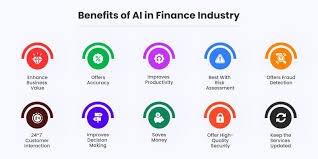
Artificial intelligence (AI) is rapidly gaining traction in the banking and finance sector, with generative AI (GenAI) emerging as a transformative force. Financial institutions are increasingly adopting AI technologies to automate processes, cut operational costs, and boost overall productivity, according to Sameer Gupta, North America Financial Services Organization Advanced Analytics Leader at EY. While traditional machine learning (ML) techniques are commonly used for fraud detection, loan approvals, and personalized marketing, banks are now advancing to incorporate more sophisticated technologies, including ML, natural language processing (NLP), and GenAI. Gupta notes that EY is observing a growing trend of banks using ML to enhance credit approvals, improve fraud detection, and refine marketing strategies, leading to greater efficiency and better decision-making. A recent survey by Gartner’s Jasleen Kaur Sindhu reveals that 58% of banking CIOs have either deployed or plan to deploy AI initiatives in 2024, with this number expected to rise to 77% by 2025. “This indicates not only the growing importance of AI but also its fundamental role in shaping how banks operate and deliver value to their customers,” Sindhu said. “AI is becoming essential to the success of banking institutions.” Here are five key benefits of AI applications in banking: Despite the benefits, concerns about AI in banking persist, particularly regarding data privacy, bias, and ethics. AI can inadvertently extract personal information and raise privacy issues. Regulatory challenges and the potential for AI systems to perpetuate biases are also major concerns. As AI technology evolves, banks are investing in robust governance frameworks, continuous monitoring, and adherence to ethical standards to address these risks. Looking ahead, AI is expected to revolutionize banking by delivering personalized services, enhancing customer interactions, and driving productivity. Deloitte forecasts that GenAI could boost productivity by up to 35% in the top 14 global investment banks, generating significant additional revenue per employee by 2026. Like Related Posts Who is Salesforce? Who is Salesforce? Here is their story in their own words. From our inception, we’ve proudly embraced the identity of Read more Salesforce Marketing Cloud Transactional Emails Salesforce Marketing Cloud Transactional Emails are immediate, automated, non-promotional messages crucial to business operations and customer satisfaction, such as order Read more Salesforce Unites Einstein Analytics with Financial CRM Salesforce has unveiled a comprehensive analytics solution tailored for wealth managers, home office professionals, and retail bankers, merging its Financial Read more AI-Driven Propensity Scores AI plays a crucial role in propensity score estimation as it can discern underlying patterns between treatments and confounding variables Read more

Read More
Data Governance for the AI Enterprise

Data Governance for the AI Enterprise

Salesforce Introduces Data Governance for the AI Enterprise Salesforce this month unveiled Data Governance for the AI Enterprise, a comprehensive suite of tools designed to help IT teams navigate the growing regulatory landscape surrounding generative AI. Why it matters: As governments worldwide work to implement stricter rules governing the use of AI, like the EU’s AI Act, data governance has become a top priority for businesses. According to Salesforce research, ensuring robust data security and governance is now the leading concern for Chief Data Officers. Cloud Data Security & Privacy SolutionsExplore the new suite: How Salesforce’s Data Governance for the AI Enterprise Can Help: Salesforce’s latest solution is designed to help companies proactively address both current and future regulations. Built on the Salesforce platform and integrated with Data Cloud, the suite offers advanced data management, enhanced security, and privacy features: Salesforce’s perspective:“Data governance is a top priority for every organization deploying AI, especially given the complexity of the regulatory landscape,” said Alice Steinglass, EVP and GM for Salesforce Platform. “Our Data Governance for the AI Enterprise suite equips businesses to tackle these challenges.” Customer success story:“Data encryption is essential to our data governance strategy,” said James Ferguson, Principal Security Architect at AWS. “With Salesforce’s flexible encryption solutions, we can maintain top-tier security while delivering innovative customer experiences.” Availability: For Data Cloud users: Like Related Posts Who is Salesforce? Who is Salesforce? Here is their story in their own words. From our inception, we’ve proudly embraced the identity of Read more Salesforce Marketing Cloud Transactional Emails Salesforce Marketing Cloud Transactional Emails are immediate, automated, non-promotional messages crucial to business operations and customer satisfaction, such as order Read more Salesforce Unites Einstein Analytics with Financial CRM Salesforce has unveiled a comprehensive analytics solution tailored for wealth managers, home office professionals, and retail bankers, merging its Financial Read more AI-Driven Propensity Scores AI plays a crucial role in propensity score estimation as it can discern underlying patterns between treatments and confounding variables Read more

Read More
New Technology Risks

New Technology Risks

Organizations have always needed to manage the risks that come with adopting new technologies, and implementing artificial intelligence (AI) is no different. Many of the risks associated with AI are similar to those encountered with any new technology: poor alignment with business goals, insufficient skills to support the initiatives, and a lack of organizational buy-in. To address these challenges, executives should rely on best practices that have guided the successful adoption of other technologies, according to management consultants and AI experts. When it comes to AI, this includes: However, AI presents unique risks that executives must recognize and address proactively. Below are 15 areas of risk that organizations may encounter as they implement and use AI technologies: Managing AI Risks While the risks associated with AI cannot be entirely eliminated, they can be managed. Organizations must first recognize and understand these risks and then implement policies to mitigate them. This includes ensuring high-quality data for AI training, testing for biases, and continuous monitoring of AI systems to catch unintended consequences. Ethical frameworks are also crucial to ensure AI systems produce fair, transparent, and unbiased results. Involving the board and C-suite in AI governance is essential, as managing AI risk is not just an IT issue but a broader organizational challenge. Like Related Posts Who is Salesforce? Who is Salesforce? Here is their story in their own words. From our inception, we’ve proudly embraced the identity of Read more Salesforce Marketing Cloud Transactional Emails Salesforce Marketing Cloud Transactional Emails are immediate, automated, non-promotional messages crucial to business operations and customer satisfaction, such as order Read more Salesforce Unites Einstein Analytics with Financial CRM Salesforce has unveiled a comprehensive analytics solution tailored for wealth managers, home office professionals, and retail bankers, merging its Financial Read more AI-Driven Propensity Scores AI plays a crucial role in propensity score estimation as it can discern underlying patterns between treatments and confounding variables Read more

Read More
Salesforce Einstein Copilot Security

Salesforce Einstein Copilot Security

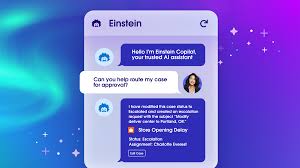
Salesforce Einstein Copilot Security: How It Works and Key Risks to Mitigate for a Safe Rollout With the official rollout of Salesforce Einstein Copilot, this conversational AI assistant is set to transform how sales, marketing, and customer service teams interact with both customers and internal documentation. Einstein Copilot understands natural language queries, streamlining daily tasks such as answering questions, generating insights, and performing actions across Salesforce to boost productivity. Salesforce Einstein Copilot Security However, alongside the productivity gains, it’s essential to address potential risks and ensure a secure implementation. This Tectonic insight covers: Einstein Copilot Use Cases Einstein Copilot enables users to: All of these actions can be performed with simple, natural language prompts, improving efficiency and outcomes. How Einstein Copilot Works Here’s a simplified breakdown of how Einstein Copilot processes prompts: The Einstein Trust Layer Salesforce has built the Einstein Trust Layer to ensure customer data is secure. Customer data processed by Einstein Copilot is encrypted, and no data is retained on the backend. Sensitive data, such as PII (Personally Identifiable Information), PCI (Payment Card Information), and PHI (Protected Health Information), is masked to ensure privacy. Additionally, the Trust Layer reduces biased, toxic, and unethical outputs by leveraging toxic language detection. Importantly, Salesforce guarantees that customer data will not be used to train the AI models behind Einstein Copilot or be shared with third parties. The Shared Responsibility Model Salesforce’s security approach is based on a shared responsibility model: This collaborative model ensures a higher level of security and trust between Salesforce and its customers. Best Practices for Securing Einstein Copilot Rollout Prepare Your Salesforce Org for Einstein Copilot To ensure a smooth rollout, it’s critical to assess your Salesforce security posture and ready your data. Tools like Salesforce Shield can help organizations by: By following these steps, you can utilize the power of Einstein Copilot while ensuring the security and integrity of your data. Like1 Related Posts Who is Salesforce? Who is Salesforce? Here is their story in their own words. From our inception, we’ve proudly embraced the identity of Read more Salesforce Marketing Cloud Transactional Emails Salesforce Marketing Cloud Transactional Emails are immediate, automated, non-promotional messages crucial to business operations and customer satisfaction, such as order Read more Salesforce Unites Einstein Analytics with Financial CRM Salesforce has unveiled a comprehensive analytics solution tailored for wealth managers, home office professionals, and retail bankers, merging its Financial Read more AI-Driven Propensity Scores AI plays a crucial role in propensity score estimation as it can discern underlying patterns between treatments and confounding variables Read more

Read More
Salesforce AI Evolves with the Generative AI Landscape

Salesforce AI Evolves with the Generative AI Landscape

Salesforce AI: Powering Customer Relationship Management Salesforce is a leading CRM solution that has long delivered cutting-edge cloud technologies to manage customer relationships effectively. In recent months, the platform has further advanced with the integration of generative AI and AI-powered features, primarily through its AI engine, Einstein. Salesforce AI Evolves with the Generative AI Landscape. To explore how AI operates within the Salesforce ecosystem and how various business teams can leverage these innovations, this guide delves into Salesforce’s AI capabilities, products, and features. Salesforce AI: Transforming CRM Capabilities Salesforce remains a top choice in the CRM software market, offering one of the most comprehensive solutions for managing relationships across departments, industries, and initiatives. Through dedicated cloud platforms, Salesforce enables teams to oversee marketing, sales, customer service, e-commerce, and more, with tools focused on delivering enhanced customer experiences supported by powerful data analytics. With the introduction of generative AI, Salesforce has significantly elevated its native automation, workflow management, data analytics, and assistive capabilities for customer lifecycle management. Einstein Copilot exemplifies this innovation, aiding internal users with tasks such as outreach, analysis, and improving external user experiences. What is Salesforce Einstein? Salesforce Einstein is an AI-driven suite of tools integrated natively into various Salesforce Cloud applications, including Sales Cloud, Marketing Cloud, Service Cloud, and Commerce Cloud. It also operates through assistive technologies like Einstein Copilot. Einstein is built on a multitenant platform and incorporates numerous automated machine learning features to unify organizational data with CRM capabilities. Designed to make intelligent, data-driven decisions, Einstein requires no additional installation, offering a seamless user experience when paired with a compatible subscription plan. 7 Key Features of Salesforce Einstein 7 Applications of Salesforce Einstein Future Trends in Salesforce AI Bottom Line: Salesforce AI Evolves with the Generative AI Landscape Salesforce continues to enhance its AI-powered features, keeping pace with advancements in generative and predictive AI. Whether new to the platform or a seasoned user, Salesforce offers innovative, AI-centric solutions to streamline customer relationship management and business operations. Like1 Related Posts Who is Salesforce? Who is Salesforce? Here is their story in their own words. From our inception, we’ve proudly embraced the identity of Read more Salesforce Marketing Cloud Transactional Emails Salesforce Marketing Cloud Transactional Emails are immediate, automated, non-promotional messages crucial to business operations and customer satisfaction, such as order Read more Salesforce Unites Einstein Analytics with Financial CRM Salesforce has unveiled a comprehensive analytics solution tailored for wealth managers, home office professionals, and retail bankers, merging its Financial Read more AI-Driven Propensity Scores AI plays a crucial role in propensity score estimation as it can discern underlying patterns between treatments and confounding variables Read more

Read More
gettectonic.com