Python Archives - gettectonic.com - Page 3
Python Alongside Salesforce

Python Losing the Crown

For years, Python has been synonymous with data science, thanks to its robust libraries like NumPy, Pandas, and scikit-learn. It’s long held the crown as the dominant programming language in the field. However, even the strongest kingdoms face threats. Python Losing the Crown. The whispers are growing louder: Is Python’s reign nearing its end? Before you fire up your Jupyter notebook to prove me wrong, let me clarify — Python is incredible and undeniably one of the greatest programming languages of all time. But no ruler is without flaws, and Python’s supremacy may not last forever. Here are five reasons why Python’s crown might be slipping. 1. Performance Bottlenecks: Python’s Achilles’ Heel Let’s address the obvious: Python is slow. Its interpreted nature makes it inherently less efficient than compiled languages like C++ or Java. Sure, libraries like NumPy and tools like Cython help mitigate these issues, but at its core, Python can’t match the raw speed of newer, more performance-oriented languages. Enter Julia and Rust, which are optimized for numerical computing and high-performance tasks. When working with massive, real-time datasets, Python’s performance bottlenecks become harder to ignore, prompting some developers to offload critical tasks to faster alternatives. 2. Python’s Memory Challenges Memory consumption is another area where Python struggles. Handling large datasets often pushes Python to its limits, especially in environments with constrained resources, such as edge computing or IoT. While tools like Dask can help manage memory more efficiently, these are often stopgap solutions rather than true fixes. Languages like Rust are gaining traction for their superior memory management, making them an attractive alternative for resource-limited scenarios. Picture running a Python-based machine learning model on a Raspberry Pi, only to have it crash due to memory overload. Frustrating, isn’t it? 3. The Rise of Domain-Specific Languages (DSLs) Python’s versatility has been both its strength and its weakness. As industries mature, many are turning to domain-specific languages tailored to their specific needs: Python may be the “jack of all trades,” but as the saying goes, it risks being the “master of none” compared to these specialized tools. 4. Python’s Simplicity: A Double-Edged Sword Python’s beginner-friendly syntax is one of its greatest strengths, but it can also create complacency. Its ease of use often means developers don’t delve into the deeper mechanics of algorithms or computing. Meanwhile, languages like Julia, designed for scientific computing, offer intuitive structures for advanced modeling while encouraging developers to engage with complex mathematical concepts. Python’s simplicity is like riding a bike with training wheels: it works, but it may not push you to grow as a developer. 5. AI-Specific Frameworks Are Gaining Ground Python has been the go-to language for AI, powering frameworks like TensorFlow, PyTorch, and Keras. But new challengers are emerging: As AI and machine learning evolve, these specialized frameworks could chip away at Python’s dominance. The Verdict: Python Losing the Crown? Python remains the Swiss Army knife of programming languages, especially in data science. However, its cracks are showing as new, specialized tools and faster languages emerge. The data science landscape is evolving, and Python must adapt or risk losing its crown. For now, Python is still king. But as history has shown, no throne is secure forever. The future belongs to those who innovate, and Python’s ability to evolve will determine whether it remains at the top. The throne of code is only as stable as the next breakthrough. Like Related Posts Who is Salesforce? Who is Salesforce? Here is their story in their own words. From our inception, we’ve proudly embraced the identity of Read more Salesforce Unites Einstein Analytics with Financial CRM Salesforce has unveiled a comprehensive analytics solution tailored for wealth managers, home office professionals, and retail bankers, merging its Financial Read more AI-Driven Propensity Scores AI plays a crucial role in propensity score estimation as it can discern underlying patterns between treatments and confounding variables Read more Tectonic’s Successful Salesforce Track Record Salesforce Technology Services Integrator – Tectonic has successfully delivered Salesforce in a variety of industries including Public Sector, Hospitality, Manufacturing, Read more

Read More
Fully Formatted Facts

Fully Formatted Facts

A recent discovery by programmer and inventor Michael Calvin Wood is addressing a persistent challenge in AI: hallucinations. These false or misleading outputs, long considered an inherent flaw in large language models (LLMs), have posed a significant issue for developers. However, Wood’s breakthrough is challenging this assumption, offering a solution that could transform how AI-powered applications are built and used. The Importance of Wood’s Discovery for Developers Wood’s findings have substantial implications for developers working with AI. By eliminating hallucinations, developers can ensure that AI-generated content is accurate and reliable, particularly in applications where precision is critical. Understanding the Root Cause of Hallucinations Contrary to popular belief, hallucinations are not primarily caused by insufficient training data or biased algorithms. Wood’s research reveals that the issue stems from how LLMs process and generate information based on “noun-phrase routes.” LLMs organize information around noun phrases, and when they encounter semantically similar phrases, they may conflate or misinterpret them, leading to incorrect outputs. How LLMs Organize Information For example: The Noun-Phrase Dominance Model Wood’s research led to the development of the Noun-Phrase Dominance Model, which posits that neural networks in LLMs self-organize around noun phrases. This model is key to understanding and eliminating hallucinations by addressing how AI processes noun-phrase conflicts. Fully-Formatted Facts (FFF): A Solution Wood’s solution involves transforming input data into Fully-Formatted Facts (FFF)—statements that are literally true, devoid of noun-phrase conflicts, and structured as simple, complete sentences. Presenting information in this format has led to significant improvements in AI accuracy, particularly in question-answering tasks. How FFF Processing Works While Wood has not provided a step-by-step guide for FFF processing, he hints that the process began with named-entity recognition using the Python SpaCy library and evolved into using an LLM to reduce ambiguity while retaining the original writing style. His company’s REST API offers a wrapper around GPT-4o and GPT-4o-mini models, transforming input text to remove ambiguity before processing it. Current Methods vs. Wood’s Approach Current approaches, like Retrieval Augmented Generation (RAG), attempt to reduce hallucinations by adding more context. However, these methods often introduce additional noun-phrase conflicts. For instance, even with RAG, ChatGPT-3.5 Turbo experienced a 23% hallucination rate when answering questions about Wikipedia articles. In contrast, Wood’s method focuses on eliminating noun-phrase conflicts entirely. Results: RAG FF (Retrieval Augmented Generation with Formatted Facts) Wood’s method has shown remarkable results, eliminating hallucinations in GPT-4 and GPT-3.5 Turbo during question-answering tasks using third-party datasets. Real-World Example: Translation Error Elimination Consider a simple translation example: This transformation eliminates hallucinations by removing the potential noun-phrase conflict. Implications for the Future of AI The Noun-Phrase Dominance Model and the use of Fully-Formatted Facts have far-reaching implications: Roadmap for Future Development Wood and his team plan to expand their approach by: Conclusion: A New Era of Reliable AI Wood’s discovery represents a significant leap forward in the pursuit of reliable AI. By aligning input data with how LLMs process information, he has unlocked the potential for accurate, trustworthy AI systems. As this technology continues to evolve, it could have profound implications for industries ranging from healthcare to legal services, where AI could become a consistent and reliable tool. While there is still work to be done in expanding this method across all AI tasks, the foundation has been laid for a revolution in AI accuracy. Future developments will likely focus on refining and expanding these capabilities, enabling AI to serve as a trusted resource across a range of applications. Experience RAGFix For those looking to explore this technology, RAGFix offers an implementation of these groundbreaking concepts. Visit their official website to access demos, explore REST API integration options, and stay updated on the latest advancements in hallucination-free AI: Visit RAGFix.ai Like Related Posts Who is Salesforce? Who is Salesforce? Here is their story in their own words. From our inception, we’ve proudly embraced the identity of Read more Salesforce Marketing Cloud Transactional Emails Salesforce Marketing Cloud Transactional Emails are immediate, automated, non-promotional messages crucial to business operations and customer satisfaction, such as order Read more Salesforce Unites Einstein Analytics with Financial CRM Salesforce has unveiled a comprehensive analytics solution tailored for wealth managers, home office professionals, and retail bankers, merging its Financial Read more AI-Driven Propensity Scores AI plays a crucial role in propensity score estimation as it can discern underlying patterns between treatments and confounding variables Read more

Read More
Databricks Tools

Databricks Tools

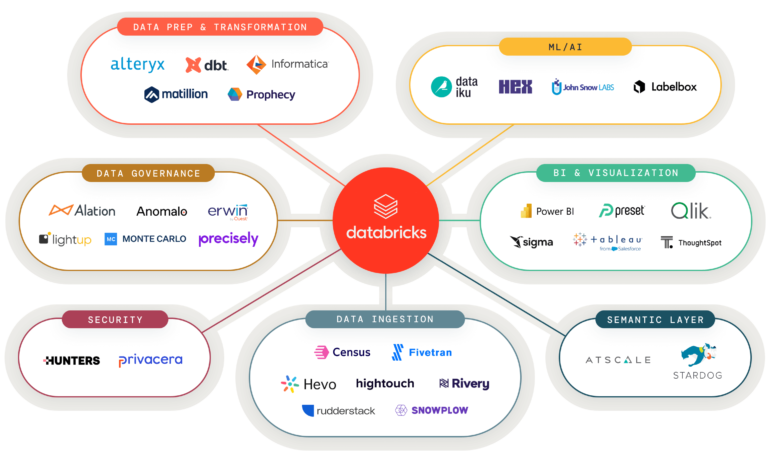
Databricks recently introduced Databricks Apps, a toolkit designed to simplify AI and data application development. By integrating native development platforms and offering automatic provisioning of serverless compute, the toolkit enables customers to more easily develop and deploy applications. Databricks Apps builds on the existing capabilities of Mosaic AI, which allows users to integrate large language models (LLMs) with their enterprise’s proprietary data. However, the ability to develop interactive AI applications, such as generative AI chatbots, was previously missing. Databricks Apps addresses this gap, allowing developers to build and deploy custom applications entirely within the secure Databricks environment. According to Donald Farmer, founder and principal of TreeHive Strategy, Databricks Apps removes obstacles like the need to set up separate infrastructure for development and deployment, making the process easier and more efficient. The new features allow companies to go beyond implementing AI/ML models and create differentiated applications that leverage their unique data sets. Kevin Petrie, an analyst at BARC U.S., highlighted the significance of Databricks Apps in helping companies develop custom AI applications, which are essential for maintaining a competitive edge. Databricks, founded in 2013, was one of the pioneers of the data lakehouse storage format, and over the last two years, it has expanded its platform to focus on AI and machine learning (ML) capabilities. The company’s $1.3 billion acquisition of MosaicML in June 2023 was a key milestone in building its AI environment. Databricks has since launched DBRX, its own large language model, and introduced further functionalities through product development. Databricks Apps, now available in public preview on AWS and Azure, advances these AI development capabilities, simplifying the process of building applications within a single platform. Developers can use frameworks like Dash, Flask, Gradio, Shiny, and Streamlit, or opt for integrated development environments (IDEs) like Visual Studio Code or PyCharm. The toolkit also provides prebuilt Python templates to accelerate development. Additionally, applications can be deployed and managed directly in Databricks, eliminating the need for external infrastructures. Databricks Apps includes security features such as access control and data lineage through the Unity Catalog. Farmer noted that the support for popular developer frameworks and the automatic provisioning of serverless compute could significantly impact the AI development landscape by reducing the complexity of deploying data architectures. While competitors like AWS, Google Cloud, Microsoft, and Snowflake have also made AI a key focus, Farmer pointed out that Databricks’ integration of AI tools into a unified platform sets it apart. Databricks Apps further enhances this competitive advantage. Despite the added capabilities of Databricks Apps, Petrie cautioned that developing generative AI applications still requires a level of expertise in data, AI, and the business domain. While Databricks aims to make AI more accessible, users will still need substantial knowledge to effectively leverage these tools. Databricks’ vice president of product management, Shanku Niyogi, explained that the new features in Databricks Apps were driven by customer feedback. As enterprise interest in AI grows, customers sought easier ways to develop and deploy internal data applications in a secure environment. Looking ahead, Databricks plans to continue investing in simplifying AI application development, with a focus on enhancing Mosaic AI and expanding its collaborative AI partner ecosystem. Farmer suggested that the company should focus on supporting nontechnical users and emerging AI technologies like multimodal models, which will become increasingly important in the coming years. The introduction of Databricks Apps marks a significant step forward in Databricks’ AI and machine learning strategy, offering users a more streamlined approach to building and deploying AI applications. Like Related Posts Who is Salesforce? Who is Salesforce? Here is their story in their own words. From our inception, we’ve proudly embraced the identity of Read more Salesforce Unites Einstein Analytics with Financial CRM Salesforce has unveiled a comprehensive analytics solution tailored for wealth managers, home office professionals, and retail bankers, merging its Financial Read more AI-Driven Propensity Scores AI plays a crucial role in propensity score estimation as it can discern underlying patterns between treatments and confounding variables Read more Tectonic’s Successful Salesforce Track Record Salesforce Technology Services Integrator – Tectonic has successfully delivered Salesforce in a variety of industries including Public Sector, Hospitality, Manufacturing, Read more
Read More
Cortex Framework Integration with Salesforce (SFDC)

Cortex Framework Integration with Salesforce (SFDC)

Cortex Framework: Integration with Salesforce (SFDC) This insight outlines the process of integrating Salesforce (SFDC) operational workloads into the Cortex Framework Data Foundation. By integrating Salesforce data through Dataflow pipelines into BigQuery, Cloud Composer can schedule and monitor these pipelines, allowing you to gain insights from your Salesforce data. Cortex Framework Integration with Salesforce explained. Prerequisite: Before configuring any workload integration, ensure that the Cortex Framework Data Foundation is deployed. Configuration File The config.json file in the Cortex Framework Data Foundation repository manages settings for transferring data from various sources, including Salesforce. Below is an example of how Salesforce workloads are configured: jsonCopy code”SFDC”: { “deployCDC”: true, “createMappingViews”: true, “createPlaceholders”: true, “datasets”: { “cdc”: “”, “raw”: “”, “reporting”: “REPORTING_SFDC” } } Explanation of Parameters: Parameter Meaning Default Value Description SFDC.deployCDC Deploy CDC true Generates Change Data Capture (CDC) processing scripts to run as DAGs in Cloud Composer. SFDC.createMappingViews Create mapping views true Creates views in the CDC processed dataset to show the “latest version of the truth” from the raw dataset. SFDC.createPlaceholders Create placeholders true Creates empty placeholder tables if they aren’t generated during ingestion, ensuring smooth downstream reporting deployment. SFDC.datasets.raw Raw landing dataset (user-defined) The dataset where replication tools land data from Salesforce. SFDC.datasets.cdc CDC processed dataset (user-defined) Source for reporting views and target for records processed by DAGs. SFDC.datasets.reporting Reporting dataset for SFDC “REPORTING_SFDC” Name of the dataset accessible for end-user reporting, where views and user-facing tables are deployed. Salesforce Data Requirements Table Structure: Loading SFDC Data into BigQuery The Cortex Framework offers several methods for loading Salesforce data into BigQuery: CDC Processing The CDC scripts rely on two key fields: You can adjust the CDC processing to handle different field names or add custom fields to suit your data schema. Configuration of API Integration and CDC To configure Salesforce data integration into BigQuery, Cortex provides the following methods: Example Configuration (settings.yaml): yamlCopy codesalesforce_to_raw_tables: – base_table: accounts raw_table: Accounts api_name: Account load_frequency: “@daily” Data Mapping and Polymorphic Fields Cortex Framework supports mapping data fields to the expected format. For example, a field named unicornId in your source system would be mapped to AccountId in Cortex with the string data type. Polymorphic Fields: Fields whose names vary but have the same structure can be mapped in Cortex using [Field Name]_Type, such as Who_Type for the Who.Type field in the Task object. Modifying DAG Templates You can customize DAG templates as needed for CDC or raw data processing. To disable CDC or raw data processing from API calls, set deployCDC=false in the configuration file. Setting Up the Extraction Module Follow these steps to set up the Salesforce to BigQuery extraction module: Cloud Composer Setup To run Python scripts for replication, install the necessary Python packages depending on your Airflow version. For Airflow 2.x: bashCopy codegcloud composer environments update my-composer-instance –location us-central1 –update-pypi-package apache-airflow-providers-salesforce>=5.2.0 Security and Permissions Ensure Cloud Composer has access to Google Secret Manager for retrieving stored secrets, enhancing the security of sensitive data like passwords and API keys. Conclusion By following these steps, you can successfully integrate Salesforce workloads into Cortex Framework, ensuring a seamless data flow from Salesforce into BigQuery for reporting and analytics. Like Related Posts Who is Salesforce? Who is Salesforce? Here is their story in their own words. From our inception, we’ve proudly embraced the identity of Read more Salesforce Marketing Cloud Transactional Emails Salesforce Marketing Cloud Transactional Emails are immediate, automated, non-promotional messages crucial to business operations and customer satisfaction, such as order Read more Salesforce Unites Einstein Analytics with Financial CRM Salesforce has unveiled a comprehensive analytics solution tailored for wealth managers, home office professionals, and retail bankers, merging its Financial Read more AI-Driven Propensity Scores AI plays a crucial role in propensity score estimation as it can discern underlying patterns between treatments and confounding variables Read more

Read More
Exploring Large Action Models

Exploring Large Action Models

Exploring Large Action Models (LAMs) for Automated Workflow Processes While large language models (LLMs) are effective in generating text and media, Large Action Models (LAMs) push beyond simple generation—they perform complex tasks autonomously. Imagine an AI that not only generates content but also takes direct actions in workflows, such as managing customer relationship management (CRM) tasks, sending emails, or making real-time decisions. LAMs are engineered to execute tasks across various environments by seamlessly integrating with tools, data, and systems. They adapt to user commands, making them ideal for applications in industries like marketing, customer service, and beyond. Key Capabilities of LAMs A standout feature of LAMs is their ability to perform function-calling tasks, such as selecting the appropriate APIs to meet user requirements. Salesforce’s xLAM models are designed to optimize these tasks, achieving high performance with lower resource demands—ideal for both mobile applications and high-performance environments. The fc series models are specifically tuned for function-calling, enabling fast, precise, and structured responses by selecting the best APIs based on input queries. Practical Examples Using Salesforce LAMs In this article, we’ll explore: Implementation: Setting Up the Model and API Start by installing the necessary libraries: pythonCopy code! pip install transformers==4.41.0 datasets==2.19.1 tokenizers==0.19.1 flask==2.2.5 Next, load the xLAM model and tokenizer: pythonCopy codeimport json import torch from transformers import AutoModelForCausalLM, AutoTokenizer model_name = “Salesforce/xLAM-7b-fc-r” model = AutoModelForCausalLM.from_pretrained(model_name, device_map=”auto”, torch_dtype=”auto”, trust_remote_code=True) tokenizer = AutoTokenizer.from_pretrained(model_name) Now, define instructions and available functions. Task Instructions: The model will use function calls where applicable, based on user questions and available tools. Format Example: jsonCopy code{ “tool_calls”: [ {“name”: “func_name1”, “arguments”: {“argument1”: “value1”, “argument2”: “value2”}} ] } Define available APIs: pythonCopy codeget_weather_api = { “name”: “get_weather”, “description”: “Retrieve weather details”, “parameters”: {“location”: “string”, “unit”: “string”} } search_api = { “name”: “search”, “description”: “Search for online information”, “parameters”: {“query”: “string”} } Creating Flask APIs for Business Logic We can use Flask to create APIs to replicate business processes. pythonCopy codefrom flask import Flask, request, jsonify app = Flask(__name__) @app.route(“/customer”, methods=[‘GET’]) def get_customer(): customer_id = request.args.get(‘customer_id’) # Return dummy customer data return jsonify({“customer_id”: customer_id, “status”: “active”}) @app.route(“/send_email”, methods=[‘GET’]) def send_email(): email = request.args.get(’email’) # Return dummy response for email send status return jsonify({“status”: “sent”}) Testing the LAM Model and Flask APIs Define queries to test LAM’s function-calling capabilities: pythonCopy codequery = “What’s the weather like in New York in fahrenheit?” print(custom_func_def(query)) # Expected: {“tool_calls”: [{“name”: “get_weather”, “arguments”: {“location”: “New York”, “unit”: “fahrenheit”}}]} Function-Calling Models in Action Using base_call_api, LAMs can determine the correct API to call and manage workflow processes autonomously. pythonCopy codedef base_call_api(query): “””Calls APIs based on LAM recommendations.””” base_url = “http://localhost:5000/” json_response = json.loads(custom_func_def(query)) api_url = json_response[“tool_calls”][0][“name”] params = json_response[“tool_calls”][0][“arguments”] response = requests.get(base_url + api_url, params=params) return response.json() With LAMs, businesses can automate and streamline tasks in complex workflows, maximizing efficiency and empowering teams to focus on strategic initiatives. Like Related Posts Who is Salesforce? Who is Salesforce? Here is their story in their own words. From our inception, we’ve proudly embraced the identity of Read more Salesforce Marketing Cloud Transactional Emails Salesforce Marketing Cloud Transactional Emails are immediate, automated, non-promotional messages crucial to business operations and customer satisfaction, such as order Read more Salesforce Unites Einstein Analytics with Financial CRM Salesforce has unveiled a comprehensive analytics solution tailored for wealth managers, home office professionals, and retail bankers, merging its Financial Read more AI-Driven Propensity Scores AI plays a crucial role in propensity score estimation as it can discern underlying patterns between treatments and confounding variables Read more

Read More

Linus Torvalds Insights

Linus Torvalds Shares Insights on the Future of Programming with AI Linus Torvalds, the mastermind behind Linux and Git—two cornerstones of modern software development—recently shared his perspective on how artificial intelligence (AI) is reshaping the world of programming. His candid insights offer a balanced view of AI’s capabilities and limitations, coming from one of the industry’s most influential voices. If you prefer a quick breakdown over watching a full interview, here are the key takeaways from Torvalds’ conversation. AI in Programming: Evolution, Not Revolution Torvalds describes AI, particularly large language models (LLMs), as “autocorrect on steroids.” These tools excel at predicting the next word or line of code based on established patterns but aren’t “intelligent” in the human sense. Rather than a seismic shift, AI represents the next step in a long history of automation in coding. From the days of machine language to today’s high-level languages like Python and Rust, tools have continuously evolved to make developers’ lives easier. AI is just another link in this chain—helping write, refine, and debug code while boosting productivity. AI as a Developer’s Supercharged Assistant Far from being a replacement for human programmers, Torvalds sees AI as a powerful assistant. Tools like GitHub Copilot are already enhancing the coding process by suggesting fixes, spotting bugs, and speeding up routine tasks. The vision? A future where programmers can abstract tasks even further, possibly instructing AI in plain English. Imagine simply saying, “Build me a tool to manage my expenses,” and watching it happen. However, for now, AI is an incremental improvement, not a groundbreaking leap. The Shift Toward AI-Generated Code One of Torvalds’ more intriguing predictions is that AI may eventually write code in ways incomprehensible to human programmers. Since AI doesn’t require human-readable syntax, it could optimize code in ways that only it understands. In this scenario, developers might transition from writing code to managing AI systems that generate and refine it—shifting from hands-on creators to overseers of automated processes. AI in Code Review: Smarter Intern or Future Partner? When it comes to code review, AI’s potential is clear. Torvalds notes that AI could efficiently catch simple errors—like typos or syntax mistakes—freeing up human reviewers to focus on more complex logic and functionality. While AI might streamline tedious tasks, it’s far from perfect. Issues like “hallucinations,” where AI confidently produces incorrect results, highlight the need for human oversight. AI can assist, but it still requires developers to verify its output. A Balanced Take on AI and Jobs Torvalds dismisses fears of AI taking over programming jobs, pointing out that technological advancements historically create new opportunities rather than eliminate roles. AI, in his view, is less about replacing humans and more about augmenting their abilities. It’s a tool to make developers more efficient—not a harbinger of obsolescence. Final Thoughts: Embrace AI, But Stay Grounded Linus Torvalds envisions AI as a valuable, evolving tool for programmers, not a threat to their livelihood. While it’s set to change how we code, the shift will be gradual rather than revolutionary. Whether you’re a seasoned developer or a newcomer, now is the time to explore AI-powered tools, embrace their potential, and adapt to this new era of programming. Instead of fearing change, we can use AI to push the boundaries of what’s possible. Like Related Posts Who is Salesforce? Who is Salesforce? Here is their story in their own words. From our inception, we’ve proudly embraced the identity of Read more Salesforce Unites Einstein Analytics with Financial CRM Salesforce has unveiled a comprehensive analytics solution tailored for wealth managers, home office professionals, and retail bankers, merging its Financial Read more AI-Driven Propensity Scores AI plays a crucial role in propensity score estimation as it can discern underlying patterns between treatments and confounding variables Read more Tectonic’s Successful Salesforce Track Record Salesforce Technology Services Integrator – Tectonic has successfully delivered Salesforce in a variety of industries including Public Sector, Hospitality, Manufacturing, Read more

Read More
Slack Automation with New Workflow Features

Slack Automation with New Workflow Features

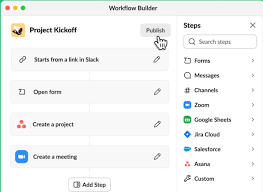
Salesforce Expands Slack Automation with New Workflow Features Salesforce has introduced new capabilities in Slack, allowing customers to build workflows that automatically trigger when an event occurs in third-party apps like PagerDuty, Asana, Bitbucket, and others. This update also enhances the user experience, making it more intuitive to create workflows in Slack. Users now have access to over 50 plug-and-play templates tailored to common productivity tasks. Additionally, developers gain access to more coding languages and tools for building custom workflows, which can be easily shared with their teams. Why It Matters Key Highlights Workflow Builder, Slack’s no-code automation tool, empowers users to streamline tasks directly within Slack, reducing the burden on IT teams. Salesforce highlights the following new features: From Slack’s Perspective Slack has also made it easier to customize workflows with expanded developer tools. Developers can now build custom steps using open APIs and new developer resources, integrating these steps into Workflow Builder. These tools support additional programming languages, including JavaScript, TypeScript, Python, and Java, further enhancing the flexibility of custom workflows. According to Rob Seaman, Slack’s Chief Product Officer, “At Slack, one of our product principles is ‘don’t make me think.’ We’re applying that to automation, making it intuitive and delightful for everyone. These new features empower both developers and end users to automate any business process across their apps seamlessly in Slack.” What This Means for Businesses As companies seek ways to increase productivity without overloading IT teams, automation has become a critical solution. Tools like Slack’s no-code Workflow Builder enable users of any skill level to automate repetitive tasks, freeing up time for more strategic work. This is particularly important in an era where skilled workers, especially in data science and programming, are in short supply. The expanded capabilities in Workflow Builder make it easier to create powerful workflows that integrate with third-party systems. In addition, Salesforce has expanded Slack AI, initially launched in April as an add-on for paying customers, to support multiple languages, including Japanese and Spanish. This ongoing development strengthens Slack’s position as a central hub for workplace automation. Like Related Posts Who is Salesforce? Who is Salesforce? Here is their story in their own words. From our inception, we’ve proudly embraced the identity of Read more Salesforce Marketing Cloud Transactional Emails Salesforce Marketing Cloud Transactional Emails are immediate, automated, non-promotional messages crucial to business operations and customer satisfaction, such as order Read more Salesforce Unites Einstein Analytics with Financial CRM Salesforce has unveiled a comprehensive analytics solution tailored for wealth managers, home office professionals, and retail bankers, merging its Financial Read more AI-Driven Propensity Scores AI plays a crucial role in propensity score estimation as it can discern underlying patterns between treatments and confounding variables Read more

Read More
Slack Operating System

Slack Operating System

Slack Advances Its Work Operating System with Enhanced Automation Capabilities With 3,000 workflows created this year alone, Rivian relies on Slack’s automation features to save time and boost team productivity. Slack Operating System are making a world of difference. Salesforce has announced new innovations in Slack, making it easier for users to build automations regardless of their technical expertise. Key Updates: Why This Matters: With 71% of business leaders under pressure to increase team productivity, and 70% of IT leaders concerned that rising business demands could stifle innovation, automation is crucial. A recent survey reveals that 77% of users believe automating routine tasks would significantly boost productivity. Companies need user-friendly, no-code automation solutions that enhance productivity without overburdening IT departments. A Closer Look: Slack’s Perspective: Rob Seaman, Chief Product Officer at Slack, stated, “At Slack, one of our product principles is ‘don’t make me think.’ We’re applying that principle to the traditionally technical and time-consuming area of automation, making it an intuitive and delightful productivity driver for everyone. These new features make Slack even more powerful, giving both developers and end users the tools they need to automate any business process across their work apps.” Customer Reaction: “Automation is a core capability that increases productivity and saves time for Rivian employees when doing repetitive work. Workflow Builder allows Slack users to easily create no-code automation at any experience level. Our Slack users created approximately 3,000 workflows in 2024, with heavy adoption in Production, Operation, and Service groups,” said Anoop Narang, Head of Digital Workplace & Solutions at Rivian. Availability: The enhancements to Workflow Builder are now generally available to all customers. Other app updates you might have missed. Slack 4.40.120 August 27, 2024 Bug Fixes Slack 4.39.95 July 29, 2024 Bug Fixes Slack 4.39.93 July 18, 2024 Bug Fixes Slack 4.39.90 July 8, 2024 Bug Fixes Slack 4.39.89 June 25, 2024 Bug Fixes Like Related Posts Who is Salesforce? Who is Salesforce? Here is their story in their own words. From our inception, we’ve proudly embraced the identity of Read more Salesforce Marketing Cloud Transactional Emails Salesforce Marketing Cloud Transactional Emails are immediate, automated, non-promotional messages crucial to business operations and customer satisfaction, such as order Read more Salesforce Unites Einstein Analytics with Financial CRM Salesforce has unveiled a comprehensive analytics solution tailored for wealth managers, home office professionals, and retail bankers, merging its Financial Read more AI-Driven Propensity Scores AI plays a crucial role in propensity score estimation as it can discern underlying patterns between treatments and confounding variables Read more

Read More
GitHub Copilot Autofix

GitHub Copilot Autofix

On Wednesday, GitHub announced the general availability of Copilot Autofix, an AI-driven tool designed to identify and remediate software vulnerabilities. Originally unveiled in March and tested in public beta, Copilot Autofix integrates GitHub’s CodeQL scanning engine with GPT-4, heuristics, and Copilot APIs to generate code suggestions for developers. The tool provides prompts based on CodeQL analysis and code snippets, allowing users to accept, edit, or reject the suggestions. In a blog post, Mike Hanley, GitHub’s Chief Security Officer and Senior Vice President of Engineering, highlighted the challenges developers and security teams face in addressing existing vulnerabilities. “Code scanning tools can find vulnerabilities, but the real issue is remediation, which requires security expertise and time—both of which are in short supply,” Hanley noted. “The problem isn’t finding vulnerabilities; it’s fixing them.” According to GitHub, the private beta of Copilot Autofix showed that users could respond to a CodeQL alert and automatically remediate a vulnerability in a pull request in just 28 minutes on average, compared to 90 minutes for manual remediation. The tool was even faster for common vulnerabilities like cross-site scripting, with remediation times averaging 22 minutes compared to three hours manually, and SQL injection flaws, which were fixed in 18 minutes on average versus almost four hours manually. Hanley likened the efficiency of Copilot Autofix in fixing vulnerabilities to the speed at which GitHub Copilot, their generative AI coding assistant released in 2022, produces code for developers. However, there have been concerns that GitHub Copilot and similar AI coding assistants could replicate existing vulnerabilities in the codebases they help generate. Industry analyst Katie Norton from IDC noted that while the replication of vulnerabilities is concerning, the rapid pace at which AI coding assistants generate new software could pose a more significant security issue. Chris Wysopal, CTO and co-founder of Veracode, echoed this concern, pointing out that faster coding speeds have led to more software being produced and a larger backlog of vulnerabilities for developers to manage. Norton also emphasized that AI-powered tools like Copilot Autofix could help alleviate the burden on developers by reducing these backlogs and enabling them to fix vulnerabilities without needing to be security experts. Other vendors, including Mobb and Snyk, have also developed AI-powered autoremediation tools. Initially supporting JavaScript, TypeScript, Java, and Python during its public beta, Copilot Autofix now also supports C#, C/C++, Go, Kotlin, Swift, and Ruby. Hanley also highlighted that Copilot Autofix would benefit the open-source software community. GitHub has previously provided open-source maintainers with free access to enterprise security tools for code scanning, secret scanning, and dependency management. Starting in September, Copilot Autofix will also be made available for free to these maintainers. “As the global home of the open-source community, GitHub is uniquely positioned to help maintainers detect and remediate vulnerabilities, making open-source software safer and more reliable for everyone,” Hanley said. Copilot Autofix is now available to all GitHub customers globally. Like Related Posts Who is Salesforce? Who is Salesforce? Here is their story in their own words. From our inception, we’ve proudly embraced the identity of Read more Salesforce Unites Einstein Analytics with Financial CRM Salesforce has unveiled a comprehensive analytics solution tailored for wealth managers, home office professionals, and retail bankers, merging its Financial Read more AI-Driven Propensity Scores AI plays a crucial role in propensity score estimation as it can discern underlying patterns between treatments and confounding variables Read more Tectonic’s Successful Salesforce Track Record Salesforce Technology Services Integrator – Tectonic has successfully delivered Salesforce in a variety of industries including Public Sector, Hospitality, Manufacturing, Read more
Read More
Small Language Models

Small Language Models

Large language models (LLMs) like OpenAI’s GPT-4 have gained acclaim for their versatility across various tasks, but they come with significant resource demands. In response, the AI industry is shifting focus towards smaller, task-specific models designed to be more efficient. Microsoft, alongside other tech giants, is investing in these smaller models. Science often involves breaking complex systems down into their simplest forms to understand their behavior. This reductionist approach is now being applied to AI, with the goal of creating smaller models tailored for specific functions. Sébastien Bubeck, Microsoft’s VP of generative AI, highlights this trend: “You have this miraculous object, but what exactly was needed for this miracle to happen; what are the basic ingredients that are necessary?” In recent years, the proliferation of LLMs like ChatGPT, Gemini, and Claude has been remarkable. However, smaller language models (SLMs) are gaining traction as a more resource-efficient alternative. Despite their smaller size, SLMs promise substantial benefits to businesses. Microsoft introduced Phi-1 in June last year, a smaller model aimed at aiding Python coding. This was followed by Phi-2 and Phi-3, which, though larger than Phi-1, are still much smaller than leading LLMs. For comparison, Phi-3-medium has 14 billion parameters, while GPT-4 is estimated to have 1.76 trillion parameters—about 125 times more. Microsoft touts the Phi-3 models as “the most capable and cost-effective small language models available.” Microsoft’s shift towards SLMs reflects a belief that the dominance of a few large models will give way to a more diverse ecosystem of smaller, specialized models. For instance, an SLM designed specifically for analyzing consumer behavior might be more effective for targeted advertising than a broad, general-purpose model trained on the entire internet. SLMs excel in their focused training on specific domains. “The whole fine-tuning process … is highly specialized for specific use-cases,” explains Silvio Savarese, Chief Scientist at Salesforce, another company advancing SLMs. To illustrate, using a specialized screwdriver for a home repair project is more practical than a multifunction tool that’s more expensive and less focused. This trend towards SLMs reflects a broader shift in the AI industry from hype to practical application. As Brian Yamada of VLM notes, “As we move into the operationalization phase of this AI era, small will be the new big.” Smaller, specialized models or combinations of models will address specific needs, saving time and resources. Some voices express concern over the dominance of a few large models, with figures like Jack Dorsey advocating for a diverse marketplace of algorithms. Philippe Krakowski of IPG also worries that relying on the same models might stifle creativity. SLMs offer the advantage of lower costs, both in development and operation. Microsoft’s Bubeck emphasizes that SLMs are “several orders of magnitude cheaper” than larger models. Typically, SLMs operate with around three to four billion parameters, making them feasible for deployment on devices like smartphones. However, smaller models come with trade-offs. Fewer parameters mean reduced capabilities. “You have to find the right balance between the intelligence that you need versus the cost,” Bubeck acknowledges. Salesforce’s Savarese views SLMs as a step towards a new form of AI, characterized by “agents” capable of performing specific tasks and executing plans autonomously. This vision of AI agents goes beyond today’s chatbots, which can generate travel itineraries but not take action on your behalf. Salesforce recently introduced a 1 billion-parameter SLM that reportedly outperforms some LLMs on targeted tasks. Salesforce CEO Mark Benioff celebrated this advancement, proclaiming, “On-device agentic AI is here!” Like Related Posts Who is Salesforce? Who is Salesforce? Here is their story in their own words. From our inception, we’ve proudly embraced the identity of Read more Salesforce Marketing Cloud Transactional Emails Salesforce Marketing Cloud Transactional Emails are immediate, automated, non-promotional messages crucial to business operations and customer satisfaction, such as order Read more Salesforce Unites Einstein Analytics with Financial CRM Salesforce has unveiled a comprehensive analytics solution tailored for wealth managers, home office professionals, and retail bankers, merging its Financial Read more AI-Driven Propensity Scores AI plays a crucial role in propensity score estimation as it can discern underlying patterns between treatments and confounding variables Read more

Read More
guide to RAG

Tectonic Guide to RAG

Guide to RAG (Retrieval-Augmented Generation) Retrieval-Augmented Generation (RAG) has become increasingly popular, and while it’s not yet as common as seeing it on a toaster oven manual, it is expected to grow in use. Despite its rising popularity, comprehensive guides that address all its nuances—such as relevance assessment and hallucination prevention—are still scarce. Drawing from practical experience, this insight offers an in-depth overview of RAG. Why is RAG Important? Large Language Models (LLMs) like ChatGPT can be employed for a wide range of tasks, from crafting horoscopes to more business-centric applications. However, there’s a notable challenge: most LLMs, including ChatGPT, do not inherently understand the specific rules, documents, or processes that companies rely on. There are two ways to address this gap: How RAG Works RAG consists of two primary components: While the system is straightforward, the effectiveness of the output heavily depends on the quality of the documents retrieved and how well the Retriever performs. Corporate documents are often unstructured, conflicting, or context-dependent, making the process challenging. Search Optimization in RAG To enhance RAG’s performance, optimization techniques are used across various stages of information retrieval and processing: Python and LangChain Implementation Example Below is a simple implementation of RAG using Python and LangChain: pythonCopy codeimport os import wget from langchain.vectorstores import Qdrant from langchain.embeddings import OpenAIEmbeddings from langchain import OpenAI from langchain_community.document_loaders import BSHTMLLoader from langchain.chains import RetrievalQA # Download ‘War and Peace’ by Tolstoy wget.download(“http://az.lib.ru/t/tolstoj_lew_nikolaewich/text_0073.shtml”) # Load text from html loader = BSHTMLLoader(“text_0073.shtml”, open_encoding=’ISO-8859-1′) war_and_peace = loader.load() # Initialize Vector Database embeddings = OpenAIEmbeddings() doc_store = Qdrant.from_documents( war_and_peace, embeddings, location=”:memory:”, collection_name=”docs”, ) llm = OpenAI() # Ask questions while True: question = input(‘Your question: ‘) qa = RetrievalQA.from_chain_type( llm=llm, chain_type=”stuff”, retriever=doc_store.as_retriever(), return_source_documents=False, ) result = qa(question) print(f”Answer: {result}”) Considerations for Effective RAG Ranking Techniques in RAG Dynamic Learning with RELP An advanced technique within RAG is Retrieval-Augmented Language Model-based Prediction (RELP). In this method, information retrieved from vector storage is used to generate example answers, which the LLM can then use to dynamically learn and respond. This allows for adaptive learning without the need for expensive retraining. Guide to RAG RAG offers a powerful alternative to retraining large language models, allowing businesses to leverage their proprietary knowledge for practical applications. While setting up and optimizing RAG systems involves navigating various complexities, including document structure, query processing, and ranking, the results are highly effective for most business use cases. Like Related Posts Who is Salesforce? Who is Salesforce? Here is their story in their own words. From our inception, we’ve proudly embraced the identity of Read more Salesforce Unites Einstein Analytics with Financial CRM Salesforce has unveiled a comprehensive analytics solution tailored for wealth managers, home office professionals, and retail bankers, merging its Financial Read more AI-Driven Propensity Scores AI plays a crucial role in propensity score estimation as it can discern underlying patterns between treatments and confounding variables Read more Tectonic’s Successful Salesforce Track Record Salesforce Technology Services Integrator – Tectonic has successfully delivered Salesforce in a variety of industries including Public Sector, Hospitality, Manufacturing, Read more

Read More
Einstein Code Generation and Amazon SageMaker

Einstein Code Generation and Amazon SageMaker

Salesforce and the Evolution of AI-Driven CRM Solutions Salesforce, Inc., headquartered in San Francisco, California, is a leading American cloud-based software company specializing in customer relationship management (CRM) software and applications. Their offerings include sales, customer service, marketing automation, e-commerce, analytics, and application development. Salesforce is at the forefront of integrating artificial general intelligence (AGI) into its services, enhancing its flagship SaaS CRM platform with predictive and generative AI capabilities and advanced automation features. Einstein Code Generation and Amazon SageMaker. Salesforce Einstein: Pioneering AI in Business Applications Salesforce Einstein represents a suite of AI technologies embedded within Salesforce’s Customer Success Platform, designed to enhance productivity and client engagement. With over 60 features available across different pricing tiers, Einstein’s capabilities are categorized into machine learning (ML), natural language processing (NLP), computer vision, and automatic speech recognition. These tools empower businesses to deliver personalized and predictive customer experiences across various functions, such as sales and customer service. Key components include out-of-the-box AI features like sales email generation in Sales Cloud and service replies in Service Cloud, along with tools like Copilot, Prompt, and Model Builder within Einstein 1 Studio for custom AI development. The Salesforce Einstein AI Platform Team: Enhancing AI Capabilities The Salesforce Einstein AI Platform team is responsible for the ongoing development and enhancement of Einstein’s AI applications. They focus on advancing large language models (LLMs) to support a wide range of business applications, aiming to provide cutting-edge NLP capabilities. By partnering with leading technology providers and leveraging open-source communities and cloud services like AWS, the team ensures Salesforce customers have access to the latest AI technologies. Optimizing LLM Performance with Amazon SageMaker In early 2023, the Einstein team sought a solution to host CodeGen, Salesforce’s in-house open-source LLM for code understanding and generation. CodeGen enables translation from natural language to programming languages like Python and is particularly tuned for the Apex programming language, integral to Salesforce’s CRM functionality. The team required a hosting solution that could handle a high volume of inference requests and multiple concurrent sessions while meeting strict throughput and latency requirements for their EinsteinGPT for Developers tool, which aids in code generation and review. After evaluating various hosting solutions, the team selected Amazon SageMaker for its robust GPU access, scalability, flexibility, and performance optimization features. SageMaker’s specialized deep learning containers (DLCs), including the Large Model Inference (LMI) containers, provided a comprehensive solution for efficient LLM hosting and deployment. Key features included advanced batching strategies, efficient request routing, and access to high-end GPUs, which significantly enhanced the model’s performance. Key Achievements and Learnings Einstein Code Generation and Amazon SageMaker The integration of SageMaker resulted in a dramatic improvement in the performance of the CodeGen model, boosting throughput by over 6,500% and reducing latency significantly. The use of SageMaker’s tools and resources enabled the team to optimize their models, streamline deployment, and effectively manage resource use, setting a benchmark for future projects. Conclusion and Future Directions Salesforce’s experience with SageMaker highlights the critical importance of leveraging advanced tools and strategies in AI model optimization. The successful collaboration underscores the need for continuous innovation and adaptation in AI technologies, ensuring that Salesforce remains at the cutting edge of CRM solutions. For those interested in deploying their LLMs on SageMaker, Salesforce’s experience serves as a valuable case study, demonstrating the platform’s capabilities in enhancing AI performance and scalability. To begin hosting your own LLMs on SageMaker, consider exploring their detailed guides and resources. Like Related Posts Who is Salesforce? Who is Salesforce? Here is their story in their own words. From our inception, we’ve proudly embraced the identity of Read more Salesforce Marketing Cloud Transactional Emails Salesforce Marketing Cloud Transactional Emails are immediate, automated, non-promotional messages crucial to business operations and customer satisfaction, such as order Read more Salesforce Unites Einstein Analytics with Financial CRM Salesforce has unveiled a comprehensive analytics solution tailored for wealth managers, home office professionals, and retail bankers, merging its Financial Read more AI-Driven Propensity Scores AI plays a crucial role in propensity score estimation as it can discern underlying patterns between treatments and confounding variables Read more

Read More
SDK

SDK

An SDK (Software Development Kit) is a collection of tools, libraries, code samples, and documentation that developers use to build applications for a specific platform or operating system. It’s essentially a toolkit that simplifies the development process, providing the resources needed to create software efficiently.  Key aspects of an SDK: Examples of SDKs: Benefits of using an SDK: Like Related Posts Who is Salesforce? Who is Salesforce? Here is their story in their own words. From our inception, we’ve proudly embraced the identity of Read more Salesforce Marketing Cloud Transactional Emails Salesforce Marketing Cloud Transactional Emails are immediate, automated, non-promotional messages crucial to business operations and customer satisfaction, such as order Read more Salesforce Unites Einstein Analytics with Financial CRM Salesforce has unveiled a comprehensive analytics solution tailored for wealth managers, home office professionals, and retail bankers, merging its Financial Read more AI-Driven Propensity Scores AI plays a crucial role in propensity score estimation as it can discern underlying patterns between treatments and confounding variables Read more

Read More
gettectonic.com