Salesforce Expands Slack Automation with New Workflow Features
Salesforce has introduced new capabilities in Slack, allowing customers to build workflows that automatically trigger when an event occurs in third-party apps like PagerDuty, Asana, Bitbucket, and others. This update also enhances the user experience, making it more intuitive to create workflows in Slack. Users now have access to over 50 plug-and-play templates tailored to common productivity tasks. Additionally, developers gain access to more coding languages and tools for building custom workflows, which can be easily shared with their teams.
Why It Matters
- 71% of business leaders are under pressure to increase team productivity.
- 70% of IT leaders worry that rising business demands will limit innovation.
- 77% of users say automating routine tasks would significantly boost productivity.
Key Highlights
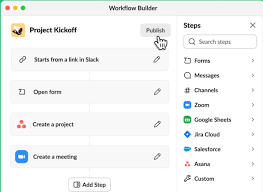
Workflow Builder, Slack’s no-code automation tool, empowers users to streamline tasks directly within Slack, reducing the burden on IT teams. Salesforce highlights the following new features:
- Trigger Automations from Third-Party Apps: Previously, Slack workflows could only be triggered by actions within Slack or Salesforce. Now, workflows can start from third-party app events. For instance, a ticket logged in PagerDuty can initiate a workflow in Slack, creating an incident channel, adding team members, setting up a canvas, and sharing relevant information. This ensures the team has everything they need to resolve the issue quickly and efficiently.
- Pre-built Templates: Users can now leverage a more intuitive workflow-building experience with over 50 new pre-built templates. These templates simplify automations for tasks like project launches, survey collection, and IT ticket creation, all by filling in prompts in the Workflow Builder.
From Slack’s Perspective
Slack has also made it easier to customize workflows with expanded developer tools. Developers can now build custom steps using open APIs and new developer resources, integrating these steps into Workflow Builder. These tools support additional programming languages, including JavaScript, TypeScript, Python, and Java, further enhancing the flexibility of custom workflows.
According to Rob Seaman, Slack’s Chief Product Officer, “At Slack, one of our product principles is ‘don’t make me think.’ We’re applying that to automation, making it intuitive and delightful for everyone. These new features empower both developers and end users to automate any business process across their apps seamlessly in Slack.”
What This Means for Businesses
As companies seek ways to increase productivity without overloading IT teams, automation has become a critical solution. Tools like Slack’s no-code Workflow Builder enable users of any skill level to automate repetitive tasks, freeing up time for more strategic work. This is particularly important in an era where skilled workers, especially in data science and programming, are in short supply. The expanded capabilities in Workflow Builder make it easier to create powerful workflows that integrate with third-party systems.
In addition, Salesforce has expanded Slack AI, initially launched in April as an add-on for paying customers, to support multiple languages, including Japanese and Spanish. This ongoing development strengthens Slack’s position as a central hub for workplace automation.
Who is Salesforce? Here is their story in their own words. From our inception, we've proudly embraced the identity of Read more
Salesforce Marketing Cloud Transactional Emails are immediate, automated, non-promotional messages crucial to business operations and customer satisfaction, such as order Read more

Salesforce has unveiled a comprehensive analytics solution tailored for wealth managers, home office professionals, and retail bankers, merging its Financial Read more
AI plays a crucial role in propensity score estimation as it can discern underlying patterns between treatments and confounding variables Read more