RAG Archives - gettectonic.com - Page 11
Building the Foundation for AI Success

Building the Foundation for AI Success

The Data Imperative: Building the Foundation for AI Success The AI Revolution Demands a Data-First Approach As enterprises race to deploy generative AI, AI agents, and Model Context Protocol (MCP) systems, one critical truth emerges: AI is only as powerful as the data that fuels it. Why Data Platforms Are the Unsung Heroes of AI Modern data platforms solve five existential challenges for AI adoption: 1. Unified Data Fabric 2. Real-Time Performance at Scale 3. Context-Aware Intelligence 4. Governance Without Friction 5. Rapid AI Experimentation Model Context Protocol (MCP): The Nervous System for AI What Makes MCP Revolutionary Traditional AI Integration MCP Approach Custom APIs per system Standardized protocol Months of development Plug-and-play connectivity Brittle point-to-point links Adaptive ecosystem How MCP Transforms AI Capabilities The Strategic Imperative Organizations leading the AI race share three traits: “The AI winners won’t have better algorithms—they’ll have better data systems.”— MIT Technology Review, 2025 AI Predictions Next Steps for Enterprises: The future belongs to organizations that build data moats—not just models. Like Related Posts Who is Salesforce? Who is Salesforce? Here is their story in their own words. From our inception, we’ve proudly embraced the identity of Read more Salesforce Unites Einstein Analytics with Financial CRM Salesforce has unveiled a comprehensive analytics solution tailored for wealth managers, home office professionals, and retail bankers, merging its Financial Read more AI-Driven Propensity Scores AI plays a crucial role in propensity score estimation as it can discern underlying patterns between treatments and confounding variables Read more Tectonic’s Successful Salesforce Track Record Salesforce Technology Services Integrator – Tectonic has successfully delivered Salesforce in a variety of industries including Public Sector, Hospitality, Manufacturing, Read more

Read More
Why AI Won't Kill SaaS

CHROs Plan Major Expansion of Digital Labor and AI in the Workforce

CHROs Plan Major Expansion of Digital Labor and AI in the Workforce: Salesforce Report Salesforce’s global survey of 200 HR executives reveals that Chief Human Resources Officers (CHROs) are preparing for a significant shift toward AI-driven digital labor over the next two years, aiming to enhance productivity and reshape workforce dynamics. Key Findings: Human-AI Collaboration by 2030 Reskilling and Evolving Workforce Needs Future Workforce Structure Challenges and Next Steps Salesforce emphasizes a “cognitive upgrade” approach—reskilling employees to work alongside AI rather than merely transferring tasks to automation. As AI reshapes work, CHROs are positioned to lead this transformation, balancing efficiency with human-centric growth. Like Related Posts Who is Salesforce? Who is Salesforce? Here is their story in their own words. From our inception, we’ve proudly embraced the identity of Read more Salesforce Marketing Cloud Transactional Emails Salesforce Marketing Cloud Transactional Emails are immediate, automated, non-promotional messages crucial to business operations and customer satisfaction, such as order Read more Salesforce Unites Einstein Analytics with Financial CRM Salesforce has unveiled a comprehensive analytics solution tailored for wealth managers, home office professionals, and retail bankers, merging its Financial Read more AI-Driven Propensity Scores AI plays a crucial role in propensity score estimation as it can discern underlying patterns between treatments and confounding variables Read more


Read More
salesforce agentforce rapid deployment

Tectonic and Agentforce

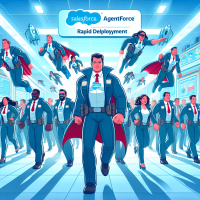
Salesforce Agentforce is revolutionizing how businesses deliver personalized and always-available support through powerful, autonomous AI agents. To fully capitalize on this innovative tool, understanding both your business needs and the Salesforce ecosystem is essential. With extensive experience in Salesforce and developing customized AI solutions, Tectonic is well-positioned to help businesses and government agencies visualize a working proof of concept for adopting Agentforce. Together, Tectonic will help companies develop AI agents tailored to their industry, providing 24/7 support for both employees and customers, regardless of location. At Dreamforce 2024, Salesforce unveiled Agentforce, one of the most anticipated AI releases of the year. Built on Salesforce’s advanced AI technology, Agentforce is poised to transform business operations. While Salesforce is known for its exciting announcements, it’s often challenging to discern how these new products apply to your business. So, let’s get past the hype. What does Agentforce really offer, and how can Tectonic help your company take advantage of it today? Key Use Cases for Agentforce CX Agent (Internal Usage) The Customer Experience (CX) Agent is an AI-powered solution designed to enhance customer interactions across various channels. Tectonic’s implementation focuses on providing human agents the information they need from numerous data sources to respond to customer inquiries, resolving issues, and guiding users through processes. By ensuring seamless communication and support, businesses can elevate the overall customer experience and foster loyalty. Customer Service (External Customer Usage) Agentforce transforms customer service operations by deploying AI agents that handle common inquiries, troubleshoot issues, and provide information 24/7. Tectonic’s implementation allows organizations to reduce wait times and enhance service quality, freeing human agents to tackle more complex problems. This shift not only improves operational efficiency but also leads to higher customer satisfaction levels. How Your Business Can Leverage Agentforce Agentforce isn’t just about adding AI—it’s about improving efficiency and reducing the burden on employees. The challenge lies in integrating these AI agents effectively into existing processes. That’s where Tectonic steps in. With a focus on helping businesses quickly realize the value of Agentforce, Tectonic can help you implement a Proof of Concept (POC) to demonstrate how AI could impact operations, whether it’s improving customer service or enhancing sales. Why Start Now? Agentforce’s release has captured the attention of businesses eager to adopt cutting-edge AI technology. However, turning Agentforce into a game-changer requires a practical approach: Availability for these POCs is limited, so now is the time to act if you’re interested in testing Agentforce. This opportunity allows businesses to see firsthand how AI agents can improve efficiency, productivity, and customer experience. How to Get Started Tectonic’s team can walk you through potential use cases and demonstrate how autonomous agents can boost customer service, empower sales teams, optimize marketing, and more. If you’re ready to take the next step, reach out to one of Tectonic’s experts to see how Agentforce can transform your business. Like Related Posts Who is Salesforce? Who is Salesforce? Here is their story in their own words. From our inception, we’ve proudly embraced the identity of Read more Salesforce Marketing Cloud Transactional Emails Salesforce Marketing Cloud Transactional Emails are immediate, automated, non-promotional messages crucial to business operations and customer satisfaction, such as order Read more Salesforce Unites Einstein Analytics with Financial CRM Salesforce has unveiled a comprehensive analytics solution tailored for wealth managers, home office professionals, and retail bankers, merging its Financial Read more AI-Driven Propensity Scores AI plays a crucial role in propensity score estimation as it can discern underlying patterns between treatments and confounding variables Read more
Read More
Dawn of Agentic Marketing

Dawn of Agentic Marketing

The Dawn of Agentic Marketing: How AI is Revolutionizing Campaign Execution Breaking the Marketing Gridlock Today’s marketers face an impossible equation:📈 59% more content demand year-over-year⏰ 68% shorter campaign timelines🔄 42% of time wasted on tool-switching and rework The result? Burned-out teams delivering generic campaigns at the speed of bureaucracy. The Salesforce + Typeface Breakthrough This partnership delivers the first end-to-end agentic marketing system that combines: Salesforce’s Intelligence✔ Real-time customer segments from Data Cloud✔ Predictive engagement scoring✔ Closed-loop performance data Typeface’s Creative Engine✔ AI-generated, brand-governed content✔ Multi-channel campaign assembly✔ Collaborative Spaces for human-AI teamwork How Agentic Marketing Works in Practice 1. Insight → Instant Audience (0-60 in Seconds) “Show me high-intent leads who abandoned carts after viewing summer collections” → AI parses 23 data points across CRM, web, and email→ Delivers segmented audiences with predicted conversion likelihood 2. AI-Assisted Campaign Creation *”What took 3 designers a week now happens before coffee cools” – CMO, Fortune 100 Retailer* 3. Human + AI Co-Creation Typeface Spaces enables:✍️ Real-time team editing🎨 Brand compliance guardrails🔍 Side-by-side variant testing 4. One-Click Omnichannel Launch Publish directly to:✉️ Marketing Cloud emails📱 Paid social platforms🌐 CMS-powered web pages No more:❌ Manual asset transfers❌ Platform-specific reformatting❌ Version control nightmares Proven Results That Matter Metric Improvement Campaign Speed 4 weeks → 3 days Email CTR +93% Production Costs -62% Personalization Depth 3 segments → 28 segments Why This Changes Everything The Future Is Already Here “Agentic marketing isn’t coming—it’s deployed. Our AI handles 60% of campaign execution, while my team focuses on customer journey strategy.”– VP of Digital, Global CPG Brand The age of guesswork is over. The era of insight-driven, AI-accelerated marketing has arrived. Like Related Posts Who is Salesforce? Who is Salesforce? Here is their story in their own words. From our inception, we’ve proudly embraced the identity of Read more Salesforce Marketing Cloud Transactional Emails Salesforce Marketing Cloud Transactional Emails are immediate, automated, non-promotional messages crucial to business operations and customer satisfaction, such as order Read more Salesforce Unites Einstein Analytics with Financial CRM Salesforce has unveiled a comprehensive analytics solution tailored for wealth managers, home office professionals, and retail bankers, merging its Financial Read more AI-Driven Propensity Scores AI plays a crucial role in propensity score estimation as it can discern underlying patterns between treatments and confounding variables Read more
Read More
AI Agents and Open APIs

The Future of AI Agents

The Future of AI Agents: A Symphony of Digital Intelligence Forget simple chatbots—tomorrow’s AI agents will be force multipliers, seamlessly integrating into our workflows, anticipating needs, and orchestrating complex tasks with near-human intuition. Powered by platforms like Agentforce (Salesforce’s AI agent builder), these agents will evolve in five transformative ways: 1. Beyond Text: Multimodal AI That Sees, Hears, and Understands Today’s AI agents mostly process text, but the future belongs to multimodal AI—agents that interpret images, audio, and video, unlocking richer, real-world applications. How? Neural networks convert voice, images, and video into tokens that LLMs understand. Salesforce AI Research’s xGen-MM-Vid is already pioneering video comprehension. Soon, agents will respond to spoken commands, like:“Analyze Q2 sales KPIs—revenue growth, churn, CAC—summarize key insights, and recommend two fixes.”This isn’t just about speed; it’s about uncovering hidden patterns in data that humans might miss. 2. Agent-to-Agent (A2A) Collaboration: The Rise of AI Teams Today’s AI agents work solo. Tomorrow, specialized agents will collaborate like a well-oiled team, multiplying efficiency. Human oversight remains critical—not for micromanagement, but for ethics, strategy, and alignment with human goals. 3. Orchestrator Agents: The AI “Managers” of Tomorrow Teams need leaders—enter orchestrator agents, which coordinate specialized AIs like a restaurant GM oversees staff. Example: A customer service request triggers: The orchestrator integrates all inputs into a seamless, on-brand response. Why it matters: Orchestrators make AI systems scalable and adaptable. New tools? Just plug them in—no rebuilds required. 4. Smarter Reasoning: AI That Thinks Like You Today’s AI follows basic commands. Tomorrow’s will analyze, infer, and strategize like a human colleague. Example: A marketing AI could: Key Advances: As Anthropic’s Jared Kaplan notes, future agents will know when deep reasoning is needed—and when it’s overkill. 5. Infinite Memory: AI That Never Forgets Current AI has the memory of a goldfish—each interaction starts from scratch. Future agents will retain context across sessions, like a human recalling notes. Impact: The Bottom Line The next generation of AI agents won’t just assist—they’ll augment human potential, turning complex workflows into effortless collaborations. With multimodal perception, team intelligence, advanced reasoning, and infinite memory, they’ll redefine productivity across industries. The future isn’t just AI—it’s AI working for you, with you, and ahead of you. Like Related Posts Who is Salesforce? Who is Salesforce? Here is their story in their own words. From our inception, we’ve proudly embraced the identity of Read more Salesforce Marketing Cloud Transactional Emails Salesforce Marketing Cloud Transactional Emails are immediate, automated, non-promotional messages crucial to business operations and customer satisfaction, such as order Read more Salesforce Unites Einstein Analytics with Financial CRM Salesforce has unveiled a comprehensive analytics solution tailored for wealth managers, home office professionals, and retail bankers, merging its Financial Read more AI-Driven Propensity Scores AI plays a crucial role in propensity score estimation as it can discern underlying patterns between treatments and confounding variables Read more

Read More

Navigating the Cloud Security Imperative

Navigating the Cloud Security Imperative: A Strategic Approach for Government Agencies The State of Federal Cloud Adoption A recent Institute for Critical Infrastructure Technology report reveals a watershed moment in government IT: This rapid digital transformation coincides with an unprecedented threat landscape where ransomware, supply chain attacks, and nation-state threats exploit cloud vulnerabilities faster than traditional security measures can respond. CISA’s Blueprint for Cloud Security: BOD 25-01 The Secure Cloud Business Applications (SCuBA) project under Binding Operational Directive 25-01 provides more than compliance—it offers a strategic framework for secure cloud adoption. The directive mandates four pillars of cloud security: 1. Comprehensive Asset Visibility 2. Automated Security Assurance 3. Risk-Based Vulnerability Management 4. Zero Trust Architecture Alignment The Operational Advantage of BOD 25-01 Beyond compliance, the directive enables agencies to: The Path Forward As cloud becomes the federal IT foundation, agencies must: “BOD 25-01 represents the most consequential shift in federal cybersecurity since the creation of Continuous Diagnostics and Mitigation (CDM). It’s not about compliance—it’s about changing how we fundamentally secure the cloud.” — Former Federal CISO *The cloud transition is inevitable, but insecure cloud adoption is not. BOD 25-01 provides the playbook for doing cloud security right—the first time.* Like Related Posts Who is Salesforce? Who is Salesforce? Here is their story in their own words. From our inception, we’ve proudly embraced the identity of Read more Salesforce Unites Einstein Analytics with Financial CRM Salesforce has unveiled a comprehensive analytics solution tailored for wealth managers, home office professionals, and retail bankers, merging its Financial Read more AI-Driven Propensity Scores AI plays a crucial role in propensity score estimation as it can discern underlying patterns between treatments and confounding variables Read more Tectonic’s Successful Salesforce Track Record Salesforce Technology Services Integrator – Tectonic has successfully delivered Salesforce in a variety of industries including Public Sector, Hospitality, Manufacturing, Read more

Read More
Apex

Comprehensive Guide to Monitoring Apex Jobs in Salesforce

Why Monitoring Apex Jobs Matters Monitoring asynchronous Apex jobs is critical for maintaining Salesforce system health and performance. Batch processes, queueable jobs, and scheduled operations that fail or exceed limits can disrupt business operations. Proactive monitoring helps: Methods for Monitoring Apex Jobs 1. Using the Native Apex Jobs Dashboard Access Path: Key Features: Critical Data Points: Column Description Why It Matters Job Name Class/trigger name Identifies problem components Status Execution outcome Flags failures needing attention Total Batches Batch job iterations Reveals processing volume Submitted By Initiating user Tracks accidental executions Started/Finished Timestamps Calculates duration for optimization 2. Advanced Tracking with SOQL Queries For deeper analysis, query the AsyncApexJob object: sql Copy Download SELECT Id, ApexClass.Name, JobType, Status, CreatedDate, CompletedDate, NumberOfErrors, JobItemsProcessed, TotalJobItems, ExtendedStatus FROM AsyncApexJob WHERE CreatedDate = LAST_N_DAYS:1 ORDER BY CreatedDate DESC Key Fields Explained: 3. Proactive Monitoring with Custom Reports Recommended Report Type: Sample Report Filters: Best Practices for Effective Monitoring Troubleshooting Common Issues Problem Diagnostic Query Solution Stuck jobs WHERE Status = ‘Processing’ AND CreatedDate < LAST_N_HOURS:2 Abort via UI or API Batch job failures WHERE JobType = ‘BatchApex’ AND NumberOfErrors > 0 Check ExtendedStatus field Queueable job limits WHERE JobType = ‘Queueable’ AND CreatedDate = TODAY Implement queue depth monitoring Scheduled job overlaps WHERE JobType = ‘ScheduledApex’ AND Status = ‘Queued’ Adjust schedule frequencies Advanced Monitoring Options Conclusion Effective Apex job monitoring requires combining Salesforce’s native tools with custom queries and proactive alerting. By implementing these strategies, administrators can: ✔ Catch failures before users report them✔ Optimize job scheduling for better performance✔ Maintain clear audit trails of automated processes✔ Prevent governor limit issues Regular review of job metrics should be part of every Salesforce admin’s routine maintenance checklist to ensure system reliability and performance. Like Related Posts Who is Salesforce? Who is Salesforce? Here is their story in their own words. From our inception, we’ve proudly embraced the identity of Read more Salesforce Marketing Cloud Transactional Emails Salesforce Marketing Cloud Transactional Emails are immediate, automated, non-promotional messages crucial to business operations and customer satisfaction, such as order Read more Salesforce Unites Einstein Analytics with Financial CRM Salesforce has unveiled a comprehensive analytics solution tailored for wealth managers, home office professionals, and retail bankers, merging its Financial Read more AI-Driven Propensity Scores AI plays a crucial role in propensity score estimation as it can discern underlying patterns between treatments and confounding variables Read more

Read More

The Rise of AI Agents

The Rise of AI Agents: How Autonomous AI is Reshaping Business As artificial intelligence advances, so does the terminology around it. The term “AI agent” is gaining traction as generative AI becomes deeply embedded in business operations. Unlike traditional AI tools that follow rigid scripts, AI agents are autonomous programs capable of learning, adapting, and executing tasks with minimal human intervention. Why AI Agents Are Booming The rapid expansion of large language models (LLMs) has slashed the cost of developing AI agents, fueling a surge in startups specializing in industry-specific AI solutions. According to Stripe’s 2024 research, AI startups achieved record revenue growth last year, signaling a shift from generic AI tools (like ChatGPT) to verticalized AI agents tailored for specific sectors. In their annual letter, Stripe co-founders Patrick and John Collison noted: “Just as SaaS evolved from horizontal platforms (Salesforce) to vertical solutions (Toast), AI is following the same path. Industry-specific AI agents ensure businesses fully harness LLMs by integrating contextual data and workflows.” AI Agents in Action: Industry Success Stories From manufacturing to finance, AI agents are already delivering tangible benefits: David Lodge, VP of Engineering at IBS Software, explains: “Fragmented systems limit AI’s potential. Unifying CRM, PMS, and loyalty data into a single platform is critical for AI to drive real transformation.” Hospitality’s AI Revolution: Breaking Down Data Silos Hotels like Wyndham and IHG have partnered with Salesforce to consolidate millions of guest records, enabling AI agents to deliver hyper-personalized service. In February 2025, Apaleo launched an AI Agent Marketplace for hospitality, allowing hotels to integrate AI solutions without costly system overhauls. Case Study: mk Hotels The Future: Autonomous Agents Redefining Workflows In September 2024, Salesforce introduced Agentforce, a platform for building secure, data-grounded AI agents that automate complex workflows. Jan Erik Aase, Partner at ISG, predicts: “The shift to agent-driven enterprises isn’t just technological—it’s cultural. As AI agents grow smarter, they’ll redefine customer interactions and decision-making.” Key Takeaways The AI agent revolution is here—and businesses that embrace it will lead the next wave of productivity and innovation. Like Related Posts Who is Salesforce? Who is Salesforce? Here is their story in their own words. From our inception, we’ve proudly embraced the identity of Read more Salesforce Marketing Cloud Transactional Emails Salesforce Marketing Cloud Transactional Emails are immediate, automated, non-promotional messages crucial to business operations and customer satisfaction, such as order Read more Salesforce Unites Einstein Analytics with Financial CRM Salesforce has unveiled a comprehensive analytics solution tailored for wealth managers, home office professionals, and retail bankers, merging its Financial Read more AI-Driven Propensity Scores AI plays a crucial role in propensity score estimation as it can discern underlying patterns between treatments and confounding variables Read more

Read More
Google and Salesforce Expand Partnership

Chrome Salesforce Log Inspector

Simplifying Debugging, Enhancing Salesforce Performance! This app helps you inspect, analyze, and optimize your Salesforce debug log. ──────────: 𝑭𝒆𝒂𝒕𝒖𝒓𝒆𝒔 :────────── 🗂️ 𝐋𝐨𝐠 𝐄𝐱𝐩𝐥𝐨𝐫𝐞𝐫 – Quickly browse log rows with search and highlighted code for easy identification of key details. 🐞 𝐀𝐩𝐞𝐱 𝐃𝐞𝐛𝐮𝐠 – View only 𝚂𝚢𝚜𝚝𝚎𝚖.𝚍𝚎𝚋𝚞𝚐() outputs for simplified troubleshooting, excluding other log details. 📅 𝐄𝐱𝐞𝐜𝐮𝐭𝐢𝐨𝐧 𝐓𝐢𝐦𝐞𝐥𝐢𝐧𝐞 – Visualize code execution over time with a flame chart and detailed event tooltips. 🔗 𝐄𝐱𝐞𝐜𝐮𝐭𝐢𝐨𝐧 𝐓𝐫𝐞𝐞 – Explore the method call path with key metrics like DML, SOQL counts, and execution times. 🔎 𝐄𝐱𝐞𝐜𝐮𝐭𝐢𝐨𝐧 𝐀𝐧𝐚𝐥𝐲𝐬𝐢𝐬 – Identify time-consuming methods to pinpoint performance bottlenecks for optimization. 🛢️ 𝐒𝐎𝐐𝐋 𝐀𝐧𝐚𝐥𝐲𝐬𝐢𝐬 – Find the most executed and time-consuming SOQL queries and those with the most extensive result sets. 🧮 𝐃𝐌𝐋 𝐀𝐧𝐚𝐥𝐲𝐬𝐢𝐬 – Identify the most frequent and slowest DML operations to optimize data processing. ──────────────────────────────────────────────────── 🌐𝐃𝐨𝐜𝐮𝐦𝐞𝐧𝐭𝐚𝐭𝐢𝐨𝐧: https://nisar-99.github.io/salesforce-log-inspector Like Related Posts Who is Salesforce? Who is Salesforce? Here is their story in their own words. From our inception, we’ve proudly embraced the identity of Read more Salesforce Marketing Cloud Transactional Emails Salesforce Marketing Cloud Transactional Emails are immediate, automated, non-promotional messages crucial to business operations and customer satisfaction, such as order Read more Salesforce Unites Einstein Analytics with Financial CRM Salesforce has unveiled a comprehensive analytics solution tailored for wealth managers, home office professionals, and retail bankers, merging its Financial Read more AI-Driven Propensity Scores AI plays a crucial role in propensity score estimation as it can discern underlying patterns between treatments and confounding variables Read more
Read More
Why Salesforce Isn't Alarmist About AI

Why Salesforce Isn’t Alarmist About AI

Salesforce CEO Dismisses AI Job Loss Fears as “Alarmist,” Even as Company Cuts Hiring Due to AI San Francisco, CA — Salesforce isn’t alarmist about AI because they view it as a tool to augment human capabilities and enhance business processes, not as a threat to jobs. They are actively developing and implementing AI solutions like Einstein AI and Agentforce to improve efficiency and customer experience. While Salesforce has reduced some hiring in certain areas due to AI automation, they are also expanding hiring in other areas, according to the Business Journals.  Salesforce CEO Marc Benioff pushed back against warnings of widespread job losses from artificial intelligence during the company’s Wednesday earnings call, calling such predictions “alarmist.” However, his remarks came just as one of his top executives confirmed that AI is already reducing hiring at the tech giant. The debate over AI’s impact on employment—from generative tools like ChatGPT to advanced robotics and hypothetical human-level “digital workers”—has raged in the tech industry for years. But tensions escalated this week when Anthropic CEO Dario Amodei told Axios that businesses and governments are downplaying the risk of AI rapidly automating millions of jobs. “Most of them are unaware that this is about to happen,” Amodei reportedly said. “It sounds crazy, and people just don’t believe it.” Benioff, however, dismissed the notion. When asked about Amodei’s comments, he argued that AI industry leaders are succumbing to groupthink. He emphasized that AI lacks consciousness and cannot independently run factories or build self-replicating machines. “We aren’t exactly even to that point yet where all these white-collar jobs are just suddenly disappearing,” Benioff said. “AI can do some things, and while this is very exciting in the enterprise, we all know it cannot do everything.” He cited AI’s tendency to produce inaccurate “hallucinations” as a key limitation, noting that even if AI drafts a press release, humans would still need to refine it. While expressing respect for Amodei, Benioff maintained that “some of these comments are alarmist and get a little aggressive in the current form of AI today.” Yet, even as Benioff downplayed AI’s threat to jobs, Salesforce COO Robin Washington revealed that the company is already cutting hiring due to AI efficiencies. AI agents now handle vast numbers of customer service inquiries, reducing the need for new hires. About 500 customer support employees are being shifted to “higher-impact, data-plus-AI roles.” Washington also told Bloomberg that Salesforce is hiring fewer engineers, as AI agents act as assistants, boosting productivity without expanding headcount. (One area still growing? Sales teams pitching AI to other companies, according to Chief Revenue Officer Miguel Milano.) Salesforce’s Agentforce landing page highlights its AI-human collaboration model, boasting “Agents + Humans. Driving Customer Success together since October 2024.” A live tracker shows AI handling nearly as many support requests as humans—though human agents still lead by about 12%. The Broader AI Fear Factor Public anxiety around AI centers on: Hollywood dystopias like The Terminator and Maximum Overdrive amplify these fears, but experts argue reality is far less dramatic. Why AI Panic May Be Overblown Dr. Sriraam Natarajan, a computer science professor at UT Dallas and an AI researcher, reassures that AI lacks consciousness and cannot “think” like humans. “AI-driven Armageddon is not happening,” Natarajan said. “‘The Terminator’ is a great movie, but it’s fiction.” Key limitations of current AI: Natarajan acknowledges risks—like bad actors misusing AI—but stresses that safeguards are a major research focus. “I don’t fear AI; I fear people who misuse AI,” he said. Rather than replacing jobs, Natarajan sees AI as a productivity booster, handling repetitive tasks while humans focus on creativity and strategy. He highlights AI’s potential in medicine, climate science, and disaster prediction—but emphasizes responsible deployment. The Bottom Line While Benioff and other tech leaders dismiss doomsday scenarios, AI is already reshaping hiring—even at Salesforce. The real challenge lies in balancing innovation with workforce adaptation, ensuring AI augments rather than replaces human roles. For now, the robots aren’t taking over—but they are changing how companies operate. Like Related Posts Who is Salesforce? Who is Salesforce? Here is their story in their own words. From our inception, we’ve proudly embraced the identity of Read more Salesforce Marketing Cloud Transactional Emails Salesforce Marketing Cloud Transactional Emails are immediate, automated, non-promotional messages crucial to business operations and customer satisfaction, such as order Read more Salesforce Unites Einstein Analytics with Financial CRM Salesforce has unveiled a comprehensive analytics solution tailored for wealth managers, home office professionals, and retail bankers, merging its Financial Read more AI-Driven Propensity Scores AI plays a crucial role in propensity score estimation as it can discern underlying patterns between treatments and confounding variables Read more

Read More
health and life sciences

Top Ways AI is Transforming Patient Portal Messaging

Healthcare providers are drowning in patient messages—but AI-powered patient portals can help. By automating responses, improving clarity, and streamlining workflows, AI is easing clinician burnout while enhancing patient communication. Here’s how AI is making an impact: 1. Smart Triage: Routing Messages to the Right Person Not every message needs a physician’s attention—some are billing questions, others require nursing input. AI can: Example: 2. AI-Drafted Responses: Saving Clinicians Time Generative AI can craft clear, empathetic, and clinically accurate responses to common patient queries. Key Findings: Caveat: 3. Simplifying Medical Jargon for Better Patient Understanding Many patients struggle with complex medical terms in portal messages. AI can: Example:NYU Langone used GPT-4 to rewrite discharge summaries, making them easier to understand while scoring higher on patient education metrics. 4. Helping Patients Write Better Messages AI doesn’t just assist providers—it can guide patients to ask clearer questions, reducing back-and-forth. How it works: Vanderbilt’s study found AI-generated prompts made patient messages more concise and actionable. 5. Ethical AI Use: Transparency & Human Oversight While AI boosts efficiency, best practices matter:✅ Always review AI responses before sending.✅ Edit for tone—patients value empathy and a personal touch.✅ Consider disclosing AI use—studies (like Duke’s 2025 review) show it doesn’t harm satisfaction. “AI can reduce burnout while maintaining trust—if used responsibly.”—Dr. Anand Chowdhury, Duke University The Future of AI in Patient Portals As AI evolves, expect: The Bottom Line:AI won’t replace clinicians—but it can free them from repetitive tasks, allowing more time for meaningful patient care. Ready to explore AI for your patient portal? Start with triage automation and AI-assisted drafting, then scale as trust in the technology grows. Like Related Posts Who is Salesforce? Who is Salesforce? Here is their story in their own words. From our inception, we’ve proudly embraced the identity of Read more Salesforce Unites Einstein Analytics with Financial CRM Salesforce has unveiled a comprehensive analytics solution tailored for wealth managers, home office professionals, and retail bankers, merging its Financial Read more AI-Driven Propensity Scores AI plays a crucial role in propensity score estimation as it can discern underlying patterns between treatments and confounding variables Read more Tectonic’s Successful Salesforce Track Record Salesforce Technology Services Integrator – Tectonic has successfully delivered Salesforce in a variety of industries including Public Sector, Hospitality, Manufacturing, Read more

Read More
AI evolves with tools like Agentforce and Atlas

How the Atlas Reasoning Engine Powers Agentforce

Autonomous, proactive AI agents form the core of Agentforce. But how do they operate? A closer look reveals the sophisticated mechanisms driving their functionality. The rapid pace of AI innovation—particularly in generative AI—continues unabated. With today’s technical advancements, the industry is swiftly transitioning from assistive conversational automation to role-based automation that enhances workforce capabilities. For artificial intelligence (AI) to achieve human-level performance, it must replicate what makes humans effective: agency. Humans process data, evaluate potential actions, and execute decisions. Equipping AI with similar agency demands exceptional intelligence and decision-making capabilities. Salesforce has leveraged cutting-edge developments in large language models (LLMs) and reasoning techniques to introduce Agentforce—a suite of ready-to-use AI agents designed for specialized tasks, along with tools for customization. These autonomous agents can think, reason, plan, and orchestrate with remarkable sophistication, marking a significant leap in AI automation for customer service, sales, marketing, commerce, and beyond. Agentforce: A Breakthrough in AI Reasoning Agentforce represents the first enterprise-grade conversational automation solution capable of proactive, intelligent decision-making at scale with minimal human intervention. Several key innovations enable this capability: Additional Differentiators of Agentforce Beyond the Atlas Reasoning Engine, Agentforce boasts several distinguishing features: The Future of Agentforce Though still in its early stages, Agentforce is already transforming businesses for customers like Wiley and Saks Fifth Avenue. Upcoming innovations include: The Third Wave of AI Agentforce heralds the third wave of AI, surpassing predictive AI and copilots. These agents don’t just react—they anticipate, plan, and reason autonomously, automating entire workflows while ensuring seamless human collaboration. Powered by the Atlas Reasoning Engine, they can be deployed in clicks to revolutionize any business function. The era of autonomous AI agents is here. Are you ready? Like Related Posts Who is Salesforce? Who is Salesforce? Here is their story in their own words. From our inception, we’ve proudly embraced the identity of Read more Salesforce Marketing Cloud Transactional Emails Salesforce Marketing Cloud Transactional Emails are immediate, automated, non-promotional messages crucial to business operations and customer satisfaction, such as order Read more Salesforce Unites Einstein Analytics with Financial CRM Salesforce has unveiled a comprehensive analytics solution tailored for wealth managers, home office professionals, and retail bankers, merging its Financial Read more AI-Driven Propensity Scores AI plays a crucial role in propensity score estimation as it can discern underlying patterns between treatments and confounding variables Read more

Read More
gettectonic.com