
The Data Imperative: Building the Foundation for AI Success
The AI Revolution Demands a Data-First Approach
As enterprises race to deploy generative AI, AI agents, and Model Context Protocol (MCP) systems, one critical truth emerges: AI is only as powerful as the data that fuels it.
- 60% of organizations manage 100-499 data sources (Enterprise Strategy Group)
- Most plan to develop 20+ generative AI applications within two years
- 78% of AI projects fail due to poor data quality (Gartner)
Why Data Platforms Are the Unsung Heroes of AI
Modern data platforms solve five existential challenges for AI adoption:
1. Unified Data Fabric
- Problem: Siloed data in CRM, ERP, data lakes creates AI blind spots
- Solution: Platforms like Snowflake and Databricks create single sources of truth
- Impact: 40% better model accuracy with unified data (McKinsey)
2. Real-Time Performance at Scale
- Problem: Batch processing can’t support AI’s need for fresh data
- Solution: Distributed databases (CockroachDB, MongoDB) handle millions of transactions/sec
- Impact: 5X faster AI decision-making (Forrester)
3. Context-Aware Intelligence
- Problem: Generic AI outputs lack business relevance
- Solution: Tools like Glean embed semantic search into workflows
- Impact: 35% higher user adoption of AI tools (IDC)
4. Governance Without Friction
- Problem: 68% of AI projects face compliance hurdles (Deloitte)
- Solution: Oracle/Snowflake provide lineage tracking & access controls
- Impact: 50% faster regulatory approvals (EY)
5. Rapid AI Experimentation
- Problem: Months spent preparing data for each new model
- Solution: Qlik/Domo enable self-service data prep
- Impact: 8X faster AI prototyping (BCG)
Model Context Protocol (MCP): The Nervous System for AI
What Makes MCP Revolutionary
| Traditional AI Integration | MCP Approach |
|---|---|
| Custom APIs per system | Standardized protocol |
| Months of development | Plug-and-play connectivity |
| Brittle point-to-point links | Adaptive ecosystem |
How MCP Transforms AI Capabilities
- Database Access
- AI agents query SQL/NoSQL via unified interface
- Example: Pull customer histories during support calls
- API Orchestration
- Chain SaaS apps without custom coding
- Example: Check inventory → Process payment → Schedule delivery
- Cloud Service Integration
- Leverage AWS/Azure natively
- Example: Auto-scale ML inference clusters
- Tool Augmentation
- Extend AI with specialized functions
- Example: Math solver → Document parser → Web browser
The Strategic Imperative
Organizations leading the AI race share three traits:
- Invested early in cloud-native data platforms
- Standardized on MCP for AI integrations
- Treat data as core IP (not just infrastructure)
“The AI winners won’t have better algorithms—they’ll have better data systems.”
— MIT Technology Review, 2025 AI Predictions
Next Steps for Enterprises:
- Audit data readiness for AI workloads
- Pilot MCP with 2-3 critical systems
- Establish cross-functional AI data governance
The future belongs to organizations that build data moats—not just models.
🔔🔔 Follow us on LinkedIn 🔔🔔

Who is Salesforce? Here is their story in their own words. From our inception, we've proudly embraced the identity of Read more

Salesforce has unveiled a comprehensive analytics solution tailored for wealth managers, home office professionals, and retail bankers, merging its Financial Read more
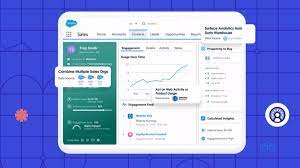
AI plays a crucial role in propensity score estimation as it can discern underlying patterns between treatments and confounding variables Read more

Salesforce Technology Services Integrator - Tectonic has successfully delivered Salesforce in a variety of industries including Public Sector, Hospitality, Manufacturing, Read more