
Healthcare providers are drowning in patient messages—but AI-powered patient portals can help. By automating responses, improving clarity, and streamlining workflows, AI is easing clinician burnout while enhancing patient communication.
Here’s how AI is making an impact:
1. Smart Triage: Routing Messages to the Right Person
Not every message needs a physician’s attention—some are billing questions, others require nursing input. AI can:
- Automatically classify messages by urgency and topic (e.g., billing, prescription refills, clinical concerns).
- Route messages to the right team member, reducing inbox overload for doctors.
- Prioritize urgent requests, speeding up response times.
Example:
- Vanderbilt University Medical Center found AI could accurately flag high-priority messages, helping providers respond faster.
- NYU Langone Health’s AI system cut response times by identifying critical messages needing immediate review.
2. AI-Drafted Responses: Saving Clinicians Time
Generative AI can craft clear, empathetic, and clinically accurate responses to common patient queries.
Key Findings:
- Mass General Brigham found AI responses were as good as human-written ones—reviewers couldn’t tell the difference 30% of the time.
- Over 50% of AI-generated replies required no edits, and many were more detailed than human responses.
- JAMIA research showed each patient message adds 2.3+ minutes of EHR time—AI could drastically reduce this burden.
Caveat:
- AI isn’t perfect—human review is still essential to prevent errors or bias.
3. Simplifying Medical Jargon for Better Patient Understanding
Many patients struggle with complex medical terms in portal messages. AI can:
- Translate clinical notes into plain language (e.g., reducing readability from 11th to 6th-grade level).
- Avoid jargon in responses, improving health literacy.
Example:
NYU Langone used GPT-4 to rewrite discharge summaries, making them easier to understand while scoring higher on patient education metrics.
4. Helping Patients Write Better Messages
AI doesn’t just assist providers—it can guide patients to ask clearer questions, reducing back-and-forth.
How it works:
- AI suggests follow-up questions (e.g., “Are you experiencing fever with these symptoms?”).
- Patients submit more precise queries, helping providers respond faster.
Vanderbilt’s study found AI-generated prompts made patient messages more concise and actionable.
5. Ethical AI Use: Transparency & Human Oversight
While AI boosts efficiency, best practices matter:
✅ Always review AI responses before sending.
✅ Edit for tone—patients value empathy and a personal touch.
✅ Consider disclosing AI use—studies (like Duke’s 2025 review) show it doesn’t harm satisfaction.
“AI can reduce burnout while maintaining trust—if used responsibly.”
—Dr. Anand Chowdhury, Duke University
The Future of AI in Patient Portals
As AI evolves, expect:
- Smarter triage (e.g., predicting urgent needs).
- Voice-to-text AI assistants for patients.
- Seamless EHR integration, cutting documentation time further.
The Bottom Line:
AI won’t replace clinicians—but it can free them from repetitive tasks, allowing more time for meaningful patient care.
Ready to explore AI for your patient portal? Start with triage automation and AI-assisted drafting, then scale as trust in the technology grows.
🔔🔔 Follow us on LinkedIn 🔔🔔

Who is Salesforce? Here is their story in their own words. From our inception, we've proudly embraced the identity of Read more

Salesforce has unveiled a comprehensive analytics solution tailored for wealth managers, home office professionals, and retail bankers, merging its Financial Read more
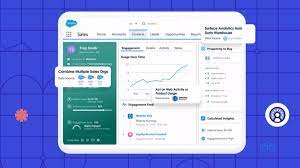
AI plays a crucial role in propensity score estimation as it can discern underlying patterns between treatments and confounding variables Read more

Salesforce Technology Services Integrator - Tectonic has successfully delivered Salesforce in a variety of industries including Public Sector, Hospitality, Manufacturing, Read more